Blog published in Buying property abroad
Share
Homestra vs Rightmove Overseas: best portal for European homes
Compare Homestra and Rightmove Overseas for your European home search. Use our decision flow and verification checklist to find the right portal and buy safely.

Searching for a home across Europe means juggling portals, languages, and agent practices that change at every border. This guide gives you a short decision flow that routes you to the right portal, plus a verification checklist you can run today. Expect about 20 minutes of reading and note-taking. No tools are needed beyond a browser and a rough idea of your budget.
One caution first: no portal replaces local due diligence. Homestra and Rightmove Overseas both display listings. Neither one verifies ownership, inspects a house, or checks the legal title for you.
Answer six questions to define your search
Write down your answers before you open any portal.
- Goal: Is this a second home, a permanent move, or an investment?
- Country: Do you have one target country, or are you comparing several?
- Language: Do you need English-language listings and descriptions?
- Verification: Do you want extra safety guidance alongside your search? (Most international buyers answer yes here, and you should too.)
- Timeline: Will you buy within six months, or are you still exploring?
- Budget: What's your price ceiling, and what property type fits it?
Checkpoint: You should now have a one-line search brief, such as "second home, two or three countries, English support, under my set budget, 12-month horizon."
Pick your portal with this decision flow
Both portals are large. Rightmove Overseas describes itself as "the UK's leading overseas property portal, displaying over 260,000 properties in over 90 countries," with over 9 million searches a month (Rightmove Overseas portal page). Homestra offers over 200,000 properties across Europe and focuses on second homes for expats and international buyers. The difference is how each fits your search.
- Comparing several European countries? Start with Homestra. Its country pages show live counts (the homepage lists Portugal at 31,042 properties, Norway at 12,327, France at 9,127, and Greece at 1,985), and its lifestyle browsing, such as waterfront, pools, and renovation projects, helps you narrow before you commit to a country. Use Rightmove Overseas afterward as a second check in your top country.
- Locked on one popular country and prefer a UK-led portal? Start with Rightmove Overseas. Its hub lists country pages for Spain, France, Portugal, Italy, Greece, Cyprus, Ireland, Sweden, Norway, Switzerland, and more. Then run a lifestyle-driven search on Homestra to see what you may have missed.
- Want country-by-country guidance? Rightmove Overseas links to country buying guides and a "buying overseas safely" resource. Read those in parallel while you shop for listings on Homestra. Homestra's buying property abroad section covers financing, legal steps, and process by country.
- Scam-sensitive? Use both portals and cross-check every shortlisted property with the checklist below. The portal you choose matters less than the checking you do.
- Budget-driven? Use Homestra to narrow quickly by property type and price across countries, then check Rightmove Overseas for extra reach in your chosen country.
If you want a deeper side-by-side, see Homestra's Homestra vs Rightmove breakdown.
Verify every listing before you contact anyone
Run this checklist on each property you shortlist, on either portal.
- Confirm it's the same property. Photos and descriptions often appear on several portals. Compare the exact address, plot or cadastral identifiers, and size, not just the pictures.
- Check agent authority. Look up the agency independently and confirm it's licensed or registered where required. Use contact details from the agency's own website, not only the listing.
- Trace the ownership path. Ask a local lawyer or notary to confirm who owns the property and how title transfers.
- Pause on payments. Treat urgent wire requests, last-minute bank detail changes, and pressure to pay a "reservation" quickly as red flags. Call a number you already trust before sending money.
- Arrange an independent inspection and legal review before you sign or pay a deposit.
Warning: A polished listing proves nothing about ownership. If a price looks far below similar homes nearby, find out why before you travel.
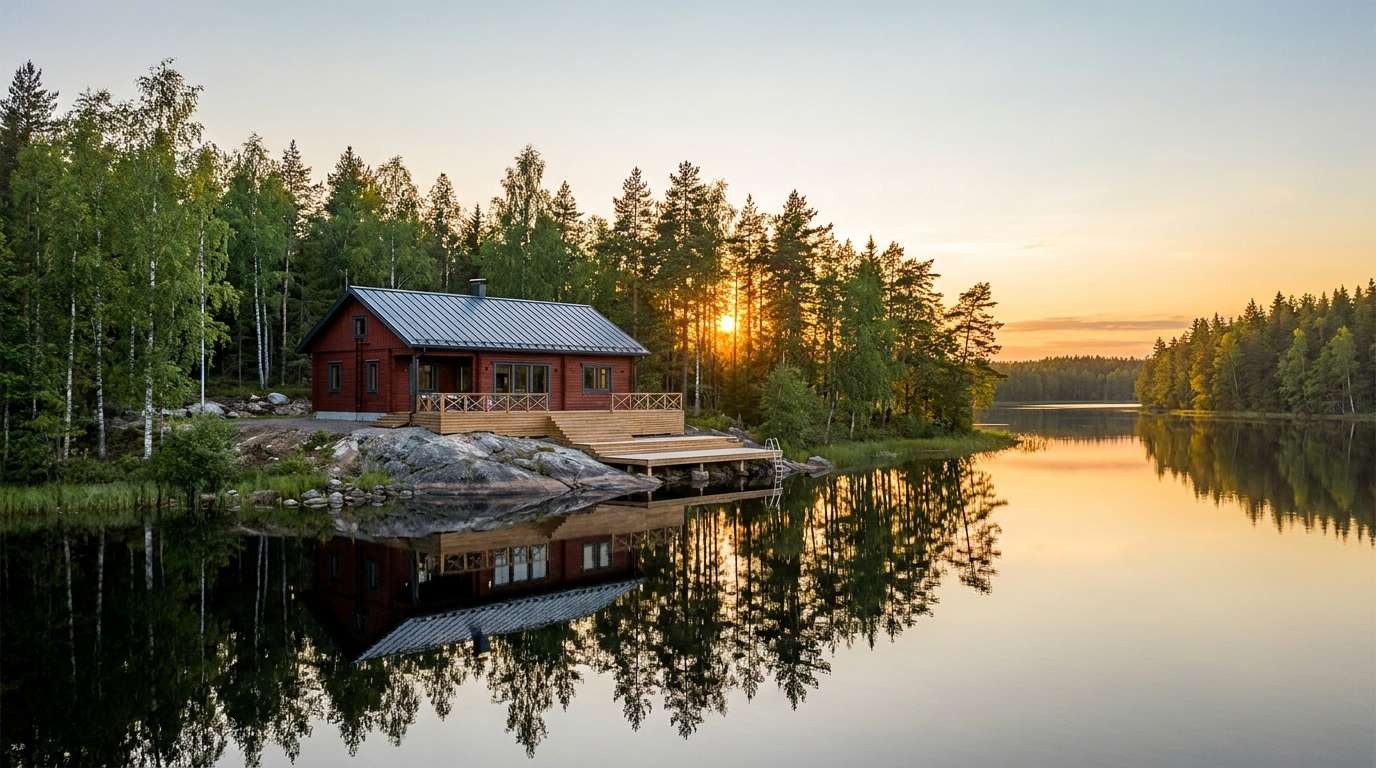
Example 1: a rural Swedish fritidshus
Say you want a lakeside cabin and you're comparing Sweden, Norway, and Finland. Browse Homestra first, filter by property type and budget, and save a shortlist across countries. Sweden wins on price per square meter. Now switch to due diligence, using steps from Homestra's rural Sweden guide:
- Foreign buyers can purchase Swedish homes without special permits or residency requirements, and there are no foreign ownership restrictions.
- Arrange an inspection (besiktning). Swedish buyers carry a duty to investigate (undersökningsplikt), so a thin inspection can leave you responsible for defects.
- For rural homes, check the well, septic system (enskilt avlopp), heating, insulation, and winterization, and confirm winter road access.
- Sign the purchase agreement (köpekontrakt). Expect a deposit of roughly 10% of the price.
- Budget for title registration (lagfart): 1.5% stamp duty on the purchase price (or assessed value, whichever is higher) plus an 825 SEK registration fee.
- Ask a tax adviser about capital gains (the guide cites 22% for non-residents) and rental income rules before you plan to rent it out.
Example 2: a Spain shortlist from Rightmove Overseas
You already know you want Spain and prefer a familiar UK-based portal. Open Rightmove Overseas' Spain results page and apply filters for region, price, and bedrooms. The page is a listings grid with agent details and pagination, with little buyer guidance, so pair it with Rightmove's country buying guide. Shortlist five properties, run the checklist above on each, and confirm the legal and tax process with a Spanish lawyer before making an offer. Then search Homestra for the same region to catch listings the first search missed.
What you've accomplished
You've defined your search, chosen a starting portal, and set up a repeatable verification routine. For the next step, save your shortlist, request documents from agents, and book a local lawyer and inspector. For more country-specific planning, read Homestra's step-by-step guide to buying a second home in Europe as an expat, and start your search on Homestra.
Share