Blog published in Relocation
Share
Portugal vs Spain for retirement: property comparison guide
Compare Portugal and Spain for retirement: residency, healthcare, taxes, and property costs. Use our 5-factor method to find the best home for your needs.

Portugal and Spain sit on the same peninsula, share most of the same weather systems, and attract the same kind of retiree: someone who wants mild winters, good food, reliable healthcare, and a home that's easy to live in. The two countries still differ in ways that change a purchase decision. Residency thresholds, public healthcare access, property taxes, and even the way a typical house is built vary enough that an apartment in one country can be a better retirement home than a similar-looking villa in the other.
This guide compares Portugal and Spain as a single equation: residency route, healthcare access, climate, total ownership cost, and day-to-day practicality. It's written for non-EU retirees and near-retirees comparing homes to buy, and it ends with a framework you can apply to any listing. It isn't personalized legal or tax advice. Thresholds and rates change, so confirm current figures with the relevant consulate, a licensed tax adviser, and a local lawyer before you commit.
Retiring in Portugal vs Spain is a five-part decision, not a tax contest
Most comparisons start and end with taxes. Taxes matter, but they rarely decide whether a retirement works. A retiree who buys a hillside villa with 40 steps to the front door saves little by choosing the cheaper tax regime if the home becomes impractical at 75.
Evaluate each candidate home against five questions:
- Residency: Can you legally live there for most of the year, and for how long before you must renew?
- Healthcare: How will you access care, and what will it cost in practice?
- Climate: What are winters and summers like where you'd actually live, not in the country as a whole?
- Ownership cost: What do purchase taxes, annual taxes, insurance, and maintenance add up to?
- Practicality: Can you manage the house, reach services, and function in daily life with limited local language?
Terms worth defining first
Residency is a legal right to live in a country, usually tied to a permit that must be renewed. Citizenship is a separate status with its own much longer timelines, and rules in both countries have been under review, so don't plan around it. A passive income visa (Portugal's D7, Spain's non-lucrative visa) grants residency based on stable income from pensions, investments, or rent, with no right to work in Spain's case. A national health system is publicly funded care (SNS in both countries), and most foreign retirees combine it with a private top-up policy for speed and English-speaking providers.
Neither country currently grants residency in exchange for buying property. Portugal removed real estate as a qualifying route for its Golden Visa in 2023, and Spain ended its Golden Visa program in April 2025. Buying a home helps your application in some cases (as proof of accommodation) but doesn't qualify you on its own.
Property prices differ more by region than by country
Country averages mislead. A coastal Algarve resort town and an inland Alentejo village are both "Portugal" and sit at opposite ends of the price scale. The same is true of Marbella versus a white village in the Andalusian interior.
The table below gives indicative asking-price bands for resale homes, based on how listings generally price in each region. Treat them as orientation, not quotes. Actual figures move with season, property condition, and distance to the sea, so finalize numbers from the listings themselves.
| Region | Country | Indicative asking price per m² | Typical retiree property |
|---|---|---|---|
| Algarve (Tavira, Lagos, Vilamoura area) | Portugal | roughly €3,000 to €5,500 | Apartments in condominiums, villas with pools |
| Silver Coast (Caldas da Rainha, Óbidos, Nazaré area) | Portugal | roughly €1,800 to €3,500 | Townhouses, villas with gardens, quieter apartments |
| Costa Blanca (Alicante, Dénia, Jávea, Torrevieja) | Spain | roughly €1,800 to €4,000 | Apartments, bungalows, villas in urbanizations |
| Costa del Sol (Málaga, Estepona, Marbella) | Spain | roughly €3,000 to €6,000 and above | Apartments in gated complexes, golf-area villas |
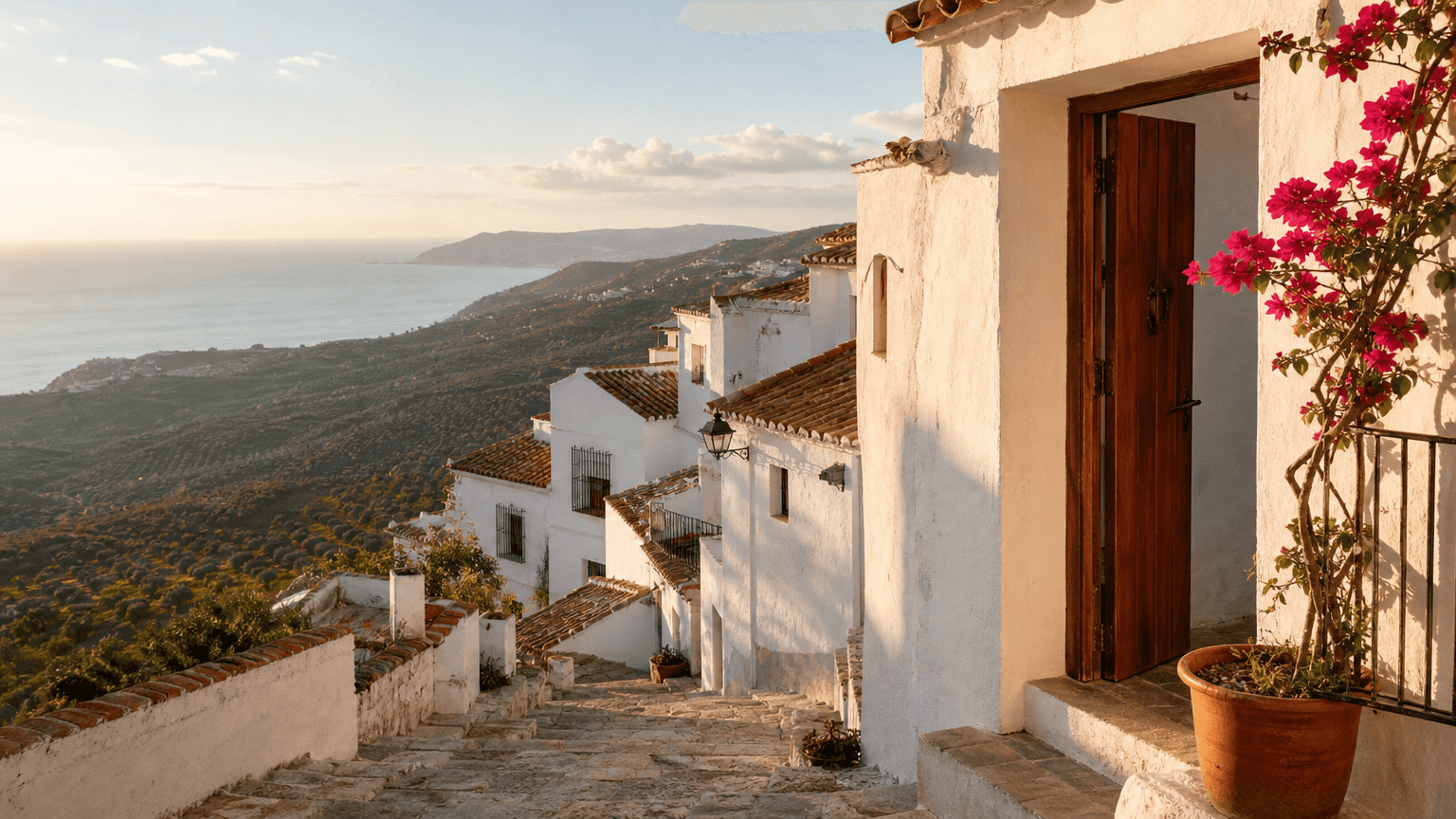
| Inland Andalucía (Granada province, Córdoba, white villages) | Spain | roughly €1,200 to €2,500 | Village houses, rural fincas, larger plots |
Idealista's February 5, 2026 analysis of coastal versus inland Portugal reached a similar conclusion: inland areas deliver better value per square meter, but at the cost of convenience and English-language infrastructure. The same trade-off applies in Spain.
A five-factor method for comparing any listing
Price per m² alone ranks homes poorly. Run every shortlisted property through the same five factors:
- Location tier: coastal, inland town, or major city. This predicts both price and services.
- Property type: apartment, townhouse, or villa. Type predicts maintenance burden.
- Size in m²: built area versus plot area. A 200 m² villa on a 1,500 m² plot is a different commitment from 200 m² on a 300 m² plot.
- Purchase taxes and fees: estimate these before making an offer, not after.
- Maintenance and insurance: pools, gardens, roofs, and community fees recur every year.
Filtering by these attributes is what a cross-border search platform is for. Homestra's search covers more than 200,000 properties across Europe, with listings that state beds, baths, living area, plot size, pool, and energy rating, so Portugal and Spain homes can be lined up against the same fields.
Residency, healthcare, and taxes work differently on each side of the border
Residency routes for non-EU retirees
Portugal's D7 visa requires proof of regular passive income. One 2026 source (MoveWise.net) cites a threshold of €920 per month, or €11,040 per year, for the main applicant, tied to Portugal's national minimum wage. Dependents add a percentage on top (commonly 50% for a spouse and 30% for each child). Applicants typically also show savings, a clean criminal record, health coverage, and proof of accommodation, either a lease or a property deed. The D7 is applied for at a Portuguese consulate, followed by an in-country residence permit process. Initial permits run for a limited period and are then renewed.
Spain's non-lucrative visa (visado de residencia no lucrativa) requires proof of income or capital without working in Spain. The income figure is indexed to a national benchmark called IPREM at 400% for the main applicant, which in recent years has meant roughly €2,400 per month, with an additional amount for each dependent. Applicants also need private health insurance with no co-payments, a criminal background check, and a medical certificate. Spain's bar is noticeably higher than Portugal's, and the visa explicitly prohibits employment.
Both routes can lead to long-term residence after five years of legal residence. Specifics shift, so check the official consulate pages for your country of application.
Healthcare access in practice
Both countries run national health systems (Portugal's SNS, Spain's SNS) that are generally well regarded. Neither automatically admits a new retiree.
In Portugal, legal residents can register at their local health center (centro de saúde) and receive a user number, then be referred to hospitals through that system. Wait times for specialists can be long, so many foreign retirees add private insurance.
In Spain, access to the public system is generally linked to social security contributions or to specific agreements. Non-lucrative visa holders are required to carry private insurance rather than rely on the public system. Older residents who aren't covered through contributions can look at a paid public scheme known as the convenio especial, which has monthly premiums that rise for those 65 and older. Whichever country you choose, plan for a public-plus-private model.
The practical retiree rule: choose a location within about 30 minutes of a hospital with a good reputation, and confirm that private clinics near you have English-speaking staff.
Taxes: buying, owning, and pensions
Separate the three tax events, because they behave differently.
When buying. Portugal charges IMT (a progressive transfer tax that varies with price and property use) plus stamp duty of 0.8% of the price. Spain charges differently depending on the property. Resale homes pay ITP, set by each autonomous region (commonly between 6% and 10%; Andalucía is 7%, Valencia's community generally 10%). New builds pay 10% VAT plus a stamp duty (AJD) that also varies by region. On top of either, budget for notary, registry, and legal fees, commonly 1% to 2% in Spain and a similar order of magnitude in Portugal.
Annually. Portugal levies IMI, a municipal property tax typically around 0.3% to 0.45% of tax value for urban properties, plus AIMI, an additional charge on high-value holdings. Spain levies IBI, a municipal tax on cadastral value (usually 0.4% to 1.1%). Non-resident owners in Spain also file an annual return on imputed income from the property, even when it isn't rented.
On pensions. Both countries tax residents on worldwide income at progressive rates, and both have double taxation treaties with many non-EU countries. Portugal's old Non-Habitual Resident regime closed to new applicants at the end of 2023, so don't assume a retirement tax holiday there. Which country taxes your particular pension (private, government, or social security) depends on the treaty, and the answer differs by pension type. Take advice from an adviser who knows both your home country and the destination.
Inheritance is its own watch-out. Spain's inheritance tax is regional and varies widely, with Andalucía offering large reductions for close relatives. Portugal has no inheritance tax in the conventional sense, but stamp duty applies on certain transfers to non-spouse, non-descendant heirs. Anyone leaving a property to children from a different country should get cross-border estate advice, ideally before buying.
For a wider tax comparison, Homestra's non-EU property tax guide walks through acquisition, annual, rental, and capital gains rules across eight European countries with cost examples at €200,000 and €500,000.
Four regions cover most retiree shortlists
Climate figures below are approximate averages. Microclimates vary, especially near mountains and the Atlantic.
Algarve, Portugal
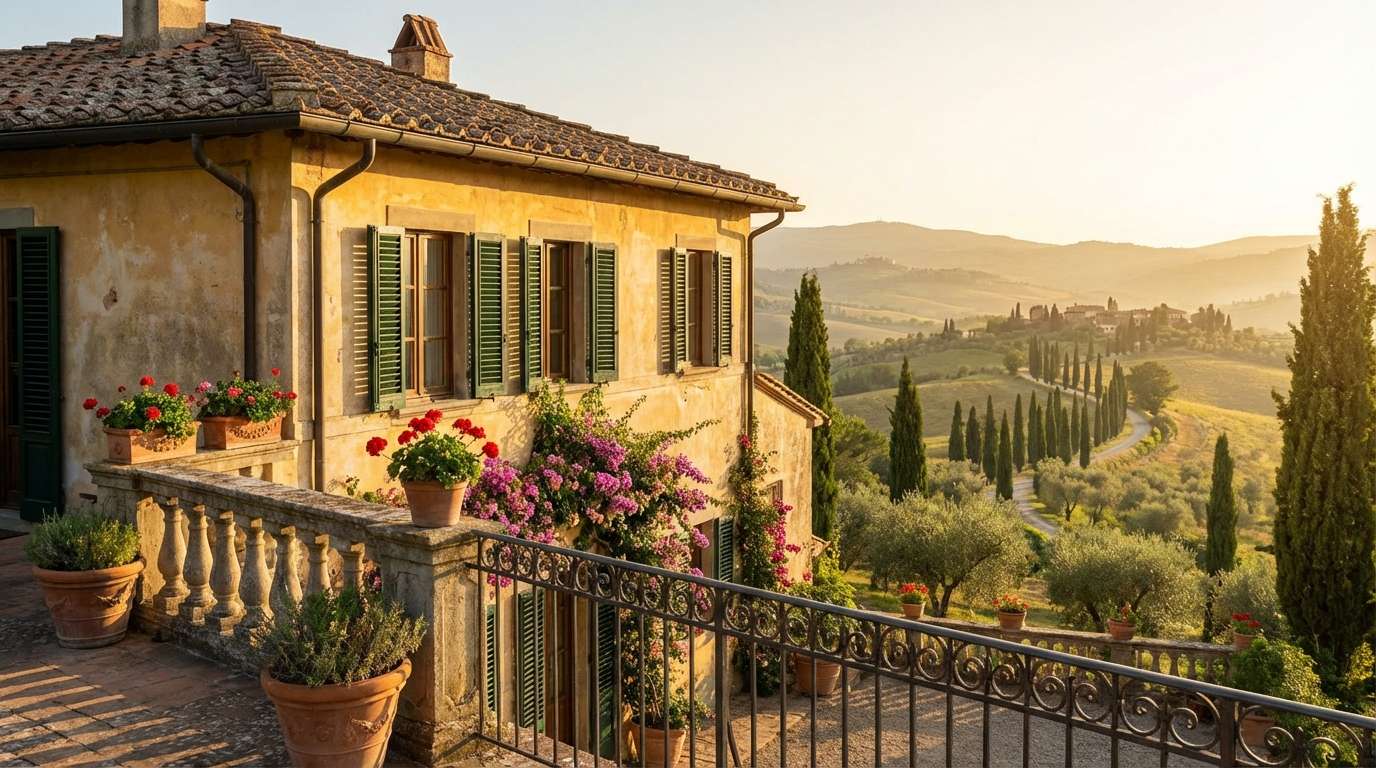
The Algarve suits retirees who want an established foreign community, golf, and direct flights, with English widely spoken in coastal towns. Faro airport serves most of northern Europe. Winters are mild (January highs near 16°C), and summers are hot and dry (July highs near 29°C), with roughly 300 sunny days a year.
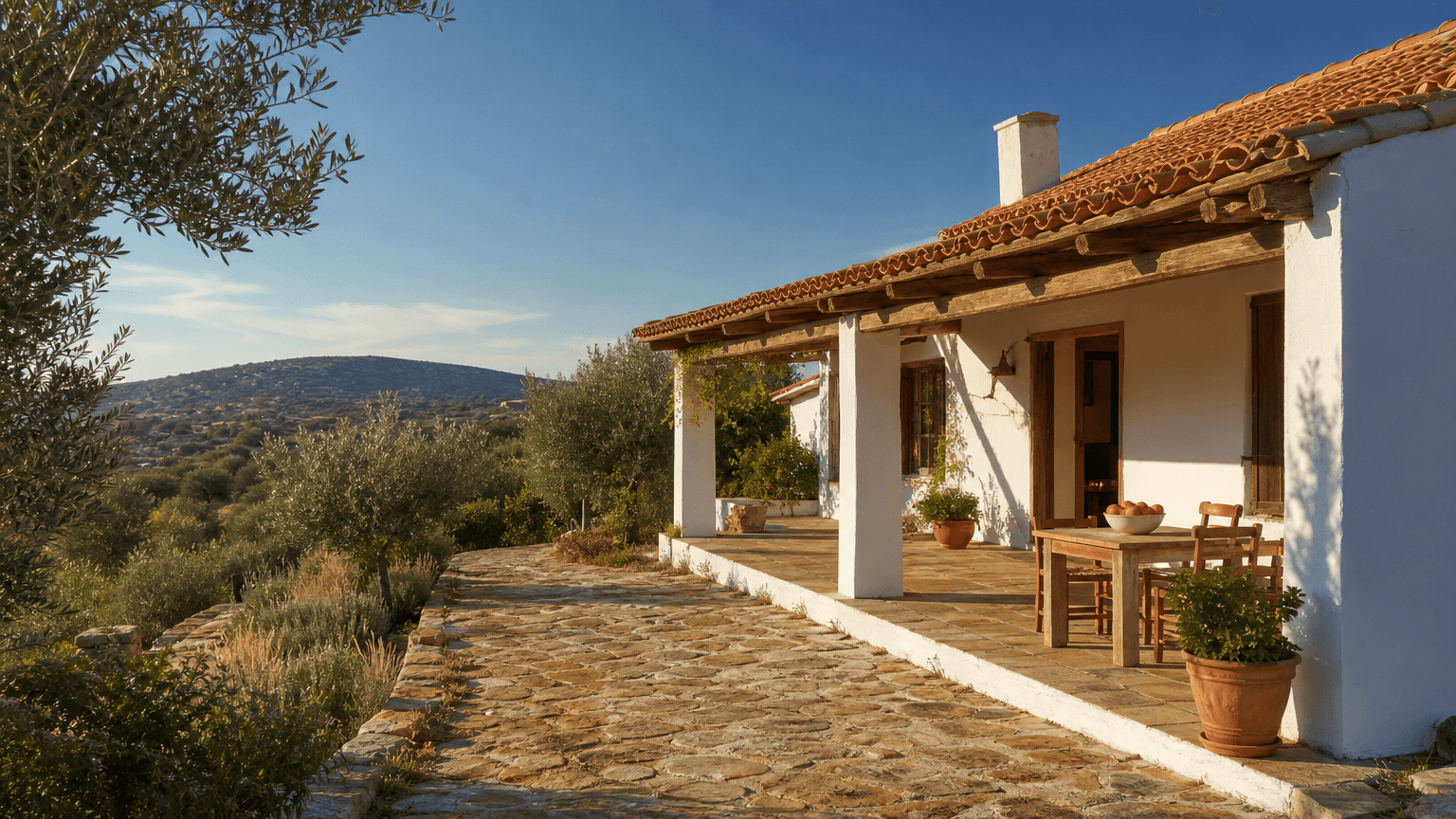
Typical listings include condominium apartments with terraces, townhouses in resort communities, and villas with pools. Coastal prices are among the highest in Portugal. Inland, in villages in the hills behind Tavira or Loulé, prices fall and quiet rises, but you'll drive for most errands.
Silver Coast, Portugal
Between Lisbon and Porto, the Silver Coast offers lower prices per m² than the Algarve and a more Portuguese feel. Winters are cooler and wetter, with Atlantic wind, and summers are milder (July highs mid-20s °C). Lisbon's airport is roughly an hour or so away by road, depending on the town.
Homes here tend to be townhouses and villas with gardens, which suits retirees who want space and don't mind heating bills. Heating quality and damp control deserve extra scrutiny in this region.
Costa Blanca, Spain
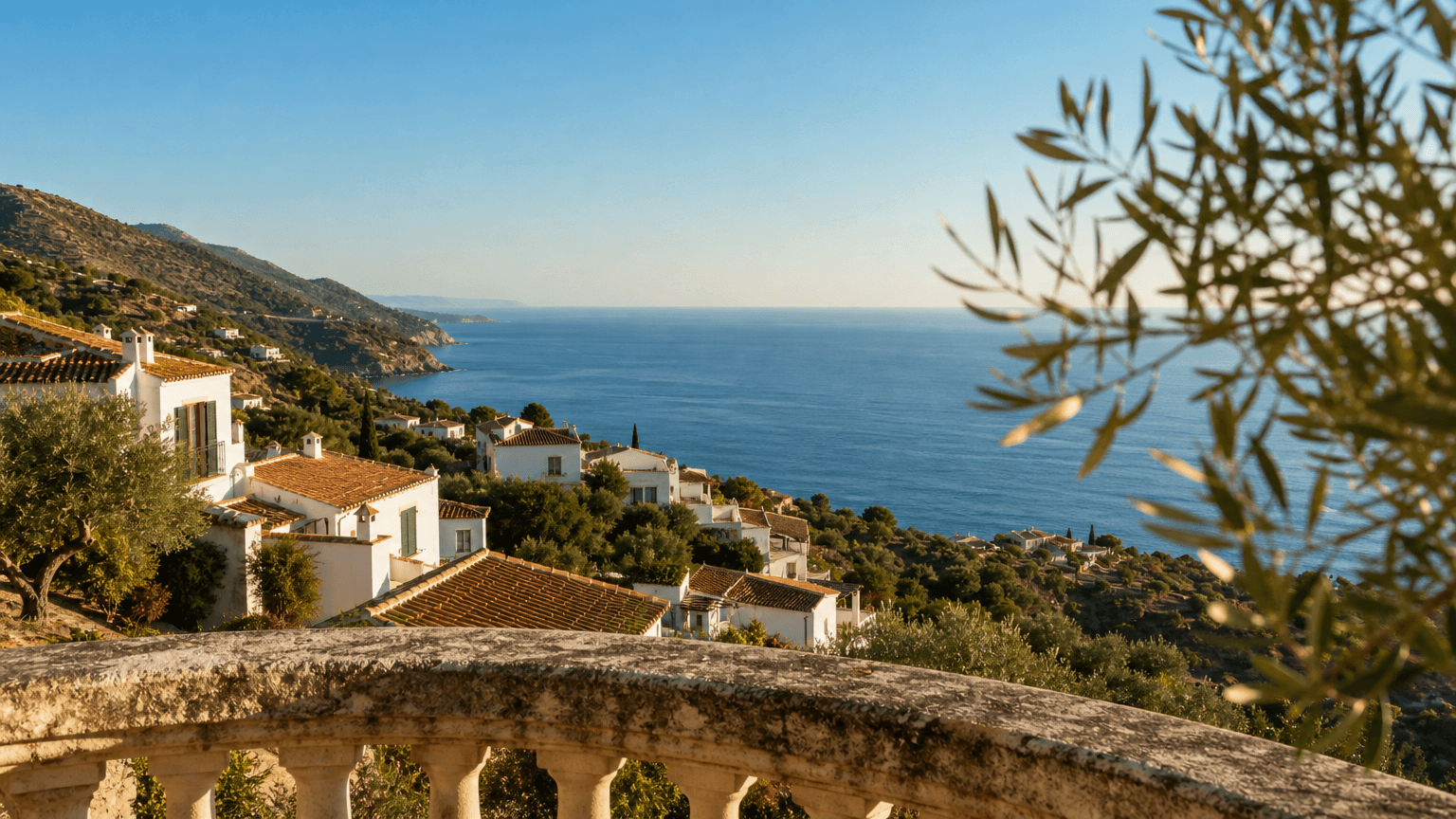
Alicante province combines a dry climate (January highs near 17°C, August highs near 31°C), a large resident expat base, and a mix of pricing. Alicante and Dénia offer good services and flat promenades, while smaller coastal towns offer bungalows and urbanization villas at lower prices.
Typical listings are ground-floor apartments, bungalows, and villas, many in gated communities with shared pools. The abundance of single-level homes makes Costa Blanca one of the easier regions for accessible retirement living.
Andalucía and the Costa del Sol, Spain
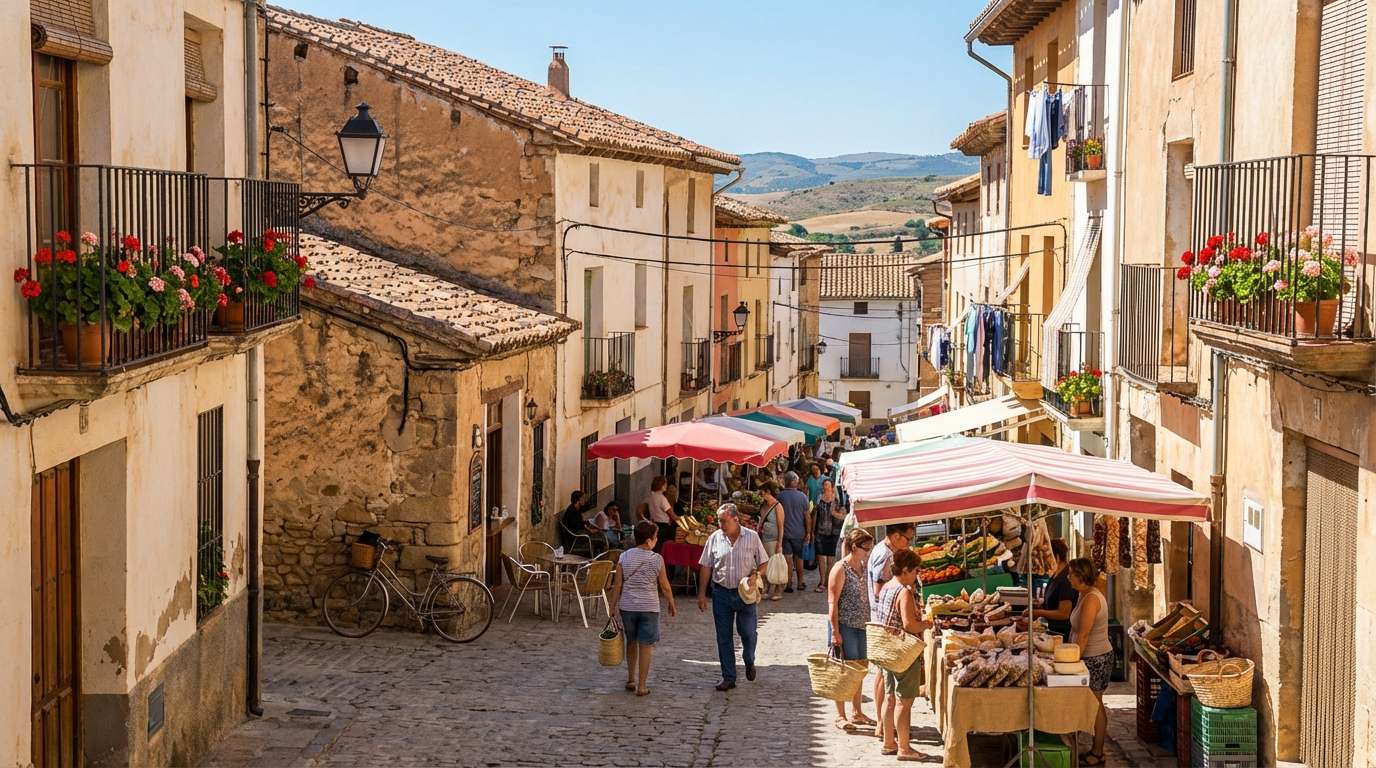
Málaga airport is one of southern Europe's busiest and gives easy connections. The Costa del Sol runs from Málaga through Estepona to Marbella, with strong healthcare, golf, and international schools and clubs. Winters are mild and summers hot. Prices on the coast run high, especially in Marbella, while inland towns and villages offer significantly cheaper homes with bigger plots.
For a Spain budget baseline beyond housing, Homestra's Spain cost-of-living breakdown compares rent, groceries, utilities, and healthcare across Spanish cities, including a section on choosing a city as a retiree.
Coastal versus inland within each region
| Factor | Coastal | Inland |
|---|---|---|
| Price per m² | Higher | Lower, often substantially |
| Hospital and services | Close | Often 30 to 60 minutes away |
| English spoken | Common | Limited |
| Summer heat | Moderated by sea | Often hotter |
| Winter comfort | Mild | Can be cold; heating matters |
| Resale liquidity | Stronger | Slower |
Inland suits retirees who drive comfortably, speak some Portuguese or Spanish, and want land. It becomes harder if driving ends or health needs increase.
A retirement home has to work at 75, not just at 65
A good retirement property earns its place on three counts: it's physically easy to live in, cheap to keep up, and close to what you need.
Accessibility
- Step-free entry, or a feasible ramp route
- A bedroom and full bathroom on the entry level
- A walk-in shower rather than a tub
- Doorways and corridors wide enough for a walker or wheelchair
- An elevator in any apartment above the ground floor, and confirmation that it's reliably maintained by the community
- Thermal comfort: insulation, shading, and heating or cooling that work year-round
Listing photos rarely show stairs honestly. Check floor plans, and ask directly.
Maintenance
- Roof type and age, and window quality
- Garden and irrigation workload, and whether a gardener is reasonable to hire
- Pool operating costs, including heating, chemicals, and electricity
- Community rules and fees in gated developments
- Caretaker or property manager availability if you'll be away for months
"Lock-up-and-leave" suitability matters most for part-year residents. Gated condominiums with shared maintenance, fewer stairs, and efficient climate control generally score best, which is why they appear often in listings aimed at second-home buyers.
Services
Confirm distance to a pharmacy, clinic, and hospital, plus a supermarket, public transport, and an airport. Walkability changes with age. A home 2 km from the nearest shop is fine until you stop driving.
Energy efficiency
Both countries require an energy certificate for sales, with ratings from A (best) to F or G. Homes with weaker ratings usually mean colder winters indoors, higher heating bills, and in older houses, more damp. Southern Iberian winters are mild outdoors but notoriously uncomfortable inside poorly insulated homes. Treat the energy rating as a running-cost indicator, and ask about heating type (air conditioning units with heat pumps, underfloor, or wood stoves).
The purchase workflow follows the same sequence in both countries
The order below holds for most foreign buyers. Details differ by country, and a local lawyer should manage each step.
- Build a shortlist using the five-factor method.
- Run due diligence: title and land registry extract, planning and zoning status, energy certificate, condominium documents and arrears, and outstanding taxes or debts.
- Hire an independent lawyer (not one recommended solely by the seller or agent).
- Estimate total purchase costs for the specific property, including taxes and fees.
- Make an offer and sign a reservation or promissory contract, usually with a deposit.
- Complete at the notary and sign the final deed (escritura in Spain, escritura pública in Portugal).
- Register the property and set up utilities, insurance, and local tax registration.
Spanish buyers will also need a foreigner's identification number (NIE). Homestra's step-by-step guide to buying property in Spain covers the full sequence for non-residents, and the Portugal buying guide covers laws, regulations, and process for foreigners.
Residency workflow
Work backward from the visa. Gather documents first, since apostilles and translations take weeks:
- Proof of income (pension letters, investment statements)
- Bank statements covering the period required
- Criminal background check from your home country, apostilled
- Private health insurance certificate (required in Spain, advisable in Portugal)
- Proof of accommodation: property deed or lease
- Passport photos, application forms, and certified translations
- Marriage certificate if applying with a spouse
Then apply at the consulate that has jurisdiction over where you live, wait for the decision, travel, and complete the in-country residence steps. Timelines vary by consulate and year, so verify current processing times before booking flights or listing your current home.
Reusable document checklist
- Valid passport (6+ months remaining)
- Tax identification number in the destination country (NIF in Portugal, NIE in Spain)
- Proof of funds for the purchase and its source
- Pension and income letters
- Apostilled certificates, with sworn translations
- Lawyer's power of attorney, if you won't attend signing in person
- Energy certificate, land registry extract, and condominium statement for the property
Three archetypes show how to compare Portugal and Spain homes side by side
Pick archetypes that match how you plan to live, then compare listings in the same archetype. Comparing a villa to an apartment misleads, since the ownership experience differs.
Archetype 1: coastal 2-bed apartment with a terrace. Lock-up-and-leave, lift access, community pool, near services. Best for part-year residents.
Archetype 2: single-level 3-bed villa or bungalow. More space, private outdoor living, but higher maintenance. Costa Blanca bungalows and Algarve single-story villas fit here.
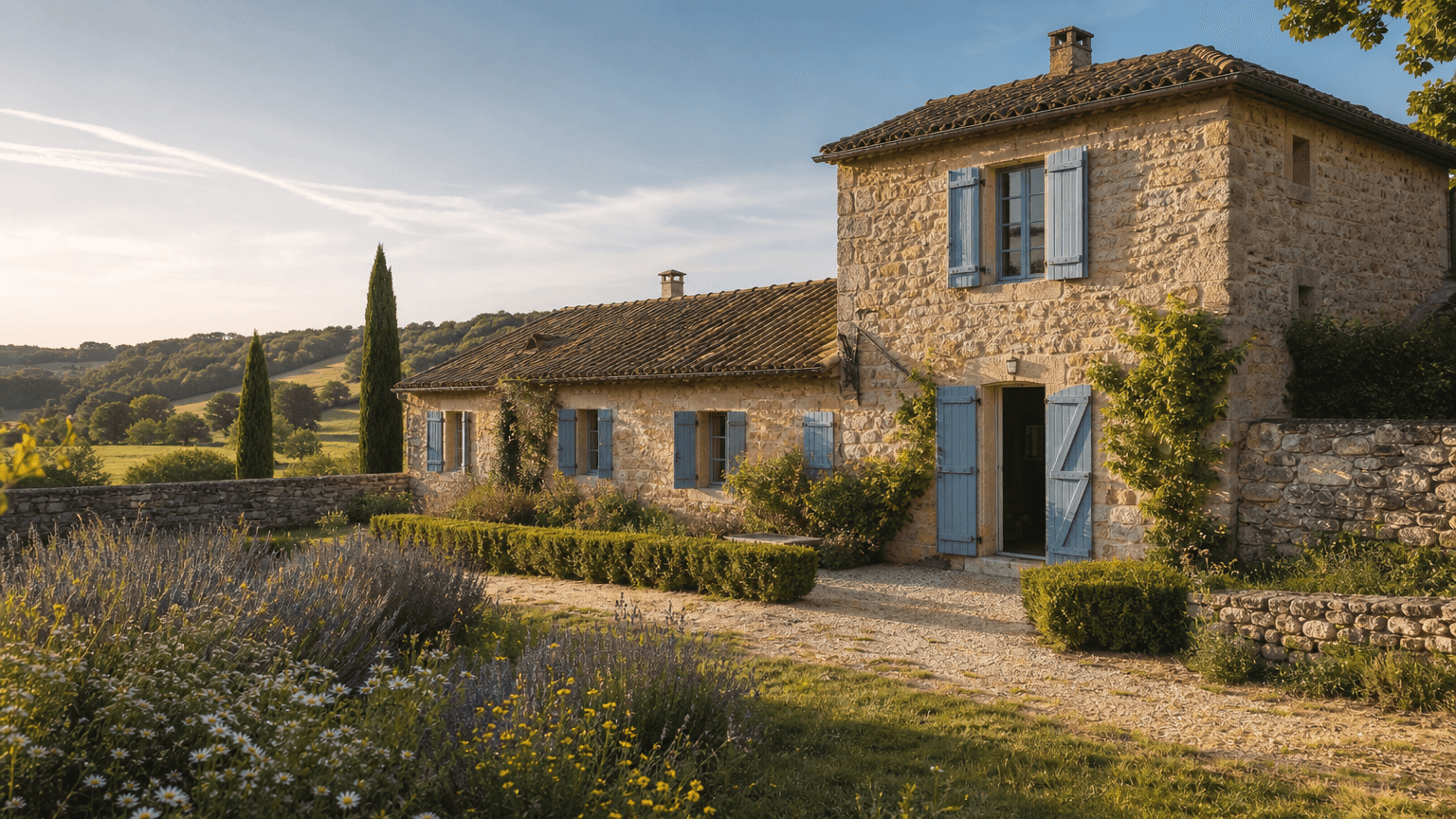
Archetype 3: inland villa or village house. Larger plot, lower price, quieter winters, and more driving.
Copy this template into a spreadsheet for every listing you shortlist:
| Field | Listing A | Listing B |
|---|---|---|
| Asking price | ||
| Built area (m²) and plot (m²) | ||
| Bedrooms / bathrooms | ||
| Floors / stairs to main living area | ||
| Outdoor space | ||
| Pool (private or shared) | ||
| Energy rating | ||
| Estimated purchase taxes and fees | ||
| Annual taxes, community fees, and insurance | ||
| Distance to pharmacy, clinic, hospital | ||
| Distance to airport |
A worked comparison: same price, different retirement
Take two hypothetical properties in Andalucía, both asking €380,000.
Property A is a 140 m² villa with a private pool on a 900 m² plot, spread over two levels, in an urbanization 9 km from the nearest town. Energy rating D. The nearest hospital is about 40 minutes by car.
Property B is a 95 m² two-bedroom apartment with a terrace in a gated complex with a lift and shared pool. Energy rating B. A pharmacy and supermarket are within a 10-minute walk, and the hospital is 15 minutes away.
On a resale basis at Andalucía's 7% ITP, both carry about €26,600 in transfer tax before notary, registry, and legal costs. The purchase price is identical in practice. The ownership picture isn't.
Property A needs pool maintenance, garden irrigation, and a roof and exterior that are the owner's responsibility, plus stairs to bedrooms. Annual upkeep for a private pool and garden commonly runs into the low thousands of euros. Property B swaps those for a community fee, with no private pool or garden to look after, and fits a part-year schedule.
If you're 62 and want guests, space, and a hobby garden, Property A can be the right answer. At 78, with limited mobility, Property B is the safer home. The listing price couldn't tell you that. The comparison table did.
A shortlist beats a country verdict
Granfield Estate's 2026 Spain versus Portugal comparison concludes that Spain is the better choice for most retirees, while acknowledging Portugal's strengths. That conclusion depends on whose finances and priorities are assumed. Portugal's lower D7 income threshold is easier to meet, and Spain's wider selection of services and larger public infrastructure can suit those who need more care. Spain's visa bar is higher, and the non-lucrative route bars work. Neither country wins for everyone.
The practical path is to settle your residency route first, since it determines whether you can live there at all. Then compare two or three regions on climate and healthcare access, choose an archetype that fits how you'll live at 75, and run every listing through the same template with a local lawyer and tax adviser checking the numbers. Homestra lets you search Portugal and Spain homes using the same filters, which makes that side-by-side comparison straightforward before you travel to view anything.
Share