Houses For Sale In France

Houses for sale in france - homestra offers the largest amount of european real estate with over 200,000+ properties, find any type of property within your budget from villas to country homes. buy or rent your perfect home in europe.

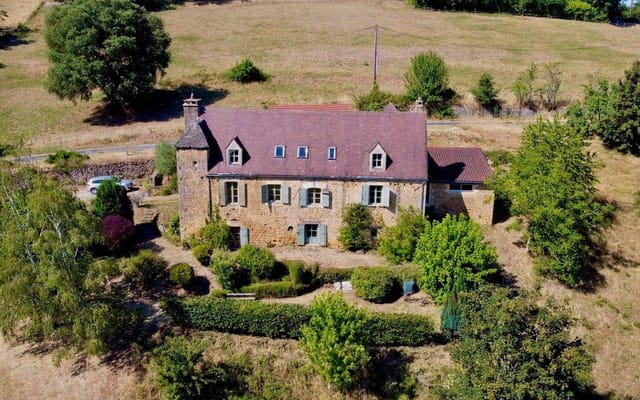
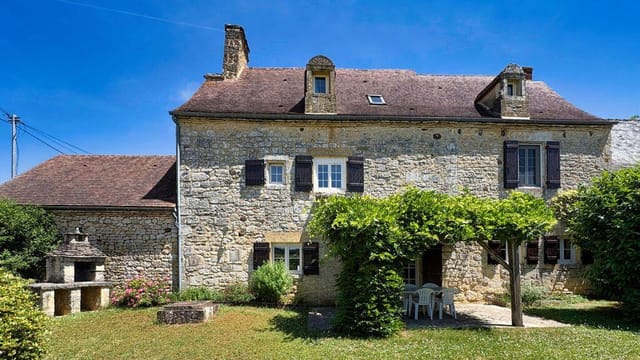
The church bell in Puyjourdes rings at eight on Sunday mornings, and if you're standing in the kitchen of this old stone house with the wood-burning stove crackling and a bowl of café au lait warming your hands, it hits differently than anything you've experienced in the city. That sound—unhurried, ancient, completely indifferent to your schedule—is the whole point of owning a place like this. This four-bedroom property in the Lot department of Midi-Pyrénées sits right on one of the recognised variants of the Chemin de Saint-Jacques, the medieval pilgrimage route that draws tens of thousands of walkers, cyclists and seekers every single year. That's not a footnote. It's a defining feature of daily life here, and—as we'll get to—a serious practical asset for anyone thinking about rental income. The main house has been looked after. Ground floor gives you a kitchen and dining room anchored by a wood-burning stove, a sitting area, a bathroom and a master bedroom with a sliding door that opens onto the garden in the warmer months. Move through to the second living room, which is heated by a mass stove—the kind of dense, slow-release heat source that keeps the room comfortable from a single evening fire well into the following afternoon. A pull-down staircase leads up to the mezzanine bedroom tucked above it, which has the kind of intimate, tucked-away quality that guests tend to request repeatedly. Above that living room on the first floor, a large loft sits waiting. It could become a third bedroom suite, a studio, a reading room with valley views—the permissions process in this corner of Lot is navigable, and local artisans who know the building codes are not in short supply. The two-storey stone barn is its own separate ... click here to read more

Picture 1
New

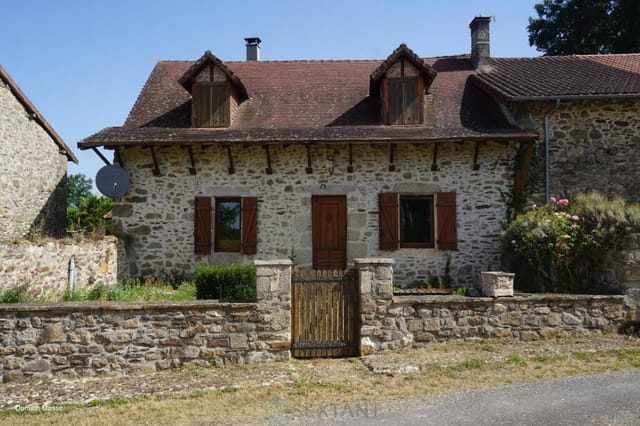
On a quiet morning in the Dordogne, you open the shutters of a stone farmhouse and the garden hits you all at once — the scent of cut grass still damp from overnight rain, the faint sound of a church bell drifting in from Eymet's medieval bastide, a swallow darting low over the saltwater pool. This is what owning this three-gite complex outside Eymet actually feels like. Not a hotel. Not a rental investment spreadsheet. A real place, with thick stone walls and oak beams worn smooth over centuries, that happens to pay for itself when you're back home. The property comprises three fully renovated and individually furnished dwellings — a one-bedroom, a two-bedroom, and a three-to-four-bedroom cottage — set across half an acre of mature walled gardens. Each one has its own kitchen, living and dining space, and bathroom, so you can host a multigenerational family gathering without anyone tripping over each other, or rent out two units while you stay in the third. That flexibility is genuinely rare, and in this corner of southwest France, it's worth a lot. The renovation work is thorough and thoughtful. Stone walls have been kept where they belong — on full display, not plastered over. Exposed beams run the length of the ceilings. But there's nothing rustic-to-a-fault about the practicality: electric radiators and wood-burning stoves mean the season stretches well beyond July and August, double glazing keeps heating bills honest, and a newly installed fosse septique (October 2023) means one major infrastructure cost is already behind you. The pool liner was replaced in June 2025. This is a property someone has been maintaining properly, not parking and hoping for the best. That 10m x 5m saltwater pool is the centre of summe ... click here to read more

Picture 1
New

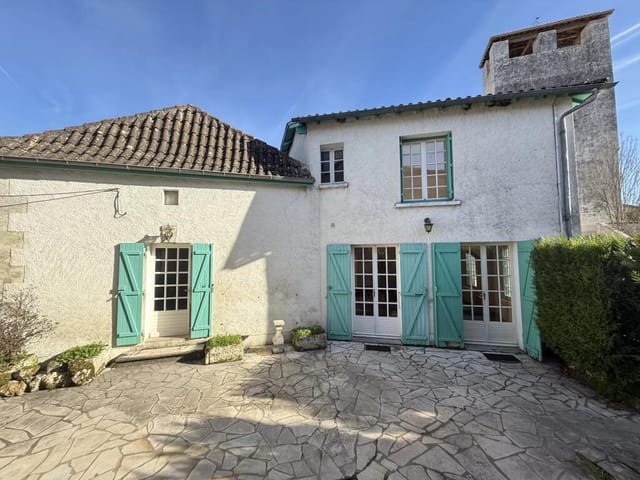
Step onto the panoramic terrace at dawn, coffee in hand, and watch the light pull itself up over the Esterel mountains while the Côte d'Azur glitters somewhere far below. This is Mons — one of Provence's most quietly extraordinary hilltop villages — and mornings here have a particular quality that people who've experienced them tend not to forget. Sitting on nearly 3,000 square metres of land just a five-minute walk from the village square, this 260m² villa is a serious proposition. Six bedrooms, three bathrooms, a Diffazur swimming pool surrounded by olive trees and holm oaks, a vegetable garden, and views that stretch from the Var hills all the way to the Mediterranean on a clear day. Built in 1965 and maintained in good condition, the property has genuine bones — the kind of generous proportions and solid construction that newer builds rarely replicate — and plenty of room to update and personalise it into something truly exceptional. The ground floor opens with an entrance hall that leads into a large, light-filled living room with an open fireplace. On a January evening, with logs crackling and cold air pressing against the double-glazed windows outside, this room earns its keep. The dining room has a view — the sort you instinctively turn toward mid-conversation. The semi-open kitchen connects directly to the terrace, which means summer dinners happen outside almost automatically, plates passing through the kitchen window, the smell of Provençal herbs drifting up from the garden below. There's also a ground-floor office, useful for anyone who needs to work remotely without sacrificing the lifestyle that drew them here in the first place. Upstairs, six bedrooms spread out across the floor, two of them served by f ... click here to read more

Picture 1
New

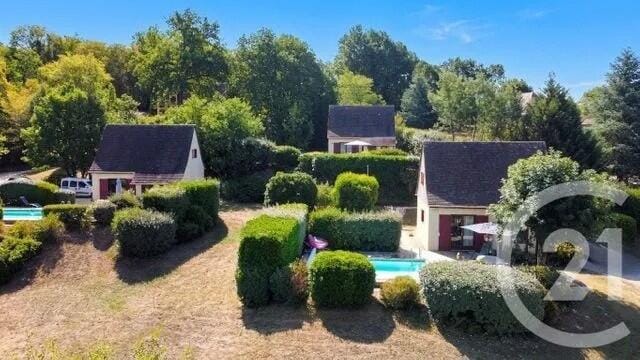
On a still July morning in the Lot valley, you wake up to the faint sound of a tractor working somewhere across the fields, sunlight cutting through the wooden shutters and warming the oak-beamed ceiling above you. By the time coffee is brewing in the kitchen, the view from the terrace has already done its job — rolling countryside in every direction, no neighbors interrupting the horizon, just the slow green rhythms of one of France's most quietly extraordinary regions. This is the kind of house that makes you stop checking your phone. Built in 2009, this three-bedroom country home in Souillac sits in the heart of the Lot département, a place where the limestone plateaus of the Quercy Blanc give way to the wooded river valleys that run down toward the Dordogne. The house doesn't pretend to be a centuries-old farmhouse — it was built with contemporary family life in mind — but the architect clearly understood the vernacular. Exposed timber beams run across the ceilings. Underfoot, you get Italian ceramic tiles on the ground floor and warm wooden flooring upstairs, surfaces that stay cool in August and hold the heat from the log-burning insert on November evenings when the first real chill arrives. That living and dining space deserves its own moment. The fireplace with its log burner is the actual center of gravity in winter — the kind of fixture you arrange sofas around and argue about who gets the warmest spot. A second, separate sitting room gives the house a flexibility that matters for real use: kids doing homework while adults entertain, a quiet space for reading when the main room fills up with guests, or simply somewhere to retreat when a week-long holiday rental is running at full capacity. The ground floor a ... click here to read more

Picture 1
New

On a Tuesday morning, you wake up to the sound of nothing in particular — a wood pigeon somewhere in the garden, the faint creak of old beams settling in the warmth. You pad downstairs in the main house, light the wood-burning stove in the kitchen, and by the time your coffee is ready, you've already decided: today you'll drive the twenty minutes to Brantôme's Friday market for cheese and walnuts, and the rest of the week can take care of itself. That's the rhythm Saint-Pardoux-la-Rivière puts you in. And once it gets hold of you, you won't want to leave. This five-bedroom stone property sits at the corner of a quiet lane just outside the village, where the only traffic is the occasional tractor and the neighbour's dog. The house is actually two adjoining cottages — currently connected and working beautifully as one generous family home — with three bedrooms and a shower room in the main section, and two further bedrooms plus two en-suite shower rooms in the guest wing. It's the kind of layout that solves problems. Extended family coming to stay? They have their own entrance, their own living room with a wood stove, their own space. You have yours. Everyone's happy. Or close the connecting door and rent the guest cottage independently during the summer months — the demand for self-catering accommodation in the Dordogne is very real, and very consistent. Throughout both sections of the house, the period character is intact and unhurried: exposed stone walls that keep things cool even in August, heavy oak beams overhead, fireplaces that have been warming people in this valley for well over a century. The main sitting room has a handsome stone fireplace and a wood-burning stove that makes winter weekends genuinely cosy. T ... click here to read more

Picture 1
New

On a still Tuesday morning in late September, you pour coffee in a kitchen that's seen two hundred and fifty years of Périgord life. The windows are open. Somewhere beyond the landscaped park at the front, the D708 is already carrying a few tractors toward the vineyards, but here it's quiet — just the particular hush of thick stone walls doing what they've always done. This is Montpon-Ménestérol, and this 495-square-metre manor house is the kind of place that doesn't come up twice. Let's talk about what you're actually getting. Thirteen bedrooms across the main house alone. Nine bathrooms. Two fully independent gîtes — one with two bedrooms, one with a single bedroom — each with its own entrance, its own rhythm. A reception hall with a catering kitchen that seats a crowd without anyone feeling squeezed. A converted outbuilding that now functions as a spa. A swimming pool screened by mature planting at the rear. Nearly four acres of ground, including a meadow large enough for horses if you want them. The main house itself dates from the eighteenth century, and the bones show it — thick limestone façades, a sweeping entrance staircase, original wooden floors that creak in exactly the right places. The ground floor is structured for living at scale. There's a proper kitchen with a pantry off it, a dining room that can take a long table, a sitting room, a living room, and two en suite bedrooms that make the whole floor workable as a self-contained wing. Up the staircase to the first floor: six bedrooms and two bathrooms — the layout that makes multi-family stays, or a small retreat operation, actually function rather than just feel crowded. The second floor surprises people. A sitting room up there, unexpectedly cosy given ... click here to read more

Picture 1
New

Saturday morning in Daumazan-sur-Arize. The Pyrenees are right there on the horizon, close enough that you can pick out the snowline on the highest peaks, and the air coming through the tilt-and-turn kitchen window smells of cut grass and something faintly pine-scented drifting down from the hills. Coffee on the terrace, sunshade already tilted against the early light, and absolutely nowhere you need to be. That's the rhythm this place sets. And once you've felt it, it's hard to shake. Château Cazalères is a well-run holiday park set in the green folds of the Ariège valley, about 50 kilometres south of Toulouse. The Ariège is the kind of French department that doesn't feature on many postcard racks, which is precisely what makes it worth paying attention to. It's genuine, unspoiled, and quietly extraordinary. The village of Daumazan-sur-Arize sits along the Arize river, a slow-moving, trout-filled river that feeds into the wider landscape of the Plantaurel hills. On weekday mornings, you'll hear more birdsong than traffic. Villa 12 is a fully detached three-bedroom property on its own flat plot of 400 square metres. It's compact but intelligently laid out — 75 square metres of interior space that doesn't feel squeezed, thanks to a bright living room, a proper dining area big enough for six, and a kitchen that was fitted new in 2021 with a four-burner gas hob, dishwasher, refrigerator, and microwave. The previous owners didn't cut corners when they renovated. The bathroom is fully modernised with a walk-in shower and a towel radiator. The drainage system was replaced. New blackout curtains hang in both ground-floor bedrooms. Underfloor heating covers the ground floor, a radiator handles the upper level, and the central ... click here to read more

Front view of Residence Chateau Cazaleres 12

Picture this: a Saturday morning in late June, the Ariège valley still cool from the night before, swallows cutting low over the garden as you carry your first coffee out to the rear terrace. The Pyrenees are right there — not as a distant postcard, but close enough that you can read the ridgelines. That's morning life at this detached three-bedroom villa inside the gated Château Cazalères park, and it takes about forty-eight hours before the pace of Daumazan-sur-Arize starts to feel like the only reasonable way to live. This part of the Ariège department sits in one of France's most quietly compelling corners. Not the overtouristed lavender-and-rosé Provence of Instagram, and not the ski-resort bustle of the higher Alps. This is the authentic south — working villages, medieval bastides, rivers cold enough to make you gasp in August, and a cultural calendar that rewards those who show up curious. Foix, just 25 kilometres east along the N20, has a proper three-towered château rising straight from a rocky outcrop above the town centre — the kind of thing that makes you do a double take the first time you round the bend and see it. The Saturday market under those towers sells everything from raw-milk Tomme de Brebis to Ariège honey and fat garlic braids. Toulouse is about an hour by car, which means Michelin-starred restaurants, the Capitole opera house, and flights back to Amsterdam, London, or Brussels are all genuinely convenient rather than merely technically possible. The village of Daumazan-sur-Arize itself is small, honest, and friendly to outsiders in the unsentimental way that rural French villages tend to be. Boulangerie in the morning, a bar-tabac for a pastis in the evening, a cycle route that follows the Ariz ... click here to read more

Front view of Residence Chateau Cazaleres 109

Stand on the east-facing terrace at eight in the morning with a café au lait going cold in your hand, and you'll understand immediately why someone built this house right here. The Pyrenees sit on the horizon like a painted backdrop — sharp and white in February, hazy blue-grey by August — and the fields between you and them roll in long, unhurried waves. No road noise. No neighbors pressing close. Just the occasional clatter of a woodpecker somewhere in the orchard across the lane. This is Sariac-Magnoac, a scatter of farmsteads and country houses in the Hautes-Pyrénées department of southwest France, tucked between Castelnau-Magnoac to the north and Boulogne-sur-Gesse to the south. It's not a postcard village with a café-tabac on the square and tourists photographing the fountain. It's quieter and more genuine than that — the kind of place where the weekly market at Castelnau on a Friday morning still feels like an actual event, where the boulangerie runs out of croissants by nine, and where your neighbours wave from their tractors. The villa itself was built in the spirit of Basque chalet architecture — warm, solid, unapologetically rural. Exposed wooden beams run through nearly every room, visible in the ceilings of the basement workshop, framing the sleeping quarters upstairs, and arching above the 36-square-metre living room on the main floor. The combination of concrete and timber gives the structure a reassuring permanence, and those chunky original window frames with their particular closing mechanisms are the sort of detail you either find endearing immediately or don't — if you've made it this far into the description, you probably do. Spread across three levels, the house totals around 180 square metres of ... click here to read more

Front view of the villa and garden

On a clear morning in September, you slide open the terrace doors and the air hits you — cool from the Pyrenees, carrying the faint resin of pine and something faintly herby from the meadows beyond the hedge. The mountains are right there, enormous and unhurried, framing the garden like they've always been waiting to be noticed. This is Daumazan-sur-Arize, and once you've had a week here, the idea of not owning a piece of it starts to feel genuinely unreasonable. Situated within the well-established Château Cazalères holiday park in the Ariège département of southern France, this three-bedroom villa sits on its own 460 m² plot and offers a genuinely comfortable base for exploring one of the most underrated corners of the French countryside. Not a renovation project. Not a weekend fixer-upper. A fully furnished, move-in ready property at a price — €179,500 — that would barely buy you a studio in Toulouse, just 70 kilometres north up the A66. The villa runs to 100 m² across two floors and has been furnished with the kind of practical thought that actually serves a holiday home well. Ground floor living centres on a bright sitting room with a proper sofa, a pair of armchairs, and large sliding doors that dissolve the boundary between inside and garden. The dining table seats six comfortably — important when the extended family descends in August. The kitchen is fully equipped with a four-burner gas hob, electric oven, dishwasher, and a tall fridge-freezer. No hunting around for a corkscrew on arrival. Everything is here. The master bedroom sits on the ground floor, which matters more than people think — no stairs to navigate after a long day's hiking. Upstairs, two more double bedrooms each have their own storage, and on ... click here to read more

Photo 1 of Residence Chateau Cazaleres 121

Saturday morning. You pull open the kitchen door and the air smells of damp grass and woodsmoke drifting over from a neighbor's chimney somewhere beyond the tree line. Three acres stretch out in front of you—yours, uninterrupted, not a rooftop or a road in sight. The coffee is on. Somewhere down the lane, a baker in the village of Rives is already pulling baguettes from the oven. Life here moves at a pace that most people only read about. This four-bedroom villa sits on a quiet, private plot just 1.5 kilometers from that village bakery and six kilometers from the medieval bastide town of Castillonnès—one of Lot-et-Garonne's best-kept secrets. Built in 2004 and thoughtfully extended in 2014, the house is in good condition throughout, with no major renovation headaches waiting for a new owner. At 142 square meters of interior living space, it's genuinely roomy without tipping into the kind of scale that becomes a maintenance burden when you're splitting your time between countries. The layout works for real life. A fully equipped kitchen opens directly into the living room, so whoever's cooking doesn't miss the conversation. The dining room gets its own space—important when Sunday lunches stretch into the late afternoon, which in this part of France they invariably do. Three ground-floor bedrooms each come with built-in wardrobes, and a mezzanine bedroom upstairs adds both character and flexibility: teenager retreat, home office, overflow for guests who always seem to stay longer than planned. A shower room and a separate toilet serve the ground floor well. The large garage doubles as a summer kitchen—roughly 50 square meters—which changes how you think about entertaining. Set it up with a long table, hang some lights, ... click here to read more

Picture 1

On a clear morning, you can stand at the upper-floor window of this stone house and watch the Dordogne River catch the early light while a pair of buzzards ride the thermals above the tobacco fields below. No traffic noise. No neighbors pressed close. Just the occasional tractor on the lane and the wind moving through the walnut trees. This is the Périgord Noir that people spend years searching for—and this two-bedroom, two-bathroom house in the La Rivière quarter near Domme puts you right inside it. The house sits in the lower, river-close part of the area, technically addressed to Domme but functionally tucked into working farmland, with fields running out to the Dordogne on one side and wooded hillsides rising behind. It's built in the local golden limestone—the same material that makes every village around here look like it was carved from honey—and its three floors give it a verticality that feels deliberate, almost tower-like. The raised rooms on the upper levels aren't just architecturally interesting. They earn their height. From up there, the views roll out across a countryside that hasn't changed fundamentally in centuries. At 110 square meters of living space, the layout is generous for two people and perfectly workable for a family. The séjour runs to nearly 26 square meters—big enough for a proper sofa, a reading corner, and a fire that you'll actually use from October through April. The separate salle à manger at almost 20 square meters means dinner parties don't require rearranging the furniture. The kitchen is compact at 8 square meters, which is honestly fine in a house where the rhythm of life encourages you to eat out half the time and cook slowly the other half. Two full bathrooms, including a suite ... click here to read more

Picture 1

On a warm August evening in Marciac, the sound of a trumpet drifts down the Rue de la Bascule, threading through the plane trees and landing softly at your kitchen window. That's not a recording. That's Jazz in Marciac — one of the most famous jazz festivals in the world — happening practically on your doorstep. This 124 m² house in the heart of Gers is the kind of property that doesn't need a sales pitch. The place makes the case for itself. Marciac sits in the Gers département of Midi-Pyrénées, a corner of southwestern France that most tourists speed past on their way to the Pyrenees or Biarritz. Their loss, your gain. The bastide town itself is genuinely medieval — the central arcaded square, the Place de l'Hôtel de Ville, was laid out in the 13th century and it still works exactly as intended, pulling people together on market days under those stone arches. Thursday morning market is the real one, where local farmers sell duck confit, aged Armagnac, haricots tarbais, and foie gras that has absolutely nothing in common with what you've tried elsewhere. The house sits in this setting in good condition, ready to use from day one. At 124 m², spread across a practical and generous layout of six rooms including three bedrooms, it's the right size for a second home — big enough to host family or friends without anyone feeling cramped, manageable enough that you're not spending your weekends maintaining a property rather than enjoying it. The fireplace in the main living space is the kind of detail that matters come November, when the Gers countryside turns amber and gold and the evenings get cool enough to appreciate a proper fire. Double-glazed PVC windows keep things quiet and insulated year-round, and electric shutters ... click here to read more

Picture 1

Picture this: it's a Tuesday morning in July, the market stalls on the square in Caromb are just setting up, and the smell of lavender and warm bread is drifting down the alley outside your front door. You're two minutes on foot from everything — the boulangerie, the café where locals argue about pétanque, the centuries-old church whose bells you'll learn to tell time by. This is not a fantasy weekend in Provence. This is what owning a six-bedroom village house in Caromb actually looks like. At 265,000 euros for 145 square metres of interior space, a 740-square-metre plot with mature trees, and a swimming pool already in place, this is the kind of property that serious buyers recognise immediately. It needs renovation work — that's not a secret, and it's exactly why the price makes sense. The bones are good. The setting is exceptional. The potential, if you have the vision and the will to bring it to life, is considerable. Let's talk about Caromb itself, because this village often surprises people who only know Provence through its more famous neighbours. Perched at the foot of the Dentelles de Montmirail — that extraordinary jagged limestone ridge that catches the afternoon light in a way that photographs never quite capture — Caromb sits between Carpentras and Malaucène, about 20 kilometres northeast of Orange. It's not a tourist village in the sense that Gordes or Les Baux are. People live here. The tabac opens early, the school fills up at half eight, and the Friday morning market at Carpentras, one of the oldest in the Vaucluse, draws the entire region for its truffle trade in winter and its extraordinary summer produce through July and August. Life here has a rhythm to it, and that rhythm is deeply, specifically ... click here to read more

Picture 1

Sunday morning in Molières, and the only sound reaching you through the kitchen window is birdsong and the faint creak of the old tobacco barn in a light breeze. No traffic. No neighbors close enough to matter. Just the smell of coffee, a terrace at arm's length, and 4,231 square meters of Dordogne countryside rolling away in every direction. That's the daily reality this property delivers — and once you've felt it, you won't forget it. Set in the deep green countryside of the Périgord Noir, this four-bedroom stone house in Molières is the kind of place that doesn't announce itself. It earns you. Three floors of authentic stonework, thick walls that keep the summer heat at arm's length, and a layout that moves naturally from generous living and dining spaces on the ground floor up to four proper bedrooms above. At 126 square meters of interior space, it's not oversized — it's exactly right. Room enough for a family, friends, and a way of life that slows down on purpose. The ground floor centers around a large, open living, dining, and kitchen area — 41 square meters in the salon alone, confirmed — with direct access to a terrace that looks out over the land. Underfloor heating runs beneath your feet on this level, warm in the cooler months without the visual noise of radiators. The upper floors are served by radiators running off a gas system, and double glazing throughout means this is a home that works year-round, not just in July. Four bedrooms spread across the upper levels give the house a quiet rhythm — mornings up there feel genuinely removed from the world. Then there's what sits outside the main house, and this is where the property earns its character. A vast independent stone barn dominates the land — the k ... click here to read more

Picture 1

Picture this: it's seven in the morning, the Aude valley is still wrapped in low mist, and you're pulling the first espresso of the day behind a solid timber bar while the smell of warm bread drifts in from the kitchen. Outside the café terrace, the ridgeline of the Pyrenees sits sharp against a pale sky. The GR10 long-distance trail runs right past the door. By eight o'clock, your first guests — hiking boots already laced — will be asking what's for breakfast. This is daily life at Auberge les Myrtilles, and it's as real as it gets. Salau d'en Haut sits in the Vallée du Salat, deep in the Ariège département of the French Pyrenees, roughly 25 kilometres from the Spanish border at Port de Salau. It's not a town that made it onto every tourist map, which is precisely why people who find it keep coming back. The kind of guests who end up here are serious walkers, wildlife photographers chasing the last brown bears of Western Europe in the Parc Naturel Régional des Pyrénées Ariégeoises, or cyclists tackling the high cols that the Tour de France made famous. They want honest mountain food, a clean room, and a landlord who knows the terrain. That's the reputation this auberge has spent years building, and it transfers with the keys. The property is actually three buildings working as one operation. The main hotel holds eight en-suite guest rooms, each with its own bathroom — a practical detail that matters enormously in mountain hospitality where guests arrive muddy and need hot water immediately. The rooms are maintained properly: insulated roof, double glazing in wood-effect PVC frames, paintwork that still looks fresh. Nothing is held together with goodwill and optimism. The professional kitchen is fitted with modern appl ... click here to read more

Main view of Salau d'en Haut property

Stand at the edge of the wooded plot on a quiet Tuesday morning and the only sounds are the Auvézère river running somewhere below the village rooftops and a woodpecker working through the oak trees at the far end of your four thousand square metres of land. Ségur-le-Château does not announce itself loudly. It doesn't need to. This compact, deeply old village in the Corrèze département has been quietly ranked among France's most beautiful for good reason — and this three-building stone ensemble sits right inside that living medieval world, priced at just €132,500. The property is a genuinely rare find. Three separate stone structures on a wooded 4,590 m² plot: a traditional one-bedroom house, a barn of roughly 100 m², and a partially renovated bread oven. Each one built from the same warm, grey-gold Corrèze limestone that gives the whole village its unhurried, rooted quality. The main house is move-in ready in the sense that matters most — the bones are solid, the inglenook fireplace is the real thing, and the veranda entrance already sets a tone of rural gentleness before you've stepped inside. The attic, accessed by a wooden staircase from the living room, is the kind of raw space that experienced renovation buyers immediately recognise: open, structurally sound, and waiting to become a second bedroom, a studio, or a reading room that gets the morning light. Yes, there is work to plan. Electricity, heating, plumbing, insulation, and a septic tank installation are all on the list. That transparency matters. This is a project property for someone who wants to put their own mark on something genuinely historic, not a flipped renovation dressed up to hide its history. The purchase price reflects exactly that. For buyers ... click here to read more

Picture 1

On a clear morning in Lauzerte, you step outside and the whole of the Quercy Blanc valley rolls out below you in shades of green and gold. The village — one of the most striking medieval villages in southwest France, perched on its ridge like a crown — is a ten-minute walk. Down the hill, the weekly market on the square smells of ripe Chasselas grapes and lavender honey from the Lot. This is what you own when you buy here. Not just walls and land, but a front-row seat to a part of rural France that hasn't been polished into a postcard. The property itself sits on just over 3,000 square metres of flat land — rare in this rolling, hill-crested landscape. The main house covers 80 liveable square metres across two bedrooms, a living room, a kitchen, and a shower room. Stone walls, thick enough to keep the interior cool all the way through August, give the rooms a quietness that modern builds simply can't replicate. The house is in good condition and move-in ready, so your first summer here doesn't have to be spent navigating a building site. But what really makes this place interesting is what comes with it. The 120-square-metre barn — ground floor only — attached at the side is essentially a blank canvas the size of a generous family home. Whether you're thinking of converting it into a gîte to generate income during the high season, creating a self-contained guest annexe for visiting family, or simply expanding the main living space into something grander, the volumes are there. The bones are exceptional. The ceiling heights in a barn like this are the kind architects would charge you a premium to recreate from scratch. Beyond the barn, there's a garage, a cellar — perfect for storing the Cahors wine you'll be buying by ... click here to read more

Picture 1

Step through a heavy iron gate on a crisp October morning and the whole world shifts. The chestnut trees lining the courtyard have gone amber and copper, a thin mist hangs over the Rhue valley below, and the stone facade of this former convent rises in front of you — three floors of dark Auvergne granite, a central pediment carved with quiet authority, and windows that have been watching this village since long before anyone alive can remember. This is Condat, Cantal, and this house does not whisper. It speaks. At 1,200 square meters spread across three levels, this is one of those properties that arrives in a category of its own. Fourteen bedrooms. Seven bathrooms. A semi-professional kitchen running to 60 square meters. A full basement the footprint of the entire building. And a separate outbuilding already generating rental income. Numbers like these, at 744,000 euros in the heart of the Massif Central, make experienced buyers do a double-take. They should. Condat sits at 700 meters altitude, at a geographic crossroads that the locals understand intuitively and most outsiders discover with a pleasurable shock. The Sancy massif — home to Puy de Sancy, the highest peak in the Massif Central at 1,886 meters — lies to the north. The volcanic plateau of the Cézallier rolls out to the east, vast and wind-combed and unlike anything in lowland France. The Artense plateau, dotted with glacial lakes, sits to the west. You are not near a landscape here. You are inside several of them simultaneously. The village itself is a functioning rural community of around 1,000 people, not a preserved-for-tourists showcase. There is a market, a pharmacy, a primary school, a post office, boulangeries that produce fougasse and the dense da ... click here to read more

Picture 1

On a clear winter morning, you step out through the pool house doors with a coffee and the entire Pyrenees range is right there — snow-capped ridges stretching across the horizon like something from a painting you'd never expect to be real. That view doesn't get old. Not after a weekend, not after a decade. This four-bedroom villa sits on just over 1.2 hectares of private land on the outskirts of Gimont, one of the quieter, less-discovered bastide towns in the Gers department of Midi-Pyrénées. The property itself spans 226 square metres across two levels, with an open layout that makes the most of its south-facing aspect. The cathedral-ceiling living room — 58 square metres with full-height glazing — pulls in so much natural light that you genuinely don't think about switching lamps on until well after dinner. The mezzanine level floats above the main living space and works equally well as a home office or a fifth sleeping area if you've got a full house. Below, a separate 32-square-metre playroom doubles as a second sitting room, with direct sightlines to the pool — useful when you're inside and the kids are out. Four proper bedrooms, a bathroom with a walk-in shower, a separate shower room, two WCs, and a double garage complete the picture. The fitted, open-plan kitchen connects directly to the main living area, keeping whoever's cooking involved in the conversation rather than isolated behind a wall. Outside, the heated pool runs on a solar thermal system, meaning it's genuinely usable from April through October without watching the energy meter. A pool house provides covered shade and houses the barbecue setup. Beyond the immediate terrace, the land opens into a mix of meadow and mature woodland — exactly the kind ... click here to read more

Picture 1

On a still Tuesday morning in the Charente countryside, you open the French doors off the kitchen and the smell of damp grass and woodsmoke drifts in from the garden. There's coffee on the go, the pool is catching the early light, and your guests are still asleep in the gîte across the courtyard. This is not a fantasy — this is an ordinary morning at this property, five kilometers outside Barbezieux-Saint-Hilaire, on a 4,147-square-meter plot that somehow manages to feel both completely private and reassuringly close to real life. The main house is 225 square meters, approached through gates and along a private driveway that announces clearly: you've left the road behind. The ground floor moves logically from a proper entrance hall into a study — useful if you work remotely or need a quiet corner during longer stays — and then opens into the kitchen and living-dining room. The fireplace and wood burner at the heart of the space are not decorative. On a January evening when the Charente temperatures drop to single figures, they earn their keep completely. French doors push the room outward onto the terraces, where a built-in barbecue waits for the kind of long summer dinners that drift into the dark. Three ground-floor bedrooms handle the family or friends situation comfortably. Two separate toilets mean the morning routine doesn't become a negotiation. The shower room is thoughtfully arranged — private to the master bedroom but also corridor-accessible when needed. Practical in the way that only houses designed for actual living tend to be. Then there's the tower. A stone staircase from the main entrance climbs to a private suite — bedroom and its own shower room — tucked away from everything else. It's the room teena ... click here to read more

Picture 1

Stand at the kitchen window on a October morning and you'll hear it — the wind cutting across open bocage fields, leaves skittering along the stone path to the barn, and somewhere in the distance the faint toll of the church bell from the village of Hudimesnil. This is Normandy at its most honest. No tourist gloss, no weekend crowds. Just raw countryside, salt-threaded air, and the kind of quiet that most people have to drive three hours from Paris to find — except from here, Paris is less than four hours by road and the Normandy coast is a ten-minute drive. The property sits in the commune of Le Loreur, tucked into the Manche department — an area that most international buyers haven't yet discovered, which is precisely why the prices still make sense. At 107,000 euros for nearly two acres of land, a three-bedroom country house, a semi-attached barn, and a convertible loft of 50 square metres, you're buying raw potential at a price point that frankly doesn't exist anymore in the better-known corners of France. Let's be straightforward about what this is. The house needs a full renovation — the energy rating is G, there's single glazing throughout, and the heating relies on electric radiators and two open fireplaces. This isn't a lock-up-and-enjoy situation. It's a project. But for the right buyer, that's the whole point. The bones are good: thick stone walls, proper room proportions, an entrance hall, a generous kitchen and dining room with an open fireplace, a rear kitchen, and a sitting room that measures over 29 square metres — a room that, once restored, will be the kind of space you spend entire winter evenings in, fire going, local Calvados on the table, not wanting to be anywhere else. Upstairs, two double bedr ... click here to read more

Photo 1

On a still Tuesday morning, you can stand at the kitchen window with a coffee and watch the mist lift off the vines across the valley. No traffic. No noise except a wood pigeon somewhere in the oaks. By ten o'clock, you're pulling a baguette out of the back seat after a drive to the boulangerie in Saint Jean de Blaignac, and the rest of the day is entirely yours. This is the rhythm of life at this 19th-century stone farmhouse in a quiet hamlet near Saint-Sulpice-de-Faleyrens in Gironde — and it's a rhythm that gets under your skin fast. The house itself is substantial. Five bedrooms across two floors, 275 square metres of habitable space, plus additional utility areas that bring the total footprint to 380m². The walls are thick local stone, the kind that keeps rooms cool in August without air conditioning and holds heat from the wood-burning fireplaces deep into winter evenings. It was built in the 1800s and it has that unhurried solidity you simply can't manufacture. The proportions are generous in a way that modern builds rarely achieve — a 36m² dining room that actually fits a proper dinner party, a 32m² sitting room with enough space to have two separate conversations, a kitchen at 24m² where three people can cook without crowding each other. Two of the bedrooms are on the ground floor, each with its own en-suite shower room, which makes this an unusually practical layout for multi-generational families or guests who prefer not to navigate stairs. Upstairs, three further bedrooms share a bathroom and shower room. A dressing room off the main upper bedroom adds a level of everyday comfort that you notice immediately when you're actually living there rather than just visiting. The mezzanine — a tucked-away 9m² space ... click here to read more

Photo 4

On a still Sunday morning in Saint-Maurin, the church bell in the 11th-century priory rings out across the valley and drifts through the French doors of this single-story stone country house while the coffee percolates. The kitchen smells of woodsmoke and walnut. Outside, the fishpond catches the early light. This is what you came to France for. Saint-Maurin is one of those villages that hasn't been discovered yet, not really, and locals are quietly grateful for that. Classified among the Plus Beaux Villages de France, it sits in the rolling hills of Lot-et-Garonne, a département that routinely tops French quality-of-life surveys but somehow still flies under the radar compared to its flashier Dordogne neighbor to the north. The village square, shaded by plane trees, holds a small café where the patron knows your order by your second visit. There's a boutique, a boulangerie within walking distance, and in summer the whole village transforms for the Wednesday night markets, where producers from across the Agenais set up under fairy lights and sell duck confit, Agen prunes dipped in Armagnac chocolate, and bottles of Buzet red that cost less than a London sandwich. The open-air cinema runs through July and August. You bring a blanket, somebody always brings too much rosé, and the film starts at dusk against the backdrop of the medieval priory. These aren't tourist attractions in the manufactured sense. They're just what life is here. This three-bedroom vacation home sits on the edge of the village, close enough to walk in for a pastis at 6pm, private enough that you can swim in the 10x5 metre pool without a neighbor in sight. The grounds extend to 6,875 square metres — nearly 1.7 acres — planted with mature specimen tre ... click here to read more

Picture 1

Step outside on a July morning and the only sound is the cicadas going at it full throttle in the garrigue scrubland beyond your garden wall. No traffic. No neighbors peering over fences. Just 33,600 square meters of sun-warmed southern French land, a stone house that's been standing longer than most countries have had borders, and a coffee going cold on the terrace because the view keeps pulling your eyes away from it. This is Saint-Ambroix, a small Gard town that sits in the Cèze Valley at the southern edge of the Cévennes massif — and if you haven't heard of it, that's rather the point. This corner of Languedoc-Roussillon moves at its own pace. The Tuesday market on the Place du Marché fills with local producers selling chèvre, honey from lavender fields, and charcuterie from the Ardèche hill villages just north of here. Come autumn, the chestnut harvest festival draws the whole valley together in a way that hasn't changed much in a century. Life here is not performed for tourists. It simply is. The house itself is the real thing — thick dressed stone walls that hold the heat out in August and hold the warmth in through the short Gard winter. At 129 square meters of interior living space across three floors, it's substantial without being excessive. Ground floor: a sitting room with a wood-burning fireplace built into the original stone chimney breast, a kitchen, a bedroom, a full bathroom, a conservatory that traps afternoon light until about 7pm in summer, and two storage rooms that previous owners have clearly put to serious use. Up to the first floor, and there's another large bedroom plus a second bathroom and a separate WC. Climb one more flight and two further bedrooms sit under the roofline — good-sized room ... click here to read more

Picture 1

You wake up on a Saturday morning to birdsong and the faint smell of woodsmoke drifting in from somewhere across the valley. The veranda doors are already open — they were open last night too — and from where you're standing in the kitchen with a coffee, you can see the full stretch of the garden, the orchard at the far end heavy with fruit in September, and beyond that, the soft green hills of the Dordogne countryside rolling away in the early light. This is Lalinde. And this stone house is the kind of place that makes people stop looking. Set on 1.1 hectares just outside the riverside market town of Lalinde in the heart of the Périgord, this four-bedroom stone property comes with a separate two-bedroom guest house, a 5x10 metre swimming pool, a 160m² greenhouse, a workshop, multiple garages, and a basement. That list sounds almost absurd for the price point — under €330,000 for the whole lot — but this is the Dordogne, where stone farmhouses with room to breathe are still genuinely affordable by European standards, and where foreign buyers have been quietly building lives for decades. The main house runs to around 124m² of living space across two floors, with a ground-floor layout that just works. You walk in through a proper entrance hall, past a bedroom wing on the left — two bedrooms sharing a bathroom on the ground floor — and then into the kitchen, which opens directly onto the veranda. That veranda deserves its own sentence: 30.5 square metres of covered outdoor space facing the garden, east-west exposed, catching both the morning and the late afternoon sun. In July and August, dinner happens out there every night. In October, it's where you sit with a glass of Bergerac red and watch the light go gold over the ... click here to read more

Picture 1

Stand on the rear terrace with a coffee in hand and watch the Vienne river catch the morning light. No traffic noise. No neighbouring rooftops crowding your view. Just the slow, green current below, a treeline on the far bank, and the occasional heron making its unhurried crossing. This is the kind of quiet that most people only find on holiday — and here, it can be yours every day. Sitting on the edge of the village of Moussac in the Vienne department of Poitou-Charentes, this renovated bungalow occupies a genuinely rare position: elevated above the river, it commands unobstructed views across the water to open countryside and woodland beyond. A handful of steps separate you from the village café. A few kilometres of road take you into the market town of L'Isle-Jourdain. But the place itself feels like it exists in its own world entirely — and that contrast is precisely what makes it so compelling. The house itself is compact and honest: 53 square metres of well-organised living space with a main room generous enough to hold a proper sitting area and dining table without feeling squeezed. Light comes in from multiple directions, and the room opens directly onto that terrace, which faces south across the garden toward the trees. In July, you'll eat out there almost every evening. In October, you'll sit with a glass of Charentais Pineau and watch the mist settle on the water. Both are worth getting on a plane for. The two double bedrooms are properly sized — not the afterthought rooms that often come with smaller properties. The bathroom has both a walk-in shower and a full bathtub, a small luxury that makes a genuine difference when you're using a place as a true retreat rather than just a stopover. Recent double-glaz ... click here to read more

Picture 1

Push open the old iron gate in the high stone wall and the world outside disappears completely. That's the first thing you notice—the silence, punctuated only by birdsong and the faint rustle of the linden trees lining the garden path. You're standing in front of a house that has been here since the 1400s, its medieval stone-framed windows still intact, its bread oven still capable of baking a full loaf. This isn't a renovation project dressed up in period details. It's the real thing, sitting on nearly three hectares of private grounds just outside Ansac-sur-Vienne in the heart of the Charente, offered to the market at a price that would barely buy a two-bedroom flat in Paris. The scale of what's here takes a moment to register. A seven-bedroom main residence with double-height ceilings and exposed oak beams. Two self-contained gîtes, both renovated and generating rental income. A 150-square-metre barn. A cottage that still needs work. A 15th-century pigeonry that stops every visitor in their tracks. And over 7.5 acres of walled land, watered by the estate's own spring. For buyers searching for a genuinely viable income-producing holiday property in southwest France, or a private family compound with space for multiple generations, estates with this combination of features simply don't come to market often. Step inside the main house through the arched entrance and you walk into a wide hallway anchored by an oak staircase that climbs to a mezzanine gallery above. The main room below is cathedral-like—double height, flooded with light from three large glass doorways that open directly onto the terrace and walled garden. A log burner sits at one end. On a January morning with frost on the garden and a fire going, this r ... click here to read more

Picture 1

Stand at the back of this house on any given morning and the entire Dordogne Valley opens up below you — river mist dissolving slowly in the early light, walnut trees on the hillside catching the first warmth of the sun, and the kind of silence that reminds you what silence actually is. This is Mouleydier, a proper village with a boulangerie, a butcher, a pharmacy, and neighbors who say hello. Not a tourist postcard. Real rural France, just fifteen minutes east of Bergerac. The house sits on about 7,000 square metres in total — roughly 4,000 of enclosed garden and another 3,000 of private woodland at the back. That combination of open, cultivated space and wild tree cover gives the property two completely different characters depending on where you wander. The south-facing pool terrace catches sun from mid-morning until the last light of the evening. In July and August, when the Dordogne bakes, that matters enormously. At 210 square metres, the interior is genuinely generous. The ground floor lives large — reception rooms totalling close to 80 square metres, with original terracotta floor tiles that have survived decades and still carry that warm, earthy tone you can't replicate with new materials. Two rooms connected to the main living space but with their own separate entrance are among the most interesting features in the house. Use them as a fourth bedroom and a home office, or as an art studio, or — with appropriate permissions — as a professional practice space. The flexibility is real and rare. Upstairs there are three further bedrooms, one of which stretches to 25 square metres — that's a proper primary bedroom, not a box with a window. A shower room with WC completes the upper floor. The double garage deserve ... click here to read more

Picture 1

Sunday morning in Monflanquin. The market on the Place des Arcades is already buzzing by nine — the smell of rotisserie chicken and fresh-cut lavender drifting up through the old town's medieval streets. From the roof terrace of this late-19th-century townhouse, you're looking out over rolling Lot-et-Garonne countryside, coffee in hand, the fish-scale slate roof tiles catching the early light below you. This is not a fantasy. This is a Tuesday. Monflanquin is one of the finest bastide towns in southwest France — a perfectly preserved 13th-century hilltop grid of honey-stone arcades, half-timbered facades, and a central square that has seen more lively Saturday markets than most European capitals have had political scandals. It sits between Bergerac and Agen in the Lot Valley, quietly going about its business while somehow managing to be one of the most visually arresting towns in the entire Périgord region. This is the kind of place where the boulangerie knows your order by your second visit, and the local cave à vins on Rue Sainte-Marie can talk you through a Cahors Malbec for forty-five minutes without once repeating themselves. And right here, a short stroll from those arcades, stands a house that was clearly built by someone with serious ambitions. Constructed in the 1880s to the sort of standards that would make a modern developer quietly weep, this 180-square-metre townhouse was designed with intent. The slate fish-scale roof alone — a genuine architectural flourish you'll see on grand hôtels particuliers in Paris but almost never on a provincial townhouse — signals that whoever commissioned this building wasn't cutting corners. The bones of the place are extraordinary: panelled ceilings, a marble fireplace, cas ... click here to read more

Picture 1

On a Sunday morning in Saint-Germain-du-Seudre, you open the kitchen window and catch the smell of damp grass in the park below, still cool from the night. The heated pool catches the early light. Somewhere beyond the stone walls and the old bread oven, a church bell marks the hour. This is the pace of life the Charente-Maritime has always kept — unhurried, rooted, quietly extraordinary. This 19th-century residence sits in a wooded, landscaped park between Gémozac and Mortagne-sur-Gironde, right in the green corridor that runs toward the Gironde Estuary. It's a proper estate: a main house of 280m² of living space, a fully independent 150m² guest house, outbuildings with barns and a workshop, a 12x6m heated swimming pool, and a tennis court. Nine bedrooms across the two buildings. A property on this scale, at this price point, in this condition — it doesn't come around often in the Saintonge region. The main house carries its century well. On the ground floor, a grand entrance hall with cloakroom and WC opens onto two generous reception rooms and a private office. The proportions here are old-house proportions — high ceilings, thick stone walls, rooms that feel like rooms rather than corridors with furniture in them. The ground-floor suite runs to 30m² and has its own shower room, toilet, and dressing room, which makes it ideal for guests or for anyone who'd rather keep the stairs optional. The fitted kitchen connects directly to a laundry room and cellar, and opens out onto terraces that look over the park and the pool. In summer, dinner happens out there. That's just how it works. Upstairs, the layout breathes. The master suite exceeds 30m² and has a shower room finished in mahogany and quality ceramics — a detail th ... click here to read more
Picture 1

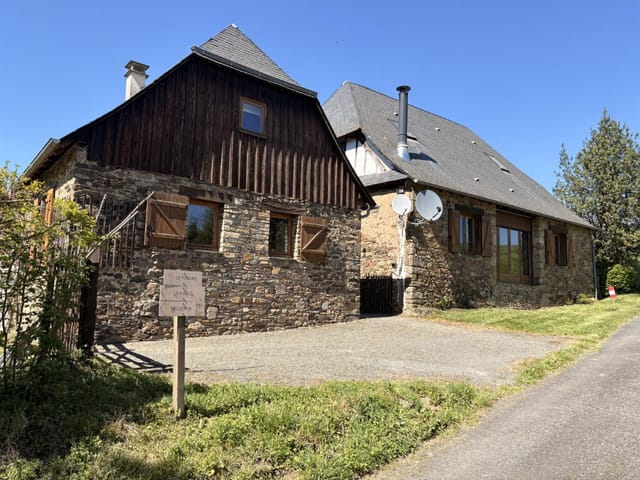
Stand at the edge of the limestone plateau on a clear October morning and you can hear absolutely nothing. No traffic, no machinery, no neighbors. Just a kestrel working the thermals above the Causses and the faint whisper of wind through the oak scrub. That kind of silence is not incidental here — it's the whole point. This is Marcilhac-sur-Célé, a village in the Lot department of southwestern France where the river carves through pale cliffs and the pace of life hasn't changed much in a century. And this property — a complete rural estate comprising the majority of an ancient hamlet, two substantial stone houses, two large farm buildings, and 92 unbroken hectares of land — is about as rare as the silence itself. Let's start with the land, because it's what makes everything else possible. The 92 hectares come in one piece, which matters enormously. No fragmented parcels, no tenant farmers, no complicated lease agreements to unpick. Seventeen hectares are meadows and mixed woodland down in the valley; the remaining 75-plus are fully fenced limestone plateau — the wild, scrubby Causses terrain that defines the character of this entire region. Walk it for an afternoon and you'll find old stone cazelles, those dry-stone shepherd's huts that dot the plateau like punctuation marks from another era, plus a small barn still waiting for someone with a vision. The fencing is already in place, which is a significant practical detail: under France's 2023 loi clôture, that enclosure can be maintained for agricultural activities, horse breeding, or hunting dog training grounds, among other permitted uses. The land supports animals, market gardening, rural tourism, or simply the luxury of having a private wilderness on your doorstep. ... click here to read more
Picture 1

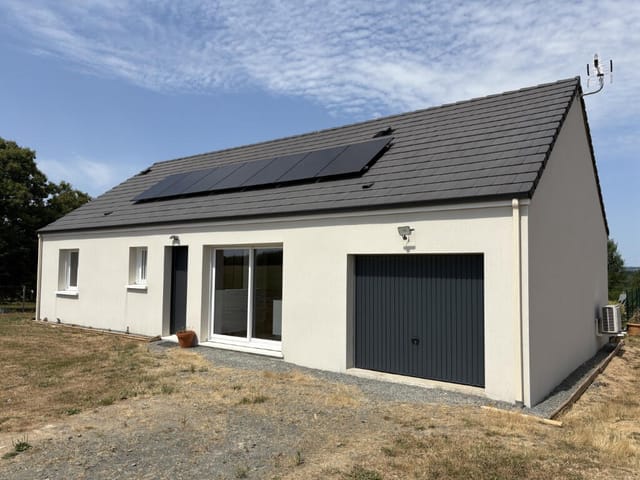
Stand at the end of the long dirt path on a September morning, coffee in hand, and the view opens across 2.5 acres of rolling Périgord Noir countryside—oak-studded ridges, golden fields, and not a rooftop in sight. That particular kind of quiet, the kind that takes a few days to fully settle into, is what this old Aquitaine farmhouse delivers every single time you arrive. This is a vacation home in Villeréal that earns its place in your life before you've even unlocked the front door. The property sits in the Lot-et-Garonne département of southwest France, just minutes from Villeréal itself—a fortified bastide town founded in the 13th century, with its covered market hall still hosting the Saturday morning marché that locals have been attending for generations. Walnut oil, Agen prunes, foie gras from the farm two valleys over, wine from Bergerac or Duras—the market tables are a lesson in why this corner of France feeds people so well. The town's arcaded central square, Place de la Halle, is the kind of place where lunch stretches into mid-afternoon without anyone apologising for it. The farmhouse itself is 110 square metres of stone walls and tiled floors, structurally solid, with a 35-square-metre living room that catches afternoon light and has the proportions of a room that knows its purpose—long evenings, good wine, people you like around a table. The kitchen is already fitted and equipped with a gas hob, oven, extractor hood, and built-in fridge, so you're not arriving to nothing. A second back kitchen with its own hob and storage means this works equally well as a single residence or—with some reorganisation—as two independent dwellings, which opens up interesting possibilities for rental income or multigeneratio ... click here to read more
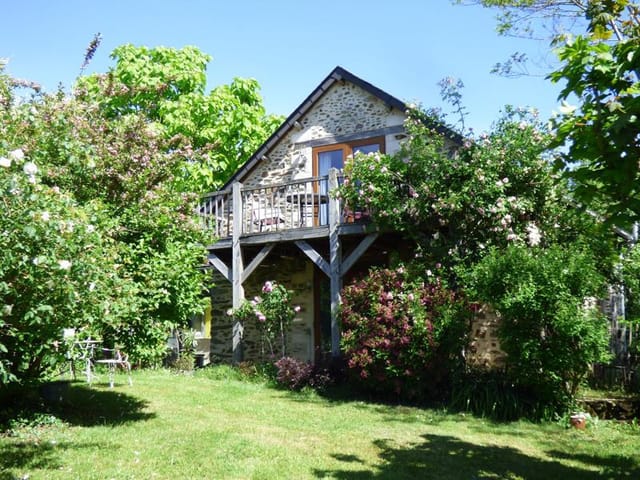
Picture 1

Step outside on a Sunday morning and the air already smells like lavender and warm stone. Twenty-five olive trees line your view. The pool, south-facing and still, catches the first light above the Hérault hills. This is the kind of place where you forget what day it is — and mean it. Set in a small hamlet just five minutes outside Hérépian and ten from the thermal spa town of Lamalou-les-Bains, this four-bedroom villa sits on 5,500 square metres of landscaped grounds in the heart of the Parc Naturel Régional du Haut-Languedoc. Built in the early 2000s to a high specification and kept in genuinely good condition, the property brings together a 200 m² main house and a fully independent 40 m² guest cottage — each with their own character, their own rhythm. Walk through the entrance and the main living space hits you immediately. The cathedral ceiling climbs over five metres, flooding the room with the kind of open-air feeling you don't usually find inside four walls. French windows run the length of the ground floor, framing the pool and olive grove like a living canvas. In summer, you leave them open all day. The lounge, dining area, and fully equipped kitchen flow into one another — a central island, an American-style fridge-freezer, induction hob, coffee machine — all the kit you'd want when cooking a proper dinner after a day at Lac du Salagou, which is less than forty minutes away. There's also a pantry and laundry room off the kitchen, a practical detail that makes all the difference when this becomes your actual home, not just a holiday. The master suite occupies its own wing on the ground floor — 35 m² in total, with an 18 m² bedroom, a walk-in dressing room, and a fully tiled en-suite bathroom complete with a d ... click here to read more
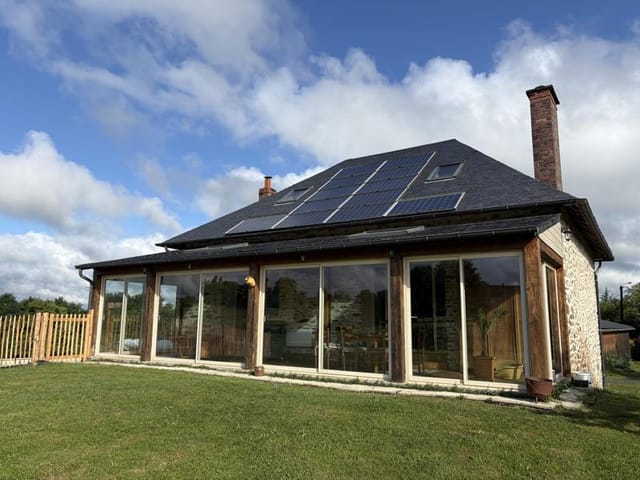
Picture 1

On a still morning in Estadens, you wake to the sound of nothing in particular — maybe a wood pigeon somewhere in the oak trees, maybe the distant clang of a cowbell drifting up from a lower pasture. You push open the bedroom shutters and the Pyrenees are just there, the peaks catching the first cold light of day while your kitchen fills with the smell of coffee and whatever the log stove is doing to the air. This is what 415,000 euros buys you here. Not just a house. A completely different pace of life. The farmhouse sits behind a gated entrance on the edge of this small commune in the Haute-Garonne, surrounded by mature gardens that have been given proper attention — not just mowed and left. Stone walls, sun-warmed terraces, the kind of deep shade in summer that makes you rearrange your afternoon plans entirely. The property was fully renovated, and the work was done with care: double glazing throughout, a heat pump system with underfloor heating on the ground floor, modern electrics, and a kitchen that can actually cope with serious cooking. A gas range cooker. Integral appliances. Real counter space. You could make a proper cassoulet in here, not a apologetic Tuesday-night version. The ground floor living area has that particular quality of light that old stone houses in south-west France sometimes get — something to do with the depth of the walls and the angle of the windows. The sitting room keeps its original exposed beams and stonework, and the log-burning stove makes the whole space pull together in winter. It doesn't feel like a renovation project where someone stripped out the character to fit a modern kitchen. The two things genuinely coexist. Upstairs, three generous bedrooms are fully decorated and ready ... click here to read more
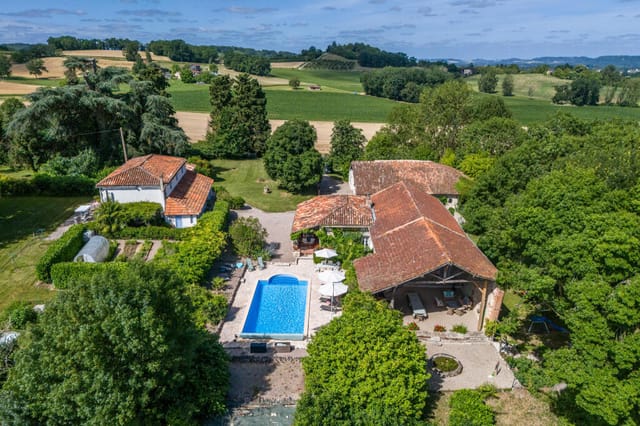
Picture 1

On a still Tuesday morning in late September, you open the tall wooden shutters of the main bedroom and catch the smell of damp stone and cut grass drifting up from the courtyard below. The vineyards start just beyond the garden wall. A church bell counts eight strikes somewhere in the direction of Rauzan. The coffee is already on, and you have nowhere to be. This is the rhythm of life at this remarkable 17th-century Girondine farmhouse in the heart of Entre-Deux-Mers — and once you've experienced it, a week's holiday simply won't feel like enough. The property sits in a peaceful hamlet less than five minutes from the village of Rauzan, where Saturday morning means the street market on the main square, two boulangeries competing for the title of best pain au levain, and an espresso at the café before the day properly starts. It's not a tourist village — it's a real working French community where you'll recognise faces within weeks of arriving. That's a rarer find than you'd think in Gironde. The farmhouse itself dates to the 1600s and carries all the architectural honesty of that era: stone walls thick enough to keep August heat at bay, original exposed beams, and proportions that modern builds simply can't replicate. But it's been lived in and cared for over the decades rather than left to crumble romantically. The result is a home that's genuinely comfortable and move-in ready, without the clinical overhaul that strips character out of old houses. The main house spreads across a very generous footprint. Downstairs, a 42m² sitting room opens through to a formal dining room of 53m² — big enough for the kind of long lunches this part of France was basically invented for. The kitchen at 26m² is well-equipped and practic ... click here to read more
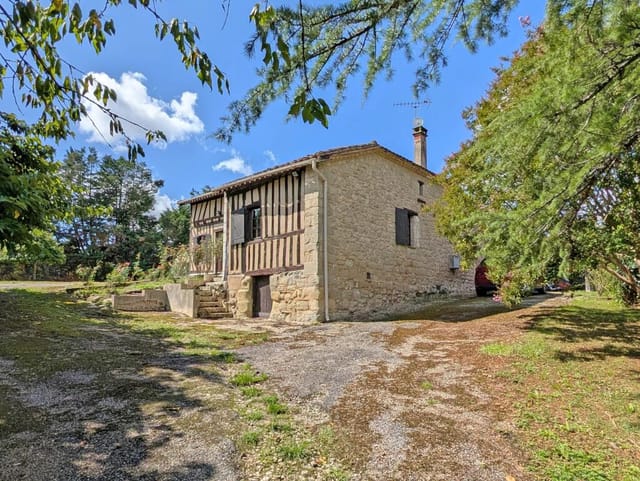
Photo 1

Picture yourself sipping morning coffee on a sun-drenched terrace overlooking 2,130 square metres of Mediterranean garden, the scent of lavender drifting on warm Provençal breezes while the French Riviera sparkles just 20 minutes down the hillside. This is the daily reality awaiting at this 186-square-metre villa in La Gaude, where authentic southern French living meets practical vacation home ownership in one of Europe's most coveted holiday destinations. Within a five-minute drive of village amenities yet cocooned in tranquil countryside, this five-bedroom residence offers the perfect balance international buyers seek when investing in a second home on the Côte d'Azur. La Gaude occupies a privileged position in the Alpes-Maritimes department, perched on hillsides between Nice and the medieval village of Saint-Paul-de-Vence. This location delivers the quintessential Provençal experience while maintaining exceptional connectivity to Mediterranean beaches, Nice Côte d'Azur Airport just 25 minutes away, and the cultural richness of the French Riviera. The property sits in peaceful countryside setting where olive groves and cypress trees define the landscape, yet village shops, bakeries serving warm croissants, and traditional Provençal markets remain within five minutes. This accessibility makes the villa ideal for vacation home owners who value both seclusion and convenience, whether visiting for summer holidays or extended winter escapes. The villa's 186 square metres spread across seven thoughtfully designed rooms, accommodating family gatherings and guest visits with ease. The ground floor welcomes you through an 11-square-metre entrance hall leading to a generous 32-square-metre living room where a traditional firepla ... click here to read more
Picture 1

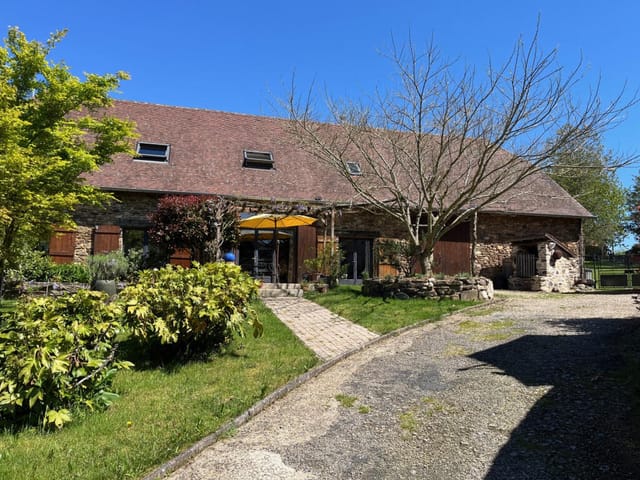
Picture yourself stepping through wide glass doors onto a sun-warmed terrace in the Lot Valley, where your private pool reflects the endless blue sky of southwestern France. This is not just another property—this is your gateway to the truffle-rich countryside south of Cahors, where medieval villages dot rolling hills and every season brings new reasons to gather family and friends at your modern French vacation home. Built in 2012 with meticulous attention to contemporary design, this 287-square-meter architect-designed residence offers seven bedrooms across two living spaces, making it an exceptional choice for multi-generational holidays or generating rental income when you're back home. The moment you arrive at this property, you understand why the Lot region has become a sought-after destination for international second home buyers. Located just twenty minutes from Cahors—a city renowned for its Malbec wines and the magnificent Pont Valentré bridge—you're positioned perfectly between authentic French village life and easy access to modern amenities. The A20 motorway sits five minutes away, connecting you to Toulouse airport in ninety minutes and Bordeaux in two hours, making weekend escapes from London, Brussels, or Amsterdam entirely practical. Walk to local shops for your morning baguette and discover why this area draws visitors seeking the real France, far from overcrowded coastal resorts. The architecture immediately sets this vacation home apart from traditional stone farmhouses dominating the region. Your architect embraced light as the primary design element, installing expansive sliding glass panels that dissolve boundaries between interior and exterior spaces. The open-plan living area spans 103 square met ... click here to read more
Picture 1

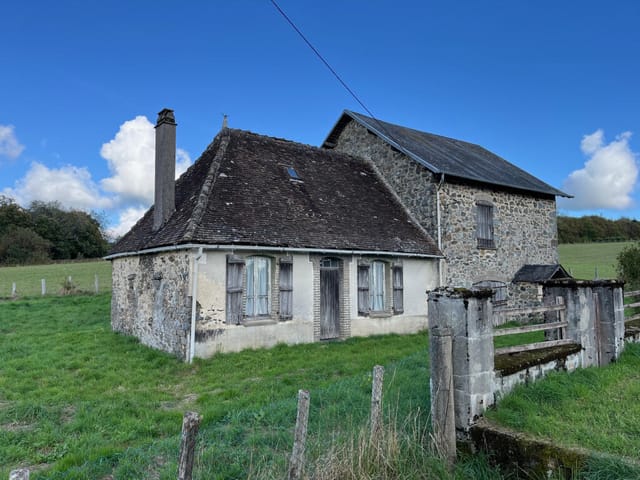
Picture yourself stepping through ancient wooden doors into a centuries-old Breton village where morning mist rolls over canal waters and church bells mark the rhythm of unhurried days. This substantial stone property sits in the heart of Châteauneuf-du-Faou, a working Finistère village where authentic Brittany unfolds beyond the tourist trail. Here, two adjoining houses connected by history and stone walls offer 5 bedrooms across 80 square meters of lived-in character, waiting for vision and energy to unlock their considerable potential as your family's Brittany vacation home base. Châteauneuf-du-Faou occupies a privileged position in Brittany's interior, where the Nantes-Brest Canal threads through green valleys and the Montagnes Noires rise to the south. This is rural Brittany at its most authentic: working farms, weekly markets overflowing with Breton produce, and stone villages where everyone still greets neighbors by name. The property sits steps from bakeries, butchers, cafés, and essential shops, making daily life wonderfully walkable while positioning you perfectly for exploring Brittany's dramatic coastlines, medieval forests, and cultural treasures. The dual-house configuration creates fascinating possibilities for vacation home ownership. The first house welcomes you through an entrance hall into a generous living and dining space anchored by a working fireplace, where winter evenings gather around crackling wood and summer doors open to garden breezes. The kitchen includes an integrated shower area, reflecting the practical Breton approach to space, while a connecting living room provides passage to the second residence. Upstairs, two bedrooms offer sleeping quarters under slate eaves. The adjoining second ... click here to read more
Picture 1

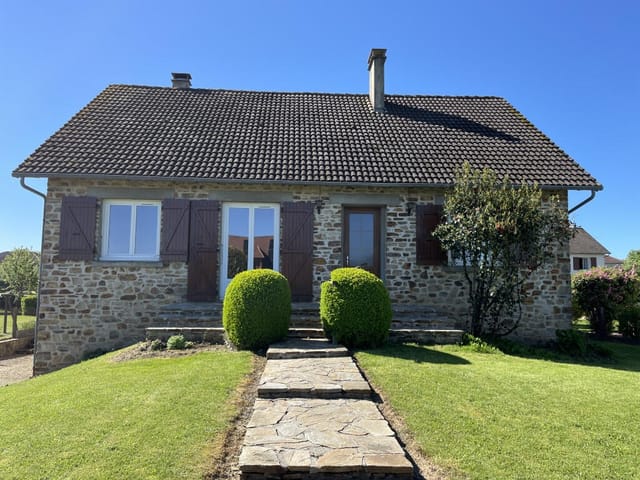
Picture yourself sipping morning coffee on a sun-drenched terrace, surrounded by 2100 square meters of private gardens, while the ancient Fontainebleau Forest beckons just minutes away. This is the reality awaiting you in this fully renovated Briarde house in Saint-Méry, where authentic French countryside living meets exceptional connectivity to Paris—your European vacation home that seamlessly blends rural tranquility with urban accessibility. This four-bedroom residence represents that rare opportunity to own a piece of genuine Seine-et-Marne heritage without sacrificing modern conveniences or metropolitan access. The 193-square-meter layout spans two thoughtfully designed floors, offering space for extended family gatherings, hosting friends from abroad, or generating rental income during weeks you're not using it yourself. The fully renovated interiors preserve traditional Briarde architectural charm while incorporating contemporary comfort standards that international buyers expect. Step through the entrance hall into flowing reception spaces where the generous dining room connects seamlessly to an inviting living room. Floor-to-ceiling windows frame garden views and open onto that expansive terrace—your outdoor room for al fresco dining under starlit summer skies or lazy Sunday lunches when autumn leaves turn golden. The open-plan kitchen forms the heart of this home, intelligently positioned to serve both dining and living areas, perfect for that convivial French lifestyle where cooking and conversation intertwine. What truly distinguishes this property is the dedicated summer kitchen accessible from the dining room—a feature quintessentially French that transforms warm-weather entertaining. Imagine preparing regi ... click here to read more
Picture 1