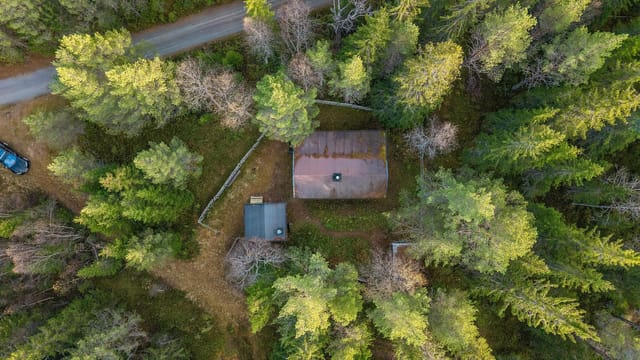
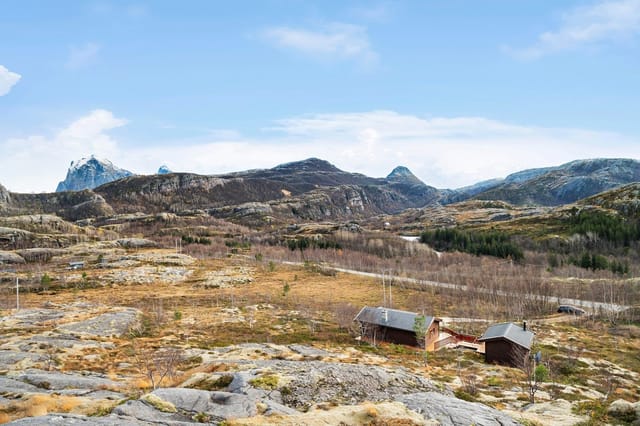
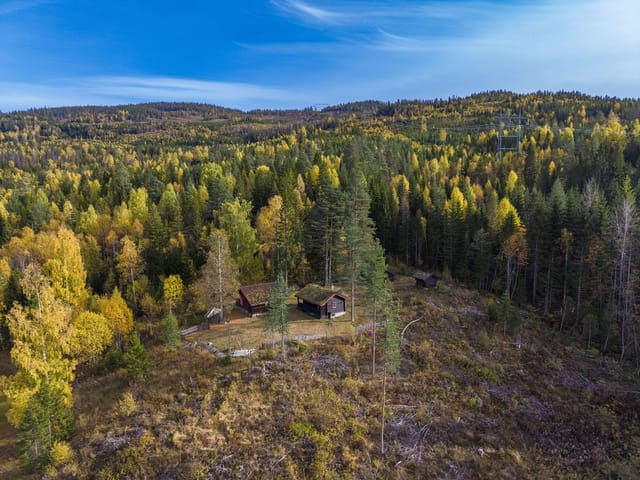
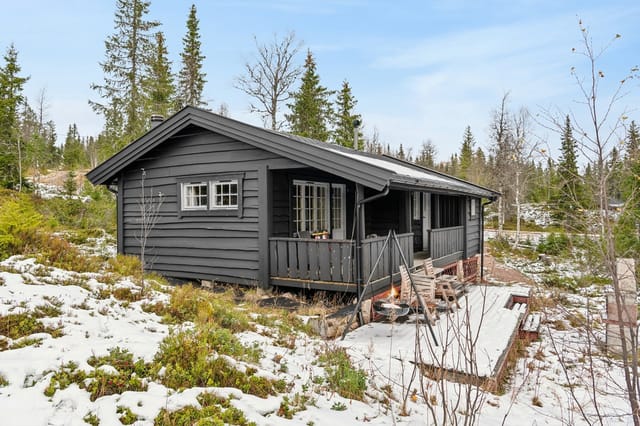
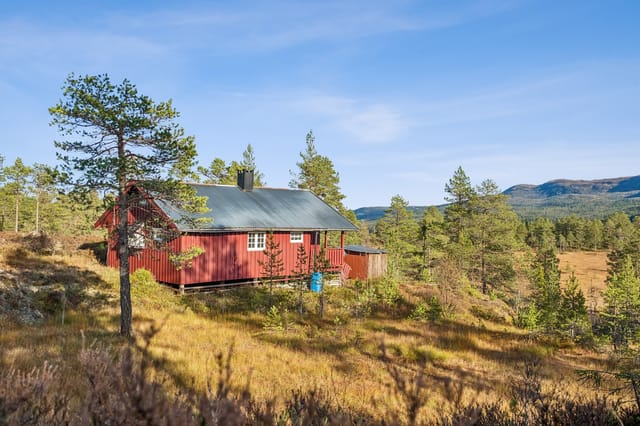
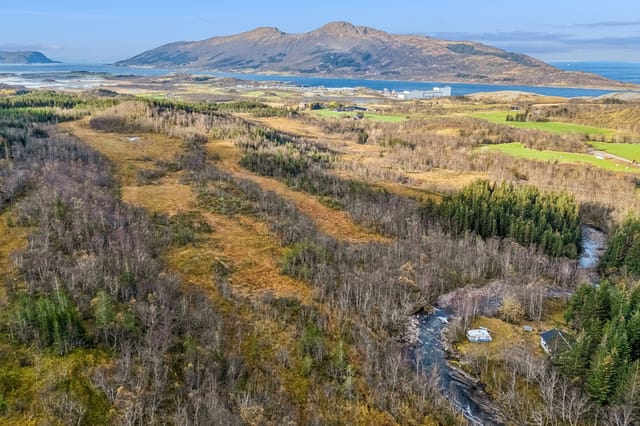
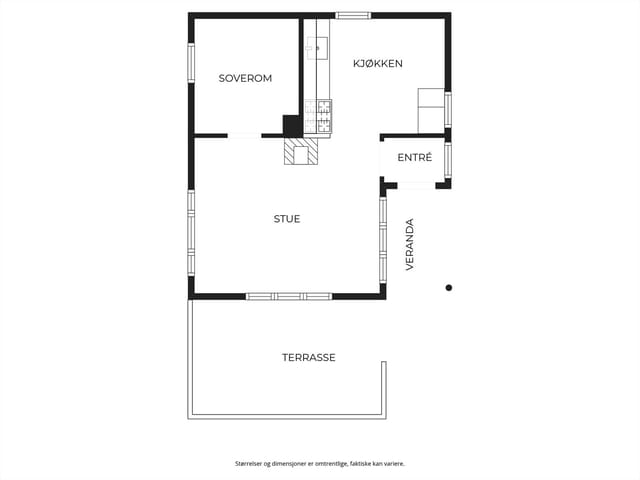
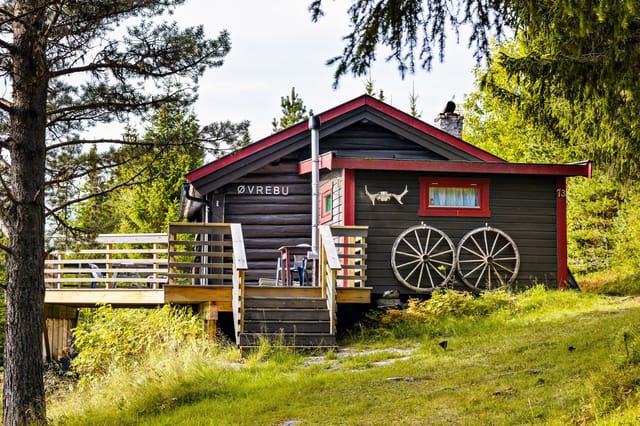
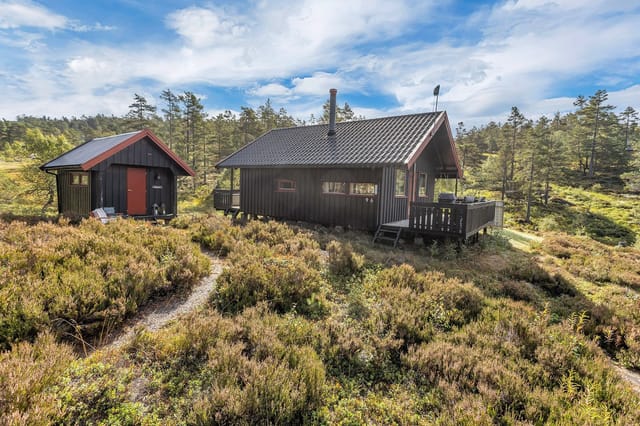
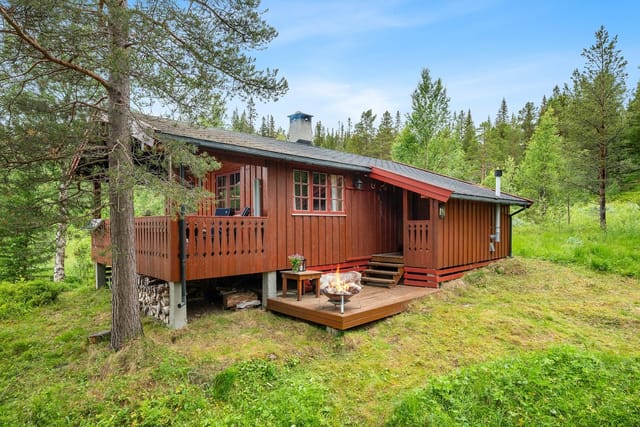
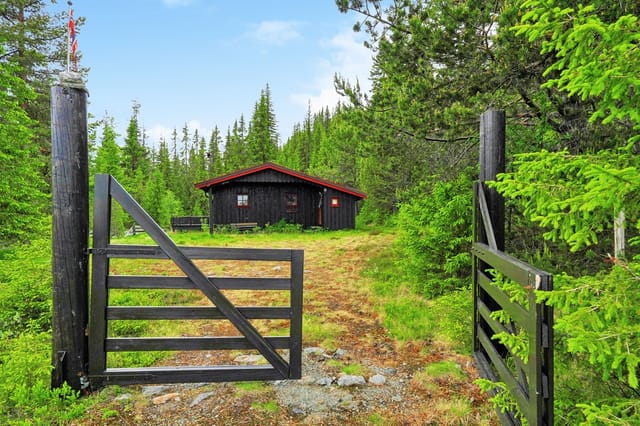
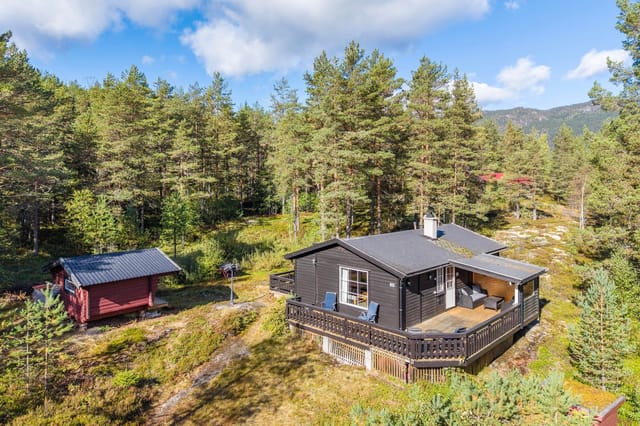
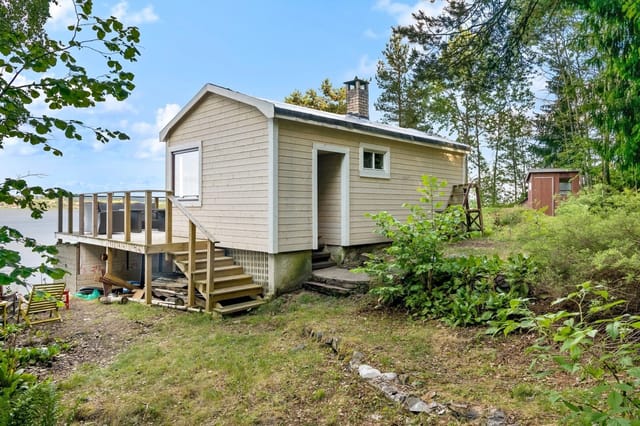
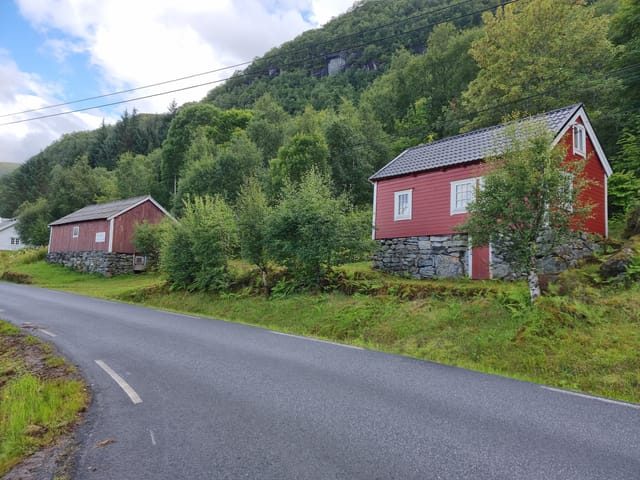
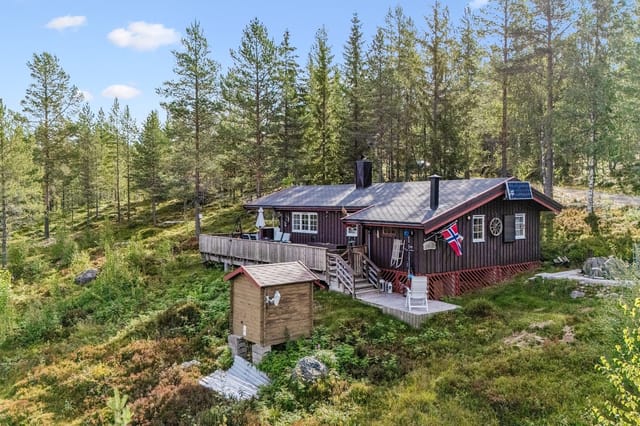
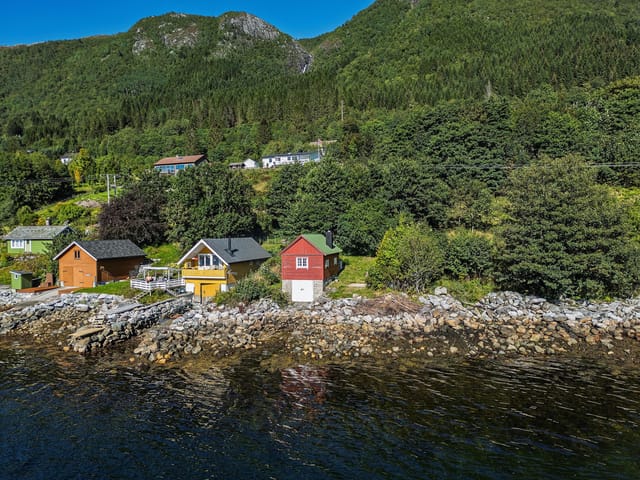
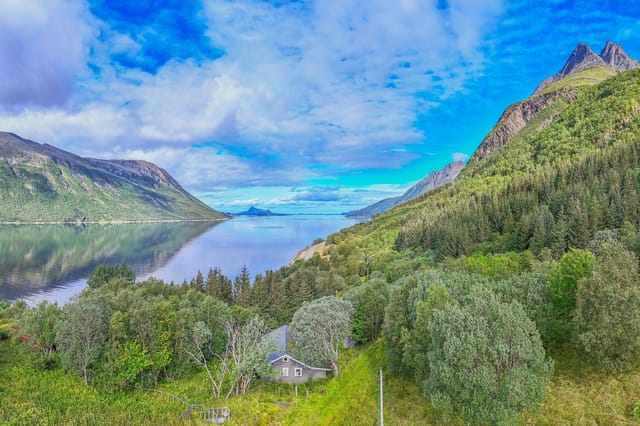
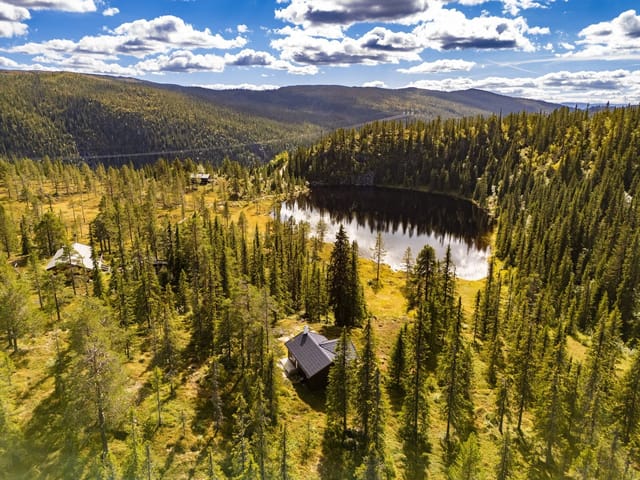
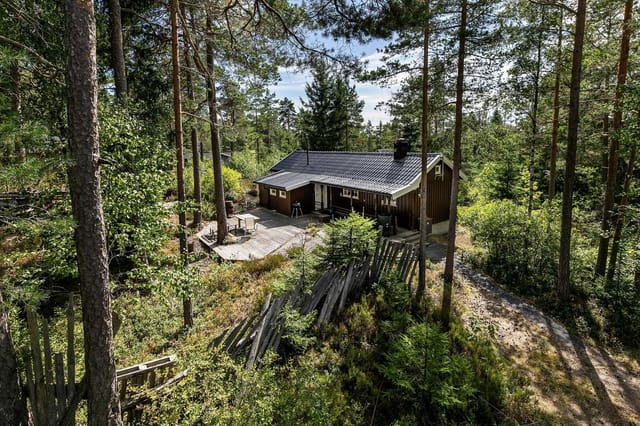
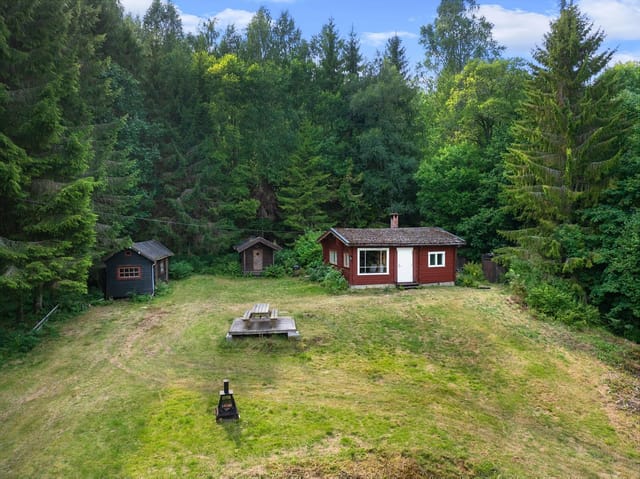
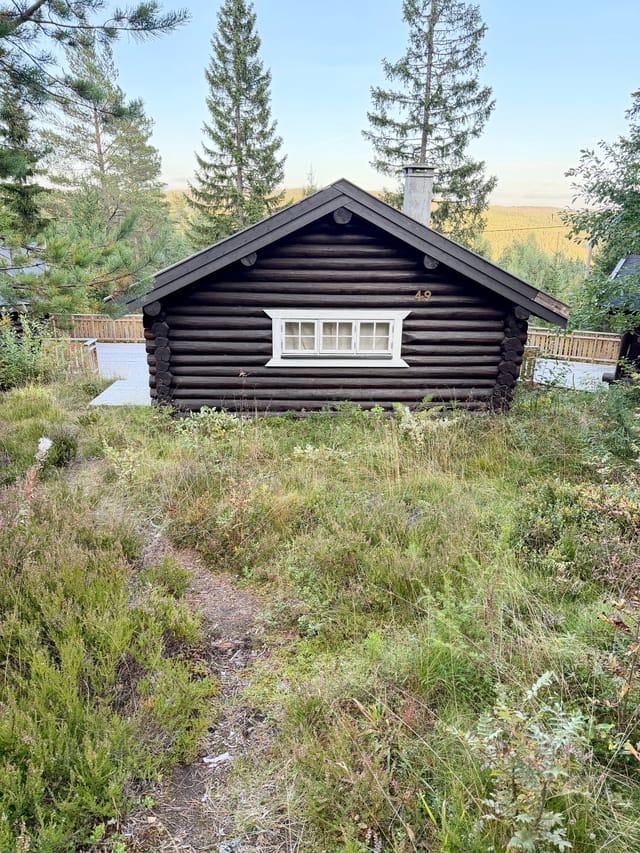
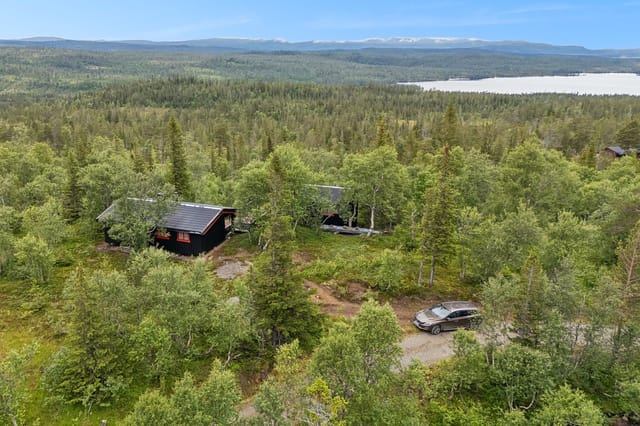
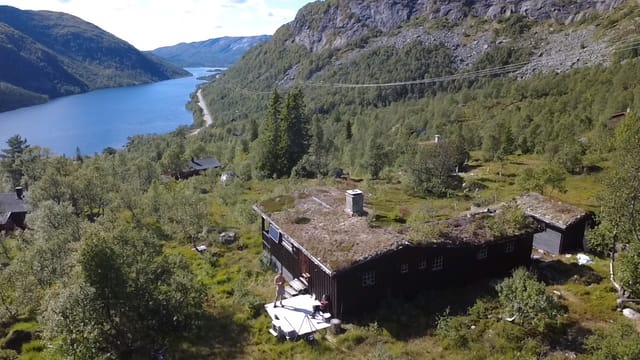
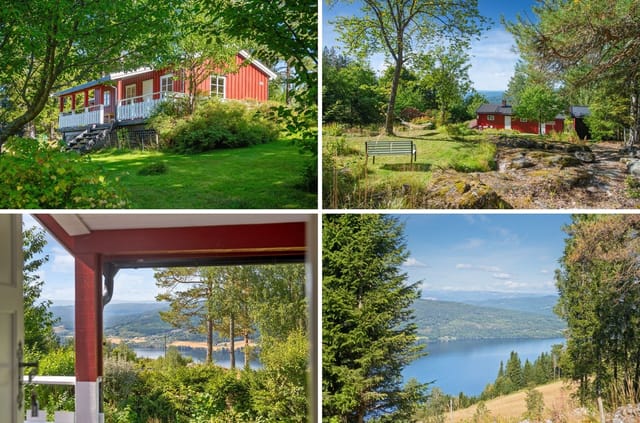
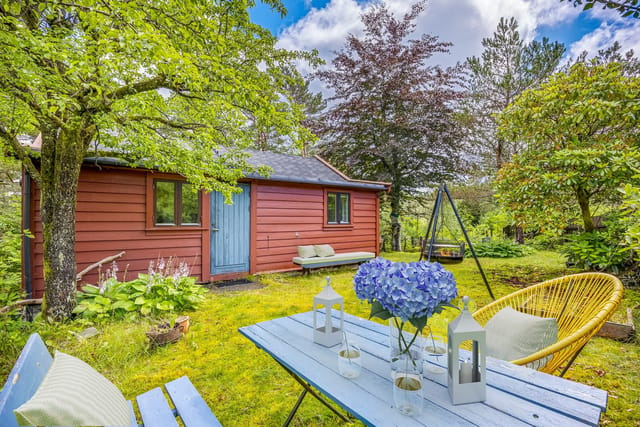
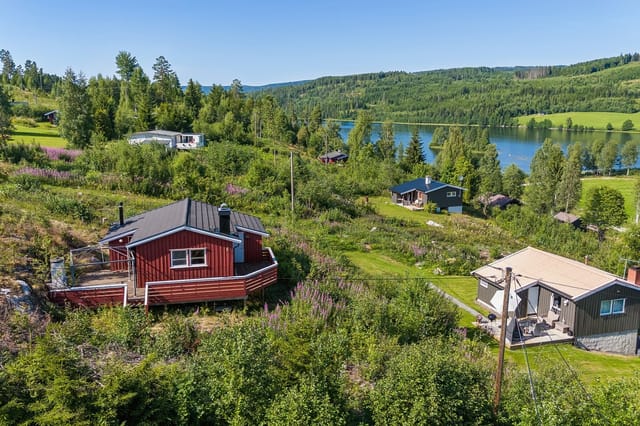
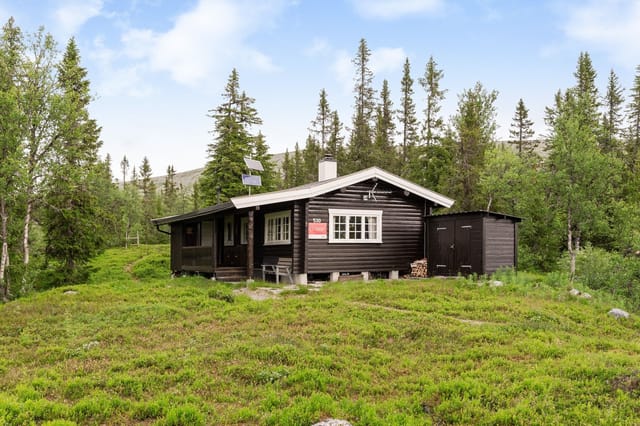
Houses For Sale In Norway For Less Than €100,000

Houses for sale in norway - homestra offers the largest amount of european real estate with over 200,000+ properties, find any type of property within your budget from villas to country homes. buy or rent your perfect home in europe.

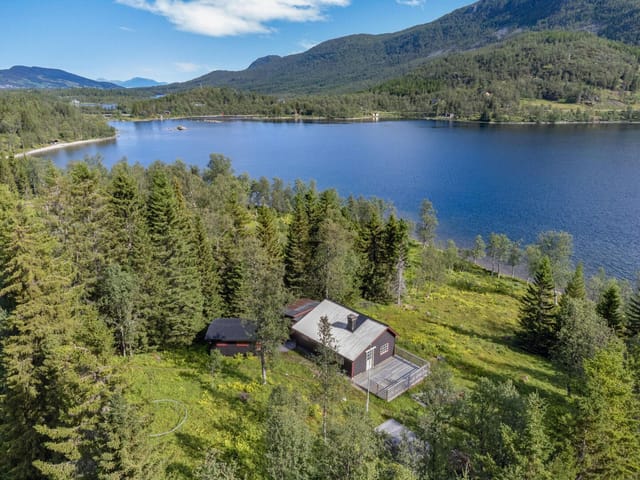
Step out onto the terrace at Gafsetveien 123 on a July morning and you'll understand immediately why Norwegians have been coming to this corner of Trøndelag for generations. The air smells of pine resin and cut grass. Somewhere below the hill, the Trondheimsfjord catches the early light. A woodpecker is doing its thing in the birch stand at the edge of the plot. It's 6am and you have nowhere to be. This 1-bedroom cabin sits on a 1,463-square-meter plot just outside the small community of Stadsbygd, with the sea 1.4 kilometers away and the bustle of Rissa center a short drive down the road. At 29 square meters for the main cabin plus a 16-square-meter annex with its own covered terrace, this isn't a grand estate — it's something better: a proper Norwegian fritidsbolig, the kind of place where a long weekend feels like a full reset. The cabin was built in 1976 and has the bones you'd expect from that era — solid, practical, honest. The living room, roughly 17 square meters, pulls in natural light from three directions, which matters a lot this far north. In midsummer, that means golden evening light streaming in until nearly 11pm. In late September, it means amber afternoon warmth that makes the wood stove across the room look even more inviting. That stove is going to become one of your favorite things about this place, almost certainly by your second visit. The kitchen is functional and real — no pretense here. A pump system currently supplies water to the kitchen tap, and the owner has noted that a permanent water line runs directly behind the cabin, meaning a full connection is a practical future upgrade rather than a distant fantasy. A septic tank is already in place, with drainage laid toward the annex. This isn't ... click here to read more

Welcome to Gafsetveien 123! (Photo: Harald Wanvik, Interior Photo)

Early morning on Vesterøy, the smell of salt air comes through the window before you've even opened your eyes. By the time coffee's ready, you're sitting on the south-facing terrace watching the light shift across Hvaler Archipelago — the kind of slow, wordless morning that city life has been stealing from you for years. Vikerveien 191 sits right at the boundary of Ytre Hvaler National Park, one of Norway's most fiercely protected stretches of coastline, on the island of Asmaløy. This is not a cabin you stumble upon. You turn off just before the Hvaler Tunnel, follow the road through open, wind-carved terrain where juniper scrub hugs the rock faces, and then it appears — a well-kept 1965 chalet on 6,180 square metres of sunny, south-tilting land, with views that stretch out over the sea in a way that makes you reset your sense of scale. At 60 square metres, this is a cabin that's been lived in properly. Not over-renovated into something soulless, not left to quietly deteriorate — genuinely cared for over the past fifteen years in ways that matter. A drilled well with pump means fresh water independence. New windows keep out the coastal chill. The electrical system has been fully upgraded. The fireplace in the living room does real work from September through April, when the archipelago empties of summer crowds and you get the place almost entirely to yourself. Two bedrooms, one bathroom with shower and toilet, a functional kitchen, and a hallway that doesn't feel cramped — the layout is compact but sensibly arranged. Natural light fills the interior throughout the day, partly because of the orientation, partly because the windows are well-positioned for both the morning sun on the eastern side and the long Norwegian s ... click here to read more

Photo: Eivind Lauritzen

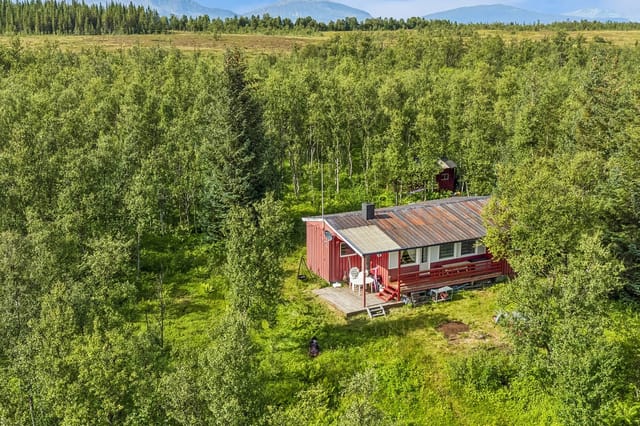
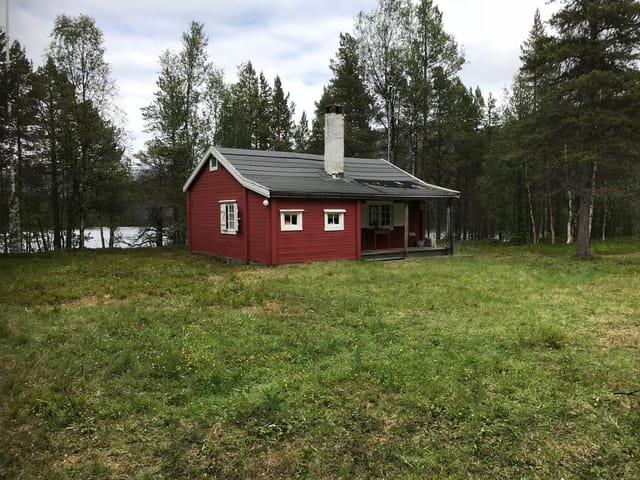
Step off the hiking trail from the E6, push open the old wooden door, and suddenly the whole valley below Virakfjellet opens up in front of you. It hits you before you even get inside: the silence, the cold clean air off the surrounding peaks, the faint sweetness of cloudberries in the marsh that surrounds the cabin on three sides. This is the kind of place people spend years looking for. Built around 1925, this small mountain cabin sits at 330 meters above sea level on Virakfjellet, roughly 20 kilometers south of Narvik in Nordland county. Twelve square meters of interior space — one main room and a bislag entrance — that's it. No pretension, no extras. Just solid old-growth timber walls, a wood stove that'll have the room warm inside twenty minutes, and a view through the single window that most hotel rooms in Norway would charge a fortune for. The roof and exterior cladding were replaced in the late 1970s, so the structure is sound. What it needs now is someone who appreciates what it is: a century-old refuge in one of the least-visited mountain plateaus in Nordland, sold complete with every piece of furniture and equipment inside it. The cabin sleeps three and has done so comfortably for generations. There are no designated bedrooms — this isn't that kind of property. You pull out the sleeping arrangements, light the stove, and the place does what it's always done. It works. Water comes from a spring fed by a geological fault line on the slope above; locals will tell you it hasn't run dry in living memory, and there's no reason to doubt them. The woodshed out back is stocked heavily enough that you won't need to think about firewood for several winters. All of this comes with the purchase price. The 900-square-met ... click here to read more

Outdoor area with stone slab sourced from the local area

Stand on the southwest-facing balcony at seven in the morning, coffee in hand, and watch the Helgeland ferry cut a white line across the glassy water below. The air smells of salt and spruce. Nothing moves except the birds and the tide. This is Sørfjorden on a Tuesday, and it feels exactly like what you imagined Norway would feel like before you ever visited. The cabin at Sørfjordveien 58 sits roughly a hundred meters from the shoreline, elevated just enough — twenty-five meters above sea level — to give you that panoramic southwest sweep across the water without ever feeling exposed or wind-battered. It's a compact, practical property: 43 square meters of indoor living space, two bedrooms sleeping up to six, one bathroom, and a wraparound terrace of approximately 40 square meters that genuinely doubles your usable space from late May through September. Built in 2010 and given a solid renovation in 2017, it's in good condition and ready to use from day one. No project, no surprises. Just show up. The plot itself runs to 954 square meters, which out here in Rødøy municipality — one of the least densely populated stretches of the Norwegian coast — feels genuinely generous. There's room to breathe, room for the kids to roam, room to eventually build the boathouse the area is already regulated for. That detail matters more than it might first seem. A permitted boathouse and floating dock means direct sea access for a small boat or kayak, which transforms how you experience the fjord. Instead of watching the water, you're on it. Sørfjorden sits in the Helgeland region of Nordland, roughly 100 kilometers south of the Arctic Circle. That sounds remote, and in some ways it is — that's precisely the point. But remote here does ... click here to read more

Balcony

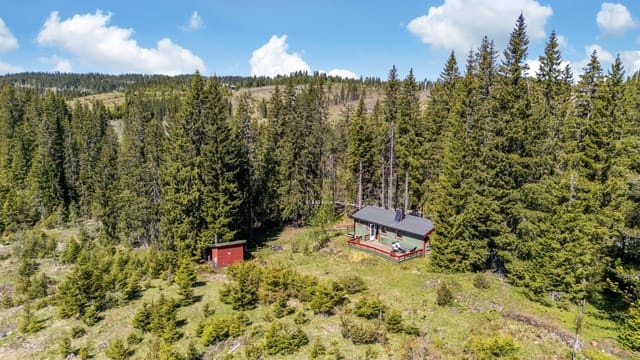
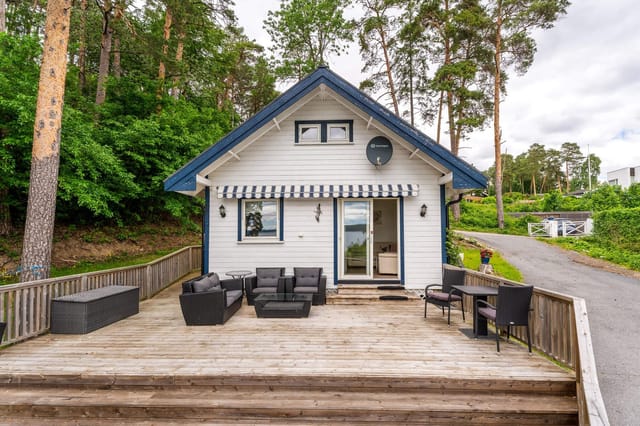
Stand on the terrace at Vikstølvegen 58 on a February morning and the only sound you'll hear is the soft creak of snow-laden pine branches and the distant swish of skis on groomed trails. The air is so cold it bites your nose. Coffee in hand, you watch the light shift from pale grey to a low, golden Scandinavian winter sun spilling across 1,222 square metres of snow-covered hillside that is entirely yours. This is Evje — and this little chalet quietly delivers the kind of Norwegian cabin experience that people spend decades searching for. Built in 1965, the chalet sits on Vikstølvegen in the forested hills above Evje, a town of roughly 3,500 people in Aust-Agder county that locals affectionately call the adventure capital of southern Norway. It's not a throwaway nickname. The Otra River, which carves through the valley below, runs some of the most popular white-water rafting stretches in Scandinavia each summer. Evje og Hornnes municipality has mapped out hundreds of kilometres of marked trails for mountain biking, and the rock faces around Fennefoss draw climbers from across Europe between June and September. The chalet at number 58 puts you at the mouth of all of it — the cross-country ski trails start almost at the garden gate in winter, and those same tracks become hiking and biking paths the moment the snow retreats in April. Fifty-eight square metres sounds modest until you step inside and realise how cleverly the space works. The living room anchors the interior, and the wood-burning stove there is not a decorative touch — it is the social core of the whole property. On cold evenings, it radiates enough warmth to fill the room quickly, and there's something about gathering around a real fire after a day on skis ... click here to read more

Front view of the cabin

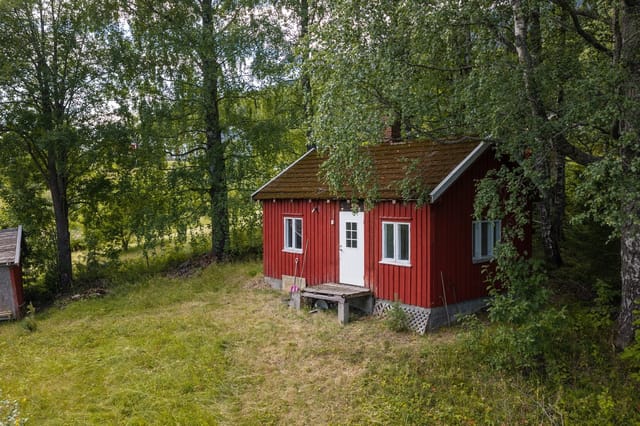
Step off the gravel path, push open the heavy timber door, and you're standing inside a cabin that was built before Norway was even a unified country. The year was 1835. Outside, the sea glitters toward the mountains of Stord and Fitjar — the same view whoever lived here first would have woken up to every morning. That sense of continuity, of being anchored to something genuinely old and real, is rare. And at Flatråkervegen 280 on the island of Tysnes, it costs less than most city parking spaces in Oslo. Tysnes sits in Vestland county, tucked between the Hardangerfjord and the Bjørnafjorden, and locals here will tell you it's one of those places that doesn't need to announce itself. There's no ski resort branding or tourist infrastructure. What there is instead: quiet coves, black trumpet mushrooms pushing up through the forest floor in autumn, golden chanterelles in summer, and a community that shows up for Tysnesfest each year with the kind of energy you can't manufacture. The festival draws thousands to this small island — live music, outdoor stages, a genuine celebration rather than a curated event. Outside of festival season, life here moves at a pace that most people have to travel a long way to find. The cabin itself is compact — 36 square metres of usable space — but it doesn't feel small. Exposed timber walls and visible ceiling beams give it a solidity that modern builds rarely achieve. Natural light comes in through windows that frame the hillside and the water beyond. The living room fits a sofa, a dining table, and still leaves room to breathe. There's a working fireplace, and on a wet October evening with the wind coming off the water, you'll be glad it's there. The kitchen is more functional than it mig ... click here to read more

Welcome to Flatråkervegen 280, presented by Elise Linningsvoll at Aktiv Eiendomsmegling. Photo | Inderhaug Boligfoto

Wake up on a Saturday morning in October and the valley below Eggedal is filling with low cloud, the kind that sits in the hollows between ridges and turns everything golden at the edges. You pull on a sweater, start the wood stove, and stand at the living room window with your coffee while the mountains do their thing. No traffic. No notifications. Just the occasional thud of snow sliding off a pine branch somewhere up the slope. This is what owning a cabin at Tempelseterveien 211 actually feels like. Perched on the hillside above Eggedal village, this two-bedroom Norwegian mountain chalet sits on a fully owned 570-square-metre plot with views straight across the valley to the ridgelines beyond. Built in 1970 in the sturdy, no-nonsense tradition of classic Norwegian hytter, it has been kept in good condition and carries all the honest character you want from a mountain retreat — wood-panelled walls, a fireplace with an insert, a separate wood-burning stove, and windows sized generously enough to make the landscape feel like part of the room. At 42 square metres total, the footprint is tight but considered. Everything has a purpose. Nothing is wasted. The two bedrooms sleep a family or a group of friends comfortably. The main living area is where you'll spend most of your time regardless — playing cards at the table after a long hike, or simply doing nothing productive in the best possible way. A five-square-metre balcony extends off the main space, south-facing enough to catch afternoon sun in summer, and positioned so you get the full sweep of the valley without anything man-made interrupting the sightline. Electricity runs throughout the cabin, and summer water comes from a shared well just outside — a perfectly pra ... click here to read more

Welcome to Tempelseterveien 211! Photo: EFKT v/Mads Brekke.

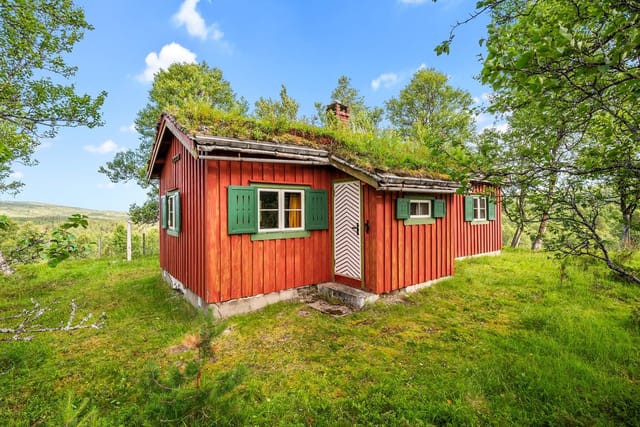
The morning quiet up here is something else entirely. No traffic, no notifications — just the low creak of hand-hewn timber warming in the sun and, if you step out onto the terrace before breakfast, the silver surface of Lake Femunden stretching south toward the Swedish border. At 684 meters above sea level, the air has a sharpness to it that wakes you up faster than any coffee. This is Femundgropa 11, a two-bedroom log cabin on the edge of Drevsjø, and it sits at the kind of address that most people only ever see on hiking maps. Built in 2001 using traditional round-timber construction, the cabin is the real thing — not a modern kit house dressed up with rustic touches, but an actual hand-crafted log structure with a sod roof that's been quietly growing into the hillside for over two decades. The walls are thick, the logs are hand-hewn, and the whole place has the satisfying solidity of something built to last generations rather than to photograph well for a brochure. Several of the windows were replaced around 2009, and they frame views in three directions: birch forest, open fell, and on clear days, the long blue line of the lake below. Inside, the living space is compact and honest. A wood-burning stove anchors the main room — and in late September when the birch leaves go gold and the temperature drops overnight, you will be very glad it's there. The kitchen runs off a gas-powered stove, the fridge is included in the sale, and wastewater drains naturally through a terrain ditch. There's no mains connection, which is exactly the point. Power comes from a south-facing 12V solar panel system backed by a 136Ah battery, enough for lighting and the small appliances you actually need. Mornings here run on their own sched ... click here to read more

Welcome to Femundgropa 11! A leisure property with a cozy handcrafted log cabin from 2001 and an annex from 2013.

Step onto the south-facing terrace on a July morning and the first thing you notice is the silence. Not the dead kind — the full kind, broken only by wind moving through the pine tops and the occasional call of something you can't quite name. Grimestadveien 41 sits elevated above the surrounding terrain in Marnardal municipality, and from this perch you genuinely feel like the landscape belongs to you. This three-bedroom chalet on Grimestad has been a quiet secret for long enough. Positioned on a 700 m² freehold plot near the shores of Dørevann, the cabin catches sunlight from first thing in the morning all the way through to the long Nordic evenings — that golden hour stretching past 10pm in midsummer — when the terrace practically begs you to pour something cold and stay put. The wrap-around deck covers 52 square metres across three sides of the building, which sounds like a statistic until you realise it means you can always find sun or shade depending on your mood, and there's room for a full outdoor table without anyone feeling cramped. Built in 1994 and held in good condition throughout, the chalet runs across a single level — a practical choice that works particularly well for families with young children or anyone who doesn't want stairs to be part of the conversation on holiday. Inside, the open-plan kitchen and living room feels genuinely generous for 82 square metres. Large windows push the walls out visually and pull the treeline in. On grey autumn afternoons, the wood-burning stove earns its keep; in the shoulder seasons, the heat pump handles the heavy lifting. Both working in tandem means this isn't purely a summer property — Norwegians use cabins like this year-round, and it's easy to see why. The thre ... click here to read more

Welcome!

Stand at the living room window on a still September morning and the fjord is right there — flat, silver, absolutely silent except for a single eider duck crossing the water's surface. That's what Røssvikbukta feels like at this hour. The old schoolhouse at Snillfjordsveien 4115 has been watching this bay since 1918, and it still holds its ground on the hillside like it was planted there on purpose. Locally, everyone calls it "Skolestua." The name stuck long after the last lesson was taught, and there's something quietly compelling about that — a building with a century of stories baked into its walls, sitting on a leased lot above the Snillfjord in coastal Trøndelag, waiting for someone with vision and a few weekends to spare. This isn't a turnkey weekend cabin. It's a renovation project in the truest sense, and that is exactly the point. The main building measures 51 square metres, which sounds modest until you step inside the living room. Twenty-nine square metres, ceiling height that opens the space up in a way you don't expect, and windows that frame the sea like paintings on all sides. The proportions work. That generous ceiling height isn't just an architectural quirk either — it creates a genuine opportunity to build a sleeping loft, the kind you see in restored hytte conversions across Møre og Romsdal, where a simple mezzanine platform doubles the utility of a small footprint without touching the exterior envelope. A builder familiar with Norwegian timber structures could make this room extraordinary. Off the living room, the kitchen runs to 7 square metres. Functional for a work weekend, but yes, it needs updating — new units, a proper worktop, potentially a small island if you knock back the partition sligh ... click here to read more

Welcome to Snillfjordsveien 4115! Photo: Husfoto AS (Børge Halseth)

The first thing you notice is the silence. Not the absence of sound — the lake has plenty of that, a rowboat knocking gently against its mooring, wind moving through the birch trees at the edge of the plot — but the absence of everything else. No traffic. No notifications that feel urgent. Just Storblåvatnet laid out below the living room windows like something from a Knut Hamsun novel, and a fireplace that'll be lit before you've even unpacked. This is a two-bedroom chalet vacation home in Namdalseid, Trøndelag, and it is genuinely unlike most cabins you'll find on the Norwegian market right now. The off-grid setup — solar panels on both the main cabin and the separate annex, rainwater collection with filtration, a wood-burning stove doing the heavy lifting on cold autumn nights — makes this less a weekend bolt-hole and more a functioning little world unto itself. Built originally in 1978, the main cabin sits at 46 square metres of interior space, which sounds compact until you're inside and the living room opens up around you. At roughly 25 square metres, it's the kind of room that earns its size: a fireplace at one end, a wood stove at the other, and a bank of large windows framing unobstructed views down across the water toward Øyensskavlen mountain, which tops out at 687 metres and is a proper half-day hike from your front door. On clear July evenings — and there are many of them here, the plot faces south and gets sun from early morning until late — you can sit on the 25-square-metre covered veranda and watch the light change colour on the mountain for an hour without it feeling like a long time. The kitchen is functional rather than elaborate, which fits the cabin's ethos: you're here to spend time outdoors, no ... click here to read more

Welcome to Storblåvatnet 10, presented by EiendomsMegler1 v/ Magnus Aasland.

Picture this: a quiet Tuesday morning, frost still on the ground, and you're standing at the edge of your own 523-square-meter plot in Gulsetmarka while the Skien ski trails are being groomed just eleven minutes up the road. Nobody else around. Just pine trees, the crunch of snow underfoot, and a 1952 cabin that's yours to remake entirely from scratch. That's not a compromise — for the right buyer, that's the whole point. This is a raw project. It needs to be said upfront because the buyers who'll fall in love with this place are the ones who hear "full renovation needed" and feel a spark of excitement rather than hesitation. The 37-square-meter cabin at Vestre Gulset 260 is structurally intact, sitting on freehold land with electricity already connected and water from a private well. The bones are there. What comes next is entirely up to you. Gulsetmarka sits on the western fringe of Skien, and if you know the area, you know why people here are fiercely protective of it. The trail network that runs directly from this property is part of a much larger system maintained by the local friluftslag — the Norwegian outdoor associations that take the marking and grooming of these paths seriously year-round. In winter, cross-country ski trails fan out from practically your doorstep. Come April, those same routes become mountain bike tracks and hiking paths cutting through birch and spruce forests that smell of earth and rain. In July and August, the evenings stretch so long that you'll find yourself out walking at nine o'clock with full light overhead, something that genuinely never gets old. The single-floor layout — one open room, no fixed bedrooms — is not a limitation. It's an invitation. Scandinavian hytte culture has al ... click here to read more

Photo: A7 media

Picture this: it's seven in the morning in late June, and the light in Trøndelag never really went away. You step out onto the timber terrace at Norddalsveien 1991 with a cup of coffee, and the only sounds are birdsong and the faint rustle of birch trees on the hillside. No traffic. No notifications. Just the particular kind of silence that feels earned. That's daily life at this two-bedroom cabin in the Momyr Vestre cabin community in Åfjord municipality — a place where Norwegian friluftsliv isn't a lifestyle trend but simply how things are done. The chalet sits on a 150-square-metre leased plot in one of the area's most established hyttefelt, which means you're buying into a mature community of like-minded cabin owners who've been coming here for decades. There's a social ease to these places that newer developments don't have — neighbours who know the best fishing spots, trails that aren't on any app, a quiet solidarity around the wood stove come October. The cabin itself was built in 1982 and spans 30 square metres of usable indoor space on a single level — compact by design, which is exactly the point. Everything you need is within arm's reach: a living room with a fireplace and big windows that pull in the green of the treeline, a kitchenette open to the main space so whoever's cooking is still part of the conversation, and two proper bedrooms with enough room for beds, storage, and a good night's sleep after a long day outdoors. Above the main living area, a loft — the classic Norwegian hems — adds a third sleeping nook, the kind of spot kids claim immediately and refuse to vacate for the entire holiday. The wood-panelled interior has the warm, unhurried feel of a traditional Norwegian hytte. It's not trying to ... click here to read more

Picture 1

The first thing you notice on a Friday evening arrival is the silence. Not the uncomfortable kind — the deep, resinous quiet of spruce forest that makes your shoulders drop two inches before you've even unlocked the door. By Saturday morning, with coffee warming your hands and woodsmoke threading up from the stove, the working week feels like a rumor. That's the rhythm of life at Rostillevegen 93, a three-bedroom timber chalet sitting at around 320 meters above sea level in Finnskogen — a vast, unhurried stretch of forest straddling the border between Innlandet and Sweden that Norwegians have quietly kept to themselves for generations. The village of Sørskogbygda is your nearest anchor point, and the wider Våler municipality your frame. It is genuinely off the tourist trail, and that is precisely the point. The chalet was originally raised in 1978, built the way Norwegian leisure cabins were built back then: solid, unpretentious, made to handle long winters without fuss. A thoughtful extension completed in 2007 more than doubled its usefulness, adding a proper kitchen, an extra bedroom, and a bathroom with a real shower. The result is 67 square meters that feel generous rather than tight — because the layout is honest. The living room and dining area open into each other, pine floors running continuously underfoot, tongue-and-groove paneling on the walls giving off a golden warmth that no Scandinavian interior trend has managed to improve upon. The wood-burning stove sits centrally, and on an October night when the temperature outside is nudging zero and the smell of birch smoke drifts through the room, you'll understand why Norwegians still consider a wood stove the non-negotiable heart of any cabin worth having. Lar ... click here to read more

Welcome to Rostillevegen 93 in beautiful Finnskogen! Seller's photo.

Step outside on a January morning, and the only sound is your own breath in the cold air and the creak of fresh snow under your boots. The cross-country ski trail starts 200 meters from the front door. By the time you've clipped into your bindings and pushed off into Fersdalen's quiet forest, the rest of the world feels genuinely far away. That's the daily reality at this 1971-built Norwegian mountain chalet at Fersdalsveien 2012 in Meråker—and for anyone hunting for a vacation home in Norway that actually delivers solitude, it's hard to argue with this particular 43 square meters of mountain life. Meråker sits in the Stjørdal municipality of Trøndelag, tucked into a long valley that runs east toward the Swedish border. It's not flashy. There are no après-ski bars or designer boutiques. What it has instead is something increasingly rare: real wilderness within arm's reach of functional infrastructure. The E14 road and the Meråker train line (Meråkerbanen) thread through the valley, meaning you can be at Trondheim Airport Værnes in roughly 45 minutes by car, or reach Trondheim city center by train in just over an hour. For an international buyer looking at second homes in Scandinavia, that kind of access matters. The chalet itself sits in the Vargmyrfeltet cabin area of Fersdalen, set back from Fersdalsveien at a distance that keeps neighboring cabins and passing traffic out of your sightlines entirely. You park at the road—about 30 meters away—and walk in. That short walk is actually part of the appeal. It's a natural decompression zone, a few steps that separate the car and the phone signal and the noise from a place where the fireplace is already waiting. The freehold plot runs to 1,517 square meters, which is genero ... click here to read more

Welcome to Fersdalsveien 2012 - Contact broker for private viewing. Photo: Julian Nonstad

Stand on the covered terrace at Gravbergsvegen 850 on a still September morning and you'll understand immediately why people have been coming to this corner of Innlandet for generations. The birches are turning gold, the surface of Holtsjøen is completely flat, and the only sound is the occasional knock of a woodpecker somewhere back in the forest. It's the kind of quiet that takes a minute to adjust to if you've been living in a city. This is a raw project — let's be straight about that. The cabin sits on its 1,030-square-metre natural plot in genuinely original condition, with no electricity, water, or sewage currently connected. For the right buyer, that's not a deterrent. It's the whole point. What you're acquiring here is a piece of Norwegian forest land with an existing footprint, a solid starting framework, and complete freedom to reimagine the space on your own terms. At 26,500 EUR, it's one of the most accessible entry points into Norwegian cabin ownership you'll find anywhere near a lakeside setting like this. The cabin itself covers 45 square metres and holds a proper layout: entrance hall, utility room, kitchen, living room, and one bedroom. Small, yes. But Norwegian hytte culture has never been about square footage — it's about the relationship between the building and what's outside it. The interior fireplace and traditional wood-burning stove are both functional and give the space something that newer builds spend a lot of money trying to recreate: genuine warmth, the crackle of birch logs, the amber light that only comes from real flame. The bedroom has a built-in bed and overhead storage, the kitchen has open shelving and the wood stove doubles for cooking, and large windows in the living room pull the ... click here to read more

Welcome to Gravbergsvegen 850! Photo: Elisabeth Gjerdingen

You wake up Saturday morning and the only sound is wind moving through the birch trees outside. No traffic. No notifications. Just the faint creak of timber and the smell of woodsmoke still hanging in the air from the night before. That's what mornings at Åslettlie feel like — and once you've had a few of them, it's very hard to go back to anything else. Sitting at roughly 830 meters above sea level in Etnedal, a quiet valley community in the heart of Valdres, this three-bedroom chalet is the kind of place that resets you. Norway's mountain cabin culture — the concept of friluftsliv, or open-air living — runs deep here, and this property sits right at the center of it. The Valdres region stretches between the Filefjell and Jotunheimen mountain areas, and it's been drawing Norwegians to its rivers, ridgelines, and frozen trails for generations. Owning a foothold here, especially at this price point, is genuinely rare. The chalet covers 53 square meters of primary living space — compact, yes, but Scandinavian cabin design makes every centimeter count. Walk in and the entrance does its job: boots off, layers hung, the outside world already starting to feel far away. The main living area opens up around a wood-burning fireplace that earns its keep from October through April. On a February evening with the snow piling up outside and the fire going, the open-plan layout — kitchen corner, dining area, sitting space — feels not cramped but exactly right. Six people can sleep here comfortably across the three bedrooms, which is the magic number for a family trip or a weekend with friends where no one has to draw straws over a couch. The roof was replaced in 2015, so structural peace of mind is already built in. More interestin ... click here to read more

Picture 1

Picture this: it's a Saturday morning in February, the thermometer outside reads minus eight, and you're standing at the kitchen window in thick wool socks watching snow settle silently onto a 879-square-meter lot that is entirely yours. The wood-burning stove is already crackling. The smell of pine resin and birch smoke fills the cabin. In forty minutes, you could be on the slopes at Kvitfjell. You could also just stay here and do absolutely nothing, which is, honestly, the better plan. That's the daily reality of owning this 1930-built timber chalet at Fåvangvegen 281 in Fåvang, a small Norwegian village in Innlandet county that sits at roughly 280 meters above sea level — high enough for clean mountain air, low enough to keep the driveway manageable year-round. At 35 square metres, the main cabin is compact in the best possible sense: every corner has a purpose, the walls are solid hand-hewn timber, and there's not a single inch of wasted space. A separate annex of around 15 square metres adds flexibility for guests or storage without turning the place into something it was never meant to be. The cabin has been well looked after. The living room floor was replaced in 2012 — new joists, new insulation — and the exposed timber walls have been treated and restored. The kitchen cabinets are a newer set, practical and clean. Concrete was poured into the basement and drainage improved, so the storage hatch in the living room opens onto a genuinely dry, usable space rather than a damp hole. The lot was partially refenced in 2025. These aren't glamorous upgrades, but they're the kind that matter: the invisible work that keeps a cabin honest. The annex has a foot-pump shower, a bio-toilet, and its own entrance with an outdo ... click here to read more

Snippen.

Saturday morning. You wake up to the sound of absolutely nothing — no traffic, no notifications, no neighbor's lawnmower. Just a woodpecker somewhere deep in the spruce trees and the faint creak of the cabin settling in the cool air. You pull on a sweater, step out onto the sun-soaked terrace, and drink your coffee while watching a red squirrel work its way through the branches. This is life at Dalefjerdingen 567. Forty-five minutes from central Oslo, this two-bedroom hytte in Ytre Enebakk sits on a secluded natural plot where the forest genuinely is your nearest neighbor. No street noise. No light pollution. Just 39 square meters of solid, simple Norwegian cabin living — the kind of place that strips everything back to what actually matters. The cabin was built in 1980 and carries all the character that comes with that era of Norwegian craftsmanship. Warm wooden interiors, a layout that makes smart use of every square meter, and windows positioned exactly right to pull the forest inside without leaving the warmth of the room. Two bedrooms sleep a small family comfortably — or a couple and a pair of guests who don't mind the closeness that comes with a real hytte weekend. The main living space is open, unfussy, and genuinely inviting in the way that only wood-clad spaces with good natural light can be. This is not a showroom. It's a place where muddy boots by the door are entirely expected. The 15-square-meter terrace facing south is the property's social heart. Long June evenings here stretch past 10pm, the light going golden and then amber while the grill smokes and nobody checks their phone. This is the kind of terrace where summers become memories. One thing to be clear about upfront: this cabin has no electricit ... click here to read more

Picture 1

The first thing you notice on a clear morning at Kotsveien 219 is the silence — not the dead kind, but the kind that hums faintly with wind moving through spruce trees and the occasional call of a fieldfare somewhere up the ridge. Then the view hits you. A wide valley spreading out below, mountain flanks catching the early light, and nothing between you and all of it except a broad timber terrace and a cup of coffee going cold in your hand because you keep forgetting to drink it. This is Singsås. Not a name that appears on many tourist maps, and that's precisely the point. Sitting at 478 metres above sea level in the Gauldal region of Trøndelag, this three-bedroom Norwegian chalet sits on its own quiet plot along Kotsveien, a road that feels more like a suggestion than an artery. The cabin was built in 1973 — the era when Norwegian holiday architecture was all about function, orientation, and making the most of the terrain — and it shows in the best possible way. The structure faces the valley with a deliberate confidence, the kind of placement that took someone time and thought to choose. Every window is an argument for staying another week. At 59 square metres, this isn't a sprawling estate. It's a cabin in the truest Norwegian sense — a hytte — and that means the space has to earn its keep. The open-plan kitchen and living area does exactly that. Recent renovations have left the kitchen genuinely usable: gas stove, refrigerator, solar panels feeding the essentials off-grid. The fireplace anchors the living room and on an October evening when the temperature outside drops and the birch logs have been stacking up since August, that wood stove becomes the centre of gravity for everyone in the building. Three bedrooms ... click here to read more

Welcome to Kotsveien 219!

You wake up to the sound of nothing. Not silence exactly — there's the soft creak of timber warming in the morning sun, a woodpecker working somewhere deep in the spruce, and if you lie still enough, the distant trickle of water over rocks. The coffee is already on the wood stove. Through the big living room window, the forest stretches out in every direction, and the only thing you need to decide before noon is whether today is a hiking day or a fishing day. This is Risdalsveien 96. A compact, two-bedroom timber chalet set on a privately owned 858-square-metre plot in Mykland, just before the small community of Risdal in Froland municipality. Built in 1976 and kept in genuinely good condition, the cabin punches well above its 42 square metres — because so much of the life here happens outside. The veranda is where you'll spend most of your time in summer. Recently built, it adds a full 28 square metres of south-facing outdoor space directly off the living room, and in June and July the sun lingers on those planks until well past nine in the evening. Meals stretch on. Glasses are refilled. Kids disappear into the trees and come back muddy and grinning. The plot's elevation — around 222 metres above sea level — means the air has that particular freshness you can't manufacture, and on clear evenings the light turns the birch canopy gold in a way that makes you want to never look at a screen again. Inside, the open-plan living room and kitchen is genuinely practical rather than just theoretically cosy. A wood-burning stove anchors the space, and the large windows that pull in the surrounding landscape also mean you don't need artificial lighting until the evenings are quite far gone. Both bedrooms feature custom-built be ... click here to read more

Welcome to a cozy cabin on a privately owned plot in scenic surroundings with forest and hiking trails nearby

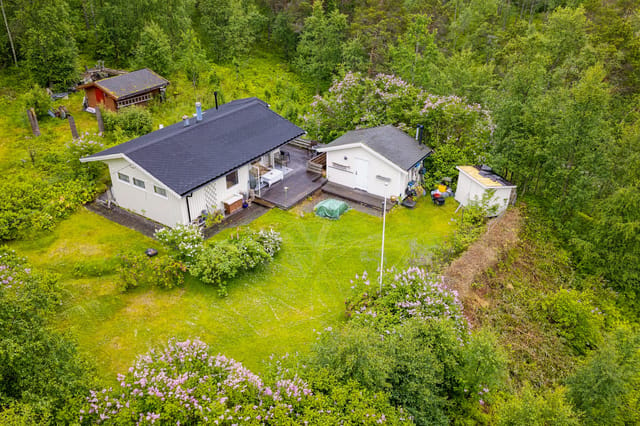
Stand at the kitchen window on a still July morning and count the layers: the grass track curving down through birch and pine, the glint of the Bindalsfjord catching the low Nordic sun, a neighbor's boat cutting a quiet V across the water. No traffic. No crowd noise. Just the creak of the old house settling and the occasional clatter of sheep on the hillside below. This is what 400 meters from the Norwegian coast actually feels like when you have 96 decares of land wrapped around you like a buffer from the rest of the world. Åkvikveien 225 is a genuine working smallholding on the Helgeland coast in Nordland, and it has been in continuous use since around 1900. That's not a selling point dressed up to sound historical — it means the bones are real. The timber has dried over generations, the walls have been reinforced, insulated, and upgraded steadily from the 1980s right through to today, and the result is a main house that feels lived in rather than staged. Three bedrooms, one bathroom, a proper kitchen with a wood-burning stove that heats the room fast on wet autumn evenings, a laundry room, a ground-floor WC, and a living room just over 21 square meters where the afternoon light comes through long enough to make you forget your book entirely. Upstairs, the two bedrooms sit under a roofline that also hides 14 square meters of unfinished attic space — raw and full of possibility. A reading loft, a kids' bunk room, a small home office with a forest view. The structure is already there. What you do with it is yours to decide. Out in the yard stands the annex, built in 2007 using stavlaft — the traditional Norwegian log technique where each round timber is hand-notched and stacked without nails. It's 12.5 square meters o ... click here to read more

House and annex seen from above

The first thing you notice on a summer morning at Lysgardslia 17 is the silence. Not dead silence — the kind with texture. Wind moving through the birch trees behind the plot, a woodpecker somewhere up the hill, and the distant glitter of Hurdal Lake visible through the tree line. You pour coffee and step out onto the south-facing terrace before anyone else in the cabin is awake. That right there is what this place is for. Set in the quiet forest hamlet of Erikstellet, about 6 kilometres north of Hurdal village, this compact two-bedroom cabin sits on a generous 1,135-square-metre plot where the garden simply dissolves into the surrounding spruce forest. The building dates to 1970 and has been kept in good condition over the decades — solid, honest, and full of personality. It's not a renovation project. It's a cabin that works, with room to add your own mark over time. Inside, the main living area is anchored by a wood-burning stove and an open fireplace — the kind of combination that makes January evenings feel like a reward rather than something to endure. An air-to-air heat pump handles the shoulder seasons, so the cabin stays comfortable from early March right through to late autumn. Large windows on the south-facing wall pull in light generously all day, and the open connection between the kitchen and living room means meals naturally become communal events, whether it's a family of four or a group of friends back from a day on skis. The kitchen is worth pausing on. The cabinet fronts are hand-painted with troll motifs — a detail straight out of Norwegian folk tradition — and while the laminate worktop and stainless steel sink are entirely functional, it's those painted doors that give the room its soul. There's ... click here to read more

Peaceful and scenic surroundings with excellent sunlight.

Stand at the edge of the plot on a still July morning and you'll hear almost nothing — a distant outboard motor somewhere on the fjord, the soft creak of birch trees, maybe a curlew calling from the hillside. That kind of quiet is genuinely rare in 2024, and this 5,822 square metre freehold plot at Førlandsvegen 460 sits inside it completely. Aksdal is a small but well-connected community in Rogaland, in the heart of Sunnhordland on Norway's southwestern coast. It's the kind of place that locals know well and visitors almost never stumble across by accident — which is precisely what makes finding a plot here with sea rights feel like something worth paying attention to. The E134 runs nearby, linking you to Haugesund in around 35 minutes and to Bergen in roughly two hours. Haugesund Airport handles direct flights from several European cities including London Gatwick and Copenhagen, which matters a great deal if you're planning to use this as a seasonal escape from somewhere further south. The existing cabin dates from 1943 and sits at 12 square metres of usable interior. Let's be honest about it: the structure needs either thorough renovation or a fresh rebuild. The condition is what it is. But what you're really buying here is the land, the legal sea rights, and the freedom that comes with freehold ownership of a substantial plot in a setting like this. Norwegian countryside doesn't give up these kinds of parcels easily, and a 5,822m² plot with direct sea access in Rogaland is a genuinely uncommon find. The sea rights attached to this property are worth dwelling on for a moment. They grant the owner access to the adjacent coastal area for activities including fishing, swimming, and mooring a small boat. Western Norway ... click here to read more

Welcome to Førlandsvegen 460 - presented by Sivert Velde Rasmussen at PrivatMegleren / Photo: Panomax Studio

Step outside on a February morning at Bekjordsvegen 36 and you'll hear almost nothing — just the soft compression of snow under your boots and, somewhere in the tree line, a woodpecker working at a birch. Strap on your skis, and within three minutes you're on a groomed cross-country trail threading through the Numedal valley. That's not a selling point dressed up in fancy language. That's just Tuesday here. Lyngdal i Numedal sits in the long, quiet valley of the Numedalslågen river, roughly two hours from Oslo by car along the E134. It's the kind of place Norwegians have been keeping to themselves for generations — serious hiking territory in summer, a cross-country skier's paradise from November through March, and in between, a landscape that shifts from amber birch forests to frozen lakes with an unhurried confidence. The village has a petrol station, a local shop, and the kind of community noticeboard that still gets used. That's part of the appeal. The chalet at Bekjordsvegen 36 is a solid three-bedroom cabin in good condition, sitting on a leasehold plot of approximately 1,000 square metres. At 80 square metres of internal living space, it's not enormous — but the layout is well thought out. A living room with large windows pulls in the treeline views and the generous daylight that arrives in midsummer from before 5am. The wood-burning stove anchors the room. On a cold January evening with the stove going and snow banking up against the glass, it earns its place in a way no underfloor heating system ever quite does. The kitchen is functional with pine-fronted cabinets and a laminate worktop — honest, unpretentious, and perfectly usable. It won't win any design awards, and buyers who want a showroom kitchen will w ... click here to read more

Welcome to Bekjordsvegen 36!

The first thing you notice on a summer morning at Kilegrendsvegen 1182 is the silence—not the empty kind, but the full kind. Birdsong across the water. A light wind moving through the pines. The faint creak of a rowboat you're allowed to keep moored right on Dåstjønn, just waiting. This is what you came to Norway for. Treungen sits in the Nissedal municipality of Telemark, and it's the kind of place that doesn't shout about itself. No crowds, no tourist queues. Just clear glacial lakes, forest trails ribboning out in every direction, and a sky that turns genuinely extraordinary in late August when the bilberries ripen and the light goes golden low across the hills. The cabin at Kilegrendsvegen 1182 sits within a small, quiet cabin community right between lakes Drang and Dåstjønn—two of the most swimmer-friendly lakes in the area, with sandy-edged shores and water so clear you can see the bottom a meter down. At 47 square meters, this two-bedroom chalet is compact but not cramped. The layout makes sense for the way people actually use a cabin: you come in, you drop your gear, and you're comfortable. The living room has dark wood paneling that gives off that specific warmth you only get in properly old-school Norwegian hytte interiors—the kind that takes the edge off a cold evening after a long day on the trails. The wood-burning stove does the rest. You sit in front of it with a bowl of something hot and you genuinely don't want to be anywhere else. The kitchen has been recently renovated and fitted with new cabinetry, a refrigerator, and a gas stove. Practical, clean, and more than adequate for cooking proper meals—think slow-cooked reindeer stew on a winter weekend, or a pan of pan-fried perch pulled from Dåstjønn th ... click here to read more

Welcome to Kilegrendsvegen 1182!

Step outside on a February morning at 874 meters above sea level, and the silence hits you first. Not the absence of sound exactly, but the kind of deep, textured quiet you only find in the Norwegian mountains — a crow somewhere distant, the creak of snow settling on the roof, and the faint hiss of wind threading through the birch trees beyond the fence line. The kettle is on inside. The fireplace still holds last night's embers. This is Slåsætra, and once you've spent a weekend here, the idea of not owning a place in these hills becomes genuinely hard to sit with. The chalet at Linviksetervegen 131 sits on a generous, fenced 1,706 square meter plot in one of Innlandet county's most quietly sought-after mountain communities. Fåvang itself — the nearest village, about 10 kilometers down the valley — is small and functional in the best way: a grocery store, a train station on the Oslo-Trondheim line, and the kind of low-key infrastructure that lets you arrive on a Friday evening and not have to think about logistics again until Sunday. Up here at Slåsætra, though, the village may as well be a different world. The chalet measures 75 square meters and is in good condition throughout. It's not a renovation project — you can use it from day one. The ground floor opens into a combined living and kitchen area with high ceilings and large windows that pull the mountain view right into the room. On a clear April afternoon, the light in here is almost unreasonably good, that particular Nordic gold that comes in low and warm and seems to make everything glow slightly. A fireplace anchors the living area. You will use it constantly. On the coldest nights in January, with the solar panels quietly doing their job and the woodstove ti ... click here to read more

Welcome to Linviksetervegen 131!

The first thing you notice on a still July morning at Haltlandveien 30 is the light. It comes off the water at a low, almost sideways angle, cuts right through the big living room windows, and lands on the wooden floor in long pale strips. Grab a coffee, open the terrace door, and you're standing 100 meters from the Norwegian Sea before the rest of the world has had breakfast. That's not a bad way to start a day. Sandstad sits on Hitra, the large coastal island in Trøndelag that serious anglers, kayakers, and anyone who genuinely loves wild Norwegian nature have known about for decades. Getting here is easier than people assume. Drive across the Hitra Tunnel from the E39 corridor — about an hour southwest of Trondheim Airport Værnes — and you arrive on an island where the roads are quiet, the coastline is dramatic, and the pace of life adjusts itself downward almost immediately. It's the kind of place where the agenda for a Tuesday might be: fish in the morning, grill on the terrace in the afternoon, wood stove in the evening. Haltlandveien 30 is a timber chalet built in 1979, sitting on roughly 1,000 square meters of privately owned land. The plot is generous for its 42-square-meter footprint, which means outdoor living is as much a part of this property as anything inside. Mature trees wrap the site, doing a proper job of creating seclusion without making the place feel closed in. The garden has enough flat, usable ground for a fire pit setup, kids running around, or simply a hammock between two birches. Privacy here isn't a marketing claim — the surrounding natural vegetation earns it. Inside, the floor plan is compact and honest. The living room does what a cabin living room should: wide windows angled toward the ... click here to read more

Welcome to Haltlandveien 30!

Sometime around six in the morning in late September, you step onto the deck at Nekkåbjørga 276 and the valley below is wrapped in low mist. The birch trees have gone gold overnight. Somewhere across the ridge, a dog barks once, then silence. That's it. That's the whole morning. This is what you came for. Flaknan sits in the Selbu municipality of Trøndelag, a part of central Norway that doesn't make it onto the tourist posters but absolutely should. The landscape here is the kind that makes you put your phone down — rolling forested ridges, open cultural heathland worn smooth by centuries of summer grazing, and a sky that in winter turns shades of violet and orange you genuinely cannot photograph accurately. At roughly 459 meters above sea level, the air has a sharpness to it that city lungs take a day or two to adjust to. After that, you won't want to breathe anything else. The chalet itself dates to 1975, built the way Norwegian mountain cabins were built back then — pine floors, tongue-and-groove paneling on the walls and ceilings, everything in wood, everything warm. There's a wood-burning stove in the living room that's not decorative. Come November, it does real work. The room is large enough for two seating groups, which matters when you've got family spread across the sofas on a rainy afternoon and someone's working a jigsaw puzzle at the table by the window. Speaking of that window — the view out of it does most of the decorating. You don't need much on the walls when you've got the Trøndelag ridgeline outside. The kitchen is original and entirely functional, running on gas rather than grid electricity. Preparing a simple meal of slow-cooked reinsdyrgryte — Norwegian reindeer stew — while the window frames a ... click here to read more

Front view of the property

Step outside on a February morning and the world is white and absolutely still. The birches are frosted solid, the air bites clean at the back of your throat, and a kilometer down the trail the first set of groomed ski tracks is already laid. Back inside, the wood stove is still throwing heat from the night before, and the smell of pine smoke drifts through every room. This is what a cabin in Etnedal actually feels like — not a brochure version of Norway, but the real thing. Stuvelivegen 270 sits at around 909 meters above sea level in Etnedal municipality, a quiet corner of Innlandet county that most international buyers haven't discovered yet. That's part of what makes it interesting. The valley runs roughly northwest from Dokka, the nearest town of any size, and the landscape here is high, open, and honest — rolling fells, dense spruce forest, frozen lakes in winter, wildflower meadows in July. The cabin sits at the very end of the road. No neighbors to glance at through the window. No through traffic. Just the creak of timber and, if you time it right, the distant percussion of a woodpecker working a dead trunk somewhere across the clearing. The cabin itself dates from 1948, which tells you something about its bones. Norwegian mountain cabins from that era were built to last, not to impress, and this one wears its age well. The roof is new, the windows are newer double-glazed units, and the exterior cladding has been replaced — so the envelope is tight and well-maintained. Inside, 60 square meters is efficiently used across three bedrooms, a proper living area, kitchen, and a cabin bath with shower and toilet. It's not a sprawling estate. It's a place designed for people who actually want to be outside most of the ... click here to read more

Welcome to Stuvelivegen 270!

Picture this: it's a Saturday morning in late June, the sun hasn't really set since Thursday, and the light coming off Pevatnet Lake turns the pine walls of your living room a deep amber. You can hear absolutely nothing except water. That's what owning this cabin actually feels like. Sitting on a private knoll about 200 meters back from the lake's edge, this traditional Norwegian log chalet near Harstad has been a mountain retreat since 1971 — and it wears its age well. The roof was replaced in 2023. The bones are solid. It's not a project; it's a place you can start using the weekend you collect the keys. The chalet sits at roughly 310 meters above sea level on a plot of 2,700 square meters, giving you a generous sweep of private land — enough for a firepit, a vegetable patch, space for kids to disappear into the trees for hours. Northern Norway doesn't do manicured gardens; the land around Pevatnet has its own rhythm, and this plot is part of it. Birch and pine right up to the edge of your lot. Berry bushes everywhere in August. The kind of quiet that city people drive hours to find. Inside, the 44-square-meter footprint is compact but honest. Three bedrooms sleep five comfortably — two original rooms from the 1971 build and a third added in 1991. The pine floorboards creak in exactly the right way. Timber-paneled walls, a wood-burning fireplace in the living room, a kitchen laid out for real cooking after a day on the trails rather than for showing off. Everything comes furnished, as seen in the photos, which means no sourcing Scandinavian cabin furniture from scratch — it's already here, already right. The fireplace isn't decorative. In October, when the birches go yellow and the first snow dusts the ridge above ... click here to read more

Entrance area

The snowmobile cuts the engine and suddenly it's just silence. Real silence — the kind you forget exists until you're standing at 454 metres above sea level in Tømmerdalen, with spruce trees holding their snow and the valley spread out below you like something from a Theodor Kittelsen painting. That's the arrival experience in winter at this 1950s cabin on Tømmerdalsvegen. In summer, the last 100 metres is a short walk from the road through birch and heather. Either way, you earn the quiet. This is not a polished mountain resort apartment. It's a proper Norwegian hytte — two bedrooms, 45 square metres of wood-panelled interior, a cast-iron wood burner that heats the whole place within the hour, and a south-facing terrace where you can sit with coffee at eight in the morning and watch the light come across the hillside. The parquet floors creak slightly in the cold. The ceiling is clad in pine. It smells the way Norwegian cabins are supposed to smell. The kitchen is set apart from the living area, which in a small cabin makes a surprising difference — you can actually cook without everyone watching. Gas stove, gas refrigerator, fully off-grid. The solar panel system handles the basic electrical needs, making this place genuinely self-sufficient. No power bills, no grid connection fees, no landlord. The freehold plot of 1,008 square metres is yours outright, with annual municipal fees of just 150 NOK — essentially nothing. Two outbuildings from 2003 sit on the plot and handle what small cabins always need more of: storage. Firewood, fishing gear, snowshoes, a spare canoe paddle — there's room for all of it without cluttering the main space. One outbuilding includes an outdoor toilet, standard for this type of off-grid p ... click here to read more

Front view of the cabin

Stand on the south-facing terrace at Risvikstien 6 on a July evening and you'll understand immediately why people come to this stretch of the Trøndelag coast and never quite manage to leave. The light at that hour is extraordinary — low, golden, pulling long shadows across the water — and from up here, with the Fosen peninsula spread out below you, the noise of the world feels very far away. That terrace, built in 2020 and generously proportioned at 66 square meters, is honestly the heart of this property. You'll eat breakfast out there. You'll lose track of time out there. That's the point. This is a two-bedroom holiday chalet at Risvikstien 6 in Oksvoll, a quiet coastal settlement in the municipality of Ørland, Trøndelag. The main cabin covers 44 square meters — compact, yes, but thoughtfully laid out with a living room, kitchen, bathroom, and two bedrooms that sleep up to six comfortably. An 11-square-meter annex sits separately on the 715-square-meter plot, which gives the whole place a flexibility that a single structure never could. Guests get their own space. Kids get their hideaway. You get the cabin to yourselves. The sea is 200 meters away. Not a figure of speech. Two hundred meters down the lane and you're at the water's edge. Oksvoll sits on the southern tip of Fosen, a broad peninsula that juts into the Trondheim Fjord between the open sea and sheltered inner waters. This geography matters enormously for how you'll actually use the place. The coastline here is a mix of smooth rock shelves worn flat by millennia of tide and small sandy inlets that warm up quickly in June. Local families have been swimming off these rocks since before anyone can remember. You'll find yourself doing the same within about for ... click here to read more

Picture 1

You wake up to silence. Not the city kind of silence that's really just a lower hum of traffic and neighbor noise — actual silence, broken only by wind moving through spruce trees and the distant creak of a ski lift warming up for the day. That's a Saturday morning in Haugsdalen, and once you've had a few of them, it becomes very hard to go back. This single-level chalet sits on a 998-square-meter freehold plot in Rissa, a corner of Trøndelag county that most international buyers haven't discovered yet — which is precisely the point. The Indre Fosen peninsula has been drawing Norwegian families to its forests and fjord edges for generations, and this five-bedroom cabin, built in 1985 and kept in genuinely good condition, is the kind of property that doesn't come to market often. Five bedrooms. Thirteen sleeping places. One level. No stairs to navigate after a long day on the slopes. The ski lift is literally one minute from the front door. Walk out, boots already on, and you're there. That detail alone changes the calculus on a winter holiday home — no shuttles, no parking queues, no rushing. In January and February, when the snow settles deep across the Fosen hills, you'll understand why this matters. The elevation sits at around 276 meters above sea level, high enough to hold good snow through the heart of winter, low enough that the approach roads stay manageable. Come March, the light starts returning in long golden stretches across the hillside, the kind that turns the snow surface into something almost liquid at dusk. But this property earns its keep across every season. Summer in Rissa is genuinely underrated. The Trondheim Fjord — Trondheimsfjorden — is within reach, and the inland lakes and streams around Hau ... click here to read more

Picture 1

The first thing you notice on a July morning at Sirkelvatnet is the silence. Not the absence of sound, but a particular quality of quiet that you only find above the treeline in Arctic Norway — the soft slap of water against a wooden rowboat, a single bird call bouncing off the far shore, the creak of the terrace boards under your feet as you step out with coffee in hand. The lake sits below you, absolutely still, reflecting the birch-covered hillsides in a mirror that doesn't break until you toss a line in. That's what Sirkelvatnet 57 actually delivers. Not a brochure fantasy — a real cabin life, the kind Norwegians have been quietly enjoying for generations while the rest of Europe didn't quite catch on. Sitting at roughly 300 metres above sea level outside Narvik, this single-bedroom mountain chalet was built in 1997 and covers 41 square metres of total usable space — 29 square metres in the main cabin, plus a 12-square-metre annex that contains a separate WC. Compact, yes. But smartly laid out, with every metre doing real work. The wood stove anchors the living area and becomes the social centre of the cabin from September through May, throwing heat and light while the snow builds up outside. Big windows face the water. You arranged your mornings around that view before you even unpacked. The leasehold plot stretches across 994 square metres, giving you genuine breathing room — a proper garden area, space to park, room to move. And then there's the boathouse. The sale includes a 50% share in a naust sitting close to the parking area, which comes with a rowboat. That boat changes the character of the property entirely. Cross to the far bank in twenty minutes. Drop a fishing line for Arctic char and trout in a lake ... click here to read more

Welcome to Sirkelvatnet 57! - Photo: Hanna Linnea Kristensen

Step outside on a January morning, clip into your cross-country skis, and you're already on the trail. That's not an exaggeration — the groomed tracks of Budor's beloved network are literally 200 meters from the front door. The snow sits heavy on the spruce trees, the air tastes clean in a way city air never quite does, and the only sound is the hiss of your skis and the occasional wood pigeon. That's the daily reality of owning this 1940s log chalet at Budorvegen 1165 in Løten, one of Innlandet's most quietly sought-after recreational areas. Løten sits in the inland heart of Norway, about 100 kilometers north of Oslo — close enough for a Friday afternoon escape from the capital, far enough that the weekday world feels genuinely distant. The Gryllingseter area, where this chalet sits at 496 meters above sea level, has a different rhythm from the coast. Winters here are reliably snowy, reliably cold, and thoroughly Nordic in the best sense. Summers bring a softness — wildflowers along the hiking paths, long light evenings, the smell of pine warming up in June sun. The cabin itself started life around 1940 as a hunting lodge. You can still read that history in the bones of the building — the low-ceilinged basement was once used to hang and dry game, and the traditional Norwegian log construction (laftet tømmer) gives the walls a solidity and thermal mass that modern frame builds simply can't replicate. In 2009, a thoughtful extension broadened the floor plan to 41 square meters of interior living space, and suddenly what was purely a hunting shelter became a genuinely comfortable two-bedroom holiday home. The roof was replaced in both 2003 and 2009, and the exterior received a fresh stain coat in 2020 — so the structural ... click here to read more

Picture 1

Step out onto the 27-square-metre terrace at Skjettendalsveien 19 on a clear July morning and the world goes quiet — just the rustle of birch trees, a distant woodpecker somewhere in the forest below, and a view that rolls across the Trøndelag landscape all the way to the shimmer of the Trondheimsfjord. At 253 metres above sea level, the air up here has a quality you don't find in cities. Sharp. Clean. A little piney. It wakes you up better than coffee. This is Leksvik — a corner of Norway that most international buyers haven't discovered yet, which is exactly what makes it interesting right now. The chalet itself is a classic Norwegian hytte, built in 1947 and sitting on a generous private plot of 1,009 square metres on a quiet hillside with scattered neighbouring cabins. At 44 square metres of indoor living space across the main floor and a loft, it's compact in the way that Scandinavian cabins are supposed to be: everything you actually need, nothing you don't. The layout runs from a small entrance hall through two living areas and a kitchen, into a bedroom and bathroom, with the loft above offering a natural sleeping nook or reading space depending on your mood. The 18-square-metre external storage area handles the practical side of cabin life — skis, fishing rods, firewood. Speaking of firewood: there's a wood stove, and on an October evening when the temperature drops and the trees turn copper-red across the hillside, that stove becomes the centre of the whole property. Electricity and water are already connected, so this isn't a project starting from scratch. The bones are solid. What it needs is someone with a vision — updated insulation, a refreshed kitchen, a bathroom renovation — and the result is a fully p ... click here to read more

Picture 1

Stand at the kitchen window on an October morning and watch the mist roll off the hills above Finsland. The air outside is sharp and clean in a way that reminds you what air is actually supposed to smell like. The old wood stove in the corner ticks as it warms up, and there's not a single sound beyond birdsong and the occasional creak of the house settling. This is 8.5 acres of southern Norwegian countryside, and it's been quietly waiting for someone with the right kind of ambition. Built in 1890, this classic Norwegian farmhouse at Songdalsvegen 670 carries the bones of something genuinely substantial. Four bedrooms spread across two floors, a total internal area of 179 square meters, two living rooms, two kitchens, and a layout that once served a working rural household through every season. The ground floor alone runs to 167 square meters — two living rooms, two kitchens, a bathroom, a separate WC, a hobby room, storage, a garage, and the kind of entrance hallway that feels like it has stories to tell. Upstairs, two further bedrooms and a hallway occupy a more intimate 12 square meters, with an additional 34 square meters of external second-floor storage that could become something far more interesting in the right hands. The property is classified as a Gårdsbruk/Småbruk — a smallholding — which opens up a different category of ownership and lifestyle entirely. The 34,217 square meter lot is mostly open and south-facing, catching the sun across what is currently a mix of garden, open land, and space that invites whatever you're bold enough to put there. A kitchen garden along the south wall. A small orchard of apple and pear trees. A paddock. The land doesn't push back — it gives you room to think. The house needs ... click here to read more

Front view of the property

You arrive by boat. There's no other way. You cut the engine, drift into the mooring at Osvågen, and for a moment all you hear is water lapping against the hull and a single bird somewhere deep in the spruce trees. Then you shoulder your bag and follow the footpath — about 800 meters of soft forest floor, birch and pine on either side — until the treeline opens and the cabin appears on the rise above you, its balcony framing a wide blue sweep of the fjord. That's the moment you stop thinking about your inbox. This is what genuine off-grid living looks like in Helgeland, one of Norway's most quietly extraordinary coastal regions. The chalet at Hestnesosen sits on a 2,081-square-meter elevated plot above Osvågen, fully detached from the road network and reachable only by water. For buyers who've spent years talking about "disconnecting," this isn't a metaphor. It's the actual situation — and it's exactly what makes this property so rare. At 131 square meters of indoor living space, the three-bedroom cabin is far more generous than the average Norwegian hytte. Two separate living rooms give you real breathing room: one for rainy afternoons with a board game and a wood-burning stove sending heat into the walls, another where guests can settle in without stepping on each other. The retro interior furnishings — included in the sale — give the place a particular character that would take years to curate elsewhere. Nothing feels staged. It feels lived in, in the best possible sense. The kitchen is practical and well-considered. Laminated cabinetry, a tiled splashback, a brand-new refrigerator, and a proper oven. The built-in dining nook beside it — a custom-made sofa bench and chairs around a fixed table — is the kind of arra ... click here to read more

Charming, spacious cabin in Hestnesosen with views over Osvågen.

Wake up on a Saturday morning in February, pull back the curtain, and there it is — Ljoslandvannet frozen solid below you, the ski slopes at Ljosland already buzzing with the distant hiss of lifts, and a turf roof overhead holding a thick white blanket of snow. The fire crackled through the night. Coffee's on. This is what you came for. This compact two-bedroom mountain cabin at Nye Gruvevegen 8 sits at the upper edge of the Ljosland cabin area in Åseral municipality, one of Southern Norway's most established and accessible ski communities. At just €66,460, it's a rare entry point into a genuine Norwegian fjell lifestyle — not a polished resort product, but the real thing. Simple. Honest. And completely yours. The cabin covers 33 square metres of usable interior space, but the way it's designed, nothing feels tight. Two bedrooms sleep seven in total, which means a family of four has room to spare, or you can host friends for a ski weekend without anyone drawing straws for the sofa. The combined kitchen and living area keeps everyone together — meals, card games, planning the next day's route on a trail map spread across the table. A fireplace anchors the room, and once it's going on a cold evening, the whole space transforms. There's a 16-square-metre veranda out front where you can sit with a mug of something warm and watch the light drain out of the mountains. What makes this place genuinely different is the off-grid setup. No mains electricity, no running water. For some buyers, that's a dealbreaker. For others — the ones who'll actually love it here — it's the whole point. Åseral municipality has confirmed there's no obligation to connect to water or sewage systems, which keeps annual costs remarkably low. The tur ... click here to read more

Picture 1