Country header promo image

We are live in NorwayRead more

Home is where you want to be.

Homestra is the #1 platform for housing in Europe.

Spotlight

Properties we selected for you

Saturday morning. You slide open the balcony door and the Ardennes forest breathes back at you — cool air carrying pine and damp earth, birdsong louder than any alarm clock you've ever owned. Your coffee steams in your hand, the hardwood deck still slightly cool underfoot. Below, the trees absorb everything. No traffic. No neighbour noise. Just that particular silence you only find when you're deep in green Belgian hills. That's the daily opening act at this two-bedroom bungalow in Durbuy, and it never really gets old. Durbuy calls itself the smallest city in the world, and technically that's true — it received its city charter in 1331 and has been quietly delighting visitors ever since. But what the official tourism brochures undersell is just how good the lifestyle here actually is. The medieval cobblestone centre along the Ourthe river is genuinely worth the trip alone: hand-cut stone buildings, the castle backdrop of the Counts of Ursel, and tables outside Brasserie Li Lîdjî where the Trappist Rochefort pours cold and the mussels arrive in cast iron. Saturday markets on the Grand Rue draw producers from across the province — farm butter, raw-milk cheeses, smoked Ardennes ham that makes a simple baguette feel extravagant. And you're not just visiting this town. You own a piece of it. The bungalow sits within the well-managed Sunclass Durbuy park on Rue d'Andenne, positioned on a sloped section of the grounds that naturally creates distance from neighbours and gives the property its best asset: genuine privacy with long forest sightlines. The entrance climbs an exterior staircase to a front door that opens directly into a space that feels nothing like a typical holiday park cabin. The interior design has been done ... click here to read more

Photo 1 of Rue D'andenne 20B210

Stand on the terrace and the Lot River is right there, maybe a hundred metres below, curving through limestone gorges that turn amber in the late afternoon sun. The church bell above tolls the hour. A swallow cuts past at eye level. It takes about thirty seconds to understand why this house hasn't been easy to give up. Saint-Cirq-Lapopie has been voted France's favourite village more than once, and the title doesn't feel like marketing. The medieval streets of pale stone, the 15th-century church perched at the top of it all, the painters who've been coming here since the Surrealists — André Breton lived and worked up the road — there's a reason this village on the Lot Valley's cliff edge has drawn people for centuries. And within that village, few houses sit where this one does: directly below the church, on the lip of a sheer 100-metre drop, with a private garden that runs right to the edge. The wrought-iron gate is easy to miss from the lane. That's rather the point. Once through it, the world shifts. Mature wisteria covers a pergola where a summer kitchen and dining table sit in dappled shade — this is where long lunches happen, the kind that drift into evening without anyone noticing. The gardens wrap around the property and along the cliff, a genuinely rare thing here; outdoor space of this size and privacy simply doesn't come up in Saint-Cirq-Lapopie. Seating areas tuck into different corners depending on the time of day and the angle of the light, and every one of them faces something worth looking at. The house itself is old stone and brick, honest about its age in the best possible way. Terracotta floors, exposed ceiling beams, a wood-burning stove that makes the living room feel like exactly the right place ... click here to read more

Picture 1

A Timeless Retreat in the Heart of Poitou-Charentes Imagine waking up in a 10th-century chateau, where history whispers through every stone and beam. Nestled in the picturesque town of Civray, this remarkable property offers a unique blend of medieval charm and modern comfort, making it an ideal vacation home or second residence for those seeking a slice of French heritage. A Journey Through Time As you step through the grand entrance, the stone tower stands as a sentinel of the past, its spiral staircase inviting you to explore the stories etched into its walls. The chateau's two wings, connected by an open passageway, offer a harmonious balance of space and privacy. With six bedrooms and four bathrooms, this residence is perfect for hosting family gatherings or intimate retreats. Living the French Countryside Dream The daily rhythm of life here is a gentle dance with nature. Mornings begin with the soft light filtering through double-glazed windows, casting a warm glow on exposed stone walls and flagstone floors. The aroma of freshly baked bread from the working bread oven mingles with the scent of lavender from the garden, creating a sensory tapestry that is quintessentially French. Seasonal Splendor and Local Delights Each season brings its own magic to Civray. Spring paints the landscape with wildflowers, while summer invites leisurely picnics by the Charente River. Autumn's golden hues are perfect for exploring nearby vineyards, and winter's crisp air is best enjoyed by the warmth of the wood-burning stove. The local cuisine is a celebration of regional flavors, with markets offering fresh produce, artisanal cheeses, and fine wines. Dining al fresco on the wooden terrace, with views stretching over 2 hectar ... click here to read more

Picture 1

On a clear January morning, you step out onto the upstairs balcony with a coffee in hand and the Godin range cooker already warming the kitchen below. The Pyrenees are right there — not a postcard suggestion of mountains, but the full, snow-capped range stretching across the horizon in sharp winter light. Two hectares of land roll out beneath you, fruit trees bare and skeletal against the frost, a walled courtyard catching the first sun. This is Les Tourreilles, a corner of Haute-Garonne that most people drive through without knowing what they've missed. The farmhouse dates to 1893, built from local pebbles and stone in the way they built things back then — to last. And it has. The walls are thick enough to keep August heat at bay without air conditioning, and the character that took more than a century to accumulate hasn't been renovated away. It's been respected. The current owner put serious thought and real money into the restoration: slate floors, high ceilings, cast-iron structural elements left exposed where they add something, quality throughout rather than flash. Three bedrooms, each with its own bathroom — a practical arrangement that matters enormously when you're hosting family or renting the property. No arguments over the shower schedule. The living room organizes itself around a wood-burning stove, the kind of focal point that makes a room actually feel inhabited rather than staged. And the open-plan kitchen and dining area is the real heart of the house, anchored by that Godin range cooker running on gas, electricity, and wood — a serious piece of equipment that makes Sunday lunches an event. Granite countertops, quality fittings, nothing cheap. Then there's the spa room, which is genuinely unexpected. ... click here to read more

Picture 1

A Tranquil Retreat in the Heart of Danish Countryside Imagine waking up to the gentle rustle of leaves and the soft chirping of birds, as the morning sun filters through the lush canopy of mature trees surrounding your home. This is the serene lifestyle awaiting you at this architect-designed country home in Tisvildeleje, Denmark. Nestled on a sprawling 5,938 square meter plot, this property offers a rare blend of privacy, natural beauty, and architectural elegance. A Masterpiece of Danish Design Designed by the esteemed architect Professor Erik C. Sørensen, this home is a testament to Danish architectural heritage. Built in 1961, the main house exudes warmth and character with its classic thatched roof and wooden construction. The interior is a harmonious blend of traditional charm and modern functionality, featuring exposed wooden beams, brick flooring, and large windows that invite the outside in. Daily Life in a Danish Haven Life in this home is a seamless blend of comfort and nature. The open-plan living area, with its cozy wood-burning stove, is the heart of the home, perfect for gathering with family on chilly evenings. The kitchen, equipped with modern amenities, is both practical and stylish, making meal preparation a joy. Two spacious bedrooms offer restful retreats, with views of the meticulously maintained garden. A Garden of Possibilities Step outside, and you're greeted by an expansive garden, a true oasis of tranquility. Open lawns invite you to bask in the sun, while the surrounding greenery offers a peaceful backdrop for outdoor activities. The garden also features a charming guest house, providing additional accommodation or a private studio space. Tisvildeleje: A Coastal Gem Located in the sou ... click here to read more
Thatched house in a lush garden with surrounding trees and a visible terrace.

Stand in the galleried grand hall of Kinloch Castle on a still October morning, and you'll hear almost nothing — just the faint knock of a red deer against the treeline, and the distant slap of Loch Scresort against the pier stones. That silence is not emptiness. It's the sound of one of the most remote and historically charged addresses in the British Isles doing exactly what it was built to do: making the rest of the world feel very far away. Kinloch Castle sits on the eastern shore of the Isle of Rum, the largest of the Small Isles scattered across the Inner Hebrides off Scotland's west coast. Built between 1897 and 1900 for Sir George Bullough — a Lancashire industrialist with seemingly bottomless pockets and a taste for the theatrical — this Category A listed sandstone castle is not a ruin dressed up in heritage language. It is a fully intact Edwardian time capsule, with its original contents still in place: the 1900 Steinway grand piano still in the ballroom, the Japanese lacquer cabinets still catching the afternoon light in Lady Monica's drawing room, the mechanical orchestrion still housed inside the Jacobean staircase. That orchestrion, incidentally, is one of only three ever built by Imhoff and Mukle of Germany. The other two are in museums. This one comes with the castle. The scale of the place takes a moment to absorb. Twenty bedrooms, nine bathrooms, and a ground floor that reads like an architectural fever dream of Edwardian ambition: a galleried grand hall with mullioned bay windows big enough to fill with winter light, a mahogany-panelled dining room with crystal candelabras still on the table, a billiard and smoking room that smells faintly of old leather and woodsmoke, a ballroom with a sprung floor ... click here to read more
Kinloch Castle

On a quiet Sunday morning in the Périgord Noir, you open the kitchen door onto the terrace and the air smells of woodsmoke and damp stone. A church bell somewhere down the lane counts out nine strikes. That's life in this hamlet just outside Salignac-Eyvigues — unhurried, rooted, and quietly extraordinary. This three-bedroom stone house sits in a small hamlet in the Dordogne département of Nouvelle-Aquitaine, one of the most coveted second-home destinations in all of France. It's a proper working property, not a renovation project or a holiday shell. At 137 square metres spread across three floors, it has the kind of bones that took generations to build and the kind of condition that means you can arrive with a suitcase rather than a skip. The ground floor sets the tone immediately. The main living room stretches to nearly 34 square metres, with exposed stone walls that stay cool in July heat, original beams overhead, and terracotta tiles underfoot that have absorbed a century of footsteps. The fitted kitchen-dining room at just over 20 square metres opens through French doors onto the terrace — which is where summer evenings actually happen, with a glass of Bergerac rouge and the sound of swallows cutting overhead. There's also a ground-floor shower room with WC, practical for anyone coming in from the garden. Upstairs, the first floor reveals the house's most generous room: a 34-square-metre sitting room with a working wood burner tucked into a stone fireplace. On winter evenings — and Dordogne winters are mild but damp — this room is the whole world. Exposed beams run the length of the ceiling, and the stone walls are the same here as on every floor, giving the house a remarkable thermal consistency. The main bedro ... click here to read more
Photo 1

On a quiet morning in the East Algarve hills, you open the bedroom shutters and the view hits you first — rolling countryside, cork oaks and carob trees stretching toward a horizon that has no buildings in it. Then the smell: citrus from the lemon trees below the terrace, warming up as the sun clears the ridge. This is Santa Catarina da Fonte do Bispo, a village that most Algarve visitors never find, and that is precisely the point. This five-bedroom villa sits on a 10,000-square-metre plot above the village, built in 2006 and maintained in genuinely good condition. The elevated position means the views are constant — from the kitchen while you make coffee, from the first-floor bedrooms, from the pool terrace where you'll spend most of your afternoons. At 182 square metres of living space across two floors, plus a separate annex and a converted studio, the property offers far more than the headline figure suggests. The ground floor is organized sensibly for family life or hosting: entrance hall, fitted kitchen, a living and dining room anchored by a fireplace with heat recovery system, two bedrooms, an en suite bathroom, and a separate bathroom. It works as a whole house for a couple and still has space left over. Go upstairs and the two further en suite bedrooms each open onto private outdoor space — a detail that sounds simple but in practice means two different guests can step out with their morning coffee without ever crossing paths. Both rooms look out over the countryside. Both rooms are quiet in a way that coastal Algarve properties, for all their appeal, rarely are. The front and rear terraces give you options depending on the season. Shade in July when the temperature in Tavira town is hovering at 35 degrees. ... click here to read more
Picture 1

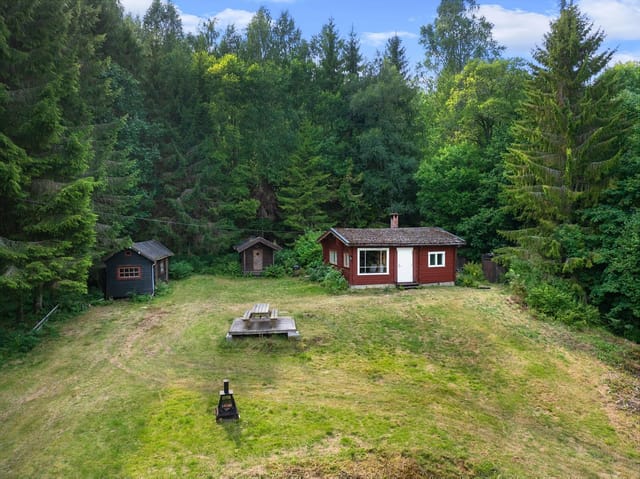
Step outside on a July morning at Korterødveien 93 and you'll hear it before you see it — the faint slap of water against wooden docks drifting up from Svalerødkilen, 300 metres downhill through the birch trees. The coffee's still brewing inside. The sun already hits the south-facing terrace at an angle that makes everything glow. This is what a Norwegian summer feels like when you get it right. Set on a generous natural plot of nearly 3,000 square metres just outside Sponvika in Halden municipality, this two-bedroom chalet with a separate annex occupies an elevated position that catches the light from mid-morning well into the long Scandinavian evenings. It's not a flashy property. It doesn't need to be. What it offers is something harder to find: a genuine coastal cabin with real infrastructure — municipal water and sewage connected in 2019, a fully modernised kitchen and bathroom, car access right to the door — at a price point that still makes sense as an investment along the Norwegian Oslofjord coast. The cabin was first built in 1966, and you can feel that history in the bones of the place: the way the rooms are proportioned, the low ceilings that make the wood-burning stove feel truly central rather than decorative. But the kitchen installed in 2018 is sharp and functional, with storage that actually works, a bar counter where guests naturally pull up stools and linger after dinner, and windows wide enough that you're never really indoors when the forest is right there. The 2018 bathroom follows the same logic — clean, modern, no-fuss. The kind of space that feels effortless to maintain when you're only there for the summer months or a winter ski weekend. Sleeping arrangements here are genuinely flexible. The m ... click here to read more
Welcome to Korterødveien 93, presented by ASK Meglerverket v/ Heine Aas! Photo: Studio Eik

On a clear morning in the Périgord Noir, you can stand on the terrace of this hilltop stone house and watch the mist lift off the Dordogne valley in slow, silent ribbons. Below you, the golden limestone rooftops of Sarlat-la-Canéda catch the early sun. The Saturday market is already setting up on Place de la Liberté — you can almost smell the walnut oil and the rounds of cantal from up here. This is what you bought the property for. Not the square meters, not the barn, not the views. This precise morning, this precise life. The house sits on the hill above Sarlat, just five minutes by car from the old town, but it feels like its own world. A private lane, 1.85 acres of garden, a stone courtyard where afternoons stretch out uninterrupted. At 200 square meters across three levels, the interior has been thoughtfully renovated — restored rather than reinvented — keeping the features that make old Périgord stone houses worth buying in the first place. Exposed oak beams. Walls thick enough to stay cool through a July heatwave. A fireplace in the living room that you'll actually use in November when the walnut trees in the garden go amber and the tourists have long gone home. That 38-square-meter living room is the heart of the house. Step into it and you immediately understand what people mean when they talk about the soul of a French country property. The stone walls have a warmth to them that paint never achieves, and the fireplace isn't decorative — it draws well, throws heat, and becomes the gathering point on winter evenings with a bottle of Bergerac red and nobody anywhere near a screen. The ground-floor bedroom with its own en-suite shower room is a genuinely practical feature, useful for guests with mobility consider ... click here to read more
Photo 1

Pull up the gravel drive on a July evening and the first thing you notice isn't the swimming pool or the outbuildings or the countryside rolling out in every direction — it's the towers. Two of them, flanking the entrance like something lifted from a minor aristocrat's estate, framing a period stone facade so symmetrically confident that you half-expect a butler to appear at the top of the stone steps. This is a house with a clear sense of itself, and it has been waiting patiently for an owner who matches that energy. Tournon-d'Agenais sits in the Lot-et-Garonne, one of France's quietest and most underrated departments — a stretch of the southwest that most people drive through on the way to the Dordogne without ever stopping. Their loss. The market town itself is a classic bastide, perched on a ridge with views that drop away in three directions, and on Thursday mornings the square fills with vendors selling Agen prunes (the real ones, sun-dried and full of flavor), foie gras from farms you could walk to, and vegetables that were in the ground forty-eight hours ago. The café on the corner opens at seven and the owner knows how to make a proper café crème. Life here moves at a pace that used to exist everywhere and now doesn't. The farmhouse occupies a setting that earns the word "exceptional" without having to try. The surrounding countryside — low hills, rows of sunflowers in summer, the amber and ochre of vineyards in October — unfolds from every window with the unhurried quality of a landscape painting. On clear mornings, when the mist sits low in the valley and the stone walls catch the early light, the whole property feels like it belongs to a different century. The silence is the kind you can actually hear. Ins ... click here to read more
Picture 1

Early Saturday morning, you pull open the large sliding doors and the smell of pine and damp heather rolls into the living room. A wood stove is still ticking from the night before. There's no traffic, no city noise — just the soft creak of the garden gate and birdsong from the state forest that begins practically at the edge of the estate. This is what you bought the weekend for. Sitting on a 545 square meter plot on the Hunzebergen estate in Exloo, this detached two-bedroom recreational home is one of the more privately positioned properties on the park. Number 304 on the Valtherweg sits tucked away with a sheltered garden that manages to feel genuinely secluded rather than just screened by a hedge — not every plot here achieves that. It's a real feature, not a selling point dressed up as one. The house itself, type Odoorn, was built in 1992 and has been kept in genuinely good condition. Full insulation throughout — roof, walls, floor — along with double glazing and HR glass means it runs efficiently across every season, from frosty November weekends to warm July afternoons when the heathlands outside Exloo go purple. A Nefit combi-boiler installed in 2021 handles heating and hot water without drama. The home is completely move-in ready; bring your bags and a decent bottle of Drenthe gin and you're set. Inside, the layout is straightforward and works well. The hallway has a meter cupboard and a separate toilet, so the main bathroom — equipped with a shower-bath and washbasin — doesn't become a morning queue. The living room is the heart of the place: generous, light-filled, with a wood-burning stove that makes autumn evenings here something worth planning a trip around. The sliding doors open directly onto the garde ... click here to read more
Front view of Valtherweg 36-304

Find a house that fits your lifestyle

Properties that will change your life

Bargain Properties

Properties for under €100k

The woodstove clicks and settles. Outside the kitchen window, the surface of Åkersjön is dead calm, pale silver in the early morning light, and the only sound is the occasional thud of snow falling from a pine branch. This is what winter feels like at Vallrun 524 — a 45-square-metre cabin built in 1966 that has been quietly doing its job for decades: keeping people warm, fed, and deeply glad they came. This is a proper Swedish stuga. Not a glossy renovation project dressed up for Instagram, but a genuine, lived-in retreat that works in every season and asks almost nothing of you. At 76,500 EUR, it's one of the more honest opportunities you'll find for a second home in Scandinavia. The cabin sits on a 1,303 square metre plot in the Vallrun area of Åkersjön, inside Krokoms kommun in the heart of Jämtland — a county that Swedes have been treating as their wilderness playground for generations. Two bedrooms plus a sofa bed in the living room means you can sleep six people comfortably. The kitchen runs on a wood-burning stove, which sounds quaint until the temperature drops to minus fifteen and you realise it's the most reassuring thing in the world. The living room fireplace handles the atmosphere side of things: after a full day on ski trails or out on the lake, coming back to an open fire isn't a luxury, it's just the right way to end the day. What sets this property apart from a standard cabin listing is what sits alongside the main building. A separate outbuilding contains both a shower and a sauna — a pairing that, in this part of Sweden, is completely non-negotiable for serious outdoor people. Snowmobile back across the lake at dusk, peel off your gear, step into the sauna, and then stand outside in the snow for thi ... click here to read more
Exterior view of the cottage in Vallrun 524

The first thing you notice on a quiet Sunday morning in Kyrkbyn is the silence. Not the absence of sound, but the specific texture of Swedish countryside quiet — a wood pigeon somewhere in the birches, the faint creak of the old barn settling, the smell of birch smoke drifting from the kitchen stove. This is what you came for. This 1890 torp at Kyrkbyn 544 is one of those rare properties that hasn't been sandpapered into a glossy weekend retreat. It still has edges, history, and the particular warmth that only comes from a house that has been genuinely lived in and genuinely loved. At 110 square metres, the layout is tight in the best sense. Nothing wasted. The entrance hall is wide enough to hang wet jackets and kick off muddy boots after a walk through the forest — because you will be doing that regularly. From there, the dining room and living room open into each other with an easy, unhurried flow. The tiled stove commands the room. Cast-iron and kaolin, it radiates heat the way no modern radiator ever quite manages — slowly, evenly, staying warm long after the fire dies down. Light a fire in October and feel the whole ground floor respond within the hour. The kitchen is the soul of this house. Generations of Swedish country kitchens share this DNA: deep windowsills, broad work surfaces, a wood-burning stove for slow-cooking, a traditional pantry cold enough to keep butter firm without refrigeration through much of the year. The table in here is not a breakfast nook — it seats a crowd. Lingonberry jam on rye, coffee so strong it could stain the mug, late summer evenings when the light turns gold and doesn't quite set until near midnight. These are the rhythms Kyrkbyn 544 is built around. Upstairs, two bedrooms and ... click here to read more
Front view of the house and garden

Picture this: it's seven in the morning, the air outside is sharp and pine-scented, and you're standing on a 38-square-metre sun-soaked terrace at 817 metres above sea level with a mug of coffee warming your hands. Below the treeline, the Numedal valley stretches out in every direction. No traffic noise. Just wind through the spruce, maybe a woodpecker somewhere. This is what owning a vacation home in Myking actually feels like. Set on Nedrestølvegen in the popular Myking area just outside Nesbyen, this two-bedroom Norwegian chalet sits on a fenced 692-square-metre plot and has been looked after well since it was built in 1955. It's compact at 52 square metres of interior living space — but that's the point. Cabins like this aren't designed to mimic city apartments. They're built around the fireplace, the long terrace, and the landscape outside the door. Step inside and the first thing you notice is the fireplace. It dominates the living room in the best possible way — a proper wood-burning centrepiece that makes the space feel genuinely alive on cold autumn evenings. Large windows let the mountain light pour in during the day. Come nightfall, the flicker of the fire is all you need. The layout is straightforward and practical: a compact but well-organised kitchen with a stove and ample storage runs into a dining area where meals taste better than they have any right to, purely because of the setting. Two bedrooms handle sleeping arrangements for up to six people — one fitted with a family bunk bed, the other a quieter room for the adults. The toilet room features a Cinderella incineration toilet, a urinal, and a utility sink, keeping everything functional and low-maintenance in the way off-grid Norwegian cabins tradit ... click here to read more
Privatmegleren Hallingdal v/Merethe Jonsen presents Nedrestølvegen 73. Photo by Kristin Hefte.

Stand in the garden at Overmark 4 on a July evening, the air carrying the faint sweetness of cut hay from the cornfield next door, and you start to understand why people fall hard for this corner of northern Jutland. The silence is almost physical. No traffic hum, no sirens—just swallows cutting arcs above the thatched roof and the occasional tractor somewhere far off on the Hannæs peninsula. This is the kind of quiet you can't fake, and it comes attached to a 138-square-metre, four-room Danish farmhouse that has just had its most important feature replaced: a full, brand-new thatched roof that will last decades and sets the tone for everything a new owner can do here. The house dates to 1880, and you feel it the moment you walk through the door. Not in a damp, discouraging way—but in the way old Danish rural buildings carry a certain honesty in their bones. The kitchen still has its white-painted wooden cabinets, a timber countertop, and a low wooden ceiling that practically asks for copper pots and the smell of something slow-cooking. A hallway with a staircase leads you deeper into the floor plan, and what you're really looking at is a blank canvas of 138 square metres on a 1,167-square-metre plot, four flexible rooms, one bathroom, central heating, and supplementary solid-fuel stoves for those months when a Jutland gale decides to announce itself. The interior needs work—there's no softening that truth—but the bones are solid, the roof is done, and the structural conversation has already been started for you. Outside, the lot is generous and private. Mature trees ring the garden, the grass is wide open, and the field views give you that sense of borrowed landscape that money can't really buy in most of Europe. A ut ... click here to read more
Front view of the villa at Overmark 4, Vesløs

Step outside on a February morning and the silence is the first thing that hits you. Not urban quiet—actual silence, the kind that rings in your ears. The snow-covered pines along Rudsgutua hold their shape like sculptures, the air at 842 meters above sea level is so cold and clean it almost stings, and the nearest marked cross-country trail is just a few hundred meters from the front door. This is life at this little 1965 cabin in Nord-Torpa, and it requires no apology for what it lacks. No running water. No electricity. Those aren't oversights—they're the whole point. This is a rare find in today's Synnfjellet cabin market: a genuinely off-grid retreat on a 1,840-square-meter plot in one of Oppland's most beloved highland cabin communities, priced at €53,100. For buyers who've grown tired of overbuilt holiday homes with underfloor heating and smart TVs, this 33-square-meter cabin cuts straight to the essential Norwegian hytte experience. It's compact, it's honest, and it works exactly as advertised. Inside, the layout is as straightforward as cabin life should be. The living room holds a sofa, a table, whatever you need—and anchored at one end, an open fireplace that you'll light within the first twenty minutes of arriving, every single visit. The gas stove and wood-burning oven in the kitchen make real cooking possible: a pot of kjøttsuppe simmering while sleet taps the window, or eggs in a pan after an early ski. The sleeping alcove off the kitchen is cozy in the truest sense—small enough that you feel the warmth quickly, quiet enough that sleep comes easily. Water gets brought in, which sounds more inconvenient than it actually is once you've done it twice. The outhouse is nearby and functional. What changed sig ... click here to read more
Welcome to Rudsgutua 38!

Stand on the terrace at seven in the morning and you'll understand why people have been making wine here for over two thousand years. The Douro Valley rolls out in front of you in terraced waves of vine, schist, and olive — the kind of landscape that stops a conversation mid-sentence. This is Trevões, a quiet village in the São João da Pesqueira municipality of Beira Alta, and this solid three-bedroom villa sits right in the middle of all of it. 306 square metres of living space for €85,000. Let that land for a moment. In a region that has been quietly gaining international attention for years, this is the kind of value that genuinely surprises people who are used to Algarve price tags. The villa is in good condition — not a renovation project that swallows your weekends and your savings, but a proper home ready to receive furniture, family, and a few good bottles from the cooperative down the road at Quinta do Crasto or Ramos Pinto's estate vineyards. With three bedrooms and two bathrooms spread across a generous footprint, there's room for guests, room for a home office, and room to spread out in a way that most European city apartments simply don't allow. The interior holds the thick-walled coolness typical of traditional Portuguese construction — stone and render that keeps rooms genuinely comfortable through August heat that can push past 35°C in the valley. Summer mornings here have a particular quality: the light is golden and low before nine, the roosters have already done their job, and the smell of woodsmoke drifts from somewhere nearby even in July, because someone is always baking bread or firing up the outdoor grill. By midday you'll want to be inside or in the shade of a fig tree with a cold glass of Mos ... click here to read more
Picture 1

Step outside on a February morning and the groomed ski trail is literally forty meters from your front door. No driving, no shuttling gear to a trailhead, no waiting. Just clip in and go, the pine forest swallowing you whole within seconds, the only sound your skis on packed snow and the occasional crow cutting across the grey-white sky. That's the daily reality at Fanterusta 43 in Kongsberg's Blefjell-Tovsrud highland area — and once you've experienced it, a regular weekend feels like a poor substitute. Sitting at 634 meters above sea level, this two-bedroom Norwegian chalet punches well above its weight. At 46 square meters it's compact, yes, but every centimeter has been thought through — this isn't a cramped box but a genuinely efficient mountain cabin that handles the demands of four-season life in the Norwegian highlands. Built in 1978 and kept in solid condition through consistent upkeep, it carries that particular quality of older Scandinavian construction: proper materials, proper craft, nothing showy about it. Inside, the living room and open kitchen nook form the social core of the cabin. Solid pine floors warm up fast once the wood stove gets going, and the 2022-installed clean-burning stove does the job quickly — after a long day on the trail you'll feel the chill leaving the room within twenty minutes. Stained wood paneling covers walls and ceilings throughout, giving everything a cohesive, unhurried feel. The large windows, replaced in 2013, drag in serious amounts of light even on overcast Norwegian winter days, and in summer the views across open terrain and pine canopy are the kind you'll find yourself stopping to look at mid-coffee. The kitchen is practical rather than fussy: gas stove, built-in sin ... click here to read more
Welcome to Fanterusta 43. Photo: Karl Filip Kronstad

Step outside on a January morning and the world is completely still. The snow on the Sølen massif catches the first pale light, turning the whole ridge a shade of copper-pink that no photograph ever quite captures. Your coffee steams in the cold air. The only sound is a stream trickling somewhere below the lot. This is Renåskarven 305 — a three-bedroom mountain chalet in Rendalen, Innlandet, sitting at 660 metres above sea level and pointing its face directly at one of eastern Norway's most dramatic mountain silhouettes. Built in 2004 by Hedalm, this is the kind of cabin that doesn't try too hard. No fuss, no pretension — just solid craftsmanship, a well-thought-out layout, and windows positioned to make Sølen the permanent centrepiece of daily life. The open-plan kitchen and living area runs the full social width of the cabin, and the large glazed panels along the front wall turn every meal, every morning, every quiet afternoon read into something that feels genuinely cinematic. When the fireplace is going and the light outside is shifting from blue to gold, you won't be reaching for your phone. The 52-square-metre interior is compact but sensibly arranged, with two bedrooms in the main structure plus a separate annex that adds a third bedroom, a toilet, and additional storage. That separation is more useful than it sounds — it gives visiting friends or teenage kids their own space without anyone feeling on top of each other. The total usable footprint across both structures reaches 56 square metres, and a ten-square-metre balcony extends the living area outward in the warmer months, facing the same unobstructed view that makes this plot one of the most enviable in the entire Renåskarven area. The 1,200-square-metre ... click here to read more
Picture 1

Step off the 400-meter forest lane and feel the shift immediately — the engine noise fades, the birdsong fills the gap, and the air smells of pine resin and lake water. That's the daily arrival at Gamla Kyrkviksvägen 20, a 1909 timber cottage sitting on just over 8,000 square meters of sun-drenched Swedish countryside outside Grängesberg in Dalarna. This is what a vacation home is supposed to feel like. The cottage itself is compact — 79 square meters — but that's precisely the point. One bedroom, a proper kitchen with dining space, a roomy living room, and a covered outdoor patio that becomes the real social hub from May through September. There's no sprawling square footage demanding your weekend attention. Instead, the private forest road ensures this place belongs entirely to you; it leads nowhere else. Nobody passes by accident. The plot fans out around the house in every direction — open and sun-catching, ringed by forest, with space for a kitchen garden, a hammock strung between two birches, a fire pit with chairs pulled close on August evenings when the sky doesn't fully darken until almost midnight. The original bones from 1909 have held up remarkably well. Rustic details remain — the kind of warm, lived-in character you'd spend a fortune trying to reproduce in a new build. Since 2004, the house has served as a summer residence, and that history shows in good ways: the place has been loved and maintained, not neglected. Practical upgrades are already done: a drilled well for a reliable water supply, a newly installed graywater (BDT) system, and a modern incineration toilet. You won't need to immediately invest in infrastructure. Arrive, unpack, and start enjoying it. Beyond the main house, the property holds ... click here to read more
Front view of the summer cottage and garden

Stand on the small patio at Straumskagveien 20 on a clear June morning and you'll understand immediately. The salt air comes in off the Frøya coastline, a couple of oystercatchers are making their usual racket down at Kvernavika bay, and the water — that particular shade of grey-green that only Norwegian coastal water seems to get — glitters maybe three minutes' walk from where you're standing with your coffee. This is not a cabin that tries to impress you with renovations or design features. It impresses you by being exactly where it is, doing exactly what a cabin in this part of Trøndelag has always done: giving you a place to slow down, properly, in one of the quietest and most intact stretches of the Norwegian coast. The structure itself carries real history. Parts of this building date to 1859 and 1902 — before Norway even had a fully independent government — and those oldest sections still show it. The living room floor is original wide-plank wood from the 1859 build, worn smooth and warm underfoot in the way that no engineered floor will ever replicate. Wooden wall paneling of the same era lines the walls, and a Jøtul 602 cast-iron wood burner sits in the corner doing what Jøtul stoves have done in Norwegian cabins for generations: throwing out a thick, even heat that takes the chill off an April evening in about twenty minutes flat. Large windows pull in the coastal light, which here — on the western edge of Frøya municipality — has a quality that photographers specifically travel to capture. The footprint is 51 square meters, so this is not a property for people who need space. It's a property for people who have figured out they don't. The kitchen runs to 14 square meters, which is generous for a cabin of thi ... click here to read more
Welcome to Kverva and Straumskagveien 20!

Step outside on a February morning and the ski tracks are right there — literally less than 50 meters from the front door. You clip in, push off, and within minutes you're gliding through silent spruce forest with nothing but the sound of your own breathing and the occasional crack of a branch under snow. That's the daily reality at Stangeråsvegen 96 in Hornnes, and it's the kind of thing you stop taking for granted only when you leave. This is a compact, honest cabin — 43 square meters of warm interior space sitting at 428 meters above sea level on a generous 988-square-meter plot in the established Stangeråsen cabin community. Built in 1980 and kept in good condition throughout, it comes fully furnished and ready to use from the first weekend you own it. Everything is included: sofas, beds, kitchen appliances, the gas stove, the fridge, white goods — the whole lot. Bring a bag, buy some groceries in Evje on the way, and you're in. The veranda wraps around three sides of the cabin, which matters more than it sounds. Morning coffee faces east into the forest. Afternoon sun swings around to the south. By evening you're still outside with a glass of something, watching the light drop behind the ridgeline. The lot gets sun for most of the day, which in a Norwegian mountain cabin context is genuinely valuable — not a marketing line. Inside, the layout is straightforward and sensible. Entrance, hallway, living room, kitchen, a toilet room, one bedroom, and a storage closet. The living room has enough space for a proper sofa arrangement and a dining table where four people can sit without elbowing each other. A staircase leads up to a loft — furnished with extra sleeping spots, good for kids or overflow guests, though not f ... click here to read more
Welcome to Stangeråsvegen 96!

You wake up to absolute quiet. Not the muffled quiet of a city apartment with earplugs in — real quiet, the kind where you can hear a woodpecker working a pine tree fifty meters away and the faint lap of water at the bottom of the plot. That's a morning at Öjarn 610 in Strömsund, Jämtland. The coffee is on the wood-burning stove, the kitchen window is cracked open, and the only thing on your agenda is deciding whether to take the boat out first or walk the forest trail first. This is a two-bedroom Swedish country home sitting on two separate plots — a combined 4,246 square meters of land — with an official easement granting a boat mooring and boathouse on the second plot. That last detail matters more than it might sound. Boat mooring rights in this part of Sweden are genuinely hard to come by, and having it deeded as an easement means it's yours legally, year after year, not a handshake arrangement with a neighbor. The house itself is 86 square meters across two floors. Downstairs you have the kitchen, living room, one bedroom, and the bathroom. The kitchen is a proper working space — stove, refrigerator, freezer, and room enough for a table where six people can eat without anyone getting elbow-to-elbow. The bathroom includes a shower, a Separett composting toilet (the kind of low-maintenance, eco-conscious system that makes complete sense in a nature-forward property like this), a washbasin, and both a washing machine and tumble dryer. Practical things that matter when you're spending more than a weekend here. The wood-burning stove in the living area anchors the whole ground floor. Evenings in October, when the temperature outside drops and the smell of birch smoke fills the room, it becomes the center of the house ... click here to read more

Exterior view of Öjarn 610

Most popular properties

These are the most viewed properties this week

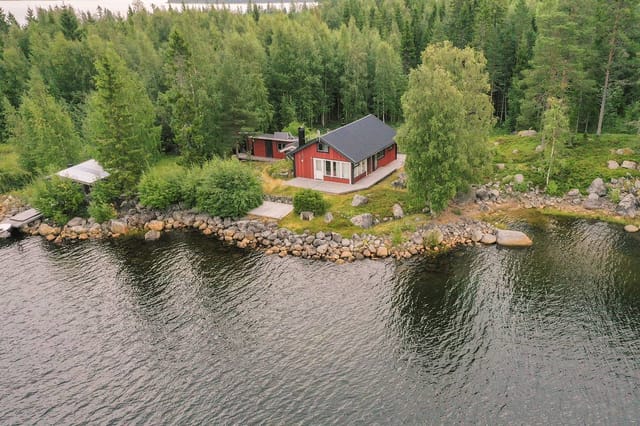
The only way to get there is by boat. That fact alone tells you everything about what kind of place this is. Push off from the mainland dock on a Saturday morning in July, the lake surface still glassy and cool, pine trees reflected in dark water on both sides, and within minutes you're tying up at your own private jetty on Råliholmen — an island in the Bæreia lake system that belongs, for all practical purposes, to you. No road noise. No neighbors peering over a fence. Just the sound of water lapping against smooth granite rocks and the occasional call of a loon somewhere in the forest. This 1937 log cabin is the real thing. Not a reproduction, not a renovation project dressed up in reclaimed wood — a genuine Norwegian hytte built the way they used to build them, with hand-hewn timber walls, wide-plank wooden floors, and cast iron stoves that heat the space faster than you'd expect on a cold October evening. The visible ceiling beams have darkened beautifully with age. The walls carry the particular smell of old wood and pine resin that no interior designer can fake. When you sit in the living room with the stove going and rain tapping on the veranda roof, you understand why Norwegians have organized their entire emotional lives around cabin culture. That veranda deserves its own mention. It runs the full width of the cabin, covered and generously deep, facing out over the lake with an unbroken view of forested hillsides on the far shore. Morning coffee out here in June, when the sun is already high at 6am and the mist is burning off the water — that's not a weekend, that's a life upgrade. Inside, the layout is compact but sensible for a leisure property of this kind. The ground floor holds an entrance hall, the mai ... click here to read more

Welcome to Bæreiavegen 561, secluded on an island, accessible only by boat! Photo: Bjørn Sørheim/EFKT Norge AS

Stand on the terrace at Hunnedalsveien 6511 on a clear January morning and you'll understand immediately. The lake at Gravatn sits below you, steel-blue and still, framed by snow-dusted ridgelines that seem to stretch all the way to the edge of the world. The smell of birch smoke drifts up from the grillhytte. Your coffee is hot. The ski lift is three minutes away by car. This is what a Norwegian mountain chalet is supposed to feel like. Tjørhom sits at the southern edge of the Sirdal valley in Vest-Agder, a region that serious outdoor people have been quietly returning to for decades. It doesn't have the tourist crowds of Hemsedal or the price tags of Geilo. What it does have is 684 meters of altitude, an honest-to-goodness highland landscape, and the kind of year-round recreation calendar that makes you start counting the weeks until your next visit the moment you leave. The drive from Stavanger takes roughly two hours on the E39, and Bergen is reachable in around three. For international buyers, Stavanger Airport Sola has direct connections across Europe, making this far more accessible than its remote setting might suggest. This particular chalet has a history worth knowing. Built in 1956, it was expanded and properly modernized in 1998 and again in 2013, with further updates as recently as 2023. The result is a property that carries the warmth of a traditional Norwegian hytte while functioning like a contemporary home. The cork vinyl flooring laid in 2022 feels soft underfoot and handles the mud and snow that comes with real mountain use. The heat pump installed in 2023 keeps the place genuinely warm on the coldest Sirdal nights without running up fuel costs, and the wood-burning stove in the living room does the ... click here to read more

Spacious and modernized mountain cabin with central location near Gravatn.

A Tranquil Escape in the Heart of Sweden's Natural Beauty Imagine waking up to the gentle rustle of leaves and the distant call of a loon echoing across the serene waters of Lake Högstabodasjön. At Munkaboda 160, this is not just a dream but a daily reality. Nestled in the picturesque landscape of Frövi, Sweden, this charming country home offers a unique blend of seclusion and accessibility, making it the perfect retreat for those seeking a harmonious balance between nature and modern comfort. A Home That Embraces Nature As you step into this delightful 49-square-meter abode, you're immediately enveloped by the warmth of natural light streaming through expansive gable windows. These windows not only illuminate the interior but also frame breathtaking views of the surrounding landscape, allowing you to witness the vibrant tapestry of seasonal changes from the comfort of your living room. The heart of the home is a modern kitchen, thoughtfully designed for both functionality and style. Whether you're preparing a simple breakfast or hosting a dinner party, this space caters to all culinary needs. Adjacent to the kitchen, the living room beckons with its open fireplace, offering a cozy haven during the crisp Swedish winters. A Sanctuary for Relaxation and Recreation Step outside onto the terrace, where the scent of pine mingles with the fresh lake breeze. This outdoor space is perfect for al fresco dining, morning yoga sessions, or simply unwinding with a book as the sun sets over the horizon. The terrace's strategic positioning ensures you capture the most stunning sunsets, providing a serene backdrop for your evenings. For those who cherish the water, the property's private jetty and boat berth offer direct access t ... click here to read more

Exterior view of Munkaboda 160

Step outside on a February morning and the ski tracks are right there — literally less than 50 meters from the front door. You clip in, push off, and within minutes you're gliding through silent spruce forest with nothing but the sound of your own breathing and the occasional crack of a branch under snow. That's the daily reality at Stangeråsvegen 96 in Hornnes, and it's the kind of thing you stop taking for granted only when you leave. This is a compact, honest cabin — 43 square meters of warm interior space sitting at 428 meters above sea level on a generous 988-square-meter plot in the established Stangeråsen cabin community. Built in 1980 and kept in good condition throughout, it comes fully furnished and ready to use from the first weekend you own it. Everything is included: sofas, beds, kitchen appliances, the gas stove, the fridge, white goods — the whole lot. Bring a bag, buy some groceries in Evje on the way, and you're in. The veranda wraps around three sides of the cabin, which matters more than it sounds. Morning coffee faces east into the forest. Afternoon sun swings around to the south. By evening you're still outside with a glass of something, watching the light drop behind the ridgeline. The lot gets sun for most of the day, which in a Norwegian mountain cabin context is genuinely valuable — not a marketing line. Inside, the layout is straightforward and sensible. Entrance, hallway, living room, kitchen, a toilet room, one bedroom, and a storage closet. The living room has enough space for a proper sofa arrangement and a dining table where four people can sit without elbowing each other. A staircase leads up to a loft — furnished with extra sleeping spots, good for kids or overflow guests, though not f ... click here to read more

Welcome to Stangeråsvegen 96!

Imagine waking up to the gentle rustle of leaves and the distant call of seabirds, as the morning sun casts a golden hue over the rolling hills of Portsalon. This is not just a property; it's a canvas for your dream Irish getaway, nestled in the heart of Greenfort, Ireland. With 2.075 acres of lush, untouched land, this one-bedroom house offers a unique opportunity to create a bespoke holiday home or second residence that reflects your vision and style. ### A Story of Potential and Possibility Set against the backdrop of Ireland's rugged beauty, this property invites you to reimagine its potential. The existing structure, though in need of renovation, stands as a testament to the area's rich history and offers a solid foundation for your creative aspirations. Envision transforming this space into a cozy retreat, where modern comforts meet traditional Irish charm. Daily Life in Portsalon Life in Portsalon is a harmonious blend of tranquility and adventure. Mornings can be spent exploring the nearby beaches, where the Atlantic waves kiss the sandy shores. As the day unfolds, take a leisurely drive through the countryside, discovering hidden gems and local artisans. Evenings are perfect for savoring a pint at a local pub, where stories are shared, and friendships are forged. Seasonal Splendor Each season in Portsalon brings its own magic. Spring breathes life into the landscape with vibrant wildflowers, while summer offers long, sun-drenched days perfect for hiking and picnics. Autumn paints the hills in warm hues, creating a picturesque setting for leisurely walks. Winter, with its crisp air and cozy firesides, invites introspection and relaxation. ### Local Lifestyle and Attractions - Outdoor Adventures: From hiki ... click here to read more

Picture 1

The woodstove clicks and settles. Outside the kitchen window, the surface of Åkersjön is dead calm, pale silver in the early morning light, and the only sound is the occasional thud of snow falling from a pine branch. This is what winter feels like at Vallrun 524 — a 45-square-metre cabin built in 1966 that has been quietly doing its job for decades: keeping people warm, fed, and deeply glad they came. This is a proper Swedish stuga. Not a glossy renovation project dressed up for Instagram, but a genuine, lived-in retreat that works in every season and asks almost nothing of you. At 76,500 EUR, it's one of the more honest opportunities you'll find for a second home in Scandinavia. The cabin sits on a 1,303 square metre plot in the Vallrun area of Åkersjön, inside Krokoms kommun in the heart of Jämtland — a county that Swedes have been treating as their wilderness playground for generations. Two bedrooms plus a sofa bed in the living room means you can sleep six people comfortably. The kitchen runs on a wood-burning stove, which sounds quaint until the temperature drops to minus fifteen and you realise it's the most reassuring thing in the world. The living room fireplace handles the atmosphere side of things: after a full day on ski trails or out on the lake, coming back to an open fire isn't a luxury, it's just the right way to end the day. What sets this property apart from a standard cabin listing is what sits alongside the main building. A separate outbuilding contains both a shower and a sauna — a pairing that, in this part of Sweden, is completely non-negotiable for serious outdoor people. Snowmobile back across the lake at dusk, peel off your gear, step into the sauna, and then stand outside in the snow for thi ... click here to read more

Exterior view of the cottage in Vallrun 524

Step onto the west-facing terrace at Bråtåvegen 1018 on a late August afternoon and you'll understand immediately why people have been coming to Bråtådalen for generations. The sun drops toward the ridgeline at a slow, golden angle, the Otta river hums somewhere below the tree line, and the peaks of Breheimen National Park just sit there — immense, unhurried, completely indifferent to the modern world. It's the kind of quiet that actually works on you. Give it ten minutes and your shoulders drop two inches. This is a 1942 timber chalet in proper Norwegian cabin tradition — turf roof, original log walls, a soapstone stove that holds heat long after the fire's gone out. Built the year Norway was still under occupation, it has outlasted a lot. At 67 square metres on a 2,033-square-metre plot in Nordberg, Skjåk municipality, the footprint is intimate but the land around it gives you room to breathe, and then some. It's listed in good condition, which in a cabin this age means the important things have been properly cared for. Inside, there are two separate living spaces — an arrangement that works better than it sounds. The first has the fireplace with a closed combustion chamber, efficient and clean-burning, with those original log walls left as they were. No paint, no cladding, just the timber. The second living room holds the soapstone stove and connects directly to the TV lounge, a separate nook that becomes the natural gravitational centre on rainy evenings. Rain in Bråtådalen is not something you dread — it softens the valley, makes the grass hyper-green, fills the air with the smell of wet spruce. The kitchen runs on solid pine cabinetry, built to last rather than to impress, with a proper range hood and room enoug ... click here to read more

Welcome to Bråtåvegen 1018! Photo by Ingeborg Åstrali. Further photos by Ivar Flagestad.

Nestled in the serene embrace of Sortland's breathtaking landscapes, Austerlandet 248 offers a unique opportunity to own a slice of Norwegian paradise. This charming country home, set on a sprawling 7,604 square meter seafront plot, is the perfect retreat for those seeking tranquility and a deep connection with nature. With its rich history and modern comforts, this property is an ideal second home for international buyers looking to escape the hustle and bustle of city life. Imagine waking up to the gentle sound of waves lapping against the shore, the crisp Norwegian air filling your lungs as you step out onto your private terrace. The panoramic views of the fjord and surrounding mountains provide a stunning backdrop for your morning coffee, setting the tone for a day of relaxation or adventure. A Home with Character and Comfort Originally built in 1910, this well-maintained home has been lovingly updated to meet modern needs while retaining its traditional charm. The entrance and bathroom, added in 2000, enhance the home's functionality, making it a comfortable haven for family and friends. - Living Room: Cozy and inviting, featuring a wood-burning stove perfect for unwinding after a day exploring the great outdoors. - Kitchen: Simple yet functional, with space for freestanding appliances and a dining table, ideal for family meals. - Bedrooms: Two bright and airy rooms on the second floor, offering ample space for rest and relaxation. - Bathroom: Equipped with a shower cabin, washbasin with cabinet, and plumbing for a washing machine. Outdoor Living at Its Finest The property's outdoor space is a true highlight, offering a blend of landscaped areas and natural beauty. A spacious 16 sqm terrace provides the perfec ... click here to read more

Welcome to Austerlandet 248 in Godfjorden - Cozy and well-maintained holiday home with 2 bedrooms, barn, and boathouse. Seafront plot of 7,600 sqm.

The alarm doesn't wake you here. It's the light. By five in the morning in July, the sun is already slanting hard across Kinnbäcksfjärden, throwing gold strips through the curtains of the cottage and landing on the worn wooden floor. You pull on a sweater, step out onto the wraparound terrace, and the bay is so flat it looks painted. Not a sound except a distant gull and the faint knock of your boat against the jetty below. This is Furuholmen — a small island in the northern Swedish archipelago that most people will never find, and the ones who do tend to never want to leave. The cottage sits at the water's edge on leased land, measuring 45 square metres of thoughtfully arranged interior space that opens wide to the outdoors. Inside, the living area is open-plan and filled with light from oversized windows that frame the bay like a painting that changes every hour. It's not a big place — one bedroom, no need for more — because life here happens outside. On the terraces. On the jetty. In the water. Around the murikka grill as the sun sinks lower and lower but stubbornly refuses to fully disappear. That grill, sitting right on the waterfront terrace, deserves a sentence of its own. Fire it up around eight in the evening with a handful of wood and whatever you pulled out of the water that afternoon. The smell of grilled perch or pike-perch over open flame, with the whole bay laid out in front of you turning orange and pink — that's not a moment you can manufacture anywhere else. Access to the island is part of the charm. You park at Kinnbäck's marina on the mainland, step into your included motorboat, and within a few minutes you're tying up at your own private jetty on Furuholmen. That boat ride — short as it is — draw ... click here to read more

Furuholmen - Main exterior view

Stand in the garden at Overmark 4 on a July evening, the air carrying the faint sweetness of cut hay from the cornfield next door, and you start to understand why people fall hard for this corner of northern Jutland. The silence is almost physical. No traffic hum, no sirens—just swallows cutting arcs above the thatched roof and the occasional tractor somewhere far off on the Hannæs peninsula. This is the kind of quiet you can't fake, and it comes attached to a 138-square-metre, four-room Danish farmhouse that has just had its most important feature replaced: a full, brand-new thatched roof that will last decades and sets the tone for everything a new owner can do here. The house dates to 1880, and you feel it the moment you walk through the door. Not in a damp, discouraging way—but in the way old Danish rural buildings carry a certain honesty in their bones. The kitchen still has its white-painted wooden cabinets, a timber countertop, and a low wooden ceiling that practically asks for copper pots and the smell of something slow-cooking. A hallway with a staircase leads you deeper into the floor plan, and what you're really looking at is a blank canvas of 138 square metres on a 1,167-square-metre plot, four flexible rooms, one bathroom, central heating, and supplementary solid-fuel stoves for those months when a Jutland gale decides to announce itself. The interior needs work—there's no softening that truth—but the bones are solid, the roof is done, and the structural conversation has already been started for you. Outside, the lot is generous and private. Mature trees ring the garden, the grass is wide open, and the field views give you that sense of borrowed landscape that money can't really buy in most of Europe. A ut ... click here to read more

Front view of the villa at Overmark 4, Vesløs

Picture this: a Saturday morning in January, snow sitting heavy on the pine branches just outside the kitchen window, the wood stove already crackling from the night before, and the smell of coffee drifting through a cabin that actually feels like yours. That's Togstadvegen 928 in Skogbygda. Not a hotel. Not a rental. A place where you drop your bags, exhale, and stop checking the time. Skogbygda sits in Nes municipality, Viken county, tucked into a landscape that Norwegians have been quietly escaping to for generations. The name itself — "forest village" — tells you what you're getting. Rolling terrain, dense spruce forest, clean air, and the kind of stillness that's genuinely hard to find anywhere within an hour of a capital city. And Oslo is exactly that: under an hour by car, roughly 60 kilometres south via the E6. Jessheim, the closest proper town with a full range of shops, restaurants, and a railway station, is about 33 minutes by car. A bus stop is a six-minute walk from the front door. For a cabin in the Norwegian countryside, this is an unusually well-connected address. The chalet itself was built in 1960 and sits on a freehold plot of 746 square metres — generous enough for serious outdoor living. The interior spans 56 square metres of living space with a total usable area, including the enclosed winter garden, reaching 116 square metres. In good condition throughout, the property has been updated thoughtfully rather than stripped of its character. The kitchen was renovated in 2018 and fitted with solid wood countertops and proper cabinetry that actually has room to cook in — a detail that matters when you're preparing a big Sunday meal after a morning on the trails. The bathroom followed in 2023 with a full ... click here to read more

EIE Jessheim v/ Julie Fredheim Maudal presents Togstadvegen 928! Photo: Ole Kaldal V/ EFKT

Stand on the terrace at Bjønndalsåsen 46 on a clear October morning, coffee in hand, and the whole of Drammensfjorden stretches out below you — silver-grey water, pine-covered ridges on the far bank, the occasional ferry cutting a white line across the surface. This is the view that greets you every single day from this hillside chalet in Spikkestad, a property locally known by its old name, Kvilestova — which loosely translates to "the resting place." Fitting doesn't even begin to cover it. Spikkestad sits in Røyken municipality, tucked between Asker and Drammen in a way that feels genuinely removed from both, even though neither is far. The train station is seven minutes by car, which puts Oslo S roughly forty minutes from your front door on the L14 line — close enough for a day trip into the city, far enough that you never feel the city's pull on a lazy Sunday. This particular corner of the hillside, the Ovnerudåsen area, is quiet in the way that only lightly settled Norwegian countryside can be: a handful of holiday cabins, a few year-round residents, and a lot of trees. The property is built on two separate parcels totalling just over 3,200 square metres of natural plot — not manicured garden, but actual Norwegian terrain with rock outcrops, mature birch and pine, and the kind of ground that smells of damp earth and forest after rain. The main cabin dates from 1964 and covers 83 square metres in total, with 61 square metres of internal living space and another 22 square metres of practical external area. A second, smaller cabin sits on the plot as well, giving you options: overflow accommodation for guests, a separate creative studio, or simply storage and workshop space while you plan a longer renovation. Inside ... click here to read more

Welcome to Bjønndalsåsen 46!

Renovation properties

Properties that need some love