Houses For Sale In France

Houses for sale in france - homestra offers the largest amount of european real estate with over 200,000+ properties, find any type of property within your budget from villas to country homes. buy or rent your perfect home in europe.

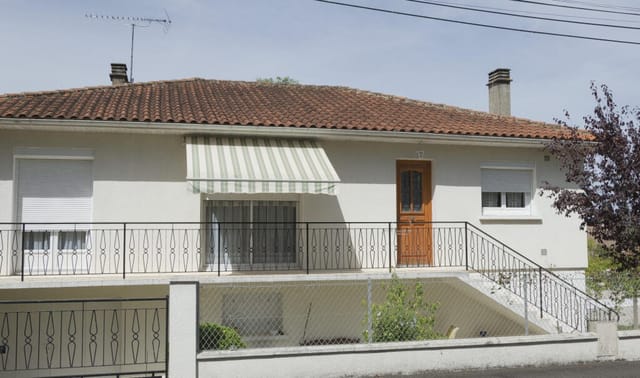
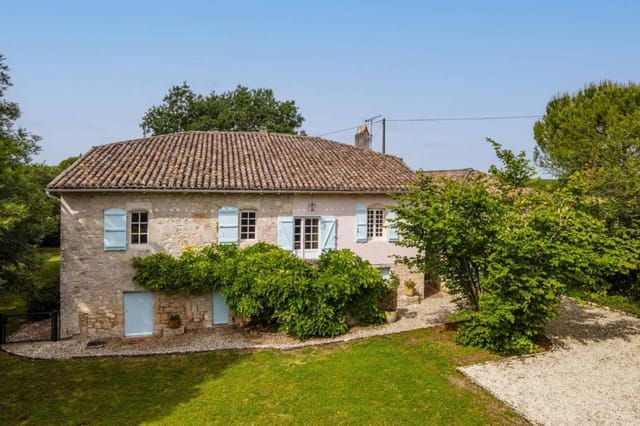
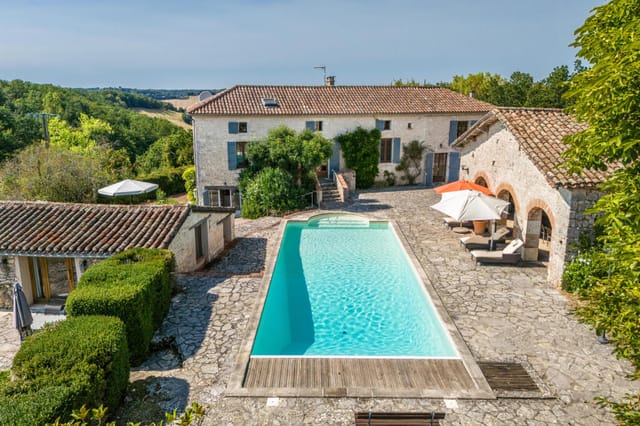
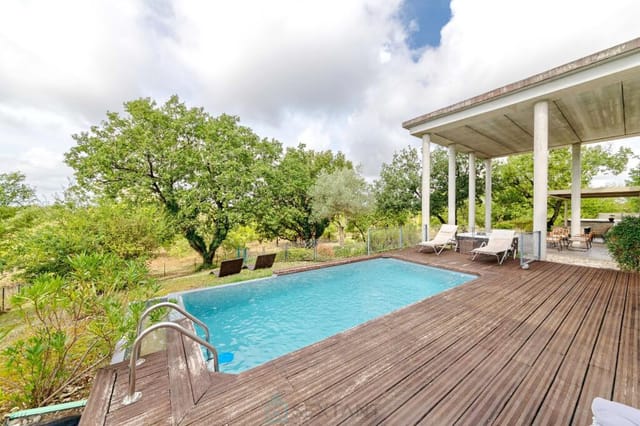
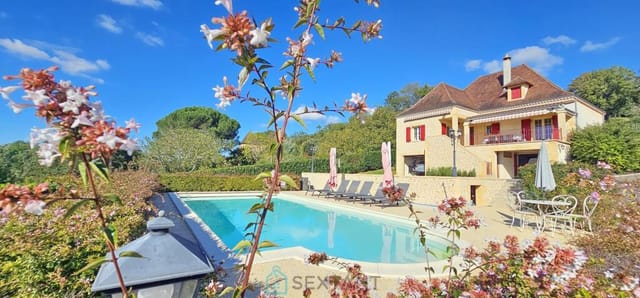
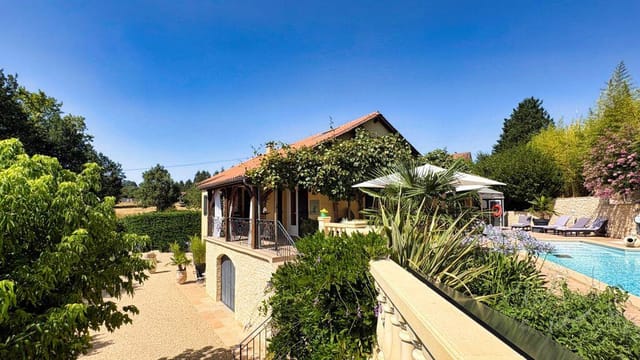
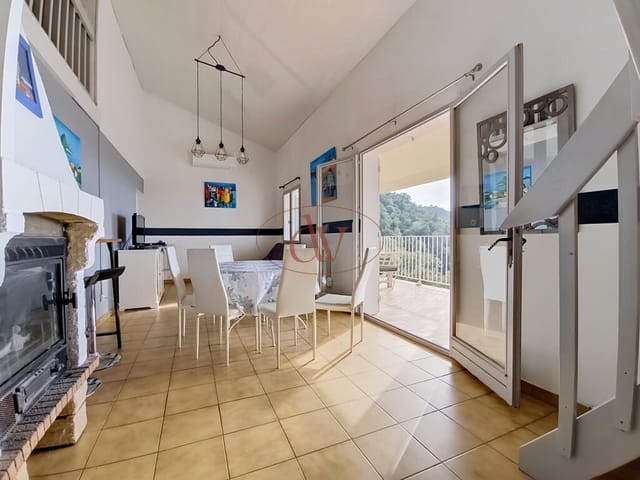
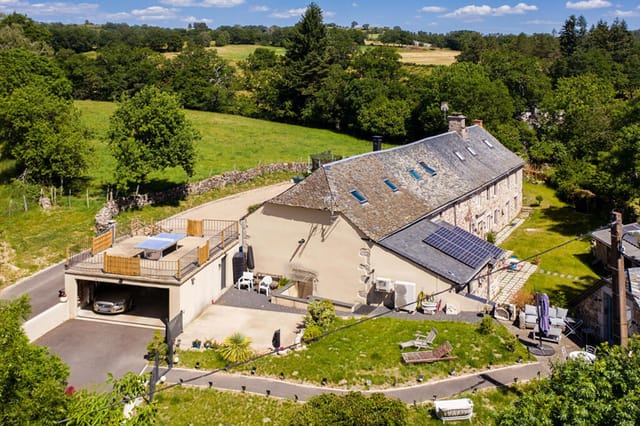
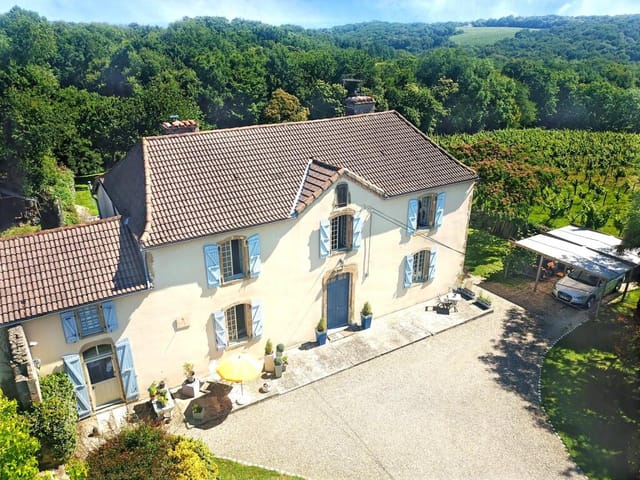
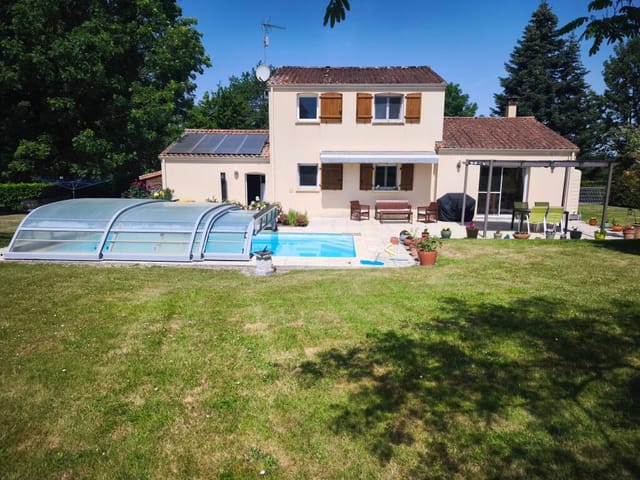
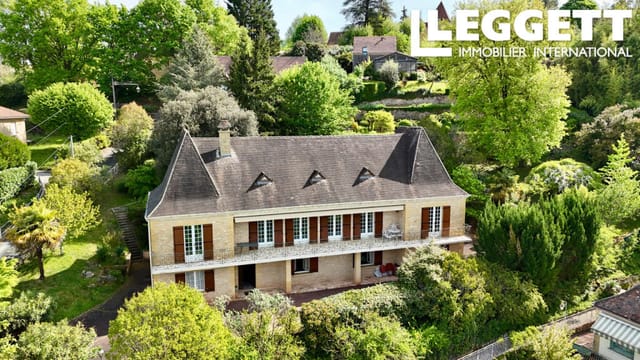
This house for sale in Bergerac, Dordogne, has four bedrooms, a heated saltwater pool and an 1870 core extended in 1998. It sits in a residential area east of town, so you get the Périgord countryside without giving up the restaurants and markets of Bergerac itself. The plot is small enough to look after from a distance and big enough that the pool feels private. That balance is rarer than it sounds, and it is what makes this a practical home for people who want to be away part of the year. ### The House: 1870 Origins and a 1998 Extension The oldest part of the house dates from 1870 and still looks it, in the best way. There is an antique fireplace, exposed beams and the kind of thick-walled rooms that stay calm on a hot afternoon. The 1998 extension changed the balance of the house. It brought in more daylight, along with insulation, air conditioning and a sanitation system described as compliant, which are the details buyers of older French houses usually want to check first. Inside you have 146 m² of living space and four bedrooms, two of them on the ground floor. That layout helps if you are hosting parents or friends who prefer to avoid stairs. There is one bathroom, which is worth knowing if you plan to fill all four bedrooms at once. The house is in good condition, so the first summer can be spent using it rather than organising builders. The large living room is the centre of the house. The antique fireplace has an insert, so winter evenings are covered, and the room opens straight onto the pool area. ### Heated Saltwater Pool and 770 m² of Garden The pool is heated and uses salt rather than heavy chemical dosing. Step out of the living room and you are at the water's edge, with no long walk across the law ... click here to read more

Picture 1

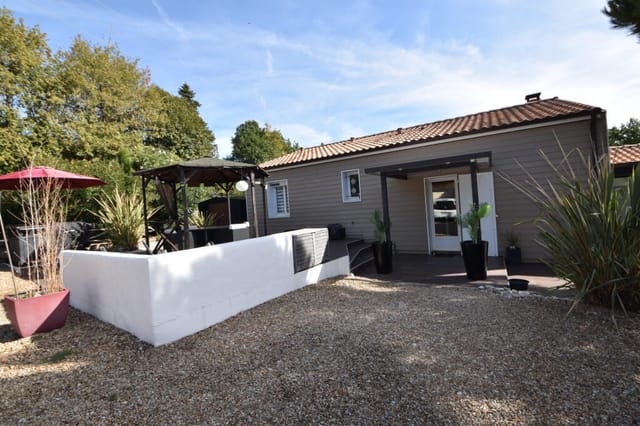
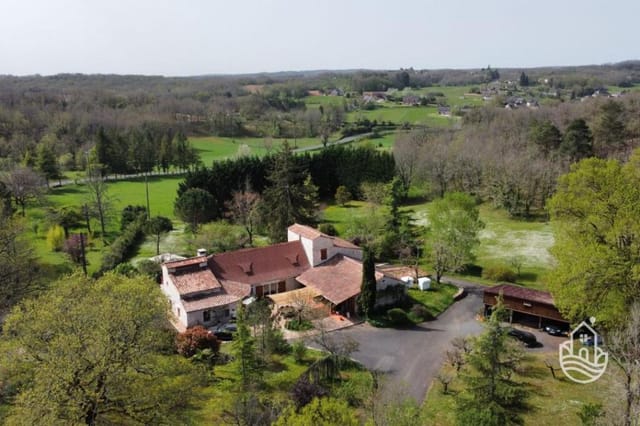
A 133 m² house for sale in Ruelle-sur-Touvre, Charente, with five bedrooms, a garage and a private garden, close to Angoulême. Built in the 1970s and kept in good order, it stands on a quiet residential street where the shops, the schools and the local market are all within walking distance. The asking price is €180,900, which buys a lot of room in this part of France. ### A 1970s Family House on a Quiet Street This is a townhouse spread over two levels, and it has been looked after. Recent renovations, double glazing, electric shutters and air conditioning are already in place. What is left is cosmetic: fresh paint, perhaps new flooring, a kitchen finish chosen to suit you. You can move in first and decide on the details over the first winter. The garden surrounds the house and gives it real privacy. At 389 m² the plot is big enough for a table outside, a few vegetable beds or somewhere for children to play, yet small enough to keep tidy without giving up your weekends. ### Inside: Five Bedrooms Over Two Levels On the first level you come into an entrance hall, then the living-dining room. A bay window floods it with light, a French door opens on the garden side, and there is a fireplace for the colder months. The kitchen is separate, so cooking smells and dinner-party chaos stay out of the main room. A hallway leads to the sleeping area, set apart from the living space. It holds three bedrooms, a bathroom, a separate WC and one extra room that could become a dressing room. On the ground floor are two more bedrooms, recently fitted out, with their own shower room. That makes a natural spot for teenagers, a guest suite or a home office. This level also has a large garage with a PVC door, a laundry and boiler room ... click here to read more

Picture 1

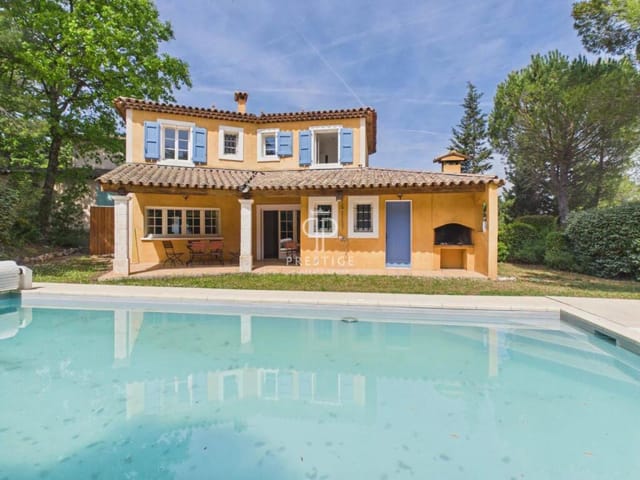
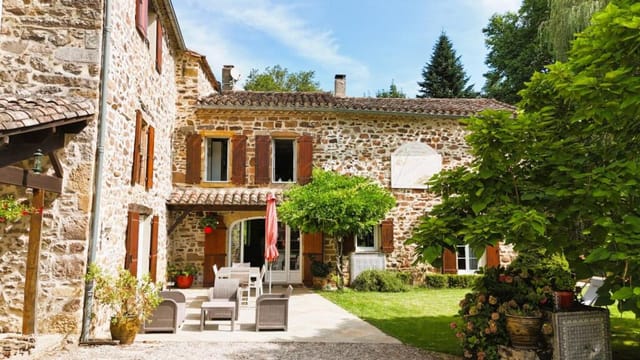
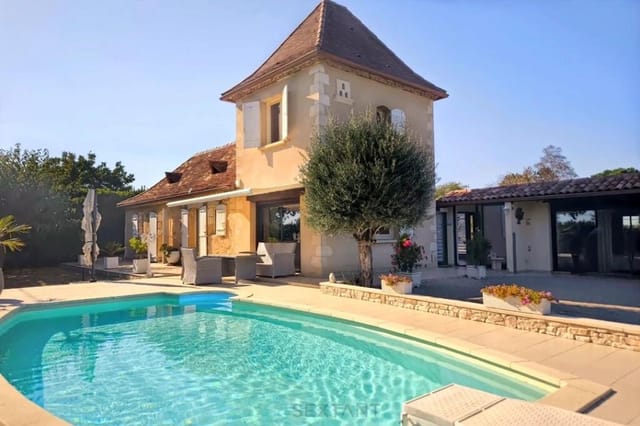
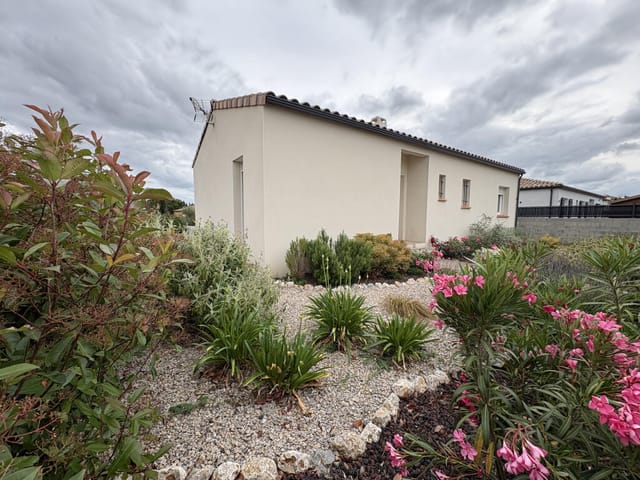
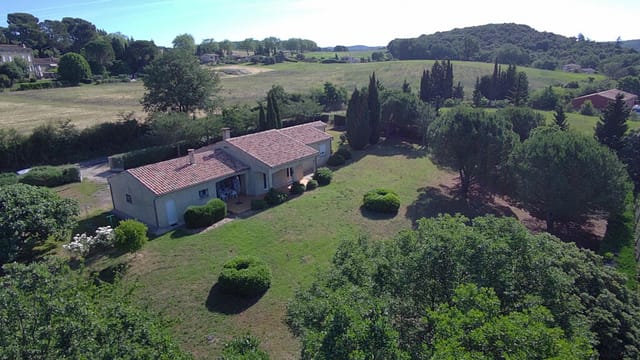
This single-storey house for sale in Charente, in Mornac near Angoulême, has a 3.10 m ceiling living room, a veranda and an 810 m² fenced plot. Built in 2002 and extended with a veranda in 2010, it is in good condition and ready to live in. It has two bedrooms, 94 m² of living space and no stairs. At 199,000 EUR it suits anyone who wants a low-effort home in the French countryside, as a main residence, a second home in France or a rental. ### A Single-Storey House for Sale in Charente The living room is the first thing you notice. The 3.10 m ceiling makes it feel larger than its floor area suggests. The fitted and equipped kitchen is open to it, so whoever is cooking stays part of the conversation. A fireplace with an insert takes care of cold evenings, and air conditioning deals with the hottest weeks of July and August. The veranda, added in 2010, is a bright extra room. Use it as a winter lounge, a reading corner or a second dining table when guests come. Light fills it for most of the day. Both bedrooms have a dressing room, a practical detail in a house of this size. The bathroom has a walk-in shower finished in natural stone. The layout is simple and everything is on one level, so there is nothing to rework and no space wasted on corridors. ### The 810 m² Plot, Terrace and Electric Gate The whole plot is fenced and closed by an electric gate. You can drive in, shut the gate behind you and be private straight away. If you plan to use the house as a holiday home in Charente and be away for weeks at a time, that security makes leaving much easier. A tiled terrace of 74 m² runs alongside the house, and the property data also lists a balcony. The terrace is large enough for a proper outdoor table and a few lounge ... click here to read more

Picture 1

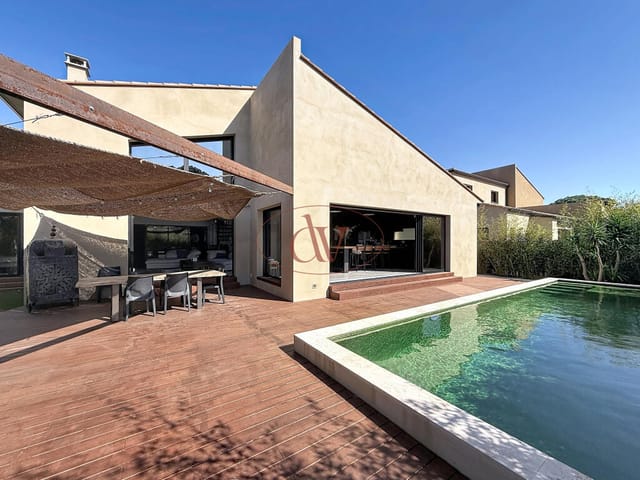
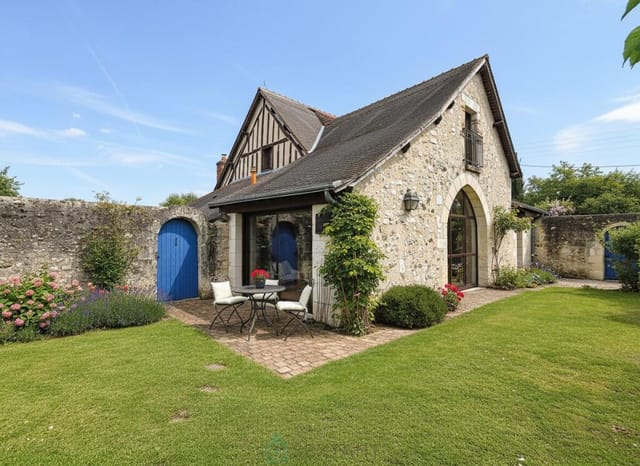
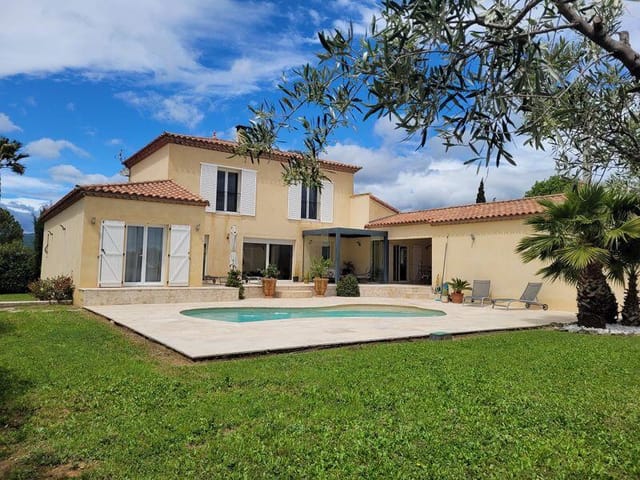
This four-bedroom villa for sale in Fayence sits in a secure estate, five minutes from the village, and comes free of any rental obligation. Most villas on the estate are tied to rental agreements. This one is not, so you can live here all year, visit when you like, or let it out on your own terms. It has 116 m² of living space over two levels, a garage, and a recently renovated, heated 10x5 m pool in a landscaped garden. ### The Villa: Layout and Condition The ground floor begins with an entrance hall that opens into the living room, where a fireplace anchors the seating area. The dining area sits alongside, and the fully equipped kitchen is open-plan, so whoever is cooking stays part of the conversation. A laundry room and a garage handle the practical side of daily life. Upstairs there are four bedrooms. One has bunk beds and its own separate WC, which makes it the obvious room for children or visiting grandchildren. The seller describes en-suite shower rooms for the other bedrooms, so ask for the floor plan to confirm the exact bathroom arrangement. The data lists two bathrooms in total. The house is in good condition and sold as turnkey. The roof has recently been renovated, and there is reversible air conditioning, double glazing, electric shutters and mains drainage. For a buyer of a second home, that list means very little to fix before the first summer. ### Pool, Terrace and Garden The 500 m² plot is landscaped and fitted with irrigation sprinklers and outdoor lighting. The pool is the centrepiece. It was recently renovated, it is heated, and electric shutters cover it when nobody is swimming, which helps if the house stands empty for part of the year. A covered terrace gives you shade for long lunches, an ... click here to read more

Picture 1

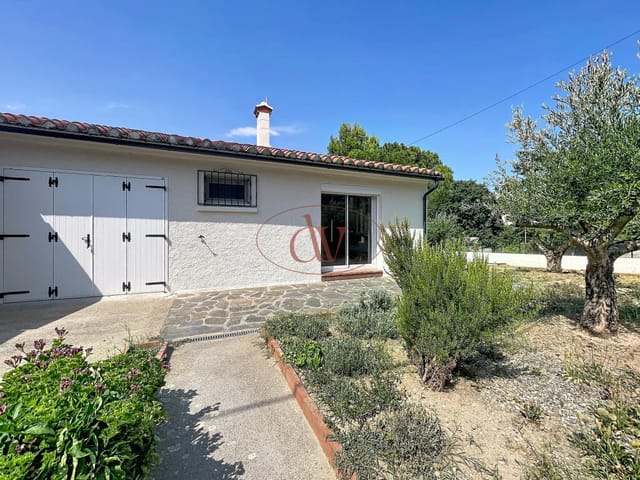
On a warm June evening, the sliding glass doors of the main living room are thrown wide open, and the scent of grilling sea bass drifts in from the summer kitchen while the pool tiles catch the last of the Catalan sun—deep turquoise against warm terracotta. That's not a fantasy. That's a Tuesday here in Alénya. This single-story contemporary villa in the Pyrénées-Orientales sits just a few minutes from Saint-Cyprien-Plage, one of the most sought-after stretches of the French Mediterranean coast, and it carries that easy confidence that only well-built homes in genuinely good locations can pull off. At 187 square metres of living space on one level, it's substantial without being unwieldy—the kind of house you actually want to move around in, not just photograph. Step inside and the first thing that hits you is the scale of the main living area. A cathedral ceiling soars overhead, giving the double living room an almost industrial grandeur that's rare at this price point south of Montpellier. The architect didn't try to hide the mechanics of the space—exposed ducted air conditioning runs along the ceiling like something you'd see in a Paris loft, and it works, because the rest of the room earns it. A high-end open-plan kitchen anchors one end, built around a huge central island that doubles as a breakfast counter, prep station, and the natural gathering point every dinner party eventually migrates toward. Large sliding glass doors line the south-facing wall, dissolving the boundary between inside and out, flooding the room with the 300-plus days of sunshine that this corner of France is quietly famous for. The sleeping quarters are thoughtfully arranged. Three bedrooms sit along the main corridor, including a master su ... click here to read more

Picture 1

On a still Tuesday morning in July, you open the ancient shutters of your top-floor bedroom and the Tarn-et-Garonne countryside rolls out in every direction — sunflower fields, oak-lined lanes, and a sky so wide and blue it takes a moment to convince yourself it's real. The church bells from the village drift up the hill. You don't need to be anywhere until lunch. That's the whole point. This 17th-century stone presbytery in the quiet hamlet of Roquecor is one of those properties that stops you mid-scroll. And rightly so. Built with the authority and permanence that the Catholic Church demanded of its residences in this part of France, it has aged into something extraordinary — all vaulted ceilings, original stone sinks, wide-plank floorboards, and a fireplace so substantial it practically has its own postcode. The priests who once lived here would barely recognise the interiors now: the present owners have brought the kind of quiet, confident taste that lets the architecture do the talking, with muted colours, carefully chosen furniture, and not a single unnecessary gesture. You enter up a grand exterior stone staircase — the kind of entrance that makes guests stop and reach for their phones before they've even crossed the threshold. Inside, the layout unfolds across three floors. The ground level delivers a sitting room anchored by a monumental stone fireplace fitted with a wood-burning stove (the winters here are mild, but November evenings around that fire are something else), a snug that earns its name, and a country kitchen with original tiled floors, a fitted range, and a stone sink so characterful it would be the centrepiece of a lesser house. Below the kitchen, a vaulted stone cellar doubles as a wine store an ... click here to read more

Picture 1

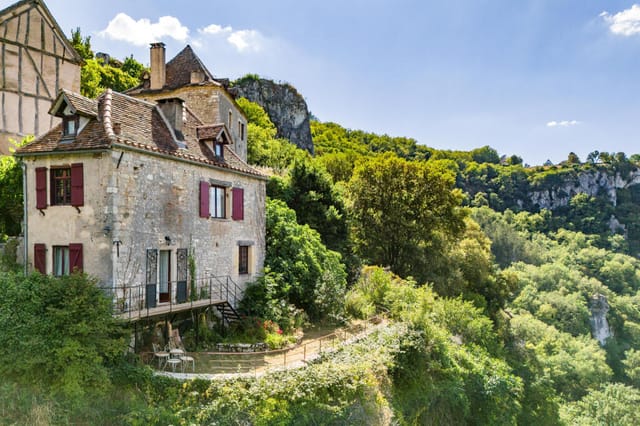
Stand on the terrace and the Lot River is right there, maybe a hundred metres below, curving through limestone gorges that turn amber in the late afternoon sun. The church bell above tolls the hour. A swallow cuts past at eye level. It takes about thirty seconds to understand why this house hasn't been easy to give up. Saint-Cirq-Lapopie has been voted France's favourite village more than once, and the title doesn't feel like marketing. The medieval streets of pale stone, the 15th-century church perched at the top of it all, the painters who've been coming here since the Surrealists — André Breton lived and worked up the road — there's a reason this village on the Lot Valley's cliff edge has drawn people for centuries. And within that village, few houses sit where this one does: directly below the church, on the lip of a sheer 100-metre drop, with a private garden that runs right to the edge. The wrought-iron gate is easy to miss from the lane. That's rather the point. Once through it, the world shifts. Mature wisteria covers a pergola where a summer kitchen and dining table sit in dappled shade — this is where long lunches happen, the kind that drift into evening without anyone noticing. The gardens wrap around the property and along the cliff, a genuinely rare thing here; outdoor space of this size and privacy simply doesn't come up in Saint-Cirq-Lapopie. Seating areas tuck into different corners depending on the time of day and the angle of the light, and every one of them faces something worth looking at. The house itself is old stone and brick, honest about its age in the best possible way. Terracotta floors, exposed ceiling beams, a wood-burning stove that makes the living room feel like exactly the right place ... click here to read more

Picture 1

Sunday morning in southwest France sounds like this: a wood pigeon calling from the walnut tree outside, coffee brewing in a kitchen built from bleached oak and old stone, and absolutely nothing else demanding your attention. That's the daily reality of owning this 208 sq m restored stone farmhouse in a quiet hamlet just outside Beauville — a property that took its time becoming what it is, and shows every bit of it. The house sits among the rolling valleys of Lot-et-Garonne, a département that most international buyers fly over on the way to Dordogne without realizing they're passing one of the most quietly rewarding pockets of rural France. Prune orchards, sunflower fields, truffle-rich oak woods — the landscape shifts with every season, and you'll find yourself noticing all of it from the covered stone terrace where lunch tends to run well past three o'clock in July. The farmhouse itself is genuinely old, and the restoration didn't try to disguise that fact. Exposed limestone walls, hand-hewn oak beams, flagstone floors worn smooth over generations — these aren't decorative choices, they're what was already there. The work involved knowing what to keep and what to quietly modernize: double glazing sits behind deep stone reveals, a heat pump system hums efficiently behind a centuries-old façade, and a bespoke kitchen in bleached oak with stone countertops and integrated appliances would look entirely at home in the pages of a serious interiors magazine. The pantry off the kitchen is the kind of detail that only makes sense once you're shopping at the Friday market in Puymirol and coming home with more than you planned. There are four bedrooms across the main house, each with air conditioning and heating through the ... click here to read more

Picture 1

Saturday morning in Laroque-des-Albères starts with a sound: swallows cutting sharp arcs over the rooftops, the distant clang of the church bell on the main square, and somewhere close by, someone firing up a wood-fired grill. You open the south-facing terrace door, coffee in hand, and the entire ridgeline of the Albères massif sits right there in front of you — no cranes, no apartment blocks, just the ancient limestone spine of the Pyrenees catching the early Catalan sun. That's the daily reality of this fully renovated single-storey house in one of the Pyrénées-Orientales' most sought-after villages. Two bedrooms, a brand-new kitchen, landscaped terraces, a 350m² garden plot, and energy costs running between €810 and €1,160 per year. At €330,000, it represents serious value for a turn-key second home in French Catalonia. Laroque-des-Albères sits at the precise point where the Pyrenees give way to the coastal plain, tucked just above the valley floor on the road that threads between the French and Spanish Catalan worlds. The village itself has kept its shape — stone houses tight along narrow lanes, a café terrace where old men still play pétanque on weekday afternoons, a weekly market that spills across the square with vendors selling local honey, Roussillon wines, and anchovies from Collioure. It's not a tourist fabrication. People actually live here year-round, which gives the place a grounded, unhurried rhythm that resort towns simply can't manufacture. The house sits in a cul-de-sac less than two minutes' walk from the village centre. That proximity matters more than it might sound on paper. You can leave the car in the garage and forget about it for days. Bread from the boulangerie, a cold rosé at the bar, dinne ... click here to read more

Picture 1

On a clear morning in high summer, you can stand on the balcony of this farmhouse with a coffee going cold in your hand and watch the mist burn off the Quercy Blanc valley below. The fields turn from silver to gold. A church bell somewhere in the direction of Lauzerte counts out eight strokes. Nothing else moves. That's the daily opening act here — and it never gets old. This is a proper stone farmhouse complex in the Tarn-et-Garonne, the kind of property that took generations to build and a great deal of luck to find in this condition. Set in a quiet hamlet just minutes from two of the region's most characterful bastide towns, the estate spans a generous 349 square metres of living space across a main farmhouse, two guest cottages, a stone-vaulted cellar, a substantial barn, a separate study with shower room, and a secluded swimming pool surrounded by mature gardens. Five bedrooms, three bathrooms, move-in ready, and priced at €480,000. The maths are compelling. The lifestyle is better. The farmhouse itself does what good old stone buildings do — it keeps you cool in July and warm in January without much effort. Walls half a metre thick have their advantages. Inside, original terracotta floors run through the ground floor, overhead beams show their age in the best possible way, and the wood-burning stove in the living room is not decorative — it earns its keep from November through March. The kitchen has been updated for real use: long lunches, big pots of cassoulet, Sunday afternoons that stretch until the light goes. French doors open onto the balcony, which faces due south across the valley. That view is the property's most persuasive argument for ownership. The practical bones of the place have been thoroughly ad ... click here to read more

Picture 1

On a still morning in Lot-et-Garonne, you wake to the sound of absolutely nothing — no traffic, no sirens, just the occasional wood pigeon in the oak trees and the faint creak of old stone settling in the warmth of a rising sun. Step through the kitchen doors onto the raised deck with your coffee, and the land rolls away before you in every direction: sunflower fields, vine rows, a patchwork of green that shifts colour through the seasons. This is what 3.87 hectares of southwest French countryside looks like when it's yours. And it's considerably more than most people dare to imagine they could own. This 19th-century stone farmhouse complex in Montastruc — a quiet village tucked into the hills of Lot-et-Garonne, just south of the Dordogne border — is one of those rare properties that has genuinely been lived in and loved. Not flipped, not staged. The current owners have run a successful gîte business here for years and simply decided it was time to slow down. That means everything is already working. The guests have been coming. The infrastructure is in place. You're not starting from scratch. The principal house is where the story begins. Three bedrooms, contemporary interiors that don't try too hard — oak flooring in the main suite, built-in wardrobes you'll actually use, air conditioning for the deep heat of August, and an en suite bathroom that feels finished rather than rushed. The sitting room has a log-burning insert stove for January evenings when you want nothing more than a bottle of Côtes du Marmandais and a slow dinner. The kitchen is properly equipped: range stove, Belfast sink, wood worktops, modern fittings. There's a large covered terrace for long lunches that drift into the late afternoon, and a second ... click here to read more

Picture 1

There's a particular kind of quiet you only find in the deep Poitevin countryside — the sort that isn't silence so much as a conversation between wind, birdsong, and the occasional church bell rolling over from the village. Standing on the elevated terrace of this former railway gatekeeper's house in the hamlet of Logerie, that quiet settles over you fast. And then you start wondering why you ever lived anywhere else. This is a genuinely rare find. The house was originally built to serve the old railway crossing that once ran through this corner of the Vienne department. The line closed decades ago, and in its place grew a green corridor — a long, tree-lined walking and cycling track that now stretches peacefully past the garden boundary. The history didn't disappear; it just got quieter. On mornings when the light comes in low and gold through the kitchen window, you can almost imagine the old gateman stepping out to wave down a steam locomotive. The property itself sits in good condition throughout, updated thoughtfully without gutting the period character that makes it worth caring about. The kitchen is the obvious centrepiece — a proper farmhouse-style space fitted with shaker-style units, deep work surfaces, and enough room to actually pull a chair up and eat in there without anyone feeling cramped. It looks out over the enclosed garden, which means you catch the changing light across the grounds while you're making coffee. That matters more than you'd think. Original wooden floorboards run through the living room, worn in just the right places. A wood-burning stove sits in the corner, which gets genuinely useful in December when the Vienne valley gets a proper chill, and a discreet air conditioning unit handles ... click here to read more

Picture 1

Sunday mornings here have a particular quality. The kitchen window is propped open, coffee is on, and from somewhere across the valley — past the fruit trees, past the old bread oven — you can hear church bells drifting up from the village below. That's the rhythm of life in Mauroux, a hamlet in the Lot that most people drive past and then spend years trying to find again. This four-bedroom stone farmhouse sits on a quiet lane in a tiny hamlet just outside Mauroux, less than ten minutes from the market town of Tournon-d'Agenais. The house is old in the best sense — thick limestone walls that keep rooms cool through July heat, floors that have absorbed centuries of footsteps, a staircase carved from the same local stone as the exterior that curves up through three levels with a solidity you just don't get in modern builds. But it's been looked after properly. Double glazing throughout, air conditioning, a pompe à chaleur heat pump for efficient heating, a water softener — the infrastructure is modern even when the bones are ancient. This is a property in good, move-in condition. You could arrive with suitcases and be sitting on the terrace with a glass of Cahors Malbec by evening. The layout across three floors is generous without feeling sprawling. Downstairs, two double bedrooms open through French doors directly onto the sun terrace and pool — which means summer mornings that begin with a swim before breakfast become less a fantasy and more a daily habit. The main living space upstairs is open-plan, anchored by a stone fireplace fitted with a log-burning stove. Beamed ceilings, thick walls, afternoon light slanting in from the south. In winter, this room earns its keep: load the stove, pull the shutters, and the whol ... click here to read more

Picture 1

Step outside on a July morning and the first thing you notice is the silence. Not the absence of sound exactly, but a particular quality of it — birdsong carrying across open fields, the faint rustle of vines along the terrace, the distant church bell from the village of Le Temple-sur-Lot marking eight o'clock. You're standing in front of a centuries-old Lebanese cedar so vast its canopy throws shade across half the garden. This is the kind of moment that makes people stop wondering whether they made the right decision. They already know. This 410-square-metre country estate in the Lot-et-Garonne sits on its own private grounds with open views sweeping in every direction — and no neighbors close enough to matter. It comprises three distinct stone buildings: a 19th-century farmhouse, a superbly converted six-bedroom guest barn, and a self-contained one-bedroom cottage called Le Grenier. Ten bedrooms, seven bathrooms. Currently operating as a profitable guesthouse, it works equally well as a multi-generational family retreat, a boutique hotel project, a yoga or wellness retreat, or simply a very generous private home for people who want room to breathe in rural southwest France. The original farmhouse is where the estate's soul lives. Stone walls that have absorbed two centuries of Gascon summers keep the interior cool without a fuss. A large, light-filled living room centers on a wood-burning stove — irreplaceable on those mid-December evenings when the Lot-et-Garonne fog sits low over the valley and you've just come back from the Villeneuve-sur-Lot market with a wheel of Ossau-Iraty and a bottle from a Duras cooperative. The kitchen runs on gas, which serious cooks will appreciate, and a long hallway connects the back ... click here to read more

Picture 1

Stand on the terrace on a Tuesday morning in late June and you'll understand exactly why people keep coming back to this corner of the Dordogne. The medieval bastide of Domme rises above the river valley to the northwest, its golden limestone walls catching the first proper heat of the day. Swallows cut arcs over the gardens below. Somewhere between the lavender and the old walnut tree, a pool pump hums quietly to life. This is not a fantasy. This is what owning this three-property gîte complex in La Roque-Gageac actually looks like on a weekday. The property sits on roughly three-quarters of an acre, a well-planted, private plot that took two decades to reach the kind of maturity most garden designers can only sketch on paper. Three independent houses, each around 50 square metres, each with its own pool, its own entrance, its own self-contained rhythm. Combined, they offer six bedrooms and three bathrooms across approximately 150 square metres of living space. The layout was conceived from the start with rental income in mind, and it has delivered exactly that for the current owners across nearly twenty years of operation. Each house follows a sensible, practical floor plan: an open living and kitchen space of around 24 square metres, a shower room, a WC, and sleeping arranged partly in mansard-style upper rooms that children tend to adore. Reverse-cycle air source heat pumps handle both heating and cooling, which matters more than people expect — Périgord summers can push past 35°C, and October evenings carry a definite chill. These are not draughty stone barns waiting for a renovation budget. They are ready to work, move-in ready, and have been maintained by owners who clearly understood the guest experience. From ... click here to read more
Picture 1

On a still Tuesday morning in July, the only sound you'll hear from the covered terrace is birdsong and, if the wind's right, the faint ring of the bells from Saint-Sacerdos cathedral drifting up from Sarlat's medieval core just a kilometer down the road. The pool is already warm by nine — it's heated, and the roller shutter traps every degree overnight — and the coffee is strong. This is what owning a second home in the Dordogne actually feels like. Not a fantasy. A Tuesday. The property sits in a genuinely peaceful setting on the edge of one of the most visited and best-preserved medieval towns in France, yet it manages to feel entirely private. A third of an acre of enclosed garden wraps around the house, giving you that rare combination: you can walk to a boulangerie and still eat breakfast without seeing another soul. The 1,500 m² of grounds include good open views across the countryside — not just a strip of sky between rooftops, but actual Périgord Noir landscape rolling away beyond the hedgerows. Built in 1980 and maintained in good condition, the main house delivers 171 m² of living space across two floors, with a separate self-contained apartment on the garden level adding a further 43 m². Six bedrooms and three bathrooms total. That's the kind of footprint that makes large family gatherings work — really work, where nobody is sleeping on a sofa or sharing a bathroom with four other people. The apartment in particular changes the dynamic entirely. Grandparents get their own entrance. Adult children get independence. Friends on a long summer visit don't have to navigate the rhythms of your household. Step into the ground-floor sitting room and the beams immediately tell you where you are. Exposed, original, t ... click here to read more
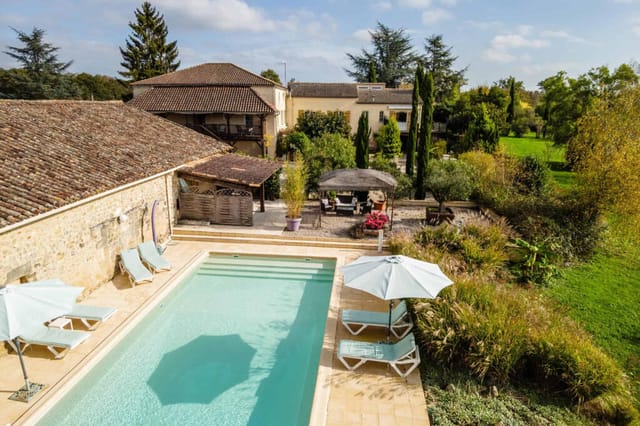
Photo 1

Stand on the covered terrace on a clear October morning and you can see all the way across the Roussillon plain — the vineyards turning rust and gold, the Mediterranean a thin silver line on the horizon, and the Albères mountains pressing up close behind you. This is Laroque-des-Albères. Not the tourist brochure version of southern France, but the real, lived-in one, where the weekly market on the square smells of thyme and grilled blood sausage, where the locals drink their grenache at tables that have never moved, and where the light in late afternoon turns the stone walls the color of warm honey. The property itself is a two-part setup that gives you rare flexibility. A detached villa of around 95 square meters sits at the heart of the plot, solid in construction and in good condition throughout. Ground floor living is set up sensibly: two bedrooms, a shower room, a separate toilet, an independent kitchen, and a living room that opens directly onto a 30-square-meter covered terrace. That terrace is where life actually happens — morning coffee in the shade of the overhang, long lunches that drift into the afternoon, the smell of wild rosemary carried down from the hills above. Upstairs, a third bedroom, a mezzanine space, and an office give you room to spread out, whether you're working remotely for a week or hosting three generations of family across the summer. Beyond the villa, a completely independent T3 apartment changes the entire financial conversation around this property. Two bedrooms, a shower room, an open kitchen flowing into the living area, its own private terrace with that sweeping view over the plain, and a storage shed. The apartment is fully self-contained — guests, family members, or tenants have t ... click here to read more
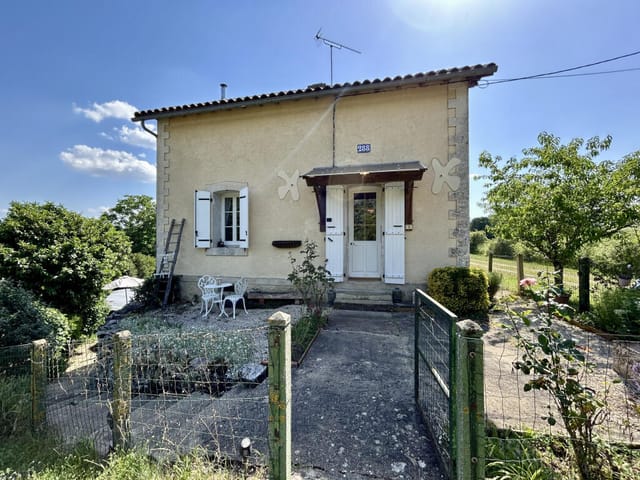
Picture 1

The first thing you notice on a clear morning is the silence. Not the absence of sound, but the particular hush of the Aubrac plateau — wind moving through high pastures, cowbells somewhere in the distance, and the faint smell of wild thyme warming up in the sun. This is what you wake up to when you own this eight-bedroom stone estate outside Laguiole, one of the most quietly compelling corners of southern France. This is not a weekend renovation project. The property was fully restored in the 2010s with a level of care you rarely see — lauze stone roofing, underfloor heating powered by a solar heat pump, mountain-grade double-glazed windows, and Rockwool and wood fiber insulation that keeps the house cool in July and genuinely warm in January. The DPE rating is C, which in a stone building of this age and scale is a real achievement. Move-in condition is not a marketing phrase here. It's the reality. The main residence alone spans over 270 square metres, converted from the original barn and stables with an open, light-filled layout that surprises people who expect old Aveyronnais farmhouses to feel dark and cramped. The ground floor kitchen was designed by someone who actually cooks — multiple openings, professional-grade finishes, and a setup that flows naturally into the vast living and dining area. There's a ground-floor bedroom with its own shower room, a pantry, and a separate toilet. Upstairs, the mezzanine leads to a master suite with a proper bathroom, a home office, a children's bedroom, and a fourth bedroom that can be connected either to the main house or to one of the adjoining rental units, depending on what you need it to be on any given day. That flexibility is one of the most valuable things about thi ... click here to read more
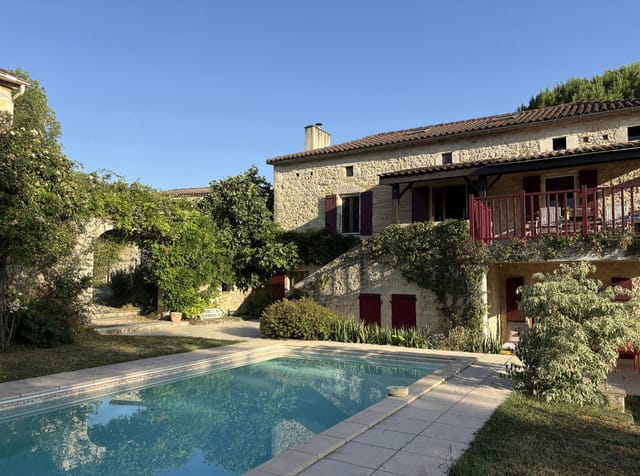
Picture 1

On a still Sunday morning in Madiran, the only sounds are birdsong and the faint clinking of bottles from the cooperative down the lane. You push open the kitchen's stable door, coffee in hand, and step into the front garden where the dew is still burning off the lawn. The wrought-iron gates at the end of the gravel drive frame a view of organic vineyard rows stretching toward the foothills. This is your house. It has been for two hours, and already it feels like it's been yours for twenty years. That sense of instant belonging is hard to manufacture — it comes from a place that has been genuinely lived in, loved, and brought carefully into the present without losing what made it worth loving in the first place. This five-bedroom Maison de Maître dates to the 18th century, and the current owners acquired it as a second home before it quietly became something they couldn't leave. After years of thoughtful restoration, they've handed over a property that's fully move-in ready: no compromise projects, no skeleton-in-the-wall surprises, just a grand French country house that works as well as it looks. The proportions alone would stop you in your tracks. An entrance hall at 18 square metres sets the tone — black oak staircase rising ahead of you, original tiled floors underfoot, beamed ceiling overhead. To the right, what the owners use as a study is actually a generous 25.5-square-metre room with a wood burner and double-aspect windows; put a bed back in it and you have a ground-floor guest suite in seconds. The lounge at the same square footage flows naturally into a 23.5-square-metre kitchen with fitted units, an island, plumbing for a dishwasher and washing machine, and that stable door that you'll leave open from April ... click here to read more
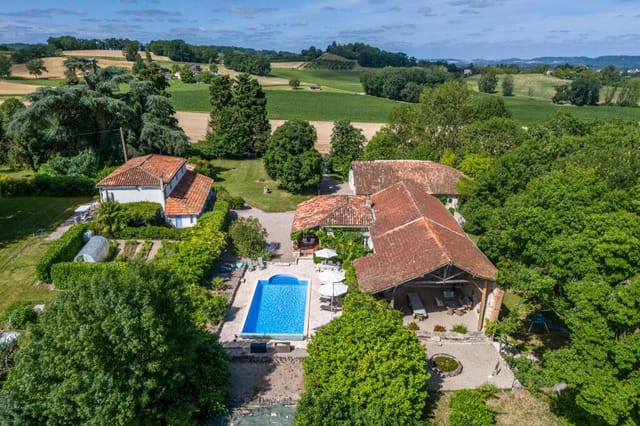
Picture 1

Step outside on a Tuesday morning in late June and the air already carries the faint sweetness of lavender baking in the sun. The pool is still, the awning is half-drawn over the terrace, and somewhere down the lane a neighbour is heading out with a baguette tucked under their arm. This is the daily texture of life in a quiet village on the edge of Carcassonne — unhurried, real, and surprisingly easy to make your own. This single-storey house sits at the end of a no-through road, which means the only traffic you'll hear is the occasional bicycle. The plot runs to 1,092 square metres, and the previous owners have clearly put years of thought into it. The Mediterranean garden is planted with drought-resistant species — rosemary, agapanthus, ornamental grasses — that look full and lush without demanding constant attention. Perfect for an international buyer who wants the garden to look after itself between visits. Three double bedrooms give the house real flexibility. There's also a study that functions easily as a fourth sleeping space — useful if you have visiting family or if you ever want to test the short-term rental market on platforms popular with travellers making the heritage circuit between Toulouse and the coast. The single shower room features an Italian walk-in shower, and there's a separate WC, which makes morning routines considerably more civilised when the house is at capacity. The open-plan kitchen and living area is the social engine of the home. On cooler evenings in October, when Carcassonne's famous Festival de la Cité has long finished but the Aude valley is still warm enough for a glass of Corbières on the terrace, this space pulls everything together. Air conditioning keeps July and August manage ... click here to read more
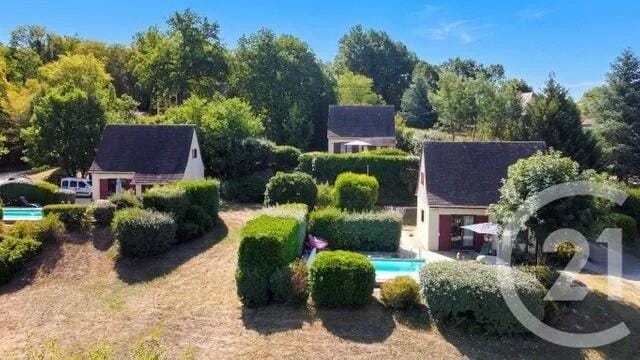
Picture 1

Picture waking up on a Saturday morning to absolute quiet — no traffic, no sirens, just the soft chorus of birds drifting through the timber-framed terrace doors and the smell of coffee rising from a kitchen that somehow manages to feel both industrial and utterly at home. That's a regular weekend at this former dairy in Firbeix, a small, unhurried village in the northern Dordogne where the pace of life is set by the seasons, not the clock. This is not a typical holiday home in France. Not even close. Over 300 square metres of converted space — once used to house cattle and process milk — has been rethought entirely, from the concrete floors to the soaring ceilings, into one of the most genuinely distinctive live-work properties in Aquitaine. The transformation took patience and a clear creative vision, and the result is something between a Manhattan loft, a Provençal farmhouse, and an artist's compound. Except it's in the Dordogne. And it has a pond. Walk through the electric gates into the private courtyard and you immediately understand that something different is happening here. The building's exterior — honest, solid, with that particular kind of French agricultural permanence — hints at the scale inside without quite preparing you for it. The ground floor alone covers around 130 square metres of open workshop and studio space, flooded with natural light through large glazed openings. Right now it functions as an artist's workspace and gallery. But it could just as easily become a furniture-making atelier, a ceramics studio, an architect's office, a design showroom, or — for those who simply want space — a garage, games room, and workshop rolled into one. The ground floor also holds two double bedrooms, an office, ... click here to read more
Picture 1

On a Sunday morning in Fayence, the church bell at the top of the old village counts nine slow strokes, and they drift down through the lavender-scented air all the way to your terrace. Coffee in hand, you're looking out over a ripple of forested Provençal hills, the surface of the pool catching the early light. This is not a fantasy. This is a Tuesday in October, or a Thursday in June — this is just what life looks like when you own a converted stone sheepfold in one of the most quietly compelling corners of southern France. Fayence sits in the Var, roughly halfway between the bustle of Cannes and the rocky grandeur of the Gorges du Verdon. It's a perched village — the kind the Var does so well — with cobbled lanes climbing to a 15th-century church, a rotating cast of artisan markets, and restaurants that take their bouillabaisse and daube provençale seriously. The Tuesday and Saturday markets on the Place de la République pull producers from across the region: olives pressed in Draguignan, goat cheese from the farms above Callian, honey from hives in the Maures hills. You're not driving to a supermarket here. You're walking five minutes to fill a basket. That proximity to the village center is one of this property's quiet advantages. It reads as countryside — the greenery around it is dense and genuinely peaceful — but the boulangerie and the pharmacy and the small épicerie are on your doorstep. International buyers often underestimate how much this matters day-to-day when a property is used across long stretches of the year rather than just a single summer fortnight. The sheepfold itself is the real draw. Stone construction of this age and character is increasingly hard to find in good condition in the Var at this ... click here to read more
Picture 1

Sunday morning in the Dordogne has its own particular tempo. The village baker pulls fresh pain de campagne from a wood-fired oven while mist still hangs over the sunflowers, and from the broad covered terrace of this house you can hear almost nothing except birdsong and the occasional rustle of wind through mature fruit trees. That quiet is not accidental — it's the whole point of owning a place like this. Built in 2001 to a single-storey design that is genuinely rare at this price point in the Dordogne, the house sits on 1.3 hectares of established grounds just outside a village you can walk to in under ten minutes. The scale is immediately striking: 259 square metres of living space all on one level, with an open-plan main living area that feels airy and connected rather than chopped into smaller rooms. High ceilings, aluminium double-glazed windows and PVC shutters keep the summer heat manageable and the winter evenings warm — though the underfloor heating (on its own circuit, separate from the radiator system) handles the colder months with quiet efficiency you won't notice until you're barefoot in January, perfectly comfortable. The kitchen and utility setup deserve a proper look. There's a spacious utility room that functions as a rear kitchen, directly attached to a double garage — so arriving after a long drive from Bergerac airport with a car full of luggage, wine, and groceries from the Bergerac Saturday market is genuinely painless. Additional covered parking for four cars means guests, extended family, or a second vehicle never create a logistical puzzle. The instant hot water system throughout the house is one of those touches you only appreciate once you've owned a property that didn't have it. Four bed ... click here to read more
Picture 1

Picture this: it's a Tuesday morning in late June, the kind of warm, slow morning that only seems to happen in southwest France. You're standing on the covered terrace with a coffee, watching the light ripple across the pool through a gap in the trees. The nearest neighbor is far enough away that all you can hear are birds and the occasional tractor somewhere beyond the tree line. No traffic. No noise. Just a 119-square-meter house that's entirely yours, on a generous 2,940-square-meter plot that feels like the rest of the world forgot to find it. That's the daily reality of this well-kept three-bedroom home on the edge of Parthenay, a medieval market town in the Deux-Sèvres department that most international buyers still haven't discovered — which is precisely why the value here is so compelling. Parthenay itself deserves a closer look. The old town is strung along a rocky spur above the Thouet River, with ramparts and a 13th-century gatehouse you walk through to reach the main street of half-timbered houses. Every Wednesday, the weekly market fills the lower town with market gardeners from the surrounding bocage countryside, selling goat's cheese from Poitou, Charentais melons, Mogette beans — a white bean so tied to the region it has its own festival. The town is lively but never loud, the kind of place where you'll quickly learn the name of the baker at Le Fournil and know which café terrace catches the afternoon sun on the Place du Drapeau. The house itself was built in 2006, which matters more than it might sound. You're not buying a money pit wrapped in old stone charm. The structure is solid, the systems are modern, and the current owners have kept on top of every update that counts. The heat pump powering the ... click here to read more
Picture 1

On a Sunday morning in late spring, you open the French doors off the ground-floor bedroom and the smell of cut grass and warm stone drifts in from the south-facing terrace. Somewhere down the lane, a rooster is doing his thing. The kitchen is already flooding with light—it faces south too—and you're standing there with a coffee, looking out at the enclosed garden, thinking this might be the most at ease you've felt in years. That's the rhythm this place puts you in. This authentic 19th-century Touraine farmhouse sits just outside the village of La Croix en Touraine in the commune of Bléré, right in the heart of the Indre-et-Loire department. It's the kind of address that means nothing until you visit and then means everything. The Loire Valley isn't a backdrop here—it's your actual life on weekends and summers. The house itself is honest and well-kept. Roughly 149 square metres spread across the main building, with a layout that's been thoughtfully configured for real living rather than a developer's floor-plan fantasy. Step through the entrance hall and you're immediately in the thick of it: a large fitted kitchen that flows straight out to the terrace, a cathedral-ceilinged living and dining room of around 40 square metres with original exposed beams, stone walls, parquet floors, and a wood-burning stove that pulls its weight every autumn weekend. The proportions feel generous without being cavernous. In winter, that stove throws enough heat to make the whole ground floor feel like you pulled the house around you like a blanket. The ground floor also includes a bedroom with its own French doors—convenient for guests or for those mornings when you want to slip outside before anyone else is awake—plus an office, a ba ... click here to read more
Picture 1

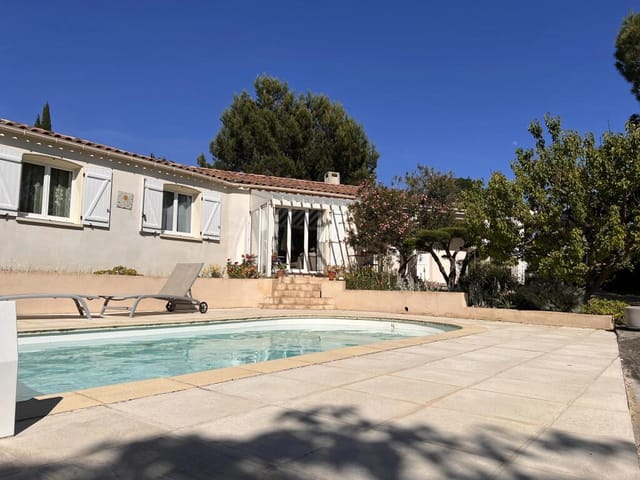
Step outside on a Tuesday morning and the air already smells of lavender and warm stone. The garden — your garden — has rosemary bushes that brush your ankles as you walk to the terrace, and if the wind is right you can just make out the faint outline of the Pyrénées to the south. This is the Razès. Quiet, green, and stubbornly off the tourist radar. That's precisely why it works. Built in 2022, this three-bedroom bungalow in Mazerolles-du-Razès sits on a fully fenced plot in a rural pocket of the Aude département where the pace is measured by seasons rather than schedules. It's move-in ready — genuinely, not as a marketing convenience. There's no work to be done, no contractor to chase, no compromises to negotiate. The ten-year structural warranty still runs. Energy class A means the bills stay low even in the depths of January, and the thermodynamic water heater handles hot water without fuss. The 86 square metres of living space are arranged sensibly: an open-plan kitchen and living room lit by a south-facing bay window that pulls afternoon sun deep into the house, three bedrooms that sleep a family or host guests without anyone tripping over anyone else, and a bathroom with both a bathtub and walk-in shower — a detail that matters more than people admit when you're sharing the place with children or staying for a month rather than a weekend. There's a separate toilet, a pantry for proper storage, and a 16-square-metre garage for the car, the bikes, or whatever project you've been putting off. Outside, the tiled terrace is large enough for a proper table, a few chairs, and the kind of long lunches that stretch into early evening. The landscaping was done with a light hand and good sense: olive trees, almond, lavend ... click here to read more
Picture 1

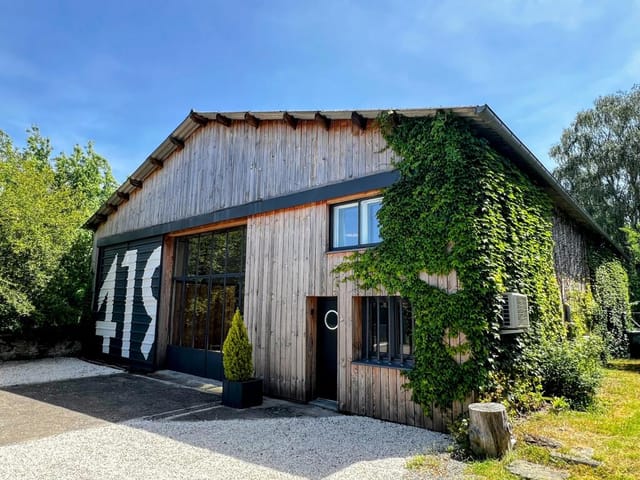
Picture this: it's a Tuesday morning in July, and the only sound you can hear from the kitchen window is a woodpigeon calling somewhere beyond the garden's old stone wall. The coffee is on, the air smells faintly of cut grass and warm limestone, and by ten o'clock you could be sitting under the covered barn with a glass of Pineau des Charentes, watching swallows loop over your one-acre plot. This is life in Juignac — unhurried, deeply rural, and more alive than you'd expect from a village this quiet. Juignac sits in the soft green heart of the Charente, one of those parts of southwest France that most visitors drive through on the way to somewhere else. That's precisely the point. About five kilometres from the market town of Montmoreau-Saint-Cybard, you're close enough to pick up fresh bread from the boulangerie on the Grand-Rue and have a long lunch at one of the restaurants along the main square, but far enough from any tourist circuit that life moves at a pace you set yourself. The Charente itself — the river, not just the département — winds through this landscape, and the whole region has this quality of gentle abundance: sunflowers in August, walnuts in October, fog rolling low over the fields in November before the winter sun burns it off by midday. This house has had a serious second life. Since 2020, it's gone through a thorough, considered renovation — not a cosmetic refresh, but a genuine transformation. The approach was smart: instead of stripping out every trace of its rural Charentais character, the renovation leaned into it. Exposed stone sits alongside a fully equipped contemporary kitchen. The result is a home that feels like it has always belonged here, but functions with the efficiency of something ... click here to read more
Picture 1

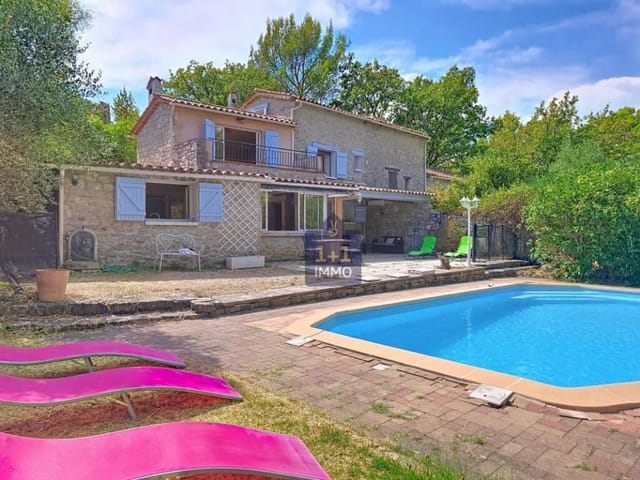
Stand on the south-facing terrace at eight in the morning, coffee in hand, and the Pyrenees are right there — a pale blue wall of peaks stretching across the horizon while the rest of the Malepère valley hums quietly below. No traffic, no neighbors pressing in. Just the sound of cicadas warming up for the day and the faint smell of sun hitting dry stone. This is what you came to France for. Set in the village of Cailhau in the Aude département of Languedoc-Roussillon, this four-bedroom single-storey villa sits on over 3,500 square meters of private land with that uninterrupted panoramic view of the Pyrenees as its constant backdrop. At 124 square meters of living space across one level, the layout works effortlessly — no stairs, no awkward split levels, just an honest, well-organized home that's genuinely move-in ready. The heart of the house is a 50-square-meter south-facing living area that pulls together a lounge, dining room, and fully fitted open-plan kitchen. In a region where the sun shows up reliably from April through October, orientation like this matters. Natural light tracks across the room through the day, and with the solar-powered electric roller shutters programmed to close automatically as temperatures climb, the interior stays cool even during August when the thermometer pushes past 35°C. The reversible air conditioning handles the remaining edge cases. This is a house that has been thought through by someone who actually lives in Languedoc summers, not just designed for a sales brochure. Three of the four bedrooms sit comfortably in the 12–14 square meter range, each fitted with built-in wardrobes. The fourth is a solid ten square meters — smaller, but still useful as a home office, children's room, ... click here to read more
Picture 1

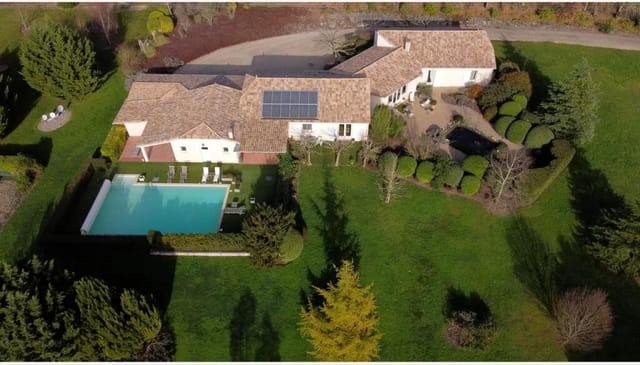
Stand on the south-facing terrace on a July morning and you'll understand immediately why people come to Sarlat-la-Canéda and never quite manage to leave. The medieval rooftops fan out below you, the limestone towers catching the early light while the smell of bread from the boulangerie on the Rue de la République drifts up through the garden's mature oak and walnut trees. Five minutes on foot and you're in the middle of one of France's most intact medieval town centres. But here, behind the solid stone walls and wooden shutters of this 260-square-metre residence, you have your own sanctuary above it all. This is a proper Périgord Noir stone house — the kind with walls thick enough to keep the interior cool through August's heat without much help, built with the kind of care that simply isn't replicated today. The wrought-iron staircase rising from the marble-floored entrance hall is the first clue that this house was built to last and to impress. The ground floor's solid oak front door opens onto an entrance hall of 16 square metres, and the sense of scale only grows from there. One of the most practical — and genuinely rare — features here is the self-contained ground-floor apartment with its own garden entrance. It has a combined living, dining and kitchen space, a bedroom, and a bathroom, all accessed independently from the main house. The implications for international buyers are significant: rent the apartment year-round through a local agency while you use the main house during summer, or house a family member, a caretaker, or seasonal guests without any awkward sharing of space. Properties in Sarlat with this kind of built-in flexibility at this price point are not easy to find. Upstairs, the first floor is wh ... click here to read more
Picture 1

On a clear morning in Laurens, you open the bedroom shutters—electric, silent—and the air that comes in smells like sun-warmed garrigue and something faintly floral from the vines on the hillside. The village below is just waking up. A motorbike passes the café. That's about as busy as it gets. This is life in the Hérault heartland, and if you've been looking for a second home that delivers genuine southern French countryside without the tourist-trap prices of Provence, this four-bedroom villa might be the answer you didn't know you were this close to finding. Built in 2010 on the edge of Laurens—a compact stone village in the Faugères wine appellation—the property sits on a generous plot with uninterrupted views across the vines and rolling hills that define this stretch of Languedoc-Roussillon. It's not ancient, and that matters. The bones are solid, the design is contemporary bastide: clean lines, generous proportions, Mediterranean palette, none of the maintenance headaches that come with centuries-old stone. In good condition throughout, it's the kind of place you can unlock on a Friday evening in July and be swimming before dark. Inside, the ground floor is organized around a large lounge and dining room with an open fireplace—the kind you'll actually use from October through April, when the Hérault evenings cool fast and the smell of woodsmoke drifts through the valley. The fitted kitchen comes equipped with the full complement: oven, induction hob, extractor, integrated dishwasher, even a built-in fryer for when you've come back from the Béziers market with a bag of local potatoes and some merguez. French doors open directly onto a wide terrace. Marble and travertine finishes throughout give the interiors a pol ... click here to read more
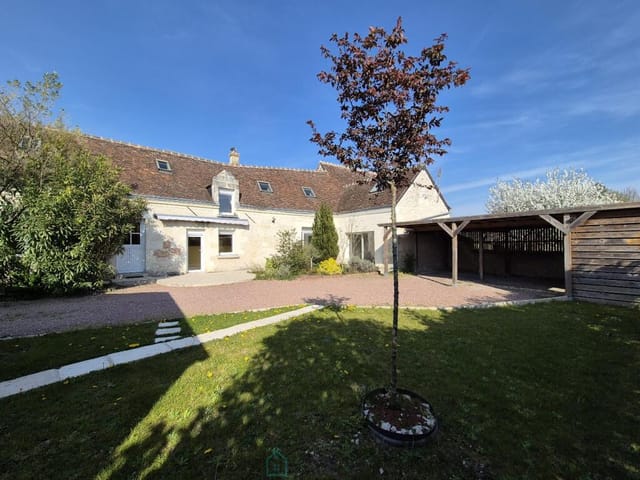
Photo 1

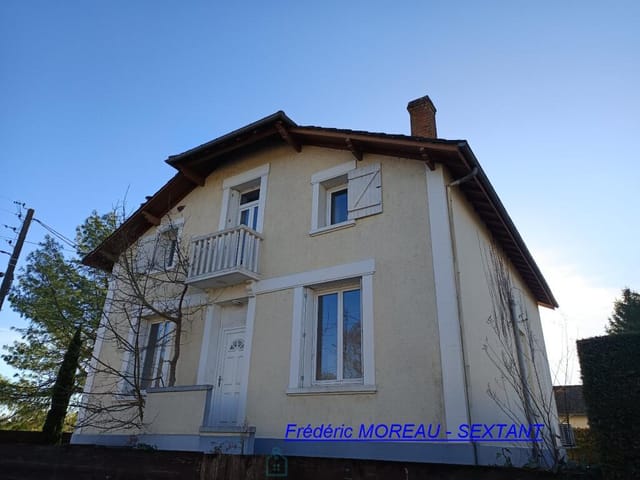
Sunday morning in Bergerac starts with the smell of fresh bread drifting up from the boulangerie two blocks away. You open the kitchen door onto the 17-square-metre terrace, coffee in hand, and catch the faint sound of the market vendors setting up along the Place de la Madeleine. That's the rhythm of life this house puts you inside — not on the edge of it, not behind glass. Right in it. This solid 1930s house sits a short walk from the old town centre of Bergerac, one of the most quietly rewarding towns in the entire Dordogne valley. The architecture still carries the bones of the interwar period — the proportions feel generous, the walls thick enough to keep rooms cool well into July — and recent upgrades have brought the practicalities firmly into the present. A newly installed heat pump, air conditioning, full double glazing, and a fitted kitchen mean you arrive and you live, rather than renovate and wait. The ground floor layout is genuinely sociable. The living room flows naturally toward the open-plan kitchen and dining area, which spills directly out onto the terrace. Summer evenings here have a particular quality: the Dordogne region holds its warmth well into September, and al fresco dinners under the fading light are less a special occasion than a Tuesday habit. The ground floor also holds a bedroom and shower room — useful for guests who'd rather skip the stairs, or for turning the upper floor into a private retreat when the house is full. Upstairs, two spacious double bedrooms and a dressing room give the house a flexibility that shorter-term rentals rarely achieve. There's room for couples, families, or the kind of extended-family gathering that the French countryside seems specifically designed to encou ... click here to read more
Picture 1

Sunday morning in Saint-Romain starts with birdsong and the faint smell of bread drifting over from Aubeterre-sur-Dronne, just a few minutes down the road. You slide open the glass doors onto the veranda, coffee in hand, and the pool catches the early light. The kids are still asleep. This is yours. That's the kind of morning this property delivers — not just once, but every time you pull up the drive. Tucked into a small hamlet in the Charente department of southwest France, this modern five-bedroom villa sits in one of the country's most quietly rewarding corners. Aubeterre-sur-Dronne is one of Les Plus Beaux Villages de France — that official designation handed to fewer than 160 communes in the entire country — and it earns it. The medieval church of Saint-Jean, carved directly into a cliff face, is the sort of thing that stops first-time visitors in their tracks. The weekly Saturday market along the main square fills with local cheeses, walnuts, honey from Périgord, and wine from the surrounding Charente vineyards. It's a ten-minute drive, and after a few visits you'll know half the stall holders by name. The house itself spans 234 square metres across three levels, and the layout is genuinely clever. The heart of the ground floor is a 57-square-metre open-plan living and dining area — properly open, the kind where a group of eight around the table doesn't feel cramped — with a sleek fitted kitchen that runs along one wall. No fussy cabinetry or dated tile splashbacks here. Clean lines, good light, and a design that invites cooking rather than just tolerating it. From this space, wide glazed sliding doors open onto a covered veranda that rivals the living room for sheer size, and from there the eye travels straigh ... click here to read more
Picture 1

On a still morning in Aveyron, you step out onto the upper terrace and the land just rolls away from you — four hectares of meadow catching the early light, no road noise, no neighbor's roof in sight, just the faint ring of cowbells somewhere in the valley below and the smell of cut grass warming up. That's the daily reality of this property outside Villeneuve, and it hits differently than any brochure photo can prepare you for. This is a genuine Quercy farmhouse that's been taken apart and put back together with real conviction. The bones are original — thick limestone walls quarried locally, timber beams that have been in place for well over a century — but the living spaces read as thoroughly modern. Not in a cold, minimalist way. In the way that good renovation always works: high ceilings kept tall, stone floors kept bare, and new elements like aluminum double-glazed frames and remote-controlled electric curtains added without apology. The old and the new don't fight each other here. They just coexist. The 250 square metres of living space is spread across three levels and ten rooms, which gives the house a generosity you feel immediately. The original billiard room, now used as the main dining room, has a ceiling high enough to fit a mezzanine above it — a genuinely rare feature that changes the atmosphere of an evening meal in a way that's hard to explain until you've sat under it with a bottle of Marcillac wine and candles going. The study overlooks the full extent of the property and opens directly onto the large terrace-roof above the ground-floor extension; on a clear day you can see the limestone causse in the middle distance and the wooded ridgelines beyond. It's the kind of room that makes you want to actu ... click here to read more
Picture 1

Sunday morning in the Loire Valley sounds like this: a wood-burning stove crackling under cathedral ceilings, the faint ring of church bells drifting across the fields from Amboise, and the smell of butter and stone that only old French farmhouses seem to hold. This is the kind of place you stop looking once you've found it. Built in the 19th century and sitting on an enclosed 398 square metre plot near the village of La Croix en Touraine, this authentic Touraine farmhouse carries the bones of its era without the headaches. The stone walls are still there. The exposed beams are still there. But so is a heat pump, a fitted kitchen, a 2022-built workshop, and south-facing terrace access from virtually every ground-floor room. It's been lived in properly, looked after, and it shows. Step inside and the ground floor sets the tone immediately. The kitchen opens directly onto the sunny terrace — the kind of layout that turns a Tuesday lunch into something you actually look forward to. The living and dining room runs to roughly 40 square metres under a genuine cathedral ceiling, with parquet underfoot and that wood-burning stove as the clear centerpiece. On cold January evenings when frost sits on the vines outside, this room earns its keep. A bedroom with French doors, a home office, a full bathroom with both bathtub and walk-in shower, and a utility room round out the ground floor — more practical square footage than you'd expect at this price point. Upstairs, two more bedrooms and a second WC occupy the attic floor. Above the living room, a mezzanine adds around 20 square metres of bonus space — a reading loft, a kids' sleeping area, a home studio. The property's 149 square metres in total include that vaulted cellar tuck ... click here to read more
Picture 1

Step outside on a Sunday morning and the air already smells like lavender and warm stone. Twenty-five olive trees line your view. The pool, south-facing and still, catches the first light above the Hérault hills. This is the kind of place where you forget what day it is — and mean it. Set in a small hamlet just five minutes outside Hérépian and ten from the thermal spa town of Lamalou-les-Bains, this four-bedroom villa sits on 5,500 square metres of landscaped grounds in the heart of the Parc Naturel Régional du Haut-Languedoc. Built in the early 2000s to a high specification and kept in genuinely good condition, the property brings together a 200 m² main house and a fully independent 40 m² guest cottage — each with their own character, their own rhythm. Walk through the entrance and the main living space hits you immediately. The cathedral ceiling climbs over five metres, flooding the room with the kind of open-air feeling you don't usually find inside four walls. French windows run the length of the ground floor, framing the pool and olive grove like a living canvas. In summer, you leave them open all day. The lounge, dining area, and fully equipped kitchen flow into one another — a central island, an American-style fridge-freezer, induction hob, coffee machine — all the kit you'd want when cooking a proper dinner after a day at Lac du Salagou, which is less than forty minutes away. There's also a pantry and laundry room off the kitchen, a practical detail that makes all the difference when this becomes your actual home, not just a holiday. The master suite occupies its own wing on the ground floor — 35 m² in total, with an 18 m² bedroom, a walk-in dressing room, and a fully tiled en-suite bathroom complete with a d ... click here to read more
Picture 1

Picture yourself stepping through wide glass doors onto a sun-warmed terrace in the Lot Valley, where your private pool reflects the endless blue sky of southwestern France. This is not just another property—this is your gateway to the truffle-rich countryside south of Cahors, where medieval villages dot rolling hills and every season brings new reasons to gather family and friends at your modern French vacation home. Built in 2012 with meticulous attention to contemporary design, this 287-square-meter architect-designed residence offers seven bedrooms across two living spaces, making it an exceptional choice for multi-generational holidays or generating rental income when you're back home. The moment you arrive at this property, you understand why the Lot region has become a sought-after destination for international second home buyers. Located just twenty minutes from Cahors—a city renowned for its Malbec wines and the magnificent Pont Valentré bridge—you're positioned perfectly between authentic French village life and easy access to modern amenities. The A20 motorway sits five minutes away, connecting you to Toulouse airport in ninety minutes and Bordeaux in two hours, making weekend escapes from London, Brussels, or Amsterdam entirely practical. Walk to local shops for your morning baguette and discover why this area draws visitors seeking the real France, far from overcrowded coastal resorts. The architecture immediately sets this vacation home apart from traditional stone farmhouses dominating the region. Your architect embraced light as the primary design element, installing expansive sliding glass panels that dissolve boundaries between interior and exterior spaces. The open-plan living area spans 103 square met ... click here to read more
Picture 1

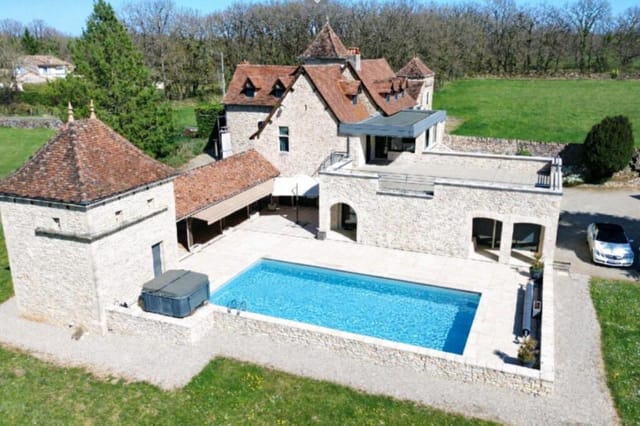
Picture yourself on a sun-drenched terrace in the Dordogne Valley, coffee in hand, watching morning mist lift from your own truffle oak grove as church bells echo from the medieval village nearby. This is the reality awaiting at this expansive stone house, where 2.5 hectares of private land create your personal sanctuary in France's celebrated Lot region, just minutes from three of the area's most captivating historic towns. This vacation home in Martel offers the rare combination of generous space, authentic French character, and the tranquility international buyers seek when investing in a second home in France. The Lot department represents one of Europe's most accessible yet unspoiled regions for holiday property ownership. Your stone house sits in a privileged position near Martel, the "City of Seven Towers," where 13th-century architecture lines cobblestone streets and weekly markets overflow with regional delicacies. Within a 20-minute radius, you'll discover Brive-la-Gaillarde's sophisticated shopping and dining scene, Souillac's Romanesque abbey and jazz festival, and the gastronomic treasures that have made this corner of Midi-Pyrénées a destination for food lovers worldwide. The property itself unfolds across a generous 250 square meters of single-level living space, an unusual configuration that makes this house particularly appealing for multi-generational family gatherings or guests with mobility considerations. The heart of the home is a magnificent 70-square-meter living room where exposed stone walls tell centuries of stories and a working fireplace promises cozy winter evenings after days exploring Christmas markets in Sarlat or Rocamadour. This expansive gathering space flows naturally into a 30-square ... click here to read more
Picture 1

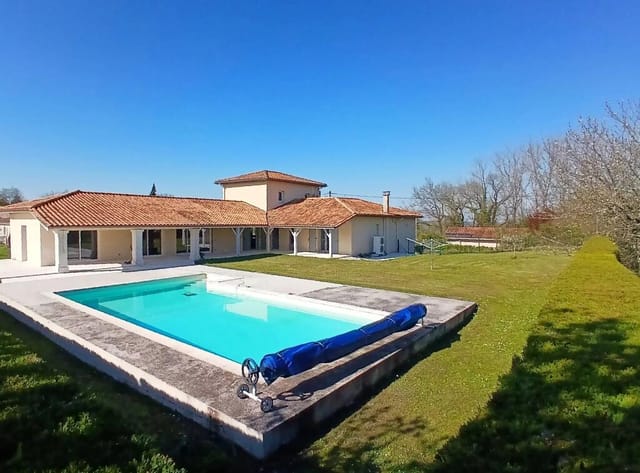
Picture yourself awakening to the gentle murmur of river water flowing past your bedroom window, sunlight filtering through centuries-old stone walls as the scent of fresh bread wafts from your working stone oven. This is daily life at this meticulously restored 17th century water mill, where three hectares of private parkland along a pristine river create your personal sanctuary in one of France's most captivating medieval regions. Your morning coffee on the expansive terrace reveals sweeping views across orchards and pastures, while the clifftop village of Cordes-sur-Ciel rises majestically in the distance, its Gothic spires catching the early light. This 286-square-meter estate represents more than a vacation home in Midi-Pyrénées—it's a gateway to the authentic rhythm of southwestern French living, where history whispers through every stone and modern comfort meets timeless character. The main residence, lovingly transformed from its industrial heritage into a 220-square-meter family haven, immediately captivates with its harmonious blend of original architectural features and contemporary amenities. The grand reception hall opens onto a light-filled 40-square-meter living and dining space where a traditional fireplace fitted with an efficient polyflam stove becomes the heart of winter gatherings. Exposed beams overhead and centuries-old stone underfoot create an ambiance that no new construction could replicate. The expansive fitted kitchen accommodates everything from intimate family meals to hosting elaborate dinner parties featuring local Tarn produce. On the ground floor, flexibility reigns with a versatile space serving as television lounge or additional bedroom, complemented by a shower room and practical sto ... click here to read more
Picture 1

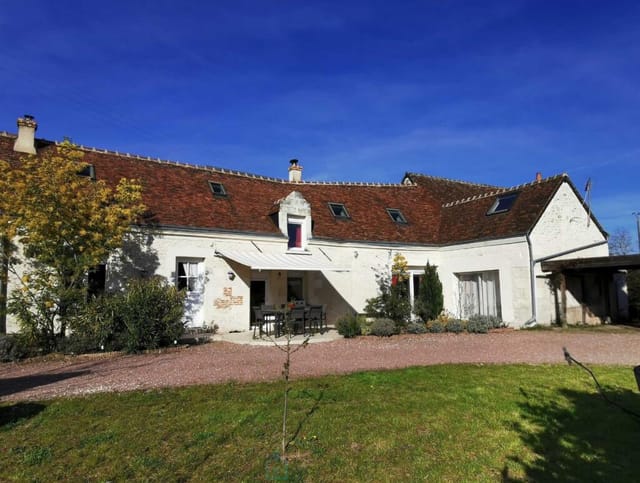
Imagine morning sunlight streaming through French doors with pointed arches, casting geometric patterns across original cement tiles as you sip coffee in your private walled garden. Just minutes from Amboise town center, yet cocooned in tranquility, this 214-square-meter period house represents everything international buyers seek in a Loire Valley vacation home: authentic architectural character, versatile living spaces, and immediate rental income potential in one of France's most visited regions. This is where Renaissance history meets modern comfort, where your second home becomes both a personal retreat and a smart investment in the heart of château country. Amboise stands as the jewel of the Loire Valley, positioned strategically where royal history, world-class wine culture, and outdoor recreation converge. Your vacation home here places you within walking distance of the magnificent Château Royal d'Amboise, final resting place of Leonardo da Vinci, whose Clos Lucé residence sits just across town. Spring through autumn, the Loire Valley transforms into a tapestry of vineyards producing renowned Vouvray and Montlouis wines, castle gardens bursting with Renaissance-era plantings, and riverside paths perfect for cycling the Loire à Vélo route that connects Amboise to dozens of historic sites. Winter brings a quieter charm: misty mornings over the Loire River, cozy wine tastings in centuries-old caves, and the festive Christmas market filling Place Michel Debré with lights and local delicacies. The 695-square-meter enclosed plot provides that rare combination of privacy and accessibility. Mature trees offer dappled shade for summer lunches on the terrace, while the landscaped gardens require minimal maintenance yet ... click here to read more
Picture 1

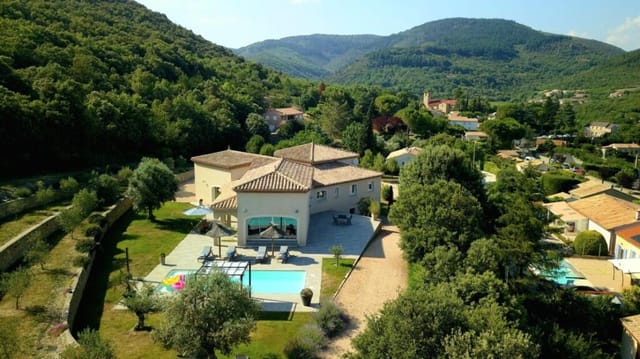
Imagine waking to the sight of a 13th-century bastide perched on limestone cliffs, golden morning light spilling across the Dordogne Valley below. This is your daily reality in this 173-square-meter residence positioned in one of France's most celebrated regions, where medieval history meets riverside tranquility. Step onto your western terrace with morning coffee, watching hot air balloons drift over châteaux as the valley awakens beneath you. This is not just a vacation home in the Dordogne—it is your gateway to the authentic rhythm of Périgord Noir life, where every season brings new reasons to return. The region surrounding Domme represents everything international buyers seek in a French holiday property: accessibility without crowds, cultural depth without pretension, and investment value backed by centuries of desirability. La Roque-Gageac, consistently ranked among France's most picturesque villages, sits minutes away, its honey-colored houses clinging to cliff faces above the meandering Dordogne River. Your property occupies 2,591 square meters of fenced grounds, providing both privacy and panoramic perspectives that capture the essence of this UNESCO-recognized landscape. The architectural layout maximizes the Dordogne's famously temperate climate and spectacular vistas. The ground floor centers on a light-filled living space that opens westward through French doors to a covered terrace—your front-row seat to valley sunsets that paint the bastide walls in shades of amber and rose. An insert fireplace adds warmth during cooler months, while reversible air conditioning ensures comfort during July and August when temperatures peak around 28°C. The eastern side features a second covered terrace, creating cross-vent ... click here to read more
Picture 1