Country Homes For Sale In Sweden

Country homes for sale in sweden - homestra offers the largest amount of european real estate with over 200,000+ properties, find any type of property within your budget from villas to country homes. buy or rent your perfect home in europe.

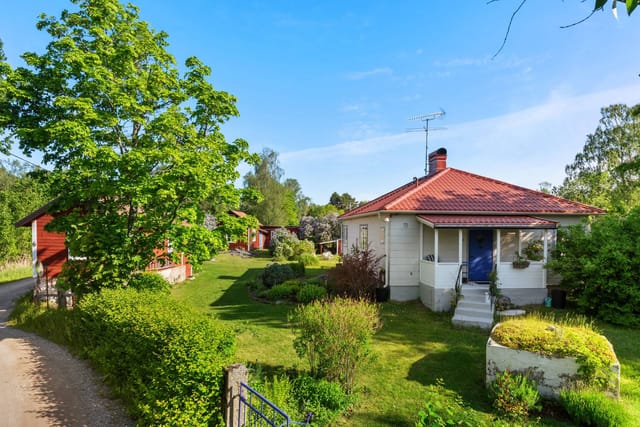
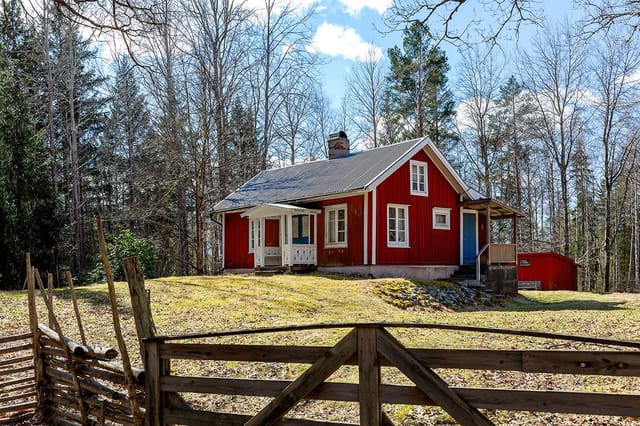
The first thing you notice on a July morning here is the light. Not the pale, apologetic kind—the full, wide-open West Coast Swedish kind that bounces off the water somewhere beyond the treeline and fills every room before you've made your coffee. By eight o'clock, the kayakers are already out on the inlet below Hamnebuktsvägen. By nine, you can smell someone grilling on the rocks down near the water. This is life on Hamburgö, and this 162-square-meter country home at the end of a quiet lane puts you right at the center of it. Built in 2006 on a 3,689-square-meter plot, this is a house that was designed with intention. The classic Scandinavian exterior—clean lines, quality cladding, pitched roofline—doesn't feel dated because it was never chasing a trend. Inside, the open-plan kitchen and living area runs across the main floor with the easy confidence of a well-thought-out space. Large windows frame the garden and the sky beyond. Sunlight moves through the rooms differently at each hour of the day, and you start noticing that within the first week. The kitchen is proper. Generous worktops, modern appliances, the kind of layout where two people can actually cook together without negotiating territory. A sunny terrace steps off the living area—wide enough for a proper outdoor table, a gas grill, and still room to stretch out in a chair after dinner while the midsummer sky refuses to go dark until nearly midnight. Three bedrooms in the main house handle the family comfortably. Two bathrooms mean no queues before a day at the beach. But the real conversation-starter is the guest house. Separate, self-contained, with its own bathroom and kitchen, it changes the whole dynamic of having visitors. Friends stay for a week and ... click here to read more

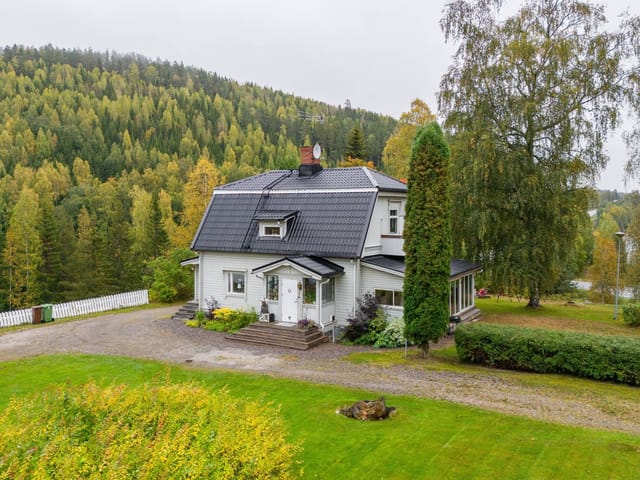
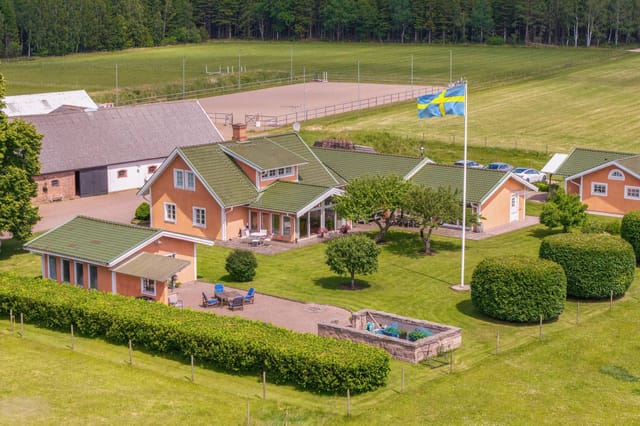
Front view of the house and garden

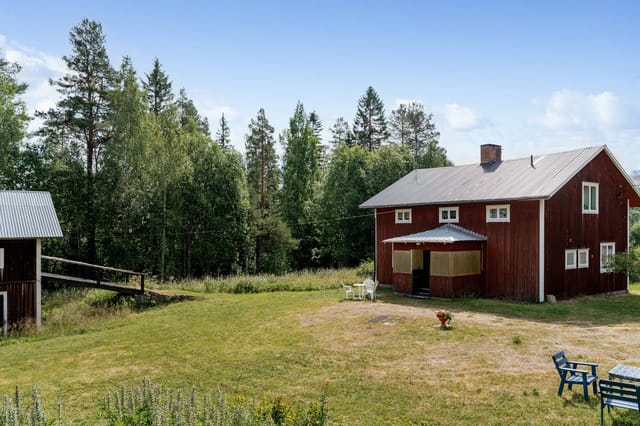
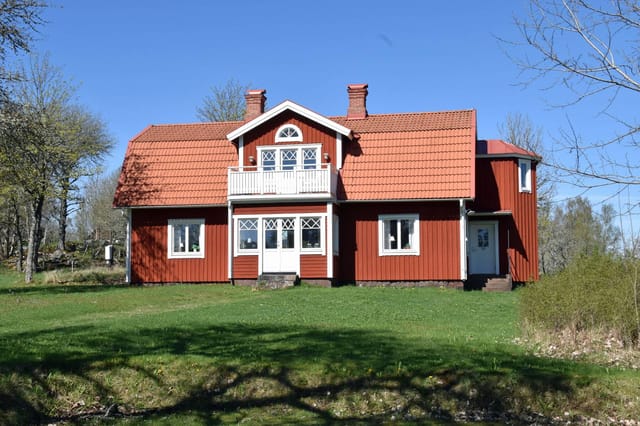
Picture waking up on a frost-sharp October morning, the tiled stove already ticking with warmth, steam rising from a mug of coffee as you look out through the glazed conservatory at the still water of the Ljungan River catching the first pale Scandinavian light. The horses are already at the fence. This is not a weekend fantasy — it is a Tuesday in Nedansjö, and it can be yours. Hemgraven 128 sits in the Ljungan valley about 25 minutes west of Sundsvall, in a corner of central Sweden that most international buyers haven't discovered yet — which is precisely why it matters. The property is large, genuinely versatile, and soaked in the kind of regional history that no developer can manufacture. It started life as the steward's house on the estate built by industrialist Bünsow in the late 19th century, the same man who financed the railway between Sundsvall and Torpshammar, established an ironworks and a pulp mill at Hemgraven, and essentially built an entire self-sustaining community from scratch, complete with shops, workers' housing, and even a toy factory. The area was enclosed — outsiders had to ask permission to enter. Today that same sense of a world unto itself is what makes the property so compelling. At 146 square metres, the main house gives you five rooms and a kitchen arranged with the practical logic that Swedish country homes developed over generations. Two classic tiled stoves — kakelugnar, if you want the Swedish word — anchor the principal rooms. They work. They radiate a dry, even heat that a radiator simply cannot replicate, and they look the way old things should look: solid, slightly imposing, quietly beautiful. The geothermal heat pump handles the bulk of winter heating with minimal running costs, s ... click here to read more

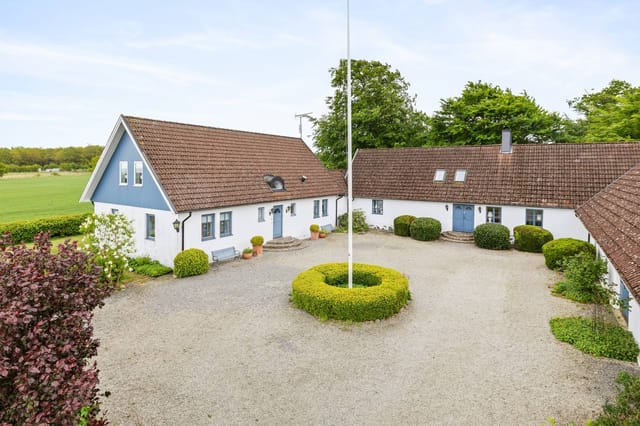
Front view of the main house and grounds

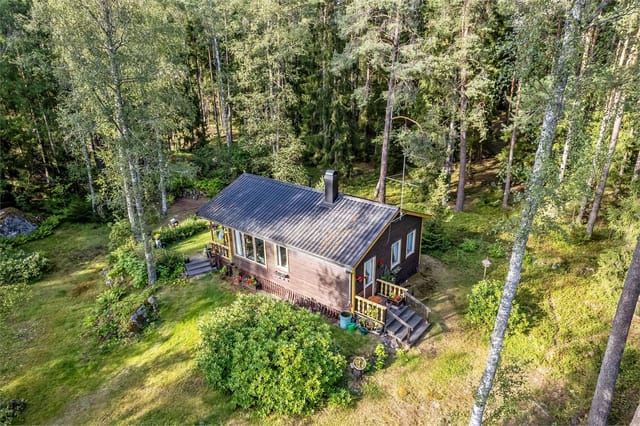
You wake up before anyone else in the house. The sun is already high — it's July, and this far north of the Arctic Circle, it barely dips below the horizon. You pull on a fleece, step outside onto the lot, and walk the forty-odd meters down to the edge of Lake Kusträsket. The water is glass. A pike rolls near the reeds. You have nowhere to be. That's the reality of owning a place at Kusträsk 34. This 60-square-meter timber holiday home sits on a generous 2,190 square meter plot in the Boden municipality of Norrbotten County, built in 2007 from solid log construction that keeps the interior cool in summer and retainable-warm through the brutally cold Swedish winters. Two bedrooms, one bathroom, a separate hygiene cottage with a traditional sauna, and fiber-optic broadband that runs fast enough to handle a video call or a Netflix evening when the weather turns. It's the kind of property that covers every real need without overcomplicating anything. The open-plan living and dining area is the social core of the cabin. Wide windows face the forest and the lake — not a curated view through a narrow frame, but a proper wide look at the spruce canopy and the water beyond. The natural pine interior does something good to the light in here; everything takes on a warm amber tone by late afternoon. Cook, eat, play cards at the table, watch the weather roll in across the lake. The kitchen is set up for proper cooking, not just reheating — and after a morning out on the water pulling in perch, that matters. Local anglers smoke their catch over alder wood, a tradition worth learning quickly. The sauna is the detail that separates a Swedish cabin from every other rural property in Europe. This one sits in its own separate structure ... click here to read more

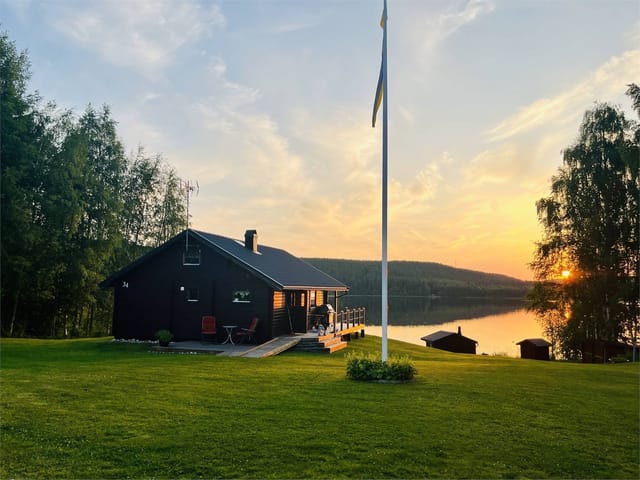
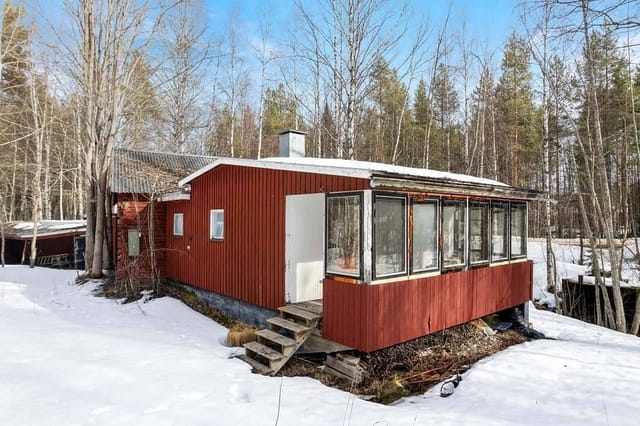
Exterior view of the timber holiday home

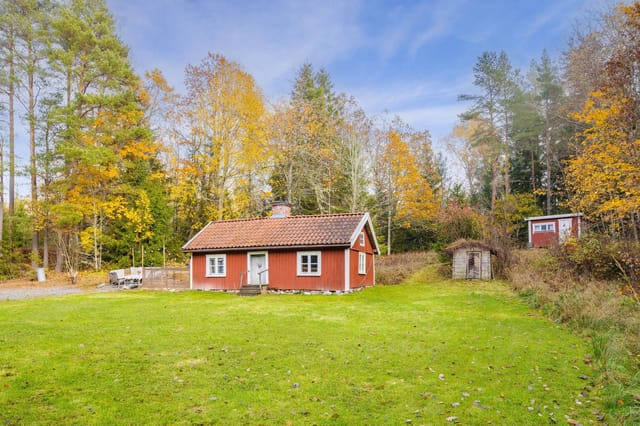
Early on a Saturday morning in late August, you step outside with a coffee and the air smells of pine resin and wet grass. The fruit trees at the far end of the garden are heavy with apples. Nobody else is awake yet. That's the kind of quiet that Sunnersbol 72 delivers — not the forced stillness of a spa weekend, but the genuine, unhurried pace of Swedish countryside life. Sitting in Uppsala kommun, roughly halfway between the university city of Uppsala and the small market town of Alunda, this 1976-built country home sits on a plot of nearly 3,000 square meters — almost three-quarters of an acre — that gives you room to breathe in a way that most European second homes simply can't match at this price point. At 149,500 SEK, this is one of the more accessible entry points into Swedish rural property ownership you'll find, and the combination of move-in condition, outbuildings with genuine conversion potential, and that sweeping plot makes it worth a very serious look. The house itself is compact and honest — 50 square meters of classic Swedish timber construction, painted in the kind of deep, earthy tones you see on farmhouses all across Uppland. Wooden floors run through the main rooms, the kitchen is functional and well-maintained, and large windows pull in light from multiple angles throughout the day. In a building this size, light matters enormously, and whoever designed this one got that right. The flexible internal layout — three to four rooms plus kitchen — means a couple can spread out comfortably, or a small family can make it work through the summer months with the bedrooms and living space reconfigured to suit. What makes this property genuinely interesting, though, is what sits outside the main house. Ther ... click here to read more

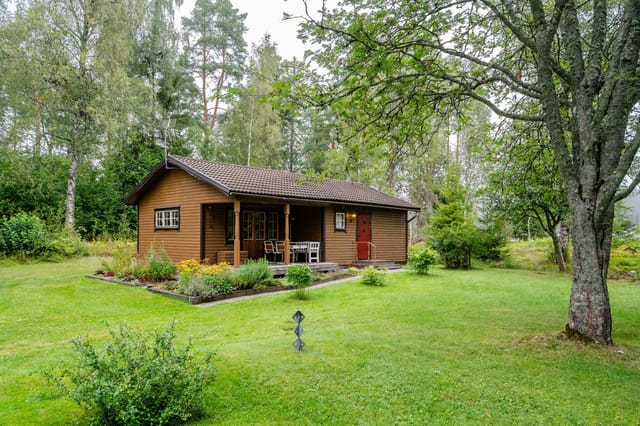
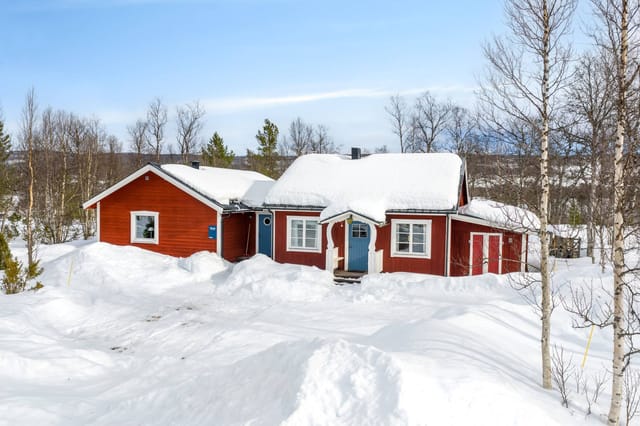
Exterior view of the holiday home and garden

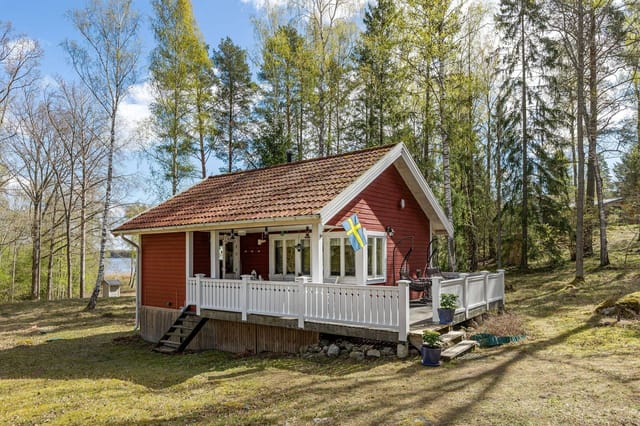
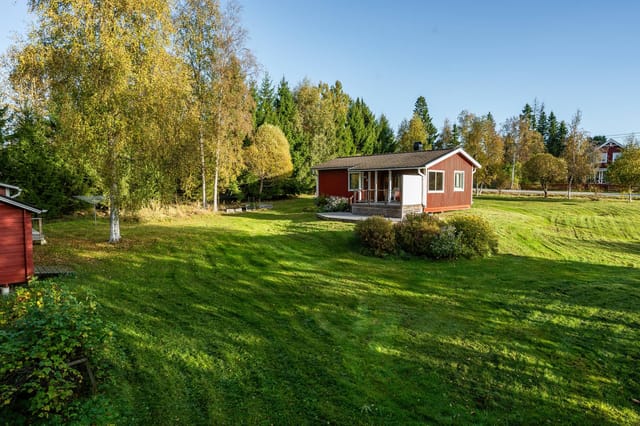
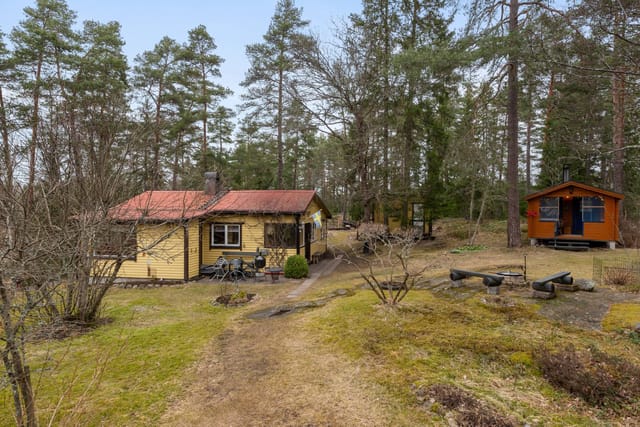
Early July on Vätö, and the light never quite leaves the sky. By nine in the evening it's still pale gold through the birch trees, and from the south-facing deck at Svartträskvägen 19 you can hear absolutely nothing except the occasional woodpecker working through the pines. That specific silence — no traffic, no neighbors' televisions, no city hum — is what people drive two hours north from Stockholm to find. This is it. Vätö is one of those places that Stockholmers tend to keep quietly to themselves. Technically an island in the northern Stockholm archipelago within Norrtälje municipality, it's connected by road so you arrive without any ferry anxiety, yet the moment you cross onto the island the pace genuinely shifts. The air smells different — pine resin and lake water — and the roads narrow into single tracks flanked by wildflowers that locals pick for their midsommar wreaths every June. The Sörgården area where this property sits is among the quieter pockets of the island, which is saying something. The house itself was built in 1977 and sits on a 2,323 square metre plot that's been left largely natural — mature trees, mossy ground cover, that particular Swedish woodland character you can't manufacture. It's not manicured and it's better for it. The lot gives you genuine privacy, room for a kitchen garden if you want one, and space to add a sauna cabin down the line (many neighbours have done exactly that). At 55 square metres the house is compact but considered: an open kitchen and living area that work together rather than against each other, two bedrooms, one bathroom with shower and toilet, and a wood-burning stove that transforms the entire place on a cool September evening when the archipelago light turns a ... click here to read more

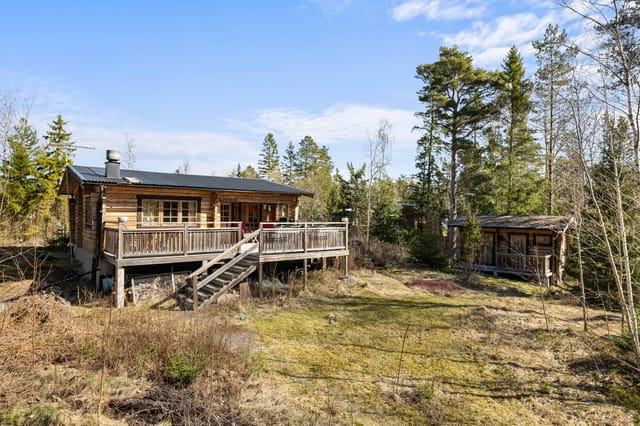
Exterior view of the holiday home

On a still July morning in Långvreten, the first thing you notice is the silence. Not the absence of sound, but the right kind of sound — wood pigeons in the birch canopy, a distant lawnmower two plots over, the soft creak of a garden chair. By eight o'clock, the sun has already been up for hours. That's the Swedish summer for you. Jädravägen 10 sits on a 2,828-square-metre plot in Bro, Upplands-Bro municipality, about 40 kilometres northwest of Stockholm. It's a 1969 timber cottage that one family has quietly looked after for over five decades. Three bedrooms, one bathroom, 48 square metres of living space inside — and then a vast, tree-lined garden that does most of the real living for you. This is the kind of Swedish vacation home that doesn't exist in brochures because families hold onto them for generations. When one finally comes available, you pay attention. The interior keeps its original bones intact. Low ceilings. Wood-panel walls in that particular warm ochre that 1960s Swedish cottages seem to own. A fireplace in the living room that becomes the social centre of the house the moment September arrives and the evenings cool fast. The kitchen is compact and functional — there's a rhythm to cooking here, the way you plan meals around what's at the local shop in Kungsängen rather than having everything delivered to your door. It changes how you eat, and usually for the better. Three bedrooms means room for kids, grandparents, or that one friend who always lingers into the following week. A note worth knowing upfront: the bathroom currently has a composting toilet and no running water connection to the mains. This is common in older Swedish fritidshus and entirely manageable as a warm-season property, which is p ... click here to read more

Front view of the holiday home

The ferry from Näsbyviken takes about four minutes. Four minutes, and the mainland's noise is already somewhere else — behind you, irrelevant. You step onto Ringsö carrying nothing but a bag of groceries and whatever you couldn't leave at the office, and by the time you've walked the pine-lined path up to the red-painted house at Ringsöringen 175, the second thing has already dissolved too. That's the honest sell for this place. Not the square footage, not the buzzwords. It's that specific, almost unfair feeling of arriving somewhere that immediately makes your shoulders drop. Ringsö sits in Lake Mälaren, Sweden's third-largest lake and one of Scandinavia's most underrated waterways. The island belongs to Strängnäs municipality, and if you're approaching from Stockholm, you're looking at roughly an hour by car — take the E20 west and follow signs toward Strängnäs, then wind down through Stallarholmen to catch the water crossing. Strängnäs itself is worth knowing: a cathedral town with roots in the Viking age, a medieval old quarter, and the kind of weekly Saturday market on Rådhustorget where you can stock up on fresh-smoked fish, cloudberry jam, and sourdough before heading back to the island. The town is genuinely liveable, not just a tourist backdrop. The property sits on a 2,252 square metre plot — generous by any measure for an island setting. The main house comes in at 36 square metres on the ground floor, which sounds compact until you're inside and realise how well the space has been thought through. A proper kitchen, a living room with windows that pull in long Swedish afternoon light, one bedroom, a bathroom with shower and an eco-friendly Separett composting toilet. Above, a sleeping loft adds another 10 sq ... click here to read more

Exterior view of the holiday home

Picture this: it's six in the morning, the mist is still sitting low over Lake Immen, and you're walking barefoot across cool wooden floors to put the kettle on the range cooker. The kitchen smells faintly of yesterday's wood smoke. Outside the west-facing veranda, a blackbird is going absolutely wild in the currant bushes. This is what a Tuesday looks like here — and that's before the weekend even starts. Immen Sörgården 563 is a 1939-built Swedish country home on the edge of Karlskoga municipality, sitting on just under 2,000 square meters of established garden with direct trail access to Lake Immen's swimming spots. It's the kind of place that takes roughly four minutes to make you forget you ever owned a laptop. The house itself runs to about 70 square meters across three main rooms, a kitchen, and a small additional bedroom that was originally used as a storage nook — which tells you something useful about the bones of the place. Swedish farmhouses from the 1930s were built to last, and this one has been kept in good condition without losing what makes it worth keeping. The wooden floors throughout are the real thing, not a renovation gesture, and the kitchen's white-waxed boards give the whole room a clean, light quality even on grey autumn days. The wood-burning stove in the kitchen is fully functional and very much in use — not a decorative relic. When the temperature drops in October, it earns its place. There's also a range cooker for proper cooking, and the kitchen layout is generous enough for a table, which matters enormously if you've ever tried to host six people in a cramped holiday kitchen. The living spaces carry that particular Swedish quality of being simultaneously unfussy and deeply comfortable. ... click here to read more

Front view of the cottage and garden

Wake up to the sound of nothing. Not silence exactly — there's the soft lap of water against the shore fifty metres away, a woodpecker somewhere in the birches, and if it's early enough on a summer morning, the mist still sitting low over Mungasjön. That's the first thing you notice at this 1800s log cabin in Munga, a small community just outside Västerås where people still leave their doors unlocked and wave at strangers on the gravel road. This is a genuine country home vacation property in Sweden, not a weekend renovation project or a lifestyle concept. The main cabin, roughly 75 square metres, started life in Dalarna — the heartland of Swedish rural architecture — and was relocated to this woodland plot in 1965. The logs have had sixty years to settle into the land. They look like they grew here. Step inside and the floors are solid pine, wide-planked and warm underfoot even in autumn. The ceiling beams are exposed and chunky. The open fireplace isn't decorative; it's where everyone ends up after a long day of swimming or foraging in the forest behind the property. The kitchen has its own wood-burning stove, which means two independent heat sources before you've even thought about the covered terrace — which has its own fireplace too, facing the lake. Three fires for a 75-square-metre house. That tells you something about the priorities of whoever built this place. The modernisation has been done without apology or excess. Fibre-optic internet was installed because working remotely from a lakeside cabin in Sweden is, frankly, a legitimate life choice. The bathroom and shower were renovated tastefully, the laundry room updated between 2018 and 2019. These aren't things you'll need to budget for. The house is move-i ... click here to read more

Main house and garden view

Step outside on a September morning and the air smells like pine resin and cold water. The birches have just turned gold, and from the southwest-facing windows of this solid little house in Matsdal, the light hits the tree line at an angle that makes everything look almost unreally vivid. This is Västerbotten, deep in Swedish Lapland, and once you've had a few days here, the idea of leaving feels genuinely inconvenient. The property sits at Matsdal 115, a quiet village address just outside Dikanäs in the Vilhelmina municipality. It's a 60-square-meter country home in genuinely good condition — two bedrooms, one bathroom, a wood-burning stove, and a fireplace that you'll use from October through April. The rooms are generous for the footprint. Scandinavian country homes from this era were built to be practical, not theatrical, and that's exactly what you get: well-proportioned spaces, natural light from multiple aspects, and an interior that's warm without trying too hard. The kitchen works. The living area is big enough for a proper family gathering. Nothing here needs to be torn out and started over. What really sets this place apart, though, is everything surrounding the house itself. The lot runs to 2.2 hectares — 22,000 square meters of mixed forest and open ground that's entirely yours. No shared access, no overlooking neighbors. The treeline wraps around the property in a way that creates natural enclosure without making it feel closed off. You're in the village, but the village gives you space. The wood-fired sauna is 15 square meters and positioned right beside a mountain brook. That detail matters more than it might sound. After a day on the snowmobile trails — which connect directly to the extensive Dikanäs ... click here to read more

Exterior view of Matsdal 115

Step outside on a July morning and the air smells of warm pine resin and cut grass. The apple trees are heavy. A woodpecker is working somewhere deeper in the trees, and the only traffic you'll hear all day is the distant hum of a tractor on the municipal road half a kilometer away. This is Eriksbacken 5 — a genuine Swedish stuga on a 2,752-square-meter plot in Finnerödja, Laxå, and it feels exactly like what the word "escape" is supposed to mean. The cottage itself sits comfortably at 75 square meters — not sprawling, but well-proportioned. Two bedrooms, a tiled bathroom with underfloor heating, a kitchen that handles everything from a quick fika to a full midsommar spread, and a living room generous enough that a family of four won't be climbing over each other on rainy afternoons. The bathroom was renovated in 2012 and includes both a washing machine and tumble dryer, which matters more than you'd think when you're planning to stay for three weeks in August rather than a weekend. The whole place has been adapted for accessibility too, with ramps and wider clearances — a thoughtful detail that opens the property up to grandparents, guests with mobility needs, or just anyone who's tired of holiday homes that weren't designed with real people in mind. The large south-facing wooden deck is the property's social center from May through September. On a clear summer's day, sunlight sits on this side of the house for roughly ten hours. That's not marketing language — that's the reward for the orientation of this plot. You'll develop opinions about which chair gets the best afternoon light. Beyond the main cottage, there's a separate guest cottage and a 20-square-meter storage building. The guest cottage changes how you thi ... click here to read more

Front view of Eriksbacken 5

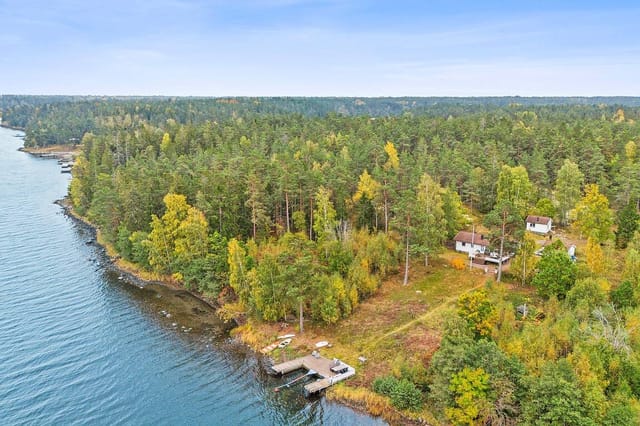
Early July on Gränsö, and the morning light hits the water at an angle that makes the whole inlet look like it's been lit from below. You're standing on the front terrace with a coffee, the smell of pine resin drifting in from the trees behind the house, a pair of eider ducks cutting low across the channel. The only sound is wind. This is what you bought it for. Gränsö 44 is a complete Swedish archipelago holding — main house, guest cottage, outbuilding, boathouse, and a private jetty with servitude rights — sitting on just over 1,000 square metres of natural island land near Arkösund on the Vikbolandet peninsula. The main house went up in 2008, which means it was built with proper insulation and modern systems rather than cobbled together over generations like many island properties. Eighty-one square metres doesn't sound like much on paper, but the open-plan kitchen and living room layout makes the space feel generous, and the large windows along the front pull the outside in so consistently that the terrace feels like a fifth room. That terrace is south-facing and wide enough to actually do something on. Not a narrow ledge — a real outdoor living space, long enough for a table that seats eight, with partial water views through the trees. The glass door from the living room means summer evenings blur naturally between inside and out, the wood-burning stove providing the threshold between seasons when September rolls in and the air sharpens. Three bedrooms sleep the family comfortably, the guest cottage tacks on another four or five sleeping places for when friends inevitably want to come, and the small outbuilding handles storage and a composting separett toilet that keeps the main bathroom free during a full house. ... click here to read more

Front view of the main house and terrace

The first thing you notice on a summer morning at Näreby 160 is the silence. Not the hollow silence of nowhere, but the full, layered quiet of the Swedish west coast countryside — a wood pigeon somewhere in the birches, wind brushing through the grass, and somewhere over the ridge, faintly, the smell of salt water drifting in from the Gullmarsfjord. This 1881 cottage on the island of Skaftö sits on over two hectares of open land, exposed granite bedrock, and stone-walled meadows that feel unchanged for generations. If what you're after is a genuine Bohuslän retreat — not a sanitized holiday apartment, but a place with actual history under its feet — this is one of the rare ones left. Built in 1881 and still wearing much of its original character, the cottage at Näreby 160 is the kind of property that photographs poorly and rewards in person. The entrance porch opens directly into a kitchen that has been the heart of the ground floor for well over a century. Three separate rooms on the ground level give you breathing room, and one of them holds a tiled kakelugn stove — the tall, elegant Swedish kind — that the chimney sweep has recently certified still in working order. On a grey October evening, that stove changes everything about how the cottage feels. Upstairs, two bedrooms and a bathroom provide the essentials. The layout is compact and honest: 66 square meters of living space, no more, no less. It's not the size that makes this property worth serious attention. It's the 20,363 square meters surrounding it. Step outside and the scale of what's here becomes clear. Grassy areas practical enough for a game of kubb or a hammock between the birches. Traditional dry-stone walls that thread across the property like somethi ... click here to read more

Exterior view of the country cottage and garden

Step outside on a Tuesday morning in Fägrilt and the loudest thing you'll hear is a wood pigeon calling from one of the old oaks. No traffic hum, no sirens, nothing but wind moving through the fields and the faint creak of a barn door. This is the kind of quiet that city people drive hours to find — and here, it's just the Tuesday morning soundtrack. Set on roughly 9,200 square meters of open Swedish countryside in Laholms kommun, this 120-square-meter country home sits elevated above a patchwork of fields and forest edges in the hamlet of Fägrilt, just outside Våxtorp. The land feels generous. The mature oaks that frame the property have been here longer than anyone can remember, and in summer they throw deep shade across the gravel driveway, turning the approach to the house into something from a Vilhelm Moberg novel. In autumn, that same driveway is ankle-deep in copper leaves. The house itself has been kept in good condition and updated where it counts. A modern heat pump handles heating efficiently year-round — a real practical consideration for anyone buying in Sweden, where winters in Halland can be grey and raw from November through February. The roof has been replaced recently, the sewage system modernized, and fiber internet runs to the property, which matters enormously if you plan to work remotely or simply want to stream a film after a day outside without fighting a patchy signal. These aren't glamorous upgrades, but they're the ones that prevent a country retreat from becoming a money pit. Inside, the layout is open and functional. Large windows pull in the countryside views — on clear days you're looking out over fields that stretch toward the forest line — and the light shifts beautifully across the in ... click here to read more

Exterior view of the country home and grounds

The first thing you notice on a July morning at Långesjö Vikarna 12 is the light. It arrives early — absurdly early, by most European standards — slipping silver across the lagoon and landing on the water in a way that makes you reach for your coffee and just stop. No agenda. No rush. Just the sound of terns calling somewhere above the rocks and the faint smell of the sea drifting through a window left open overnight. This is what summers on the Bohuslän coast actually feel like. And this property — a two-bedroom country home on a 2,713-square-meter plot just 50 meters from the water — drops you directly into the middle of it. Situated in the Långesjö area between Fjällbacka and Grebbestad, two of the most beloved communities on Sweden's west coast, the property sits in a spot that locals have quietly treasured for generations. Ingrid Bergman famously made Fjällbacka her spiritual home, returning summer after summer. You'll understand why the moment you walk the granite waterfront promenade and watch the wooden boats bob in the harbor. The town square, overlooked by the dramatic Vetteberget cliff face, fills up with visitors each summer, but it never quite loses that unhurried village quality — the fish smokehouses still operate, the waterfront restaurants still serve räkor and local crabs bought off the boat that morning, and the pace of life still belongs to the water rather than the clock. The main house covers 60 square meters across three well-proportioned rooms, and it's been renovated thoughtfully enough that you can move in without a project list. The living room faces the lagoon, and the windows are generous — on clear days you get an unobstructed read of the sea horizon, and in the evenings the water picks u ... click here to read more

Exterior view of the holiday home and garden

The smell hits you first. Salt air and sun-warmed pine needles, drifting through the kitchen window at eight in the morning while the coffee percolates and your kids are already somewhere in the garden, bare feet on grass. That's Sandslättsvägen 2 on a Tuesday in July. Nothing dramatic. Just the particular quiet that only comes when you're 600 meters from one of Sweden's finest stretches of coastline and you have nowhere urgent to be. Haverdal is not a place that tries too hard. It sits along the Halland coast between Halmstad and Mellbystrand, a low-key community of summer houses, cycling families, and people who have been coming back to this same beach every August for thirty years. The four-kilometer sandy shore here is the kind you walk at dusk when the crowds have thinned and the light goes sideways and golden across the dunes. Swimming, paddleboarding, building fires in designated spots on the sand — the rhythm of summer on this stretch of coast has barely changed in decades, and honestly that's the whole point. The cottage at Sandslättsvägen 2 was built in 1969 and it wears its era well. Fifty-five square meters of thoughtful, practical layout — a bright living room with windows that frame the garden like a painting, a functional kitchen set up exactly right for long summer dinners, and a bedroom that stays cool even on the warmest Halland afternoons. There's an additional ten square meters of auxiliary space, and a separate friggebod guest cabin sits in the garden, which means visiting family or friends get their own breathing room. It's the feature that turns a weekend visit into a proper stay. The lot is the other thing people notice. At 1,222 square meters, it's substantial for this area — a mature, private ... click here to read more

Front view of the summer cottage

The first thing you notice on a July morning at Odensåker 20 is the light. Swedish summer light, low and golden even at seven a.m., sliding through the birch canopy and landing on the wooden deck where yesterday's coffee cup still sits. Then the smell — warm pine resin, damp moss, water nearby. You don't have to see Lake Glan from here to know it's close. Fifty meters through the trees, its presence is something you feel before you arrive at the shoreline. This is a small property in the best possible sense. Thirty-five square meters of main living space on a generous 1,000 square meter plot in Norrköping Municipality, about an hour and a half south of Stockholm by road. Two separate buildings. One kitchen, one full shower bathroom, one bedroom with built-in storage — and more space to breathe than most city apartments three times this size. For anyone hunting a genuine Swedish countryside retreat, a vacation home in Östergötland, or a low-maintenance second home in Scandinavia, this is the kind of place that ends the search. The main cottage is built for the way Swedes actually spend summer: half inside, half out. The kitchen-dining area is compact but functional, and the living room gets afternoon sun that makes reading there feel like a small ceremony. The enclosed veranda is the real workhorse of this building — a glass-fronted space that stretches the usable season from a cold April into October, long past when the open deck would have you reaching for a fleece. On rainy days it fills with the sound of drops on the roof glass, and on clear evenings it holds warmth well into the night. It's where guests drift after dinner and where you'll find yourself lingering longer than you planned. The second building adds a ... click here to read more

Main cottage and garden view

Step outside on a July morning at Såghyttevägen 14 and you'll hear it before you see it — the absolute quiet of Mellantjärnen lake, broken only by the soft lap of water against the shore less than fifty meters from your door. The birch trees are still. The coffee is on. And somehow, even though Falun's city center is just minutes away by car, it feels like the rest of the world has agreed to leave you alone for a while. That's the particular magic of this corner of Dalarna, and this property captures it in a way that's hard to manufacture. Three separate buildings sit on a generous 7,570 square meter lot — a main house, a guest cottage with an open fireplace, and a compact little outbuilding the previous owners called the "dollhouse." It's the kind of setup that rarely comes up for sale, and when it does, it goes quickly. The main house is 36 square meters — honest, compact, and well-considered. A small entrance hall opens into the layout, with a bedroom to one side and a combined kitchen, dining, and living space that makes the most of every centimeter. The wood-burning stove at the center of that room earns its keep on cool Dalarna evenings in September, when the temperatures drop and the maples turn amber outside the large windows. Those windows matter. They frame the lake and the tree line in a way that makes the interior feel much more open than the footprint suggests — you're always aware of the water, always connected to the landscape outside. The kitchen is set up for exactly what this kind of retreat demands: a refrigerator, a hotplate, a sink. Nothing excessive. Enough to put together a proper Swedish fika spread, fry up the perch you caught that morning, or heat soup after a long ski. The guest cottage add ... click here to read more

Main house and lakeside view

Step out onto the rear deck just after seven on a July morning. The meadows stretch out in every direction, still wet with dew, and the only sound is birdsong cutting through air that smells faintly of pine and grass. This is Barkö — a quiet hamlet tucked into the Swedish countryside outside Östhammar, where summer feels unhurried and deliberately slow in the best possible way. Set on a generous 2,411 square metre plot along Barkö 121, this red-and-white Swedish country home from 1975 has spent its entire life in one family's hands. That kind of continuity shows. The garden is mature and deeply considered — not manicured to within an inch of its life, but layered: open lawn rolling into shade from established trees, with space carved out naturally for a kitchen garden if you want one, a greenhouse if you've been meaning to start one, or simply a hammock strung between two birches. The lot is large enough to feel private, small enough to manage on a weekend without it becoming a chore. Inside, 50 square metres is used sensibly. The living room anchors the house around a wood-burning stove that does serious work on cool September evenings when the nights start turning. Large windows pull the outside in — you get a long view over meadows and pastures that changes character entirely depending on the light and the season. The kitchen connects without fuss, practical and well-positioned for someone cooking for a table of six after a day out on the water. Two bedrooms, one bathroom with shower and WC, and a covered entrance veranda where your morning coffee goes cold because you keep stopping to watch whatever is happening in the garden. The sea is 3.2 kilometres away. That's a ten-minute bike ride on flat terrain, the kind ... click here to read more

Front view of the summer cottage

Six o'clock on a July morning and the only sound is a woodpecker somewhere in the pines behind the garden. You pull open the conservatory door, coffee in hand, and the cool air carries the faint smell of resin and wet grass. This is what Ekedals byväg 66 feels like before the rest of the world wakes up — and honestly, that alone is worth the price of admission. This is a proper Swedish sommarstuga, the kind that gets passed between families who actually use it. Two bedrooms, a renovated kitchen, a conservatory big enough for a long table of eight, and a flat garden that begs for a game of kubb before dinner. Fifty square metres of well-considered space that never feels tight because the ceiling in the main living room shoots all the way up to the ridge, doubling the sense of volume. The generous windows pull the treeline inside, so the forest is always in your peripheral vision whether you're cooking, reading, or just sitting still. The current owners renovated with a clear-eyed focus on practicality — not cosmetic staging. The kitchen is genuinely functional: full-size stove, fridge-freezer, proper worktop space. No fussy finishes that scuff easily, no open shelving that looks great in photos and collects dust in real life. The loft above the living area sleeps two more, which makes spontaneous visits from friends or children's cousins entirely manageable rather than logistically painful. The bathroom has a shower cabin, sink, and a separett composting toilet — a standard and well-proven setup in Swedish leisure properties where conventional sewage connection isn't available. Off the main living room, the conservatory deserves its own paragraph. This is where summer actually happens. Long breakfasts that drift into l ... click here to read more

Exterior view of the summer house

Stand in the entrance hall of this 1909 vicarage on a still October morning and you'll hear absolutely nothing except the wind moving through the old oak trees outside and the occasional creak of timber that has settled over more than a century of Scanian winters. That quiet is not emptiness — it's the kind of deep, deliberate stillness that most people drive hours to find and rarely do. This is Grönbyvägen 87-0, set in the medieval village of Grönby in Trelleborg Municipality, southern Sweden. The property served as the official vicar's residence for this parish until 1925, and before that it was the social and spiritual anchor of a community whose church dates to the 12th century. Local historians note that King Charles XII passed through this very village in 1715 on his march through Skåne — a detail that feels less like trivia and more like texture when you're standing in rooms that were already old by then. As a vacation home, second home, or permanent residence in southern Sweden, few properties carry this kind of layered story. The main house was built in 1909 and spans a generous 360 square meters across 10 rooms, six of which function as bedrooms. The architecture is classic late-Swedish rural institutional — broad, confident proportions, high ceilings that make every room feel unhurried, and large windows that pull in the flat, luminous light that Skåne does better than anywhere else in the country. Original woodwork runs throughout: door frames with their painted profiles still intact, decorative moldings that speak to a time when craftsmen took their time, and fireplaces that anchor the main reception rooms with genuine warmth. This isn't a restoration project dressed up as a period home. The bones are real ... click here to read more

Front view of the historic vicarage estate

On a still Tuesday morning in late August, the light through the west-facing terrace at Vikavägen 6 lands differently than anywhere else. It's that particular Nordic gold—low, long, almost amber—that turns an ordinary cup of coffee into something you want to remember. The lilacs have finished blooming, the garden smells of warm grass, and somewhere about a kilometer down the road, the morning boat to Arholma is leaving Simpnäs harbor with a low churn of engine and the cry of a few opportunistic gulls. This is Björkö. And once you've spent a summer here, it becomes very hard to spend one anywhere else. Vikavägen 6 is a year-round holiday home on the island of Björkö in Norrtälje municipality, sitting in the outer reach of the Stockholm archipelago where the Åland Sea opens up and the islands thin out into something wilder and less visited than the tourist-heavy inner archipelago. The property dates to 1909, and you can feel that history in the weight of the walls and the way the three buildings frame a courtyard garden that has clearly been lived in and loved across many generations. At the same time, this is not a restoration project. The main house is in good condition, with a kitchen renovated in 2019, a modern shower room, and proper water and sewage connections that make year-round use genuinely comfortable rather than just technically possible. The main house is single-story, 84 square meters, and the layout makes intelligent use of every one of them. The kitchen has kept its rustic character after the renovation—there's a wood-burning stove in there that does double duty, heating the space and making the room smell like every Swedish winter weekend you've ever imagined. It opens into a dining room that functions ... click here to read more

Main house and garden

Saturday morning. You pull open the heavy wooden door of the sauna house, and the birch-scented steam rolls out across the rocky knoll while the Stockholm archipelago sits quiet and silver through the trees. The wood-fired hot tub is still warm from the night before. Nobody else is awake yet. This is Vätö — and once you've had a morning like that, it's almost impossible to go back to ordinary weekends. Krokusstigen 10 sits on the island of Vätö in Norrtälje municipality, about 90 kilometres north of Stockholm, connected to the mainland by a bridge that makes this feel accessible without ever feeling crowded. The property is a classic Swedish sommarstuga in spirit — built in 1956, with all the soul that comes from a house that has absorbed decades of long evenings and midsummer celebrations — but the practical side has been kept firmly in the present. This is not a project. It's move-in ready and waiting. The main house runs to 60 square metres, which sounds compact until you step out onto the large wooden terraces and realise the living space effectively doubles in summer. Swedes know how to design for the outdoors, and this house is proof. The terraces wrap around the property in a way that catches light at different hours of the day — morning coffee on one side, evening wine on the other as the sun drops low over the pines. Inside, the living room is anchored by a masonry open fireplace with a Roslag insert, the kind of cast-iron fitting that's been keeping archipelago families warm for generations. Light a fire in September, crack a window, and listen to the first autumn wind move through the birch trees outside. That fireplace earns its keep from August through to May. The layout is honest and well-proportioned. A ... click here to read more

Front view of the holiday home

The first thing you notice on a summer morning at Litsnäset 130 is the sound of the Indalsälven moving past the garden — a low, steady current that replaces whatever city noise you carried here. The boathouse is twenty steps from the kitchen door. The fishing rod is already rigged. Coffee's on. This compact one-bedroom holiday home in Lit, Jämtland sits on a 1,150-square-metre riverside plot in the small community of Litsnäset, roughly ten minutes by car from the town of Lit and about forty minutes from Östersund. At 20 square metres, it's deliberately simple. That's not a limitation — it's the point. This kind of cabin demands very little of you. You spend your time outside. The main house pulls off something that bigger properties often fail at: everything is in its right place. A wood-burning stove anchors the living area, which doubles as a sleeping space with a sofa corner and bunk bed. When you light the fire on an October evening and the river mist rolls across the plot, the whole room feels genuinely warm rather than just heated. The kitchen is compact but practical, with its own separate entrance opening directly onto the garden — meaning you can carry plates straight to the terrace table without threading through the living space. Small detail. Big difference in daily use. The partly covered terrace is where most of the daylight hours happen in summer. It faces the water. The sun in Jämtland in July doesn't set until past ten, and from the terrace you watch the light go gold on the Indalsälven for what feels like hours. The property's own stretch of riverfront is directly accessible — you walk across your garden and you're at the water's edge. Swimming, fishing from the bank, pushing a kayak in. No shared ac ... click here to read more

Exterior view of the holiday home and garden

The first morning you wake up at Norrberg 18, before you've even put the coffee on, you'll hear it — absolute silence, broken only by the low call of a wood pigeon somewhere in the birch trees out back. No traffic. No sirens. Just Hälsingland doing what it does best. This two-bedroom country home sits on a generous 8,520 square metres of land in the rural reaches of Ljusdals kommun, and it comes with the kind of breathing room that's almost impossible to find anywhere near a city at this price. The plot is big enough to disappear into — part open meadow, part woodland fringe — and the outbuildings alone are worth the trip up here to see in person. Let's talk about the house itself. Around 120 square metres spread across two floors, which gives you more flexibility than you might expect from a two-bedroom layout. Downstairs, a wide entrance hall opens into a kitchen that's actually sized for cooking — the sort of room where you can have four people chopping and nobody's in anyone's way. Off the kitchen, two additional rooms adapt easily: reading room one week, extra guest space the next, home office the week after that. The ground floor bathroom has a shower and toilet, and everything works. Upstairs, a furnished landing functions as a secondary sitting area — the kind of spot that fills up with books and card games by August — and two proper bedrooms look out over the fields and treeline. It's a quiet, uncomplicated layout that actually suits the way people use a summer house. The sale includes all furnishings and loose items currently in the property. You drive up, you put your bags down, you open the windows. That's it. No waiting on furniture deliveries from the mainland. Now, the outbuildings. There's a tradition ... click here to read more

Front view of the house and garden

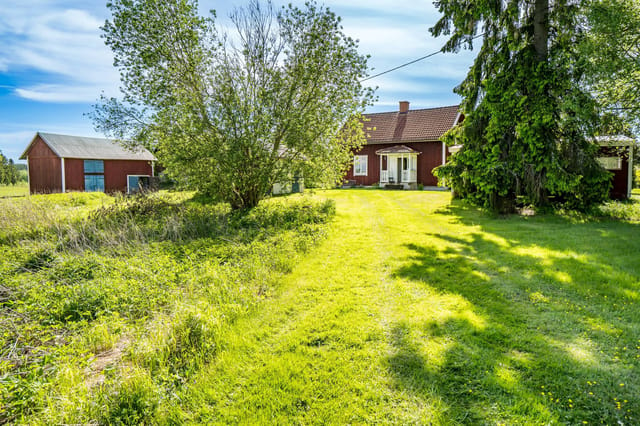
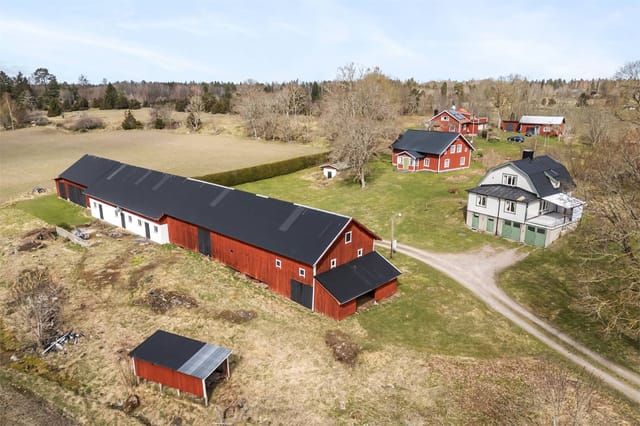
Step outside on a Tuesday morning in late August and the fields at Söderhenninge are gold-green and dead quiet, except for the crows working the far edge of the meadow and the faint clatter of a tractor somewhere over the ridge toward Edsbro. That's the sound of this place. Not silence exactly, but the particular hush of countryside that hasn't been touched up for anyone. This is a genuine Swedish farmstead — two residential houses, a cluster of solid outbuildings, and 6.3 hectares of mostly arable land sitting in Norrtälje municipality, about 90 minutes north of Stockholm by car. It's the kind of property that people in the city talk about wanting for years and rarely find at a price that makes actual sense. At 450,000 SEK for the full estate, the numbers are hard to argue with. The main house was built in 1936 and covers 99 square meters, with four rooms arranged in the unhurried way that rural Swedish builders favored — a real kitchen with room to cook properly, a living room that gets afternoon light, and bedrooms that feel like bedrooms rather than closets with aspirations. The windows are large, which matters here because what you're looking at through them changes week by week: snow-dusted fields in January, wildflowers pushing up along the fence lines in May, the low copper light of a Swedish autumn stretching across the paddocks in October. There's an additional 50 square meters of secondary living space in the main structure too, which gives you genuine flexibility for a home office, a mudroom setup, or just extra storage without crowding the main living areas. The second residential building is a real asset that most comparable properties don't offer. It functions independently, which means extended family ... click here to read more

Main house and outbuildings, Söderhenninge 5 och 3

Step onto the sheltered deck on an August morning and the air already smells of pine resin and salt. The Gulf of Bothnia is less than a ten-minute walk through the trees. Somewhere behind the house, a woodpecker is working its way up a spruce. This is Söråker — quiet in the very best sense, and closer to everything than you'd expect. Söråker sits in Timrå municipality, roughly 40 kilometres north of Sundsvall along Sweden's High Coast corridor. This stretch of the Norrland coastline doesn't get the same international noise as Gotland or Dalarna, but Swedes who know it guard it fiercely. The summers here are genuinely warm, the light stretches well past ten in the evening, and the sea at Klingerfjärden is calm enough for children but cold enough to make you feel alive. In the winters — quiet, snowbound, birch trees turned to white sculpture — the same roads that carry cyclists in July carry cross-country skiers in January. The rhythm shifts completely between seasons, and that's half the appeal. The house itself was built in 1980 and sits on a 1,620-square-metre lot that backs directly onto forest. Forty-six square metres of interior space sounds modest until you're inside and realize the layout wastes nothing. Two bedrooms, a living room anchored by a wood-burning stove, and a kitchen with a proper dining area. The stove is the kind of detail that matters in October, when the evenings drop fast and you want something that heats a room the old-fashioned way — not just a thermostat click, but actual fire behind glass, the smell of birch logs, a reason to stay inside a little longer. The kitchen is set up for real cooking, not just reheating, with enough storage to stock for a week without the place feeling cluttered. Ou ... click here to read more

Exterior view of the holiday home

Early on a September morning at Norregård, the only sounds are the soft thud of hooves crossing damp grass and the distant call of geese over Strömmasjön lake, just 800 meters through the tree line. The mist sits low over the pastures. The kitchen in the 1909 main house smells of coffee and old timber, and the light coming through the east-facing windows turns everything gold. This is what you actually buy when you acquire this estate — not just 12.8 hectares and a collection of well-built structures, but a particular quality of morning. Norregård sits in Halland County, outside Halmstad on Sweden's west coast, and the setting is quietly extraordinary. The land rolls between open meadow and mixed forest, fenced pastures stretch toward the wood line, and the whole place has the kind of unhurried atmosphere that takes decades to develop — not something you can manufacture. The main residence was built in 1909 and carries that era's proportions well: high ceilings, thick walls that hold warmth through January, and a floor plan that makes 279 square meters feel like a natural progression from room to room rather than a maze of additions. Six rooms. Two bathrooms. A living room large enough for a proper gathering. A kitchen that was updated without losing the character of the original house. The equestrian infrastructure here is serious. There's a full riding arena, maintained stables, and a lösdrift — a loose housing system — that gives horses freedom of movement while keeping them sheltered through the Swedish winter. The pastures are fenced for year-round grazing. The meadow areas produce hay, which you can either use or lease out; both options contribute to the roughly 150,000 SEK annual income the estate currently gene ... click here to read more

Front view of Norregård estate

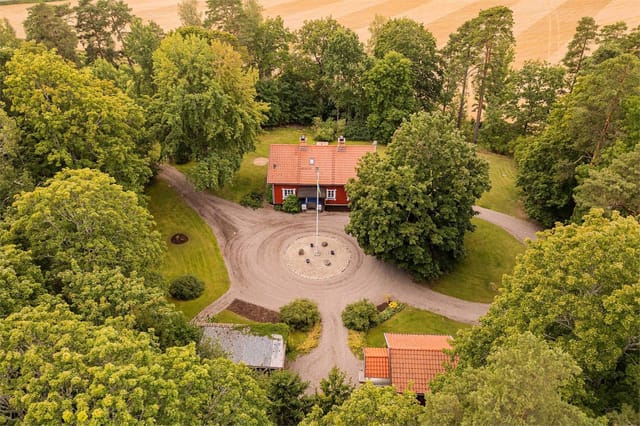
Early on a September morning, the mist sits low over the fields stretching out beyond the kitchen window, and the only sound is birdsong. The coffee is brewing, the greenhouse needs checking, and today's only real decision is whether to cycle down toward Sjöbo or take the car out to the Österlen coast. That is the kind of morning this property deals in, every single day. Set on an elevated plot along Lilla Röddevägen in Blentarp, this is a proper Swedish landsted — a 350-square-metre country home built in 1989 that has been kept in genuine good condition, with enough space to accommodate an extended family, a rotating cast of friends, and still find a quiet corner to yourself. Two residential units, nine rooms in total, five bedrooms, two bathrooms, a double garage, and 4,821 square metres of land that includes a greenhouse, manicured hedges, open lawns, and unbroken views across rolling Skåne farmland. It is the kind of property that rarely appears on the market in this part of southern Sweden, and when it does, it doesn't stay there long. Inside, the bones of the house are what you notice first. Exposed wooden beams overhead, wide plank floors underfoot, white plastered walls that catch afternoon light in a way that painted drywall simply never does. The open fireplace in the living area — fitted with built-in log storage — is not decorative. It works, it draws well, and by November you will understand exactly why the previous owners installed it. The living room and kitchen flow into each other naturally, the large windows doing the work of framing whatever the season is showing off outside: bright green barley in June, frost-dusted fields in February, the strange amber light of a Skåne October that painters have be ... click here to read more

Front view of the estate

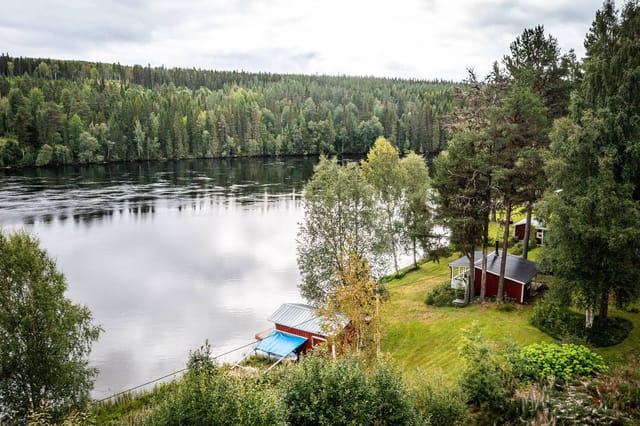
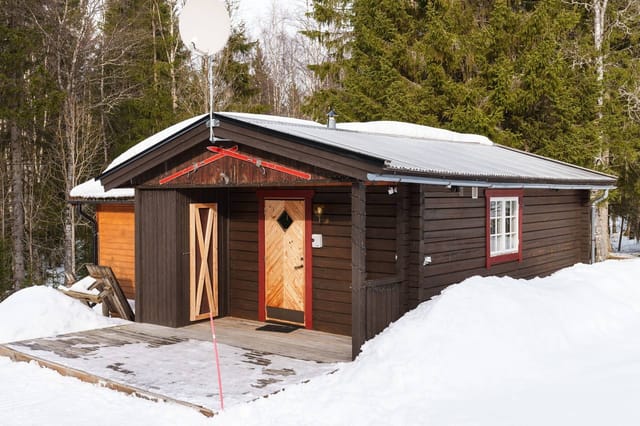
Stand at the kitchen window on a July morning and watch mist lift off the river in slow, unhurried curls. That's the kind of quiet this place offers — not the performed quiet of a spa, but the real, deep stillness of northern Sweden, where the only soundtrack is birdsong, moving water, and the occasional rustle of a reindeer picking through the treeline. This one-bedroom country cottage in Korsträsk, set on a generous 4,037-square-metre plot along the river's edge, is the kind of find that doesn't come along often in Norrbotten County. Korsträsk itself is a small, unhurried village about 20 kilometres from the town of Älvsbyn, sitting in a landscape shaped by glaciers, pine forests, and the kind of light that photographers chase from across Europe. In midsummer, the sun barely sets. By late August, the skies turn theatrical — deep violet streaks giving way to the first hints of aurora. In February, you can cross-country ski straight from the property boundary and follow forest tracks for hours without crossing a road. This is that kind of place. The cottage sits right beside the river, and roughly 350 metres separates you from the shores of Stor-Korsträsket, one of the larger lakes in the municipality. Walk down in the evening with a rod and you're pulling perch and pike from water that feels like it belongs to you alone. In summer, the lake is warm enough to swim — Swedes are not precious about cold water, and after a few days here, neither will you be. Canoe hire is easy to arrange in Älvsbyn, and paddling the connected waterways for an afternoon gives you a view of this landscape that no road can match. The house itself is 75 square metres, solid in structure, and honest about what it is: an older Swedish cottage w ... click here to read more

Korsträsk 330 - Exterior view

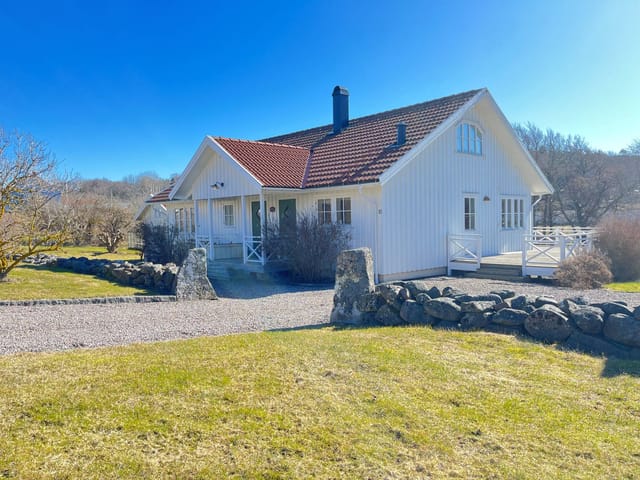
On a still February morning at Matsbo 7, the only sounds are the creak of snow settling on the roof and, somewhere below the garden, the Ljusnan river threading quietly through the valley. You pull on your boots, step outside into minus-eight air that bites your cheeks in the best possible way, and you're at the trailhead in four minutes flat. This is Bruksvallarna — and once you've spent a winter here, you'll understand why Swedes return year after year with the kind of quiet loyalty that doesn't need explaining. Matsbo 7 sits on a 2,296 square metre plot on a calm residential street in the centre of the village. It's not a remote cabin requiring a four-wheel drive and three hours of mountain road — it's genuinely walkable to the ICA Stigmyrs grocery store, the village brasserie, a weaving studio, and the local hotel. That proximity matters more than it sounds. On a dark January afternoon when the temperature drops hard, being able to grab provisions on foot rather than scraping ice off a car is its own small luxury. The property is built in two connected sections, each with its own entrance, and this dual layout is the detail that makes it genuinely interesting for buyers. The newer wing, comprehensively updated in 2015, has the kind of open-plan arrangement that works for large family gatherings — a wide living room, a white kitchen with real storage space, a dining area that seats a crowd, and a bathroom with contemporary fittings. Two bunk beds and a double mean six people sleep here comfortably without anyone feeling crammed. The older section is a different mood entirely. Panel-clad walls, a proper open fireplace, and a sitting room that feels like it was built for long evenings with aquavit and card games. One ... click here to read more
Exterior view of Matsbo 7 in Bruksvallarna

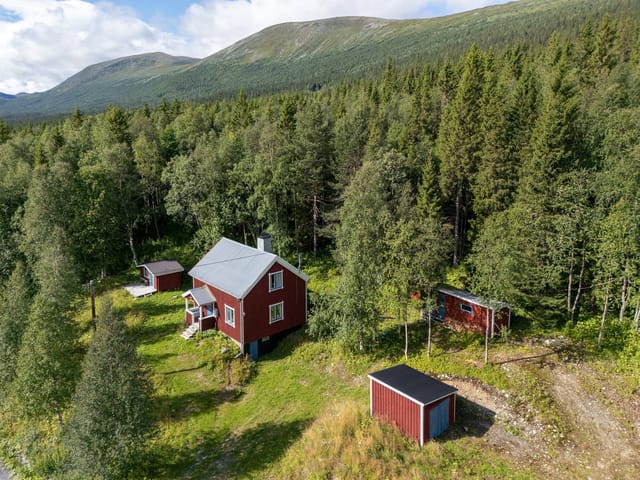
You wake up to the smell of pine resin warming in the morning sun, and the only sound is a woodpecker somewhere deep in the birch forest behind the cottage. No traffic. No sirens. Just the occasional clink of a coffee cup and the creak of an old wooden floor underfoot. This is Gottröra—a pocket of rural Uppland that most people drive straight past on their way to the coast, which is precisely why the people who find it never want to leave. Set along Vängsjöbergsvägen in the quiet community of Gottröra, about 20 kilometers inland from Norrtälje, this 1968-built country home sits high on its own plot—elevated enough to catch the light early, private enough that you'll forget neighbors exist. The 3,026-square-meter grounds unfold around a sheltered courtyard framed by the main house, a guest cottage, a sauna building, and several outbuildings. From above, it looks like a small Swedish farm that got quietly left behind by the twentieth century, and that's exactly the appeal. The main house is 64 square meters of honest, unfussy living space. Two bedrooms, a kitchen with a wood-burning stove big enough to heat the whole room in February, and a sitting room anchored by a proper fireplace. The layout was designed for people who actually use their homes—not for show. On a grey November afternoon, with a pot of elk stew on the stovetop and snow pressing against the single-pane kitchen window, this house delivers exactly what it promises: warmth, quiet, and the particular contentment that comes from being genuinely off the grid from city life. Summers here are something else entirely. Viksjön lake is a 550-meter walk down through the trees—a clean, cold Swedish lake where the swimming is good and the fishing is better. Pike and ... click here to read more
Front view of the country home

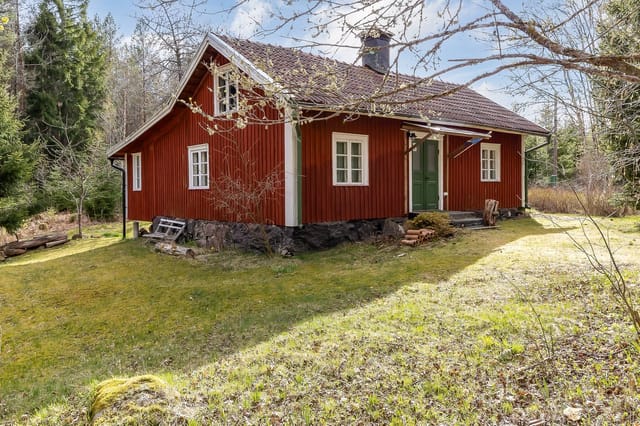
At six in the morning, the water off Södra Finnö sits completely still. You walk the fifty metres from your front door down to the private jetty, coffee in hand, and the only sound is a common eider calling somewhere out toward Fyrudden. This is what people mean when they talk about the Swedish summer — and this two-bedroom country home in the heart of the Sankt Anna archipelago puts you right inside it. Sankt Anna is one of those places that Swedes have quietly kept to themselves. Spread across more than six thousand islands and skerries east of Söderköping in Östergötland, the archipelago doesn't have the tourist crowds of Stockholm's outer islands or the Bohuslän coast. What it has instead is genuinely wild coastline, sheltered bays where the water warms up fast in July, and that particular quality of light in late afternoon that turns the granite pink. The nearest mainland town, Söderköping, is one of Sweden's most intact medieval towns — Saturday mornings there mean wandering the Storgatan, picking up fresh bread from the bakery, and stopping for a coffee before the short drive back through pine forest to the island. The house itself was built in 1987 and sits on just over 2,000 square metres of land. Sixty-seven square metres inside, which sounds compact until you're actually in it — the open layout connecting the living room, dining area, and kitchen makes the space work hard, and the large windows along the sea-facing side mean the water is always present, even when you're cooking. On autumn evenings, when the temperature drops and the archipelago empties out, the wood-burning fireplace becomes the centre of gravity for the whole house. The geothermal heating system (bergvärme) backs it up, meaning this isn't j ... click here to read more
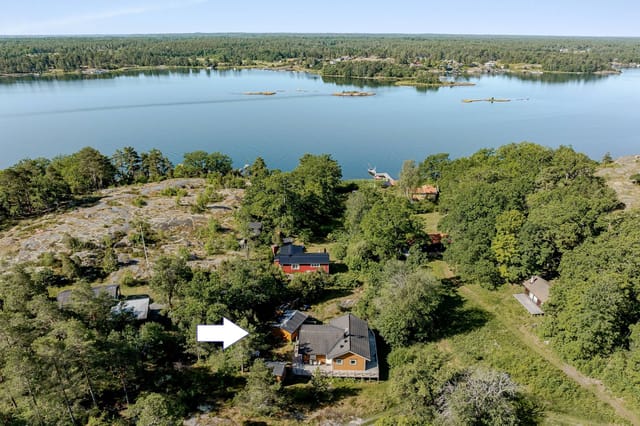
Exterior view of the main house and garden

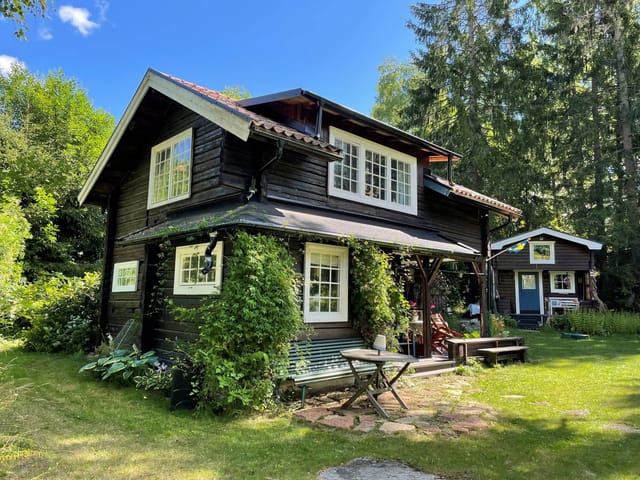
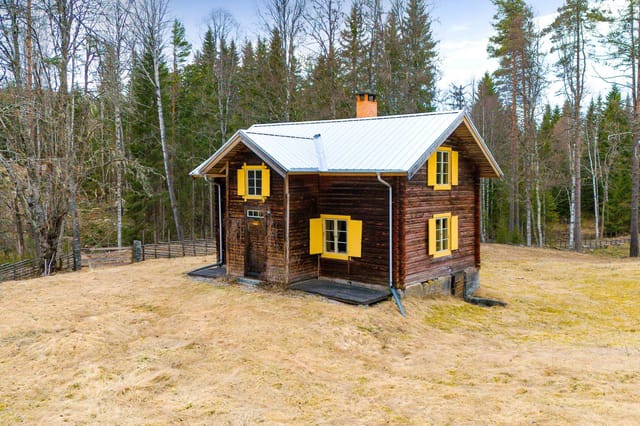
Step inside on a cool June morning and you'll hear it before you see it: the low creak of hand-hewn timber walls adjusting to the day's warmth, the faint scent of linseed oil paint that has soaked into every surface for over a century. Outside, the birch trees lining Skärklacken's lane are in full leaf, and somewhere down the track, a neighbour's cowbell carries across the meadow. This is not a renovated-to-within-an-inch-of-its-life weekend escape. This is the real thing. Skärklacken has been documented since 1664, when it operated as a traditional Swedish fäbod — a seasonal mountain pasture where farming families would move their livestock each summer. By the early 1900s, 22 farms clustered here and some 250 cows grazed the surrounding meadows. When the railway pushed through the Dalälven valley, the settlement transformed quietly into a small workers' community, complete with its own shop. The timber cottages that housed those railway families are still standing. This is one of them. The building itself is a two-storey log structure, and whoever has cared for it over the decades understood the difference between maintenance and interference. The walls carry their age well. Original doors, frames, and mouldings remain in place — not as a design affectation, but because they were simply never replaced. Ceilings, walls, and woodwork have been treated with traditional linseed oil paint in the old Dalarna manner, which gives the interior that warm, slightly matte glow you see in the open-air museum at Zorngården in nearby Mora. The ground floor living area has been fitted with new Floda pine flooring, and it sits comfortably alongside the older elements without trying to upstage them. Heat comes from two tiled stoves an ... click here to read more
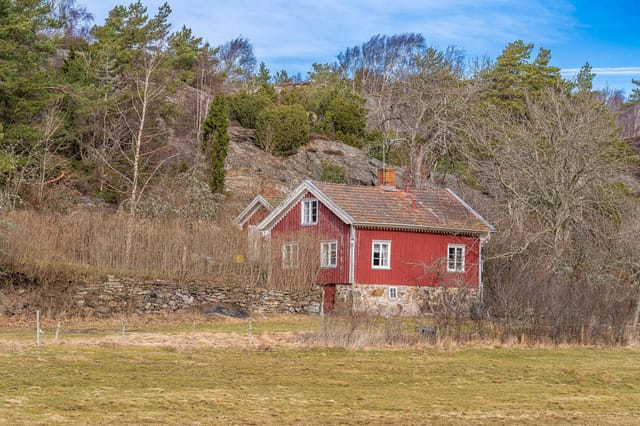
Exterior view of the timbered cottage

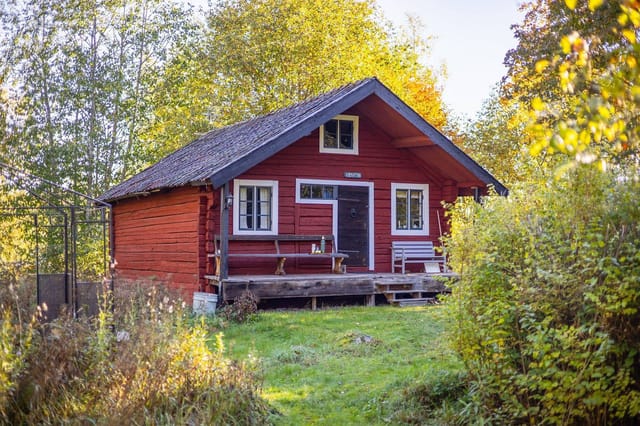
The alarm doesn't go off here. You wake up because sunlight is coming through the timber walls in long yellow strips, and somewhere outside a woodpecker is hammering away at a birch tree. That's the morning at Vibyhyttevägen 3 — unhurried, cool, and exactly why you bought a Swedish country retreat in the first place. This is a genuine 18th-century log cabin in Vidbyhyttan, a quiet hamlet within Hofors municipality in Gävleborg County, sitting on just over 5,400 square meters of private land. Forty square meters inside, but don't let that fool you — the layout is tight in the best Scandinavian sense of the word. Every corner does something useful. The living room anchors the space with an open fireplace that, come October, becomes the entire reason you're still here past the summer. It radiates more than heat. It radiates that particular Swedish cabin feeling — the one people drive hours from Stockholm to find and rarely do, because most cabins this old and this authentic simply aren't for sale anymore. The galley kitchen is compact and honest. No granite countertop fantasies here — just a well-organized workspace that makes you realize how little you actually need when you're cooking with ingredients you just picked from the garden. And there is a garden worth picking from: apple trees, heavy with fruit by late August, and raspberry bushes that genuinely threaten to take over the lawn if you give them a good summer. The grassy plot stretches out generously around the cabin, backed by mature trees that screen the property on all sides and keep the whole place feeling like your own private clearing in the forest. Sleeping arrangements are cleverly stacked. The main bedroom fits two custom-built beds, and a loft above op ... click here to read more
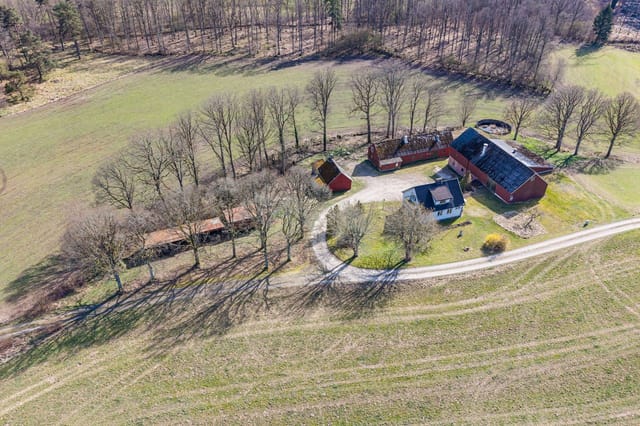
Exterior view of the log cabin

Pull up to Gunnarvattnet 5018 on a Friday evening in February, step out of the car, and the silence hits you first. Not the uncomfortable urban kind—proper, deep Nordic silence, broken only by the creak of snow-weighted pine branches and the distant buzz of a snowmobile fading somewhere toward the Norwegian border. The thermometer reads minus twelve. The cabin's heat pump has been running since you switched it on remotely from the motorway, and when you push open the door, it's warm and smells faintly of pine and the wool blankets folded on the bunk. This is why you bought the place. Valsjöbyn sits in Jämtland's far northwestern corner, in Krokoms kommun, about as far into the Swedish mountain wilderness as you can get while still reaching an ICA store within a reasonable drive. The village is small and unassuming—a cluster of red houses, a few hundred year-round residents, and a collective understanding that the real point of being here is what lies outside the front door. Gunnarvattnet, the lake that gives the address its name, is a short walk from the cabin. It's a proper fishing lake, too. Arctic char, brown trout, whitefish—the kind of stocks that take decades of clear, cold water to build. Come July, you can walk down before breakfast with a rod, and on a good morning you'll be back in time to fry something in the pan by eight. The cabin itself covers 52 square metres, which sounds compact until you're inside. The layout is honest and functional in the way that Swedish mountain cabins have always been: nothing wasted, nothing missing. The kitchen was recently renovated and is genuinely well-equipped—this isn't a weekend getaway where you're hunting for a working tin opener. You can cook a proper meal here. The li ... click here to read more
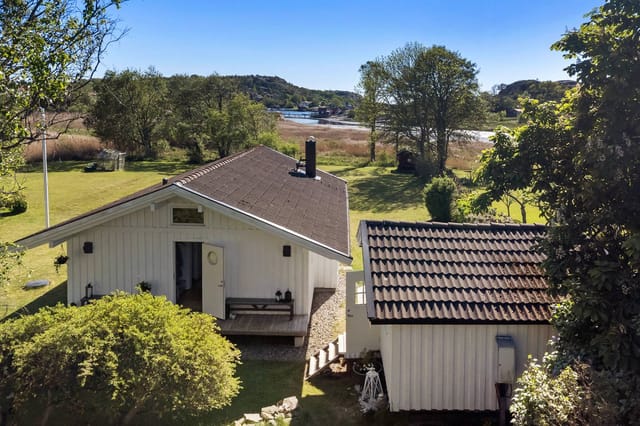
Exterior view of the holiday home

Wake up to nothing but birdsong. No traffic hum, no neighbor's lawnmower, no phone buzzing on the nightstand — because there's no signal to carry one. At Uvahult 303 in Alsterbro, Småland, mornings arrive the way they must have for centuries: through pine-filtered light, the smell of cool forest air, and the particular quiet that only truly secluded woodland can produce. This is what you came for. This single-bedroom Swedish torp — the word for the small, self-sufficient farmsteads that dot southern Sweden's countryside — sits on 1,370 square meters of private land deep in the forests of Nybro kommun. Forty square meters of living space. Two rooms. Wooden floors and tongue-and-groove walls that have absorbed generations of long summers and crackling-fire winters. It is completely off-grid: no mains electricity, no running water, no sewage connection. That's not a compromise. For the right buyer, it's the entire point. The layout is honest and practical. The living area centers on a wood-burning stove — the social and thermal heart of the cottage — around which evenings genuinely slow down. Board games, paperbacks, the low conversation of people who've had nowhere pressing to be all day. The kitchen corner handles the essentials without ceremony. The bedroom fits a double bed and storage without feeling cramped, and the second room flexes as a reading space, a guest sleeping area, or an art studio depending on the season and who's visiting. Large windows on both sides pull the forest inside, framing whatever wildlife wanders close enough to notice. Store Hindsjön is a short walk through the trees. The lake is cold, clear, and largely unfished by anyone other than locals who know it's there. Come July and August, Swedis ... click here to read more
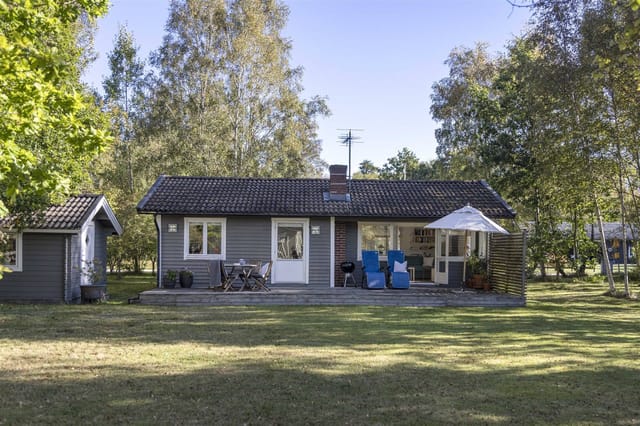
Front view of Uvahult 303 cottage

Step outside on a Tuesday morning in July, coffee in hand, and hear absolutely nothing except a wood pigeon somewhere in the birch trees overhead and the distant lap of Lake Vänern carrying across the meadow. That's 550 meters of open Swedish countryside between you and the largest lake in the Nordic countries. That's what Ulleredsbro 56 actually feels like. This is a three-building property on Kållandsö — the wooded island in Lidköping municipality that most international buyers have never heard of, which is precisely the point. It sits in Västra Götaland, a region that Swedes themselves treat as a serious destination, and it offers something increasingly rare: a genuine country retreat with multiple usable structures, a garden that's mature enough to actually give shade, and a waterside lifestyle that doesn't come with a waterside price tag. Listed at 54,900 EUR for a leasehold arrangement (standard and well-regulated in this part of Sweden), this is one of those properties where the numbers make you look twice. The three buildings are what make this place work. The centerpiece is a brand-new Attefall house — a Swedish planning category for compact structures built without a full permit — completed in 2023. Eighteen square meters, yes, but designed with the kind of floor logic that makes every centimeter count. There's a sleeping area, and a bathroom with both a combustion toilet and a proper shower. The materials are fresh, the finish is clean, and the whole thing is built for year-round use. On a cold November weekend, it holds warmth the way a well-insulated modern build should. Then there's the original blacksmith's cottage. Thirty square meters of preserved character — low ceilings, thick walls, a fireplace in ... click here to read more
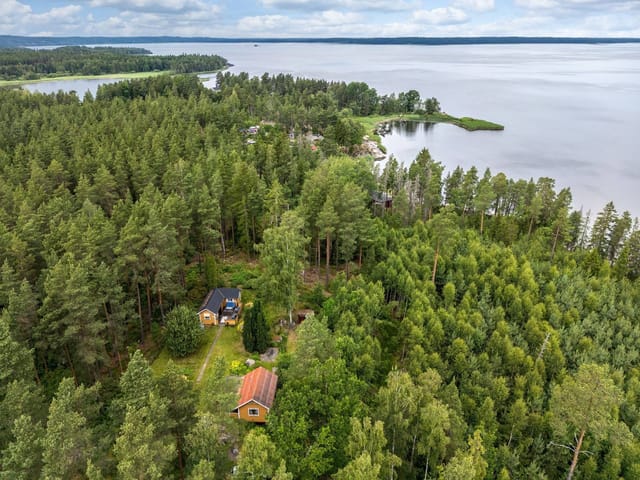
Exterior view of the main house and garden

Early on a September morning, the mist sits low over the fields at Ustorp. You open the kitchen window and the smell that comes in is grass and lake water and something faintly woodsy — pine resin, maybe, or the leaves already turning on the birches at the far edge of the meadow. There's no traffic noise. Just the distant call of cranes gathering for their southward journey, and the creak of the old wooden frame as the house warms up. This is what daily life looks like at Ustorp 11, a country property on 2.4 hectares of southern Swedish land, sitting roughly a kilometer from the western shore of Lake Solgen in Eksjö Municipality. The plot is the first thing that stops you. 24,000 square meters of it — open arable fields, mature trees, lawns wide enough to get genuinely lost in. The house sits on elevated ground, which means you're looking out over the surrounding farmland rather than into it. On clear days the view extends toward the lake. In winter, when the deciduous trees drop their leaves, you can see even further. The elevation also means the rooms get good light most of the day, which matters in Småland, where winters are real and dark and you learn to chase the sun across the house. The main residence is in good condition, cared for in the understated way that Swedish country homeowners tend to look after things — quietly, consistently, without fuss. Classic rural Swedish architecture means thick walls, practical proportions, and windows that frame the outside like paintings you never get tired of. Inside, the atmosphere is warm and genuinely liveable. This isn't a renovation project held together by optimism. You could arrive on a Friday evening and simply be here. What sets this place apart from a typical Swe ... click here to read more
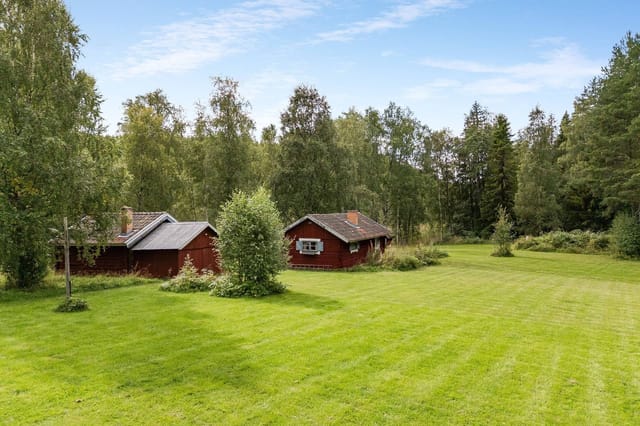
Main house and outbuildings, Ustorp 11

The smell hits you first — cut grass warming in the late afternoon sun, woodsmoke drifting from somewhere across the fields, and the faint sweetness of the apple trees that line the far edge of the yard. Then you notice how quiet it actually is. Not the uncomfortable quiet of isolation, but the deep, settled quiet of a place that has been at peace with itself for over a hundred years. That's Fågelsta Stormbacken. A 1910 red-painted farmstead on the outer edge of Julita, Katrineholms kommun, sitting on 1.3 hectares of Swedish countryside with the kind of bones that modern houses simply can't replicate. The main house runs to 160 square metres across seven rooms, and it carries its age well. Wide wooden floors creak in exactly the right places. Original period doors still swing on their hinges. Three traditional tiled stoves — kakelugnar — stand in the sitting rooms and do what they've always done: turn a cold November evening into something you don't want to leave. The ceilings are high enough that the rooms never feel crowded even when the family descends in full. Large windows face the courtyard and the open fields beyond, pulling in light from morning through to the long Swedish summer evenings when dusk doesn't fall until nearly eleven o'clock. The kitchen is the heart of the place, as it should be. Country-style cabinetry, a serious amount of worktop space, and updated appliances sit alongside the original character of the room without any sense of awkward compromise. The dining area flows directly off it, which matters enormously when you're hosting — plates passing between rooms, conversation spilling between spaces. This is a kitchen designed for proper cooking, not just reheating. Think slow-braised elk from t ... click here to read more
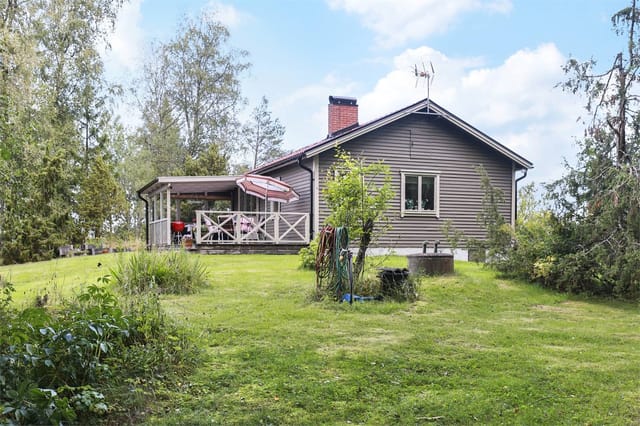
Front view of Fågelsta Stormbacken country home