Houses For Sale In Europe

Houses for sale in europe - homestra offers the largest amount of european real estate with over 200,000+ properties, find any type of property within your budget from villas to country homes. buy or rent your perfect home in europe.

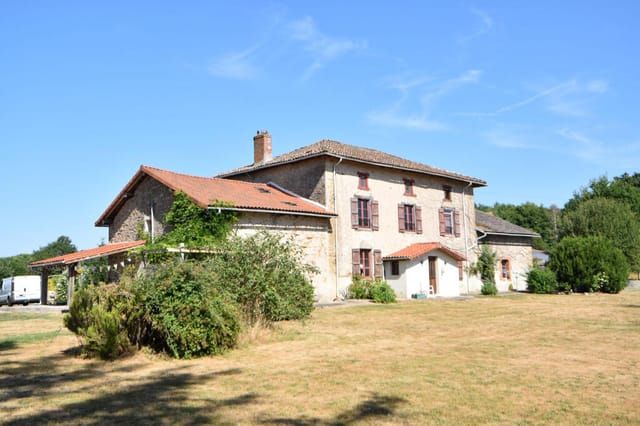
On a quiet Sunday morning in La Roche-Guyon, you open the east-facing garden doors and the silhouette of the medieval keep fills the frame. Coffee in hand, the Seine winds silver in the middle distance, and the only sound is the crunch of gravel as a cyclist rolls past on the riverside path below. That view — that exact view — comes with this house. La Roche-Guyon is one of those places that Parisians whisper about and then keep to themselves. Classified among Les Plus Beaux Villages de France, this compact riverside village sits where the Seine makes a wide, dramatic loop through chalk cliffs at the northern edge of the Vexin Normand natural park. It's only 70 kilometres from central Paris — less than an hour on a clear drive up the A13 and D913 — yet it feels like a different century. The Tour de France has passed through its single main street. Monet came here to paint. The Rochefoucauld family built their cliff-face château directly into the limestone bluff above town, and on summer evenings the floodlit castle walls turn the colour of warm honey. This 135-square-metre house sits right in the village centre, on 457 square metres of land, and it comes with something you simply cannot manufacture: three genuine troglodyte caves carved into the chalk cliff at the rear of the property. One functions as a proper wine cellar, cool and naturally humidity-controlled year-round — the chalk walls maintain a near-constant temperature that any serious wine collector will appreciate immediately. A second has been set up as a private party space, large enough for a long table and a crowd of friends on a summer evening. The third doubles as a garage, big enough for a car and everything else a second home accumulates over the year ... click here to read more
Picture 1
New

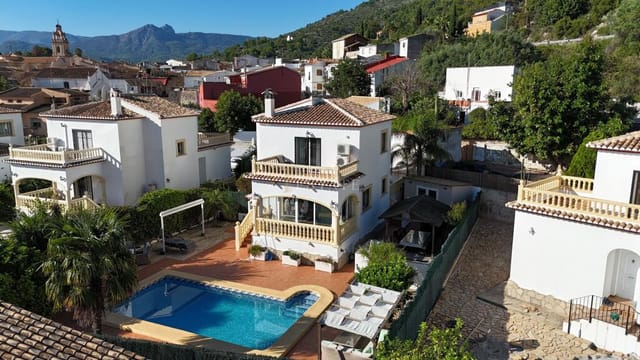
Sunday morning in Issigeac: the weekly market on Place du Château is already buzzing by nine, the smell of roasting chicken drifting from the rôtisserie stall, the sound of French chatter rising above the medieval ramparts. You're a ten-minute drive away, standing at your kitchen window with a coffee, looking out across a valley that hasn't changed much in three centuries. That's the kind of morning this property delivers, week after week, season after season. This is a barn conversion done right — and that distinction matters. Too many conversions in the Périgord sacrifice either the soul or the practicality, stripping out the stone to insert plasterboard, or preserving the beams while ignoring the cold. Here, the balance actually works. Exposed stone walls and heavy oak beams anchor every room in something authentic, while underfloor heating on the ground floor, solar panels for hot water, double glazing throughout, and a rare energy rating of B mean your running costs won't eat you alive. For a property of this age and character, that B rating is genuinely exceptional — most stone farmhouses in the Dordogne struggle to break a D. The layout is generous at 250 square metres, and it doesn't waste space on corridors or awkward half-rooms. The kitchen and dining room is the kind you actually want to cook in — properly fitted, with room for a long table and still space to move around it. A wood-burning stove anchors one end. The adjoining living room has its own stove too, and on a January evening when mist sits in the valley and the fire is going, this room becomes the whole reason you bought in France. Beyond that, a utility room with pantry storage and a guest cloakroom handle the unglamorous logistics cleanly. Upsta ... click here to read more
Picture 1
New

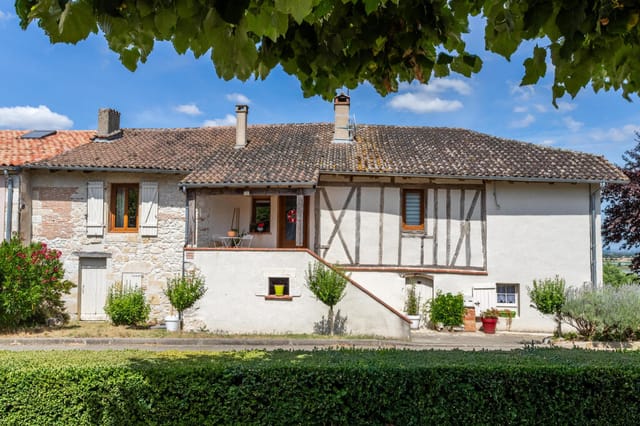
Saturday morning, and the only sounds reaching the terrace are birdsong, the distant clang of the Saint-Saud-Lacoussière church bell, and the faint creak of oak branches in the breeze. Your coffee goes cold because you keep forgetting to drink it. That's what this corner of the Dordogne does to you. This three-bedroom house sits on just over an acre of land outside one of the Périgord Vert's quieter, more genuine villages — not a tourist honeypot, but a real French community with a weekly market, a pharmacy, a couple of decent cafés, and the kind of neighbours who still wave from across the lane. The property spans 125 square metres of living space, is in good condition, and has the bones — plus a 60-square-metre open barn and an attached garage — to become something genuinely personal with a modest refresh. Walk through the front door and you're straight into the heart of the house: a 45-square-metre living room with terracotta tiles underfoot, a proper fireplace fitted with a wood burner, and double doors that push open onto the terrace and garden beyond. It's the kind of room that earns its keep in every season. In July, those doors stay open from breakfast to midnight. In January, the wood burner makes the room impossible to leave. The fitted kitchen connects naturally to this central space, and the whole ground floor flows well — two double bedrooms with warm wooden floors, a family bathroom, and a WC all sit within easy reach. Upstairs, a mezzanine study area opens off the landing — exactly the right perch for working remotely with a view over the garden, or for teenagers who need their own corner of the world. The third bedroom completes the upper floor, giving the house genuine flexibility for families, couple ... click here to read more
Photo 1
New

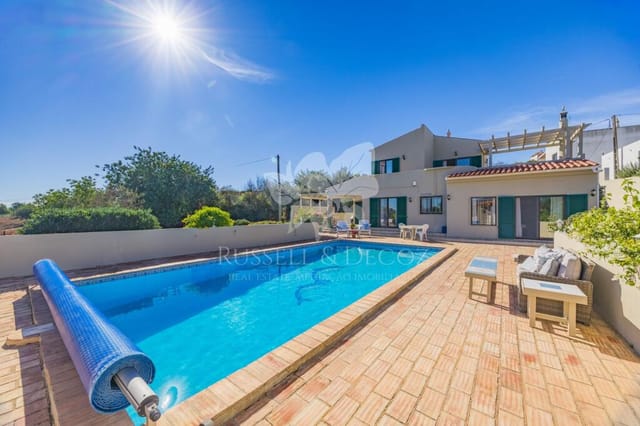
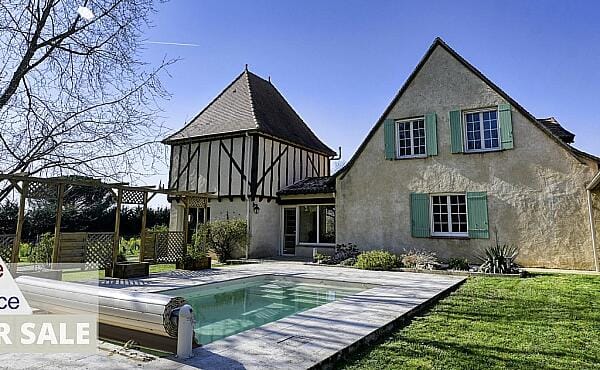
Sunday morning in Verteillac starts slowly. The boulangerie on the main square opens early, the smell of baking bread drifting down the stone street before most shutters have rolled up. From the back garden of this four-bedroom village house, you can hear the church bell count out the hour while a wood pigeon settles somewhere in the old walnut tree next door. That's not a postcard image — that's Tuesday, that's October, that's what this kind of life actually feels like. Verteillac sits in the northern Dordogne, tucked between Périgueux and Angoulême in a stretch of Aquitaine that most visitors never find. That's precisely the point. This is deep rural France — sunflower fields in July, truffle markets in winter, walnut orchards turning gold in October. The Dronne Valley is a short drive east. The medieval bastide town of Brantôme, sometimes called the Venice of the Périgord for its abbey and canals, is around 30 minutes away, and on a warm evening its riverside restaurants fill with locals eating duck confit and magret de canard at unhurried pace. Bergerac Airport is roughly an hour south, with Limoges another option to the northeast. Bordeaux, with all its TGV connections and international flights, sits about 90 minutes away by car. The house itself sits right in the village, with stone walls, a traditional roofline, and the kind of layout that's been thoughtfully adapted for modern living without losing its character. The ground floor flows between an open-plan kitchen and dining room — fitted with a wood-burning stove that earns its keep from November through March — into a generous sitting room, which also has a stove and opens directly onto the private walled garden. On a cool spring afternoon, you leave the door ... click here to read more
Picture 1
New

Sunday morning in Saint-Aubin-lès-Elbeuf starts with a smell you can't manufacture: woodsmoke drifting from the fireplace insert downstairs, coffee brewing in the fitted kitchen, and the faint sound of the Seine moving somewhere beyond the garden wall. It's the kind of slow-morning feeling that people spend years chasing and rarely find this close to a motorway junction. This is a five-bedroom Norman manor house in good condition, spread across 235 square metres, sitting in fully enclosed landscaped grounds with a south-facing terrace, a jacuzzi, two garages, an outbuilding, a workshop, and a paved parking area complete with an electric vehicle charging point. On paper, it sounds like a checklist. In person, it reads like a life upgrade. Let's talk about the house itself first. The ground floor opens with a generous entrance hall — proper proportions, not the awkward squeeze you find in newer builds — with a large closet and a separate WC. The kitchen runs to about 25 square metres, fully fitted and equipped, with enough room to cook for a family gathering without anyone getting in anyone else's way. A utility room with a sink connects directly to the garden, which makes returning from a muddy riverbank walk entirely civilised. The living room has a fireplace insert; the adjacent sitting room has its own fireplace. Two rooms with fires. That is not a small thing in a Norman winter. Up on the first floor, three well-sized bedrooms include a master suite with a dressing room and sink — a practical luxury that transforms the morning routine. There's a large bathroom, a laundry room, another dressing room, and a separate WC. The layout gives a family room to spread out without living on top of each other. The second floor ... click here to read more
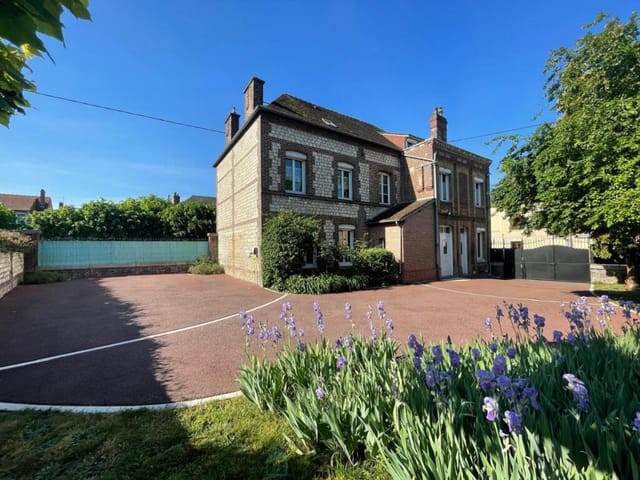
Picture 1

On a quiet morning in Montmoreau, you open the kitchen window and catch the smell of bread baking from the boulangerie two streets over. The old lime tree in the garden is already throwing long shadows across the grass. Church bells tick off the hour somewhere behind the rooftops. This is what a second home in the Charente actually feels like — not a postcard, but a life you can walk right into. This four-bedroom house sits on a 2,500 m² fenced plot just a few minutes' walk from the center of Montmoreau, a genuine working village where the shops are open, the school is busy, and the weekly market still matters. At €191,500, it's one of those rare finds in southwest France where the price doesn't force you into a compromise. The house is in good condition, connected to the public sewage system, and ready to move into or rent out from day one — no major works, no guesswork. Inside, the layout is generous without feeling excessive. Three bedrooms serve the everyday sleeping arrangement, but the fourth room — a spacious music room running along one side of the ground floor — is the kind of flexible space that a vacation home really benefits from. Use it as a fourth bedroom when the family multiplies for August. Set it up as a proper studio. Keep it as a reading room with nothing but books and afternoon light. It's large enough to be genuinely useful rather than decoratively mentioned in the listing. Two bathrooms handle the practicalities well. The house has a garage and a separate workshop — the workshop alone will matter enormously to anyone who wants a serious hobby space or needs somewhere dry to store garden gear, bikes, and the kayaks that will inevitably accumulate once you discover the Dronne river valley. Parking ... click here to read more
Picture 1

Stand in the kitchen on a Tuesday morning and the only sound is the low hum of the borehole pump cycling off. The fig tree outside the window drops a long shadow across the tiles. Faro Airport is half an hour down the road, but you wouldn't know it. That contrast—deep rural quiet alongside genuine coastal convenience—is exactly why Moncarapacho keeps drawing buyers away from the crowded western Algarve. The village sits in the Eastern Algarve's quieter interior, where the land is still orange and almond and old olive, and where a two-bedroom quinta with nearly 5,000m² of fenced rustic land still sells for a fraction of what you'd pay near Vilamoura. This one is priced at €439,000, comes in good condition, and has renovation plans already drafted and ready for submission. Someone has done the homework. You get to do the fun part. The house itself is 92m² of tiled interiors built around an open-plan kitchen and dining room that spills naturally into a separate lounge. The fireplace in the sitting room runs on wood—proper East Algarve winters call for it, because even though January days hit 16°C and the sun comes out most afternoons, the evenings get cold fast and there's something good about eating dinner next to a fire when the wind picks up outside. Two bedrooms and a single bathroom complete the layout. Solid, liveable, and genuinely ready to inhabit while the planning wheels turn. The land is what gives this property its real range of possibilities. Nearly half a hectare, fully fenced and gated, with enough space to keep a couple of horses, plant a serious vegetable garden, add a pool, or simply do nothing and let the cork oaks and wild rosemary carry on as they always have. Multiple water sources—mains supply, a b ... click here to read more
Picture 1

Stand on the south-facing terrace at eight in the morning, coffee in hand, and the Pyrenees are right there — a pale blue wall of peaks stretching across the horizon while the rest of the Malepère valley hums quietly below. No traffic, no neighbors pressing in. Just the sound of cicadas warming up for the day and the faint smell of sun hitting dry stone. This is what you came to France for. Set in the village of Cailhau in the Aude département of Languedoc-Roussillon, this four-bedroom single-storey villa sits on over 3,500 square meters of private land with that uninterrupted panoramic view of the Pyrenees as its constant backdrop. At 124 square meters of living space across one level, the layout works effortlessly — no stairs, no awkward split levels, just an honest, well-organized home that's genuinely move-in ready. The heart of the house is a 50-square-meter south-facing living area that pulls together a lounge, dining room, and fully fitted open-plan kitchen. In a region where the sun shows up reliably from April through October, orientation like this matters. Natural light tracks across the room through the day, and with the solar-powered electric roller shutters programmed to close automatically as temperatures climb, the interior stays cool even during August when the thermometer pushes past 35°C. The reversible air conditioning handles the remaining edge cases. This is a house that has been thought through by someone who actually lives in Languedoc summers, not just designed for a sales brochure. Three of the four bedrooms sit comfortably in the 12–14 square meter range, each fitted with built-in wardrobes. The fourth is a solid ten square meters — smaller, but still useful as a home office, children's room, ... click here to read more
Picture 1

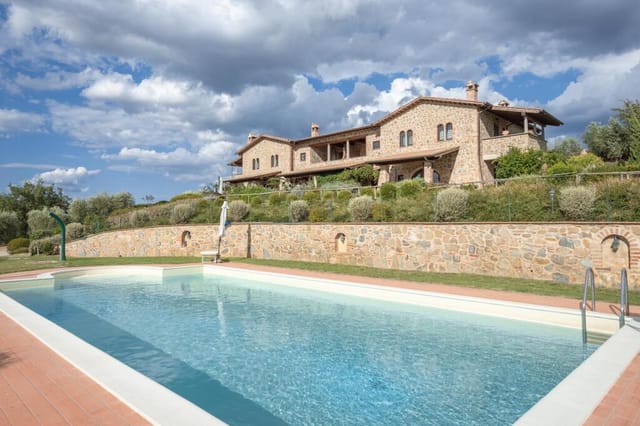
Picture this: it's a Sunday morning in late October, and the smell of woodsmoke is already drifting up from the valley below. You're sitting on the terrace outside the kitchen, coffee in hand, watching the first light catch the silver undersides of your olive leaves. The hills roll away in every direction — golden, green, impossibly quiet. This is not a postcard. This is your garden. This 200-square-metre country villa outside Chianni sits on roughly five acres (20,000 sqm) of mixed land — working olive groves, open meadows, patches of woodland — and it's the kind of property that becomes a reference point for the rest of your life. Not because of grand architectural gestures, but because of what it actually feels like to be there. The house arrives in good, liveable condition, which matters more than people give it credit for. You won't be gutting a ruin or project-managing a rebuild from another country. You can arrive, unlock the door, and start living — then improve things at your own pace. The pellet boiler provides central heating and hot water throughout, and all windows are double-glazed, which means the place stays genuinely warm through the Tuscan winter, not just decoratively Tuscan. What makes the layout especially interesting is that the accommodation currently runs as two independent units. The main section is entered via an external staircase that leads up to a first-floor terrace — a landing wide enough to actually eat at, which becomes your default dinner table from April through October. Inside, a generous open-plan kitchen with pantry flows into a sitting room anchored by a freestanding fireplace positioned in the centre of the room. It draws the eye immediately. Two bedrooms occupy this level, one ... click here to read more
Picture 1

On a clear morning, you can stand on the terrace with a coffee and watch the light shift across the Gulf of La Spezia—the water catching silver between the headlands, Portovenere in the far distance, the hills dropping in ridges toward the coast. Church bells from the village below drift up before nine. The wood-fired pizza oven in the kitchen is still warm from the night before. This is the kind of Tuesday you've been daydreaming about for years. Calice al Cornoviglio sits in the Ligurian hills at the precise point where the region folds into Tuscany, and that borderland quality defines everything about it. The air smells of pine resin and wild rosemary. The village itself is unhurried—there's a bar where the same men have been drinking espresso at the same hour for decades, a small shop that stocks far more than you'd expect, and a public pool with a view that would cost a fortune at any resort. A restaurant one kilometer down the lane does a ribollita that makes you reconsider every bowl of soup you've ever eaten. The community is tight-knit in the way that only small hilltop villages manage to be, and newcomers who put in the effort are genuinely welcomed. The house itself is spread across three floors of beautifully renovated stone, 174 square meters in total, and it carries the weight of its past lightly. Ground floor: a vaulted cantina—the real thing, not decorative—plus a storeroom, bathroom, and an open-plan kitchen and dining space anchored by exposed stonework walls and a wood-fired pizza oven built into the stone. It's the kind of kitchen that makes cooking feel like an event. Up to the first floor and the split-level living room opens outward—fireplace on one side, terrace on the other, panoramic views in ... click here to read more
Picture 1

Sunday morning in Lunigiana sounds different from everywhere else in Tuscany. Church bells carry from the valley below, the air smells of woodsmoke and wild herbs, and from the upper terrace of this stone house you can watch the green hills roll southward without a single rooftop to interrupt the view. It's the kind of quiet that city people forget exists — and then spend years trying to find again. This three-bedroom house sits on the edge of a small hamlet about six kilometres from Fivizzano, the medieval walled town that locals half-jokingly call the Florence of Lunigiana. The nickname isn't vanity. Fivizzano's cobbled central piazza, ringed by Renaissance palazzos and caffè terraces, has a genuine civic dignity — and on summer evenings, when the town hosts open-air concerts and torchlit medieval parades, you understand why people who arrive for a week end up buying property here. The house itself is a proper working structure, not a decorator's project. The original stone building was rebuilt at the turn of this century, and about a decade ago a neighbouring barn was converted into a light-drenched annexe that now functions as a semi-independent guest suite. Together they cover 88 square metres of interior space — compact, considered, and genuinely comfortable year-round thanks to central heating, reliable Wi-Fi, and solid 4G coverage, which matters more than most property descriptions admit. Walk through the main door and you're in an open-plan kitchen and living room where a traditional enclosed fireplace anchors one wall. Come October, when the olive harvest starts and evenings cool quickly, that fire earns its place. A stone staircase rises to two bedrooms and a family bathroom; one of the bedrooms opens direc ... click here to read more
Picture 1

Picture this: it's a Sunday morning in July, and you're standing on the balcony of Casa Erica with a coffee, watching the Tuscan hills roll away in every direction like a green and gold sea. Church bells carry up from the piazza below. The scent of woodsmoke drifts from somewhere nearby. You didn't fly into some tourist trap — you're in Chianni, a proper working Tuscan village where the locals actually live, and somehow you own a piece of it. This is a three-bedroom semi-detached house in the kind of condition that tells you someone cared for it — services connected and working, solid bones throughout — but with enough room to put your own stamp on things. At 160 square metres, spread across three levels, it has real substance. Not a squeezed holiday flat, not an overwrought renovation project. A house. The layout rewards exploration. You arrive via an external staircase onto a balcony that already sets the tone, then step into a kitchen anchored by an open fireplace — the kind of feature that makes February in Tuscany feel romantic rather than cold. The living room sits alongside it, and there's a proper bathroom with shower, a useful under-stairs store room, and a ground-floor room that works equally well as a single bedroom or a quiet study for anyone who still answers emails on holiday. Upstairs, two more bedrooms sit connected by a door, and there's planning scope to carve out a second bathroom up here — potentially a full master suite if you want to take the property somewhere more ambitious. A small attic already handles the overflow storage question before you've even asked it. But the real talking points are below. In the courtyard — which doubles as private parking — a few stone steps climb to a private gard ... click here to read more
Picture 1

Picture a Saturday morning in late October. The air coming through the kitchen window smells of wood smoke and damp cork oak, and somewhere down the cobbled lane a rooster is making his opinions known. You've got a coffee on, the fireplace from 1888 is doing exactly what fireplaces from 1888 are supposed to do, and the hills of Santa Bárbara de Nexe roll out beyond the terrace like something a painter would invent. This is not a weekend fantasy. This is what owning this house actually feels like. Santa Bárbara de Nexe sits on a ridge in the inland Algarve, just 15 minutes north of Faro and about 10 minutes from Loulé — close enough to everything, far enough from the coastal circus of July and August. The village is the kind of place where the café owner knows your order by your second visit and the weekly market in Loulé (every Saturday, go early for the honey and smoked sausages) becomes a genuine ritual rather than a tourist activity. You're inland enough to feel authentic Portugal, but a 30-minute drive puts you on the sands of Meia Praia, Quarteira, or the wilder dunes at Cacela Velha near the Spanish border. The house itself dates from 1888, and unlike a lot of historic Algarvian properties that have been sanded and plastered into blandness, this one kept its soul. Original stone walls, a proper living room fireplace with a wood burner sitting inside it, the kind of thick-walled construction that stays cool in August without much help and holds heat through December evenings when the rest of the coast is surprised by the cold. The ground floor flows from the entrance into the living room, then through to a dining room and a fully equipped kitchen. Step out from the kitchen and you're in a courtyard where a bougain ... click here to read more
Picture 1

Stand in the courtyard on a September morning and you'll understand immediately why people never quite recover from their first visit to Lunigiana. The bread oven is cold now, but you can smell the ghost of woodsmoke in the stone. Swallows cut arcs above the vine pergola. Down the slope, your vineyard — yes, yours — catches the early light, and somewhere in the olive grove behind the meadow a woodpigeon is making its case for the day. This is what €160,000 buys you in one of Tuscany's last genuinely undiscovered corners. The farmhouse itself is honest old stone, two storeys, the kind of construction that's been shrugging off Apennine winters for a couple of centuries without complaint. On the ground floor you have a kitchen and dining room with enough space to cook seriously, a living room, and a store room that opens toward the courtyard. Three bedrooms and a bathroom sit upstairs. The whole thing runs to 200 square metres of internal space, plus an adjoining barn on two levels that connects — or could connect, once you've had your way with it — to the main house. Below everything, carved into the hillside as nature intended, are the cantina: vaulted stone rooms that have been making wine cold for generations, exactly the right place to rack the bottles from your own vines. The property needs modernization. That's not a caveat buried in the small print — it's actually the point. Someone who wants a turn-key renovation project with a concrete budget and a clear vision will find that this house gives them something increasingly rare: genuine scope to create a home on their own terms, in a place where the bones are already exceptional and the land does much of the talking. The spring water supply is abundant and the prop ... click here to read more
Picture 1

Picture this: it's a Tuesday morning in late September, the kind of morning that makes you want to cancel everything. You're standing on your upstairs terrace with a coffee, watching the mist slowly pull back from the Apennine ridgeline, and the only sound is a woodpecker somewhere in the fig tree below. That's the daily reality of owning this three-bedroom villa in the Lunigiana hills of northern Tuscany — a place most Italians know about and most foreigners haven't found yet. That's not an accident. Lunigiana sits in the crease between Tuscany, Liguria, and Emilia-Romagna, technically within Tuscany's administrative borders but with a character entirely its own. Fewer tour buses. More castles per square kilometre than almost anywhere in Italy. Hiking trails that cut through chestnut forests older than the republic. And properties like this one — solid, well-maintained villas on quiet lanes with proper gardens and proper views — that would cost twice as much if they sat twenty kilometres further south in the Chianti. The villa itself is 208 square metres across three levels, and it's been kept in genuinely good condition. This isn't a project. The finish is high-end throughout: marble bathrooms, solid wood and marble kitchen, beamed ceilings in the main living room. The first floor is where daily life happens — a wide entrance hall opens into a living room with a fireplace that earns its keep in November, french doors spilling out onto a covered patio where you can eat dinner outside well into October without needing a jumper. The kitchen is fully fitted and connects to the same covered patio, so cooking and outdoor living flow into each other the way they should in a Tuscan country house. Two bedrooms on this level ... click here to read more
Picture 1

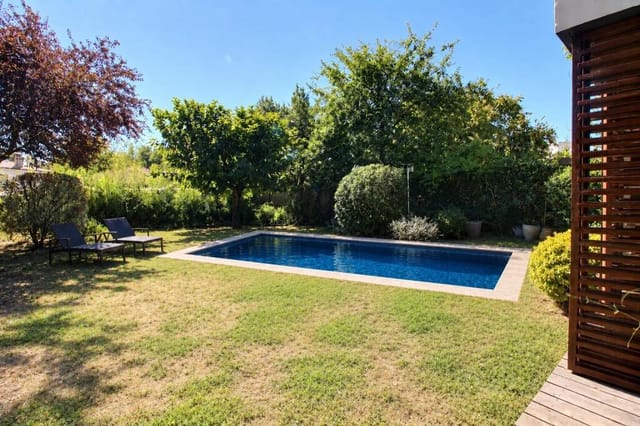
The alarm doesn't go off here. You wake up because the light does — that particular low-angle Algarve gold that slips through the shutters around seven and lands on the whitewashed wall opposite your bed. By the time you've padded downstairs and figured out the espresso machine, the day has already decided it's going to be good. This 208-square-metre detached villa in Fuzeta sits in a quiet residential pocket of Moncarapacho, one of the eastern Algarve's genuinely under-the-radar corners. Priced at €599,000 and in good condition throughout, it's ready to walk into — no gut renovation, no months of waiting, no project headaches. Three bedrooms, two bathrooms, a proper office that could become a fourth sleeping space, and a private pool out back. That's the skeleton. The story is what surrounds it. Fuzeta itself is the kind of place that long-time Portugal hands mention in hushed, slightly possessive tones. It's a working fishing village — actual fishing boats still motor out at dawn, and the Wednesday market on the waterfront sells cured fish and hand-thrown ceramics alongside the usual produce. The town sits right on the edge of Ria Formosa Natural Park, a 60-kilometre lagoon system of tidal channels, barrier islands, and flamingo-dotted mudflats that's genuinely one of the most biodiverse coastal environments in southern Europe. From Fuzeta's little ferry dock, a ten-minute flat-bottomed boat ride drops you on Ilha de Fuzeta, a long Atlantic beach with no roads, no hotels, and about nine months of swimmable water. You bring your own lunch. The villa's outdoor setup was clearly designed by someone who understood this climate. Portugal's eastern Algarve logs around 3,100 hours of sunshine per year — more than the centr ... click here to read more
Picture 1

Stand on the sun terrace on a clear January morning and you can see all the way to the Atlantic. Not a glimpse—a full blue stripe of sea sitting low on the horizon, framed by rolling hills stitched with carob and olive trees. This is São Brás de Alportel, the Algarve's quiet, unhurried interior, and from this elevated plot four kilometres south of the town centre, that view is yours every single day. The villa sits on 1,401 square metres of gently sloping land, far enough from the coast road to feel genuinely private but close enough to the beach that you won't need to plan around it. Twenty minutes to Meia Praia or Garrão. Fifteen to the Thursday market in Loulé where farmers sell figs still warm from the tree. Five minutes to the padaria on Rua Dr. João Dias where they pull trays of fresh broa from the oven before 8am. This is not a holiday-brochure version of the Algarve. It's the real one. At 252 square metres across two floors, the house is generously sized—a fact that becomes obvious the moment you step into the ground-floor living and dining room. It's big enough to host a long family lunch without anyone feeling crowded, anchored by a wood burner that earns its keep on crisp February evenings when the serra cools sharply and the valley below fills with a thin morning mist. The kitchen runs off to one side, fully equipped with a pantry that solves the eternal problem of too many tins of Portuguese tinned fish and not enough cupboard space. A third bedroom on this floor does current service as a home office—practical if you plan to split time between here and elsewhere, or ideal as a guest suite for the friends who will, inevitably, want to visit once word gets out. The patio doors off the living area are the ce ... click here to read more
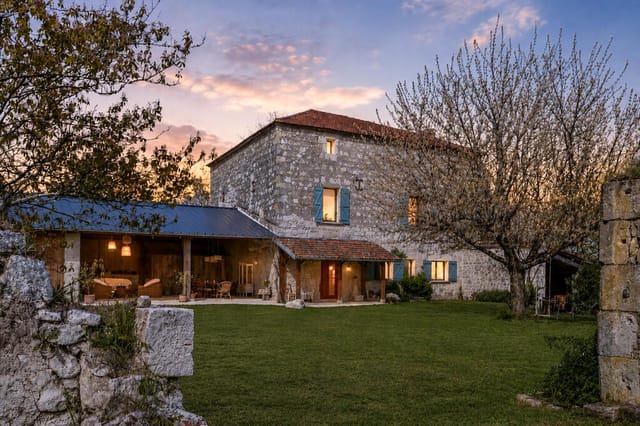
Picture 1

Step out onto the first-floor balcony just after sunrise and the Ionian Sea catches the light in a way that makes you forget what day it is. That's what mornings look like at this two-bedroom villa in Minies, a quietly residential pocket of Leivathos on the southwest side of Cephalonia — one of Greece's most underrated islands, and one that locals would rather keep that way. The house sits on 720 square metres of private land with a western orientation, which means evenings here are something else entirely. Sunsets over the open horizon turn the pool water into hammered copper. The garden smells of jasmine and warm stone. If you've been searching for a vacation home in Greece that genuinely feels like it belongs somewhere rather than built for a catalogue, this is worth your full attention. At 102 square metres across two floors, the layout is clever without being fussy. Downstairs — 52 square metres — the living room is generous, centred around a fireplace that earns its keep in the mild Cephalonian winters and makes the space feel lived-in rather than staged. The kitchen is fully equipped and opens directly to the dining area; the whole ground floor flows straight out to the garden and the pool deck, which is exactly how it should work in this climate. There's a guest WC on this level too, so the upstairs bedrooms stay private when you have friends over for an afternoon swim and a late lunch at the outdoor dining table under the pergola. Up the internal staircase, both bedrooms have their own en-suite bathrooms — a detail that matters enormously when you're renting the property out or hosting family across different age groups. Both rooms open onto balconies with those views: wide, unobstructed, facing open sky and ... click here to read more
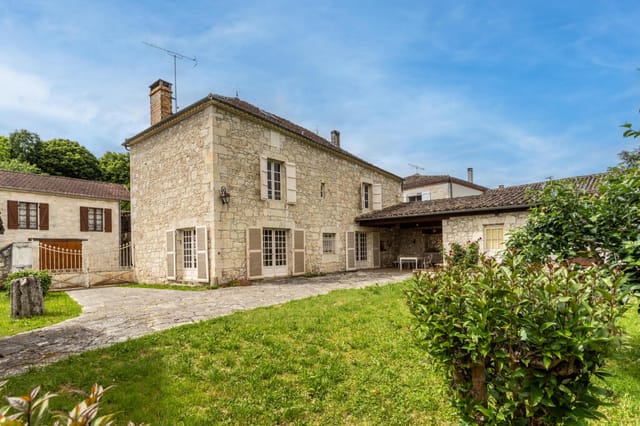
Picture 1

On a still morning in this quiet Limousin hamlet, the only sounds are birdsong and the occasional creak of the old barn doors swinging open in the breeze. You pour your first coffee and carry it through the glazed door into the garden, past the fruit trees coming into blossom, and sit beside the ancient stone bread oven your architect friend keeps saying you should convert. That's the rhythm of life in Dournazac — slow, deliberate, and quietly extraordinary. This renovated three-bedroom stone house sits in one of the most underrated corners of southwest France, a region where property prices still reflect genuine value and the countryside hasn't been polished into a tourist postcard. The Haute-Vienne département rewards those who seek it out: rolling wooded hills, medieval châteaux, winding rivers, and a food culture that puts Sunday markets at the absolute center of social life. The Saturday market in Châlus — just three kilometres down the road — is where you'll find the region's famous clementines in winter, truffles if you know which stall to hover around, and a very decent andouillette that the locals will insist you try. Nearby Nexon holds one of the finest horse fairs in France each spring. Oradour-sur-Glane, a preserved WWII memorial village, is a sobering and important half-day trip that draws visitors from across Europe. The house itself carries the architectural honesty that Limousin stone buildings do so well. No decorative veneer, no awkward additions — just solid granite walls, exposed ceiling beams, and a staircase hand-built in oak that feels almost too good to rush up. The craftsmanship throughout the renovation was taken seriously. You notice it in the custom kitchen, which stops visitors in their tra ... click here to read more
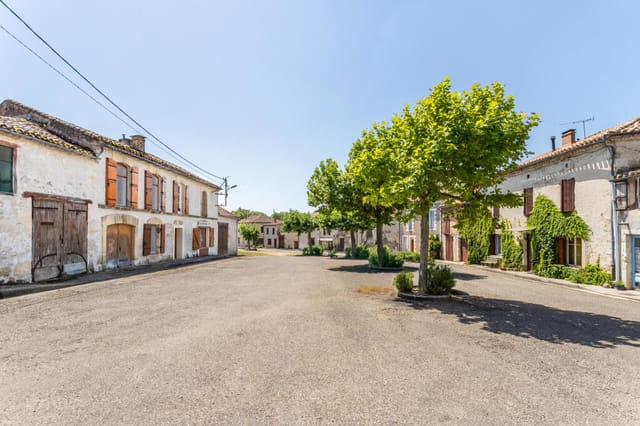
Picture 1

Picture this: it's a Saturday morning in late June, and you're already swimming laps in a 9-by-4.5-metre heated pool before the rest of the hamlet has stirred. The Dordogne air is cool but warming fast, the swallows are cutting arcs over the meadow, and through the covered summer kitchen you can smell coffee brewing. This isn't a fantasy borrowed from a magazine. It's Tuesday, actually—because when you own a place like this, every day feels like a day you chose. The house sits in the tiny hamlet of Creyssensac-et-Pissot, tucked into the rolling green hills of the Périgord Vert, a corner of France that still operates largely on its own timetable. Built in 2012 on a generous 3,725 m² plot, the single-storey villa carries none of the renovation burden that comes with older Dordogne stone farmhouses—no crumbling walls, no damp to chase, no ten-year project looming over your holidays. It earned a B energy rating thanks to full double glazing and underfloor heating throughout, which means winter visits are genuinely comfortable, and your energy bills won't make you wince. Inside, the open-plan living space does what good architecture should: it gets out of your way. The lounge, dining area, and fitted kitchen flow together naturally, lit by wide windows that pull the countryside views directly into the room. The log burner in the corner is less of a necessity—the underfloor heating handles that—and more of an occasion. Light it on a wet November evening with a bottle of Bergerac rouge and a board game on the table, and you'll understand why people keep coming back to the Dordogne season after season. Three well-proportioned bedrooms branch off a central corridor, alongside a family bathroom with both bath and shower, plus a ... click here to read more
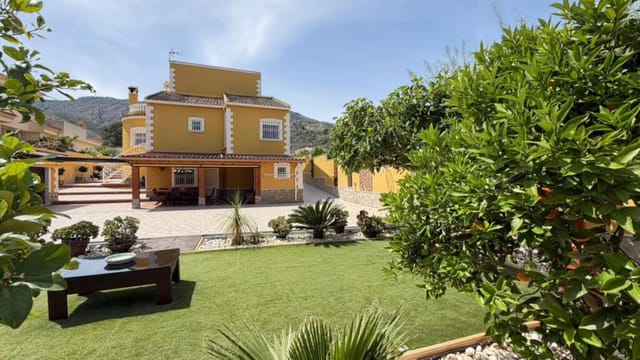
Picture 1

Picture a Tuesday morning in late June: you're at the twice-weekly market in Montguyon, five minutes down the road, picking up a wedge of goat's cheese from the local fromagère and a bunch of sunflowers that cost less than a coffee back home. You drive back through a hamlet so quiet the loudest thing you'll hear is a woodpigeon in the oak at the back of the garden. That's Saint-Martin-d'Ary. And that's what owning this place actually feels like. Set between Montguyon and Neuvicq in the southern stretch of Charente-Maritime, this three-bedroom detached house sits on a generous 3,000 square metres of mature land in a small, unhurried hamlet. It's the kind of spot that takes a minute to find on the map but stays with you long after you leave. At 102m², the house is compact enough to manage easily as a second home, yet laid out with enough rooms that a family or a group of friends won't be tripping over each other. Inside, the ground floor flows from an entrance hall into a comfortable lounge and separate dining room — the sort of arrangement that still works for a long Sunday lunch the way open-plan never quite does. The kitchen has a fireplace, which tells you something important: this room was built to be the heart of the house, not just a functional corner. On cold December evenings when you're down here for a long winter weekend, a fire in the kitchen while something slow-cooks on the hob is exactly the right kind of warmth. There's also a utility room for the practical side of country living — muddy boots, firewood, market bags. At the back, a summer room and veranda opens the house out toward the garden, catching afternoon light and giving you somewhere to eat outside without the full commitment of a terrace meal in ... click here to read more
Picture 1

On a quiet Tuesday morning in Lorigné, the only sounds you'll catch from the south-facing terrace are birdsong, the faint clatter of a tractor somewhere beyond the stone walls, and the soft hiss of water in the covered pool below. No traffic. No neighbors peering over the fence. Just 1,377 square meters of enclosed garden, a house that's been here long enough to have earned its thick walls and terracotta floors, and the particular French countryside silence that people drive hundreds of kilometers to find. This four-bedroom stone house sits in a small hamlet between Chef-Boutonne and Sauzé-Vaussais in the Deux-Sèvres département — the quieter, less-hyped cousin of the Charente to the south. It's the kind of place that doesn't show up on the tourist trail, which is precisely why people who've discovered it keep coming back. Roughly 150 square meters of living space spread across two levels, a walled garden that feels genuinely private, a heated 8x4 meter covered pool, and a brand-new air-to-water heat pump installed in 2026. Move-in ready isn't a stretch here — this is a house that's been looked after. Step through the front door and the ground floor sets the tone immediately. The kitchen and dining room spans 37 square meters, with original terracotta tiles underfoot and a pellet stove insert in the fireplace that takes the edge off cool autumn evenings. This is the room where the house lives — where long Sunday lunches with a local Pineau des Charentes stretch into afternoon, where garlic and thyme from the garden end up in whatever's on the stove. The proportions feel right. Not cavernous, not cramped. The living room next door is a different proposition entirely: 45 square meters, its own wood-burning stove in a se ... click here to read more
Picture 1

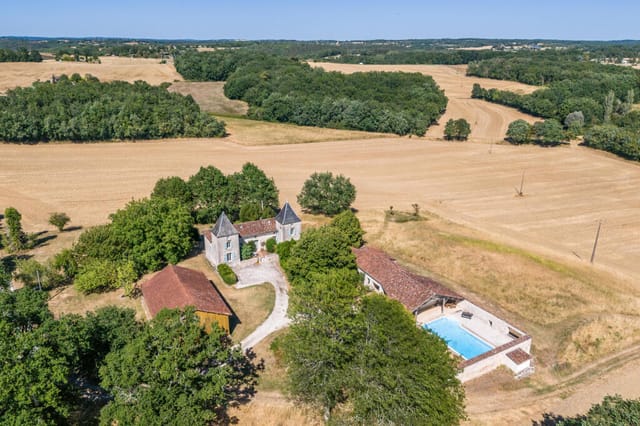
Step outside on a Tuesday morning and the only sound is the cuckoo somewhere deep in the oak woods behind the meadow. No traffic. No neighbours visible. Just the smell of damp grass, a light mist burning off the valley below, and the knowledge that you have six hectares of Périgord countryside entirely to yourself. That is the daily reality of this place — a 318-square-metre stone estate at the end of a quiet cul-de-sac on the edge of a tiny hamlet near Saint-Aubin-de-Lanquais, and it is the kind of property that makes people stop scrolling. The main house is authentically Périgord — golden limestone walls, exposed oak beams on the upper floor, and a sense of solidity that only three centuries of craftsmanship can produce. The ground floor flows generously: a 45-square-metre open living and dining room fills with southern light through most of the day, connecting directly to a 13-square-metre kitchen that opens onto the same space, making it genuinely social. There is also a private ground-floor bedroom with its own dressing room and ensuite shower — ideal for guests who prefer not to climb stairs, or for the owners themselves. A dedicated 30-square-metre office sits apart from the living areas, which matters if you work remotely or plan to manage the gîte business from the property. Upstairs, two further bedrooms — 23 and 15 square metres respectively — have the kind of exposed ceiling beams that interior designers try to recreate and never quite nail. Now, the part that sets this property apart from the typical Dordogne holiday home: it comes with two fully functional gîtes. The smaller one sleeps four across 62 square metres, with its own living room, two bedrooms, and a secluded garden that gives guests genuine pri ... click here to read more
Picture 1

On a still Tuesday morning in Thénac, the only sounds are birdsong, the occasional bell from the nearby Plum Village monastery drifting across the fields, and the soft creak of walnut branches in the breeze. You're standing on the terrace with a coffee, looking out over an unbroken panorama of Périgord countryside. No cars. No noise. Just space, light, and a 423-square-metre longère that's been quietly absorbing centuries of Dordogne life since the 1600s. This is not a typical French farmhouse renovation story. What you get here is rare: a genuinely large, genuinely versatile property that was substantially refurbished in 2021, sitting on around 5,400 square metres of landscaped grounds with a natural spring-fed pond, mature orchard trees — apple, walnut, cherry, plum, pear — and a private swimming pool tucked behind a thick hedgerow so that no one can see in. The pool terrace feels like your own private world, shielded from everything. Step inside through the main entrance hall, which is wide enough to function as a proper reception room, with doors opening to both the front and rear of the house. It sets the tone immediately. Stone walls. Thick, solid materials. A sense of permanence you don't find in new builds. The kitchen pulls you in further — organic and unhurried in its design, with wooden units, natural stone flooring, and walls that have absorbed three hundred years of cooking smells and family meals. This is the kind of kitchen where you actually want to spend time, not just pass through. The main lounge takes the drama up a level. A cathedral ceiling rising two full storeys gives the room a scale that feels theatrical without being cold, and a mezzanine level above adds an intimate counterpoint to all that ... click here to read more
Picture 1

On a clear morning in Aramits, you wake to the sound of nothing except birdsong and, if the wind is right, the faint clang of sheep bells drifting down from the high pastures above the village. That's not a cliché — it's Tuesday. This is the Pyrenees-Atlantiques, one of the least spoiled corners of southwest France, and this former mountain sheepfold is the kind of place that reminds you why you started looking for a second home in Europe in the first place. What started life as a traditional bergerie — a working stone sheepfold used by Basque shepherds for centuries — was fully reconstructed between 2007 and 2010 into a three-bedroom, three-bathroom home of 160 square metres. The result is a property that has real bones: exposed ceiling beams, thick walls that keep summer heat at bay, and a large picture window in the sitting room that frames the Pyrenean ridgeline like a painting you never get tired of. Underfloor heating on the ground floor runs off an air source heat pump, the whole building is double-glazed and insulated throughout, and the DPE rating sits at C — solidly efficient for a property of this age and character. You're not buying a renovation project. You're buying a house that's already been done well. The 160m2 of habitable space is arranged across three levels. On the ground floor, an open-plan kitchen and dining area flows into the sitting room — proper, lived-in space with room for a long table when family arrives in August. Two of the three bedrooms are on this level, each with its own en-suite shower room, which makes the layout genuinely practical for hosting guests or renting short-term. The first floor landing doubles as a home office, a detail that matters more than it used to, and the third b ... click here to read more
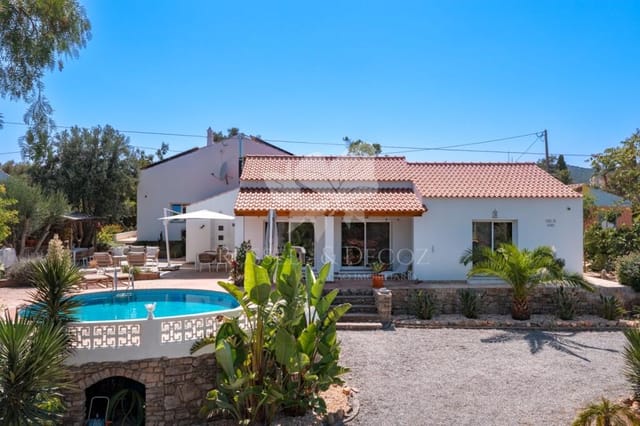
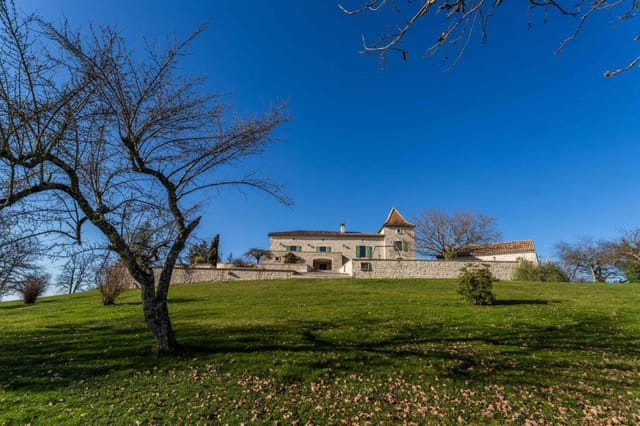
Photo 1

On a quiet Saturday morning in Locmalo, the smell of butter and buckwheat drifts up from the crêperie two streets over, and church bells ring out across the slate rooftops of Guémené-sur-Scorff. You've just had coffee in your small stone courtyard, the kind of private little outdoor space that Breton houses guard jealously, and the only decision facing you is whether to walk the 400 meters into the historic town center now or after a second cup. This is what owning a holiday home in Morbihan actually feels like. The house itself is old in the best possible way. The stone walls are thick and cool in summer, and when November rolls in off the Atlantic and the fireplace in the lounge starts earning its keep, the whole ground floor turns into exactly the kind of refuge you'd imagine when you first started dreaming about a second home in France. The open-plan kitchen, dining area, and sitting room share roughly 30 square meters of ground floor space — tight by some standards, but deeply livable, especially when you consider how much Breton life happens outdoors and in the streets rather than indoors. The spiral stone staircase is a detail you won't find in a modern apartment build; it winds upward with genuine architectural character, connecting the rooms in a way that feels genuinely old-world rather than staged. That courtyard deserves its own moment. About 30 square meters, private, enclosed, catching afternoon sun. At 70 square meters total, space inside is modest, so this little outdoor pocket becomes a genuine extension of the living area through spring, summer, and the long mild Breton autumn. A small table, two chairs, a carafe of Muscadet — that's the entire setup you need. Simple, but that's the point. Up the sta ... click here to read more
Picture 1

Picture this: it's a Tuesday morning in July, the kind that only happens in the Béarn. You've pushed open the tall shutters of the first-floor landing, and the garden below is already alive — bees working the lavender, the pool catching the early light, the Pyrenean foothills just visible through a soft summer haze on the horizon. Downstairs, someone has put a baguette on the kitchen table. The nearest boulangerie is five minutes away, and by now you know exactly which one to use. This is what owning a château actually feels like, and this particular one — a three-storey, 468m² stone manor built in 1898, set on 4.16 hectares of its own grounds in a tiny hilltop hamlet near Salies-de-Béarn — makes that morning feel entirely possible. The château sits at the end of a winding country lane, approached by a private drive that curves around to a small parking area in front of the house. Stone steps rise to the front door and open into an entrance hall that stops first-time visitors mid-sentence. The double staircase that dominates the hall — symmetrical, unhurried, built for making an impression — sets the tone for everything that follows. A matching pair of stone exterior steps at the rear mirror the interior staircase and lead straight down to the grounds, the 12m x 4m pool, and the tennis court beyond. The ground floor arranges itself logically around that central hall: a sitting room of 30m², a dining room of equal size with an open fireplace that earns its keep through autumn and into the Pyrenean winter, a library-study-office of 23m², and a kitchen. The spaces are generous without being cavernous, which matters more than people expect when a property like this becomes a real family base rather than a weekend curiosity ... click here to read more

Picture 1

On a clear morning in Laurens, you open the bedroom shutters—electric, silent—and the air that comes in smells like sun-warmed garrigue and something faintly floral from the vines on the hillside. The village below is just waking up. A motorbike passes the café. That's about as busy as it gets. This is life in the Hérault heartland, and if you've been looking for a second home that delivers genuine southern French countryside without the tourist-trap prices of Provence, this four-bedroom villa might be the answer you didn't know you were this close to finding. Built in 2010 on the edge of Laurens—a compact stone village in the Faugères wine appellation—the property sits on a generous plot with uninterrupted views across the vines and rolling hills that define this stretch of Languedoc-Roussillon. It's not ancient, and that matters. The bones are solid, the design is contemporary bastide: clean lines, generous proportions, Mediterranean palette, none of the maintenance headaches that come with centuries-old stone. In good condition throughout, it's the kind of place you can unlock on a Friday evening in July and be swimming before dark. Inside, the ground floor is organized around a large lounge and dining room with an open fireplace—the kind you'll actually use from October through April, when the Hérault evenings cool fast and the smell of woodsmoke drifts through the valley. The fitted kitchen comes equipped with the full complement: oven, induction hob, extractor, integrated dishwasher, even a built-in fryer for when you've come back from the Béziers market with a bag of local potatoes and some merguez. French doors open directly onto a wide terrace. Marble and travertine finishes throughout give the interiors a pol ... click here to read more

Photo 1

Stand on the upstairs balcony on a clear morning and the Seine Valley rolls out in front of you like something you'd stop to photograph on a road trip—except this is just Tuesday, and you own it. That 49m² master suite behind you, the smell of coffee drifting up from the kitchen below, the garden still dewy and quiet at that hour. This is the kind of house that doesn't announce itself loudly. It earns you over, slowly, room by room. Boissise-le-Roi sits in the Seine-et-Marne département, tucked into a green loop of the river about 40 kilometres south of Paris. It's not a name you'll find on tourist maps, and that's exactly the point. This is a residential village where people actually live—where the boulangerie on Rue de la Fontaine knows its regulars, where the school run and the Sunday walk along the Seine riverbank are the defining rhythms of the week. For a second home buyer, that's rare. You get the proximity to Paris without the noise, the price inflation, or the sense that you're always surrounded by other visitors. The house itself sits on a landscaped plot of 2,600 square metres—generous by any standard, genuinely rare this close to the capital. The garden has been thought about: terracing that runs to roughly 63 square metres of outdoor living space, a covered parking area for two vehicles, a garden shed, and a well with rainwater recovery that keeps the green looking like this in August without sending the water bill through the roof. On warm evenings, this terrace is where dinner happens. There's no competition from traffic noise, no neighbours pressed close on either side. Just the garden, the view down toward the valley, and the kind of stillness that city dwellers come a long way to find. Inside, the gr ... click here to read more

Picture 1

Sunday morning in Bergerac starts with the smell of fresh bread drifting up from the boulangerie two blocks away. You open the kitchen door onto the 17-square-metre terrace, coffee in hand, and catch the faint sound of the market vendors setting up along the Place de la Madeleine. That's the rhythm of life this house puts you inside — not on the edge of it, not behind glass. Right in it. This solid 1930s house sits a short walk from the old town centre of Bergerac, one of the most quietly rewarding towns in the entire Dordogne valley. The architecture still carries the bones of the interwar period — the proportions feel generous, the walls thick enough to keep rooms cool well into July — and recent upgrades have brought the practicalities firmly into the present. A newly installed heat pump, air conditioning, full double glazing, and a fitted kitchen mean you arrive and you live, rather than renovate and wait. The ground floor layout is genuinely sociable. The living room flows naturally toward the open-plan kitchen and dining area, which spills directly out onto the terrace. Summer evenings here have a particular quality: the Dordogne region holds its warmth well into September, and al fresco dinners under the fading light are less a special occasion than a Tuesday habit. The ground floor also holds a bedroom and shower room — useful for guests who'd rather skip the stairs, or for turning the upper floor into a private retreat when the house is full. Upstairs, two spacious double bedrooms and a dressing room give the house a flexibility that shorter-term rentals rarely achieve. There's room for couples, families, or the kind of extended-family gathering that the French countryside seems specifically designed to encou ... click here to read more

Picture 1

Sunday morning in Saint-Romain and the only sound is the wind moving through a field of sunflowers. Not a neighbour in sight. Just the soft creak of the farmhouse shutters and, from the kitchen, the smell of coffee brewing in a room that somehow manages to feel both brand new and a hundred years old at the same time. This is the kind of quiet that city people spend years chasing. This four-bedroom, three-bathroom detached farmhouse sits on a full acre of private grounds along a no-through lane in Charente, one of those quietly beautiful corners of southwest France that hasn't yet been discovered by the Instagram crowds. Recently refurbished to a genuinely high standard, it hits a rare balance — the bones of a proper French country house, the comfort of a home that's been thoughtfully brought into the 21st century. You're not buying a renovation project. You're buying the result of one. Step inside and the entrance hall is wide and airy, the kind of space that sets the tone for everything that follows. The sitting room keeps its period features — there's real character here, the sort that can't be installed, only preserved. The kitchen and breakfast room is newly fitted with high-end appliances and opens naturally toward the gardens, so summer mornings flow from coffee to croissants to a chair outside without any real effort at all. A ground-floor bedroom, shower room, and utility room with the central heating boiler round out the practical side of things, meaning guests or family can stay downstairs entirely if needed. Upstairs, three double bedrooms share the first floor. The master has a dedicated dressing area and an en-suite in its final stages of completion — arriving essentially finished. A family bathroom serve ... click here to read more

Picture 1

Step out onto the front balcony on a clear October morning and the whole of the Charente-Maritime countryside unrolls in front of you — pale gold fields, distant church spires, the kind of quiet that city people spend years trying to find. That's Fontaine-Chalendray. A small village in the Poitou-Charentes region that most tourists drive straight past on their way to the Atlantic coast, which is precisely what makes it so good. This three-bedroom house sits on a fully enclosed plot and has been kept in genuinely good condition — not "good condition" as a euphemism for "needs imagination," but actually solid, move-in ready, and full of thoughtful details that someone clearly cared about. The 142m² of living space works hard, and a 150m² barn plus three separate garages mean you have more flexibility here than you'd typically find at this price point in France. Inside, the lounge anchors the ground floor with a Dutch wood-burning stove — a proper, cast-iron thing that radiates heat differently from a standard fireplace, warming the room evenly rather than scorching whoever's sitting nearest. On a January evening with the fire going, this room has real pull. Double doors at the rear open directly onto a glassed veranda, which then connects to a covered terrace outside. That sequence — lounge, veranda, terrace — creates a natural flow for entertaining across three seasons without anyone getting rained on. The kitchen and dining room is where this house gets interesting. Bamboo countertops that develop a warm honey tone over time, a breakfast bar for morning coffee and the newspaper, and a professional Italian range cooker with five gas burners plus an electric and solid-fuel oven combination. This isn't a show kitchen ins ... click here to read more

Picture 1

On a still July morning in the Lot valley, you wake up to the faint sound of a tractor working somewhere across the fields, sunlight cutting through the wooden shutters and warming the oak-beamed ceiling above you. By the time coffee is brewing in the kitchen, the view from the terrace has already done its job — rolling countryside in every direction, no neighbors interrupting the horizon, just the slow green rhythms of one of France's most quietly extraordinary regions. This is the kind of house that makes you stop checking your phone. Built in 2009, this three-bedroom country home in Souillac sits in the heart of the Lot département, a place where the limestone plateaus of the Quercy Blanc give way to the wooded river valleys that run down toward the Dordogne. The house doesn't pretend to be a centuries-old farmhouse — it was built with contemporary family life in mind — but the architect clearly understood the vernacular. Exposed timber beams run across the ceilings. Underfoot, you get Italian ceramic tiles on the ground floor and warm wooden flooring upstairs, surfaces that stay cool in August and hold the heat from the log-burning insert on November evenings when the first real chill arrives. That living and dining space deserves its own moment. The fireplace with its log burner is the actual center of gravity in winter — the kind of fixture you arrange sofas around and argue about who gets the warmest spot. A second, separate sitting room gives the house a flexibility that matters for real use: kids doing homework while adults entertain, a quiet space for reading when the main room fills up with guests, or simply somewhere to retreat when a week-long holiday rental is running at full capacity. The ground floor a ... click here to read more

Picture 1

On a Tuesday morning, you wake up to the sound of nothing in particular — a wood pigeon somewhere in the garden, the faint creak of old beams settling in the warmth. You pad downstairs in the main house, light the wood-burning stove in the kitchen, and by the time your coffee is ready, you've already decided: today you'll drive the twenty minutes to Brantôme's Friday market for cheese and walnuts, and the rest of the week can take care of itself. That's the rhythm Saint-Pardoux-la-Rivière puts you in. And once it gets hold of you, you won't want to leave. This five-bedroom stone property sits at the corner of a quiet lane just outside the village, where the only traffic is the occasional tractor and the neighbour's dog. The house is actually two adjoining cottages — currently connected and working beautifully as one generous family home — with three bedrooms and a shower room in the main section, and two further bedrooms plus two en-suite shower rooms in the guest wing. It's the kind of layout that solves problems. Extended family coming to stay? They have their own entrance, their own living room with a wood stove, their own space. You have yours. Everyone's happy. Or close the connecting door and rent the guest cottage independently during the summer months — the demand for self-catering accommodation in the Dordogne is very real, and very consistent. Throughout both sections of the house, the period character is intact and unhurried: exposed stone walls that keep things cool even in August, heavy oak beams overhead, fireplaces that have been warming people in this valley for well over a century. The main sitting room has a handsome stone fireplace and a wood-burning stove that makes winter weekends genuinely cosy. T ... click here to read more

Picture 1

On a warm August evening in Marciac, the sound of a trumpet drifts down the Rue de la Bascule, threading through the plane trees and landing softly at your kitchen window. That's not a recording. That's Jazz in Marciac — one of the most famous jazz festivals in the world — happening practically on your doorstep. This 124 m² house in the heart of Gers is the kind of property that doesn't need a sales pitch. The place makes the case for itself. Marciac sits in the Gers département of Midi-Pyrénées, a corner of southwestern France that most tourists speed past on their way to the Pyrenees or Biarritz. Their loss, your gain. The bastide town itself is genuinely medieval — the central arcaded square, the Place de l'Hôtel de Ville, was laid out in the 13th century and it still works exactly as intended, pulling people together on market days under those stone arches. Thursday morning market is the real one, where local farmers sell duck confit, aged Armagnac, haricots tarbais, and foie gras that has absolutely nothing in common with what you've tried elsewhere. The house sits in this setting in good condition, ready to use from day one. At 124 m², spread across a practical and generous layout of six rooms including three bedrooms, it's the right size for a second home — big enough to host family or friends without anyone feeling cramped, manageable enough that you're not spending your weekends maintaining a property rather than enjoying it. The fireplace in the main living space is the kind of detail that matters come November, when the Gers countryside turns amber and gold and the evenings get cool enough to appreciate a proper fire. Double-glazed PVC windows keep things quiet and insulated year-round, and electric shutters ... click here to read more

Picture 1

Stand at the back of this house on any given morning and the entire Dordogne Valley opens up below you — river mist dissolving slowly in the early light, walnut trees on the hillside catching the first warmth of the sun, and the kind of silence that reminds you what silence actually is. This is Mouleydier, a proper village with a boulangerie, a butcher, a pharmacy, and neighbors who say hello. Not a tourist postcard. Real rural France, just fifteen minutes east of Bergerac. The house sits on about 7,000 square metres in total — roughly 4,000 of enclosed garden and another 3,000 of private woodland at the back. That combination of open, cultivated space and wild tree cover gives the property two completely different characters depending on where you wander. The south-facing pool terrace catches sun from mid-morning until the last light of the evening. In July and August, when the Dordogne bakes, that matters enormously. At 210 square metres, the interior is genuinely generous. The ground floor lives large — reception rooms totalling close to 80 square metres, with original terracotta floor tiles that have survived decades and still carry that warm, earthy tone you can't replicate with new materials. Two rooms connected to the main living space but with their own separate entrance are among the most interesting features in the house. Use them as a fourth bedroom and a home office, or as an art studio, or — with appropriate permissions — as a professional practice space. The flexibility is real and rare. Upstairs there are three further bedrooms, one of which stretches to 25 square metres — that's a proper primary bedroom, not a box with a window. A shower room with WC completes the upper floor. The double garage deserve ... click here to read more

Picture 1

Stand at the end of the long dirt path on a September morning, coffee in hand, and the view opens across 2.5 acres of rolling Périgord Noir countryside—oak-studded ridges, golden fields, and not a rooftop in sight. That particular kind of quiet, the kind that takes a few days to fully settle into, is what this old Aquitaine farmhouse delivers every single time you arrive. This is a vacation home in Villeréal that earns its place in your life before you've even unlocked the front door. The property sits in the Lot-et-Garonne département of southwest France, just minutes from Villeréal itself—a fortified bastide town founded in the 13th century, with its covered market hall still hosting the Saturday morning marché that locals have been attending for generations. Walnut oil, Agen prunes, foie gras from the farm two valleys over, wine from Bergerac or Duras—the market tables are a lesson in why this corner of France feeds people so well. The town's arcaded central square, Place de la Halle, is the kind of place where lunch stretches into mid-afternoon without anyone apologising for it. The farmhouse itself is 110 square metres of stone walls and tiled floors, structurally solid, with a 35-square-metre living room that catches afternoon light and has the proportions of a room that knows its purpose—long evenings, good wine, people you like around a table. The kitchen is already fitted and equipped with a gas hob, oven, extractor hood, and built-in fridge, so you're not arriving to nothing. A second back kitchen with its own hob and storage means this works equally well as a single residence or—with some reorganisation—as two independent dwellings, which opens up interesting possibilities for rental income or multigeneratio ... click here to read more

Picture 1

Step outside on a Sunday morning and the air already smells like lavender and warm stone. Twenty-five olive trees line your view. The pool, south-facing and still, catches the first light above the Hérault hills. This is the kind of place where you forget what day it is — and mean it. Set in a small hamlet just five minutes outside Hérépian and ten from the thermal spa town of Lamalou-les-Bains, this four-bedroom villa sits on 5,500 square metres of landscaped grounds in the heart of the Parc Naturel Régional du Haut-Languedoc. Built in the early 2000s to a high specification and kept in genuinely good condition, the property brings together a 200 m² main house and a fully independent 40 m² guest cottage — each with their own character, their own rhythm. Walk through the entrance and the main living space hits you immediately. The cathedral ceiling climbs over five metres, flooding the room with the kind of open-air feeling you don't usually find inside four walls. French windows run the length of the ground floor, framing the pool and olive grove like a living canvas. In summer, you leave them open all day. The lounge, dining area, and fully equipped kitchen flow into one another — a central island, an American-style fridge-freezer, induction hob, coffee machine — all the kit you'd want when cooking a proper dinner after a day at Lac du Salagou, which is less than forty minutes away. There's also a pantry and laundry room off the kitchen, a practical detail that makes all the difference when this becomes your actual home, not just a holiday. The master suite occupies its own wing on the ground floor — 35 m² in total, with an 18 m² bedroom, a walk-in dressing room, and a fully tiled en-suite bathroom complete with a d ... click here to read more

Picture 1

Picture yourself sipping morning coffee on a sun-drenched terrace overlooking 2,130 square metres of Mediterranean garden, the scent of lavender drifting on warm Provençal breezes while the French Riviera sparkles just 20 minutes down the hillside. This is the daily reality awaiting at this 186-square-metre villa in La Gaude, where authentic southern French living meets practical vacation home ownership in one of Europe's most coveted holiday destinations. Within a five-minute drive of village amenities yet cocooned in tranquil countryside, this five-bedroom residence offers the perfect balance international buyers seek when investing in a second home on the Côte d'Azur. La Gaude occupies a privileged position in the Alpes-Maritimes department, perched on hillsides between Nice and the medieval village of Saint-Paul-de-Vence. This location delivers the quintessential Provençal experience while maintaining exceptional connectivity to Mediterranean beaches, Nice Côte d'Azur Airport just 25 minutes away, and the cultural richness of the French Riviera. The property sits in peaceful countryside setting where olive groves and cypress trees define the landscape, yet village shops, bakeries serving warm croissants, and traditional Provençal markets remain within five minutes. This accessibility makes the villa ideal for vacation home owners who value both seclusion and convenience, whether visiting for summer holidays or extended winter escapes. The villa's 186 square metres spread across seven thoughtfully designed rooms, accommodating family gatherings and guest visits with ease. The ground floor welcomes you through an 11-square-metre entrance hall leading to a generous 32-square-metre living room where a traditional firepla ... click here to read more

Picture 1

Picture yourself sipping morning coffee on a sun-drenched terrace, surrounded by 2100 square meters of private gardens, while the ancient Fontainebleau Forest beckons just minutes away. This is the reality awaiting you in this fully renovated Briarde house in Saint-Méry, where authentic French countryside living meets exceptional connectivity to Paris—your European vacation home that seamlessly blends rural tranquility with urban accessibility. This four-bedroom residence represents that rare opportunity to own a piece of genuine Seine-et-Marne heritage without sacrificing modern conveniences or metropolitan access. The 193-square-meter layout spans two thoughtfully designed floors, offering space for extended family gatherings, hosting friends from abroad, or generating rental income during weeks you're not using it yourself. The fully renovated interiors preserve traditional Briarde architectural charm while incorporating contemporary comfort standards that international buyers expect. Step through the entrance hall into flowing reception spaces where the generous dining room connects seamlessly to an inviting living room. Floor-to-ceiling windows frame garden views and open onto that expansive terrace—your outdoor room for al fresco dining under starlit summer skies or lazy Sunday lunches when autumn leaves turn golden. The open-plan kitchen forms the heart of this home, intelligently positioned to serve both dining and living areas, perfect for that convivial French lifestyle where cooking and conversation intertwine. What truly distinguishes this property is the dedicated summer kitchen accessible from the dining room—a feature quintessentially French that transforms warm-weather entertaining. Imagine preparing regi ... click here to read more

Picture 1