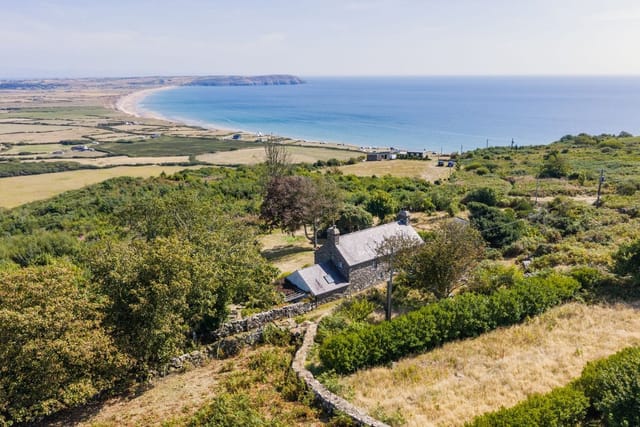
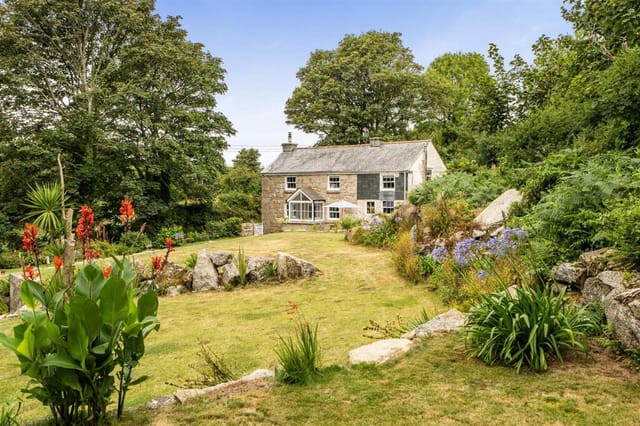
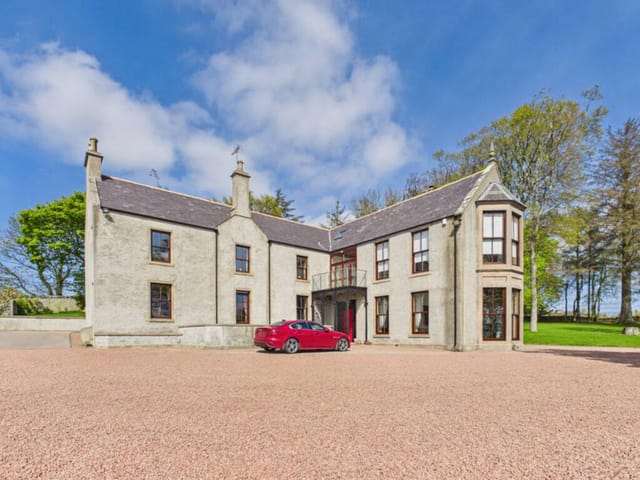
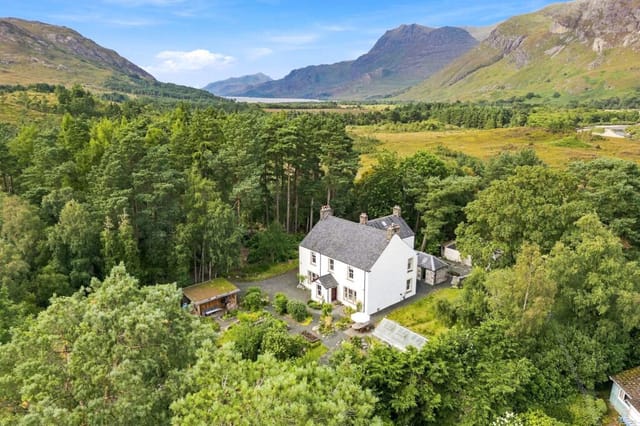
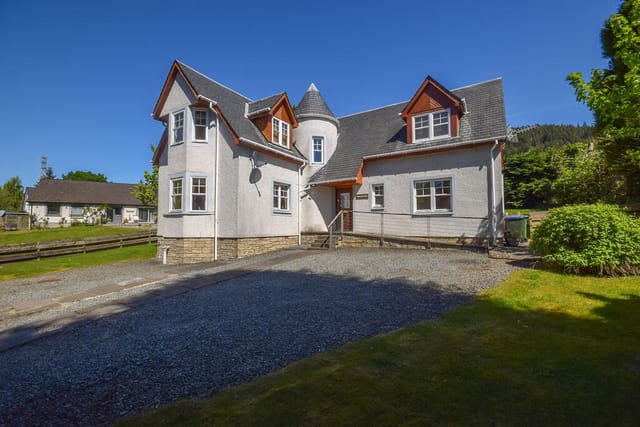
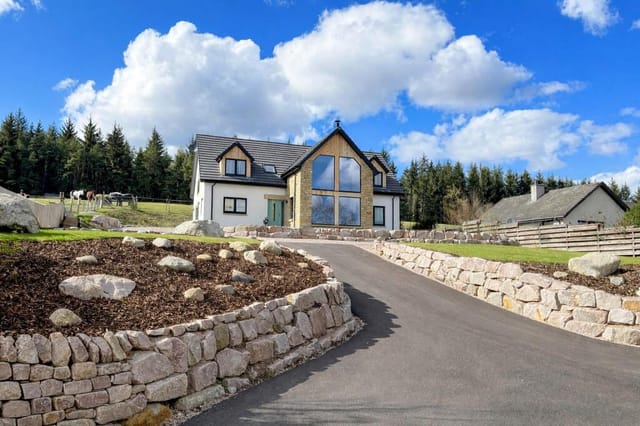
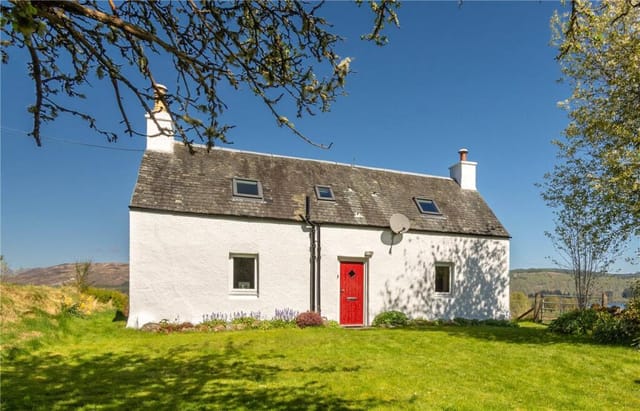
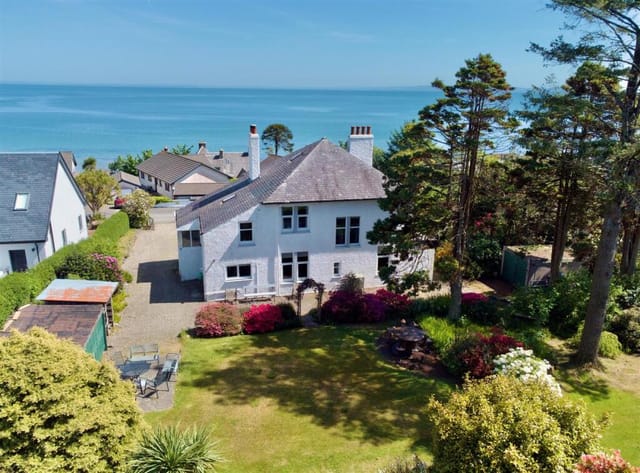
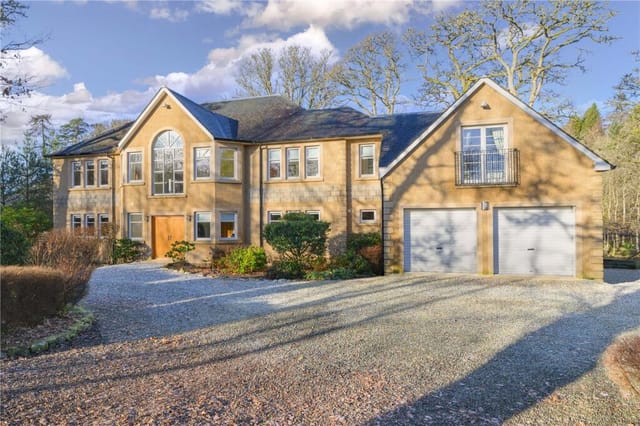
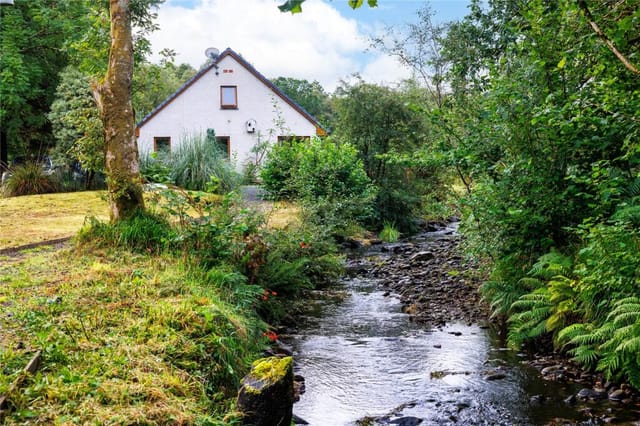
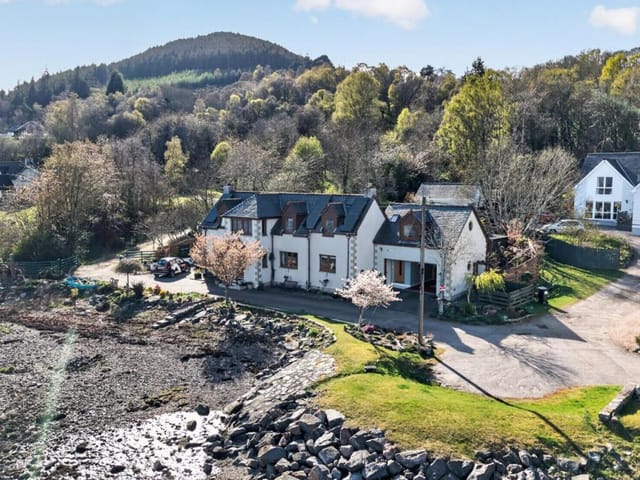
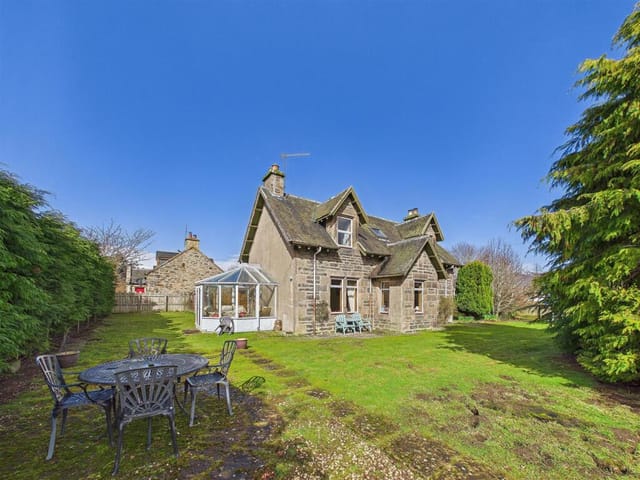
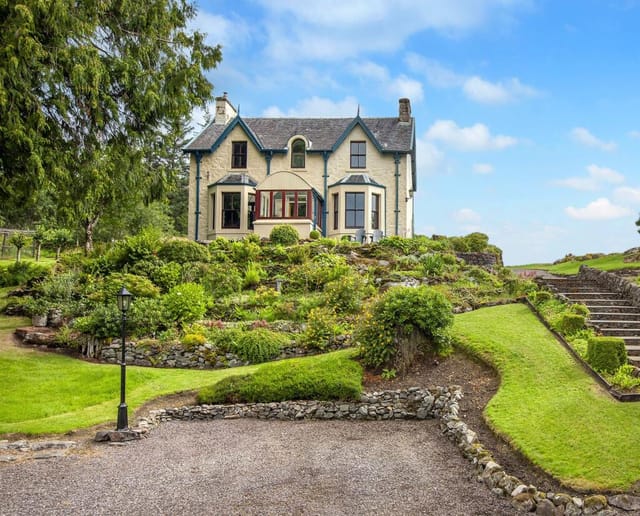
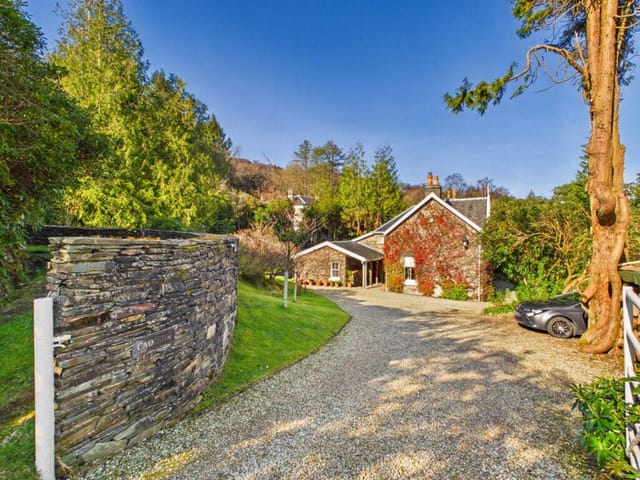
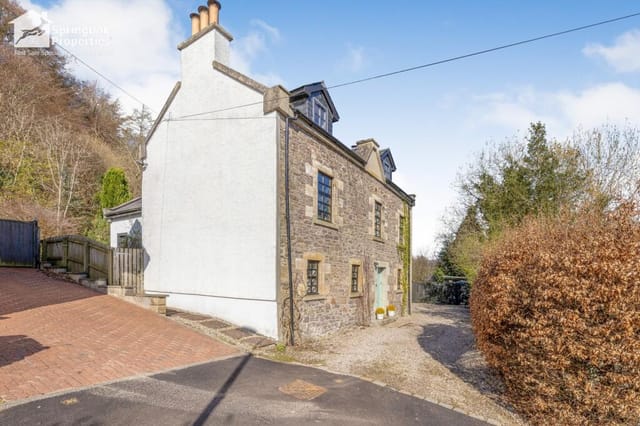
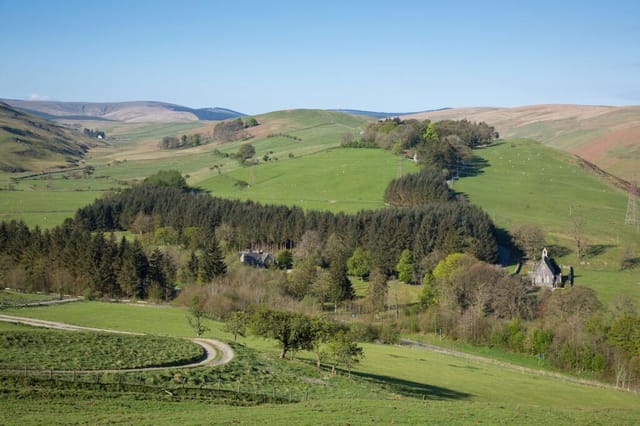
Houses For Sale In Great Britain

Houses for sale in great britain - homestra offers the largest amount of european real estate with over 200,000+ properties, find any type of property within your budget from villas to country homes. buy or rent your perfect home in europe.

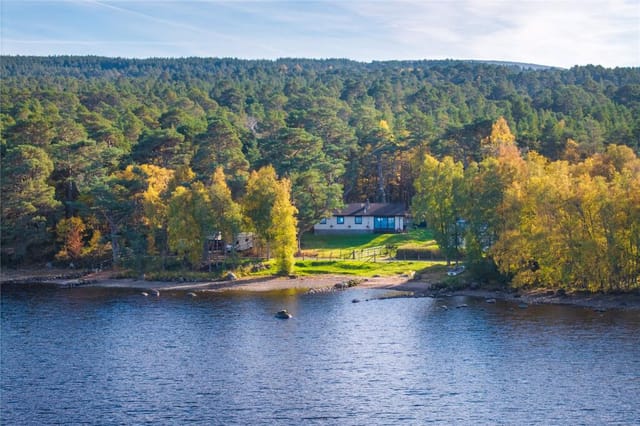
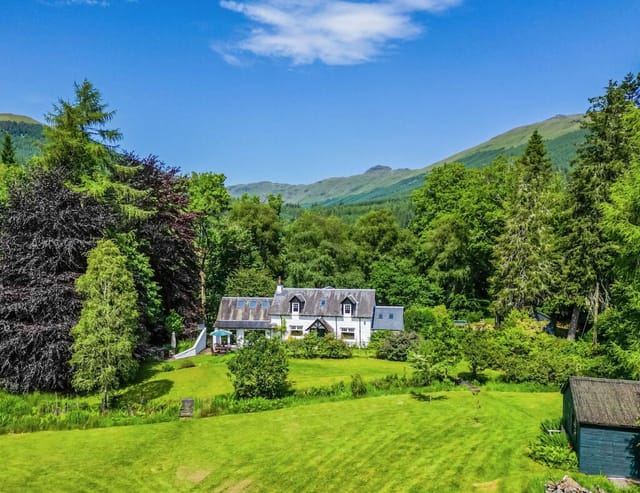
Step outside on a still October morning and the surface of Loch Rannoch is flat as glass, reflecting the Munros on the far shore in colours that shift from bruised purple to gold as the sun clears the ridge. The only sounds are the creak of Scots pines behind the house and the soft knock of your boat against the slipway thirty-five metres away. That slipway is yours. So is the beach, the loch frontage, the stone bothy, the motor cruiser, and 1.37 acres of some of the most quietly extraordinary land in Scotland. Blackwood Lodge sits on the south shore of Loch Rannoch, tucked between the ancient Black Wood of Rannoch — one of the last large remnants of the original Caledonian pine forest that once covered the Highlands — and the loch itself. The house was built in 1974 as the residence for the Blackwood forester, which tells you something about how it sits in the landscape: practically, purposefully, with the kind of relationship to the land that most weekend retreats can only gesture at. It has been thoughtfully updated since, but the original intent — a proper country house that serves people who actually use the outdoors — is still written into every corner of the place. Single-storey living makes this a property that works for everyone, from young families to older buyers who want easy access without compromise. The open-plan living and dining area runs across the front of the house behind full-height glazing, and the view from that glass is the first thing every visitor stops to stare at: uninterrupted loch and hill, the water changing colour with the weather, red squirrels occasionally crossing the garden. The wood-burning stove anchors the living room. Come back from a November walk up Schiehallion — a satisfying ... click here to read more

Blackwood Lodge

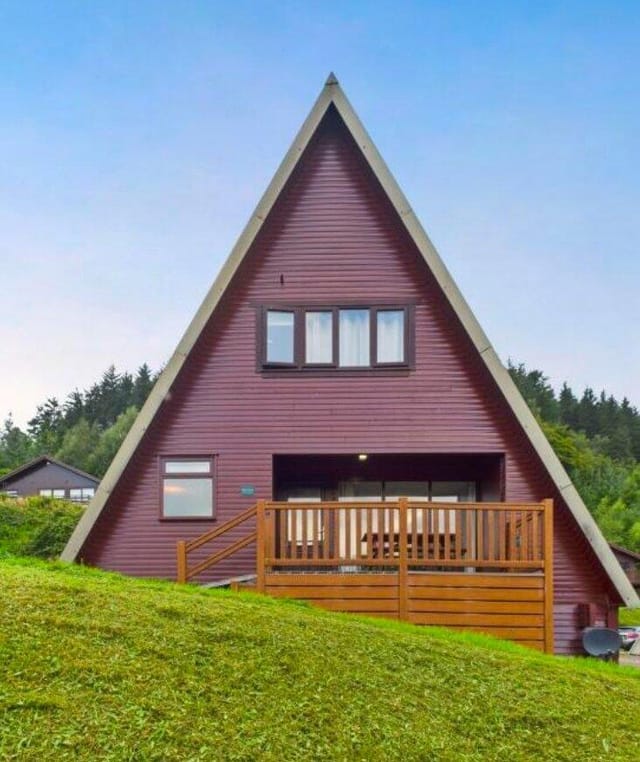
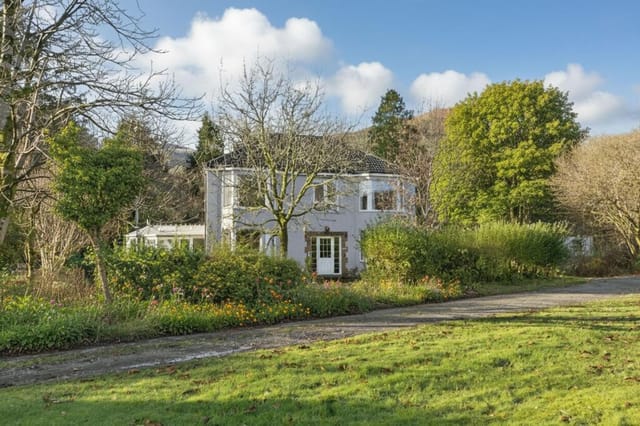
Step out onto the balcony at seven in the morning, mug of tea in hand, and the loch is completely still. The hills above Lochgoilhead are half-hidden in low cloud, the air smells of pine and rain-soaked earth, and the only sound is a heron lifting off from the water below. That's the daily reality of owning this 1987-built A-frame chalet at Drimsynie Holiday Park — and it never gets old. The architecture alone turns heads. A-frame lodges were built across Scandinavian and Scottish holiday parks in the seventies and eighties, but very few survive in this condition. The steeply pitched roofline, the floor-to-ceiling glazing at the gable ends, the way the structure draws your eye upward — it's a genuinely distinctive building in a sea of more conventional park homes. At 58 square metres across two floors, it's compact but cleverly arranged, and the double-height windows in the main living space mean natural light pours through from morning until the hills cut off the evening sun. The open-plan ground floor is where you'll actually live. The lounge, dining area and kitchen flow together without partition, which works well for a property of this size — it feels generous rather than cramped. The kitchen is well-equipped for proper cooking, not just holiday basics, and the sofa configuration includes a sofa bed for the occasional extra guest. Upstairs, both bedrooms are quiet and well-proportioned. The main bedroom has its own en-suite, which matters more than people expect in a holiday property shared between two couples or a family with teenagers. A separate shower room serves the second bedroom and anyone using the living area. The balcony off the upper level is the undisputed highlight. It faces out toward the loch and t ... click here to read more

Front (Exterior)

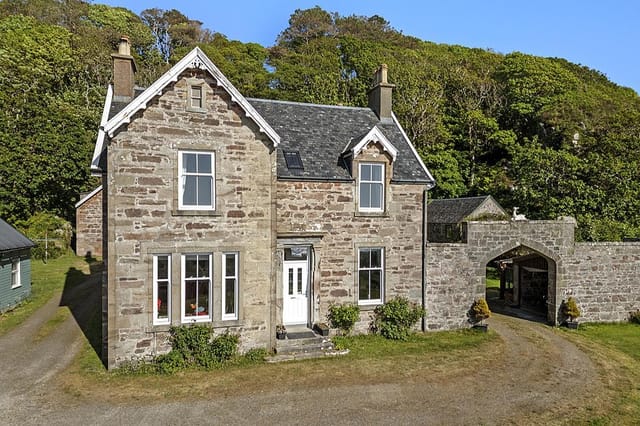
Stand at the upstairs window on a clear evening and the Atlantic stretches out ahead of you, Gigha sitting low on the horizon, the dark shapes of Islay and Jura beyond it, and the sky doing something extraordinary in shades of amber and deep violet that no filter could replicate. This is what westward-facing Scotland does at dusk. And it does it every single night from Crubasdale Lodge. Crubasdale Lodge is a substantial Georgian-Victorian stone house at the northern edge of Muasdale, a quiet village on the A83 that most people drive through on their way somewhere else. That's their loss. The Kintyre Peninsula is one of those places that rewards the people who actually stop—properly stop, unpack, breathe the salt air, and stay a while. Eight bedrooms, four bathrooms, over 4.5 acres of mature grounds, a detached three-bedroom annexe, a timber cabin, a Victorian walled garden, stone outbuildings, and a private sandy beach that comes with the title deeds all the way to the high water mark. Properties like this don't appear on the market often. When they do, they tend to go quietly and quickly to people who recognize what they're looking at. The house itself was originally built as a hunting lodge, and that heritage shows in the bones of the place. Stone walls under a slate roof. An impressive staircase rising through the central hall. A marble fireplace in the drawing room beside a wood-burning stove that, on a January evening when the rain is coming in off the Atlantic and the wind is up, becomes the single most important thing in the building. The proportions are generous throughout—rooms with height and light, windows positioned to catch the views. Someone designed this with intention, and that original thinking still h ... click here to read more

Front view of Crubasdale Lodge

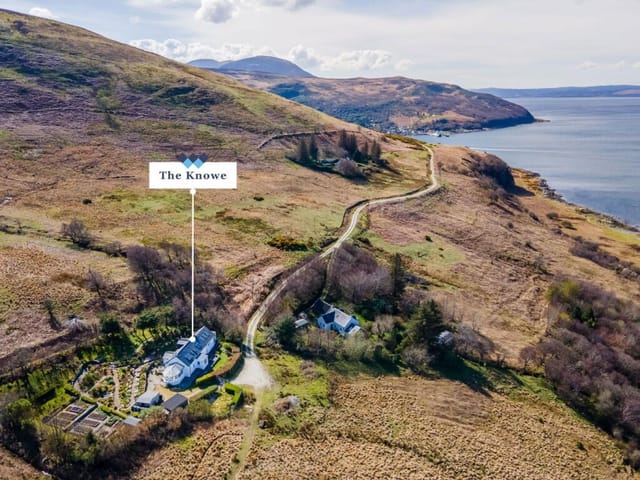
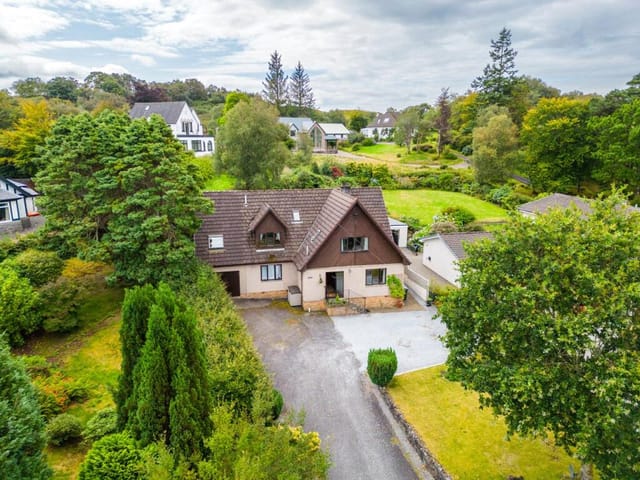
Stand in the dining kitchen on a clear October morning and you can watch the light change over the Kilbrannan Sound in real time — the water shifting from steel grey to deep cobalt as the clouds roll off the Kintyre hills. The skylights above you let in a shaft of pale Scottish sun. The log burner is going. There's coffee on. This is not a fantasy version of island life. This is just a Tuesday at The Knowe. Set at the northernmost tip of the Isle of Arran, on a narrow track shared with only a handful of neighbours, this three-quarters-of-an-acre property was once a working croft. It's been transformed over time into something genuinely rare: a three-bedroom home that delivers serious architectural quality without losing the soul of its rural setting. The conversion has been done with care — double-height ceilings in the kitchen, handsome wood-fronted cabinetry with granite work surfaces, hardwood flooring in the sitting room, and not a single gesture that feels out of place against the backdrop of open hillside and churning sea. The views deserve their own paragraph. From the sitting room, the conservatory, the garden room at the gable end, and both upstairs bedrooms, you're looking out across the Kilbrannan Sound toward Loch Fyne and the upper Firth of Clyde. The principal bedroom has a Juliet balcony, and on still evenings in late spring you'll hear seals calling from the rocks below. Golden eagles are a regular sight on the hill behind. This is not the kind of wildlife encounter you plan — it just happens, because you live here. Inside, the layout has been thought through for people who actually use a house rather than just look at it. The boot room at the entrance is exactly right for a property like this — somewh ... click here to read more

Front view of The Knowe

Step outside on a October morning at Arrlochaira and you'll hear the River Garry rushing through the gorge below before you even open the front door. The light at this hour — filtered through ancient birch and oak — turns the garden silver. It's the kind of quiet that people from Edinburgh and London spend years searching for, and here it's simply Tuesday. Killiecrankie sits in one of the most dramatic river valleys in highland Perthshire, sandwiched between steep wooded crags that the National Trust for Scotland has protected for decades. Pitlochry, just a few minutes' drive south along the B8019, has a proper railway station on the Highland Main Line — direct trains to Edinburgh in under two hours, Glasgow in roughly the same. That combination of genuine wilderness and actual connectivity is rarer than you'd think in Scotland, and it's a big part of why this corner of Perthshire has quietly become one of the most sought-after second home markets north of the border. Arrlochaira itself is a four-bedroom detached villa with three bathrooms, set in private garden grounds that roll out to a backdrop of mature trees. The architecture does something that a lot of modern Scottish houses don't bother attempting: it goes vertical. Vaulted ceilings in the main living areas create an almost Scandinavian sense of volume, and the floor-to-ceiling windows pull the outside in regardless of the season. On a grey February afternoon, when the hills are dusted white and the birch branches are bare, those windows frame something that honestly looks like a painting. In summer, the French doors off the living room open onto the lawn and you barely notice where the house ends and the garden begins. The living room anchors the ground floor ... click here to read more

Front view of the villa

Step outside on a frost-edged October morning, coffee in hand, and there they are—the Cromdale Hills stretching wide across the horizon, catching the first pale light of a Highland dawn. This is what greets you from the south-facing terrace at Cath Ann, a newly completed architect-designed house on Skye of Curr Road in Dulnain Bridge, just minutes from Grantown-on-Spey. Built in 2025 and finished to a standard that genuinely impresses rather than merely ticks boxes, this is not a holiday property cobbled together for the rental market. It was built to live in—properly. The house sits within roughly 0.3 acres of thoughtfully landscaped grounds, framed by pink granite retaining walls cut from the nearby Alvie quarry. That detail matters. The stone doesn't feel imported or decorative—it belongs here, rooted in the same geology that defines the whole upper Spey valley. The sweeping tarmac driveway opens to a generous gravelled turning area, and the elevated plot means that even from the car, you get that first hit of open sky and rolling moorland that makes the Cairngorms feel different from anywhere else in Britain. Inside, the 182 square metres are organised around a dramatic double-height sitting room—the kind of space that makes you pause the first time you walk in. A HWAM Danish wood-burning stove anchors the room, and floor-to-ceiling glazing pulls the landscape indoors so convincingly that on grey November afternoons, when the hills disappear into low cloud, the room still feels alive. Kahrs premium oak flooring runs underfoot, and the glazed balustrade of the first-floor landing hovers above, catching light from the Velux windows that punctuate the upper level. It's an architectural move that gives the whole interi ... click here to read more

Cathann Skye Of Curr

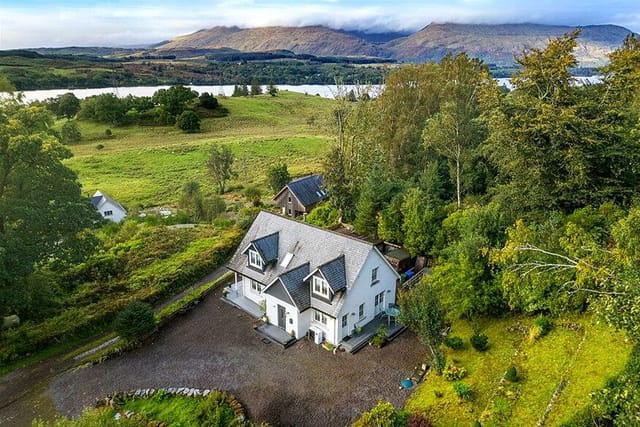
Stand at the garden room window on a still October morning and the whole of Loch Rannoch stretches out before you — pewter-grey water, ancient Scots pines crowding the far shore, a pair of red squirrels working the apple tree twenty feet away. No road noise. No neighbours in sight. Just the kind of silence that takes a few days to truly settle into, the kind most people only read about. East Camghouran is a two-bedroom stone cottage perched on the elevated southern shore of Loch Rannoch in Highland Perthshire, and it has been quietly earning its keep as a much-loved family escape and proven holiday let for nearly three decades. The whitewashed walls and slate roof are the kind of honest Scottish vernacular that looks like it grew out of the hillside, because in a sense it did — this was once a working shepherd's cottage, and the bones of the place carry that history without making a fuss about it. Step inside and the character hits you immediately. Wooden latch doors. Original period fireplaces. The sitting room opens to an adjoining garden room with floor-to-ceiling glazing that frames the loch and the hills beyond like a painting that changes every hour. On winter evenings the dining room Charnwood dual-fuel stove throws enough heat to warm the whole ground floor, and the light from the flames bouncing off whitewashed walls is something that photographs simply cannot capture properly. The modern fitted kitchen and utility room with direct garden access are practical without being characterless — someone has thought carefully about how this cottage actually gets used, not just how it looks in listing photos. Upstairs, two well-proportioned double bedrooms share a family bathroom with both a bath and a shower. The gro ... click here to read more

Front view of East Camghouran

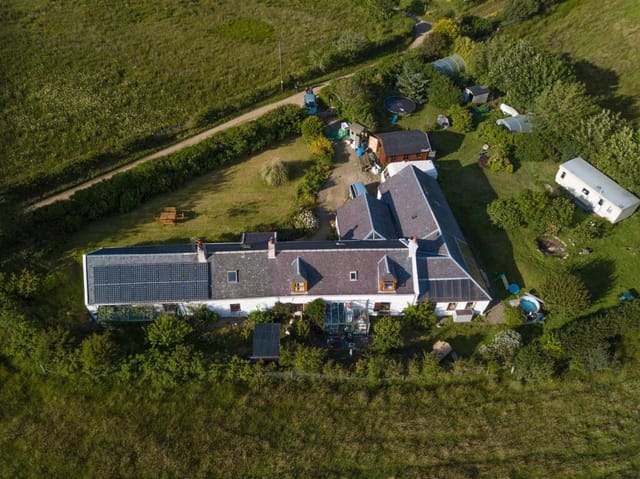
Stand at the corner window of the master bedroom on a clear October morning and you can see all the way across the Firth of Clyde to the Ayrshire coast, the water shifting between slate and silver depending on where the clouds break. That view doesn't get old. Not after a week, not after a decade. It's the kind of thing that makes you set down your coffee and just stand there for a moment longer than you planned. Helenslea is a substantial six-bedroom detached villa in Whiting Bay, built around 1926 and sitting in approximately half an acre of mature, mostly level garden on the Isle of Arran. It has the bones of a genuinely grand island house — original timber staircase, an open brick fireplace in the entrance hall, period features throughout — combined with the kind of practical updates that make it liveable year-round rather than just a summer indulgence. Three bathrooms, a second staircase serving bedrooms five and six, and a layout that can flex into a self-contained wing if you want it to. This is not a fixer-upper. The property is in good condition and, with some furnishings available by separate negotiation, could be up and running as a vacation home or holiday let almost immediately. The ground floor sets the tone. You come in through the entrance porch — red quarry tiled floor, plenty of hooks and storage for waterproofs and walking boots, which you will absolutely need — and into a wide hallway anchored by that open fireplace. To the front, the main lounge stretches across the width of the house, windows facing the gardens and the sea beyond. On grey afternoons you light the open fire and the room becomes exactly what a Scottish island living room should be. The dining room sits off the hallway, overlooking t ... click here to read more

Aerial location

Step outside on a September morning and the River Tay is right there — maybe 75 meters from the front door — running fast and silver after overnight rain, with a heron standing absolutely still in the shallows. That's the kind of thing you wake up to at Riverbank House. Not occasionally. Every day. Built in 2009 and sitting on 1.4 acres in the Highland Perthshire village of Grandtully, this five-bedroom, four-bathroom detached home spans 385 square metres of thoughtfully designed space. It's in genuinely good condition — not the kind of "good condition" that means you'll be living around builders for six months. Move-in ready, with underfloor heating on the ground floor, oil-fired central heating throughout, and interiors that have been maintained with real care. The architecture makes a statement without shouting. Timber front doors lead into a double-height entrance hall where a split staircase rises on both sides to a galleried landing, and a large arched window throws light across the whole space on even the greyest Perthshire afternoon. Which, honestly, there will be some of. That's part of it. The drama of the light changing over the Tay — from pearl-white midwinter mornings to those long amber summer evenings when it barely gets dark until 10pm — is something that gets under your skin. The drawing room is where people tend to stop and just stand for a moment. An open fireplace on one wall, and on the other, a run of windows culminating in a semi-circular bay that frames the river and the garden like a painting you've chosen to live inside. Sliding internal doors connect it to the dining room, making the whole ground floor expandable for a big family Christmas or contractable for a quiet Tuesday evening. The kit ... click here to read more

Front

Stand in the kitchen at Bluebell Cottage on a Saturday morning and you'll hear it before you see it — the faint murmur of a stream running along the rear boundary, the occasional call of a curlew over the fields, and nothing else. No traffic. No neighbours. Just the particular quiet that only Scotland's west coast can produce. It's the kind of silence that you actively seek out on a Tuesday afternoon in a city office and can't quite believe exists in real life. Here, it's just the default setting. Bluebell Cottage sits in Whitehouse, a small settlement on the west side of the Kintyre Peninsula, tucked just south of Tarbert on the A83. Six bedrooms. Six en suite shower rooms. Two floors of well-organised, practical living space spread across 256 square metres. That combination alone is rare enough on this stretch of coastline — but pair it with a stream-bordered garden, outbuildings, mature planting for privacy, and a price that makes comparable properties in the Scottish Highlands look expensive, and you start to understand why this kind of opportunity doesn't sit on the market long. The house itself is harled in the traditional Scottish style, with a dark grey tiled roof and double glazing throughout. Inside, the layout rewards the whole idea of gathering people together — which is, really, what a six-bedroom holiday home or second home on the west coast of Scotland is for. The ground floor carries three bedrooms, each with fitted double wardrobes and a private en suite, which means three separate guest parties can be entirely self-contained without overlapping. The formal sitting room has an electric fire for those September evenings when the temperature drops faster than you expect. The dining room opens directly to ... click here to read more

Picture No. 24

Stand at the upstairs sunroom window on a clear October morning and you'll see why people who find Kilmuir rarely leave. The Moray Firth stretches out in front of you — wide, silver, alive — and if you're lucky, which you often are here, a bottlenose dolphin rolls through the surface maybe 200 metres offshore. This isn't a wildlife excursion. This is Tuesday breakfast. Roseburn is a well-built detached house sitting on a generous corner plot in the small coastal hamlet of Kilmuir, North Kessock, roughly five miles north of Inverness city centre across the Kessock Bridge. At 148 square metres across two floors, it's a proper house — not a conversion, not a flat with views — with three double bedrooms, three bathrooms, a conservatory, a sunroom, a separate dining room, and a sizeable summer house in the garden. For international buyers looking at a vacation home in the Scottish Highlands, or a second home base for regular UK visits, properties at this address on this stretch of the Firth come up very rarely. When they do, they go. The ground floor is laid out in a way that makes sense for how people actually live. The lounge faces the water, so the first thing you see when you come downstairs in the morning is the Firth — the light on it changes completely depending on weather and season, which means it never gets boring. A conservatory opens off the back of the main living space onto the garden, fitted with air source heating so it's genuinely usable year-round, not just a glass box that freezes in November. The kitchen and dining room between them give you flexible space for cooking properly and sitting down to eat without everyone crowding the same table. Two shower rooms on the ground floor are a quiet detail that ma ... click here to read more

Aerial view of the property and Moray Firth

On a quiet Sunday morning in Newtonmore, the only sounds are the River Spey running somewhere behind the treeline and the distant call of a red kite circling above Creag Dubh. You're standing at the kitchen sink of Station House, a mug of tea warming your hands, watching frost melt off the lawn while the Rayburn Royal ticks quietly behind you. This is what £357,850 buys you in the Scottish Highlands — not just a property, but a complete change of pace. Station House sits on Station Road, one of Newtonmore's most established residential streets, in a village that sits squarely inside the Cairngorms National Park — the largest national park in the British Isles by some distance. The house itself is a proper detached Victorian-era family home, 133 square metres of solid stone bones and high-ceilinged rooms, with gardens that wrap around the building on multiple sides and a detached timber garage at the front. It's in good condition throughout, move-in ready, and carries the kind of architectural confidence you rarely find at this price point in the central Highlands. Walk through the entrance vestibule and the central hallway opens things up immediately. There's a generosity to the proportions here that you notice straight away — the ceiling height, the width of the rooms, the way natural light travels through from front to back. The sitting room has an original decorative fireplace with ornate surround, ceiling coving, and a large double window framing a view of the garden. It's the kind of room that earns its keep in all four seasons: open-windowed and sunny in July, fire-lit and amber in November. The dining room sits adjacent, equally bright, with direct access through to the conservatory — arguably the home's most q ... click here to read more

Front Main

Stand in the kitchen on a November morning and watch a red squirrel work its way along the drystone wall while the kettle comes to the boil. The Everhot range cooker has been on since six, the skylight above is streaked with the kind of pale Highland light that photographers chase for hours, and through the back door you can hear the faint run of the burn that traces the far edge of your three acres. This is Balquhidder — a place where mornings feel like they were made specifically for you, and where the word "retreat" actually means something. Set on the southern edge of Loch Lomond and The Trossachs National Park, this three-bedroom stone-built cottage on the Balquhidder road near Lochearnhead is one of those rare Scottish properties that manages to be genuinely off the beaten track without asking you to sacrifice anything meaningful. Good broadband. Solar panels with roughly a decade left on the Feed-in Tariff. A fully operational holiday-let bothy in the grounds already generating income. The bones are solid, the upgrades are smart, and the surrounding landscape is the kind that makes people move countries. The main house stretches across 122 square metres — just over 1,300 square feet — and the space is used well. Walk in through the front door and the lounge draws you immediately: a woodburning stove sits at the far end, the sort you light at dusk on an October Friday and don't let go out until Sunday afternoon. The windows face the garden and beyond it the open ground rises toward the hills. In summer, the light hangs in those windows until almost ten o'clock. In winter, the stove does the work and it does it properly. The kitchen-diner is the room people come back to. The Belfast sink, the Everhot, the skyligh ... click here to read more

Front view of the stone-built cottage and gardens

On a clear morning at Kilmory Farm, you can stand at the French windows of the lounge with a mug of tea and watch the light shift over the Mull of Kintyre across the water. Ailsa Craig sits on the horizon like a stone sentinel. The only sounds are wind through the garden fruit trees and, if you're lucky, the bark of an otter down by the shore. This is the Isle of Arran's quieter south end — not the postcard-busy Brodick, not the ferry crowds — and it feels like a genuinely different kind of Scotland. Kilmory Farm is a four-bedroom, three-bathroom stone farmhouse that dates to the early 19th century. It sits within roughly half an acre of mature, south-facing gardens on the outskirts of the tiny hamlet of Kilmory, about as far from the noise of modern life as you can get while still having a roof over your head with solar panels on it. Yes — solar panels, a government Feed-In Tariff contracted until 2036, and an annual electricity generation of around 3,300 kWh. The practical meets the pastoral here in ways that make long-term ownership genuinely workable. Step inside through the quarry-tiled porch and the farmhouse announces itself immediately. The kitchen has bespoke solid wood cabinetry and a Rayburn range — the kind that does double duty, cooking your soup and heating your home simultaneously. Exposed beams, herringbone-patterned glazed tiles, windows front and back. It's a working kitchen that actually wants to be used. To the right, the dining room has pine-panelled walls, an exposed beam ceiling, and a stone chimney breast with a log burner. A curved staircase sweeps up from one corner. These aren't cosmetic period details slapped on during a renovation — they're original, and they've got the quiet confidence tha ... click here to read more

Historical drone

Step outside on a Tuesday morning, coffee in hand, and the only sounds you'll hear are the burn trickling through the garden and a heron landing somewhere on the loch. No traffic. No neighbours you can see. Just Loch Goil stretching out in front of you, framed by the jagged ridgeline of Beinn Donich and The Brack catching the early light. That's a normal morning at Whisperwood. This six-bedroom detached house in Lochgoilhead isn't some quaint cottage you'd outgrow by Sunday. It's a proper, substantial property — 180 square metres across two floors, seven bathrooms, gardens with an actual stream running through them, detached garages, and views that make you forget what you were about to say. Currently operating as a successful holiday let on the Carrick Castle Estate, it's priced at £520,650 and represents the kind of opportunity that doesn't surface often in this corner of Argyll and Bute. The entrance hallway opens into a home that feels calm rather than clinical. Neutral throughout, but not in that forgettable show-home way — more like a property where someone made considered decisions about light and space. The main lounge runs wide across the front of the house, and those windows do serious work. On grey days, the loch takes on a pewter sheen. On clear evenings in June, the whole ridge turns amber for about twenty minutes. Either way, you're watching it from a sofa, and that feels like the right arrangement. The kitchen is open-plan and connects through to a full conservatory that essentially functions as a second living room. This is the space that earns its keep year-round — a place for long lunches when the West Highland weather decides it doesn't feel like cooperating, or for watching the stars over the glen ... click here to read more
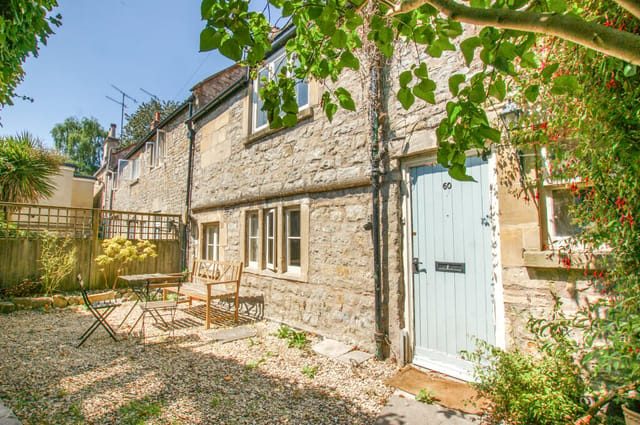
Front view of Whisperwood with loch and mountain backdrop

Stand in the first-floor landing on a clear October morning and the view stops you cold. Loch Etive stretches west toward the Atlantic, the hills of Benderloch catching the low autumn light, and the only sound through the open window is the distant rush of water tumbling through the Falls of Lora at the narrows. That's Almar on a Tuesday. On a Saturday it's marginally better, because the Oban farmers' market is on and the smell of fresh langoustines grilling at the harbourfront drifts all the way up the coast road. This is a six-bedroom, five-bathroom detached house sitting on Old Shore Road in Connel, a small village on the southern shore of Loch Etive just four miles from the centre of Oban. At 180 square metres arranged over two storeys, it's a proper family-sized home — not a weekend bothy — and it carries itself with the kind of quiet confidence that comes from being well built and thoughtfully updated. EPC rating C, solar panels, an air source heat pump: someone here was thinking about running costs before running costs became a talking point. The ground floor is anchored by a kitchen that actually earns that description. A large central island, substantial wall and base units, integrated appliances, and a dining area generous enough for eight people around a table without anyone playing elbow Tetris. It flows into a utility room and a ground-floor shower room — both practical, both often the features that clinch a purchase when you're imagining walking in off a muddy hillside after an afternoon on the Cruachan ridge. A double bedroom with its own ensuite sits at ground level too, which matters enormously if you have elderly relatives visiting or guests who can't do stairs. There's also a study off the hall, hand ... click here to read more

Front view of Almar, Connel

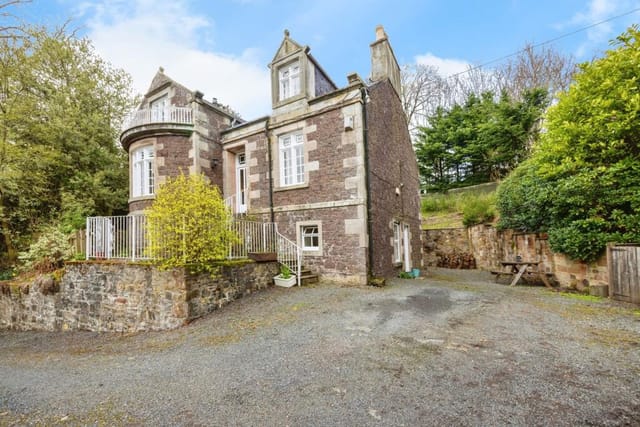
Stand at the kitchen window of The Camb on a clear October morning and the Culter Fell ridge sits right there, purple-brown and close enough to feel personal. Church bells carry from the town centre. The smell of woodsmoke drifts in from next door's chimney. It's the kind of quiet that city people specifically leave the city to find — and here, it comes standard. This is a mid-1800s B-listed detached house on Coulter Road, one of Biggar's most handsome residential streets, set behind a horseshoe driveway on roughly three-quarters of an acre of mature, terraced garden. Five bedrooms across three floors, three bathrooms, 217 square metres of living space, and a level of period detail that modern builds simply cannot replicate. It's in genuinely good condition — sympathetically updated over the years without erasing what makes it worth owning in the first place. The exterior gives you mullioned windows, wrought iron balustrades, and a Juliet balcony on the upper floor. These aren't decorative afterthoughts; they're structural commitments to a certain way of building that stopped being commercially viable a century ago. Step inside and the entrance hallway is wide and tall, with a sweeping staircase that sets an unhurried tone for the whole house. You're not rushing anywhere the moment you walk through that door. The bay-windowed lounge faces the hills. An Adam-style fireplace anchors the room — lit on winter afternoons, it turns the lounge into the kind of space where conversations last longer than intended. Bookshelves, a decent whisky, the hills going dark outside. The period ironwork and original detailing throughout have been kept rather than replaced, which takes genuine restraint during a renovation and makes a rea ... click here to read more

Front

Wake up to the reflection of Ben Cruachan sitting dead still on the surface of Loch Awe. That's the view from the kitchen at Taigh Geal on a clear October morning — the kind of view that makes you put the coffee down and just stand there for a minute. This is Ardbrecknish, a small, quietly confident hamlet on the southern shore of one of Scotland's longest freshwater lochs, and this house was built to make the most of every bit of it. Taigh Geal — Gaelic for "white house" — was designed and constructed by Fjordhus, the Scottish-Scandinavian timber-frame company whose builds have earned a reputation for doing something genuinely rare: marrying Nordic precision engineering with Highland living. The result is a 150-square-metre home that feels considered in every corner. Triple glazing keeps the Atlantic draughts firmly outside. An air source heat pump and high-spec insulation mean the energy bills are a fraction of what you'd expect from a house this size in this climate. Underfloor heating runs through the entire ground floor — so your feet are warm the moment you pad out of the master bedroom in the morning, even in January. The layout is clever. You come in through a generous boot room that actually handles the chaos of Highland outdoor life: muddy walking boots, waders, waterproof layers, fishing rods. Scotland doesn't apologise for its weather, and neither does this house. Beyond the boot room, the double-height entrance hallway opens up and the sense of scale hits you properly. This isn't a cottage. It's a full family home with architectural ambition. The ground floor opens into a kitchen, dining, and living space that spans the width of the building. The windows here aren't decorative — they're structural to the ... click here to read more

Front view of Taigh Geal with loch and mountain backdrop

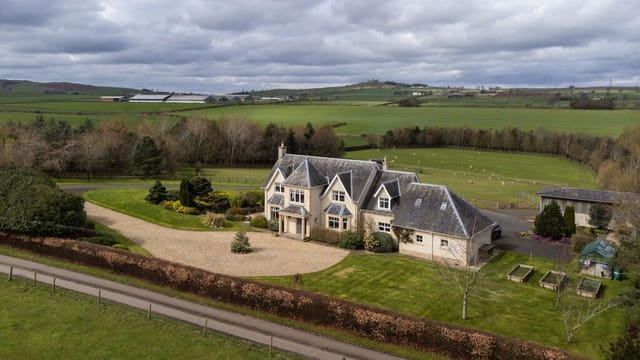
Stand at the south-facing bay window on a clear October morning and the view does something to you. The Cheviot Hills roll across the horizon, Hume Castle sits grey and ancient on its hill, and the paddocks below catch the low autumn light in a way that makes the whole scene feel painted rather than real. This is Goshielaw — a substantial modern country house on the outskirts of Kelso, set within approximately 11 acres of grounds that include woodland, paddocks, a productive kitchen garden, and one of the most complete equestrian setups you'll find in the Scottish Borders at this price point. The house itself is imposing without being cold. You come up a sweeping driveway through a pillared entrance and the sense of arrival is immediate — not performed grandeur, but the kind of quiet confidence that a well-proportioned house earns honestly. Step inside and you're in a proper reception hall, cloakroom off to the side, oak flooring underfoot in the dining hall ahead, a bay window framing that view towards Hume Castle. On Sunday evenings in summer, when the light lingers until nearly ten o'clock this far north, eating in that room with the garden stretching out behind the glass is a genuinely different experience from anything a city apartment can offer. The formal drawing room runs south, oak and stone throughout, with a woodburning stove set into a feature fireplace and cornicing that adds a hint of period character to what is otherwise a thoroughly contemporary interior. A garden room opens off it through double doors — glass on three sides, the kind of space you end up spending more time in than you planned, watching the seasons change across the grounds. The kitchen is big and practical: central island, breakfasting ... click here to read more

Front view of Goshielaw country house

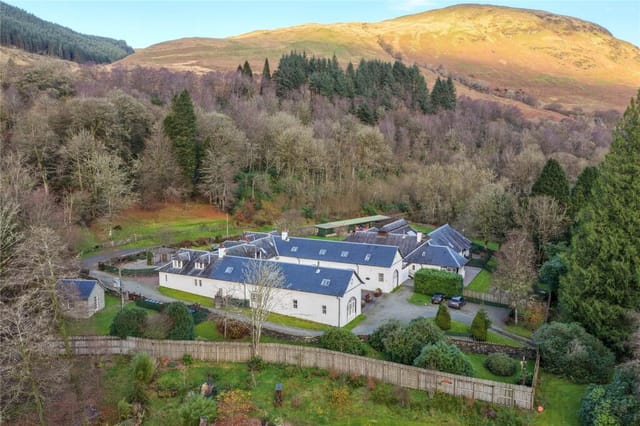
Stand at the twin-leaf gates on a September morning, frost still on the gravel, and listen. The River Ruel runs somewhere below the treeline. Wood pigeons shift in the semi-ancient oak canopy overhead. Somewhere across the courtyard, a log burner has already been lit, and the faint smell of woodsmoke drifts across the stone walls. This is Glendaruel — one of the quietest, most genuinely unspoiled glens in the whole of Argyll — and Home Farm Cottages sits at its heart like it always belonged there. Because, in a sense, it did. This was a working dairy farm until 1984, when the land finally stopped producing milk and started producing something harder to quantify: a sense of place. The original family didn't sell up and walk away. They stayed. They converted. They spent years meticulously transforming the old stone byres, cart sheds, stables, and coach house into nine self-catering cottages, each one earning four or five stars from Visit Scotland and the Scottish Tourist Board. The care shows. Oak floors. Marble worktops. Falcon range cookers. Original cart shed arches turned into floor-to-ceiling windows that frame the glen like paintings. This isn't a developer's flip — it's a restoration carried out by people who actually loved the place. What you're buying is nine distinct, fully furnished cottages ranging across a range of layouts and characters. Glendaruel Lodge has a high vaulted ceiling sitting room and an open-plan kitchen with enough worktop space to feed a wedding party. Highland Cottage keeps things more intimate, with an open fire and the kind of low-ceilinged sitting room that makes you want to stay put. The Coach House is the show-stopper for architecture enthusiasts: exposed natural stone wall, marble-top ... click here to read more

Picture No. 06

On a clear morning at Ardreoch, you stand at the bay window of the main lounge with a mug of tea and watch mist lift slowly off Loch Awe — Scotland's longest freshwater loch stretching into the distance like something from another century. The only sounds are birdsong and, occasionally, the creak of the greenhouse door in a light westerly. This is not a fantasy. This is Tuesday. Ardreoch is a fully restored Victorian detached house on the edge of Kilchrenan, a small village tucked into the hills of Argyll and Bute, roughly seven miles south of Taynuilt along quiet single-track roads lined with dry stone walls and tall oaks. The house sits elevated on its plot — about one acre in total — and that elevation matters. Every principal room catches the views across the surrounding countryside toward Loch Awe, and the light through those original bay windows changes completely between morning and late afternoon, from pale gold to something almost amber. The Victorian bones of this property are exceptional. Original ornate ceiling roses, deep plaster cornicing, and generous room proportions that modern builds simply don't replicate. The current owner spent years restoring rather than renovating — a crucial distinction — keeping the period character intact while quietly upgrading what mattered: a Stovax multi-fuel stove in the main lounge, a freestanding bath on the half landing, a fully fitted kitchen with induction hob and double oven. The result is a house that feels genuinely warm in the way that old houses can, without any of the cold drafts or crumbling plasterwork that usually comes with that charm. Ground floor living at Ardreoch is unusually versatile for a house this age. Arrive through the glazed porch and sun room ... click here to read more

Front view of Ardreoch and gardens

Stand at the upstairs window on a still morning and you can watch the fishing boats slip out of Tarbert Harbour while a thin mist sits on Loch Fyne. The water catches the light differently every hour. By the time coffee is ready, the harbour is alive. This is the kind of thing you notice when Caolside is yours. Set on Barmore Road on the elevated edge of Tarbert village, this four-bedroom, four-bathroom detached house is one of those rare properties where the architecture, the land, and the setting all pull in the same direction. At 169 square metres of internal space, it has the bones of a serious family home — high ceilings with original cornicing, solid parquet flooring, internal window shutters, traditional panel doors — and the practical upgrades you'd want if you actually plan to use it year-round rather than just imagine doing so. Good condition throughout, well maintained, and tastefully evolved by owners who clearly loved living here. Walk through the gated entrance off the private track and the stone-chipped driveway spreads wide. There's space to park several cars and, notably, to store a boat. That detail matters more than it might sound, because the water here isn't decorative backdrop — it's infrastructure for a whole way of spending time. Loch Fyne is right there. The ferry terminal at the harbour is minutes away on foot. If you sail, kayak, or simply want to be the household that can produce a RIB for a weekend run up the loch, the logistics are already solved. Inside, the ground floor has a generosity of layout that's become rare in modern builds. The main family lounge has triple-aspect windows and opens directly to the garden. The kitchen — cream shaker units, timber wall cupboards, solid oak workto ... click here to read more

Front view of Caolside and sweeping driveway

Stand at the kitchen window on a October morning and watch low mist roll through the Teviot Valley while the Aga ticks quietly behind you. The kettle's on. Outside, six acres of your own land stretch toward the Frostlie Burn, where brown trout hold position in the current. This is The Old Manse at Teviothead—and mornings here have a particular quality that's hard to explain until you've had one. The property sits about nine miles south of Hawick, deep in the Scottish Borders hill country, where the landscape feels genuinely untouched. This isn't a gentrified rural retreat dressed up for weekenders. It's a working countryside estate in miniature—a former manse with stone gate piers, a sweeping gravel drive, real flagstone floors, and the kind of quiet that you can actually hear. The surrounding hills belong to the Buccleuch Estate, one of Scotland's largest private landholdings, which means the views aren't going anywhere. Walking through the main entrance, you pass through a traditional vestibule into a reception hall that immediately signals the scale of the house. Ceilings are generous. Proportions feel right. The drawing room at the front catches morning light through large windows and works equally well for a fire-lit evening with guests or a Saturday afternoon with the papers. The sitting room next door is less formal—the kind of room where a family actually lives, with a terrace door that opens directly onto the garden. That connection between inside and outside matters enormously in a house like this. The dining room links these reception spaces naturally, and the whole ground floor flows in a way that makes it feel larger than 389 square meters might suggest on paper. At the center of daily life here is the ki ... click here to read more

Front exterior of The Old Manse

Stand at the drawing room window on a still October morning and the loch is so glassy you can't tell where the water ends and the reflection of Ben Cruachan begins. That's the view from Ardanaiseig House. Not a postcard version of Scotland — the real thing, unfiltered, on your doorstep every single day. Built in 1834 by William Burn — the architect behind some of Scotland's most significant country houses — Ardanaiseig was commissioned by Colonel James Campbell and designed in the Scottish Baronial style, all turrets, dressed stone, and deep-set windows that frame the landscape like paintings. It has been under single ownership since 1995, and the restoration work carried out over those decades has been both thorough and thoughtful. Nothing here screams renovation project. The house is in good condition and ready to inhabit, whether your intention is private occupation, continued use as a hospitality venue, or some combination of the two. Sixteen individually designed ensuite bedrooms spread across the principal house, each one distinct in character — different ceiling heights, different outlooks, different details in the plasterwork and joinery. The three grand reception rooms are the kind of spaces that change the way you move through a day: high ceilings that make even a crowded gathering feel airy, open fireplaces that earn their keep from October through April, and views across Loch Awe that you genuinely never stop noticing. The kitchen is currently fitted out as a commercial facility, which tells you something about the scale of entertaining this house was built for. It could stay exactly as it is, or it could be reimagined as a proper family kitchen — the bones are there for either. Then there's the land. One ... click here to read more

Aerial View

Step outside on a September morning at Rock Cottage and the air hits you differently than anywhere else. The smell of wet grass and pine from the hillside above Stronaba, the sound of absolutely nothing man-made—just wind moving through the croft's upper grazing and maybe a red kite making its case overhead. Two miles down the road is Spean Bridge. But right here, on this 18.1-acre slice of the Scottish Highlands, you could easily forget the rest of the world exists entirely. This is not a standard holiday cottage. What you're looking at is a working lifestyle property—a fully maintained detached cottage as the main residence, a separate income-generating chalet, nearly two full acres of landscaped garden, an agricultural workshop big enough to run a small operation, and seventeen-odd acres of registered croftland rolling into open Highland terrain. Properties like this don't come up often, and when they do, they don't sit around. Rock Cottage itself is spread across two floors and has been kept in genuinely good order throughout. Walk in from the gravel driveway and the ground floor immediately does what a Highland home should: it's warm, it's practical, and it draws you toward the windows. The triple-aspect sun room is the kind of space that earns its name across every season—morning light in summer fills it completely, and on a clear winter day you can watch snow settle on the Grampian foothills without leaving your chair. The lounge has a wood-burning stove. So does the dining room. The shaker-style kitchen with its island unit is the sort of layout that makes cooking for eight feel manageable rather than chaotic, and the Belfast sink in the separate utility room is a detail that anyone who's come in from mucking a ... click here to read more

Front view of Rock Cottage and garden

Stand in the galleried grand hall of Kinloch Castle on a still October morning, and you'll hear almost nothing — just the faint knock of a red deer against the treeline, and the distant slap of Loch Scresort against the pier stones. That silence is not emptiness. It's the sound of one of the most remote and historically charged addresses in the British Isles doing exactly what it was built to do: making the rest of the world feel very far away. Kinloch Castle sits on the eastern shore of the Isle of Rum, the largest of the Small Isles scattered across the Inner Hebrides off Scotland's west coast. Built between 1897 and 1900 for Sir George Bullough — a Lancashire industrialist with seemingly bottomless pockets and a taste for the theatrical — this Category A listed sandstone castle is not a ruin dressed up in heritage language. It is a fully intact Edwardian time capsule, with its original contents still in place: the 1900 Steinway grand piano still in the ballroom, the Japanese lacquer cabinets still catching the afternoon light in Lady Monica's drawing room, the mechanical orchestrion still housed inside the Jacobean staircase. That orchestrion, incidentally, is one of only three ever built by Imhoff and Mukle of Germany. The other two are in museums. This one comes with the castle. The scale of the place takes a moment to absorb. Twenty bedrooms, nine bathrooms, and a ground floor that reads like an architectural fever dream of Edwardian ambition: a galleried grand hall with mullioned bay windows big enough to fill with winter light, a mahogany-panelled dining room with crystal candelabras still on the table, a billiard and smoking room that smells faintly of old leather and woodsmoke, a ballroom with a sprung floor ... click here to read more

Kinloch Castle

On a clear morning, you can stand in the living room of The Gables and watch the mist lift off the Denbighshire hills — a slow, unhurried theatre that no screen saver has ever quite captured. The fields roll away in every direction, the lane outside stays quiet enough to hear a pheasant in the hedge, and the only traffic you'll encounter before 9am is someone walking a spaniel. This is rural North Wales at its most grounded, and this four-bedroom house on roughly one acre of flat, usable land puts you right in the middle of it. Built in 2004 and maintained in genuinely good condition throughout, The Gables sits along a quiet country lane in Llannefydd, a small village tucked into the hills between Denbigh and the Vale of Clwyd. The house delivers around 2,600 square feet — 239 square metres — across two well-organised floors, which means there's actual room to spread out. Not just a spare bedroom and a narrow hallway, but three reception rooms, a proper kitchen with a breakfast area, a utility room you'll use every single day, and four double bedrooms served by three bathrooms. For a holiday home or second home in North Wales, that kind of space is genuinely hard to come by at this price point. Pull into the long gravel driveway and you immediately understand the scale. The house sits well back from the lane. The grounds extend to about an acre of level grass — no steep banks to manage, no awkward corners — just usable land with open countryside beyond the boundary. Families who've spent years cramped into suburban gardens tend to go a bit quiet when they first see it. There's a rear patio accessible through French doors from the kitchen, perfect for a long lunch when the weather behaves, and the surrounding hedgerows ... click here to read more

Front view of the property

Stand at the upper floor windows of Aidengrove House on a clear morning and you can watch container ships ghost silently across the Firth of Clyde while the hills of Argyll turn gold in the early light. It's the kind of view that makes you put your coffee down just to stare. This is Kilcreggan — a quietly extraordinary village clinging to the tip of the Rosneath Peninsula — and this five-bedroom stone villa on Argyll Road is one of its most compelling addresses. The house itself is a proper Scottish stone villa, the kind built to last centuries and increasingly rare to find in genuine good condition. At 209 square metres across two floors, it has the bones of a grand Victorian family home and the practical upgrades of a property that has been genuinely cared for. The south-west facing orientation means the principal rooms drink in afternoon and evening light, with the gardens and the water beyond framed like a painting that changes every hour. Pull up the driveway — there's ample off-street parking, a small but meaningful luxury for any property in this part of the peninsula — and you're greeted by mature landscaping that took decades to establish. Beech hedges, established shrubs, and a mix of young and old planting give the enclosed front and rear gardens a sense of depth and seclusion that a new-build could never replicate. In late spring, the front lawn catches the last of the day's sun until almost nine in the evening. There are few better places to end a long summer day. Inside, the reception hall sets the tone immediately: high ceilings, original stonework detailing, and a flow between rooms that feels generous rather than formal. The principal lounge connects through to a sitting room, and the arrangement work ... click here to read more

Front view of Aidengrove House

Stand at the front of this house on a clear October morning and the view does something to you. Across the Sound of Mull, the Morvern Peninsula sits grey-blue and enormous, the kind of landscape that makes you feel both very small and very lucky. A buzzard circles above the hillside behind. The kettle is already on. Kinelvadon View is a four-bedroom contemporary detached house set on roughly half an acre of elevated ground between Craignure and Tobermory, on one of Scotland's most visited and genuinely wild islands. At 177 square metres, it's substantial — big enough for the whole extended family, roomy enough that teenagers and grandparents can each find their own corner without anyone feeling crowded. The house is in good condition and ready to walk into. No renovation project. No waiting. Just Mull, immediately. The open-plan ground floor is the social engine of the place. Kitchen, lounge, and dining area all flow into one another without walls chopping up the space, and the triple-aspect windows in the lounge pull light in from three directions. On a bright June afternoon, the room practically glows. The kitchen is built around dark cabinetry against white worktops — a combination that sounds simple but reads as genuinely sharp in person. Integrated hob, extractor, dishwasher, microwave, and oven are all in place, so arriving after a long ferry journey and cooking a proper dinner is actually manageable on day one. A ground-floor room off the hallway currently works as a home office with open views to the front — easy to reconfigure as a fourth bedroom for guests. Next to it, a contemporary shower room with strong tilework finishes the ground floor neatly. A side vestibule offers a second entrance, which anyone who ... click here to read more

Front view of Kinelvadon View

On a clear morning in Glenhinnisdal, the Trotternish Ridge turns a deep violet before the sun crests it. You're standing at the breakfast room window with a coffee, watching the light spill down onto open croft land, and your guests haven't stirred yet. This is what ownership here actually feels like — not a business you manage from a distance, but a life you step into. Trotternish Bed and Breakfast sits on a working croft in northern Skye, eleven miles above Portree on the peninsula that most visitors only see from a tour bus window. That distance from the beaten path is precisely what makes this place work. Guests who find Glenhinnisdal are the ones who came looking for the real island — the wide silence of it, the geology that looks like another planet, the kind of Highland hospitality that doesn't come from a script. The building itself is architect-designed and substantial — 219 square metres across two storeys, built in 2007 and thoughtfully remodelled twice since. The exterior is durable roughcast render under a traditional slate roof; honest materials that suit the landscape. Inside, the standard of finish is consistently high: new carpets and beds fitted in 2023, emergency lighting installed, UPVC soffits and fascia replaced across 2023 and 2024, and an EV charging station added in 2024. The heating runs on an oil-fired wet system backed up by electric ceramic panel heaters for the shoulder months. Nothing here feels provisional. This is a property that has been properly looked after. Five letting rooms occupy the house, each with a name that reflects the island — Stag, Otter, Highland Cow, Puffin, Sheep. Every room has a modern en-suite with heated towel rails, fitted wardrobes, a silent fridge, a Nespresso ... click here to read more

Front view of Trotternish Bed and Breakfast

Step outside on a clear October morning and the whole of northern Skye is laid out in front of you. The Trotternish ridge catches the low light, the village of Conista sits quiet below, and somewhere down the hill a raven calls once and goes silent. This is what you look at from your kitchen window while the kettle boils. Not a screensaver. Not a postcard. Your actual life. Hilltop House sits on a rise above the road at 5b Conista, roughly ten minutes from Portree by car — close enough to pick up fresh langoustines from the harbour at An Tairbeart, far enough that you won't hear anyone else's traffic. It's a four-bedroom whitewashed detached home with a B&B licence, a detached garage, a single-storey extension, and a separate 115-square-metre agricultural building on a concrete base. That's a lot of options on one title. The house itself is in good condition and genuinely ready to use from day one. None of that "full of potential" code for "bring a builder." The ground floor flows from an entrance porch into a bright vestibule and then opens into a lounge and dining room anchored by a multi-fuel stove set into a feature fireplace. On a February evening, with sleet coming sideways off the Sound of Raasay, that stove is worth more than any number of underfloor heating specifications. Large picture windows frame the countryside rather than just hinting at it. Wooden floors throughout. The natural light in summer, when the sun barely sets before eleven, makes the whole space feel bigger than its footprint suggests. The kitchen is open-plan with a breakfast bar, feature lighting, and enough worktop space to actually cook in — not just heat things up. There's an electric oven, hob, cooker hood, fridge-freezer, and dishwashe ... click here to read more

Front view of Hilltop House

Stand at the flagged terrace on a clear September evening and watch the sun drop behind the Outer Hebrides, painting Loch Dunvegan in shades of copper and amber. There's a particular quality to the light here on the Waternish Peninsula that photographers chase and painters try — and fail — to replicate. From Sunset View, you don't have to chase anything. It comes to you, every single evening, framed by full-length glass across an entire west-facing elevation. This is Lochbay. A handful of houses, a working croft or two, the distant lowing of Highland cattle. The Waternish Peninsula stretches north into the Minch like a quiet finger of land that the rest of the world mostly forgot about — and locals are quietly glad about that. Sunset View sits in an elevated position above the bay, and from the moment you pull off the single-track road onto the private tarmac driveway, you understand this is something genuinely different. The house has been taken back to its bones and rebuilt from the inside out by its current owners — not flipped, but thoughtfully reimagined over years. The exterior keeps its traditional Scottish character: white rendered walls, pitched rooflines, the kind of profile that belongs here. Inside is another story entirely. The ground floor opens into a lounge and dining space that measures over ten metres by seven. That's not a typo. The room is vast, flooded with natural light through walls of glazing that put Loch Dunvegan front and centre at every moment of the day. A living flame fire anchors the space, giving it warmth and focus on the kind of October afternoon when the rain moves across the loch in silver curtains. Luxury vinyl tile flooring runs throughout — practical for muddy boots after a hill ... click here to read more

Front exterior with panoramic views

Stand at the west-facing windows of Crubasdale Lodge on a clear evening and you'll understand immediately why people come to Kintyre and never quite manage to leave. The Atlantic catches the last of the light in ribbons of amber and rose. Gigha sits low on the horizon. Beyond it, the silhouettes of Islay and Jura. Further south still, on those rare crystalline days, the faint outline of Northern Ireland. This is not a view you get tired of. Not in twenty years. Not ever. Crubasdale Lodge sits on the A83 at the northern edge of Muasdale village, set back from the road behind four and a half acres of mature woodland, formal gardens, and a Victorian walled kitchen garden. The property's title runs all the way to the high water mark — meaning the shoreline itself belongs to this estate. That's not something you come across often anywhere on the Scottish coast, let alone with a house this size on this stretch of the Kintyre Peninsula. The building dates to the Georgian and Victorian eras, originally raised as a hunting lodge, and the bones of it show that heritage without apology. Two storeys of solid stone under a slate roof. A principal staircase that commands the entrance hall the way a good staircase should — with authority. A drawing room fireplace in marble, now fitted with a wood-burning stove, that makes the long Atlantic winters feel genuinely cosy rather than something to be endured. Eight bedrooms across the two floors, four bathrooms, and rooms generous enough that you're never bumping into one another even when the house is full. Oil-fired central heating runs throughout, on a boiler replaced eight years ago and still running efficiently. 190 square metres of internal space sounds like a number until you're st ... click here to read more

Front view of Crubasdale Lodge

Stand at the kitchen window on a still October morning and watch the old water wheel turn against a backdrop of copper-tinged birch trees. The mill lade runs quietly below, the same stone channel that carried water here since 1733. That's the kind of detail that stops you mid-pour and makes you set your coffee down slowly. Longhill Mill isn't a conversion you walk through with a checklist — it's a place you walk through and start mentally rearranging your life. Sitting on the northern edge of Lhanbryde, just off the A96 between Elgin and the Moray Firth, this Grade A Listed former mill house occupies 0.96 acres of mature grounds on the boundary of the historic Innes Estate. The drive in alone tells you something is different: you arrive via the original mill lade, past the restored water wheel, and into a property that has been lived in thoughtfully for over twenty years since its 2003 conversion. The bones of the building go back to 1733. Rebuilt after a fire in 1891, the mill has spent the last two decades being gradually shaped into a genuinely comfortable family home — not a showroom, but a real working residence with five bedrooms, two bathrooms, and a self-contained annex that has been running as a successful holiday let for the past five years. Original grain hoppers, exposed timber beams, and millstones remain where they've always been. Nobody ripped them out and installed recessed downlights everywhere. Smart choices. The ground floor opens into a welcoming lobby with a double bedroom and a shower room that doubles as a utility — useful if you've just come back from a walk along the Burghead coastal path and don't need to traipse through the house. Head upstairs and the space opens up considerably. The kitche ... click here to read more

Front view of Longhill Mill

Stand at the kitchen window on a still October morning and the loch is glass. Mist sits low in the pines across the water. A red squirrel — there's a small colony in the Farigaig woods just up the track — moves along the garden wall and vanishes. The church bell from Foyers carries faintly on the wind. This is not a postcard. This is Tuesday. Hillhead Croft is a proper 1800s stone cottage on the east shore of Loch Ness, about two miles south of Foyers along the B852 — one of the quietest, most genuinely scenic roads in the Highlands. Three bedrooms, four bathrooms, 146 square metres of solid-walled living space, and a third of an acre of enclosed garden backing onto open Highland countryside. It's been well looked after. Move in, light the wood-burner, and start living the life you've been imagining. The building itself has real substance. Original beamed ceilings and deep stone windowsills that were here when Napoleon was still a going concern. Wood floors that creak in exactly the right places. But it's not a museum piece — the kitchen runs a proper freestanding electric range alongside an integrated dishwasher, and every bedroom has its own ensuite shower room with mains-fed pressure. That detail matters more than you might think when you've got three generations under one roof during a week in August. No one is queuing for the bathroom. No one is annoyed. The ground floor bedroom deserves a mention on its own. High ceilings, direct garden access, and a full ensuite — it works brilliantly as a guest suite, a work-from-home base, or accommodation for elderly relatives who'd rather not tackle the stairs. The dual-aspect lounge with its wood-burning stove in the original stone surround is where the evenings happen: a ... click here to read more

Main Image

Picture yourself awakening to the crisp Highland air drifting through your window, the morning sun illuminating the rolling Perthshire countryside that stretches endlessly beyond your garden. This is Moville, your private sanctuary in Kinnaird, where the tranquility of rural Scotland meets the vibrant cultural hub of Pitlochry, just moments away. Here, owning a vacation home in Scotland means embracing a lifestyle where every season brings new adventures, from autumn woodland walks to cozy winter evenings beside a crackling wood-burning stove. This detached four-bedroom villa spans 150 square meters of thoughtfully designed living space, offering the perfect foundation for a Scottish holiday home that accommodates family gatherings, welcomes friends for extended stays, and provides the flexibility modern vacation property owners demand. The wraparound driveway leads to a detached double garage with power and lighting, ensuring secure storage for your vehicles, outdoor equipment, and all the gear needed for Highland adventures throughout the year. Step inside through the light-filled entrance hall, where a large picture window immediately connects you to the natural beauty that defines this location. The ground floor layout flows seamlessly from space to space, beginning with a flexible inner dining hall that serves equally well as a home office for those extending their stays or a formal dining area for entertaining. The spacious lounge becomes the heart of the home, with dual aspect windows framing countryside vistas that change with the seasons. At its center, a 7kw wood-burning stove creates an irresistible gathering place on cool Scottish evenings, the warmth and ambiance transforming simple moments into cherished ... click here to read more

Front view of Moville villa and garden

Picture yourself on a private deck as the morning mist lifts off Loch Awe, steam rising from your hot tub while the Scottish Highlands emerge in layers of green and grey. This is the daily ritual awaiting at this 3-bedroom chalet where 60 miles of legendary loch shoreline become your backyard and ancient castles punctuate your walking routes. This isn't just property ownership—it's claiming a piece of Scotland's soul where Viking longships once sailed and clan chiefs built their strongholds. This 88-square-meter retreat within the exclusive Portsonachan Lodges development delivers an increasingly rare commodity: direct access to one of Scotland's most historic freshwater lochs paired with modern comfort that international owners demand. The open-plan living space captures the essence of Highland hospitality, where floor-to-ceiling windows frame ever-changing water views and the kitchen seamlessly transitions into dining and lounging areas. Cook with ingredients from Oban's famous seafood markets while guests gather around the fireplace, or throw open the doors to the expansive deck where al fresco dining extends well into summer's long twilight hours. The real luxury here isn't just in the built-in sauna or private hot tub, though both transform cold November evenings into Nordic wellness experiences. It's in the lifestyle architecture: a home designed specifically for the rhythms of vacation property ownership. The flexible additional room converts from morning yoga studio to afternoon office for those extending their Highland stays through remote work. Three bedrooms accommodate family visits during peak season, while the contemporary bathroom and outdoor shower room handle the sandy feet and muddy boots that come wi ... click here to read more

Carrick Exterior

Picture yourself standing at the kitchen window of your Highland stone house, watching morning mist roll across one acre of mature gardens as the River Naver flows just beyond your property line. This is 7 Strathnaver in Kinbrace, where 120 square meters of traditional Scottish architecture meets the raw, untamed beauty of the Highlands—a vacation home that offers complete disconnection from urban stress and reconnection with nature's rhythms. Here, the cry of red grouse replaces alarm clocks, and your biggest decision each day is whether to fish the legendary salmon waters of the Naver or explore the remote wilderness trails that stretch endlessly across this sparsely populated corner of Scotland. This four-bedroom detached stone house represents a rare opportunity for international buyers seeking an authentic Highland retreat where nature isn't just a backdrop—it's your daily companion. The property delivers genuine value at £321,750, offering not just a holiday home but an entire lifestyle centered on outdoor pursuits, seasonal rhythms, and the kind of peace that can only be found in one of Europe's last true wilderness areas. Unlike crowded tourist destinations, Kinbrace remains wonderfully undiscovered, with fewer than 100 residents in the immediate area and thousands of acres of open moorland where you can walk for hours without encountering another soul. The changing seasons here transform your vacation home experience entirely. Spring arrives late but spectacularly, with carpets of wildflowers spreading across the moors and salmon beginning their famous run up the River Naver, drawing anglers from across Europe to these world-class fishing waters. Summer brings nearly 18 hours of daylight, perfect for long even ... click here to read more
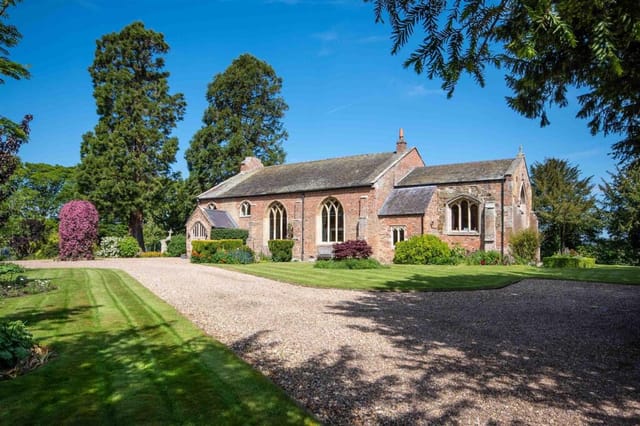
Front view of 7 Strathnaver

Stand at the kitchen window of Craig Villa on a still October morning and watch the mist lift off Loch Awe, the longest freshwater loch in Scotland, while the Rangemaster fills the room with the smell of coffee and woodsmoke from last night's log burner. That's the kind of morning this place delivers — not occasionally, but routinely. This is Dalmally, Argyll and Bute, and once you've spent a week here, the idea of leaving starts to feel genuinely unreasonable. Craig Villa is a ten-bedroom, eight-bathroom detached stone country house that has been running as a well-regarded guesthouse for years. The current owners have put serious work into the place — full renovations, not cosmetic touch-ups — and the result is a property that carries the weight and confidence of a Victorian country house while functioning with the ease of something much newer. Solid stone and brick construction under a pitched slate roof. Period cornicing in the main reception rooms that you genuinely stop and look at. A fireplace that earns its keep from October through April. Walk through the front door into the entrance vestibule and you immediately sense the scale. The reception hall is broad and welcoming, with wooden flooring that catches the afternoon light from the large west-facing windows. The principal sitting rooms have a calm authority about them — these aren't showrooms, they're spaces that have absorbed years of good conversation and late evenings with a dram. The oak-cabinetted kitchen with its deep contemporary work surfaces and professional-grade Rangemaster cooker connects through to a breakfast area and utility room that make large-scale catering genuinely manageable rather than heroic. The owners' accommodation is thoughtfully s ... click here to read more
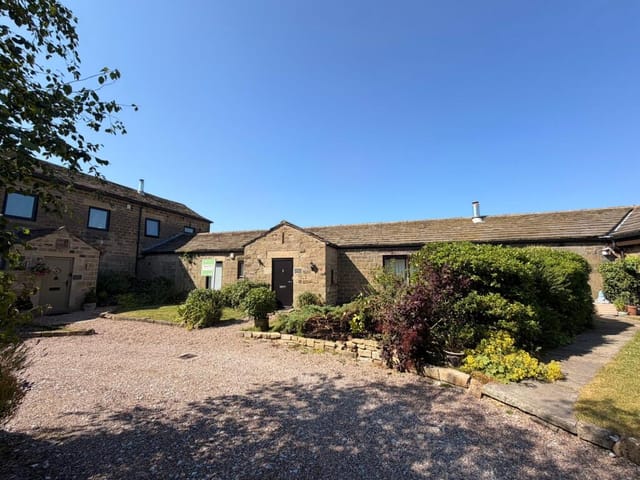
Front External

Picture yourself descending the oak staircase on a crisp autumn morning, the scent of coffee drifting from the Aga in your country kitchen, while mist still clings to the 10 acres of woodland and paddocks that surround your 17th-century stone barn. This is the reality awaiting at Low Gale Barn in Cowan Bridge, where history, modern comfort, and the English countryside converge to create an exceptional vacation home just minutes from the Lake District National Park. Imagine waking to blackbirds singing in the beech hedges, stepping onto your private balcony with morning tea, then planning your day between a swim in your heated indoor pool, tennis on your private court, or exploring the dramatic fells and valleys that have inspired poets and artists for centuries. This is countryside living at its finest, offering international buyers a rare opportunity to own a substantial English estate with the convenience of Manchester Airport just 90 minutes away. Low Gale Barn represents more than a vacation property; it is a gateway to the outdoor adventures, cultural richness, and restorative tranquility that define Northern England's most celebrated landscapes. The conversion of this historic barn has created 660 square meters of versatile living space where original stone walls and slate roofing blend seamlessly with contemporary extensions and modern amenities. Six bedrooms accommodate extended family gatherings, while five bathrooms ensure everyone enjoys privacy and comfort during holiday stays. The property's layout flows naturally from formal entertaining spaces to cozy family zones, outdoor leisure areas to productive gardens, creating distinct experiences throughout your stay. Whether you seek a base for Lake District hiki ... click here to read more
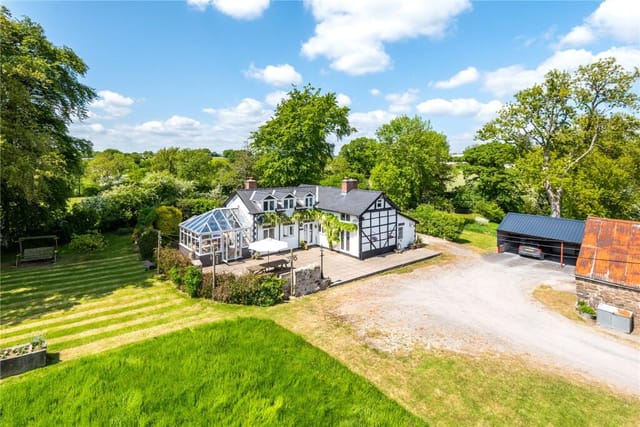
Front elevation