Houses For Sale In Italy

Houses for sale in italy - homestra offers the largest amount of european real estate with over 200,000+ properties, find any type of property within your budget from villas to country homes. buy or rent your perfect home in europe.

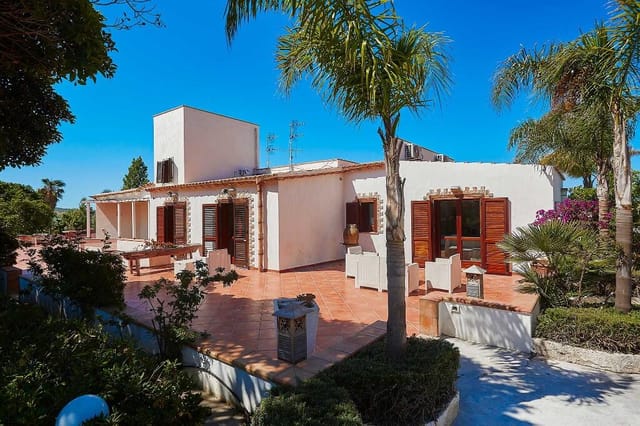
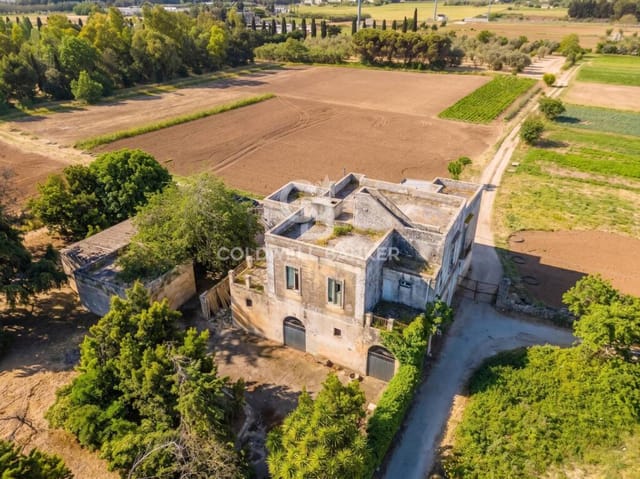
Stand at the end of a 100-meter palm-lined driveway on a Tuesday morning in October and you'll understand immediately why people who come to this corner of western Sicily rarely want to leave. The Egadi Islands shimmer on the horizon. The scent of citrus and rosemary lifts off the warm stone paths. Somewhere beyond the villa's fenced boundary, the medieval hilltop town of Erice sits cloaked in its habitual morning mist — and it all feels, somehow, entirely yours. This is Contrada Milo, a quiet agricultural ribbon just outside Trapani that has remained almost entirely off the international buyer radar, which is precisely what makes this property so worth paying attention to. Set on a fully enclosed estate of over 20,000 square meters, the villa is the kind of place that takes an hour to properly walk around. Forty palm trees line the private approach. Ornamental flowerbeds give way to Mediterranean scrub. A vast stand of exotic palms behind the main structure creates genuine depth — the sort of green backdrop that turns an outdoor lunch into something that feels cinematic without trying. The main villa itself spans roughly 450 square meters across two levels — the raised ground floor where daily life happens, and a semi-basement that offers flexible space for storage, technical rooms, or future reconfiguration. Inside, the scale is genuinely generous. The formal reception hall alone runs to approximately 160 square meters, the kind of room that handles twenty people without effort and still has space to breathe. A dedicated laundry room of around 40 square meters means the practical side of running a larger household doesn't intrude on the living spaces. Three bedrooms, four bathrooms, interiors in good condition — the ... click here to read more

Picture 1

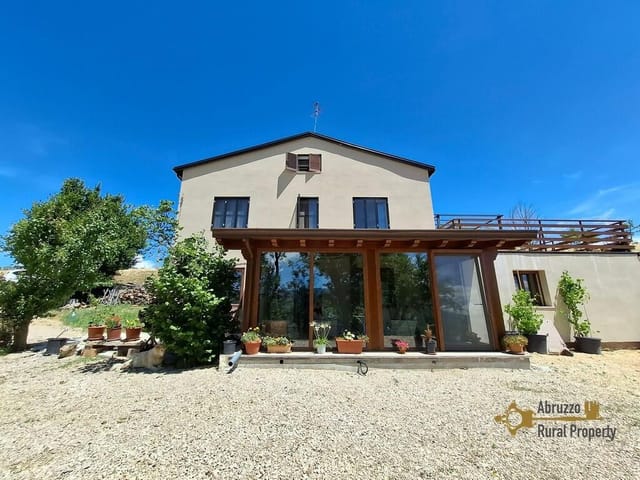
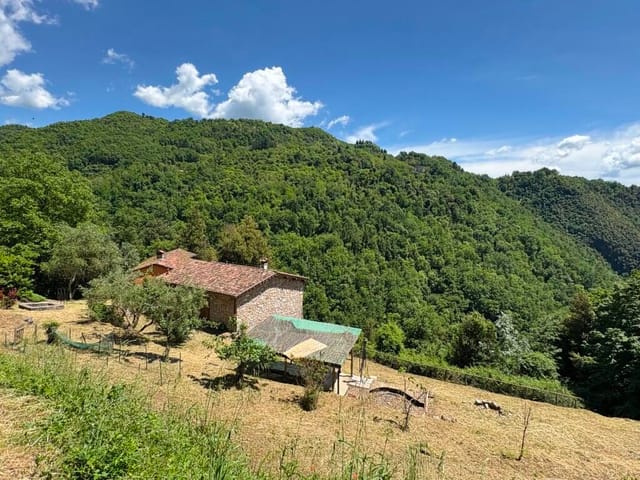
The wooden veranda catches the morning light before the rest of the house has even woken up. Sit there with an espresso and you'll hear nothing but wind moving through the olive grove and the occasional distant bell from Salcito's hilltop church. This is Molise — Italy's least-talked-about region, and for those who've found it, that quiet is the whole point. Set in the municipality of Civitanova del Sannio in the southern Apennines, this four-bedroom country house sits on seven full hectares of rolling land and delivers something that's becoming genuinely rare in Italy: authentic rural character combined with a fully restored, move-in-ready home at a price that still makes sense. At €249,000 fully furnished, you're not buying a project. You're buying a life, ready-made. The house spans three floors and roughly 200 square metres of liveable space, plus a generous cellar, utility room, and a large shed all internally connected — useful details if you're thinking about extended stays, visiting family, or simply needing somewhere dry to store the olive harvest. And yes, there's an actual olive harvest. The land includes 46 olive trees and eight fruit trees alongside agricultural plots, woodland, and a natural spring that feeds the lower fields. This isn't a garden — it's a working small estate, the kind of thing Italians call a podere, and it functions accordingly. Walk through the main entrance and you step into an enclosed wooden veranda that runs the full width of the house. Panoramic windows frame the landscape on three sides — not as a design statement, but as a practical winter garden, warm and bright even in January. It's the room you'll use most. Ground floor continues with a proper living room (21 square metres), ... click here to read more

Picture 1

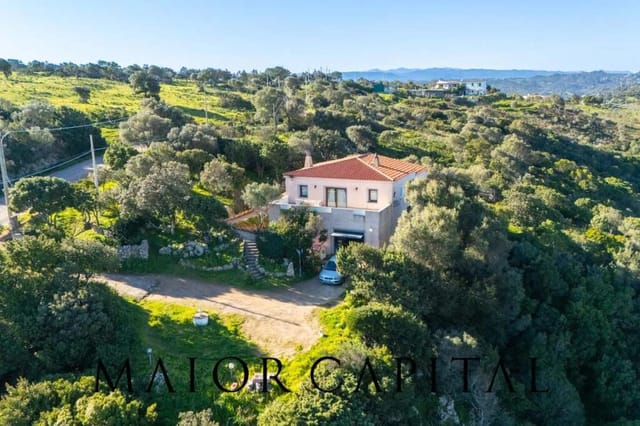
The first thing you notice on a summer morning at this Putzolu villa is the silence. Not the eerie, empty kind — the kind that costs something. Cicadas in the macchia, a faint breeze moving through the cork oaks, and the distant shimmer of the Gallura hills sitting still against a cloudless sky. Then you remember: you're five minutes from Olbia's city center and 20 minutes from some of the most coveted coastline in the Mediterranean. That combination is genuinely rare. Sardinia gets written about a lot, but usually through the lens of the Costa Smeralda's superyacht scene — Porto Cervo, the Billionaire Club, the July crowds. What doesn't get written about enough is the real Olbia. The Tuesday morning market on Via Nanni where locals argue over which vendor has the better seadas, the fried pastry pockets of ricotta and honey that are basically a religious experience. The evening passeggiata along Corso Umberto that starts slow and somehow ends at midnight over a bottle of Vermentino di Gallura at a terrace bar. This villa puts you inside that rhythm, not observing it from a resort. The property sits on approximately 1.5 hectares of private land in the Putzolu area, one of those semi-rural pockets just outside Olbia that manages to feel a world away from the city while actually being about a five-minute drive from it. A flat garden of roughly 3,000 square meters wraps immediately around the house — and this isn't the kind of garden you maintain out of obligation. It's the kind you actually use. Space for a proper dining terrace, a future pool if you want one, a bocce court, a vegetable patch. The surrounding land buffers you from neighbors in every direction. The villa itself spans 214 square meters across two levels. T ... click here to read more

Picture 1

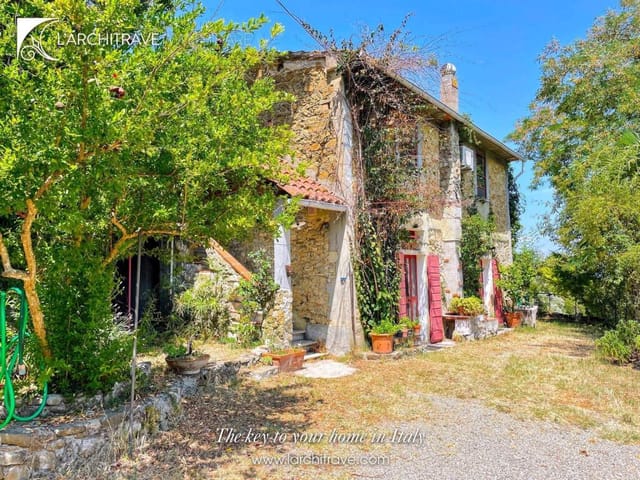
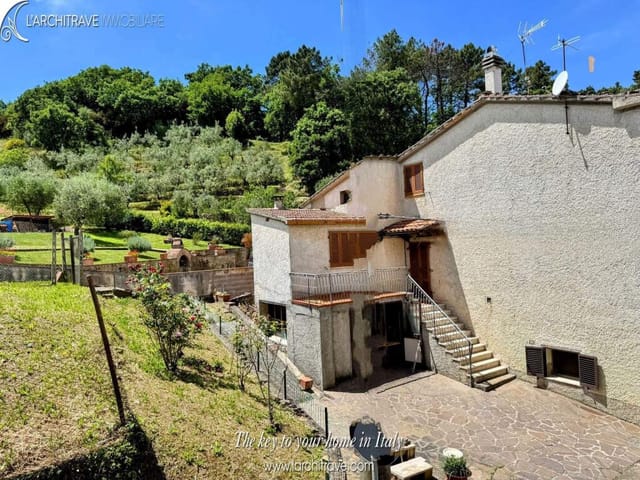
Picture this: it's a Sunday morning in late October, and the smell of woodsmoke is already drifting up from the valley below. You're sitting on the terrace outside the kitchen, coffee in hand, watching the first light catch the silver undersides of your olive leaves. The hills roll away in every direction — golden, green, impossibly quiet. This is not a postcard. This is your garden. This 200-square-metre country villa outside Chianni sits on roughly five acres (20,000 sqm) of mixed land — working olive groves, open meadows, patches of woodland — and it's the kind of property that becomes a reference point for the rest of your life. Not because of grand architectural gestures, but because of what it actually feels like to be there. The house arrives in good, liveable condition, which matters more than people give it credit for. You won't be gutting a ruin or project-managing a rebuild from another country. You can arrive, unlock the door, and start living — then improve things at your own pace. The pellet boiler provides central heating and hot water throughout, and all windows are double-glazed, which means the place stays genuinely warm through the Tuscan winter, not just decoratively Tuscan. What makes the layout especially interesting is that the accommodation currently runs as two independent units. The main section is entered via an external staircase that leads up to a first-floor terrace — a landing wide enough to actually eat at, which becomes your default dinner table from April through October. Inside, a generous open-plan kitchen with pantry flows into a sitting room anchored by a freestanding fireplace positioned in the centre of the room. It draws the eye immediately. Two bedrooms occupy this level, one ... click here to read more

Picture 1

On a Wednesday morning in Pontremoli, the street market spills across the cobblestones below your dining room windows. The smell of fresh focaccia and roasted chestnuts drifts up through the shutters. You pour a coffee at your kitchen counter and watch the vendors arrange their stalls along the riverbank, unhurried, the way life moves in this corner of Lunigiana. This is the daily rhythm of owning a 220sqm second-floor apartment in a genuine 18th-century Palazzo, right in the historic heart of one of northern Tuscany's most quietly compelling towns. Pontremoli sits at the meeting point of the Magra and Verde rivers, built outward from its medieval castle in a way that feels almost deliberate in its beauty. The twin Roman arched bridges frame either end of the town like natural gateways. Walk through them and you're moving through cobbled lanes where stone archways link house to house, where elegant Palazzi with internal courtyards face the water, where the castello up on the hill keeps watch over everything below. It's a town that doesn't need to try very hard to impress you. It just does. The apartment itself occupies the entire second floor of a well-maintained Palazzo on a quiet street, seconds from the Piazza della Repubblica. You enter from the cobblestones into a grand hall with columns opening onto an internal courtyard — the kind of entrance that makes guests stop and take a breath. A broad stone staircase, worn smooth over centuries, sweeps you upward into 220 square metres of bright, high-ceilinged living space. The vaulted living room anchors the apartment with a handsome Capodimonte wood-burning stove that becomes the social centre of the space from October onward, when the Apennine air sharpens and the hil ... click here to read more

Picture 1

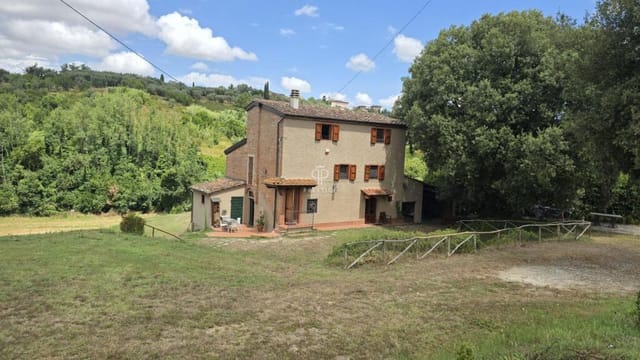
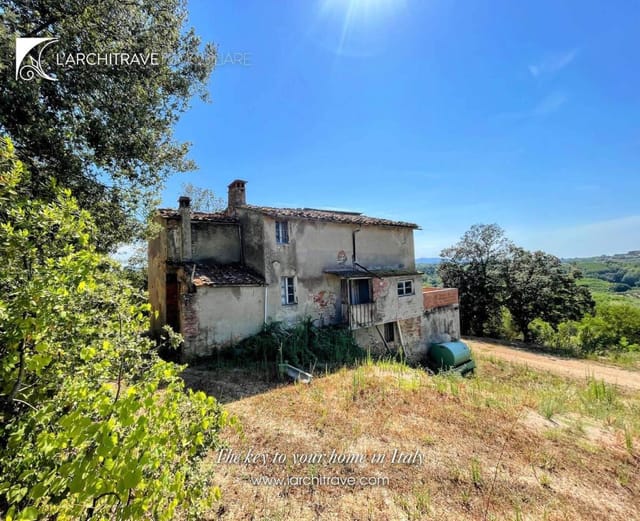
Stand at the first-floor kitchen window on a clear October morning and you'll understand why people fall hard for this corner of Tuscany. The hills roll away in every direction—amber and ochre and a deep bruised green after autumn rain—and the only sounds are the wind moving through the cypress trees and, faintly, the bells from the old chiesa down in Lajatico. This is the kind of view that Tuscany charges serious money for. Here, it comes with a stone farmhouse, a substantial outbuilding, and over an acre of land at a price that leaves real room to build something your own. The property sits in a dominant elevated position above the Valle di Cecina, reached via a 2-kilometre unpaved track that's in good shape and passable year-round. That access road is actually part of the appeal. It keeps things quiet. No passing cars, no holiday traffic, no neighbours close enough to matter. You arrive, the gate closes behind you, and the city—whether that's Pisa, Florence, or wherever you flew in from—feels very far away. The farmhouse itself is a traditional two-storey stone structure of 160 square metres. Ground level holds storage rooms, cellars, and the old stables—solid bones that could become a wine cellar, a garage, or a proper utility wing. An external stone staircase leads up to the main living floor: a kitchen-living room, three bedrooms, and a bathroom. The layout is honest, proportioned, and well-suited to the kind of open-plan reconfiguration that transforms a working farmhouse into a comfortable second home. The additional 200-square-metre outbuilding sitting separately on the plot is the real wildcard. Convert it into a guest villa, a rental cottage, a studio—the planning opportunity is genuine, and Lajatico's posit ... click here to read more

Picture 1

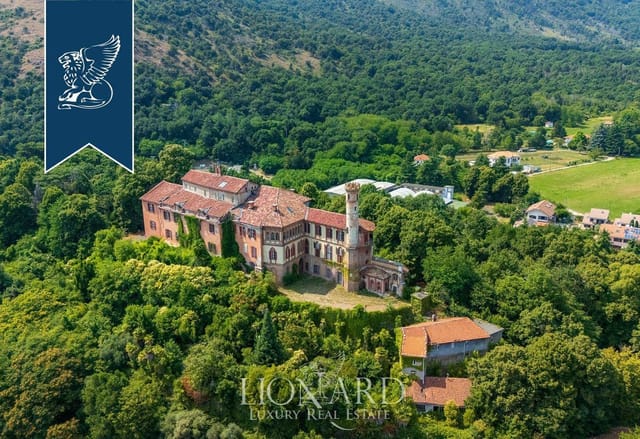
On a clear morning, you can stand on the terrace with a coffee and watch the light shift across the Gulf of La Spezia—the water catching silver between the headlands, Portovenere in the far distance, the hills dropping in ridges toward the coast. Church bells from the village below drift up before nine. The wood-fired pizza oven in the kitchen is still warm from the night before. This is the kind of Tuesday you've been daydreaming about for years. Calice al Cornoviglio sits in the Ligurian hills at the precise point where the region folds into Tuscany, and that borderland quality defines everything about it. The air smells of pine resin and wild rosemary. The village itself is unhurried—there's a bar where the same men have been drinking espresso at the same hour for decades, a small shop that stocks far more than you'd expect, and a public pool with a view that would cost a fortune at any resort. A restaurant one kilometer down the lane does a ribollita that makes you reconsider every bowl of soup you've ever eaten. The community is tight-knit in the way that only small hilltop villages manage to be, and newcomers who put in the effort are genuinely welcomed. The house itself is spread across three floors of beautifully renovated stone, 174 square meters in total, and it carries the weight of its past lightly. Ground floor: a vaulted cantina—the real thing, not decorative—plus a storeroom, bathroom, and an open-plan kitchen and dining space anchored by exposed stonework walls and a wood-fired pizza oven built into the stone. It's the kind of kitchen that makes cooking feel like an event. Up to the first floor and the split-level living room opens outward—fireplace on one side, terrace on the other, panoramic views in ... click here to read more

Picture 1

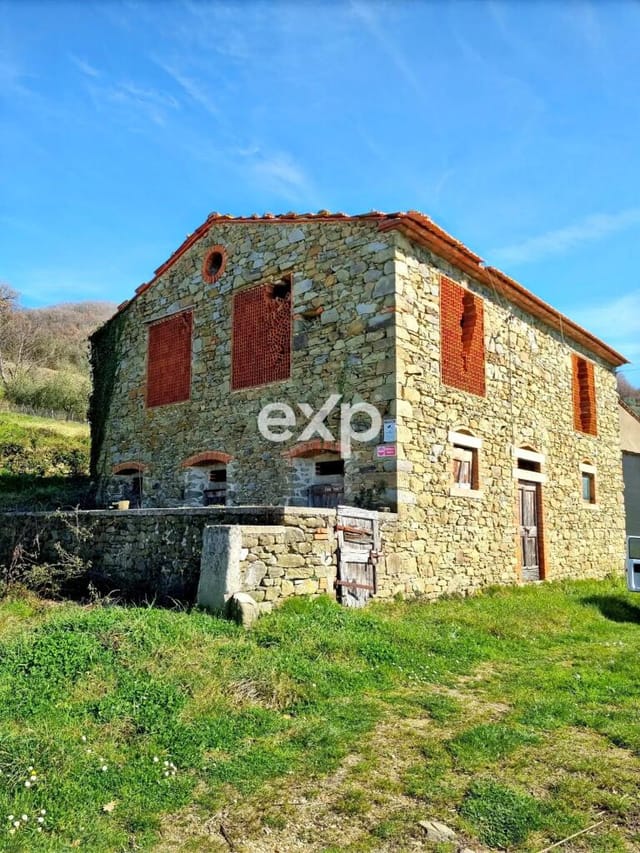
On a Wednesday morning in Pontremoli, the market on the cobbled piazza starts filling up around eight. Vendors lay out local testaroli pasta, sharp Pecorino from the hills, and bottles of Colli di Luni wine while church bells from the Cathedral drift over the rooftops. From this stone farmhouse less than a kilometre away, you can walk there in ten minutes through olive groves that have been producing fruit for generations. That kind of proximity to a living, breathing medieval town is rare. Most rural Tuscan properties demand a twenty-minute drive just to buy bread. Here, Pontremoli is practically in your front garden, yet the moment you step back through the iron gate into the flagstone courtyard, the town's activity fades entirely. What you hear instead is wind moving through the chestnut trees, and on still evenings, the faint sound of the Magra river somewhere below the ridge. The property itself is a compound in the truest sense — not a single building but an entire small hamlet that's been thoughtfully restored without stripping away what made it worth saving. Four independent apartments sit within the main farmhouse, each with two bedrooms, a kitchen, a bathroom, and a reception room. Stone vaulted ceilings dominate the ground floor common areas, the kind of architecture that took centuries to achieve and cannot be replicated at any price. Marble bathrooms and modern fitted kitchens bring the day-to-day comfort up to contemporary standards while the bones of the place remain emphatically sixteenth-century. The old chestnut drying room — with its original stone floor and heavy wood beams still intact — is the kind of detail that stops visitors mid-sentence. There is also a large stone barn across two levels and ... click here to read more

Picture 1

Sunday morning in Lunigiana sounds different from everywhere else in Tuscany. Church bells carry from the valley below, the air smells of woodsmoke and wild herbs, and from the upper terrace of this stone house you can watch the green hills roll southward without a single rooftop to interrupt the view. It's the kind of quiet that city people forget exists — and then spend years trying to find again. This three-bedroom house sits on the edge of a small hamlet about six kilometres from Fivizzano, the medieval walled town that locals half-jokingly call the Florence of Lunigiana. The nickname isn't vanity. Fivizzano's cobbled central piazza, ringed by Renaissance palazzos and caffè terraces, has a genuine civic dignity — and on summer evenings, when the town hosts open-air concerts and torchlit medieval parades, you understand why people who arrive for a week end up buying property here. The house itself is a proper working structure, not a decorator's project. The original stone building was rebuilt at the turn of this century, and about a decade ago a neighbouring barn was converted into a light-drenched annexe that now functions as a semi-independent guest suite. Together they cover 88 square metres of interior space — compact, considered, and genuinely comfortable year-round thanks to central heating, reliable Wi-Fi, and solid 4G coverage, which matters more than most property descriptions admit. Walk through the main door and you're in an open-plan kitchen and living room where a traditional enclosed fireplace anchors one wall. Come October, when the olive harvest starts and evenings cool quickly, that fire earns its place. A stone staircase rises to two bedrooms and a family bathroom; one of the bedrooms opens direc ... click here to read more

Picture 1

Sunday morning in the Valdera hills smells like woodsmoke and rosemary. You push open the kitchen door, coffee in hand, and the whole of Tuscany rolls out in front of you — a long slow exhale of olive groves, vineyards, and medieval tower tops catching the early light. No neighbour in sight. Just the faint toll of a bell from Rivalto drifting up the hillside, and the crunch of gravel under your feet as you walk to the pergola table for breakfast. This is the quiet that people spend years trying to find. This two-bedroom renovated farmhouse sits above the Valdera hills near the village of Chianni, on a private plot of just over 10,000 square metres — about two and a half acres of fruit trees, old stone walls, and open sky. At 150 square metres of interior living space, it's compact enough to feel intimate, generous enough to host family comfortably. The renovation has been done with a sure hand: modern infrastructure underneath, authentically Tuscan on the surface. Terracotta floors, exposed stone, wooden beams — nothing that jars with the landscape outside the window. On the ground floor, a glass-enclosed living and dining room opens the whole hill view into the house without losing warmth in winter. The kitchen runs alongside it, practical and well-equipped. There's a tavern — a sitting room that converts easily to a TV room or reading corner — plus a bedroom and bathroom. What was once a woodshed now houses a jacuzzi. The cellar holds an aluminium wine barrel and a pizza oven, which tells you something about how the previous owners spent their evenings and gives you a very good template to follow. Upstairs, two further bedrooms, quiet and cool in summer, take in the wide panorama from above. A 40-square-metre garage ... click here to read more

Picture 1

Step inside on a warm July afternoon and the first thing that hits you is the cool. Not air conditioning—the genuine, centuries-old cool of thick stone walls that have been keeping out the Apulian heat since long before anyone thought to install a ceiling fan. The star vaults overhead catch the light in a way that's almost theatrical. You stand in a room that once sheltered a working farm, look up at those arched ribs fanning out across the ceiling, and think: this could be a dining hall, a living space, a wine cellar that friends talk about for years. That's the feeling this masseria delivers before you've even opened a window. The property sits just outside Lequile, a compact and genuinely lived-in town a few kilometres south of Lecce in the Salento peninsula—the heel of Italy's boot. Lequile is not a tourist destination. That's exactly the point. You get the butcher, the alimentari, the Sunday passeggiata along Via Roma, and the kind of bar where the barista already knows your order by your third visit. Everything you need day-to-day is walkable. Everything you'd want for a weekend away—Lecce's baroque piazzas, the beaches at Torre dell'Orso and Santa Maria di Leuca, the wine estates producing Primitivo and Negroamaro—is within easy driving distance. The masseria itself spans roughly 820 square metres across two main levels, plus a separate storage building with former stables adding around 180 square metres. Ground floor: eight spacious rooms totalling approximately 380 square metres, every one of them crowned by those star vaults—a structural signature of traditional Salento rural architecture that you simply don't find replicated in modern builds. One room retains its original wood-burning oven, the kind that bre ... click here to read more

Picture 1

Early October in Vogognano. The fog sits low over the Arno Valley, and from the upper floor of the main house you can just make out the ridgeline of the Alpe di Catenaia catching the first light. Somewhere below, a tractor starts up. The olive harvest is three weeks away, and the hundred-plus trees on this estate will need every pair of hands they can get. That is the rhythm of life here — earthy, unhurried, and very, very real. This three-bedroom stone estate in Subbiano, roughly 20 minutes southeast of Arezzo in the upper reaches of the Casentino valley, is not a cosmetic renovation project dressed up with a fresh coat of paint. It is a genuine opportunity: a main farmhouse plus two ancient stone barns sitting on just over six hectares of land, currently in good structural condition and waiting for a buyer with vision. The bones are honest. The location is quietly exceptional. The property sits on an elevated position above the village of Vogognano, part of the Subbiano municipality. That elevation matters. You get unobstructed views across the valley toward the forested flanks of the Casentino National Park — one of Italy's least-trampled protected areas, covering more than 36,000 hectares of beech, silver fir, and chestnut forest that have been growing undisturbed since the Benedictine monks of Camaldoli first set them aside in the eleventh century. On clear days after rainfall, the air smells of pine resin and damp earth in a way that genuinely stops you mid-thought. The complex spreads across two levels. The main house anchors the estate, with the two former barns — sturdy, thick-walled structures that kept grain dry through centuries of Tuscan winters — sitting close by. Together they total 495 square meters of ... click here to read more

Picture 1

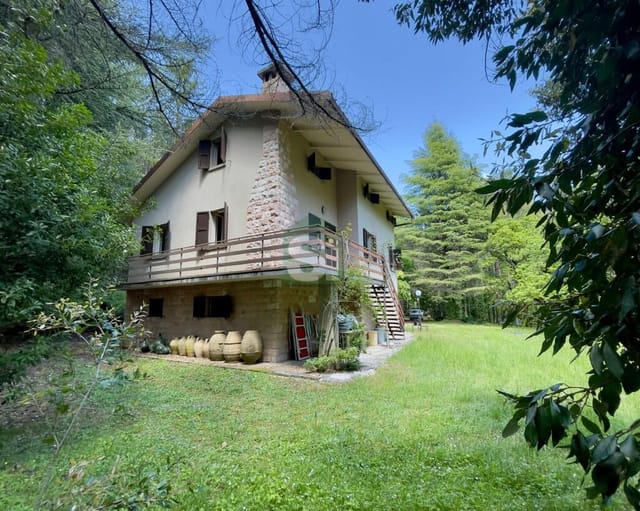
Step outside on a October morning and the only sound is pine needles shifting in the wind. Below the terrace, a thin mist sits over the Colfiorito plateau — the same wetland that earned its place on the international Ramsar Convention list back in 1976, one of central Italy's most ecologically significant protected landscapes. This is not a sanitized agriturismo experience. This is the real Umbria: quiet, unhurried, and genuinely rare at this price point. The property itself is a three-storey detached villa of 215 square metres, built in 1970 and maintained in good condition throughout. What sets it apart immediately — apart from the private pine forest of roughly two hectares surrounding it — is the structural independence between its living spaces. Two entirely separate entrances mean the house works equally well as a generous single-family retreat and as a property with a self-contained guest annexe. Families who want their own floors, friends travelling together who value privacy, or owners considering short-term rental income: the layout serves all of these scenarios without requiring a single wall moved. Three fireplaces — one on each floor — tell you everything you need to know about how this house was built to be lived in year-round. Light the one in the ground-floor kitchen on a January evening, pull red potatoes from Colfiorito's own farms from the market at Foligno, and roast them in the wood-burning oven that sits in the same open-plan space. The first floor carries the main living configuration: a large sitting room with its own fireplace, a separate kitchen, three bedrooms, a bathroom, and a private external entrance onto a terrace that faces the mountains. On clear days that view stretches deep into the ... click here to read more

Picture 1

Picture this: it's a Sunday morning in July, and you're standing on the balcony of Casa Erica with a coffee, watching the Tuscan hills roll away in every direction like a green and gold sea. Church bells carry up from the piazza below. The scent of woodsmoke drifts from somewhere nearby. You didn't fly into some tourist trap — you're in Chianni, a proper working Tuscan village where the locals actually live, and somehow you own a piece of it. This is a three-bedroom semi-detached house in the kind of condition that tells you someone cared for it — services connected and working, solid bones throughout — but with enough room to put your own stamp on things. At 160 square metres, spread across three levels, it has real substance. Not a squeezed holiday flat, not an overwrought renovation project. A house. The layout rewards exploration. You arrive via an external staircase onto a balcony that already sets the tone, then step into a kitchen anchored by an open fireplace — the kind of feature that makes February in Tuscany feel romantic rather than cold. The living room sits alongside it, and there's a proper bathroom with shower, a useful under-stairs store room, and a ground-floor room that works equally well as a single bedroom or a quiet study for anyone who still answers emails on holiday. Upstairs, two more bedrooms sit connected by a door, and there's planning scope to carve out a second bathroom up here — potentially a full master suite if you want to take the property somewhere more ambitious. A small attic already handles the overflow storage question before you've even asked it. But the real talking points are below. In the courtyard — which doubles as private parking — a few stone steps climb to a private gard ... click here to read more

Picture 1

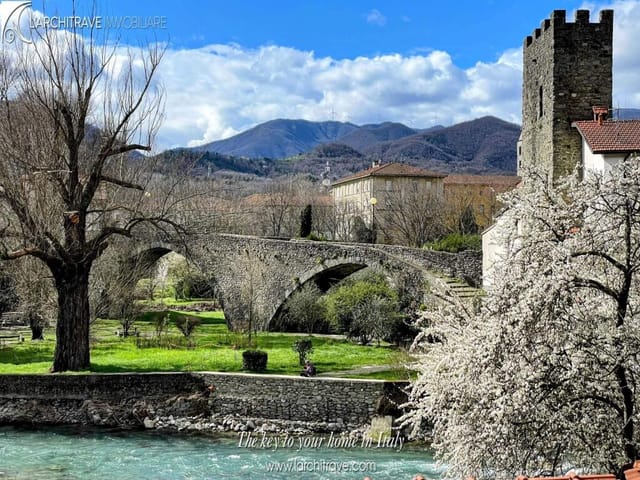
The morning light in this part of Umbria does something you won't forget. It comes in low from the east, rolling over the valley in long gold sheets, and by the time you're standing at the first-floor kitchen window with an espresso, the hills between Città della Pieve and the Tuscan border are already glowing. No traffic noise. Just wind through the olives, and maybe a distant tractor. This is the pace of life this farmhouse has held for generations — and for the right buyer, it's the foundation of something remarkable. Situated roughly 9.5 kilometres from the historic walled town of Città della Pieve, the property sits along an unpaved lane that keeps it genuinely private. That 1.5-kilometre approach road is not a drawback — it's a filter. It means your nearest neighbour isn't visible, your garden isn't overlooked, and the only sounds drifting through open windows on a June evening are cicadas. The views face predominantly east-south, sweeping across undulating farmland and wooded ridgelines that have changed very little in two hundred years. The farmhouse itself is divided across two levels, totalling 117 square metres of residential space. The ground floor holds a generous 67-square-metre storage area — thick stone walls, original structural features, direct connection to the garden — that reads immediately as a future living room, studio, or open-plan kitchen-diner. The kind of space an architect gets excited about. Upstairs, a 50-square-metre apartment is already functioning: two bedrooms, a kitchen, a bathroom. It's simple, honest, nothing fancy — but it works as-is while renovation plans take shape, which matters enormously when you're managing a project from abroad. The real story, though, is what surrounds t ... click here to read more
Esterno

Stand at the first-floor window on a October morning and the view hits you before the coffee does — an unbroken roll of olive groves catching the early light, the medieval towers of Volterra sitting dark against a pale sky just five kilometres up the road. This is what people mean when they talk about Tuscany, except most of them never actually get to own a piece of it. This 315-square-metre stone farmhouse, built when the hills around Volterra were worked by hand and the road below carried carts rather than cars, puts that life within reach at €330,000. The farmhouse sits directly on the road connecting Volterra to the Volterrana provincial road — a practical detail that shapes everything about this property's potential. It's not hidden at the end of a long dirt track; it's accessible, visible, and well-positioned for anyone thinking about a hospitality business down the line. The current owners did exactly that, running holiday accommodation here for years before circumstances changed. The bones of that business remain in the fabric of the building. Inside, the structure is two floors of genuine old Tuscany — not the renovated-for-Instagram version, but the real thing. Stone walls thick enough to keep August heat at bay. Wooden beams across every ceiling. A former stable on the ground floor with cross-vaulted ceilings and original stone mangers still intact, the kind of architectural detail that costs a fortune to recreate and can't be faked. Up the internal staircase, the first floor holds four bedrooms, a large bathroom, a kitchen, and a living room with enough space for the whole family to spread out after a long day in the hills. Above that, the old dovecote sits in the attic — a quiet, slightly eccentric space t ... click here to read more
Picture 1

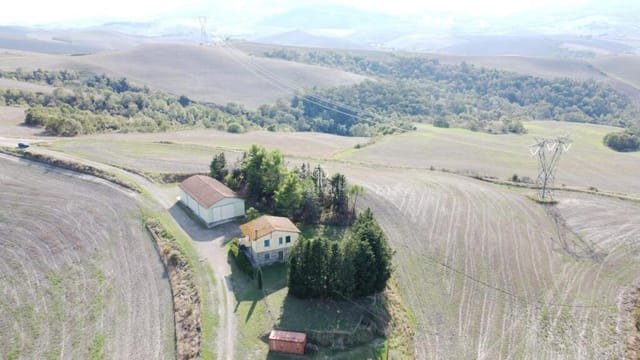
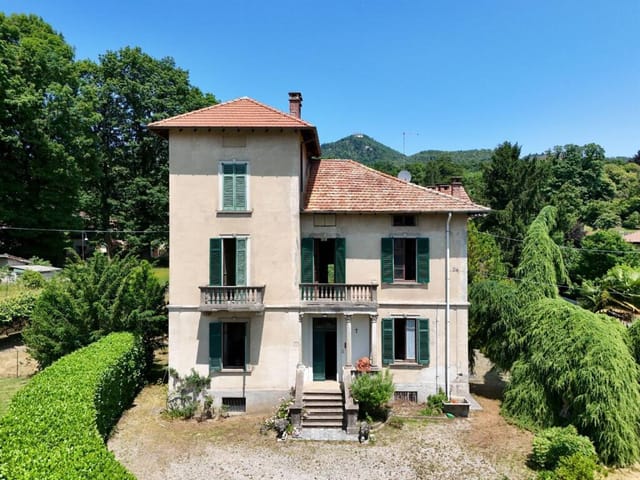
On a still Tuesday morning in Casciago, the only sound you hear from the upstairs bedroom window is birdsong cutting through the cool Lombardy air and, somewhere below, the faint rustle of chestnut trees at the edge of the park. No traffic. No noise. Just 3,000 square metres of private greenery and a century-old villa that has quietly watched the world go by since the Liberty movement was still in full swing. This is the kind of property that doesn't come around often. An authentic early 1900s Art Nouveau villa on Via Giuseppe Pozzi, set in one of Casciago's most sought-after residential pockets — a hillside comune in the province of Varese where the neighbours are elegant period villas and the pace of life genuinely slows down the moment you arrive. At 500 square metres across three floors, plus a full basement level, there's room here to do something extraordinary. The architecture alone tells a story. The Liberty style — Italy's answer to Art Nouveau — left its fingerprints all over Lombardy's villas in the early twentieth century, and this one carries those original period details with quiet confidence: decorative facades, the proportions of a formal entrance hall, the kind of thick plaster walls that keep rooms cool through July and August without you lifting a finger. Yes, it invites a thoughtful restoration — and that's precisely the opportunity. Buyers who understand historic Italian property know that bringing a 1900s villa back to its full potential is not a compromise, it's the whole point. The bones are exceptional. What you add to them is yours. Inside, the ground floor opens through a generous entrance hall into a living room, kitchen, and three double bedrooms — more than enough for a large family or a ... click here to read more
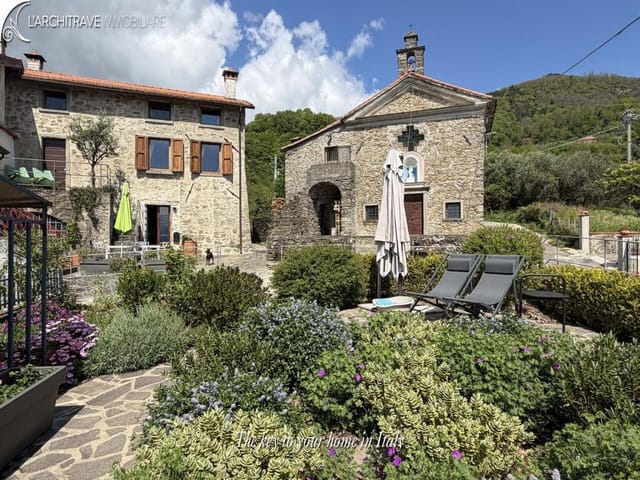
Picture 1

July in Lajatico. The sun drops behind the cypress-lined ridge, the air cools just enough to make sitting outside feel like a reward, and somewhere across the valley you can hear the distant swell of an orchestra drifting up from the Teatro del Silenzio. You're on your own terrace, a glass of Vernaccia di San Gimignano in hand, watching the last gold light drag itself across a landscape that hasn't fundamentally changed since the Etruscans farmed these same hills. That's not a fantasy — that's Tuesday evening when you own this three-bedroom stone villa outside Lajatico. Set on one of the finest elevated positions in the Valdera, the property commands an unobstructed 360-degree panorama of rolling Tuscan farmland. No neighbor blocking your east-facing view. No road noise creeping up from below. Just that particular silence — birdsong, wind through the olive trees, the creak of the wooden shutters in the afternoon breeze — that people drive hundreds of kilometers and pay serious money to find for a single weekend. The house itself has been built in the tradition of a Tuscan cascina, which means it doesn't try to look rustic. It actually is. Stone walls cut from the local hillside, handmade terracotta cotto tiles underfoot, thick wooden ceiling beams left exposed the way they've always been in farmhouses across this province. The difference here is that behind the traditional skin sits genuinely contemporary infrastructure. Underfloor heating runs throughout, powered partly by solar panels. Air conditioning handles both heating and cooling for the shoulder seasons. Double-glazed wooden windows keep the interior thermally efficient without sacrificing the old-world look. The insulation meets Italy's current Class A energy ... click here to read more
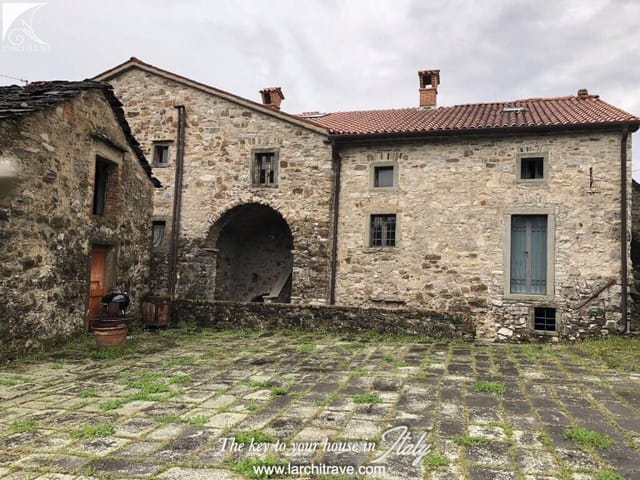
Picture 1

Stand in the courtyard on a September morning and you'll understand immediately why people never quite recover from their first visit to Lunigiana. The bread oven is cold now, but you can smell the ghost of woodsmoke in the stone. Swallows cut arcs above the vine pergola. Down the slope, your vineyard — yes, yours — catches the early light, and somewhere in the olive grove behind the meadow a woodpigeon is making its case for the day. This is what €160,000 buys you in one of Tuscany's last genuinely undiscovered corners. The farmhouse itself is honest old stone, two storeys, the kind of construction that's been shrugging off Apennine winters for a couple of centuries without complaint. On the ground floor you have a kitchen and dining room with enough space to cook seriously, a living room, and a store room that opens toward the courtyard. Three bedrooms and a bathroom sit upstairs. The whole thing runs to 200 square metres of internal space, plus an adjoining barn on two levels that connects — or could connect, once you've had your way with it — to the main house. Below everything, carved into the hillside as nature intended, are the cantina: vaulted stone rooms that have been making wine cold for generations, exactly the right place to rack the bottles from your own vines. The property needs modernization. That's not a caveat buried in the small print — it's actually the point. Someone who wants a turn-key renovation project with a concrete budget and a clear vision will find that this house gives them something increasingly rare: genuine scope to create a home on their own terms, in a place where the bones are already exceptional and the land does much of the talking. The spring water supply is abundant and the prop ... click here to read more
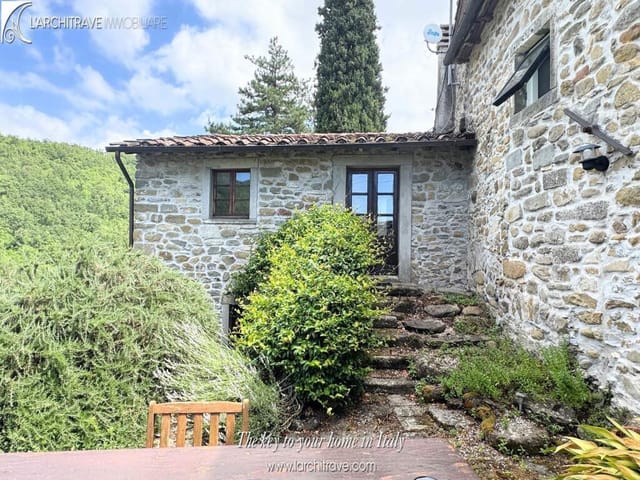
Picture 1

Picture this: it's a Tuesday morning in late September, the kind of morning that makes you want to cancel everything. You're standing on your upstairs terrace with a coffee, watching the mist slowly pull back from the Apennine ridgeline, and the only sound is a woodpecker somewhere in the fig tree below. That's the daily reality of owning this three-bedroom villa in the Lunigiana hills of northern Tuscany — a place most Italians know about and most foreigners haven't found yet. That's not an accident. Lunigiana sits in the crease between Tuscany, Liguria, and Emilia-Romagna, technically within Tuscany's administrative borders but with a character entirely its own. Fewer tour buses. More castles per square kilometre than almost anywhere in Italy. Hiking trails that cut through chestnut forests older than the republic. And properties like this one — solid, well-maintained villas on quiet lanes with proper gardens and proper views — that would cost twice as much if they sat twenty kilometres further south in the Chianti. The villa itself is 208 square metres across three levels, and it's been kept in genuinely good condition. This isn't a project. The finish is high-end throughout: marble bathrooms, solid wood and marble kitchen, beamed ceilings in the main living room. The first floor is where daily life happens — a wide entrance hall opens into a living room with a fireplace that earns its keep in November, french doors spilling out onto a covered patio where you can eat dinner outside well into October without needing a jumper. The kitchen is fully fitted and connects to the same covered patio, so cooking and outdoor living flow into each other the way they should in a Tuscan country house. Two bedrooms on this level ... click here to read more
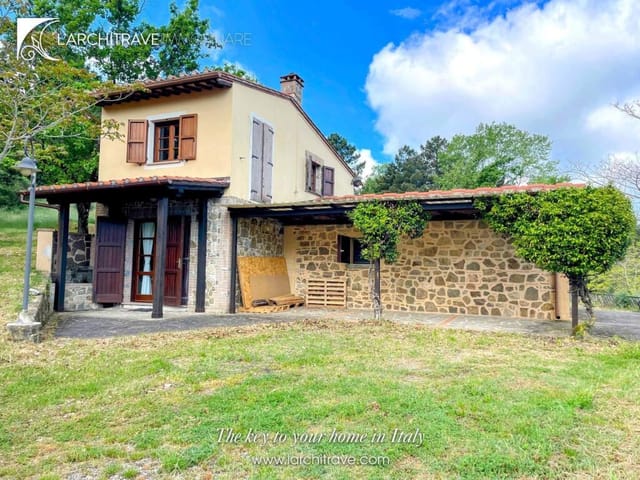
Picture 1

On a Sunday morning in Comano, you wake to the sound of church bells drifting up from the piazza 150 metres away. The air through the bedroom window carries woodsmoke and cut grass, and somewhere below, the family-run bar is already grinding its first espresso. This is not a fantasy. This is an ordinary morning at this restored hillside house in the Taverone valley — a corner of Lunigiana, Tuscany, that most tourists haven't found yet and locals are quietly glad about. The house sits on the edge of a small, tight-knit village community, the kind where people actually know each other, where the restaurant at the heart of the village has been run by the same family for decades, and where showing up as a forestiero doesn't mean you stay one for long. At 80 square metres across two floors, the layout is practical and well thought out. You enter through a hallway that opens into a kitchen and a light-filled living room on the ground floor, alongside a full bathroom. Head upstairs and two attic double bedrooms share a second bathroom — a setup that works equally well for a couple wanting a proper bolthole or a small family with kids who'll spend most of their time outside anyway. The outdoor space is where this property earns its keep. A courtyard with a barbecue setup becomes the natural centre of evening life in summer. Beyond it, roughly 1,000 square metres of land — about a quarter of an acre — includes a chestnut wood that comes into its own in October, when the nuts drop and the forests around the Taverone valley take on that particular amber glow that photographers come from across Europe to chase. Views from the land stretch across the valley toward the Apennines, the kind of views that make you stand still for a mom ... click here to read more
Picture 1

On a clear morning, you push open the shutters of the upstairs bedroom and the Apuan Alps are just there — close enough that you can trace the ridgelines with your finger, white-tipped in winter, darkly forested through July and August. The smell drifting up from the kitchen is coffee, and somewhere below the terrace an olive grove is already warm in the early sun. This is your Tuesday. Imagine your Saturday. Sitting at the end of a quiet lane outside Aulla in the Lunigiana corner of Tuscany, this two-bedroom, four-bathroom stone villa sits on four hectares of land — olives, fruit trees, vines — and feels genuinely removed from the world while remaining surprisingly easy to reach. It's the kind of property that gets into your head the first time you visit and doesn't leave. The house itself has the bones that matter. Thick stone walls keep rooms cool well into the afternoon heat of August. A wisteria-covered portico frames the entrance, and inside, the living room pivots around an impressive stone fireplace that earns its keep from November through March. The kitchen-dining room has marble surfaces and a marble sink — not an affectation, just the way kitchens were built here, and still the best material for rolling pasta dough. There's a utility space tucked out of sight with a washing machine, a ground-floor WC, and a separate ground-floor room — flooded with light on three sides — that opens directly onto the garden and has its own ensuite shower. Upstairs, two double bedrooms each have their own ensuite facilities: one with a bath, one with a shower, both with air conditioning for the peak summer weeks. The first bedroom steps out onto a large terrace where those mountain views hit you full in the face. Every room i ... click here to read more
Picture 1

Stand at the top floor of this three-storey farmhouse on a clear October morning and you'll see why people have been building on these hills since the Etruscans figured out the view was worth it. The Valdera valley rolls out below in every direction — vineyards going amber, cypress rows casting long shadows, and the faint outline of Volterra's medieval towers on the western ridge. This is what 360-degree actually means, not the estate-agent shorthand version. The farmhouse sits about 5 kilometres from Casciana Terme Lari, a small spa town that most Tuscany visitors drive straight past on the way to Pisa or Florence, which is precisely what keeps it real. The weekly Thursday market on the central piazza draws local farmers selling pecorino, dried porcini, and Valdera olive oil pressed from trees that have been on the same hillsides for centuries. The Bar Centrale opens early. The locals are not performing for tourists. That's the thing about this corner of central Tuscany — it hasn't been discovered yet, not in the way that San Gimignano or Montepulciano have, and the property prices reflect exactly that. At 450 square metres across three floors, with roughly a hectare of land wrapping around it, this is a serious restoration project. No connected services, no EPC required — it comes to you as a shell with good bones, waiting for someone with a vision and a decent architect. The structure is solid stone, the kind that was built to outlast everyone involved in building it. What you're buying here is a blank canvas on some of the most quietly coveted land in Pisa province, at a price that reflects the work ahead rather than the finished article. For buyers who've watched completed Tuscan farmhouses sell at twice this figu ... click here to read more
Picture 1

Stand at the kitchen window on a Tuesday morning and you'll understand why people come to this corner of Tuscany and never quite leave. The hills roll away toward Volterra's medieval skyline — towers, rooftops, the faint outline of the Roman amphitheater — while olive trees catch the early light on the slopes below. No traffic. No noise. Just the wind moving through the fruit trees and, if you're lucky, the distant clang of the Duomo's bells drifting up from town. This is a proper Tuscan stone farmhouse. Four bedrooms, 315 square meters spread across two floors, original cross-vaulted ceilings in the former stable, thick stone walls that keep the rooms cool well into August, and wooden beams that have been darkened by decades of use. There's even an old dovecote tucked into the attic — one of those details that stops first-time visitors mid-sentence. It doesn't need to serve any function. It's just wonderful that it's still there. The ground floor tells the story of how this place was lived in for generations: a large garage, two cellar rooms with stone floors, and that former stable with its vaulted ceilings and original mangers still in place. Upstairs, reached by an internal staircase, you'll find the four bedrooms, a generous bathroom, a kitchen, and a living room with the kind of proportions you simply don't find in new builds. The property needs a thorough renovation — it's priced to reflect that honestly — which means the next owner has the freedom to shape it exactly as they want, rather than inheriting someone else's half-finished vision. The location is smarter than it first appears. Sitting directly along the road that connects Volterra to the Volterrana provincial road, the farmhouse has strong visibility ... click here to read more
Picture 1

Picture yourself waking to the soft golden light filtering through centuries-old stone walls, the only sounds breaking the morning silence being birdsong echoing across the valley and the distant tolling of church bells from hilltop villages. This is the reality awaiting you at this 327-square-meter stone farmhouse, perched on a panoramic mountainside just 13 kilometers from the Renaissance town of Città di Castello, where authentic Umbrian country living meets the freedom to create your perfect Italian retreat. Spread across 5 hectares of private land, this property offers something increasingly rare in modern Umbria: genuine privacy combined with convenient accessibility. The approach via asphalt road followed by just 200 meters of white gravel track strikes that perfect balance between seclusion and practicality, meaning you can escape to your countryside sanctuary without sacrificing connectivity to essential services and cultural experiences. The main 227-square-meter farmhouse, delivered in builder's finish condition, presents a blank canvas for international buyers seeking to craft their vision of Italian country life, while the 100-square-meter annex opens possibilities for guest accommodations, artist studios, or rental income opportunities. Life in this corner of northern Umbria unfolds according to nature's calendar and the region's agricultural traditions. Spring transforms the surrounding hillsides into patchworks of wildflowers and new vineyards, while autumn brings truffle hunting season to nearby forests and harvest festivals in every village square. Your 5 hectares could support olive groves, vegetable gardens, or simply remain a private natural sanctuary where deer and wild boar occasionally wander th ... click here to read more
Picture 1

Picture yourself standing on the sun-drenched terrace of your 1970s architect-designed villa, morning espresso in hand, gazing across olive groves toward the Ligurian Sea shimmering just fifteen minutes away. Behind you, three acres of private Mediterranean garden cascade down the hillside, while above, the medieval towers of your neighboring village catch the golden light. This is the reality awaiting you in Vezzano Ligure, your gateway to one of Italy's most celebrated coastal regions. This substantial five-bedroom villa represents a rare opportunity to own a thoughtfully designed property within easy reach of the UNESCO-protected Cinque Terre, the Gulf of Poets, and the artistic treasures of Tuscany. Built by a renowned local architect in the 1970s, the villa embodies the era's vision of harmonious living—abundant natural light flooding through expansive glass windows, generous open-plan spaces that blur the boundaries between indoor and outdoor life, and strategic positioning to capture sweeping valley and sea views. The property unfolds across two levels, offering 370 square meters of flexible living space perfectly suited to extended family gatherings or hosting guests. The architectural philosophy reveals itself the moment you enter through the private gates. The ground floor features an expansive taverna—that quintessentially Italian entertaining space—complete with a traditional stone fireplace and authentic wood-fired pizza oven. Imagine summer evenings here, preparing Neapolitan-style pizza for family and friends, the aroma of burning olive wood mixing with fresh basil and mozzarella. This level also houses a practical double bedroom with adjacent bathroom, ideal for guests or au pair accommodation, alongside ... click here to read more
Picture 1

Picture yourself standing on a hillside in the heart of Tuscany's Valdera region, where the morning mist slowly lifts to reveal a 360-degree panorama of rolling countryside, medieval villages perched on distant hills, and rows of dark cypress trees cutting across golden fields. This is the view that greets you from your own 450-square-meter farmhouse on three levels, set on 2.5 acres of Tuscan land just five kilometers from the historic spa town of Casciana Terme. Here, halfway between the ancient Etruscan settlement of Volterra and the iconic Leaning Tower of Pisa, you'll discover a vacation home opportunity that places you at the geographic and cultural heart of one of Italy's most celebrated regions. This is your chance to create a bespoke retreat in Tuscany, shaped entirely to your vision, in a location that offers both peaceful countryside living and extraordinary access to art, cuisine, and Mediterranean coastline. The farmhouse requires complete restoration, presenting a rare blank canvas for international buyers who want to craft their ideal Tuscan vacation home from the ground up. Spread across three levels, the 450-square-meter structure offers generous space to design multiple bedroom suites, entertainment areas, and those essential elements of Italian country living: a proper kitchen for long Sunday lunches, terraces for evening aperitivos, and perhaps a reading room where afternoon light filters through restored shutters. The absence of existing systems means you'll install modern heating, plumbing, and electrical infrastructure to contemporary standards while preserving the authentic stone walls and architectural character that make Tuscan farmhouses so desirable. The restoration journey, while requiring in ... click here to read more
Picture 1

Picture yourself waking to the gentle rustling of chestnut leaves outside your bedroom window, sunlight filtering through ancient trees as woodsmoke curls from your stone chimney. This is morning in your Tuscan vacation home, where the only sounds are birdsong and the distant church bells of hillside villages dotting the Serchio Valley. This 4-bedroom property in Coreglia Antelminelli offers something increasingly rare: authentic Tuscan living combined with modern comfort, complete privacy wrapped in accessible convenience, and a retreat that feels worlds away yet sits just minutes from vibrant village life. Your journey to owning a piece of Tuscany's magic begins here, in the forested hills above Lucca, where mountain air meets Mediterranean warmth and every season brings new reasons to return. The property comprises two distinct structures that together create the perfect vacation home for families, multigenerational gatherings, or investment rental opportunities. The main house, a traditional stone dwelling arranged over two floors, welcomes you through an entrance warmed by a wood-burning stove – your companion for cozy autumn evenings and winter weekends. The ground floor flows naturally between kitchen and living room library, spaces designed for lingering over morning espresso or evening aperitivo. Original chestnut wood staircases, a hallmark of local craftsmanship, lead upstairs where two double bedrooms feature exposed beam ceilings and wooden floors that creak with character. Double-glazed windows frame views of surrounding woodland while keeping interiors comfortable year-round, and modernized systems installed within the past two decades ensure reliability for international owners. The 2007-built annex rep ... click here to read more
Picture 1

Picture yourself stepping onto your private terrace in the early morning, coffee in hand, as mist rises from the Lunigiana valleys below and the Apuan Alps catch the first golden light. This is the daily ritual that awaits at this three-bedroom villa in the foothills above Equi Terme, where Tuscany's quieter side reveals itself through thermal springs, medieval villages, and landscapes that shift from olive groves to ski slopes within an hour's drive. This is a vacation home that connects you to an authentic Italian rhythm, far from tourist crowds yet surprisingly accessible to both Mediterranean beaches and mountain adventures. Nestled in a small hamlet just minutes from Monzone, this 150-square-meter detached villa represents the increasingly rare opportunity to own a completely private retreat with substantial land at a remarkably accessible price point. The property occupies 2,300 square meters of gently sloping terrain, offering ample space for the swimming pool that many owners in this microclimate dream of adding. The house itself was thoughtfully restored in 2001, striking that ideal balance for vacation home buyers: move-in ready with modern systems and finishes, yet retaining the architectural character that makes Tuscan properties so appealing. The ground floor opens into generous living spaces where natural light pours through well-proportioned windows. The kitchen and living room flow naturally into one another, creating the kind of open gathering space that vacation homes demand, where cooking becomes a social activity and meals extend for hours. The standout feature at this level is the newly renovated bathroom, a surprisingly spacious room fitted with both bathtub and separate shower, finished to contempo ... click here to read more
Picture 1

Picture yourself on a sun-drenched terrace overlooking the Lunigiana valley, a glass of local Vermentino in hand, as the late afternoon light turns the surrounding hills to gold. Below, your private olive grove rustles in the breeze—nearly 2,000 square meters of productive land that will yield your own extra virgin olive oil each harvest season. This is the reality awaiting you in this 200-square-meter semi-detached stone house, positioned just six kilometers from Pontremoli's medieval center, where Tuscany meets Liguria in one of Italy's most authentic and undiscovered corners. This property represents something increasingly rare in modern Tuscany: a fully restored stone house that maintains its rustic character while offering contemporary comfort, all at a price point that makes European vacation home ownership genuinely accessible. The Lunigiana region remains wonderfully free from mass tourism, yet provides everything discerning second-home owners seek—rich history, exceptional cuisine, outdoor adventures, and proximity to both mountains and Mediterranean beaches. The house unfolds across two generous levels, each designed around the rhythms of Italian country living. Enter on the first floor into a layout that immediately feels like home. The large kitchen, anchored by a working fireplace, becomes the natural gathering point—imagine preparing meals with ingredients from Pontremoli's weekly market while wood crackles in the hearth on cooler evenings. This is where you'll knead dough for testaroli, Lunigiana's ancient pasta, or simmer local porcini mushrooms gathered from nearby chestnut forests. The kitchen flows naturally into a separate living room, providing distinct spaces for cooking, dining, and relaxing—a lu ... click here to read more
Picture 1

Picture yourself standing in the morning light streaming through tall windows, coffee in hand, gazing across rolling Tuscan hills where cypress trees punctuate fields of sunflowers and wheat. This 240-square-metre stone farmhouse near the medieval village of Pomarance invites you to create your own vision of Tuscan living, just four kilometres from San Dalmazio and twelve kilometres from essential services. The property sits on 1,250 square metres of private land, offering space for gardens, outdoor dining terraces, and perhaps a swimming pool surrounded by lavender beds. This traditional Tuscan farmhouse represents an exceptional opportunity for buyers seeking a vacation home renovation project in one of Italy's most celebrated regions. The exterior has been completely restored, preserving authentic architectural elements including exposed stone walls, traditional beamed ceilings, and terracotta flooring that connects you to centuries of Tuscan craftsmanship. The two-storey structure provides flexibility for various configurations, whether you envision a spacious single-family retreat or two independent units for rental income potential. The Pomarance area embodies authentic Tuscany, far from tourist crowds yet perfectly positioned for exploring the region's treasures. Volterra, just twenty-five kilometres away, has captivated visitors for millennia with its Etruscan heritage, Roman theatre ruins, and artisan workshops where alabaster craftsmen continue traditions spanning generations. Wandering Volterra's medieval streets on autumn evenings, you'll discover trattorias serving pappardelle al cinghiale and local wines from nearby vineyards. San Gimignano's famous towers rise forty-nine kilometres distant, while Siena's ... click here to read more
Picture 1

Picture yourself stepping through the grand entrance of an 18th-century Tuscan palazzo, your footsteps echoing across the columned hall as sunlight filters through the internal courtyard above. A sweeping stone staircase rises before you, leading to your 220-square-meter haven on the second floor, where vaulted ceilings and original architectural details frame views of medieval castles and the Magra River flowing through the valley below. This is your new rhythm: morning espresso watching the mist lift from the Apennine mountains, afternoons exploring cobblestone lanes that have witnessed centuries of history, evenings gathering around a crackling wood-burning stove while the sounds of the town's lively piazza drift through your windows. Welcome to vacation home ownership in Pontremoli, the cultural heart of Lunigiana, where authentic Tuscan living meets practical accessibility for international property owners. This three-bedroom residence offers an extraordinary opportunity to own a piece of Italian heritage in one of Tuscany's most enchanting yet accessible medieval towns. The apartment occupies an entire floor of a meticulously maintained palazzo, providing the privacy and space of a standalone home with the security and community of shared ownership. Your daily life unfolds across generous, light-filled rooms where original features like vaulted ceilings and period fireplaces create an atmosphere of refined historic charm without sacrificing modern comfort. The spacious living room centers around a Capodimonte wood-burning stove, perfect for extending your vacation season into Tuscany's crisp autumn months and cozy winters. Adjacent, the formal dining room frames postcard views of Pontremoli's historic castle perche ... click here to read more
Picture 1

Picture yourself standing on a hilltop in the heart of Tuscany, where the morning sun casts golden light across 15 acres of your own land, dotted with ancient olive trees and framed by the rolling hills that have inspired artists for centuries. This is the daily reality awaiting you at this authentic 340-square-meter farmhouse, perched in a commanding position just minutes from the medieval town of Volterra, where Etruscan history meets contemporary Italian life. This substantial four-bedroom farmhouse represents everything international buyers seek in a Tuscan vacation home: authentic architecture preserved through centuries, generous living spaces that accommodate extended family gatherings, and land that connects you to Italy's agricultural traditions. The property's position offers complete privacy while remaining wonderfully accessible, reached by a well-maintained two-kilometer country road that winds through landscape unchanged since Renaissance painters captured these views on canvas. The main residence unfolds across three distinctive floors, each revealing the craftsmanship of traditional Tuscan building methods. On the ground level, the kitchen and dining area centers around an original wood-burning oven, the kind local families still use for baking bread and slow-roasting meats. Adjacent, the living room commands attention with its cross-vaulted ceilings, architectural details that speak to the building's agricultural heritage when such spaces stored valuable harvests. French doors open directly onto the surrounding land, blurring the boundary between indoor comfort and outdoor living that defines the Mediterranean lifestyle. A 50-square-meter cellar provides ideal conditions for wine storage, essential for ... click here to read more
Picture 1

Picture yourself on a stone-flagged loggia as the evening light turns the Apennine mountains copper and gold, a glass of local Vermentino in hand, the only sounds the distant church bells from the ancient chapel below and the chorus of cicadas welcoming another Tuscan summer night. This is the daily rhythm awaiting you at this carefully restored 90sqm stone farmhouse, hidden away in the hills between Fivizzano and Comano, where complete privacy meets authentic Lunigiana living. This is not just a second home in Tuscany – this is your gateway to a slower, richer way of life in one of Italy's most magical yet undiscovered corners. The property's transformation from working farmhouse to contemporary retreat honors its agricultural heritage while delivering modern comfort. Cross the threshold into the first-floor living space and you are immediately embraced by the warmth of old wooden beams overhead, terracotta cotto floors underfoot worn smooth by generations, and a traditional fireplace that becomes the heart of the home on cooler mountain evenings. The open-plan living and dining area flows naturally into a well-equipped kitchenette, while an intimate mezzanine offers flexible space for reading, working remotely, or simply watching the light change across the valley. Large windows frame those captivating Apennine views, bringing the landscape inside. Step through French doors onto your private garden oasis, and the true magic of this vacation home reveals itself. The expansive outdoor space enjoys complete southern exposure, bathed in sunshine from morning coffee until that spectacular sunset aperitivo. The open-air jacuzzi becomes your personal observatory for Tuscany's famously clear night skies – imagine soaking under ... click here to read more
Picture 1

Picture yourself stepping through the arched loggia of your own Tuscan farmhouse as the morning sun filters through ancient olive trees, the scent of rosemary drifting up from terraced gardens below. This is the rhythm of life that awaits in this authentic 4-bedroom country house, where 6 acres of productive land stretch toward vine-covered hills and medieval towers rise in the distance. Here, between the thermal springs of Casciana Terme and the walled village of Lari, you've discovered the Tuscany that exists beyond the postcards—a place where neighbors still press their own olive oil and Sunday markets overflow with porcini mushrooms and pecorino cheese aged in local caves. This meticulously renovated 282-square-meter home represents everything international buyers seek in a European vacation property: authentic architecture preserved with respect, modern comfort integrated thoughtfully, and a location that balances genuine rural tranquility with practical accessibility. The estate sits just 600 meters from village amenities—close enough for morning cappuccino and fresh bread, distant enough that your soundtrack remains birdsong and rustling leaves rather than traffic. The 35-minute drive to Pisa International Airport eliminates the anxiety of complicated travel logistics, while positioning you within an hour's radius of Florence, Lucca, San Gimignano, and the Tyrrhenian coast. The property's design tells the story of Tuscan agricultural heritage transformed for contemporary living. On the ground floor, where livestock once sheltered, you'll find expansive living spaces that flow naturally from the traditional loggia—complete with wood-fired pizza oven that becomes the heart of summer gatherings. Imagine hosting dinne ... click here to read more
Picture 1

Picture yourself standing in the tower room of your own Tuscan farmhouse, morning espresso in hand, watching the mist lift from the valley below as medieval Volterra awakens in the distance. This is not a postcard—this is your daily reality in this substantial 434-square-meter stone farmhouse, positioned in the rolling hills between two of Tuscany's most captivating hilltop towns. Here, the rhythms of rural Italian life unfold around you: the church bells of Volterra marking the hours, neighbors tending olive groves on distant hillsides, and the changing light painting the landscape in colors that have inspired artists for centuries. This is a property that offers not just a vacation home, but an authentic slice of Tuscan life, waiting for a discerning buyer ready to write their own Italian chapter. The farmhouse sits in a location that estate agents dream about—remote enough to guarantee complete privacy among 4,500 square meters of lush land, yet remarkably accessible. The ten-minute drive to Volterra takes you along country roads where you might encounter more cypress trees than cars, passing working farms where locals still produce olive oil and wine using methods passed down through generations. Twenty-five minutes in the other direction brings you to the medieval towers of San Gimignano, where weekend markets overflow with local cheeses, handmade ceramics, and the region's famous Vernaccia white wine. This central position in the Tuscan countryside means you can breakfast on your veranda, explore Siena's magnificent Duomo by lunch (45 minutes away), and return home for sunset drinks overlooking your own panoramic valley views. The main house reveals its character the moment you step through the entrance into the ... click here to read more
Picture 1

Picture yourself standing on a sun-drenched terrace high above the Ligurian coast, watching sailboats glide across the Mediterranean while the scent of blooming jasmine mingles with salt air. This is the daily reality awaiting you in this adaptable 190-square-meter villa in San Remo, perched on over 2,000 square meters of hillside land where ancient olive trees whisper stories of the Italian Riviera. The expansive sea views stretch endlessly across azure waters, framing every morning coffee and evening aperitivo with nature's most captivating backdrop. This property currently operates as two independent apartments across multiple levels, but its true magic lies in the flexibility it offers international buyers seeking a vacation home that evolves with their vision. Whether you maintain the dual-unit configuration for rental income, convert it into one grand family retreat, or reimagine the spaces entirely, the bones of this villa provide an exceptional foundation for your Mediterranean escape. The ground-level residence welcomes you with an open-plan living area where kitchen and living spaces flow seamlessly together, three comfortable bedrooms, and two full bathrooms. Upstairs, the second unit mirrors this comfortable layout with its own living room and kitchen, two double bedrooms, and a bathroom, but adds the showstopper: a generous panoramic terrace where the Riviera reveals itself in all its glory. Additional storage spaces, an attic with development potential, and a convenient garage complete the practical elements that make second-home ownership effortless. The property sits in move-in ready condition with solid structural integrity, yet offers exciting opportunities for personalization and value enhancement thro ... click here to read more
Picture 1

Picture yourself sipping morning espresso on your private terrace as the Mediterranean sun climbs over the horizon, painting the Ligurian coastline in shades of amber and gold. The rhythmic whisper of waves drifts up from the shore below, mixing with the gentle clink of fishing boats preparing for the day. This is the daily ritual that awaits in your vacation home in Bordighera, a two-bedroom apartment perched on the top floors of a character villa in one of the Italian Riviera's most coveted coastal towns. This holiday property in Bordighera offers something increasingly rare along the Italian coastline: authentic connection to the historic heart of a traditional Italian seaside town, combined with sweeping Mediterranean views that never lose their power to captivate. The apartment occupies the entire top two floors of a meticulously maintained period villa, creating a duplex configuration that provides both privacy and space—qualities that transform a vacation property into a true second home in Italy where family and friends gather season after season. Bordighera itself occupies a special place among Liguria's coastal gems. While neighboring resorts have grown into bustling tourist centers, this town has preserved its gentler rhythm and authentic Italian character. The medieval centro storico, just minutes from your doorstep, remains a living neighborhood where local families still gather at the same cafes their grandparents frequented. Narrow cobblestone lanes wind between ochre-painted buildings, opening unexpectedly onto small piazzas where the scent of focaccia wafts from family-run bakeries. This proximity to genuine Italian life, combined with the apartment's private terrace overlooking the sea, creates the pe ... click here to read more
Picture 1

Imagine waking to the gentle rustling of your own vineyard, stepping onto ancient stone flagstones warmed by the Tuscan sun, and breathing in the scent of rosemary and wild thyme that grows along the meadow boundaries. This 200-square-meter stone farmhouse in Lunigiana offers you the authentic Tuscan experience that exists beyond the postcard images—a place where you can press your own wine, harvest olives from century-old trees, and live within a landscape that has nurtured communities for generations. This is your opportunity to acquire a genuine piece of Tuscan heritage and transform it into your personal sanctuary just 6 kilometers from the medieval town of Fivizzano. The farmhouse presents itself as a blank canvas for those who appreciate the romance of restoration and the satisfaction of creating something uniquely yours. Spread across two levels, the current layout includes a kitchen and dining area where you can already envision installing a modern range cooker while preserving the rustic character, a living room with potential for exposed beam ceilings, three generously proportioned bedrooms that could become tranquil retreats, and a bathroom awaiting your vision for contemporary comfort within historic walls. The thick stone construction provides natural insulation, keeping interiors cool during summer months and cozy in winter—a testament to centuries of building wisdom. What sets this property apart is the adjoining two-level barn, offering approximately 100 square meters of additional space ready for conversion. Forward-thinking buyers will recognize the potential to create guest accommodations for visiting family and friends, a creative studio bathed in northern light, or even a income-generating vacation r ... click here to read more
Picture 1

Picture yourself sipping morning espresso on a covered terrace overlooking rolling Tuscan hills, the ancient towers of Volterra rising from the morning mist just five minutes down a quiet country lane. This is the daily reality awaiting you in this thoughtfully renovated 205-square-meter farmhouse, where traditional architecture meets contemporary comfort in one of Italy's most historically rich regions. Here, you can create your own rhythm between peaceful countryside mornings and afternoon explorations of Etruscan heritage, all while generating rental income from a self-contained guest apartment. This property isn't just a vacation home; it's a gateway to authentic Tuscan living with genuine investment potential. Nestled in the countryside surrounding Volterra, this dual-apartment property offers international buyers a rare combination: the tranquility of rural Tuscany with immediate proximity to one of Italy's most fascinating hill towns. The main residence occupies 140 square meters on the first floor, featuring a generous living room that becomes the heart of family gatherings, a functional kitchen ready for preparing traditional pappa al pomodoro or ribollita, three comfortable bedrooms for family and guests, and two full bathrooms. Below, the 65-square-meter ground-floor apartment provides complete independence with its open-plan living space, kitchen area, bedroom with atmospheric vaulted ceilings, and bathroom. This flexible configuration transforms your property into an income-generating asset during weeks you're not in residence, or provides private space for extended family visits. Volterra stands as one of Tuscany's most underrated treasures, a town where 3,000 years of continuous habitation have layered E ... click here to read more
Picture 1