Houses For Sale In Sweden For Less Than €100,000

Houses for sale in sweden - homestra offers the largest amount of european real estate with over 200,000+ properties, find any type of property within your budget from villas to country homes. buy or rent your perfect home in europe.

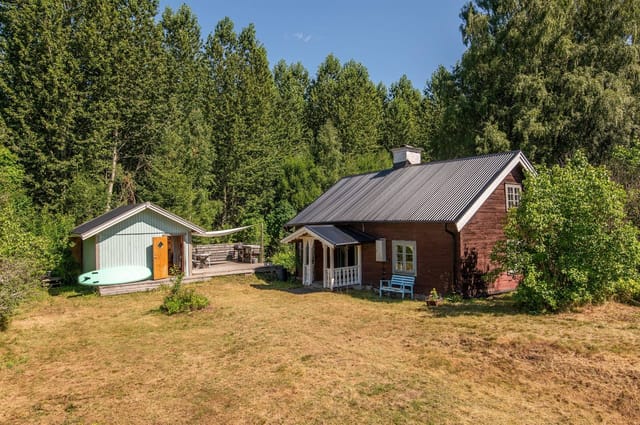
Early July morning. You slide open the window and the smell hits you first — pine resin warming in the sun, a faint salt edge carried in from the Baltic. The forest around Tärnstigen 3 is already alive with birdsong, and somewhere down the trail, maybe two hundred meters, the water glitters between the spruce trunks. This is what a Swedish summer actually feels like. Not a postcard. The real thing. Jonskär sits inside the Söderhamn archipelago, a stretch of the Swedish High Coast where the land breaks apart into islands, inlets, and rocky skerries that drop into the Gulf of Bothnia. It is less famous than the Stockholm or Gothenburg archipelagos, which is precisely the point. There are no queues for kayak rentals here, no overpriced waterfront restaurants with a two-week wait. What you get instead is a genuine, working summer community — Swedish families who have been coming to these islands for generations, neighbors who actually say good morning, and water clean enough that you think twice before stepping out of it. The cottage on Tärnstigen sits on 1,529 square meters of its own forested plot. That is a significant footprint for a property at this price point in the Swedish archipelago. The trees give the lot a natural privacy screen that no fence could replicate, and the outdoor seating area tucked into the greenery becomes the real living room from June through August. Coffee there at seven in the morning, with light already slanting gold through the pines, becomes the kind of habit you will rearrange your calendar to protect. Inside, the 50 square meters work harder than that number suggests. The layout is compact and honest — a kitchen, a proper bedroom that fits a double bed with room to spare, a living room a ... click here to read more

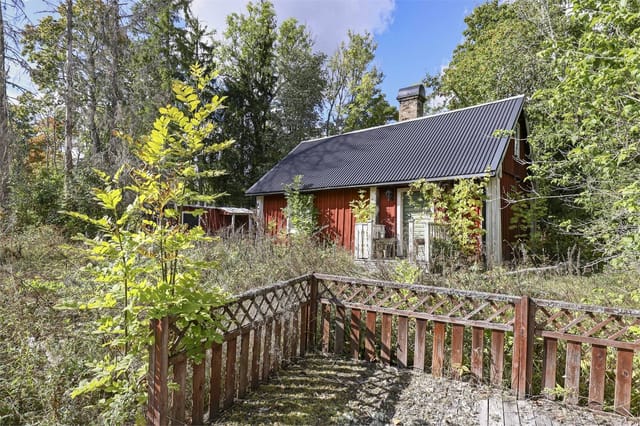
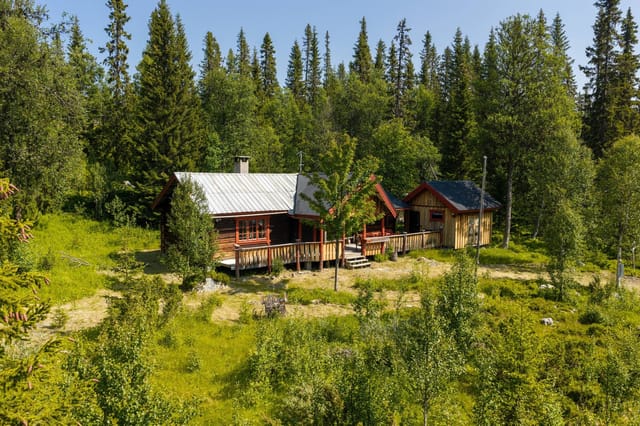
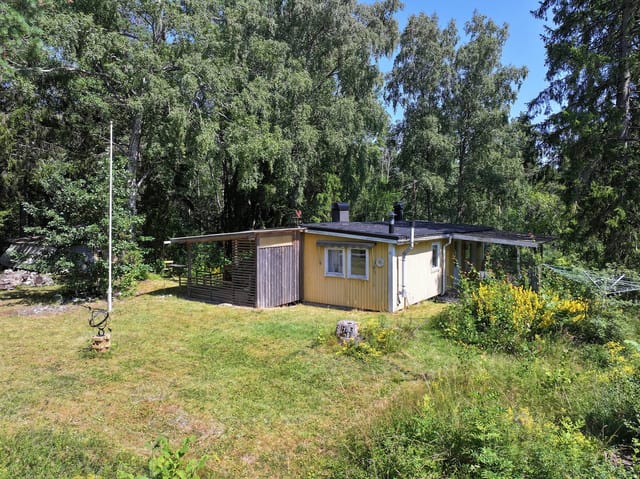
Exterior view of the holiday home
New

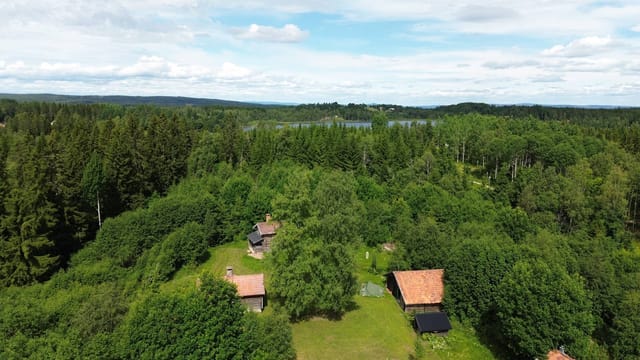
Stand at the kitchen window on a still October morning and the surface of Lake Hjälmaren looks like hammered pewter. A heron picks its way along the shoreline fifty meters below. The only sound is the tick of the wood-burning stove warming up behind you, and the faint knock of wind through the ancient oaks that have stood on this hillside since before the house was built in 1909. This is what owning a second home in Segersjö actually feels like—not a postcard, not a brochure promise, but that specific, unhurried quiet that most of us have to travel a long way to find. Segersjö 633 sits on a freehold plot of roughly 2,348 square meters in one of Örebro County's most quietly compelling corners. The main house is 45 square meters of well-maintained, historically intact cottage—compact, yes, but arranged with the kind of practical intelligence that older Swedish rural architecture got right before open-plan living became obligatory. Three rooms and a kitchen, pine floors worn to a honey-gold patina, original moldings still crisp at the corners. The fireplace in the main room isn't decorative. Come February, it earns its place. Large windows pull in light from the south and frame the water views without making the interiors feel exposed. In midsummer, when Scandinavia's long evenings stretch past ten o'clock, the living room glows with the kind of warm, directional light that photographers chase. The two bedrooms are quiet and proportionate—the kind of rooms where you actually sleep deeply, partly because of the silence and partly because the air outside is genuinely clean. Beyond the main house, the property opens up in ways that make the plot feel considerably larger than the headline figure suggests. There's a separate ... click here to read more

Exterior view of the cottage and garden
New

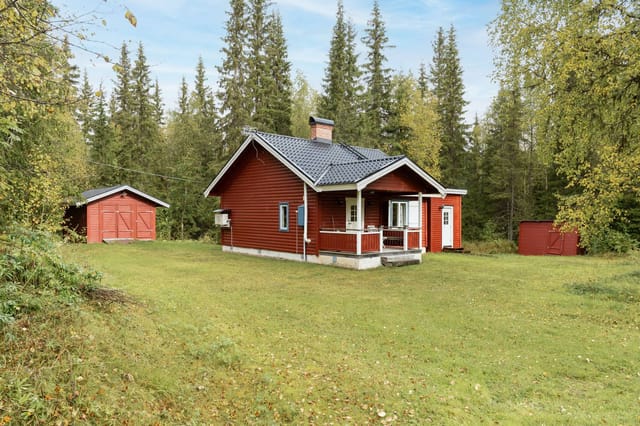
Step out onto the new wooden deck on a July evening, a cold Norrköping pilsner in hand, and watch the light go amber over Loddbyviken. The bay barely moves. A heron crosses low. The grill behind you is already warm. This is a genuinely compact holiday home — honest about its size, serious about its setting — and that elevated waterside position over the innermost reach of Bråviken is the kind of thing you simply cannot build or manufacture. Grymön 137 sits on a gentle rise above the water, which means you get the view from everywhere that matters: from the glazed veranda with your morning coffee, from the kitchen window while you're frying eggs, from the deck at midnight when the Swedish summer sky still hasn't fully decided to go dark. The main house is 30 square metres of clever, unfussy planning — a bright kitchen, a proper bedroom, and a loft above that works equally well as a second sleeping spot or as the place all the kayak gear ends up by mid-July. The living space doesn't try to be more than it is. It's warm, it works, and after a day on the water you won't want for anything more. The glazed veranda is the real secret weapon of this place. Sweden has a lot of weather, and the Swedes long ago figured out that the answer is glass — not to shut out the landscape, but to stay inside it through a cold May morning or a rainy August afternoon. You can sit in that veranda, watch the fog lift off Loddbyviken, and feel entirely outside without surrendering any warmth. It's the kind of space that becomes the gravitational centre of every visit. The 2025 deck is a serious addition. Built with generous dimensions and a proper outdoor kitchen setup — counter space, grill position, the works — it's not a token gesture towar ... click here to read more
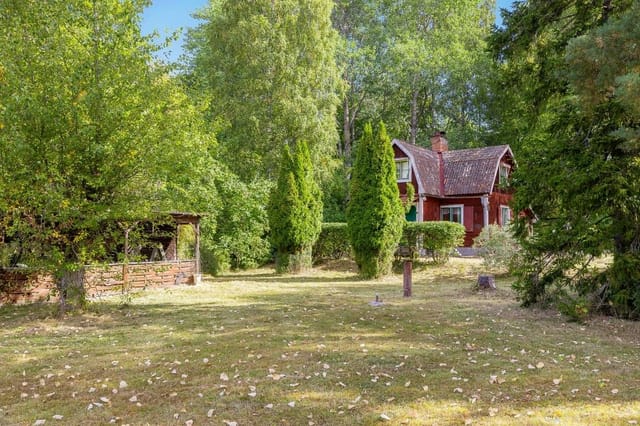
Exterior view of Grymön 137
New

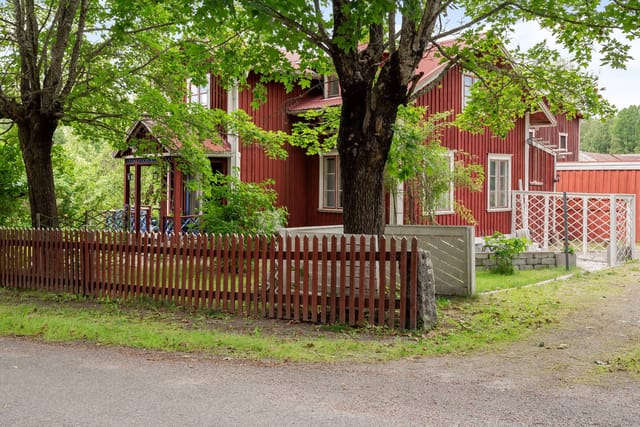
Step outside on a July morning and the air hits differently here. It's cool and faintly resinous — spruce and pine warming up as the sun clears the treeline — and the only sound is birdsong and the occasional creak of old timber settling. That's Gamla Torsmovägen 61 in Skattungbyn. Twenty-seven square metres of honest Swedish log construction on a 986-square-metre plot, with forest pressing in on three sides and the Oreälven river less than a kilometre away. This is Dalarna county. Not the postcard version people see in tourism brochures, but the real thing — a landscape that Swedes themselves escape to when they want to remember what silence actually sounds like. The cabin is small by design, and that's precisely the point. Two rooms, including a proper bedroom, plus a wood-burning stove that becomes the gravitational centre of the space from September through April. Light the stove on a Friday evening in October, pour something warm, and the whole interior glows. Wooden walls, wooden floors, the smell of birch smoke drifting out the chimney — it's the kind of evening that justifies the whole purchase. Large windows frame the surrounding trees like living paintings, and depending on the season you're looking at birch leaves going electric yellow, snow loading the branches, or the long green haze of a Dalarna summer. The plot itself gives you real breathing room. Nearly a thousand square metres means a vegetable patch if you want one, a firepit well away from the cabin, space for a hammock strung between mature trees, and genuine privacy from the road. The grounds are established and well-kept, so there's no battle to be fought with the landscape — it's already working in your favour. Skattungbyn sits in Orsa municip ... click here to read more
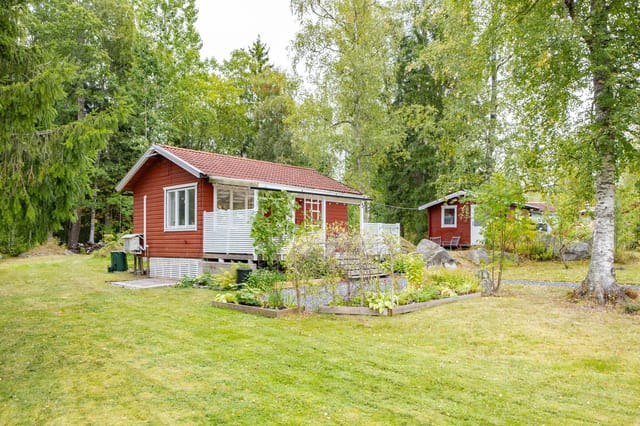
Exterior view of the timber cabin
New

There's a particular kind of quiet you notice first. Not silence exactly—more like the sound of a stream doing its thing just beyond the tree line, a woodpecker somewhere in the pines, and absolutely nothing else demanding your attention. That's what mornings feel like at this 1960s log cabin on Varledavägen, sitting on nearly eight thousand square meters of Swedish countryside outside the village of Rånäs in Norrtälje municipality. It's the kind of property that doesn't need to announce itself. Built in 1964 from traditional notched log construction, the cabin has the bones of something genuinely old and genuinely Swedish. At 33 square meters, it's compact and honest about what it is—a retreat, not a mansion. The living room holds a fireplace that has warmed countless winter evenings, and the kitchen runs on a wood-burning stove that makes coffee taste different somehow, better. There's a sleeping loft overhead, which is the kind of sleeping arrangement that turns adults back into children—you climb up, the ceiling is low, and the whole world outside goes quiet. Behind the loft, a concealed hatch opens into a large attic for storage, which any serious cabin owner will tell you is worth its weight in gold. The WC with a water toilet is functional and convenient for overnight stays and long summer weekends. The property is being sold with a disclaimer clause, so it's worth going in with clear eyes: the fireplaces haven't been recently inspected, and the water pump needs attention. For a buyer who wants a turnkey holiday home, this needs work. For a buyer who wants to spend a few weekends putting their own hands on something and end up with a property that feels truly theirs—this is exactly that kind of opportunity. Pric ... click here to read more
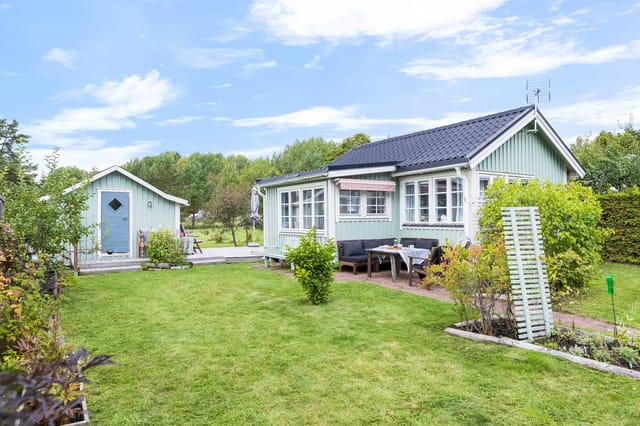
Exterior view of the log cabin and garden
New

Picture this: it's a Tuesday morning in February, the thermometer reads minus twelve, and you're sitting in your own sauna listening to snow fall. Outside the window, the spruce trunks are white to their cores, and somewhere beyond them the silhouette of Härjedalen's fells cuts a hard line across a pink sky. No neighbours in sight. No road noise. Just the occasional crack of a branch under the weight of fresh snow. That's the everyday reality at Uggen Örnvägen 6 in Hede. The cabin sits at the very end of Örnvägen — a deliberate dead-end, not a compromise. Whoever placed it here knew exactly what they were doing. Privacy isn't a selling point you have to manufacture; it's simply the geography. The plot runs to 2,050 square metres, generous even by Swedish countryside standards, and the surrounding forest of birch and pine keeps the outside world at a polite distance. The structure itself is genuinely unusual. Two separate timber frames have been physically joined to create a single home, giving the interior a character you don't find in catalogue builds. The walls are raw timber throughout, which does something specific to sound — it softens it, absorbs it — so the place always feels quieter than it is. Large windows were clearly a priority for whoever built this, because almost every room catches light from more than one angle. In summer, when the Nordic sun stays up until nearly midnight, those windows become the whole point of being indoors. Practically speaking, the floorplan works well for a second home or a holiday cabin in Sweden. Downstairs you have a proper hallway — not a token entry space — a kitchen, a living room, two bedrooms, a toilet area with a chemical WC (standard practice for many rural Swedish prop ... click here to read more
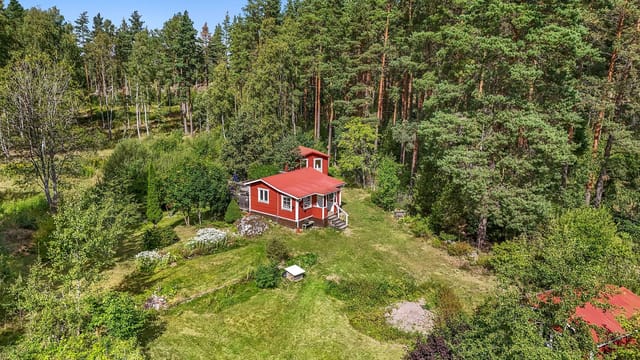
Exterior view of the timber cabin
New

Step off the small gravel path and onto the south-facing terrace at Kilane 150, and for a moment you just stop. The air smells of pine resin and lake water. Somewhere behind the treeline, a woodpecker is working through an old birch. This is Ånimskog in Dalsland, and mornings here don't ask anything of you. Sitting roughly 200 to 300 meters from the shores of Lake Ånimmen — part of the celebrated Dalsland Canal system — this 1960-built country house on a 1,790 square meter lot is the kind of Swedish property that doesn't come along often at this price point. Not because it's flashy. It isn't. It's a solid, well-maintained two-bedroom home with honest bones, a guest cottage, a traditional wood-fired sauna, and more natural quiet than most people encounter in an entire year of city living. At 48,100 EUR, it's one of the more accessible entries into genuine Swedish countryside ownership you'll find anywhere in Västra Götaland. The main house runs to 64 square meters — compact but considered. Two bedrooms, a bathroom, and a living room anchored by a wood-burning stove that radiates the kind of warmth no electric heater can replicate. On a November evening when the first snow is settling over the garden, you'll understand exactly why Swedes have kept that fireplace tradition alive. The living room's large windows frame the surrounding greenery like a painting that changes with every season: birch leaves turning gold in September, frost-glazed branches in January, the almost aggressive green of early June. Those dual terraces — one south-facing, one catching the western evening light — are genuinely useful features, not just box-ticking. Breakfast on the south terrace. A glass of something cold on the west terrace as the su ... click here to read more
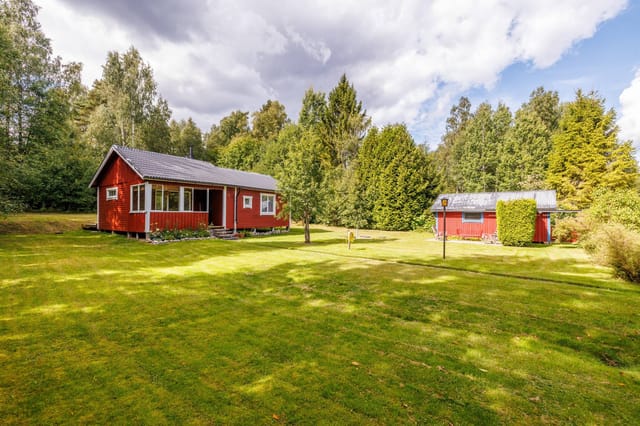
Front view of the holiday home
New

The boat engine cuts out. Suddenly there's nothing but the sound of water against the hull, a tern calling somewhere overhead, and the creak of the dock as you step onto Milgrund Island for the first time. That moment — that specific, irreplaceable silence — is what this place is about. Milgrund is a small island sitting just off the coast of Norrsundet in Gävle Municipality, roughly 25 kilometers northeast of the city of Gävle itself. Getting here requires a short boat ride from the mainland, and that short crossing does something to you. The everyday world stays behind. You bring only what fits in the boat. The cabin sits right on the shoreline. Literally on it. The water is close enough that on calm mornings you can hear it even before you open the door — that low, steady breathing of the Gulf of Bothnia. The structure itself is 25 square meters of simple wooden construction, one room, and it's honest about what it is: a starting point. There's no electricity, no running water, no sewage connection. Some people will read that as a list of problems. Others — the ones this property is really meant for — will read it as creative freedom. You're not buying someone else's renovation decisions. You're buying a blank page with a view. The leased plot runs directly to the water's edge, with open sightlines across the sea. Sweden has some extraordinary archipelago coastline, but waterfront plots this direct, this unobstructed, rarely come available at anywhere near this price point. The annual lease fee is 5,830 SEK — just over 500 euros a year — which, for a beachfront position in the Swedish archipelago, is genuinely hard to put into context until you start comparing alternatives. Annual operating costs sit at around 1,55 ... click here to read more
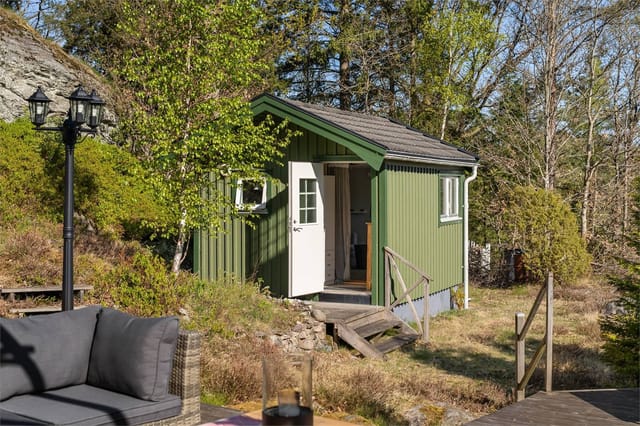
Beachfront cabin exterior
New

Step outside on a Saturday morning and the first thing you notice is the quiet. Not the performative quiet of a city park, but the real kind — just wind through spruce trees, a woodpecker somewhere off in the treeline, and the faint shimmer of the lake catching early light through the birches. That's the daily opening scene at this compact country home in Järfälla, Borås kommun, sitting on its own modest hill with 632 square metres of land and more than enough breathing room. At 36 square metres, this is not a property you're going to fill with furniture you don't need. It's been built around a different kind of logic — one where the covered outdoor patio does half the living, where the open fireplace earns its keep from October through April, and where a good night's sleep comes without much effort at all. The single bedroom is calm and private, the bathroom simple and functional, and the kitchen sensible enough that cooking a proper Swedish husmanskost dinner — pan-fried perch from the lake, boiled potatoes, dill — feels like the most natural thing in the world. The patio deserves its own mention. Facing out over the garden and the rolling green beyond, it becomes the gravitational centre of the property the moment temperatures climb above ten degrees. Long midsommar evenings here, with the sky refusing to go dark, have a way of stretching dinner into something that lasts until midnight without anyone noticing. Come autumn, the same spot catches the afternoon sun long after the surrounding farmland has gone amber and rust. The plot gives you real options. If you've ever half-seriously talked about growing your own vegetables, this is where that idea stops being theoretical. There's room for raised beds, a small gree ... click here to read more
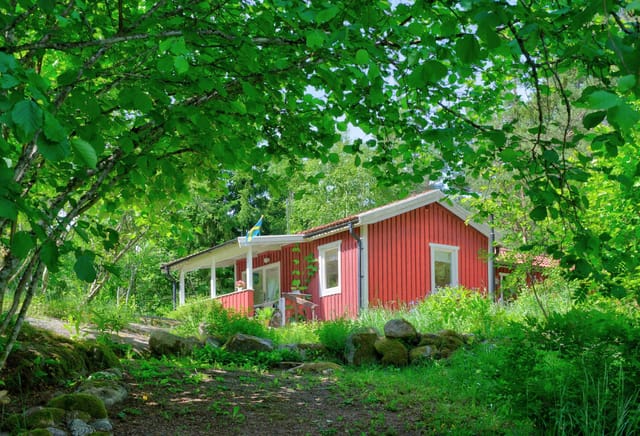
Exterior view of the holiday home
New

There's a specific kind of quiet you find on a Swedish summer morning in an allotment colony. Not silence exactly — there's the scrape of a trowel nearby, the low murmur of someone's radio two plots over, the smell of fresh coffee drifting from an open window as the midsummer light hits the dew on the grass. That's the kind of morning you get at Ärtvägen 38 in Aspvik kolonistugeområde, and it's the kind of morning people in Stockholm spend years working toward. This is a 30-square-meter cottage on a 300-square-meter plot in Upplands-Bro, about 35 kilometers northwest of Stockholm's city center. Built in 1984, it's compact, honest, and ready for someone with a clear vision and a willingness to roll up their sleeves. It's not a finished product — it's a starting point. And for the right buyer, that's exactly the appeal. The cottage itself is one open room with a sleeping loft tucked above part of the structure. It's the kind of layout that forces you to be creative and intentional — every square meter has to earn its place. Large windows pull in the light and keep you visually connected to the garden, which on a bright June afternoon turns the interior almost golden. The whole thing comes furnished with whatever's left inside at handover, so you're not starting from zero. What you're really buying is the land. Three hundred square meters in an established Swedish allotment colony is serious growing room. Previous owners cultivated flower beds, vegetable patches, and outdoor seating areas here — the bones of a proper kitchen garden are still visible if you know what to look for. Raspberry canes, old rose bushes, a patch that clearly once held tomatoes. The garden has been resting. It needs someone to wake it up again. A ... click here to read more
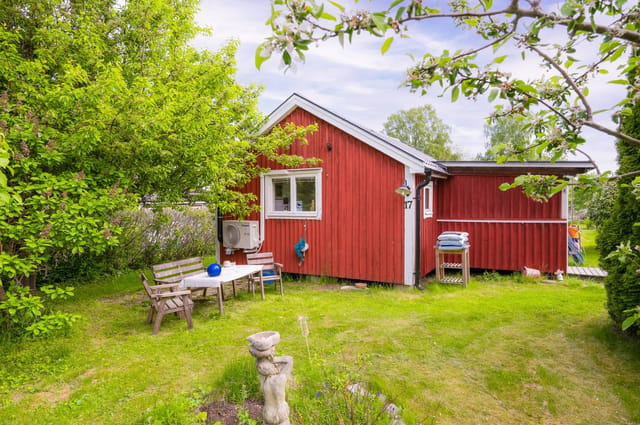
Exterior view of the cottage and garden

There's a particular kind of quiet you get at Vadforsen on a Tuesday evening in July. The Tavelån river catches the low sun at an angle that turns it copper, the apple trees are heavy with fruit that won't be ready for another six weeks, and the only sounds are bees working the raspberry canes and someone three plots over laughing at something. It's the kind of quiet that city people spend years trying to find and rarely do. Plot 69 in the Vadforsen koloniområde is that place. Tucked at one of the most privately situated positions within this established allotment community in Ersmark, just outside central Umeå, it looks out over open meadows and the Tavelån river — a view that changes every single day depending on the season, the light, and whether the local birds are feeling cooperative. The plot itself runs to approximately 300 square metres, and whoever has been tending it clearly loves what they do. Two separate cottages sit within the garden — the main one at around 25 square metres of combined building area, and a smaller secondary structure — giving you flexibility that a single cabin rarely offers. Have the kids or a couple of friends up from Stockholm for the weekend? There's room. Want a dedicated potting shed or a quiet reading space that isn't the main living area? That's already sorted. Electricity is connected, which matters enormously up here, where the season stretches from early April through to late October if you're willing to wear a jumper in the evenings. The outdoor kitchen deserves specific attention because it's genuinely well thought out — not just a counter bolted to a wall. There's a gas stove with oven, an induction hob, a gas grill, and a microwave, plus the kind of workspace you'd actual ... click here to read more
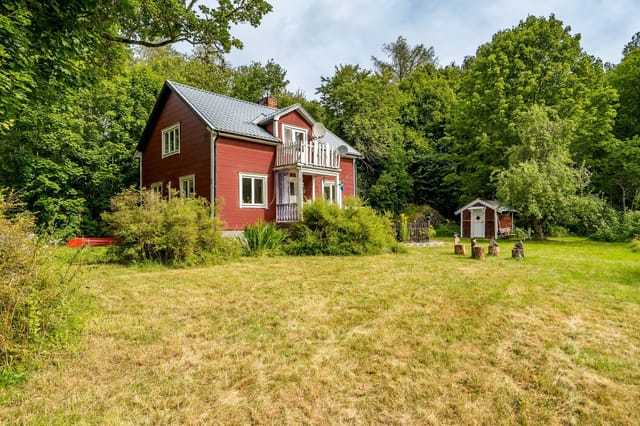
Exterior view of the main cottage and garden

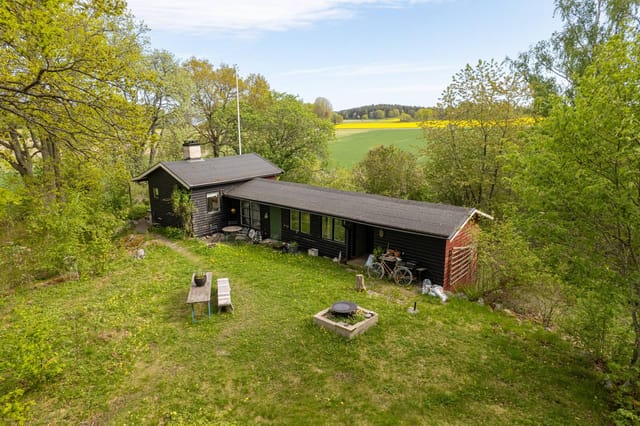
Early on a Saturday morning in Bergsjö, the kitchen fills with pale Nordic light before the rest of the house wakes up. The geothermal heat hums quietly underfoot. Outside, frost still clings to the garden edges, and the spruce trees beyond the fence stand perfectly still. This is what 172 square metres of Swedish countryside living actually feels like — unhurried, real, and quietly extraordinary. Vade 308 is a proper old Swedish villa, built in 1909 and sitting on a plot of 2,469 square metres in Nordanstigs kommun, roughly 260 kilometres north of Stockholm along the High Coast corridor. The price — 60,700 EUR — is almost startlingly low for what you get: a large three-to-four bedroom home in good condition, an A-rated energy label, geothermal heating already installed, and enough land to grow food, host summer gatherings, or simply watch the seasons change from a garden chair. For international buyers looking at second homes in Scandinavia, it's the kind of listing that stops the scroll. The house itself rewards close attention. It's not a renovation project in the exhausting sense — the structure is solid, the heating modern, and the main living area is move-in ready. What's genuinely exciting is the upper floor, where an unfinished section invites you to put your own mark on the space. A guest suite with dormer windows. A reading room lined with bookshelves. A home studio with north-facing light. The bones are there; the story of what it becomes is yours to write. Five rooms spread across the ground and upper floors give the layout real breathing space. Three confirmed bedrooms mean you can sleep a family comfortably and still have a room left over for whoever shows up with a sleeping bag in July. The kitchen sits ... click here to read more
Front view of Vade 308 villa

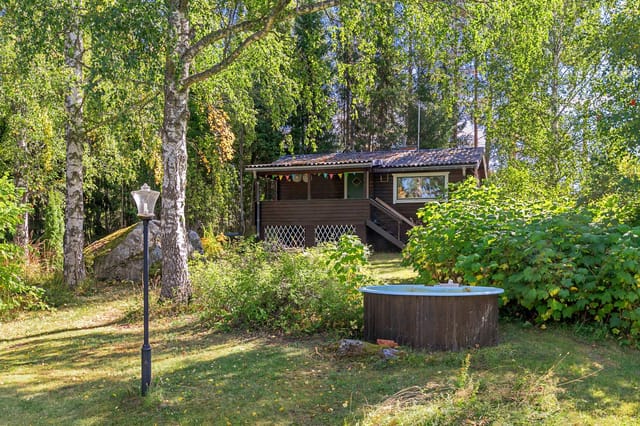
Picture this: you're sitting at a 1950s kitchen table, coffee in hand, looking out through original single-pane glass at a hillside property that has belonged to one family since 1901. The birch trees outside are so close their branches brush the windowsill. There isn't a neighbor in sight. This is Höjden 1 — a three-bedroom house sitting on over 5,200 square meters of private land right in the heart of Färgelanda, western Sweden, and it's one of those rare properties you genuinely don't come across twice. The address says the center of town. The reality feels more like a world apart. The hill itself — höjden literally means "the height" in Swedish — lifts the house just enough above the surrounding streets that the dense mature trees form a complete green curtain around it. You can walk to the ICA supermarket on Storgatan in under ten minutes, but you'd never know a town was there. That combination, genuine seclusion without genuine isolation, is almost impossible to engineer and nearly impossible to find. Built in 1901 and held within the same family for 125 years, the house is the kind of place that accumulates layers. The original late-Victorian timber frame gives the structure its bones. Then in the 1950s someone added a kitchen extension — and they had taste. The retro cabinetry is the real thing, not a modern reproduction: rounded corners, pastel tones, the kind of craftsmanship that design-conscious buyers now spend fortunes trying to recreate. The windows throughout carry the optimistic clean lines of the 1960s, while original wooden doors and period joinery anchor everything back to the Edwardian core. The result is not confused — it's a genuine archive of Swedish domestic design across a century, and it read ... click here to read more
Exterior view of the house and garden

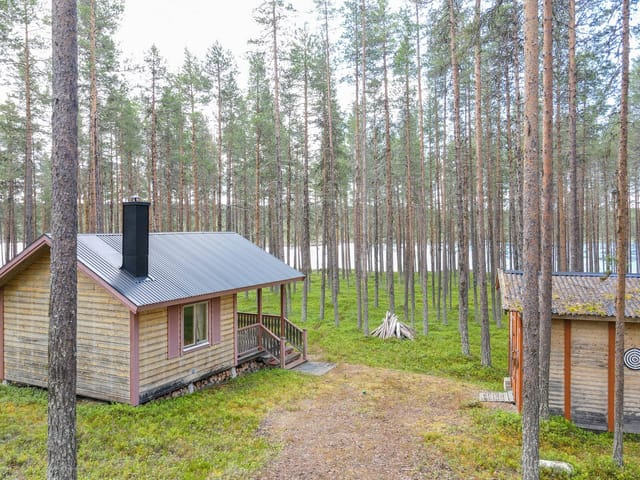
Picture this: a Saturday morning in late June, the kind where the Swedish summer sun is already warm by seven, the air carrying the faint smell of cut grass and lake water. You step out the front door of your 1945 cottage at Sjöbo Sommarstad 66, coffee in hand, and the only sounds are birdsong and the distant laughter of kids heading down to the Almenäs bathing area. This is what you bought it for. Not a hotel room, not a package holiday. This. Sjöbo Sommarstad is one of those places that Borås locals know about and quietly keep to themselves. Tucked alongside the Viskan River on the western edge of the city, the area has been a summertime gathering point for Swedish families for generations — a patchwork of well-tended cottage plots, fruit trees heavy in August, and neighbors who nod hello and actually mean it. Number 66 sits here with a kind of quiet confidence. Built in 1945 and maintained in good condition, the cottage has the bones of a proper Swedish sommarstuга: red-painted timber, a masonry fireplace that radiates warmth on cool June evenings, and just enough space for life to feel unhurried. The footprint is compact — around 50 square meters across 3.5 rooms — but the layout works hard. The living room centers itself around that brick fireplace, and on the evenings when the temperature dips after sunset, you'll be grateful for it. Swedish summers can surprise you. The kitchen is functional and honest; it doesn't pretend to be anything it isn't, but it has everything you need to put together a proper midsommar spread or a weekday dinner of freshly caught perch. The dining area sits adjacent, framed by garden views, and breakfast here on a clear morning is worth more than any restaurant terrace in the city cente ... click here to read more
Exterior view of the summer cottage and garden

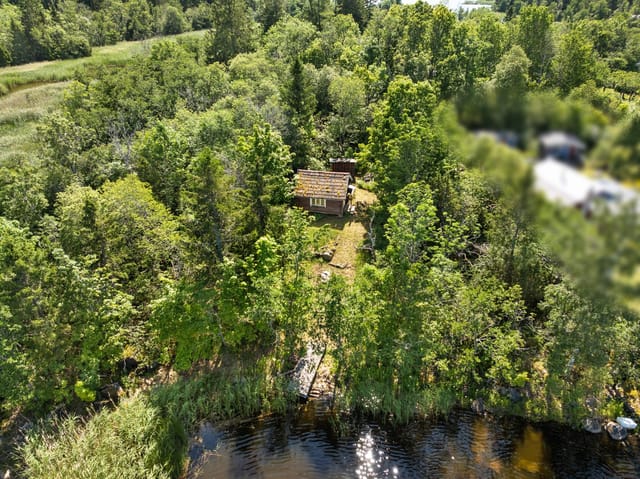
Step inside on a Tuesday morning in late June, when the light in Västra Götaland does something it only does in summer — it just stays, pale gold and horizontal, filtering through the old kitchen window at six in the morning and still hanging around past ten at night. The cast-iron wood stove ticks quietly. Outside, two hectares of open farmland stretch toward a treeline of birch and spruce. Nobody is coming down this road today unless they mean to. That's Holmen 2. A hundred-year-old Swedish country house sitting on just over three hectares of its own land, about ten minutes outside the small town of Högsäter in Färgelanda municipality. It's the kind of place that takes a minute to fully compute — the scale of it, the quiet, the way the barn's dark timber bulk anchors the yard like it's been there since before memory, because it essentially has. The house itself dates to 1920 and carries its age with confidence rather than apology. Inside the living room, the original log walls have been stripped back and left exposed — not as a design statement, but because whoever did it clearly understood that this is what the house actually is underneath. Run a hand across those logs and you're touching construction from a century ago, still solid. The wood-burning stove in the corner is the social center of the room in October when the first cold front rolls in from the Norwegian plateau. It makes the space feel earned, not decorated. The kitchen runs on a wood-fired stove too, and this isn't a gimmick. In a house this age, with this setting, cooking over wood makes complete sense — it heats the room, it slows down the morning, and it produces a smell that no gas burner ever will. Two bedrooms and roughly 60 square meters of liv ... click here to read more
Exterior view of the country home

The first thing you notice on a July morning at Gåstjärnsvägen 2 is the silence. Not the absence of sound, but the right kind of sound — a woodpecker working through the birch bark somewhere behind the garden, the wind moving through the pines, the distant lap of water from Gåstjärnen lake just down the track. You step out through the red cottage door onto dewy grass, coffee in hand, and there are 4,020 square metres of your own Swedish countryside stretching out in every direction. This is what a vacation home in Sweden actually feels like. Not a resort. Not a hotel. This. Ställdalen sits quietly in Ljusnarsbergs municipality, tucked into the forested hills of Örebro County in central Sweden — a region the Swedes call Bergslagen, old mining country that has spent the last century slowly returning to wilderness. The villages here are small, the roads are lined with wild raspberries in August, and the light in September turns everything gold and amber in a way that makes photographers pull over on the E18. It's roughly two and a half hours by car from Stockholm via the E18 and road 60, or just under two hours from Örebro. Kopparberg, the nearest town with a proper grocery store, pharmacy, and hardware shop, is about ten kilometres north. Close enough for a quick run when you need supplies. Far enough that nothing interrupts the quiet. The cottage itself — or torp, in Swedish, the word for these small rural homesteads — was built in 1850. That's not a figure plucked from a brochure; you can feel it in the thick timber walls, in the way the building has settled comfortably into its plot over generations. The classic Falun red facade with white trim is as quintessentially Swedish as it gets, the kind of image that ends up ... click here to read more
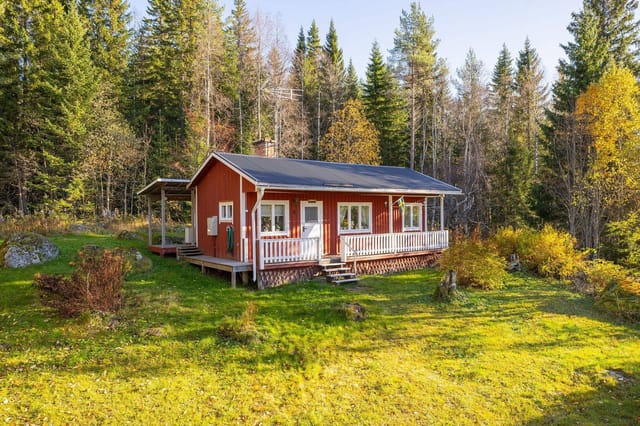
Front view of the cottage and garden

Early July morning. You push open the glazed veranda door and the birch forest breathes cool air straight into the kitchen. Somewhere across the water, a loon calls. The wood stove still holds last night's warmth. This is what mornings at Morhagsvägen 70 & 72 actually feel like — and once you've had a few of them, going back to the city gets harder every time. Sunnansjö sits in the Ludvika municipality of Dalarna, one of Sweden's most storied provinces, and this particular corner of it rewards the people who find it. The property sits in Morhagen, a small lakeshore community right on the edge of Lake Väsman — a deep, clean glacial lake that locals have been swimming, fishing, and paddling on for generations. The house itself is compact and well-kept, around 40 square metres, but the land it comes with is anything but small. Two separate cadastral plots — Sunnansjö 108:24 at 1,643 sqm and Sunnansjö 108:25 at 1,553 sqm — combine for just over 3,196 sqm of mixed lawn and natural woodland. That's a lot of Sweden to call your own. The cottage is designed with the kind of honest practicality that Scandinavian summer houses do best. Open-plan living room and kitchen keep things social — you're never marooned in a separate room while everyone else is talking. A wood-burning stove anchors the living area, and on grey October afternoons when the light drops early and the forest goes quiet, it earns its place completely. The bedroom is comfortable and private, and the bathroom comes with an eco-friendly incineration toilet — sensible for a property this size in this setting, and entirely maintenance-friendly for owners who aren't here every week. The glazed veranda is where you'll spend most of your waking hours. Facing out towa ... click here to read more
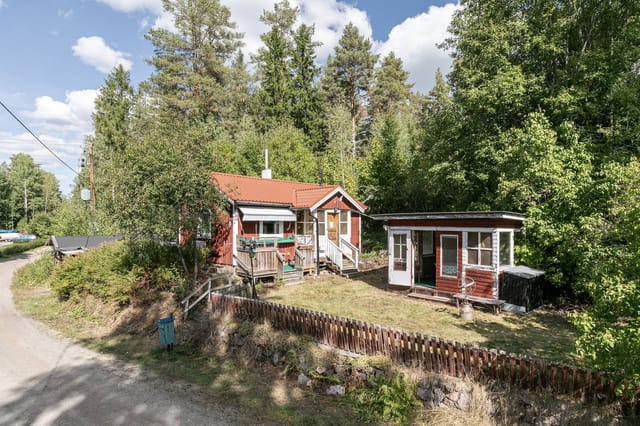
Exterior view of the main cottage and garden

Step off the gravel track at Forsbacka 97 and the first thing that hits you is the quiet. Not the quiet of a city apartment with the windows shut — actual, uncut silence, broken only by the creak of spruce branches and, if you're lucky, the distant call of a black-throated loon somewhere out over the river. This is Sorsele, a small municipality in Västerbotten County where Swedish Lapland begins in earnest, and this timber cabin sits right at the edge of the kind of forest that most people only ever see in photographs. The cabin itself is compact and honest. One bedroom, an open-plan living space, a covered veranda, and a utility building out back. That's it. But what it does with those elements is something you feel more than measure. The built-in open fireplace commands the main room the way a fireplace should — it's wide, it's deep, and on a February evening when the temperature drops to minus twenty outside and the aurora is doing its thing above the treeline, it becomes the entire reason you're here. The wood-burning stove pulls double duty for heating and, when you want it to, cooking. The large windows face the forest rather than a road or a fence, so when you wake up in the bedroom and look out, you're looking at birch trunks dusted in frost or, in July, twenty-two hours of golden light filtering through a canopy that's gone genuinely luminous green. The covered veranda is where summer mornings happen. Coffee, a wool blanket if it's early, and the particular Swedish ritual of sitting still long enough to spot what's moving in the treeline. Roe deer are common. Elk are not unusual. The 1,165 square metre plot is all natural woodland — no manicured lawn, no ornamental hedging, just the forest doing what it does. ... click here to read more
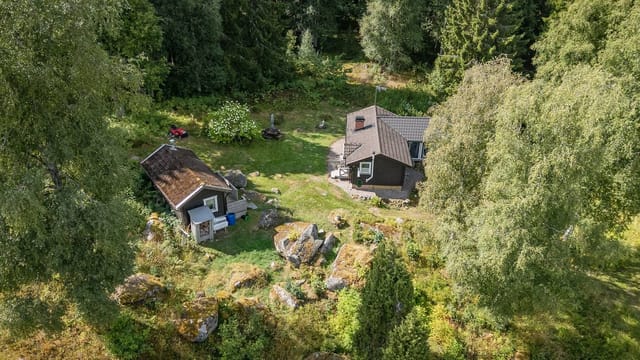
Exterior view of Forsbacka 97

The first thing you notice is the silence. Not an empty silence, but the kind filled with things — water lapping against sun-bleached rock, the distant caw of a crow crossing the bay, the creak of old timber settling in the morning cool. Standing on the cliffs at the edge of this property on Edö, with Gälnan bay stretching out ahead and the Stockholm archipelago fanning out in every direction, it becomes immediately clear why one family held onto this place for over a hundred years. This is not a renovation project. It is an inheritance — offered now to someone outside the bloodline for the first time. The estate comprises four jointly taxed properties totaling 19,813 square meters of genuine archipelago land. Open meadows bleed into mature forest. Flat granite slabs drop down to private shoreline. And at the water's edge, a boathouse sits quietly, its doors facing Gälnan, ready to shelter a small boat or a kayak or whatever craft you choose to take out into the maze of islands beyond. The main house rises across three levels — basement, living floor, and a partially finished attic — covering over 100 square meters of built area. There is also an outbuilding, remnants of the old farm infrastructure that once made this place genuinely self-sufficient: people grew food here, caught fish from this exact shoreline, and lived largely off the land long before that was considered a lifestyle choice. Much of the original character survives. Wide-plank floors, hand-fitted joinery, the proportions of rooms designed for actual living rather than photography. The house needs work — real, committed renovation — and that is stated plainly, not buried in euphemism. For the right buyer, that is the entire point. Homes like this, with ... click here to read more
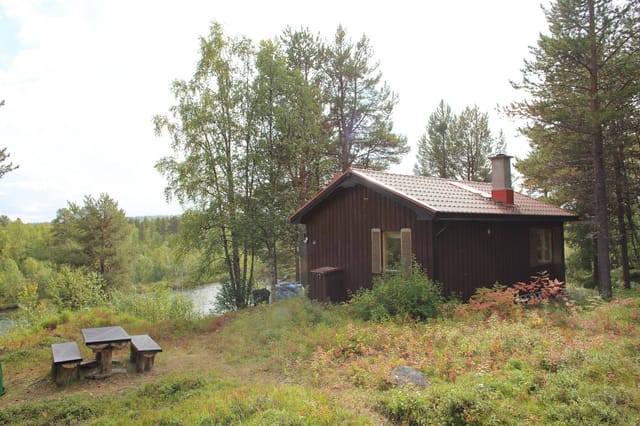
Exterior view of the main house and grounds

Step outside on a July morning and the stream is already running. You can hear it from the kitchen window — a low, steady rush that cuts through the silence before the coffee has even finished brewing. That's the rhythm of life at Gräsholma 4512, a traditional red-painted Swedish stuga sitting on over 4,400 square meters of land in Markaryds kommun, surrounded by forest and open meadow in the kind of quiet that most people only find by accident. This is southern Sweden at its most unhurried. Markaryd sits in Kronoberg County, close to the border with Skåne, roughly 50 kilometers north of Helsingborg and about 40 kilometers from Ljungby. The E4 motorway is nearby, making it far more accessible than its rural character suggests — you can be in Malmö in under 90 minutes, or catch a flight from Malmö Airport (Sturup) without an early-morning scramble. For buyers flying in from elsewhere in Europe, Copenhagen Airport is also a realistic option, roughly two hours by car. The point is: you don't have to sacrifice the world to get here. The cottage itself was built in 1922 and painted the deep Falun red that's become almost synonymous with the Swedish countryside. White window trim, a pitched roof, a garden that rolls into the tree line — it looks exactly like the image that forms in your mind when someone says "Swedish summer house." Inside, the living space runs to 44 square meters, compact but considered, with wooden floors, good natural light, and the kind of layout that pushes you outdoors rather than keeping you in. There's an additional 20 square meters of secondary space — currently used for storage — which could easily become a hobby room, a workshop, or a proper guest annexe with minimal effort. Three bedrooms sleep ... click here to read more
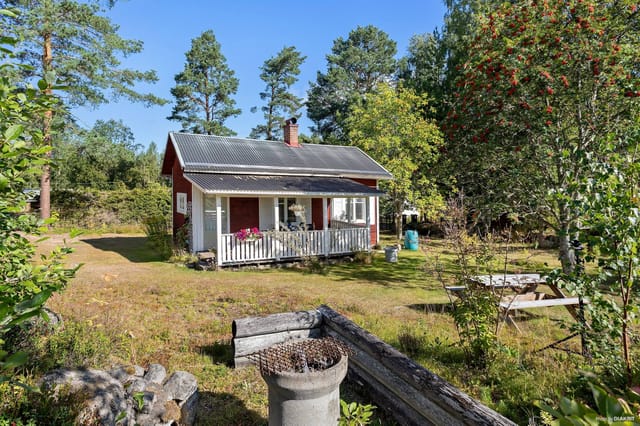
Front view of the red cottage

Step off the train from Västerås on a Friday afternoon, drive five kilometers through birch forest still dripping from the morning rain, and by the time you pull up to Grenvägen 4, the week already feels like a different life. That's the thing about this part of Bergslagen — the decompression happens fast. The pines close in, the road narrows, and everything slows down in the best possible way. This classic Swedish röd stuga sits in the quiet hamlet of Godkärra, and the lake — Övre Vättern — is essentially at the end of the lane. Not a marketing stretch. You can hear it on still mornings. The property includes access to a shared boat dock, so whether you're rowing out at six in the morning with a fishing rod and a thermos of coffee, or just watching your kids splash around in the afternoon shallows, that water is yours to use. Swimming spots along these shores are sandy and shallow near the edge — the kind that grandparents and toddlers both love. The cottage is a single-level build, traditional in every sense: red-painted wooden paneling, a metal roof replaced around 2010, and a foundation on piers that gives it that slightly elevated, classic Dalarna-adjacent silhouette you'd recognize from a hundred Swedish summers. It doesn't try to be something it isn't. At 72 square meters it's deliberately compact — two bedrooms, one bathroom, a living room and kitchen that flow into each other naturally, and an attached terrace where most of the actual living happens between May and September. That terrace deserves a proper mention. It was roofed over with metal in 2019, meaning you can leave the cushions out during a passing shower, keep the grill going in drizzle, and sit out until ten at night under the Swedish midsummer sk ... click here to read more
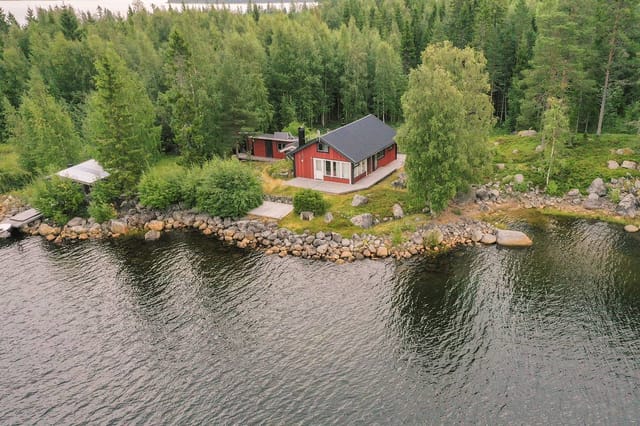
Exterior view of the holiday home

Stand at the edge of the plot on a June morning and the only sounds are birdsong, the distant hum of a tractor somewhere beyond the tree line, and the soft creak of the old barn settling in the warmth. That's Ytternäs in Edsbro — a corner of Uppland that most Swedes know only as a blur of pine forest glimpsed from a car window, but those who stop here tend to stay a long time. Sparrtorpsvägen 26 is not a turnkey property. It's something more interesting than that. Two residential houses, a 1930s barn built from timber that was already old when your grandparents were young, and 3,769 square metres of open Swedish countryside — all sold as a single holding. If you've ever sketched out plans for a small family compound, a weekend retreat that could actually grow into something over the years, or a rural base in Scandinavia that gives you room to breathe and the freedom to build something on your own terms, this is worth a serious look. The second house — the one in usable condition right now — has a room and kitchen on the entry level, both warmed by a wood-burning stove, and a summer room upstairs that catches the long northern light beautifully from around May through September. It's simple. Honestly, very simple. But simplicity up here isn't a deficiency; it's the point. The bones are honest, the proportions are liveable, and a buyer with a clear vision and some patience will find it responsive to careful renovation. The interiors are a blank slate — no ornamental distractions, just space and possibility. The first house is older — likely late 19th or very early 20th century — with three rooms and a kitchen, including a traditional tiled kakelugn on the upper floor that adds real character. The roof has suffered from ... click here to read more
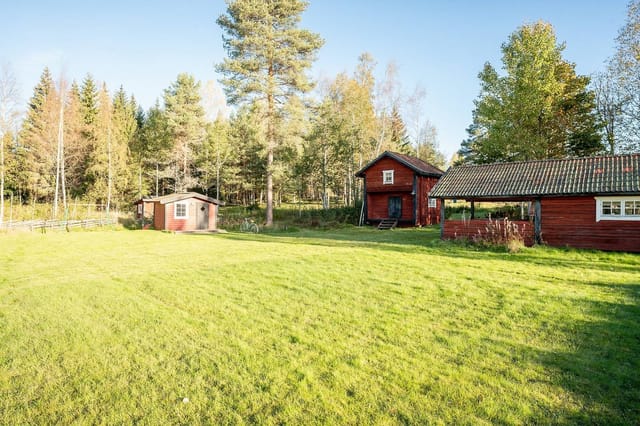
Exterior view of the main house and garden

The fly line rolls out over the Laisälven at six in the morning and the grayling are already rising. You're standing on your own deck, coffee cooling on the railing behind you, and the only sounds are the river sliding past and a single curlew somewhere upstream. This is what ownership at Laisviken 144 actually feels like — not a concept, but a Tuesday morning in July. Sorsele sits deep in Swedish Lapland, about an hour's drive south of the Arctic Circle along the E45 — the same road locals call the "Wilderness Road" or Vildmarksvägen. It's not a place people stumble across. You come here on purpose, because you know what's here: one of the most intact river systems in all of Europe, forests that stretch unbroken for hundreds of kilometres, and a quality of silence that most of Europe has simply run out of. The property itself is a classic Swedish log cabin, hand-built in the style that has kept Lapland families warm through centuries of hard winters. Fifty square meters, one bedroom, a bright main living space with windows that face directly onto the river, and a glass-enclosed veranda that makes the outside feel like inside for roughly nine months of the year. The log walls — thick, honey-coloured, fragrant on warm days — do more than just look the part. They keep the cold out in February and the heat comfortable in the high summer light when the sun barely sets. That veranda deserves its own mention. On a mid-August evening when the light goes gold around ten o'clock and the Laisälven is mirror-flat, it becomes the best room in the house. A card game, a bottle of Riesling, friends who've driven up from Stockholm — you'll find nobody wants to go to bed. The glass panels mean you're still sitting in that same spot wh ... click here to read more
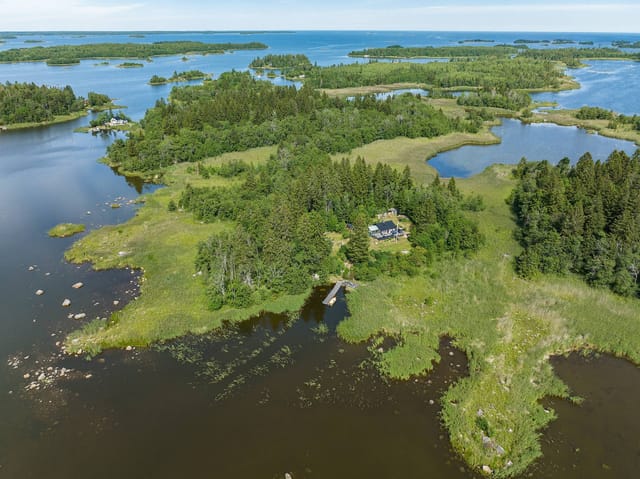
Exterior view of Laisviken 144, riverside holiday home

At five in the morning in July, the sun hasn't gone down since yesterday. It hangs low and amber over the Gulf of Bothnia, throwing copper light through the birch trees at the edge of the garden, and you're already awake — not because you have to be, but because Seskarö does something to your sleep cycle. You stop fighting time up here. You start living by light instead. That's the pull of Bladviken 5. A two-bedroom country home on one of northern Sweden's quieter islands, sitting on a 1,975 square metre plot just a hundred metres from the shoreline. The water is right there — you can smell it through the kitchen window in the morning, that cold, clean salt-and-pine combination that doesn't exist anywhere further south. The house itself is 63 square metres of honest, practical Scandinavian living. Wooden walls, natural light coming in at all angles, and a floor plan that doesn't waste a centimetre. It's not enormous, but it's thoughtfully arranged — the kind of layout where you always know where everyone is, where conversations drift naturally from the kitchen to the living room without anyone having to raise their voice. Two bedrooms handle a couple or a small family comfortably. The single bathroom is functional. The kitchen is set up for actual cooking, not just reheating things — and when you're coming back from a morning on the water with fresh-caught perch or Baltic herring, that matters. What extends the property's real usefulness is everything outside the main house. Multiple outbuildings sit across the generous plot, and they're the kind of practical structures that Swedish island life actually calls for. There's room for a proper sauna setup — this is Norrbotten, after all, and a summer evening without a sau ... click here to read more
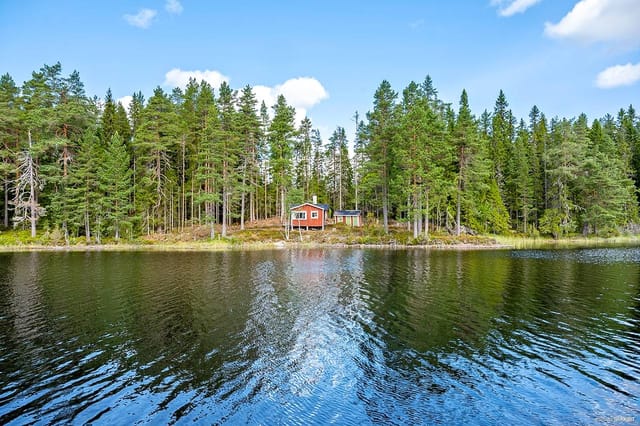
Front view of the main house and garden

Step off the gravel path and onto the covered porch of Rumma Ekenberg on a late July evening, and the first thing you notice is the silence. Not an uncomfortable silence — the kind that has texture. Wind moving through birch trees. A wood pigeon somewhere to the east. The faint smell of pine resin warming in the last of the day's sun. If you've been chasing that particular kind of quiet for years, you've just found it. This 19th-century Swedish torp sits in the village of Rumma, tucked into the rural heart of Östergötland — a county that Swedes themselves talk about with a certain reverence. Three bedrooms, one bathroom, 96 square metres of winterized living space, and just over 1,000 square metres of land that backs toward open fields and forest. At €87,000, it's the kind of property that makes you do the math twice. The house is old in the best possible way. Original wide-plank wooden floors run through the living room, their grain darkened and worn smooth by well over a century of use. Three windows on three different walls mean the room catches the light at almost every hour — gold in the morning from the east, bright and even through the afternoon, and that long, horizontal Scandinavian evening light that doesn't quit until past ten in summer. The open fireplace anchors the space. Come October, when the first frosts push in across the fields, you'll be very glad it's there. The kitchen was renovated in 2006, and whoever did the work had good taste. Masur birch cabinetry — a figured, almost burl-like birch that's genuinely striking up close — gives the room a quiet distinctiveness that off-the-shelf Ikea kitchens simply can't replicate. Black-and-white stone-effect flooring, decent appliances including a dishwashe ... click here to read more
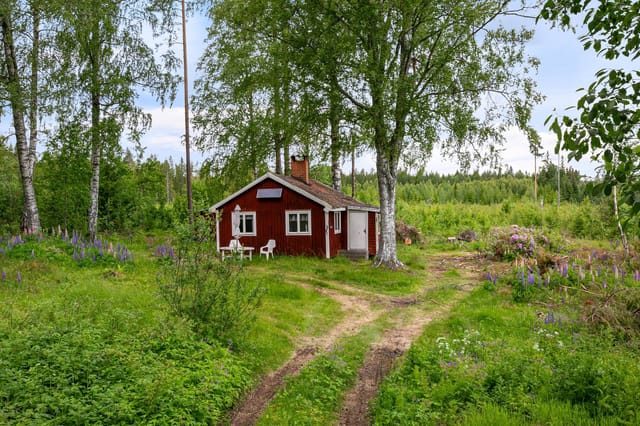
Exterior view of the country cottage

You wake up, the morning is quiet except for the sound of birdsong filtering through the pine trees, and you walk barefoot across dewy grass to rinse off under the open-air shower while the sky above turns from pale grey to gold. That's the rhythm here at Bengtsgård 80. Not a performance of countryside living — the real thing. This 45-square-metre holiday home sits on a generous 1,500 m² leasehold plot in Bengtsgård, just outside Kristinehamn in Sweden's beloved Värmland region. At around €70,000, it's one of those properties that makes you do a double take. Lake Vänern — Europe's third-largest lake — is a short walk down the road. The Bengtsgård bathing area, with its clean sandy shore and calm swimming waters, is practically your front yard. And yet the place feels genuinely tucked away, surrounded by mature trees that screen you from the world without making you feel cut off from it. The house itself was built in 1970 and renovated in 2019, and the kitchen-living area is the real heart of it. Open-plan, bright, with large windows pulling in natural light that shifts dramatically through the seasons — it's the kind of space where Sunday mornings stretch out over long breakfasts and nowhere-to-be afternoons. The kitchen has been modernised properly: real storage, working appliances, finishes that don't feel temporary. A wood-burning fireplace anchors the living room, and on those September evenings when the air turns cool and the lake mist rolls in, it earns its place completely. One bedroom, thoughtfully arranged for genuine rest. There's also a separate utility room with an incineration toilet — a practical, low-footprint solution that's standard in Swedish off-grid holiday properties and entirely in keeping with t ... click here to read more
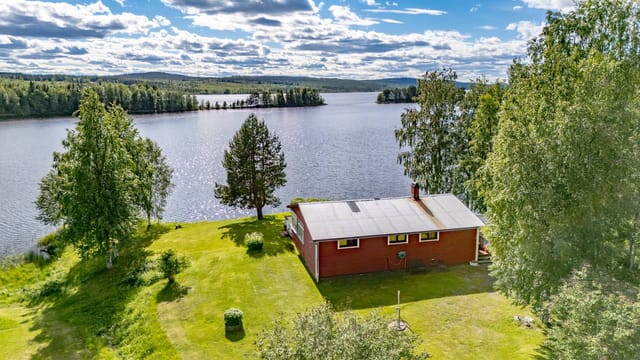
Front view of Bengtsgård 80

Saturday morning, and the cherry tree outside is dropping its last white blossoms onto the patio table. You've got coffee on, the kitchen window is cracked open, and the only thing on the agenda is deciding whether to cycle down toward the Öresund coast or spend the afternoon in the hammock. This is Björkgången 22 — a compact, well-kept cottage in Kölnans Fritidsby, one of Malmö's most quietly coveted leisure village districts, and a property that earns its price tag through sheer livability rather than size. Forty square meters sounds modest until you're inside. The main room is flooded with light from several windows, and a door opens straight onto the garden so that the line between inside and outside essentially disappears on warm days. Summers in southern Sweden last longer than most visitors expect — July evenings here don't go dark until past ten, and that extra space between the living room and the patio effectively doubles what you're working with. The kitchen sits just off the main room, a garden-framed window turning even mundane meal prep into something more pleasant. A washing machine is tucked in discreetly, which matters more than it sounds when you're planning weeks here rather than weekends. The bedroom is at the quieter end of the cottage. No street noise, no early traffic — just birds in the morning and the occasional rustling from the mature trees that ring the back of the 375-square-meter lot. That lot is the real story here. A pear tree, an apple tree, a cherry tree, and a magnolia that puts on an extraordinary show every April. The rear of the garden is genuinely secluded: dense summer growth means you could host a lunch back there and your neighbors wouldn't know. A hammock is already strung bet ... click here to read more
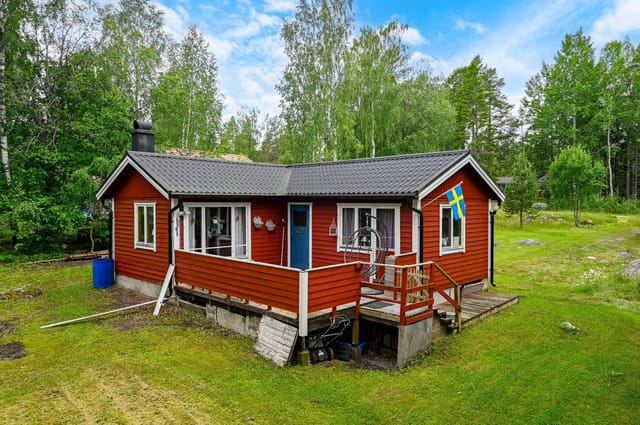
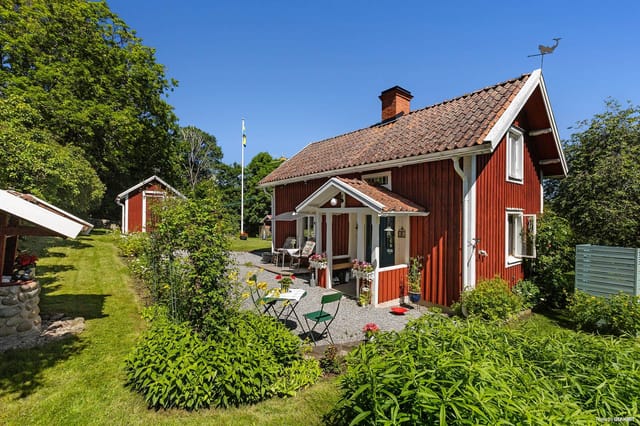
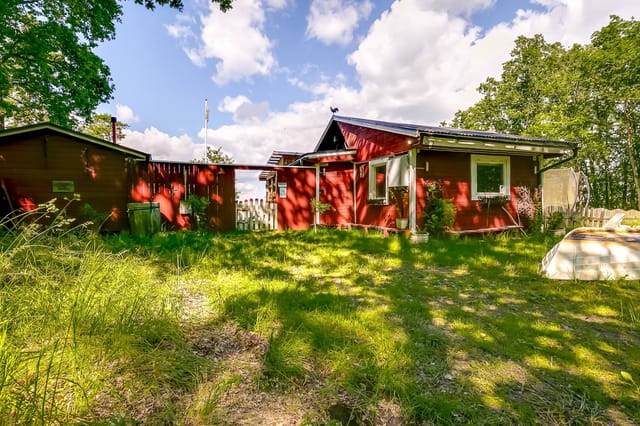
Front view of the cottage and garden

Picture this: it's six in the morning, the mist is still sitting low over Lake Immen, and you're walking barefoot across cool wooden floors to put the kettle on the range cooker. The kitchen smells faintly of yesterday's wood smoke. Outside the west-facing veranda, a blackbird is going absolutely wild in the currant bushes. This is what a Tuesday looks like here — and that's before the weekend even starts. Immen Sörgården 563 is a 1939-built Swedish country home on the edge of Karlskoga municipality, sitting on just under 2,000 square meters of established garden with direct trail access to Lake Immen's swimming spots. It's the kind of place that takes roughly four minutes to make you forget you ever owned a laptop. The house itself runs to about 70 square meters across three main rooms, a kitchen, and a small additional bedroom that was originally used as a storage nook — which tells you something useful about the bones of the place. Swedish farmhouses from the 1930s were built to last, and this one has been kept in good condition without losing what makes it worth keeping. The wooden floors throughout are the real thing, not a renovation gesture, and the kitchen's white-waxed boards give the whole room a clean, light quality even on grey autumn days. The wood-burning stove in the kitchen is fully functional and very much in use — not a decorative relic. When the temperature drops in October, it earns its place. There's also a range cooker for proper cooking, and the kitchen layout is generous enough for a table, which matters enormously if you've ever tried to host six people in a cramped holiday kitchen. The living spaces carry that particular Swedish quality of being simultaneously unfussy and deeply comfortable. ... click here to read more
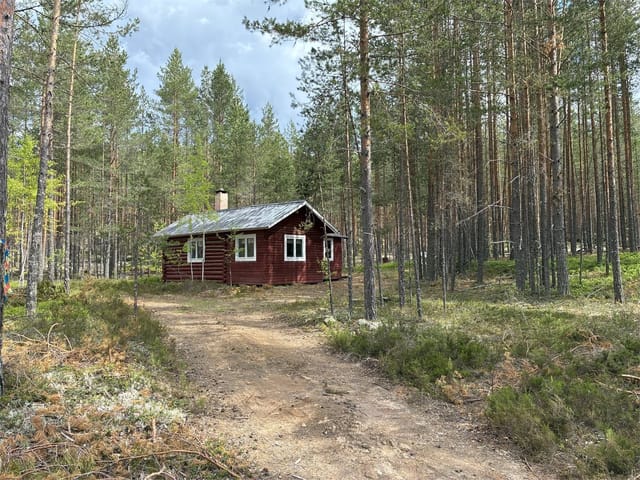
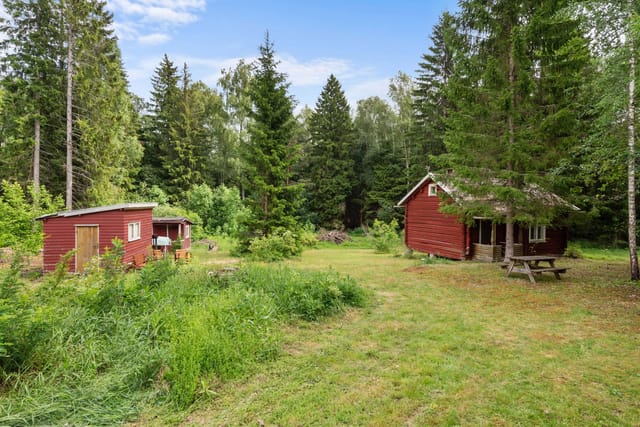
Front view of the cottage and garden

Step outside on a September morning and the air smells like pine resin and cold water. The birches have just turned gold, and from the southwest-facing windows of this solid little house in Matsdal, the light hits the tree line at an angle that makes everything look almost unreally vivid. This is Västerbotten, deep in Swedish Lapland, and once you've had a few days here, the idea of leaving feels genuinely inconvenient. The property sits at Matsdal 115, a quiet village address just outside Dikanäs in the Vilhelmina municipality. It's a 60-square-meter country home in genuinely good condition — two bedrooms, one bathroom, a wood-burning stove, and a fireplace that you'll use from October through April. The rooms are generous for the footprint. Scandinavian country homes from this era were built to be practical, not theatrical, and that's exactly what you get: well-proportioned spaces, natural light from multiple aspects, and an interior that's warm without trying too hard. The kitchen works. The living area is big enough for a proper family gathering. Nothing here needs to be torn out and started over. What really sets this place apart, though, is everything surrounding the house itself. The lot runs to 2.2 hectares — 22,000 square meters of mixed forest and open ground that's entirely yours. No shared access, no overlooking neighbors. The treeline wraps around the property in a way that creates natural enclosure without making it feel closed off. You're in the village, but the village gives you space. The wood-fired sauna is 15 square meters and positioned right beside a mountain brook. That detail matters more than it might sound. After a day on the snowmobile trails — which connect directly to the extensive Dikanäs ... click here to read more

Exterior view of Matsdal 115

Step outside on a July morning and the air smells of warm pine resin and cut grass. The apple trees are heavy. A woodpecker is working somewhere deeper in the trees, and the only traffic you'll hear all day is the distant hum of a tractor on the municipal road half a kilometer away. This is Eriksbacken 5 — a genuine Swedish stuga on a 2,752-square-meter plot in Finnerödja, Laxå, and it feels exactly like what the word "escape" is supposed to mean. The cottage itself sits comfortably at 75 square meters — not sprawling, but well-proportioned. Two bedrooms, a tiled bathroom with underfloor heating, a kitchen that handles everything from a quick fika to a full midsommar spread, and a living room generous enough that a family of four won't be climbing over each other on rainy afternoons. The bathroom was renovated in 2012 and includes both a washing machine and tumble dryer, which matters more than you'd think when you're planning to stay for three weeks in August rather than a weekend. The whole place has been adapted for accessibility too, with ramps and wider clearances — a thoughtful detail that opens the property up to grandparents, guests with mobility needs, or just anyone who's tired of holiday homes that weren't designed with real people in mind. The large south-facing wooden deck is the property's social center from May through September. On a clear summer's day, sunlight sits on this side of the house for roughly ten hours. That's not marketing language — that's the reward for the orientation of this plot. You'll develop opinions about which chair gets the best afternoon light. Beyond the main cottage, there's a separate guest cottage and a 20-square-meter storage building. The guest cottage changes how you thi ... click here to read more

Front view of Eriksbacken 5

The first thing you notice on a July morning at Odensåker 20 is the light. Swedish summer light, low and golden even at seven a.m., sliding through the birch canopy and landing on the wooden deck where yesterday's coffee cup still sits. Then the smell — warm pine resin, damp moss, water nearby. You don't have to see Lake Glan from here to know it's close. Fifty meters through the trees, its presence is something you feel before you arrive at the shoreline. This is a small property in the best possible sense. Thirty-five square meters of main living space on a generous 1,000 square meter plot in Norrköping Municipality, about an hour and a half south of Stockholm by road. Two separate buildings. One kitchen, one full shower bathroom, one bedroom with built-in storage — and more space to breathe than most city apartments three times this size. For anyone hunting a genuine Swedish countryside retreat, a vacation home in Östergötland, or a low-maintenance second home in Scandinavia, this is the kind of place that ends the search. The main cottage is built for the way Swedes actually spend summer: half inside, half out. The kitchen-dining area is compact but functional, and the living room gets afternoon sun that makes reading there feel like a small ceremony. The enclosed veranda is the real workhorse of this building — a glass-fronted space that stretches the usable season from a cold April into October, long past when the open deck would have you reaching for a fleece. On rainy days it fills with the sound of drops on the roof glass, and on clear evenings it holds warmth well into the night. It's where guests drift after dinner and where you'll find yourself lingering longer than you planned. The second building adds a ... click here to read more

Main cottage and garden view

Step out onto the rear deck just after seven on a July morning. The meadows stretch out in every direction, still wet with dew, and the only sound is birdsong cutting through air that smells faintly of pine and grass. This is Barkö — a quiet hamlet tucked into the Swedish countryside outside Östhammar, where summer feels unhurried and deliberately slow in the best possible way. Set on a generous 2,411 square metre plot along Barkö 121, this red-and-white Swedish country home from 1975 has spent its entire life in one family's hands. That kind of continuity shows. The garden is mature and deeply considered — not manicured to within an inch of its life, but layered: open lawn rolling into shade from established trees, with space carved out naturally for a kitchen garden if you want one, a greenhouse if you've been meaning to start one, or simply a hammock strung between two birches. The lot is large enough to feel private, small enough to manage on a weekend without it becoming a chore. Inside, 50 square metres is used sensibly. The living room anchors the house around a wood-burning stove that does serious work on cool September evenings when the nights start turning. Large windows pull the outside in — you get a long view over meadows and pastures that changes character entirely depending on the light and the season. The kitchen connects without fuss, practical and well-positioned for someone cooking for a table of six after a day out on the water. Two bedrooms, one bathroom with shower and WC, and a covered entrance veranda where your morning coffee goes cold because you keep stopping to watch whatever is happening in the garden. The sea is 3.2 kilometres away. That's a ten-minute bike ride on flat terrain, the kind ... click here to read more

Front view of the summer cottage

The first thing you notice on a summer morning at Litsnäset 130 is the sound of the Indalsälven moving past the garden — a low, steady current that replaces whatever city noise you carried here. The boathouse is twenty steps from the kitchen door. The fishing rod is already rigged. Coffee's on. This compact one-bedroom holiday home in Lit, Jämtland sits on a 1,150-square-metre riverside plot in the small community of Litsnäset, roughly ten minutes by car from the town of Lit and about forty minutes from Östersund. At 20 square metres, it's deliberately simple. That's not a limitation — it's the point. This kind of cabin demands very little of you. You spend your time outside. The main house pulls off something that bigger properties often fail at: everything is in its right place. A wood-burning stove anchors the living area, which doubles as a sleeping space with a sofa corner and bunk bed. When you light the fire on an October evening and the river mist rolls across the plot, the whole room feels genuinely warm rather than just heated. The kitchen is compact but practical, with its own separate entrance opening directly onto the garden — meaning you can carry plates straight to the terrace table without threading through the living space. Small detail. Big difference in daily use. The partly covered terrace is where most of the daylight hours happen in summer. It faces the water. The sun in Jämtland in July doesn't set until past ten, and from the terrace you watch the light go gold on the Indalsälven for what feels like hours. The property's own stretch of riverfront is directly accessible — you walk across your garden and you're at the water's edge. Swimming, fishing from the bank, pushing a kayak in. No shared ac ... click here to read more

Exterior view of the holiday home and garden

The first morning you wake up at Norrberg 18, before you've even put the coffee on, you'll hear it — absolute silence, broken only by the low call of a wood pigeon somewhere in the birch trees out back. No traffic. No sirens. Just Hälsingland doing what it does best. This two-bedroom country home sits on a generous 8,520 square metres of land in the rural reaches of Ljusdals kommun, and it comes with the kind of breathing room that's almost impossible to find anywhere near a city at this price. The plot is big enough to disappear into — part open meadow, part woodland fringe — and the outbuildings alone are worth the trip up here to see in person. Let's talk about the house itself. Around 120 square metres spread across two floors, which gives you more flexibility than you might expect from a two-bedroom layout. Downstairs, a wide entrance hall opens into a kitchen that's actually sized for cooking — the sort of room where you can have four people chopping and nobody's in anyone's way. Off the kitchen, two additional rooms adapt easily: reading room one week, extra guest space the next, home office the week after that. The ground floor bathroom has a shower and toilet, and everything works. Upstairs, a furnished landing functions as a secondary sitting area — the kind of spot that fills up with books and card games by August — and two proper bedrooms look out over the fields and treeline. It's a quiet, uncomplicated layout that actually suits the way people use a summer house. The sale includes all furnishings and loose items currently in the property. You drive up, you put your bags down, you open the windows. That's it. No waiting on furniture deliveries from the mainland. Now, the outbuildings. There's a tradition ... click here to read more

Front view of the house and garden

Step onto the sheltered deck on an August morning and the air already smells of pine resin and salt. The Gulf of Bothnia is less than a ten-minute walk through the trees. Somewhere behind the house, a woodpecker is working its way up a spruce. This is Söråker — quiet in the very best sense, and closer to everything than you'd expect. Söråker sits in Timrå municipality, roughly 40 kilometres north of Sundsvall along Sweden's High Coast corridor. This stretch of the Norrland coastline doesn't get the same international noise as Gotland or Dalarna, but Swedes who know it guard it fiercely. The summers here are genuinely warm, the light stretches well past ten in the evening, and the sea at Klingerfjärden is calm enough for children but cold enough to make you feel alive. In the winters — quiet, snowbound, birch trees turned to white sculpture — the same roads that carry cyclists in July carry cross-country skiers in January. The rhythm shifts completely between seasons, and that's half the appeal. The house itself was built in 1980 and sits on a 1,620-square-metre lot that backs directly onto forest. Forty-six square metres of interior space sounds modest until you're inside and realize the layout wastes nothing. Two bedrooms, a living room anchored by a wood-burning stove, and a kitchen with a proper dining area. The stove is the kind of detail that matters in October, when the evenings drop fast and you want something that heats a room the old-fashioned way — not just a thermostat click, but actual fire behind glass, the smell of birch logs, a reason to stay inside a little longer. The kitchen is set up for real cooking, not just reheating, with enough storage to stock for a week without the place feeling cluttered. Ou ... click here to read more

Exterior view of the holiday home

Early morning at Grycken 680, the lake is so still it mirrors the pine trees perfectly. You walk down to the private jetty, coffee still warm in your hand, and there is nothing between you and the water except birdsong and the faint creak of old timber. No road noise. No notifications. Just this. That is what owning a piece of Lake Grycken actually feels like. This is a genuine off-grid log cabin on its own peninsula in Lake Grycken, deep in Ovanåkers municipality in Gävleborg County, Sweden. The plot extends to 2,500 square metres and sits at the very tip of a narrow tongue of land where the water wraps around you on all sides. You are, for all practical purposes, on an island. The sense of seclusion is absolute. The cabin itself is a former logger's hut, measuring 5 by 5 metres — compact, solid, and full of the kind of character that takes a century to acquire. The logs are thick and darkened with age. Inside, the wood-burning stove is the centrepiece, and on an October evening with rain tapping the roof and a fire running hot, it is genuinely one of the most restorative places you could be in Sweden. The interior is simple and intentionally so. There is no electricity and no running water piped in — drinking water comes from a natural spring close to the lakeshore, cold and clean. This is not a property for someone who needs Wi-Fi. It is a property for someone who actively wants to leave all of that behind. A small tool shed and a traditional outhouse complete the structures on site. The garden area has been left largely wild, with forest floor giving way to the rocky lakeshore in that characteristically Swedish way that feels effortless and right. Sunlight reaches the plot throughout the day, and the aspect across ... click here to read more

Exterior view of the log cabin on Grycken 680

On a warm June morning in Galjevången, the lilacs are so heavy with bloom they droop over the garden path. You're sitting on the patio with a cup of coffee, listening to bees work through the roses, and somewhere two plots over someone is running a watering can. The city of Lund—its cathedral, its university courtyards, its Saturday market on Stortorget—is less than ten minutes away by bike. But right now it feels like it's on another planet entirely. That's the particular magic of this allotment cottage at Östra Fäladsvägen 36, plot 64, inside the Öster 1 colony—the oldest allotment community in Lund. These things don't come up often. When they do, they go fast. The plot itself is 150 square metres, and the previous owner clearly put in years of patient, knowing work. Two apple trees anchor the back of the garden—one early, one late variety, so you're picking fruit from August well into October. There's a plum tree too, and once you've had homegrown Swedish plums in a crumble on a September evening, shop-bought ones are a different category of thing. Raspberries and blackberries grow along the border, and if you get there before the birds do, there are wild strawberries tucked into the ground cover. Rhubarb, herbs, perennials that come back every spring without asking anything of you. Bulb plants push through the soil in April before you've even thought about the growing season. The garden does a lot of the work itself. The cottage is 10 square metres—compact by any measure, but that's exactly the point. A single room, large windows that pull in the afternoon light, space enough for a daybed and a small table. It's a place to sleep after an evening out in the garden, to take shelter from a sudden August downpour, to ... click here to read more

Exterior view of the cottage and garden

Picture this: it's a Tuesday morning in February, the thermometer reads minus eight, and through the frost-edged window above the kitchen sink you can see fresh snow sitting heavy on the pine branches. The wood-burning stove has already been going for an hour, the sauna is warming up, and the ski runs at Tandådalen are a short drive away. This is what five weeks a year at Salbäcksvägen 16 actually feels like. The property sits in Salbäcksheden, a quiet residential pocket of the greater Sälen area in Dalarna, Sweden's most serious mountain destination. Sälen isn't some weekend novelty — it's home to Scandinavia's largest ski resort system, the interconnected SkiStar network that links Tandådalen, Hundfjället, Lindvallen, and Högfjället across dozens of pistes and hundreds of kilometers of groomed cross-country trails. The nearest resort entrances are just minutes from the front door. Built in 2004 and kept in genuinely good shape, this 120-square-meter house is sold as Share C in a ten-owner co-ownership structure. Each owner gets five weeks of guaranteed annual use, decided at a meeting every September. For 2026, the allocated weeks are 5, 8, 25, 26, and 42 — that's two prime winter weeks in the heart of ski season, a summer slot when the valley is green and warm, an early autumn week when the birch trees turn copper, and a late winter booking that often catches the tail of good snow conditions. The annual running cost sits at around 13,000 SEK, which keeps the whole arrangement genuinely affordable compared to outright ownership of a comparable property in the region. Step inside through the hallway and the layout immediately makes sense for a mountain house. The open living space puts the wood stove at the center of ... click here to read more

Exterior view of the vacation home

Early June morning in Tived: the forest is completely silent except for a woodpecker somewhere back in the pines, and the air carries that particular smell — cold water, moss, and something faintly resinous — that you only get this deep into Swedish wilderness. You step outside with your coffee, barefoot on the grass, and realize you're about three minutes from one of the most raw and untouched stretches of nature in Scandinavia. That's the daily reality at Göte Hellmans väg 5. This compact one-bedroom house sits in the quiet cottage community of Tived, in Laxå municipality — a part of Sweden that most international visitors never find, which is precisely what makes it so good. The property spans 44 square meters of interior space on a generous 963-square-meter plot, giving you far more garden than house, in the best possible way. Built in 1966 and currently in good condition, it's a classic Swedish holiday cottage with honest bones and serious potential. Let's talk about what surrounds it first, because the location is genuinely the headline here. A short walk takes you down to Sannerud and the shores of Lake Unden, one of Värmland's larger lakes, where the water runs clear and cold and the small marina sees more rowboats than speedboats. There's a local beach for swimming through July and August, a boat ramp along the tourist road for a small fee if you want to launch your own vessel, and fishing that draws regulars back season after season — pike and perch mostly, if you ask around. The pace is unhurried. Nobody is in a rush. That's the point. Tiveden National Park is roughly 10 kilometers away. If you haven't been, it's worth knowing that Tiveden is unlike the manicured Scandinavian nature reserves you might expec ... click here to read more

Exterior view of the house and garden

There's a specific kind of quiet that settles over Eklundsfältet on a Tuesday morning in July. No traffic. Just birdsong, the distant lapping of Lake Måsnaren, and the smell of sun-warmed wood drifting through an open window. You put the coffee on, step onto the patio in your slippers, and the day belongs entirely to you. That's the reality of life at Gurkstigen 37 — a compact, well-kept summer cottage sitting in one of Södertälje's most sought-after allotment communities, just 50 metres from the water's edge. Eklundsfältet is the kind of place that takes ten minutes to fall in love with. It's a proper Swedish allotment area — organised, leafy, with neighbours who actually know each other's names. The association house, Aklejan, sits just a short walk from the cottage and gives you access to shared showers and laundry facilities, which means longer stays are genuinely comfortable rather than a compromise. There's a real community spirit here. Midsommar gets celebrated properly. People share seeds, tools, gardening tips, and occasionally a cold beer over the fence on hot afternoons. The cottage itself covers 30 square metres — and yes, that sounds modest, but the layout makes every centimetre work. Large windows pull in the daylight and give the interior a sense of airiness that belies the footprint. The living space is warm and considered, with nothing wasted. What sets this cottage apart from many others in the area is the indoor toilet — genuinely rarer than you'd expect at this price point and in this type of property — and a wood-burning stove in the kitchen that doubles as both cooking surface and the fastest way to take the edge off a cool May evening. Light it up, pour a glass of something, and the whole space ... click here to read more

Exterior view of the cottage and garden