Blog published in Buying property abroad
Share
How to Find the Right Second Home in Europe: A Complete Buyer's Framework
A complete buyer's framework for finding the right second home in Europe, from defining your goals and shortlisting properties to inspections, financing, costs, closing, and rental rules.
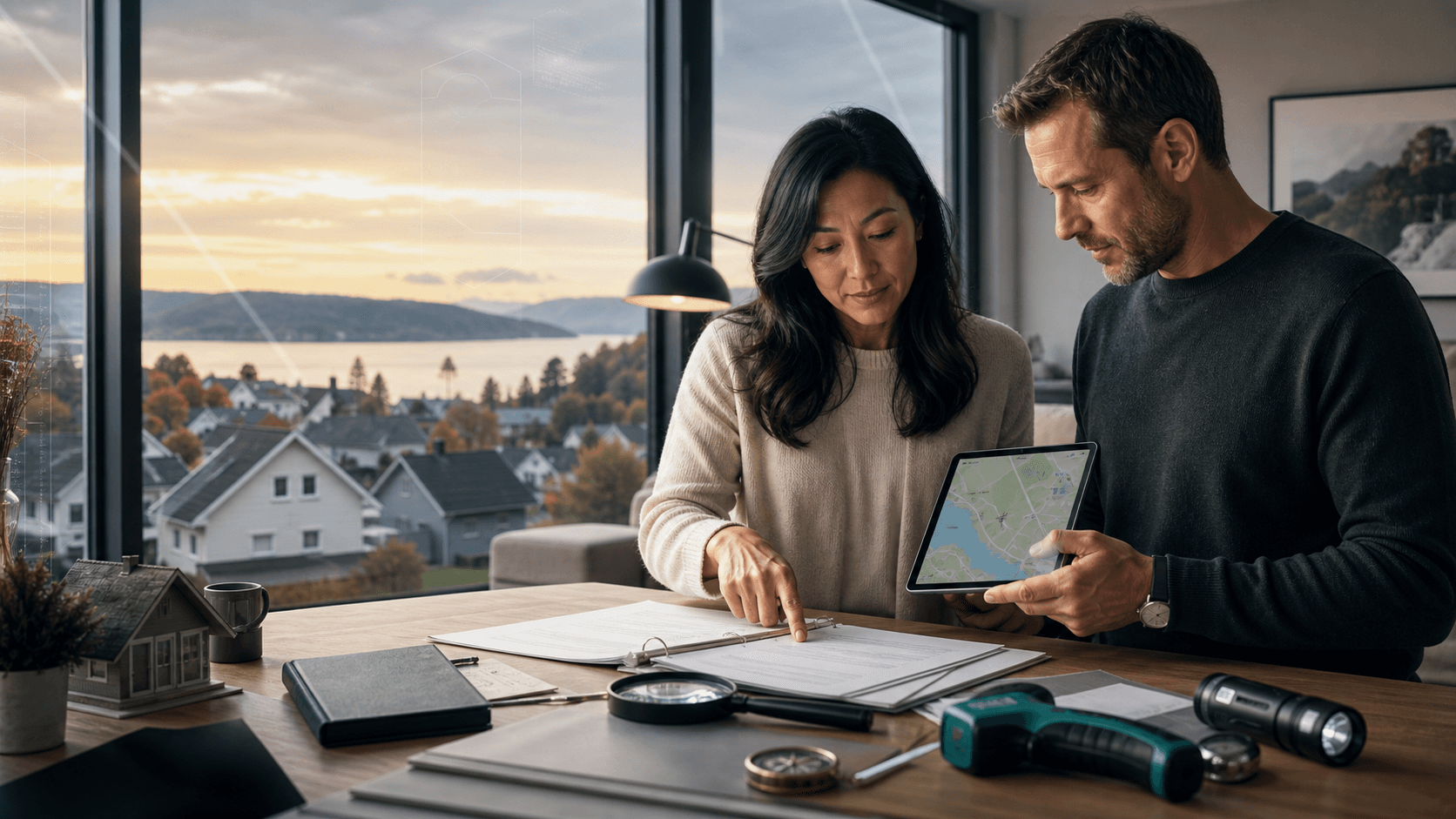
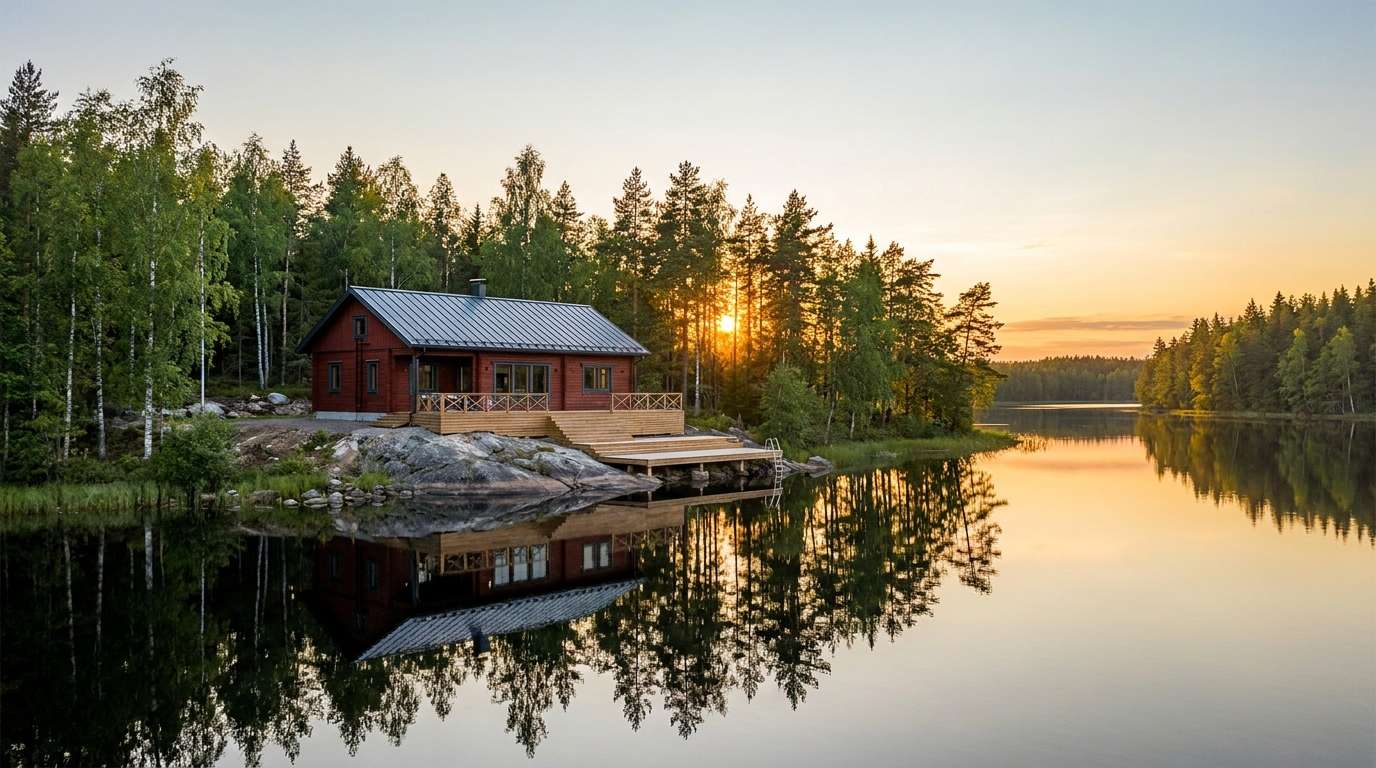
Buying a second home in Europe is one of those decisions that starts as a lifestyle aspiration and quickly becomes a research project. You browse listings, fall in love with a lakeside cabin in Sweden or a stone farmhouse in France, and then realize you don't actually know whether the septic system works, what the closing costs add up to, or whether non-residents can even get a mortgage in that country.
This guide is designed to take you from "I want a European second home" to "I'm ready to make a well-informed offer", in a logical sequence that prioritizes verification over emotion.
What does "the right property" actually mean for you?
Before you search a single listing, get clear on your goals. The criteria that make a property "right" depend entirely on why you're buying.
Ask yourself which of these use cases fits best:
- Lifestyle retreat (personal use, seasonal or year-round): proximity to airports and services matters; so does the season you'll actually use it.
- Rental income property: local short-term rental rules, tourist demand, and operational logistics become central.
- Capital preservation or long-run appreciation: resale liquidity, infrastructure investment in the region, and market transparency matter.
- Future retirement home: legal residency paths, healthcare access, and language barriers shift the decision entirely.
- Family property (shared ownership across generations): ownership structure, inheritance law, and maintenance responsibility split need legal planning from day one.
Once you know your primary goal, translate it into concrete filters: Which season will you use it? How many hours of travel time can you tolerate? How much ongoing maintenance are you willing to handle remotely? What's your true all-in budget, not just the listing price?
Writing down the answers before you search saves weeks of listing fatigue.
Your search strategy: narrow faster without missing red flags
With over 200,000 properties across Europe, Homestra's second home search lets you filter by country, property type, and price range, which is exactly the right starting point. The goal at this stage is to build a shortlist of 5 to 10 properties worth investigating seriously, not to browse indefinitely.
Apply location filters first:
- Climate and seasonality: a ski chalet in northern Sweden has a completely different use window than a coastal villa in southern Portugal.
- Airport access: a 2-hour door-to-door journey from a major hub is generally sustainable for weekend use; 4+ hours rarely is.
- Local rental rules: some municipalities have restricted or banned short-term rentals. Check this before falling in love with a location.
- Resale liquidity: cities and popular tourist areas have more buyers in any given year than remote villages. That matters if your timeline is uncertain.
Then filter by property characteristics:
- Condition vs. price: a renovation project in France at EUR80,000 may cost EUR150,000 all-in once work is done. Compare that to a ready-to-use property at EUR130,000.
- Building type and size: apartments in managed buildings come with lower maintenance burden; freestanding rural houses need more active stewardship.
- Off-grid vs. municipal services: well water, private septic systems, and wood-only heating are viable, but each adds inspection depth and ongoing cost.
- Winterization: in Nordic countries, the Baltic states, and Alpine regions, a property that hasn't been properly winterized can suffer catastrophic pipe and structural damage during your absence.
If you're considering Scandinavia, France as an affordable vacation home market is another strong option worth exploring with different cost dynamics.
Shortlist validation: verify before you fall in love
This is the step most international buyers skip, and the most consequential one. Before you visit a property in person, request these documents and verify them through official channels or a local lawyer.
Title and ownership: confirm the seller has clear legal title and that no mortgages, liens, or other charges are registered against the property. In most European countries, this involves checking a land or property registry. In Sweden, for example, ownership and mortgage data are held centrally and can be verified relatively straightforwardly.
Permits and planning status: ensure the building has proper construction permits. Unauthorized extensions or structures are common in rural Europe, and they become your liability at the point of purchase.
Energy and compliance certificates: most EU countries now require an energy performance certificate (EPC) for any sale. Request it and read it. A G-rated property in a cold climate is a significant hidden cost.
Outstanding debts and charges: in countries where community fees, utility arrears, or property taxes attach to the property rather than the owner, you can inherit unpaid debt. Confirm the seller is current on all obligations.
For more detail on the legal process in a specific country, Homestra's guide to buying property in Portugal walks through how these steps work in practice.
Due diligence checklist: what to inspect, in the right season
For an international buyer, the inspection is your most powerful protection. A professional structural survey, called a besiktning in Sweden, can cost between 5,000 and 15,000 SEK for a rural property depending on size and complexity (source: Homestra, 2026). That's a modest sum relative to discovering serious defects after signing.
Sweden's legal framework makes this point starkly: the buyer has a strict undersokningsplikt (duty to investigate), meaning you cannot easily claim compensation for defects you could have found through a proper inspection. Similar buyer-beware principles apply, in varying degrees, across Europe. The message is consistent: inspect thoroughly before you commit.
Here's what a thorough inspection should cover:
Structural condition and moisture
- Roof condition: tiles, flashing, gutters, and any visible sagging
- Walls and basement: look for water ingress, damp patches, efflorescence
- Windows and external doors: seal condition, condensation between panes
- Foundation cracks or subsidence signs
Environmental and health checks
- Radon testing: elevated radon levels are a meaningful health risk in parts of Scandinavia, Germany, the UK, and central Europe. Testing kits are inexpensive; remediation is not.
- Well water quality: for rural properties on private wells or springs, test for bacteria, nitrates, and pH. Don't assume the water is safe because the current owners say so.
- Soil drainage: poor drainage causes damp foundations and limits what you can build or plant.
Building systems
- Heating: what type, how old, last serviced? A boiler nearing end of life in a cold-climate country is a EUR5,000-EUR15,000 bill waiting to happen.
- Electrics: older rural properties often have undersized or outdated wiring; verify compliance with current standards.
- Plumbing and hot water: check for lead pipes in very old buildings.
- Septic system: private sewage systems need regular emptying and can fail; find out the tank type, age, and last inspection date.
Rural-specific checks
- Access roads: who is responsible for maintenance and snow clearing? A private road shared with neighbors needs a clear legal agreement.
- Winterization readiness: are pipes insulated? Is there frost protection on the water supply? Can the heating be managed remotely?
It's worth timing your inspection visit carefully. Viewing a property in summer may hide roof leaks, heating problems, and damp that only show up in winter conditions. If you can only visit in one season, ask for documentation of how the property performs in the other.
Financing as a non-resident: realistic options and common pitfalls
Mortgages for non-residents are available in most European countries, but the terms are stricter. Banks typically require larger down payments (often 30-40% vs. the 15-20% standard for residents), more extensive income documentation, and sometimes a local tax identification number before they'll proceed.
In Sweden, as of early 2026, mortgage rates for foreign buyers typically ran 0.1% to 0.9% higher than for Swedish residents, putting them in a range of roughly 2.9% to 4.0% (Homestra, 2026). That premium is manageable but worth modeling in your budget.
A few decision-tree questions to guide your financing approach:
- Is the purchase price under EUR150,000? Cash is almost always simpler. Mortgage setup costs and legal complexity may outweigh the benefit of leverage on smaller purchases.
- Is the property in a country with a transparent banking system and legal protections? Western and Northern Europe generally offers more predictable mortgage processes for foreigners than some Eastern European markets.
- Do you have a local tax ID in the country? Getting one takes time, in some countries, weeks. Start this process early, before you find the property you want.
- What is your currency exposure? If you earn in USD or GBP and are buying in EUR or SEK, a sudden exchange rate move can change your effective purchase price by 5-10%.
For a broader look at what to think through before committing financially, the Homestra guide on what to consider before buying property abroad covers the key financial preparation steps.
The real all-in cost: a budget template
The listing price is the starting point, not the total cost. Use this template to build your real budget before making an offer.
| Cost item | Typical range | Sweden example |
|---|---|---|
| Purchase price | - | Base reference |
| Stamp duty / transfer tax | 0.5%-10% (varies by country) | 1.5% (lagfart) |
| Land registry fee | Fixed or small % | 825 SEK (fixed) |
| Notary / conveyancing fees | 0.5%-2% | Not standard in SE |
| Legal / solicitor fees | 0.5%-1.5% | Negotiated |
| Survey / inspection | EUR500-EUR2,000 | 5,000-15,000 SEK |
| Mortgage arrangement fee | 0.5%-1% (if financing) | Varies by bank |
| Total one-time costs | ~3%-15% on top of price | ~2-3% in Sweden |
| Annual property charge | 0.1%-1%+ of value | 0.75%, capped at 10,425 SEK (2026) |
| Annual insurance | EUR300-EUR1,500 | Varies |
| Utilities (annual) | EUR800-EUR3,000+ | Climate-dependent |
| Maintenance reserve | 0.5%-1.5% of value/year | Budget generously for older rural |
Sweden's lagfart (stamp duty) is 1.5% of the purchase price or assessed value, whichever is higher, plus a fixed registration fee of 825 SEK. The annual property charge (fastighetsavgift) is 0.75% of the assessed tax value, capped at 10,425 SEK for residential buildings in 2026, with newly built homes exempt for 15 years (Homestra, 2026).
Other countries vary significantly. Portugal charges a tiered transfer tax (IMT) that can reach 8% on higher-value properties. Spain's ITP runs 6-10% depending on the region. Always calculate your country-specific version before setting a final offer price.
Offer, deposit, and closing: don't sign too early
The sequence matters enormously for international buyers. The key principle: complete your inspections and document verification before any binding commitment.
In Sweden, once the offer is accepted and the purchase contract (kopekontrakt) is signed, a deposit of approximately 10% of the purchase price is typically due within 10 days. This deposit is held in escrow by the real estate agent, but losing it is a real risk if you withdraw without a legally valid reason (Homestra, 2026). In other countries, reservation deposits are smaller but may be non-refundable regardless of what you find afterward.
Steps in a typical European purchase:
- Verbal offer accepted
- Inspection and document review (do not skip this between step 1 and 3)
- Purchase contract signed, deposit paid
- Final deed (acte de vente, kopebrev, or equivalent) signed before a notary or official authority
- Ownership registered at the land registry
The land registry step is not a formality. Until ownership is officially registered in your name, you don't have full legal protection as owner in most jurisdictions. In Sweden, this is the lagfart registration; in France, it's the cadastre update. Always confirm this step is completed and obtain the proof.
If you plan to rent it: what to sort out from day one
Short-term rental rules for second homes in Europe have tightened considerably in recent years. Cities including Amsterdam, Barcelona, Florence, and Lisbon have imposed caps on rental days, licensing requirements, or outright bans in certain zones. Rural properties are generally less restricted, but local municipality rules still apply.
Before listing a property on any platform, verify:
- Does the municipality require a rental license or registration number?
- Are there limits on the number of rental days per year?
- Is the property in a zone where residential short-term lets are restricted?
On the tax side, Sweden requires non-residents to report rental income exceeding 40,000 SEK annually to Swedish tax authorities. Under the proposed 2026 SINK regime, non-residents pay a flat 22.5% on that income (reduced from 25%), according to Homestra's Sweden guide. Capital gains from selling are taxed at 22% for non-residents. Other countries have their own regimes, Portugal's non-habitual resident framework, Spain's IRNR for non-residents, and France's micro-foncier regime each work differently.
Always align your rental management plan, will you self-manage or use a local agency?, with your tax reporting obligations before the first guest checks in.
FAQ: what international buyers actually ask
Can foreigners buy property in Europe without residency? In most Western European countries, yes. Sweden imposes no restrictions on foreign ownership, international buyers can purchase residential property and vacation homes without special permits or residency requirements (Homestra, 2026). The EU generally guarantees free movement of capital, which includes property purchase, for EU citizens. Non-EU citizens face slightly more variation, though most countries still permit purchases.
Do I need a local lawyer? For most countries outside the UK and Scandinavia, yes, and even in those markets, a local property lawyer is worth the fee. In countries with notary-based systems (France, Spain, Italy, Portugal), the notary is neutral, not your advocate. Your lawyer is.
What inspections matter most for older or winter-rental properties? Moisture, heating systems, and the roof. A wet basement or a failed boiler in February is not a minor inconvenience when you're managing the property remotely from another country.
How much should I budget for closing costs beyond the purchase price? In Northern and Western Europe, budget 3-5% on top of the purchase price as a conservative estimate for first-time buyers in a given country. In Southern Europe (Spain, Italy, Portugal), budget 8-12% to be safe.
What's the safest way to shortlist properties when I'm abroad? Use a platform that filters by country, type, and price before you view anything. Build a shortlist of 5-10 candidates, request all key documents remotely, and only travel once you have a credible reason to do so. Homestra's buying property abroad resources include country-specific guides to help you verify before you visit.
Start your search the right way
Finding the right second home in Europe isn't a browsing exercise. It's a structured process: define your criteria, filter purposefully, validate documents and conditions before committing, and model the full cost of ownership before you make an offer.
Homestra's platform gives you access to over 200,000 properties across Europe with filters built for international buyers, by country, property type, and price range. Use the search to build a real shortlist, then bring the framework in this guide to every property you visit.
When you're ready to go deeper on a specific market, start with Homestra's country-specific buying guides, including the complete guide to buying a vacation home in rural Sweden for a model of what thorough preparation looks like in practice.
Share