Blog published in Buying property abroad
Share
Buying Property in Another European Country: The Complete Guide
A complete guide to buying property in another European country, covering eligibility, legal process, due diligence, costs, financing, Sweden as an example, ongoing ownership, and scam avoidance.

Buying a second home abroad sounds simple until you realize that each European country runs its own title system, calculates transfer taxes differently, and sets its own rules on who can own what. A Norwegian buyer in Portugal follows a different process than an American buyer in Sweden. Yet the underlying framework is the same: eligibility, legal process, due diligence, costs, and financing. Get those five buckets right in any country and you'll move from research to a safe purchase with far fewer surprises.
This guide covers the full buyer journey for non-resident property purchases across Europe: what the rules actually are, what happens at each stage, what it costs, and how to protect yourself. Sweden is used as a concrete step-by-step example because the process is well-documented and translates clearly to other countries.
The five things you must verify before paying a cent
Regardless of country, every international property purchase comes down to these questions:
- Can you legally buy there? Ownership eligibility and any restrictions by nationality or property type.
- What is the legal process? Contracts, notary or registry steps, timelines, and who does what.
- What does due diligence reveal? Title status, encumbrances, permits, and physical condition.
- What is the true up-front cost? Deposit plus all closing taxes and fees, not just the asking price.
- What will you owe once you own it? Annual taxes, maintenance, rental rules, and exit taxes.
One more point before anything else: ownership and residency are separate. Buying property in a European country does not automatically give you the right to live there. You'll need to check the visa and residency rules of that specific country separately, and those rules depend on your nationality.
Can foreigners buy property in Europe?
The short answer is yes, in most cases. Most EU and EEA countries permit foreign nationals, including non-EU citizens, to purchase residential property without special permits. That said, "most" isn't "all," and the category of property matters.
Some countries apply additional scrutiny or restrictions to agricultural land, forest land, or properties in sensitive border zones. Off-plan purchases from developers sometimes carry their own regulatory layer. In a handful of countries, older rules that pre-date EU membership still create friction for certain non-EU buyers on specific property types.
Always confirm eligibility locally before you invest time in a property search. Your question isn't just "Can foreigners buy here?" but "Can a citizen of my country buy this type of property in this region?"
The typical buying process across Europe
Despite jurisdictional differences, you'll recognize this sequence in almost every European country:
| Stage | What happens |
|---|---|
| Offer accepted | Verbal or written agreement in principle |
| Preliminary contract | First binding document; deposit typically due |
| Due diligence period | Legal checks, inspections, financing confirmation |
| Final deed / notary step | Formal transfer of ownership (notary required in many civil-law countries) |
| Land registry / title registration | Your name enters the official ownership register |
| Handover | Keys and possession |
Timelines vary considerably. Legal due diligence might take 2-4 weeks in a straightforward resale; title registration can take weeks or months depending on the country's land registry workload. Contract wording determines when each step is binding and what your remedies are if something goes wrong.
Due diligence: the checks that prevent expensive surprises
This is where international buyers most often get into trouble. Real estate due diligence abroad splits into two tracks: legal and technical.
Legal due diligence
A local lawyer (or solicitor, or notary depending on the jurisdiction) should verify:
- Title and ownership: Is the seller the registered owner? Is the title free of disputes?
- Encumbrances and liens: Any mortgages, charges, or easements attached to the property?
- Seller authority: Is there only one owner, or do multiple parties need to consent?
- Planning and building compliance: Do all structures have valid permits? Any unauthorized additions?
- Tax exposure: Are there unpaid property taxes or charges that could attach to the property on transfer?
A title search via the land registry is the foundation of this work. In many European countries the land registry is a public record; your lawyer can search it directly. Inconsistencies between what the seller describes and what the registry shows are a major red flag.
Technical due diligence
For urban apartments a licensed surveyor or inspector checks structural integrity, utilities, and energy performance. For rural and vacation properties, the list gets longer: wells and water supply, septic systems, heating adequacy, moisture and mold, road access rights, and winterization of any seasonal infrastructure.
The key contractual point: due diligence clauses determine whether you can withdraw (or renegotiate price) if problems are found. If your contract doesn't include a due diligence contingency, you may lose your deposit even if serious defects emerge. Get this in writing before you pay anything.
Questions to ask your local professional before signing:
- Is there a clear, unencumbered title in the land registry?
- Are all buildings and additions covered by valid building permits?
- Is there any planning blight, compulsory purchase order, or zoning change that affects this property?
- What are my contractual rights if the inspection finds defects?
- Are there any outstanding community fees, utility arrears, or municipal charges?
Deposits, contracts, and how binding is binding?
Deposit expectations vary. In many European countries, a deposit of around 10% of the purchase price is standard upon signing the preliminary contract. In some jurisdictions you pay at offer; in others not until the formal contract. How the deposit is held (in a client account, with a notary, directly to the seller) also differs.
The refund mechanics matter enormously:
- If the seller pulls out after you've paid a deposit, you typically receive double the deposit back in civil-law countries.
- If you pull out without a valid contractual reason, you lose the deposit.
- Mortgage contingency clauses protect you if financing falls through, but they're not automatic in every jurisdiction.
Cooling-off rights for resale properties are not guaranteed across Europe. France provides a 10-day statutory cooling-off period for off-plan purchases; similar protections for standard resale properties may be limited or absent depending on the country. Check the national rules and get any exit rights written into the contract.
Buying remotely? A notarized power of attorney (POA) allows a local representative to sign on your behalf. POA requirements (translation, apostille, specific notarial format) vary by country, so confirm the correct format early. This is a legitimate and common approach for international buyers purchasing property across Europe, but the document needs to be drafted and authenticated before signature deadlines arrive.
Real costs: budget beyond the asking price
The asking price is rarely what you actually pay. Budget for all of these:
- Deposit: typically 10% of purchase price, due at preliminary contract
- Transfer tax / stamp duty: the biggest variable; can be 1-10%+ depending on country and property type
- VAT (on new-build / off-plan purchases in many countries)
- Notary fees: required in France, Spain, Portugal, Italy, Germany, and others (civil-law systems)
- Land registry / title registration fees: separate from notary fees in most countries
- Legal / advisory fees: 1-2% is a rough benchmark, though it varies
- Survey / inspection fees: a few hundred to a few thousand euros depending on property type
- Mortgage arrangement fees (if financing)
A general heuristic used by experienced buyers: budget 8-12% of the purchase price on top of the asking price for all closing costs and taxes in most Western European countries. That range shifts depending on whether you're buying new-build (VAT instead of transfer tax, which can push costs higher) or resale, and whether you're in a high-tax jurisdiction.
Country examples to illustrate the variation:
- Sweden: stamp duty (lagfart) of 1.5% of purchase price plus a fixed fee of 825 SEK for individual buyers, per Lantmateriet (referenced in Homestra's Sweden guide, updated February 2026)
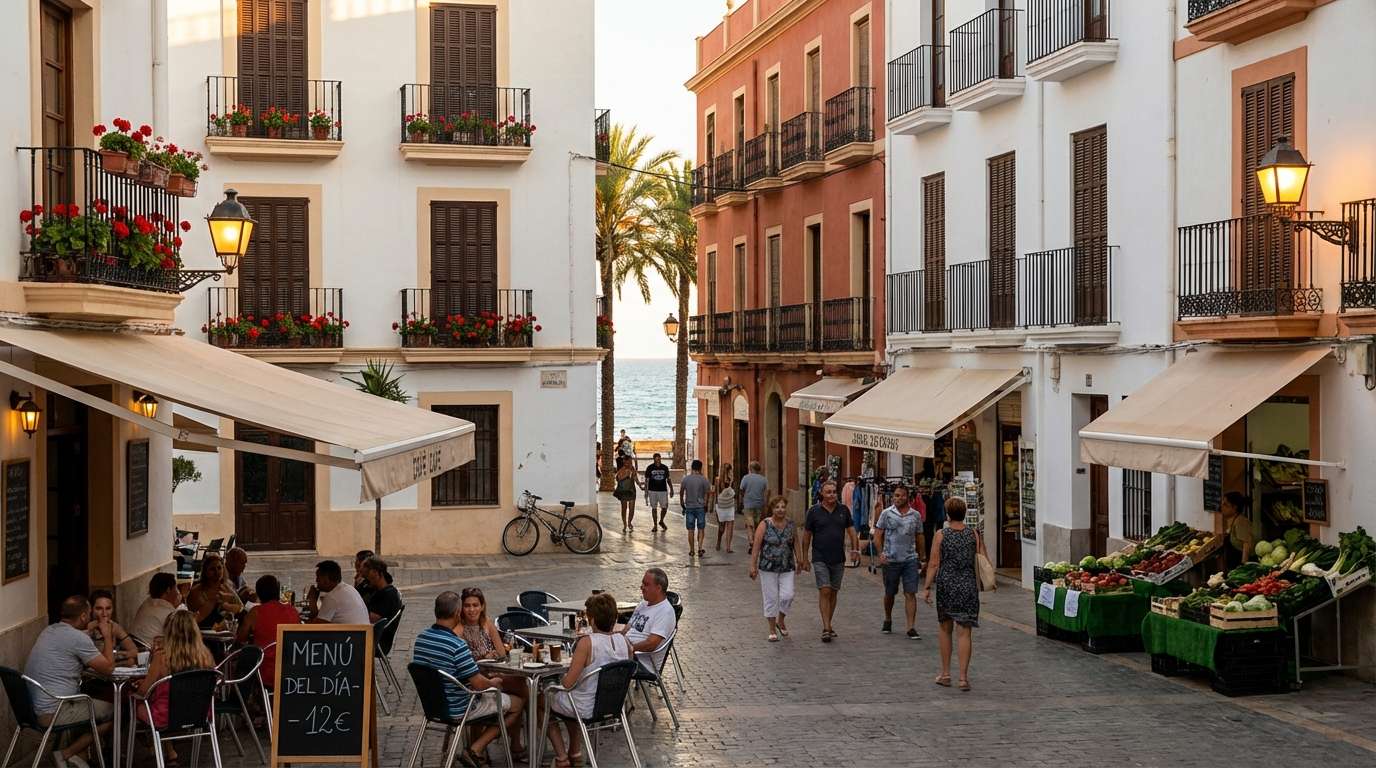
- Spain: Impuesto de Transmisiones Patrimoniales (ITP) for resale properties varies by region, typically 6-10%; new builds attract VAT (10%) instead
- Portugal: IMT (Imposto Municipal sobre Transmissoes) is calculated on a sliding scale published by gov.pt, with rates varying by property value and type
- UK (non-residents): Stamp Duty Land Tax rates are 2 percentage points higher than resident rates, per GOV.UK guidance
Timing matters too. Most of the above is due at final deed/closing, not at preliminary contract. Only the deposit and legal fees tend to be due earlier.
Financing for non-residents: what to expect
Getting a mortgage as a non-resident is possible in most European countries, but the terms are generally less favorable than for domestic buyers. Common patterns:
- Higher required down payment: non-resident mortgages often require 30-40% down versus 20-25% for residents
- More documentation: proof of foreign income, tax returns, bank statements going back 2-3 years, and sometimes a local tax identification number (NIF in Portugal, NIE in Spain, etc.) before lenders will proceed
- Fewer lender options: many domestic banks simply don't serve non-residents, or handle them through a specialist department with slower processing
The cash vs. mortgage decision comes down to more than just rates. If you're buying in a currency different from your home currency, exchange rate moves between offer and closing can materially affect your all-in cost. Opening a local bank account and transferring funds early (once the contract is signed and your closing date is confirmed) reduces that risk. Some buyers use a specialist currency transfer service to lock in a forward rate at contract stage.
If you plan to finance: get a mortgage agreement in principle before making an offer, not after. And ensure your contract includes a mortgage contingency clause, so a declined application doesn't cost you your deposit.
Country example: what the process looks like in Sweden
Sweden makes a useful anchor because the steps are clear, the rules for foreigners are open, and Homestra has first-party documentation of the full process.
According to Homestra's guide to buying a vacation home (fritidshus) in rural Sweden (published February 2026):
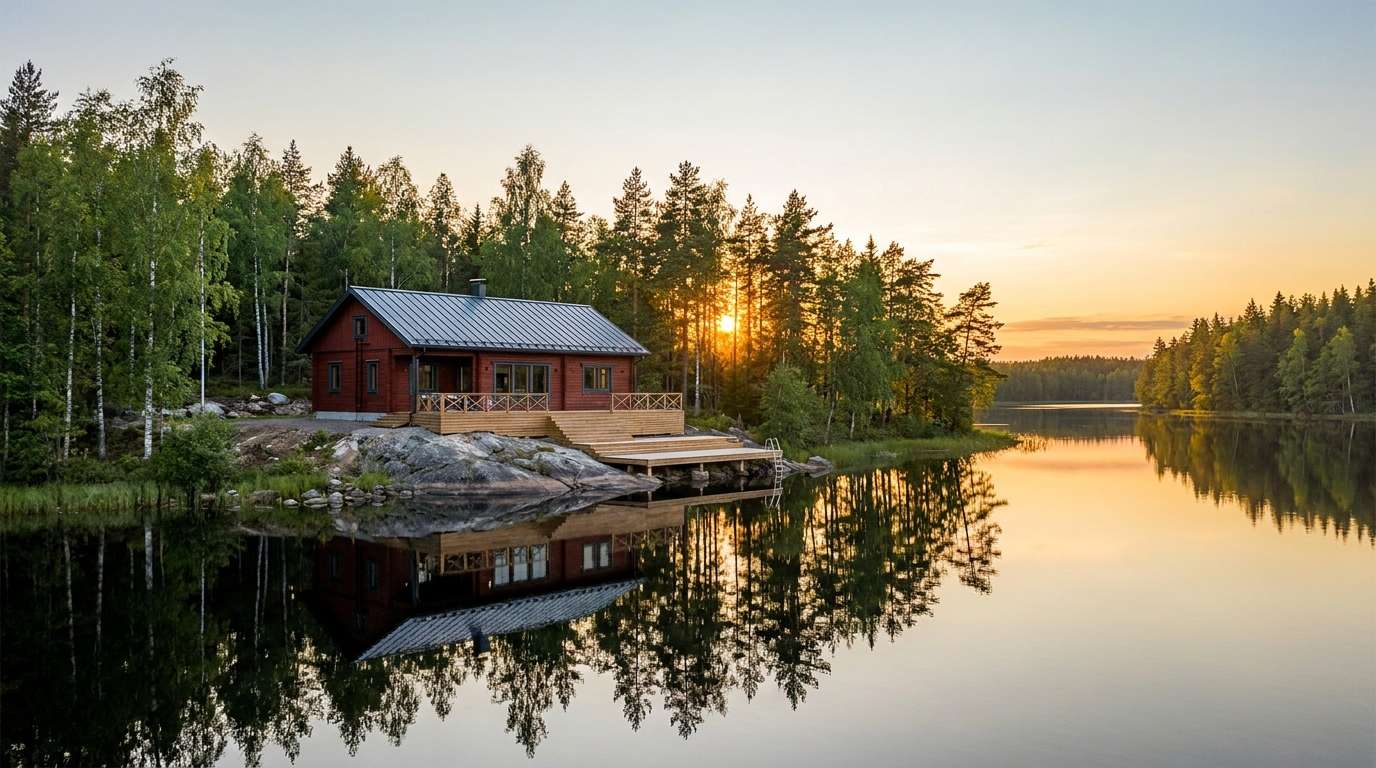
Eligibility: Sweden imposes no restrictions on foreign ownership. Both EU and non-EU citizens can purchase residential property, land, and vacation homes without special permits or residency requirements. Buying doesn't grant residency rights.
The step-by-step process:
- Search and viewings: Browse listings, view properties (Swedish agents hold open viewings called visningar)
- Bidding: Swedish real estate typically uses an open bidding process; the highest acceptable bid wins
- Kopekontrakt (purchase contract): Signed by both parties; binding once countersigned
- Deposit: Approximately 10% of the purchase price, due within around 10 days of contract signing
- Besiktning (inspection): Sweden's strict undersokningsplikt (duty to investigate) means buyers cannot later claim compensation for defects they could have found through a proper inspection. For rural properties, prioritize: well and water quality, septic system (enskilt avlopp), heating system, moisture/mold, and winterization
- Final settlement: Balance paid, possession transferred
- Lagfart registration: Title registration with Lantmateriet (the Swedish Land Survey Authority). Stamp duty is 1.5% of the purchase price (or assessed value, whichever is higher) plus a fixed fee of 825 SEK
Swedish tax and rental considerations for non-residents:
- Capital gains on sale are taxed at 22% on the profit for non-residents
- Rental income over 40,000 SEK annually is subject to Swedish income tax; non-residents fall under the SINK regime, with a proposed rate of 22.5% for 2026 (reduced from 25%)
You can map this framework onto almost any other European country. The names change (notaire in France, escritura in Spain, deed of sale in Ireland) but the sequence is recognizable. What changes is: who holds the deposit, whether a notary is mandatory, how the land registry works, and what the tax rates are.
You can search houses for sale in Sweden on Homestra to see current listings and get a sense of pricing by region before committing to a viewing trip.
Ongoing ownership: taxes, utilities, repairs, and rental rules
Purchase taxes are one-time. Once you own the property, the annual cost picture is different:
- Annual property taxes (council tax, taxe fonciere in France, etc.): usually low, but they exist in most countries
- Owners' community fees (for apartments or gated developments): can be substantial in high-amenity developments
- Utilities and maintenance: second homes that sit empty for months need winterization, damp prevention, and periodic checks
- Insurance: mandatory in some countries; strongly advisable everywhere
Rental rules vary significantly. Short-term rental via platforms like Airbnb is subject to municipal licensing requirements in many European cities, and some places have capped the number of nights per year a private property can be rented short-term. Long-term rental is generally less regulated but may be taxed differently. In Sweden, for example, the 40,000 SEK annual rental income threshold triggers income tax liability for non-residents, as noted above.
If rental income is part of your return calculation, verify the rules before purchase, not after. A property in a popular holiday area may look ideal on paper but face strict local short-term rental restrictions that didn't exist five years ago.
For ideas on properties with rental potential, affordable vacation homes in France represent one of the more accessible markets in Western Europe for international buyers.
How to avoid scams and bad deals
International buyers are disproportionately targeted for property fraud in Europe because language barriers, distance, and unfamiliarity with local systems create opportunities for bad actors.
Non-negotiable protections:
- Use an independent local lawyer, not one referred exclusively by the agent or seller
- Verify title directly via the land registry, don't rely on documents provided by the seller
- Confirm the escrow or payment mechanics: who holds your deposit, what triggers its release, and how you get it back if the deal collapses
- Never transfer funds to an account you haven't independently verified
Red flags that should stop a transaction:
- Seller can't produce a clean title certificate or registry extract
- Land registry details don't match what you're being sold (boundaries, area, permitted use)
- Missing or forged building permits for structures on the property
- Pressure to skip or shorten the inspection period
- A price significantly below comparable properties with no credible explanation
- Urgency framing: "another buyer is ready to sign tomorrow"
A real estate agent's job is to close the deal. That doesn't make them dishonest, but it does mean their interests aren't identical to yours. Independent professional advice isn't an optional extra on an international purchase; it's the most important line in your budget.
FAQ: the questions buyers always ask
Can I buy property abroad and still keep my tax residency where I live now? Generally yes. Tax residency depends on where you spend your time and meet residency tests (typically 183 days in a country), not on where you own property. But owning rental-generating property in a foreign country usually creates a tax reporting obligation there. Check with a cross-border tax advisor for your specific situation.
Do I need a visa or residency to buy property in Europe? No, in most European countries. Purchase eligibility and the right to reside are separate legal questions. Buying property may qualify you to apply for certain visas in some countries (Portugal's Golden Visa program being a well-known example), but it doesn't automatically grant you the right to live there.
What are the most important documents to request before paying a deposit? At minimum: a current land registry extract (confirming seller ownership and any encumbrances), proof of planning permissions for all structures, the latest tax payment certificates, and the energy performance certificate (required in most EU countries). Your lawyer will have a full checklist for the specific country.
How much should I budget for closing costs and taxes? A working estimate of 8-12% of the purchase price is reasonable for most Western European resale purchases, but it varies substantially. Sweden's total closing taxes are well below average at ~1.5% stamp duty plus a small fixed fee. France and Spain are typically higher, factoring in notary fees and transfer taxes that often run 6-10% combined. Always get a country-specific estimate from a lawyer before signing.
What if I'm buying remotely? Can I use a power of attorney? Yes, and it's common. A notarized POA allows a local representative (often your lawyer) to sign contracts and register the title on your behalf. Requirements for the POA document (apostille, translation, specific notarial format) vary by country, so prepare it well before your signature deadline.
What happens if the inspection finds serious defects? That depends entirely on what your contract says. If you've negotiated a due diligence contingency, you can typically withdraw and recover your deposit, or renegotiate the price. Without that clause, your options are limited. This is another reason why contract terms matter as much as the asking price.
Start your search with the right foundation
The process of buying property in another European country is manageable, but it rewards preparation. Buyers who move through it confidently tend to share a few habits: they hire independent local professionals early, they understand the cost total before they fall in love with a property, and they treat due diligence as non-negotiable.
If you're still in the research and shortlisting phase, Homestra brings together over 200,000 properties across Europe, with cross-country search filters that let you narrow by country, property type, price range, and features before you commit to viewing trips. The platform's detailed listings and local market context help you compare markets meaningfully, whether you're weighing a Swedish fritidshus against a Portuguese country home or a French village house.
For country-specific guidance once you've identified your target market, Homestra's resource library covers local processes in detail, including the full guide to buying property in Portugal for buyers ready to go deeper on that market.
The checklist is always the same five buckets. The country determines the details.
Share