Blog published in Buying property abroad
Share
How to find a second home in Greece or Croatia: 7 steps
Find and verify Greek or Croatian second homes across English and local portals. Cross-check listings, confirm documents, and avoid common buyer mistakes.

You'll finish this guide with a shortlist of Greek or Croatian listings that have been cross-checked on two or more portals and verified before you contact anyone. It's written for international buyers searching remotely. Difficulty is easy to moderate, and the first pass takes about two to three hours.
You'll need a notes folder, a budget range, and a local lawyer lined up before any deposit talk.
Step 1: Pick platforms by search goal
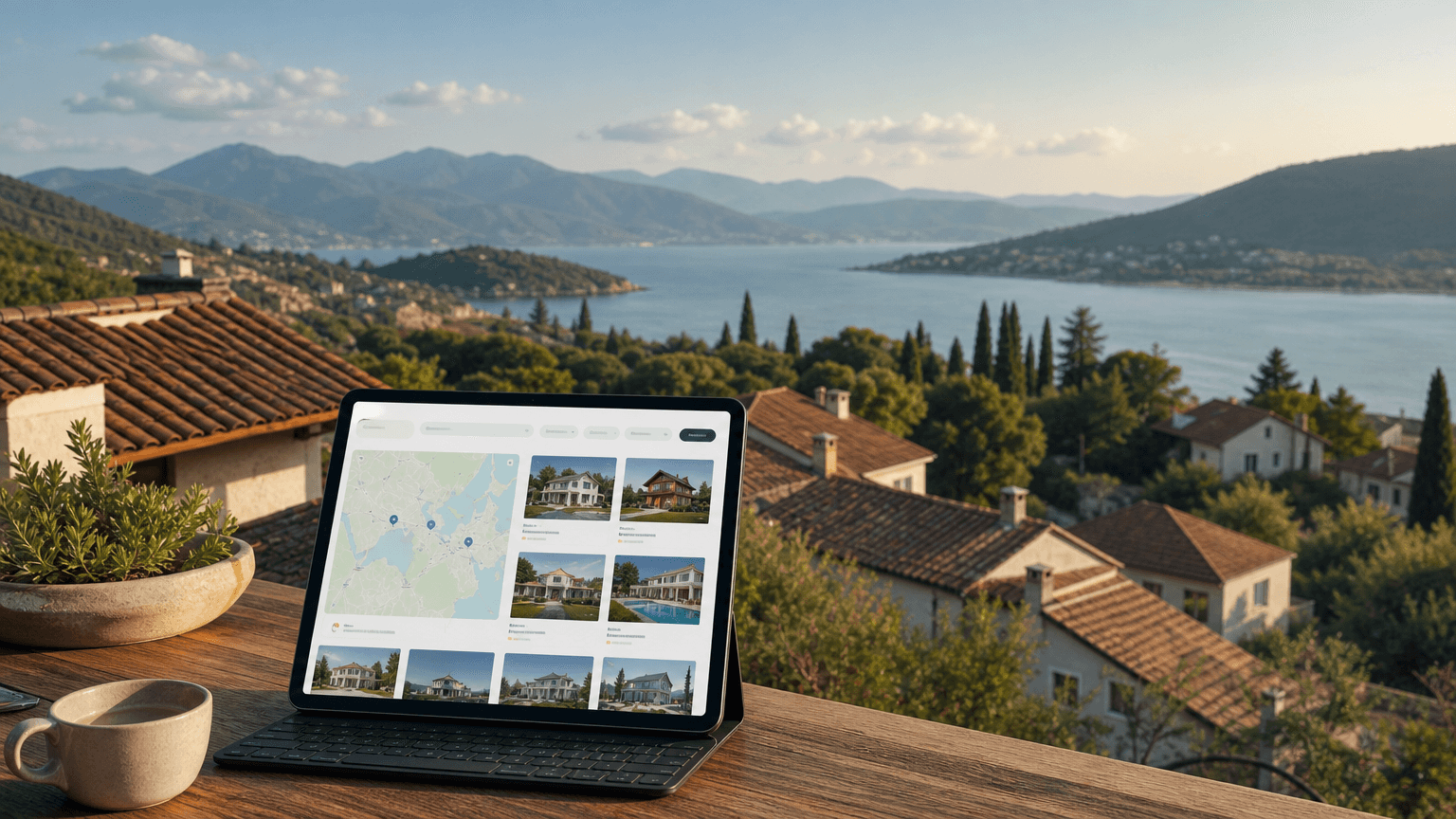
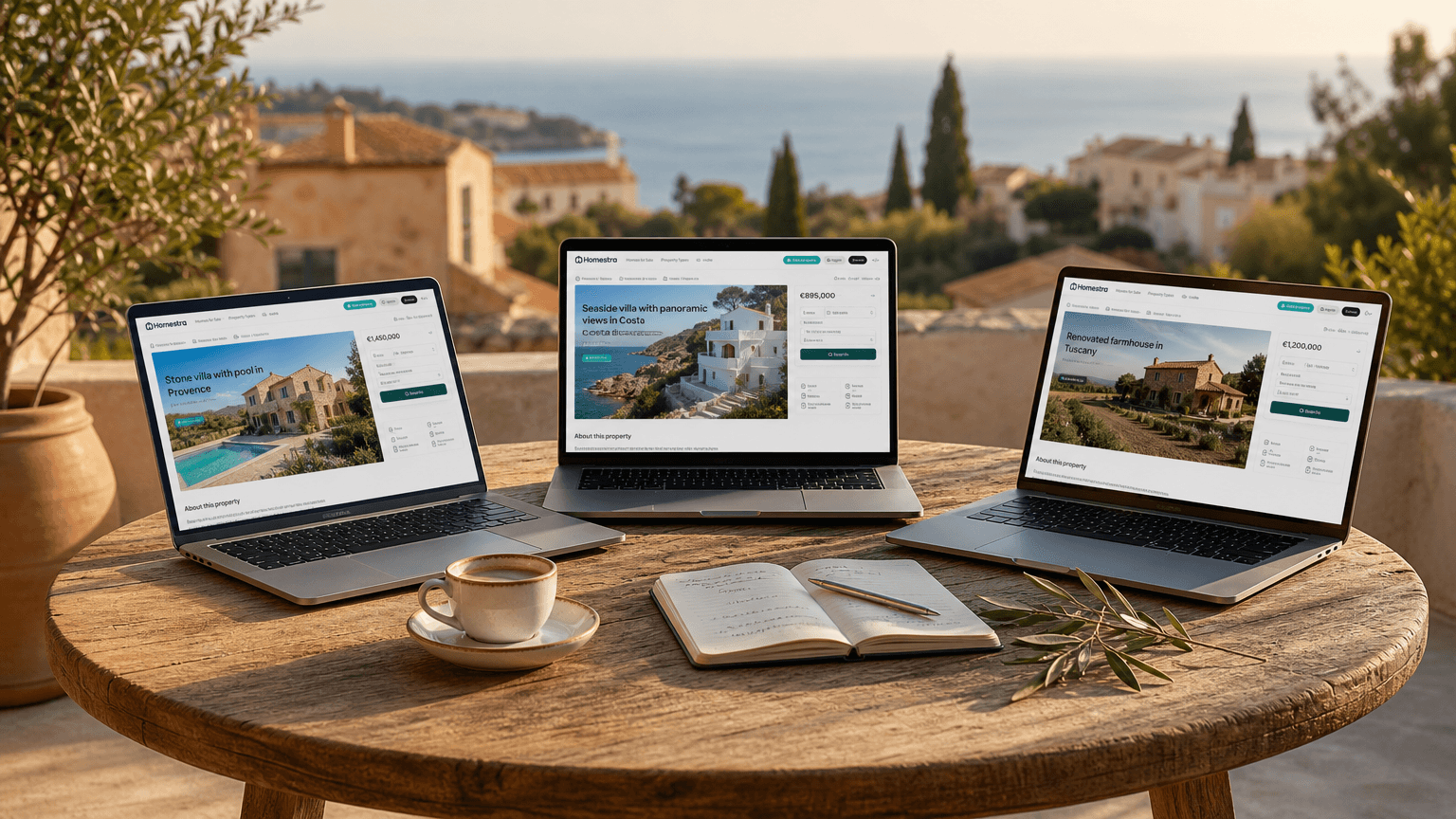
- Remote discovery in English: Homestra (200,000+ properties across Europe), Green-Acres, Kyero, Properstar, Rightmove Overseas.
- Greek local inventory: Spitogatos, XE, Tospitimou, Spiti24.
- Croatian local inventory: Njuškalo, Crozilla, Index oglasnik, Indomio.
- Luxury: JamesEdition and Engel & Völkers.
Use English portals for discovery and local ones for due diligence. If you need help with the language, this guide on searching without local language skills covers translation tools.
Checkpoint: You've picked two or three portals and saved at least five candidates.
Step 2: Cross-check every candidate
Search each property's photos and details on a second portal. Stale or duplicate listings often show different prices or dates.
Warning: A listing that appears nowhere else, or shows conflicting details, goes to the bottom of your list.
Step 3: Confirm who's selling
Find out whether you're dealing with an owner, an agency, or a developer. Ask for a document bundle before discussing any deposit. Also ask who pays the commission and whether the agent represents both sides.
Step 4: Request country-specific proof
Greece: Ask for the Electronic Building Identity, a digital file of the building's legal and technical data used in transfers. It should point to permits, plans, and energy documents.
Croatia: Ask for land registry evidence of title. Your lawyer should also pull planning authority confirmation. Eligibility depends on your status: EU/EEA buyers and third-country buyers face different rules, and the latter commonly need reciprocity and Ministry approval. Our non-EU buyer guide walks through this.
Step 5: Match the identifiers
The address, plot or apartment number, and floor plan should agree across the listing, registry references, and documents. Any mismatch is a stop sign.
Step 6: Get a lawyer to check encumbrances
Don't rely on agent claims. Have your lawyer verify liens, permits, and ownership registration, and save every screenshot, email, and date in one folder.
Step 7: Run the pre-contact checklist
Contact agents only when you have identifiers, requested documents, and cross-portal confirmation. Ask for a current video walk-through, not old brochure photos.
Costs to flag with counsel
Croatia's Tax Administration (Porezna uprava) lists transfer tax at 3%. For a fuller breakdown, see Croatia closing costs. IMI Daily reported in September 2026 that Greece plans a 15% transfer tax for non-EU buyers from January 2027. Confirm current rates before budgeting. Greece's Golden Visa tiers are commonly cited at €250,000, €400,000, and €800,000.
Troubleshooting and red flags
- Pressure to sign fast: Walk away.
- "No documents available": Pause until you have them.
- Payment outside the contract: Don't pay.
- Verbal agreements: Only a written contract counts.
What you've accomplished
You now have a vetted shortlist and a document trail. Next, schedule viewings with your lawyer in the loop, starting with the properties that cleared every step.
Share