Blog published in Buying property abroad
Share
8 Steps to Buying a Waterfront Property in Sweden in 2026
Learn the full process of buying waterfront property in Sweden, from köpekontrakt to lagfart, plus Strandskydd rules, inspection checklists, and costs.

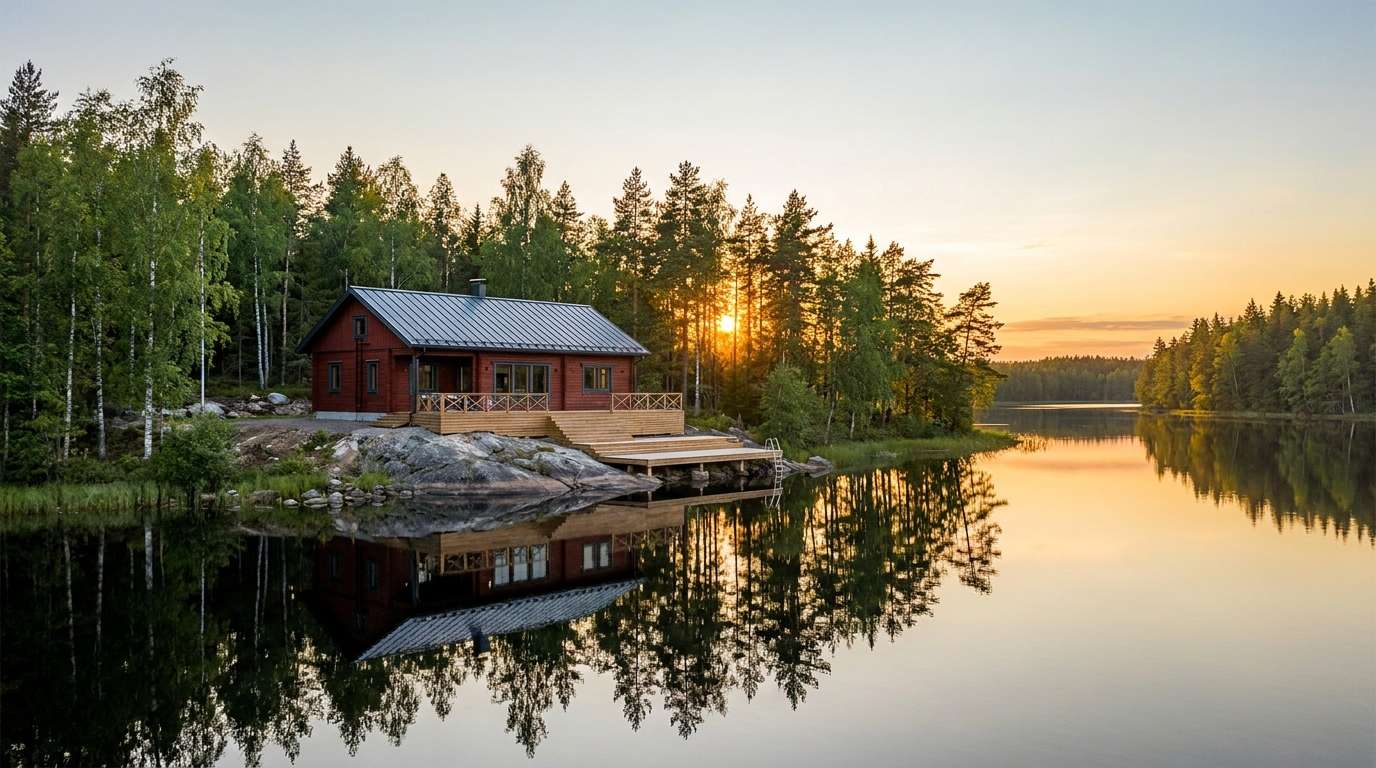
Owning a lakeside cottage or coastal home in Sweden is one of those goals that sounds complicated from the outside but is actually very achievable, especially for international buyers. Sweden treats foreign buyers exactly the same as Swedish citizens: no special permits, no ownership restrictions, no extra hurdles just because you hold a foreign passport. The real work isn't in qualifying to buy, it's in knowing what to check before you sign.
A waterfront purchase follows the same legal steps as any Swedish property transaction, but adds an extra layer of shoreline-specific due diligence. Get those extra checks right, and you're in great shape. Homestra's platform lists over 200,000 European properties, including a wide selection of Swedish waterfront second homes, making it a solid starting point for your search. Here are the eight key steps you'll go through.
1. Search, view, and make an offer
Start by browsing listings through a licensed Swedish real estate agent (mäklare). Agents are legally regulated and must present all known information about the property, but they represent the seller, not you. Attend viewings with a critical eye, especially for waterfront homes where moisture and seasonal wear are real concerns.
Once you've found the right property, you submit a verbal or written offer. Bidding rounds (budgivning) can move quickly, particularly for desirable lakefront or coastal properties in summer. There's no obligation for either party at the offer stage, so don't rush the due diligence that follows.
2. Request the essential documents before signing anything
Sweden's undersökningsplikt, the buyer's strict duty to investigate, means that if a defect was discoverable before purchase, your claims after the sale are limited. This makes document collection a priority, not an afterthought.
For any waterfront property, request these before committing:
- Fastighetsutdrag (cadastral extract from Lantmäteriet): confirms legal boundaries, ownership, mortgages, and easements
- Köpekontrakt template: review the draft purchase agreement terms
- Building permit history (bygglov): ask the municipality for decisions on all existing structures
- Strandskydd decisions: any exemptions (dispens) granted for buildings or modifications near the shoreline
- Servitut documentation: lists all easements, shared access rights, and obligations attached to the land
- Utility information: whether water and sewage are municipal or private (enskilt avlopp/well)
Each document answers a specific question. The fastighetsutdrag tells you whether there's an easement over your land. The building permit history tells you if any structure was built without approval. The Strandskydd decision tells you whether you have the right to build or modify.
For a lakefront retreat in Sweden, confirming shoreline boundaries in writing before signing can save significant headaches later.
3. Understand Strandskydd: Sweden's shoreline protection law
Strandskydd is the single biggest legal surprise for waterfront buyers unfamiliar with Swedish law. It's a blanket protection zone that runs along coasts, lakes, and watercourses, generally 100 meters from the waterline, sometimes extended to 300 meters by the county administrative board (Länsstyrelsen).
Within this zone, new construction, fencing that blocks public access, and certain land alterations require a separate Strandskydd exemption (dispens), regardless of whether you already hold a building permit. These are two separate processes: a bygglov from the municipality doesn't automatically include a Strandskydd exemption from Länsstyrelsen.
The practical question: has every structure on the property been properly permitted under both tracks? Ask specifically whether any past renovations or outbuildings required a dispens, and whether one was actually obtained. A Strandskydd violation can result in a demolition order.
4. Know your public access obligations (allemansrätten)
Sweden's right of public access (allemansrätten) gives everyone the right to walk along shorelines, even on private land, within the Strandskydd zone. You can't fully fence off a waterfront property from the public, and sellers sometimes underrepresent this.
What this means practically: your private beach may still have foot traffic. You can place a dock and use your immediate garden area (hemfridszon), but the zone extends further than most buyers expect. Ask the agent to clarify in writing exactly where private use ends and public access begins for the specific property.
Servitut (easements) compound this further. A neighbor may have a documented right to cross your land to reach the water, or you may share a private road with several other properties (vägservitut). Check all of these against the fastighetsutdrag.
5. Run a thorough inspection before you sign the köpekontrakt
The besiktning (technical inspection) should happen before you sign the purchase agreement, not after. For waterfront properties, a standard building inspection isn't enough. Budget for specialist checks too.
Key inspection areas:
- Shoreline stability: look for erosion signs, vegetation loss near the water's edge, and drainage patterns. Ask about historical waterline changes
- Septic system (enskilt avlopp): confirm the age, capacity, and permit status. A non-compliant system is an expensive fix and may require full replacement
- Well water: test water quality and inspect the well condition if the property relies on a private well
- Moisture and rot: older Swedish wooden cottages are prone to damp issues, particularly in foundations and crawl spaces near water
- Winterization: check that pipes, drains, and heating are properly freeze-protected. Ask whether the property has been used year-round or only seasonally, and whether there have been any freeze or mold events
Document every finding. Under undersökningsplikt, any issue the inspector could have identified is considered your responsibility to have known about.
For year-round comfort in a Swedish coastal country home, verifying the heating system's performance in winter is just as important as checking the summer terrace.
6. Sign the köpekontrakt and pay the deposit
Once inspections are complete and you're satisfied with the documents, you sign the köpekontrakt (purchase agreement). This is legally binding for both parties. A deposit of around 10% is typically paid at this stage.
The agreement sets the possession date and any conditions. After this point, withdrawing from the purchase can carry financial penalties, so make sure all your due diligence is genuinely complete before signing.
7. Check permits and register ownership with the right authorities
After the final purchase price is paid and possession transfers, you need to register ownership through lagfart at Lantmäteriet, Sweden's land registry. The deadline is three months from the purchase date.
Here's a quick reference for who handles what:
- Lantmäteriet: lagfart registration, cadastral extracts, boundary queries
- Kommunens byggnadsnämnd (municipal building committee): building permits, local development plan, any permit history
- Länsstyrelsen (county administrative board): Strandskydd exemptions and environmental decisions
- Skatteverket: apply for a samordningsnummer (coordination number) as a non-resident, which you'll need for tax and utility setup
Foreign buyers sometimes underestimate how early to apply for the samordningsnummer. Start that process in parallel with your inspections, not after signing.
8. Budget for waterfront-specific costs
The baseline costs in Sweden are the same for all buyers. Lagfart stamp duty is 1.5% of the purchase price (or assessed value, whichever is higher) plus a fixed registration fee of 825 SEK, according to Lantmäteriet guidance. If you're financing with a mortgage, new pantbrev (mortgage deeds) cost 2% of the loan amount, though existing pantbrev can sometimes be reused.
Waterfront properties carry additional budget items worth planning for:
- Specialist inspection fees (septic, well, structural moisture)
- Shoreline stabilization work, if erosion or drainage issues are flagged
- Utility system upgrades, particularly for older septic installations that may no longer meet current environmental standards
- Heating costs, which run significantly higher for properties used year-round versus seasonally
If you sell later as a non-resident, Swedish capital gains tax applies at 22% on the profit from private homes, so factor that into your long-term planning.
Quick-reference checklist: what to request before you commit
Documents to request (English / Swedish):
| What to request | Swedish term | What it confirms |
|---|---|---|
| Cadastral extract | Fastighetsutdrag | Boundaries, mortgages, easements |
| Building permit history | Bygglovshistorik | Legal status of all structures |
| Shore protection decisions | Strandskyddsdispens | Rights to build/modify near water |
| Easement register | Servitut | Access rights over/across the land |
| Septic permit | Tillstånd enskilt avlopp | Compliance status of sewage system |
| Well documentation | Brunnsdokumentation | Water quality and legal well status |
Questions to ask before signing:
- Is the property within a Strandskydd zone? What is the exact protected distance?
- Were all structures, including outbuildings and docks, permitted under both bygglov and Strandskydd rules?
- Is there a vägservitut or other easement crossing the property?
- Are water and sewage municipal or private? Who pays for maintenance?
- Has the property been winterized for year-round use? Any freeze or mold history?
Frequently asked questions
Can foreigners buy waterfront property in Sweden? Yes. Sweden imposes no ownership restrictions on foreign buyers. You purchase under the same legal framework as any Swedish citizen.
What is Strandskydd? Strandskydd is Sweden's shoreline protection law. It applies to a zone (generally 100 meters, sometimes up to 300 meters) along coasts, lakes, and watercourses. Within this zone, certain construction and land use changes require a separate exemption from the county administrative board.
Is a building permit the same as a Strandskydd exemption? No, they're separate. A municipality grants building permits; Strandskydd exemptions come from Länsstyrelsen. You may need both for work near the water.
Do I need servitude documents? Yes, if any easements affect the property. Always verify the fastighetsutdrag to see what rights or obligations are attached to the land.
What should I inspect for wells and septic systems? For wells, test water quality and inspect the physical condition and permit status. For septic systems, confirm the age, design capacity, and whether it meets current environmental permit requirements.
Browsing Swedish lakefront and coastal listings on Homestra alongside this checklist gives you a solid foundation to start your search confidently. The process is manageable with the right preparation, and once you've worked through the due diligence steps, owning a piece of the Swedish shoreline is genuinely within reach.
Share