Blog published in Relocation
Share
Living on $1,000 a Month in Spain: 3 Realistic Budgets
Can $1,000 a month cover your life in Spain? We break down three realistic budgets for cities, secondary towns, and rural areas, plus the visa reality that changes everything.

Living on $1,000 a month in Spain is one of the most searched questions among retirees and near-retirees considering a move abroad. The short answer is: it depends entirely on where you live and how you structure your housing. In some small towns and rural areas, a single adult can manage on roughly €900-€920 per month (approximately $1,000 at a mid-2026 USD/EUR rate near 1.08-1.10, though exchange rates fluctuate and you should verify the current rate before planning). In Madrid or Barcelona, solo living on that budget is not realistic once you add rent, healthcare, and any meaningful leisure spending.
The sections below present three complete, line-item monthly budgets and address the legal reality that visa requirements may push your required income well above $1,000 per month regardless of what your actual spending looks like.
Feasibility by location: the honest starting point
Big cities (Madrid, Barcelona): A solo one-bedroom apartment in a central neighborhood routinely runs €900-€1,200 per month in 2026. That single line item already consumes or exceeds your entire budget before you buy a single bag of groceries. Not feasible for most people on $1,000/month unless you are in a flatshare and keep every other category very tight.
Secondary cities (Valencia, Seville, Malaga): Possible, but only with a studio or shared flat priced at €450-€600 and strict caps on leisure. According to idealista/news's March 2026 ranking of the cheapest cities to rent in Spain, several mid-sized cities show meaningfully lower per-square-meter rents than Madrid or Barcelona. You will still need to make trade-offs.
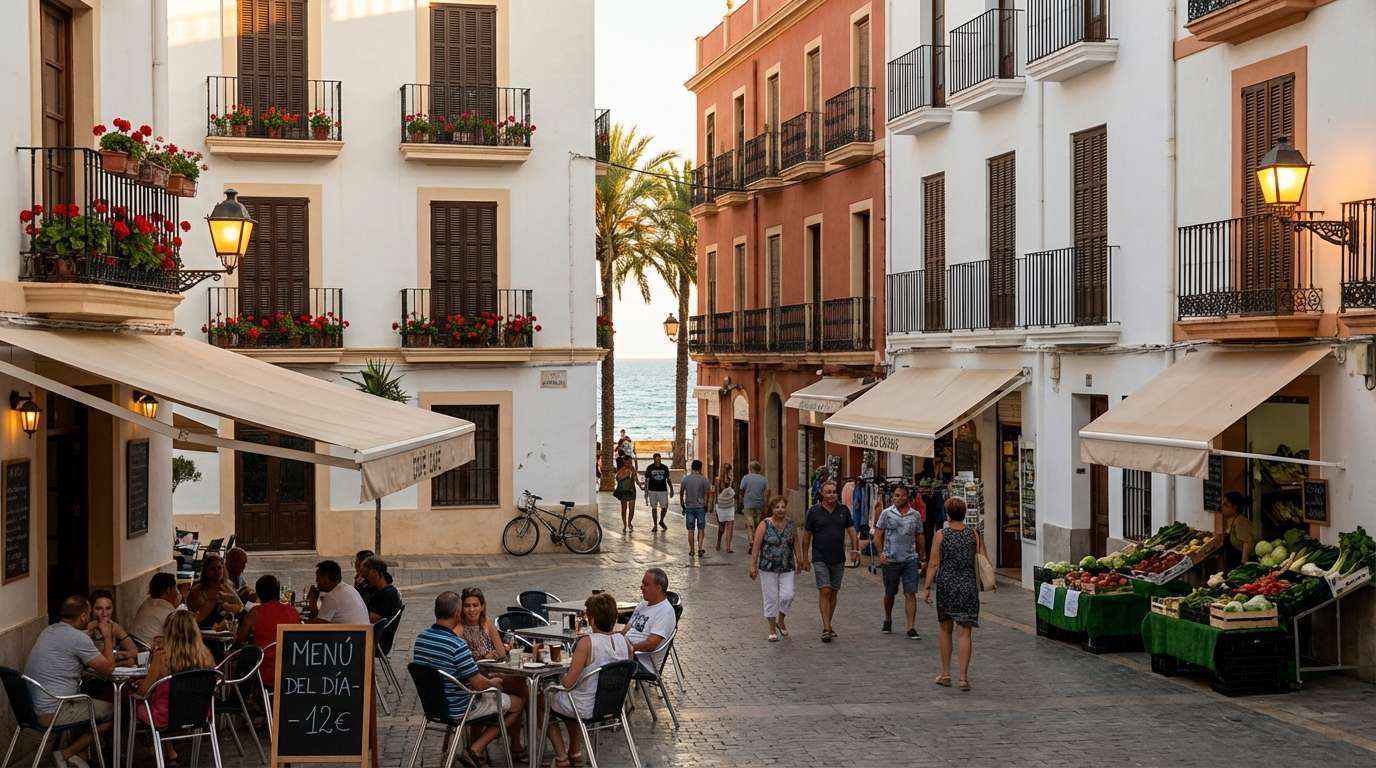
Small towns and rural areas: The most plausible scenario. Furnished one-bedroom rentals in inland or smaller coastal towns can fall in the €350-€500 range. With low rent, transport, and grocery costs, the $1,000 ceiling becomes workable.
Assumptions behind the three budgets
All three budgets below assume one single adult, 12 months of recurring costs, and no mortgage or property purchase costs. USD figures use an assumed rate of $1.09 per €1 (mid-2026 approximate). That rate will shift; treat the USD column as illustrative.
Healthcare is budgeted as basic private insurance (see the FAQ section for why this matters for legal residency). Groceries are based on cooking at home most days. Leisure is capped deliberately low. Utilities are assumed separate from rent unless stated.
Spain's Banco de España revised inflation projections upward for 2026 (a 3.6% projection appears in their published forecasts), so all figures should be revisited annually.
Sample budget 1: Madrid or Barcelona (solo)
| Category | EUR/month | USD/month |
|---|---|---|
| Rent (small studio, periphery) | €750 | ~$818 |
| Utilities (electricity, water, gas) | €80 | ~$87 |
| Groceries | €180 | ~$196 |
| Transport (metro/bus monthly pass) | €55 | ~$60 |
| Internet | €30 | ~$33 |
| Private health insurance | €80 | ~$87 |
| Leisure/dining out | €50 | ~$55 |
| Contingencies | €30 | ~$33 |
| Total | €1,255 | ~$1,369 |
Even pushing the rent to the lower edge of what is available in an outer district, this budget runs roughly €255 over target. The two categories most likely to break the budget are rent and private health insurance. To make Madrid or Barcelona work at $1,000/month, you would need a flatshare that brings your rent contribution below €450, eliminate discretionary spending almost entirely, and accept very limited leisure activity.
Sample budget 2: Secondary city (Valencia, Seville, Murcia)
| Category | EUR/month | USD/month |
|---|---|---|
| Rent (small studio or room in shared flat) | €550 | ~$600 |
| Utilities | €70 | ~$76 |
| Groceries | €180 | ~$196 |
| Transport (bus/tram pass) | €45 | ~$49 |
| Internet | €30 | ~$33 |
| Private health insurance | €70 | ~$76 |
| Leisure/dining out | €40 | ~$44 |
| Contingencies | €30 | ~$33 |
| Total | €1,015 | ~$1,107 |
This scenario is tight but within striking distance of the $1,000 target. The rent figure assumes a small studio on the outskirts or a room in a shared apartment rather than a solo center-city flat. Trade-offs include eating out rarely, using public transit exclusively, and holding leisure to one or two modest activities per month.
Sample budget 3: Small town or rural area
| Category | EUR/month | USD/month |
|---|---|---|
| Rent (one-bedroom, furnished) | €420 | ~$458 |
| Utilities (higher in winter due to heating) | €90 | ~$98 |
| Groceries (local markets help) | €170 | ~$185 |
| Transport (car fuel or bus, depending on location) | €80 | ~$87 |
| Internet (rural fiber, where available) | €35 | ~$38 |
| Private health insurance | €65 | ~$71 |
| Leisure/dining out | €40 | ~$44 |
| Contingencies | €25 | ~$27 |
| Total | €925 | ~$1,008 |
This is the most realistic $1,000/month scenario. Rent is the key variable. Rural and small-town properties in interior Spain, parts of Extremadura, Castilla-La Mancha, and smaller Andalusian towns remain notably affordable. Two caveats: first, rural internet quality is inconsistent, so verify fiber availability before committing to a property. Second, car ownership or reliable access to a vehicle may be necessary, adding fuel and maintenance costs not fully captured above during higher-mileage months.
Practical ways to reduce costs
Housing is the biggest lever. Choosing a flatshare over a solo apartment, signing a 12-month lease rather than a short-term one, and avoiding neighborhoods with high tourist demand can each reduce rent by 15-30%. Asking for utilities included in the rent is worth negotiating, particularly in smaller towns where landlords may prefer predictable all-in arrangements.
Groceries are manageable with a consistent approach: weekly shopping at local markets (mercados) for produce and proteins, supplemented by budget supermarket chains such as Mercadona or Lidl for staples. Eating out even three or four times a month adds €60-€100 to a tight budget, so treat it as discretionary, not routine.
Transport costs drop sharply if you choose a location well-served by public transit. Monthly transit passes in secondary Spanish cities are generally €40-€55. Living close to a train station also reduces the need for a car. In rural areas, the opposite applies: a car is often unavoidable, but daily distances may be short enough to keep fuel costs modest.
The visa and healthcare reality: why $1,000/month may not be enough
This is the section most budget guides skip, and it is the one that matters most for retirees relocating from outside the EU.
Spain's non-lucrative (non-working) residence visa, governed by the Spanish Ministry of Foreign Affairs, requires applicants to demonstrate financial means equal to 400% of the IPREM (Spain's Public Multiple Effects Income Indicator). As of 2026, that threshold translates to approximately €2,400 per month for the primary applicant. The Spanish government published these requirements formally on February 11, 2026. Even if your actual monthly spending is €900, you must demonstrate to consular authorities that you have access to significantly more than $1,000/month in income or savings.
Separately, Spain's official minimum wage (SMI) for 2026 is €1,221 gross per month (per La Moncloa, published February 20, 2026), providing a useful reference: the Spanish government itself considers €1,221 the floor wage for its own labor market. Building a life on less than this figure requires exceptional frugality and specific housing conditions.
Private health insurance is not optional under the non-lucrative visa pathway. EU citizens using Spain's public system may not face this requirement, but non-EU retirees (including most Americans and Australians) must show proof of comprehensive private coverage as part of the visa application. Basic policies for retirees aged 60-70 typically run €60-€120 per month depending on age, provider, and coverage level. Higher ages and pre-existing conditions push premiums toward or beyond the top of that range.
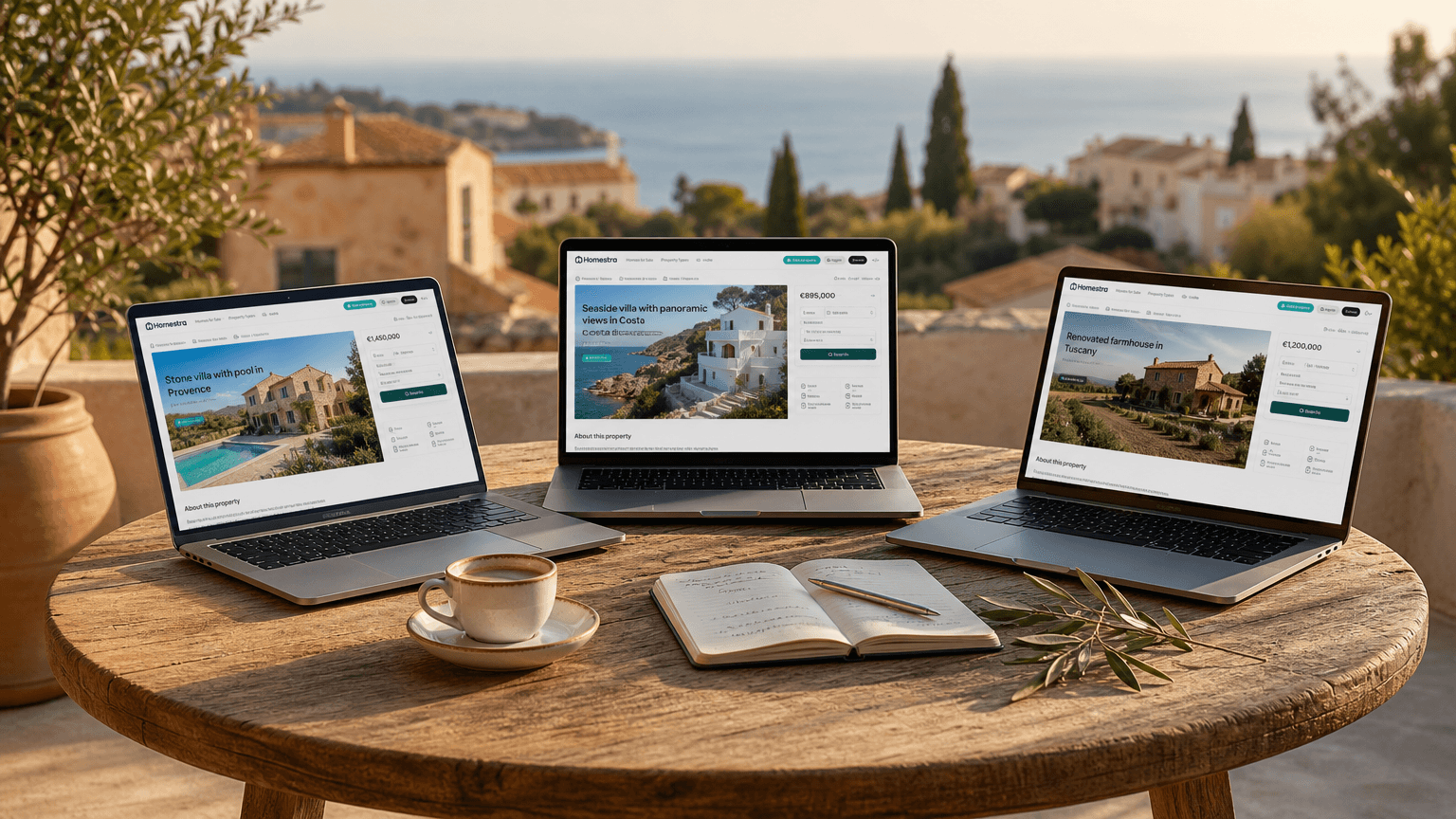
Using Homestra to find budget-compatible properties in Spain
Homestra's Spain search covers over 200,000 properties across the country, ranging from city apartments to rural houses, and is designed specifically for international buyers and renters considering a second home or longer-term relocation. When budgeting for $1,000/month, the listing details to check first are: total monthly rent (not just advertised base rent), whether community fees or HOA costs are included or separate, whether utilities are included, proximity to public transit or town amenities, and whether the property comes furnished (unfurnished properties add a meaningful setup cost in the first month).
Filtering by secondary cities and smaller towns rather than Madrid or Barcelona will surface the inventory most compatible with a strict budget. Homestra's existing relocation resources, including the blog entry "Can You Live Off $1,000 a Month in Spain?" published in February 2026, are a good companion to this guide for readers exploring the broader relocation process.
Frequently asked questions
Is Spain cheaper than the US for retirees? Yes, on most line items: rent, groceries, transport, and dining out are typically lower in Spain than in comparable US cities. Healthcare is the variable that can swing the comparison, particularly for retirees paying for private insurance rather than accessing public coverage.
Can I live on $1,000/month and qualify for the Non-Lucrative Visa? Almost certainly not on the income threshold alone. The visa requires proof of 400% of IPREM in monthly financial means, which runs to roughly €2,400 per month for a single applicant. You may spend only €900/month in practice, but you need to demonstrate access to considerably more. Consult a Spanish immigration lawyer for current, case-specific guidance.
Do I have to buy private health insurance? Non-EU nationals applying for residence in Spain are required to hold private health insurance as part of the visa application. EU citizens residing in Spain may qualify for the public system (sistema nacional de salud) once registered as residents, but the process and eligibility rules are distinct. Budget €65-€120 per month as a realistic range for a basic policy.
Which cities are most likely to fit a strict $1,000/month budget? Based on 2026 rent data from idealista, cities with the lowest rental costs include several in Extremadura, Castilla-La Mancha, and inland Andalusia. Among larger cities, Murcia, Jaén, and Huelva have historically tracked below the national average. Secondary coastal cities like Valencia and Alicante are possible but require careful housing choices.
Share