Blog published in Buying property abroad
Share
Funda vs Homestra for expats: which Dutch home portal wins?
Compare Funda vs Homestra for buying a home in the Netherlands as an expat. Learn which platform has better English support, listings, and tools for your move.

For most expats buying in the Netherlands, the honest answer is that Funda and Homestra do different jobs. Funda is the better tool when you need the fullest view of Dutch listings. Homestra is the better tool when you want an English-first search, local lifestyle context, and the option to compare the Netherlands with other European countries. Many buyers get the best result by using both, in a specific order.
Quick answer: which platform fits which expat buyer
- Relocating for work and buying a primary residence: Start on Funda. It's the main Dutch portal, and Dutch agents list there as a matter of routine. The NVM, the Dutch association of real estate agents, links to Funda from its own expat page and claims a 75% market share (as stated on nvm.nl/expat).
- Buying a second home or an investment property: Start on Homestra. It's built for international buyers and lists over 200,000 properties across Europe, so you can weigh a Dutch city against Lisbon or the Costa Blanca in one session.
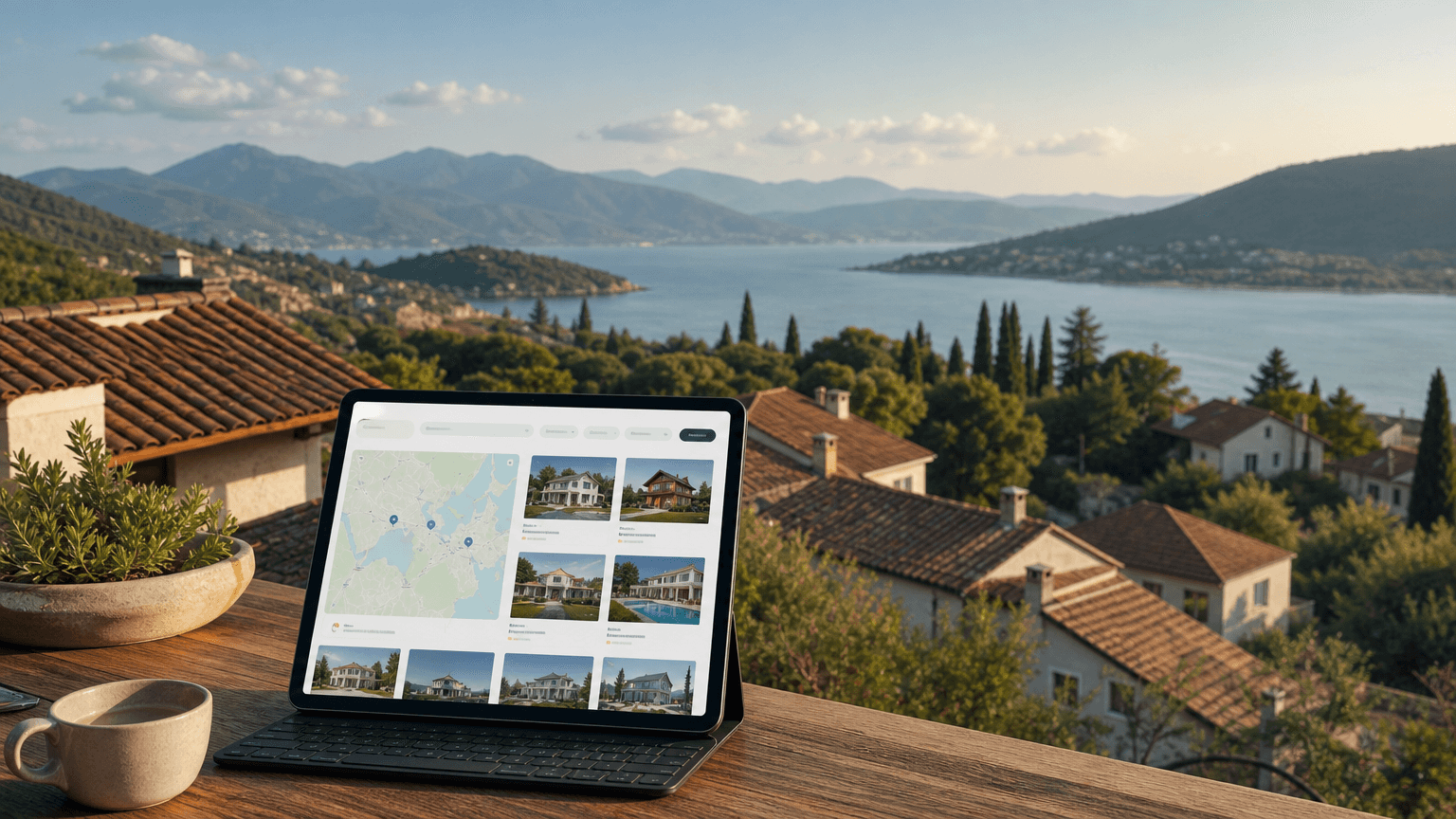
- Browsing from abroad with limited Dutch: Use Homestra to learn the market and shortlist, then cross-check on Funda before you contact anyone.
Feature comparison at a glance
| Criteria | Funda | Homestra |
|---|---|---|
| Dutch market coverage | Deepest local inventory, agent-driven | Selected Dutch listings within a pan-European catalog |
| Geographic scope | Netherlands | Europe-wide, 200,000+ properties |
| Language experience | Dutch-first, with an English version | English-first, built for international buyers |
| Property context | Standard listing data | Descriptions with local culture and lifestyle detail, plus market insights |
| Best for | Primary residence, competitive local searches | Second homes, cross-country discovery, remote-first research |
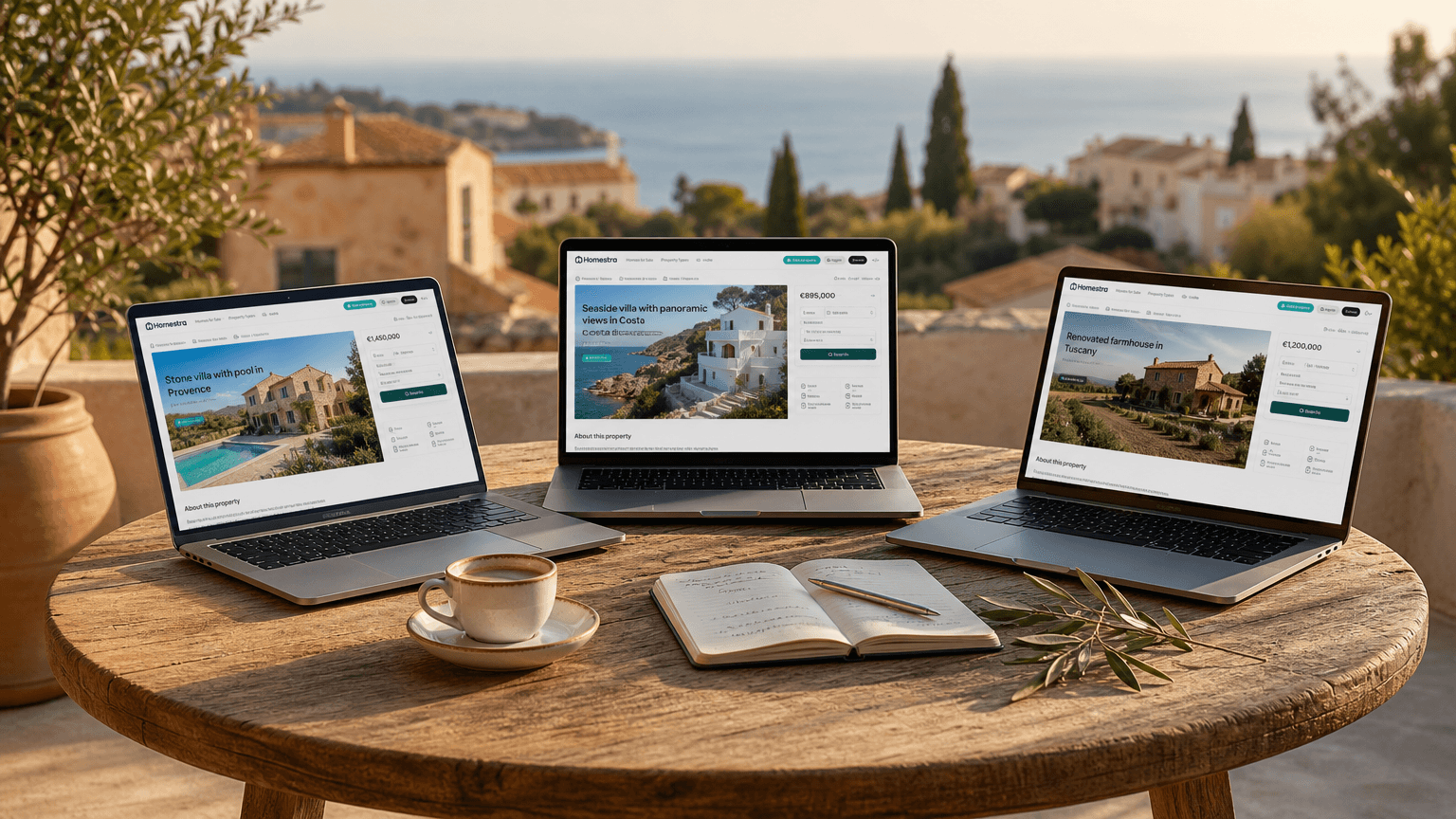
Before you rely on any row, run the same city search on both sites and screenshot the results. Inventory counts and features change, and a five-minute test tells you more than any summary, including this one.
How listing sourcing affects what you see
Dutch listings usually reach portals through agent uploads, and some platforms add syndicated or editorially curated entries. For you, that matters in three ways: freshness, duplicates, and completeness.
Run a simple test. Pick one city, one price band, and one property type. Count the matching listings on each platform, then open three that appear on both. Compare the asking price, the listing date, and the agent named. If a listing is missing from one side, assume the other platform is giving you the more complete picture for that search. In a fast Dutch market, a listing that's a week out of date can already be under offer.
What English-language use really looks like
Property pages are only part of the experience. The friction shows up in the actions around them: contacting an agent, requesting a viewing, saving a search.
Check these on each platform:
- Is the navigation fully in English, or does it fall back to Dutch partway through?
- Are the contact and viewing forms in English?
- Are agent replies likely to come in Dutch? Ask in your first message for replies in English.
- Do Dutch terms on a listing need translating? Common ones include koopsom (purchase price), VvE (homeowners' association), erfpacht (leasehold ground rent), and energielabel (energy label).
Homestra removes most of this friction because the whole experience is written for international buyers. On Funda, browser translation covers the gaps, but treat anything legal or financial as something to confirm with a human, not a translation tool.
Maps and location details when you can't visit
Remote buyers should trust a location only after checking it three ways. Look at the listing's map pin, then confirm the exact address on Street View, then check travel time to the places you'll use daily, such as a station, schools, or the airport.
Homestra's listings pair location with local lifestyle context, which helps you judge whether a neighborhood suits how you'd live there. Funda's strength is the granular local detail attached to each Dutch listing. Open the same property on both and compare the map, the neighborhood description, and whether the full address is visible. Where an address is hidden, ask the agent for it before you spend time on the property.
Accounts, agent contact, and possible paywalls
Test this yourself before you commit time. Create a free account on each platform and note what requires registration: saving searches, setting alerts, contacting an agent, requesting a viewing. Then send one real inquiry on each and track the response time.
Record three things: whether any step asked for payment, whether there was a cap on contact requests, and how long the first reply took. Neither platform's terms should be assumed. Pricing and gating rules change, so read the current terms on each site.
Which one to use if you only pick one
If you're buying your main home in a Dutch city, choose Funda. Coverage wins, because missing the one listing that fits your budget costs more than any language inconvenience.
If you're buying a second home, comparing countries, or want an English-first experience with local market insights, choose Homestra. The Netherlands is one of many options on the platform, and you can see the alternatives without switching tools.
For investors, the strongest approach combines both. Use Homestra to compare yields and lifestyle appeal across countries, then use Funda to verify Dutch inventory depth in the specific city you choose.
A practical first-week plan
Days 1 to 2: build your shortlist. Apply seven filters: city, price range, property type, living area, number of bedrooms, energy label, and construction year. Save the search on both platforms.
Day 3: cross-check. Run the same search on the second platform and note any listing that appears on only one.
Days 4 to 5: contact agents. Use a short, clear message: "I'm an international buyer relocating from [country]. Could you confirm the asking price, the VvE costs, whether there's erfpacht, and the energy label? Please reply in English if possible, and let me know available viewing times, including video."
Days 6 to 7: start due diligence. Line up a Dutch-registered mortgage adviser (hypotheekadviseur), ask about your own buying agent (aankoopmakelaar), and keep a decision log. Record each property, the date of contact, questions asked, documents received, and next action.
Before committing to any property, plan for a building inspection, a notary check of the title, and confirmed financing. Document requests are your best defense against misleading listings: ask for the floor plan, the VvE records, and the energy certificate, and be wary of anyone who pushes you to pay a deposit before you've seen them.
FAQs
Do I need Dutch to use these platforms? No. Homestra is in English, and Funda has an English version. Expect some Dutch in agent replies and documents.
Does Homestra copy Funda's listings? Verify this yourself. Compare the same listing on both sites and check the agent and listing date.
Will either platform show the entire Dutch market? Funda is the stronger bet for completeness. No single portal guarantees every property.
Can I contact agents from abroad? Yes, and video viewings are often available if you ask.
Are there limits on viewing requests? Test on the live platforms, since rules can change.
How accurate are maps while browsing remotely? Treat map pins as a starting point and confirm with Street View and the agent.
How do I avoid scams? Verify the agent's registration, request documents, and never transfer money before a notary is involved.
Share