Blog published in Buying property abroad
Share
Buying a home in Sweden as a foreigner: requirements and taxes
Learn the special requirements for international buyers in Sweden, from personnummer & samordningsnummer to lagfart taxes and fees. Includes 2026 rule changes and cost examples.
Sweden's property market is genuinely open to international buyers. There are no nationality-based restrictions on purchasing standard residential real estate, which means a buyer from the United States, Australia, or anywhere else in the world can acquire a Swedish home on the same legal footing as a Swedish citizen. That said, "open" does not mean "without requirements." Foreign buyers face specific documentary, identification, and registration obligations that can stall or complicate a purchase if they aren't addressed early.
This guide covers what those requirements are, how Swedish property taxes work, and what you should budget for at each stage of the transaction.
No ownership restrictions, but registration requirements apply
Sweden imposes no general restrictions on foreign citizens buying residential property. However, completing the purchase legally requires registering your ownership with Lantmäteriet, the Swedish land registration authority. This process, called lagfart (title registration), is where international buyers encounter their most concrete documentation requirements.
Per Lantmäteriet's official guidance for foreign citizens and emigrated Swedish citizens, every lagfart application must include a Swedish personal identity number (personnummer) or, for those who don't qualify for one, a coordination number (samordningsnummer). Without one of these identifiers, Lantmäteriet cannot process the registration.
If you're relocating to Sweden, you'll typically receive a personnummer through the Swedish Tax Agency (Skatteverket) once you register residency. If you're buying as a non-resident with no intention to relocate, you'll need to apply for a samordningsnummer. This is issued by Skatteverket and serves as a formal identifier for individuals who have a connection to Sweden but are not registered residents. Lantmäteriet's guidance includes specific scenarios for purchases, gifts, and inheritances, with changes in documentation requirements that came into effect on 1 July 2026.
The rural land exception: acquisition permits
Standard residential homes are unrestricted. Agricultural and forestry properties are different. According to Länsstyrelsen (the County Administrative Board), acquiring a property classified as agricultural land may require a formal acquisition permit (förvärvstillstånd) under Sweden's property acquisition law (jordförvärvslagen). Whether a permit is required depends on the property's classification, the buyer's circumstances, and the specific county. If you're considering a rural property with significant land, verify its classification before signing anything.
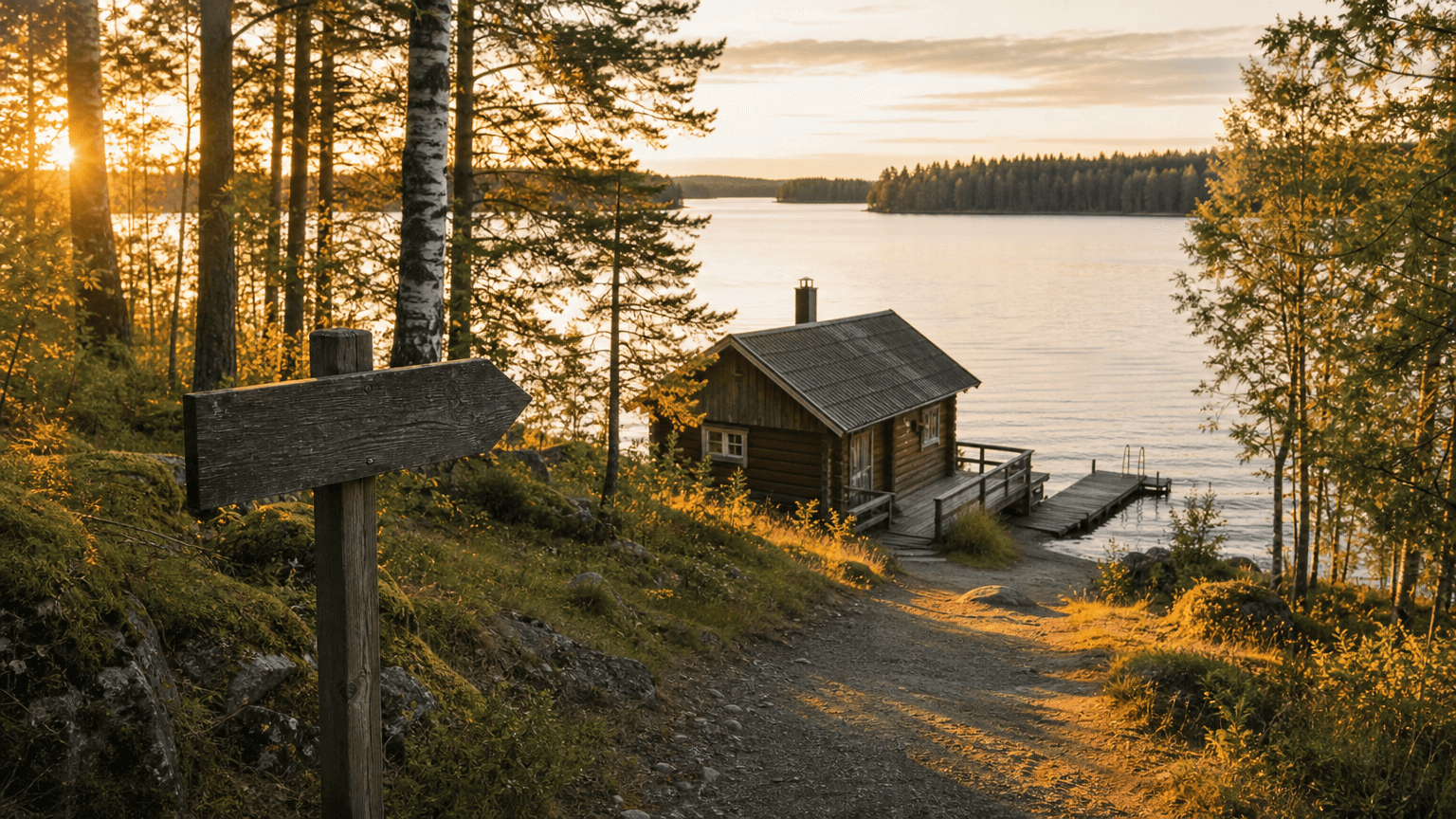
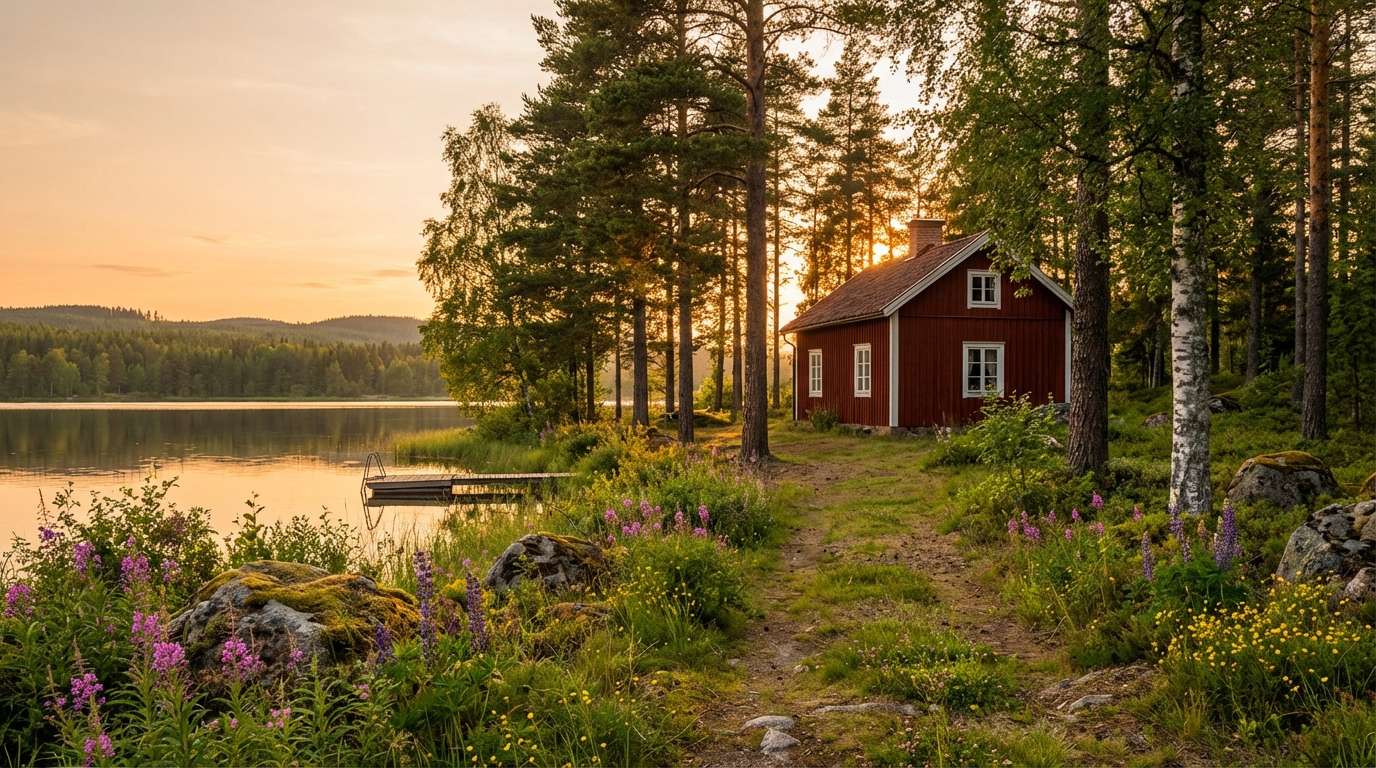
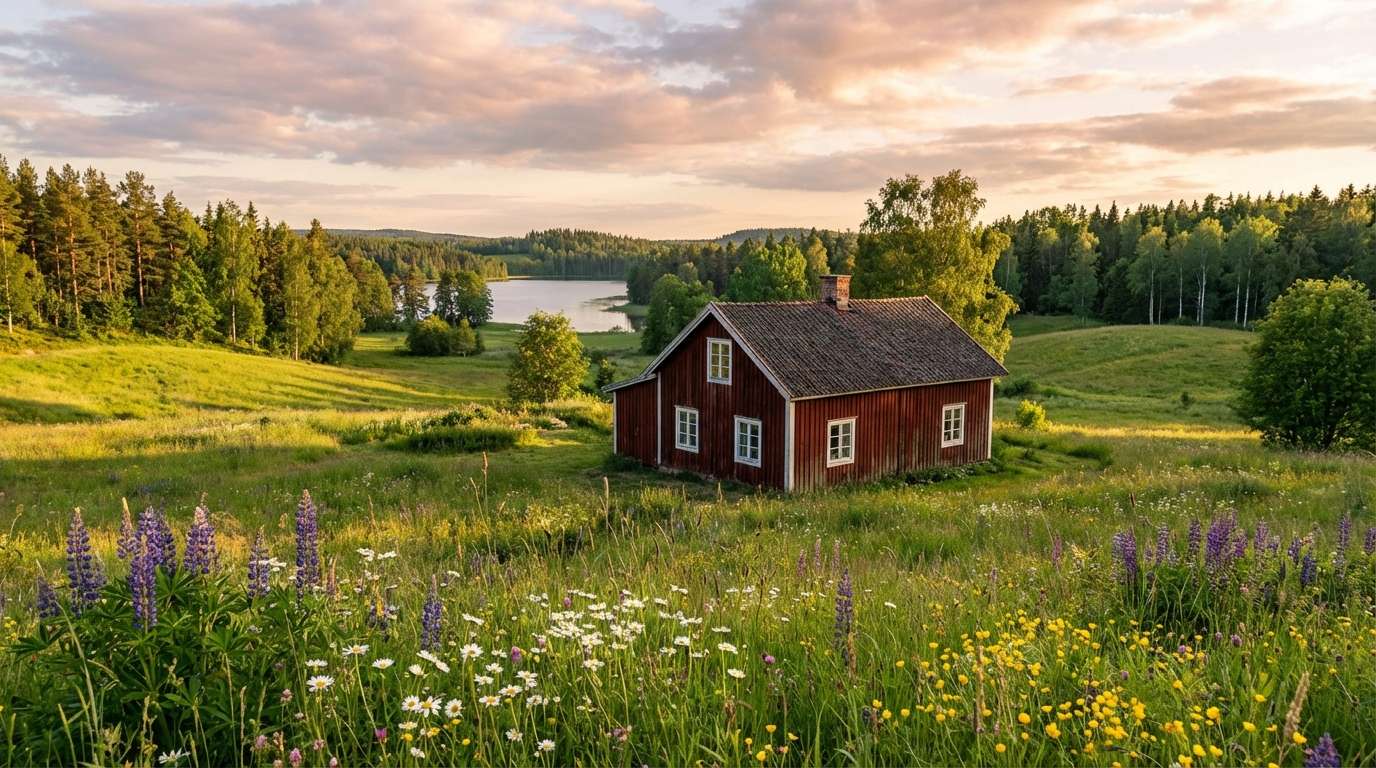
Homestra's complete guide to buying a fritidshus (vacation home) in rural Sweden covers this distinction in detail, including practical considerations around wells, septic systems, and winterization that often catch international buyers off guard.
One-time purchase taxes and fees
Stamp duty (stämpelskatt) and the lagfart processing fee
When you register ownership of a property, you pay stamp duty (stämpelskatt) to Lantmäteriet. For private individuals, the rate is 1.5% of the purchase price or the property's assessed value, whichever is higher. In addition to stamp duty, Lantmäteriet charges a fixed administrative fee (expeditionsavgift) of 825 SEK per application.
These are the two primary government costs tied directly to the transaction. They apply to all buyers, regardless of citizenship.
Additional costs to anticipate
Beyond the lagfart fees, buyers typically pay for:
- A property inspection (besiktning), which is standard practice in Sweden and forms part of the buyer's legal duty to investigate the property (undersökningsplikt)
- Legal or conveyancing advice, which is optional but often advisable for non-residents
- Mortgage deed registration (pantbrev) if the purchase is financed; this carries its own stamp duty of 2% of the loan amount plus a fixed fee
Ongoing property charges
Once you own a Swedish property, two types of annual charges apply depending on the property:
The municipal property charge (fastighetsavgift) applies to completed residential buildings. Skatteverket administers this charge. For single-family homes, it's capped annually so that it doesn't exceed a fixed ceiling even if the assessed value is high.
The property tax (fastighetsskatt) applies in certain other cases, such as commercial property, undeveloped land, or residential properties in the year of construction. The applicable rate depends on the property type.
If you buy a bostadsrätt (cooperative apartment) rather than freehold property, you'll also pay monthly fees to the housing association (BRF), which cover shared building costs and often include some municipal charges.
Capital gains when you sell
Sweden taxes capital gains on the sale of real property. According to Skatteverket's English guidance, gains are subject to tax based on the difference between the sale price and the acquisition cost, adjusted for eligible improvement costs and selling expenses.
Non-residents are also subject to Swedish capital gains tax on Swedish-sourced property gains. Skatteverket provides English-language guidance on how to declare a property sale. The taxable gain may also need to be reported in your home country, depending on any applicable tax treaty with Sweden.
Given this cross-border complexity, engaging a tax professional familiar with both Swedish and your home-country rules is advisable before you sell.
Example cost breakdowns at three price points
The table below illustrates the lagfart costs for three common purchase-price scenarios.
| Purchase price | Stamp duty (1.5%) | Expeditionsavgift | Total lagfart cost |
|---|---|---|---|
| 1,000,000 SEK | 15,000 SEK | 825 SEK | 15,825 SEK |
| 3,000,000 SEK | 45,000 SEK | 825 SEK | 45,825 SEK |
| 7,000,000 SEK | 105,000 SEK | 825 SEK | 105,825 SEK |
If you're financing the purchase, add pantbrev stamp duty of 2% on the mortgage amount as a separate budgeting line. This is paid to Lantmäteriet when the mortgage deed is registered.
What you pay and when
- At inspection (besiktning): inspector fee, paid directly to the inspector
- At signing (köpekontrakt): deposit, typically 10% of the purchase price, held in escrow
- At closing: balance of purchase price transferred
- After closing: lagfart stamp duty + 825 SEK fee submitted to Lantmäteriet once you apply for title registration
How the rules differ for non-residents
The stamp duty rate and registration fee are the same for all private individual buyers. Citizenship doesn't change those numbers.
Where non-residents face a practical difference is in financing and resale taxation. Swedish banks assess non-resident mortgage applications more cautiously, often requiring larger down payments and additional documentation of income and assets. There's no universal rule across lenders, so comparing terms from multiple banks or working with a broker experienced in non-resident applications is recommended.
On the tax side, Swedish tax residents and non-residents are both liable for capital gains tax on a property sale in Sweden, but how the gain integrates with the buyer's home-country tax obligations varies by treaty. Rental income from Swedish property is similarly taxable in Sweden for non-residents, though the detailed rules on applicable deductions and rates fall outside the scope of this article.
The practical starting point for any international buyer is establishing a samordningsnummer early, verifying whether the property requires any acquisition permit, and understanding the lagfart costs before exchange. Platforms like Homestra are built specifically to help international buyers navigate these requirements across European markets, with country-specific guidance that makes the process more straightforward from the first search to the final registration.
Share