Blog published in Buying property abroad
Share
Buying property in Spain: a step-by-step guide for non-residents
Follow this 10-stage legal sequence for buying property in Spain as a non-resident. Covers NIE, due diligence, taxes, and registration for a smooth transaction.

Spain attracts tens of thousands of international buyers each year. Whether you're planning a Mediterranean second home, a retirement base in Andalusia, or an investment property on the Costa Blanca, the purchase process follows a specific legal sequence that differs meaningfully from buying property in the US, UK, or elsewhere in Europe. Understanding that sequence before you commit a single euro is the most practical thing you can do.
One thing worth noting upfront: Spain's "Golden Visa" program, which previously allowed non-EU nationals to obtain residency by purchasing property above a certain threshold, officially ended on 3 April 2025, as confirmed by a La Moncloa government press release dated 2 April 2025. Buying property in Spain no longer confers any path to residency. This guide covers the purchase process for non-residents who are buying for personal use, retirement, or investment, not for residency benefits.
Spain's transaction workflow involves multiple professionals working in sequence: a real estate agent, an independent lawyer or gestor, a notary (notario), and the Property Registry (Registro de la Propiedad). Each plays a distinct role at a distinct stage. Skipping or reordering those stages creates legal and financial risk. This guide maps all of them.
The 10-stage purchase process at a glance
Before getting into each step in detail, here is the end-to-end sequence every non-resident buyer should internalize:
- Search and property viewing
- Make an offer and pay a reservation deposit
- Obtain your NIE (Número de Identidad de Extranjero)
- Open a Spanish bank account
- Due diligence on the property
- Sign the private purchase contract (contrato de arras or contrato privado de compraventa) and pay the full deposit
- Arrange financing if applicable
- Complete at the notary (sign the Escritura Pública) and transfer final payment
- Submit the title deed to the Registro de la Propiedad
- Pay taxes and fees; set up post-purchase compliance
Each stage has its own document requirements and deadlines. The sections below walk through every one of them.
Remote buyer: documents to gather before you travel
If you're buying from abroad, having this paperwork ready avoids delays once you're in Spain:
- Valid passport (plus a second form of photo ID)
- Proof of address in your home country (utility bill or bank statement, typically no older than 3 months)
- Tax identification number from your home country (e.g., US Social Security Number or ITIN)
- Recent bank statements (last 3-6 months) showing funds for the purchase
- Proof of income or employment (pay stubs, tax returns, or audited accounts for self-employed buyers)
- Reference letter from your home bank if applying for a Spanish mortgage
- NIE application documents (see below)
Steps 1-3: Property search, offer, and reservation deposit
Finding the right property
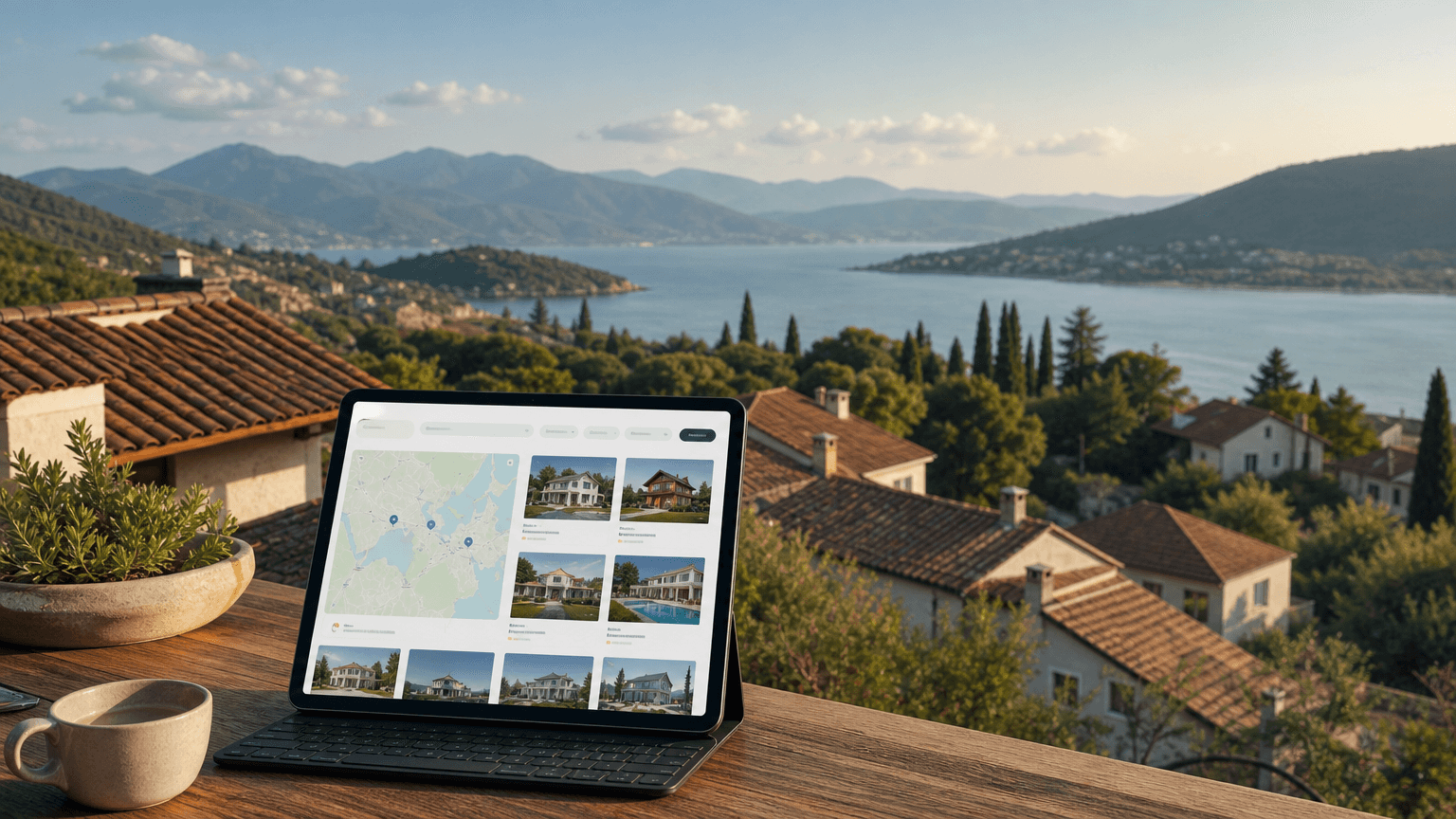
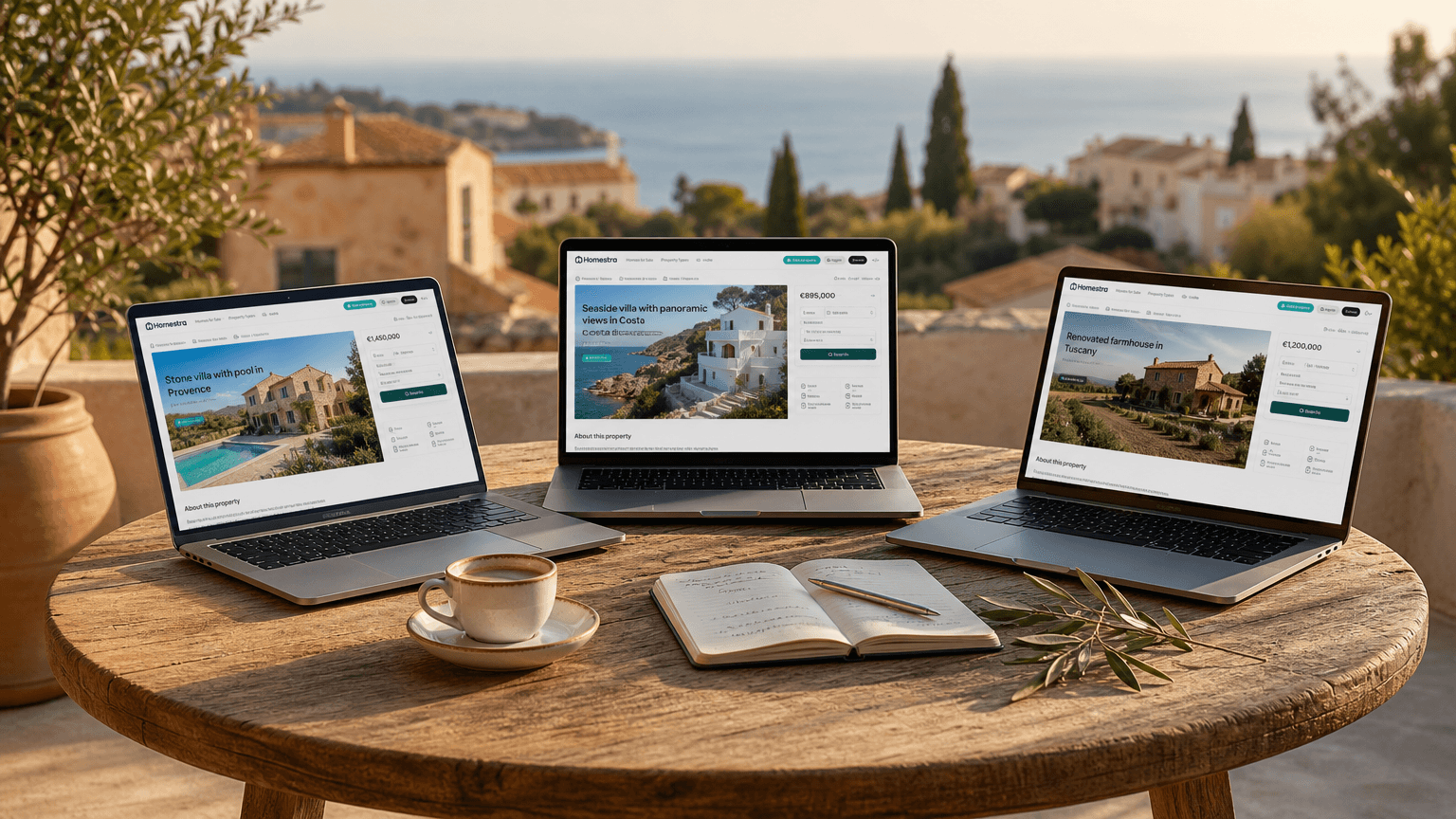
Spain's property market is large and geographically diverse. Platforms like Homestra, which lists over 200,000 properties across Europe with detailed local market data and lifestyle context, give international buyers a practical starting point for comparing locations, price ranges, and property types before booking a flight. The search filters for property type, price band, and region help buyers identify realistic options before committing time and travel.
Once you've identified one or more candidates, visiting in person is strongly recommended before signing anything. A property inspection, neighborhood walkthrough, and conversation with local residents gives context that listings cannot.
Making an offer
In Spain, an offer is typically made verbally or via a brief written summary through the agent. There is no legally binding contract at this stage. The seller may accept, reject, or counter. Once both parties agree on a price, the process moves to the reservation deposit.
The reservation deposit (señal or reserva)
A reservation deposit locks the property off the market while you proceed to due diligence. The amount varies but commonly falls in the range of €3,000 to €10,000, paid directly to the agent or into a dedicated client account. It is not the same as the full arras deposit paid at the private contract stage.
Before paying any reservation deposit, confirm in writing:
- The agreed price and any conditions attached
- What happens to the deposit if the sale falls through (on either side)
- The deadline by which you must sign the private purchase contract
- That the property will be taken off the market immediately
This is also the moment to verify that you have (or are actively obtaining) your NIE, because you'll need it for all subsequent steps.
Getting your NIE: the essential first step for non-residents
What the NIE is and why you need it
The NIE (Número de Identidad de Extranjero) is a tax identification number assigned to foreign nationals in Spain. Spain's official government portal administracion.gob.es lists the NIE assignment as a formal administrative procedure ("Asignación de Número de Identidad de Extranjero") under Spain's administrative transaction system. Without it, you cannot sign a purchase contract, open a Spanish bank account, pay property taxes, or register ownership. It is a prerequisite for virtually every legal and financial step in the buying process.
The NIE is not a residency permit. It does not grant you the right to live or work in Spain. It simply identifies you for tax and legal purposes as a foreign national transacting within Spain.
Two pathways to obtain your NIE
Pathway 1: Apply at a Spanish consulate before traveling (recommended for non-EU buyers)
Spain's Ministry of Foreign Affairs and Cooperation hosts official consulate guidance on NIE applications at exteriores.gob.es, with jurisdiction-specific requirements varying by consulate location. The general process:
- Identify the Spanish consulate with jurisdiction over your area of residence (in the US, jurisdiction is determined by your state of residence, not where you happen to be)
- Book an appointment through the consulate's online appointment system
- Prepare your documents: completed EX-15 form, valid passport plus a photocopy of all pages, one recent passport photo, and a written justification explaining why you need the NIE (property purchase qualifies as a valid economic reason)
- Attend the appointment and pay the consular fee (check your specific consulate for the current amount)
- Collect the NIE document or await postal notification, depending on your consulate's procedure
Processing times at consulates vary widely, from a few weeks to several months depending on demand and location. Apply well before you expect to sign the private purchase contract.
Pathway 2: Apply in Spain at a police station (Comisaría)
If you are already in Spain, you can apply at a police station that handles foreigner documentation (Oficina de Extranjería or Comisaría). The process requires booking an appointment ("cita previa") through the official government appointment portal. Documents required are similar to the consulate pathway: EX-15 form, passport and copy, photo, fee payment (Modelo 790), and justification letter.
Common mistakes that delay NIE applications
- Submitting an incomplete EX-15 form (every field must be filled in correctly)
- Attending the appointment without the fee payment receipt (Modelo 790 must be paid at a bank before the appointment in the in-Spain pathway)
- Providing a justification letter that is too vague (be specific: "I am purchasing a property at [address], Spain, and require a NIE to complete the legal formalities")
- Using an unofficial appointment booking site (several third-party sites charge for bookings that are free on the official government portal)
If you already hold a NIE from a previous transaction or period of residence in Spain, verify it is still valid and matches your current passport details before proceeding.
Opening a Spanish bank account
Most Spanish sellers and notaries require payment via Spanish bank transfer on the day of signing. While some transactions can be structured with international transfers, having a Spanish account eliminates currency transfer complications at a time-sensitive moment.
Major Spanish banks including BBVA, Santander, CaixaBank, and Sabadell all offer non-resident accounts (cuenta de no residente). You'll typically need your passport, NIE, proof of address, and proof of income. Some banks have international desks that facilitate account opening before you arrive in Spain; others require your physical presence. Build this step into your timeline before you sign the private purchase contract.
Non-resident mortgage financing: what Spanish lenders require
Non-residents can access Spanish mortgages, but the terms differ from those available to residents. As a general framework:
- Most Spanish lenders offer non-resident buyers a loan-to-value (LTV) ratio of around 60-70% of the property's appraised value, compared to up to 80% for residents. This means a larger cash deposit is required.
- Lenders assess your creditworthiness based on documentation from your home country: bank statements, employment contracts or audited accounts, recent tax returns, and a credit report.
- The application and appraisal process typically takes 4-8 weeks, so mortgage pre-approval should be initiated immediately after the offer is accepted.
- Fixed-rate and variable-rate options are available from Spanish banks. Some international banks with Spanish operations also offer cross-border mortgage products.
If you are a cash buyer, this step does not apply, but you should still be prepared to demonstrate the source of funds to the notary and to comply with anti-money laundering checks.
The private purchase contract and due diligence
Contrato de arras
The private purchase contract is the binding commitment before the notarial deed. The most common form is the contrato de arras penitenciales, under which the buyer pays a deposit (typically 10% of the purchase price) and, if the buyer walks away, that deposit is forfeited. If the seller backs out, they must return double the deposit to the buyer.
This contract specifies the agreed price, the completion deadline, the distribution of costs, and any conditions (such as obtaining mortgage approval). Do not sign it without completing due diligence.
Due diligence checklist
Your lawyer should verify all of the following before you sign the private contract:
- Nota simple from the Registro de la Propiedad: this official land registry extract confirms who legally owns the property, its surface area and description, and whether there are any mortgages, liens, easements, or embargoes registered against it
- Catastral certificate: confirms the cadastral description and rateable value of the property
- IBI (Impuesto sobre Bienes Inmuebles) receipts: confirms property taxes have been paid and there are no outstanding municipal debts
- Community of owners certificate: if the property is in a building or urbanization, confirms there are no outstanding community fees
- Utility bills: confirm utilities are connected and no arrears exist
- Building permits and habitability certificate (cédula de habitabilidad): confirms the property is legally habitable and any building work was properly licensed
- Energy performance certificate (certificado de eficiencia energética): legally required for all property sales since 2013
- Urban planning report: confirms the property is not affected by any reclassification, expropriation, or coastal law restriction
Documents to formally request from the seller or their agent:
- Copy of the seller's title deed (Escritura de Compraventa)
- Full cadastral reference number
- Certificate of no outstanding community debts
- Last 4 years of IBI receipts
- Any permits for extensions or renovations
- Building regulations compliance certificate for newer properties
Completion at the notary (Escritura Pública)
What happens on signing day
The notary (notario) is a public official who authenticates the transaction. The notary does not represent either party; they verify identities, read the deed aloud in full, confirm both parties understand the contents, and certify the transaction. Their fee is set by regulated tariff and is paid by the buyer in most cases.
On the day of completion:
- Both buyer and seller (or their authorized representatives via poder notarial, i.e., power of attorney) must be present
- The buyer must present their NIE and valid passport
- Final payment is made by certified bank check (cheque bancario) or bank transfer, usually from a Spanish bank account
- The notary retains the original deed and provides a nota simple as provisional proof of ownership
If you cannot travel to Spain for the signing, a trusted representative with a properly drafted Spanish power of attorney (notarized and, if issued abroad, apostilled) can sign on your behalf. This is a common and legally recognized arrangement for international buyers, but the power of attorney must be prepared in advance with care.
Costs settled at or around completion
Buyers should budget to cover the following around the time of notary signing:
- Purchase taxes (ITP or VAT + AJD, explained below)
- Notary fee
- Property registry fee
- Lawyer/gestor fee
- Any pending community or municipal debts assumed as part of the negotiation
Registration at the Registro de la Propiedad
After the notary signs and certifies the Escritura Pública, the deed must be submitted to the relevant provincial land registry (Registro de la Propiedad) for inscription. This is the step that makes your ownership legally enforceable against third parties.
In practice, the gestor or notary's office typically handles submission on your behalf. The registry will issue a nota simple confirming inscription, which may take several weeks to a few months depending on the registry's workload. During this interval, the notarized deed serves as evidence of your purchase.
Retain copies of: the signed Escritura, the nota simple confirming registration, proof of tax payment, and all receipts from the transaction. These documents form the permanent legal record of your ownership.
Taxes and fees for non-resident buyers (ITP, VAT, AJD)
Understanding which tax regime applies to your purchase is one of the most consequential steps in the process. The key distinction is between new-build properties and resale properties.
Resale properties: Impuesto de Transmisiones Patrimoniales (ITP)
For second-hand (resale) properties, the applicable tax is the ITP (Property Transfer Tax). ITP is a regional tax, meaning the rate varies by autonomous community. Rates typically range from 6% to 10% of the declared purchase price, though some regions apply progressive scales or reduced rates for certain buyer categories. Confirm the rate with a local professional for your specific region.
ITP is paid by the buyer. It must be filed and paid within 30 working days of signing the Escritura.
New-build properties: VAT (IVA) + AJD
For new-build properties purchased directly from a developer, the applicable tax is VAT (IVA) at 10% of the purchase price (or 4% for officially protected housing, "vivienda de protección oficial"). New builds also attract the Actos Jurídicos Documentados (AJD) stamp duty, which is also a regional tax and typically ranges from 0.5% to 1.5%.
Other fees and costs
| Cost item | Typical range (approximate) | Who pays |
|---|---|---|
| ITP (resale) | 6-10% of price (region-dependent) | Buyer |
| VAT/IVA (new build) | 10% of price | Buyer |
| AJD stamp duty (new build) | 0.5-1.5% (region-dependent) | Buyer |
| Notary fee | €600-€1,200+ (regulated, scales with price) | Buyer (typically) |
| Land registry fee | €400-€900+ (regulated) | Buyer (typically) |
| Lawyer/gestor fee | 1-2% of price (or fixed fee) | Buyer |
| Agent commission | 3-6% of price | Seller (typically) |
These figures are indicative. Confirm all amounts with a qualified Spanish tax professional before completing your transaction, as rates and thresholds are subject to legislative change.
Costs to budget for remote administration
Non-resident owners managing from abroad should also budget for:
- Annual gestor retainer for tax filing compliance (typically €300-€800/year)
- Home insurance
- Community of owners fees (if applicable)
- Utility supply contracts
Non-resident property ownership: ongoing tax obligations
Owning property in Spain as a non-resident comes with recurring tax obligations that many buyers underestimate.
Impuesto sobre Bienes Inmuebles (IBI)
IBI is Spain's municipal property tax, equivalent to council tax or property tax in other jurisdictions. It is assessed annually by the local municipality based on the cadastral value of the property. The rate varies by municipality.
Non-resident income tax (IRNR) and imputed income
Spain's Agencia Tributaria (tax authority) requires non-residents who own property in Spain to file an annual non-resident income tax return (Modelo 210), even if the property is not rented out. For properties not rented, Spain imputes a notional rental income (typically 1.1-2% of the cadastral value, depending on when the cadastral values were last revised) and taxes it at the applicable non-resident rate (currently 19% for EU/EEA residents and 24% for residents of other countries, though these rates can change; verify with the Agencia Tributaria or a qualified advisor).
If you rent the property
If you rent the property, all rental income received is reportable to the Agencia Tributaria via quarterly Modelo 210 filings. EU and EEA residents can deduct allowable expenses from rental income; non-EU residents are currently taxed on gross rental income at the flat rate applicable to their country of residence. The rules here have been subject to litigation and legislative discussion, so working with a local gestor who tracks Agencia Tributaria guidance is particularly important for rental property owners.
Plusvalía municipal
When you eventually sell the property, a municipal capital gains tax (plusvalía municipal) is assessed on the increase in the cadastral value of the land since the date of your purchase. This is paid by the seller at the time of sale. Budget for it when planning an exit strategy.
Sample purchase timelines
Scenario 1: Cash purchase, NIE already held
- Week 1-2: Property identified, offer accepted, reservation deposit paid
- Week 2-4: Due diligence completed by lawyer
- Week 4-6: Private contract signed, 10% arras deposit paid
- Week 6-10: Notary completion, Escritura signed, full payment transferred
- Week 10-20: Property registered at Registro de la Propiedad
- Total: approximately 2-3 months from offer to registration
Scenario 2: Financed purchase, NIE already held
- Week 1-2: Offer accepted, reservation deposit paid, mortgage application submitted
- Week 2-6: Due diligence in parallel with mortgage appraisal and approval
- Week 6-8: Private contract signed, 10% deposit paid
- Week 8-14: Mortgage approval confirmed, notary date set
- Week 14-16: Escritura signed with mortgage deed, funds released
- Week 16-26: Property registered
- Total: approximately 3-5 months
Scenario 3: Cash purchase, NIE application pending
- Add 4-12 weeks to any timeline above depending on consulate processing times. The NIE is a prerequisite for signing any binding contract, so the NIE pathway should be the first thing you initiate once you identify a property you intend to purchase.
Sample cost breakdown template (€300,000 resale property in Andalusia at 7% ITP)
| Item | Estimated amount |
|---|---|
| Purchase price | €300,000 |
| ITP (7%) | €21,000 |
| Notary fee (approx.) | €900 |
| Land registry fee (approx.) | €600 |
| Lawyer/gestor (1.5%) | €4,500 |
| Total acquisition cost | ~€327,000 |
Add annual IBI, annual IRNR filing (either imputed income or rental income reporting), insurance, and community fees as recurring costs. These numbers are illustrative; confirm all figures with a licensed Spanish tax advisor for your specific transaction.
Your non-resident buying checklist (10 steps)
Use this checklist to track your progress through the process:
- Identify and view properties; engage a local lawyer before committing
- Confirm NIE application is in progress (consulate or in-Spain pathway)
- Pay reservation deposit; get written confirmation of terms
- Open a Spanish bank account
- Commission full due diligence (nota simple, IBI, community certificate, permits)
- Sign contrato de arras and pay 10% deposit
- Secure mortgage approval (if applicable) or confirm funds transfer readiness
- Sign Escritura Pública at the notary; complete final payment
- File and pay ITP or VAT+AJD within 30 working days
- Submit deed to Registro de la Propiedad; set up annual tax compliance
Frequently asked questions
Do I need to be in Spain to buy a property? No. With a properly notarized and apostilled power of attorney, a trusted representative (typically your lawyer) can sign the private contract and the Escritura on your behalf. However, visiting the property before signing is strongly recommended.
Is the NIE the same as a residence permit? No. The NIE is a tax identification number. It does not confer any right to live or work in Spain. As of 3 April 2025, property purchase no longer provides a pathway to Spanish residency following the end of the Golden Visa program.
Can I get a Spanish mortgage as a non-resident? Yes, though the terms are less favorable than for residents. Expect lenders to offer a maximum LTV of around 60-70%, with full documentation of income, assets, and creditworthiness from your home country.
What taxes do I pay at purchase? Resale properties attract ITP (6-10%, regionally variable). New builds attract VAT at 10% plus AJD stamp duty (0.5-1.5%). Both are paid by the buyer.
What ongoing taxes do I owe as a non-resident property owner? Annual IBI (municipal property tax) plus an annual non-resident income tax return (Modelo 210) via Spain's Agencia Tributaria. If you rent the property, quarterly rental income filings are also required.
What if the seller pulls out after I've signed the arras contract? Under the standard contrato de arras penitenciales, a seller who withdraws after signing must repay double the deposit amount. This is one of the reasons the private contract stage carries more legal weight than the initial reservation.
For international buyers navigating the end-to-end process, working with the right platform at the search stage sets a sound foundation. Homestra's database of 200,000+ European properties, organized with local market context and detailed property data, gives buyers the clarity to make informed shortlists before engaging lawyers, arranging NIEs, and committing deposits. Starting with good information makes every subsequent step easier.
Spain remains one of Europe's most accessible and appealing markets for international buyers. The process has its complexity, but it follows a clear legal sequence. Know the sequence, get the NIE early, do your due diligence thoroughly, and work with qualified local professionals at every contractual stage.
Share