Blog published in Buying property abroad
Share
Buying Property in Sweden vs Norway: Full Buyer's Guide (2026)
Compare the full property buying process in Sweden vs Norway: bidding, taxes, mortgages, registration, and costs for international buyers. Updated for 2026 rules.

Sweden and Norway both welcome foreign buyers without restrictions, but the mechanics of getting from first viewing to holding the title deed differ enough to catch international buyers off guard. Sweden's process moves fast, centers on an open auction-style bidding culture, and now carries a critical identity timing requirement for non-residents applying for lagfart (title registration). Norway's process is procedurally clear but demands higher upfront finance preparation, involves a deed registration through Kartverket, and charges a 2.5% document tax that adds meaningfully to your closing costs.
This guide takes you through both journeys in parallel, from financing through registration, so you can decide which market suits your goals, and avoid the delays that trip up most international buyers.
Key differences at a glance
| Factor | Sweden | Norway |
|---|---|---|
| Ownership type | Äganderätt (freehold) or bostadsrätt (cooperative share) | Selveier (freehold) or borettslag (cooperative) |
| Bidding style | Budgivning: open, non-binding, real-time bids | Budrunde: formal bid round, typically 24–48 hours |
| Deposit (handpenning/depositum) | ~10% at contract signing | Typically 10% at contract |
| Title registration authority | Lantmäteriet | Kartverket |
| Stamp duty / transfer tax | 1.5% (lagfart/stämpelskatt) + SEK 825 fee | 2.5% dokumentavgift |
| Annual property charge | 0.75% of assessed value, capped at SEK 10,074 | Municipal eiendomsskatt: 0–0.7%, varies by municipality |
| Typical timeline (offer to title) | 4–10 weeks | 6–12 weeks |
| Key identity requirement | Personnummer or samordningsnummer (from 1 July 2026) | D-number via Skatteetaten |
The single biggest time-risk in Sweden right now is identity. From 1 July 2026, Lantmäteriet requires applicants for lagfart to provide a Swedish personnummer or, for those without one, a samordningsnummer. If you don't have either when you win a bid, your title registration can stall. In Norway, the equivalent bottleneck is financing pre-approval and having your D-number sorted before the budrunde, since moving into a bid round without a confirmed finansieringsbevis (finance certificate) puts you at a structural disadvantage.
Ownership types: bostadsrätt, äganderätt, and their Norwegian equivalents
In Sweden, äganderätt means you own the land and building outright, the equivalent of freehold. You pay property taxes, maintenance, and any mortgage directly. Bostadsrätt gives you a share in a housing cooperative (bostadsrättsförening, or BRF) and the exclusive right to occupy a unit. You don't own the underlying property; the association does. Monthly BRF fees cover shared costs, and importantly, the association may carry its own debt. That debt affects how much financing Swedish banks will extend against the unit, and it's a meaningful due diligence point: always request the BRF's latest annual accounts and check the fee-to-debt ratio before bidding.
Norway mirrors this structure closely. Selveier is full freehold ownership, equivalent to äganderätt. Borettslag is the cooperative equivalent, where you hold an andel (share) and the association owns the property. For freehold transfers, Kartverket charges the 2.5% dokumentavgift. Borettslag share transfers work through the association and don't attract the same dokumentavgift, which makes cooperative units nominally cheaper to transact, but the due diligence requirements on association finances are just as critical as in Sweden.
For international buyers comparing the two: freehold ownership is administratively cleaner in both countries, since you register direct title in your name. Cooperative ownership requires you to understand the association's financial health in both markets, and the path to financing a cooperative share can be more complex with foreign banks.
Step-by-step buying process in Sweden
1. Finance preparation and identity setup
Before you search seriously, get a lånelöfte (mortgage pre-approval) from a Swedish lender or confirm you have liquidity for a cash purchase. Swedish mortgages for residential properties require a minimum 15% deposit (maximum 85% LTV). Banks will want proof of stable income, credit history, and Swedish-bank compatibility, which can be harder to establish as a non-resident.
On identity: if you don't have a Swedish personnummer (issued to residents), apply for a samordningsnummer through Skatteverket. This is now required for lagfart applications for transfers from 1 July 2026. The samordningsnummer application takes time, start this process before you begin property viewings, not after you win a bid. A realistic lead time is 4–8 weeks.
2. Viewings and inspection
Swedish property viewings (visning) are typically group events. You attend, note the condition, and arrange an independent technical inspection (besiktning) separately. Sweden's undersökningsplikt (buyer's duty to investigate) is legally significant: defects that a diligent buyer could have found during inspection cannot normally be claimed against the seller afterward. For rural fritidshus (vacation homes), this makes the besiktning non-negotiable. Priorities are well condition and water quality, septic system (enskilt avlopp) compliance, heating systems, and winterization standards.
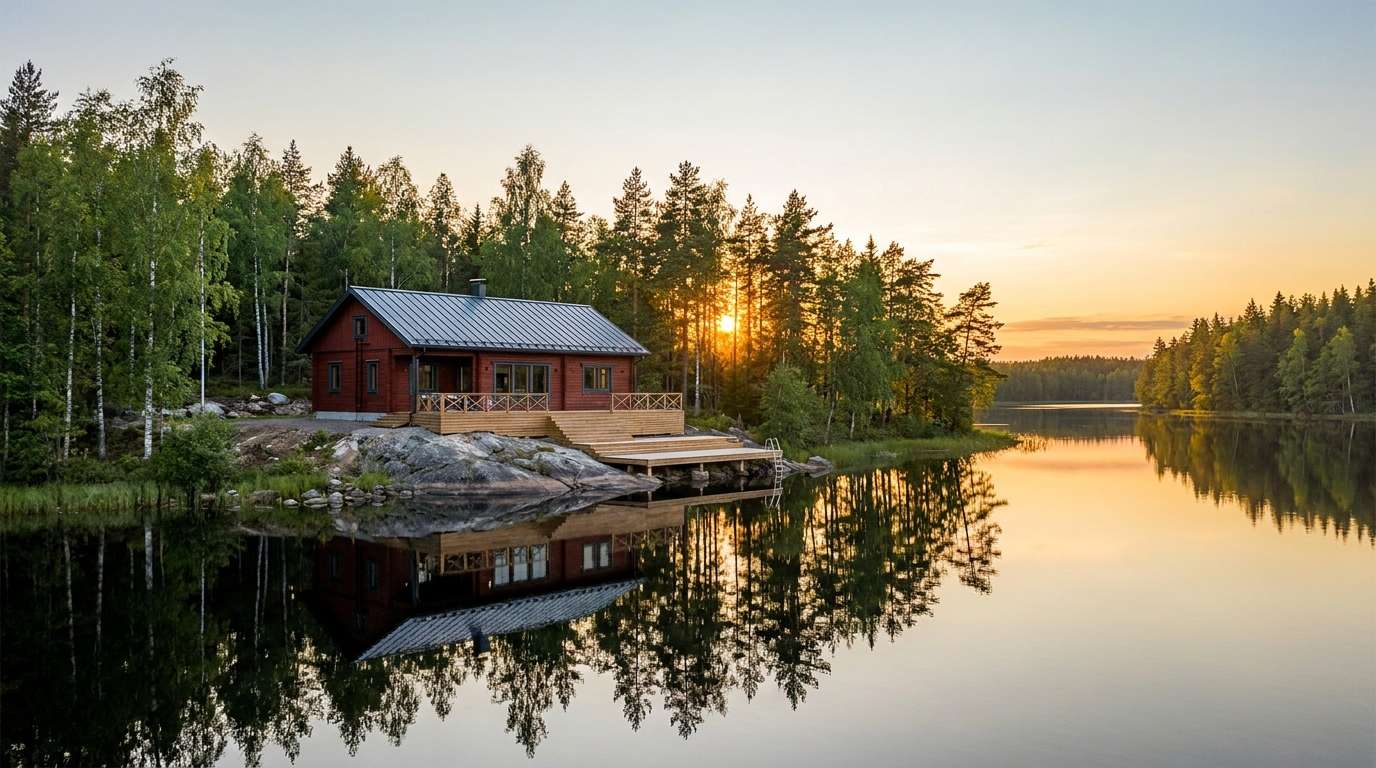
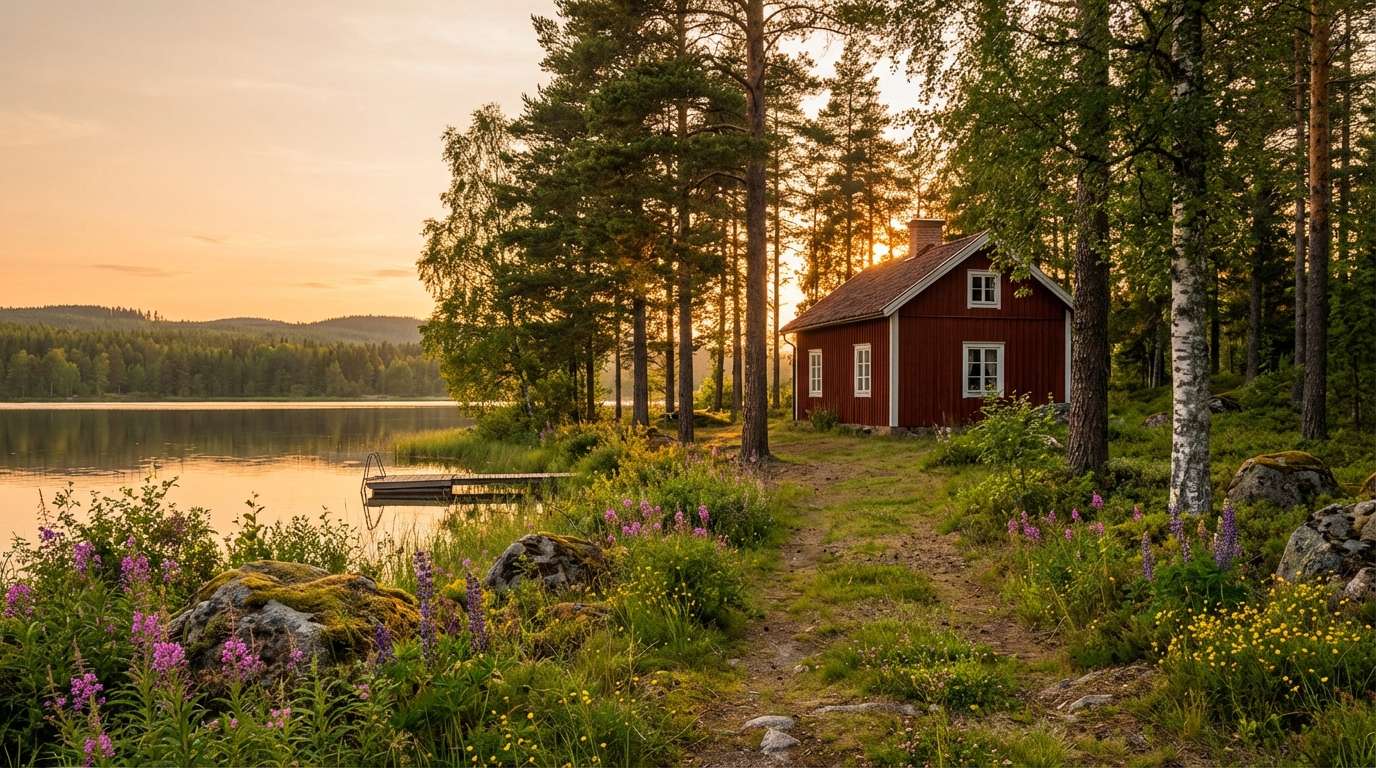
You can find a wide range of houses for sale in Sweden on Homestra, including rural waterfront properties where these inspection points are especially relevant.
3. Bidding (budgivning)
Swedish bidding is open and competitive. Bids are submitted in real time, often by text to the estate agent, and all bids are visible to competing buyers. Bids are non-binding pre-contract: the seller chooses when to stop the round and accept. For international buyers, speed and visible proof of financing matter. If you're overseas, arrange a trusted local contact or confirm mobile access to the bidding platform before a property goes live.
4. Contract (köpekontrakt) and deposit
Once the seller accepts your bid, a formal köpekontrakt is drawn up. You pay the handpenning (deposit) at signing, typically around 10% of the purchase price. The contract specifies the possession date (tillträde). From here, the clock runs to closing.
5. Lagfart registration
After tillträde, you apply to Lantmäteriet for lagfart within three months. The cost: stamp duty (stämpelskatt) at 1.5% of the purchase price or assessed value (whichever is higher), plus a fixed registration fee of SEK 825. If you're financing, pantbrev (mortgage deed) costs apply on top. From 1 July 2026, your application must include your personnummer or samordningsnummer, have this ready before the transfer date, not after.
Official resource: Lantmäteriet
Step-by-step buying process in Norway
1. Finance preparation and D-number
Norway's budrunde moves fast, often resolving within a single day. Entering it without a finansieringsbevis (official finance pre-approval certificate) is a real disadvantage, sellers and agents take pre-approved buyers more seriously, and many sellers will simply decline unqualified bids.
For identification, foreign buyers need a D-number, issued by Skatteetaten. This is used for everything from opening a Norwegian bank account to registering property ownership. Apply via Skatteetaten's official process well in advance, processing times vary but can take several weeks. Official resource: Skatteetaten
2. Viewings and the budrunde
Norwegian viewings (visning) follow a similar format to Sweden. After viewing, buyers submit bids through the estate agent during the budrunde, a formal bid round. Unlike Sweden's continuous open auction, Norway's process typically runs over a defined window and involves counteroffers between parties. Pre-contract bids are not legally binding under contract law, but once a verbal or written acceptance occurs and the purchase contract is signed, you're committed.
Surveys and technical inspections exist but are less standardized than in Sweden. Request a tilstandsrapport (condition report) if one isn't already provided, and commission an independent besiktigelse for older properties.
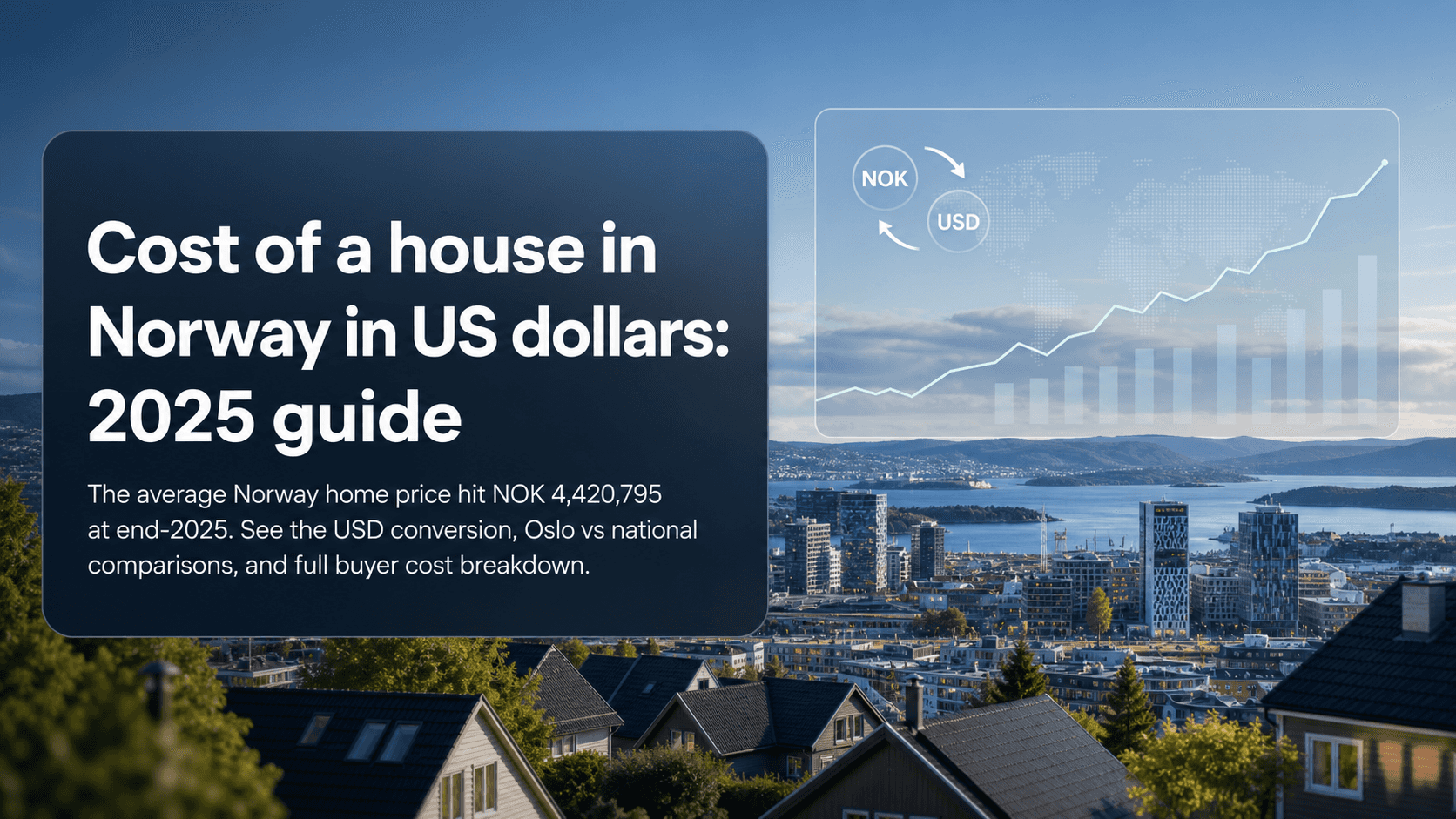
Browsing houses for sale in Norway on Homestra covers everything from urban apartments to rural cabins with fjord access.
3. Contract and deposit
After bid acceptance, a kjøpekontrakt (purchase contract) is signed. A deposit (typically 10%) is paid, and the settlement date (overtagelse) is agreed. Settlement usually occurs 4–8 weeks after contract.
4. Deed registration through Kartverket
At settlement, the deed (skjøte) is registered through Kartverket, Norway's official land registry (tinglysning). This is when dokumentavgift is due: 2.5% of the property's market value, as confirmed by both Skatteetaten and Kartverket. There is also a fixed registration fee. Borettslag share transfers follow a different administrative route through the housing association and typically don't attract dokumentavgift.
Official resource: Kartverket
Taxes and fees: what you actually pay
Sweden
- Lagfart/stämpelskatt: 1.5% of purchase price + SEK 825 fixed fee (Lantmäteriet)
- Pantbrev (mortgage deed): 2% of the mortgage amount + SEK 375 per deed, if financing
- Annual property charge (fastighetsavgift): 0.75% of the property's tax assessment value in 2025, with an upper cap of SEK 10,074 per building (Skatteverket)
- Non-resident capital gains tax: 22% on profit at sale
- Rental income: rental income above SEK 40,000/year is taxable; a SINK-style flat rate regime of 22.5% (proposed for 2026) applies to non-residents
Norway
- Dokumentavgift: 2.5% of market value at deed registration (Skatteetaten / Kartverket)
- Tinglysing registration fee: approximately NOK 585 (fixed, subject to annual adjustment)
- Municipal property tax (eiendomsskatt): 0–0.7% of assessed value annually, set by each municipality; not all municipalities charge it
- Capital gains on sale: taxable for non-residents on Norwegian-source gains
Illustrative closing-cost comparison (assumptions: €300,000 purchase, freehold, cash purchase)
| Cost item | Sweden (approx.) | Norway (approx.) |
|---|---|---|
| Stamp duty / document tax | €4,500 (1.5%) | €7,500 (2.5%) |
| Fixed registration fee | ~€75 | ~€55 |
| Independent inspection | €500–€1,000 | €500–€1,200 |
| Agent fee (paid by seller) | 0 (buyer) | 0 (buyer) |
| Total buyer closing costs | ~€5,000–€5,500 | ~€8,000–€8,700 |
These are illustrative estimates only. Actual costs depend on purchase price, financing structure, municipality, and property type.
Norway's higher stamp duty is the most impactful transaction cost difference between the two countries for a cash buyer. For a financed purchase in Sweden, pantbrev costs can add 1–2% depending on mortgage size, narrowing the gap.
Mortgages and financing: what foreign buyers face
Sweden
Swedish banks require a minimum 15% down payment (maximum 85% LTV). For non-residents, lenders typically want two to three years of tax returns, proof of stable foreign income, and some connection to Sweden (employer, existing bank relationship, or prior tax registration). Foreign-income mortgages are possible but harder to qualify for. Cash buyers sidestep this entirely.
Norway
Norwegian lenders generally expect 10–15% down for residents, but foreign buyers without Norwegian income or credit history should plan for a 25–40% deposit as a realistic baseline. The finansieringsbevis must be secured before the budrunde. Norwegian banks are cautious about lending to non-residents with no income ties to Norway.
Three buyer scenarios
A. Cash buyer: Both countries are accessible. Norway's dokumentavgift adds cost at closing; Sweden's lagfart timeline is the main variable. Identity prep (samordningsnummer or D-number) is the only meaningful delay risk.
B. Financed owner-occupier: Sweden's 15% down and pantbrev costs are manageable if you have a qualifying income profile. Norway's lenders will demand more equity and more documentation for foreigners, plan for 30%+ down. Pre-approval is the critical path item in both countries.
C. Investor / part-year user: Rental income triggers tax obligations in both countries. In Sweden, SINK regime applies to non-residents above SEK 40,000 in annual rental income. In Norway, rental income from Norwegian property is taxable in Norway regardless of your residence. Neither country makes the investment-property financing path easy for non-residents without existing local financial ties.
Documents to gather now
- Valid passport and any existing Swedish/Norwegian identity numbers
- Last 2–3 years' tax returns or certified income statements
- Recent bank statements (3–6 months)
- Proof of funds or financing letters
- Employment contract or self-employment accounts
- Credit report from your home country (translated if required)
For broader context on what to prepare before any international purchase, the guide on what to consider before buying property abroad covers the full pre-purchase financial checklist.
Foreign buyer restrictions and residency implications
Both Sweden and Norway impose no ownership restrictions on foreign buyers, EU, EEA, and non-EU nationals can buy freely. This is confirmed by Lantmäteriet for Sweden and is consistent with Norway's open property market approach.
Owning property grants no residency rights in either country. Non-EU citizens remain subject to Schengen 90/180-day limits. If you're planning extended stays, explore separate visa or residency routes before purchasing.
The identity and registration timeline risks are the real practical constraints:
- Sweden: Without a samordningsnummer in place before transfer, your lagfart application (required within 3 months of possession) will be delayed. Applications pile up at Lantmäteriet, and penalties apply for late filing. Apply for your samordningsnummer at least 8 weeks before your target closing date.
- Norway: Without a D-number, opening a Norwegian bank account and registering the deed is complicated. Apply through Skatteetaten as soon as you begin seriously viewing properties.
Bidding and typical timelines
Sweden: budgivning
Bids in Sweden are submitted to the estate agent, typically via text message, and are updated in a visible chain accessible to all bidders. There's no set closing time; the seller decides when to stop. Bidding can resolve in a few hours or stretch over days. The process is fast and requires you to be reachable and financially ready at any moment. Bids are not legally binding until the köpekontrakt is signed.
Norway: budrunde
Norway's budrunde runs to a deadline. Bids must be submitted with a minimum acceptance deadline (often 12–24 hours ahead). Counteroffers shrink the window further. The round often closes within a single working day. Bids become binding after acceptance and contract signing, not during the round itself.
Side-by-side timeline
| Phase | Sweden | Norway |
|---|---|---|
| Week 0–2: prep | Get lånelöfte, apply for samordningsnummer | Get finansieringsbevis, apply for D-number |
| Week 2–6: viewings + bidding | Attend visning, arrange besiktning, enter budgivning | Attend visning, review tilstandsrapport, join budrunde |
| Week 4–8: contract + deposit | Sign köpekontrakt, pay handpenning (~10%) | Sign kjøpekontrakt, pay depositum (~10%) |
| Week 6–12: closing | Tillträde (possession), apply for lagfart within 3 months | Overtagelse, register deed with Kartverket, pay dokumentavgift |
How to avoid getting stuck: Missing identity documents are the most common delay for internationals in both countries. The second most common: arriving at a budrunde in Norway without a finansieringsbevis. Third: inspection delays for rural properties with complex systems (wells, septic, private road access).
International buyer checklist
Sweden checklist
- Confirm identity route: do you have a personnummer or need a samordningsnummer? Apply 8+ weeks before intended closing
- Secure lånelöfte or confirm cash liquidity (minimum 15% down for mortgaged purchases)
- Book an independent besiktning, never skip it, especially for rural fritidshus
- For rural properties: check well, septic (enskilt avlopp), heating system, and winterization
- Plan for lagfart costs: 1.5% stamp duty + SEK 825 fee + pantbrev if financing
- Confirm tillträde date and apply for lagfart within 3 months of possession
Norway checklist
- Apply for D-number via Skatteetaten before attending viewings
- Secure finansieringsbevis from a Norwegian bank or compatible lender
- Review any tilstandsrapport before entering the budrunde
- Set a clear bid ceiling before the budrunde, it moves fast
- Plan for 2.5% dokumentavgift at deed registration plus fixed tinglysing fee
- Confirm whether the property is selveier or borettslag (different tax/admin paths)
- Research your municipality's eiendomsskatt rate (0–0.7%)
Universal checklist (both countries)
- Budget total closing costs as a separate line from purchase price
- Confirm what fixtures, fittings, and outbuildings are included in the sale
- Get all documents in a single folder: ID, income proof, bank statements, financing letter
- Understand your non-resident tax obligations on rental income and future capital gains
- Consult a local lawyer for rural land with easements, shared roads, or waterfront rights
- Confirm Schengen/visa rules for your nationality before counting on extended stays
Frequently asked questions
Is the bidding process binding before contract signing? In Sweden, budgivning bids are not legally binding, either party can walk away until the köpekontrakt is signed. In Norway, bids submitted during the budrunde carry acceptance deadlines but become legally binding only upon contract signing.
Does buying property grant residency? No. Owning property in Sweden or Norway does not grant residency or visa rights in either country. Non-EU buyers remain subject to Schengen 90/180-day rules.
Do I need a lawyer? Sweden doesn't require a notary or lawyer for standard transactions, the estate agent manages the process. A lawyer is worth engaging for rural properties with complex land rights, easements, private roads, or waterfront access questions. Norway similarly doesn't mandate a lawyer, but one is advisable for any transaction with cooperative shares, inheritance structures, or unclear title history.
What are the biggest non-resident taxes? In Sweden: 22% capital gains tax on profit at sale, and SINK-rate rental tax (22.5% proposed for 2026) on income above SEK 40,000. In Norway: capital gains on Norwegian property are taxable in Norway; rental income is taxable at Norwegian rates regardless of your residence. Both countries have tax treaty agreements with many countries that may affect your actual liability.
How long does lagfart or deed registration typically take? In Sweden, lagfart processing at Lantmäteriet typically takes 1–4 weeks once the application is submitted, assuming your identity documents are in order. Delays happen when the samordningsnummer is pending or documentation is incomplete. In Norway, tinglysing through Kartverket is usually completed within 1–2 weeks of submission. The dokumentavgift must be paid at registration; unpaid fees halt the process.
Which country should I choose? Choose Sweden if you want lower transaction taxes, faster bidding, and rural countryside options at generally lower price points. The identity preparation requirement is manageable with planning. Choose Norway if you prefer a more structured bid process, fjord and mountain locations, and are comfortable with a higher stamp duty. Norway's mortgage market is harder for non-residents without Norwegian income ties, so cash buyers have an easier entry path there.
For official process details, consult Lantmäteriet and Skatteverket for Sweden, and Kartverket and Skatteetaten for Norway.
Homestra lists over 200,000 properties across Europe, with dedicated search tools for both markets. Browse houses for sale in Norway and houses for sale in Sweden to compare active listings across both countries side by side.
Share