Blog published in Buying property abroad
Share
Best Property Websites for Finding Retirement Homes in Europe (2026)
Compare the top real estate portals by country for European retirement homes. Includes accessibility filters, search recipes, and a pre-deposit checklist for expat buyers.

Europe's retirement property market doesn't have one dominant search platform the way the US has Zillow. Instead, it's a patchwork of national portals, regional aggregators, and specialist listing sites, each with different languages, listing depths, and search capabilities. For a retiree who needs ground-floor access, a 15-minute drive to a hospital, and reliable winter heating, knowing which portal to use in which country matters as much as knowing the price range.
This guide is written for expat and international buyers searching for retirement homes across European countries, whether that means a permanent residence in Portugal, a winter base in Spain, or a lakeside retreat in Sweden. "Retirement home" here means for-sale residential property suited to low-maintenance living, accessibility needs, and reliable healthcare proximity. We evaluated portals across seven criteria: accessibility signals in listings, healthcare proximity tools, climate and maintenance cues, expat/English support, search filter depth, listing verification, and contact workflow usability.
Homestra is included in each country section as a cross-country discovery layer with over 200,000 European properties. It's not a replacement for local verification, but it's the most efficient starting point for buyers who haven't narrowed to one country yet.
How to evaluate property websites for retirement homes in Europe
Most property portal comparison articles rank by traffic or brand recognition. That's not useful if you're 67, your knees are difficult, and you need a single-storey property in a town with a cardiology clinic within 30 minutes. The seven criteria that actually matter for retirement-focused property searching are:
- Accessibility signals, Can you filter for ground floor, single-storey, bungalow, step-free, elevator, or main-floor bedroom? Many portals bury this in keyword search rather than structured filters.
- Healthcare proximity, Does the map search let you draw a radius around a hospital or clinic? Can you search by town and then verify medical infrastructure independently?
- Climate and maintenance fit, Do listings mention insulation ratings, heating type, or energy performance certificates? For northern Europe especially, winterization details matter.
- Expat and English support, Is the UI navigable in English? Are agents reachable in English? Do listings include translated descriptions?
- Search filter depth, Number of bedrooms, property type (bungalow, apartment, villa), plot size, price, features like parking and garden. The best portals let you combine multiple attributes.
- Listing freshness and verification, Are listing dates visible? Are photos plentiful and recent? Are sold properties removed promptly?
- Contact and transaction workflow, How easy is it to reach the listing agent? What documents are standard, and does the portal provide guidance?
Portal types also matter. Discovery aggregators (like Homestra) pull listings from multiple countries and agents into one interface, ideal for early-stage browsing. National portals (Idealista for Spain, Immoweb for Belgium, Hemnet for Sweden) have deeper local inventory and agent relationships. Specialist lifestyle or senior-living portals serve niche buyers but may have limited geographic coverage.
The best workflow combines all three: browse on a multi-country aggregator, shortlist on the national portal, then verify through agents and local legal counsel.
Top property portals by country
Spain
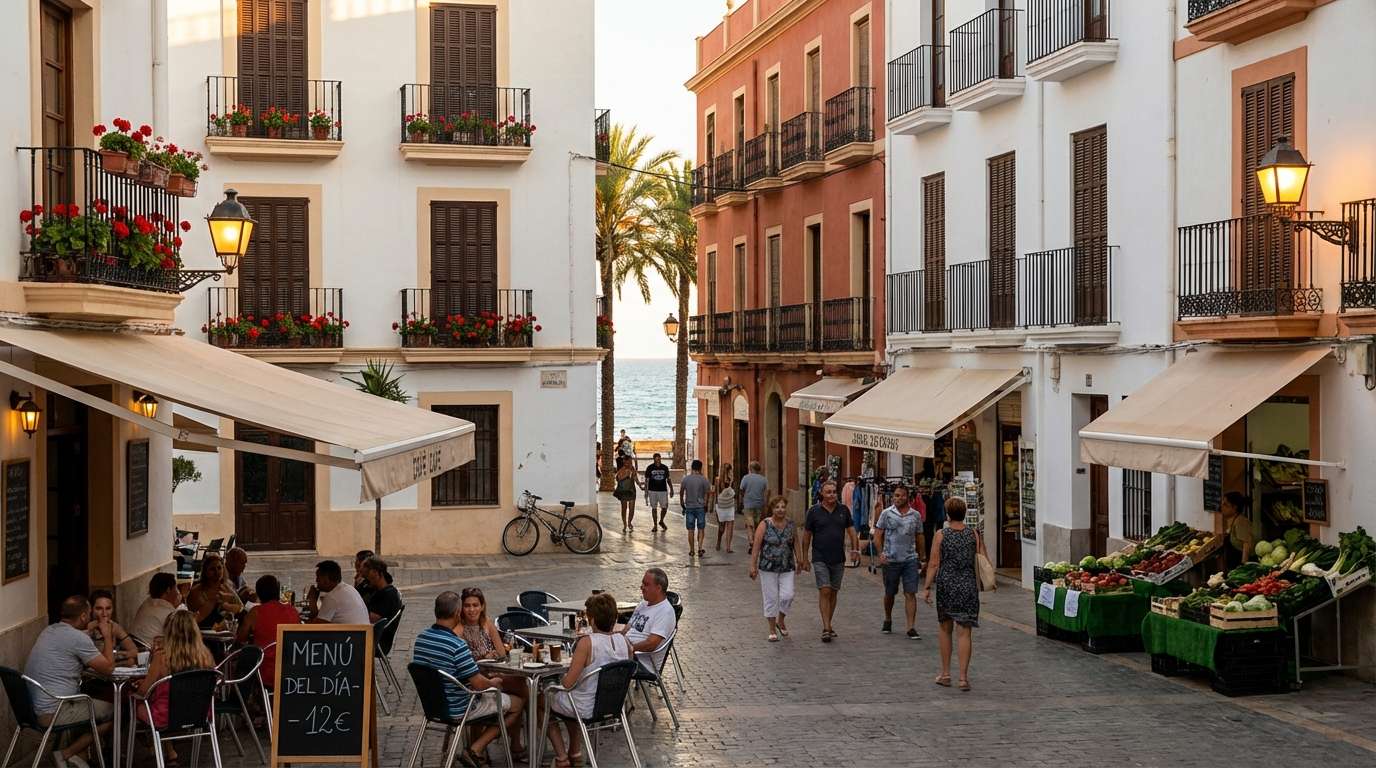
Spain remains the top retirement destination for Northern European and North American expats. The Costa Blanca, Costa del Sol, and inland Andalusia all have large English-speaking agent networks and established expat communities.
- Idealista.es is Spain's largest property portal with the deepest listing inventory. Its map search is excellent for drawing a radius around a coastal town or a specific hospital. Filter for "planta baja" (ground floor) or "sin escaleras" (no stairs) in the keyword field. Listings include energy certificates, which are legally required in Spain.
- Kyero is a UK-facing Spanish portal entirely in English, built specifically for overseas buyers. Every listing has an English-speaking agent and many include video tours. The filter set is lighter than Idealista but the accessibility-to-English ratio is better for buyers who don't read Spanish.
- Homestra lists thousands of Spanish properties including bungalows and ground-floor apartments across all major retirement regions. For buyers who are also weighing Portugal or Italy, Homestra allows side-by-side cross-country browsing from one interface.
Search keywords for Spain: planta baja (ground floor), bungalow, sin escaleras (no stairs), ascensor (elevator), cerca hospital (near hospital).
Portugal
Portugal's Algarve, Silver Coast, and Alentejo plains have drawn retirees for decades. Property prices are generally lower than Spain's coast, healthcare is strong in the main cities, and the country's NHR tax regime (now modified but still potentially favorable) attracted significant international interest.
- Idealista.pt mirrors its Spanish counterpart with deep national inventory, strong map tools, and energy certificates on most listings. Filter for "rés-do-chão" (ground floor) or "moradia térrea" (single-storey villa).
- Casa Sapo is Portugal's national MLS-style portal with broad agent coverage and Portuguese-language detail that Idealista sometimes lacks in rural areas.
- Homestra offers a dedicated Portugal property section with listings from the Algarve to the Douro Valley, and its buying guide for Portugal covers the legal process for foreign buyers in English.
Search keywords for Portugal: moradia térrea (bungalow/single storey), rés-do-chão (ground floor), elevador (elevator), junto a hospital (near hospital).
France
France's appeal for retirement is concentrated in Dordogne, Brittany, Provence, and the Languedoc. The French buying process involves notaires (notaries who handle the legal transfer), mandatory diagnostics including energy performance, lead, asbestos, and termite checks, and a 10-day cooling-off period after the preliminary contract (compromis de vente).
- SeLoger is France's largest portal, best for current listing depth and agent responsiveness. Its energy diagnosis (DPE) rating appears on most listings, which is a useful proxy for insulation and heating efficiency, both important for buyers considering rural properties in regions with cold winters.
- Green-Acres and Leggett Immobilier serve the English-speaking buyer segment directly, with bilingual listings and English-speaking agents across rural France.
- Homestra covers French properties from Normandy to Burgundy and is useful for initial shortlisting before moving to SeLoger for deeper local inventory.
Search keywords for France: plain-pied (single-storey), rez-de-chaussée (ground floor), ascenseur (elevator), proximité hôpital (near hospital), chauffage central (central heating).
Italy
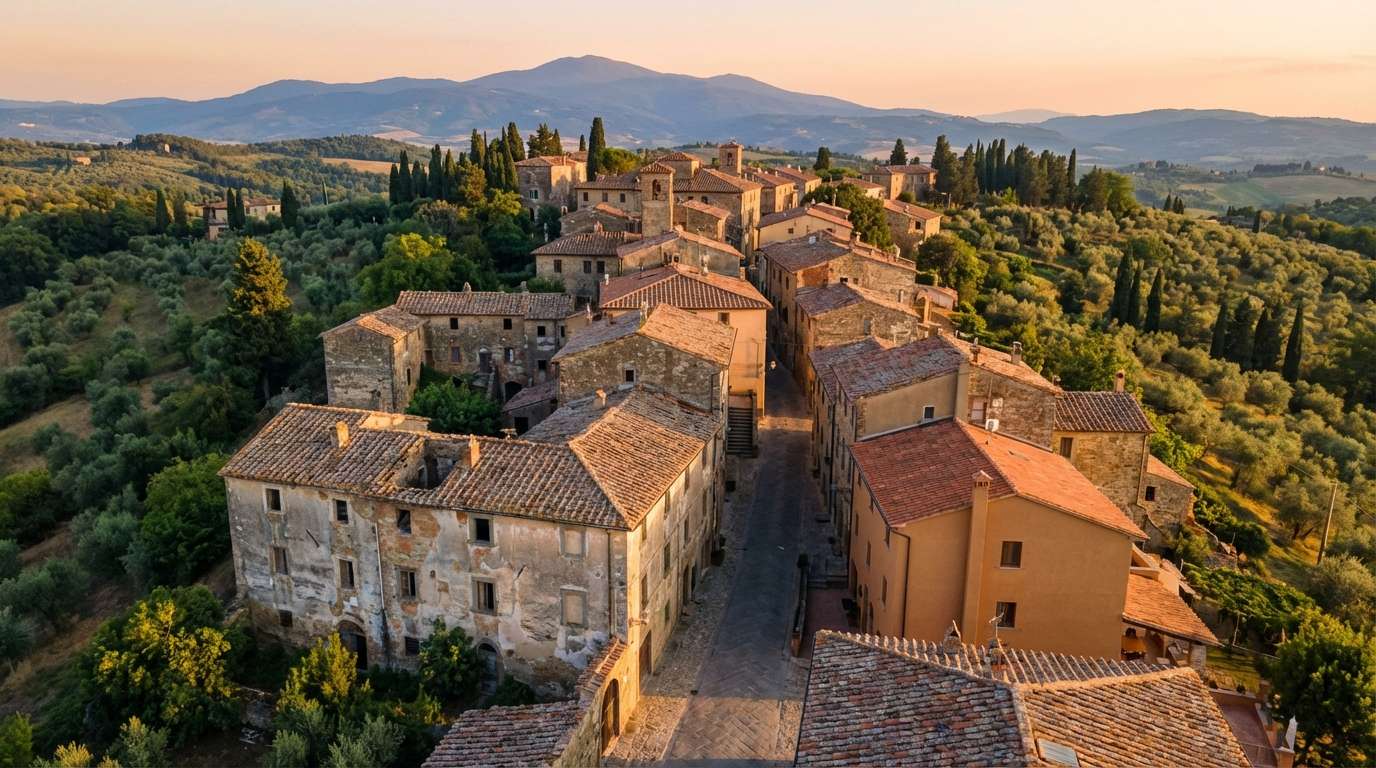
Italy's southern regions, Calabria, Sicily, Puglia, Abruzzo, have attracted retirement buyers with low property prices, warm climates, and the well-publicized €1 house schemes in rural towns. Northern retirees drawn to culture tend to look at Tuscany, Umbria, and Liguria.
- Immobiliare.it is Italy's leading portal with the most listings and strongest map tools. Its filter set includes floor level and elevator presence, which is directly useful for accessibility screening.
- Gate-Away.com is a specialist portal for foreign buyers of Italian rural property, with listings in English and agents experienced with non-resident buyers.
- Homestra covers Italian property listings including bungalows and single-storey homes and is effective for cross-country comparison when Italy is one of several countries under consideration.
Search keywords for Italy: piano terra (ground floor), ascensore (elevator), villetta singola (detached bungalow), vicino ospedale (near hospital), riscaldamento autonomo (independent heating).
Greece
Greece's islands and Peloponnese coast attract retirees seeking sun, culture, and lower costs. The buying process is notary-based, and the "Golden Visa" program (residency through property investment at €250,000+ threshold as of recent updates) has drawn non-EU buyers specifically.
- Spitogatos.gr is Greece's dominant national portal with the most local inventory and Greek-language depth. It supports map search and energy efficiency filters.
- Greek Property Guide and several island-specialist agencies serve English-speaking buyers with translated listings and process guidance.
- Homestra lists Greek villas and houses across the mainland and islands, useful for retirees who are comparing Greece against Italy or Portugal in the same search session.
Search keywords for Greece: ισόγειο (ground floor), ανελκυστήρας (elevator), κοντά σε νοσοκομείο (near hospital). In English on international portals: "bungalow", "ground floor", "single storey".
Sweden
Sweden attracts a different retirement profile: Scandinavian diaspora returning home, northern Europeans seeking summer lake properties, or buyers who want a peaceful, high-quality-of-life base in a country with excellent public services. Sweden imposes no restrictions on foreign ownership, both EU and non-EU citizens can purchase residential property without special permits or residency requirements. However, property ownership does not grant residency or visa rights; non-EU citizens remain subject to Schengen rules (up to 90 days within any 180-day period), according to Homestra's Sweden buying guide published February 2026.
- Hemnet.se is Sweden's national property portal and has near-complete national MLS coverage. It shows floor plans on most listings and supports map search. Filter by property type (villa, lägenhet/apartment) and add "markplan" (ground level) or "hiss" (elevator) as keywords.
- Booli.se aggregates listings from Hemnet and agency sites and is useful for comparative price tracking.
- Homestra covers Swedish houses for sale in English, which is valuable because Hemnet is predominantly Swedish-language. For international buyers who want to filter Swedish listings without translation barriers, Homestra is the more accessible entry point.
Search keywords for Sweden: markplan (ground level), hiss (elevator), nära sjukhus (near hospital), vinterbonat (winterized/insulated for winter use).
Netherlands
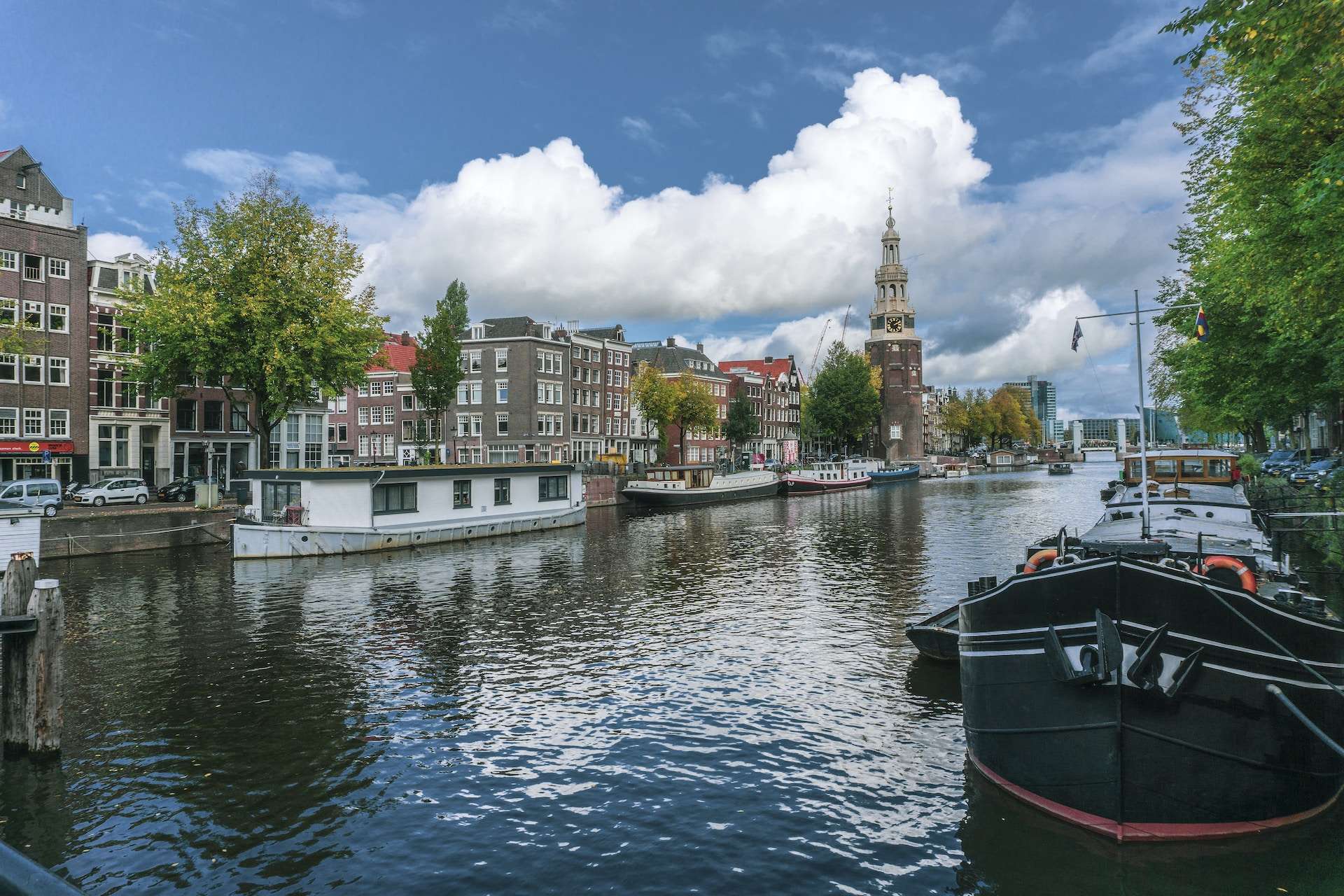
The Netherlands suits retirees who prioritize urban walkability, world-class healthcare, and flat terrain (a genuine accessibility bonus). Amsterdam, The Hague, Utrecht, and smaller towns like Delft and Leiden all have strong expat communities and English-speaking real estate agents.
- Funda.nl is the Netherlands' dominant portal with near-total market coverage and excellent filter tools including floor level, elevator, and accessibility tags. It also shows energy labels on all listings.
- Pararius is the main rental portal but also useful for retirees testing the market before buying.
- Homestra lists Dutch properties as part of its cross-country inventory and is particularly useful for buyers deciding between the Netherlands and Belgium or Germany.
Search keywords for the Netherlands: gelijkvloers (ground floor), lift (elevator), rolstoeltoegankelijk (wheelchair accessible), dichtbij ziekenhuis (near hospital).
How to search for retirement-friendly properties: filters, keywords, and search recipes
The gap between "property portal" and "retirement-ready search" comes down to search technique. Most portals weren't designed with accessibility in mind, so you have to construct the search yourself.
Recipe 1: Ground-floor/single-storey Select property type = "bungalow" where available. Add keyword search for the local-language equivalent of ground floor or no stairs (see per-country terms above). On portals with floor-level filters (Funda, Immobiliare.it), set floor = 0 or ground.
Recipe 2: Near healthcare Use map search to drop a pin on the nearest hospital or clinic in your target town, then set a search radius (5–15 km depending on how rural the area is). Alternatively, search by postal code adjacent to a medical facility. No European portal currently offers a native "distance to hospital" filter, this requires combining map search with external verification via Google Maps.
Recipe 3: Low-maintenance / walkable town Filter for apartments or townhouses within a defined town boundary rather than rural plots. Add features filter for parking and communal garden (low individual maintenance). Combine with a maximum plot size to exclude large-garden properties.
Recipe 4: Winter-ready utilities In listing descriptions, look for energy certificate ratings (A or B in most EU countries), central heating type (heat pump, gas, pellet), double or triple glazing mentions, and insulation reports. For Swedish or Scandinavian properties specifically, "vinterbonat" confirms the property is insulated and connected for year-round use.
Recipe 5: Walkable town with amenities Use map search to verify walking distance to supermarket, pharmacy, and bus stop. Set search location to town center (centre-ville, centro storico, pueblo) rather than a broader municipality to avoid rural outskirts.
Rural retirement: a practical sub-checklist
Rural properties across Europe, a Swedish fritidshus, a French maison de campagne, an Italian cascina, require additional due diligence. Homestra's Sweden buying guide identifies the critical inspection points as: private well water supply, septic systems (enskilt avlopp in Sweden), heating system condition, and winterization status. These same categories apply across rural European markets:
- Water supply: Is it connected to municipal supply or a private well? Wells require regular testing and pump maintenance.
- Septic: Is the system compliant with current local regulations? Non-compliant systems can require costly upgrades and may affect sale or rental viability.
- Heating: What is the primary heat source? Is it serviced annually? In northern climates, a failing boiler in January is a medical risk, not just a comfort issue.
- Winterization: If the property was used seasonally, is it insulated and plumbed for year-round occupation?
Homestra vs other portals: where each fits in the workflow
Homestra's primary advantage is cross-country discovery. With over 200,000 European properties browsable in English through a single interface, it's the most efficient way to compare retirement markets across Spain, Portugal, France, Italy, Greece, Sweden, and beyond without switching portals or navigating foreign-language UIs.
Where national portals win: Hemnet has 100% Swedish market coverage that no aggregator can fully replicate. Idealista has negotiated direct feeds from nearly every Spanish agency. Funda.nl has mandatory listing of virtually all Dutch properties. If you've already decided on a country, go deep on the national portal.
Where specialists win: Gate-Away for rural Italian property and Kyero for Spanish listings aimed at British buyers offer English-language support and agent networks tailored to overseas buyers. These are worth bookmarking once you're at the shortlisting stage.
The practical workflow:
- Browse (weeks 1–4): Use Homestra to browse across 2–3 countries. Compare price bands, property types, and regional characteristics. Save searches and set alerts.
- Shortlist (weeks 5–8): Move to the national portal for each country you're seriously considering. Dig into specific towns and streets. Use map search for healthcare and amenity proximity.
- Verify (weeks 9–12): Contact agents from listings that meet your criteria. Commission an independent inspection. Engage a local bilingual solicitor or notary. Never rely solely on portal data for legal or structural decisions.
- Plan (ongoing): Consult a cross-border tax advisor about your residency plans, non-resident tax obligations, and estate planning implications before signing any contract.
The Homestra resources blog covers country-specific buying guides and is updated with process steps that international buyers need, including Sweden's undersökningsplikt (duty to investigate), where buyers cannot easily claim compensation for defects that could have been found through a proper inspection. That same principle, inspect thoroughly before you commit, applies across every European market, regardless of how polished the portal looks.
Retirement buyer checklist: before you pay a deposit
This checklist applies regardless of country. The specific documents, costs, and legal steps vary, but these questions must have clear answers before any deposit changes hands.
Accessibility
- Is the main bedroom on the ground floor or is there a working elevator?
- How many steps are between the street/parking and the front door?
- Is the bathroom large enough for future mobility aids? Is there, or could there be, a walk-in shower?
- What is the winter road/path condition? Is there a risk of ice at the entrance?
Healthcare
- What is the drive time (not distance) to the nearest hospital with an emergency department, in winter conditions?
- Is there a GP/family doctor and pharmacy within the town or a 10-minute drive?
- If public transport is the only option, does it operate year-round?
Finance and taxation
- What are the total purchase costs (transfer tax, notary, legal fees, registration)? In Sweden, lagfart involves stamp duty of 1.5% of the purchase price plus a fixed registration fee of 825 SEK. In Spain, ITP (transfer tax) runs 6–10% depending on the region. Budget 10–15% on top of the sale price in most European markets.
- How will non-resident status affect ongoing property taxes, rental income tax, and eventual resale? In Sweden, annual rental income over 40,000 SEK is subject to Swedish income tax for non-residents under the SINK regime.
- Has a cross-border tax advisor confirmed your residency plan is compatible with your tax situation in your home country?
Utilities and maintenance
- What is the heating system and when was it last serviced?
- Is water supply municipal or private well?
- Is the septic system compliant with current local regulations?
- What is mobile and broadband coverage like at the specific property address?
- What community fees or service charges apply (for apartments or urbanizaciones)?
Legal due diligence
- The Swedish concept of undersökningsplikt, buyer's duty to investigate, is a formal legal obligation, but the underlying principle is universal: inspect what you're buying. Commission an independent structural survey before signing, not after.
- In Sweden, the deposit is approximately 10% of the purchase price, payable immediately upon signing the contract (often within 10 days). In France, the equivalent deposit under the compromis de vente is typically 5–10%. Know your exposure before you sign.
- Has a local solicitor, notaire, or lawyer (distinct from the seller's agent) reviewed the title, planning permissions, and any encumbrances?
Site visit vs virtual
A virtual search on Homestra or any national portal is a valid starting point. A physical site visit is non-negotiable before paying a deposit on a rural property. Heating systems, water pressure, septic odors, slope access in wet weather, and cellular reception in a valley cannot be assessed from photographs.
Frequently asked questions
Is there a single Zillow-like site for retirement homes across Europe? No. Europe's property market is fragmented by country, language, and legal system. The closest equivalent to a multi-country discovery layer is Homestra, which covers over 200,000 properties across Europe in English. But even Homestra is a starting point: final verification always requires the national portal and local professional advice.
Should I use international portals or local portals? Both, at different stages. Start with an international portal for geographic comparison. Move to the national portal once you've identified a target country and region for depth and local agent access.
How can I filter for accessibility on European property portals? Most portals don't have a single "accessible" filter. The workaround: filter by property type (bungalow, ground-floor apartment), set floor level to 0 where the filter exists (Funda.nl, Immobiliare.it), and use keyword search with local-language terms for ground floor, no stairs, elevator, and step-free. See the per-country keyword guide above.
How do I verify healthcare proximity from a portal search? No European portal currently offers a native hospital-distance filter. Use the portal's map search to identify your target neighborhood, then open Google Maps and measure drive time to the nearest hospital with emergency services. For rural areas, check whether emergency road access is viable in winter.
How do I avoid outdated listings? Sort by "newest first" or "date listed" on any portal. On Homestra and national portals, use saved-search alerts to get notified of new listings rather than relying on cached results. If a listing has been live for more than 90 days without a price reduction, contact the agent to confirm availability before investing significant research time.
What steps should international retirees expect in a European property purchase? The steps vary by country but the sequence is consistent: identify property, commission independent inspection, review title and legal status with a local solicitor, sign preliminary contract (reserva/promessa/compromis/letter of intent depending on country), pay deposit, complete at notary or land registry, register ownership. Non-residents should also obtain a local tax identification number (NIE in Spain, NIF in Portugal, codice fiscale in Italy) before signing any contract.
For a cross-country shortlist that you can browse in English, refine by property type, and compare across markets before committing to a country, start your search on Homestra. Then use the country portals and checklists in this guide to move from discovery to deposit with confidence.
Share