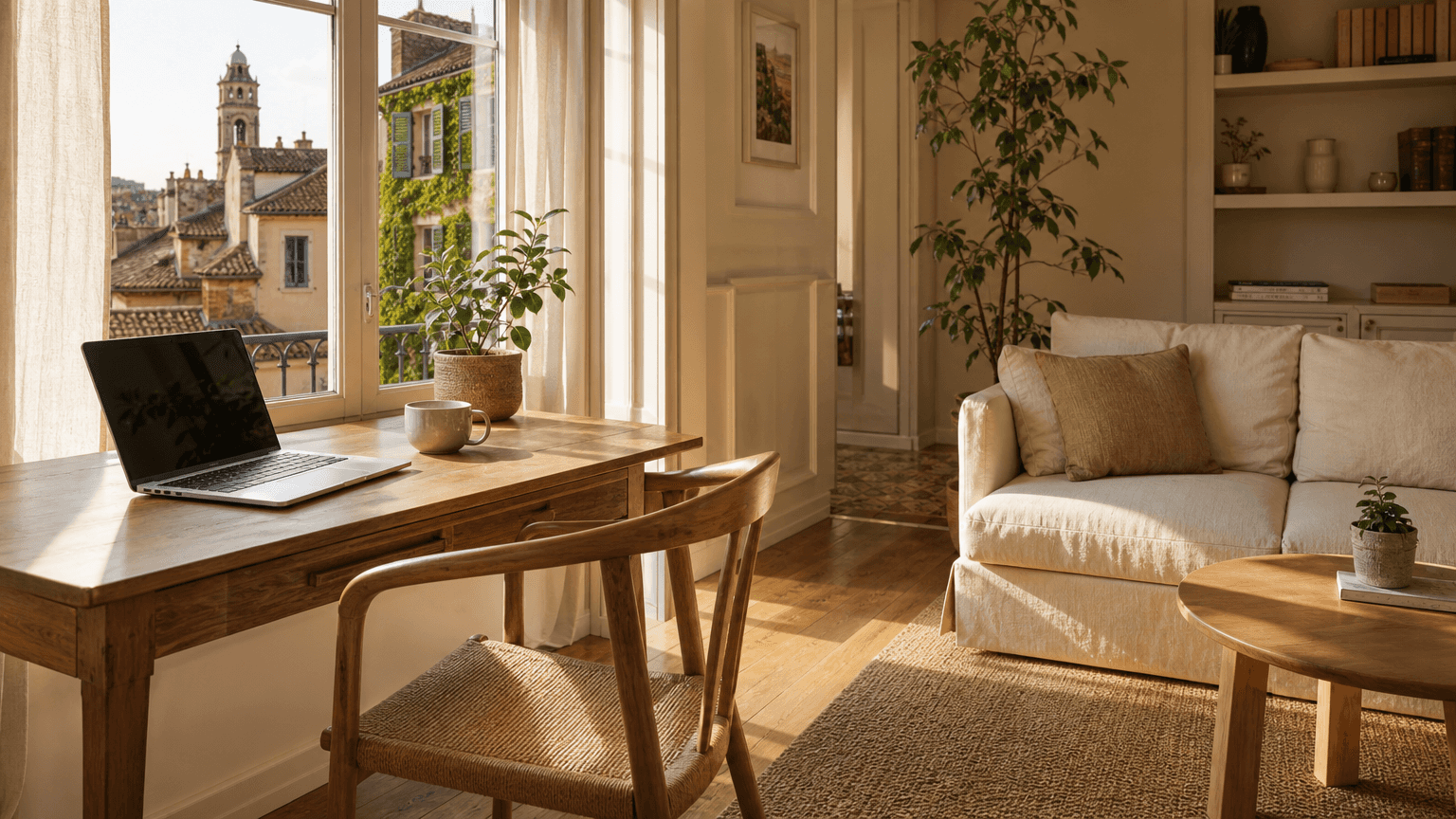
Best digital nomad rentals in Europe: 4 platforms compared
Monthly rentals and coliving spaces across Europe have matured into a proper market. This guide covers the best websites for digital nomad accommodations, how to evaluate them, which cities offer the best value, and what to check before you book.
Finding reliable, comfortable housing as a digital nomad in Europe isn't just about scrolling Airbnb at midnight. The real challenge is balancing fast Wi-Fi, a proper desk, a lease flexible enough to match your plans, and a price that doesn't quietly balloon once utilities are added. Monthly rentals and coliving spaces across Europe have matured into a proper market, and the platforms serving that market are genuinely different from each other in ways that matter.
This guide covers the best websites for digital nomad monthly rentals and long-term furnished apartments across Europe, how to evaluate them against your actual working needs, which cities offer the best value, and what to check before you sign anything.
The three types of digital nomad accommodation in Europe
Before jumping into platforms, it's worth being clear on what you're actually choosing between. The options break into three distinct models:
Coliving spaces bundle your private room or studio with shared amenities (coworking desks, fast internet, community events). You're paying partly for the infrastructure and partly for the social layer. Minimum stays are typically one month, and costs reflect the included services.
Mid-to-long-term furnished apartments give you a self-contained unit for 1 to 12+ months, usually with utilities and Wi-Fi included in the monthly rent. You work alone or from a nearby cafe, but you're not sharing kitchen or living space with strangers. This category has exploded thanks to dedicated platforms like Flatio and HousingAnywhere.
Monthly stays on general marketplaces (primarily Airbnb's monthly savings option) let you filter existing vacation rental stock for extended stays. According to Airbnb's Help Center, monthly stay savings apply automatically to bookings of 28 nights or more. The flexibility is real, but these listings weren't designed for remote work, so Wi-Fi quality and workspace setup vary widely.
Knowing which model fits your situation is the first decision. The platform comparison below follows that same structure.
Best platforms for digital nomad accommodation in Europe
Flatio: the strongest mid-term furnished rental platform
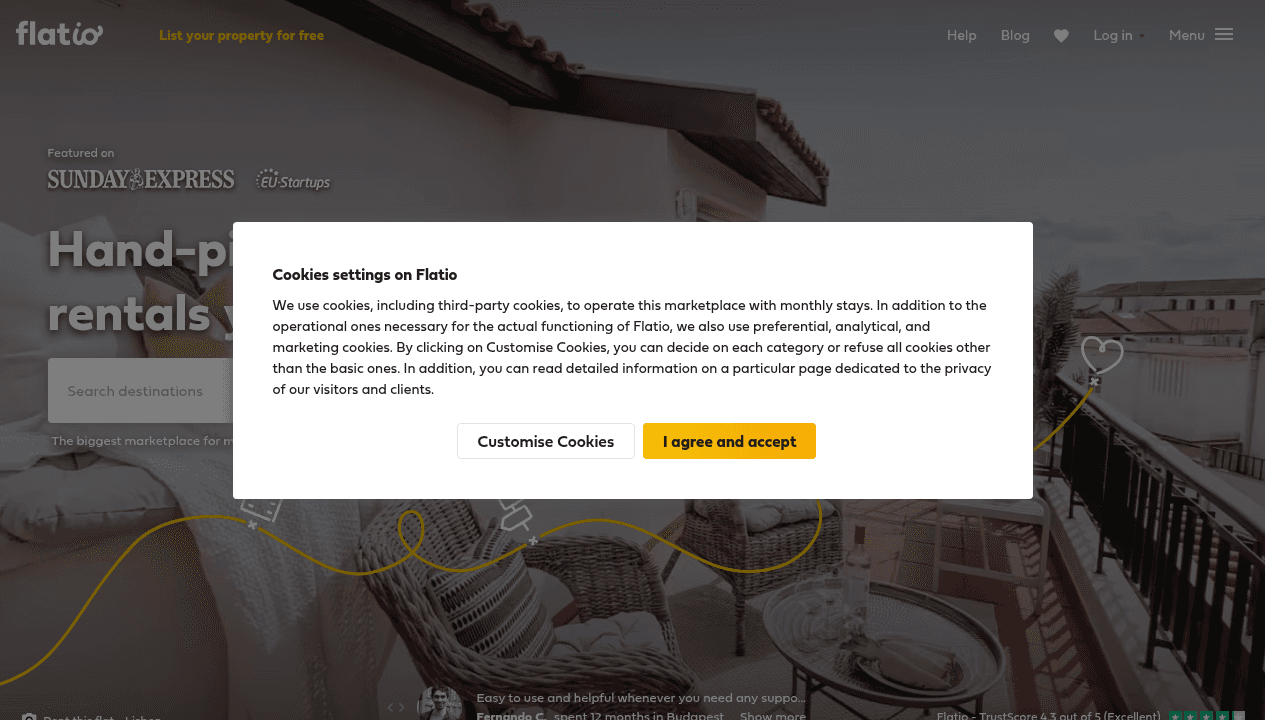
Flatio is purpose-built for stays between one and twelve months. Every listing is furnished, and the platform advertises a "no hidden fees" model with utilities and Wi-Fi included in the displayed price. That's a meaningful differentiator: on many platforms you find a competitive headline rent only to discover electricity, water, and internet push the real cost significantly higher.
Flatio's deposit policy is also tenant-friendly. According to Flatio's Help Center, hosts cannot require a security deposit for stays of less than 180 days (six months). For stays of six months or longer, it's the host's decision whether to request one. If you're planning a one-to-three month stay, you won't be asked to park several months' rent upfront.
The platform also offers "StayProtection" for tenants, which includes a Move-in Guarantee covering up to seven days of alternative accommodation if the property doesn't match its listing or if the host cancels. That kind of structured protection is rare in the mid-term rental space.
Best for: Stays of 1 to 6 months, furnished flats with transparent pricing, solo nomads who want a private space without hidden costs.
What to check: Whether the listed Wi-Fi speed matches what you need (download/upload for video calls), whether the "utilities included" covers all utilities or has a usage cap, and whether the listed workspace photo shows an actual desk with natural light.
HousingAnywhere: long-term furnished rentals with a student/young professional base
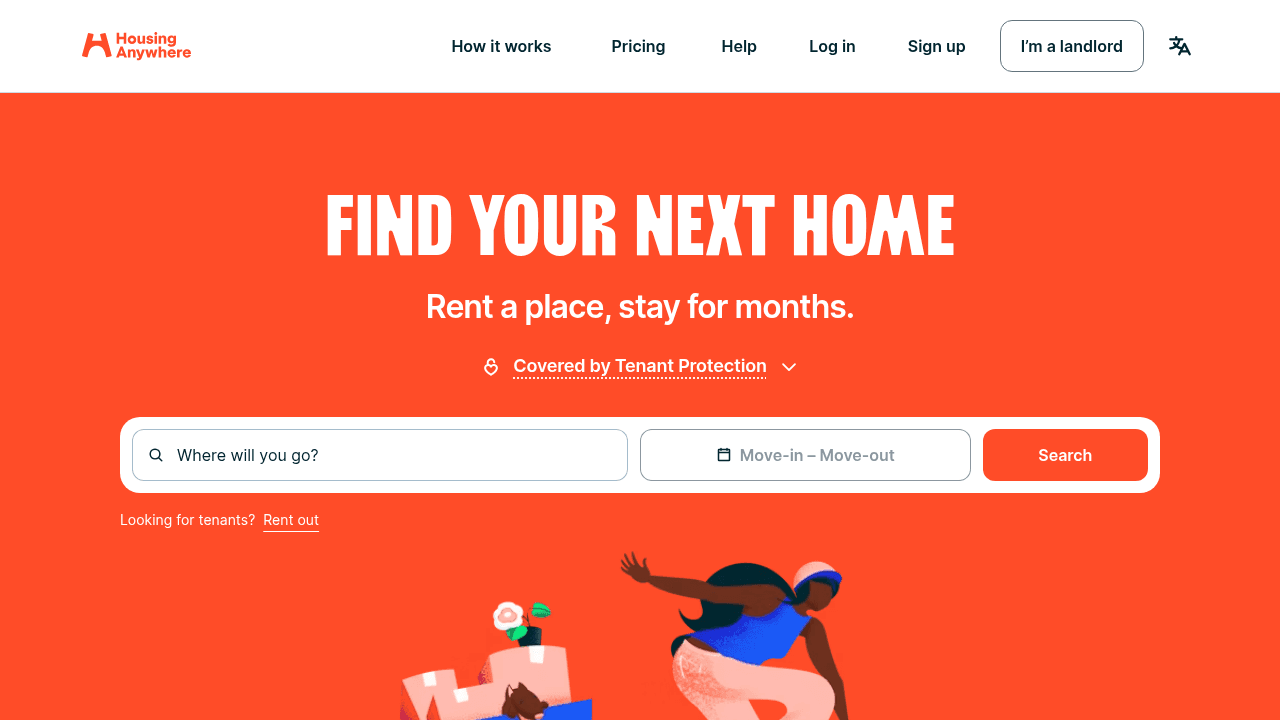
HousingAnywhere started as a student housing exchange and has grown into a major marketplace for furnished apartments and rooms across Europe, particularly strong in Germany, the Netherlands, Spain, and Portugal. Listings tend to run from one month upward, with a healthy volume of six-to-twelve-month options.
The platform handles digital leases and payments securely, which matters when you're booking from abroad without the option to visit in person first. Listings vary more on the "utilities included" question than Flatio does, so read each listing carefully.
Best for: Nomads who want a broad selection in major European cities, especially if staying three months or more in one place.
What to check: Utility setup (some landlords list rent separately from utilities), house rules if you're renting a room in a shared flat, and whether the listing includes any workspace setup description.
Coliving.com: the largest European coliving aggregator
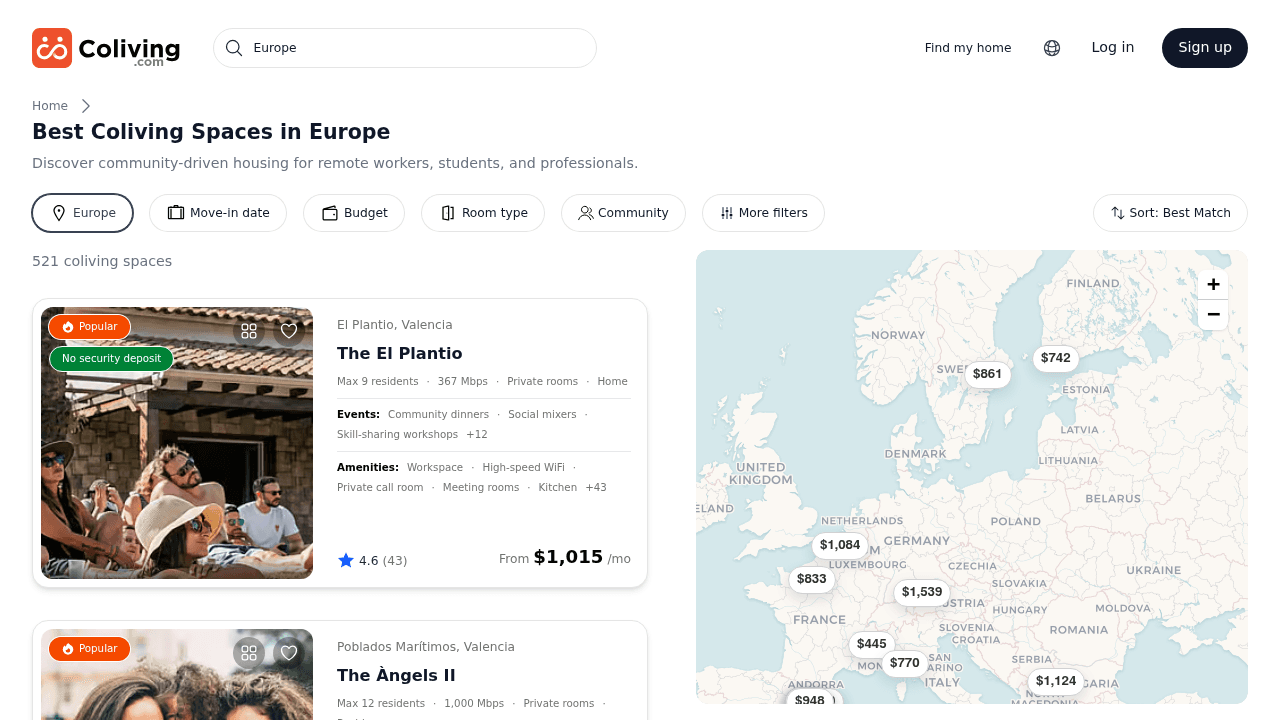
Coliving.com aggregates coliving spaces across 400+ cities globally, with a strong European inventory. According to their Help Center, the minimum stay is one month, with no upper limit on how long you can stay. The platform lets you filter by amenities, room type, and community features, which is useful when you're comparing a dozen options across different cities.
The trade-off is that coliving means sharing common spaces. If you need quiet focus hours, it's worth checking each space's house rules and workspace arrangements before booking.
Best for: Nomads who want community, networking opportunities, and built-in coworking infrastructure. Also a good fit if you're new to a city and want to meet people quickly.
What to check: Coworking desk quality and availability (some colivings have limited desk space and first-come-first-served policies), noise policies, whether events are optional or built into house culture, and Wi-Fi infrastructure (fiber vs. shared cable).
Airbnb monthly stays: flexibility with caveats
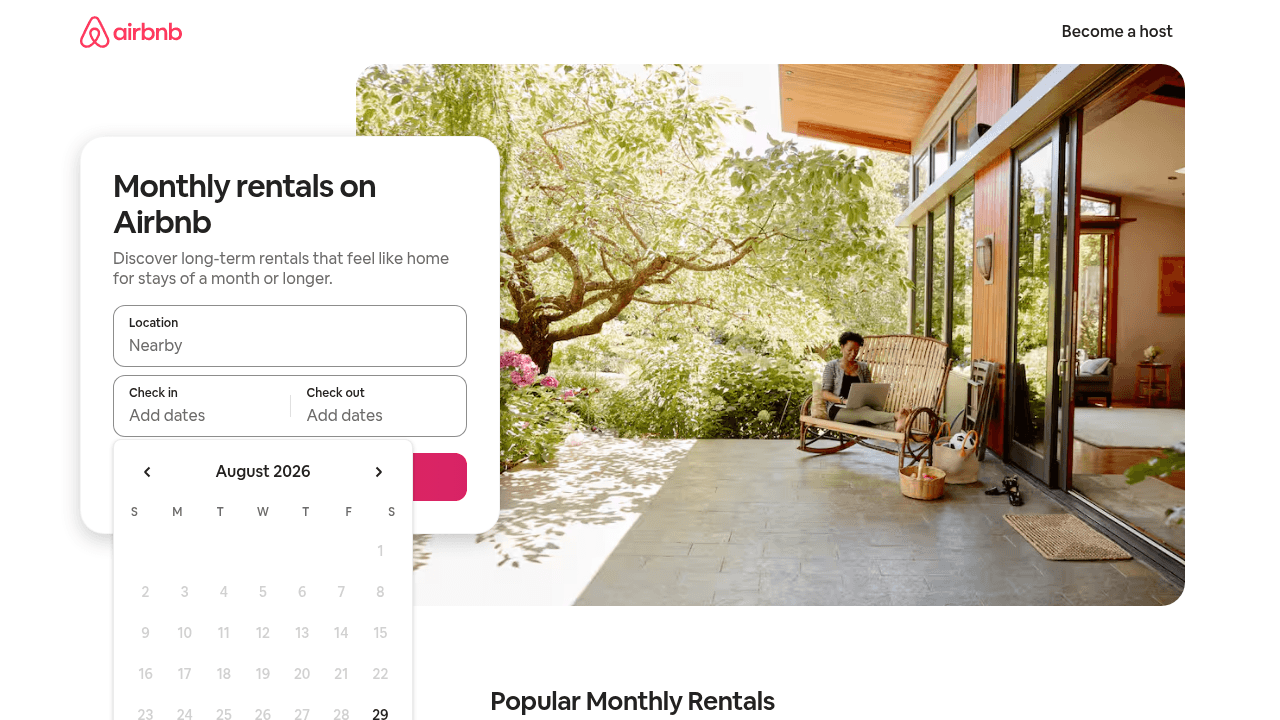
Airbnb's monthly savings kick in automatically at 28 nights, and some hosts offer substantial discounts for monthly stays. The inventory is massive, which means you can find apartments in cities and regions where dedicated nomad platforms have thin coverage.
The catch is that Airbnb listings weren't created with remote work in mind. Wi-Fi quality descriptions are inconsistent, workspace setup is rarely mentioned, and "monthly discount" can still mean a daily rate that's higher than a furnished apartment on Flatio or HousingAnywhere.
Best for: One-month testing of a region or neighborhood, covering areas with limited dedicated nomad inventory, and last-minute flexibility.
What to check: Message hosts directly to ask for a speed test screenshot (Speedtest.net result) before booking. Ask about the workspace setup. Read reviews for mentions of internet issues.
Platform comparison at a glance
| Platform | Type | Min. stay | Wi-Fi/utilities | Deposit policy | Best use case |
|---|---|---|---|---|---|
| Flatio | Furnished rentals | 1 month | Included (standard) | No deposit under 180 days | Solo nomad, 1-6 months, transparent pricing |
| HousingAnywhere | Furnished rentals/rooms | 1 month | Varies by listing | Varies | 3-12 months, major European cities |
| Coliving.com | Coliving aggregator | 1 month | Included (standard) | Varies by space | Community-focused, coworking included |
| Airbnb Monthly | Mixed (vacation stock) | 28 nights | Varies, ask host | Via platform | Flexible testing, niche locations |
How to evaluate any listing before you book
Internet quality: the non-negotiable
Ask every host for a Speedtest.net screenshot taken from the apartment (not from a phone on mobile data). For standard remote work, 25 Mbps download and 10 Mbps upload is a workable floor. For video calls, screen sharing, or regular video uploads, aim for 50/20 Mbps or higher. If a host can't provide a speed test, that's useful information.
Also check: is the connection fiber, cable, or DSL? Fiber is stable under load. DSL in older buildings can drop significantly during peak hours.
Utilities included vs. not included
Platforms like Flatio promote a "utilities and Wi-Fi included" model, which makes budgeting straightforward. On platforms where utilities are separate, ask the host for the average monthly total (electricity, water, heating if relevant). In Central Europe, winter heating bills can add €100-200+ to an otherwise reasonable monthly rent.
Lease flexibility and move-in/move-out terms
Check whether the minimum stay is firm (you lose the remainder if you leave early) or whether there's a break clause. Some platforms use standardized digital lease templates; others rely on informal agreements. For stays of three months or more, ask specifically for a written lease, even a simple one.
Deposit and payment security
Flatio's no-deposit policy for stays under six months removes a common friction point. On other platforms, deposits of one to two months' rent are common. Always pay through the platform, never by direct bank transfer to an unknown landlord, and check what refund protection exists if the property doesn't match its listing.
Best European cities for digital nomads (and what works where)
Lisbon and the Algarve (Portugal): Lisbon has a deep coliving and furnished-rental market, good fiber infrastructure, and Portugal's Digital Nomad Visa (D8) for non-EU residents wanting stays beyond 90 days. Monthly furnished apartment budgets typically start around €1,200-1,500 in Lisbon, with lower options in Porto. The Algarve suits nomads who want a quieter base with beach proximity. For those considering a longer commitment, Portugal is consistently one of the most popular markets for European second homes.
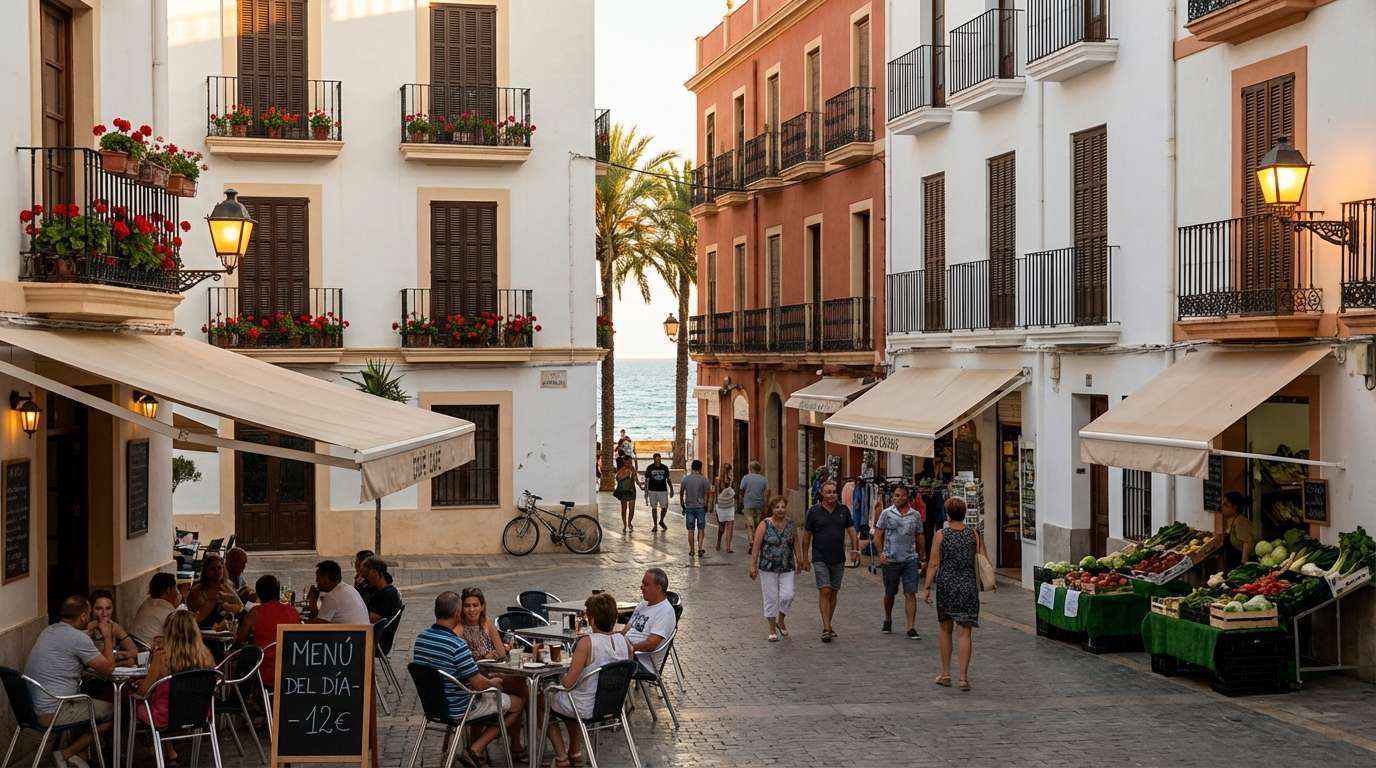
Barcelona and Valencia (Spain): Barcelona's coliving scene is well-developed, with strong fiber coverage across most central neighborhoods. Valencia offers a more affordable price point with a growing nomad community. Spain has a Digital Nomad Visa for non-EU citizens planning stays over 90 days, though registration requirements for longer stays are worth researching before you go.
Berlin (Germany): Berlin has a large furnished-apartment market on platforms like HousingAnywhere, with strong transit links and a well-established coworking ecosystem. Finding accommodation in Berlin can be competitive, so book four to six weeks in advance if possible.
Prague (Czech Republic): Prague offers excellent value relative to Western European capitals, with a good supply of furnished apartments, solid internet infrastructure, and a growing community of remote workers. Monthly furnished rentals tend to run lower than comparable spaces in Lisbon or Barcelona.
Malaga (Spain): Malaga has emerged as one of Southern Europe's fastest-growing nomad hubs, with new coliving spaces and a Tech Park (PTA) infrastructure. Lower costs than Barcelona, good weather year-round, and a direct beach-city combination make it popular for three-to-six-month stays.
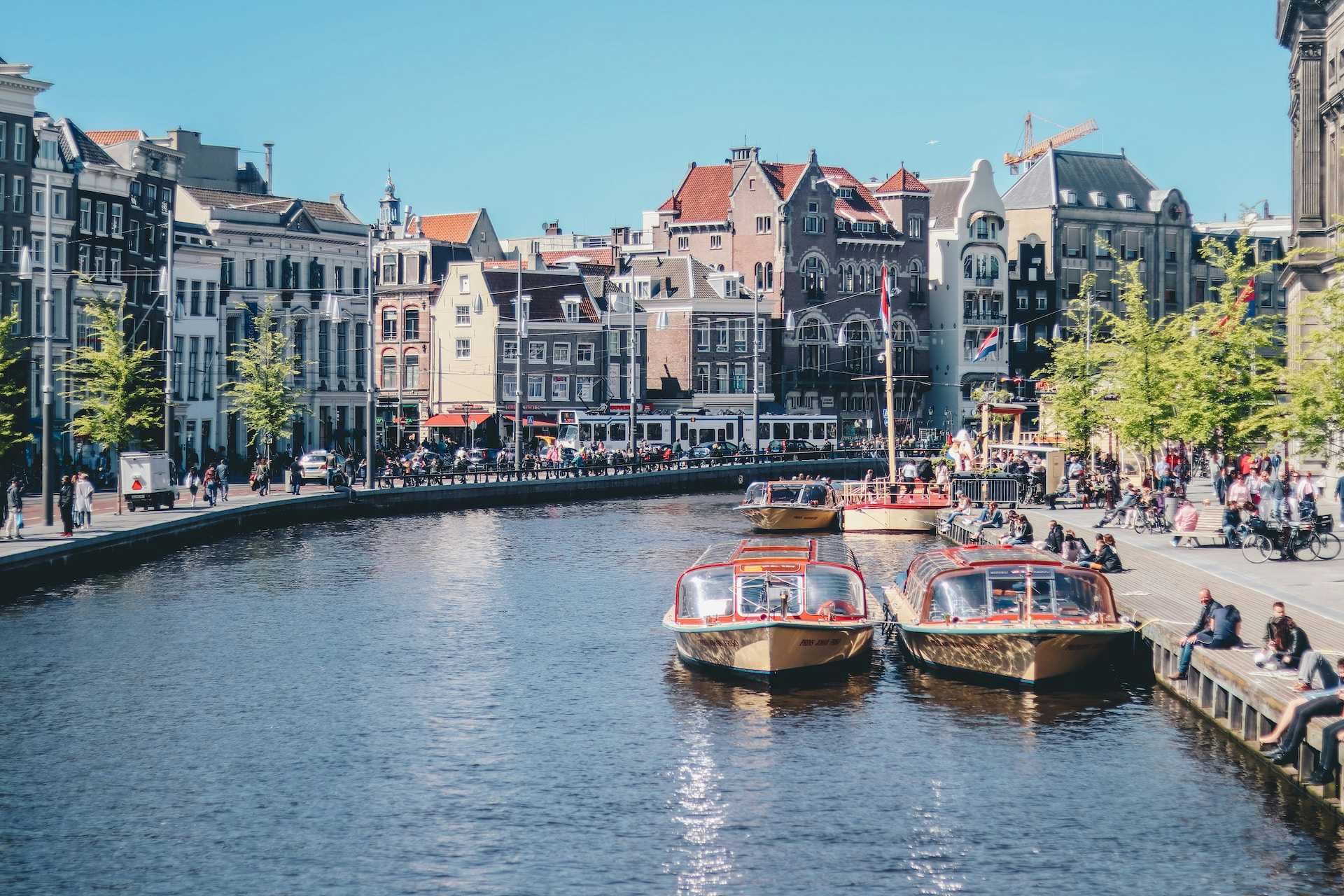
Amsterdam and Rotterdam (Netherlands): Strong internet infrastructure and an English-speaking environment, though monthly housing costs are among the highest in Europe. HousingAnywhere has deep inventory here.
Rome and Milan (Italy): Rome suits nomads who want a cultural base at a manageable cost (relative to Northern Europe). Milan is higher priced but has stronger coworking infrastructure and business connectivity.
A few scenario shortcuts:
- Staying one month to test a city: Airbnb monthly or Flatio give the most flexibility.
- Staying three to six months with a private apartment: Flatio or HousingAnywhere with a written lease.
- Wanting community and coworking built in: Coliving.com, minimum one month.
- Planning to eventually buy in a region: rent first (one to three months), then use Homestra to browse the purchase market while you're living there.
Visas, registration, and taxes: what to check before you go
This section isn't legal advice, and the specifics vary meaningfully by country. But here's a practical checklist of what to verify before your stay:
Visa situation
- EU/EEA citizens move freely and can stay indefinitely within the EU. No nomad visa needed.
- Non-EU citizens (including post-Brexit UK nationals) get 90 days visa-free in the Schengen Area within any 180-day window.
- Portugal, Spain, Germany, Greece, Croatia, and several other countries have introduced specific Digital Nomad Visas for non-EU nationals who want to stay longer. Each has income, insurance, and administrative requirements. Check the official immigration portal for each country.
Registration (empadronamiento / Anmeldung / registro)
- In Spain, Germany, Portugal, and most of Europe, residents staying beyond a certain threshold (often 3 months) are required to register their address with local authorities. Some landlords are happy to support this; others aren't, particularly in short-term vacation rentals. Ask before booking if you need a registration address.
- A furnished apartment lease is typically acceptable for registration; a coliving space sometimes is, sometimes isn't (ask the coliving operator directly).
Tax residency If you're working remotely while staying in a European country for an extended period, you may trigger tax residency rules in that country, depending on how long you stay and your nationality. The threshold is often 183 days in a calendar year, but varies. Get professional tax advice if you're planning to stay anywhere for six months or more.
Avoiding scams
- Never pay outside a recognized platform's secure payment system.
- Request a video call walkthrough of the apartment if visiting in person isn't possible.
- Cross-reference listing photos in a reverse image search to check for stock photo fraud.
- If an offer is significantly below market for the area, that's a red flag, not luck.
From monthly rental to second home: how Homestra fits in
Monthly rentals across Europe are a genuinely useful way to discover whether a region fits your lifestyle before making a longer commitment. Plenty of people start with a one-month coliving stay in Lisbon or a furnished apartment in Valencia, fall for the place, and start asking about buying.
That's exactly where Homestra can help. As Europe's leading second home platform, with over 200,000 properties listed across the continent, Homestra is built for buyers (and prospective buyers) who want to explore the purchase market in regions they're already spending time in. The search tools are designed for international buyers, the listings include local market context, and the platform covers countries across Western, Southern, Central, and Northern Europe.
If you're renting monthly in a city and starting to wonder what property costs there, browsing Homestra while you're in-country gives you an informed, grounded comparison: you'll already know the neighborhood, the commute to coworking, and whether the internet infrastructure is actually reliable. That's a better foundation than buying sight unseen from a property listing alone.
Explore properties in your target European destinations at Homestra.com.
FAQ: digital nomad housing in Europe
What's the minimum stay I should target in Europe?
One month is the practical minimum on almost every dedicated platform (Flatio, HousingAnywhere, Coliving.com all use one month as their standard floor). Airbnb's monthly savings kick in at 28 nights. Shorter than one month, and you're in vacation rental territory, where prices are significantly higher per night and workspace setups are less reliable.
Is a security deposit required?
It depends on the platform and the stay length. Flatio's policy is that hosts cannot require a security deposit for stays of less than 180 days. On HousingAnywhere and via direct landlords, deposits of one to two months are common. Always confirm the deposit amount and refund conditions in writing before paying.
Are Wi-Fi and utilities included in the monthly rent?
On Flatio, yes: utilities and Wi-Fi are included as standard. On HousingAnywhere and Airbnb, it varies by listing. Coliving spaces almost universally include Wi-Fi and utilities in their all-in monthly rate. Always read the listing's "what's included" section carefully and ask the host directly if unclear.
How do I verify internet quality before booking?
Ask the host to send a Speedtest.net screenshot taken from inside the apartment. Check that it shows both download and upload speeds. Also ask whether the connection is fiber. If a host can't or won't provide this, treat it as a risk and factor it into your decision.
Can I register my address (official registration) through a rental?
Often yes, but not always. A signed lease for a furnished apartment generally supports official registration in most European countries. Coliving spaces vary: some operators handle registration for tenants as part of their service; others don't. If registration matters for your visa or administrative situation, confirm the landlord's or operator's policy before booking.
Which platform gives the most flexibility?
For private apartments, Flatio offers the best combination of flexibility (short stays, no deposit under six months, transparent pricing, StayProtection). For maximum geographic coverage and last-minute options, Airbnb monthly stays cover more ground. For community and coworking in one package, Coliving.com is the most purpose-built choice.
Share