Blog published in Buying property abroad
Share
Historical property prices in Europe: a buyer's guide
Compare UK, France, Netherlands, Spain, Italy & Germany. Learn which portals show actual sold prices vs. ask-price trends. Access official registries.

When you ask "what did this property actually sell for?", the answer depends entirely on which country you're buying in, and whether the source you're looking at genuinely holds transaction records or is simply displaying a trend line derived from listing advertisements. This distinction matters enormously for international buyers conducting property due diligence in Europe, where data transparency varies from near-total openness (the UK) to highly restricted or aggregated-only access (Germany, Spain, Italy).
This guide maps every major source of historical property prices in Europe: what type of data each one holds, how to access it, what it won't tell you, and which to trust for which purpose.
The three data families you'll encounter
Before consulting any portal or registry, you need to know which category of data you're actually looking at. There are three distinct families, and they are not interchangeable.
Sold/transaction prices are notarized or legally registered completion values, i.e., what the buyer paid at exchange. These come from land registries and notary systems. They're the only data type suitable for formal valuation and purchase-price negotiation.
Listing/ask-price history is what sellers advertised. A portal can record every asking price it ever published for a given address or area. This is useful for tracking vendor behavior and local demand, but asking prices can diverge significantly from final sale prices, especially in markets with strong negotiation culture (Italy, Spain) or during rate-driven corrections.
House Price Indices (HPIs) are statistical aggregates compiled by central banks, national statistics offices, and commercial providers. The ECB Data Portal's "Residential property prices" series, Eurostat's House Price Index, and the OECD House Price Tracker all fall into this category. They tell you directional trends at a national or regional level; they cannot tell you what a specific apartment on a specific street sold for last spring.
The practical rule: for due diligence on a specific property, you need transaction data. For macro context ("has the Lisbon market moved since 2020?"), an HPI is fine.
How this data gets collected and published
Land registries and notary systems are the primary sources of transaction-level data. When a property sale completes, the transaction is registered with the relevant authority, and the completion price becomes part of the public or semi-public record. The time between completion and the data appearing in a public feed typically runs from one to three months, sometimes longer.
Portals collect listing data as a byproduct of their core business. When a seller lists a home at €450,000 and it eventually sells, the portal knows the asking price but often doesn't have access to the final agreed price unless it's fed that data by an integrated land registry or MLS-style system. "Historical price development" charts on many Continental European portals therefore show the evolution of advertised prices in an area, not completion prices.
Aggregators and data API providers (commercial entities that license, clean, and redistribute property data) typically pull from multiple registries and portals, normalize addresses, and deliver time-series via API. Their value is cross-country standardization; their limitation is that they're only as good as the underlying sources they can legally access.
Country-by-country reference: sold prices vs. what's actually available
United Kingdom
The UK is the most transparent major market in Europe for property transaction data. HM Land Registry publishes the Price Paid Data as an open government dataset, recording every residential sale in England and Wales since 1995 with address, price, property type, and transaction date. Registers of Scotland provides equivalent coverage for Scottish transactions.
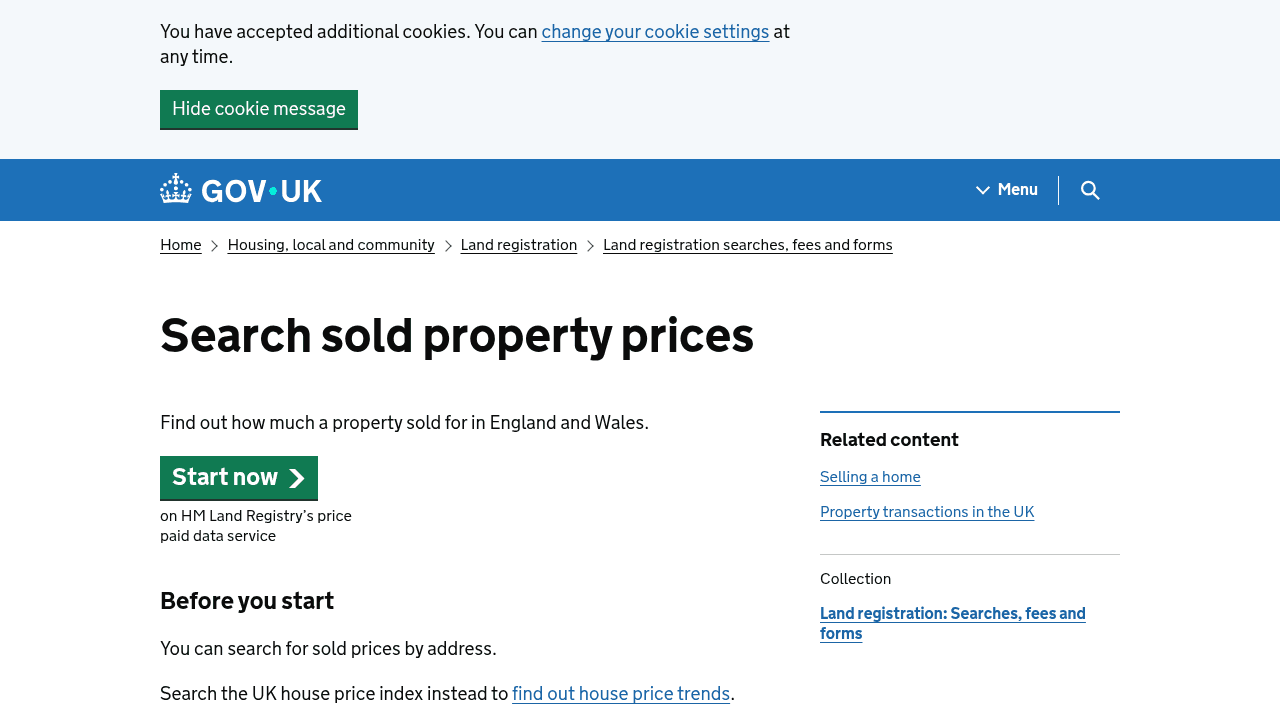
You can query individual addresses via the GOV.UK "Search sold property prices" tool, or download the full bulk dataset from GOV.UK's Price Paid Data collection page for analysis.
Rightmove and Zoopla both integrate this registry feed directly. Rightmove acknowledges "© Crown copyright" on its sold-prices pages and states it updates sold-house-price data monthly via official HM Land Registry and Registers of Scotland feeds. Zoopla similarly draws on the same official sources for its house prices research tool. This makes UK portal sold-price history genuinely reliable, not modelled estimates.
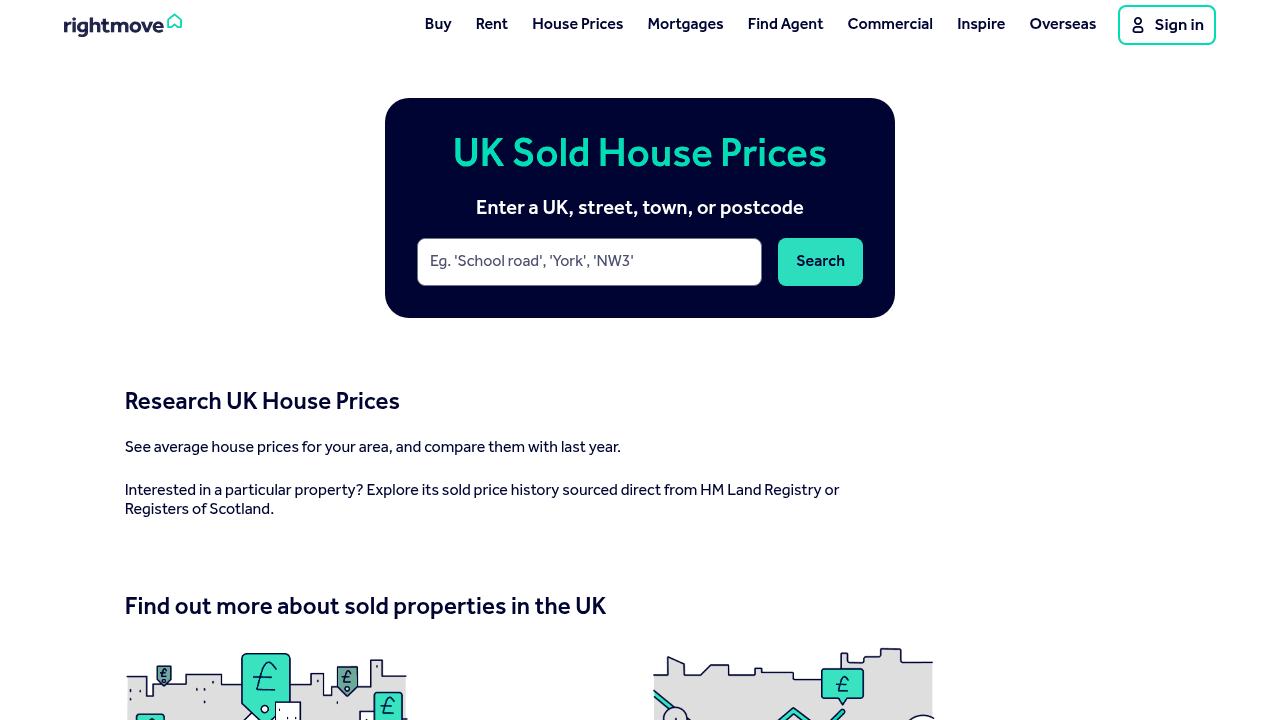
Data lag for UK portals: expect 6-8 weeks between completion and appearance in the portal, reflecting the registry update cycle.
France
France's equivalent of Price Paid Data is the DVF (Demande de Valeurs Foncières), a government dataset of notarized property transactions compiled by the Direction Générale des Finances Publiques (DGFiP). The Etalab DVF app at app.dvf.etalab.gouv.fr provides a map-based interface over the data published on data.gouv.fr, letting you look up transaction values by address or commune.
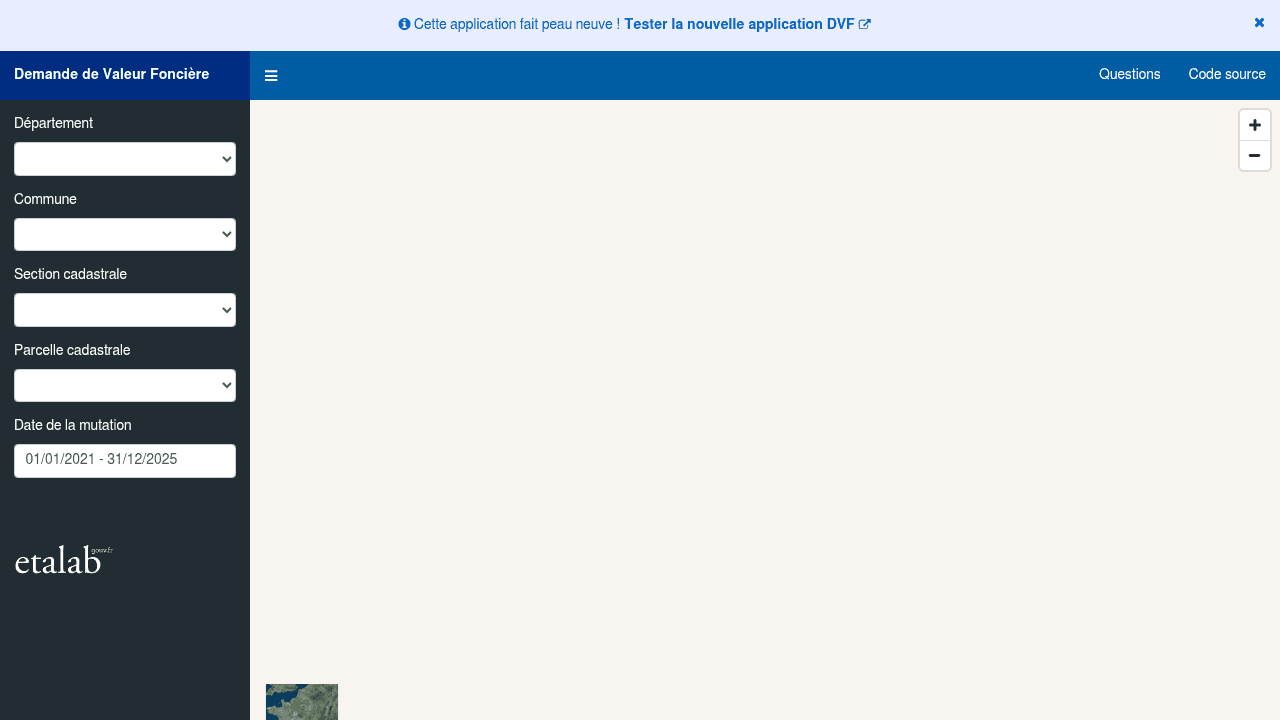
DVF covers transactions dating back to 2014 and is updated periodically (typically with a lag of several months). SeLoger, the major French portal, has integrated DVF data into its listings to display historical sales for properties, which makes its "historique des ventes" feature one of the more reliable among Continental European portals, as long as the provenance is confirmed as DVF-sourced rather than estimated.
DVF does not cover Paris intramuros sales for some earlier years (parcels in certain jurisdictions were historically exempt), so gap-check if you're researching central Paris transactions before 2019.
Netherlands
The Kadaster (the Dutch national land registry) provides a service called "koopsominformatie," which allows individuals and professionals to request the selling prices of homes within a specific postcode area. Unlike the UK's fully open bulk download, koopsominformatie is a paid retrieval service accessed via Kadaster.nl.

Funda, the dominant Dutch listing portal, does not expose comprehensive transaction history in a free public-facing format to the same extent as UK portals. For genuine sold-price verification in the Netherlands, going directly to Kadaster is the appropriate workflow, with the understanding that there's a fee and a processing delay.
Germany
Germany has no national equivalent of the UK's open Price Paid Data. Transaction data is collected by local Gutachterausschüsse (independent valuation committees), which publish regional market reports (Marktberichte), typically annually. Per-address sold prices are not accessible to the general public.
What portals like ImmoScout24 label as "Preisentwicklung" (price development) is, in most cases, derived from asking-price data or statistical models applied to listing data, not registry-confirmed completion prices. This is not a criticism of the portals; it reflects the underlying data regime. Treat German portal price-history charts as directional trend indicators rather than transactional evidence.
For clients requiring formal valuation in Germany, a certified Gutachter (independent appraiser) with access to the regional committee data is the correct route.
Spain
Idealista, the largest portal in Spain (and across Southern Europe), publishes price trend data at the neighborhood, city, and province level. This data represents asking-price evolution over time. Spain does not have a freely accessible registry-level sold-price feed comparable to DVF or HM Land Registry Price Paid Data. The Colegio de Registradores publishes aggregated statistics, but per-address sold prices require formal registry requests, which are not instant or free.
For research purposes, Idealista's price development data is useful for trend context. For a valuation supporting an actual purchase decision, it should be treated as an index proxy, not a transaction record.
Portugal
Portugal's property market is a high-priority destination for many international buyers, particularly retirees relocating under the NHR tax regime or via the Golden Visa program. The primary source of transaction-level data is the Instituto dos Registos e Notariado (IRN), but public-facing per-address lookup is not available in the way DVF or GOV.UK is.
Confidencial Imobiliário, a commercial Portuguese data provider, maintains a transaction price database (SIR - Sistema de Informação Residencial) compiled from notary declarations. Access to this is via subscription. Portal data from sites like Imovirtual or Casa Sapo represents asking prices.
Italy
Italy's Agenzia delle Entrate operates the Real Estate Market Observatory (OMI), which collects and processes technical and economic data on property market values relating to sales and rentals, across all Italian municipalities. OMI publishes value ranges by property zone and category (semi-annually), accessible free via the Agenzia delle Entrate website.
OMI data is aggregated at the zone level (a range of €/sqm by property type) rather than per-address transaction data. Immobiliare.it, the main Italian portal, publishes asking-price trend data. For individual transaction confirmation, Italian buyers typically rely on notarial deed records (rogiti), which are not centrally searchable in a consumer-facing tool.
Portal comparison: sold prices, ask-price indices, or statistical models?
| Portal | Country | Data type | Source | Best use |
|---|---|---|---|---|
| Rightmove | UK | Sold transaction prices | HM Land Registry / Registers of Scotland (monthly update) | Due diligence, comparables |
| Zoopla | UK | Sold transaction prices | HM Land Registry / Registers of Scotland | Due diligence, comparables |
| GOV.UK Search House Prices | UK | Sold transaction prices | HM Land Registry (bulk download available) | Bulk analysis, formal valuation |
| SeLoger (with DVF) | France | Transaction prices (via DVF) | DVF / DGFiP notary records | Comparables, trend research |
| DVF Etalab app | France | Transaction prices | DVF / data.gouv.fr | Address-level due diligence |
| Funda | Netherlands | Asking price + limited sold data | Portal listings (Kadaster for full sold prices) | Market monitoring |
| ImmoScout24 | Germany | Asking-price index / models | Portal listings + proprietary models | Directional trend only |
| Idealista | Spain / Italy / Portugal | Asking-price index | Portal listings | Macro trend context |
| Immobiliare.it | Italy | Asking-price index | Portal listings | Macro trend context |
| OMI (Agenzia delle Entrate) | Italy | Zone-level value ranges | Notary/registry aggregates | Benchmark reference |
| Kadaster koopsominformatie | Netherlands | Sold transaction prices | Kadaster registry (paid) | Due diligence, comparables |
| ECB Data Portal | Euro area | National residential property index | ECB/national central banks | Macro research |
Official registries: how to access them directly
UK: The GOV.UK Price Paid Data collection provides bulk downloads of the complete England and Wales transaction dataset, updated monthly. You can download the full dataset as a CSV or query via the SPARQL endpoint. The Search House Prices UI on GOV.UK provides a free, individual address lookup. Both are free of charge under Open Government Licence.
France: The DVF dataset is published on data.gouv.fr and browsable via the Etalab app. Files are downloadable by department and year. For non-technical users, the Etalab app map interface is the most accessible entry point.
Netherlands: Kadaster's koopsominformatie service is the official access point. The request involves specifying a postcode range, and results are delivered within the platform. A fee applies per request. Kadaster also publishes aggregated market statistics in its "Vastgoedmarktcijfers" reports if you need trend data rather than individual sale prices.
Italy: OMI zone data is downloadable from the Agenzia delle Entrate website by municipality and semester. This is free and useful for establishing a benchmark price range per zone/property category, even though it doesn't provide per-address sold prices.
Macro indices: For country-level time-series context, the ECB Data Portal's residential property prices section and Eurostat's House Price Index (HPI) provide standardized quarterly series across Euro area and EU member states. The OECD House Price Tracker extends coverage to OECD members including non-EU countries. None of these are addressable at the property level.
Verifying data provenance: a practical checklist
Before relying on any "price history" chart from a portal or aggregator, confirm the following:
- Does the portal explicitly state the source (e.g., "data sourced from HM Land Registry," "based on DVF notary records," "based on Kadaster")?
- Is the data labeled as "sold price," "price paid," or "transaction value"? Or does it say "estimated value," "market trend," "price development," or "average advertised price"?
- What is the stated update frequency? Monthly or quarterly updates suggest a live registry feed. Annual or "regularly" is vaguer.
- Is there a date of last update visible on the chart or data table?
- Does the methodology note distinguish between new-build and resale? New-build prices distort resale comparables in many markets.
If a portal can't answer these questions in its help documentation, treat its historical price data as an asking-price proxy, not a transaction record.
How to use sold-price data for buying decisions
For buyers conducting due diligence on a specific property, here's a practical workflow using transaction-level data where it's available:
Step 1: Select property type and a relevant period. In the UK's GOV.UK search or DVF app, filter by property type (flat, terraced, detached) and choose a transaction window of 12-24 months. Longer windows introduce market drift; shorter windows may have too few comparables in low-turnover areas.
Step 2: Choose your geographic grain. Start at postcode or street level, then expand to neighborhood or commune if the sample size is too small. In France's DVF app, you can click individual transaction pins on the map for exact sale values and dates.
Step 3: Filter by sale type if available. Some datasets (including UK Price Paid Data) flag whether a transaction was a standard market sale, a new-build, or a non-standard transfer. Exclude auction distress sales and non-arm's-length transfers from your comparables.
Step 4: Normalize for size. Transaction databases don't always include floor area. Where sqm data is available (DVF includes surface area for some transaction types), calculate €/sqm or £/sqm to make cross-property comparisons meaningful. Where it's not, use the number of bedrooms and property type as a rough proxy.
Step 5: Cross-reference against the asking price. If a property is listed at €600,000 and comparable sold prices in the area for equivalent properties average €520,000, that's a quantified negotiation anchor, not a vague sense that the price seems high. Asking-to-sold price divergence in Spain and Italy can run to 10-15% in buyer's-market conditions.
Step 6: Confirm legal status independently. Sold-price data tells you what price was registered, not whether the title was clean. For cross-border acquisitions, a local notary or property lawyer should verify encumbrances, planning status, and any outstanding charges against the title before you commit.
For international buyers navigating this complexity across multiple countries, platforms like Homestra serve as a useful discovery and context layer, providing market intelligence across more than 200,000 European properties. That discovery context works best when paired with country-specific registry data for the transaction-level verification step.
Key resources to bookmark by country
| Country | Primary transaction data source | URL |
|---|---|---|
| UK (England & Wales) | HM Land Registry Price Paid Data | gov.uk/government/collections/price-paid-data |
| UK (Scotland) | Registers of Scotland | ros.gov.uk |
| France | DVF via Etalab app | app.dvf.etalab.gouv.fr |
| France (bulk data) | data.gouv.fr DVF dataset | data.gouv.fr |
| Netherlands | Kadaster koopsominformatie | kadaster.nl |
| Italy | OMI / Agenzia delle Entrate | agenziaentrate.gov.it |
| Euro area (indices) | ECB Residential Property Prices | data.ecb.europa.eu |
| EU member states (indices) | Eurostat HPI | ec.europa.eu/eurostat |
| OECD countries (indices) | OECD House Price Tracker | stats.oecd.org |
For Germany, Spain, and Portugal, no free per-address transaction database comparable to DVF or UK Price Paid Data exists in a consumer-facing format. In those markets, Kadaster-style paid registry access, licensed commercial data providers (such as Confidencial Imobiliário for Portugal), or a certified local valuer with committee-data access is the appropriate route for transaction-level evidence.
The provenance of your price data is as important as the number it shows. A sold price from a land registry feed is evidence. An estimated value from a portal algorithm is a starting point. Knowing which is which is the first competency of a disciplined international buyer.
Share