Blog published in Buying property abroad
Share
Where is the best countryside in Germany? 7 regions compared
Bavarian Alps, Black Forest, Moselle valley, and more: compare the best German countryside regions for a second home by scenery, climate, and price.
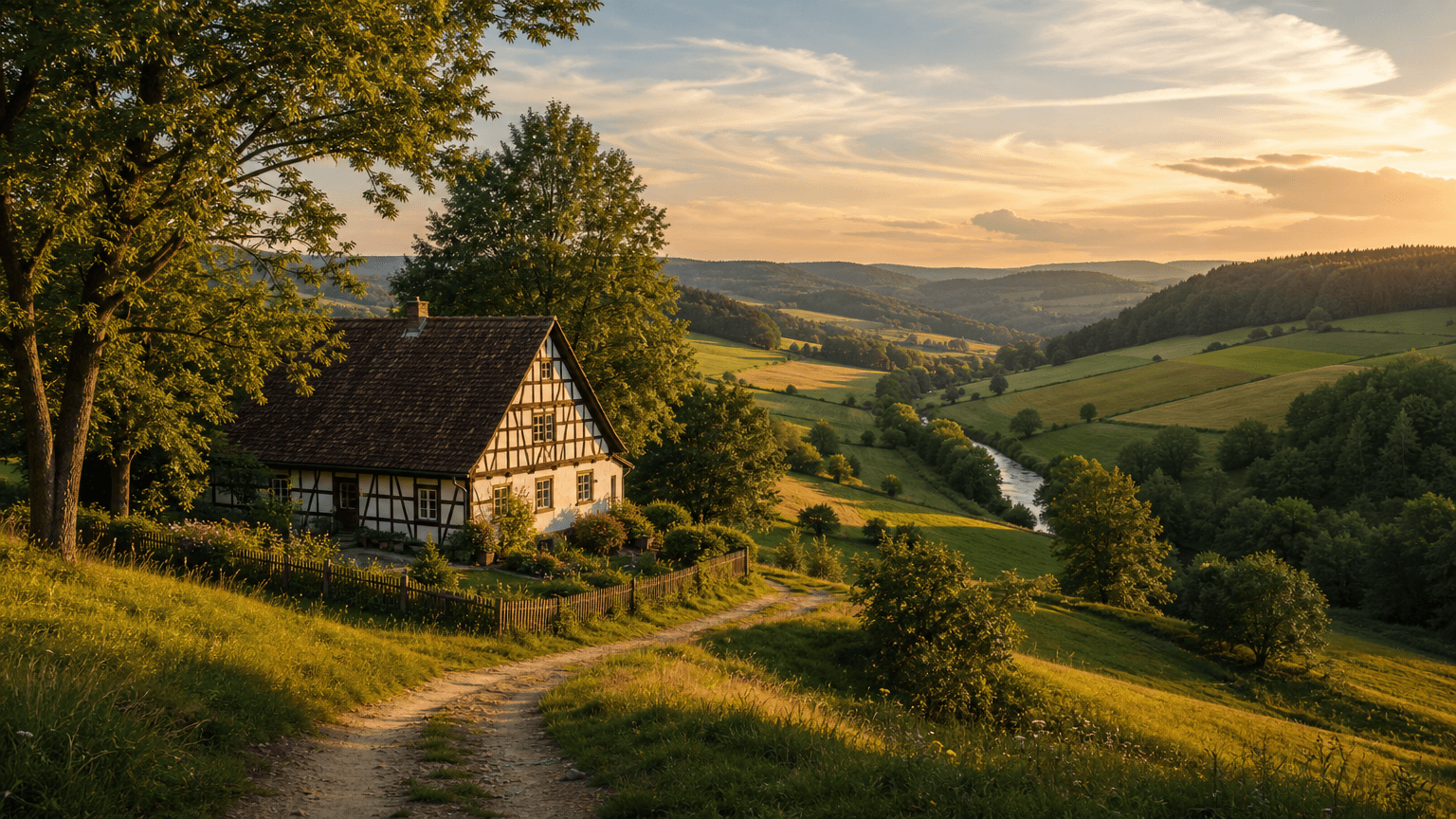
If you're asking where the best countryside in Germany is, the honest answer is that it depends on what you want from a second home. Germany has no single "best" rural region. It has several very different ones, from Alpine meadows to flat farmland, and they suit different lifestyles, seasons and budgets.
The official tourism site germany.travel lists 16 natural landscapes on its page "Germany's wonderful natural landscapes." That's a good starting point for inspiration. Buyers need more: how far the nearest hospital is, how a village looks in January, and what kind of house you can realistically find. This guide covers those questions for seven regions.
Five criteria for comparing Germany's countryside regions
Pretty views are only part of the picture. These five criteria make regions easier to compare:
- Scenery: what the area looks like all year, not only in summer.
- Outdoor activities: hiking, cycling, water sports or skiing, and how close the trails are to your door.
- Climate and seasonality: whether you can use the home in winter, and whether fog, snow or flooding affects daily life.
- Transport and nearby cities: driving times, train links and the nearest airport.
- Property-market signals: tourism infrastructure and typical home types, which hint at holiday-use appeal and how easily a home resells.
A quick checklist helps on every visit:
- Can you reach a pharmacy and a doctor within 20 to 30 minutes?
- Is the road to the house clear in winter?
- Is there reliable internet and utility access?
- Does the area sit in a protected zone with building limits?
- Is there a direct train or a manageable drive to an airport?
Regional profiles: Germany's best countryside for a second home
Bavarian Alps
Limestone peaks, lakes and painted farmhouses near Garmisch-Partenkirchen and Berchtesgaden. Summer and winter are both strong, since hiking and skiing share the same valleys. Homes are mostly chalet-style houses and apartments in alpine villages. Demand is steady because Munich is within roughly two hours by road, and prices reflect that. It suits buyers who want year-round use and don't mind paying for it.
Black Forest
Dark conifer hills, open valleys and traditional Schwarzwald farmhouses around Triberg, Freiburg and Baden-Baden. Hiking and cycling dominate, with modest skiing on higher ground. Airports in Basel, Zurich and Strasbourg are all reachable by car. You'll find village houses, farmhouses and holiday apartments. It's a balanced choice for families and retirees who want scenery with solid services.
Moselle and Rhine valleys
Steep vineyard slopes above winding rivers, with half-timbered towns such as Bernkastel-Kues, Cochem and Trier. The Upper Middle Rhine Valley has been a UNESCO World Heritage site since 2002. Spring through autumn is the sweet spot. Expect vintners' houses and riverside townhouses, often old and charming. River valleys carry flood risk, as the July 2021 Ahr flood in Rhineland-Palatinate showed, so check flood maps before you fall for a riverside home. It suits wine lovers and calm-seeking retirees.
Hunsrück and Saarland
Quiet forested uplands, the Hunsrück-Hochwald National Park and the dramatic Saar river loop near Mettlach. Tourism is lighter here, and so is pressure on prices. Homes are mainly detached village houses with gardens and land. Saarland's border with France and Luxembourg gives it a distinctly cross-border feel. It suits buyers who want space and privacy over a polished resort setting.
Thuringian Forest
Rolling wooded ridges, small spa towns and the long-distance Rennsteig trail, with Eisenach and the Wartburg nearby. Walking and winter cross-country skiing are the main draws. Typical homes are modest village houses and renovation projects. Public transport is thinner, so plan on driving. It suits hikers and buyers who like a project.
Saxon Switzerland
Sandstone pinnacles and gorges along the Elbe, including the famous Bastei rocks and the national park area. Dresden is close, and the area is a magnet for climbers and walkers. Because the terrain is rugged and parts are protected, expect building restrictions and fewer houses on the market. It suits active buyers who value drama over convenience.
Lower Rhine and North German Plain
Flat farmland, rivers, canals and heathland such as the Lüneburg Heath. Cycling is excellent, and big cities like Düsseldorf and Hamburg are within easy reach. Brick farmhouses and converted barns are common. The scenery is gentler, but access and everyday services are the easiest of any region here. It suits buyers who put practicality first.
What property types and price signals tell you
Listings follow regional character. The Alps and Black Forest lean toward chalets and farmhouses, while the Moselle favors old vintners' homes. The Hunsrück, Thuringia and the plains offer village houses with land.
As a rule, price tracks proximity to big cities and major attractions. Strong tourism infrastructure usually supports holiday-rental interest, while protected areas and difficult access can make resale slower. Property transfer tax also varies by state, from 3.5% in Bavaria to 6.5% in states such as Saarland and North Rhine-Westphalia. Check current regional price data from sources like the Bundesbank or Destatis before you set a budget.
At-a-glance comparison
| Region | Scenery | Best seasons | Transport access | Typical home | Best for |
|---|---|---|---|---|---|
| Bavarian Alps | Alpine peaks, lakes | Year-round | High (Munich) | Chalet | Year-round use |
| Black Forest | Forested hills | Spring to autumn, some winter | High | Farmhouse | Families, retirees |
| Moselle and Rhine | Vineyards, rivers | Spring to autumn | Medium to high | Vintner's house | Wine lovers |
| Hunsrück and Saarland | Uplands, forests | Spring to autumn | Medium | Village house | Space and value |
| Thuringian Forest | Wooded ridges | Summer, winter | Medium to low | Village house | Hikers |
| Saxon Switzerland | Sandstone cliffs | Spring to autumn | Medium | Small house | Active buyers |
| Lower Rhine and North German Plain | Flat farmland, heath | Spring to autumn | High | Brick farmhouse | Practical buyers |
Practical tips for expats buying rural property
Visit twice if you can, once in summer and once in winter. A village that feels charming in July can feel isolated in February. The Guardian's October 2026 readers' tips mention a €63 monthly Deutschlandticket, which is worth remembering if you plan to rely on regional trains while scouting.
German purchases go through a notary, so work with an English-speaking agent and a lawyer you trust, and budget for translating documents. Commission a building survey, confirm utilities, and ask what land-use or heritage rules limit renovations. Homestra's buyer guides use the same inspection-first approach, with step-by-step checklists to keep surprises small.
Next steps with Homestra
You can browse rural listings across Germany and compare them against other European countries on Homestra, which has over 200,000 properties and search filters for property type and price. Start with two or three regions from the table, shortlist homes, and plan your scouting trips around them.
Share