Blog published in Relocation
Share
Germany's 10pm rule (Nachtruhe) explained: a complete guide
Learn what Germany's 10pm rule really means, its legal basis, quiet-hour variations, enforcement, and practical tips for second-home buyers and holiday hosts.
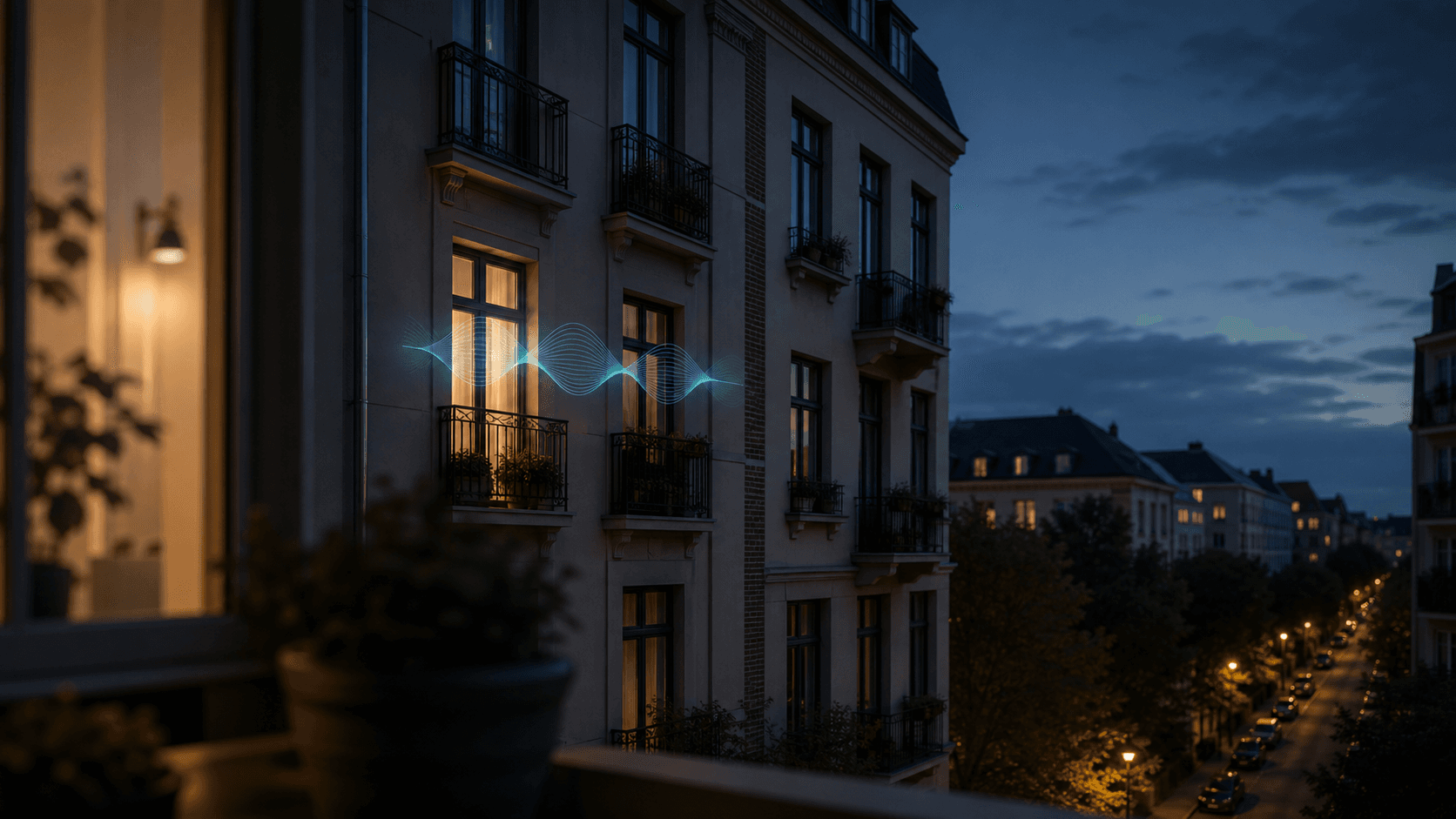
If you've just moved to Germany, bought a holiday home there, or are hosting guests in a German rental property, you've almost certainly heard someone mention the "10pm rule." It sounds deceptively simple. The reality is a little more layered, but equally straightforward once you understand the structure behind it.
This guide breaks down the full picture: the legal basis, the exact time windows, what counts as a violation, how enforcement works, and what international buyers and hosts need to do before their first guests arrive.
What the 10pm rule actually means
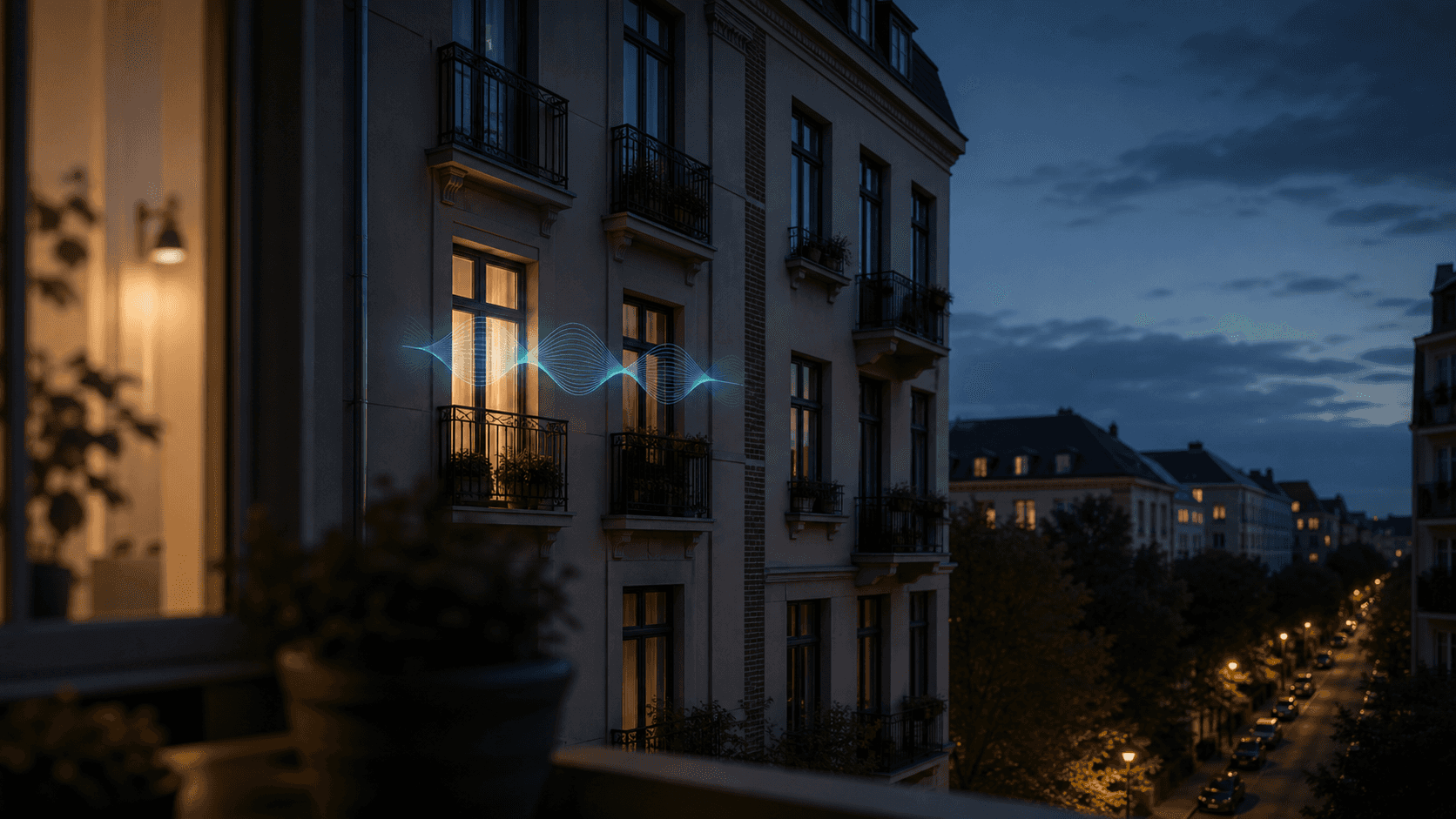
The "10pm rule" is informal shorthand for Germany's legally protected nighttime quiet period, known as Nachtruhe. The standard window is 22:00 to 06:00 (10pm to 6am), though some states and buildings extend it to 07:00.
During Nachtruhe, "quiet" doesn't mean total silence. It means keeping all noise to Zimmerlautstärke (room volume): sound levels low enough that they're not audible through shared walls, ceilings, or floors of a neighboring dwelling. Normal living sounds, a murmured conversation, footsteps, or someone boiling a kettle, don't violate quiet hours. A party at full volume, power tools, or a television you can clearly hear two apartments away does.
At a glance (for international readers):
| Period | Typical quiet window |
|---|---|
| Weekdays & Saturday (Nachtruhe) | 22:00, 06:00 (sometimes 07:00) |
| Sundays & public holidays (Sonntagsruhe) | 00:00, 24:00 (all day) |
| Midday quiet (Mittagsruhe) | ~13:00, 15:00 (where local rules apply) |
Sundays and public holidays function differently from weekday nights. Rather than a short nighttime window, Sonntagsruhe extends rest protection across the entire day. Loud DIY work, mowing, or parties are off the table all day Sunday in most localities. Mittagsruhe (midday quiet) is not universal, but it appears frequently in building house rules (Hausordnung) and some municipal ordinances, typically covering roughly 13:00 to 15:00.
Legal basis: who actually makes these rules?
There is no single national law called "the 10pm rule." Germany's noise-protection framework is built on several overlapping layers:
1. Technical administrative standards (TA Lärm) For industrial and commercial noise sources, the governing reference is the Technische Anleitung zum Schutz gegen Lärm (TA Lärm). The LAI interpretation notes (Hinweise zur Auslegung der TA Lärm, February 24, 2023) define the legal boundary explicitly: "Im Sinne von Nummer 7.2 TA Lärm ist ein Tag die Zeit von 6.00 Uhr bis 22.00 Uhr. Eine Nacht ist die Zeit von 22.00 Uhr bis 6.00 Uhr." (Day is 06:00 to 22:00. Night is 22:00 to 06:00.)
TA Lärm also sets permissible noise limits (Immissionsrichtwerte): brief peak noise during the day may not exceed the daytime reference value by more than 30 dB(A), and at night that tolerance shrinks to just 20 dB(A), reflecting how much more disruptive nighttime noise is.
2. State emissions protection laws (Landes-Immissionsschutzgesetz) Neighbor and household noise, the kind that generates most real-world complaints, falls under state-level legislation. Each German state (Bundesland) passes its own Landes-Immissionsschutzgesetz or equivalent ordinance, setting quiet-hour windows for domestic and neighborhood disturbances. This is why exact times can differ between Bavaria, North Rhine-Westphalia, or Lower Saxony.
3. Municipal ordinances and building rules Municipalities may issue supplementary local ordinances (Gemeindesatzungen) that tighten quiet-hour requirements further. And individual residential buildings will typically have a Hausordnung (house rules document) that is legally binding on all residents and guests. The Hausordnung often mirrors or extends state law, adding midday quiet periods or stricter nighttime windows.
The Ordnungsamt (municipal regulatory office) is the primary enforcement body for noise complaints. Police (Polizei) may also respond in acute or serious cases.
What's restricted after 22:00
The following activities consistently fall foul of Nachtruhe across German states:
- Loud music, parties, or gatherings audible beyond your own unit
- Drilling, hammering, or any power-tool use
- Running a vacuum cleaner or other noisy household appliances
- Moving furniture across hard floors
- Televisions or speakers with volume that carries into neighboring spaces
What's generally not a problem during Nachtruhe:
- Normal conversation at indoor volume
- Walking around the apartment (though very heavy footsteps on bare floors in old buildings can become a complaint issue)
- Using the bathroom, flushing the toilet, or showering, provided the building's plumbing doesn't amplify the noise unusually
- Cooking at a normal pace without high-powered appliances
A practical rule of thumb for holiday properties: if the sound is clearly audible standing in the hallway outside your door, it's too loud for Nachtruhe.
Enforcement and consequences
When a neighbor is disturbed during quiet hours, the typical escalation path runs like this:
- The affected party contacts the Ordnungsamt or, in urgent cases, the Polizei.
- Authorities investigate, which may mean attending the property or issuing a formal notice (Abmahnung).
- For repeated or serious violations, a Bußgeld (administrative fine) may follow. Fine amounts are set at the state or municipal level and vary considerably, so claims about specific nationwide maximums are often unreliable. Check your local municipality's published fee schedule for accurate figures.
- Landlords (Vermieter) may separately issue written warnings to tenants. In rental contexts, persistent noise violations can become grounds for lease-related action.
For holiday-rental hosts, the stakes are concrete. Repeated complaints don't just risk fines; they damage relationships with permanent neighbors and can attract scrutiny from the local authority that licenses short-term rentals.
Practical guidance for second-home buyers and holiday hosts
For international buyers, especially those navigating German real estate for the first time, local noise norms are just one part of the regulatory picture. Platforms like Homestra, which specialize in cross-border second-home purchases across Europe, consistently flag the importance of understanding local living rules before you commit to a property, because they directly affect how you can use it.
Here's what to do:
Before you buy:
- Ask the agent or current owner for a copy of the building's Hausordnung.
- Confirm the exact local Nachtruhe window with the municipality (it may differ from the state baseline).
- Check whether the property is in a mixed-use area where TA Lärm commercial limits also apply nearby.
- Confirm Sunday and public-holiday restrictions for outdoor activities, especially gardens or terraces.
For hosts setting up a holiday rental:
- Include explicit Nachtruhe rules in your welcome pack and online listing house rules.
- Specify both the nightly window (22:00–06:00 or 07:00 as applicable) and the all-day Sunday expectation.
- Note any Mittagsruhe window from the Hausordnung.
- Schedule any maintenance, cleaning, or DIY work strictly within permitted daytime hours, away from Nachtruhe and Sonntagsruhe windows.
- Leave your contact number with immediate neighbors so they can reach you before escalating to the Ordnungsamt.
What to ask local authorities:
- What are the exact Ruhezeiten under the local ordinance?
- Are there extended quiet periods for specific areas (e.g., near hospitals, schools)?
- What outdoor noise restrictions apply, for tools, machinery, lawnmowers?
- Who is the enforcement contact for noise complaints (Lärmbelästigung)?
If you're browsing second homes for sale in Germany, it's worth filtering early for property type: a detached country house and an apartment in a multi-unit block carry very different Nachtruhe exposure.
How to check the rules for your specific location
Germany's layered system means there's no single website with a definitive national answer. Work through the following steps:
- Check your municipality's website. Search for "Ruhezeiten [city name]" or "Lärmschutz [city name]". Most Ordnungsamt pages list local quiet windows.
- Read your lease and Hausordnung carefully. The building rules are legally binding and often more restrictive than state law.
- Check condominium or homeowners' association rules if your property is part of a Wohnungseigentümergemeinschaft (WEG).
- Call the Ordnungsamt directly if you can't find clear documentation online. They're accustomed to fielding these questions.
German search terms to use:
- Ruhezeiten / Nachtruhe
- Landesimmissionsschutzgesetz
- Lärmbelästigung
- Hausordnung
- Ordnungsamt
- Sonn- und Feiertagsruhe
- Zimmerlautstärke
Local rule reference template (save this and fill it in for each property you buy or manage):
| Field | Your entry |
|---|---|
| State (Bundesland) | |
| Municipality | |
| Source link (municipal website) | |
| Nachtruhe window | :: |
| Mittagsruhe window (if any) | :: |
| Sonntagsruhe: full day? | Yes / No |
| Outdoor tool restrictions | |
| Enforcement contact |
Frequently asked questions
Is the 10pm rule a national law? Not as a single statute. The 22:00–06:00 window is anchored in technical standards like TA Lärm and mirrored in most state emissions protection laws, but the exact rules for neighbor noise are set at state and municipal level.
What does Nachtruhe mean? Literally "night rest" or "nighttime quiet." It refers to the legally protected period during which noise levels must stay at or below Zimmerlautstärke (room volume).
Are normal everyday sounds allowed after 10pm? Yes. Quiet conversation, walking, cooking, and toilet use are not violations. The test is whether the sound is audible in a neighboring unit at a level that could reasonably disturb someone.
Are Sundays treated differently? Yes, significantly. Sonntagsruhe applies all day on Sundays and public holidays, not just at night. Activities like mowing, drilling, and loud gatherings are restricted throughout the day.
What about flushing or showering at night? Generally permitted as normal living activities, but in older buildings with loud plumbing, this is a common source of neighbor friction. It won't generate an Ordnungsamt complaint in most cases, but it's worth mentioning in a Hausordnung for holiday rentals.
What does Deutschland 22 Uhr Regel mean? It's the German way of referring to the same concept: the 22:00 rule (22 Uhr Regel Deutschland), i.e., the start of Nachtruhe at 10pm.
Sample wording for neighbors and holiday-rental guests
Short neighbor introduction note (English):
Dear neighbor, I'm [Name], the owner/host at [address]. I want to assure you that we take the local Nachtruhe (quiet hours, 22:00–06:00) and Sunday rest seriously. If you ever have a concern, please contact me directly at [phone/email] before escalating elsewhere. Thank you.
Short neighbor introduction note (German):
Liebe Nachbarin, lieber Nachbar, ich bin [Name], der/die Eigentümer/in bzw. Gastgeber/in in [Adresse]. Wir respektieren selbstverständlich die geltenden Ruhezeiten (Nachtruhe 22:00–06:00 Uhr sowie die Sonntagsruhe). Bei Anliegen oder Fragen wenden Sie sich bitte jederzeit direkt an mich: [Telefon/E-Mail]. Vielen Dank.
Holiday-rental house rules (English, with placeholders):
Quiet hours (Nachtruhe): Please keep all noise to room volume (no music audible outside the apartment, no power tools) between [22:00] and [06:00/07:00] every night. On Sundays and public holidays, please observe quiet throughout the day. A midday quiet period applies from [13:00 to 15:00] [delete if not applicable per Hausordnung]. Violations may result in fines from the local municipal authority.
Holiday-rental house rules (German, with placeholders):
Ruhezeiten: Bitte halten Sie zwischen [22:00] und [06:00/07:00] Uhr Zimmerlautstärke ein (keine nach außen hörbaren Geräusche, keine Elektrowerkzeuge). An Sonn- und Feiertagen gilt ganztägige Ruhe (Sonntagsruhe). Die Mittagsruhe gilt von [13:00 bis 15:00] Uhr [streichen, falls laut Hausordnung nicht zutreffend]. Bei Verstößen können durch das Ordnungsamt Bußgelder verhängt werden.
Understanding Ruhezeiten is one of the first things you should get right when owning or hosting in Germany. It protects your relationship with neighbors, keeps your guests out of legal trouble, and reflects the basic social contract that makes dense residential living function. If you're in the process of buying a property abroad and Germany is on your shortlist, treat the local quiet-hour framework as a non-negotiable item on your pre-purchase due diligence list, right alongside title checks and tax registration.
Share