Blog published in Relocation
Share
Where do most Americans live in Italy? Top cities and regions (2026)
Nearly half of all Americans in Italy live in just 3 regions. See the data-backed breakdown by city, the lifestyle reasons behind each choice, and how to find a home there.
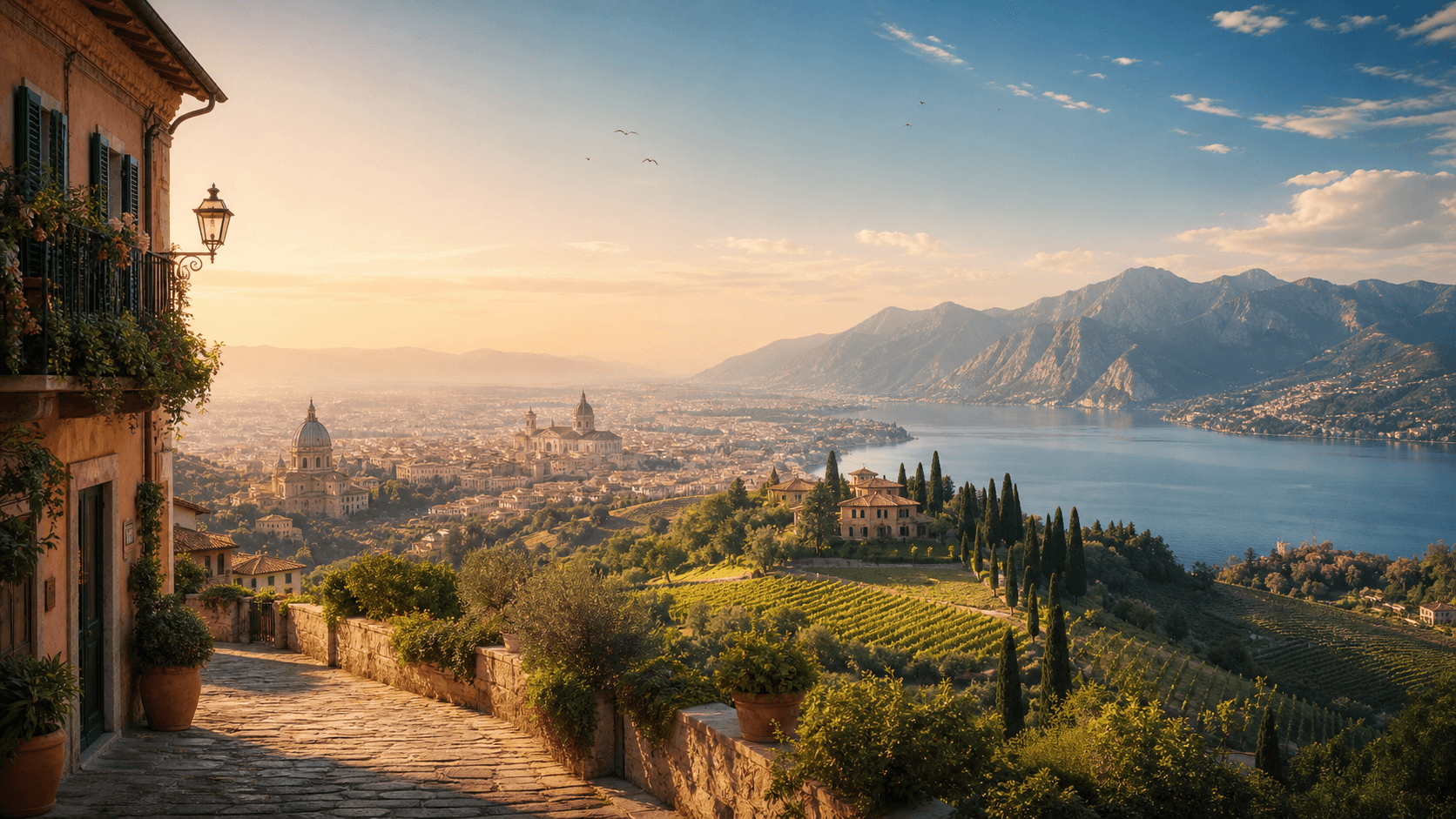
About 14,500 US citizens are officially registered as residents in Italy, according to Istat-derived figures cited by The Local Italy. That sounds like a small number until you realize those are registered residents, people who've formally enrolled in the anagrafe, Italy's municipal registry system. The actual number of Americans spending meaningful time in Italy, whether as remote workers, retirees, part-year property owners, or language-school students, is considerably higher and much harder to pin down.
This guide focuses on verified, Istat-based registered-resident counts and explains what the data does (and doesn't) capture. You'll find a ranked breakdown of the top regions, lifestyle-grouped city profiles, practical resources, and a straightforward workflow for searching properties in the areas where Americans actually live.
Where the numbers concentrate: top regions at a glance
The most striking finding from recent data: nearly half of all Americans legally resident in Italy are bunched into just three regions. The Local Italy reported in May 2026, drawing on Istat figures, that 48.9% of registered US citizens live in Lazio, Lombardy, and Tuscany. That's essentially a coin-flip's worth of the entire American resident population in a country of 20 regions.
| Region | Key city hub | Character |
|---|---|---|
| Lazio | Rome (~2,400 Americans) | International institutions, embassies, universities |
| Lombardy | Milan | Business, finance, international employers |
| Tuscany | Florence | Art, culture, retirement, second-home market |
| Campania | Naples / Amalfi Coast | Tourism, second homes, seasonal living |
| Veneto / Lakes | Venice, Lake Como area | Lifestyle, heritage, lakeside retreats |
| Liguria | Genoa, Cinque Terre towns | Coastal living, value relative to Tuscany |
| Sicily | Palermo, Catania, Ragusa area | Climate, affordability, renovation appeal |
Lazio alone accounts for the single largest concentration, and Rome accounts for the single largest city total at roughly 2,400 registered American residents (The Local / Istat, 2023).
Top cities grouped by lifestyle
Rome (Lazio): the biggest American hub
Rome's dominance isn't accidental. The city hosts the U.S. Embassy, several American and international universities (including John Cabot University and the American University of Rome), NATO's SHAPE-adjacent command structures, and dozens of international NGOs. For Americans who need English-language services, a U.S. consular presence, and a functioning international school ecosystem, Rome ticks every box. Neighborhoods like Prati (west bank of the Tiber, walkable, apartment-heavy) and Parioli (leafy, north Rome, popular with diplomatic families) are consistent favorites. Trastevere draws younger arrivals and creatives. Explore houses for sale in Italy to see what's currently available across Lazio and beyond.
Milan (Lombardy): for the career-driven American
Milan's American community skews professional. International fashion and design firms, multinational finance houses, and European headquarters for US tech and consulting companies keep a steady flow of American expats cycling through the city. Neighborhoods like Porta Venezia, Navigli, and Brera offer shorter commutes and walkable amenities. Milan's Malpensa and Linate airports also make it one of the most connected Italian cities for transatlantic travelers, a practical consideration if you're splitting time between Italy and the States.
Florence and Tuscany: art, food, and a slower pace
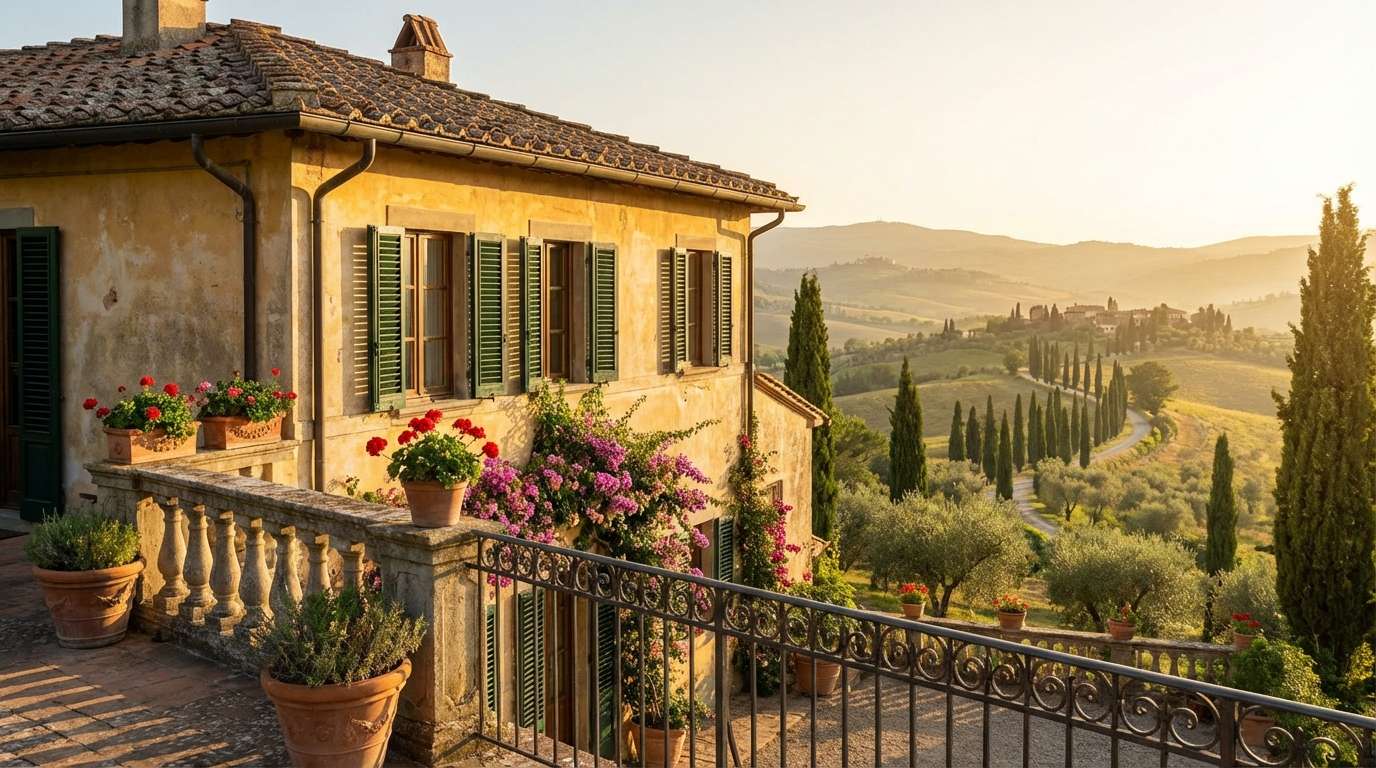
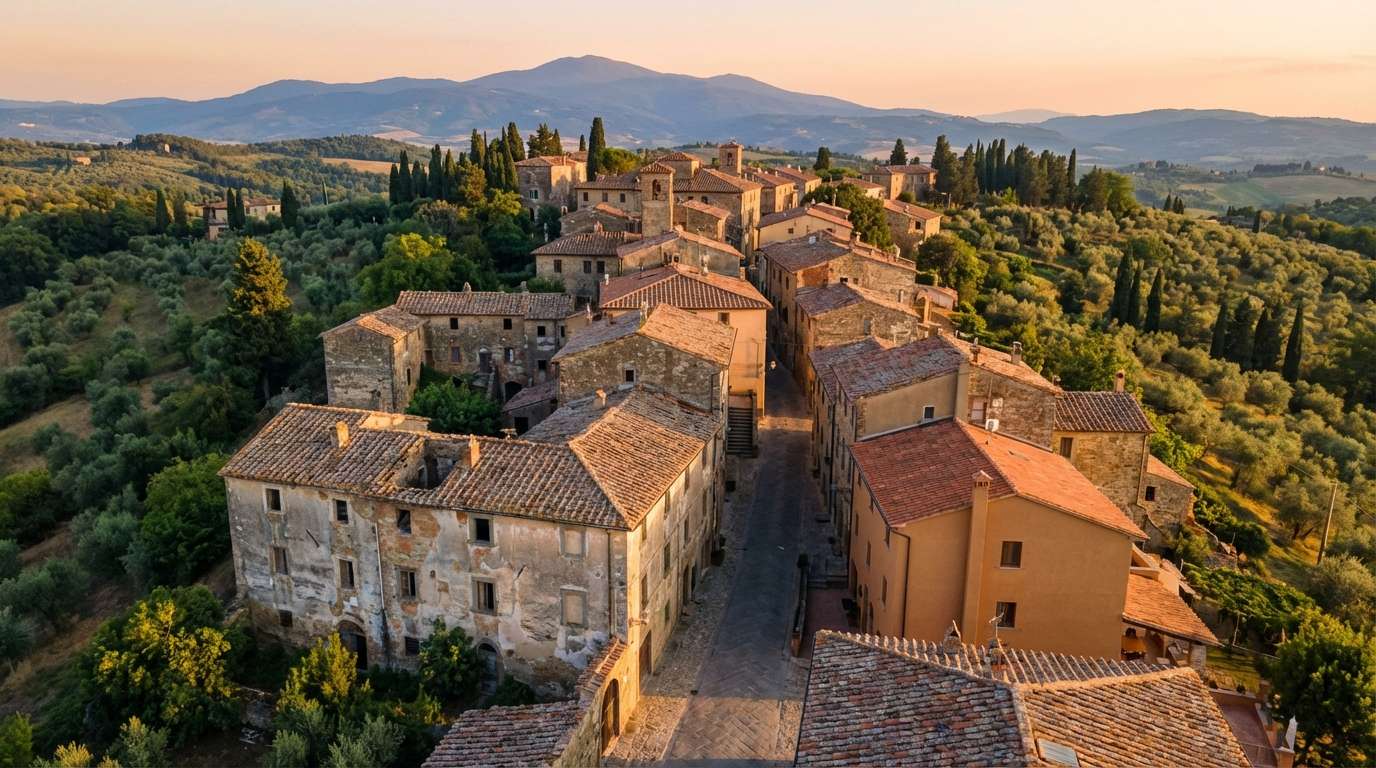
Tuscany is the third pillar of American life in Italy, and Florence is its nucleus. The city has an unusually deep infrastructure for English-speaking residents: international schools, a long-standing American expat community, and multiple U.S.-accredited universities including Syracuse University Florence and NYU Florence. Outside the city, the Chianti hills, Siena province, and the Pisa/Volterra corridor are popular for retirees and second-home buyers who want space, a garden, and easy access to Florence's services. Browse Tuscany properties to get a feel for what that looks like on the ground.
Campania and the Amalfi Coast
The Amalfi Coast and surrounding Campania region draw Americans mostly as second-home buyers and seasonal residents rather than year-round workers. Properties in towns like Positano, Ravello, and the hillside villages above Salerno carry premium prices for coastal views but often sit empty October through April. It's worth being honest with yourself about whether you'll actually use a seasonal property enough to justify the purchase. That said, the region has genuine appeal for retirees willing to navigate steep streets and limited winter services.
Lake Como and the Veneto lakes
Lake Como is one of the most recognizable addresses in the Italian-American imagination, and for good reason. The combination of Alpine scenery, direct rail access to Milan, and a global community of second-home owners makes it a reliable choice for buyers who want luxury lakefront living without full-time commitment to Italian bureaucracy. Towns like Menaggio, Bellagio, and Varenna offer the full spectrum from renovator's specials to turnkey villas. Homestra's database includes Lake Como villas and lakefront properties across the Lombardy shoreline.
Liguria
Liguria gets less attention than Tuscany but shares much of its appeal: medieval hilltop villages, Ligurian Sea views, and a food culture (pesto, focaccia, fresh seafood) that rivals anything in Italy. Americans in Liguria tend to be drawn to the Cinque Terre area or the quieter villages east and west of Genoa. Prices are generally lower than comparable Tuscan properties, and the train line running along the coast is one of the most scenic in Europe. Houses in Pignone, Liguria offer a starting point for exploring the region.
Sicily
Sicily is having a genuine moment among American buyers. Palermo, Catania, and the Ragusa area in the southeast offer a combination that's hard to match: warm Mediterranean climate, year-round affordability, extraordinary food culture, and entry-level property prices that still allow for renovation projects without depleting retirement savings. The island's €1 house schemes in towns like Mussomeli generated significant international press coverage, but the real story is the broader value on offer across the island for buyers who do their homework. Homestra lists a range of Sicily properties near Cefalù and Palermo worth exploring.
Smaller towns: the case for going off the beaten path
For second-home buyers especially, the biggest cities aren't always the best answer. A farmhouse in Le Marche, a stone townhouse in Abruzzo, or a renovator's villa in Umbria can offer more space, more character, and dramatically lower prices than a Rome apartment or a Florentine flat. The trade-off is access to English-speaking services and a built-in expat community, which matters more to some buyers than others. A rustic country home in Abruzzo is a good example of what's possible with a more flexible geographic brief.
Why Americans choose Italy (the real drivers)
The concentrations in Rome, Milan, and Florence aren't random. They reflect a set of practical and lifestyle factors that recur across every American expat account:
- Employment and international employers. Rome and Milan have the thickest layers of multinational employers, U.S. government positions, and international organization jobs.
- Universities and study abroad. Italy has an unusually large footprint of U.S.-accredited programs and exchange arrangements. Florence and Rome are the two biggest hubs.
- Retirement and walkability. Italy's city centers are built for pedestrians. For retirees who don't want to depend on a car, walkable Italian towns are a strong fit. The cultural richness, opera, art, markets, piazzas, makes the lifestyle genuinely sustainable long-term.
- Second-home and property investment. Italy's relatively low rural property prices compared to France or Spain, combined with its appeal to international renters, make it a compelling second-home market.
- Healthcare access. Italy's national health service (SSN) is generally accessible to registered residents, which is a material consideration for long-term or retirement-focused moves. Medical facilities are concentrated in major cities.
What the numbers actually count (and what they don't)
It's worth being clear about methodology, because the numbers circulating online can mislead.
Registered residents are US citizens who have formally enrolled in Italy's anagrafe system at their Italian address. This is a legal requirement for anyone planning to stay longer than 90 days, but compliance isn't universal. Many Americans in Italy on elective residency visas or Digital Nomad visas go months without completing registration.
What isn't counted: dual US-Italian citizens who register as Italian rather than American; Americans on tourist or Schengen visa stays (up to 90 days in any 180-day period); and seasonal property owners who don't formally reside. The true population of Americans with a meaningful foothold in Italy is substantially larger than 14,500.
For the most current figures, the primary source is the Istat ANPR dataset, Italy's national civil registry, which publishes annual breakdowns by country of citizenship and region of residence. The Local Italy's May 2026 article (thelocal.it) is the most recent English-language synthesis of those figures.
Finding a property with Homestra: a practical workflow
Homestra is Europe's largest cross-country housing platform, with over 200,000 properties available across the continent. For Americans searching for a second home or permanent base in Italy, the most effective approach is to start broad and narrow deliberately:
- Start with region, not city. Select Lazio, Lombardy, or Tuscany first based on your lifestyle priorities (institutions and services vs. culture and pace vs. a blend). Drill down to provinces and towns only once you've confirmed the region fits.
- Filter by property type and price. Use Homestra's search filters to compare apartments for sale in Italy against houses and villas. Set a realistic price range that accounts for renovation costs if you're considering older rural properties.
- Apply lifestyle filters. Consider proximity to a train station or airport, winter accessibility (relevant for lake and mountain properties), and walkability to everyday amenities.
- Check for American-friendly services nearby. Schools teaching in English, English-speaking medical practices, and international supermarkets are all worth verifying before shortlisting a neighborhood.
- Save searches and shortlist for on-site visits. Italy is a country where seeing a property in person before committing is non-negotiable. Shortlist 6–10 properties across two or three areas, then schedule a dedicated trip.
The Homestra Italy listings hub is a solid starting point for any of these searches, with listings filtered by region, type, price, and condition.
FAQ: residency, taxes, and part-time living
Which visa do most Americans use? The most common long-stay routes are the Elective Residency Visa (for retirees or those with independent income), the Digital Nomad Visa (introduced in 2024 for remote workers), and student visas for university enrollment. Each has different income and insurance requirements. Always confirm current requirements with the Italian consulate in your jurisdiction before applying.
Can I use Italy's national healthcare? Registered residents who pay into Italy's social security system (INPS) are generally eligible for the SSN. Those on passive-income visas typically need to hold comprehensive private health insurance as a visa condition. Requirements change, so treat any online summary as a starting point and confirm with an Italian immigration attorney.
How does Italian tax residency work? If you spend more than 183 days per year in Italy and your primary home or principal economic interests are there, you're generally considered an Italian tax resident. The US-Italy tax treaty reduces (but doesn't eliminate) double-taxation exposure. Tax planning before moving is worth the investment. Consult a commercialista familiar with US-Italian tax issues.
What if I only want to live there part-time? Plenty of Americans own property in Italy and stay for 60–80 days per trip under the Schengen 90-day rule without formally registering. In this scenario, you're a property owner and occasional visitor, not a registered resident, and you won't appear in any of the statistics cited above. The property search process is the same; the legal and tax profile is different.
How long does the residency process take? Processing times vary significantly by Italian consulate in the US. Some applications take 3–4 months; others stretch longer. Planning at least 6 months ahead of your intended move date is the safest approach.
For community support once you arrive, search for expat Facebook groups by city name ("Americans in Florence," "US expats in Rome"), check the U.S. Embassy Rome and relevant U.S. consulates (Milan, Florence, Naples, Palermo) for citizen services, and look into the American International League and similar organizations for networking and practical orientation help. The Homestra relocation resource hub also covers the broader picture of purchasing property in Europe as a non-EU buyer.
Share