Blog published in Buying property abroad
Share
How expats find a vacation home in Europe: a 9-step guide
A step-by-step guide to finding your European vacation home as an expat: budget, shortlist, verify, and close with confidence.

Finding a vacation home in a country where you don't speak the language, don't know the process, and can't pop over for a viewing every weekend is a lot. Most expats don't struggle with a shortage of listings. They struggle with not knowing what order to do things in.
This guide gives you that order. You'll go from deciding where to buy, to filtering listings on Homestra, to a shortlist you can defend, to a realistic view of the closing timeline and the documents you'll need.
Who this is for: expats and international buyers looking at a vacation or second home in Europe.
What you'll finish with: a written search brief, a shortlist of 3 to 7 properties scored on the same criteria, a document folder, and a clear idea of what happens after you make an offer.
Difficulty and time: beginner-friendly. Plan on a few hours for the search and shortlist, then several weeks of back-and-forth before any offer. The purchase itself typically takes longer.
You'll need: a rough budget, your passport or ID, a note of how you plan to use the home, and a spreadsheet or notebook for comparisons.
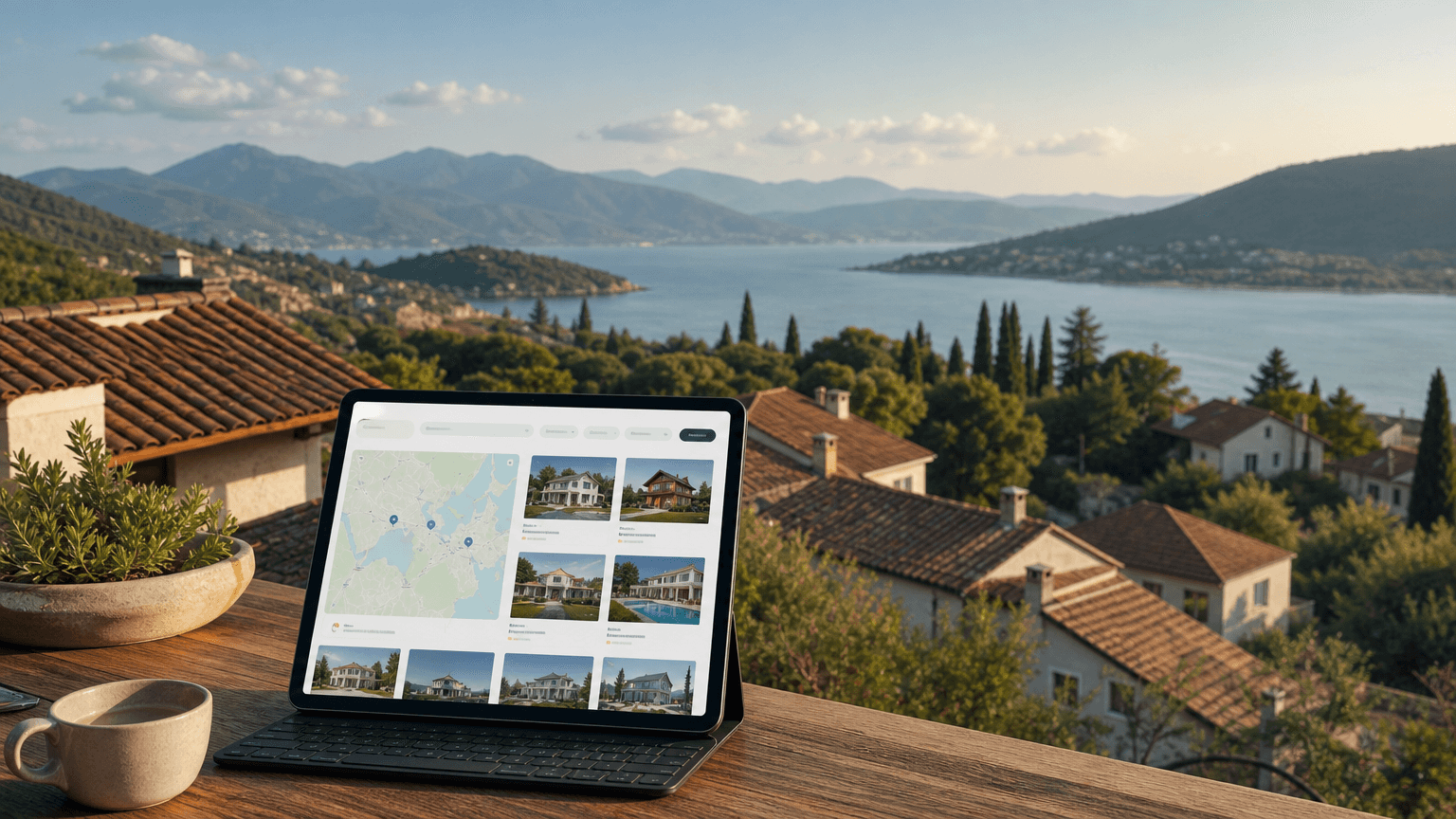
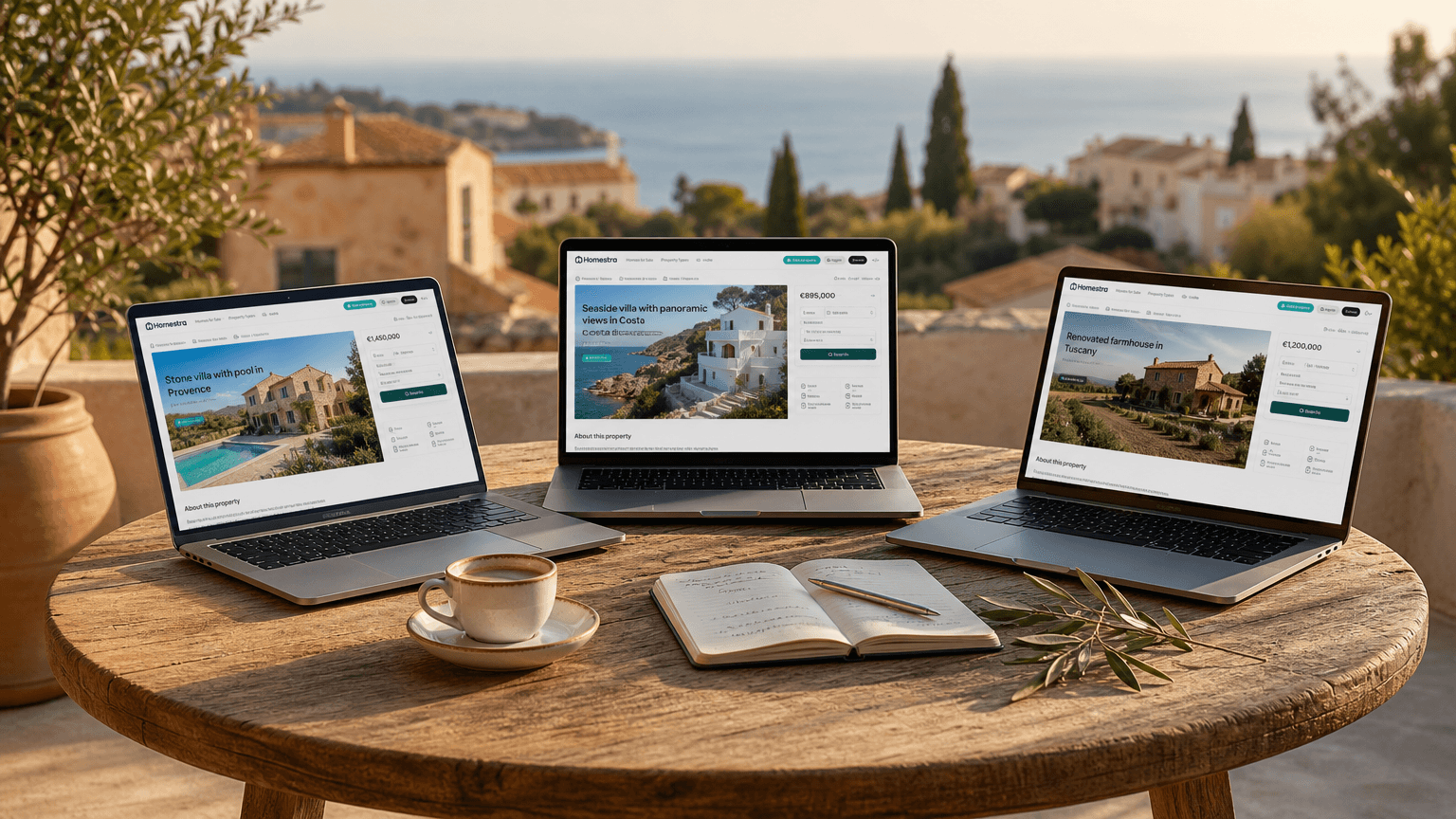
Homestra lists more than 200,000 properties across Europe in one place, so you can compare countries side by side instead of learning a new portal for each one. Open Homestra in another tab and follow along.
Step 1: Decide how you'll actually use the home
Before you touch a filter, answer these questions in writing. Vague answers lead to vague searches.
- How many weeks a year will you be there, and in which seasons?
- How far are you willing to travel from the nearest airport once you land?
- Will you visit in winter? If so, you need reliable road access and heating.
- Do you want to walk to a café and a grocery store, or do you want quiet and land?
- Will you rent it out when you're away?
That last one matters more than people expect. Short-term rental rules vary by country, region, and sometimes by building, so a property that's perfect for personal use may be restricted for letting. Check the rules for the specific location before you fall for a listing.
Should you rent first instead of buying?
If you've never spent more than a week in a place, rent for a season first. A month in a village in February tells you more than ten summer holidays. Renting costs you nothing in transaction fees and lets you test commutes, noise, and neighbors. If you've already spent several seasons in an area and keep returning, buying makes more sense.
Step 2: Match property type to your plan
Different goals point to different homes.
| If your plan is... | Consider | Watch for |
|---|---|---|
| Short stays, lock-and-leave | Apartment in a town or coastal resort | Community fees, building rules, rental restrictions |
| Family summers | Villa or townhouse with outdoor space | Pool and garden upkeep when you're away |
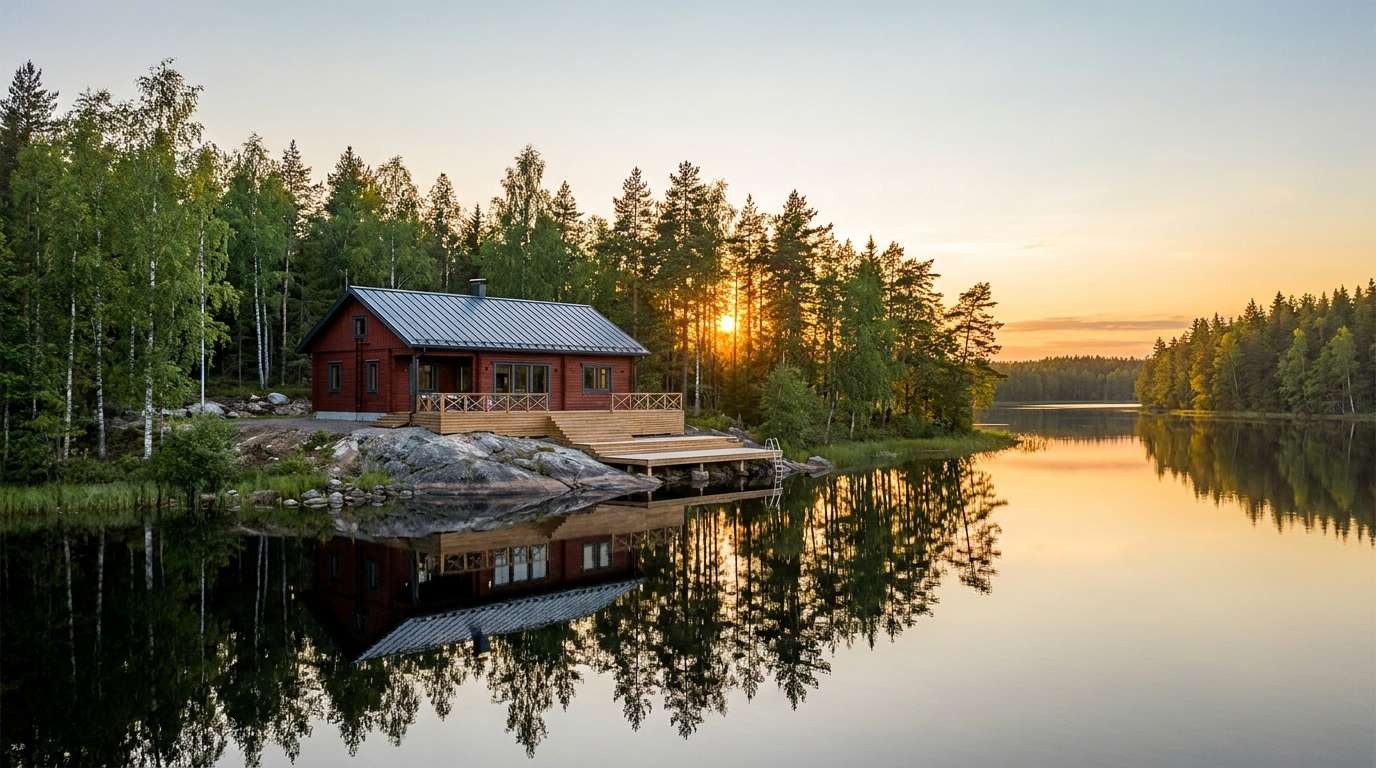
| Quiet retreat, nature | Rural cottage (a fritidshus in Sweden, for example) | Wells, septic systems, winter access, heating |
| Year-round flexibility | Home near an airport or a mid-sized town | Higher prices, tourism-driven seasonality |
Be honest about maintenance. A house with a garden, a roof, and a private water system needs someone looking after it while you're gone.
Step 3: Build a real budget, not just a purchase price
Your budget has four layers:
- Purchase price. What you'll pay the seller.
- Acquisition costs. Taxes, registration fees, notary or legal fees, and agent fees where the buyer pays them.
- Setup costs. Inspection, repairs, furnishing, and utility connections.
- Annual costs. Property tax, insurance, utilities, maintenance, and any community or HOA-style fees.
To see how much the layers can differ between countries, read Homestra's guide to taxes for non-EU buyers, which compares acquisition taxes, annual fees, and capital gains across eight European countries.
A Sweden example shows what these costs look like in practice. Homestra's guide to buying a rural vacation home in Sweden (published 02/01/2026) lists stamp duty for the title transfer (lagfart) at 1.5% of the purchase price, or the assessed value if that's higher, plus a fixed registration fee of 825 SEK. Other countries use different taxes, different rates, and different calculation bases. Treat Sweden as an example of the cost categories to look for, not a rule that applies everywhere.
For mortgages, note that lending to non-residents is country-specific. Some banks lend to foreign buyers with larger down payments, and others don't. If you plan to finance, ask a local lender or broker early, before you fall for a property you can't fund.
Step 4: Shortlist countries with a decision matrix
Pick two to four countries or regions and score them. Copy this into your spreadsheet and rate each row from 1 to 5.
| Criteria | Country A | Country B | Country C |
|---|---|---|---|
| Foreign-buyer rules (any restrictions for non-EU buyers?) | |||
| Acquisition and annual taxes | |||
| Mortgage availability for non-residents | |||
| Rental rules, if you'll let it | |||
| Flight access from your home city | |||
| Climate and winter usability | |||
| Your comfort with the language |
Two points to verify for each country, using official sources:
- Ownership restrictions. Some European countries have no restrictions on foreign ownership. Sweden, per Homestra's guide, is one of them. Others limit purchases in certain zones, such as border or military areas. Check the rules for your citizenship and your target region.
- Ownership versus residency. Buying a home usually doesn't give you the right to live there. Homestra's Sweden guide says it plainly: property ownership doesn't grant residency or visa privileges. Some countries have run residency-by-investment programs tied to property, but these change often and several have been narrowed or closed. Confirm current rules with official government sources or an immigration lawyer before you let a visa program drive your decision.
If you want a deeper look at one market, Homestra has guides on buying property in Portugal and on why France is one of the most affordable places for a vacation home in Europe.
Checkpoint: you now have a one-page search brief with your usage plan, property type, total budget, and two to four target countries. If you can't fill that in, go back before searching.
Step 5: Turn your brief into Homestra filters
This is where your criteria become a search. Apply filters in order of importance, because each one narrows the results and the first ones should be your non-negotiables.
- Pick your location. Start with one country, then a region or city. Searching all of Europe at once produces noise.
- Set your price range. Use the purchase-price layer of your budget, not your total. If your total is 100% and you expect acquisition and setup costs, leave room for them.
- Choose a property type. Villa, apartment, house, or the rural option you picked in Step 2.
- Add features. Bedrooms, bathrooms, garden, sea view, heating. Where a feature isn't a filter, scan the listing description for it.
- Sort and scan. Open 10 to 15 listings quickly before you save any. You're calibrating what your budget buys in that area.
A sample filter recipe
Say you want a quiet rural cottage for spring through autumn, with the option to visit once in winter.
- Location: one region in Sweden
- Price range: your purchase-price ceiling, minus about 10% for fees and repairs
- Property type: house or cottage
- Features to look for in descriptions: heating system, year-round road access, mention of well or septic condition
Run the same recipe on a second region and compare what each one gets you.
Check the map before you fall for the photos
Photos show the best angle of a house. The map shows where it actually sits. Use map browsing to check distance to the nearest town, grocery store, hospital, and airport. A "5 minutes from the coast" listing might mean 5 minutes by car on a seasonal road. If you're also browsing other platforms, European property portals such as idealista, Rightmove, SeLoger, and ImmobilienScout24 each have strong coverage in their home markets, and local portals are worth checking once you've picked a country. Homestra's advantage is the cross-country view, so you can decide where before you dive deep into how.
Checkpoint: you've opened at least 10 listings in your target area and know roughly what your budget buys there. If everything is far above your budget, raise it, widen the region, or change property type rather than stretching a tight number.
Step 6: Build a shortlist of 3 to 7 properties
A shortlist isn't a favorites list. It's 3 to 7 properties with written pros and cons, scored the same way. Fewer than three leaves you with no comparison. More than seven becomes impossible to manage from abroad.
For each property, record:
- Listing link and asking price
- Year built and stated condition
- Heating type and any mention of insulation
- Water and sewage (mains, well, septic)
- Access in winter and parking
- Distance to nearest town and airport
- Monthly or annual running costs, if listed
- Red flags to investigate: unclear ownership, unpermitted extensions, "sold as is," missing floor plans
Score each home from 1 to 5 on location, condition, running costs, and fit with your usage plan. Add the totals, then sleep on the ranking. If one home keeps nagging you despite a lower score, find out why.
What to evaluate from the listing first
Read the description before you read the photos. Look for specifics. "Renovated in 2021, new septic tank" is useful. "Charming, needs love" tells you nothing. Check that the floor plan matches the photos, and count how many rooms have windows in the images. Ask the agent about anything the listing skips, especially age and condition of heating, roof, and water systems.
Step 7: Contact agents and verify before you visit
Use the contact option on each Homestra listing to request more information. Send the same set of questions to every agent so the answers are comparable:
- Who owns the property, and is the title clear of mortgages or liens?
- Are there building permits for all structures and extensions?
- Are there recent technical reports or inspection results?
- What are the annual property tax, insurance, and utility costs?
- Are there community fees or shared-cost obligations?
- Why is the seller selling, and how long has the home been listed?
Then fill the gaps yourself. GOV.UK's guidance for buying property abroad is clear on the main theme: get independent legal advice from a lawyer who knows the local system and works for you, not for the seller or developer. That advice is worth following even when the agent seems helpful and the paperwork looks tidy.
Inspection priorities for rural homes
If you're buying outside a town, the infrastructure is part of the property. Homestra's rural Sweden guide highlights four things to inspect before you commit:
- Wells. Check water quality and flow, especially in dry months.
- Septic systems. Ask for age, last service date, and whether the system meets current local rules.
- Heating and winterization. Confirm what heats the house, whether pipes are protected against freezing, and what it costs to keep the home above freezing while you're away.
- Road access. Find out who maintains the road and whether it's cleared in winter.
In the Sweden example, a formal property inspection (besiktning) is a normal step before signing. In other countries the name and process differ, but the principle holds: hire your own surveyor or inspector, and don't rely only on the seller's report.
Mistakes that cost expats money
- Rushing after one good viewing. Sleep on it and compare against your scorecard.
- Skipping translation. If the contract isn't in a language you read fluently, get a certified translation or have your lawyer explain it clause by clause.
- Ignoring infrastructure. A cheap rural house with a failing septic tank isn't cheap.
- Paying deposits before checking ownership. Confirm the seller's right to sell first.
- Assuming ownership means residency. It usually doesn't.
- Trusting only one adviser. Agents are paid on completion. Your lawyer and inspector should be independent of them.
Checkpoint: each shortlisted home has written answers to your standard questions and a clear list of what you still need to verify. Drop any property where the agent won't answer basic ownership or permit questions.
Step 8: Understand the buying timeline
Every country runs its own sequence, but most purchases follow the same phases. Treat the durations below as indicative and expect them to vary by country, property, and how fast documents move.
Phase 1: Preparation and search (a few weeks)
You've done most of this already: usage plan, budget, search brief, funds, and an adviser lined up.
Confirm before moving on: proof of funds is ready, you know whether you need a mortgage, and you've identified a local lawyer.
Phase 2: Shortlist, visits, and due diligence (about 2 to 6 weeks)
You visit in person or arrange a trusted local to visit for you, commission inspections, and request title and permit documents.
Confirm before moving on: inspection results are in, your lawyer has confirmed clean title with no unexpected liens, and permits match what's built.
Phase 3: Offer, contract, and closing (often 6 to 12 weeks or more from offer to signing)
You make an offer, negotiate, sign a purchase contract, and pay a deposit. Then comes closing, where the balance is paid and ownership transfers.
In the Sweden example from Homestra's guide, the sequence runs through the inspection (besiktning), signing the purchase agreement (köpekontrakt), and paying a deposit of about 10%, then completing registration of ownership through lagfart. Deposit amounts, who holds the money, and whether the deposit is refundable all differ by country, so ask your lawyer before wiring anything.
Confirm before moving on: your lawyer has reviewed the contract, you know exactly what the deposit covers, and funds for the balance and fees are ready in the right currency.
After closing
Title registration, tax registration, utility transfers, and insurance. In some countries, registering ownership takes weeks after you've paid. Plan for it.
Off-plan versus resale
Buying off-plan, meaning a home that isn't finished, adds time and risk. Delivery dates can slip, and you're relying on the developer to finish and on the paperwork to match what was promised. GOV.UK's guidance flags off-plan purchases as an area that needs extra checks. If you're buying resale, timelines are usually shorter and you can inspect what you're buying.
Step 9: Prepare your documents checklist
Gather these before you make an offer so you're not scrambling when a seller wants a quick answer.
Before you search seriously
- Valid passport or national ID
- Proof of funds (bank statements, savings records)
- Mortgage pre-approval or financing documents, if applicable
- Proof of address
- Notes on your home-country tax obligations for foreign property
During the purchase
- Tax identification number for the country where you're buying, where required
- Signed contract and any translations
- Deposit payment records
- Proof of the source of funds, which banks and notaries often ask for
Due-diligence documents to request
- Title or ownership documents from the local land registry
- Confirmation of liens, mortgages, or other encumbrances
- Planning and building permits, including for extensions
- Energy certificate, where required
- Technical reports and inspection results, including septic, well, and heating where relevant
- Records of community fees or shared-cost obligations
After closing
- Proof of title registration
- Local property tax registration
- Utility accounts and insurance policy
Which of these apply, and what they're called, depends on the country. Your lawyer will give you the local list. Use this one to make sure nothing is missed.
Troubleshooting: where expats get stuck
Nothing in your budget looks good. Widen the region, try a different property type, or look at a second country. Don't raise the budget before you've done those.
You love a home but the agent is vague. Vagueness about ownership, permits, or costs is a signal. Move on unless you get documents.
You can't visit in person. Hire a local inspector to visit and report, and ask for a video walkthrough. Don't pay a deposit on a property no independent person has seen.
The numbers keep shifting. Taxes, fees, and exchange rates move the total. Recalculate your budget against the actual cost layers from Step 3 before making an offer.
Something goes wrong after you've paid. GOV.UK's guidance includes steps for when a purchase goes badly. Contact your lawyer first, keep all written records, and report suspected fraud to local authorities and your embassy or consulate.
Your next-steps checklist
- Write your one-page search brief (usage, property type, budget layers, target countries).
- Score two to four countries with the decision matrix.
- Run your filter recipe on Homestra and open at least 10 listings.
- Build a shortlist of 3 to 7 properties with the same scorecard.
- Send each agent the same set of questions.
- Hire an independent local lawyer, and an inspector for any serious contender.
- Gather your documents folder and confirm funds.
- Book viewings, or arrange a trusted local to visit for you.
- Review the contract with your lawyer before any deposit leaves your account.
Start your search
Here's the click path: open Homestra, choose your country, apply location, price, and property type filters, then open three listings that match your brief. Save the ones that fit, score them, and use the contact option on each listing page to ask your standard questions.
If you want more background first, the buying property abroad section of the Homestra blog covers financing, legal basics, and country guides in one place.
You now have a repeatable process: define the use, set the budget, search with filters, score a shortlist, verify with independent advice, and move through the timeline with checkpoints. The next move is to run your first search and open a few listings. Once you've seen what your budget buys in two or three regions, the decision gets a lot easier.
Share