Blog published in Relocation
Share
Ebeltoft living: lifestyle, amenities and housing for newcomers
Thinking of moving to Ebeltoft, Denmark? Get the facts on year-round amenities, healthcare, transport, and housing rules to decide if this harbor town fits your lifestyle.
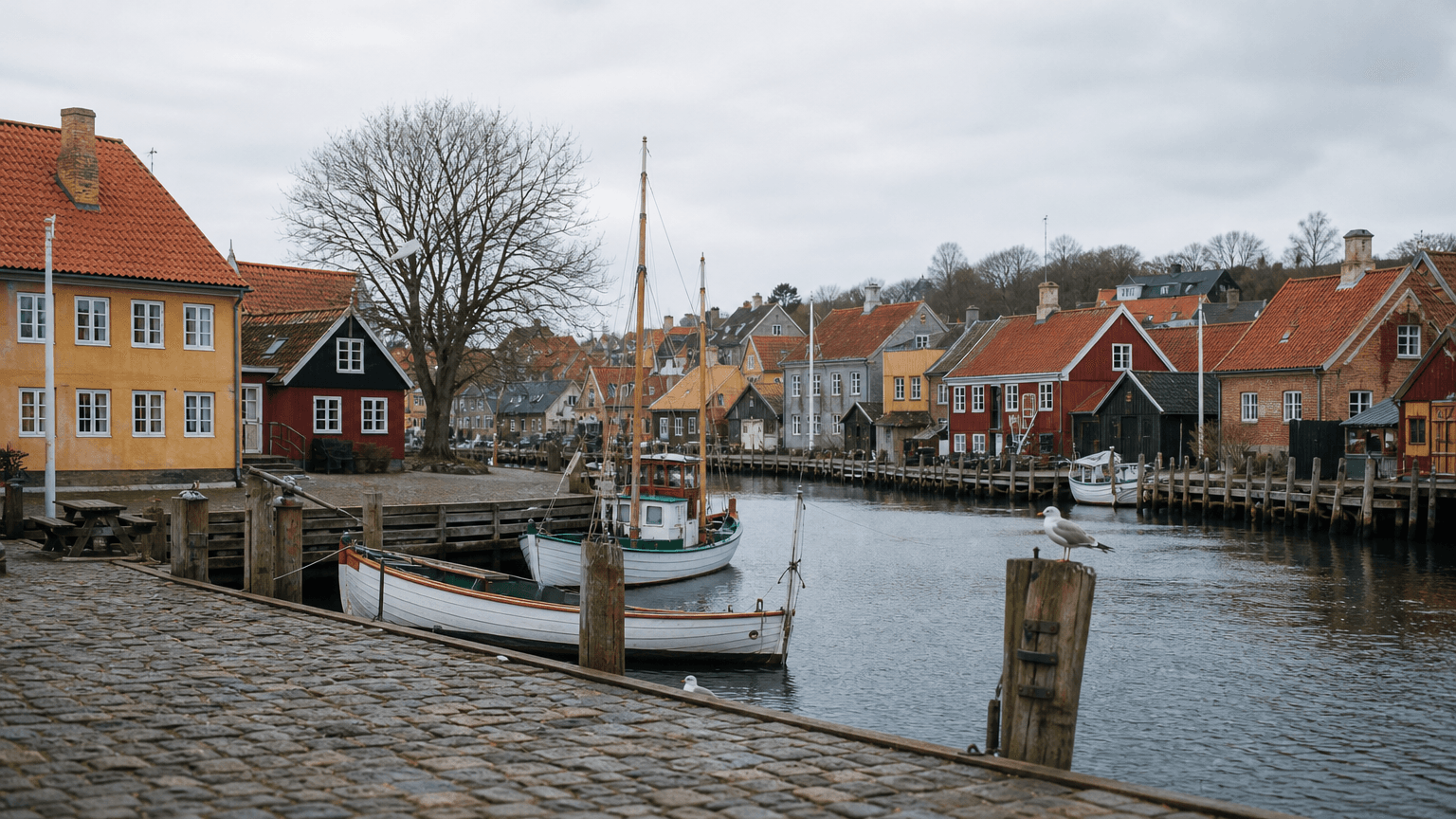
Ebeltoft is a small harbor town on the Djursland peninsula in East Jutland, Denmark, and it suits people who want a calm coastal routine with real services close at hand. It has a preserved old town, a working harbor, a swimming pool and sports center, a combined library and museum, a local doctor's clinic, and a bus line to Aarhus. It also has a strong seasonal rhythm that's worth understanding before you buy or rent.
This guide looks at Ebeltoft as a place to live, not a place to visit. It covers the daily amenities, the housing questions that matter most (especially year-round homes versus summer houses), healthcare access, transport, schooling, internet, and a practical moving checklist. Where hours, schedules, or rules change, we point you to the official source instead of guessing. Check those pages before you act.
What Ebeltoft is like day to day
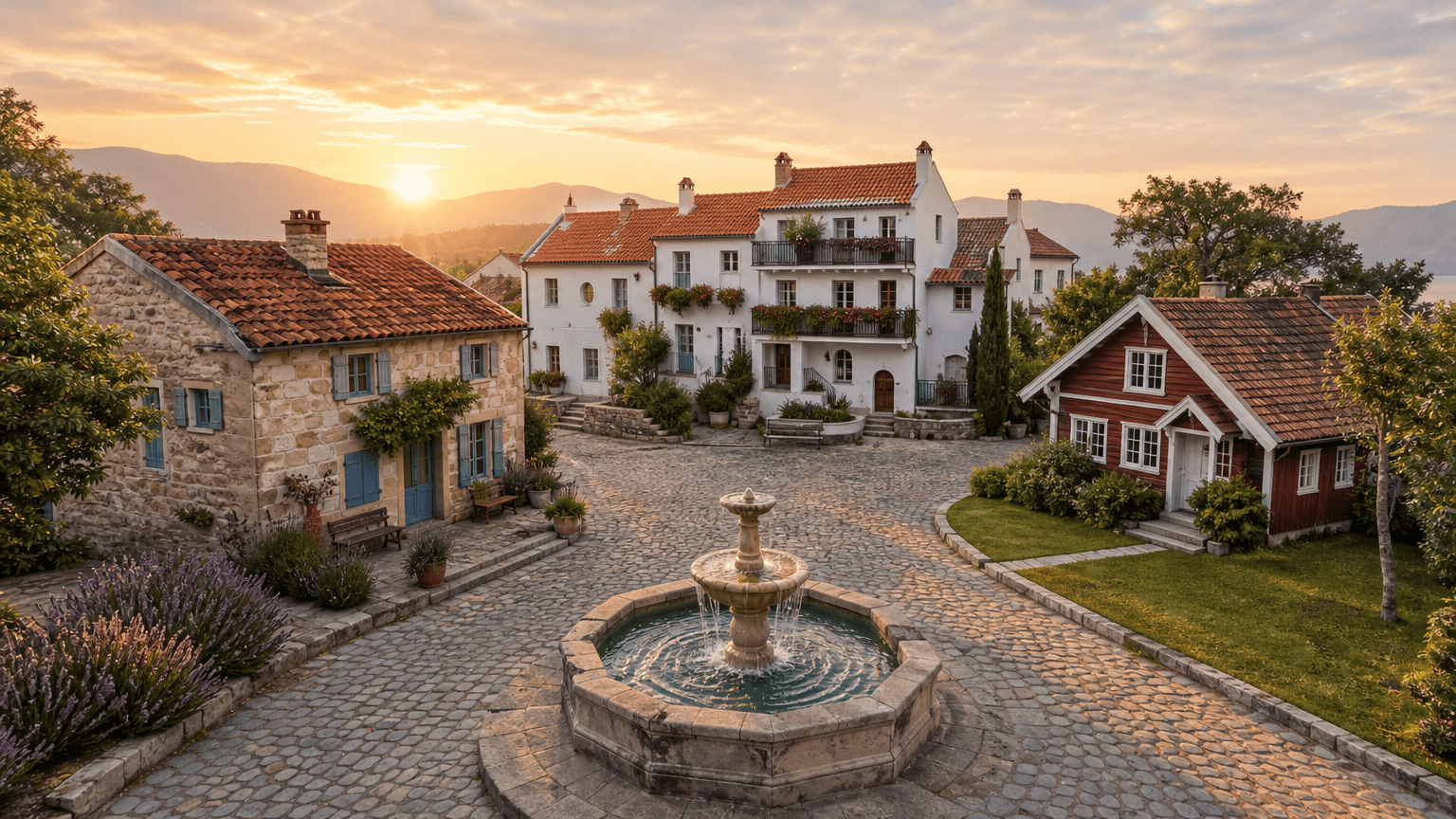
Ebeltoft is an old port town, and the old town is still the center of gravity. Wikipedia's entry on Ebeltoft notes the preserved old-town area and two well-known institutions, the Glasmuseet Ebeltoft (glass museum) and Fregatten Jylland (a historic frigate). For visitors those are attractions. For residents they're mostly part of the backdrop: places you walk past on the way to the harbor, and where you take guests when family comes to stay.
The summer town and the off-season town
The town changes character over the year. In summer, the harbor, beaches, and cobbled streets fill with holidaymakers, and the area is dotted with summer houses. Outside the season, the pace drops considerably. Fewer people are about, some seasonal businesses reduce their hours, and the town runs on its permanent residents and their routines.
Neither version is better. Some retirees love the summer energy; others prefer the quiet months of walking by the water and using the local facilities without a crowd. Spend time in both seasons before committing, ideally in late autumn or late winter, so you've seen the quieter side.
Nature at the doorstep
Ebeltoft borders National Park Mols Bjerge, which the park's official English site describes as covering 180 km² of forests, moors, open grasslands, lakes, coastal areas, and sea. The park's materials also describe walking routes connected to the historic town, including city walks from and around Ebeltoft. For someone who wants daily walks without driving anywhere, that's a meaningful advantage.
Realistically, you'll use the town in layers:
- The old town and harbor for coffee, errands, and short strolls
- The beaches and coastline for longer walks
- Mols Bjerge for hiking days and weekend outings
Housing and cost of living: the questions that matter more than the price
Specific property values change quickly, so this section is a due-diligence framework rather than a price list. For current listings, historical price data, and local context on Ebeltoft-area properties, Homestra's second-home search is a good starting point for comparing what's available and for building a realistic view of the market over time.
Why the seasonal population matters
Ebeltoft's many summer houses shape the local property market. Rental demand can swing between peak season and winter, and the number of homes available for year-round living can differ from what a browse through listings suggests. A charming house near the coast may be classified for recreational use, which leads to the single most important housing distinction in this part of Denmark.
Year-round home vs. summer house
Danish property is categorized by use. A year-round home (helårsbeboelse) is a normal residence you can live in all twelve months. A summer house (sommerhus) sits in a zone designated for recreational use, and rules about full-time residence there are stricter.
Syddjurs Kommune publishes an official page called "Ophold i sommerhus" that explains when someone may stay in a summer house throughout the year and which conditions or exceptions apply. If you're a retiree planning to spend most of the year in Ebeltoft, read it before you fall for a particular house. A property that's wonderful for six weeks a year may not be legally suitable for twelve months.
Questions worth putting to a seller, agent, or the municipality:
- Is the property classified and zoned for year-round residence or recreational use?
- If it's a summer house, what are the conditions for staying outside the season, and do any apply to you?
- What are the running costs, including heating, insurance, and property taxes?
- Is there a history of storm, flood, or coastal erosion issues in this specific location?
- How is the home maintained when you're away for weeks or months?
Buying property as a foreign citizen
Denmark has a permission framework for foreign buyers. The Danish Ministry of Foreign Affairs (um.dk) explains in its page on foreign citizens' acquisition of property that non-resident foreign citizens generally need either permanent residence or sufficient prior residence in Denmark. The details depend on your nationality, residence status, and the type of property, and exceptions exist.
Treat this as something to confirm early, with a Danish lawyer and the relevant authorities, not at the offer stage. The Ministry's page and Borger.dk's English-language resource, Lifeindenmark, are the right official places to start reading.
Getting around: Bus 123 and the Aarhus connection
Ebeltoft is connected to Aarhus by Midttrafik's Bus 123, which runs Aarhus, Rønde, and Ebeltoft. Midttrafik publishes an official PDF timetable for the line with "valid from" dates, so make sure you're reading the current edition. For live departures and arrivals at stop level in both Ebeltoft and Aarhus, Rejseplanen (rejseplanen.dk) is the tool to use.
We haven't quoted a fixed journey time here, because it depends on the departure, the stops served, and traffic. Check the timetable for the specific trip you'd make, particularly if you'll be traveling to a hospital appointment or catching an onward connection.
Planning realistic day trips
Bus 123 makes Aarhus a workable day trip for shopping, culture, specialist appointments, or meeting friends, but it's worth studying evening and weekend frequencies if you'd rely on it. Many residents in small Danish towns keep a car for flexibility and use the bus for city days when parking is a nuisance.
A few practical points:
- Download Rejseplanen and check the Ebeltoft stop's departure board a few times to learn the pattern.
- If you plan to fly in and out, look at the airport options around Aarhus and the wider region, then price the full door-to-door journey, including the last leg to Ebeltoft.
- Ask neighbors or the municipality about parking in the old town and near the harbor during summer, when spaces fill up. Local rules and fees are worth confirming on the ground.
Healthcare, emergencies and insurance
It helps to separate two ideas: how you get access to Danish healthcare, and where you'll go locally.
How access works
Public healthcare in Denmark is tied to registration. Once you're registered in the Danish system and have your CPR number, you receive the yellow health insurance card (sundhedskort), and there's a companion app. Lifeindenmark, run through Borger.dk, explains the card and how it's used to access public healthcare. If you're moving from abroad, check what your registration status entitles you to and when that starts.
Not everyone who owns a home in Denmark is registered as a resident. If you'll spend part of the year elsewhere, ask what your status means for public care, and keep adequate private health and travel insurance in place until it's clear.
Where you'll go in Ebeltoft
A local practice listing shows Ebeltoft Lægehus at Nørreport 4B, 8400 Ebeltoft, phone 86 34 18 88. Confirm whether the clinic is accepting new patients and how the GP selection process works for newcomers. Directory details can go out of date, so call or check the municipality's pages before relying on them.
Emergencies and out-of-hours care
- Life-threatening emergencies: call 112.
- Out-of-hours medical help: Region Midtjylland's Lægevagten can be reached at 70 11 31 31. Calls are answered within defined hours, so check the Region's own page for the current times.
Save both numbers in your phone before you need them, and make a note of the address of your home in Danish format so you can give it clearly.
What insurance still makes sense
Public access covers a lot, but international retirees often keep supplementary protection: travel insurance for time spent outside Denmark, and in some cases private cover for services the public system handles differently, such as certain dental, optical, or medication costs. Which of these you need depends on your residency status and personal health. A conversation with an adviser who knows both your home country's rules and Denmark's is time well spent.
Schools and childcare, even if you're not bringing children
Retirees often don't need schools for themselves, but the question matters more than it seems. Grandchildren may visit for long stays. Some second-home buyers are younger. And the strength of local schools and childcare says something about a community's stability and the likelihood that a town stays lively year-round.
Ebeltoft has a public school, Ebeltoft Skole. Because grade spans and structures can change, confirm the current details with Syddjurs Kommune. The municipality's official "Tilflytter" (newcomer) pages are the entry point for school and healthcare navigation, and they explain how enrollment and placement work for newly arrived families. For school-aged newcomers who don't speak Danish, ask specifically about language support and integration pathways.
Internet, remote admin and part-time work
Most retirees aren't working full-time, but a reliable connection still matters. You'll use it for video calls with family, banking and tax paperwork, streaming, and perhaps some consulting or part-time projects.
Before you commit to a property, check:
- Whether fiber is available at that exact address, and from which providers
- Mobile coverage inside the house (thick old walls and coastal locations can matter)
- Whether a backup option, such as a mobile hotspot, is practical
- Whether the municipality or local utility can confirm planned upgrades
Ask the seller for a recent speed test or provider confirmation. A good connection is also what makes managing a second home from a distance practical, which is why Homestra builds its property search and listing details around giving you the information you need from wherever you are.
Community: where residents actually meet people
Small-town life depends on a few shared spaces. In Ebeltoft, two stand out.
EBIC, the sports and culture center
EBIC (Ebeltoft Idræts- og Kulturcenter) is the town's central sports and culture hub, with a swimming pool and sports halls. VisitDenmark's EBIC listing describes the pool as 25 meters with multiple lanes. EBIC's own "Svømmehallen" page lists current opening times, including public swimming hours, so check there for the schedule rather than assuming. Regular swimming is a popular routine for retirees, and a pool plus sports halls gives you options for classes, club activities, and meeting neighbors.
BMA at Maltfabrikken
BMA (Bibliotek, Museum og Arkiv) at Maltfabrikken, Maltvej 8, 8400 Ebeltoft, brings the Syddjurs Bibliotek, Museum Østjylland, and the local historical archive into one institution. Opening hours are on the Syddjurs Bibliotek page for BMA.
One detail is useful for residents: according to Museum Østjylland's visitor information, Maltfabrikken can be accessed daily from 06:00 to 23:00 using a Danish health card (sundhedskort) for entry during unstaffed hours. That's a real convenience, and another reason to get registered and receive your card.
Language and integration
Many Danes speak good English, but official systems run in Danish. Plan on learning at least the basics. Several steps will help:
- Set up MitID, Denmark's digital ID, and become comfortable with Borger.dk, since much of public life happens there.
- Use the Lifeindenmark site for English-language guidance.
- Start with the municipality's "Tilflytter" page and ask about English-friendly help and language courses.
- Go to library events and club activities in your first months. Regular, low-pressure contact does more for your confidence than any app.
A practical moving checklist
Before you move
- Confirm your residence status and the permission requirements for buying property (um.dk and Lifeindenmark).
- Verify the zoning and use classification of any property, and read the municipality's "Ophold i sommerhus" guidance if a summer house is on your shortlist.
- Gather identity documents and any paperwork required for registration.
- Check what health coverage you'll have, and keep private insurance until public access starts.
- Check fiber and mobile coverage at the address.
Your first two to eight weeks
- Complete registration, get your CPR number, and receive your yellow health card.
- Choose a GP, contacting Ebeltoft Lægehus (86 34 18 88) or the municipality to ask about availability.
- Set up MitID and Borger.dk.
- Save 112 and Lægevagten (70 11 31 31) in your phone.
Settling in
- Test Rejseplanen against the Midttrafik Bus 123 timetable and take a trial trip to Aarhus.
- Visit EBIC and confirm swim hall times, and find your way around Maltfabrikken.
- Locate the nearest pharmacy and supermarkets, and work out your regular routes.
- If children are part of your plans, contact Syddjurs Kommune about enrollment and placement.
Questions to ask the municipality and health services
- What language support is available for non-Danish speakers in official processes?
- How does school placement work for newcomers, and what integration support exists?
- Which GPs are accepting new patients, and how do I switch?
- What's the best out-of-hours route for non-emergency care?
- Which rules apply to the specific property I'm considering, including use restrictions and year-round residence?
Is Ebeltoft right for you?
Ebeltoft suits people who value a walkable harbor town, easy access to protected nature, and well-run local facilities over big-city range. The trade-offs are real: Danish bureaucracy takes patience, summer houses may not be eligible for full-time residence, the town changes noticeably between seasons, and Aarhus is a bus ride away, not around the corner.
If the checklist above feels manageable, a good next step is to spend a stretch of time in town outside the summer months, visit EBIC and Maltfabrikken as a resident would, and test the bus. Then browse Ebeltoft-area properties on Homestra, where detailed listings and local insights make it easier to compare homes with the zoning, services, and lifestyle questions in this guide in mind.
Share