Houses For Sale In Europe (page 7)

Houses for sale in europe - homestra offers the largest amount of european real estate with over 200,000+ properties, find any type of property within your budget from villas to country homes. buy or rent your perfect home in europe. (page 7)

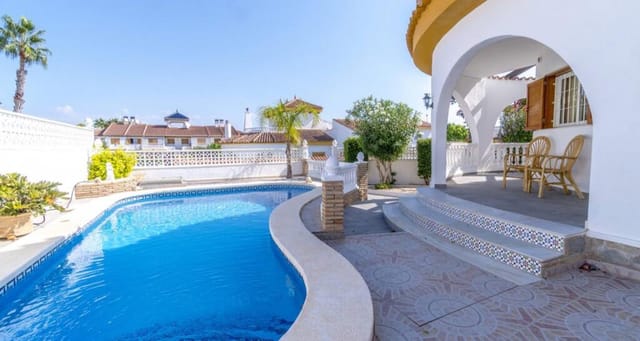
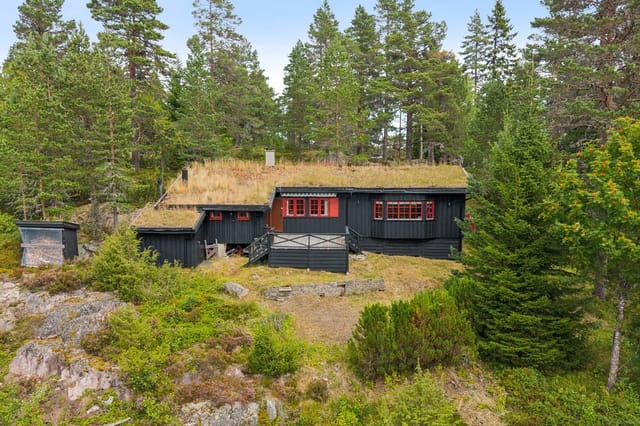
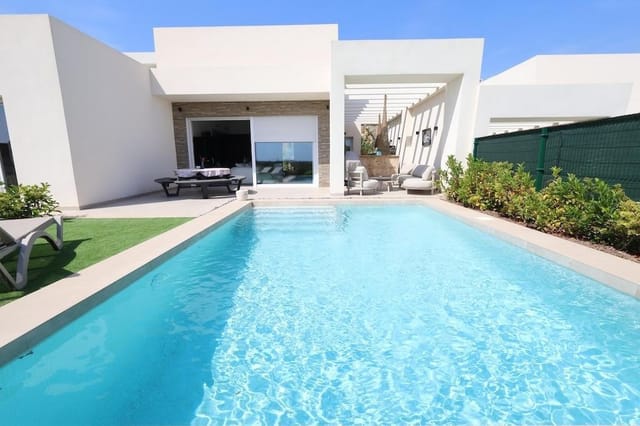
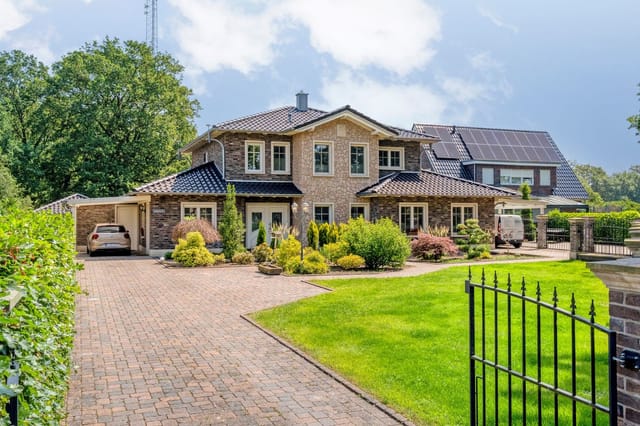
On a quiet Saturday morning in July, you pull back the curtains in the upstairs bedroom and the garden is already catching the sun. The pool is still. The neighborhood is unhurried. You take your coffee downstairs, slide open the door to the terrace, and decide that today, there is nowhere else you need to be. That is the rhythm Seggenstraße 21 sets from the moment you arrive. This 2015-built detached villa sits on the western edge of Meppen, a compact and genuinely livable Lower Saxony town straddling the Ems River in the northwest of Germany. It is not a place that gets written up in travel magazines, and that is part of the appeal. No tourist coaches on the streets, no inflated restaurant prices, no performance. What you get instead is a working, breathing German town with serious infrastructure, friendly locals who actually stop and talk, and a landscape of heathland, river meadows, and cycling paths that most of Europe would envy. The villa itself sits on a plot of 1,065 square metres, with 209 square metres of living space across three levels. Four bedrooms, two full bathrooms plus a ground-floor guest toilet, and a floor plan that genuinely earns the word flexible — not as a euphemism for awkward, but because it has been designed with real optionality in mind. One first-floor room comes fitted with a second kitchen and built-in appliances, making it a self-contained suite. Run it as a B&B room, house extended family in proper comfort, or use it as a long-term rental unit while you occupy the rest. The layout makes all of this straightforward. The swimming pool is the showpiece, and rightfully so. Private pools are uncommon in residential Meppen, which means this one carries genuine rarity value. Set in the lan ... click here to read more

Front view of Seggenstraße 21

Picture this: you wake up on a Tuesday morning, slide open the terrace door, and the smell of salt air hits you before you've even had your coffee. The Mediterranean is right there — not a postcard version of it, but the real thing, close enough that you can hear faint waves if the night is quiet enough. This is everyday life in Calahonda, one of the most genuinely liveable pockets of Mijas Costa, and this three-bedroom villa with its own pool and an active tourist licence is your entry point into it. Calahonda doesn't get the same breathless press as Marbella or Puerto Banús, and that's honestly part of its appeal. It has the infrastructure without the circus. The Cala beach is a short walk from the front door — not a vague "short walk" either, but the kind where you're there in five minutes with a beach bag over your shoulder. Along the way you pass proper neighbourhood spots: El Oceano and a handful of smaller family-run chiringuitos where grilled dorada and cold Alhambra beer are still the main event, not an afterthought on a menu full of truffle fries. The villa itself sits in a quiet residential zone that benefits from 24-hour private security — something that matters quite a lot when you're planning to spend portions of the year back home in London, Stockholm, or Amsterdam. You're not buying into a fortress, just a calm street where people actually live. The garage is private, the pool is private, and the rooftop solarium is yours alone. That rooftop is worth pausing on. On clear days — and there are over 300 of them annually on the Costa del Sol — you get partial sea views from up there that shift in colour from pale morning silver to that deep Andalusian gold you see in the late afternoon. It's where you'll en ... click here to read more

Picture 1

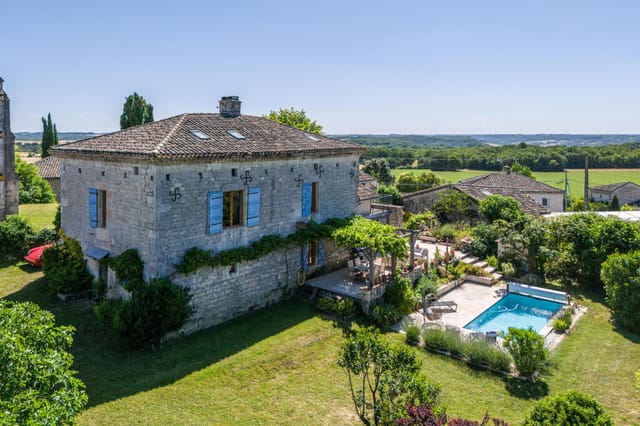
Sometime around mid-morning, when the market stalls on the Place de la Truffière are still busy and the smell of fresh bread from the boulangerie on the main street drifts up through the valley, you step out of those iron gates onto one of Puy-l'Évêque's ancient limestone lanes. Coffee in hand. Nowhere urgent to be. That's the daily rhythm this place offers — and it's hard to put a price on that, though someone has, and it's €699,500. Built in 1769 and standing with the quiet confidence of something that has outlasted a lot of history, this maison bourgeoise sits right in the beating heart of one of the Lot Valley's most photogenic villages. Ten bedrooms. Seven bathrooms. A proper working courtyard. An adjoining mill with original machinery still intact. A pigeon tower. A heated pool. And a walled garden where lunch has a habit of becoming dinner without anyone particularly minding. Let's start with the main house, because it earns the attention. The stone staircase alone — worn smooth by centuries of use — sets the tone. Vaulted ceilings arch overhead in the ground-floor rooms, original fireplaces anchor the principal spaces, and the panelled doors and beamed ceilings give the whole place a warmth that no amount of interior design budget can manufacture from scratch. The kitchen manages the old-and-new balance well: modern fitted units and integrated appliances sit alongside an 18th-century built-in cupboard and a log-burning range cooker. It's practical and full of character in equal measure. The kind of kitchen where someone actually cooks, rather than just poses in. The two separate annexes are where things get genuinely interesting for buyers thinking about rental income or multigenerational living. The pigeon to ... click here to read more

Picture 1

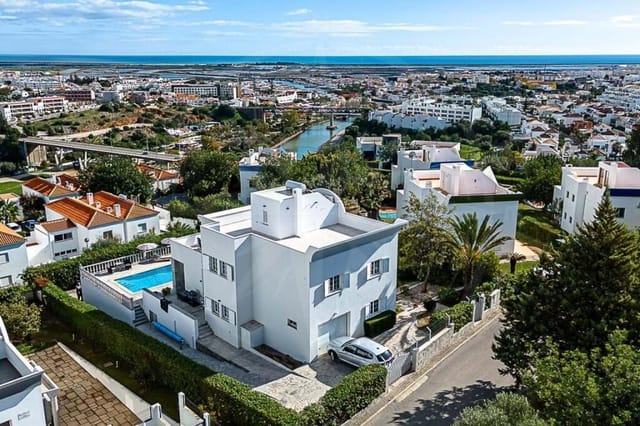
The first thing you notice on a summer morning here is the silence. Not the dead kind — the alive kind. Swallows cutting arcs above the terrace, a faint breeze moving through the cork oaks, the pool's surface catching early light and throwing it back in slow gold ribbons. This is Santo Estêvão, a world away from the crowded beach resorts most people think of when they hear "Algarve," and this five-bedroom estate sitting on over 37,000 square metres of private countryside is exactly the kind of property that makes people rethink everything they thought they knew about where to put down roots in southern Portugal. Tavira is twelve minutes by car. That matters more than it might sound. Tavira regularly tops lists of Portugal's most liveable small cities, and unlike the resort towns further west along the EN125, it keeps its own pace. The Tuesday market on the riverbank spills into the surrounding streets — vendors selling blood oranges, smoked sausages from Alentejo, dried figs still on the branch. The Roman bridge over the Rio Gilão connects the old Moorish quarter to the newer town, and on weekend evenings, locals and expats alike fill the outdoor tables at Quatro Águas, eating whole grilled sea bream so fresh it still tastes of the Atlantic. Living near Tavira means being close to real Portuguese life, not a simulation of it. The estate itself sits behind full perimeter fencing on a plot large enough to feel genuinely rural — distant vineyard rows visible from the upper terrace, the scent of wild rosemary and cistus drifting in from the scrubland edges in late spring. Three sets of French doors open the main living space entirely to the outside, so that on the nine months of the year when the Eastern Algarve enjoys rel ... click here to read more

Picture 1

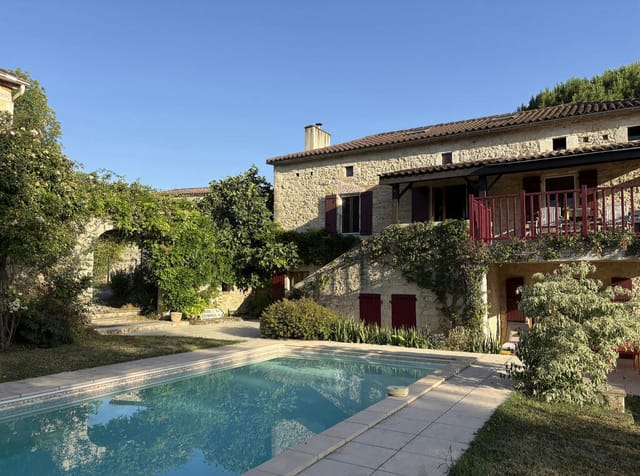
On a warm evening in the Lot Valley, the kind where the light turns gold and lingers far longer than it has any right to, you sit on a travertine terrace beside a saltwater pool, glass of Cahors Malbec in hand, and the only sound is the splash of water against stone and the faint rustle of your own vines in the breeze. This isn't a fantasy. This is Tuesday at this 18th-century wine estate in Vire-sur-Lot — a village tucked into the rolling valleys above the Lot River, where the limestone cliffs glow amber at dusk and the pace of life has been gloriously unhurried for centuries. This is not a weekend cottage. It is a working estate — a genuine, fully operational hospitality business sitting on 1.5 hectares of private grounds — that happens to also be one of the most compelling pieces of historic architecture in the Cahors wine country. The main building alone spans 384 square metres of residential and gîte space, with a further 373 square metres dedicated to a restaurant and coffee shop that has built a real reputation in the region. Add a 123-square-metre shell ready for renovation, multiple outbuildings, and a courtyard with a central fountain that feels ripped from a Provençal novel, and the scale of what's on offer starts to sink in. The restaurant is the soul of the place. Industrial-grade kitchen, working stone fireplace that draws a crowd on winter evenings, a wine cellar that earns its keep, and a vast partly-vaulted lower floor that adds a theatrical quality to the dining experience. Double glazing throughout, heat pump heating and air conditioning — the bones are solid, the systems are modern, and the business runs. That matters. Previous owners didn't just restore this estate lovingly and expensively; they ma ... click here to read more

Picture 1

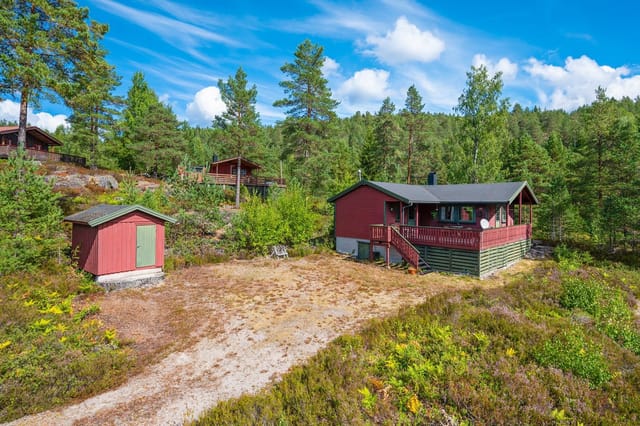
Step outside at seven in the morning, coffee in hand, and the fjord is already doing something extraordinary. The light hits the water between Liatinden and Hestmannen at an angle that photographers drive hours to catch — and from the wraparound terrace at Brattlandsbakken 36, you're just standing there in your slippers watching it happen. That's the everyday reality of this two-bedroom chalet in Aldersundet, a quiet coastal community tucked along the Helgeland coast of northern Norway, where the sea is about a hundred meters from your front door and the mountains frame every single window. Built in 2000, the cabin sits on a gently sloping 954-square-meter owned plot surrounded by natural vegetation that keeps things private without feeling hemmed in. It's not a large property — 76 square meters of interior space — but it's been designed with real intelligence. The open-plan kitchen and living area draws in light through generously sized windows, and the vaulted ceiling stops it from ever feeling cramped. When the evening drops in autumn and the temperature follows, the wood-burning stove in the living room becomes the gravitational center of the place. Everyone drifts toward it. Conversations stretch long. That's the kind of cabin this is. The kitchen is functional in the best Scandinavian way: a freestanding gas stove, a charcoal-filter ventilator, profiled wooden cabinet fronts, and a laminated worktop that's seen enough fish dinners to tell stories. No frills, but everything you actually need. The two bedrooms on the main floor both have wooden panel finishes — warm, unpretentious, genuinely cabin-like — and one is set up for bunk beds, which matters if you're bringing the whole family or a group of friends for a s ... click here to read more

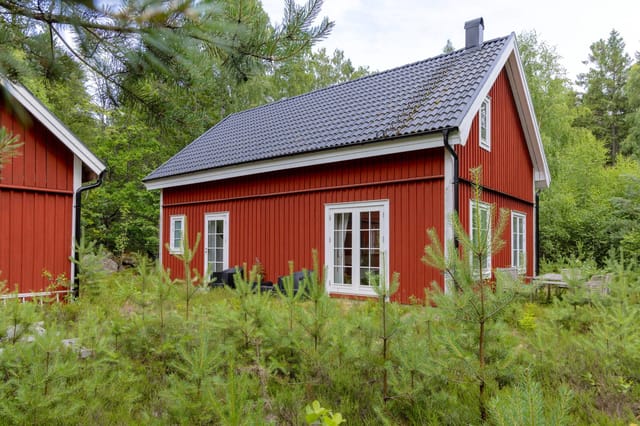
Front view of the cabin at Brattlandsbakken 36

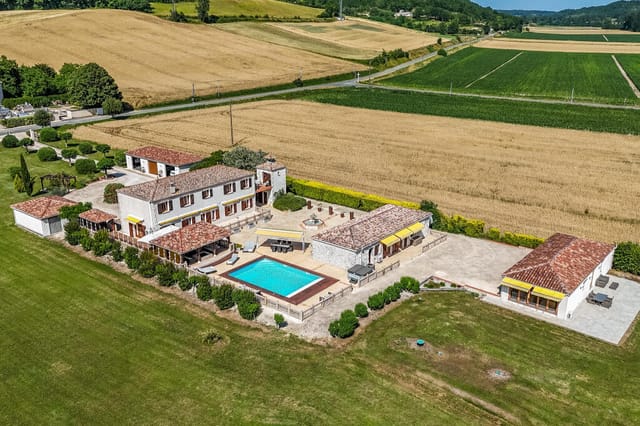
Stand at the kitchen window on a Tuesday morning and count the things that feel surreal: the mist still sitting in the valley below, the Garonne glinting somewhere beyond the treeline, your horses grazing quietly in the electric-fenced paddocks, and the smell of coffee drifting up through those cathedral ceilings while the Smeg range ticks as it cools. This is not a fantasy built on renovation promises. It's already done. The current owners spent years and serious money bringing this place back to what it clearly always wanted to be—and they got it right. The principal manor stands as the heart of a full 8.5-hectare country estate in the Tarn-et-Garonne, just outside one of France's most fiercely loved medieval villages: Auvillar, which the Association Les Plus Beaux Villages de France admits to its list for good reason. The circular covered market hall at the top of the village, the terracotta-roofed houses tumbling toward the Garonne, the Saturday morning producers' market where locals argue affectionately over tomatoes—all of that is minutes away by car, or a decent bike ride on a morning when time doesn't matter. The stone manor itself carries that particular weight that only comes from centuries of occupation. The hallway alone—genuinely one of the finest in the whole département, not an idle boast—sets the tone before you've even turned a corner. Original tiled floors, paneled doors with their original ironwork, exposed stone walls that hold the cool in summer and radiate warmth in winter. The sitting and dining room has a log-burning stove and a beamed ceiling high enough that you stop noticing it, which is somehow the mark of a ceiling done right. The fitted kitchen is modern without being apologetic about it—S ... click here to read more

Picture 1

Stand at the French doors of this stone farmhouse on a July morning and the view hits you before the coffee finishes brewing — a rolling sweep of sunflower fields, all turned east, soaking up the early Poitou-Charentes light. Church bells carry from the village center just ten minutes on foot. The air smells of warm grass and something vaguely of lavender from the neighbor's garden. This is not a postcard. This is a Tuesday. Set in a quiet hamlet in the commune of Champniers in the Vienne department, this fully renovated stone farmhouse sits on 3,208 square meters of land and does something rare in the French countryside property market: it genuinely earns the word versatile. Three distinct buildings on one plot. A main house with soul, a ready-to-let gîte with its own wood-fired hot tub, and an independent stone structure currently serving as an art studio — but with serious potential as a second rental unit. For buyers who want a vacation home in rural France that also pays for itself, this is the kind of find that doesn't come around often. The main house is where you feel the bones of the place. Exposed limestone walls, original oak beams overhead, a pellet stove doing quiet work in the corner on cooler autumn evenings. The ground floor opens into a generous living, dining and kitchen space — the kind of layout that naturally pulls people together. Large double-glazed French doors spill onto a south-facing terrace, and from there the garden opens up into fruit trees and countryside views with no other rooftop in sight. Downstairs there's a bedroom with a freestanding bathtub — the sort of thing that stops house hunters in their tracks — plus a separate WC. Upstairs, a second bedroom connects to its own shower room. ... click here to read more

Picture 1

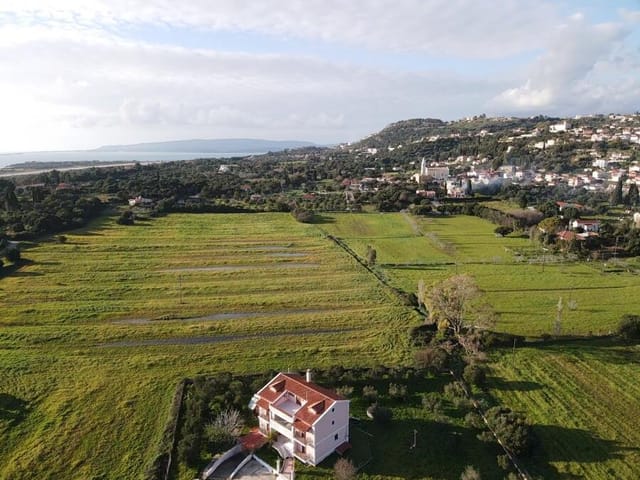
Stand on the balcony at seven in the evening and watch the sun drop behind the headland above Lourdas beach. The Ionian turns amber, then deep pink, then something that doesn't quite have a name. This is the view from the upper terrace of this five-bedroom estate in Vlachata Ikossimias — and it happens every single night. Cephalonia is not your average Greek island. It's bigger, wilder, and far less overrun than Mykonos or Santorini. The roads cut through dense fir forests on the way up to Mount Ainos, past villages where old men still play backgammon outside kafeneions that haven't changed since the 1970s. Down near the coast, the water at Lourdas is the kind of transparent turquoise that makes you stop and stare, even if you've been coming for years. This particular property sits just above that beach — close enough to hear the faint sound of the sea on still summer mornings, far enough uphill that you get the view without the tourist noise. The main residence covers 150 square metres across a single detached house, fully renovated and ready to move into without lifting a screwdriver. Walk through the front door and you're immediately in an open-plan living space anchored by a proper stone fireplace — not decorative, genuinely useful during the crisp Kefalonian winters when temperatures dip and you want nothing more than to light a fire and open a bottle of local Robola wine. The kitchen is separate, which anyone who's tried to cook a real meal in an open-plan space will appreciate. Three bedrooms sit across the main floor, and the whole layout has the ease of a home that was designed for family life rather than a holiday brochure photoshoot. Two independent ground-floor apartments — each 35 square metres, each newl ... click here to read more

Picture 1

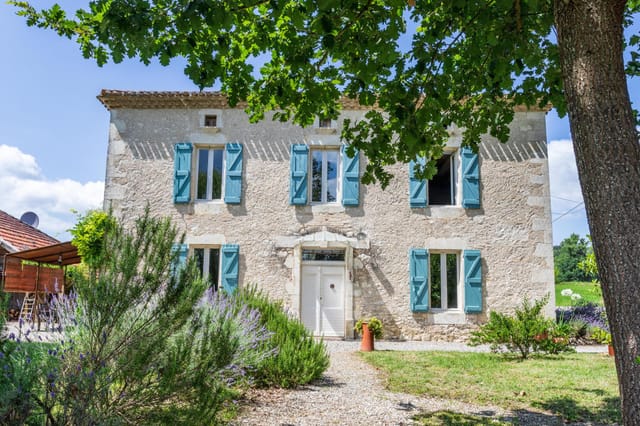
On a still Tuesday morning in the Quercy Blanc, the kind where the mist sits low over the valleys and slowly burns off by nine, you can stand on the wisteria-draped terrace of this 1880s stone farmhouse and watch Lauzerte materialize above you on its hilltop like something from a medieval illustration. The bells from the village church drift down. A rooster somewhere across the lane. Then silence, proper silence, the kind cities charge a premium to simulate. This is what 515,000 euros buys you here: not just 230 square metres of meticulously renovated stone and timber, but a completely different pace of life, tucked into one of France's most quietly celebrated corners. The property started life as a duck farm—canard, naturally, this being Tarn-et-Garonne—and the bones of that agricultural past still give the place its character. Stone walls half a metre thick keep the interior cool through the height of a Quercy summer without any help from the air conditioning. Original ceiling beams, darkened by a century and a half of cooking fires, run the length of the main living room, where a substantial fireplace fitted with a wood-burning stove becomes the social centre of the house from October through March. The fitted kitchen is properly equipped with integrated appliances, but the tiled floors and exposed stone walls make sure it doesn't feel clinical. This is a house where you actually want to cook, and given that Lauzerte sits at the heart of foie gras, cassoulet, and Cahors black wine country, that instinct will be well rewarded. The layout across three bedrooms and three bathrooms gives visiting family or friends their own space and dignity. The master suite has an en-suite bathroom and a dressing room—not an aftertho ... click here to read more

Picture 1

Step outside on a Tuesday morning in Svoronata and you'll hear roosters before car engines. Walk 670 meters downhill through olive groves and you're standing on the rust-red sand of Ai Helis beach, watching the Ionian Sea go through its first color change of the day — deep violet shifting to that impossible electric blue that Cephalonia somehow pulls off by 9am. This is the kind of place people mean when they say they want to "escape," but then actually stay. Permanently. This six-bedroom house on a 3,826 square meter plot in the Livathos region of Cephalonia is one of those rare finds that works on multiple levels at once — literally and figuratively. The upper floor functions as a generous private residence: three bedrooms, a full living room, and a kitchen, all oriented toward the sea with unobstructed views that stretch across the Ionian toward the Peloponnese on clear days. Sit at the kitchen table with a Greek coffee and watch the ferries move in and out of the distance. No effort required. The view simply arrives. Below that, on the ground floor, are three independent apartments — each 38 square meters — fully renovated in 2020 and ready to rent from day one. These aren't afterthoughts or cramped add-ons. They're proper, self-contained units that have already attracted seasonal guests in the years since their renovation. The math here is simple and compelling: three apartments in a high-demand area within walking distance of a beach, minutes from the airport, means your investment works while you sleep. Or while you're back home between visits. Greece's short-term rental market, particularly on the Ionian Islands, runs hot from May through October, with Cephalonia consistently pulling international visitors draw ... click here to read more

Picture 1

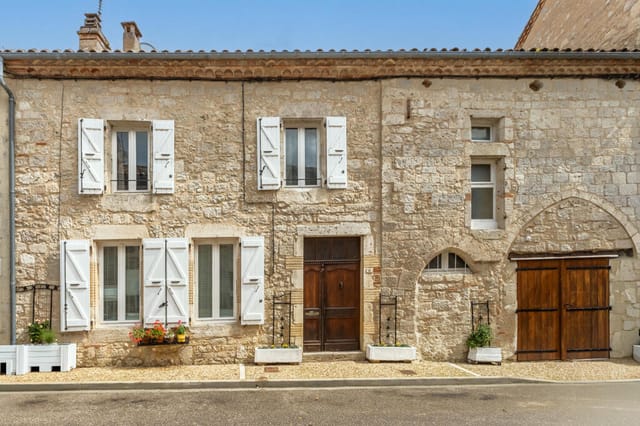
On a Sunday morning in Castelsagrat, you wake to the smell of bread from the boulangerie two doors down. Not the supermarket kind — the kind where the baker has been up since four, and the baguettes are still warm when you tuck them under your arm on the way back. That's not a lifestyle you manufacture. That's just Tuesday here. This 160-square-metre stone house, built around 1700 and sitting on a quiet alley in the heart of one of Tarn-et-Garonne's most genuinely loveable villages, has been renovated by its current owners with the kind of obsessive care that you either recognise immediately or hear about later when someone tells you what it cost. Everything works. Everything fits. And yet none of it feels like a renovation show — it still feels like a house that's been lived in for three centuries, because it has. Step through the oak front door and the exposed stone does the talking. Thick walls, cool in summer, slow to lose heat in autumn. The open-plan kitchen, dining and living space at the heart of the house is where the day happens — a well-equipped contemporary kitchen with integrated appliances opens directly through glazed doors onto a private courtyard. Out there: a covered terrace, a built-in barbecue, and the particular pleasure of eating outside in the Gascon sun from June through September without ever needing to explain yourself to anyone. The wood-burning stove in the main living area earns its keep from October onward. The separate lounge, with its traditional stone fireplace and original tiled floor, is for reading, for wine, for the kind of quiet that's harder to find than people think. A grand entrance hall with walnut stairs leads up to three bedrooms, each with built-in wardrobes, and the landin ... click here to read more

Picture 1

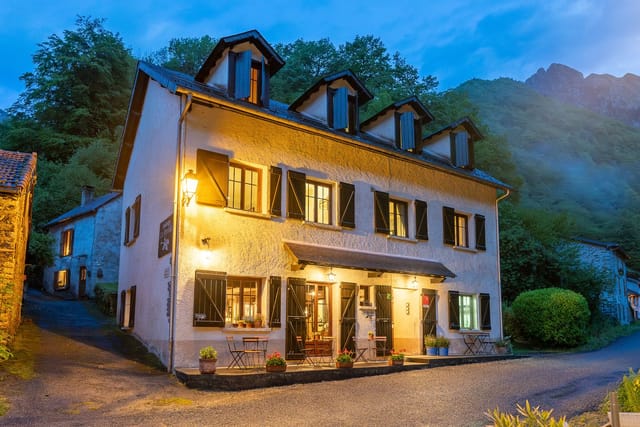
Picture this: a Tuesday morning in early September, the valley still wrapped in cool mountain air, and you're pulling espresso shots behind the bar of your own café while a table of hikers pore over trail maps, their boots still wet from the Salau gorge path. Outside on the terrace, the Garbet valley drops away in every direction. This isn't a fantasy you'd stumble across in a magazine. It's the daily reality of owning Auberge les Myrtilles in Couflens, a working mountain village at the end of the road in the Ariège Pyrenees, where the Spanish border is a ridge-walk away and the silence between guests is filled by the sound of the river. This isn't your standard vacation home listing. What's on offer here is a fully operational mountain auberge with eight en-suite guest rooms, a separate café with a licensed bar and terrace, a professional kitchen, a detached three-storey private house, and the entire commercial foundation — fonds de commerce, goodwill, active guest database, functioning website, and a Licence 4 for alcohol service — for €469,000. Three buildings. One extraordinary opportunity to plant yourself in one of the most genuinely wild corners of France. Couflens sits at the head of the Vallée du Garbet, in the Ariège department of Occitanie, roughly 15 kilometres from Seix and about an hour's drive south from Saint-Girons, which has its own small airport and direct connections by road to Toulouse-Blagnac, roughly two hours away. The village of Salau, just up the road, was once home to the last tungsten mine in France and still carries that edge-of-the-world character that draws people looking to get genuinely away. This is not the polished, ski-resort Pyrenees of Andorra or Font Romeu. It's rawer than that. B ... click here to read more

Main view of Salau d'en Haut property

Step outside on a February morning and you're already on the trail. Skis on, the prepared cross-country tracks of Eggedalsfjella stretch ahead of you through birch and pine, the only sound the rhythmic glide of your own movement and the muffled silence that only deep Norwegian snow can produce. Back inside thirty minutes later, the fireplace insert is crackling, coffee is on the solid wood countertop, and the enclosed veranda outside the terrace door holds just enough frost to make staying in feel like the right decision. This is Fagerlitjenn 34, a three-bedroom mountain chalet in the Fagerlifeltet cabin area of Eggedal, sitting at roughly 780 metres above sea level in the Numedal valley region of Viken county. The cabin is compact — 59 square metres of total usable space — but the layout wastes nothing. Painted wood panelling runs throughout, exposed ceiling beams overhead, and the whole interior reads as genuinely Norwegian rather than a catalogue approximation of it. The living room anchors the plan around the fireplace, and it earns that central role: on cold evenings in October or March, this is where everyone ends up. A terrace door opens directly to the enclosed veranda, finished with slate tiles and fitted with custom bench seating around the perimeter. Rain or shine, it's a usable outdoor room. The kitchen sits open to the dining and living area, which makes the space feel larger than the footprint suggests. Profiled cabinetry, a wood countertop, stainless steel extractor. Nothing flashy, but everything functional and in good condition. The dining table gets the window seat, looking out toward the natural plot — 850 square metres of grass, heather, and the kind of undisturbed forest edge that suburban Norway c ... click here to read more

Welcome to Fagerlitjenn 34. Photo: Viken Fototjenester v/ Eirik Andersen

Step outside on a February morning and the silence hits you first. Not the absence of sound, but a real, physical quiet — broken only by the creak of fresh snow underfoot and the distant hiss of a groomed ski trail cutting through the white. From the wraparound terrace at Teigeveien 207, the Numedal mountains roll out in every direction, and the only decision you need to make before noon is whether to clip into your skis or pour another coffee. This is Tempelseter. Sitting at roughly 970 metres above sea level in Eggedal, a valley in Numedal that most international buyers haven't yet discovered, this is the kind of Norwegian mountain address that Scandinavian families fight over between generations. The terrain is open and high — none of the claustrophobic treeline that swallows up lower cabins — which means the light here is extraordinary. In summer, the sun tracks a long arc across the sky and falls directly on the south-facing terrace well into the evening. In winter, the snowpack is deep, reliable, and right on your doorstep. The nearest groomed cross-country trail is about 100 metres from the front door. That's not a selling point — that's a way of life. The chalet itself is 120 square metres of considered mountain architecture, built in the Norwegian hytte tradition with visible timber framing, wood-panelled walls, and ceilings that feel warm rather than heavy. This isn't a reconstructed barn or a developer's flat-pack. The craftsmanship shows in the details: solid wood countertops in the kitchen, Jøtul wood-burning stove anchoring the living room, aspen and heat-treated aspen in the sauna. Materials chosen for longevity, for texture, for the way they age well. The open-plan kitchen and living area is where the ... click here to read more

Privatmegleren via Svein Liavaag presents Teigeveien 207! Photo by Kasper Van Wallinga.

On a still morning in Sistels, the only sounds you'll hear are birdsong and the faint creak of an old wooden shutter catching the breeze. Step out through the French doors and the Tarn-et-Garonne countryside stretches in every direction — rolling fields, fruit trees heavy with plums, and a sky so wide and unhurried it makes you wonder why you ever thought city life was enough. This is the kind of place that recalibrates you. This 18th-century stone and brick barn conversion sits at the edge of a genuinely quiet village in Midi-Pyrénées — not the manicured quiet of a tourist brochure, but the real kind, where neighbours wave and life moves at a pace that feels almost radical by modern standards. Set within two hectares of established grounds, the property has been through a serious, full-scale renovation by its current owners. New roof, rewired, replumbed — the bones are centuries old, but the infrastructure is thoroughly contemporary. It's move-in ready, and it shows. The main house holds four bedrooms. Downstairs, the open-plan living space is the kind of room that makes guests go quiet when they walk in. Full-height ceilings with exposed timber beams, original tiled floors running through the entire ground floor, and a log-burning stove with a back boiler heating system that makes even January evenings feel like something worth staying in for. The fitted kitchen comes with integral appliances and opens directly onto a private courtyard with a covered terrace — shaded at noon, golden at six in the evening, and practically made for long, unhurried dinners. There's also a 53-square-metre room on the ground floor that the current owners use for storage, but frankly it deserves more imagination. Electrics, water, and dou ... click here to read more

Picture 1

Picture this: it's seven in the morning, there's fresh snow on the ground outside, and the wood-burning stove in the living room is already throwing heat. You're standing at the kitchen counter with a cup of coffee, watching the light change over Sirdal's ridgeline through the big living room windows. No traffic noise. Just wind, maybe a distant bird, and the particular silence that only mountain air delivers. This is Haugen 114 in Tjørhom — a solid, well-loved chalet that has been thoughtfully renovated and genuinely earns the title of four-season retreat. Tjørhom sits in the Sirdal valley in Vest-Agder, southwestern Norway — a region that draws outdoor enthusiasts year-round without the overcrowding that plagues more famous Norwegian destinations. The village is small and unpretentious, and that's exactly the point. People come here to actually be outside, not to be seen being outside. The chalet itself covers 77 square metres across a practical, well-considered floor plan. Between 2006 and 2007, the property went through a full overhaul — not a cosmetic refresh, but the kind of deep renovation that matters for a mountain property. The roof was replaced, exterior walls and façade were reclad, all windows were swapped out for modern units, insulation was upgraded, supporting beams were reinforced, the electrical system was entirely renewed, and every plumbing and pipe connection was replaced. That's the stuff that gives a buyer real confidence. What you're getting is a cabin that looks like a cabin but performs like a property that's been properly rebuilt from the bones out. Step inside and the entrance hall does its job well — generous space for ski boots, wet jackets, poles, hiking packs, all the chaotic gear that ... click here to read more

Welcome to Haugen 114 | The cabin is situated on a sunny elevation, close to bathing pools and the Sesilåmi ski trail.

Saturday morning. The Vinkeveense Plassen is already alive with the sound of sailboats clearing the marina, and from the serre at Molenkade 2-C you can watch it all unfold through floor-to-ceiling glass while your Quooker tap fills the kettle in under three seconds. That glass-wrapped conservatory catches the early light in a way that makes you want to linger — and lingering, it turns out, is what this place is built for. Vinkeveen doesn't shout about itself. It's one of those Dutch water villages that locals fiercely protect from the tourist trail, tucked between the Vinkeveense Plassen lakes and the quieter reaches of the Green Heart of Holland. The Plassen themselves are a series of former peat lakes, now a beloved recreational zone where Amsterdam families have kept weekend boats moored since the 1950s. On summer weekends the water turns into a patchwork of white sails and stand-up paddleboards; on a weekday morning in October it's practically yours alone — mist sitting low over the reeds, coots picking their way through the shallows, not a sound from the city that's only 25 minutes up the A2. The bungalow on Molenkade sits on a plot of roughly 1,069 square metres, which in this part of the Netherlands is genuinely rare. Single-level living, a serre that doubles as a year-round garden room, three bedrooms, a garage, and a rear garden that runs straight down to the water. It's classified as a recreational property — which matters practically and we'll come back to that — but in terms of day-to-day comfort, it functions like a proper home. A very good one. The serre is the architectural heart of the place. Large sliding doors open onto the terrace so that in May, when the garden is doing its thing with tulips and th ... click here to read more

Front view of Molenkade 2-C

Pour yourself a glass of Buzet — the local red that the vignerons just down the valley have been making for centuries — and picture standing on a wisteria-draped terrace as the Lot River catches the last of the evening light below you. That's the reality of a Tuesday here. Not a special occasion. Just a Tuesday. This is a genuine 13th-century château on the banks of the Lot River in Penne-d'Agenais, one of the most quietly captivating bastide villages in all of southwest France. The kind of place where the medieval ramparts still define the skyline and the Saturday market on the Place Gambetta smells of lavender, duck confit, and ripe Chasselas grapes. The château sits in a commanding riverside position on 16 hectares of parkland — lawns rolling down to the water's edge, specimen trees that predate the French Revolution, and a private mooring that means dinner in Villeneuve-sur-Lot is a 20-minute boat trip rather than a parking problem. Nine bedrooms. Seven bathrooms. 985 square metres of living space that has already been done right. That last part matters. A lot. The story of many French châteaux is a story of promise and decay — romantic ruin slowly bankrupting its well-meaning owners. This one's different. The hard, expensive, unglamorous work is finished. A Viessmann geothermal heat pump buried underground handles the heating efficiently. Every window is double-glazed. Wood-burning stoves anchor the grand reception rooms for the cooler months. The roof is sound, the stone is solid, and the next owner arrives with a glass of Armagnac in hand rather than a contractor's invoice. Inside, the château delivers everything the architecture promises. Stone spiral staircases wind between floors. Ancient terracotta tiles — ... click here to read more

Picture 1

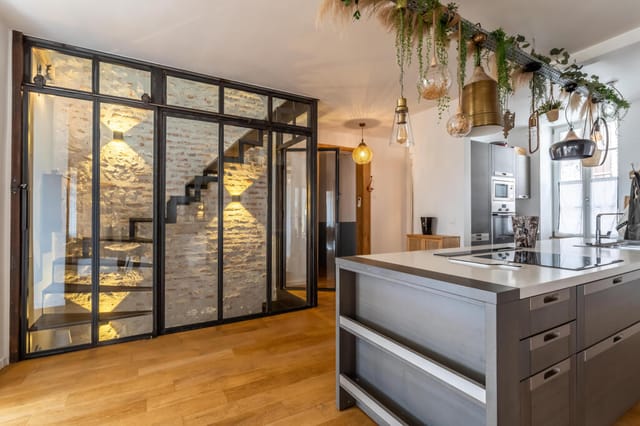
Pull up a chair on the covered terrace as the last of the afternoon light turns the Lot valley amber, a glass of Buzet rouge in hand, the smell of woodsmoke drifting up from the kitchen below. That's Tuesday in Penne-d'Agenais. Not a special occasion — just an ordinary evening in an extraordinary place. This 15th-century stone townhouse sits right in the beating heart of one of the Lot-et-Garonne's most captivating medieval hilltop villages, and it has been renovated with the kind of care and intelligence that makes you forget all the cautionary tales you've heard about old French houses. Let's start with the bones. The walls are thick golden stone, the beams are original and massive, and the architectural soul of the place has been left entirely intact. What's changed is everything else — in the best possible way. Whoever tackled this renovation understood that a house like this doesn't need to be rescued from itself. It just needs the right conversation partner. The result is interiors that feel sharp and considered: a sophisticated kitchen and dining room anchored by a wood-burning stove, an industrial-style steel staircase that threads the floors together with an almost gallery-like confidence, and a living room that manages to feel both historic and genuinely stylish. Four bedrooms upstairs, including a master suite with a walk-in wardrobe — the kind of detail that tells you the renovation was done by people who actually intended to live here, not just flip. Downstairs is where things get genuinely interesting. A stone-lined games and bar room occupies the lower level — vaulted, atmospheric, and the sort of space that earns its name the moment you walk in. Aperitivo hour here is not optional. Then step outside and ... click here to read more

Picture 1

Step out onto the rooftop solarium at nine in the morning, coffee in hand, and the Costa del Sol stretches out before you — terracotta rooftops, umbrella pines, and a silver thread of Mediterranean on the horizon. This is what Tuesday feels like in Estepona. Not a holiday snapshot. An actual life. This three-bedroom, three-bathroom townhouse on the western edge of Málaga province has been renovated from the inside out, and it shows in the kind of detail that photographs don't fully capture — the weight of the doors, the cool solidity of the stone underfoot, the way afternoon light cuts through the terrace at exactly the right angle for a late lunch. At 151 square metres spread across multiple levels, the home has genuine room to breathe, and every floor has been thought through with daily living in mind, not just aesthetics. The main level keeps things social. A wide living room opens directly onto a private terrace — big enough for a proper dinner table, shaded enough that you'll actually use it in July. It's the kind of space where people drift outside naturally, where conversations stretch into the evening without anyone planning it. There's also a bedroom on this floor with its own en-suite, which works brilliantly if you have guests who prefer not to navigate stairs, or if you want the flexibility of a home office that can convert back to a bedroom for high summer. Head up the external staircase and you hit the rooftop solarium — a full sun terrace with space for loungers, a small outdoor dining setup, and nothing between you and the sky. On clear days, which in Estepona means roughly 320 of them per year, you can see across the bay toward Gibraltar and, on exceptionally clear mornings, the faint outline of Moroc ... click here to read more

Picture 1

Stand on the upper terrace at dusk and you'll understand immediately why people come to Tavira and never quite manage to leave. The Atlantic sits on the horizon, shifting from silver to deep copper as the sun drops behind the town's rooftops. Below, the white bell towers of a handful of Tavira's famous 37 churches catch the last light. The air carries something faintly saline, faintly floral. That view is yours every single evening from this four-bedroom villa in Quinta do Perogil, one of the most coveted residential pockets in the eastern Algarve. Quinta do Perogil sits above the town on a quiet, tree-lined road where the neighbors tend their gardens and mornings are genuinely silent apart from birdsong. The address puts you roughly ten minutes on foot from the cobblestoned Praça da República and the riverfront Mercado da Ribeira, where local fishermen sell their catch before most people have finished their first coffee. That balance — a perch above the town's commotion with everything within easy reach — is exactly what makes properties here so hard to come by. The villa itself sits on a 929 m² landscaped plot, and the outdoor space is where you'll spend most of your time from April through October. The heated swimming pool is generous, wrapped on three sides by a wide sun terrace in pale stone that stays warm underfoot well into the evening. There's a dedicated entertaining terrace for al fresco dinners — the kind where guests linger long past midnight because nobody wants to go inside. A private garage and additional on-plot parking mean arriving with a full carload of family or friends is never a logistics puzzle. Inside, the villa runs to 246 m² of living space across the main floors, finished to a high standard ... click here to read more

Picture 1

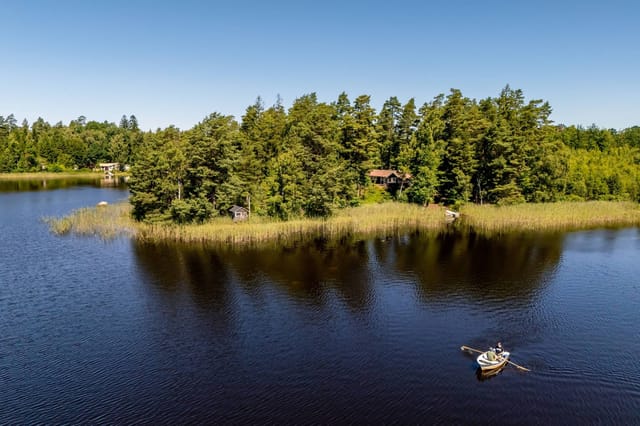
Early July morning. You push open the wooden door of the south-facing terrace, coffee in hand, and the entire peninsula of Lake Örsjön spreads out below you — glassy water, pine-covered islands, not another soul in sight. The only sounds are a woodpecker working a birch tree somewhere up the ridge and the faint lap of water against your private pier. This is what drew people to Kalvshult Västergård 26 over eighty years ago, and it is what will hold you here long after the summer ends. Built in 1939 and set on a hilltop above the southeastern shore of Lake Örsjön in Hallaryd, Småland, this two-bedroom country home has spent most of its life as a summer residence — which shows in the best possible way. The pace here is deliberate. Nothing has been rushed. The open fireplace in the living room still draws a proper draft, the wood-burning kitchen stove still makes the room smell like pine resin on cold mornings, and the terrace still frames an uninterrupted view of more than twenty islands scattered across the lake below. You don't renovate a place like this into something it isn't. You maintain it, and it rewards you. The property sits on 7,020 square meters of mixed terrain — part wild garden, part forest floor. Spend twenty minutes walking the lot in late August and you'll come back with a basket of chanterelles without really trying. Blueberries grow in patches along the southern slope; lingonberries push through the moss further up toward the treeline. The Swedes call this right allemansrätten — freedom to roam — but when the foraging ground is your own land, it hits differently. Down at the waterline, the guesthouse sits almost at the edge of the lake. It's a practical bonus for visiting family or friends, but plent ... click here to read more

Exterior view of the main house and surrounding nature

On a still Tuesday morning in southwest France, the only sound you'll hear from the covered terrace is the low splash of the fountain in the courtyard below and, if the wind is right, the faint bells from the church in Tournon-d'Agenais five minutes up the road. The coffee is hot. The sun is already catching the Italian marble balustrades. Nobody else is awake yet in the guest cottages. This is the kind of morning that makes you wonder why you don't live here full time. This is not a farmhouse renovation with good bones and a long punch list. It was built from scratch between 2002 and 2005 by owners who simply refused to cut corners — the kind of project where the budget was set and then quietly ignored whenever the better choice cost more. The architecture sits low against the rolling Lot-et-Garonne countryside on purpose, its traditional stone profile reading as something that has always been here rather than something dropped into a field. That restraint is what gives the whole estate its authority. The main house runs to four bedrooms, and the ground floor immediately signals what kind of place this is. The kitchen is enormous — fitted with integrated appliances and genuinely built for the kind of long lunches that start at noon and end somewhere near dusk. The sitting room has a log-burning insert stove, the kind you actually light in October when the evenings start to sharpen, not just a decorative feature. The principal bedroom suite has its own bathroom and a private roof terrace that connects, brilliantly and improbably, to the old pigeon tower — a piece of local architectural history folded into the fabric of a thoroughly modern home. The home office is tucked away privately. Three further guest bedrooms are ... click here to read more

Picture 1

Sunday mornings here have a particular quality. The kitchen window is propped open, coffee is on, and from somewhere across the valley — past the fruit trees, past the old bread oven — you can hear church bells drifting up from the village below. That's the rhythm of life in Mauroux, a hamlet in the Lot that most people drive past and then spend years trying to find again. This four-bedroom stone farmhouse sits on a quiet lane in a tiny hamlet just outside Mauroux, less than ten minutes from the market town of Tournon-d'Agenais. The house is old in the best sense — thick limestone walls that keep rooms cool through July heat, floors that have absorbed centuries of footsteps, a staircase carved from the same local stone as the exterior that curves up through three levels with a solidity you just don't get in modern builds. But it's been looked after properly. Double glazing throughout, air conditioning, a pompe à chaleur heat pump for efficient heating, a water softener — the infrastructure is modern even when the bones are ancient. This is a property in good, move-in condition. You could arrive with suitcases and be sitting on the terrace with a glass of Cahors Malbec by evening. The layout across three floors is generous without feeling sprawling. Downstairs, two double bedrooms open through French doors directly onto the sun terrace and pool — which means summer mornings that begin with a swim before breakfast become less a fantasy and more a daily habit. The main living space upstairs is open-plan, anchored by a stone fireplace fitted with a log-burning stove. Beamed ceilings, thick walls, afternoon light slanting in from the south. In winter, this room earns its keep: load the stove, pull the shutters, and the whol ... click here to read more

Picture 1

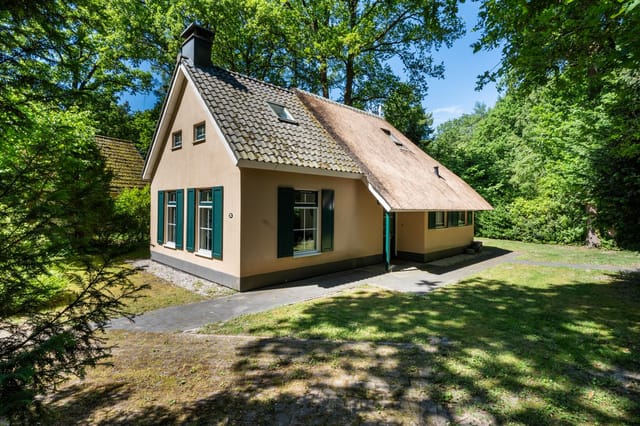
Saturday morning. You open the French doors off the living room and the forest is just there — not a view through a distant window, but actually there, close enough that you can smell the pine resin warming up in the early sun. A woodpecker is working somewhere in the trees. The coffee is on. This is what owning a vacation home in Hooghalen, Drenthe feels like, and it's not quite like anywhere else in the Netherlands. This thatched country home sits on a 514 m² private plot right on the edge of the forest at Estate Het Grote Zand, a well-run recreational park between Assen and Beilen in the heart of the Dutch province of Drenthe. The house is 90 square metres across two floors, sleeps six comfortably, and is genuinely move-in ready — not in the estate agent sense of "needs minor work", but in the sense that the kitchen is new, the bathroom is new, it's fully furnished, and you could spend your first weekend here without buying so much as a dish towel. The thatched roof is the first thing people notice. It's not decorative — it belongs here, in a landscape of hunebedden (ancient megalithic tombs), working farms, and heathlands that blaze purple every August. Drenthe has been doing this look for centuries, and this house wears it naturally. Inside, the layout is more generous than the footprint suggests. The hallway opens into a living room that genuinely surprises people — high ceilinged, light-filled, and airy. The open kitchen runs along one side: induction hob, dishwasher, combination microwave, fridge-freezer, extractor hood — everything you'd expect in a proper kitchen, not a holiday rental compromise. A gas fireplace anchors the far end of the room, and in October when the forest turns amber and the evenings get ... click here to read more

Front view of the thatched Drenthe farmhouse

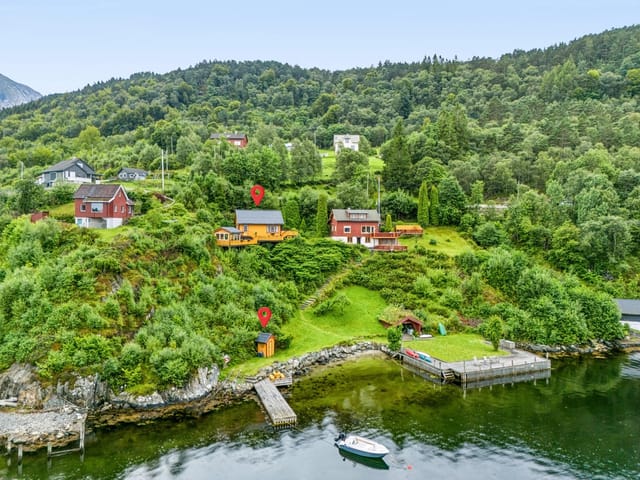
Early morning in Uskedalen, the fjord sits perfectly still. You walk down through the garden—past the apple trees, past the terraced lawns still wet with dew—and step onto your own wooden pier. The only sound is a lone guillemot cutting across Mørkevågen. Coffee in hand, you watch the light shift on the water. This is what you bought it for. This exact moment. Uskedalsvegen 790 is a three-level chalet sitting on a fully owned 1,442-square-meter plot with direct access to a private sandy beach on the Mørkevågen inlet, one of the quieter fingers of the Hardangerfjord system in western Norway. It's the kind of property that rarely comes to market—not because it's grand, but because people who find places like this tend to hold on to them for decades. The plot itself tells a story of patient, careful tending. Retaining walls step down toward the water in clean terraces. Fruit trees anchor the upper garden. Lawns spread wide enough for a football game or a lazy afternoon in a hammock. Multiple seating areas are positioned at different elevations around the garden so you can follow the sun as it moves—morning coffee on the upper deck, afternoon reading in the sheltered outdoor living room (roughly 9 square metres, and genuinely usable even when the west coast weather turns), evening drinks on the pier watching the light go copper over the fjord hills. The garden is also genuinely child-friendly in the way that matters: safe, open, with the beach close enough to be exciting and the path down gated and manageable. At the water's edge you have a boathouse with both water and electricity connected, a boat slip, and a mooring buoy. That last detail is more valuable than it sounds—secure year-round mooring on the Hardangerfjord o ... click here to read more

Nordvik Hardanger presents Uskedalsvegen 790. Photo: Studiovest

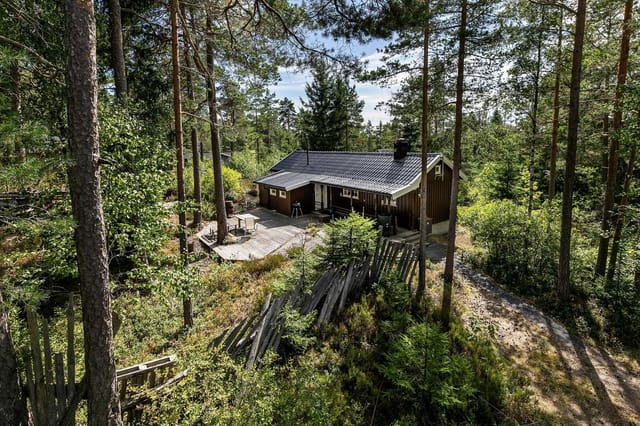
Step off the worn forest path and onto the wide 45-square-meter deck just as the afternoon sun swings west. That's the moment you get it. The birches are catching the light, the air smells faintly of pine resin and damp earth, and somewhere back toward the tree line you can already see the chanterelle spots you'll be raiding before breakfast tomorrow. This is what a Norwegian cabin holiday actually feels like — and this chalet at Tveitåsen 142 in Svinndal puts that feeling within reach for a fraction of what you'd spend almost anywhere else in the country. Svinndal sits in Indre Østfold municipality, a quiet inland corner of Norway that rarely shows up on tourist maps but absolutely shows up in the memories of people who've spent summers here. The landscape is classic lowland Norwegian forest: rolling terrain covered in spruce, birch, and blueberry scrub, broken up by small lakes and the kind of rocky outcrops that make for genuinely satisfying afternoon scrambles. The cabin community at Tveitåsen has been here since the 1970s, and it has that particular atmosphere of a place where people return year after year — neighbors who nod on the path, kids who know every shortcut through the trees. The chalet itself was built in 1979 and sits on a privately owned natural plot of 1,664 square meters. That's a generous footprint by Norwegian standards, and the terrain is genuinely varied — open enough for sun, wild enough to feel like it belongs to the forest. Cross-country ski trails run just 2.5 kilometers from the door, and when the snow finally retreats in April, those same tracks become some of the area's most-walked hiking routes. A ski lift is about 22 minutes by car, making this a workable winter base as well as a summer ... click here to read more

Tveitåsen 142 presented by Krogsveen. Photographer: Børge Oppegård.

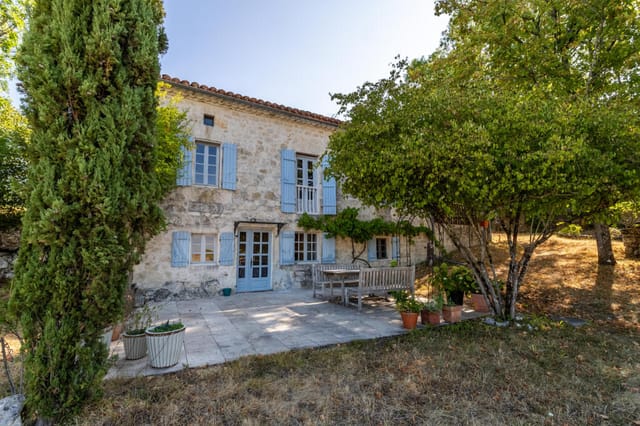
Saturday morning in Lauzerte: the weekly market on the Place des Cornières is already buzzing by nine, the smell of warm chestnut bread drifting from the boulangerie on the corner. You walk down through the village — one of France's designated Plus Beaux Villages — pick up a wedge of Tomme de brebis from the sheep farmer who's been coming here every week for thirty years, and you're back at the house with coffee on the terrace before the church bell strikes ten. That's the kind of morning this property was built for. Set just outside the medieval hilltop village of Lauzerte in the rolling Tarn-et-Garonne department of the Midi-Pyrénées, this six-bedroom, two-house estate sits on around 1.2 hectares of mature gardens with views that remind you, daily, why people have been choosing this corner of southwestern France for centuries. The Quercy Blanc — named for its pale limestone plateaus and dry stone walls — is quieter than the Dordogne, less trafficked than Lot, and all the better for it. The property is actually two fully restored stone country houses side by side, and this distinction matters enormously. The main house is the heart of the estate: thick walls that keep it cool through July's 30-degree afternoons, original oak beams running the length of the ceilings, exposed stonework that took decades of weather to look this good, and original fireplaces that make January here feel like a privilege rather than a hardship. Travertine floors run through the ground floor — warm underfoot in summer, and the kind of surface that ages gracefully rather than showing every scuff. The kitchen deserves its own paragraph. It's centered around a Smeg gas range and built for real cooking — a generous worktop, ample cupboard space ... click here to read more

Picture 1

By ten in the morning, the sun is already warm on the terrace tiles and the pool is throwing little ribbons of light across the garden wall. You're sitting with a coffee, listening to absolutely nothing except a distant lawnmower and the occasional clatter from a neighbor's kitchen. This is a Tuesday. This is just a regular Tuesday at this three-bedroom villa on Orihuela Costa, and it already feels like a weekend somewhere else would feel after three days of trying. The villa sits on a 350-square-meter plot in one of the Costa Blanca's most consistently popular stretches of coastline, where the Alicante province tapers south toward Murcia and the climate gets genuinely ridiculous — over 320 days of sunshine annually, winters so mild that January lunches on the terrace are not a novelty but a habit. The property itself covers 120 square meters of interior space across a thoughtful, livable layout: three bedrooms, two full bathrooms with walk-in showers, a generously proportioned living room that fills with afternoon light, and an open-plan kitchen that actually functions as the social center of the home rather than an afterthought tucked behind a wall. Out front, the private pool is the centerpiece — not a decorative gesture, but a proper swimming pool surrounded by a shaded terrace where you can eat, argue about whose turn it is to cook, and eventually fall asleep in a chair. There's real space here for outdoor dining furniture, sun loungers, a barbecue setup. The kind of space where a family of five or a group of friends can spread out without constantly bumping into each other. Orihuela Costa itself is a place that rewards the people who take the time to understand it. The Playa de La Zenia beach is roughly ten minu ... click here to read more

Picture 1

Early on a Saturday morning in July, the only sounds at Kilane 60 are the lap of water against the dock and the distant call of a loon somewhere out on Kiletjønn. You pour coffee in the kitchen, prop the terrace door open, and the cool inland air of Agder rolls straight in. No traffic. No neighbors right on top of you. Just 1,227 square meters of sun-drenched Norwegian hillside, your registered boat place down at the water's edge, and a full weekend ahead with no particular agenda. This is a three-bedroom chalet in Mykland, Aust-Agder — a destination that Norwegians have quietly loved for generations but that rarely shows up on the international radar. That gap is exactly why it's worth paying attention to right now. The cabin itself was built in 2001 and sits in genuinely good condition, single-level throughout, which makes it practical in a way that older Norwegian hyttes often are not. At 62 square meters of interior living space plus a 60-square-meter wraparound terrace, the footprint is honest — this isn't a property that tries to be something it's not. It's a proper cabin, well-built and well-kept, with the kind of layout that actually works for a family of five or a group of friends doing a long weekend. The three bedrooms are compact but functional; two of them have built-in wardrobes, which matters when you're packing in from a city apartment. The open living and kitchen area pulls in natural light from multiple angles, and the wood-burning stove at its center is the kind of detail you don't truly appreciate until the first October weekend, when the temperature drops and the birch forest outside goes gold. The kitchen comes stocked with a stove and refrigerator — included in the sale — and there's a separate ... click here to read more

Welcome to Kilane 60! Beautiful cabin with detached storage, boat place, and views. Good parking on the plot.

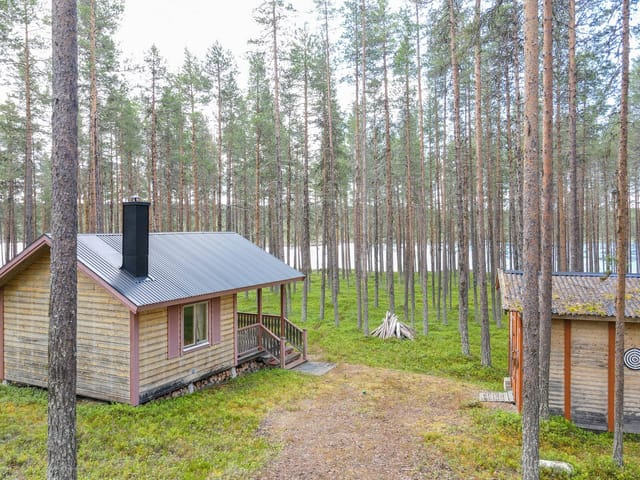
Step outside on a July morning and the air smells of pine resin and cold water. Malmesjaure lake sits maybe thirty meters away, its surface completely still before the wind picks up, reflecting a sky so blue it almost looks artificial. No engine noise. No notifications. Just the occasional call of a black-throated diver cutting across the silence. This is what you're buying at Sandudden 5 — not just a cabin, but a specific quality of quiet that most people in Europe have completely forgotten exists. The cabin itself was built in 1996 and sits on a generous 2,500 square metre plot on the Sandudden peninsula reaching into Malmesjaure. Twenty square metres inside, which sounds small until you're actually there. The open-plan interior folds kitchen, dining, sleeping, and living into one room — the kind of layout that forces you to slow down, to be present in the same space as the people you came with. A wood-burning stove anchors the room. Light it on an October evening when the first frost has hardened the ground outside and the warmth it throws feels earned in a way that central heating simply can't replicate. No electricity. No running water. No sewage connection. That's not a caveat — it's the whole point. The cabin operates entirely off-grid, which in practice means candles and a head torch, water carried from the lake or a local source, and a privy outhouse that Scandinavians have been using perfectly successfully for centuries. For buyers who've owned conventional holiday properties before, this might sound like a step backward. It isn't. It's a different philosophy of rest entirely. The absence of infrastructure is what keeps this corner of Norrbotten County exactly as it is — untouched, uncrowded, and genuinely re ... click here to read more

Exterior view of the cabin and surrounding nature

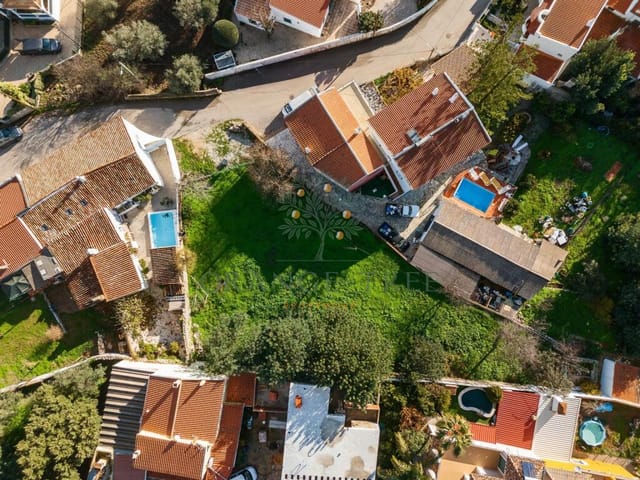
Stand on this 970-square-metre plot in Vilarinho on a clear January morning and you'll understand immediately why people keep choosing São Brás de Alportel over the coast. The air smells of orange blossom and wild rosemary. There's no traffic noise—just the distant sound of a cockerel and the wind moving through cork oak. The Algarve's famous beaches are 30 minutes south. Faro Airport is close enough that you could land, pick up groceries in town, and be sitting on your own land watching the sun drop behind the Serra do Caldeirão hills before dinner. This isn't a compromise. It's a deliberate choice—and an increasingly rare one. The plot sits in Vilarinho, one of the quieter residential pockets just outside the São Brás de Alportel town centre. Five minutes by car (or a pleasant 20-minute walk along country lanes) puts you on Rua Dr. Emílio Leloup, where the town's weekly Saturday market fills the square with local farmers selling medronho liqueur, handmade queijo fresco, and the kind of stone fruit that actually tastes like stone fruit. The local pastelaria on the main street does a coffee and pastel de nata combination that will ruin you for every other café you'll ever visit. What makes this plot genuinely valuable is the paperwork. It comes with an approved PIP—Pedido de Informação Prévia—which means the local council has already confirmed building viability. You're not buying potential and crossing your fingers. The groundwork is done. Construction of up to 400 square metres is permitted, giving you serious room to design a home that actually fits how you want to live, rather than squeezing into something pre-built. A four-bedroom villa with a pool, a garden studio, covered terraces for outdoor dining—the footpri ... click here to read more

Picture 1

You wake up to absolute quiet. Not the muffled city kind where you can still hear a distant engine or a neighbor's television — real quiet, the sort that only comes at 538 meters above sea level with forest on every side. The kitchen window at Høymyrvassvegen 159 frames a wide stretch of Norwegian upland, and if you time it right, the morning light hits the treeline just as the coffee finishes brewing. That's the rhythm this chalet sets from day one. Kongsberg has a personality that most international visitors never discover because they're too busy rushing through on their way to Oslo. Slow down, and you find a town with genuine depth. It grew up around silver mining in the 17th century — the Kongsberg Silver Mines are still open for tours, and the Norsk Bergverksmuseum (Norwegian Mining Museum) down by the Numedalslågen river is genuinely fascinating, not the dusty kind of museum people politely endure. The town's baroque church, one of the largest in Norway, dominates the center and still draws crowds every summer for its music festival. The jazz festival in January, Kongsberg Jazzfestival, is internationally recognized and brings a surprising energy to a town that otherwise moves at a deliberate, comfortable pace. The chalet sits well outside town, on a gently sloping plot of 1,896 square meters at the edge of the terrain where groomed cross-country ski trails begin in earnest each winter. Skiing here is not a weekend detour — it is the point. The Numedal and Kongsberg regions maintain an extensive network of prepared tracks through the season, and on clear February days, when the snow is packed firm and the sky runs a deep Scandinavian blue, you can ski directly from the property boundary for hours without crossin ... click here to read more

Welcome to Høymyrvassvegen 159!

Sunday morning in Ciudad Quesada sounds like this: the distant clink of coffee cups at the terrace bar on Avenida Central, a light breeze carrying the faint scent of orange blossom from the groves just beyond the urbanisation, and absolute quiet from your private solarium as the Alicante sun climbs over the Rojales Hills. This is the kind of morning that made you start searching for a second home in Spain in the first place. This two-bedroom, corner-plot villa on the edge of Ciudad Quesada sits in one of the Costa Blanca South's most consistently sought-after residential pockets. It's not oversold holiday territory — this is where European buyers actually put down roots. The community is tidy, well-run, and refreshingly unpretentious. Neighbours tend their gardens. The communal pool gets used properly from April through October. You don't feel like you're in a resort. You feel like you live somewhere. Step through the front door and the house does something that a lot of Spanish properties at this price point don't: it feels genuinely finished. The kitchen is fully fitted and modern — clean lines, decent appliances, real worktop space. The living room centres around a pellet burner that, during January and February when temperatures in the Vega Baja dip lower than first-time buyers expect, throws out proper warmth rather than just ambience. Both bedrooms are comfortable doubles. The walk-in shower room is tiled throughout and more spacious than the bathroom count suggests. Nothing here is crying out for work. For a buyer looking for a vacation home in Spain that can be unlocked and enjoyed from day one, this delivers. The solar panel setup — a photovoltaic system already installed and operational — is worth pausing on ... click here to read more

Picture 1

Stand on the roof terrace on a clear October morning and you can see all the way to the Atlantic. That's not a figure of speech. The 180-degree arc sweeps from the hills of the interior right out to the coast, and with the air this clean and the light this particular shade of gold, it stops you mid-coffee. This is Alfeição — a quiet village just two kilometers outside Loulé — and this is the kind of view people build entire holiday itineraries around, except here it's yours every morning from your own home. The villa sits on a generous 6,720 square meter plot and spreads across 246 square meters of living space, a scale that immediately rewards the eye. The gardens have been cultivated over years, not months — mature fruit trees, clipped hedges, and a pool area that gets afternoon sun without feeling exposed. Privacy is real here, not the kind artificially created by high walls and dense planting in some soulless resort enclave. The elevated position does the work naturally, and the surrounding land gives you a buffer that feels genuinely rural while still being minutes from one of the Algarve's most animated market towns. Loulé itself deserves more than a passing mention. On Saturday mornings the covered market on Rua 25 de Abril fills with vendors selling smoked sausages, wheels of sheep's cheese, fresh herbs, and hand-embroidered linen. You can eat a pastel de bacalhau standing at a counter for a euro fifty, then spend an hour looking at tiles in a shop that's been there for forty years. In February, the town runs the Carnaval de Loulé — one of the oldest and most genuinely exuberant carnival celebrations in the country — with floats, costumes, and a street energy that feels nothing like the manufactured tourist ver ... click here to read more

Picture 1

Step out onto the south-facing terrace on a January morning and you'll understand why people who visit Ciudad Quesada rarely leave. The air is already warm by ten. The salt lakes shimmer in the distance, shifting between pale rose and deep silver depending on the light. Somewhere down the hill, the café on Avenida de la Libertad is pulling its first espressos of the day. This is what 155 square metres of well-kept apartment life looks like on the Costa Blanca—and it's available right now. Ciudad Quesada sits in the municipality of Rojales, roughly 40 minutes south of Alicante on the N-332, and it has a completely different energy from the tourist-heavy resorts further up the coast. This is a residential community that has grown organically over decades, attracting a mix of Spanish families, northern European retirees, and a younger wave of remote workers who've figured out that the combination of reliable sunshine, low cost of living, and genuine local infrastructure is hard to beat anywhere in Europe. There's a real high street here. Actual supermarkets. A medical centre. Schools. The kind of daily convenience that makes a second home genuinely liveable rather than just somewhere to visit in August. The apartment itself is in good condition—not a renovation project, not a blank-slate opportunity, but a property you could walk into with a suitcase and immediately start enjoying. Three proper double bedrooms means this works as a family holiday home, a couple's base with guest space, or a rental property that commands serious occupancy. The master bedroom comes with fitted wardrobes and an en-suite shower room, which anyone who has shared a single bathroom with teenagers on holiday will deeply appreciate. The second bat ... click here to read more
Picture 1

Step outside on a Tuesday morning in late June and the only sounds are a woodpecker working through a birch trunk somewhere behind the garden, and the faint lap of Lake Bolmen against the reeds a short walk down the track. No traffic. No neighbors visible. Just 2,899 square meters of your own grass, trees, and sky on one of Småland's most sought-after island retreats — and a house that was actually built for year-round living. Bolmsö is a proper island, connected to the mainland by a single bridge over Lake Bolmen, and that bridge does something psychological the moment you cross it. The pace drops. The shoulders drop with it. The lake itself is Sweden's fifth largest, stretching across parts of both Kronoberg and Jönköping counties, and Bolmsö sits right in the middle of it — surrounded by some of the clearest freshwater you'll find anywhere in southern Sweden. The house dates to 2015, which matters more than it might sound. You're not buying someone else's 1970s renovation project with surprises inside the walls. The construction meets contemporary Swedish energy standards, heating costs stay manageable through the long winters, and nothing needs urgent attention when you arrive for your first weekend. Move in, light the fireplace, open the wine. That fireplace, positioned in the open living and dining area, earns its place on every trip from October through April. The floor plan flows openly from the kitchen — centered on a practical island that makes cooking for eight people actually pleasant — through the dining space and into the sitting area without any awkward corridors breaking the momentum. Three separate doors lead directly from these living spaces out to the garden, so on warm July evenings the line betwee ... click here to read more
Exterior view of the house and garden

The smell hits you first — jasmine and warm stone, carried on a breeze that drifts in from the Guardamar coast just twelve kilometres away. You push open the terrace doors after breakfast, coffee in hand, and the morning sun is already doing its work on the tiles. This is a Tuesday in October. Somehow it feels like a Saturday in July. That's the thing about Ciudad Quesada that doesn't fully translate until you're standing inside it. This three-bedroom, two-bathroom detached villa in one of southern Costa Blanca's most established residential areas sits on a plot that gives you genuine outdoor living — not a token patch of gravel, but a private garden with room to breathe, a sun terrace built for long afternoons, and a covered area where the BBQ earns its keep all through the cooler months. The pool glitters. The neighbours are friendly but not intrusive. And the whole thing sits quietly away from road noise, the way a home in this part of Alicante should. Inside, the layout is sensible in the best possible way. Three bedrooms with fitted wardrobes, the principal with its own en-suite, and a main bathroom that serves guests without anyone queuing in the corridor. The living and dining area opens directly to the garden through wide glass doors, so the boundary between inside and outside practically dissolves when the weather is good — which, in Rojales, is most of the year. Around 320 days of sunshine annually. This is not marketing copy. It's meteorology. The kitchen is fully fitted and practical: proper workspace, ample storage, nothing that needs replacing before you start using it. Large windows keep natural light moving through the house across the day, and the orientation — south or south-west facing options — mea ... click here to read more
Picture 1

On a still Tuesday morning in late June, you open the kitchen's ancient wooden shutters and the first thing you hear is nothing. Not the compressed silence of earplugs—actual, honest quiet, broken only by a wood pigeon somewhere in the oak trees and the faint clank of a tractor working a field two valleys over. The smell drifting in is warm stone and cut grass. That's it. That's the whole morning's agenda if you want it to be. This four-bedroom, three-bathroom country house in the hamlet just outside Roquecor sits on the kind of land that reminds you why people first started building in southwest France. The Tarn-et-Garonne countryside rolls in every direction—soft green ridges, sunflower fields gone gold by July, the occasional red-roofed farmstead catching the afternoon light. From the sun terrace beside the saltwater pool, you can see for miles. No rooftops crowding the view. No road noise. Just the particular stillness that this corner of Midi-Pyrénées does better than almost anywhere in Europe. Roquecor itself is five minutes by car or a genuinely pleasant forty-minute walk through the fields—the kind of walk that makes you feel you've earned the pastis waiting at the café. The village has a proper restaurant that locals actually eat at (not the tourist-facing kind), a reliable café, and enough daily life happening around the square to feel connected without ever feeling crowded. The Wednesday morning market in Lauzerte, twelve kilometres northeast, is the one to pencil in first. Lauzerte is a bastide village on the Pilgrimage of Saint-Jacques-de-Compostelle route, and the market spills down the medieval lanes with regional producers selling duck confit, aged Caussade walnuts, raw-milk Tomme, and the kind of straw ... click here to read more
Picture 1