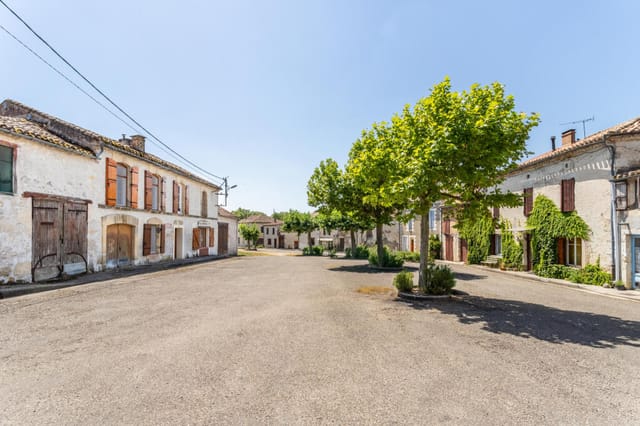
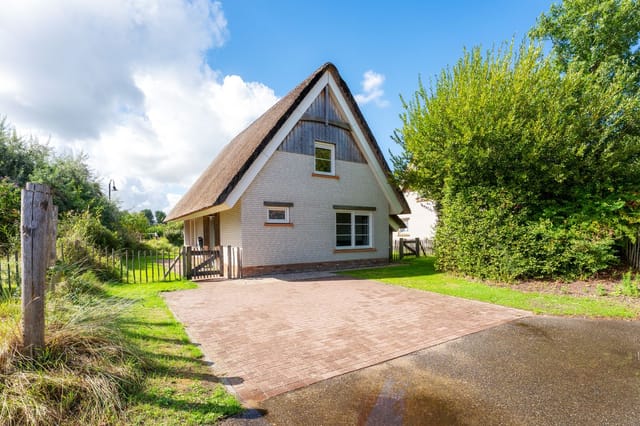
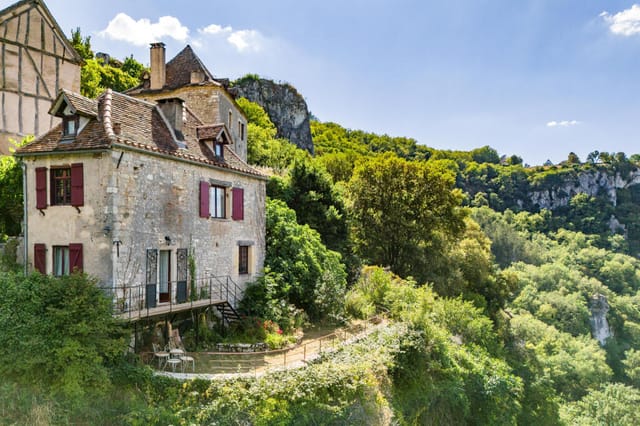
Houses For Sale In Europe (page 13)

Houses for sale in europe - homestra offers the largest amount of european real estate with over 200,000+ properties, find any type of property within your budget from villas to country homes. buy or rent your perfect home in europe. (page 13)

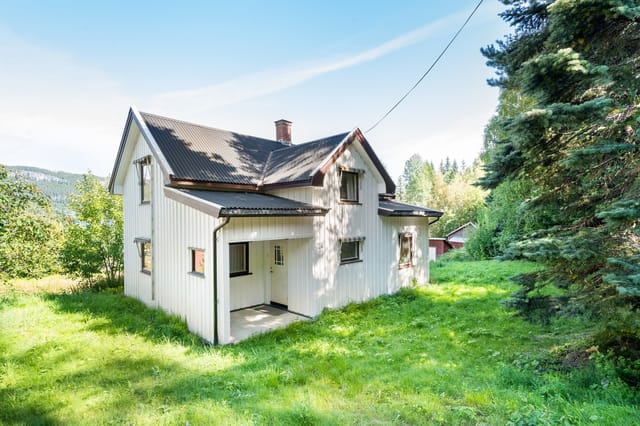
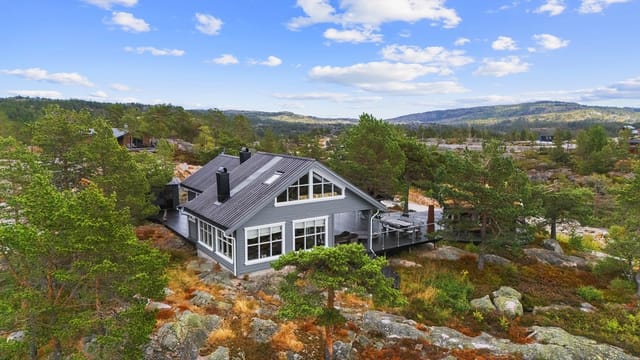
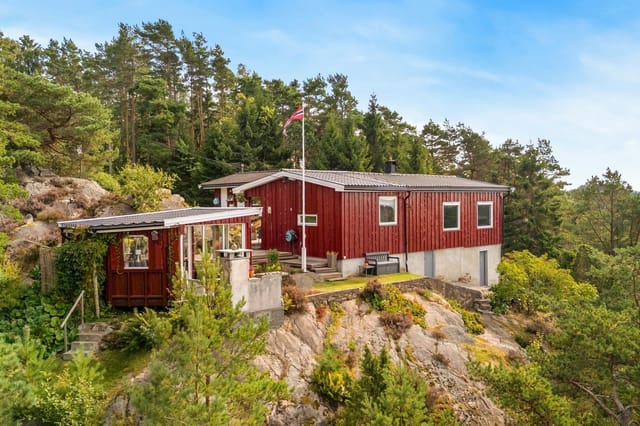
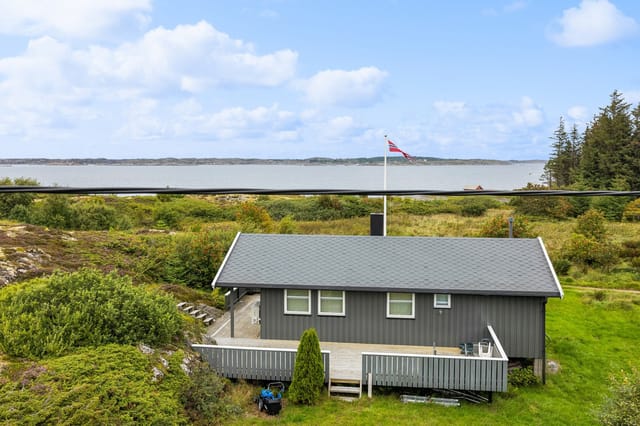
At midsummer, the sun doesn't set over Funnsjøen until well past ten in the evening. You're sitting on a 37-square-meter terrace, the lake catching the last gold light below, a coffee going cold in your hand because you keep forgetting to drink it. That's the kind of place this is. The kind that makes you forget what you came here to escape. Fersdalsveien 931 sits at 482 meters above sea level on a free-standing plot of just under 2,000 square meters in Meråker, a municipality in Trøndelag county that most international buyers haven't heard of yet — which is precisely why it's worth paying attention to. The cabin is in good condition, built in 1973 and carefully kept up over the decades, with upgrades that actually matter: new large-format windows installed in 2025 that flood the living room and master bedroom with light, hardwood floors sanded down and re-oiled in 2018, a wood-burning stove fitted in 2016, and fresh exterior surface treatments the same year. Nothing flashy. Just a property that's been genuinely looked after. The main cabin covers 58 square meters across a layout that makes sense for how people actually use a mountain retreat. The combined living and dining area — around 25.8 square meters — is the social center of the cabin. It's large enough to seat a family around a proper table and still have a sofa group where someone inevitably falls asleep after a day on the trails. The kitchen is right alongside it, practical and equipped with the essentials: stove, refrigerator, extractor fan, wall ventilation. No open-plan pretension, just a workspace that connects naturally to the dining area so whoever's cooking doesn't miss the conversation. Three bedrooms — the largest with that view over the lake, the o ... click here to read more

PrivatMegleren v/ Torstein Nordby presents Fersdalsveien 931—a beautiful and well-maintained leisure property in scenic surroundings in Meråker. Photo: Oscar Stoltenberg.

Stand at the balcony of the upper bedroom on a Tuesday morning and watch the mist burn off Lago Trasimeno. The water turns from silver to pale blue in under an hour. Church bells from Sant'Agostino mark the time. Down in the village, the bar on the main piazza is already pulling espresso for the farmers who drove in before dawn, and the smell of fresh cornetti drifts up through the stone alleys. This is Panicale — one of the most quietly compelling hill towns in all of Umbria — and this apartment, running three full levels down through the ancient walls of the medieval centro storico, puts you right at the center of it. The building itself dates to the medieval period, and it shows in the best possible ways. Vaulted ceilings arch overhead in the main living spaces. Exposed wooden beams cross above terracotta tile floors that have been walked on for centuries. The living room holds a working fireplace — genuinely useful from November through March, when Umbrian evenings drop sharply and the village empties of tourists and becomes entirely, wonderfully local. The building's communal roof and façade have recently been renovated, so the structural work is done. What remains is the interior transformation, and that's where the real opportunity lives. The layout is unlike anything you'd find in a new-build. Enter from the historic walls at the main level, where a small hallway connects the ground floor living area — spacious, firelit, with those beamed ceilings — to the floors below. One of the two double bedrooms sits at this level, opening onto a balcony that frames a direct view over Lago Trasimeno. Sit there in the evening with a glass of Sagrantino and watch the lake go gold. It's the kind of view that never becomes ord ... click here to read more

Picture 1

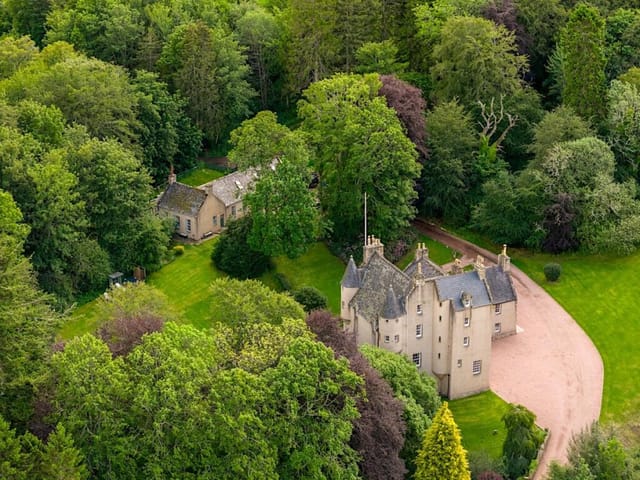
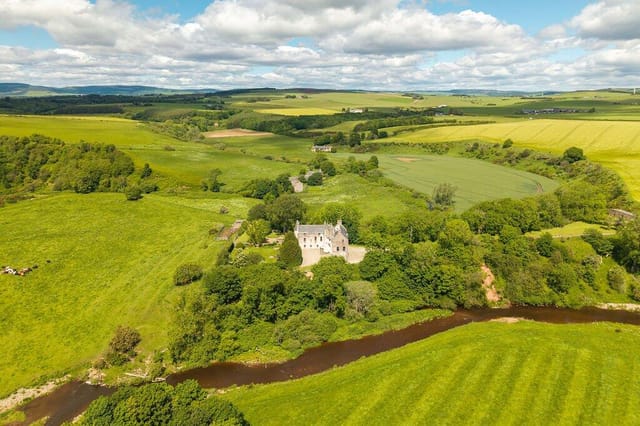
Stand in the Great Hall of Lickleyhead Castle on a still October morning. A log fire crackles in the walk-in fireplace—wide enough to park a small car—and pale Aberdeenshire light comes slanting through three tall windows, catching the grain of centuries-old wood paneling. Somewhere outside, a burn gurgles through the grounds. That's not a sound effect. That's breakfast. Built in 1580 and expanded across the 17th and 18th centuries into its distinctive L-shaped form, Lickleyhead Castle sits on the lower slopes of Bennachie—the granite hill that Aberdeenshire farmers have used as a landmark for a thousand years. Grade A Listed by Historic Environment Scotland, it carries the fingerprints of clans Leslie, Leith, Forbes, Duff, and Lumsden. You feel that weight of time not as burden but as atmosphere. The spiral staircases worn smooth underfoot, the intricate stonework above doorways, the Adams fireplace in the panelled sitting room—these things don't need embellishment. They just are. The castle comes with approximately 11 acres: three of formal gardens, eight of natural woodland. Two burns cross the grounds. There's a walled garden, a rose garden, broad lawns, a sunken terrace, and the footprint of a former ice house that tells its own story about how people lived here before refrigeration. A long, tree-lined driveway separates the estate from the outside world before you've even reached the front door. The separate Lickleyhead Gardeners Cottage—three bedrooms, two bathrooms, fully refurbished—sits across one of the burns from the castle. Independent, private, and genuinely useful whether you're housing extended family, running a letting business, or simply want a caretaker close by without being underfoot. The kitchen ... click here to read more

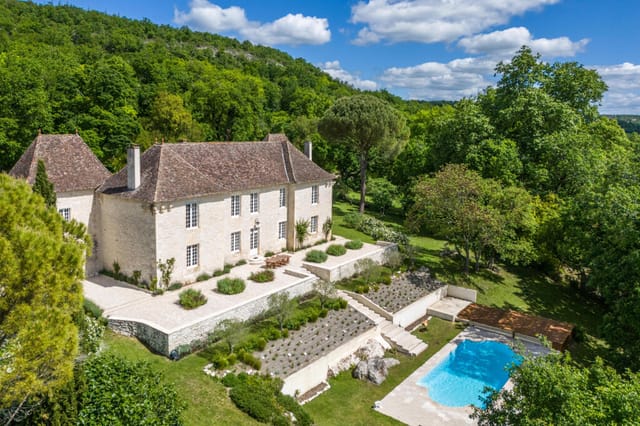
Aerial Elevation

Stand at the edge of the plot on a late June morning, coffee in hand, and you'll understand immediately why this place has held people's hearts since 1951. The water of Randsfjorden — Norway's fourth largest lake — stretches out in front of you, flat and silver in the early light, and the only sounds are the occasional cry of a heron and the soft creak of the boat dock down at Våten. No road noise. No neighbors crowding in. Just 7,592 square meters of gently sloping land running straight down to the shoreline, all of it yours. This is "Våten Søndre" — a two-bedroom house on Jevnakervegen in Dokka municipality, Innlandet, set on one of the most coveted stretches of Randsfjorden's western bank. Officially registered as a detached house, it has served as a holiday home since 2004, and crucially, there is no residency obligation, meaning you can continue using it purely as a leisure property without any administrative complications. For international buyers looking at holiday property in Norway, that distinction matters enormously. The house itself — 107 square meters across two floors, originally built in 1951 with a practical extension added in 1981 — is honest about what it is: a property with real bones and real character that needs a serious owner willing to roll up their sleeves. The kitchen shows its age, the bathroom requires a full update, and some areas have been left without the maintenance they deserve. None of that should put you off. In fact, for the right buyer, it's precisely the point. The structure is sound, the layout is sensible, and the canvas is wide open. Ground floor gives you two spacious living rooms with large windows pulling in views of the lake and surrounding fields, a kitchen, a bathroom, and ... click here to read more

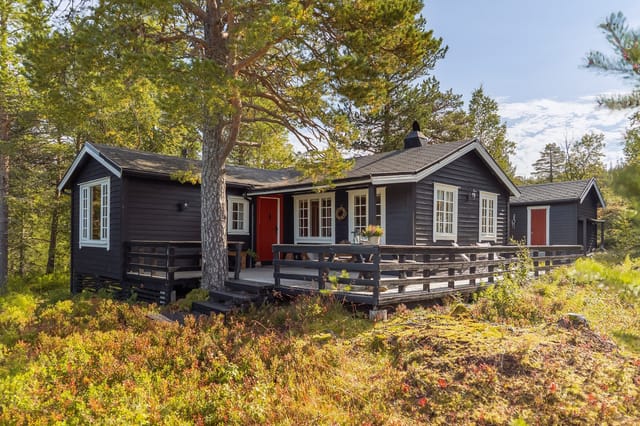
Welcome to "Våten Søndre" – a property with shoreline to Randsfjorden and great potential.

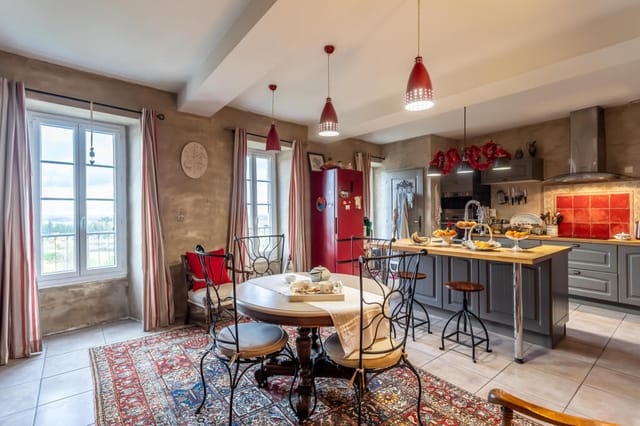
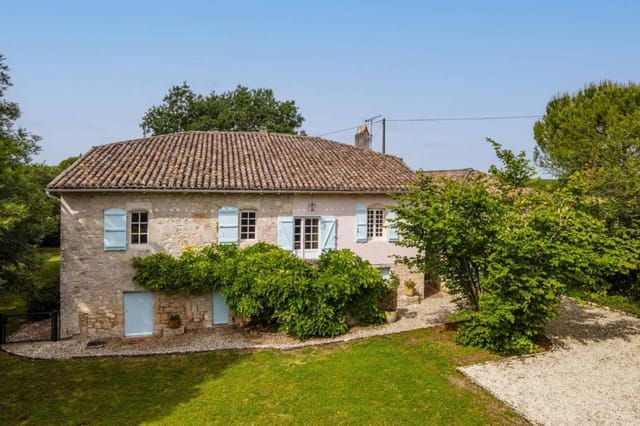
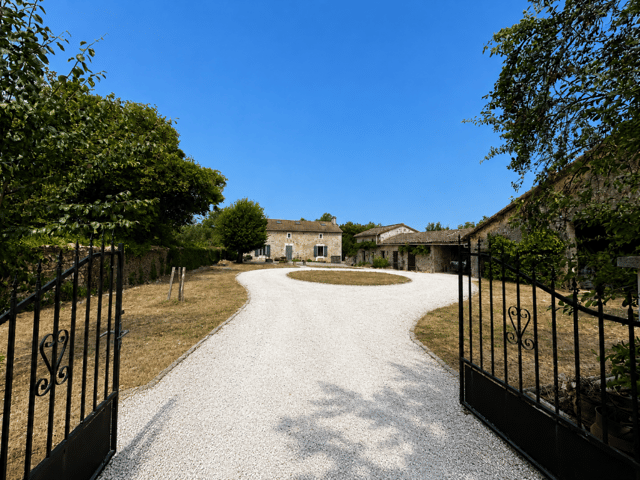
Picture this: a Sunday morning in Moncaut, the kitchen window propped open, the smell of a café crème drifting up from somewhere down the lane, and absolutely no reason to be anywhere else. That's the particular magic of this three-bedroom 18th-century village house in the Lot-et-Garonne — a part of southwestern France that doesn't try to impress you, because it doesn't need to. Moncaut sits just outside Agen, the kind of small French village that hasn't reinvented itself for tourists and is better for it. The Wednesday market in Agen's old quarter has been running for generations — stalls selling Agen prunes (the area's famous AOC export, eaten fresh in season or soaked in Armagnac in winter), duck confit from local farms, goat's cheese wrapped in chestnut leaves. Life here moves at a pace that feels deliberate rather than slow. The Garonne river runs through the valley below, and on clear mornings you can see mist lifting off the water from the upper floor of the house. The property itself spans 145 square metres across three levels and dates to the 1700s — but don't let that conjure images of damp walls and draughty floors. This house has been properly sorted out. New double-glazed windows keep winters quiet and warm. Aluminium shutters go up or down in seconds. A pellet-burner heating system means running costs stay sensible, and the whole place has been redecorated with a palette that manages to feel both period-appropriate and genuinely liveable — warm tones, no fussy details, nothing you'd want to change the moment you arrived. Walk through the front door and you're straight into the sitting room, which opens directly into the fitted country kitchen. High beamed ceilings make the space feel generous without bei ... click here to read more
Picture 1

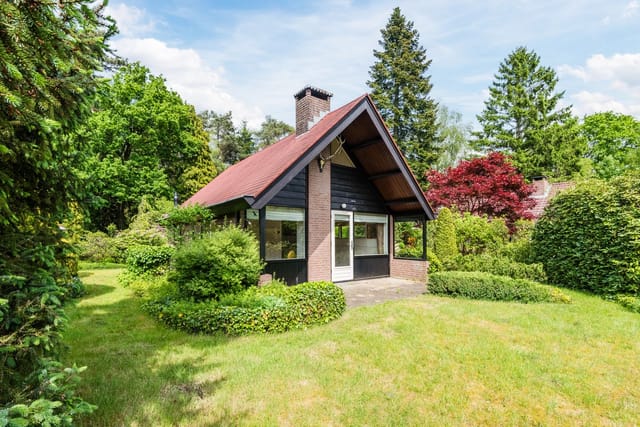
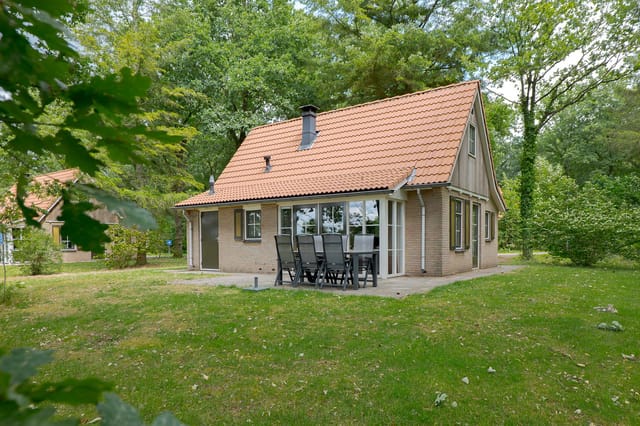
Saturday morning. You pull back the curtains and there's nothing out there but oak trees, a gravel path, and the particular silence that only old-growth forest makes — not empty silence, but alive with wood pigeons and the distant tap of a woodpecker somewhere deep in the pines. The kettle goes on. You take your coffee to the covered terrace. This is what you came for. This two-bedroom brick house on Putterweg in Garderen sits inside Klein Grindhorst, a small private park of just 23 recreational homes tucked into the southern edge of the Veluwe — the Netherlands' largest nature reserve and, for anyone who loves cycling, hiking, or simply exhaling, one of the most rewarding corners of the country. The plot runs to 405 square metres, so there's real breathing room: mature trees framing the garden, established plantings that have taken years to fill out, a lawn that rolls gently down from the terrace. It doesn't feel like a holiday park. It feels like a house that happens to have a forest for a backyard. Inside, the living room surprises you. Large windows pull the green of the garden straight into the room, and the parquet floor catches whatever light comes through the canopy. The open fireplace is the kind of thing you plan your October visits around — a proper hearth, the kind that makes the whole room smell of woodsmoke and turns a rainy Sunday into something you'd voluntarily repeat. Above the main sitting area, a mezzanine level opens up the ceiling and creates a sleeping space that works perfectly for a second guest or a couple of kids who think the ladder-style staircase is the best part of the house. The kitchen, finished in a classic green scheme, is practical and well-equipped — gas hob, oven, dishwasher, extr ... click here to read more
Front view of Putterweg 74-S

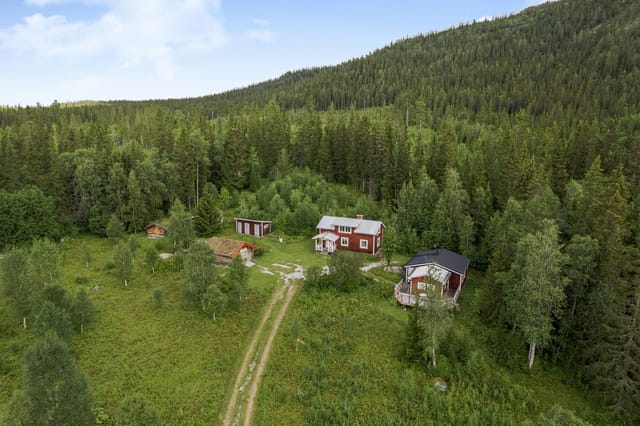
Step outside on a February morning and the world is absolutely silent. Fresh snow has buried Vintergatan overnight, the birches are white to their tips, and Funäsdalsberget sits right there in your eyeline, lit pink by a sun that's just cresting the ridge. The cross-country trail runs past the edge of the plot. You clip in and go. That's not a fantasy — that's a Tuesday here. Vintergatan 19 is a rare kind of find in Swedish mountain real estate: a genuine farmstead footprint — 9,750 square meters in total — sitting on the quiet outskirts of Funäsdalen village, with a main house, a fully fitted guest house, snowmobile storage, and a clutch of outbuildings that give you flexibility most holiday properties simply can't offer. The main house dates to 1890 and carries the weight of that age in the best possible way — thick walls, real timber, the kind of construction that makes a wood stove feel like the center of the universe on a January evening. At 55 square meters of living space plus an additional 61 square meters of auxiliary area, it's not big, but it's arranged for how mountain life actually works: a place to dry wet gear, store skis, brew something hot, and gather around a table with the people you actually want to spend time with. Three rooms adapt easily — sleeping quarters, a sitting area, a workspace if you need it. Simple. Functional. Honest. The guest house changes the equation entirely. Having a fully equipped, separate space for visitors means you're not giving up your own routine when friends arrive for a ski weekend. They get independence; you get your mornings back. For those considering rental income — and the holiday rental market in Funäsdalen is genuinely strong, particularly November through April ... click here to read more
Exterior view of the main house and lot

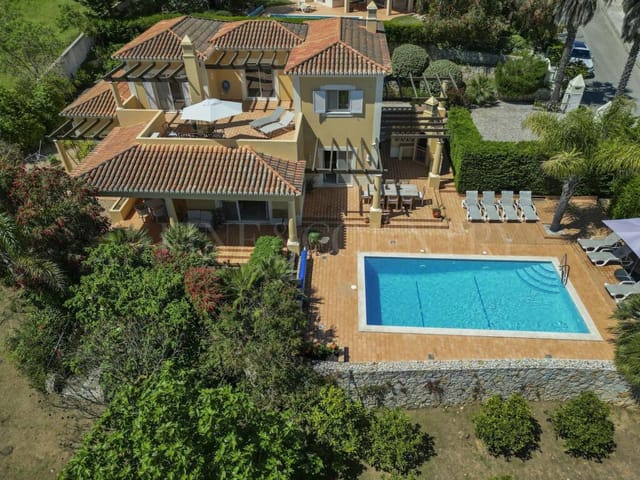
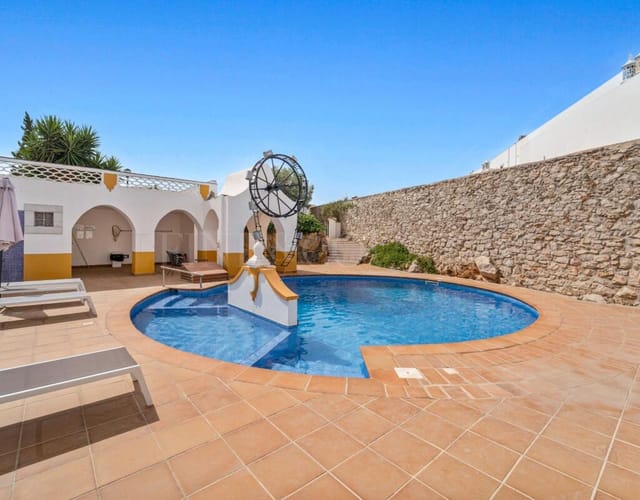
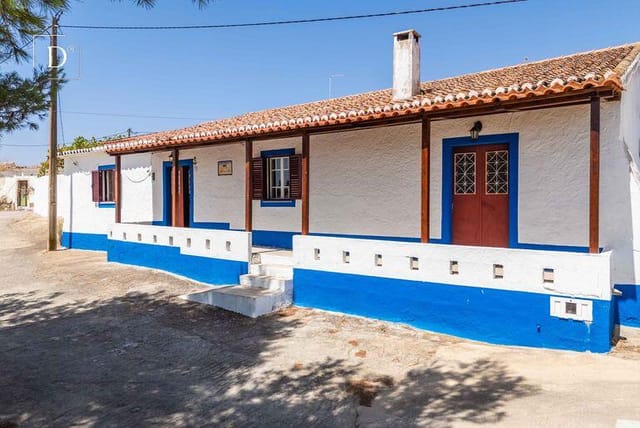
Wake up on a Tuesday morning to absolute silence — broken only by the distant thwack of a club striking a ball somewhere across the fairway below. You pad out through the patio doors in bare feet, coffee in hand, and the Monchique mountains are already doing their thing: purple-grey in the early haze, shifting gold as the sun climbs. This is what a morning at this Estômbar villa actually feels like. Not a postcard. A habit you could get very used to. Sitting between two of the Algarve's most-played golf courses — Gramacho and Vale da Pera — the property occupies a quiet cul-de-sac on the edge of Estômbar, a village that most tourists speed past on the EN125 without a second glance. Their loss. The cobbled main square has a tasca where the owner still makes cataplana the old way, with clams brought up from Ferragudo's fishing boats that morning. On Sunday evenings in summer, locals drag chairs outside the church and the noise of a village actually living its life drifts across the hillside. The villa itself is 211 square metres of well-considered space, and the floor plan rewards you immediately. Step inside and the open-plan living area pulls you straight through toward the view — lounge, dining space, and kitchen arranged so that every room looks out toward the fairways and the mountains beyond. The log-burning fireplace anchors the winter months here beautifully. January nights in the Algarve can drop sharply, and there is something deeply satisfying about a real fire in a room that, twelve hours earlier, had the terrace doors thrown wide open. The kitchen is modern and properly equipped — not a cosmetic upgrade, but a space where you can actually cook. And in this corner of Portugal, that matters. The markets at La ... click here to read more
Picture 1

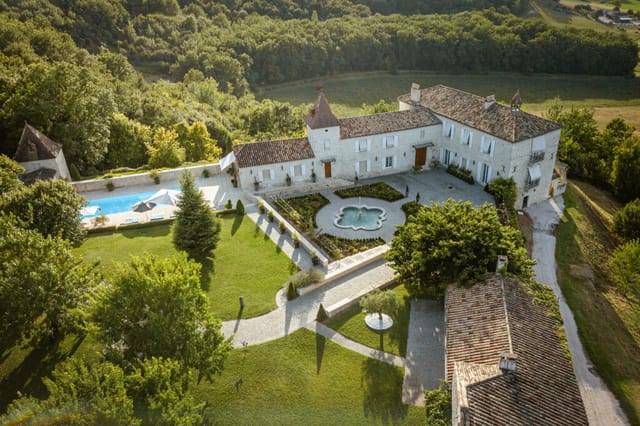
Step out through the château's stone entrance hall on a Tuesday morning in October, and the air smells of damp earth and woodsmoke drifting over from the village of Roquecor. The wrought-iron gates at the end of the private drive have just swung open. Somewhere beyond the boxwood parterres, a woodpigeon is making itself heard. This is what 61 hectares of Tarn-et-Garonne silence actually sounds like — and it is addictive. This 17th-century castle estate is one of those rare finds that doesn't need to announce itself. Sitting at the end of its own tree-lined approach, discreetly folded into the gently rolling countryside of the Midi-Pyrénées, the château rewards patience. The closer you get, the more it gives. The stone facade, the walled gardens, the fountain catching afternoon light — none of it feels staged. It feels earned, the product of three centuries of accumulated character and, more recently, an extraordinary restoration that involved some of the most respected craftsmen and interior designers working in France today. Five bedrooms. Five bathrooms. Four hundred and forty square metres of interior space — though square metres feel like the wrong unit of measurement here. You don't experience this property in metres. You experience it in the quality of light through the wood-panelled study at dusk, the echo of footsteps on stone floors in the entrance hall, the way the 18th-century fireplace in the main salon turns the whole room amber on a January evening. That main living room deserves its own paragraph. Beamed ceiling, original wood panelling, a fireplace that was already old when Napoleon was young — it's the kind of room that makes people put down their phones. The proportions are right in a way that can't ... click here to read more
Picture 1

On a quiet summer evening in Bourg-de-Visa, you pull a chair into your stone courtyard, pour something cold, and listen. Swallows cutting low arcs over the square. A muffled football commentary drifting from Rémy's café across the way. The smell of bread from the village boulangerie still hanging faintly in the warm Quercy air. This is not a simulation of French village life — it's the actual thing, and this 19th-century stone house sits right at the center of it. The house occupies an almost theatrical position on a secondary square, its stone frontage running nearly the full length of one side. That matters more than you might think. In a village this size, your address is your identity, and this one announces itself with quiet confidence. Four bedrooms, two bathrooms, three barns, a sheltered courtyard, off-street parking, and a small garden — all of it in genuinely good condition, all of it inside walking distance of everything Bourg-de-Visa has to offer. Step through the entrance and you're into a large open-plan living space that the current owners have transformed with real care. A log-burning stove anchors one end — a genuinely useful thing here from October through April, when Tarn-et-Garonne mornings carry a sharp chill. The kitchen is modern and properly fitted, which anyone who has renovated a French country property will tell you is a gift not to be taken lightly. It opens directly onto the courtyard, that private outdoor room that becomes the true heart of the house from May onwards. Aperitifs out there on a June evening, the old stone still warm from the afternoon sun, is the kind of simple pleasure this property was made for. Period features survive throughout — exposed stonework, original proportions, ... click here to read more
Picture 1

There's a particular kind of morning that only happens on the Costa Blanca. You open the bedroom shutters and the Sierra de Orihuela fills the entire frame — sun already warming the stone peaks, the air carrying a faint trace of rosemary from the hillside scrub below. Downstairs, the kitchen faces the rear garden, and you're making coffee while the birds are still figuring out the day. This is the rhythm Montepinar offers, and this five-bedroom villa delivers it in full. Sitting on a 900 m² south-facing plot, the property is spread across three distinct levels — each one serving a different mood, a different moment. The main floor is where the household gathers. A generous living room with a fireplace anchors the space, the kind of fireplace that earns its keep in January when the Costa Blanca gets those crisp, clear evenings that nobody talks about in the brochures. The independent kitchen opens directly to the rear garden, which means summer dinners essentially live outside. A wide terrace wraps around the front, commanding views across the valley toward the sierra — the sort of view that makes you forget you were supposed to be checking your phone. Two large double bedrooms and a full bathroom sit on this level, so the main living floor genuinely functions as a self-contained residence. Above it, the attic level is the property's wild card. Right now it's a quiet, bright room that some owners have used as a home gym, others as a teenager's den, others simply as a place to lie on a yoga mat and stare at the ceiling. Step out from here onto the private terrace and the Sierra de Orihuela panorama opens wider still — at sunset, the light goes amber across those peaks and it's genuinely hard to go back inside. The lower ... click here to read more
Picture 1

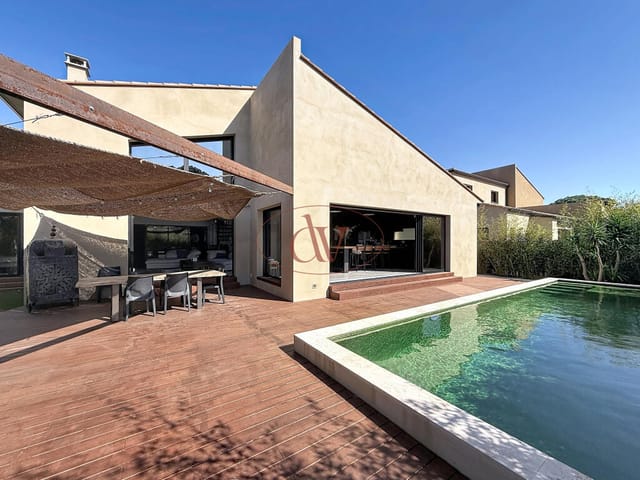
On a warm June evening, the sliding glass doors of the main living room are thrown wide open, and the scent of grilling sea bass drifts in from the summer kitchen while the pool tiles catch the last of the Catalan sun—deep turquoise against warm terracotta. That's not a fantasy. That's a Tuesday here in Alénya. This single-story contemporary villa in the Pyrénées-Orientales sits just a few minutes from Saint-Cyprien-Plage, one of the most sought-after stretches of the French Mediterranean coast, and it carries that easy confidence that only well-built homes in genuinely good locations can pull off. At 187 square metres of living space on one level, it's substantial without being unwieldy—the kind of house you actually want to move around in, not just photograph. Step inside and the first thing that hits you is the scale of the main living area. A cathedral ceiling soars overhead, giving the double living room an almost industrial grandeur that's rare at this price point south of Montpellier. The architect didn't try to hide the mechanics of the space—exposed ducted air conditioning runs along the ceiling like something you'd see in a Paris loft, and it works, because the rest of the room earns it. A high-end open-plan kitchen anchors one end, built around a huge central island that doubles as a breakfast counter, prep station, and the natural gathering point every dinner party eventually migrates toward. Large sliding glass doors line the south-facing wall, dissolving the boundary between inside and out, flooding the room with the 300-plus days of sunshine that this corner of France is quietly famous for. The sleeping quarters are thoughtfully arranged. Three bedrooms sit along the main corridor, including a master su ... click here to read more
Picture 1

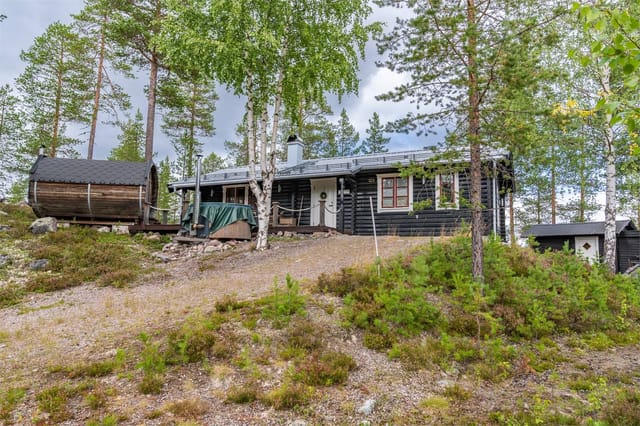
Step outside on a January morning in Kringelfjorden and the silence hits you first. Not the absence of sound exactly, but something richer — the muffled hush of fresh snow on spruce branches, the distant crack of ice on the lake, the faint smell of woodsmoke drifting from your own chimney. That's the daily reality of owning this two-bedroom country home on Byggningvägen in Särna, where the Swedish wilderness isn't a backdrop — it's the whole point. Situated on a generous 1,125 square metre plot in Älvdalens kommun, Dalarna County, this 59-square-metre home punches well above its size. Built in 1985 and kept in good condition throughout, it was given a proper kitchen refresh in 2023. New cabinetry, quality appliances, real counter space — the kind of update that makes you actually want to cook, not just heat things up. The open layout means whoever's at the stove stays in the conversation, which matters when you've got family spread across the living area after a long day out on the trails. The living room earns its keep. Large windows frame the tree line directly, so on grey November afternoons the forest comes right into the room with you. Come July, the same view is all green and gold light until nearly midnight — Dalarna sits far enough north that summer evenings go on and on. Two bedrooms handle a family comfortably; both are quiet, with the kind of dark that actually lets you sleep. One bathroom keeps things simple. That's the whole house, and it's enough. The design is about efficiency, not excess. What makes this property genuinely interesting is everything outside the main structure. The private sauna is the social heart of the place — a proper Swedish bastu, heated with wood, where the ritual of warming up, s ... click here to read more
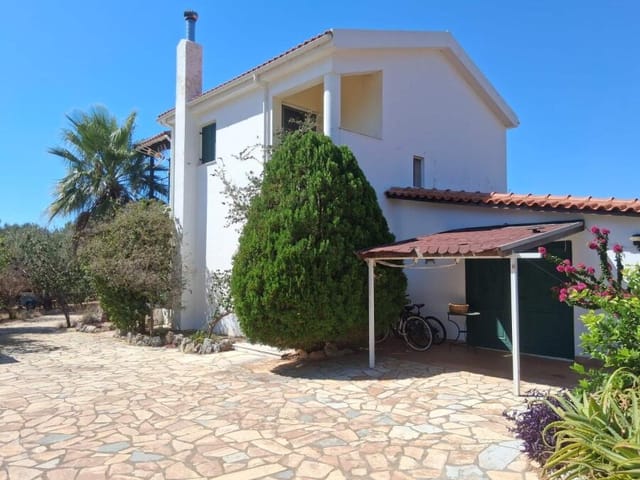
Exterior view of the holiday home

Sunday morning in Tavira has a particular kind of quiet. The bells from Igreja de Santa Maria do Castelo drift across the rooftops around nine, and from the upper terrace of this duplex, you can smell someone's padaria already at work somewhere on the cobblestones below. That's the kind of thing that makes people stop renting and start buying here. This three-bedroom duplex sits inside a private condominium of just 14 units right in the historic centre of Tavira — one of the eastern Algarve's most genuinely beautiful towns, and one that's managed to hold onto its soul in a way that Albufeira and Lagos haven't. The development is small by design, which keeps the communal areas — a proper swimming pool with changing room, shower, and WC, plus landscaped gardens — feeling like they belong to you rather than to a resort crowd. The property itself has barely been lived in since completion. That shows. The layout runs across two floors, and it works cleverly for a vacation home. Downstairs, the third bedroom operates equally well as a sitting room, home office, or private guest suite — it has its own bathroom and its own terrace, with direct access to the outside. Guests can come and go independently, which is exactly the kind of flexibility that makes a property like this earn its keep as a rental. Upstairs, the living and dining space opens up properly, with a fully fitted kitchen at the centre of it all. French doors lead out to the upper terrace, where a built-in barbecue and wood-fired bread and pizza oven sit ready for the kind of slow summer evenings the Algarve does better than anywhere. An external staircase connects both terraces so the whole outdoor area flows as one. The principal bedroom is en-suite, looks over ... click here to read more
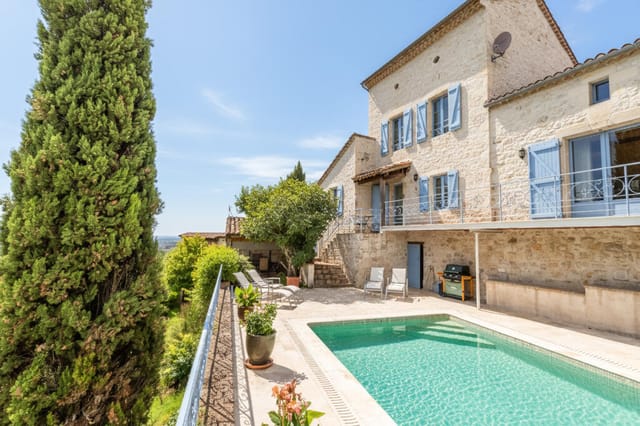
Picture 1

On a still Tuesday morning in July, you open the ancient shutters of your top-floor bedroom and the Tarn-et-Garonne countryside rolls out in every direction — sunflower fields, oak-lined lanes, and a sky so wide and blue it takes a moment to convince yourself it's real. The church bells from the village drift up the hill. You don't need to be anywhere until lunch. That's the whole point. This 17th-century stone presbytery in the quiet hamlet of Roquecor is one of those properties that stops you mid-scroll. And rightly so. Built with the authority and permanence that the Catholic Church demanded of its residences in this part of France, it has aged into something extraordinary — all vaulted ceilings, original stone sinks, wide-plank floorboards, and a fireplace so substantial it practically has its own postcode. The priests who once lived here would barely recognise the interiors now: the present owners have brought the kind of quiet, confident taste that lets the architecture do the talking, with muted colours, carefully chosen furniture, and not a single unnecessary gesture. You enter up a grand exterior stone staircase — the kind of entrance that makes guests stop and reach for their phones before they've even crossed the threshold. Inside, the layout unfolds across three floors. The ground level delivers a sitting room anchored by a monumental stone fireplace fitted with a wood-burning stove (the winters here are mild, but November evenings around that fire are something else), a snug that earns its name, and a country kitchen with original tiled floors, a fitted range, and a stone sink so characterful it would be the centrepiece of a lesser house. Below the kitchen, a vaulted stone cellar doubles as a wine store an ... click here to read more
Picture 1

The cork oaks go completely still in the midday heat. That's when you really hear it — nothing. Not the curated silence of a spa, but the deep, ancient quiet of the Baixo Alentejo, where the land has been rolling the same way since the Moors built their castle above the Guadiana River eight centuries ago. This four-bedroom country villa in São Sebastião dos Carros sits in that silence, twenty minutes from Mértola on roads that cut through golden wheat fields and wild lavender scrub. It's a place that asks something of you — a vision, a little patience — and gives back far more than you put in. The main house is 190 square metres of genuinely solid Portuguese rural architecture. High ceilings, thick whitewashed walls that keep the interior cool without air conditioning even in July's 38-degree heat, and a traditional fireplace that transforms the living room into something close to a refuge when the Alentejo winter turns cold and damp in January. This isn't a staged show home. It's a property in good condition, lived in, honest about what it is — and that's exactly what makes it interesting. Four bedrooms give you room for a family, for friends who fly in from London or Amsterdam, for a dedicated workspace where the only interruption is a dog barking somewhere down the village lane. Step outside and the property opens up considerably. A private patio wraps around to a separate outdoor kitchen — practical in every season, but genuinely transformative in the long, warm evenings from April through October when you'd rather cook outside under a pergola than anywhere else. The garden is fully fenced, which matters if you're thinking about a dog, small children, or simply the peace of knowing your boundaries are defined. Tuck ... click here to read more
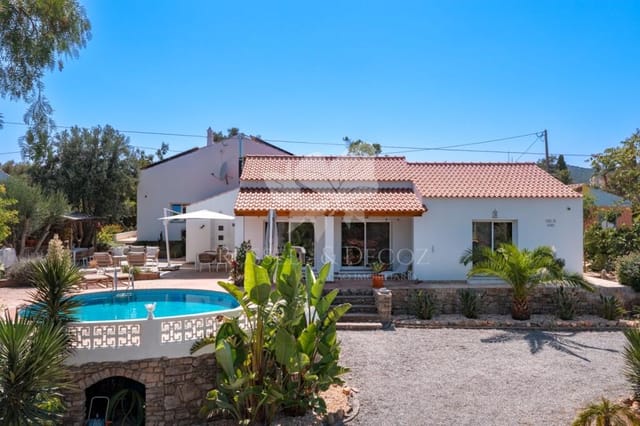
Picture 1

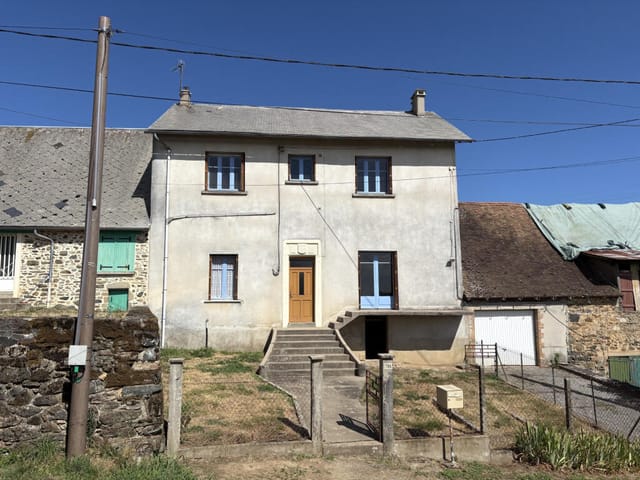
The church at La Porcherie rings at eight on Sunday mornings, and if you're sitting at the fireplace in the front room of this century-old house, you'll hear it clearly through the thick stone walls. That's the kind of quiet this place offers — not the performative countryside quiet you read about in travel supplements, but the real, deep silence of the Haute-Vienne bocage, broken only by birdsong and the distant rumble of a tractor working the fields. It's a rare thing. And at this price, rarer still. Built around 1900 and extended in the 1970s, this four-bedroom house sits in a small rural hamlet roughly two kilometres from La Porcherie village. The setting is genuinely pastoral — 380 square metres of land, a proper front garden with room for a table and chairs under whatever shade tree you'd plant in your first spring, and open views across the rolling Limousin countryside that shift with every season. In April the meadows go acid green. Come July, the sunflowers along the D15 toward Saint-Yrieix-la-Perche are head-height. By October the oak woods around Coussac-Bonneval turn the colour of old copper. The house itself runs to six rooms across two floors. Ground level gives you an entrance hall, a kitchen space, a living room anchored by a working fireplace, and a separate office — useful if you're one of the growing number of international buyers who've realised that a Limousin holiday home can double as a remote-working base for the price of a city parking space. Upstairs, four proper bedrooms, a bathroom, and a separate toilet. The footprint is honest: 120 square metres of real living space, not inflated by corridors or cupboards counted as rooms. Attached to the main house is a 27-square-metre garage — big enoug ... click here to read more
Picture 1

Step onto the terrace on a October morning, coffee in hand, and the stillness hits you first. No traffic. No noise. Just the wide open sky above Rosstjønn and the kind of silence that Norwegians have been escaping to for generations. The lake catches the early light below, the birch trees are turning gold, and the jacuzzi is already warm. This is what owning a mountain cabin in Telemark actually feels like. Sitting at roughly 535 meters above sea level at the end of a quiet cul-de-sac in Treungen, this three-bedroom chalet at Felehovet Nord 330 is one of those properties that earns its reputation through genuinely good bones rather than cosmetic flash. Built in 1996 and kept in solid condition throughout, it had a new Larvikite stone roof fitted in 2023 — the kind of maintenance decision that tells you the previous owners cared. The main cabin runs to 108 square meters of interior living space, with a total usable footprint of 189 square meters once you factor in the annex and generous external storage. The plot itself stretches over 1,061 square meters, giving you real breathing room and a sense of privacy that's increasingly hard to find at this price point in the Norwegian mountain market. Inside, the layout rewards people who actually use their cabins. The open-plan kitchen and dining area is the social engine of the house — a large island with a gas stove and bar seating anchors the space, making it equally good for a slow Sunday breakfast or a loud Friday evening with extended family. White cabinetry, solid wood countertops, a wood-burning stove radiating in the corner. The large windows don't just let in light; they frame Rosstjønn like a painting that changes by the hour. A staircase from the dining area climbs ... click here to read more
Nordvik v/Daniel Høyer Oland presents Felehovet Nord 330! Photo: A7 Media

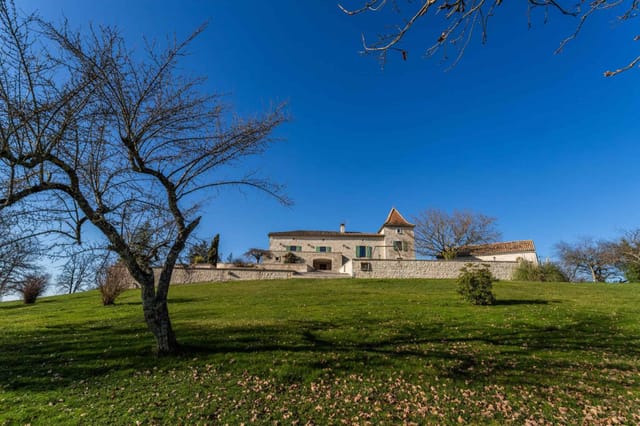
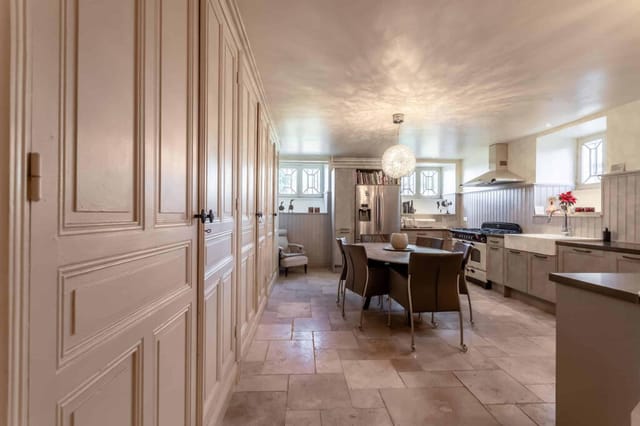
Stand at the top of the estate's highest point on a clear October morning and you understand immediately why people who find this corner of the Lot never quite stop thinking about it. The white stone hills of the Quercy Blanc roll away in every direction, the air carries the faint sweetness of oak and damp meadow grass, and the only sound is your own breathing. Forty-five minutes of walking through your own woodland and you still haven't reached the boundary. That kind of silence, that kind of space — it's not something you stumble across anymore. This is a 15th-century private estate, rebuilt on the foundations of a fortified château and sitting on 37 hectares of woodland, open meadow, and parkland in what locals call the Golden Triangle of the Quercy Blanc — the triangle drawn loosely between Montcuq, Lauzerte, and Castelnau-Montratier. These three medieval bastide towns are among the most quietly compelling in the southwest of France, each one with its Saturday market, its stone-arched café, its church square where the pétanque pitches fill up by late afternoon. You're seven minutes from Castelnau-Montratier, ten from Montcuq, fifteen from the fortified hilltop village of Lauzerte, which earned its place on the Les Plus Beaux Villages de France list and deserves every word of it. The estate has been meticulously restored — not gutted and rebuilt, but actually restored. The distinction matters. Ancient Auberoches stone floors are still underfoot. Monumental stone fireplaces anchor the grand reception rooms. Cathedral ceilings expose the bones of a building that has been standing since before the printing press existed. Lime-plastered walls, custom oak joinery, and bespoke microcement finishes sit alongside all of thi ... click here to read more
Picture 1

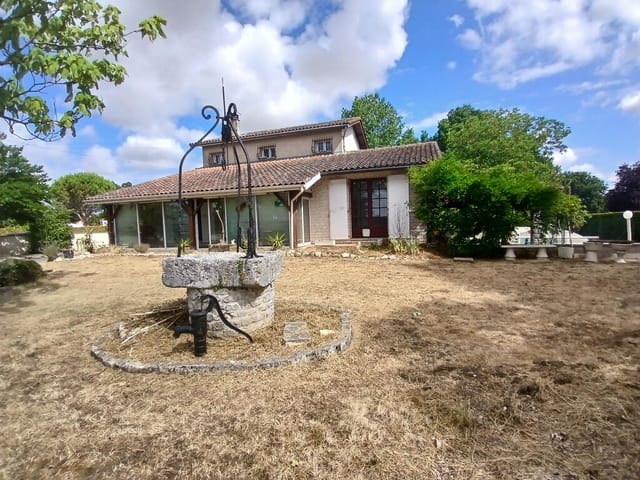
Step outside on a Tuesday morning in Karavados and you'll hear almost nothing except goat bells somewhere up the hill and the faint rustle of olive branches in the Ionian breeze. That's not an accident. This small village on the southern Leivathos peninsula sits far enough from the tourist drag of Argostoli to feel genuinely Greek, yet close enough — about 12 kilometres — that you can be sipping a freddo espresso at a harbour-side kafeneion within fifteen minutes. This is what draws buyers back to this corner of Cephalonia again and again: the real thing, within easy reach of everything. The property itself sits on a generous 1,018-square-metre plot, and the first thing you notice when you walk through the gate is how much breathing room there is. The main house — 106 square metres — is solid, well-maintained, and move-in ready. Two proper bedrooms, a bathroom, a living room with enough space that it doesn't feel like a corridor with furniture, and a kitchen that faces the garden. Light comes in from multiple angles throughout the day. In the late afternoon, the western-facing rooms catch that golden Ionian light that photographers spend entire careers chasing. But the real conversation starter here is the independent guesthouse. At 29 square metres, it's compact but completely self-contained — one bedroom, a living area, and its own kitchen. Fully separated from the main house, it functions as a private world. You can have your sister's family visiting for a fortnight without anyone stepping on each other's nerves. Alternatively, and this is where the property gets genuinely interesting for international buyers, it can operate as a short-term rental through platforms like Airbnb or Booking.com while you're not in resi ... click here to read more
Picture 1

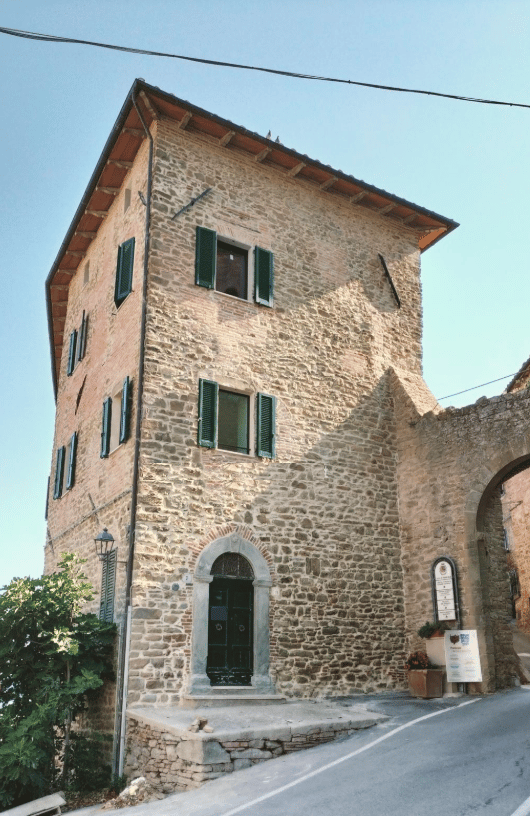
Step onto the terrace on a July morning and the view stops you cold. Rolling hills in every direction, sunflower fields catching the early light, the occasional church spire poking through the haze — and absolute silence, save for the swifts cutting arcs above the rooftops. This is Lauzerte at its most honest, and from this stone tower house on the village's most prized street, you get front-row seats every single day. Lauzerte isn't a discovery anymore — it earned a place on the "Most Beautiful Villages of France" list years ago — but it hasn't turned into a tourist circus either. The Saturday market still draws locals as much as visitors. The boulangerie on the main square still sells out of pain au levain by nine. There's a real community here: French retirees, a handful of Dutch and British families who came for a holiday a decade ago and never quite left, artists who set up studios in the old stone buildings and sell work out of their front windows. The Camino de Santiago passes right through the village, so from spring through autumn there's a gentle current of walkers moving through, giving the cafés on the terrace a particular energy that's hard to find elsewhere in Tarn-et-Garonne. The house itself sits on the Rue de la Garrigue, the kind of address that locals mention with a slight nod of respect. From the street it reads as a proper medieval tower — thick stone walls, a certain gravity to it — but push open the front door and the interior has been completely rethought. The current owners spent years on a renovation that prioritised quality over speed, and it shows in every detail. Travertine floors run throughout the ground level, cool underfoot even in August. The staircase is original stone, the kind that ... click here to read more
Picture 1

Early on a Tuesday morning in Moncarapacho, the air smells of orange blossom and warm earth. You slide open the bedroom door, step onto the sun terrace in bare feet, and the only sound is birdsong and the distant clang of a church bell drifting over the rooftops from the village square. That's it. That's the whole agenda. This is what owning a vacation home in the Eastern Algarve actually feels like — not the polished brochure version, but the real, unhurried, slightly addictive version that brings people back year after year. This fully renovated three-bedroom villa sits on a quietly elevated plot just outside Moncarapacho, one of those authentically Portuguese inland villages that hasn't been sanded smooth by mass tourism. The weekly market on Rua da República draws locals picking through figs, smoked chouriço and hand-thrown ceramic bowls. The café by the church serves the kind of thick bica that ruins you for anything else. You can be there on foot in minutes. Then back in your private pool by ten. The property itself spans 175 square metres of single-storey living across a 3,200 square metre plot — so there's space to actually breathe. The 2024 renovation was thorough: new roof, new floors, new plumbing, new electrical systems, new windows. Nothing cosmetic about it. Over 33 photovoltaic panels feed a solar system that covers the household's energy demands and pushes surplus electricity back to the grid, which in Portugal means quarterly energy credits rather than bills. Underfloor heating and cooling runs through the entire house via a heat pump, backed up by Daikin air conditioning units in every room. In January, when the almonds are flowering across the Algarve and the nights drop to single digits, the villa s ... click here to read more
Picture 1

Stand on the travertine terrace on a July morning and you'll understand immediately why the current owners spent years getting this place exactly right. The Quercy Blanc hills roll south in every direction — pale limestone villages half-hidden by oak trees, sunflower fields that glow almost orange by mid-afternoon, and a silence so complete you can hear the swallows working the air above the pool. This is not a renovation project or a work-in-progress. It's a fully realised property on just under eight and a half hectares of southwest French countryside, the result of patient, expensive, deeply considered restoration. The original structure dates to the 1820s — a stone farmhouse and its pigeon tower, the kind of agricultural pairing that defines the Lot's rural architecture. Pigeonnier towers like this one were once symbols of status, owned only by the landed gentry, and they remain among the most sought-after features in Quercy property. The current owners understood what they had and worked with it rather than against it, preserving the handmade stone walls and the scale of the original rooms while rewiring the thinking inside them. The sitting room has a beamed ceiling and a large open fireplace that actually gets used — January nights here are cold enough to make a fire essential, and the room earns its keep all year. The oak kitchen is the kind built for proper cooking, not the kind installed for resale value. Central heating runs on oil, the aluminium windows seal out the wind, and the whole farmhouse reads as a home rather than a stage set. The guest accommodation — a one-bedroom stone cottage with its own entrance, modern fitted kitchen, aluminium double glazing, and a hot-and-cold heat pump system — sits separ ... click here to read more
Picture 1

On a quiet morning in late June, you can sit on the upstairs balcony with a coffee and watch the mist lift off the Lot valley below, the rooftops of Tournon-d'Agenais just visible beyond the line of century-old plane trees that frame the southern edge of the grounds. Church bells at eight. The smell of cut grass from the park-like lawn. This is not a fantasy—it is Tuesday at this house. Built in 1882 for the local mayor—a man who clearly had strong opinions about cornices—this 342-square-metre property sits on 2.5 hectares of established grounds outside Tournon-d'Agenais, a hilltop bastide town in Lot-et-Garonne that most visitors to France never find, which is precisely what makes it special. The mayor spared nothing. The construction records from that era describe a build budget that raised local eyebrows, and walking through the front door today, more than 140 years on, you understand why. This is a six-bedroom, five-bathroom country house that has held its shape and its dignity through every passing decade. Step through the double entrance doors and the original oak staircase rises ahead of you—wide enough that two people can descend side by side without brushing elbows, which tells you something about the ambitions of the original owner. The plasterwork on the ceiling of the entrance hall is intact. Not restored, intact. The fireplace in the main reception room is the kind of piece that stops conversation: a bespoke tiled surround carrying the first mayor's monogram, original to the house, unmarked by time. There are working fireplaces throughout, original chandeliers that still hang where they were first positioned, and original curtain poles that someone, at some point, made a sensible decision not to replace. ... click here to read more
Picture 1

Sunday morning in Anais moves slowly. The kind of slowly you forget exists until you're standing in a French kitchen at 8am, coffee in hand, watching light creep across a garden that actually has room to breathe. That's the rhythm this four-bedroom Charente house runs on — and once you feel it, city life starts to look a little absurd. Built in the 1970s on a full basement, this solid family home in the Poitou-Charentes region sits in good condition and carries the kind of practical bones that make a second home genuinely liveable from day one. No romantic ruin-restoration headaches here. The ground floor opens into a kitchen, dining room, veranda, a corridor connecting to the basement and upper level, a toilet, a dressing room, a first bedroom, and a master suite with its own shower room. Upstairs, you'll find a second bedroom, a bathroom, a dedicated office — useful for those who can't fully unplug even on holiday — and a landing corridor linking it all together. Four bedrooms total, spread across a generous 138 square metres of interior space. The wood-burning insert in the main living area earns its keep the moment October arrives in Charente. Double glazing keeps things quiet and comfortable year-round, and the septic tank sanitation system is already in place — a detail international buyers often overlook until the paperwork stage. The outbuilding is one of those genuinely rare finds: it houses a traditional bread oven. Not a decorative one. A working bread oven waiting to be fired up for weekend baking sessions or the kind of long, smoky dinner parties that only happen in French countryside. Then there's the covered swimming pool, enclosed under a dome structure — currently in need of restoration to bring it b ... click here to read more
Picture 1

Step outside on a July morning at Korterødveien 93 and you'll hear it before you see it — the faint slap of water against wooden docks drifting up from Svalerødkilen, 300 metres downhill through the birch trees. The coffee's still brewing inside. The sun already hits the south-facing terrace at an angle that makes everything glow. This is what a Norwegian summer feels like when you get it right. Set on a generous natural plot of nearly 3,000 square metres just outside Sponvika in Halden municipality, this two-bedroom chalet with a separate annex occupies an elevated position that catches the light from mid-morning well into the long Scandinavian evenings. It's not a flashy property. It doesn't need to be. What it offers is something harder to find: a genuine coastal cabin with real infrastructure — municipal water and sewage connected in 2019, a fully modernised kitchen and bathroom, car access right to the door — at a price point that still makes sense as an investment along the Norwegian Oslofjord coast. The cabin was first built in 1966, and you can feel that history in the bones of the place: the way the rooms are proportioned, the low ceilings that make the wood-burning stove feel truly central rather than decorative. But the kitchen installed in 2018 is sharp and functional, with storage that actually works, a bar counter where guests naturally pull up stools and linger after dinner, and windows wide enough that you're never really indoors when the forest is right there. The 2018 bathroom follows the same logic — clean, modern, no-fuss. The kind of space that feels effortless to maintain when you're only there for the summer months or a winter ski weekend. Sleeping arrangements here are genuinely flexible. The m ... click here to read more
Welcome to Korterødveien 93, presented by ASK Meglerverket v/ Heine Aas! Photo: Studio Eik

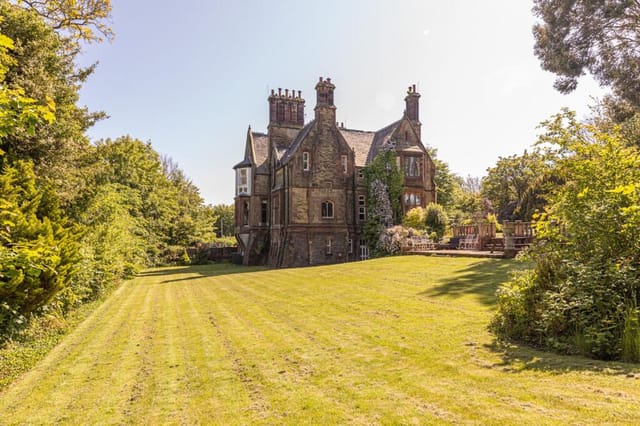
Stand in the entrance hall of Millwood Manor on a January morning and you'll understand immediately why someone built this place with such conviction. The stained glass window above the half-landing throws fractured colour across the decorative floor tiles, the marble pillar divides the two arches like a sentence worth pausing at, and beyond the bay windows of the drawing room, frost still clings to the rhododendrons at the edge of the woodland. This is a house that earns your attention before you've even sat down. Built around 1860 and later extended in the High Victorian Gothic style, Millwood Manor is a rare Grade II listed country house on the Furness Peninsula in south Cumbria — a corner of England that most international buyers haven't discovered yet, which is precisely the point. The property sits on approximately 1.97 acres of private grounds off Millwood Lane, with a curving driveway that loops around a central island and arrives at a front door that looks like it belongs in a different century. It does, and that's the appeal. Spread across three floors, the interior runs to around 485 square metres of living space — five bedrooms worth of room, four bathrooms, three formal reception rooms on the ground floor alone. High ceilings throughout, bay windows with built-in window seats, decorative coving and cornicing that took craftsmen months to complete. Each of the main reception rooms has its own feature fireplace. The drawing room and sitting room flow naturally from one to the other, the kind of arrangement that makes a large house feel genuinely liveable rather than ceremonial. The formal dining room handles twelve without effort. The kitchen is the heart of the house on wet Cumbrian afternoons — and there ... click here to read more
Front view of Millwood Manor

Stand at the top of the watch tower on a clear October morning and you can see for miles — the Bervie Water curving silver through the valley below, the North Sea glinting on the eastern horizon, and not another soul in sight. That view has been there since 1542. It will be there long after you're gone. That's the thing about Allardice Castle that gets under your skin: it doesn't feel like a house you buy. It feels like a place you inherit. Set about two miles northwest of the Royal Burgh of Inverbervie on the Angus coast, this six-bedroom castle sits above a dramatic bend in the Bervie Water, surrounded by roughly three acres of grounds that include a formal walled garden, riparian fishing rights along the riverbank, and a collection of stone outbuildings that include a coach house ripe for conversion. The driveway arrives at an inner courtyard — the kind of arrival that makes guests go quiet for a moment. Harled stone walls, a slate roof, and an L-shaped tower house configuration that has barely changed in centuries. Inside, the spiral staircase does most of the talking. It rises through three storeys in that tight, deliberate way that Scottish tower houses were built — not for speed, but for defence, for ceremony, for the long view of things. The ground floor anchors daily life comfortably: a large kitchen and living room with a fireplace so substantial you could park a car in the opening, a wood-burning stove that makes January here genuinely cosy, a pantry, utility room, shower room, and a vaulted entrance hall that doubles as a home office. The bones of the place are extraordinary — original doors, intricate cornicing, wood panelling that's been here longer than the country you're reading this from has existed in ... click here to read more
Allardice Castle exterior

Step outside on a Tuesday morning and the only sounds you'll hear are the distant moo of Charolais cattle in the field next door and the wood pigeons working the oak at the far end of the meadow. That's Rom. Not a place most tourists pass through, but exactly the kind of unhurried corner of Poitou-Charentes that people who've done the Dordogne circuit a dozen times eventually find their way to — and then quietly start buying. This five-bedroom stone house sits on just over 6,400 square metres of land in the commune of Rom, in Deux-Sèvres, priced at €230,000 all in. At 164 square metres of living space in the main house, plus a fully independent 49-square-metre gîte, a 130-square-metre barn, a gym, a games room, and a carport — this is not a property that runs out of purpose. Walk through the front door and the bones of the place hit you immediately. Exposed limestone walls, thick and cool in summer. Original oak beams crossing the ceilings in every bedroom upstairs. Parquet underfoot. These aren't cosmetic details someone stapled on during a renovation — they're structural, authentic, the kind of craftsmanship that stopped being common practice a century ago. The open-plan kitchen and dining room is big enough to actually feed a crowd, which matters when this becomes the gathering point for extended family summers. Off to one side, the separate sitting room has a stone fireplace with a wood-burning stove — the kind of room that earns its keep from October through March when the Deux-Sèvres countryside turns cool and golden and quiet. Upstairs, four bedrooms with beamed ceilings share a family bathroom with a bath. The ground floor has a shower room and utility room, keeping daily life functional without fuss. The prop ... click here to read more
Picture 1

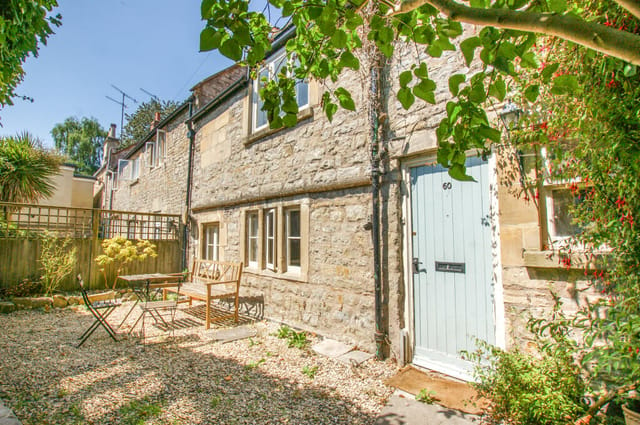
Early on a Sunday morning in Upper Weston, the smell of fresh bread drifts down from the village bakery on High Street before most of the city has stirred. You open the kitchen door onto the rear courtyard, coffee in hand, and the only sound is birdsong and the distant toll of Bath Abbey's bells carried on the breeze from the valley below. This is what daily life looks like from this Grade II listed stone cottage — and it's the kind of slow, grounding rhythm that people cross continents to find. Upper Weston sits just far enough from Bath's famous Georgian core to feel like a genuine village, yet close enough that you can walk into the city centre in around thirty minutes along a mostly flat route, or jump on one of the frequent buses from the High Street. That balance is rare. Most Bath properties either sit in the thick of the tourist bustle or require a car for everything. This one gives you both worlds — a quiet residential street with a proper neighbourhood feel, and one of England's most celebrated cities essentially on your doorstep. The cottage itself is a two-bedroom end-of-terrace, and its Grade II listed status tells you something important: this building has been standing long enough that the nation decided it was worth protecting. The stone fireplace in the sitting room isn't a decorative afterthought — it's a proper period centrepiece, the kind you'd spend weeks searching antique salvage yards to replicate. Original exposed beams run across the ceiling. Traditional joinery throughout. Large windows pull in more natural light than you'd expect from a cottage of this age, and the front courtyard garden, enclosed behind a secure gate, gives you a genuinely private outdoor space that feels more like a secret ... click here to read more
Front view of the cottage

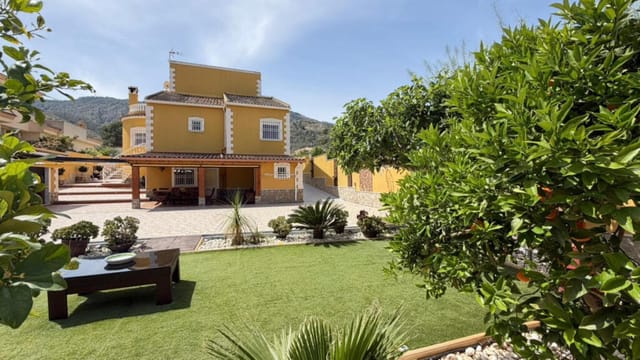
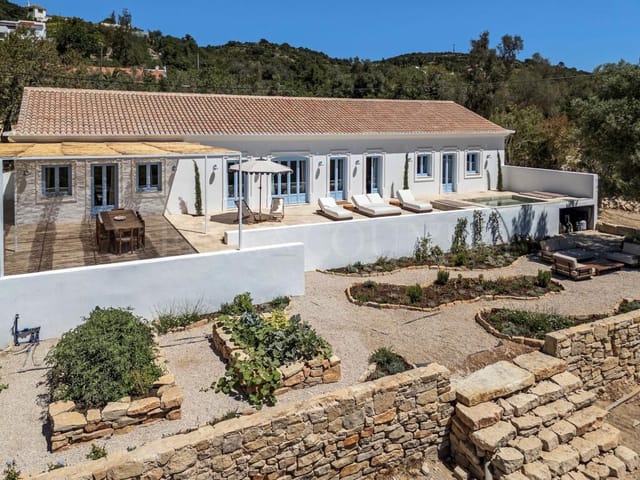
Stand on the south-facing terrace on a clear January morning and you can pick out the shimmer of the Atlantic somewhere beyond Faro, framed by row after row of limestone hills rolling away beneath you. The carob trees are absolutely still. There's no traffic. Just the occasional clink of someone raking gravel further down the plot, and the kind of quiet that people drive hours to find on weekends. This is Santa Bárbara de Nexe at its most honest — a hilltop village sitting above the Algarve's coastal circus, with all the beauty and none of the noise. This fully renovated three-bedroom villa sits on an 11,000 square metre plot on the quieter, elevated side of the village, set back from any through-road on a private approach with proper tarmac all the way to the gate. That last detail matters more than it sounds. Ask anyone who's spent an afternoon bouncing a rental car up a dirt track in the dark, trying to find a house number that doesn't exist — good access changes daily life here in ways that only become obvious once you've arrived. The plot itself is generous, genuinely private, and planted with mature olives and carobs that have been shading this land for decades. Gravel walkways wind between dry stone walls and drought-tolerant planting, and there's a kitchen garden already producing vegetables. The house itself was rebuilt from a traditional Algarve farmhouse and kept the bones that made it worth saving — whitewashed walls, pale blue window frames, a terracotta tiled roof — while adding a quality of finish inside that feels contemporary without being cold. The vaulted, beamed ceilings in the main living area are the first thing most people comment on. They give the open-plan kitchen, dining, and sitting space a r ... click here to read more

Picture 1

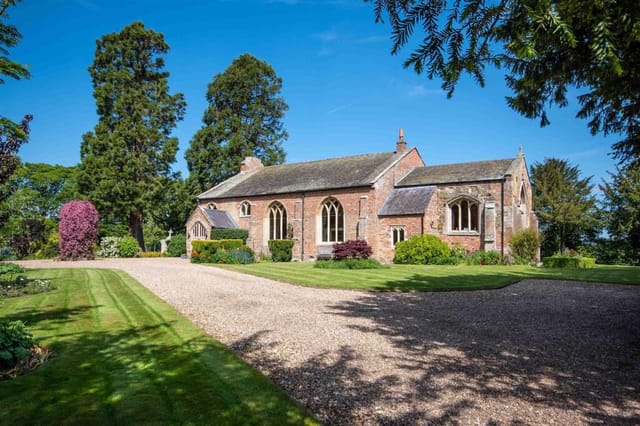
Stand in the former chancel of St Margaret's House on a Sunday morning and you'll hear nothing but birdsong through the original stone archways and the faint rustle of wind across an acre of open English countryside. That silence — the particular kind that only comes when thick Victorian masonry separates you from the rest of the world — is the first thing you notice. Then you look up, past the soaring vaulted ceilings, and realise this is somewhere that simply doesn't exist anywhere else on the market. This is a genuine Grade II Listed church conversion in the village of Withern, sitting on the eastern edge of the Lincolnshire Wolds, offered at £936,000. Five bedrooms, two bathrooms, over 4,000 square feet of living space, and roughly one acre of wrap-around garden. No onward chain. Numbers like that on a property like this don't come around often, and they tend not to hang around. The building's bones are extraordinary. The double-height living room — built into the original chancel space — runs to approximately 6.81 by 8.69 metres, and the proportions hit you the moment you walk in. This isn't a converted chapel squeezed into something domestic. The scale is proper, and whoever undertook the conversion was careful enough to leave the architectural drama largely intact: original stonework, handcrafted feature windows that throw coloured light across the flagstones at certain hours of the day, and masonry arches that frame views between rooms the way a painting frames a landscape. The galleried landing overhead — nearly 11 metres across — gives the whole interior a cathedral openness that no new-build could replicate. The kitchen and breakfast room is a different world entirely: contemporary, practical, and thoughtfu ... click here to read more

Front view of St Margaret's House

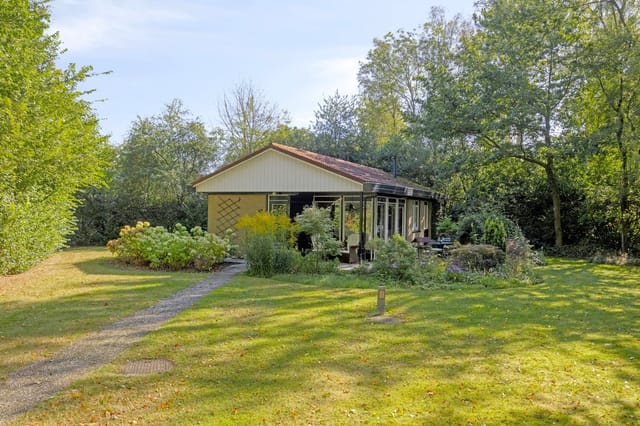
Saturday morning. You're sitting on the east-facing terrace with a coffee, the garden still carrying that faint damp smell of overnight dew on old oak bark. A blackbird is going at it somewhere in the shrubs along the fence. The park is quiet — other than that, nothing. No road noise, no neighbors' televisions, no city hum. Just 832 square meters of green in the heart of Friesland's most storied corner, and a bungalow that's been holding this spot since 1977 without making a fuss about it. This is Molenbosch 67. A three-bedroom recreational bungalow in Oldeberkoop — a village the Stellingwerven region has quietly called its pearl for decades — sitting on a private, tree-lined plot inside a well-maintained wooded park. At €199,000, it's one of the most accessible entry points into holiday property ownership in the northern Netherlands, and the kind of find that doesn't stay available long. The bungalow itself is honest. Built in 1977, it's largely in its original state, which means there's real work to be done if you want to modernize it — new kitchen, updated bathroom, improved insulation, energy efficiency. The energy label is G. This isn't a flip-it-and-forget-it property; it's a project with a clear upside, sitting on a plot that would be hard to find anywhere near this price in a location with this much going for it. For buyers who want to put their own stamp on a holiday home rather than paying a premium for someone else's renovation choices, this is it. The 51m² layout is compact and efficiently arranged. The living room runs to about 23m² — genuinely generous for a bungalow of this size — and opens directly onto the terrace via a garden door, so the boundary between inside and outside becomes fairly theoretical ... click here to read more

Front view of Molenbosch 67

Step outside on a Saturday morning in early September, coffee in hand, and the only sounds you hear are birdsong and the faint rustle of the Staatsbossen trees edging the garden. No traffic. No crowds. Just the particular silence that Drenthe does better than almost anywhere else in the Netherlands — a province that most Dutch people consider their best-kept secret, and that international buyers are only just beginning to discover. This detached three-bedroom bungalow at Buinerweg 8-401, positioned at the quieter outer edge of the well-loved Het Land van Bartje holiday park in Ees, sits on a private plot of 699 square metres. That's not a courtyard or a patch of grass — it's a proper garden, wrapping around the house on multiple sides, giving you the breathing room that park-edge plots almost never deliver. The southwest-facing rear terrace catches the afternoon sun until it dips behind the tree line, and from it you look out over open landscape. No fence-to-fence neighbours filling your eyeline. Just space. Built in 1996 in a low-key rural style that suits the Drenthe countryside, the bungalow covers 73 square metres across two floors and sleeps up to six people comfortably. Ground floor: a bright living room with a full glass façade and French doors that fold back onto the terrace in summer, a wood-burning stove that earns its keep in October and November, a semi-open kitchen renovated in 2020, a double bedroom, and a bathroom that was fully updated in 2024 — bathtub, walk-in shower, modern basin unit, the works. Upstairs, a landing with built-in wardrobe connects two further bedrooms. The whole place is laid with PVC flooring throughout, which sounds unremarkable until you've dealt with the upkeep of parquet or tile ... click here to read more

Front view of Buinerweg 8-401

Saturday morning. You slide open the balcony door and the Ardennes forest breathes back at you — cool air carrying pine and damp earth, birdsong louder than any alarm clock you've ever owned. Your coffee steams in your hand, the hardwood deck still slightly cool underfoot. Below, the trees absorb everything. No traffic. No neighbour noise. Just that particular silence you only find when you're deep in green Belgian hills. That's the daily opening act at this two-bedroom bungalow in Durbuy, and it never really gets old. Durbuy calls itself the smallest city in the world, and technically that's true — it received its city charter in 1331 and has been quietly delighting visitors ever since. But what the official tourism brochures undersell is just how good the lifestyle here actually is. The medieval cobblestone centre along the Ourthe river is genuinely worth the trip alone: hand-cut stone buildings, the castle backdrop of the Counts of Ursel, and tables outside Brasserie Li Lîdjî where the Trappist Rochefort pours cold and the mussels arrive in cast iron. Saturday markets on the Grand Rue draw producers from across the province — farm butter, raw-milk cheeses, smoked Ardennes ham that makes a simple baguette feel extravagant. And you're not just visiting this town. You own a piece of it. The bungalow sits within the well-managed Sunclass Durbuy park on Rue d'Andenne, positioned on a sloped section of the grounds that naturally creates distance from neighbours and gives the property its best asset: genuine privacy with long forest sightlines. The entrance climbs an exterior staircase to a front door that opens directly into a space that feels nothing like a typical holiday park cabin. The interior design has been done ... click here to read more

Photo 1 of Rue D'andenne 20B210

On a clear October morning, you step out through one of four sets of glass doors onto the stone terrace, coffee in hand, and the whole of Moissac spreads out below you — the Romanesque abbey tower catching the early light, the Tarn glinting silver beyond the rooftops, and on days when the air is sharp and clean, the white line of the Pyrenees etched along the southern horizon. This is the view that the current owners fell for. It's the kind of view that makes you stop mid-sentence every single time. Built in 1975 by an architect who clearly had opinions, this 278-square-metre Tower House sits at the top of the Bel Air quarter, behind electric gates, at the end of a long private driveway lined with mature trees that form a canopy in summer. The grounds feel more like a private park than a garden — established oaks, flowering shrubs, wide lawns, all of it enclosed and genuinely quiet. You'd never guess you're a ten-minute walk from a town centre that comes seriously alive on market days. The house itself has been modernised and upgraded by its current owners at considerable cost, and the quality of the work shows. Step inside and the first thing you notice is scale. Cathedral ceilings with exposed timber beams give the main living space a sense of real drama. The oak herringbone floor in the sitting room is the kind of detail you'd find in a Parisian apartment — warm underfoot, with a log-burning stove anchoring one end of the room. Four pairs of doors open directly onto the terrace, so in warmer months the line between inside and outside practically disappears. The kitchen is modern and properly fitted — integral appliances, clean lines, no compromise. Six bedrooms and three bathrooms across the property means this wor ... click here to read more

Picture 1

The first thing you notice, stepping onto the wraparound terrace at Skjelvikveien 14, is the light. Norwegian coastal light in summer is something else entirely — broad, flat, almost silver, bouncing off the water and filling every corner of the deck well past nine in the evening. You're standing 100 meters from the sea. The air smells of salt and pine. Somewhere across the inlet, a boat engine cuts out and the silence rushes back in. This is Kvenvær, and it gets under your skin fast. Kvenvær sits on the island of Hitra in Trøndelag, mid-Norway's stretch of coast that most international travelers haven't figured out yet. That's part of the appeal. The Trondheim Fjord region draws serious fishermen, kayakers, and people who've grown tired of queue-heavy national parks. Hitra itself is famous among Norwegians for its deer population, its seabird colonies, and the kind of fishing — cod, pollock, mackerel, sea trout — that makes grown adults wake up at five in the morning without complaint. The local grocery store is a three-minute drive up the road. The nearest proper town, Fillan, is under twenty minutes. You're not isolated. You're just far enough. The chalet at Skjelvikveien 14 was built in 1996, and it's been looked after. The construction is solid — traditional Norwegian timber framing, the kind built to take winters seriously. Inside, the living room anchors everything around a wood-burning stove that does genuine work from September through May. Light a fire, put on coffee, watch the fog come off the water through the big windows facing the inlet. That's a Tuesday morning here. The open layout runs kitchen into dining into living without fuss, which is exactly right for a two-bedroom cabin where the point is to be ... click here to read more

EIE eiendomsmegling by Kenneth K. Røvik presents Skjelvikveien 14! Photo: EFKT v/ Magnus Berdal

Step onto the veranda at Langelandsvegen 48 on a clear July morning and the view stops you cold. Mountains fold into each other across the water, the air smells of cut grass and pine resin, and the only sound is birdsong and the occasional car on the road far below. This is Haugstveit on Osterøy — twenty minutes from Bergen, a world away from it. Built in 1907, this three-bedroom farmhouse has been used as a holiday retreat, and it shows in all the right ways. It hasn't been sanitised into blandness. The bones are solid, the character intact, and the 2021 veranda and 2020 window upgrades mean the hard work of modernising the most critical elements is already done. What's left is a property with real potential — and, frankly, real soul. The ground floor living room runs to 22.7 square metres, with those newly replaced windows drawing in the kind of Nordic light that photographers chase for hours. A wood-burning stove anchors the room. On grey autumn afternoons when the rain is coming sideways off the fjord, this is where you'll want to be — fire going, something warm in your hands, the kind of silence that's genuinely hard to find anymore. The separate kitchen at 14.1 square metres keeps a practical, unfussy layout, good for putting together a proper Norwegian middag after a day on the trails. There's a laundry room beside it, a compact bathroom, and a main bedroom at an unexpectedly generous 18 square metres. Upstairs, two further rooms at 9.8 and 8.7 square metres, plus a loft lounge that works well as a reading room, a place for kids to disappear into, or a home office during quieter weeks. The outbuilding — 63 square metres, electricity connected — is currently used for storage, with a woodshed attached. It needs a ... click here to read more

Front view of the farmhouse and property

You wake up on a Saturday morning to the faint sound of wind moving through the dunes. The bedroom window faces the garden, and the light coming through it has that particular coastal quality — soft, diffuse, the kind you only get within a few hundred meters of the North Sea. By the time coffee's brewing in the kitchen, you can already hear the seabirds. The beach is a five-minute walk. You don't have a plan, and that's entirely the point. This detached three-bedroom vacation home at Beach Resort Nieuwvliet-Bad sits on 464 square meters of private land in one of Zeeland's quietest coastal corners. Built in 2018, the house carries the visual character of the Dutch coastal vernacular — a thick thatched roof, brick facades, timber detailing — without feeling like a costume. It fits the dunes. It fits the light. And inside, it's genuinely comfortable in ways that actually matter: underfloor heating on the ground floor, energy label A, a private sauna on the upper floor, and two full bathrooms across two levels. Nieuwvliet itself is not a place that announces itself loudly. That's what makes it worth paying attention to. This is the far southwest of Zeeland, where the coast between Breskens and Cadzand-Bad stretches long and largely uncrowded. The beach here is wide — properly wide, the kind where you can walk for an hour and feel genuinely alone in peak July. The North Sea at this latitude has a particular mood: dramatic in autumn, crisp in spring, and in summer, warmer than most people expect. Water temperatures along the Zeeland coast regularly climb past 20°C by August, making it legitimate swimming country. The resort itself is a contained world. The main building, with its indoor swimming pool, is within easy walking ... click here to read more

Front view of Zeedijk 24-170

Stand on the terrace and the Lot River is right there, maybe a hundred metres below, curving through limestone gorges that turn amber in the late afternoon sun. The church bell above tolls the hour. A swallow cuts past at eye level. It takes about thirty seconds to understand why this house hasn't been easy to give up. Saint-Cirq-Lapopie has been voted France's favourite village more than once, and the title doesn't feel like marketing. The medieval streets of pale stone, the 15th-century church perched at the top of it all, the painters who've been coming here since the Surrealists — André Breton lived and worked up the road — there's a reason this village on the Lot Valley's cliff edge has drawn people for centuries. And within that village, few houses sit where this one does: directly below the church, on the lip of a sheer 100-metre drop, with a private garden that runs right to the edge. The wrought-iron gate is easy to miss from the lane. That's rather the point. Once through it, the world shifts. Mature wisteria covers a pergola where a summer kitchen and dining table sit in dappled shade — this is where long lunches happen, the kind that drift into evening without anyone noticing. The gardens wrap around the property and along the cliff, a genuinely rare thing here; outdoor space of this size and privacy simply doesn't come up in Saint-Cirq-Lapopie. Seating areas tuck into different corners depending on the time of day and the angle of the light, and every one of them faces something worth looking at. The house itself is old stone and brick, honest about its age in the best possible way. Terracotta floors, exposed ceiling beams, a wood-burning stove that makes the living room feel like exactly the right place ... click here to read more

Picture 1