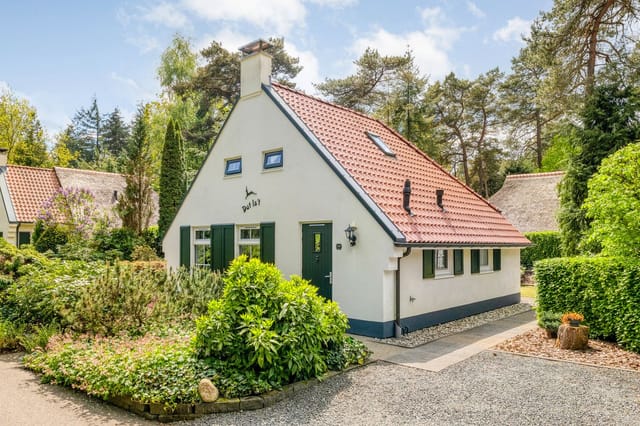
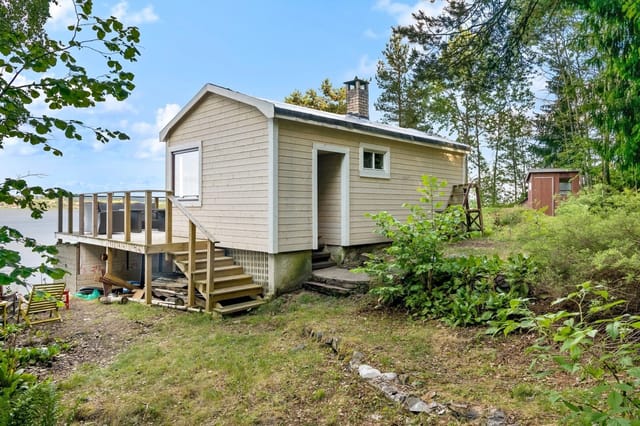
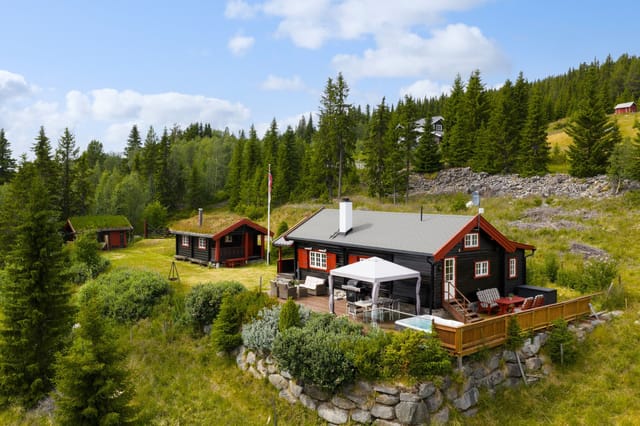
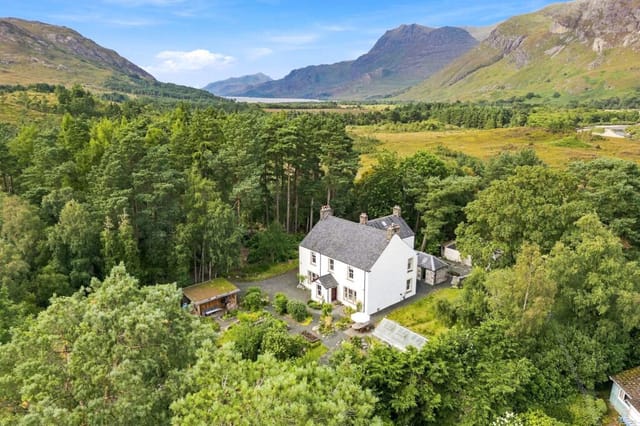
Houses For Sale In Europe (page 2)

Houses for sale in europe - homestra offers the largest amount of european real estate with over 200,000+ properties, find any type of property within your budget from villas to country homes. buy or rent your perfect home in europe. (page 2)

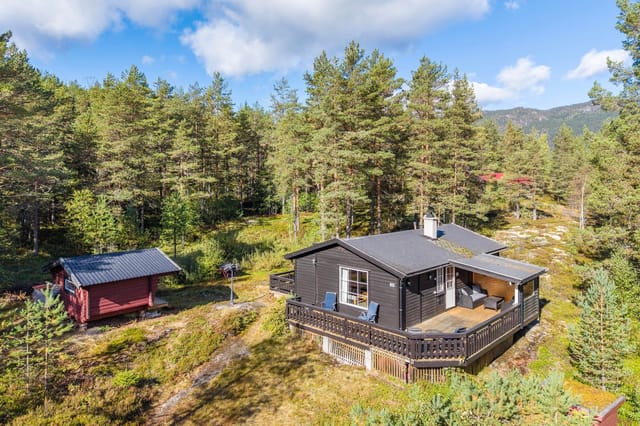
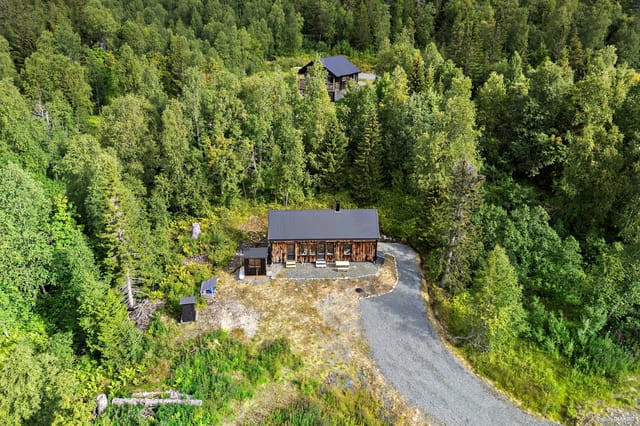
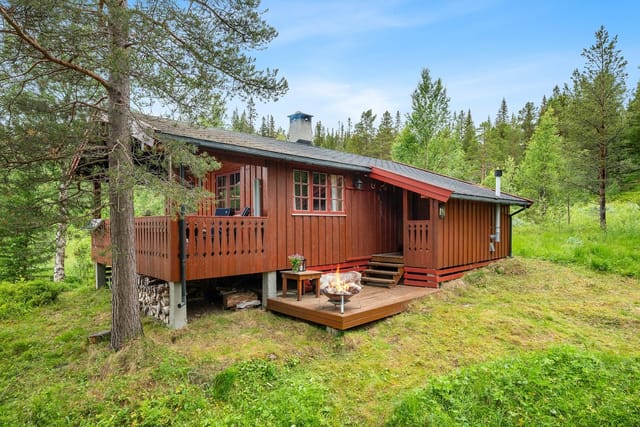
Step outside on a February morning and the groomed ski trail is literally 50 meters from your front door. Pull on your boots, clip into your skis, and you're moving through snow-dusted spruce forest before your coffee has gone cold back on the stove. That's not a fantasy — that's a Tuesday at Brubakkveien 101 in Budalen. Budalen is one of those valleys in Sør-Trøndelag that Norwegians tend to keep to themselves. Tucked between forested ridges at around 567 meters above sea level, the area has the kind of raw, unhurried quiet that you genuinely cannot fake with interior design. The air smells of pine resin and cold stone. In summer, the hills turn the specific green that only happens in places with real winters. In winter, the snow comes thick and serious, and the landscape becomes something else entirely. The cabin itself — a solid 1983 build on Brubakkveien — sits surrounded by forest with two covered verandas and a terrace adding up to 18 square meters of outdoor space. From the main veranda, the view opens over the valley. You'll drink a lot of coffee out there. The structure is in good condition and sold fully furnished, which means the day you pick up the keys is the day you start using it. No waiting, no shopping trips, no awkward gap between purchase and pleasure. Inside, the open-plan living room and kitchen is anchored by a centrally placed wood-burning stove. The vaulted ceiling and large windows make the 35 square meters feel more generous than the numbers suggest — light does a lot of work here. The kitchen runs in a practical L-shape with solid counter and storage space, designed for actual cooking rather than just aesthetics. Two bedrooms sit off the main space: one with a double bed, the other with a cu ... click here to read more

Welcome to Brubakkveien 101, a cozy leisure property in scenic and secluded surroundings.

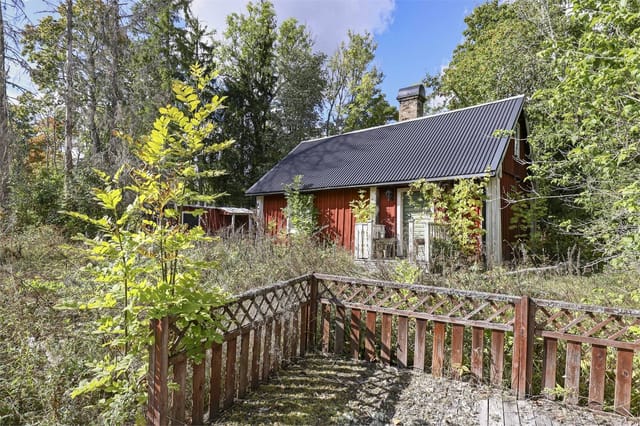
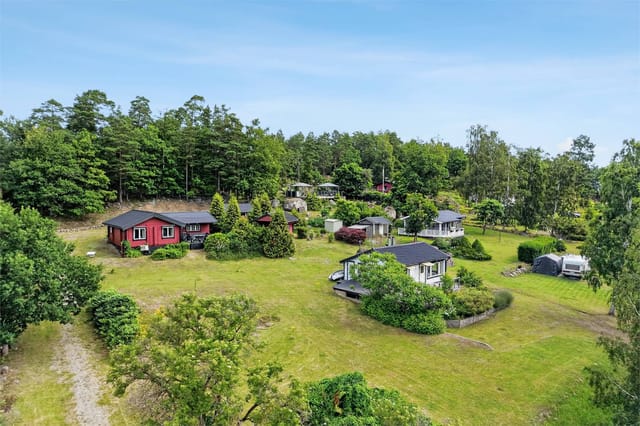
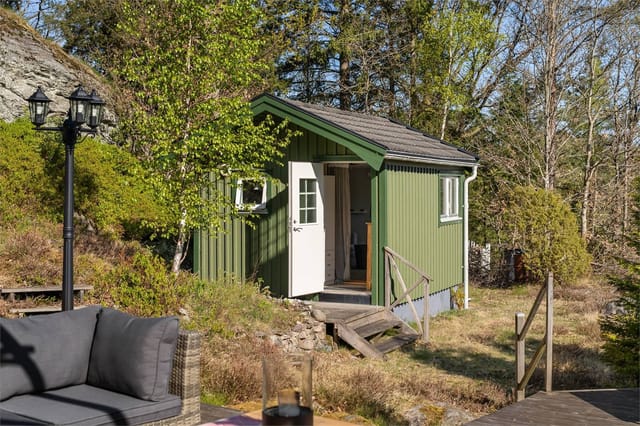
Stand on the plot at Gryttjom Norra Bullerbacken on a June morning and you'll hear almost nothing — a wood pigeon somewhere in the birches, a distant tractor, wind moving through long grass. That's the deal here. Quiet of the kind that's genuinely hard to find in Europe for under thirty thousand euros. This is a one-bedroom country cottage sitting on a 1,025-square-meter plot in Gryttjom Norra Bullerbacken, a rural hamlet just outside Österbybruk in Östhammars municipality, Uppsala County. The price reflects the property's condition honestly: it needs work. Real work. Electricity, water, and sewage connections are not currently in place, and the cottage itself carries the wear of its years. But the bones are there, the land is generous, and for a certain kind of buyer — the one who's been scrolling listings for months looking for a blank slate in the Swedish countryside — this is exactly what that search has been building toward. Österbybruk itself is one of those Swedish towns that doesn't shout about its history but rewards those who look. The old ironworks at its center, Österbybruks bruk, dates to the 16th century and is one of the best-preserved ironworks estates in the country. The manor house and its grounds host summer concerts and cultural events that draw people from Uppsala and Stockholm — not the huge festival crowds, but the kind of gathering where you end up talking to the same people for three evenings in a row. The weekly market in summer brings local producers: cloudberry jam, smoked perch from Lake Tämnaren, freshly dug new potatoes that actually taste like something. Lake Tämnaren sits about fifteen kilometers west and is one of Uppland's most ecologically rich lakes — flat, wide, surrounded by reed ... click here to read more

Exterior view of the cottage and plot

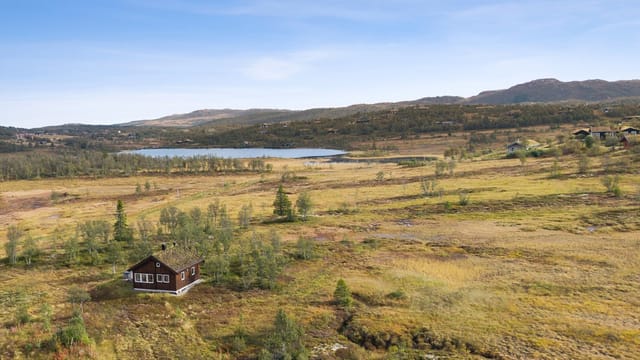
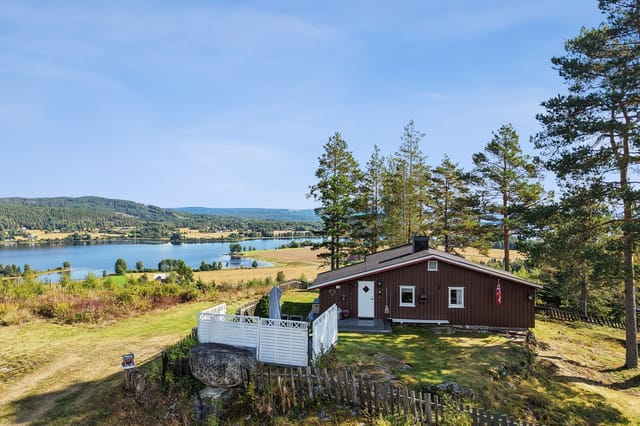
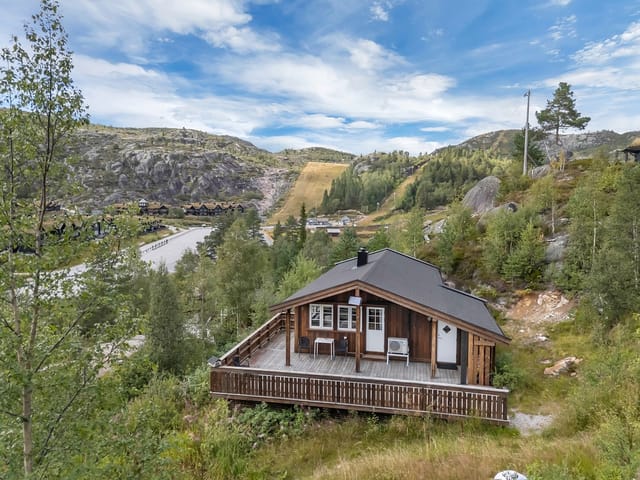
Step outside on a January morning and the ski trail is right there—literally starting at the edge of the plot—with the Rauland Ski Center's 12 lifts visible just 500 meters down the slope. The mountain air hits hard, cold, clean, and the kind of quiet that makes you realize how loud city life actually is. This is what you bought the cabin for. That exact moment. Bjønnskarhaugen 27 sits on an open, elevated plot above the plateau village of Rauland in Telemark, freed from the tight clusters of holiday cabins that dominate much of Norway's mountain property market. There are no close neighbors pressing in. The nearest human infrastructure is a groomed cross-country trail—and even that feels like a feature, not a compromise. The cabin faces out toward Raulandsfjell, and on clear days the view sweeps the entire ridgeline without interruption. Sun hits the property early in the morning and doesn't leave until nearly 10:30 pm in midsummer. That's not marketing copy—that's just Norwegian geography doing its thing at this latitude and elevation. Built in 2011 and finished in solid condition throughout, the chalet follows a classic Norwegian hytte aesthetic: a traditional sod roof that settles into the landscape like it's always been there, vertical timber paneling inside, parquet floors underfoot, and a wood-burning stove that pulls the whole room together on cold nights. The open-plan living area and kitchen occupy the heart of the main floor. The ceiling opens up to the rafters here, which gives a 52-square-metre footprint a genuinely spacious feel—not just on paper but in practice, when you've got ski gear draped over chairs and four people simultaneously making coffee and arguing about which trail to take. The kitchen is ... click here to read more

Welcome to Rauland and Bjønnskarhaugen 27! Senior broker Jeanette A Eriksrød welcomes you to the viewing.

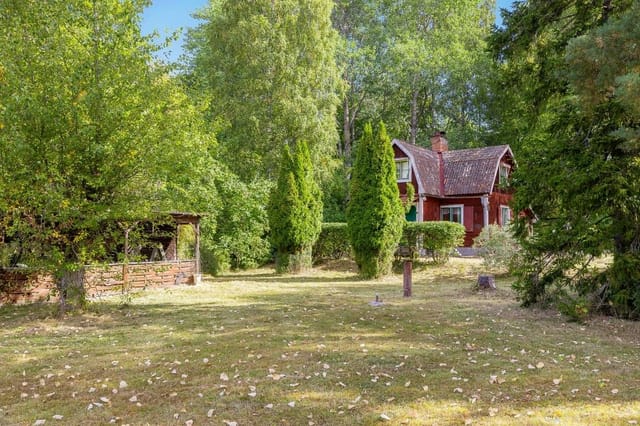
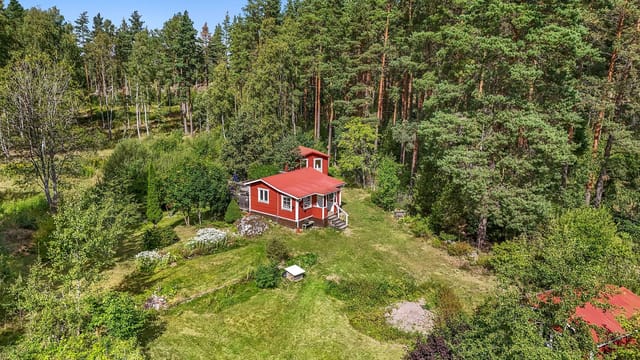
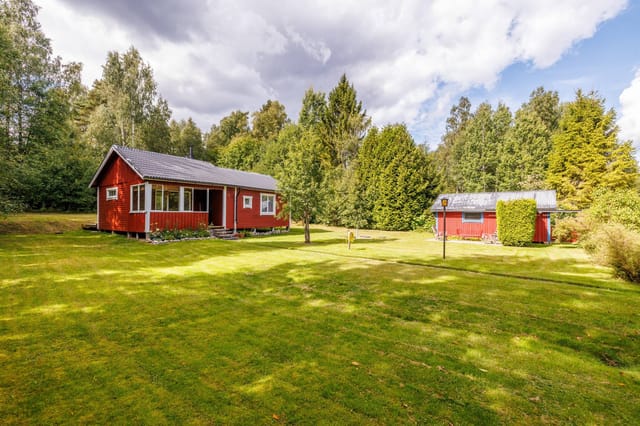
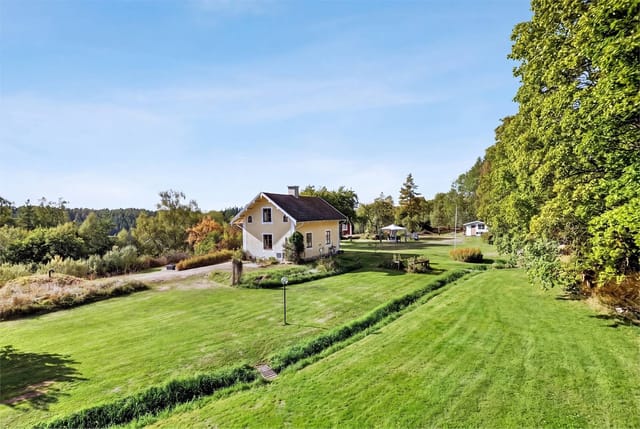
On a still July morning in Grillby, the air smells of pine resin and cut grass. A woodpecker hammers at the birch tree near the old pergola. You're standing in 2,660 square meters of your own Swedish countryside, coffee in hand, and the nearest neighbor is far enough away that you can hear the silence. That's not a marketing line — it's Tuesday here. Boglösa Blacksta 12 is a 1929-built Swedish summer cottage sitting on a generous rural plot in Enköping Municipality, about 80 kilometers west of Stockholm and 40 kilometers from Uppsala. Two bedrooms, 51 square meters of living space, a separate guest cottage, a root cellar, an old pergola, and that enormous garden that immediately starts plotting what it could become. The property is priced at €59,500 and sold in good condition with a disclaimer clause, which is standard practice in Sweden for older rural properties — it simply means the buyer takes ownership of the property as-is, and surveys are conducted before signing. For international buyers, this is a well-worn process with good legal protections in place. Let's be honest about what this place is. It's not a turnkey holiday villa. The interiors are older standard — think original 1920s construction bones, the kind of craftsmanship that doesn't exist anymore, buried under layers of wallpaper and time. The guest cottage needs work. So do some of the outbuildings. But that's precisely why the price is what it is, and why the right buyer — someone who sees past the surface and has a plan — will find serious value here. Swedish country cottages with this much land, this close to major cities, at this price point are increasingly rare. People from Stockholm and Uppsala have been snapping them up for decades precisely be ... click here to read more

Exterior view of the main house and garden

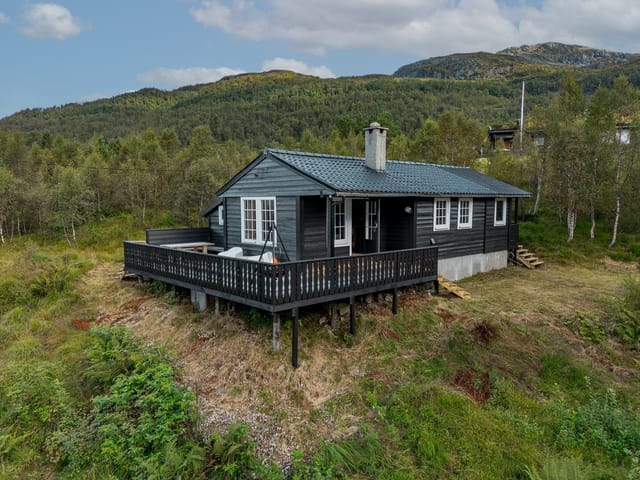
Step outside on a February morning and the ski trail is literally 100 meters from your front door. No loading the car, no fighting for parking at the base lodge. Just boots on, poles in hand, and you're gone into 70 kilometers of groomed cross-country tracks that wind through some of Western Norway's most raw and open terrain. That's the daily reality at Byrkjesetevegen 272 — a four-bedroom Norwegian mountain chalet sitting at 464 meters above sea level in Kvamskogen, one of the Hordaland region's most established and beloved cabin communities. Kvamskogen sits roughly 35 kilometers inland from Norheimsund, the small town on the southern shore of Hardangerfjord. The drive up from the fjord takes about 40 minutes on winding mountain roads that, honestly, are half the experience — in autumn, the birch trees along the switchbacks go a shade of gold that stops you cold. Bergen, Norway's second city, is around 90 kilometers away and reachable in under two hours, making this a realistic weekend escape from the city as well as a proper base for international visitors flying into Bergen Airport Flesland. The chalet itself was originally built in 1967, but don't let that date mislead you. Extensions were added in 1992 and 2002, and the kitchen was completely renovated in 2021. The bones are solid and the upgrades are real. At 67 square meters of internal living space on a freehold plot of approximately 3,238 square meters, this is not a cramped mountain box — it's a proper family retreat with room to breathe both inside and out. Inside, the open-plan living room and kitchen is the heart of the place. The 2021 kitchen renovation brought in contemporary black profiled fronts, integrated appliances, and enough counter space to act ... click here to read more

Front view of the cabin at Byrkjesetevegen 272

Step outside on a July morning and the air hits you first — cool, pine-sharp, carrying just a trace of salt from the fjord that sits a hundred meters down the path. The water is flat, almost impossibly still, and somewhere across the inlet Fusafjellet catches the early sun. This is Fusa, and this four-bedroom chalet on Strandvikvegen is the kind of place that quietly rearranges your priorities. Fusa sits in Bjørnafjorden municipality, roughly 40 kilometers south of Bergen as the crow flies — close enough that you can reach the city by ferry in just over an hour, far enough that the pace here is something else entirely. The community has a genuinely local rhythm: the fish counter at Spar in Eikelandsosen, the trails up Fusafjellet where the views stretch clear to the coast on a good day, the tiny harbor where people still keep rowing boats alongside their motorcraft. It's the real Norway, not the postcard version. The chalet itself measures 83 square meters of interior living space, with a total usable footprint of 143 square meters once you factor in the 30-square-meter basement and the 19-square-meter outbuilding. The property is in good condition — no major renovation project waiting for you, just the pleasure of arriving and settling in. Large windows across the main living area pull the outside in. On grey autumn days, when the fjord turns pewter and the mountains disappear into low cloud, those windows frame something almost cinematic. On clear winter evenings, you light the fireplace and the room does exactly what a Norwegian cabin room should do. The kitchen comes fitted with profiled cabinet fronts and a solid wood countertop — honest materials, built to last. The open-plan arrangement between kitchen, dining, ... click here to read more

Welcome to Strandvikvegen 78 - a leisure property with a large garden and beautiful surroundings.

Early June in Skåne, the rapeseed fields go electric yellow right up to the edge of the garden. You're standing at the kitchen window at Önnerupsvägen 1, coffee in hand, watching a pair of cranes pick their way across the arable land that stretches south from the house. No traffic noise. Just wind, birdsong, and the distant shimmer of the Öresund on the horizon. This is what 3.7 hectares of southern Swedish countryside actually feels like from the inside. The estate sits in Lomma Municipality, one of the most quietly coveted corners of Skåne — close enough to Lund, Malmö, and even Copenhagen to be genuinely practical, but far enough out that the pace of life here operates on different terms. Bjärred is about five minutes by car, a small coastal community with a serious devotion to its waterfront. The beach at Bjärred stretches long and sandy along the Öresund strait, and on a clear day you can see the Danish coastline. In summer, locals cycle the flat coastal path north toward Lomma, stopping for grilled fish at the harbour stalls. It's not a tourist beach. That's the point. The manor house itself covers 237 square metres of living space, with an additional 95 square metres of ancillary area. High ceilings, generous room proportions, and the kind of light that only comes from windows that face multiple directions across open land. The layout suits a large family easily — multiple living areas flow between each other without feeling compartmentalised, and the kitchen is the real social heart of the house, sized for cooking and gathering at the same time. Several bedrooms and bathrooms mean guests have actual privacy rather than polite tolerance. The property is in good condition, genuinely move-in ready, and carries the ... click here to read more

Estate exterior view

Step outside on a February morning and the world is completely silent except for the creak of snow settling on the birch trees. The thermometer reads minus twelve, the sky is a hard, clear blue, and the prepared cross-country trail is literally a five-minute walk from your front door. That's what owning a cabin in Bjødalen feels like in the depths of a Norwegian winter. And in July, those same tracks become soft paths through cotton-grass meadows, with cloudberries ripening at the edges and the smell of warm pine resin in the air. This is a place that actually delivers on both seasons, not just one. The chalet sits at the end of Bjødalsvegen, tucked at the top of a quiet cul-de-sac at around 865 meters above sea level in the Bjødalen/Knutstølen area on the southern flank of Bjødalsfjellet, close to Brattrudsætrin in Valdres — one of the most well-loved mountain regions in inland Norway. At this elevation, the light does remarkable things. Summer evenings stretch well past ten o'clock, the ridgeline holding the last of the gold while you sit on the 19-square-meter south-facing terrace with a coffee going cold in your hand because you keep forgetting to drink it. Built in 1969, the 68-square-metre main cabin has the bones of the era — exposed wooden beams crossing the living room ceiling, wood-panel walls throughout, and two separate wood-burning stoves, one in the living room and one in the dining area. That's not a redundancy; it's practical Norwegian logic. You get the dining stove going first thing in the morning, the kitchen warms up fast, and by the time you've made porridge, the living room stove has the rest of the cabin following suit. The kitchen itself is original and functional, with a gas stove and enough co ... click here to read more

Welcome to a pleasant viewing!

The wood-burning stove is already crackling by the time you pull off your ski boots. Outside the south-facing terrace windows, the last of the afternoon light turns the Funäsdalen peaks a deep copper-rose. This is a Tuesday in January, and it feels nothing like ordinary life. Slalomvägen 8 sits on the Baggården ridge in Messlingen, a small community folded into Härjedalen's high country — one of Sweden's least-crowded and most underrated mountain districts. The cabin occupies a generous 1,716 square metres of natural plot, elevated just enough above the surrounding terrain that the view over the lake and the range beyond it is wide open and unobstructed. You don't have to look for the scenery here. It finds you. The log structure itself has been renovated with real care. That word gets thrown around a lot in property listings, but you'll see the difference the moment you walk in. The work was done to preserve the character of the original building — the warm tones of the timber, the low ceilings that make rooms feel like they're actually holding you — while adding a kitchen and bathroom that don't require apology. Three bedrooms sleep a family comfortably, or a group of friends who don't mind being cosy. The bathroom has a proper shower. The kitchen has counter space and a sensible layout, which matters more than it sounds when you're feeding six people after a full day on the trails. The living room is the heart of it. Open plan, connected to the kitchen, with the stove sitting in the corner like it owns the place — which, honestly, it does. In the evenings, after dinner, this is where everyone ends up. Someone brings a bottle of something. The fire does the rest. Step through the glass doors onto the south-facing t ... click here to read more

Exterior view of the log cabin

You wake up to the sound of nothing. Not the traffic kind of nothing, but the real kind — a woodpecker somewhere deep in the pines, water lapping at the shore fifty meters down the slope, and the faint creak of the house settling in the morning air. You put the coffee on in the kitchen, glance through the wide window at the lake below, and wonder, not for the first time, why it took you so long to find this place. Götuddevägen 39 sits on a generous 2,396-square-meter plot on the edge of Göten, a small lakeside community tucked into the heart of Östergötland County in central Sweden. It's the kind of address that doesn't come up often — elevated, private, with an uninterrupted water view and no neighbors close enough to interrupt the quiet. The main house, 58 square meters built in 1993, is compact but genuinely livable. Large windows pull the lake view right into the living room, so even on a grey November afternoon you feel connected to the landscape outside. The kitchen is practical without being spartan. The bedroom handles a double bed with room to spare. Everything works, everything is maintained, and nothing demands immediate attention — this is move-in ready, not a project. What makes the property genuinely unusual is the second residential building on the same plot. This isn't a garden shed. It's a proper additional structure with real utility — guest accommodation for summer visitors, a workspace for anyone who takes remote work seriously, or a hobby studio that keeps the mess out of the main house. And there's a guest cottage beyond that. Three separate structures, one plot, one price. That kind of flexibility in a rural Swedish setting at this price point is rare enough to stop and pay attention. The plot i ... click here to read more

Exterior view of the main house and garden

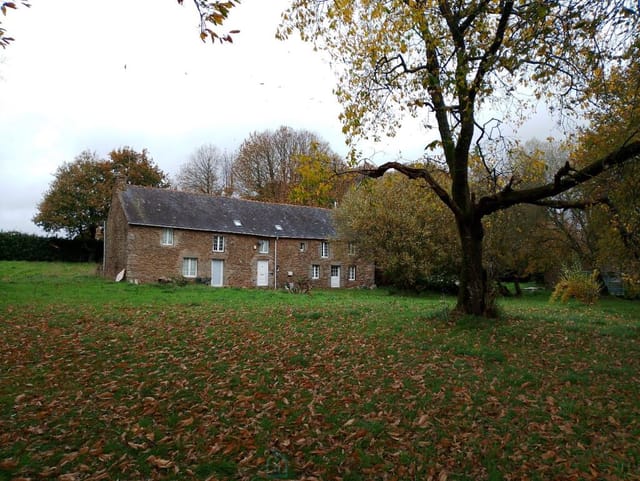
Stand at the kitchen window on a November morning and watch mist roll off the wooded acres behind the stone walls, curling around the old longère like smoke. The fire's already been lit — the cast-iron stove in the living room takes the edge off fast — and the only sound is the distant caw of rooks settling in the tree line. This is Ménéac, deep-green Brittany, and this place is the kind of property that stops serious buyers mid-scroll. Set in a small hamlet just 2.1 kilometres from the village of Ménéac itself, this substantial granite house sits on roughly 6.3 hectares of mixed land, part cultivated, part wooded. It's been divided into two fully independent dwellings — a detail that changes everything about how you might use it. One wing for your family, one for guests, rental income, or an elderly relative who wants proximity without sacrifice of privacy. The arithmetic of that arrangement is immediately appealing for anyone buying a second home in France who wants flexibility without compromising the experience of actually being there. The main dwelling opens at ground level into a living room anchored by an open fireplace paired with a wood-burning stove — two heat sources, which tells you something about how the previous owners felt about Breton winters. Through from there, a fitted kitchen and laundry room keep the practical side of things contained, along with a ground-floor toilet. Head upstairs and you get a bedroom with its own en-suite bathroom, a second family bathroom, a further bedroom, and a room currently used as an office but easily repurposed. The second dwelling mirrors this layout almost exactly: a living room with fireplace and stove, a kitchen-dining room (combined this time, which most families ... click here to read more

Picture 1

Step off the terrace on a January morning and listen. Nothing. Just the creak of snow-loaded pine branches and the faint scrape of your neighbour's skis somewhere down the trail. That particular silence — the kind cities charge a fortune to briefly escape — is just part of a regular Tuesday up here on Ekornholsåsen ridge. This three-bedroom chalet at number 79 sits on an elevated 1,375 square metre freehold plot in Sagstua, a quiet cabin community in Nord-Odal, Innlandet. At around NOK 106,000, it is the kind of entry point into Norwegian countryside ownership that frankly doesn't come around often. And it's move-in ready, sold fully furnished, which means your first weekend here could be this season. The cabin was first built in 1963 — that matters, because you can feel it in the bones of the place. Pine floors worn smooth in exactly the right spots. Panelled walls the colour of pale honey. Windows in the living room that are just large enough to make the forested hills outside feel like a painting someone keeps updating with the seasons. The wood-burning stove sits at the centre of it all, and once you've lit it on a grey October afternoon with rain tapping at the glass, you'll understand why Norwegians have been building cabins like this for a century. The stove isn't a feature. It's the whole point. The extension added in 1992 brought in a proper entrance hall and bathroom, connecting older and newer sections without disrupting the cabin's personality. The layout is single-level, which makes it genuinely accessible for families with young kids or older guests — no steep internal stairs to negotiate after a long day on skis. Three bedrooms sleep a comfortable group: couples, families, a cluster of friends who've be ... click here to read more

Welcome to Ekornholsåsen 79! Photo: Bjørn Sørheim for EFKT Norge

Imagine waking up on a July morning to the soft knock of lake water against your own private shoreline. You pull back the pine-framed window and the cool, clean air off Brusdalsvannet rolls in — the kind of air that makes you feel like you've done something right with your life. That's what mornings look like at this two-bedroom Norwegian chalet on Olvikvegen 4, and honestly, it's hard to go back to any other kind. Skodje is the sort of place that doesn't make a lot of noise about itself, which is precisely why people who know western Norway tend to love it. Tucked into the fjord landscape of Møre og Romsdal county, roughly 12 kilometres from the coastal city of Ålesund, the municipality sits in a narrow band of green hills and glassy water that most international travelers fly right over on their way to more obvious destinations. Their loss. The drive in from Ålesund Airport takes about 25 minutes, and once you're here, the outside world genuinely feels optional. The chalet itself dates to 1932 in spirit — you can feel the lineage in the warm pine flooring and horizontal timber cladding — but a full reconstruction in 1999 gave it the bones of a much younger building. PVC double-glazed energy windows installed as recently as 2016 keep drafts out through the long Norwegian winters, and the overall condition is solid and well maintained. Nothing here asks to be fixed before you can enjoy it. At 48 square metres of interior space across a ground floor and a sleeping loft, it's compact by design. Every square metre earns its keep. Downstairs, the living room and kitchen share an open layout that makes the space feel generous despite the footprint. Pine panelling lines the walls from floor to ceiling — warm, golden, unpret ... click here to read more

Welcome to Olvikvegen 4 presented by Real Estate Agent/Responsible Even Roth. Photo: Stian Wiik

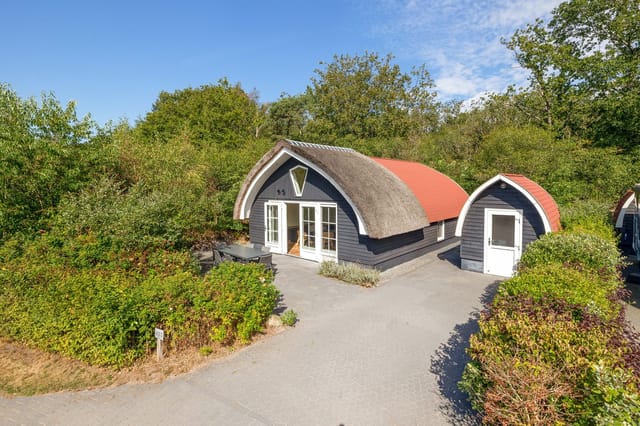
Saturday morning. The wood stove is still warm from last night, your coffee is brewing, and through the French doors you can see sunlight filtering through the pines at the edge of your garden. No neighbors in your sightline. Just birdsong, the smell of damp earth after rain, and the low hum of absolute quiet. This is what weekends are supposed to feel like — and at Calluna Oost 76, this is just the default setting. This fully renovated three-bedroom bungalow sits on a private 764 m² plot within Park Calluna, a small-scale recreational park that runs right up against the forests outside Ommen in the Dutch province of Overijssel. Small-scale matters here — this isn't a commercial holiday camp with communal pools and tannoy announcements. The park is low-key, well-kept, and genuinely quiet. Residents tend to be people who came for the trees and stayed for the peace. The house itself has been renovated with real care. Not a cosmetic refresh — the roof, floors, and walls are all insulated, every room runs on electric heating, the glazing is double throughout, and the whole property is fully all-electric. The energy efficiency isn't just good for the planet; it means running costs stay manageable year-round, which matters when you're factoring in the economics of a second home. The property comes fully furnished, too. You could book a viewing on a Friday and be drinking wine on that south-facing terrace by Saturday evening. Step inside and the layout makes immediate sense. The hallway opens cleanly into a living room that earns its place as the heart of the house — largely because of the soapstone wood stove anchoring one wall. Soapstone retains heat for hours after the fire dies down, which means on a cold October evening ... click here to read more

Front view of Calluna Oost 76

Picture this: it's six in the morning, the Trondheimsfjord is mirror-flat, and you're standing on a 113-square-meter timber terrace with a cup of coffee watching the light shift from pale gold to white over the water. No traffic. No noise. Just the occasional creak of a boat rope from your own private mooring down at the shore. This chalet at Vigtilvegen 105 in Frosta gives you that morning, every morning you want it. Frosta is a peninsula that juts out into the Trondheimsfjord about 45 minutes east of Trondheim city, and it has a reputation among Norwegians that hasn't quite leaked out to the wider world yet. The soil here is some of the most fertile in the country — the garlic and root vegetables grown on Frosta farms turn up on tasting menus in Trondheim's better restaurants. The light in summer is extraordinary, long golden evenings that seem to last forever, the kind of dusk that makes you pour another glass of wine and stay outside well past ten o'clock. In winter, the fjord occasionally freezes at the edges, the bare fields go silver-white, and the cross-country ski trails at Frostamarka open up — the nearest prepared track is just 1.1 kilometers from the front door. The chalet itself was built in 2000 and has been kept in genuinely good condition, with thoughtful updates along the way. The kitchen was fully renovated in 2020 and it shows — smooth-fronted cabinetry, a solid stone countertop, clean lines throughout. It connects openly to the living and dining area, so whoever's cooking doesn't end up exiled from the conversation. Large windows face the fjord, and on clear days you can track the slow movement of ferries and fishing boats from the kitchen sink. There's a wood-burning stove in the living room that e ... click here to read more

Presented by EiendomsMegler 1: Vigtilvegen 105. Photo: EFKT.

Stand on the upper floor on a calm July morning and you can see the light doing something unusual over Lake Mälaren — it splinters across the bays of Stallarholmen in a way that makes the water look like hammered silver. The windows are original hand-blown glass from the 1800s, so the view has a very slight wobble to it, like looking through old eyes. That detail alone tells you what kind of house this is. Toresunds Backe 4 in Stallarholmen started its life in 1753 as a soldier's cottage in Mariefred. It was part of the Ekeby estate, a piece of the Norra Ekeby historical landscape, and it has been standing — in one form or another — through Swedish winters and summers for nearly three centuries. In 2024, the house was carefully relocated to a brand-new 1,122 square metre plot and is undergoing complete reconstruction, due for full completion in 2026. New foundation, new installations throughout, every system modern and fresh. But the original 18th-century timber frame? Still there. Still load-bearing. Still the soul of the thing. This is genuinely rare. You don't often get to own a house with a documented provenance stretching to the mid-1700s, combined with the practical comfort of a newly built home. No compromises on insulation. No aging electrics. No worrying about what's behind the walls — because what's behind the walls is brand new, wrapped around centuries-old timber that craftsmen have gone to extraordinary lengths to preserve. The entrance porch — the so-called punsch veranda, a classic feature of 19th-century Swedish summer house culture — is fitted with that hand-blown glass, casting warped, amber-edged light into the hallway when the afternoon sun hits from the southwest. The kitchen is hand-painted and d ... click here to read more

Front view of the historic house

Step outside on a January morning and you can hear the ski lift humming before you've had your coffee. The slopes at Bortelid are right there — literally in your sightline from the terrace — and the groomed cross-country trails begin where the road ends. This is Kvitefossvegen 2, a three-bedroom mountain chalet sitting at 587 metres above sea level in Åseral, one of those Norwegian mountain destinations that regulars are quietly possessive about. And you'll understand why the moment you arrive. The chalet dates to 1979 but don't let that fool you. It's been thoroughly updated and carries none of the tired, dark-panelled weight you sometimes find in older Norwegian hytter. The interior is light and open, with big windows that pull the mountain panorama straight into the living room. On clear days — and there are plenty — you can watch the ski slopes shift colour as afternoon light drags across them. The fireplace in the open-plan living and kitchen space does exactly what a fireplace should: it makes the room the centre of everything. You eat here, you linger here, you play cards here while sleet taps at the glass outside. The floor plan is practical without feeling cramped. At 68 square metres, the space is thoughtfully laid out — entrance hall, three bedrooms, a modern bathroom, a storage room for all the skis and boots and wet gear that mountain life inevitably accumulates, and that generous open living area. Three bedrooms means you can bring the whole family, host friends from Oslo or abroad, and still have a door to close at the end of the evening. It's the kind of configuration that makes a mountain cabin genuinely usable rather than just aspirational. Then there's the terrace. Forty-eight square metres of south ... click here to read more

Picture 1

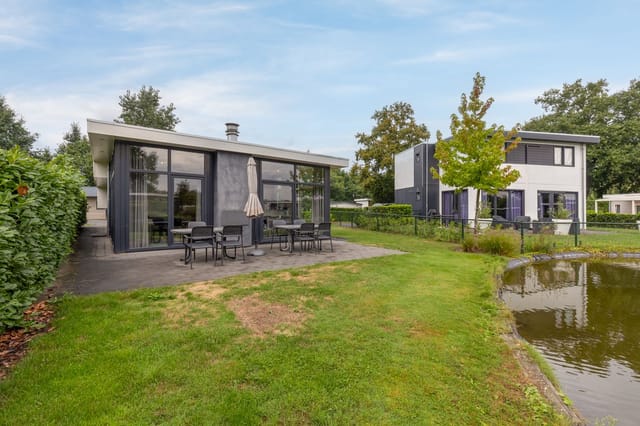
Saturday morning in Sibculo sounds like birdsong. Not ambient-noise-machine birdsong — real, layered, slightly chaotic birdsong coming through the bedroom window, mixed with the faint rustle of oak and birch on a 400-square-metre wooded plot that is entirely yours. By the time coffee is ready in the open kitchen, the sliding door to the south-facing terrace is already open, and the only decision pressing enough to think about is whether to cycle to the lake first or eat breakfast outside first. That is the rhythm this property sets. And once you've felt it, a weekend at home in the city starts feeling like the odd choice. Landal De Vlegge is one of Overijssel's quieter holiday parks — not the kind packed with waterparks and thumping entertainment schedules, but the kind where the paths through the trees are wide enough for a bike and a dog walking side by side. The park sits right alongside 't Zandgat van Francke, a clear swimming lake that locals have been using for summer afternoon dips for decades. In July and August the water is warm enough to genuinely enjoy. In April, when the park is less busy and the light through the trees is that particular pale-gold Dutch spring light, it's even better. Valkenlaan 20 is a detached bungalow-style recreational home — 85 square metres across two floors, two bedrooms upstairs, and a ground floor layout that makes the most of the indoor-outdoor connection that makes holiday homes worth having. The living room is the heart of it: large windows on two sides, and a full-height sliding glass door that opens the entire room to the terrace. On summer evenings, the boundary between inside and outside essentially disappears. The kitchen sits in an open-plan arrangement facing the living ... click here to read more

Front view of Valkenlaan 20

On a Sunday morning in Guern, the only sounds are the wind moving through the old oak at the edge of the garden and the distant bell from the village church carrying across the fields. You're standing at the kitchen window of a house that has been standing since 1638, watching mist lift off the Morbihan countryside, and thinking you could get used to this. Really get used to this. This five-bedroom stone property sits just ten minutes from Pontivy, a proper Breton market town with a working canal, a 15th-century château, and Saturday markets where the cheese vendor knows everyone by name. Guern itself is a quiet rural commune — the kind of place where neighbors wave from tractors and the post arrives without fail. At 187 square metres of living space on a landscaped plot of around 2,857 m², this is a genuinely substantial home, not a weekend cottage. It has real scale, real history, and the kind of bones you simply cannot manufacture. The oldest section of the main house traces back nearly four centuries. You feel that age in the best possible way — in the weight of the stone walls, the depth of the window reveals, the massive fireplace that anchors the double-height living room. That fireplace isn't decorative. Light it on a November evening with a bottle of Muscadet and a cassoulet on the hob, and you understand exactly why the French have been doing this for hundreds of years. The living room's unceilinged section creates genuine drama, with the mezzanine above looking down over the space — a reading corner, a desk, a spot for teenagers who want to feel separate without being far away. The ground floor layout is practical in a way old farmhouses often aren't. Two independent entrances give the house real flexibilit ... click here to read more

Picture 1

Early July morning: you pull open the kitchen window and the smell hits you first — cut grass, pine resin, and something faintly mineral from Västlandasjön just down the path. The lake is maybe a four-minute walk. You could be in the water before the coffee finishes brewing. This is what Lövsångarstigen 3 feels like on a Tuesday morning, and it's the kind of thing you stop taking for granted roughly never. Sundänge sits in the quiet outer orbit of Köping, the kind of Swedish countryside community that locals quietly love and rarely advertise. The plot at number 3 is a generous 1,278 square metres — big enough that you genuinely have to decide what to do with it. Most of the year, the answer involves a garden chair, direct sun, and very little ambition. In spring, it's all hands on deck for the kitchen garden, where the soil is deep and the growing season in Västmanland runs longer than most outsiders expect. The main house dates to 1967 and carries that straightforward, no-nonsense Swedish summer cottage character that architects have been trying to replicate ever since. At 35 square metres, it's honest about what it is: one well-proportioned open-plan room where the kitchen flows into the living space, and large windows that frame the garden like a painting you never tire of. A sofa bed means you're not wasting space on a dedicated bedroom when the room earns its keep as the gathering spot for everything else. The bathroom is compact, practical, and fitted with a shower — exactly what you need after a morning swim in Västlandasjön and nothing more. What takes this property beyond a classic Swedish stuga is the infrastructure behind the scenes. A modern air-source heat pump means you're not rationing the thermostat in ... click here to read more

Front view of Lövsångarstigen 3

Step outside on a January morning and the air hits you clean and sharp, carrying the faint wood-smoke smell from neighboring cabins along Bergstigen. The cross-country ski trail is literally 700 meters down the road. By the time your coffee is brewed and your boots are laced, you're already gliding through a pine corridor with the Numedal valley opening up around you. That's life at this two-bedroom chalet in Flå — and it shifts just as satisfyingly come July, when the same trail turns into a hiking and cycling path baked in long Scandinavian daylight. Flå sits in Hallingdal, roughly two hours by road from Oslo, and it punches well above its size. The train station is a four-minute walk from Bergstigen 22 — yes, four minutes — which means friends and family arriving from the capital can step off the Bergen Line railway and be handing you a wine bottle at the front door before they've had time to scroll Instagram. That connection to Oslo matters enormously when you're weighing up whether a Norwegian mountain property can realistically double as a rental asset. It can. The combination of Bjørneparken (one of Norway's most visited family attractions, half a kilometer away), the ski infrastructure, and the rail link creates year-round demand that pure wilderness locations simply cannot match. The chalet itself was built in 1967 and sits on a generous 906-square-meter plot — big for a village-centre position. At 62 square meters of total floor area, it's compact and honest, the kind of place that forces you to actually go outside rather than disappear into separate rooms. The open-plan living and kitchen area is anchored by a wood-burning stove. On a February evening with snow tapping at the large windows, that stove does m ... click here to read more

Front view of the cabin

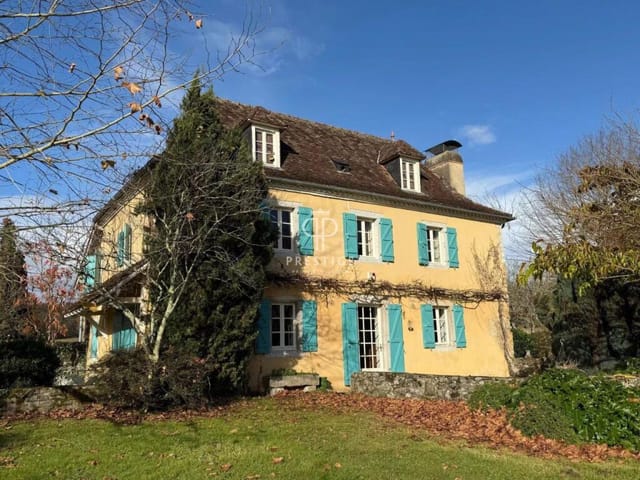
Stand on the upper landing on a clear October morning and the Pyrenees are right there — not a distant suggestion, but a full wall of snow-dusted peaks running the entire width of the horizon. That view alone stops people mid-sentence. Add a hectare of land, a pool, a barn with real potential, and a five-minute walk to one of the friendliest village squares in the Pyrénées-Atlantiques, and you start to understand why properties like this one in Laàs don't sit on the market for long. Laàs itself is quietly special. It sits in the heart of Béarn, a region that most people outside France haven't quite discovered yet — which is exactly the point. The village has a genuine rhythm to it. On Sunday mornings, the smell of coffee and warm bread drifts out from the boulangerie before eight o'clock. The château de Laàs, a 17th-century manor house with formal French gardens, stands just up the road and opens to visitors through the warmer months. The restaurant near the village centre — and yes, there's one worth going to, not just one that exists — draws locals from across the valley for long Friday lunches that tip over into the early evening without anyone checking their watch. The house itself is spread across 190 square metres and laid out in a way that actually works for family living. Downstairs, the kitchen connects through to a dining room which opens into the living room — the kind of fluid ground floor arrangement that means nobody's stuck in the kitchen alone while everyone else is gathered around the fire. There's also a separate snug, the sort of small room that ends up becoming everyone's favourite: the right size for a book and a glass of Jurançon wine on a winter evening when the mountains turn purple at dusk. Up ... click here to read more

Picture 1

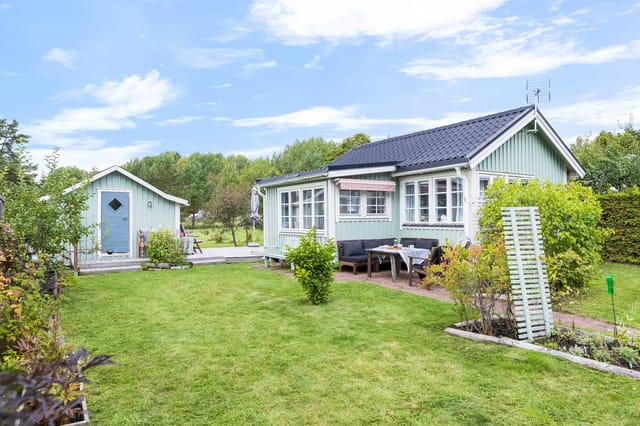
Picture this: a Saturday morning in late June, the Swedish sun already high at 7am, coffee in hand on a wide veranda while bumblebees work through a row of strawberries just beyond the railing. That is the rhythm of life at Vinbärsstigen 52 — a compact, well-kept summer cottage tucked into the Riddartorp Allotment Garden Association in Jordbro, about 25 kilometres south of central Stockholm. This is not a grand estate. It was never meant to be. What it is, is exactly right for anyone who has spent too many summers wishing they had somewhere green and quiet to escape to — a proper base camp for Swedish summer, with a garden that actually produces things and neighbours who still wave hello. The cottage itself is 31 square metres, plus an additional five square metres of auxiliary space. One bedroom. A living room that gets the light. A veranda with large windows that blurs the line between inside and out, currently used as a dining area — and on rainy days, that glass keeps you in the garden without the wet socks. The layout is tight but considered, the kind of space that forces you to be outside, which is entirely the point. What sets this plot apart is the land surrounding the cottage. The 300-square-metre leased plot holds vegetable beds, fruit trees, a well-maintained lawn, and several seating spots positioned to catch the sun at different hours of the day. There is a separate guest cabin on the plot — practical for hosting a friend, stashing bikes and garden tools, or setting up a simple hobby space. That guest cabin alone justifies a long look at this listing if you have been struggling to find something with a bit of overflow capacity without paying city-apartment prices. Water is drawn to the plot boundary for ... click here to read more

Front view of the summer cottage and garden

Step outside on a Saturday morning in late August and the air smells like pine resin and damp heather. The Drents-Friese Wold starts literally at the back fence of Landgoed 't Wildryck — not a short drive away, not a ten-minute walk, but right there. You grab a coffee, open the French doors onto the south-facing garden, and the only sound is a woodpecker somewhere deep in the trees. That's what life at 't Hertenspoor 140 actually feels like. This two-bedroom recreational house sits on a 474 m² plot in one of the most quietly coveted corners of the Dutch countryside. Built in 1999 and kept in genuinely good condition — this isn't a project, it's a place you can arrive at on a Friday evening and be sitting comfortably by dinner. The garden wraps around the property, mature plantings on all sides creating real visual privacy rather than the token hedge you get on so many park homes. South-facing, it collects the sun from mid-morning until the last light fades, which matters more than people realize when you're spending a June weekend outdoors with friends. The ground floor makes good use of its 70 m². A practical entrance hall handles coats, muddy boots, and bikes with ease — there's a cloakroom niche and laundry connections right there, which anyone who's spent a weekend cycling the Drenthe trails will immediately appreciate. The kitchen was refitted in 2014 and still performs well: gas hob, dishwasher, combination microwave, extractor hood, fridge. It opens directly into the living room, which is lighter than the square footage suggests thanks to the French doors. Open those and the garden becomes an extension of the living space. In July, you barely go back inside. Also on the ground floor: a separate WC with washbasi ... click here to read more

Front view of 't Hertenspoor 140

The first thing you notice, stepping off the footpath and onto the veranda at Holtnebbet 8, is the silence. Not the dead silence of an empty room—something richer. Water moving just a few meters away. Wind through spruce. The occasional creak of timber warming in the morning sun. This is what 53,100 euros buys you: a direct line to one of the most underrated waterfront settings within striking distance of Oslo. Fjerdingby sits on the eastern fringe of Romerike, where the landscape flattens into a patchwork of inlets, pine ridges, and farmland that most Oslo residents drive past without a second look. That's their loss. The locals here know the Øyeren delta the way city people know their coffee order—intimately, habitually, and with a certain pride. Norway's largest inland delta by surface area sits just south, a protected nature reserve where white-tailed eagles circle above reed beds and pike drift through still water. Kayakers from the city make the trip out specifically for it. You'd simply walk there. The cabin itself dates to 1940 and sits right at the forest's edge, the plot dropping gently toward the water's edge across 1,526 square meters of natural garden that transitions without fuss into the lakeshore. There's no formal landscaping—just birch, heather, and the kind of ground cover that takes care of itself. It's honest land. The kind that rewards anyone who wants to plant a kitchen garden along the south-facing bank or simply leave it alone and let the elk wander through in autumn, which they do. Inside, the 30-square-meter footprint is compact and deliberate. Classic knotted-pine paneling on the walls and ceiling, timber floors worn to a soft patina—this is the aesthetic that Scandinavian interior designer ... click here to read more

Welcome to Holtnebbet 8! Photo by EIE

Step outside on a February morning and the world is utterly still. The Nesfjella mountains rise across the valley in shades of blue and white, the air carries that sharp, clean cold that wakes you faster than any coffee, and the cross-country ski trail is literally 150 meters from your front door. This is Saupeset — a sun-facing mountain pasture above Nesbyen in the Numedal valley — and it's the kind of place Norwegians have been quietly keeping to themselves for generations. The main cabin at Bruslettgutu 55 dates to 1912. Over a century old, built from hand-hewn logs that have darkened beautifully with time, it has been updated where it counts without losing any of what makes it worth owning. New plumbing and drainage went in during 2019. The kitchen got solid wood countertops and integrated appliances. The bathroom was completely redone. The log walls and high-ceilinged living room with its fireplace? Those stayed exactly as they were, because you don't fix what isn't broken. Inside, 58 square meters of main floor living space flows through an entrance hall, a proper sitting room, a functional kitchen with a dining area, two bedrooms, and the renovated bathroom. Above, a loft opens up extra sleeping space — useful when you've got teenagers who want their own corner of the world, or friends who drove up from Oslo for a long weekend. The basement tucks away the technical equipment so none of it intrudes on daily life. But this property isn't just a cabin. It's a small compound, arranged in the traditional Norwegian hyttetun style — a cluster of buildings that each serve a clear purpose. The annex adds 25 square meters with its own living room, bedroom, and outdoor toilet, giving guests real independence rather than j ... click here to read more

Welcome to Bruslettgutu 55 at Saupeset in Nesbyen! Photo: Pål Harald Uthus.

Step outside on a September morning and red deer are picking their way across the hillside above Loch Maree before you've even made your first coffee. That's not a postcard. That's Tuesday at Kinlochmaree House. Built in 1895 and sitting on 1.4 acres at the edge of Kinlochewe village in Ross-shire, this is one of those rare Scottish properties that actually delivers on every promise the Highlands makes. Eight bedrooms, five bathrooms, a self-contained apartment already earning around £28,000 a year in holiday let income, and a garden wall that quite literally borders the Beinn Eighe and Loch Maree Islands National Nature Reserve — the oldest National Nature Reserve in Britain. Properties like this don't appear often. When they do, serious buyers move fast. The house itself has been taken apart and put back together properly. Not a cosmetic refresh — a ground-up renovation covering new insulation, new heat generation systems, underfloor heating in the kitchen, utility room and family bathroom, double and triple glazing throughout, full re-plumbing, full re-wiring, re-rendering, a new kitchen, and all-new sanitary fittings. The kind of work that means you can move in, light the wood-burning stove in the drawing room, and not spend your first winter dealing with inherited problems. And yet none of the Victorian bones have been lost. The original pitch pine staircase is still here, its banister worn smooth by 130 years of hands. The flagstone entrance porch. The generous ceiling heights and wide hallway that gives the ground floor that unhurried quality you simply can't retrofit. The drawing room and dining room each have their own wood-burning stoves — on a wet October evening, both rooms glow in a way that makes you for ... click here to read more

Hero aerial

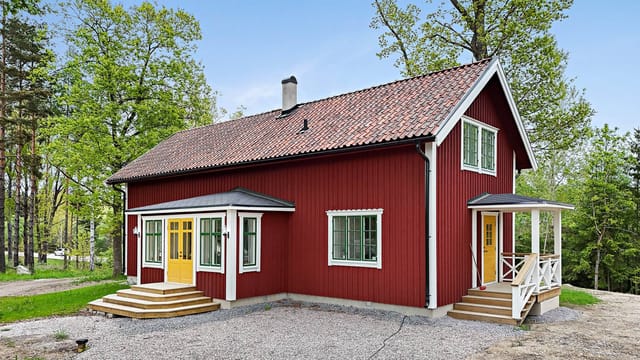
Early morning in Albro Skogstorp, and the fields outside are still wrapped in low mist. You step onto the front porch with a mug of coffee and there's nothing to hear but birdsong and the occasional rustle from the treeline. No traffic. No notifications that matter. Just the particular, unhurried silence that the Swedish countryside does better than almost anywhere else in Europe. That's the daily opening act at this 1929 red-painted cottage on Albro Skogstorp 4, a compact but surprisingly complete rural retreat sitting on a 1,120-square-meter plot about 15 minutes by car from central Eskilstuna. The faluröd exterior with bright white corner trim is the real thing — not a renovation affectation but a genuine piece of Swedish vernacular architecture that has held its character across nearly a century. At 27 square meters, the main cottage isn't trying to be anything it's not. It's small, efficient, and honest about it. A proper double bed, a living area with windows that look straight out onto the garden and surrounding fields, and a layout that makes every square meter count. For a couple escaping Stockholm for the weekend or a solo writer looking for uninterrupted weeks, it fits like a well-worn boot. What changes the whole equation is the guest house added in 2023. Brand new, thoughtfully positioned on the lot, it opens up the property in a way that a single-room cottage simply can't offer alone. Bring friends up from the city, host family during midsommar, or keep the main cottage as a private retreat while guests have their own space entirely. The flexibility here is real and immediate — you don't need to renovate or plan ahead for it. The grounds deserve more attention than a single line. A 1,120-square-meter lot ... click here to read more

Front view of the red cottage

Picture this: a Saturday morning in late June, the kind where the Swedish sun has been up since four, and you're sitting on a wide timber terrace with a mug of coffee going cold because you keep stopping to watch a pair of wagtails dart across the lawn. The garden stretches out in front of you — 1,386 square metres of it — and the only sound is the wind moving through the birch trees along the property's edge. This is Danielsvägen 16 in Gropvik, a genuine little Swedish sommarstuga that doesn't try to be anything other than exactly what it is. The house sits at the very top of a quiet residential lane, which matters more than it sounds. There's almost no through traffic. Neighbours exist, but you don't feel them. It's the kind of street where kids still play in the road and everyone knows which bicycle belongs to which house. Built in 1965 and maintained in good condition, the cottage covers 45 square metres inside — compact, yes, but thought through. The living room pulls you in immediately. Exposed ceiling beams run the length of the room, and an open fireplace anchors one wall. Come September, when the evenings start to bite, that fireplace earns its place. The warmth it throws is the soft, specific kind you only get from wood, not radiators. The kitchen sits adjacent, practical and connected, opening naturally toward the rear terrace — which is where you'll spend most of your time from Midsommar through to the August crayfish parties. That terrace. It's large enough for a proper dining table plus a set of loungers, and it catches the afternoon light at an angle that makes every meal feel like it was planned that way. There's a bedroom and a shower room rounding out the interior — everything you actually need, noth ... click here to read more

Front view of the holiday home

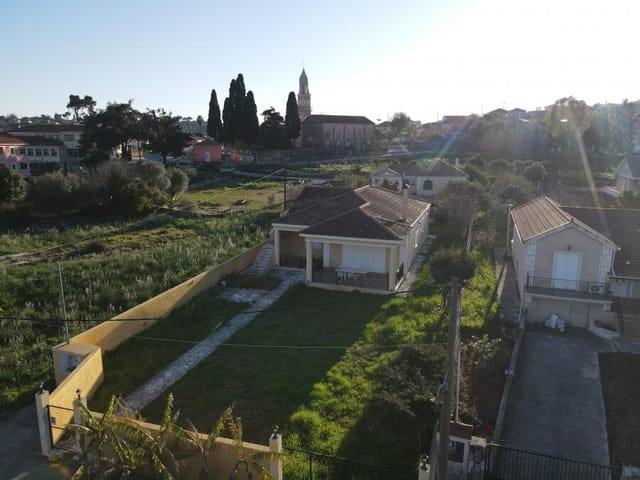
Step outside on a Tuesday morning, coffee in hand, and count the shades of blue. The Ionian sits at the bottom of the hill, that particular deep turquoise the travel photographers are always chasing—and from the garden of this Keramies house, it's just there. Ordinary. Yours. This is a solid, single-storey home built in 2007 on a generous 1,000 square metre plot in the Leivathos municipality of Cephalonia, the largest of the Ionian Islands and, quietly, one of the most undervalued property markets in the Greek archipelago. The house itself sits at 135 square metres—three bedrooms, two bathrooms, a living room anchored by a wood-burning fireplace, and a kitchen that actually has room to cook in. Not a poky galley. A real kitchen, with space to prep a spread of fresh calamari and horta picked up from the Argostoli Saturday market, twenty minutes down the road. The layout is straightforward in the best way. The master bedroom has its own en-suite, which makes life considerably smoother when friends or family descend for August. The two remaining bedrooms share the second bathroom, and every room has fitted wardrobes—generous ones, the kind you can actually live out of for a full summer without rotating suitcases through the hallway. Speaking of hallways, there's a dedicated storage room off it, currently doing duty as a laundry room. Small detail, massive quality-of-life upgrade for a property you plan to actually inhabit, not just photograph. Floors are tiled throughout, keeping the interior cool in July when the cicadas are going full throttle outside. Aluminium-framed double-glazed windows hold warmth in winter, and with central oil heating backed by air conditioning units in each room, this house is genuinely comfort ... click here to read more

Picture 1

Step outside on a Saturday morning and the air already smells like cut grass and coffee drifting from the terrace. The water behind the garden catches the early light. Somewhere across the estate, a family is loading bikes for a ride into the German borderlands. This is life at Hommelheide — and this four-bedroom bungalow, built in 2019 and sold fully furnished, puts you right in the middle of it. Susteren sits in the narrowest sliver of the Netherlands, where the country pinches between Belgium to the west and Germany to the east. This isn't generic Dutch flatlands — Limburg has a personality all its own. Rolling hills, abbey ruins, and a food culture that leans closer to Burgundian French than anything you'd find in Amsterdam. The locals eat vlaai on Sundays and drink Hertog Jan on café terraces that stay busy well into autumn. The region's cyclists know every back road through the Meinweg National Park, and the hiking trails along the Maas river valley are genuinely worth the effort. Cross into Germany for an afternoon in Roermond or Heinsberg; swing into Belgium for a proper Trappist beer in Achel. The geography here hands you three countries in a single day trip, which is one of those things that never gets old. The bungalow itself sits on a 377-square-meter plot that's fully your own — no shared garden compromises, no co-ownership grey areas. The living room runs to around 33 square meters in open-plan form, with the kitchen flowing directly into the main sitting area. Large sliding doors face the water, and when they're open on a warm June evening, the line between indoors and outdoors more or less disappears. There's an electric fireplace for the colder months when Limburg frosts up and you want to stay in with ... click here to read more
Front view of Hommelweg 2-R653

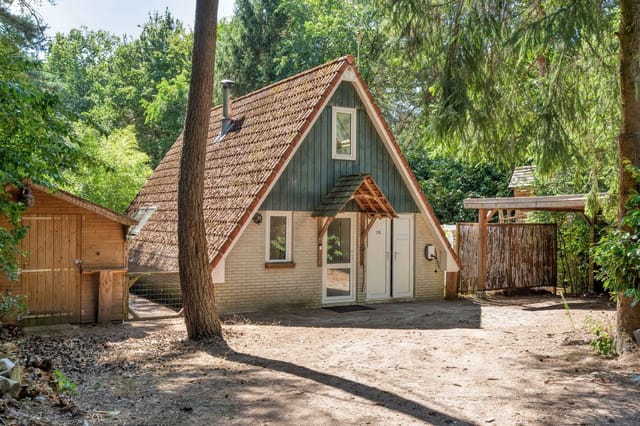
Step outside on a Saturday morning and the first thing you notice isn't silence exactly — it's layered sound. A woodpecker working somewhere deep in the treeline. Crows lifting off from the birches at the edge of the plot. The soft creak of the veranda as the day warms up. This is Koekangerveldweg 38 in Koekange, Drenthe, and it announces itself through the senses long before you've even unlocked the door. The bungalow sits on a generous 1,254 square metre private plot within the Marterhaar recreational park, an unhurried green pocket of the Netherlands set between the small villages of Koekange, Ruinerwold, and De Wijk. Mature trees surround the garden on all sides — not as decoration, but as a genuine privacy screen. Squirrels cross the lawn with the confidence of homeowners. Deer pass through at dusk, especially in autumn, when the light turns amber through the canopy and the whole plot takes on the quality of a nature documentary. You don't get this kind of land, this close to nature, for this price very often. The property itself is a single-storey bungalow — three bedrooms, one bathroom, a living room with sliding doors that open directly onto the garden, and a kitchen that does its job without fuss. It's an honest space. It needs work. The roof received new EPDM covering in 2017, plastic window frames have been fitted, and parts of the floor carry insulation, but this is a renovation project for someone with a vision, not a turnkey handover. Think of it less as buying a finished house and more as acquiring an exceptional plot with a perfectly serviceable shell on it. The Red Cedar cladding on the exterior has aged well and gives the building a genuinely woodsy character that suits its surroundings. A carport, a ... click here to read more
Front view of Koekangerveldweg 38

The wood stove crackles to life around seven in the morning, and before you've finished your first coffee, the fog is already peeling back from the valley floor below. That's what mornings look like at Holskarvegen 111. By eight, you're lacing up your boots. Eidslandet sits deep in Eksingedalen, one of those long, green valleys in Vestland county that most people never find unless someone who loves them points them toward it. The valley cuts southeast from the fjord country around Voss, flanked on both sides by ridgelines that build slowly toward the Stølsheimen massif — one of western Norway's most rewarding and least crowded mountain plateaus. This chalet sits at 587 metres above sea level, well above the treeline noise, and the silence up here has actual texture to it. Built in 1977 and kept in genuinely good condition, the cabin is compact and honest — 49 square metres of indoor space arranged around a living room that earns its place as the centre of everything. The fireplace is not decorative. On October evenings when the temperature drops hard and fast, this is where everyone ends up: games on the table, rain drumming the roof, windows fogged. Three bedrooms mean you can bring the whole family or share the place with close friends without anyone feeling squeezed. The layout is smarter than the square footage suggests. A 13-square-metre balcony pushes out from the main living area, and the orientation matters — you're looking out over the valley and up toward the high ground of Stølsheimen. On clear days in late July, you can pick out the snowfields that cling to the highest cols well into summer. That balcony becomes a second living room from May through September. The kitchenette is functional and uncluttered ... click here to read more
Picture 1

The first thing you notice, stepping onto the punch veranda at Hålvik 1, is the silence. Not the absence of sound — the water laps, a gull cuts overhead, pine branches shift in the breeze off the Baltic — but the absence of noise. No traffic. No sirens. Just the archipelago doing what it's done for ten thousand years. This is what you came for. Set on a 3,850 square metre plot at the water's edge in Figeholm, a small coastal village within Oskarshamns kommun in southeastern Sweden, this 85-square-metre country home sits where the land simply runs out and the sea begins. It's a genuinely rare find — a two-bedroom property in good condition with its own private jetty, a guest cottage, and direct access to one of Sweden's most underrated stretches of coastline. Listings like this don't sit around. The house itself is classic Swedish east coast: deep red timber cladding, white trim, a pitched roof that sheds the winter snow cleanly. Inside, the layout is compact and considered. Large windows in the main living room pull the water view indoors — on clear summer mornings, the light bouncing off the Baltic fills the room with something almost theatrical. A traditional Swedish fireplace anchors the living space, and come September, when the archipelago empties out and the evenings cool fast, you'll understand exactly why it's there. Light it after a late kayak, pour something warm, and the world feels very manageable. The kitchen is practical without being spartan — modern appliances, solid storage, enough counter space to actually cook rather than just assemble. The dining area sits alongside it, big enough for a proper table, and when the weather holds you'll carry plates outside anyway, out to the veranda where the garden ... click here to read more
Exterior view of the house and garden

Stand at the top of Björnbärsvägen 12B on a clear September morning and you will understand immediately why plots like this almost never come to market. The water of Erstaviken spreads out below you in a wide, silver sheet, broken only by the occasional sailboat making its way toward the outer archipelago. The air smells of pine resin and salt. This is the kind of view people drive an hour from Stockholm to photograph. You would wake up to it every single day. Tyresö Strand is one of those places that feels genuinely discovered rather than developed. The roads here are narrow and lined with mature birch and oak. The houses sit well apart from each other on generous plots, and on summer evenings you can hear families gathering on their terraces, the clink of glasses, the distant hum of an outboard motor heading home before dark. It is residential in the quietest, most earned sense of the word — a neighbourhood built by people who chose it carefully, not one that happened by default. This particular plot sits elevated above the surrounding area, which matters enormously on Erstaviken. The water views here are unobstructed and panoramic, sweeping across the bay in a way that lower-lying plots simply cannot offer. Because the land rises naturally, future construction can be oriented to take full advantage of the outlook — a south-facing living room, a terrace cantilevered toward the bay, floor-to-ceiling glass that makes the water feel like part of your interior. The zoning plan is already in place and allows for a two-storey main building of up to 160 square metres (or up to 200 sqm for a single-storey build), plus outbuildings or a garage of up to 40 square metres. The framework for your vision is already drawn. You brin ... click here to read more
Main view of the property with sea and nature

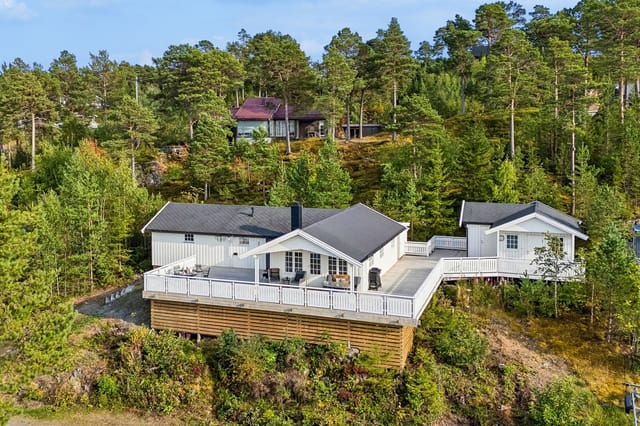
Step outside on a February morning and the silence hits you first. No traffic, no neighbors, nothing but the creak of snow-laden pines and the faint outline of Norra Gardfjället catching the first pale light of a Swedish winter dawn. That's the daily reality at Paradisstigen 32 — a three-bedroom chalet sitting at the quiet end of a private road in Matsdal, flanked on both sides by the Gardfjället massif. This isn't a countryside cottage with a view. It's a proper mountain position, the kind that makes you put your coffee down just to stare out the window. The exterior makes an immediate impression. Dark charred wood cladding — a traditional technique called yakisugi, borrowed into Scandinavian vernacular building — gives the facade a deep, near-black finish that looks deliberate and sharp against snowfields or summer birch forest. It's not just aesthetic. The charring process hardens the surface grain, making the timber naturally resistant to moisture, insects, and UV degradation. In practical terms, that means lower upkeep and longer lifespan, which matters when you're maintaining a second home across an international border. Inside, full-height ceilings with exposed structural beams define the main living and kitchen space. Wood is everywhere — wall panels, ceiling, floors — but it doesn't feel heavy. The room is bright, with a run of windows and a patio door along one wall pushing light deep into the interior and framing a continuous panorama of the valley and the mountains beyond. The wood-burning stove sits at the social heart of the room, exactly where it should be. After a long day on the trails, you get the fire going, pour something warm, and the whole space reorganizes itself around the heat. It's that kind o ... click here to read more
Exterior view of the cabin and surrounding mountains

Close your eyes and picture a Sunday morning in early June: the window above the kitchen sink is propped open, and the only sounds reaching you are a woodpecker working through a birch trunk somewhere behind the meadow and the distant, unhurried bells of a village church carried on a westerly breeze. That's the daily reality at Rönö Uppsalatorp, a two-bedroom country home on Vikbolandet peninsula that has been quietly standing its ground since 1909. This is Östergötland at its most honest — no tourist traps, no manufactured charm, just a wide-open plot of 6,644 square metres where the grass grows thick in spring and the birch trees turn a hard, clean gold in October. The property sits in Norrköpings kommun, roughly 35 kilometres southeast of Norrköping city centre, on a peninsula that locals have been retreating to for generations without making too much noise about it. For good reason — they'd like to keep it that way. The main house covers 70 square metres across three rooms, and the proportions feel right. It's not oversized, not squeezed. The living room gets afternoon sun through large windows that look out over the garden, and in winter those same windows frame a landscape that turns monochrome and cinematic — frozen ground, bare trees, pale sky. The kitchen has enough working space that you can actually cook in it, which matters when you're making gravlax from scratch or simmering a pot of rotmos on a grey November afternoon. Original details from the early 1900s surface throughout: in the way the walls sit, in the feel of the older joinery, in small things that remind you this house has a history longer than any single owner. Two bedrooms handle sleeping arrangements without fuss. They're quiet rooms — genuine ... click here to read more
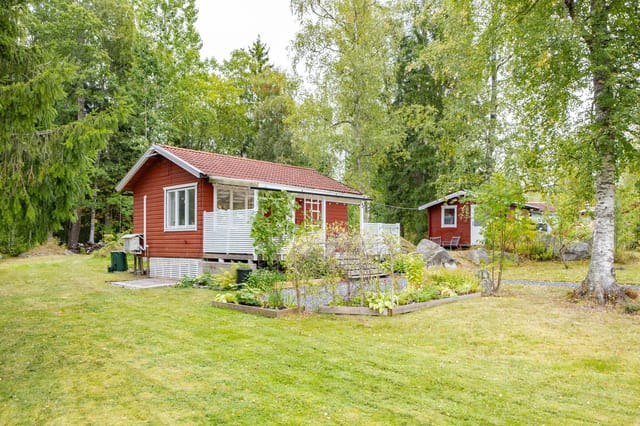
Exterior view of the main house and garden

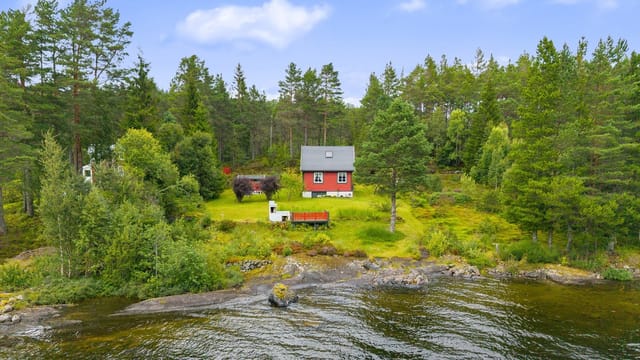
Step outside on a July morning and you can already smell the salt before you see the water. From the elevated plot at Norra Starrkärr 215, the Swedish west coast spreads out below you — granite outcrops, pine ridges, and somewhere beyond the tree line, the glittering edge of the Bohuslän archipelago. The ferry horn from the Orust crossing drifts up on the breeze. That crossing is three minutes away by car. The sea itself is 500 meters down the path. This is a small place in the best possible sense. Twenty square meters, built in 1940, the kind of compact Swedish summer cabin that generations of families have used as a launchpad for long days rather than a place to stay indoors. A single-room layout with space for sleeping, a kitchenette, and a sitting area where the large windows do most of the heavy lifting — framing a view that a much grander property would envy. It's move-in ready and genuinely functional as a vacation home right now, today, without a renovation project standing between you and your first summer on the west coast. But what gives this particular plot its edge isn't the cabin. It's the building permit already in place for an additional house of approximately 59 square meters. That's rare. Planning permissions along the Swedish west coast, especially within reach of the water, have become harder to secure as coastal protection regulations have tightened over the years. Someone has already done that work here. You're buying a 20-square-meter retreat with an 849-square-meter plot and a legal pathway to build something substantially larger — whether that means a proper year-round home, a second cabin for family or rental guests, or a studio workshop beside the original cottage. The infrastructure is alre ... click here to read more
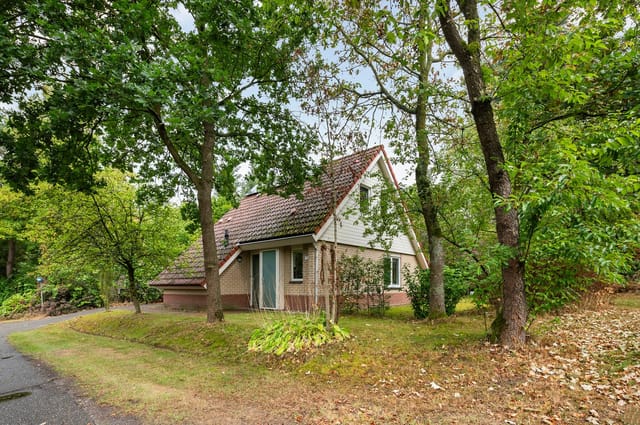
Exterior view of the holiday home and garden

Step outside on a Saturday morning in late August, coffee in hand, and the food forest behind your back fence is already alive — wood pigeons calling, the smell of damp earth and ripening blackberries drifting across your south-facing terrace. There's no road noise. No neighbors visible through the trees. Just the quiet particular to a place that was designed, from the ground up, to make everyday life feel like a long exhale. This is what ownership looks like at 't Landgoed Baars — a thoughtfully developed estate in the green heart of Overijssel, where the village of Baars sits quietly between three separate nature reserves. The cottage at Bergweg 76-R463 was built in 2022, and it shows. Not in a showy way, but in the kind of careful detail that only emerges when someone has thought hard about how people actually live: underfloor heating underfoot in every room, extra acoustic insulation between bedroom walls so a late-sleeping guest doesn't wake the rest of the house, a thatched and bitumen roof that looks rooted rather than recently dropped here. The floor plan is compact at 59 square meters — but cleverly so. The open living area doesn't waste a centimeter. Large French doors fold back to merge the interior with the terrace, and when the afternoon sun swings south, the whole space fills with light in a way that makes the cottage feel twice its footprint. The kitchen is properly equipped, not the afterthought you find in many recreational properties. You can cook a real meal here — a Dutch hutspot on a cold November evening, or a slow Sunday lunch for six in the garden. Three bedrooms means real flexibility. Bring the kids, invite friends for a long weekend, or use the extra rooms for a home office during a working ... click here to read more
Front view of Bergweg 76-R463

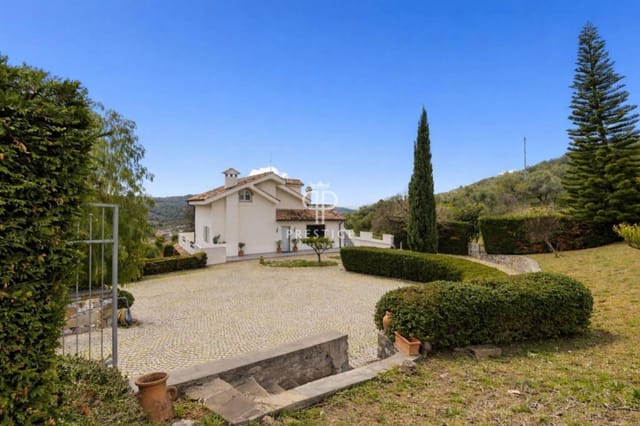
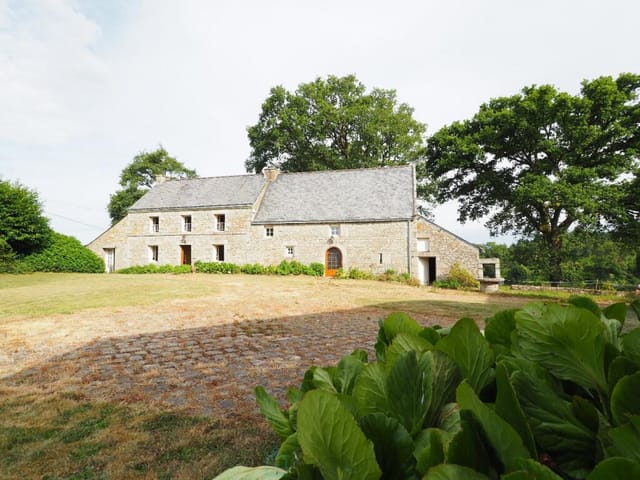
Stand on one of the terraces on a clear October morning and you can see all the way to the coast — the Ligurian Sea sitting flat and silver beyond the green hills, the kind of view that makes you put your coffee down and just look. This is what life feels like at this substantial five-bedroom villa on the outskirts of Imperia, a property that has been quietly holding its own on almost an acre of mature garden while the rest of the Italian Riviera got discovered and repriced out of reach. Imperia doesn't shout. It isn't Portofino. But that's exactly the point. This is a working Ligurian city — two towns, Porto Maurizio and Oneglia, fused along a bay — where the Wednesday market on Via De Sonnaz fills up with locals buying trofie pasta and fresh farinata, where the bars along the Calata Cuneo serve aperitivo without charging tourist prices, and where you can still find a parking spot in August. The old port at Porto Maurizio has a real fishing fleet, not a decorative one, and the smell of salt and engine oil at dawn is entirely genuine. For a vacation home or second residence in Liguria, it's the kind of place that gets under your skin rather than simply impressing you. The villa sits in a residential pocket just minutes from the town centre, surrounded by garden greenery that insulates it from the outside world without cutting it off. The 342-square-metre property was originally designed as a single-family home — you can still feel that intention in the generous proportions and the internal staircase that connects all three levels — but at some point it was divided into three independent units. Ground floor holds a full apartment: spacious living area, separate kitchen, large sitting room, two bedrooms, and a bathroom. ... click here to read more
Picture 1