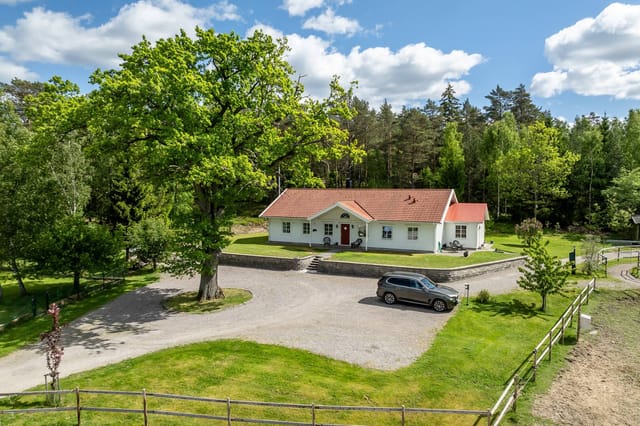
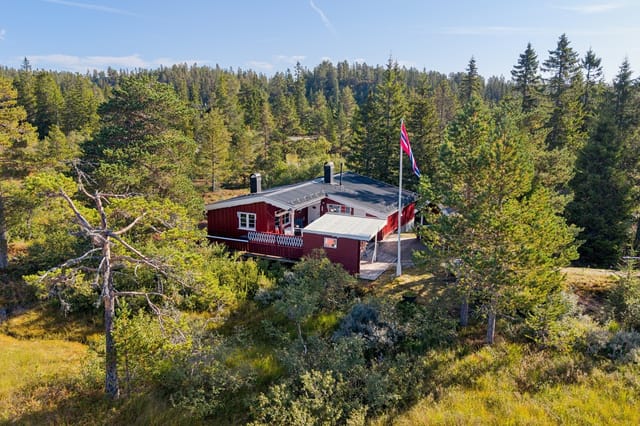
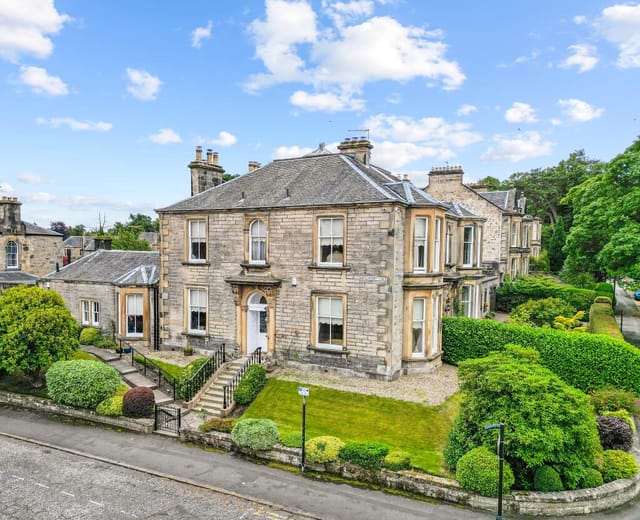
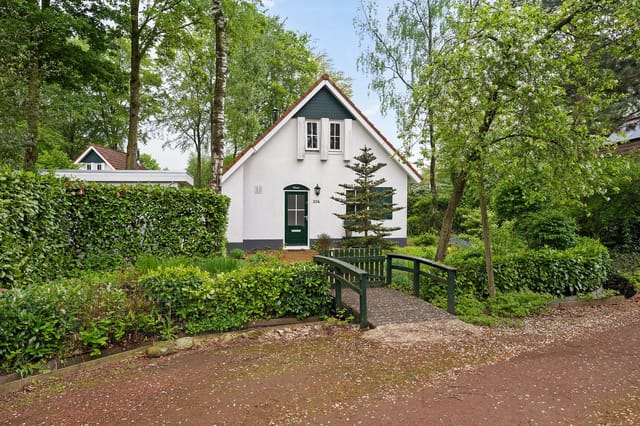
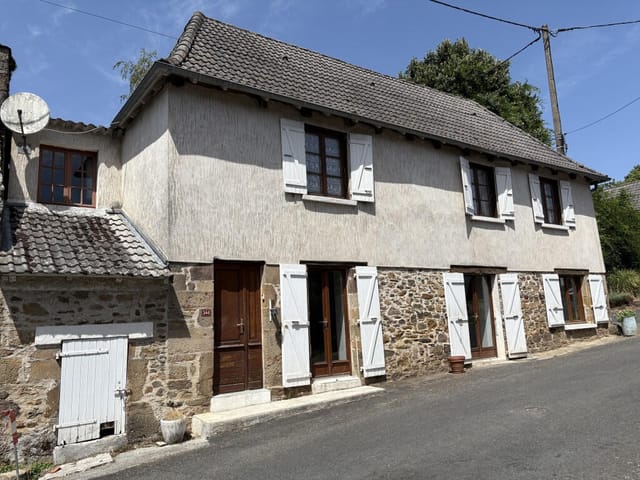
Houses For Sale In Europe (page 5)

Houses for sale in europe - homestra offers the largest amount of european real estate with over 200,000+ properties, find any type of property within your budget from villas to country homes. buy or rent your perfect home in europe. (page 5)

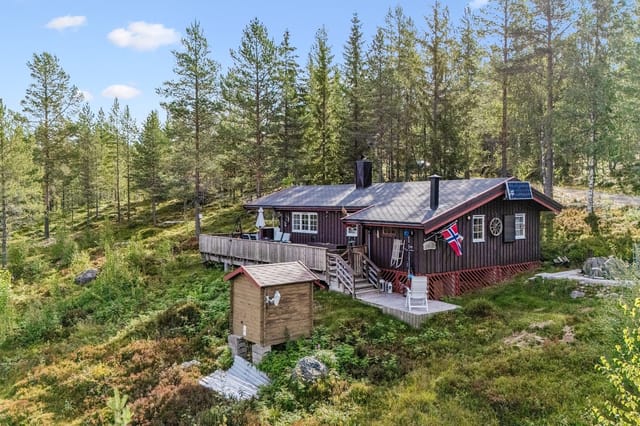
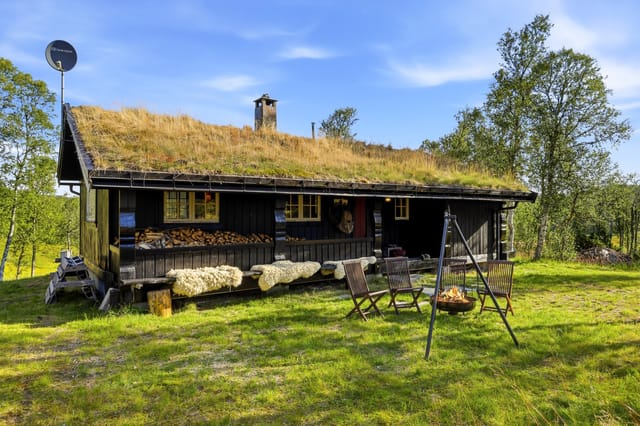
Step outside on a January morning and the valley is completely silent — just the creak of snow-laden pines and the faint trace of wood smoke rising from the chimney you lit an hour ago. That's Resdalen. And this two-bedroom chalet on Aaltoegeajnoeveien 196 sits right at the heart of it, perched at 527 meters above sea level where the air has a sharpness to it that city lungs have forgotten. This isn't a weekend bolt-hole cobbled together with flat-pack furniture and hope. Built in 2001 and held in genuine good condition, the property has been cared for with the quiet diligence that Norwegian cabin owners tend to bring to these things. Electricity is fully installed. There's a heat pump for reliable warmth and a wood-burning stove for the nights when you want something more primal. Water comes from a private well via a pump system, with both summer and winter solutions already in place — meaning you can arrive in February without worrying about frozen pipes. The main cabin is 63 square meters of indoor living space, which sounds modest until you're inside and those large windows frame the Resdalen mountains like a painting that changes every hour. Morning light hits the ridgeline first, then slowly spills down into the valley below. The living room catches it all. The kitchen is functional and well-proportioned — exactly what you need after a six-hour cross-country ski through the groomed trails of the surrounding terrain. Nobody wants to cook a complicated meal in a cabin that's more showroom than home. This kitchen makes sense. Two bedrooms sit in the main cabin, and then there's the annex. This is the detail that separates this property from most Resdalen listings: a separate annex with its own living room, an addit ... click here to read more

Beautiful cabin complex in Resdalen

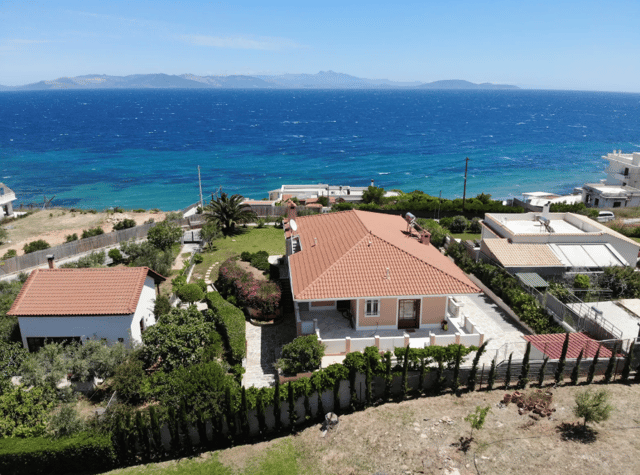
You wake up to the faint sound of water. Not waves crashing — just the soft, rhythmic pull of the Aegean lapping at the shore fifty meters from your front door. The morning light in Rafina has a particular quality to it, sharp and golden, cutting across the Attic plain in a way that makes even a cup of coffee on the terrace feel like an event. This is a 300-square-meter neoclassical villa sitting inside the city plan of Rafina, one of Attica's most quietly coveted coastal towns. Four bedrooms, three bathrooms, a private spa room with a Jacuzzi and hammam, two fireplaces, two kitchens, and a 1,150-square-meter plot that gives you the kind of breathing room rarely found this close to the water. The price is set at 760,000 euros — which, when you consider what comparable seaside properties are fetching between Glyfada and Porto Rafti, positions this as one of the more grounded opportunities on the eastern Attic coastline. The architecture deserves a proper look. Neoclassical design in Greece carries real weight — columns, symmetry, tall shuttered windows, a formality that doesn't feel stuffy but does feel rooted. This isn't a whitewashed box. The wooden floors run through the interior with warmth underfoot, the two fireplaces anchor the living spaces in winter, and the overall condition is good and move-in ready, which matters enormously when you're buying from abroad and can't afford months of renovation limbo before your first summer visit. What makes Rafina different from the better-known Athens coastal suburbs? Quite a bit, actually. It's a working port town, and that keeps it honest. The fishing boats leave before sunrise from the main harbor on Plateia Plastira, and by mid-morning the tavernas along the waterfront ... click here to read more

Picture 1

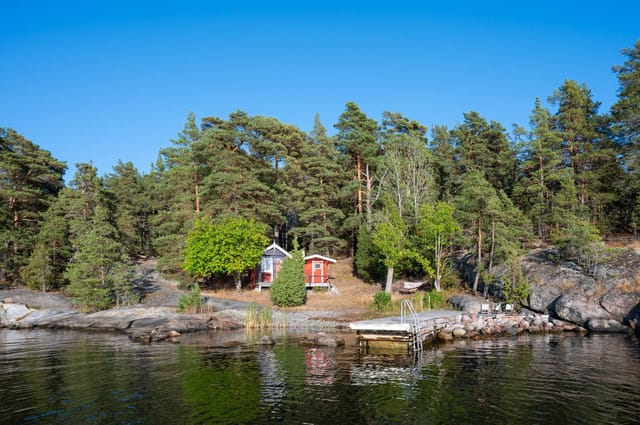
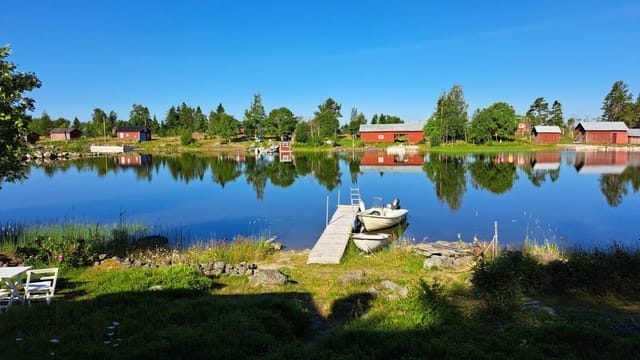
At around seven in the evening in late June, the sun is still two fists above the horizon, dropping slowly toward the water in shades of amber and coral. You're sitting on the decking above the jetty with a cold glass of something local, bare feet on warm timber, watching a small boat cut a white line across the inlet. The birch trees behind you hold the last of the warmth. There is no traffic. No city noise. Just the soft lap of water and the occasional call of a common tern from somewhere out in the bay. This is what an evening at Svartsö Träskö 11 actually feels like, and it's not something you forget quickly. The property sits on the island of Träskö in Mellanskärgården, the middle archipelago east of Stockholm, within Värmdö municipality. Träskö is a genuine island, not a peninsula, not a suburb with water views, but a real Swedish skärgård island with forest paths, granite outcrops, and a pace of life that makes the city feel genuinely far away. The plot faces west, which matters enormously here. West-facing waterfront in the Stockholm archipelago is the orientation everyone wants because it catches afternoon sun and those long Nordic summer evenings run right until midnight. The cottage itself was originally built in 1957 and has been adapted over time into a winterized, year-round boathouse. At 20 square metres it's compact and honest about that. A wood-fired sauna. An enclosed veranda. A kitchenette with its own entrance. A living area with a table, chairs, and a sleeping space. It's not trying to be a villa. It's a place to arrive at on a Friday afternoon, get the sauna going, jump off the jetty, and immediately decompress. It does that job extremely well. But the real story here is the land, the water front ... click here to read more

Seaside cottage and jetty

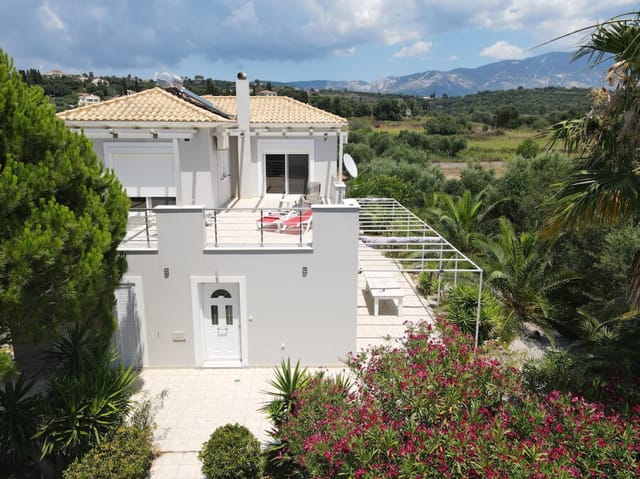
Stand on the first-floor veranda just after sunrise, coffee in hand, and you'll understand immediately why people from across Europe have been quietly buying property in this corner of Cephalonia for decades. The olive groves stretch out below you in every direction—silvery green in the early light—and the only sound is the occasional clink of goat bells drifting up from somewhere you can't quite see. This is Leivathos, the municipality that locals will tell you represents the island at its most authentic, and this three-bedroom villa on a 2,800-square-metre plot in the village of Kalligata sits right at the heart of it. Kalligata is one of those places that doesn't need to advertise itself. It has the quiet confidence of a village that has always known its own worth. The neighbourhood here—which includes the neighbouring villages of Kourkoumelata and Sarlata—was historically home to the island's aristocratic Cephalonian families, and that legacy shows in the stone architecture, the wide lanes lined with mature trees, and the low building density that keeps things unhurried and genuinely private. There are no tower blocks, no holiday apartment complexes stacked against the hillside. Just houses, gardens, groves, and the kind of peace that's increasingly hard to find anywhere in the Mediterranean. The villa itself spans 154 square metres across two floors and is in genuinely good condition—not the "good condition" that estate agents use as a polite euphemism, but the kind where you could bring your luggage, open the windows, and start living immediately. Downstairs, the open-plan living area has a fireplace that earns its keep on January evenings when Cephalonia gets colder than visitors expect, and the kitchen flows na ... click here to read more

Picture 1

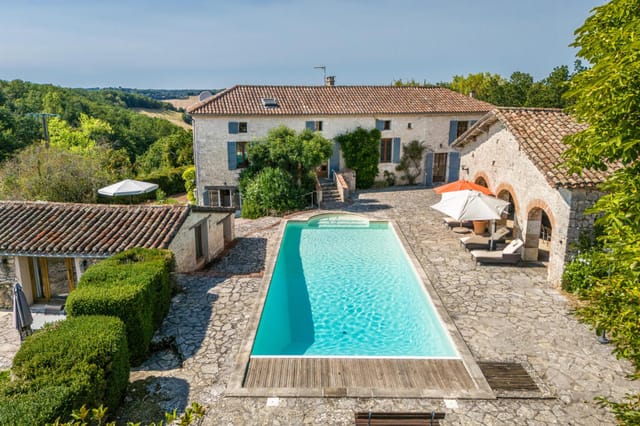
Sunday morning in southwest France sounds like this: a wood pigeon calling from the walnut tree outside, coffee brewing in a kitchen built from bleached oak and old stone, and absolutely nothing else demanding your attention. That's the daily reality of owning this 208 sq m restored stone farmhouse in a quiet hamlet just outside Beauville — a property that took its time becoming what it is, and shows every bit of it. The house sits among the rolling valleys of Lot-et-Garonne, a département that most international buyers fly over on the way to Dordogne without realizing they're passing one of the most quietly rewarding pockets of rural France. Prune orchards, sunflower fields, truffle-rich oak woods — the landscape shifts with every season, and you'll find yourself noticing all of it from the covered stone terrace where lunch tends to run well past three o'clock in July. The farmhouse itself is genuinely old, and the restoration didn't try to disguise that fact. Exposed limestone walls, hand-hewn oak beams, flagstone floors worn smooth over generations — these aren't decorative choices, they're what was already there. The work involved knowing what to keep and what to quietly modernize: double glazing sits behind deep stone reveals, a heat pump system hums efficiently behind a centuries-old façade, and a bespoke kitchen in bleached oak with stone countertops and integrated appliances would look entirely at home in the pages of a serious interiors magazine. The pantry off the kitchen is the kind of detail that only makes sense once you're shopping at the Friday market in Puymirol and coming home with more than you planned. There are four bedrooms across the main house, each with air conditioning and heating through the ... click here to read more

Picture 1

Saturday morning. The log burner is crackling in the sitting room, the smell of woodsmoke drifting toward the open window, and out past the terrace, the rolling valleys of the Tarn-et-Garonne stretch as far as you can see — all golden fields, dark tree lines, and absolutely nobody else. This is the kind of quiet that people spend years trying to find. This 19th-century stone house in the commune of Castelsagrat sits in one of the most underrated corners of southwest France. Three bedrooms, two bathrooms, 110 square metres of honest, well-kept interior — and then the land, the views, the silence. At €229,000, it's the sort of property that makes you recalculate your priorities. The house itself has real bones. The rendered stone facade is classic Tarn-et-Garonne — solid, thick-walled construction that keeps rooms cool through the scorching July and August heat without you touching a dial. Inside, the sitting room centres on a log-burning stove that earns its keep from November through March. Terracotta-tiled floors run underfoot, exposed oak beams cross the ceilings above, and the country kitchen feels like the kind of room where Sunday lunches start at noon and end somewhere around four. Electric heating supplements the wood-burner during shoulder seasons when it's more chilly than cold. The whole ground floor has a relaxed, unhurried feel — this isn't a house that's trying to impress you. It just works. The storage rooms are worth special mention. Large, with genuine potential — convert them into a gite, a guest annex, a studio, or leave them as generous working storage for a household that actually uses its land. The groundwork is there for anyone who wants to expand the footprint without touching the main character ... click here to read more

Picture 1

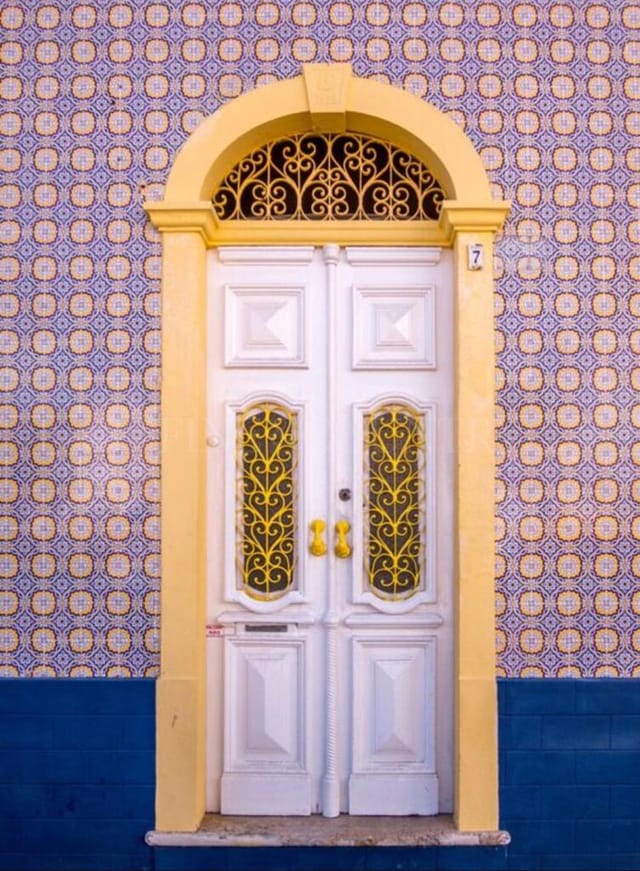
Sunday morning in Ferragudo moves at its own pace. The smell of espresso drifts from the café two doors down, the church bell on Largo Rodrigues Dantas rings nine times, and somewhere below your rooftop terrace a fisherman drags his boat across the cobblestones toward the Arade River. This is the texture of daily life here — and from Casa dos Azulejos, you get all of it. The house announces itself before you even reach the door. Its tile-clad façade — a patchwork of hand-painted blue and white azulejos — is one of the most photographed frontages on Rua João Dias, and for good reason. Those tiles aren't decorative afterthought; they're a deliberate act of cultural memory, each panel a fragment of the storytelling tradition that Portuguese craftsmen have maintained for five centuries. Owning a home dressed this way means owning a piece of that conversation. Step inside and the layout reveals itself across two cleverly connected levels. The ground floor holds two bedrooms and a full bathroom, plus a fitted kitchen that opens directly onto a private patio — the kind of outdoor space where a long lunch stretches into early evening without anyone noticing. The open-plan living and dining area anchors the social heart of the home, and the pellet burner means February evenings are genuinely cosy rather than something to endure. Portugal's Algarve winters are mild by northern European standards — rarely dropping below 10°C — but there's something deeply satisfying about a fire burning while rain taps at the azulejo-framed windows. The upper level is where the investment logic gets interesting. Converted into a fully self-contained two-bedroom apartment with its own independent entrance, it functions as a separate unit for gues ... click here to read more

Picture 1

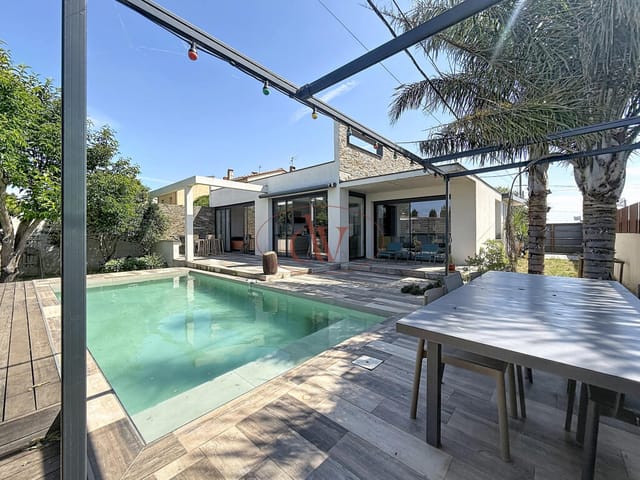
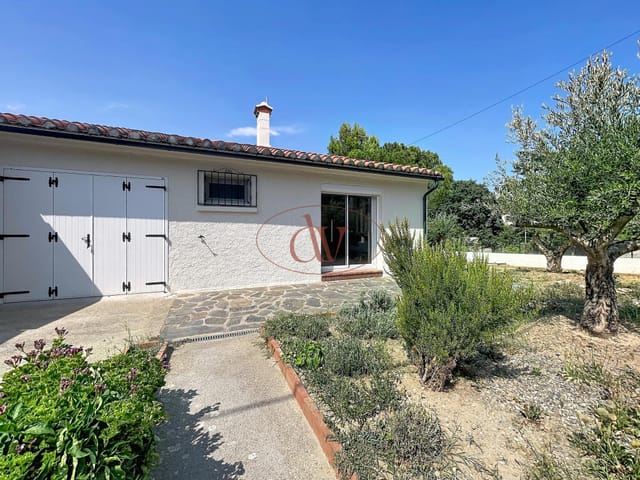
On a still morning in Corneilla-del-Vercol, the air already carries warmth before nine o'clock. You slide open the wide glass doors from the living room, step out onto the sun-warmed terrace, and the pool catches the light in that particular way it only does in the Roussillon — deep blue, almost unnaturally vivid against the ochre and terracotta of the surrounding landscape. The Pyrenees are visible to the southwest. The Med is twenty minutes by car. This is the South of France that people actually live in, not the postcard version sold to tourists. Corneilla-del-Vercol sits in the Pyrénées-Orientales, tucked between Perpignan and the coast, in a part of France that locals call the Pays Catalan. It's a genuinely Catalan corner of France — bilingual road signs, sardane dancing in village squares on summer evenings, and a food culture that pulls as much from Barcelona as it does from Paris. The Saturday market in Perpignan's Place de la République sells goat cheese from the Conflent valley, anchovies from Collioure packed in salt the old way, and the blood-orange jurancons that grow practically in your backyard. You get to Perpignan's city centre in under fifteen minutes. The TGV station there connects you to Paris in under five hours, or Barcelona in ninety minutes — which matters enormously if you're buying this as a second home and flying in from London, Amsterdam, or Brussels. The villa itself sits entirely on one level, which sounds like a minor detail until you actually live in it. No stairs. Every room flows directly outward. Three bedrooms, each fitted with oversized windows that push open to let in the evening garrigue breeze — that dry, wild-herb scent that drifts down from the scrubland above the plain. One be ... click here to read more

Picture 1

Step off the ferry at Batnfjorden on a Saturday morning in July, and the first thing you notice is the quiet. Not the dead kind — the alive kind. Birdsong, water moving somewhere below the treeline, the distant sound of a motorboat cutting across the fjord. Walk ten minutes up Holtavegen and you arrive at a gate that opens onto something genuinely rare: a former farm turned multi-cabin holiday estate, sitting on over 14,000 square meters of west Norwegian countryside, with the sea just half a kilometer down the road. This is Holtavegen 75, Torvikbukt — and it doesn't look like most holiday properties you'll find in Møre og Romsdal. It looks like something a Norwegian family held onto for decades, updated slowly and lovingly, and is now releasing to someone ready to carry it forward. Three separate cabins stand across the property. The main cabin, white-painted and built in 1930, anchors the estate with the kind of low-slung solidity you see in old Norwegian farmhouses — thick walls, steep pitched roof, windows framed to catch every angle of light off the fjord. Inside, the layout spans two floors. The living room has a fireplace at its center, and on October evenings when the temperature drops fast and the mountains across the water go purple in the dusk, that fireplace becomes the entire social life of the house. The kitchen connects directly to the terrace, which matters more than it sounds — summer here means long evenings outside, dinner at nine with the sun still above the ridgeline, and you'll want that door propped open. The gray annex runs to two floors as well — bedrooms, a bathroom, a living area — and functions perfectly as a self-contained wing for in-laws, adult children, or close friends who want their o ... click here to read more

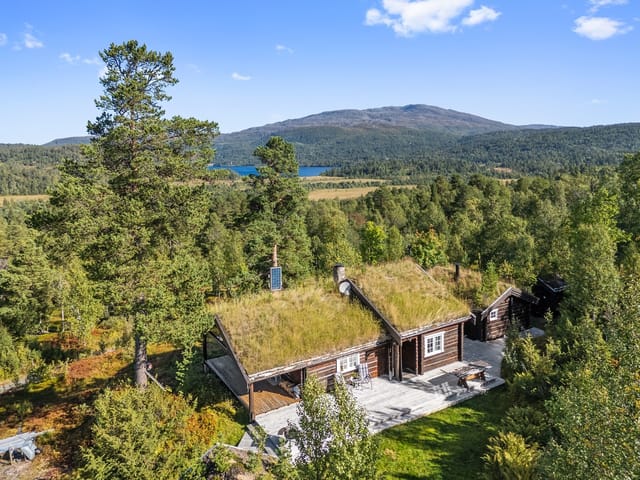
Aktiv Eiendomsmegling v/ Ulla E. Nystøyl welcomes you to Holtavegen 75. Photo: André Tomas Ormset-Paredes

Step off the last stretch of gravel road at dusk, the trees closing in around you, the smell of pine and cold air hitting you all at once, and you'll understand immediately why someone built a cabin here in 1987 and why people keep coming back. Oslia 24 sits at 523 metres above sea level in Nordre Osen, Innlandet county, and the silence up here is the kind you actually have to get used to — no traffic, no city hum, just the occasional creak of spruce branches in the wind and, on clear nights, a sky full of stars that feels almost confrontational in its clarity. This is a cabin in the truest Norwegian sense of the word. Not a glamped-up weekend house with underfloor heating and a wine fridge, but a genuine, working hytte — 62 square metres of thoughtfully designed timber space that does exactly what a cabin in Norway should do: get you outdoors, slow you down, and remind you what matters. The solid masonry fireplace is the centrepiece of the open living and kitchen area, and on a cold October evening with logs crackling and snow just starting to dust the treeline visible through the large windows, there are few places on earth you'd rather be. The interior is classic Norwegian cabin style — pine floors, pine wall and ceiling panelling, exposed timber beams under sloped ceilings that open the space up far more than the 62 square metres might suggest. It's warm without being fussy. The kitchen runs along one wall with solid wood cabinetry, a propane stove, and a propane refrigerator, which means this place runs almost entirely off-grid. A solar panel system handles the electricity, with a petrol generator as backup. For buyers used to properties that need to be plugged into the grid to function, this takes a moment to app ... click here to read more

Welcome to Oslia 24! Photo: Bente Nijora Aalberg v/Efkt

Step outside on a Tuesday morning and the cobblestones of the Grand Rue are already humming — a potter carrying clay, a boulangerie door swinging open releasing a warm rush of butter and crust, a cat stretched across a sun-warmed stone step that's been there since the 13th century. This is the daily texture of life in Cordes-sur-Ciel, one of the most quietly extraordinary medieval hilltop villages in southwest France, and this fully renovated three-bedroom house with a self-contained gîte puts you right in the middle of it. The house sits just off the Grand Rue on the village's south-facing flank, which means light — generous, consistent, south-facing light — floods through every room from morning through late afternoon. That matters in a village where some properties are tucked into the hillside and live in perpetual shade. Not this one. The kitchen-diner downstairs looks directly onto the garden, and there's something quietly satisfying about cooking a Sunday lunch with the window open while the bells of the Église Saint-Michel drift across the rooftops. The renovation here was done properly. New roof, new plumbing, new electrics, double-glazed windows throughout, updated bathrooms — not a cosmetic refresh but a complete structural overhaul. The result is a house that carries all the character of its medieval context — thick stone walls, the particular acoustic stillness that old buildings have — while functioning with entirely modern reliability. The wood-burning stove in the living room isn't decorative nostalgia; on a January evening when the Tarn valley mist rolls in below the village, you'll want exactly that kind of warmth. Upstairs, two large bedrooms share a well-appointed bathroom. The layout is generous fo ... click here to read more

Picture 1

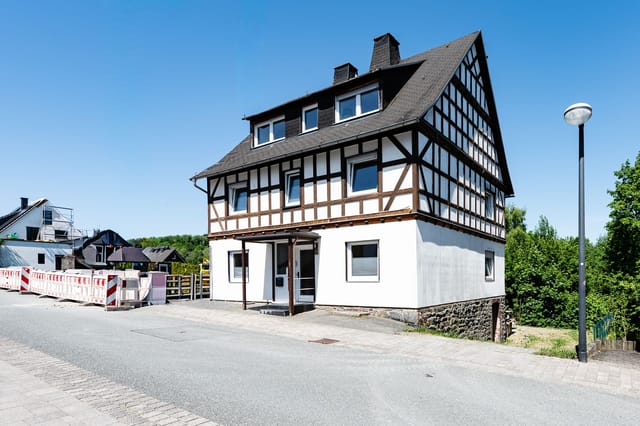
Picture this: it's a Saturday morning in January, and you're standing at the kitchen window on the first floor of Feldstraße 15, hands wrapped around a coffee mug, watching the first skiers make fresh tracks down the Kappe slopes less than a kilometre away. The smell of fresh Brötchen from the Bäckerei two streets over drifts up. Downstairs, the family you've rented the ground floor apartment to for the week are already lacing up their boots. You spend the day on the mountain. They do too. Nobody gets in each other's way. This is what owning this property actually feels like. Winterberg doesn't get enough credit outside of Germany. Most international buyers don't know that this compact Sauerland town sits at roughly 840 metres elevation, gets reliable snowfall from December through March, and runs one of North Rhine-Westphalia's largest ski resorts — the Skiliftkarussell Winterberg — with 23 lifts and 26 runs ranging from gentle family slopes to demanding black pistes. In summer, the same mountain network transforms into a paradise for mountain bikers tackling the Bikepark Winterberg and hikers grinding out the Rothaarsteig trail, a 154-kilometre long-distance route that passes right through the region. The town stays busy twelve months a year, which is precisely why a well-located rental property here is not a gamble but a genuinely sound investment. This house on Feldstraße — a quiet residential street that puts you maybe a seven-minute walk from the town's main square and all its restaurants, ski hire shops, and après-ski bars — is one of the more unusual properties to come to market here. Originally built in 1927 and extended significantly in the early 1970s, it now runs to 210 square metres of living space across ... click here to read more

Front view of Feldstraße 15

Saturday morning in Laroque-des-Albères starts with a sound: swallows cutting sharp arcs over the rooftops, the distant clang of the church bell on the main square, and somewhere close by, someone firing up a wood-fired grill. You open the south-facing terrace door, coffee in hand, and the entire ridgeline of the Albères massif sits right there in front of you — no cranes, no apartment blocks, just the ancient limestone spine of the Pyrenees catching the early Catalan sun. That's the daily reality of this fully renovated single-storey house in one of the Pyrénées-Orientales' most sought-after villages. Two bedrooms, a brand-new kitchen, landscaped terraces, a 350m² garden plot, and energy costs running between €810 and €1,160 per year. At €330,000, it represents serious value for a turn-key second home in French Catalonia. Laroque-des-Albères sits at the precise point where the Pyrenees give way to the coastal plain, tucked just above the valley floor on the road that threads between the French and Spanish Catalan worlds. The village itself has kept its shape — stone houses tight along narrow lanes, a café terrace where old men still play pétanque on weekday afternoons, a weekly market that spills across the square with vendors selling local honey, Roussillon wines, and anchovies from Collioure. It's not a tourist fabrication. People actually live here year-round, which gives the place a grounded, unhurried rhythm that resort towns simply can't manufacture. The house sits in a cul-de-sac less than two minutes' walk from the village centre. That proximity matters more than it might sound on paper. You can leave the car in the garage and forget about it for days. Bread from the boulangerie, a cold rosé at the bar, dinne ... click here to read more

Picture 1

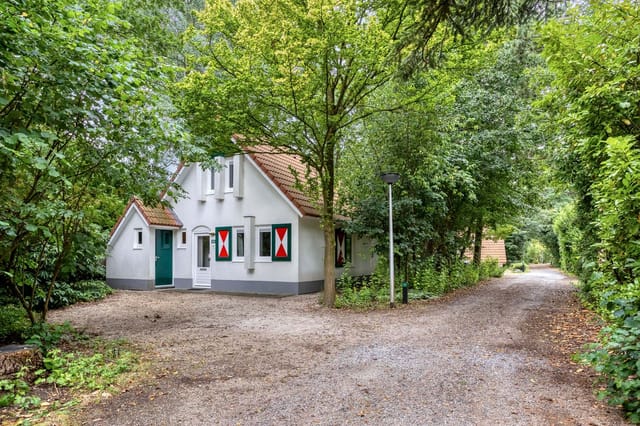
Step outside on a Saturday morning in July, and the first thing you notice is the silence. Not the dead kind — the living kind. Pine resin drifting on a light breeze, the faint crunch of a cyclist disappearing into the tree line thirty meters from your front door, a woodpecker working somewhere deep in the state forest that runs right up against the back of the park. This is Ees, Drenthe, and this three-bedroom bungalow sits at the very edge of Het Land van Bartje holiday park — which means you get the full benefit of the park's facilities while the forest essentially starts in your back garden. The bungalow itself was built in 1996 and sits on a 294 m² private plot that wraps the house in greenery on all sides. The southwest-facing sun terrace is the detail that matters most in a Dutch summer — afternoon light here stretches past nine in the evening, and the terrace catches every last minute of it. Sliding doors from the living room open directly onto that terrace, so the line between inside and outside blurs in the best possible way. The fireplace in the sitting room earns its keep come October, when the forest turns amber and the evenings arrive earlier. At 69 m², the layout is honest and efficient. Ground floor: a hallway with a wall-mounted WC, a bright bedroom ideal for guests or anyone who wants everything on one level, the living room with its terrace connection, and a fully equipped open kitchen with gas hob, oven, dishwasher, extractor hood, and a fridge-freezer. The kitchen isn't an afterthought — it's properly kitted out, which matters when you're here for a week and actually want to cook. Upstairs, a landing with a built-in wardrobe leads to two more bedrooms, making this a genuine family bungalow rather t ... click here to read more

Front view of Buinerweg 8-130

Step outside on a February morning and the world is white and completely silent — except for the faint creak of snow-heavy pines and, somewhere below, the frozen whisper of the Bituåi river cutting through the valley. At 880 meters above sea level, the air has a sharpness to it that clears your head instantly. This is Rauland. And this three-bedroom chalet at Spjotar 28 puts you right at the center of it. Built in 1986 by skilled local carpenters and substantially upgraded in 2003, this 80 m² chalet sits on a private, freehold 1,024 m² plot in one of Telemark county's most sought-after mountain communities. It's in good condition throughout — solid, warm, and move-in ready, with no renovation backlog waiting to surprise you. What you get from day one is a property that works: connected to electricity, mains water, and sewage, with genuine craftsmanship running through every detail. Much of the custom interior — the kitchen cabinetry, the built-in beds, the bathroom fittings — was made by Alvdal Storgårdsmøbler, a Scandinavian workshop known for solid wood construction that gets better with age rather than worse. The living room walls are stained timber, the floors are solid wood, and a Scan wood-burning stove with a glass front sits ready for the kind of evenings where nobody checks their phone. There's also an open fireplace in the dining area, which pulls double duty: functional heat source and the best centerpiece a mountain dinner can have. The kitchen occupies its own split level — a thoughtful layout detail that keeps cooking social rather than isolating. Large windows look out toward the veranda, and in July, when the Hardangervidda plateau turns green and the evening light lasts until almost midnight, you'll w ... click here to read more

PrivatMegleren is pleased to present Spjotar 28 - A very well-maintained cabin in fantastic surroundings!

Some mornings in Masseret, the only sound is the wood-burning stove ticking to life and the distant call of a kite circling above the tree line. You push open the kitchen shutters and the Corrèze countryside rolls out in front of you — green fields, oak woodland, farmsteads half-hidden in the folds of the hills. It's the kind of view that makes you put the coffee down and just stand there for a while. This 132-square-metre stone house sits in the commune of Masseret in the Corrèze department, one of the least-crowded and most quietly compelling corners of the Limousin region. The price — €180,000 — reflects the real French countryside, not the glossy version sold to tourists. This is the France that locals actually live in, and it's exactly what draws a growing wave of international buyers looking for something genuine. The house reads as traditional from the outside: natural stone walls, a slate roof, timber detailing around the windows. These aren't cosmetic additions. They're original, and they carry the kind of weight and texture that new builds spend fortunes trying to fake. The mature garden wraps around the property — established trees, flowering shrubs, a sense of things that have been growing here for decades. You won't be planting hedges and waiting ten years for privacy. It's already here. Step inside and the living room does the work that every French country house should. Exposed oak beams run across the ceiling. The wooden floors are warm underfoot even in January, which matters here, because Limousin winters are real winters — crisp, clear, properly cold. The fireplace is the room's anchor, with a wood-burning stove that connects directly to the central heating system. So you're not choosing between atm ... click here to read more

Picture 1

Stand on the terrace some evening in late June, glass of chilled rosé in hand, and watch the light turn the Gulf of Saint-Tropez into hammered copper. The water sits maybe three kilometers away as the crow flies, close enough that you can hear the faintest hum of boats in summer, far enough that Les Issambres stays wonderfully quiet after the day-trippers head back along the D559. This is that property — the one you stop scrolling for. Set on landscaped grounds planted with umbrella pines, old olive trees, and lavender that buzzes with bees from May through September, this six-bedroom Provençal villa sits on a southwest-facing plot that catches afternoon sun across every terrace. The orientation isn't an accident. Whoever built this house understood that in Var, the direction your windows face determines your entire quality of life from October through April, and they got it right. Even in mid-February, you can eat lunch outside in a fleece and feel genuinely warm. The villa runs to 124 square metres of internal living space, which sounds modest until you understand that this household was designed around outdoor living. There are multiple terraces and covered loggias at different elevations — one off the main living area, others accessible from the upper bedrooms — and each gives you a slightly different angle on the gulf. The main swimming pool measures 9 by 4 metres, surrounded by wide stone decking that dries fast in the Mistral wind. Six bedrooms across the house means this works equally well as a large family retreat or as a property with serious short-term rental potential, especially given that Les Issambres and nearby Sainte-Maxime draw visitors from June through September with almost no vacancy in peak weeks. ... click here to read more

Picture 1

Sunday morning in Verfeil, and the smell of fresh bread from the boulangerie at the end of the lane drifts through the kitchen window before you've even made coffee. That's not a fantasy — it's just Tuesday here, or any other day of the week. This is a village with an actual bakery, an actual restaurant, and an actual rhythm that you slot into almost immediately. The house itself is built from the same warm ochre stone you see throughout this corner of the Tarn and Tarn-et-Garonne borderlands — thick walls that keep things cool in July and hold heat in February. It's been restored with care. The kind of restoration where someone made good decisions: a quality kitchen that doesn't feel like a showroom, a dining area that flows without forcing it into an open-plan living space, all on the ground floor so there's a logic to how you move through the day. Cook, eat, spill out onto the terrace. It just works. And that terrace. There's a generous covered area purpose-built for long lunches that start at one o'clock and end when the light changes — something the French have perfected and visitors quietly adopt. Beyond it, the garden drops into a plunge pool, cold enough to actually matter during the weeks in July and August when temperatures in this part of Occitanie climb well into the mid-30s. Shade, stone, water. You don't need much more than that. Back inside, the stairs take you up to two bedrooms on the first floor, each with its own ensuite — so two couples, or parents and older children, can coexist without the usual morning queue for the bathroom. Then above that, the attic bedroom. It's the kind of room that people argue over quietly: sloped ceilings, the faint creak of old timber, a sense of being under the rooftop ... click here to read more

Picture 1

Picture this: it's a Tuesday morning in late June, and you're sitting on a stone terrace with a bowl of café au lait watching the mist lift off the Tarn-et-Garonne valleys below. No traffic. No notifications. Just the low clang of a cowbell somewhere down the hill and the smell of warm limestone. That's the ordinary Tuesday this 19th-century farmhouse in Roquecor makes possible. This is a proper French country house — solid walls, real character, a past you can feel in the thick stone and hand-worn steps. At 120 square metres it's not trying to be a château. It's a house you could actually live in, maintain without a team of groundskeepers, and love without it becoming a second job. Two bedrooms, one bathroom, and a kitchen that opens into a living room with a wood-burning stove. When January comes and the Quercy Blanc plateau turns silver with frost, you'll understand exactly why that stove exists. The covered terrace deserves its own paragraph. Long, generous, and oriented toward the kind of view that makes guests go quiet — rolling countryside in every direction, no rooftop intrusions, no pylons cutting the horizon. This is where summer happens. Lunch bleeds into afternoon, afternoon into apéro, and suddenly it's dark and nobody's moved in three hours. The productive vegetable garden alongside it means that summer lunch might involve tomatoes picked twelve minutes ago, which changes things entirely. Roquecor itself sits in the northern reaches of Tarn-et-Garonne, close to the border with Lot-et-Garonne, in a part of France that doesn't feature on the overrun tourist trail. That's the point. The village of Puylaroque is a ten-minute drive and has everything for daily life — a bakery, a pharmacy, a market on Wednesda ... click here to read more

Picture 1

Stand on the sun terrace on a June morning, coffee in hand, and the Lot Valley spreads out below you so wide and green it takes a moment to remember you're standing in your own garden. That's the daily reality of owning this 14th-century stone house on the edge of Penne-d'Agenais — one of the Lot-et-Garonne's most celebrated hilltop villages, where the cobblestones are genuinely medieval and the Sunday market on the Place du Foirail smells of ripe Agen prunes, lavender, and freshly baked fougasse. This is not a property that needs you to squint and imagine what it could be. It's already there. Dating to the 1300s, the house has been sensitively brought into the 21st century — double-glazed oak windows, a heat pump heating system, a saltwater pool — without losing a single stone of its soul. Walk through the gated entrance and the first thing you notice is the quiet. The town's lively bars and restaurants are five minutes on foot, but behind these walls it could be 1680. The 645 m² of terraced gardens cascade down the hillside in layers: a lily pond catching the afternoon light, a covered outdoor dining area where long summer dinners can stretch until the swallows stop flying, a sun terrace positioned to hold the last of the evening sun. The pool sits at a level where you can swim laps while watching weather move across the valley below — not a bad trade-off for a Tuesday afternoon. Inside, the living room stops you cold. The vaulted ceiling climbs above a stone fireplace that was old when the French Revolution happened. On a January evening with a fire going, the room does something that almost no modern space can — it makes you feel genuinely held. The AGA range cooker anchors the handcrafted kitchen, which has a pan ... click here to read more

Picture 1

Picture this: it's nine in the morning, the kitchen smells of strong coffee and toast, and through the full-height windows the hills of Quercy Blanc roll out in front of you, pale limestone and dark cypress under an already-warm July sky. You're not on holiday in some anonymous resort. You're in your own place — a converted barn in a hamlet outside Lauzerte, one of France's classified "Plus Beaux Villages", and the day is entirely yours. This is what 226 square metres of seriously well-considered living space feels like when someone with a genuine eye has put it together. The previous owner was an antique dealer, and it shows — not in a cluttered, fussy way, but in the confidence of someone who knows what works. Exposed stone walls meet polished concrete floors. Original oak beams run across ceilings that climb to full height. A Canadian 20kW log-burning stove anchors the sitting room, the kind of stove that makes winter weekends here feel like a gift rather than a compromise. The interplay of raw and refined — reclaimed architectural salvage alongside clean, contemporary lines — gives the interior a quality that photographs well but feels even better in person. The kitchen is properly equipped. Integrated appliances, modern fittings, no compromises for the sake of aesthetics. Three bathrooms across the four bedrooms mean no queuing, no negotiating over schedules, no friction — exactly what you need when you've got a family or a group of friends under one roof. Built-in storage throughout and double glazing on every window mean this isn't just a summer house. You can use it in February and be comfortable. Step outside and the 1,100 square metres of private garden immediately make sense. The 8x4 metre pool is the obvio ... click here to read more

Picture 1

Stand at the kitchen window on a Tuesday morning in October and watch mist lift slowly off your own private lake. The woodlands beyond it are turning amber. A heron stands perfectly still at the water's edge. There's no traffic, no neighbor noise — just the kind of quiet that city people pay a fortune trying to find for a week. Here, it's yours every day. This nine-bedroom estate in Genouillé, a small commune in the Vienne department of Poitou-Charentes, sits on roughly 14 hectares of meadow, woodland, and water. It's not a property you stumble across. It's the kind of place that takes decades to assemble — the right land, the right buildings, the right bones — and rarely comes to market at anything close to this price point. The main house anchors the estate with the kind of architectural weight that only comes with age. Stone walls that have stood for centuries, exposed timber beams overhead in the reception rooms, and four generous bedrooms, each with its own private shower room. That last detail matters more than it sounds: when you're hosting a family gathering or a group of friends from abroad, nobody's negotiating bathroom schedules. The layout is genuinely sociable. Wide reception areas open naturally for long lunches that drift into evenings, and the in-ground swimming pool just outside keeps things moving between meals and conversation. Separate from the main house — properly separate, with its own front door and its own world — sits a fully independent gîte. Four to five bedrooms, a second swimming pool, and complete privacy from the main residence. This is where the property's income potential becomes very real, very quickly. The Poitou-Charentes region draws steady summer tourism, and well-presented rural ... click here to read more

Picture 1

Saturday morning in Néré. The sun hits the stone façade at an angle that makes it look almost golden, and somewhere across the garden, the pool filter hums quietly while dew still sits on the lavender. This is what 511 square metres of southwest French countryside feels like before anyone else is awake — and with 14 bedrooms spread across a main house and five independent gîtes, there's a lot of space for quiet mornings before the families roll out of bed. This is a serious property. Not just in size, though the scale is genuinely impressive — it's the kind of estate that only comes along once in a generation in a market like Charente-Maritime. The combination of a fully functioning gîte complex with a private residence, a heated swimming pool, outbuildings, a landscaped garden, and two on-site wells is rare at any price point. At €525,000, it's the sort of opportunity that draws in buyers from Paris, London, Amsterdam, and beyond, usually too late. The main house anchors the whole property. Its entrance hall leads into a living room that's genuinely liveable — not a showroom — followed by a dining area that gets good light through the day, and a fully fitted kitchen ready to handle a Sunday lunch for twenty without complaint. Three bedrooms complete the main residence, one of which has its own shower room, so guests or extended family can come and go with real independence. It's laid out with logic, the kind of floor plan that grows on you the longer you spend time in it. Then there are the gîtes. Five of them, each self-contained, each with its own lounge and dining area, fitted kitchen, shower room or bathroom, and WC. Between them they deliver 11 additional bedrooms — which means the estate can sleep multiple fami ... click here to read more

Picture 1

On a clear January morning, you step out onto the upstairs balcony with a coffee in hand and the Godin range cooker already warming the kitchen below. The Pyrenees are right there — not a postcard suggestion of mountains, but the full, snow-capped range stretching across the horizon in sharp winter light. Two hectares of land roll out beneath you, fruit trees bare and skeletal against the frost, a walled courtyard catching the first sun. This is Les Tourreilles, a corner of Haute-Garonne that most people drive through without knowing what they've missed. The farmhouse dates to 1893, built from local pebbles and stone in the way they built things back then — to last. And it has. The walls are thick enough to keep August heat at bay without air conditioning, and the character that took more than a century to accumulate hasn't been renovated away. It's been respected. The current owner put serious thought and real money into the restoration: slate floors, high ceilings, cast-iron structural elements left exposed where they add something, quality throughout rather than flash. Three bedrooms, each with its own bathroom — a practical arrangement that matters enormously when you're hosting family or renting the property. No arguments over the shower schedule. The living room organizes itself around a wood-burning stove, the kind of focal point that makes a room actually feel inhabited rather than staged. And the open-plan kitchen and dining area is the real heart of the house, anchored by that Godin range cooker running on gas, electricity, and wood — a serious piece of equipment that makes Sunday lunches an event. Granite countertops, quality fittings, nothing cheap. Then there's the spa room, which is genuinely unexpected. ... click here to read more

Picture 1

On a still Sunday morning in Monflanquin, the bells from the Église Saint-André carry clear across the bastide rooftops, and if you're standing on the roof terrace of this late-19th-century town house with a coffee in hand, the view rolls out all the way across the Lot-et-Garonne countryside in shades of green and gold. That moment alone could sell this house. But there's so much more. Monflanquin is one of those rare places that hasn't been polished smooth for tourists. It earned its spot on the Les Plus Beaux Villages de France list the hard way — medieval bastide grid, arcaded central square, stone and silence — and it wears the accolade quietly. The Wednesday market on the Place des Arcades draws locals who've been shopping there for decades: wedges of aged Cantal, jars of foie gras, flat baskets of mirabelle plums in late summer. You can walk from the front gate of this house to that market in under ten minutes. Walk back with a baguette and a bunch of dahlias and you've already lived the kind of morning most people only imagine. The house itself was built to impress. Whoever commissioned it at the turn of the last century had ambitions — you can see it in every deliberate detail. The slate roof is laid in fish-scale tiles, a technique that demands a craftsman's patience and looks extraordinary in afternoon light. Original cast-iron gates hang between stone gate posts at the entrance, still swinging on their original hinges. Step through the grand entranceway, with its geometric tiled floor, and you're inside a property that has held its dignity through more than a century without losing its warmth. The sitting room has a log-burning stove that earns its keep on January evenings when the Périgord Noir wind picks ... click here to read more

Picture 1

Step out of the front door on a Sunday morning and the smell of fresh bread from the boulangerie two streets over drifts past you before you've even decided where to walk. That's Castelsagrat. A proper bastide village perched above the rolling farmland of Tarn-et-Garonne, where the main square still functions exactly as it was intended — people gathering, locals arguing cheerfully over pétanque, market stalls spilling color onto the old stone paving. This three-bedroom house sits just off that square on a quiet side road, and the address alone tells you something: you're in the middle of the action, but shielded from it. The building has its own quiet history. Before it became the house it is today, it was a workshop where craftsmen built wooden horse-drawn carriages — you can still feel that purposeful, practical quality in the bones of the structure. Thick 19th-century stone walls that keep rooms cool through the heat of July. Ceiling beams worn smooth. Wide wooden floorboards that creak in exactly the right places. The previous owners had the good sense to leave all of that alone and simply update around it — the kitchen is fitted and contemporary, the bathrooms are clean and modern, and part double glazing means the winters are manageable without the kind of heating bills that haunt older stone properties. The layout makes everyday life easy. The sitting room is on the first floor, elevated above the lane below, so the log-burning stove does its work while you watch the light change across the valley through the windows. In autumn, when the plane trees along the road start dropping leaves and the air sharpens, this room becomes the reason you bought the house. The kitchen opens directly onto a balcony — not a symbo ... click here to read more

Picture 1

On a quiet Sunday morning, you open the back door and a pair of horses in the meadow next door lift their heads to look at you. The only other sound is birdsong and the low rustle of oaks along the edge of the garden. That's Oostendorperweg 31-Z in a single moment—and it's the kind of moment that turns a weekend getaway into a place you start calling home. This detached three-bedroom recreational bungalow sits on a private 937 m² plot on the rural fringe of Haaksbergen, in the Dutch province of Overijssel. The Twente region doesn't get the same international headlines as Amsterdam or the Veluwe, but people who know the Netherlands well tend to know exactly why this corner of the country is special. Rolling farmland, ancient waterways, pine-edged cycling paths, and a pace of life that still feels genuinely unhurried. Owning a holiday home here means arriving on a Friday evening to the smell of damp woodland and leaving on Sunday reluctant to go. The bungalow itself was built in 1995 and sits in good condition—no renovation project, no urgent surprises. At 74 m² of living space, it's compact and efficient rather than sprawling, which is exactly what makes it manageable as a second home. Everything you need on a daily basis is on the ground floor: a bedroom, a full bathroom with both shower and bathtub, and a living room that opens directly into the fitted kitchen. The layout means that guests of all ages and mobility levels can use the property comfortably without navigating stairs. Upstairs, a landing connects two further bedrooms, each with generous built-in knee-wall storage—perfect for stashing bikes, waders, or the kind of gear that accumulates when you spend real time outdoors. The kitchen comes fitted with built- ... click here to read more

Front view of Oostendorperweg 31-Z

Stand on the edge of this plot on a still morning and you'll hear almost nothing. Maybe a bird. The faint hum of Loulé waking up somewhere below. Then you'll look out across the valley — all that green, rolling quietly toward the horizon — and you'll understand exactly why someone drew up plans for a villa here. This is 8,593 square metres of Algarve countryside just outside Betunes, a quiet cluster of whitewashed houses a short drive from one of the most genuinely lived-in market towns in southern Portugal. The land already has mature trees across it, wild rosemary and carob, the kind of natural character that takes decades to establish and can't be manufactured. There's an existing stone ruin on the plot — bones of something older — and attached to it, a fully approved architectural project for a contemporary three-bedroom villa with terraces, a private pool, and a basement of nearly 200 square metres. That approved project matters more than it might first appear. Getting planning permission in Portugal — particularly in the Algarve interior, where restrictions are tight and councils move at their own pace — can take years. Here, the design is already signed off. You're buying time as much as land. The approved villa sits at roughly 300 square metres of construction above ground, with the layout centred on open-plan living and dining that spill directly onto the pool terrace. The kitchen is part of that main social space rather than tucked away — a deliberate choice that makes the whole ground floor feel generous when you're entertaining. And you will entertain here. This is a property that invites long lunches that drift into evenings, aperitivos on the terrace as the valley turns gold, friends staying the weekend ... click here to read more

Picture 1

The first thing you notice, stepping out onto the rooftop solarium in the early morning, is the light. Not just any light — that particular Andalusian gold that hits the Mediterranean at 8am and makes everything look like it belongs in a painting. The sea is right there, just a two-minute walk down the road. You can smell it from the terrace. This corner townhouse sits in Costabella, a stretch of Marbella East that locals genuinely prefer over the glitzier sections closer to Puerto Banús. Quieter, more residential, more real. The beach at Costabella is 200 metres from the front door — not 200 metres as estate agents sometimes count it, but actually 200 metres. You could walk it barefoot in the dark and not get lost. The house itself covers 122 square metres across three well-proportioned bedrooms, each with its own bathroom. Three bathrooms for three bedrooms is a detail that matters enormously when you're sharing the place with friends or family in high summer. No queuing, no negotiations, no early-morning friction. The corner position in the gated community means more windows, more light, more angles of privacy than a mid-terrace unit would give you — and several distinct outdoor spaces that open up depending on the time of day and where the sun happens to be. That rooftop solarium is the standout feature, and it earns its reputation. Partial sea views stretch toward the horizon from up there, and on clear winter days — and there are many of them, Marbella averages over 320 days of sunshine annually — you can see far enough to feel properly at altitude despite being minutes from the shore. It's the kind of space that turns a house into a lifestyle. Breakfast up here in October, sundowners in April, late dinners unde ... click here to read more

Picture 1

Seven in the morning, and you're standing on your own private deck with a mug of coffee, watching a heron pick its way along the far edge of the pond. The only sounds are birdsong, the occasional soft ripple of water, and somewhere behind you in the kitchen, the gas stove clicking to life. This is not a holiday you rented. This is yours. Boshoeve 319 sits on a 491-square-metre plot within Landgoed Het Grote Zand, a well-established recreational estate in Hooghalen, in the heart of the Dutch province of Drenthe. The bungalow was built in 2005 and has been kept in genuinely good condition — not "good condition" as a vague reassurance, but the kind of good where you walk in, put your bags down, and don't have a list of things to fix. It's offered fully furnished, which matters more than it sounds when you're buying from abroad and don't want to spend your first summer hauling flat-pack furniture across a car park. The layout across 95 square metres is smarter than you'd expect. Downstairs, a ground-floor bedroom with two box spring beds and its own en-suite shower room makes life easy for guests who'd rather not tackle stairs, or for owners who simply want everything on one level when they arrive on a Friday evening. The living room opens directly through double French doors onto the covered terrace — that transition between inside and outside is the soul of this property. In July, with the terrace doors folded back and a breeze coming off the water, the room feels twice its size. The kitchen is fully fitted: fridge-freezer, dishwasher, combination microwave, gas hob, extractor. There's also a utility room with its own garden door, which is the kind of detail you appreciate once you've come back from a long bike ride thro ... click here to read more

Front view of Hof van Halenweg 2-319

Pour the wine first. That's the thing about this particular house — the moment you pull off the country lane and the façade comes into view, all 19th-century honey-stone and crowned by its original dovecote, the decision has already made itself. You haven't opened a door yet, haven't walked the garden or dipped a toe in the pool, and yet you know. Some properties earn their keep slowly. This one doesn't have to. Lauzerte sits in the Tarn-et-Garonne department of southwest France, high on a hilltop above a patchwork of sunflower fields and vine-striped valleys. It's officially listed among Les Plus Beaux Villages de France — one of only a handful in the region to earn that designation — and it wears the title without fuss. The medieval lanes wind up to a church square where locals play pétanque in the shade and the Wednesday market brings out the cheesemakers, the honey sellers, and the couple from the next village who make a duck confit that borders on illegal. This is not a sanitised tourist village. People actually live here, grow things here, eat extremely well here. The house itself is five minutes from that square by car, set back from the road on its own grounds with open countryside rolling away in every direction and not a neighbor in sight. Built from the dense local limestone that absorbs the afternoon heat and glows amber by evening, it was restored with the kind of restraint that takes real confidence — nothing fussy, nothing false. The original terracotta floor tiles run throughout the ground floor, worn to a satiny finish by a century and a half of footfall. Overhead, the oak beams are left exactly as they should be. Exposed stone walls anchor every room. Old stone steps connect the levels with the kind o ... click here to read more
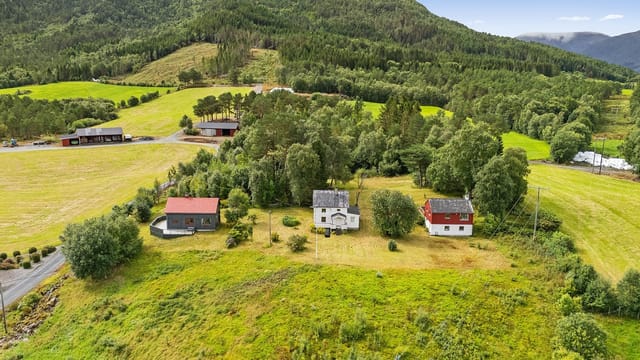
Picture 1

Sunday morning in Loubigné, and the only sounds reaching the upstairs master suite are birdsong, the faint creak of old timber beams settling in the warmth, and somewhere below, the soft clatter of someone starting coffee in the kitchen. That's what 338 square metres of stone-built French country house feels like when it's yours. Not a hotel. Not a rental. Yours. This seven-bedroom property in the Deux-Sèvres department of Poitou-Charentes is one of those houses that genuinely surprises you. The gravelled courtyard you pull into, shaded by established trees and framed by stone outbuildings, gives you a sense of arrival — real arrival, the kind where you exhale and your shoulders drop. Three separate entrances. Two garages. A 70 m² cluster of stone outbuildings that could become a workshop, a studio, a games barn, or simply the best storage you've ever had. And behind it all, a large heated swimming pool surrounded by terrace, with an outdoor shower, a pergola for shade, and a pétanque court set into the lawn. This is the French countryside as it's actually meant to be lived. Inside, the house has genuine scale. The main reception rooms include a large living room anchored by a stone fireplace with a wood-burning stove — the kind of fireplace that becomes the social centre of the house from October through March. There's a separate dining space, a sizeable games room, and a utility room that keeps the practical business of a large household from bleeding into the living spaces. The ground floor has been thoughtfully arranged so that one double bedroom, complete with its own bathroom (both bath and walk-in shower), sits alongside a separate reception room with its own fireplace and independent exterior access. For a visi ... click here to read more
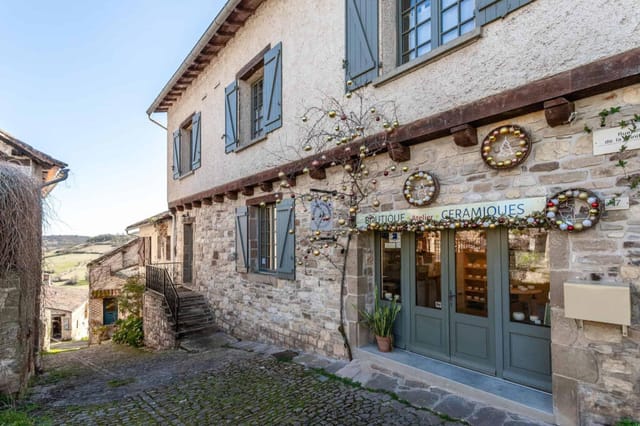
Picture 1

At 10pm on a Swedish summer evening, the sun is still up. Not setting—just hanging there, painting the Kvarken archipelago in shades of amber and copper while you sit in the glass room watching a cormorant land on the rocks below the jetty. That's not a fantasy. That's a Tuesday at Svartviken 44. This 92-square-metre country home on the coast of Täfteå, roughly 25 kilometres north of Umeå, sits at the kind of address that locals don't talk about too loudly. The Rovågern area has stayed quietly itself for decades—real fishing boats at real boathouses, the smell of salt and pine together, and a road that the municipality actually grits in winter. People live here year-round, which tells you something. It's not a summer-only postcode that goes silent in September. It breathes in every season. The house itself was built in 1959, which gives it bones. Not the flimsy bones of something thrown up in a hurry, but the solid, thick-walled kind that holds warmth when October arrives with attitude. Extensive work in 2023 brought the kitchen fully into the modern era—opened up to the living room, reconfigured for how people actually cook and socialise—without stripping out the soul of the place. The plastered open fireplace at the heart of the main living area is the kind of feature that becomes a gathering point within hours of arrival. Light it on a grey August evening when the wind picks up over the water and the whole room rearranges itself around it. Every main room faces the sea. That's not an accident of layout—it's the whole point of this property. The water is visible from the kitchen while you're making coffee. It's there from the living room sofa. And then there's the glass-enclosed room added in 2023, a full-width exte ... click here to read more
Exterior view of the holiday home and waterfront

Sunday morning in Tunes sounds like this: a distant church bell somewhere toward Silves, the faint rustle of citrus leaves in the breeze, and absolute nothing else. You're standing on the covered terrace with a coffee, watching the light shift gold across the pool as the countryside opens up beyond the garden wall. This is a different Algarve from the one most visitors ever find. Tunes sits in the quiet interior of the Algarve, about midway between Silves and Albufeira, and it has the kind of unhurried pace that the coastal towns traded away years ago. The village itself is small and unpretentious — a train station, a café, a weekly market where people actually know each other — and yet you're no more than 20 minutes from some of the best beaches in southern Portugal. Praia de Galé, Praia da Falesia, the long sands at Armação de Pêra. You get the quiet and the coast, which is not an easy combination to find at this price point anywhere in the Algarve. This is a traditional single-storey quinta, the kind of rural estate that defined life in this region long before golf resorts arrived. Set on 8,440 square metres of land, the property carries real weight — fruit trees, open sky, and that particular sense of scale you simply cannot manufacture. The 120-square-metre living area is arranged across one level, which makes it genuinely easy to use. No stairs. No awkward split-level compromises. Everything flows naturally from one space to the next. Walk through the electric gates — which open onto generous private parking for multiple vehicles — and the house greets you through a proper entrance hall. Three bedrooms share a well-appointed family bathroom, and the principal bedroom has its own en-suite. It's not overdesigned, ... click here to read more
Picture 1

Step out of the kitchen door at eight in the morning, coffee in hand, and the Segura river valley is right there in front of you — a wide open sweep of orange groves, distant ridgelines, and the kind of stillness that makes you forget your phone exists. That's the daily reality of this single-storey villa in Ciudad Quesada, and it never quite gets old. Built in 2020 on a 500-square-metre plot just outside Rojales, this is a genuinely move-in ready vacation home in the southern stretch of the Costa Blanca — no renovation projects, no compromises, no mystery leaks behind bathroom tiles. It was designed from the ground up around light and outdoor living, and that intention shows in every room. The layout puts the open-plan living and dining area right at the centre of everything. The kitchen connects directly to a covered terrace through wide sliding doors, so the boundary between inside and out dissolves on warm evenings — which, on the Costa Blanca South, means roughly nine months of the year. The terrace has a glass windbreak that extends the season further still; you can sit outside in January with a blanket and a glass of Fondillón, Alicante's ancient sweet wine, and it's genuinely pleasant. The private pool sits beyond, catching the afternoon sun without obstruction, flanked by generous tiled terracing that handles a sun lounger or six without feeling crowded. Three bedrooms are spread across the single floor — the main with an en-suite bathroom, the other two served by a second full bathroom. The single-level design is something that sounds unremarkable until you actually live it: no stairs, no noise from the floor above, just an easy, unhurried flow from room to room. Underfloor heating runs through the kitchen, ... click here to read more
Picture 1

The beech trees lining Stigsbergsvägen are the first thing you notice — two rows of columnar trunks standing at attention, framing a gravel drive lit by cast iron lanterns. You pull in slowly because it feels like the kind of arrival that deserves a moment. The house sits elevated at the end, and on either side, paddocks stretch out in the late afternoon light with that particular Swedish stillness that Stockholmers spend years chasing. This is Bålsta country living at its most grounded — a real equestrian estate, a proper family home, and a life that moves at a pace the city simply can't offer. Built in 2007 and consistently upgraded since, the 172-square-metre main house has the feel of something that was thought through properly from the start. The living room ceiling soars open to the roof ridge — not in a showy way, but in a way that makes the space feel genuinely airy even on grey Swedish winter days. A wood-burning stove sits centrally, and on a Friday evening in January when the temperature drops and you've just come in from the stables, that stove becomes the entire point of the room. The kitchen was renovated in 2014 and it shows: clean lines, quality appliances, the kind of workspace where someone who actually cooks wants to spend time. The conservatory is the newest addition, finished in 2024, and it earns its keep every single month of the year. In late April, when the surrounding fields are just greening up and the birches are budding, it catches morning light in a way that makes a slow breakfast feel like something worth planning for. Come autumn, it becomes the indoor-outdoor room that keeps the season from feeling like a loss. The property runs on geothermal energy via a heat pump installed in 2023, p ... click here to read more
Front view of the main house and driveway

Imagine waking up at 686 meters above sea level to the smell of pine resin warming in the morning sun, pouring your first coffee, and stepping out onto a wide south-facing terrace where the only sound is birdsong and the occasional creak of the forest. No traffic. No neighbours staring over your fence. Just the Blefjell plateau stretching out in every direction, unhurried and entirely yours. This is the daily reality at Gampeflåsvingen 62 in Svene — a two-bedroom mountain chalet that sits quietly in one of Blefjell's most established and sought-after cabin communities, priced at €220,000. The chalet itself is 56 square metres of well-considered mountain living. It's compact in the best sense — everything has a purpose, nothing wastes space, and the layout flows naturally from the entrance hall into a living room that genuinely feels warm rather than just described that way. The ceiling height gives the room a lift you don't always find in mountain cabins, and the wood-burning fireplace anchors the whole space. On a grey February afternoon when the temperature drops and snow presses against the windows, that fire does more than heat the room — it transforms the cabin into exactly the kind of retreat people drive three hours from Oslo to find. The kitchen is practical and well-equipped, with enough cabinet space to store provisions for a week-long stay and a dining area large enough to seat a family without anyone feeling squeezed. Two bedrooms handle the sleeping arrangements with flexibility — the main bedroom for the adults, and a second room for children or guests. There's also a furnished room in the outbuilding which, while not registered for permanent use, functions perfectly well as overflow space for visitors or ... click here to read more
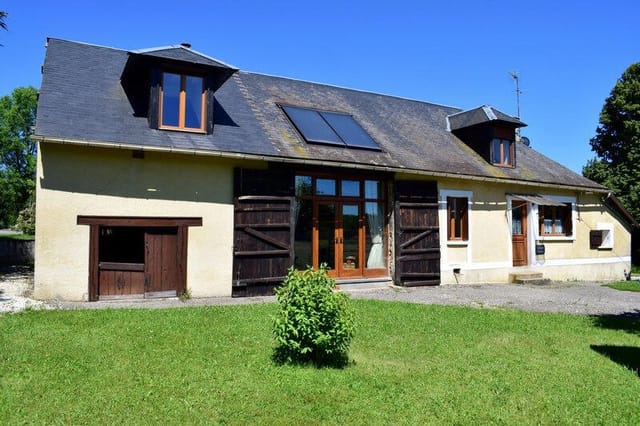
Main exterior view of the chalet

On a quiet Sunday morning in Kings Park, you open the bay window of the principal lounge and the smell of cut grass drifts in from Victoria Square below. A church bell somewhere near the Old Town counts nine. The stone walls of your private garden hold the cool Scottish air in while the first real sun of the day catches the cornice work above the fireplace. This is what life at Abercromby Place actually feels like — and it's the kind of thing you stop taking for granted very quickly. Built around 1900, this four-bedroom, four-bathroom Edwardian villa in one of Stirling's most consistently sought-after residential pockets has been cared for with the kind of quiet seriousness that period architecture demands. At 268 square metres across two floors, there's genuine room here — not the slightly optimistic room of a modern marketing brochure, but actual, move-around-freely, host-twelve-for-dinner room. The sort of space that makes long stays feel like settling in rather than camping out. Kings Park carries a distinct character, even by Stirling's standards. The streets are wide and tree-lined, the stone facades substantial. Neighbours tend to be professionals, academics connected to the University of Stirling just a few kilometres north, and families who've worked out that the city centre is a fifteen-minute walk but the noise doesn't follow you home. Estate agents talk about "prestigious addresses" until the phrase loses all meaning, but Victoria Square genuinely earns the description — it's the kind of green, open space that makes a bay window feel like a private box seat. The layout inside rewards a slow first walk-through. The entrance hallway sets the tone immediately: ornate cornicing overhead, decorative plasterwork ... click here to read more
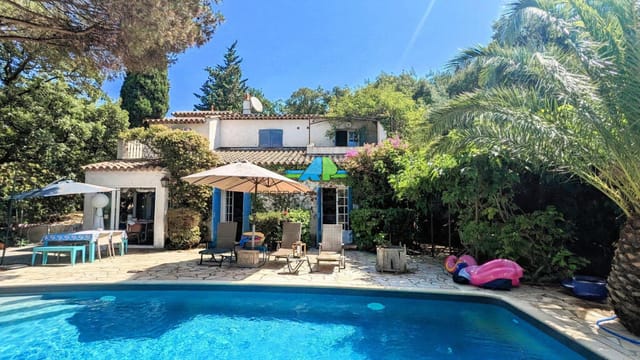
Front view of the period villa

Early Saturday morning, you pull open the large sliding doors and the smell of pine and damp heather rolls into the living room. A wood stove is still ticking from the night before. There's no traffic, no city noise — just the soft creak of the garden gate and birdsong from the state forest that begins practically at the edge of the estate. This is what you bought the weekend for. Sitting on a 545 square meter plot on the Hunzebergen estate in Exloo, this detached two-bedroom recreational home is one of the more privately positioned properties on the park. Number 304 on the Valtherweg sits tucked away with a sheltered garden that manages to feel genuinely secluded rather than just screened by a hedge — not every plot here achieves that. It's a real feature, not a selling point dressed up as one. The house itself, type Odoorn, was built in 1992 and has been kept in genuinely good condition. Full insulation throughout — roof, walls, floor — along with double glazing and HR glass means it runs efficiently across every season, from frosty November weekends to warm July afternoons when the heathlands outside Exloo go purple. A Nefit combi-boiler installed in 2021 handles heating and hot water without drama. The home is completely move-in ready; bring your bags and a decent bottle of Drenthe gin and you're set. Inside, the layout is straightforward and works well. The hallway has a meter cupboard and a separate toilet, so the main bathroom — equipped with a shower-bath and washbasin — doesn't become a morning queue. The living room is the heart of the place: generous, light-filled, with a wood-burning stove that makes autumn evenings here something worth planning a trip around. The sliding doors open directly onto the garde ... click here to read more
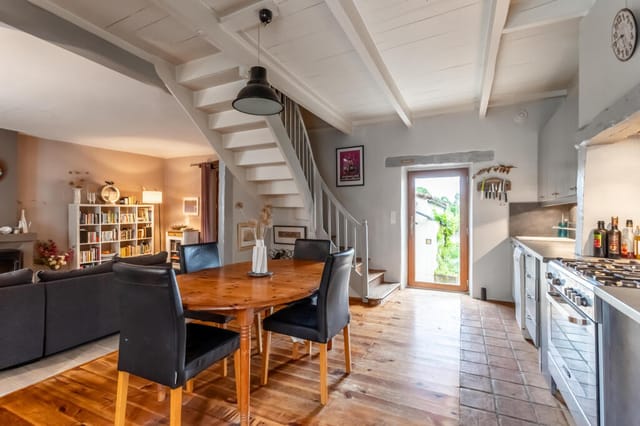
Front view of Valtherweg 36-304

Step off the narrow lane on a grey October morning and you can already smell woodsmoke curling from the chimney insert before you've even pushed open the front door. That's the thing about stone houses in Corrèze — they hold heat, hold history, and hold you in a way that a modern build simply never will. This four-bedroom stone village house in Lascaux sits in one of the least-trumpeted corners of the French countryside, which is precisely why it's worth paying attention to. The Corrèze department, tucked into the northern reaches of the old Limousin region, draws almost none of the tourist crowds that swarm the Dordogne just to the southwest — yet the landscape is, if anything, more raw and more rewarding. Rolling chestnut forests, granite outcrops, winding rivers cold enough to make you gasp in August. It's France before it became a postcard. The house itself covers 65 square metres across two floors, with a clear and logical layout that makes every square metre count. Downstairs, an entrance hall leads into a kitchen and a living room that opens into a lounge anchored by a fireplace fitted with a wood-burning insert. On a February evening with a Corrèze walnut cake resting on the counter and a bottle of local Marcillac wine open on the table, that insert becomes the social centre of the entire house. Upstairs, four bedrooms — generous in number for a property of this footprint — share a bathroom with WC, with a shower room and separate WC also available on the ground floor. The attic adds further storage or, with the right planning permissions, development potential. Directly opposite the house stands a barn of 66 square metres with an additional lean-to. In the hands of the right buyer, that barn is a project wort ... click here to read more
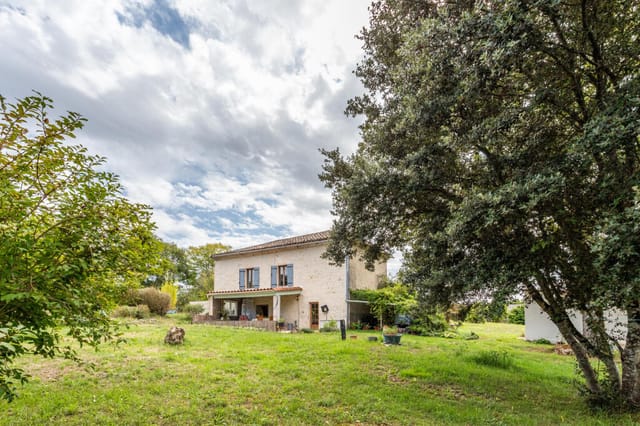
Picture 1