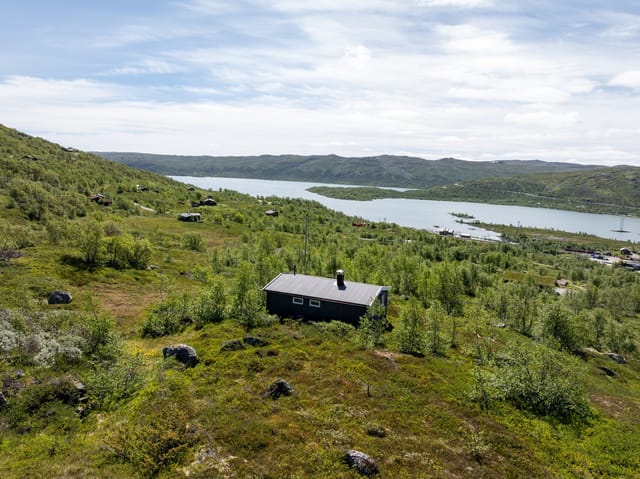
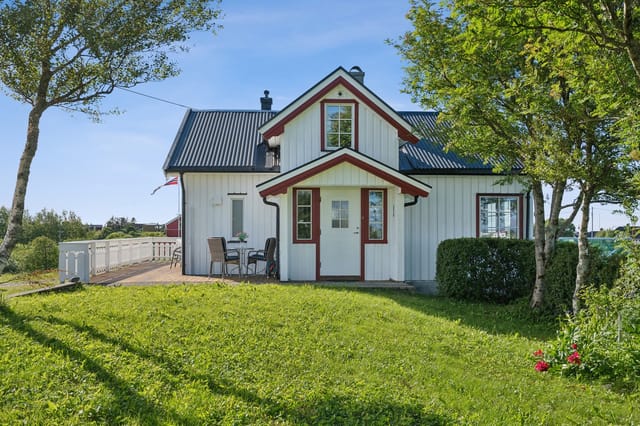
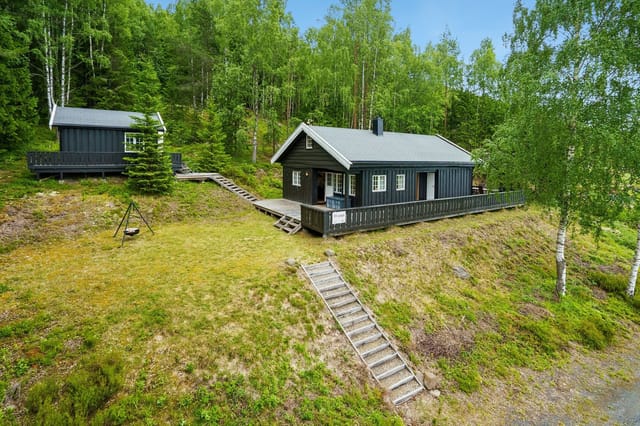
Houses For Sale In Europe (page 7)

Houses for sale in europe - homestra offers the largest amount of european real estate with over 200,000+ properties, find any type of property within your budget from villas to country homes. buy or rent your perfect home in europe. (page 7)

The smell hits you first. That particular mix of pine resin, salt air, and woodsmoke that you only get in coastal Norway — the kind that makes your shoulders drop the moment you step off the bus on Langgårdsveien. The cabin at number 11 sits quietly on its 1,068 square metre plot like it's always been here, because honestly, it more or less has. Built in 1955, this is a proper hytte in the original Norwegian sense: unpretentious, solid, and surrounded by the kind of green silence that people pay a lot of money to find. This is Gressvik, a small coastal community on the western bank of the Glomma estuary, roughly five kilometres from the centre of Fredrikstad — one of the best-preserved fortress towns in Scandinavia. You're far enough from the city to feel completely detached from it, but close enough that a quick drive along the E6 brings you back to civilization whenever you want it. The cabin itself is 40 square metres of honest, functional space — two bedrooms, a kitchen, and a living room anchored by an open wood-burning fireplace. Light the fire on an October evening with the windows misted over and a pot of something on the stove, and you'll understand immediately why Norwegians have been doing this for generations. The fireplace isn't decorative. It does real work. Alongside electric panel heaters, it keeps the interior genuinely comfortable well into autumn and through early spring, extending the usable season well beyond the summer months. Step outside and the 14-square-metre south-facing terrace earns its keep. Morning coffee here in July, when the sun is up before 5am and the garden is already warm, is the kind of small luxury that's hard to put a price on. The plot is big — properly big for a cabin of this ... click here to read more

Langgårdsveien 11 presented by Jonathan Dahl at Krogsveen. Photographer: Kristoffer Kristiansen

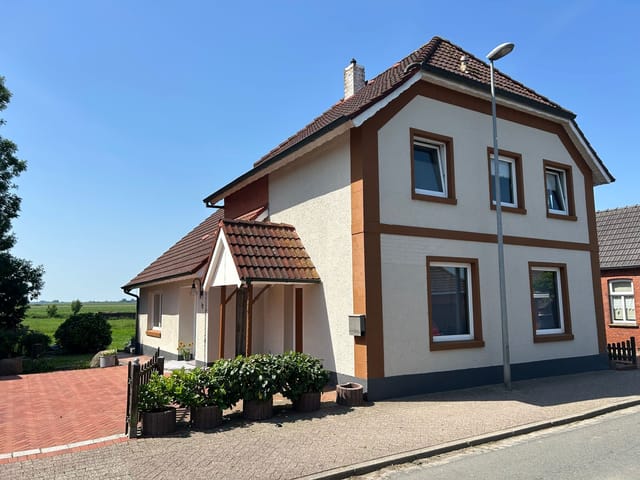
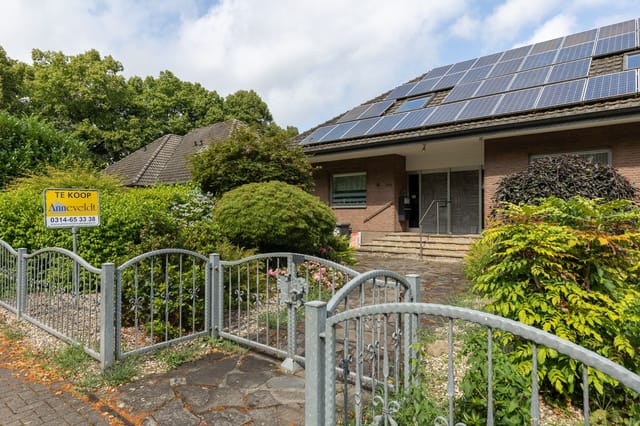
Stand at the kitchen window on a still October morning and watch a low fog roll across the fields behind the house. No traffic noise. No neighbors pressing close. Just the sound of geese threading through the Dollard wetlands a few kilometers away, and the faint creak of a historic windmill turning somewhere along the dike. This is what daily life at Ditzumerverlaat 17 actually feels like — and it's genuinely hard to find anywhere else at this price point in northwestern Europe. The house sits in Ditzumerverlaat, a small settlement that belongs to the municipality of Bunde in East Frisia (Ostfriesland), Lower Saxony. It's a place most people drive through without stopping, which is precisely why those who do choose to live here tend to stay. The Dutch border is less than ten minutes by car — Groningen is about 45 minutes, and Leer, the nearest city with a proper old town, a covered market, and a harbor quarter worth exploring, is around twenty minutes south on the B436. You're not in the middle of nowhere; you're just far enough from everywhere to breathe properly. The property itself is a detached house across 182 square meters of living area, set on a 378-square-meter plot. That's a substantial amount of space for two people, a family, or someone who needs a second home with room to grow into. The build has genuine character — this isn't a soulless new-build box. The rooms are proportioned generously, the ceilings give the place an airy quality, and large windows across the rear elevation mean the fields are almost always in view, shifting through the seasons from pale winter green to summer gold. Walk in from the driveway and the hallway immediately tells you something about the scale of the place. There's a meter ... click here to read more

Front view of Ditzumerverlaat 17

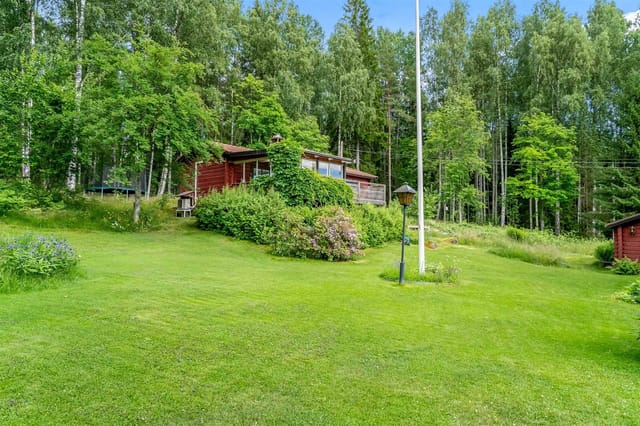
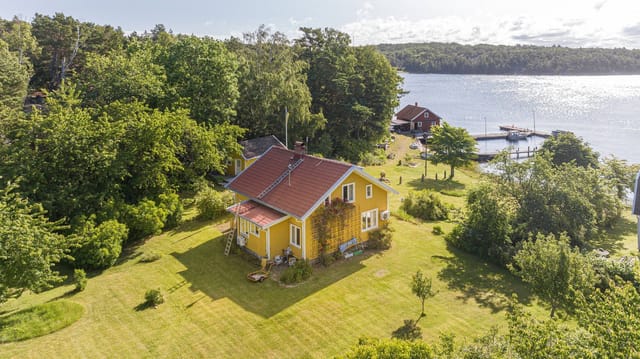
Early July morning. You push open the glazed veranda door and the birch forest breathes cool air straight into the kitchen. Somewhere across the water, a loon calls. The wood stove still holds last night's warmth. This is what mornings at Morhagsvägen 70 & 72 actually feel like — and once you've had a few of them, going back to the city gets harder every time. Sunnansjö sits in the Ludvika municipality of Dalarna, one of Sweden's most storied provinces, and this particular corner of it rewards the people who find it. The property sits in Morhagen, a small lakeshore community right on the edge of Lake Väsman — a deep, clean glacial lake that locals have been swimming, fishing, and paddling on for generations. The house itself is compact and well-kept, around 40 square metres, but the land it comes with is anything but small. Two separate cadastral plots — Sunnansjö 108:24 at 1,643 sqm and Sunnansjö 108:25 at 1,553 sqm — combine for just over 3,196 sqm of mixed lawn and natural woodland. That's a lot of Sweden to call your own. The cottage is designed with the kind of honest practicality that Scandinavian summer houses do best. Open-plan living room and kitchen keep things social — you're never marooned in a separate room while everyone else is talking. A wood-burning stove anchors the living area, and on grey October afternoons when the light drops early and the forest goes quiet, it earns its place completely. The bedroom is comfortable and private, and the bathroom comes with an eco-friendly incineration toilet — sensible for a property this size in this setting, and entirely maintenance-friendly for owners who aren't here every week. The glazed veranda is where you'll spend most of your waking hours. Facing out towa ... click here to read more

Exterior view of the main cottage and garden

Step out onto the first-floor balcony on a clear October morning and you can actually see into the Netherlands. The flat, green lowlands stretch out beyond Uelsen's rooftops, the kind of view that makes you understand immediately why someone chose this particular hillside, this particular plot, to build something exceptional. The air carries a faint trace of pine and damp grass. Somewhere below, a church bell counts out the hour. This is not a holiday postcard—this is a Tuesday. Built in 2003 and sitting on roughly 1,301 square metres of landscaped hillside in the recognized spa town of Uelsen, this four-bedroom villa spans approximately 285 square metres of living space across three intelligent levels, plus a fully functional basement with its own external entrance. The architecture is immediately arresting—an Austrian-style bay window punctuates the façade, and a glass front extending all the way to the roof ridge floods the ground-floor living room with light that shifts dramatically through the seasons, golden in summer, silver-white in January, always generous. It is the kind of house that photographs well but lives even better. The ground floor is where the home earns its reputation. The entrance hall is wide and genuinely impressive, with a guest toilet and shower that prevent the usual morning traffic jams when guests are staying. The open-plan kitchen, living, and dining area operates as one fluid space, anchored by a custom-built kitchen fitted with integrated high-end appliances and a wine cooler—the sort of detail that signals the original owners were serious about how they lived here. Adjacent to the kitchen, a practical utility room with bespoke cabinetry handles the less glamorous side of domestic life w ... click here to read more

Photo 1 of Bookesch 28

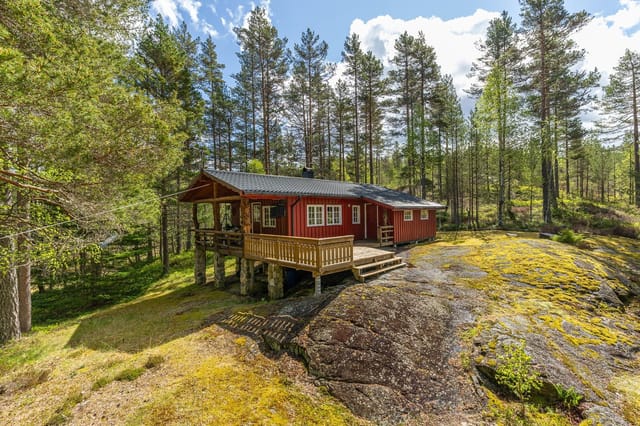
Dawn comes slowly in Gjerstad. The mist hangs low over the spruces, the forest is dead quiet except for a woodpecker somewhere in the birches, and the only thing on the agenda is whether to pack the fishing rods or pull on the hunting boots. This 1988 cabin on Gjerstadveien 2589 was built for exactly that kind of morning — and there are 365 of them a year waiting for you here. Tucked into the upper reaches of Gjerstad municipality in Aust-Agder, this three-bedroom chalet sits on its own 867-square-metre plot where lawn gives way to natural rock and forest edge. The setting feels genuinely remote, yet the E18 motorway is within easy reach, and the coastal towns of Risør and Kragerø — both known for their white-painted wooden architecture and busy summer harbours — are a short drive south. Oslo is roughly three hours by car or train. It's that sweet spot: wild enough to feel like a proper escape, connected enough to be practical for a second home. The cabin's most significant selling point is what lies outside the front door, not inside it. The property sits within Statsskog's hunting grounds — one of the largest state-managed wilderness areas in southern Norway, spanning some 130,000 acres of managed forest. Annual hunting licences for elk, deer, and small game are available for roughly NOK 2,000 per designated zone per year, making this one of the most cost-effective entry points into Norwegian hunting culture you'll find anywhere. Five separate hunting areas are accessible from this location. For the serious hunter looking for a second home in Norway that doubles as a proper base camp, this is the real thing — not a romanticised version of it. Spring arrives late here, usually in April, and when it does, the trails a ... click here to read more

The cabin is situated on a natural plot with beautiful surroundings and good sunlight.

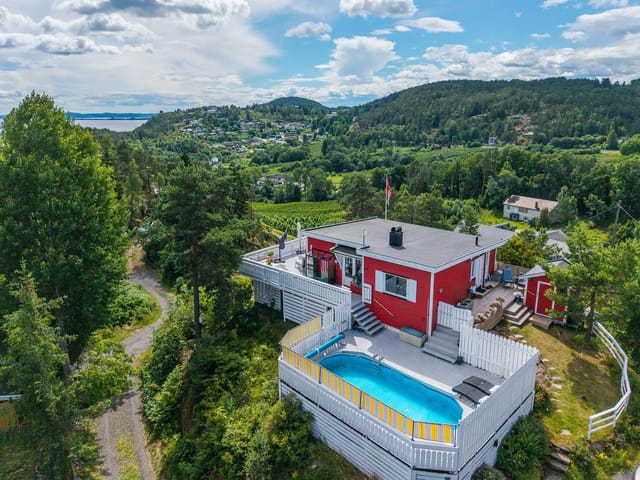
Step outside on a July morning, coffee in hand, and the first thing you notice is the light. It bounces off the water below Birkebeinerbakken and fills every corner of the terrace before most of the neighbourhood is even awake. This is not a vague promise of a view — from the 85-square-metre sun terrace, you watch the fjord change colour through the day: pale silver at breakfast, deep blue by lunch, amber and rose as the evening stretches long into the Nordic summer sky. Berger sits on the western shore of Drammensfjorden, a place that most international buyers have not yet discovered but that Norwegians have quietly treasured for generations. The village has a particular rhythm to it. Weekday mornings bring locals cycling the coastal path toward Svelvik. Weekends fill Bergerbukta — the sheltered bay a short walk from the cabin — with swimmers, families, and kayakers threading between the rocks. The pier at the bottom of the walking path from the property is a communal hub: children jumping, neighbours chatting, the faint smell of sunscreen and saltwater drifting up through the pines. The chalet at Birkebeinerbakken 10 is a genuine holiday home — compact, well thought out, and set on a freehold plot of 812 square metres that gives it a sense of space and ownership rare in this price range. At 64 square metres of interior living space, nothing is wasted. The living room has high ceilings and large windows that pull the landscape inside; a wood-burning stove anchors one wall and a heat pump keeps the space comfortable across seasons, because this cabin is not just for August. Owners come in late May when the birch trees leaf out overnight, in September when the forest behind the plot turns rust and gold, and again in win ... click here to read more

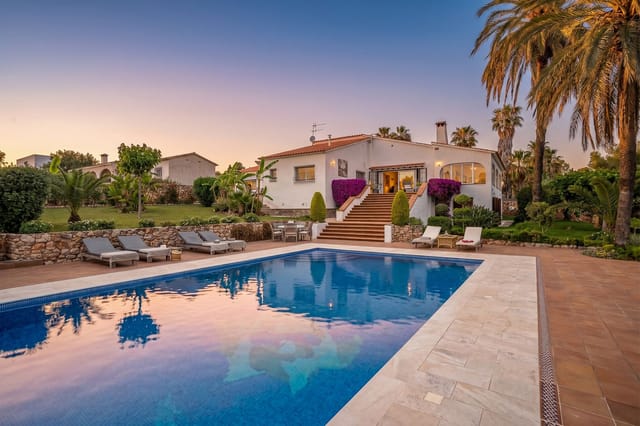
Front view of the cabin and pool area

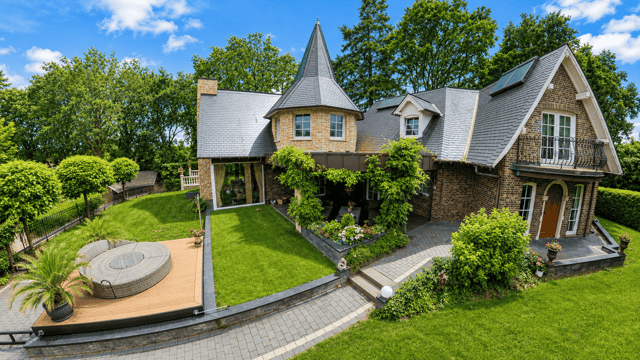
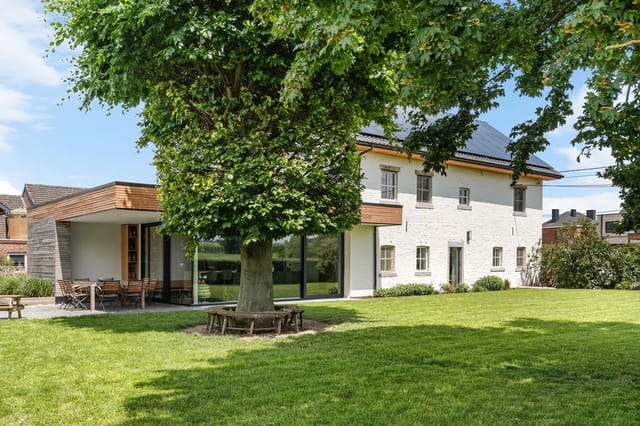
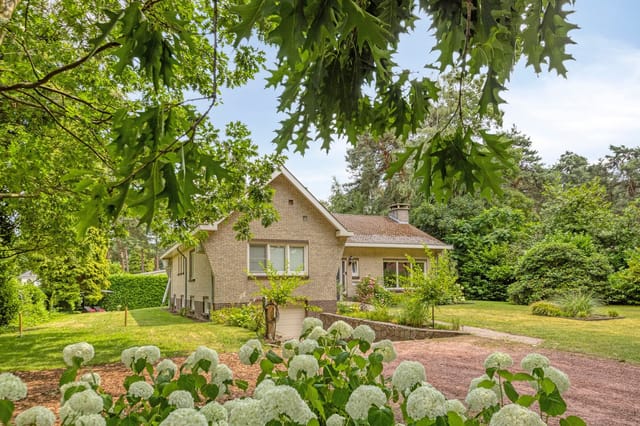
On a quiet Sunday morning in Moelingen, you can stand at the kitchen window with a coffee in hand, watching mist lift off the Voer valley while a wood pigeon settles into the oak at the garden's edge. The church bells from Sint-Martinus carry faintly across the fields. Nothing is urgent here. That particular stillness—unhurried, genuinely rural, yet only nine kilometers from Maastricht's restaurant terraces—is what makes this house on Winkel 12 so hard to find and harder to forget. Built around 1930, this detached home was stripped back and thoughtfully rebuilt from 2016 onward. The renovation didn't try to hide what the house was. Original proportions were kept. The entrance hall still has that solid, generous feel of interwar Belgian construction, now dressed with custom oak details that signal, immediately, that the finishes here are serious. Parquet runs across the entire upper floor. The staircase is fixed timber, not a retrofit afterthought. Every material choice was made once and made well. The ground floor opens into a kitchen and dining space of about 43 square meters—large enough that four people can cook together without negotiating territory. A central island anchors the room, fitted with induction hob, integrated extractor, oven, microwave, dishwasher, and refrigerator. The real win, though, is the wall of glass at the back: a full sliding door that dissolves the boundary between kitchen and covered terrace on warm evenings, when the garden smells of cut grass and whatever's on the grill. South-facing plots in this valley hold the light until late, and this one makes full use of that fact. The living room—about 29 square meters—has a wood-burning stove that actually gets used. In November, when the hills ... click here to read more

Front view of Winkel 12

The first thing you notice on a summer morning at Styrsö Ängebukten 1 is the silence. Not the absence of sound — more the presence of the right ones. Water lapping against the dock. Oystercatchers calling from the rocks. The faint creak of the boathouse door in the breeze off the Skagerrak. There's no car traffic on Styrsö, ever. That's not a marketing line — it's simply how this island works, and once you've spent a few days here, the idea of going back to somewhere with roads and engines feels genuinely strange. This is a rare kind of property in the Swedish archipelago. Not just a summer cottage with a borrowed slice of coastline, but a genuine estate — 17.7 hectares of it — sitting on one of the most privately held and naturally rich islands in the Strömstad kommuns. The main house is a classic 1.5-storey Swedish home with a basement, 116 square metres of living space across three bedrooms and two bathrooms, and windows positioned to make the most of sea views that shift in colour from grey-green to deep blue to blazing copper depending on the time of day. Wooden floors throughout. A fireplace that actually earns its place in October, when the evenings turn sharp and the light goes low and golden over the water. The technical side of the house has been well thought through. A water-borne heating system runs on solar panels with oil as a backup, which keeps running costs manageable year-round. There's a private well, a mini sewage treatment plant, and high-speed fibre internet — so this isn't just a place to unplug, it's a place where you can genuinely work remotely without compromise. The property has been through an Anticimex inspection, and the full report is available for review. For international buyers unfamil ... click here to read more

Main house with sea view

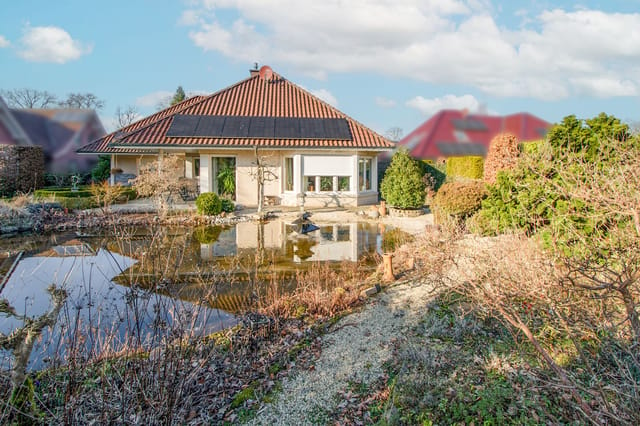
On a still Sunday morning in Wilsum, the only sounds drifting through the open terrace doors are birdsong and the soft trickle of water from the garden pond. No traffic. No sirens. Just 1,610 square metres of park-like grounds, a fountain catching the early light, and the kind of quiet that most people spend their whole lives searching for. This is what 275 square metres of solid German craftsmanship on Auf dem Zuschlag feels like from the inside — and it doesn't take long to understand why a property of this scale and setting in the Grafschaft Bentheim countryside is genuinely rare. Wilsum sits in the far southwest of Lower Saxony, pressed up against the Dutch border near Nordhorn and Bad Bentheim. It's the kind of village — population a few hundred, history stretching back over 1,150 years — where the butcher knows your name and the cycling trails start at your front gate. The Grafschaft Bentheim region is one of Germany's quietly beloved rural retreats: flat, green, laced with waterways and forest tracks, and close enough to the Netherlands that a Saturday afternoon in Enschede or Gronau feels like a natural extension of the weekend. Nordhorn, just 20 minutes by car, brings a proper town experience — the Nordhorn United Mills complex with its galleries and cafés along the Vechte canal, the Saturday market on Hauptstraße, good restaurants serving regional Niedersächsisch dishes like Grünkohl mit Pinkel in winter. The autobahn access toward Osnabrück and Münster makes longer day trips easy, and Münster's old town is worth every kilometre. The house itself was built with a clear intention: to live well. Ground-floor parquet throughout the main living and dining space gives the room warmth underfoot, while a full-width ... click here to read more

Front view of Auf dem Zuschlag 48

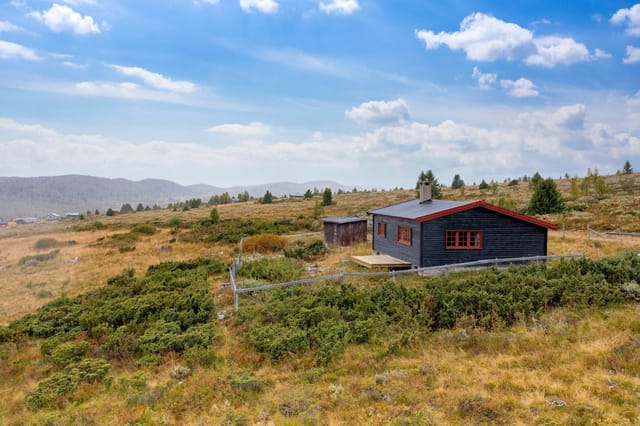
Step outside on a July morning and the air hits differently up here. At 930 meters above sea level, above the treeline and above the noise of ordinary life, Etnstølen 13 sits in a broad, sun-drenched mountain pasture where the wind comes off Mellene and the only sound at dusk is the distant clang of cowbells from a neighboring farm. This is the kind of place Norwegians have been quietly keeping to themselves for generations. Rogne and the wider Valdres valley have long attracted those who know their Norwegian geography well. This isn't a manicured resort with lift queues and overpriced waffles. Etnstølen is rawer than that — a working mountain pasture landscape of traditional wooden seter buildings, open skies, and trails that stretch in every direction without a signpost telling you which way to go. The chalet at number 13 sits among a small cluster of similar cabins, close enough to feel a sense of neighborly community when you want it, and open enough on every side that solitude is never more than a ten-minute walk away. The cabin itself was built in 1950, and you can feel that age in the best possible way. Five exposed timber beams run across the vaulted ceiling of the main living area, giving the 60-square-meter interior a height and openness that the numbers alone don't suggest. The large windows facing the mountains aren't just decorative — on a clear afternoon, when the light goes golden across Kroktjednet and the reflections shift on the water, you will absolutely stop whatever you're doing and just look. The older fireplace stove in the living room is the social center of the space on cooler evenings, the kind of thing that earns its place in a cabin like this rather than being a lifestyle accessory bolted on ... click here to read more

Welcome to Etnstølen 13!

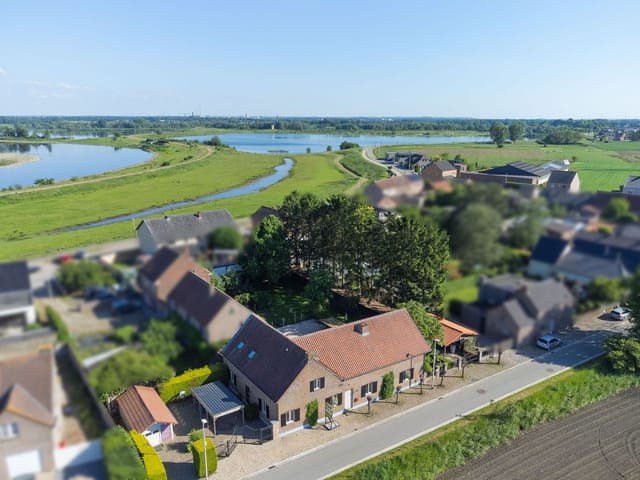
Step out the back door on a Saturday morning, coffee in hand, and you're looking at a south-facing garden so quiet you can hear the birds sorting themselves out in the hedgerows. No traffic. No neighbours backing out of driveways inches from your terrace. Just the particular stillness that only comes from a dead-end street in a well-planned Belgian residential pocket, where the houses are spaced generously and the green doesn't stop at the garden fence. That's the daily reality at Hoeveloopweg 60 in Mol — a three-bedroom family home built in 2010, maintained with the kind of care that means you walk in, put your bags down, and start living. No snagging list. No decorator required. Just a well-proportioned, energy-efficient house on a calm street, 500 metres from the edge of Keiheuvel Nature Park. Mol doesn't get the attention it deserves from international buyers, which is precisely why it's interesting right now. The town sits in the Kempen region of Antwerp Province — flat, forested, laced with cycling routes and sandy heathland that turns amber in autumn. It has a genuine community feel, a functioning town centre with a weekly market on the Markt square, and enough infrastructure (two supermarkets within walking distance of this address alone — a Carrefour and a Spar) that you don't need to drive for every errand. For a second home or holiday property in Belgium, it hits a rare combination: accessible, affordable relative to the Brussels or Bruges markets, and genuinely pleasant to spend time in. Keiheuvel is the draw for families. It's a leisure park and nature area rolled into one — walking and cycling trails through pine forest, a toboggan run that the kids will demand every single visit, and seasonal events tha ... click here to read more

Front view of Hoeveloopweg 60

The first thing you notice on a January morning is the silence. Not the uncomfortable kind — the thick, muffled quiet that only comes when fresh snow has blanketed the fir trees overnight and the whole valley seems to exhale at once. You open the terrace door of this Klövsjö chalet, coffee in hand, and the slopes are right there. Two minutes on foot. The lifts aren't even running yet. That's the daily reality of owning this three-bedroom chalet on Lars väg 8A — a property that sits in what many Swedes genuinely consider the country's most photogenic mountain village. Klövsjö has been pulling people in since long before Instagram existed. The low timber buildings, the soft roll of the fells, the way the light hits the valley on a clear March afternoon — it earns the reputation. Built in 2014, the chalet is in good condition and shows its age well. Whoever designed the interior understood that a mountain home should feel open, not cramped. The ground floor runs as one flowing space — kitchen, dining area, and living room all connected without walls chopping up the light. Large windows face the landscape, and on a winter evening you'll watch the last skiers come down the run while dinner is on the stove. The kitchen itself is fully fitted with good appliances and enough counter space to actually cook properly, not just reheat things. Storage is generous. The dining table has room for the whole group. Three proper bedrooms give the layout genuine flexibility — families with young kids, a group of friends splitting the cost, or a couple who wants a dedicated workspace for remote weeks in the mountains. Above it all sits the loft, which adds a fourth sleeping area and gives the whole home a sense of volume you don't expect ... click here to read more

Exterior view of the chalet

Step outside on a September morning and the river is already talking. It runs just 50 meters from the front of the cabin, fast and cold, carrying the sound of snowmelt long after summer has settled in around Eltdalen. That's the kind of detail you only know once you've stood there, coffee in hand, watching mist lift off the water while the spruce forest holds its breath. This 78-square-meter chalet sits on a 1,300-square-meter freehold plot along Eltdalsvegen in Jordet, tucked into a valley that most visitors to Norway never find. That's not a flaw — it's the whole point. No shared walls, no visible neighbors, no road noise. Just the river, the trees, and whatever you've decided to do with the day. Built in 2005 and maintained in solid, move-in condition, the cabin has the bones of a proper Norwegian hytte without the museum-piece quality that makes you nervous about putting your boots on the floor. The open-plan kitchen and living area is where the house earns its keep — a generous combined space with a fireplace/wood stove at its center that changes the whole atmosphere after dark. You eat together, you talk longer than you meant to, someone puts another log on. It's a rhythm that city apartments just don't allow. Three bedrooms sleep up to eight people comfortably, which means this is realistically a cabin for the whole extended family or a group of friends who've been talking about doing a proper Norway trip for years and keep not doing it. One bathroom, yes — but that's pretty standard for a hytte of this size and era, and it works. The detached outbuilding out back handles the overflow: skis, fishing gear, firewood, bikes, whatever accumulates when you actually use a place. The surrounding landscape shifts dram ... click here to read more

Exterior

Step outside on a February morning at Hemåsen 30 and clip into your skis right from the terrace. The prepared cross-country trails are 84 meters from the front door — not a marketing approximation, but a genuine number you can pace out yourself. The valley below is still catching the first light, the pines are heavy with overnight snow, and the only sound is the soft creak of cold timber and your own breathing. That's the daily reality this cabin offers, and it's the kind of thing you stop being able to explain to people who haven't experienced it. Built in 1973 and sitting on a natural, unfenced plot in the hills above Koppang in Innlandet county, this three-bedroom Norwegian chalet has been kept in solid, honest condition. It's not a renovation project. It's not dressed up in reclaimed-wood Instagram aesthetics. It's a proper mountain cabin with wood-paneled walls, visible ceiling beams, multiple fireplaces, and an 85-square-meter wrap-around terrace rebuilt with pressure-treated decking in 2021. What you see is what you get — and what you get is genuinely very good. The living room is the gravitational center of the place. An open fireplace, a wood-burning stove, and a combined wood-and-paraffin stove give you options depending on the cold and your mood. After a full day on the Rondane trails or a long Nordic ski loop through the Østerdalen forest, you come back here, strip off the layers, and let the warmth pull you into the sofa. The walls and ceiling are clad in timber throughout — not as a design statement, but because that's how Norwegian mountain cabins have always been done, and it works. There's a reason the aesthetic has never gone out of fashion up here. The kitchen runs on gas — a four-burner stove, a pr ... click here to read more

Welcome to Hemåsen 30! Photo: Jonas Hasselgren V/EFKT

Step outside on a January morning and the only sound is the scrape of a ski boot clipping into a binding. The groomed cross-country track runs directly past the cabin, the Ål Ski Center lift is visible from the wraparound terrace, and the Numedalsåsen ridge catches the first pale light of a Norwegian winter day. That's the reality of life at Kroktjørnvegen 404 — not a promise, but a daily routine. Built in 2020, this two-bedroom mountain chalet in the Primhovda cabin area sits high on the hillside above Ål in Hallingdal, one of the most established and accessible mountain regions in Norway. At 375,000 EUR, it represents solid value in a market where newer construction with this combination of ski access, south-facing orientation, and a freehold 965-square-metre lot is genuinely hard to find. The chalet covers 78 square metres of proper living space across the main floor, plus an additional 44 square metres of loft rooms — flexible, open space that families tend to immediately convert into a kids' bunk area or a reading nook that doubles as overflow sleeping. The main floor layout is clean and practical: open-plan living and kitchen, two bedrooms, a bathroom, entrance hall, and a storage room big enough to actually store two seasons' worth of outdoor gear without chaos. The loft rooms aren't classified as bedrooms for planning purposes, but in practice they add real usability to the property. What you notice first inside is the light. Large windows across the living area frame the mountain panorama without obstruction, and because the cabin sits perched on the hillside facing south, you get sun from mid-morning through to late afternoon even in December. Underfloor heating runs through the kitchen and living room, the ... click here to read more

Presented by real estate agent Ådne Holestøl Hognerud

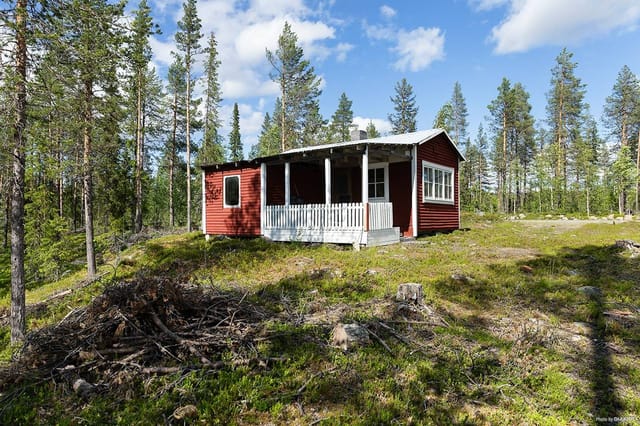
Step off the gravel track at Forsbacka 97 and the first thing that hits you is the quiet. Not the quiet of a city apartment with the windows shut — actual, uncut silence, broken only by the creak of spruce branches and, if you're lucky, the distant call of a black-throated loon somewhere out over the river. This is Sorsele, a small municipality in Västerbotten County where Swedish Lapland begins in earnest, and this timber cabin sits right at the edge of the kind of forest that most people only ever see in photographs. The cabin itself is compact and honest. One bedroom, an open-plan living space, a covered veranda, and a utility building out back. That's it. But what it does with those elements is something you feel more than measure. The built-in open fireplace commands the main room the way a fireplace should — it's wide, it's deep, and on a February evening when the temperature drops to minus twenty outside and the aurora is doing its thing above the treeline, it becomes the entire reason you're here. The wood-burning stove pulls double duty for heating and, when you want it to, cooking. The large windows face the forest rather than a road or a fence, so when you wake up in the bedroom and look out, you're looking at birch trunks dusted in frost or, in July, twenty-two hours of golden light filtering through a canopy that's gone genuinely luminous green. The covered veranda is where summer mornings happen. Coffee, a wool blanket if it's early, and the particular Swedish ritual of sitting still long enough to spot what's moving in the treeline. Roe deer are common. Elk are not unusual. The 1,165 square metre plot is all natural woodland — no manicured lawn, no ornamental hedging, just the forest doing what it does. ... click here to read more

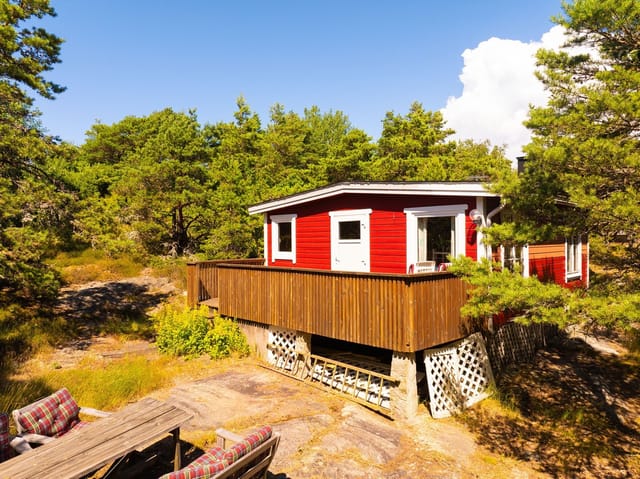
Exterior view of Forsbacka 97

Some mornings you wake up to absolute silence. No traffic. No neighbors. Just the soft creak of old timber, the flicker of light through dormer windows, and the faint smell of birch forest drifting in through the glass. That's the reality of life at Flahult Norra Hult — a 1888 Swedish torp with a completely renovated interior, sitting on nearly 2.4 acres of meadow and deciduous woodland outside Vittaryd in Ljungby municipality, southern Sweden. This is not a fixer-upper dressed up in nice photos. The renovation work here spans 2012 to 2025 and covers virtually everything except the original timber frame — which is exactly the part worth keeping. New floor structure, new exterior cladding, new insulation, new electrical and plumbing, new kitchen, new bathroom, a raised roofline, and a brand-new 45-square-meter terrace completed just this year. The bones are 19th century. Everything else is essentially new construction inside a historic shell. Let's talk about that shell for a moment. The entrance veranda sets the tone immediately — beadboard walls, a painted wooden ceiling, wide cross-laminated oak plank floors that feel solid and warm underfoot. A custom-built staircase carries you upstairs, but down here on the ground floor, the open kitchen and living room flow around a central chimney with a Scan wood-burning stove installed in 2016. Light it on a November evening and the whole room changes. The stove draws outside air, burns efficiently, and throws out real heat — not the performative warmth of something decorative. The kitchen itself was fitted in 2015 and keeps the country aesthetic honest: beadboard, compact cabinetry, an oak countertop, and a preserved Norrahammar No. 3 baking oven tucked in beside the modern c ... click here to read more
Front view of Flahult NORRA HULT 1

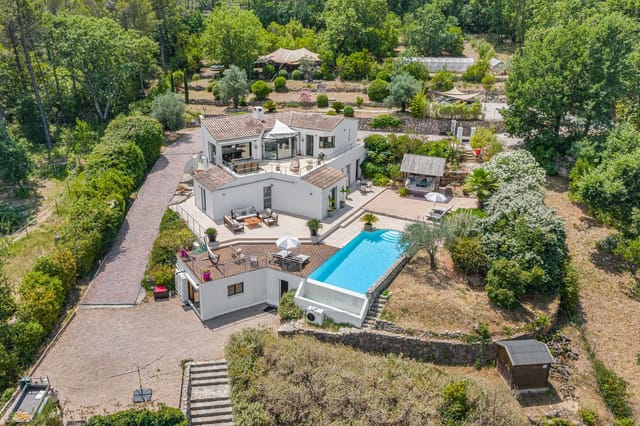
Step out onto the main terrace at eight in the morning, coffee in hand, and you'll understand why people buy property in Tourrettes and never look back. The valley rolls out below you in shades of olive and ochre, the medieval silhouette of Fayence perched on its hill to the east, and the only sounds are cicadas and whatever the wind carries up from the mimosa groves. This is Chemin des Collés — a quiet lane on the high ground above the village, where the views go on for miles and the pace of life feels deliberate in the best way. The villa itself sits on just over 7,200 square meters of private land, which, on the French Riviera hinterland, is the kind of plot that rarely comes available. Built in 1992 and put through a thorough renovation in 2013, the property sits comfortably in the territory between architectural confidence and contemporary comfort. The original Mediterranean bones are intact — the proportions, the relationship to the landscape, the way the living spaces open outward — but the renovation brought everything else into the present. Underfloor heating throughout, air conditioning, solar collectors, electric shutters, a serious security system. Move-in ready is an understatement. The current owners have kept it in genuinely good condition, the kind that doesn't require a mental renovation budget on your drive home from the viewing. Inside, the ground floor is organized around light. Floor-to-ceiling glass doors line the main living and dining areas, pulling the valley view into the room at every turn. The kitchen is fully equipped with high-end appliances — actually functional, not just photogenic. The dining room sits adjacent, large enough for a proper family dinner or a long lunch with guests that dr ... click here to read more
Front view of the villa and garden

Stand in the living room on a Saturday morning, sunlight pouring through the floor-to-ceiling glass façade, and the garden outside looks like it belongs in a different era — mature trees casting dappled shade over a well-kept lawn, a covered terrace waiting for your coffee, birdsong instead of traffic. That's what life at 's-Heerenbergerstrasse 148 feels like before the day has even begun. Emmerich am Rhein doesn't make headlines the way the Rhine gorge towns do, and that's precisely the point. It's a real, functioning town on Germany's western edge — unhurried, practical, deeply livable — and this house sits right at the heart of what makes it work as a second home or a permanent base for anyone crossing between Germany and the Netherlands. The plot alone — 969 square metres — tells you something unusual is on offer here. In a region where land comes at a premium and gardens often amount to a strip of grass between fences, this is genuinely generous outdoor space. There's room for children to disappear for entire afternoons. Room for a kitchen garden if that's your thing. Room for a long table of friends under the partially covered terrace on a warm June evening, the smell of grilled food drifting out toward the garden house at the far end. The property has been kept in good condition, and while the kitchen is ready for someone to make it their own, the bones of the house — underfloor heating, solid construction, aluminum double-glazed windows with shutters throughout — are exactly what you want to inherit. Inside, the ground floor delivers 155 square metres of living space arranged around a central logic that makes daily life easy. The hallway is wide enough to feel like a real entrance rather than a corridor. The li ... click here to read more
Front view of 's-Heerenbergerstrasse 148

Saturday morning. You push open the kitchen doors and the scent of jasmine hits you before you've made coffee. The garden is already warm, the pool catching the first real light of the day, and somewhere beyond the palm fronds there's just the low hum of summer. That's what Carrer Vall d'Aosta 14 actually feels like to wake up in. Not a resort. Your place. Set within Parc de Cubelles — a low-density residential enclave east of the town centre where the plots run large and the neighbours aren't on top of you — this six-bedroom villa occupies one of the area's more generous parcels: 2,641 square metres of mature landscaped garden with a private pool, a full-size tennis court, and an outdoor kitchen that was clearly designed for the kind of evenings that start at seven and end well after midnight. The villa itself covers 383 m² in total, with 245 m² of actual living space and an additional 108 m² of multifunctional storage that could easily become a wine cellar, a gym, or a workshop, depending on what you need it to be. The architecture is classic Costa Daurada residential: generous proportions, wide terraces, southeast orientation that keeps the interior bright from mid-morning onwards without baking it through the afternoon. Step inside and the entrance hall is immediately spacious — not the kind of space you apologise for when guests arrive. The main living room flows directly into a conservatory through large sliding doors, and from there straight out to the garden. When the doors are open, and from April to October they mostly are, the boundary between inside and outside quietly dissolves. The conservatory has its own fireplace and looks out over the vineyard-fringed hillside — an unexpected view for a property this ... click here to read more
Main view of Carrer Vall d'Aosta 14

Saturday morning in Neeroeteren starts quietly. The birds are louder than the traffic—because there is no traffic. You step out through the veranda doors with coffee in hand, and the rear garden opens up in front of you: fruit trees heavy with apples, walnuts dropping in autumn, and a lawn that stretches far enough to give you the rare feeling of actual breathing room. This is Grotlaan 96, a 145 m² detached house on a 1,267 m² plot just outside Maaseik in the Belgian Limburg province—and if you've been hunting for a second home in Europe that delivers genuine countryside calm without cutting you off from real life, this one deserves your full attention. Neeroeteren is a sub-municipality of Maaseik, sitting in the northeastern corner of Belgium where the Maas river shapes the landscape and the Dutch border is a short drive east. The village itself is quiet by design. Grotlaan is a residential street lined with established gardens, and number 96 sits on a fenced, fully landscaped plot that feels more like a private smallholding than a suburban garden. The Tösch-Langeren nature reserve is within walking distance—literally. Lace up your shoes and you're on forest trails and cycling paths in under ten minutes, connecting into the wider LF-route network that threads through Dutch and Belgian Limburg alike. The house was built in 1956 and has been updated progressively over the years in ways that matter: new roof with tiles, battens, and underlayment; renovated dormers with insulation and plastic window frames; updated gutters and windows. It's not a magazine renovation, but it's solid and honest—the kind of home that's been genuinely lived in and cared for rather than flipped for maximum visual impact. The EPC currently sits ... click here to read more
Front view of Grotlaan 96, Maaseik

The first thing you notice is the silence. Not an empty silence, but the kind filled with things — water lapping against sun-bleached rock, the distant caw of a crow crossing the bay, the creak of old timber settling in the morning cool. Standing on the cliffs at the edge of this property on Edö, with Gälnan bay stretching out ahead and the Stockholm archipelago fanning out in every direction, it becomes immediately clear why one family held onto this place for over a hundred years. This is not a renovation project. It is an inheritance — offered now to someone outside the bloodline for the first time. The estate comprises four jointly taxed properties totaling 19,813 square meters of genuine archipelago land. Open meadows bleed into mature forest. Flat granite slabs drop down to private shoreline. And at the water's edge, a boathouse sits quietly, its doors facing Gälnan, ready to shelter a small boat or a kayak or whatever craft you choose to take out into the maze of islands beyond. The main house rises across three levels — basement, living floor, and a partially finished attic — covering over 100 square meters of built area. There is also an outbuilding, remnants of the old farm infrastructure that once made this place genuinely self-sufficient: people grew food here, caught fish from this exact shoreline, and lived largely off the land long before that was considered a lifestyle choice. Much of the original character survives. Wide-plank floors, hand-fitted joinery, the proportions of rooms designed for actual living rather than photography. The house needs work — real, committed renovation — and that is stated plainly, not buried in euphemism. For the right buyer, that is the entire point. Homes like this, with ... click here to read more
Exterior view of the main house and grounds

Step out onto your 21-square-metre terrace on a Saturday morning, coffee in hand, and watch the light filter through the trees of the communal garden behind the building. No street noise from this side. Just birdsong, a soft breeze, and the quiet satisfaction of knowing that everything you need — the Saturday market on Market Square, the hiking trails of Bokrijk, the restaurant strip on Stiemerbeekvallei — is within minutes from your front door. This is what daily life looks like from Weg naar As 148 in Genk, and it's a far more compelling pitch than any brochure bullet point could deliver. Built in 2018 and in excellent condition throughout, this ground-floor apartment sits in a well-managed residential building that still feels new. The lift means you're never hauling groceries up stairs. The underground garage means you never circle the block looking for parking on a rainy November evening. These sound like small things. They're not — they're the details that make the difference between a home you love and one you merely tolerate. Inside, the layout is genuinely well thought out. The living room spans just over 22 square metres and opens directly into an open kitchen of 13 square metres — an induction hob, integrated oven, a proper kitchen island with sink and dishwasher, and enough cabinet storage that you won't be shuffling things around every time you cook. The whole space is open and light without feeling cavernous. On warm evenings, the large sliding doors fold back to connect the living area with the terrace, and suddenly the indoors and outdoors become one room. The communal garden beyond is lush and well-kept, the kind of green backdrop that cities rarely deliver at this price point. The two bedrooms are se ... click here to read more
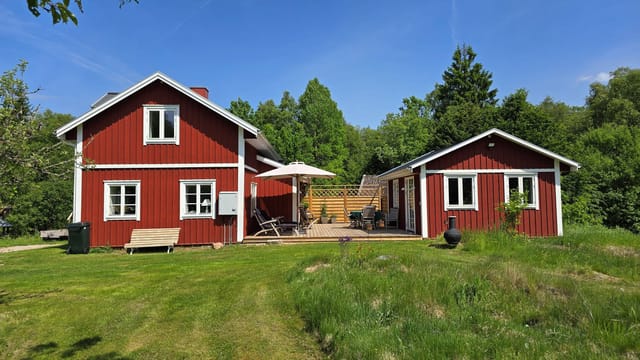
Photo 1 of Weg naar As 148/3 3600 Genk

The sun is still up at half past seven. It's late June, and you're sitting on a 22-square-meter terrace above the fjord, watching a sailing boat cut slowly across Korsvikfjorden. There's no hum of a refrigerator, no ping of a notification. Just the creak of the old jetty below, the faint slap of water against the rocks, and the kind of quiet that most people have to travel a long way to find. This is Sømsveien 150 — and that silence is the whole point. Set on a generous 1,913-square-meter lot at Søm, a few kilometers east of Kristiansand city center, this 1955-built cabin is the real thing. Not renovated into something Instagram-ready. Not dressed up with a Scandi-minimalist interior. It's a genuine Norwegian fritidsbolig — a leisure property in the old tradition — with its own private shoreline, a working jetty in the sheltered bay below, and direct water access to one of the south coast's most navigable archipelagos. Properties like this, with private coastal access this close to a major Norwegian city, almost never come available. When they do, they go fast. The path to the cabin is part of the experience. About 250 meters from the registered parking space, you walk down through the landscape and arrive somewhere that genuinely feels removed from ordinary life. The cabin itself is compact at 42 square meters — that's by design, not by accident. An entrance hall greets you first, with a ladder climbing up to a loft where two simple beds and storage space tuck under the low eaves. The main bedroom below has a 1.5-width bunk and a single bunk, sleeping a small family or a couple who've brought friends along for the weekend. The kitchen is honest and functional: enough counter space, enough storage, everything you need ... click here to read more
The cabin and outbuilding in the center of the image – jetty facility in the bay below to the left

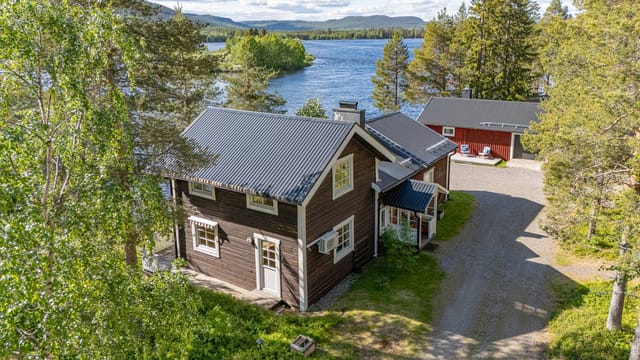
The alarm doesn't go off here. You wake up because the light does — a low Arctic gold sliding across the water at 5am in July, spilling through the bedroom window of the main cottage while the rest of the island is still quiet. Grab a coffee, walk twenty steps to the dock, and watch a pike break the surface of Bäckfjärden. That's the morning. Every morning. This is an island property in the Skellefteå archipelago, about 40 kilometers from the city center, and it is one of the most complete turnkey holiday retreats you will find anywhere in northern Sweden. Complete is the right word — the boat is included, the furniture stays, and the mainland garage with a private dock is part of the deal. You arrive, you unpack, and you start living. The main cottage sits at roughly 90 square meters, used across most of the year rather than just a short summer window, which tells you something important about how it's built. A 2024 air-source heat pump handles the shoulder seasons efficiently, backed up by two wood-burning stoves that turn October evenings into something you actually look forward to. Radiators throughout mean you're not chasing warmth from room to room. The windows have been swapped out gradually over the past 15 years for maintenance-free units — small detail, big difference when you're an owner who isn't always on-site. Step outside and the property keeps going. A separate guest cottage of around 20 square meters has its own kitchenette and a south-facing terrace, which means visiting family members get genuine privacy rather than a fold-out sofa situation. Two insulated cabins — friggebodar in Swedish, each around 10 square meters and both wired for electricity — handle the overflow: a teenage kid who wants their ... click here to read more
Main house and garden

Step outside on a October morning and the air smells of pine resin and cold water. No neighbours visible through the trees. Just the faint drip of dew from the roof timbers, a woodpecker somewhere in the spruce behind the shed, and the whole of the Norwegian forest sitting quietly at your door. That's Kråkfossvegen 175. That particular kind of stillness you have to travel a long way to find — except here, you own it. Set on a generous natural plot of over 2,000 square metres in Vestmarka, Innlandet county, this two-bedroom log chalet complex is one of those rare finds that hasn't been scrubbed clean of its character. The main cabin was built in 1996 using traditional log timber construction, and it shows — in a good way. Exposed roof beams run the length of the ceiling. The visible rafter work gives the living room an airiness you don't expect from a 45-square-metre footprint. A centrally placed wood-burning stove anchors the open-plan kitchen and living area, and on a grey afternoon with snow starting to settle on the deck outside, there is genuinely nowhere you'd rather be. The large windows in the living area do real work here. They frame the surrounding forest like a painting that changes with every season — green and dense in summer, skeletal and silver in winter, briefly electric with autumn colour in late September when the birch trees turn. The kitchen is adapted for cabin life, with a gas stove and refrigerator, and the sanitary room has a washbasin. Simple, honest, functional. The interior is finished throughout in timber walls and solid wood doors, so the whole place feels coherent rather than patched together over the decades. Upstairs, a loft — a hems, in Norwegian cabin tradition — adds flexible sleeping ... click here to read more
Welcome to Kråkfossvegen 175! Photo: Dagmar Louise Ånerud for EFKT

Saturday morning, and the only sound is wind moving through the pines outside the bedroom window. No traffic. No neighbors crowding the fence line. Just the soft creak of old timber and, if you time it right, a woodpecker going at a dead oak somewhere deeper in the park. That's the rhythm of life at Gestelsedijk 34 — and once you've felt it, you'll understand why properties like this one rarely come up twice. Lommel sits in the northeastern corner of Belgium's Limburg province, tucked against the Dutch border in a way that feels accidental until you realize how brilliantly positioned it is. The city of Eindhoven is under 40 minutes north. Hasselt, the stylish Flemish capital of good food and weekend shopping, is about 35 minutes south. Antwerp is an hour. This house sits five minutes from the actual border crossing, which means you're drawing on two countries' worth of schools, shops, restaurants, and airports without any real effort. Brussels Airport and Eindhoven Airport are both within reach for international buyers who'll be flying in and out a few times a year. The property sits inside a forested villa park on Gestelsedijk — a quiet, leafy road where the houses are generously spaced and the plot boundaries are defined more by mature trees than by walls. The plot itself runs to 1,387 square meters. That's real space. Space for the dog to run, for kids to disappear into for an afternoon, for a table big enough to seat eight under the garden trees without anyone feeling crowded. Inside, the house covers 195 square meters across a single main living floor with a basement below. The layout is logical in a way that you appreciate more the longer you live in it. The entrance hall sets things up properly — there's a gues ... click here to read more
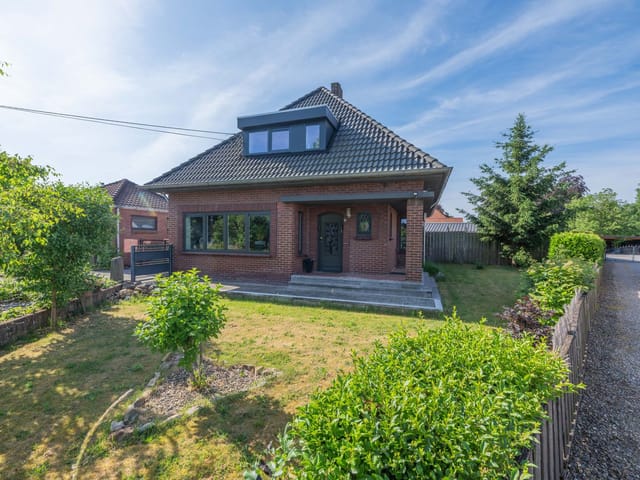
Photo 1 of Gestelsedijk 34

Friday afternoon. You lock the door of your Oslo apartment, walk four minutes to Åneby station, and by the time you've finished your coffee on the train, the city is already behind you. Birch trees line the tracks. The platform empties out. And when you push open the door at Stubben 7, the only sound is wind through the pines and, if you time it right, the faint knock of a woodpecker somewhere up the slope. That's the rhythm this place sets for you. Hakadal sits in the Nitelva river valley, north of Oslo in Viken county, and it has the kind of quiet that people from the capital spend years searching for and rarely find this close to home. Thirty minutes by car. Less than forty by train. Yet standing on the south-facing terrace here, looking out over a nearly 1,900 square metre freehold plot edged by forest, you'd never guess a city of 700,000 people was just down the road. This is a genuine Norwegian cabin — a hytte in the truest sense — and it delivers exactly what that word promises. The chalet itself is compact and considered: 38 square metres of well-arranged living space that includes an entrance hall, a bright living room, kitchen, bathroom, and bedroom, plus a furnished loft that has for years served as a second sleeping area. The footprint is honest about what it is. This isn't a space for hosting dinner parties; it's a space for long mornings with strong coffee, damp hiking boots drying by the stove, and evenings where the biggest decision is whether to read or play cards. That's the point. The wood-burning stove in the living room is the heart of the place. On a grey October Saturday, when the mist sits low over the tree line and you've just come back muddy from the trails, that stove earns its keep in a way ... click here to read more
EIE eiendomsmegling v/ Emilie Rønvik presents Stubben 7!

Step out onto the terrace on a July morning and the fjord is right there — silver-grey and glassy before the wind picks up, with the faint chug of a fishing boat rounding the headland. That's Kolvik at 7am in summer. By 9am, someone's already swimming off the rocks at the community beach. By noon, the smell of grilled fish drifts through the garden from three different directions. This is the rhythm of life at Kolvik 757, and it doesn't take long before you'd trade almost anything to make it yours permanently. Sitting just 150 meters from the edge of Gullmarsfjorden — one of Sweden's deepest fjords and one of the most quietly dramatic stretches of the Bohuslän coast — this two-bedroom holiday home sits on an elevated plot that gives it a view most coastal properties in this price bracket simply can't match. The fjord is always in your eyeline. Morning coffee on the terrace, afternoon reading on the balcony off the second bedroom, evening drinks as the light turns amber over the water. The position alone is worth the trip out to see it. The house itself is 73 square meters of honest, functional Swedish summer home. It's in good condition, though it carries the personality of a place lived in for decades rather than staged for photographs. The kitchen has a serving hatch that opens into the living room — a small detail that tells you everything about how this house was designed to be used: sociably, casually, with kids running between rooms and someone always half-involved in the cooking. The living room has proper space for a sofa group and a dining table, which matters when you're planning to pack the place with family in August. Sliding out from the living room, the large terrace and balcony take over as the main liv ... click here to read more
Kolvik 757 - Exterior view with sea in the background

Step outside on a January morning and the cross-country ski trail is right there — literally at the edge of the property. No driving to a trailhead, no fighting for parking at the ski center. You clip into your skis, push off into the blue-white silence of Jämtland's hill country, and the day belongs entirely to you. That's the daily reality at Fingerörtstigen 6 in Klövsjö/Storhogna, and it's the kind of thing that's almost impossible to put a price on. This is a well-kept, 67-square-meter holiday house on a generous 1,506-square-meter plot in one of central Sweden's most beloved mountain communities. Built in 2001, it sits in Bergs municipality — part of the greater Härjedalen-Jämtland high-country corridor that Swedes and an increasingly international crowd have quietly treasured for decades. The house is in good condition and genuinely move-in ready, which matters when you're buying from abroad and can't spend your first season knee-deep in renovation dust. The layout is compact but genuinely clever. Two bedrooms, one bathroom, and a living room that manages to feel like the center of gravity rather than an afterthought. Large windows pull the outside in — snow-draped spruce trees in winter, a green hillside haze in July, the burnt orange of birch leaves come late September. The kitchen is fully equipped and connects naturally to the dining area, so whoever's cooking doesn't get exiled from the conversation. For a family of four or a group of close friends, this works. Really works. Outside, the plot is what sets this property apart from the tighter holiday cabins that dominate this market. 1,506 square meters is room to breathe. There's space for a proper summer table and chairs with enough distance from the neigh ... click here to read more
Exterior view of the house

Step out onto the small timber terrace on a clear September morning and the view stops you cold. Across the treetops, the fjord catches the early light in long silver streaks, and somewhere below in the valley, nothing moves. No traffic. No voices. Just the faint creak of spruce in a slow northern wind. This is Hjartland — and it doesn't feel like the rest of the world remembers it exists. Set on a generous 5,500-square-metre woodland plot along Hjartlandsveien in Leirfjord municipality, this 1970s timber chalet sits high enough in the terrain that the views open up in a way you don't get from the valley floor. Three bedrooms, one bathroom, 45 square metres of honest log construction — and a renovation canvas that hasn't been this wide open in years. At 462,640 NOK total asking price, including all fees, this is one of the more affordable entry points into Norwegian holiday property ownership you'll find in the Nordland region right now. The cabin itself is compact but well-proportioned. High ceilings in the main living area keep it from ever feeling cramped, and the exposed timber beams overhead give the space a weight and character that no amount of interior decorating can manufacture from scratch. Large windows pull the forest and sky into the room, and in winter, when the spruce branches carry snow and the light goes gold at two in the afternoon, the scene from the living room sofa is genuinely hard to leave. A fireplace and a wood-burning stove handle heating — not as a design gesture, but because they work, and because there is something deeply satisfying about splitting birch in the late afternoon and feeding the stove after a day on the trails. The kitchen runs off a gas stove and a refrigerator, with water su ... click here to read more
Welcome to Hjartlandsveien 16 – a charming older cabin situated high in the terrain. Access is behind the outbuilding seen in the picture.

Close your eyes and picture this: it's a Saturday morning in late June, and golden light is already streaming through the conservatory glass at half past five. You're holding a mug of coffee, watching a roe deer pick its way across the meadow at the edge of the garden. The birch trees are doing that thing they do in a Swedish summer — practically glowing. This is Norrhenninge 47, a three-bedroom country home on a 2,566 square metre plot in Edsbro, and mornings like that one come with the keys. Edsbro sits in Norrtälje municipality, deep in the Roslagen coastal region northeast of Stockholm — an area that Stockholmers have been escaping to for well over a century. And with good reason. The landscape here is classic uppland: rolling farmland, pine and birch forest stitched together, glittering lakes never more than a few kilometres away. It doesn't shout for attention. It just quietly holds you. The house itself was built in 1977 and sits on elevated ground, which gives the whole property a sense of openness you don't often find at this price. Sixty-one square metres inside is compact but genuinely well-planned — the kind of layout where nothing feels wasted. A wood-burning stove anchors the living room, both practically and emotionally. Light a fire on a grey October evening, pour something from a local Roslagen brewery, and you'll understand immediately why Swedes talk about the concept of mys with such conviction. It's not hygge's Swedish cousin — it's its own thing entirely, and this house was built for it. The conservatory is the real seasonal wildcard. Enclosed and glass-fronted, it extends the usable living space for a much longer stretch of the year than you'd expect. In May, when the mornings are still sharp bu ... click here to read more
61 m² Holiday Home at Norrhenninge 47 Edsbro Norrtälje municipality - image 1

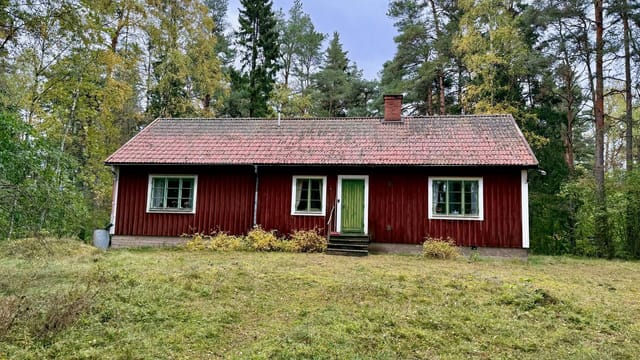
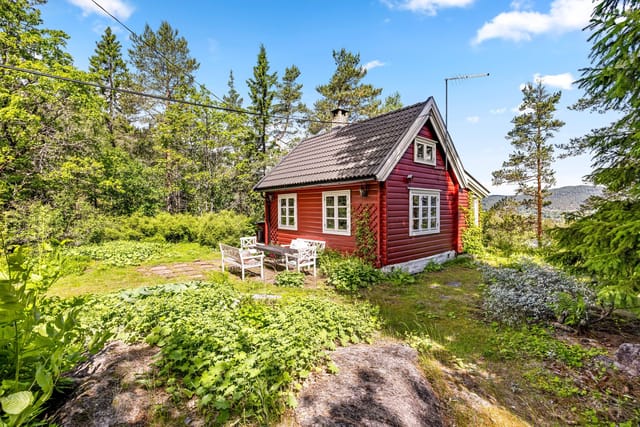
Step outside on a July morning and the stream is already running. You can hear it from the kitchen window — a low, steady rush that cuts through the silence before the coffee has even finished brewing. That's the rhythm of life at Gräsholma 4512, a traditional red-painted Swedish stuga sitting on over 4,400 square meters of land in Markaryds kommun, surrounded by forest and open meadow in the kind of quiet that most people only find by accident. This is southern Sweden at its most unhurried. Markaryd sits in Kronoberg County, close to the border with Skåne, roughly 50 kilometers north of Helsingborg and about 40 kilometers from Ljungby. The E4 motorway is nearby, making it far more accessible than its rural character suggests — you can be in Malmö in under 90 minutes, or catch a flight from Malmö Airport (Sturup) without an early-morning scramble. For buyers flying in from elsewhere in Europe, Copenhagen Airport is also a realistic option, roughly two hours by car. The point is: you don't have to sacrifice the world to get here. The cottage itself was built in 1922 and painted the deep Falun red that's become almost synonymous with the Swedish countryside. White window trim, a pitched roof, a garden that rolls into the tree line — it looks exactly like the image that forms in your mind when someone says "Swedish summer house." Inside, the living space runs to 44 square meters, compact but considered, with wooden floors, good natural light, and the kind of layout that pushes you outdoors rather than keeping you in. There's an additional 20 square meters of secondary space — currently used for storage — which could easily become a hobby room, a workshop, or a proper guest annexe with minimal effort. Three bedrooms sleep ... click here to read more
Front view of the red cottage

Step outside on a February morning and the only sound is the creak of snow-laden pine branches. The thermometer reads minus twelve. Inside, the open fireplace is already crackling, the coffee is on, and through the frost-edged window you can see the Hallingdal valley glowing copper in the low winter sun. This is what owning a vacation home in Ål actually feels like — and once you've spent a week here, the idea of not owning one becomes genuinely hard to justify. Set along Fekjastølvegen, a quiet mountain road that winds up toward the Myset plateau at roughly 893 meters above sea level, this 75-square-meter chalet was built in 1980 and carries the kind of honest Norwegian craftsmanship that newer holiday properties simply can't replicate. Exposed timber, wooden paneling worn smooth by decades of mountain life, an entrance hall that still smells faintly of spruce — these are details that don't come from a catalogue. The building is in good condition throughout, which means you can arrive with skis on the roof and a bag of groceries and be settled in by nightfall, without a renovation project waiting for you. Inside, the layout is straightforward and sensible: an entrance hall leads into a hallway, then opens into the living room where the open fireplace is the undisputed centerpiece. On a clear evening, with the fire going and the mountains dark outside the large windows, this room earns every square meter. The kitchen is functional and well-configured for the way people actually use a mountain cabin — you're not hosting dinner parties for twenty, you're cooking pasta after a long day on the trails and eating with people you like. One bedroom, one bathroom. Enough. What makes this property genuinely interesting for a bu ... click here to read more
Privatmegleren Hallingdal v/ Merethe Jonsen presents Fekjastølvegen 204

Stand at the southeast-facing garden on a Tuesday morning in late September, coffee in hand, and you'll hear almost nothing. The Maas River is a few minutes' walk away, the garden is gold with slanted autumn light, and the only interruption is the distant churn of a barge making its way up toward the Dutch border. That's the daily reality at Boyen 28 — a detached, 328 m² two-unit house on a 1,263 m² plot in Dilsen-Stokkem, a corner of the Belgian Kempen that most international buyers haven't discovered yet. That's precisely why it's worth paying attention now. Dilsen-Stokkem sits in the northeastern tip of Belgium's Limburg province, pressed up against the Maas river valley and the Dutch border. It's not a resort town, which is exactly what makes it appealing. The area draws visitors who come specifically for the Hoge Kempen National Park — Belgium's only national park, just a few kilometers west — and for the extensive cycling and walking network that threads through the polders, marshlands, and riverside forests of the entire region. The Maasland cycling route passes practically at the door. In summer, cyclists and hikers stream through from Germany and the Netherlands; in winter, the landscape quiets into something almost meditative, frost on the fields, herons standing motionless in the shallows. The town of Stokkem itself — the older, village-scale heart of the municipality — has a particular Sunday-morning quality to it year-round. The Saturday market along the main street sells local strawberries in June and asparagus in early spring, both of which this part of Limburg is genuinely famous for. Drive twenty minutes north and you're in Maaseik, one of the most handsome market towns in Flemish Belgium, with a porti ... click here to read more
Front view of Boyen 28, Dilsen-Stokkem

There's a particular kind of quiet that settles over Tulka on a Tuesday morning in August — the kind where you can hear the barn swallows arguing over the hayloft, the distant chime of a buoy somewhere out on the Roslagen water, and nothing else. Stand on the southwest-facing terrace of this 1909 farmhouse with a cup of coffee and you'll understand immediately why families have been holding onto land like this for generations. Set on two jointly taxed parcels totaling nearly 23 hectares just 6 kilometres south of Herräng village, this is a rare working estate in one of Sweden's most quietly coveted coastal farming regions. It's not a renovation project. It's not a fantasy. The bones have been here for over a century, and the current stewards have spent decades getting the details right — geothermal heat pump, solar panels on the barn roof, high-speed fiber run into the main house, an electric car charger by the outbuildings. The infrastructure is there. What you do with 22.87 hectares of Swedish countryside is entirely up to you. The main house itself dates from 1909 and carries that particular weight of well-built things. Two storeys, six rooms, four bedrooms, two bathrooms across the estate. Original period details have been kept where they matter — the proportions of the rooms, the character of the woodwork — while the practical systems have been modernized without fanfare. Heating is handled by a ground-source heat pump that also supplies the guest house next door, so running costs stay manageable year-round even when Stockholm temperatures dip well below zero in January. That guest house — locally called the brygghus, a nod to its original function as a brew house — is one of the estate's quiet revelations. Fully ... click here to read more
Main house and grounds

Step outside on a September morning and the air hits you — sharp, clean, carrying the faint scent of pine resin and something faintly mineral from the Vindel River less than a kilometre away. The birches are turning. A pair of cranes cuts across a sky that seems impossibly wide up here. This is Sorsele, deep in Swedish Lapland, and life at Stridsmark 133 moves at a pace that most people have forgotten is possible. The house itself was built in 1949, and it carries that era's sensibility honestly — solid, no-nonsense, built to handle winters that dip well below minus twenty without complaint. The main structure covers 84 square metres with an additional 24 square metres of secondary space, useful for storing skis, fishing rods, canoes, or whatever gear your version of Lapland life requires. The plot runs to 1,400 square metres, which out here doesn't feel like a garden so much as a small piece of the Swedish wilderness you actually own. Inside, large windows make the most of the light — and in July, when the sun barely sets, that matters enormously. The rooms are well-proportioned and functional, the kind of space that invites people to actually use it rather than just admire it. The kitchen is set up for real cooking: think elk stew simmering after a day out, or lingonberry jam made from berries picked on your own land. The single bedroom is quiet. Properly quiet. The bathroom is maintained and fully operational. Everything here is in good condition and ready to use from day one. The 1,400 square metre plot deserves its own paragraph. Part of it is lawn, part wild, and there's room to expand a kitchen garden, add a wood-fired hot tub, or simply leave it as the deer corridor it already seems to be. Evenings on the plot ... click here to read more
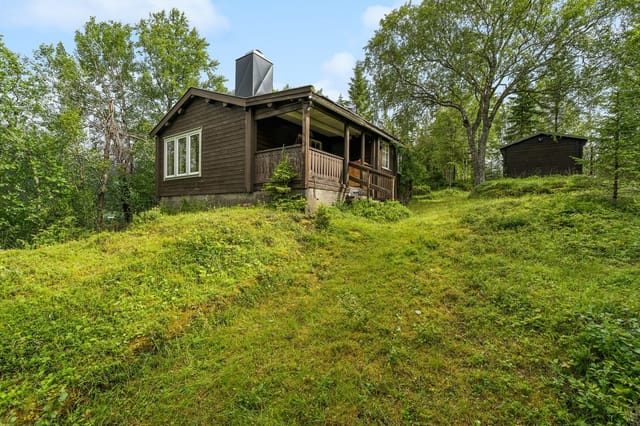
Exterior view of the house and garden

Step outside on a February morning, clip into your skis right at the garden's edge, and within minutes you're gliding through groomed trails with nothing around you but white peaks and the kind of silence that cities can't manufacture. That's the daily reality at Fjellvegen 60 in Haugastøl — a classic Norwegian fjellhytte sitting at 1,065 meters above sea level, with Sløddfjorden spread out below and Hallingskarvet's ridgeline cutting across the sky above. This isn't a weekend cabin that's been dressed up for photos. Built in 1958 and kept in good condition, it has the bones of a genuine Norwegian mountain retreat — thick walls, a wood-burning fireplace at the center of the living room, and windows positioned precisely where you'd want them: facing the fjord and the open plateau beyond. On clear evenings, the light does something remarkable to the water below. Pinks and deep oranges move across the surface of Sløddfjorden for longer than you'd expect, and you can watch the whole thing unfold from the living room sofa. At 42 square meters, the layout is tight and deliberate. There's no wasted space here. The living room anchors the plan, with the fireplace pulling the room together the way only a real hearth can — particularly on the kind of raw October night when the plateau turns moody and the wind picks up. The kitchen is compact and functional, built for people who come here to be outside all day and want to cook a proper meal when they get back. Two bedrooms sleep four comfortably. The storage room is one of the cabin's underrated assets: enough space for two sets of skis, hiking poles, cycling kit, and whatever else the season demands. A toilet room and entrance hall round out the plan. Outside, the plot runs to ... click here to read more
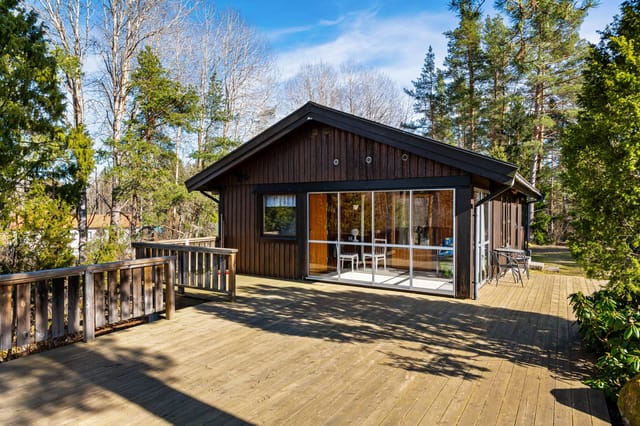
Welcome to Fjellvegen 60 (Photo: Pål Harald Uthus)

Stand on the upper terrace at Kirkøyveien 9 on a late June evening and the sun still hasn't gone down — it just hangs there, amber and low, painting the Vega Archipelago in colours that don't exist anywhere else. The smell of salt and wild grass drifts up from the shore. Somewhere down the lane, a neighbour's boat engine putters out toward open water. This is what Norway's coast actually feels like, not the postcard version. The property sits on Kirkøya, the main island of the Vega Archipelago — a UNESCO World Heritage Site since 2004, recognised for a centuries-old fishing and eider-duck farming culture that is entirely unique to this stretch of the Helgeland coast. This isn't just a scenic location. It carries a living history, and the house at Kirkøyveien 9 is part of that story. Built in 1900, the main house has the bones of something that was made to last. Thick walls, a compact footprint of 72 square metres, and four bedrooms tucked up in the loft — it's a layout that Norwegians have refined over generations for good reason. Warm in winter, airy in summer, and built around the idea that the outdoors is an extension of the living space. The two terraces, totalling 72 square metres between them, prove the point. You'll spend most of July out there. Breakfast in the morning light, dinner at 9pm when the sun is still high, evening coffees that stretch past midnight because nobody wants to go inside. The open-plan kitchen and living room works well for a group. It's social without being cavernous — the kind of space where someone can be cooking while everyone else is talking, and nobody feels shut away. A natural stone wood-burning stove anchors the living area, and on those shoulder-season weekends in May or Septemb ... click here to read more
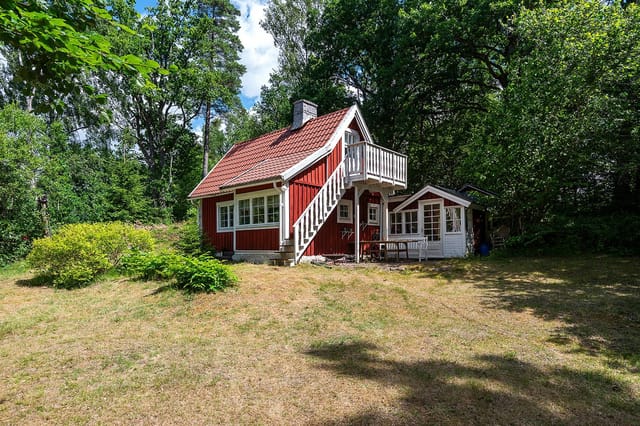
Welcome to Kirkøyveien 9! Photo: EFKT

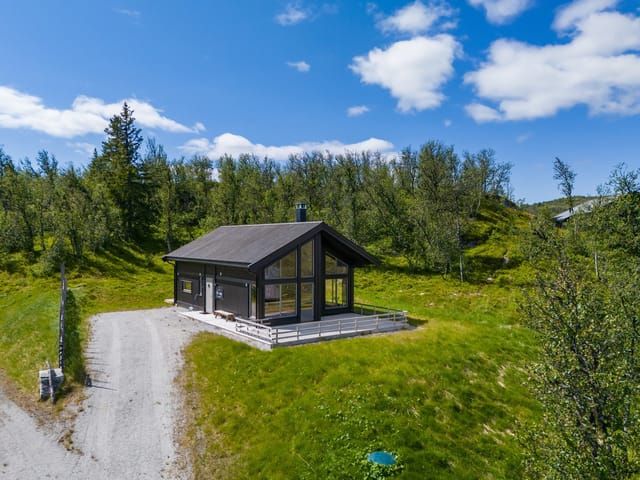
Picture this: it's a Saturday morning in late September, the air has that particular Scandinavian bite to it, and you're standing on a west-facing terrace with a mug of coffee watching low mist roll across Lake Skasen through the birch trees. Nobody else is awake yet. The only sound is a woodpecker working at something deep in the forest below. This is Bjørnestien 18—and mornings like this are what it was built for. Set at Skasberget in the heart of Finnskogen, this 2007-built chalet sits at the top of a quiet cul-de-sac with 2,063 square metres of privately owned land sloping gently westward toward that lake view. Three bedrooms, a guest annex, a wraparound terrace, and a location that puts you two hours from Oslo's Gardermoen airport. It's the kind of property that's easy to dismiss on paper and impossible to forget once you've stood on that terrace. The interior is single-level—a thoughtful design choice that makes the cabin genuinely usable for everyone from grandparents to toddlers. Walk in through the tiled entrance hall and the layout opens up naturally into a combined living and dining space where a wood-burning stove anchors the room. On cold November evenings, that stove does most of the heavy lifting, filling the room with warmth while panel heaters quietly do the rest. The large windows on the west wall pull in afternoon light and frame the Skasen view like a painting that changes with every season—ice-white in January, deep green in July, and in October, something you'd struggle to photograph adequately. The kitchen is practical without being spartan. Light cabinetry, good counter space, and a layout that actually makes cooking for six people manageable. A dining area sits right beside it with direct acce ... click here to read more
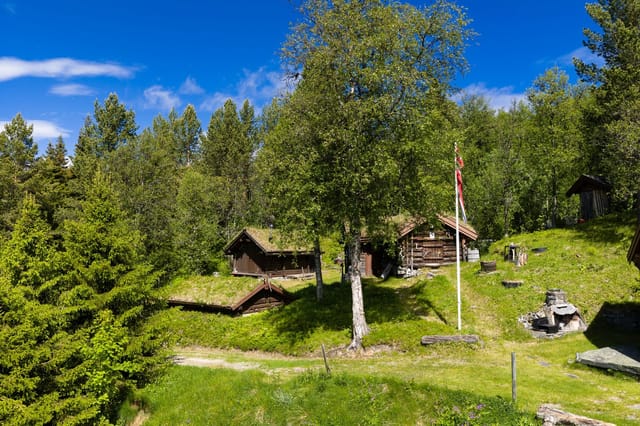
Welcome to Bjørnestien 18 – Cozy family cabin with annex. Photo: Ole Kaldal/EFKT