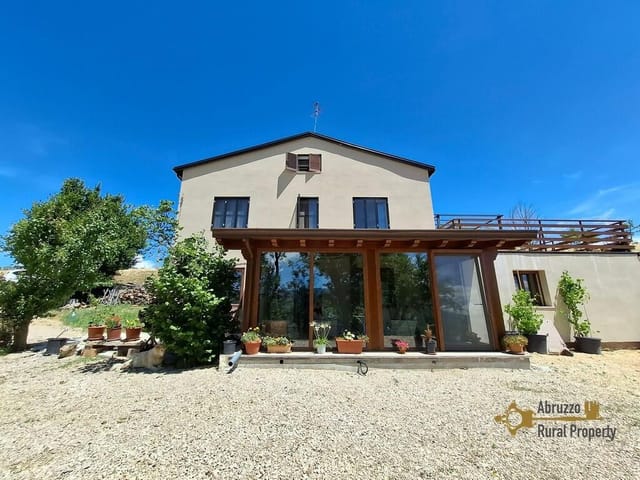
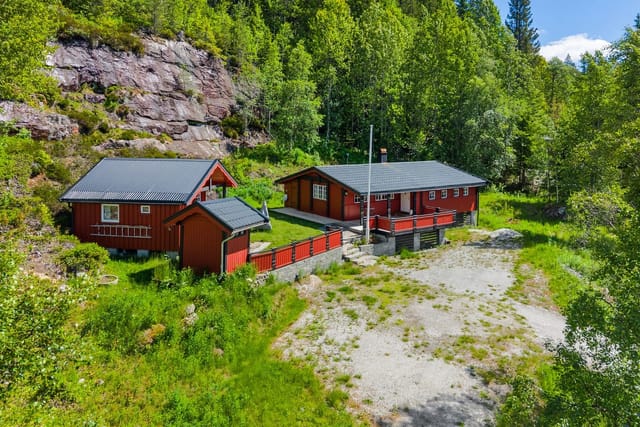
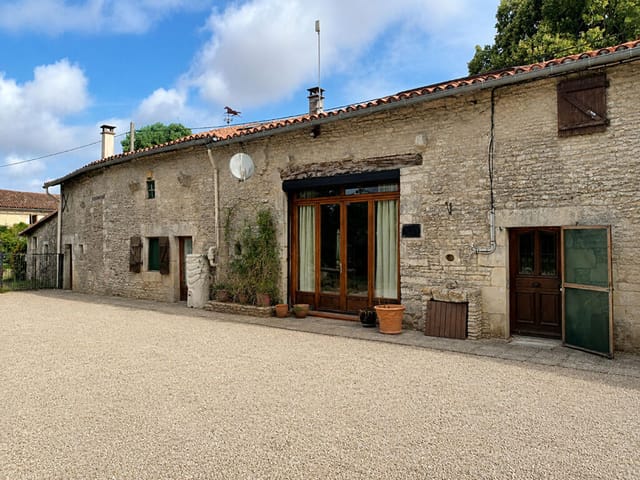
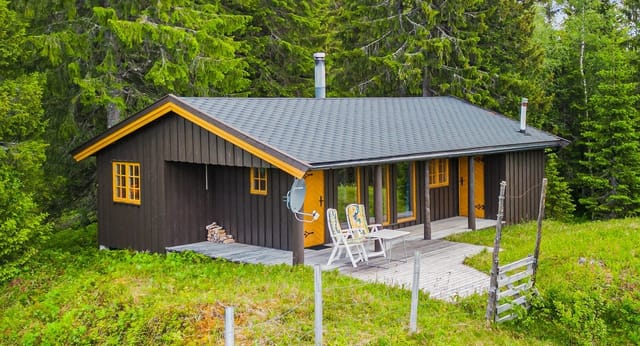
Houses For Sale In Europe (page 12)

Houses for sale in europe - homestra offers the largest amount of european real estate with over 200,000+ properties, find any type of property within your budget from villas to country homes. buy or rent your perfect home in europe. (page 12)

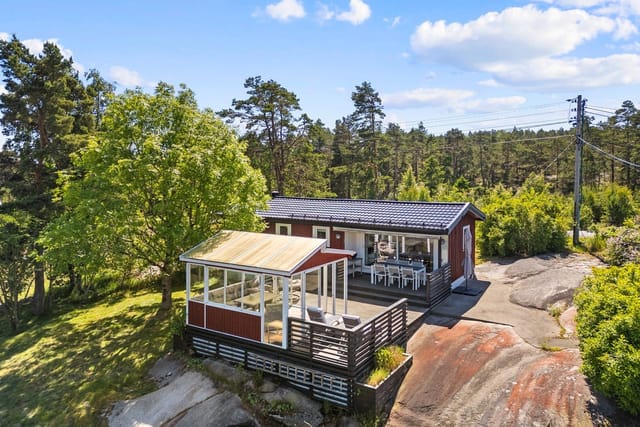
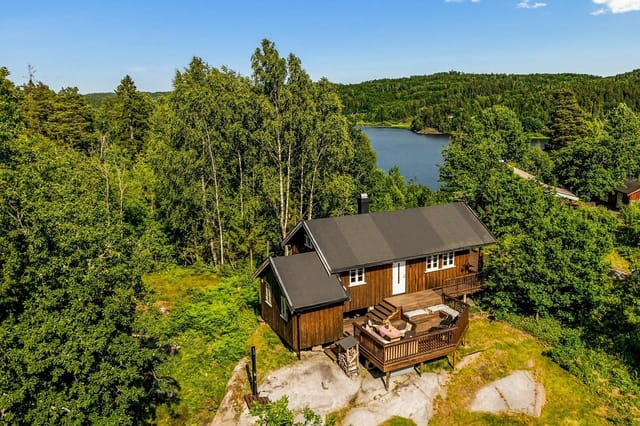
Step outside on a July morning at Sydengveien 110 and the first thing you notice is the silence—not the dead kind, but the alive kind. Wind through the birch trees. A distant gull. The faint smell of low tide drifting up from Sørengkilen, just a five-minute walk down the path. This is Vesterøy life, and once you've had a taste of it, a regular apartment in the city starts to feel like a compromise. Hvaler is a stretch of islands at the mouth of the Oslofjord, about 120 kilometers south of Oslo and a world away from it in every meaningful sense. Vesterøy is one of the largest islands in the archipelago, connected to the mainland by road through the Hvaler tunnel, making it reachable year-round without ferries or timetables. Families from Oslo, Fredrikstad, and Gothenburg have been coming here for generations, drawn by the smooth granite skerries, the clear shallow waters, and the particular quality of light that bounces off the fjord on a long Scandinavian evening. This two-bedroom chalet on Sydengveien sits on a generous freehold plot of roughly 1,302 square meters, which is a genuinely rare thing on Hvaler. The garden is a mix of mown lawn, mature trees, and the bare Norwegian bedrock that pushes up through the ground in that characteristically dramatic way—all of it private, all of it yours. Kids can run the full length of it without getting close to a fence. Adults can find a quiet corner that no neighbor can see into. Both things matter. The chalet itself was built in 1964 and has been updated in careful, practical increments rather than gutted and renovated beyond recognition. The bones are solid. A Decra roof went on in 2016. Large sliding doors replaced the old terrace opening in 2015. The two bedrooms got new ... click here to read more

Welcome to Sydengveien 110, presented by EiendomsMegler1 v/Bjørnar Brynildsen. Photo: Fotoetcetera AS.

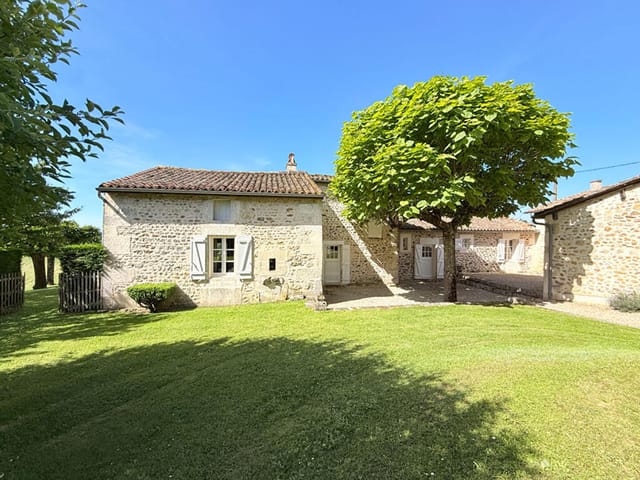
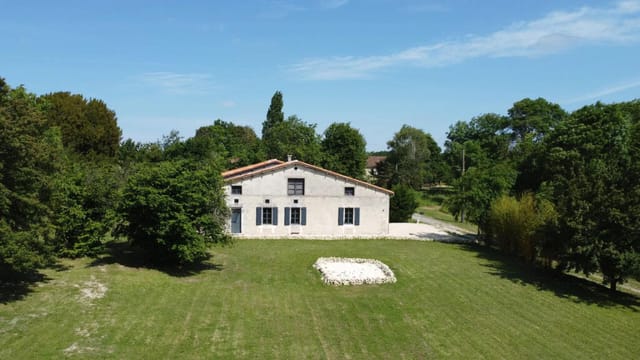
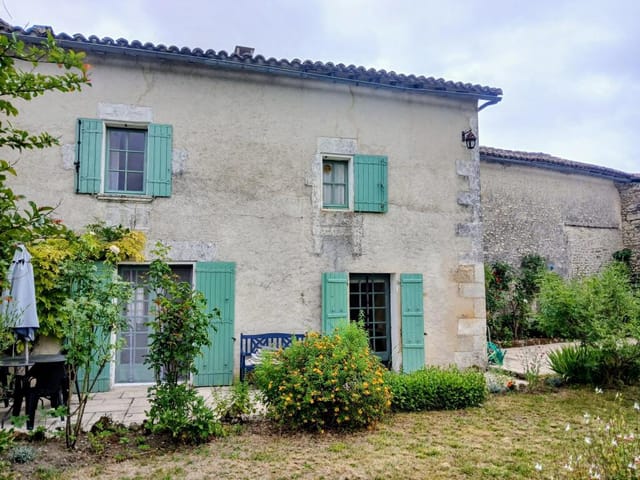
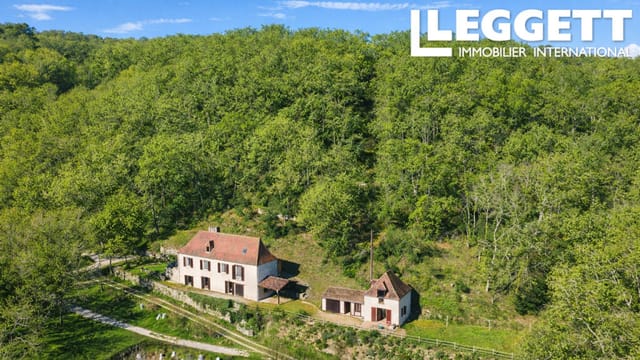
Pull up on a Tuesday morning and the only sound is a wood pigeon somewhere in the old oak at the far end of the garden. The Charente valley rolls away below the infinity pool in shades of green and gold, and the stone walls of the house are still cool from the night. This is what you came for. Not the TGV timetable, not the Bordeaux wine list — just this specific silence, in this specific corner of southwest France, that you simply cannot manufacture anywhere else. Dignac sits in the gentle hills of the Charente, a département that most international buyers overlook on their way to the Dordogne or the Basque Coast. That's their loss and your opportunity. The village itself is small and unassuming — a boulangerie that opens at seven, a butcher who knows his suppliers by name, a bar-tabac where the dominoes come out after lunch. Real life, in other words. And yet Angoulême is barely twenty minutes down the road, with a TGV station that puts you on the platform at Paris Montparnasse in under two hours, or in Bordeaux Saint-Jean in forty minutes. The combination of deep rural quiet and genuine transport connectivity is rarer than it sounds. The house is a proper Charentais stone property — the kind built to last centuries, which it has. Thick limestone walls keep the interior cool in July without air conditioning. The renovation has been done with the sort of restraint that takes real confidence: natural stone floors left exactly as they are, oak beams cleaned up but not sandblasted into submission, original oak doors rehung on new hardware. The current owners didn't strip the soul out of it chasing a minimalist aesthetic. Instead, every room feels like it earned its character. The living room fireplace is the honest centr ... click here to read more

Picture 1

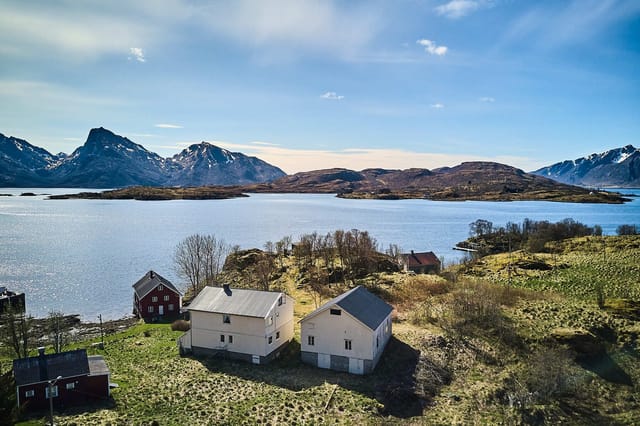
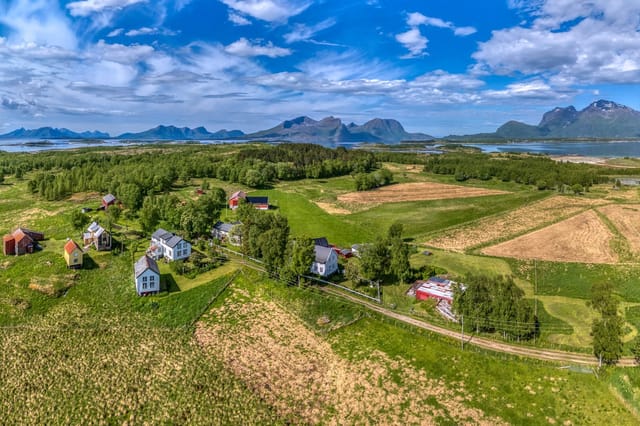
Stand on the veranda at Barkestadveien 25 on a July evening and you'll understand immediately why people have been anchoring their lives to this patch of Vesterålen coastline for generations. The sea glitters out toward the islands, a white-tailed eagle drifts on the updraft above the ridge, and the light—that famous Arctic summer light—hangs in the sky well past midnight. This is not a postcard version of Norway. It's the real thing. The property sits in Barkestad, a small community within Øksnes Vestbygd on the island of Langøya, and it carries genuine history. The site once functioned as a local trading post and postal hub—the kind of place where fishing boats would call in and neighbors would gather. That past is still alive in the bones of the estate: a substantial main house of 214 square meters and a historic barn of 117 square meters of external usable space, all on a freehold lot of just under 3,000 square meters. Properties with this kind of footprint, in good condition, with this view, do not come up often here. Inside, the house works across several levels. Five bedrooms make it genuinely practical for a large family or for the kind of rotating-door hospitality that Norwegian summer seems to inspire naturally—cousins arriving one week, old friends the next. Three bedrooms sit on the main floor, two more in the basement, which has its own entrance and could function as a self-contained space for guests or an older teenager who values independence. The living room is where the house really earns its keep: large windows pull the outside in, framing the island-dotted seascape like a painting that changes hour by hour, and an open fireplace makes the room equally compelling when October clouds roll in and the wi ... click here to read more

Welcome to Barkestadveien 25 – Leisure property with an attractive location in Barkestad, Øksnes Vestbygd.

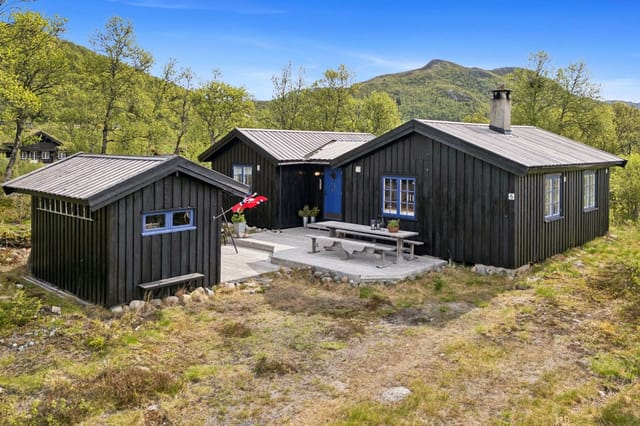
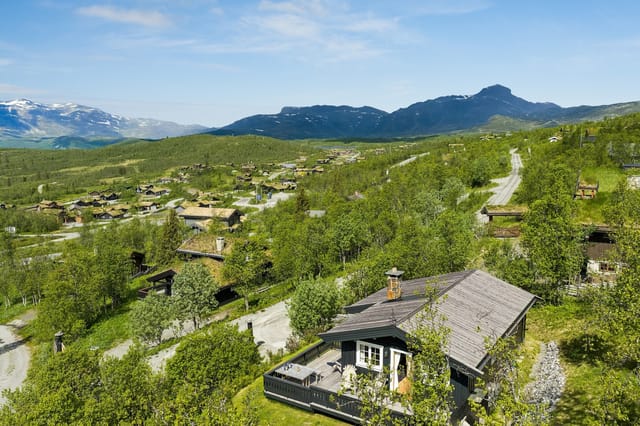
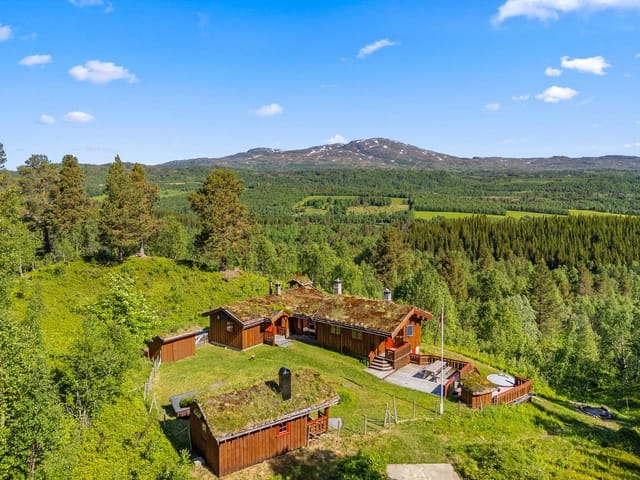
The wood stove is still warm from the night before. You pull open the glass terrace door and step into the sheltered courtyard — frost on the planks, coffee in hand, the white peaks above Torvtjønn catching the first light of a January morning. That's what owning a cabin at Kullenvegen 6 actually feels like. Not a postcard. A life. Rauland doesn't advertise itself loudly. It doesn't need to. Tucked deep in Telemark county, roughly three hours by car from Oslo via the RV37, it has quietly remained one of Norway's most authentic mountain communities — a place where the locals ski to the shop in winter and swim in glacier-fed lakes in July without making a fuss about either. This cabin sits right inside that world. The property is built in an atrium style, which sounds architectural but translates to something genuinely practical: the main cabin and the outbuilding wrap around a sheltered inner courtyard that catches the afternoon sun while keeping the wind out. In a region where weather can shift quickly, this matters more than any amount of south-facing decking. You'll use this space. A fire pit here on a clear October evening, the sky going amber over the Hardangervidda plateau, kids running in from the treeline — this is the corner of the property that guests will never want to leave. The interior is 86 square metres, which sounds compact until you're inside. The entrance hall is tiled and fitted with a large sliding-door wardrobe — crucial when you're juggling ski gear, hiking boots, and wet layers for four people — and it opens into a living room that earns its central role. Large windows face the terrace and the view beyond, and the room is anchored by a central fireplace that you'll light every single evening bet ... click here to read more

DNB Eiendom v/ Jeanette Arnesen-Eriksrød presents Kullenvegen 6!

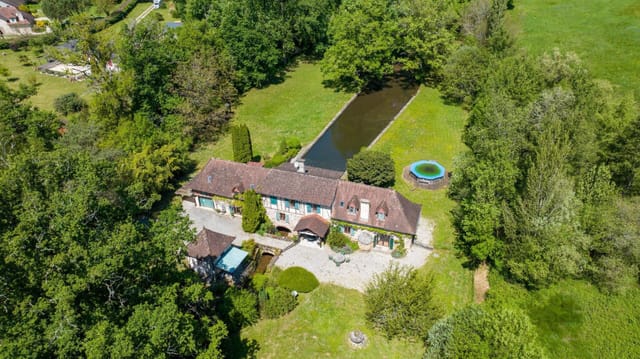
Stand in the kitchen of this 270-square-metre stone water mill on a Tuesday morning in late September and you'll hear the channel running beneath the house before you see it. The sound is constant — not loud, just present — like the building itself is quietly breathing. Light comes through the south-facing windows in long pale strips. The stone walls hold the cool of the night well into afternoon. This is Nonards, deep in the Corrèze, and once you've spent a week here, most other places feel faintly over-stimulated. The Corrèze doesn't get the same traffic as Dordogne or the Lot. That's precisely the point. The département sits in the northern reaches of the Nouvelle-Aquitaine, spilling into the high plateau country of the Massif Central, and the landscape here has a particular quality — wide river valleys, dense oak and chestnut forests, medieval villages perched above the Dordogne gorges that barely appear on the tourist maps. Nonards itself is a commune of a few hundred people, surrounded by working farmland and nature reserves. The nearest town of any size is Beaulieu-sur-Dordogne, about twelve minutes by car — a genuine market town with a Saturday morning market that runs along the riverfront and draws producers from across the region. You can be back at the mill with fresh walnuts, a wheel of Cantal, and a bunch of dried lavender before 10am. The mill sits on approximately one hectare of land, enclosed and private, with no neighbouring properties overlooking the plot. A stone-lined water channel — the original mill race — runs directly beneath the building and emerges through the garden in a wide, slow-moving stream shaded by mature trees. In summer, children wade in it. In autumn, it runs amber with tannins from ... click here to read more

Picture 1

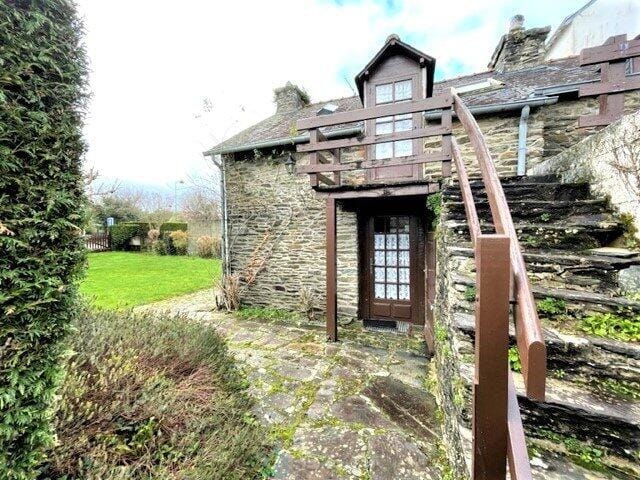
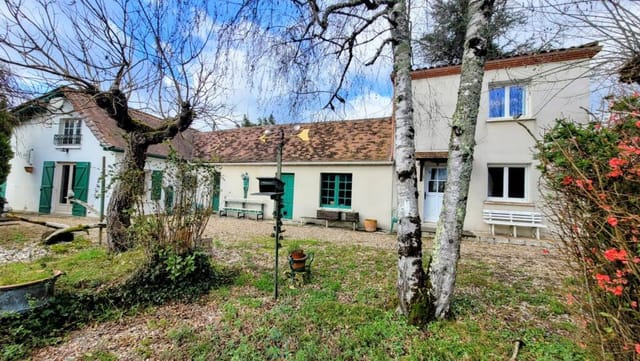
Sunday morning in Châteauneuf-du-Faou sounds like this: the church bell on Place de l'Église counts nine slow strokes, a boulanger two streets over pulls fresh kouign-amann from the oven, and the smell drifts right through your open kitchen window. This is not a fantasy. This is an ordinary Sunday at this five-bedroom village property on the banks of the Aulne river, tucked into one of inland Brittany's most quietly remarkable villages. What's on offer here is genuinely unusual — two fully adjoining houses that share a wall and connect internally, sitting side by side in the very centre of the village with everything you'd need within a short walk. Together they deliver five bedrooms, two kitchens, two entrance halls, and flexible living spaces that very few properties at this price point can match. At €123,500, you're not buying a compromise. You're buying optionality. The first house sets the tone. Step through the entrance hall and you're in a living and dining room with a fireplace — the kind of room that earns its keep in October when Finistère mists roll in off the Montagnes Noires. From here, the layout flows into a kitchen with a shower area, and a connected sitting room that links directly through to the second house. Upstairs, two bedrooms sit under the slate roof, quiet and cool even in July. The second house mirrors this logic in its own way: a ground floor with its own entrance, kitchen, shower room, toilet, and a bedroom, then two more bedrooms above. There's also an attic space — unconverted, which means it's yours to shape. A home office, a studio, a guest suite with dormer windows looking out over the village rooftops. The bones are right there. Outside, a landscaped enclosed garden gives you somewher ... click here to read more

Picture 1

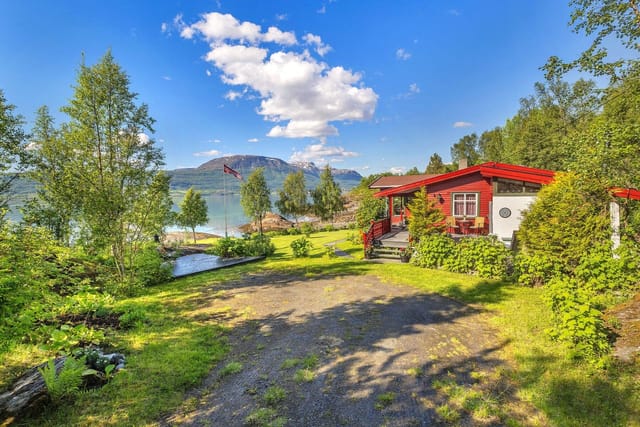
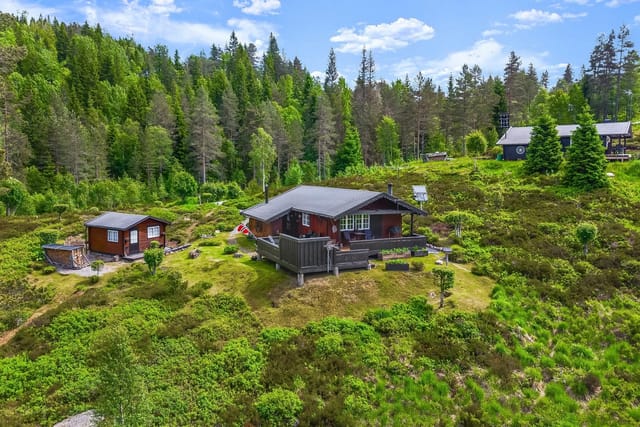
Stand on the south-facing terrace at Rabbevegen 14 on a February morning and the silence hits you first. Not the absence of sound—the presence of it. Wind brushing over the Jotunheimen foothills. A crow somewhere up near the treeline. The soft crunch of a neighbour's skis disappearing around the bend. Then you look up and there's Bitihorn, the mountain that defines this corner of Valdres, sitting right there at the end of your garden like it's been waiting for you. This is Beitostølen at its most real. Not the postcard version—the actual version, where 970 metres of altitude gives the air a quality you notice in your lungs before your brain catches up. The chalet at Rabbevegen 14 sits in the Stakkstølie area, at the quiet end of a cul-de-sac that sees almost no through traffic, on a 1,559 square metre plot that feels genuinely private by Norwegian mountain standards. It's a two-bedroom cabin of 61 square metres—thoughtfully proportioned, not cramped—and it's in good condition, move-in ready, with cross-country ski trails accessible directly from the property and the Beitostølen Alpine Center just a short ride away. Winter here is the main event, but only if you haven't seen it in autumn. From late September through October, the birch forest that rings the upper village turns a colour somewhere between amber and copper that photographers drive hours to capture. The hiking trails that in winter become groomed ski tracks are, in those weeks, yours almost entirely. The route up to Bitihorn from the Beitostølen plateau is around 12 kilometres return and delivers views on a clear day that stretch to Juvass and Galdhøpiggen in the far north. Come back to the chalet, light the cast iron fireplace in the living room, and the ev ... click here to read more

Real estate agent Ida Follinglo presents Rabbevegen 14 with a beautiful location in Stakkstølie. Photo: EFKT v/ Tor Solberg

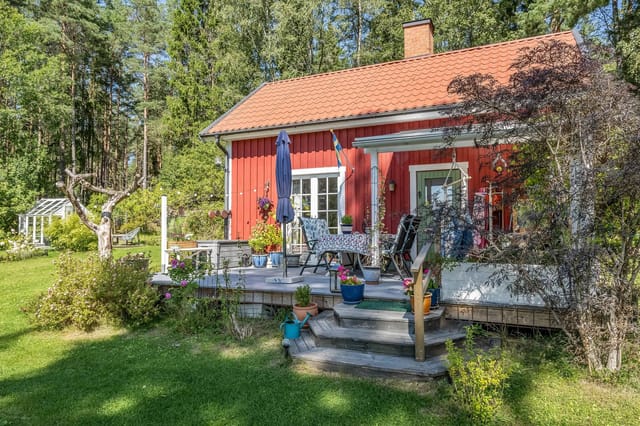
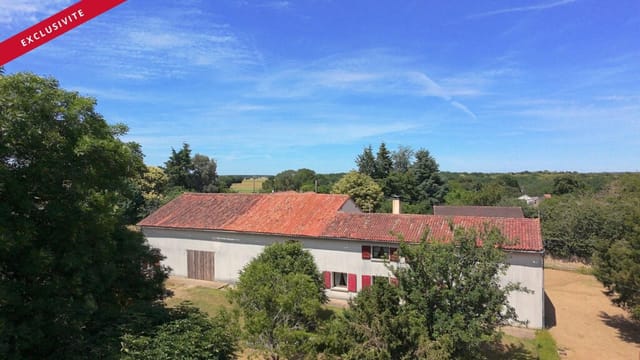
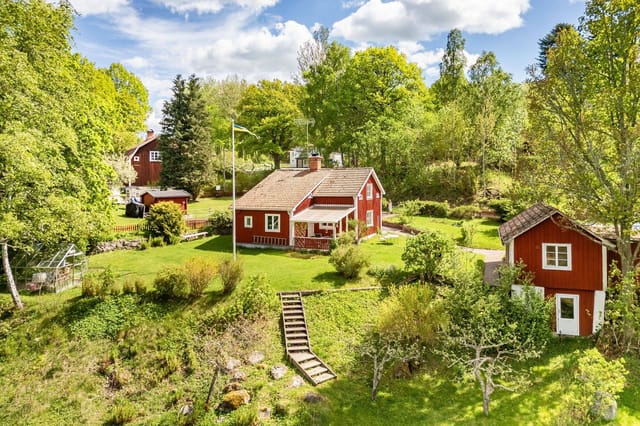
Step outside on a July morning and the air smells like pine resin and wet grass. The only sounds are a woodpecker working through a birch somewhere in the tree line, and the faint creak of the terrace boards under your feet as you carry your coffee out to watch the mist burn off the fields. This is Skånstorp Höjden 123. It's not a postcard version of Swedish countryside life — it's the real thing. Set on a private road in Hällestad, within Finspångs kommun in the heart of Östergötland, this two-bedroom country cottage sits on a 787 square meter plot where the garden ends and the forest begins almost without you noticing. The transition is that gradual. Mature plantings, raised vegetable beds, flower borders in full bloom through summer — the current owners have spent years shaping a garden that feels intentional without feeling formal. There's a greenhouse for starting seedlings in April when the ground is still cold, and an outdoor shower tucked to one side for rinsing off after a swim. The swim, by the way, is at Stigstorpsgölen — a quiet lake just 1.4 kilometers down the track. No beach bars, no paddleboard rental kiosks. Just clear water, dragonflies, and the occasional family of ducks. In August, the surrounding forest floor fills with chanterelles. Locals who know where to look come back with bags full. Lingonberries follow in September, and the forest takes on that particular amber-and-rust quality that makes Östergötland feel almost theatrical in autumn. At 70 square meters, the cottage doesn't try to be more than it is. Three adaptable rooms, a kitchen and dining area that flow into the main living space, and large windows that bring the outside in rather than shutting it out. The wood-burning stove is the he ... click here to read more

Exterior view of the cottage and garden

The first morning you spend here, you'll wake up to absolute silence. Not the muffled quiet of a city apartment with the windows shut — actual silence, broken only by wind moving through the birch trees outside and maybe, if the season is right, the distant call of a ptarmigan somewhere up the hillside. That's Dalsida. That's what you're buying into. Sitting on a 1,036-square-metre natural plot along Hådilivegen in Lesja, this two-bedroom off-grid chalet is the kind of place that recalibrates you. Built in 2009 and held in good condition, it's compact at 56 square metres — but the design is clever, and more importantly, you don't spend much time inside when you're here. The mountains are too close for that. Step through the front door and the hallway opens directly into a combined living room and kitchen that feels bigger than its footprint suggests. High ceilings do a lot of the heavy lifting, and the large windows pull in light from the surrounding landscape through most of the day. The wood-burning stove anchors the space — this is genuinely the heart of the cabin, the thing you'll be thinking about in October when you're back in your regular life, already planning the next visit. The kitchen runs along one wall with pine cabinetry, profiled fronts, and a solid wood worktop that's functional and honest about what this place is. There's no pretence here. It's a mountain cabin, and it knows it. The two bedrooms sleep four comfortably — one room with two single beds, the other with bunks — making it a natural fit for families with young kids, or a small group of friends who share a love of being outdoors. The toilet room covers the essentials. No running water from the mains, but the solar panel system with battery st ... click here to read more

Welcome to Hådilivegen 125 at Dalsida, presented by Real Estate Agent/Partner Harald Osdal. Photo: Jarle Osen

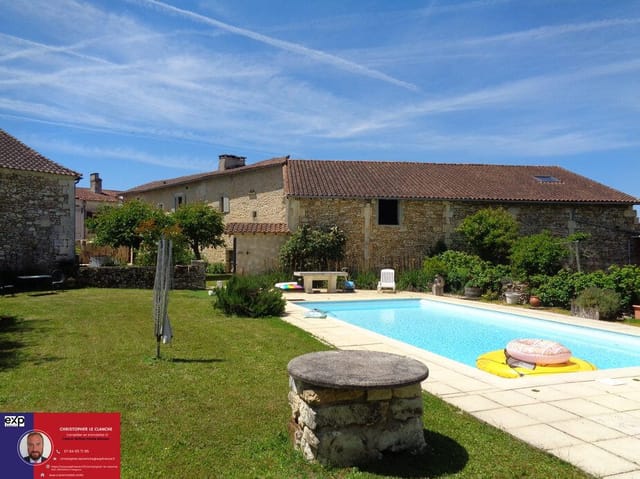
Sunday morning in Issigeac: the weekly market on Place du Château is already buzzing by nine, the smell of roasting chicken drifting from the rôtisserie stall, the sound of French chatter rising above the medieval ramparts. You're a ten-minute drive away, standing at your kitchen window with a coffee, looking out across a valley that hasn't changed much in three centuries. That's the kind of morning this property delivers, week after week, season after season. This is a barn conversion done right — and that distinction matters. Too many conversions in the Périgord sacrifice either the soul or the practicality, stripping out the stone to insert plasterboard, or preserving the beams while ignoring the cold. Here, the balance actually works. Exposed stone walls and heavy oak beams anchor every room in something authentic, while underfloor heating on the ground floor, solar panels for hot water, double glazing throughout, and a rare energy rating of B mean your running costs won't eat you alive. For a property of this age and character, that B rating is genuinely exceptional — most stone farmhouses in the Dordogne struggle to break a D. The layout is generous at 250 square metres, and it doesn't waste space on corridors or awkward half-rooms. The kitchen and dining room is the kind you actually want to cook in — properly fitted, with room for a long table and still space to move around it. A wood-burning stove anchors one end. The adjoining living room has its own stove too, and on a January evening when mist sits in the valley and the fire is going, this room becomes the whole reason you bought in France. Beyond that, a utility room with pantry storage and a guest cloakroom handle the unglamorous logistics cleanly. Upsta ... click here to read more

Picture 1

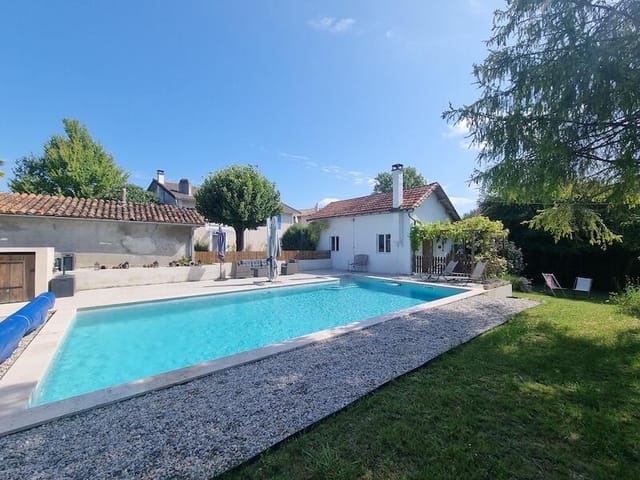
Sunday morning in Aubeterre-sur-Dronne sounds like this: the church bell at Saint-Jacques tolling the hour, a boulangerie bag rustling on the kitchen counter, and the faint splash of someone already in the pool before nine. This is the rhythm of a village that made it onto France's coveted Les Plus Beaux Villages de France list — and this gîte complex sits right inside it, close enough to walk to the bar-restaurant without moving the car once. Three separate houses. One large garden. A heated pool. One address that almost never comes up for sale in a village this well-known. The complex breaks down neatly. The main house carries four bedrooms and anchors the property with the kind of proportions you simply don't find anymore at this price point in the Charente. A second house adds three more bedrooms, giving families — or groups of friends who like their own front door — room to breathe without feeling miles apart. Then there's the one-bedroom cottage, the quiet outlier, ideal for a couple who want the pool and the garden but not the crowd. Each unit has its own private garden patch, so privacy isn't theoretical here; it's designed in. Total living space across all three sits at 372 square metres, which is substantial by any measure. The garden itself stretches to 2,600 square metres — enough to lose children in for an afternoon, enough to set up a long outdoor table for twelve and still have grass left over. The 10m x 5m pool is heated, which matters in the shoulder seasons when the Charente autumn is golden and warm but the air drops at dusk. There's also a barn on the plot, the kind of structure that immediately starts conversations about wine storage, workshop space, or the fourth rental unit someone always ends u ... click here to read more

Picture 1

Picture this: it's a Tuesday morning in July, and the only sound you can hear from the kitchen window is a woodpigeon calling somewhere beyond the garden's old stone wall. The coffee is on, the air smells faintly of cut grass and warm limestone, and by ten o'clock you could be sitting under the covered barn with a glass of Pineau des Charentes, watching swallows loop over your one-acre plot. This is life in Juignac — unhurried, deeply rural, and more alive than you'd expect from a village this quiet. Juignac sits in the soft green heart of the Charente, one of those parts of southwest France that most visitors drive through on the way to somewhere else. That's precisely the point. About five kilometres from the market town of Montmoreau-Saint-Cybard, you're close enough to pick up fresh bread from the boulangerie on the Grand-Rue and have a long lunch at one of the restaurants along the main square, but far enough from any tourist circuit that life moves at a pace you set yourself. The Charente itself — the river, not just the département — winds through this landscape, and the whole region has this quality of gentle abundance: sunflowers in August, walnuts in October, fog rolling low over the fields in November before the winter sun burns it off by midday. This house has had a serious second life. Since 2020, it's gone through a thorough, considered renovation — not a cosmetic refresh, but a genuine transformation. The approach was smart: instead of stripping out every trace of its rural Charentais character, the renovation leaned into it. Exposed stone sits alongside a fully equipped contemporary kitchen. The result is a home that feels like it has always belonged here, but functions with the efficiency of something ... click here to read more

Picture 1

Saturday morning, and the only sounds reaching the terrace are birdsong, the distant clang of the Saint-Saud-Lacoussière church bell, and the faint creak of oak branches in the breeze. Your coffee goes cold because you keep forgetting to drink it. That's what this corner of the Dordogne does to you. This three-bedroom house sits on just over an acre of land outside one of the Périgord Vert's quieter, more genuine villages — not a tourist honeypot, but a real French community with a weekly market, a pharmacy, a couple of decent cafés, and the kind of neighbours who still wave from across the lane. The property spans 125 square metres of living space, is in good condition, and has the bones — plus a 60-square-metre open barn and an attached garage — to become something genuinely personal with a modest refresh. Walk through the front door and you're straight into the heart of the house: a 45-square-metre living room with terracotta tiles underfoot, a proper fireplace fitted with a wood burner, and double doors that push open onto the terrace and garden beyond. It's the kind of room that earns its keep in every season. In July, those doors stay open from breakfast to midnight. In January, the wood burner makes the room impossible to leave. The fitted kitchen connects naturally to this central space, and the whole ground floor flows well — two double bedrooms with warm wooden floors, a family bathroom, and a WC all sit within easy reach. Upstairs, a mezzanine study area opens off the landing — exactly the right perch for working remotely with a view over the garden, or for teenagers who need their own corner of the world. The third bedroom completes the upper floor, giving the house genuine flexibility for families, couple ... click here to read more

Photo 1

Stand on the terrace on a July morning and the air already carries the warmth of the day ahead—cut grass, wild thyme, and the faint sweetness from the sunflowers that blanket the fields around Saint-Martin-de-Gurson. The only sound is birdsong and the distant clang of a tractor somewhere beyond the tree line. This is the Dordogne that people read about in novels and then spend decades trying to find. This five-bedroom house sits on 2.3 hectares of French countryside in the Périgord, one of the most quietly coveted corners of southwest France. At 188 square metres, there is real room here—space to have the whole family over in August, space for teenagers to disappear into their own corners, space to breathe after years of city life. The condition is good and the house is ready to live in, which matters more than people realise when they're buying in a foreign country. No lengthy renovation drama, no months of waiting. You could be spending your first summer evening on the terrace within weeks of completion. Inside, the living room is the kind of space that earns its keep in every season. In the height of summer the French doors pull light in from all angles. Come November, the wood-burning stove becomes the centre of gravity—a proper cast-iron one that heats the room fast and makes the whole house smell like a mountain chalet. The open kitchen flows directly off the living area, with a proper pantry (cellier) that any serious cook will appreciate immediately. Storing olive oil from the Dordogne market, wine from a Bergerac cave, charcuterie from the Saturday market at Montpon-Ménéstrol—there's space for all of it. Five bedrooms gives you options that most French country houses simply don't. Guest rooms, a home office, ... click here to read more

Picture 1

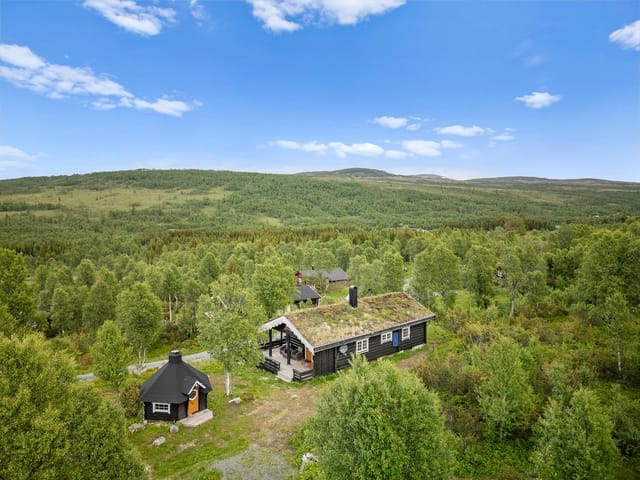
Step outside on a January morning and the valley is completely silent. Not the polite quiet of a countryside weekend—actual silence, broken only by the creak of snow settling on the roof and the distant whistle of wind curling around Resfjellet's ridgeline. The thermometer reads minus twelve and you don't care, because the wood stove in the living room has been going since six, the coffee is ready, and through the south-facing windows the mountain is turning pale gold. That's the daily reality at Svartbekkveien 117. This is a four-bedroom mountain chalet in Jerpstad, deep in Resdalen valley in Trøndelag, priced at 141,000 EUR. It sits on 1,119 square metres of freehold land at an elevation that puts Trollhetta, Resfjellet, and Raufjellet practically on your doorstep. The main cabin measures 99 square metres internally, and the property comes with a separate annex and an outdoor storage shed—meaning you can sleep sixteen people across the whole estate comfortably. For families who gather in numbers, or owners who want rental flexibility, that matters enormously. Built between 2006 and 2009 and kept in genuinely good condition, the chalet doesn't need work before you move in. The layout is sensible and well-thought-out: a proper hallway leads into a toilet room, a sitting room, and then an open-plan kitchen and living area where most of life happens. Four bedrooms branch off from there. The bathroom has a shower. Simple, functional, Norwegian practical—nothing fussy, nothing wasted. The unfinished basement below adds 30 square metres of external storage space that could become a proper ski room, workshop, or utility area over time. What elevates this property beyond the standard mountain cabin is the 52-square-metre ter ... click here to read more
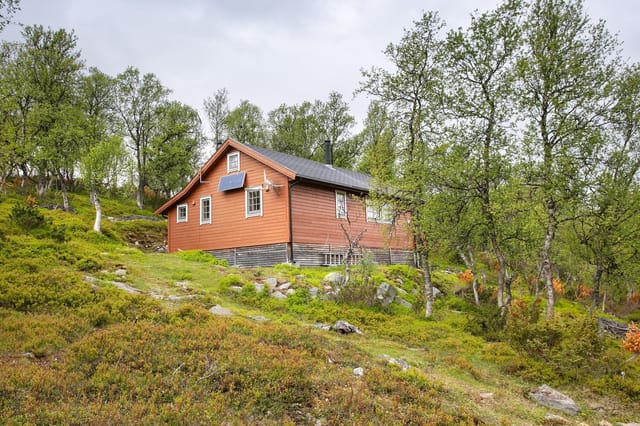
Drone photo

Picture this: it's a Tuesday morning in July, and the only sounds reaching you through the kitchen window are birdsong and the faint hum of a tractor somewhere beyond the treeline. You're standing in a 30-square-metre farmhouse kitchen that smells of strong coffee and old stone, and you have absolutely nowhere you need to be. That's the rhythm of life Saint-Just delivers, day after unhurried day. This authentic 110m² stone country house sits in a quiet hamlet in the northern Dordogne, deep in the Périgord Vert — the greenest, least-touristed corner of a département that the French have long kept to themselves. Priced at €199,500, it represents one of those increasingly rare opportunities to buy a genuinely liveable piece of rural France without the eye-watering price tags that have crept into more famous villages along the Vézère Valley. The house itself reads like a proper working farmhouse that someone has quietly looked after over the generations. Stone walls that stay cool without air conditioning even in August. Ground floor ceilings high enough to never feel oppressive. The kitchen is enormous by any standard — 30 square metres is closer to what you'd find in a Parisian apartment than a rural retreat, and it makes the room the natural heart of the house. Long lunches that drift into early evenings. Friends crowded around a table laden with Périgord walnuts, foie gras from the weekly Ribérac market, a Saint-Émilion opened an hour too early because nobody wanted to wait. That kitchen earns its square footage. The ground-floor bedroom with its own shower room is a practical touch that many older French country houses simply don't have — it means guests, elderly relatives, or owners who'd rather skip the stairs can ... click here to read more

Picture 1

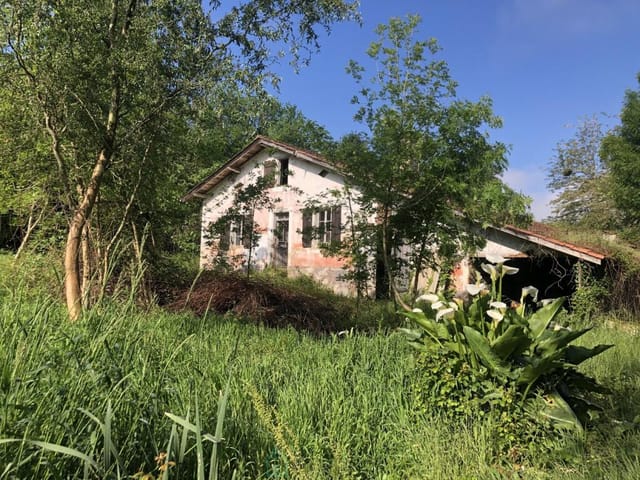
Stand in the kitchen doorway on a September morning and the air already smells like pine resin warming in the sun. The woods on your 6000 square metres start just beyond the old stone wall, and apart from a woodpigeon somewhere up in the canopy, nothing breaks the silence. This is Poyanne — a scattering of farmhouses and lanes in the Landes département where the Atlantic forest rolls on so far it starts to feel like its own country. And sitting at the edge of it all, waiting for someone with vision and a willingness to roll up their sleeves, is a proper 18th-century Landaise farmhouse going for €119,000. Let's be honest about what this is. It's a renovation project — the kind that demands decisions, budgets, and patience. But it's also the kind of opportunity that comes along rarely in this part of France, where agricultural heritage properties on wooded plots of this size don't stay on the market long. The single-story layout covers 76 sqm: two bedrooms, a living room anchored by a period fireplace that's the real architectural heart of the house, a bathroom, and a kitchen space ready to be fitted out exactly how you want it. The bones are there. What you're buying is the framework for something genuinely personal — not a developer's idea of a holiday home, but yours. Attached to the main house is a 37 sqm barn. That's not an afterthought. Converted thoughtfully, it could become a guest suite, a studio, a home office, or simply generous storage for bikes and surf gear. Renovation quotes are available on request, so you won't be working blind from day one. The land itself deserves its own mention. Six thousand square metres of wooded terrain with no overlooking neighbours in any direction, and — this is the detail tha ... click here to read more

Picture 1

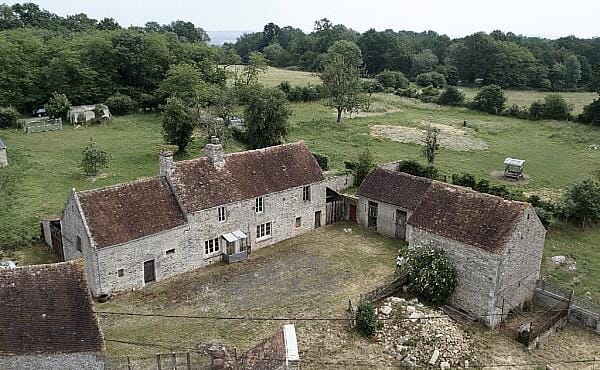
Step off the D roads of the Orne on a Tuesday morning and you'll hear it before you see it—the low rumble of market stalls being set up in Argentan's Place du Marché, vendors calling out prices for unpasteurized Camembert, strings of dried saucisson swinging in the autumn breeze. This is the Normandy that doesn't end up on postcards, and that's precisely why it's worth paying attention to. This 192 m² farmhouse on 5.5 hectares of land sits at the edge of a countryside that moves at its own unhurried pace, a place where a Saturday morning can disappear into a long walk across open meadow and a lunch that stretches into late afternoon. The property itself—main house plus a collection of outbuildings spread across the grounds—is honest in what it offers. The principal dwelling runs to approximately 92 m² and holds five rooms: two bedrooms, a living area, an office, and enough space to start sketching out what your version of a Norman farmhouse looks like. The bones are good. The walls are thick limestone, the kind that keeps rooms cool in July and holds a woodfire's warmth well into a February evening. Renovation work is needed, and that's actually the interesting part. You're not inheriting someone else's taste. You're starting with a structure that has real character—exposed timber, original proportions—and you get to decide what comes next. The outbuildings are where the possibilities multiply. Depending on your vision and local planning permissions, the range of what's workable here is wide. Convert the largest barn into a gîte and you've created a secondary income stream that practically runs itself through the summer high season, when Normandy draws history travelers tracing the D-Day sites at Utah, Omaha, and Sword ... click here to read more

Picture 1

Step off the gravel path and onto the covered porch of Rumma Ekenberg on a late July evening, and the first thing you notice is the silence. Not an uncomfortable silence — the kind that has texture. Wind moving through birch trees. A wood pigeon somewhere to the east. The faint smell of pine resin warming in the last of the day's sun. If you've been chasing that particular kind of quiet for years, you've just found it. This 19th-century Swedish torp sits in the village of Rumma, tucked into the rural heart of Östergötland — a county that Swedes themselves talk about with a certain reverence. Three bedrooms, one bathroom, 96 square metres of winterized living space, and just over 1,000 square metres of land that backs toward open fields and forest. At €87,000, it's the kind of property that makes you do the math twice. The house is old in the best possible way. Original wide-plank wooden floors run through the living room, their grain darkened and worn smooth by well over a century of use. Three windows on three different walls mean the room catches the light at almost every hour — gold in the morning from the east, bright and even through the afternoon, and that long, horizontal Scandinavian evening light that doesn't quit until past ten in summer. The open fireplace anchors the space. Come October, when the first frosts push in across the fields, you'll be very glad it's there. The kitchen was renovated in 2006, and whoever did the work had good taste. Masur birch cabinetry — a figured, almost burl-like birch that's genuinely striking up close — gives the room a quiet distinctiveness that off-the-shelf Ikea kitchens simply can't replicate. Black-and-white stone-effect flooring, decent appliances including a dishwashe ... click here to read more

Exterior view of the country cottage

Sunday morning in Verteillac starts slowly. The boulangerie on the main square opens early, the smell of baking bread drifting down the stone street before most shutters have rolled up. From the back garden of this four-bedroom village house, you can hear the church bell count out the hour while a wood pigeon settles somewhere in the old walnut tree next door. That's not a postcard image — that's Tuesday, that's October, that's what this kind of life actually feels like. Verteillac sits in the northern Dordogne, tucked between Périgueux and Angoulême in a stretch of Aquitaine that most visitors never find. That's precisely the point. This is deep rural France — sunflower fields in July, truffle markets in winter, walnut orchards turning gold in October. The Dronne Valley is a short drive east. The medieval bastide town of Brantôme, sometimes called the Venice of the Périgord for its abbey and canals, is around 30 minutes away, and on a warm evening its riverside restaurants fill with locals eating duck confit and magret de canard at unhurried pace. Bergerac Airport is roughly an hour south, with Limoges another option to the northeast. Bordeaux, with all its TGV connections and international flights, sits about 90 minutes away by car. The house itself sits right in the village, with stone walls, a traditional roofline, and the kind of layout that's been thoughtfully adapted for modern living without losing its character. The ground floor flows between an open-plan kitchen and dining room — fitted with a wood-burning stove that earns its keep from November through March — into a generous sitting room, which also has a stove and opens directly onto the private walled garden. On a cool spring afternoon, you leave the door ... click here to read more
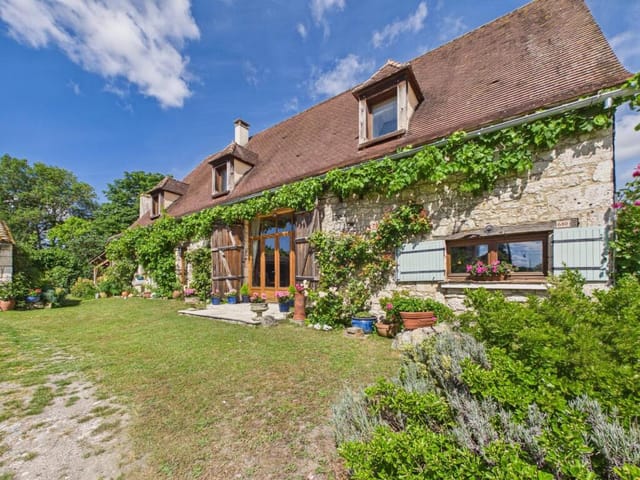
Picture 1

The boat takes five minutes. Five minutes, and the mainland—with its traffic and noise and ordinary Tuesday mornings—simply disappears. You cut across the water toward Husøya, the engine humming beneath you, and what comes into view is a 160-year-old Trønderlån farmhouse standing against the Norwegian sky, four private islands fanning out around it like a personal archipelago. This is not a metaphor. It is the actual daily reality of owning this estate in Husøyvær, just outside Skutvik on the Hamarøy peninsula in Nordland county. The main house was built around 1860 and carries that era's particular confidence—thick walls, tall windows facing the sea, a floor plan that wastes no space but somehow feels generous. Upstairs, five bedrooms spread out along a wide landing. Ground level holds two living rooms, a kitchen, a bathroom, and an entrance vestibule that has absorbed a century and a half of wet boots and returning fishermen. Below that, a lower vestibule and two storage rooms. In total, 154 square meters of interior living space, with a total usable footprint across all structures reaching 360 square meters. The bones are solid. The condition is good. What you bring is your vision for how it evolves. But the house is almost beside the point—or rather, it's the anchor for something far larger. The total lot size across this entire estate comes to over 6.6 million square meters. Say that number slowly. It encompasses Husøya itself plus four additional islands, each privately owned, each entirely yours. Sandy beaches that see no footprints but your own. Meadows going yellow in late August. Coastal forest where the only sound is wind moving through birch and the occasional complaint of an oystercatcher. To find this kin ... click here to read more
Picture 1

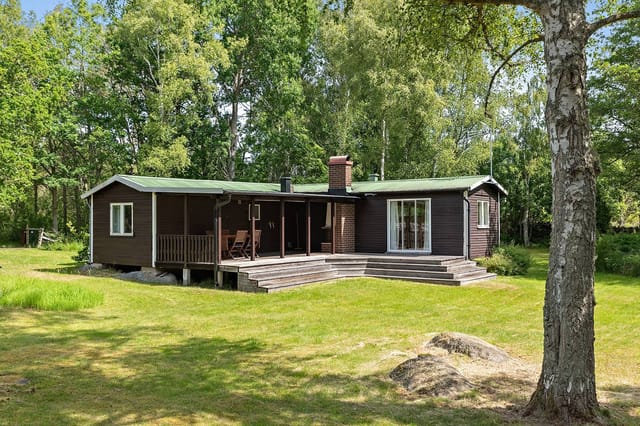
Early morning on Tjurkö, the Baltic air carries a faint smell of salt and pine resin through the bedroom window, and the only sound is a pair of oystercatchers working the shoreline 500 meters down the path. That's your morning. No traffic, no neighbors in sight, just the particular quiet that belongs to the Swedish archipelago in the hours before breakfast. Kyskens väg 8 sits at the end of a winding gravel-and-grass track on one of Blekinge's most unhurried islands, set back in a small glade with a single neighbor and a 2,650-square-meter plot that's framed on three sides by old stone walls. The kind of walls that took generations to build, stone by stone, pulled from the same granite bedrock that shapes this coastline. The land is level and open—big enough for a game of kubb at dusk, a proper kitchen garden, or a hammock strung between two old trees with a book and a thermos of coffee. The house itself was built in 1967 and still carries the honest bones of a classic Swedish sommarstuga. Original wooden floors, a functional iron stove, a kitchen that has fed a lot of families over a lot of summers. It doesn't try to be something it isn't. The 52 square meters are arranged with the kind of practical logic that Scandinavian builders understood instinctively—kitchen and dining together at around 21 square meters, generous enough for a crowded table on a rainy August afternoon, two bedrooms of 9 and 11 square meters respectively, and a bathroom with shower. Four separate exits mean kids can circuit the house without ever coming back through the kitchen, which anyone who's spent a week at a Swedish summer cottage will know is quietly essential. Out the back, a covered terrace extends the living space into something close ... click here to read more
Front view of the holiday home

Picture this: a Tuesday morning in July, coffee in hand, bare feet on sun-warmed timber boards, and the only sound for miles is a woodpecker working through a pine somewhere behind the tree line. That's the rhythm of life at Hedrumveien 866 in Kvelde — a two-bedroom chalet perched on an elevated, south-facing plot in the forests of Vestfold, with a private bathing jetty and a rowing boat waiting for you down at Åsrumvannet. This isn't a glossy holiday complex or a converted apartment with a mountain view slapped on the brochure. It's a genuine Norwegian hytte — the kind Norwegians guard jealously and rarely let go of. The chalet sits at the end of a forest road, surrounded on three sides by dense spruce and pine, which means the nearest neighbour is heard only occasionally and seen almost never. The elevated position gives the main living space a wide-open outlook southeast toward Åsrumvannet, and on clear days the lake glitters through the trees like broken glass. In autumn, that same view turns copper and amber. In winter, with snow on the branches and the wood stove crackling, the silence is almost theatrical. Speaking of the stove — a brand-new Contura unit was installed in 2022, and it transforms the open-plan living area into something genuinely warm and lived-in on cool evenings. The high ceiling and oversized windows keep things light even on grey September afternoons, and the layout means you're never really indoors and outdoors at the same time; the two feel continuous. Direct access from the lounge leads out to a partially covered south-facing terrace, which was substantially expanded in 2022 and 2023. There's a built-in bench, plenty of room for a long dining table, and enough sheltered space to sit outsid ... click here to read more
Hedrumveien 866 - presented by Krogsveen v/Andreas S. Bjønnes - Photo: Karl Filip Kronstad

Some mornings in the Périgord Noir you wake up to nothing. No traffic, no alarms — just wood pigeons calling from the oak canopy and the faint smell of damp stone warming in early sun. That's the rhythm of life at this five-bedroom stone property in Cénac-et-Saint-Julien, a village that sits quietly above the Dordogne River, close enough to Sarlat-la-Canéda that you can be browsing the Saturday market stalls within fifteen minutes, far enough away that you'd never know it. Set on 2.7 hectares — a mix of open lawn, mature woodland, and garden — the house has the solidity of a building that has outlasted several generations and been thoughtfully brought forward rather than stripped of character. The stone walls are original. The renovation, however, is recent and thorough: new electrical panel, updated plumbing, two hot water tanks, and a kitchen installed from scratch that opens directly into a 39-square-metre living and dining area flooded with afternoon light. It's the kind of space where a summer lunch stretches comfortably into the early evening without anyone thinking to move. The main house holds four bedrooms — two of them full suites with private shower rooms — and those room sizes (22, 23, 15 and 12 square metres) are generous by French rural standards. The primary suite is on the ground floor, which matters more than people expect: after a long day walking the Beynac cliffs or cycling the Vézère valley trail, the last thing you want is stairs. The layout is practical in all the ways that count for a family who actually intends to use a second home, not just own one. What makes this property genuinely unusual is the second, fully independent building. It has its own living room, kitchen, and shower room, with ... click here to read more
Picture 1

Step outside on a January morning and the cross-country ski tracks are literally 50 meters from your front door. No packing the car, no driving to a trailhead, no fuss — just click into your bindings and go. That is what makes this cabin at Murtetjønn in Hornnes, Norway, different from most leisure properties on the market, and why the people who find it tend not to let it go. Murtetjønnvegen 18 sits at around 384 meters above sea level in the established Tveit cabin area, about 13 kilometers from the busy little town of Evje in Aust-Agder. The site itself faces well toward the sun, and in high summer the terrace catches light from early morning until gone 21:30 in the evening — that particular kind of long Nordic light that makes you lose track of time over a meal or a glass of wine outside. The cabin was built in 1976 and has been kept in good condition throughout. It has the bones of a proper Norwegian hytte: a vindfang entrance hall where you dump wet boots and damp ski gear, an open-plan living room and kitchen that genuinely functions as the social heart of the place, and two bedrooms that sleep family or friends without anyone feeling cramped. One bathroom. Sixty-nine square meters in total. This is not a sprawling villa — it is a place built around the idea that you don't actually need much space to feel at home, and that is entirely the point. The large windows in the living area pull in the surrounding pine forest and the shimmer off Murtetjønn Lake below, so the outdoors never feels far away even when the wood stove is going and the rain is hammering on the roof. That terrace is worth dwelling on. At roughly 51 square meters, it is generous enough to have separate zones — a spot for the morning coffee, a ta ... click here to read more
Welcome to Mutretjønnvegen 18! Presented by Marius Engelskjønn at Meglerhuset & Partners.

Sunday morning in La Force sounds like this: a distant church bell from the village, the soft creak of wooden shutters catching the Périgord breeze, and the faint smell of coffee drifting through an open kitchen window while the garden sits gold and quiet in the early light. This is not a fantasy. This is what ownership here actually feels like. Sitting on a generous 1,500 square metre plot in the heart of the Dordogne, this three-bedroom property is one of the more genuinely versatile finds to come onto the market in this part of Aquitaine in some time. At €189,000, it's not just a second home in France — it's a property complex that gives you options most buyers only wish for. The setup is clever. Two separate residential units share the land, each with its own character and function. The first is compact, polished, and ready to use from day one — two levels with a ground-floor living room and kitchenette, and a proper bedroom with an en-suite shower room upstairs. You could step off a flight from London or Amsterdam, drive the hour south from Bordeaux-Mérignac airport, arrive at dusk, and be entirely comfortable by nightfall. No renovation stress, no waiting. This unit works immediately. The second unit is where the real potential lives. A single-storey home with a warm living room, a large separate kitchen, and two spacious bedrooms. The bones are good — solid, honest construction typical of the Dordogne countryside — and the spaces are generous enough to personalise without feeling like you're fighting the layout. Think of it as a canvas that already has the right proportions. Knock through to expand a room, update the kitchen with the local stone you'll find at every Bergerac brico, repaint in something that ref ... click here to read more
Picture 1

Stand on the upper terrace on a still Tuesday morning and the Zuid-Willemsvaart canal is a mirror. Herons pick their way along the bank below. The only sound is the occasional low chug of a barge making its way south toward Maastricht, fifteen kilometers down the road. This is what Gerstenbosweg 14 feels like before the rest of the world wakes up — and that feeling doesn't wear off. Built in 2017 to a high specification, this detached three-bedroom villa in Lanklaar sits in one of the quieter corners of the Belgian-Dutch border region, a pocket of Europe that most international buyers haven't discovered yet. That's changing. The Maas Valley and the Kempen have been quietly drawing cyclists, nature lovers, and weekenders from Antwerp, Brussels, Cologne, and Amsterdam for years, and property prices here still reflect what the region was rather than what it's becoming. At 197 square meters of well-organized living space on a 460-square-meter plot, with an EPC-A energy rating and canal views from the first floor, this is the kind of find that doesn't sit on the market long. The villa is arranged across two levels in a way that actually makes sense for how people live on holiday. All three bedrooms — the master at 18 square meters with direct access to the bathroom, and two further rooms of 13 square meters each — sit on the ground floor, away from the heat of the afternoon sun and the noise of the terrace above. The bathroom has a double washbasin, walk-in shower, and large mirror with drawer storage. There's also a separate guest toilet, which matters more than you'd think once you have a house full of family or friends. The integrated double garage, 41 square meters with an automatic sectional door, utility sink, and til ... click here to read more
Front view of Gerstenbosweg 14

Sunday morning in Queyssac. The kitchen window is open, and somewhere down the lane a church bell marks the hour. The smell of coffee drifts through the room while morning light moves slowly across the old stone walls. This is what you came for. Not a hotel lobby, not a resort pool — this. A house that has been standing for generations, renovated with real care, sitting quietly in one of the most quietly spectacular corners of southwest France. Queyssac is a small village in the Dordogne, tucked between Bergerac and the Périgord Pourpre wine country. It isn't on every tourist map, which is precisely the point. The locals shop Saturday mornings at the Bergerac market on Place de la République, eat confit de canard and walnut tart from the producers who've been showing up there for decades, and drive back through sunflower fields in time for lunch. Bergerac itself is just ten minutes away — close enough to grab a bottle of Monbazillac from a cave coopérative on a Tuesday afternoon, far enough that the hamlet stays genuinely quiet. This stone house sits in a hamlet setting with complete privacy. A dry stone wall wraps part of the garden, and a landscaped swimming pool sits outside with a terrace in front of the house that catches afternoon sun until well into the evening. There's also a covered courtyard — exactly the kind of shaded outdoor space you spend a lot of time in during July and August, when Dordogne summers run warm and long. A dovecote on the property adds to that particular sense of permanence you find in old Périgord houses, the feeling that the place has its own quiet history before you arrived. Inside, 160 square metres have been renovated to a genuinely liveable standard. The ground floor opens into a ge ... click here to read more
Picture 1

Friday afternoon, the car is packed, and ninety minutes out of Oslo you're turning off the main road into the quiet pines of Buerskogen. By the time the engine goes off, the only sounds are wind through the spruce trees and maybe a woodpecker somewhere in the distance. That's the pace this cabin runs on — and once you've had a weekend of it, the city feels very far away indeed. Buerskogen 92 sits in one of Halden municipality's more unhurried holiday pockets, a sparsely developed woodland area where plots are spread out and neighbours are close enough to wave to but far enough to forget about. The cabin dates to 1976 and has been looked after properly over the decades — not over-renovated, not neglected. It's got the kind of honest solidity that older Norwegian timber construction tends to produce, updated where it matters: public water and sewage connection, a newer wood stove, a heat pump for the shoulder seasons, and a kitchen fitted in 2021 that's functional without pretending to be anything else. At 57 square metres total, the layout is compact and sensible. Entrance hall, storage room, bathroom, three separate bedrooms, and an open living area where the kitchen flows directly into the lounge. Three bedrooms in a 57-square-metre cabin means rooms that are cosy rather than cavernous — exactly right for a place where you're mostly outside anyway. The wood stove anchors the living space; on a wet October evening with the fire going and rain hitting the windows, you'll understand exactly why Norwegians are so attached to their hytter. The 42-square-metre terrace out front is the real extension of the living space through the warmer months. Coffee in the morning with forest stretching out in front of you. Dinner outsi ... click here to read more
Welcome to Buerskogen 92! Photo: Fotoetcetera AS

On a quiet Sunday morning in Saint-Thois, the only thing you hear is the wind moving through the oak trees at the edge of the garden and the occasional crow somewhere over the fields. The kitchen smells of coffee and yesterday's crêpes. Through the window, nearly 4,800 square metres of land stretch out in front of you — yours, all of it — and the sky above Finistère is doing that particular grey-blue thing it does when the Atlantic is close enough to feel. This is inland Brittany at its most honest. Saint-Thois sits in the Arrée hills, one of the most quietly compelling parts of France that most people fly over on their way to somewhere louder. That's precisely the point. The Monts d'Arrée, Brittany's ancient low mountain range, rise just to the north. The Parc Naturel Régional d'Armorique — over 172,000 hectares of moorland, forest, and river valley — is essentially your backyard. You don't have to drive far to find the Yeun Elez boglands or the rocky summit of Roc'h Ruz, where on a clear afternoon you can see clear to the coast. The house itself is a genuinely interesting mix: old Breton stone walls on the ground floor married to more contemporary construction above, giving the interior a warmth and texture that new builds simply can't replicate. Step inside and the entrance opens naturally into a generous living space where a fitted kitchen runs alongside a sitting room centred on a wood insert fireplace. On grey November evenings — and there will be grey November evenings, this is Brittany — that fireplace earns its place completely. There's also a large room on the ground floor currently used as a games room, which could just as easily become a studio, a home office, a proper dining room, or a ground-floor bedroom ... click here to read more
Picture 1

Step onto the veranda at Bjørkodden on a July evening and the fjord is right there — flat, silver, and impossibly wide — while the mountains on the opposite shore still hold patches of snow above the treeline. The outdoor fireplace crackles behind you. Someone's inside making coffee. This is what northern Norway actually feels like, and it rarely comes with a private shoreline attached. Sitting in Seines, a few minutes south of Narvik on the E6, this two-bedroom chalet has been quietly doing its job since 1985: giving whoever's lucky enough to own it a front-row seat to one of the most dramatic fjord landscapes in Nordland. The plot runs a full 1,000 square meters from the road edge down to the water, ending at a shoreline of smooth rocks and pebble beach that you'll share with no one. A private path threads through the lawn and mature trees straight to the water's edge, where a kayak slides in as easily as a fishing line does. The 46-square-meter veranda wraps around the main living area in two modes: a covered section that keeps the rain off during shoulder season, and an open deck that catches every hour of the midnight sun in June and July. This is where mornings actually happen here. Coffee, the sound of the fjord, maybe a cormorant low over the water. No neighbors visible through the trees. An outdoor fireplace means the veranda stays usable well into September, when the birch trees turn gold and the hiking trails on Fagernesfjellet — the mountain that towers directly above Narvik — are at their absolute finest. Inside, 70 square meters of interior space is well-organized for a holiday home. The open-plan kitchen, dining, and living area all face the fjord, and the large windows in the living room do what you'd ... click here to read more
Welcome to Bjørkodden E-6 50! Photo: Kalle Punsvik

The first thing you notice on a January morning at Håvegen 122 is the silence. Not the hollow silence of an empty room, but that particular Nordic quiet where snow sits heavy on the spruce branches and the only sound is the crackle from the wood stove working its way through a birch log. You pull on your boots, step out onto the 55-square-metre terrace, and the Trøndelag hills stretch out in every direction. The groomed cross-country ski trail is maybe a ten-minute walk. You didn't have to book anything. You didn't have to drive anywhere. This is just Tuesday. Ålen sits in the Holtålen municipality of Trøndelag county, about 80 kilometres south of Trondheim along the E6 and then inland through the Gauldalen valley. It's not a resort town in the manufactured sense — no ski-lift queues, no overpriced après-ski bars. What it has instead is the real thing: a working Norwegian mountain community surrounded by terrain that people travel from across Scandinavia to experience. The Gaula River, running just below the village, is one of Norway's premier salmon rivers. In June and July, fly fishermen from the UK, Denmark and Germany stand in its pools at midnight under a sky that never quite goes dark, chasing Atlantic salmon that can top 10 kilograms. The river's reputation is earned. Licences are limited, which makes proximity to the water genuinely valuable. The chalet on Håvegen was built in 1999 and sits on a freehold plot of 1,000 square metres. It's been kept in good condition throughout — the exterior was re-stained in 2024, so the timber is tight and protected against the freeze-thaw cycles that do the most damage to Norwegian cabins over time. At 73 square metres of internal living space, the layout is honest and practi ... click here to read more
Picture 1

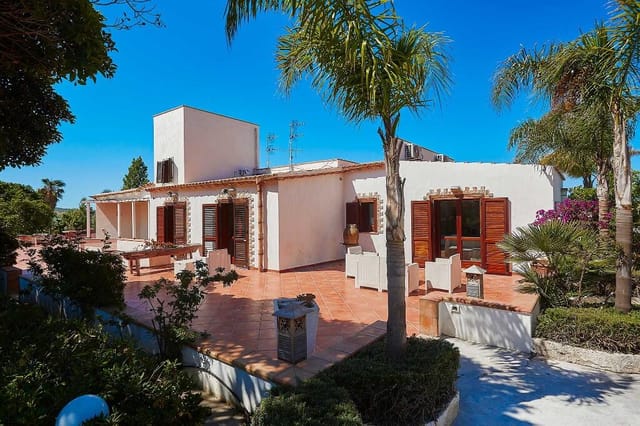
Stand at the end of a 100-meter palm-lined driveway on a Tuesday morning in October and you'll understand immediately why people who come to this corner of western Sicily rarely want to leave. The Egadi Islands shimmer on the horizon. The scent of citrus and rosemary lifts off the warm stone paths. Somewhere beyond the villa's fenced boundary, the medieval hilltop town of Erice sits cloaked in its habitual morning mist — and it all feels, somehow, entirely yours. This is Contrada Milo, a quiet agricultural ribbon just outside Trapani that has remained almost entirely off the international buyer radar, which is precisely what makes this property so worth paying attention to. Set on a fully enclosed estate of over 20,000 square meters, the villa is the kind of place that takes an hour to properly walk around. Forty palm trees line the private approach. Ornamental flowerbeds give way to Mediterranean scrub. A vast stand of exotic palms behind the main structure creates genuine depth — the sort of green backdrop that turns an outdoor lunch into something that feels cinematic without trying. The main villa itself spans roughly 450 square meters across two levels — the raised ground floor where daily life happens, and a semi-basement that offers flexible space for storage, technical rooms, or future reconfiguration. Inside, the scale is genuinely generous. The formal reception hall alone runs to approximately 160 square meters, the kind of room that handles twenty people without effort and still has space to breathe. A dedicated laundry room of around 40 square meters means the practical side of running a larger household doesn't intrude on the living spaces. Three bedrooms, four bathrooms, interiors in good condition — the ... click here to read more
Picture 1

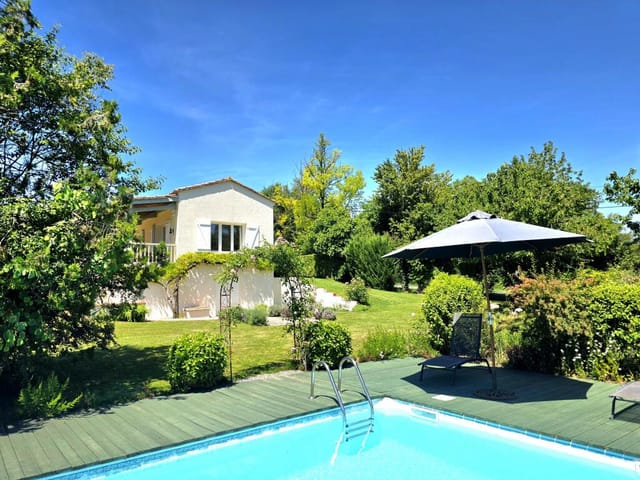
Sunday morning in the Dordogne has a particular quality to it. The air smells of cut grass and something faintly herbal — wild thyme, maybe, drifting up from the countryside that rolls away beyond your pool terrace. You open the patio doors from the kitchen and the sound follows: a distant church bell from the village, the soft knock of a shutter, absolute quiet between each ring. This is what you actually bought. This three-bedroom, single-level home sits just outside Issigeac — one of the most genuinely pretty bastide villages in the Périgord Pourpre — and it does something rare for a property at this price point: it's ready. No projects. No compromise on the important things. You walk in, unpack, and start living. The open-plan living, dining, and kitchen space is the kind of room that earns that overused word "heart of the home" — except here it's actually true. Large double-glazed windows pull the garden into the room visually, and two sets of patio doors open fully onto a covered terrace so that indoor and outdoor living collapse into one uninterrupted space across the warmer months. A wood-burning stove anchors the room for the other side of the year, when Dordogne evenings turn cool and there's nowhere you'd rather be than here with a glass of Bergerac rouge and something slow-cooking on the stove. The kitchen and dining area share the same easy flow, so cooking doesn't isolate whoever's at the hob from the rest of the table — a detail that matters enormously when you're hosting friends for ten days in August. The sleeping wing sits at the opposite end of the house, a sensible arrangement that gives kids or guests real separation from the living spaces. Three proper bedrooms, a shower room, and a separate WC. ... click here to read more
Picture 1

The wooden veranda catches the morning light before the rest of the house has even woken up. Sit there with an espresso and you'll hear nothing but wind moving through the olive grove and the occasional distant bell from Salcito's hilltop church. This is Molise — Italy's least-talked-about region, and for those who've found it, that quiet is the whole point. Set in the municipality of Civitanova del Sannio in the southern Apennines, this four-bedroom country house sits on seven full hectares of rolling land and delivers something that's becoming genuinely rare in Italy: authentic rural character combined with a fully restored, move-in-ready home at a price that still makes sense. At €249,000 fully furnished, you're not buying a project. You're buying a life, ready-made. The house spans three floors and roughly 200 square metres of liveable space, plus a generous cellar, utility room, and a large shed all internally connected — useful details if you're thinking about extended stays, visiting family, or simply needing somewhere dry to store the olive harvest. And yes, there's an actual olive harvest. The land includes 46 olive trees and eight fruit trees alongside agricultural plots, woodland, and a natural spring that feeds the lower fields. This isn't a garden — it's a working small estate, the kind of thing Italians call a podere, and it functions accordingly. Walk through the main entrance and you step into an enclosed wooden veranda that runs the full width of the house. Panoramic windows frame the landscape on three sides — not as a design statement, but as a practical winter garden, warm and bright even in January. It's the room you'll use most. Ground floor continues with a proper living room (21 square metres), ... click here to read more
Picture 1

The lake is completely still at six in the morning. You can hear a woodpecker somewhere up the ridge, and the smell of pine resin drifts through the window you left cracked open the night before. This is what you drove here for—or more precisely, what you flew into Skien, then drove the winding E134 west through Telemark for. The chalet at Fjellheimvegen 57 sits above Birtevatn in Øvre Birtedalen, and on mornings like this, you understand immediately why people in Oslo and Bergen buy second homes here and then spend the rest of the year counting down to the next visit. Fyresdal is one of those corners of inland Norway that hasn't been overrun. There's no ski resort marketing machine behind it, no Instagram queue for a famous waterfall. What it has is something rarer: genuine, working Norwegian outdoor culture—the kind where locals actually hike Rjupeto on a Tuesday, where kids grow up knowing how to row across a lake before they can drive. Owning a holiday property here means buying into that culture, not just the scenery. The chalet itself was built in 1973, and you can feel its history—the kind of solidity that Norwegian timber construction acquires over decades of hard winters and hot summers. The floor plan is practical in the way that Scandinavian cabin design tends to be: nothing wasted, nothing superfluous. Step through the entrance hall into the living room and you'll notice the ceiling height immediately. It's generous for a property of this era, and the large windows push light deep into the interior even on overcast autumn days. There's a fireplace with a wood stove in the corner that does more than heat the room—it changes the entire atmosphere. Come November, when the birch trees outside have dropped their ... click here to read more
Welcome to Fjellheimvegen 57!

Sunday morning in the Vienne countryside has a specific quality to it. The air smells of cut grass and woodsmoke, the church bell in the village of Blanzay carries clear across the fields, and your kitchen — with its log burner crackling and coffee on the stove — is warm in a way that proper stone walls make it. That's what owning this barn conversion actually feels like. Not a brochure fantasy. The real thing. This is a proper barn conversion sitting in a quiet hamlet just outside Blanzay, a five-minute drive from the market town of Civray and its Friday morning market stalls selling Charentais melons, local goat's cheese, and honey from the Vienne valley. The building has been thoughtfully transformed from agricultural outbuilding into a genuinely liveable home — 130 square metres of interior space spread across a layout that manages to feel both open and intimate at once. Walk into the kitchen-dining room first, because that's where the life of this house happens. There's a log burner, solid fitted units, and enough room that eight people can eat together without anyone feeling squeezed. Behind it, a dedicated utility room houses the central heating boiler and the solar hot water system — practical infrastructure that keeps running costs down and, for a second home in rural France, matters more than most buyers initially realise. A pantry and a separate WC complete the ground floor's working zone. Then comes the double-height living room, and this is the room that stops people mid-stride. The ceiling goes straight up, exposing the original barn volume, with a mezzanine gallery spanning part of it. A chimney anchors one wall. Light from high windows falls at angles that shift through the day. Next to this space sits ... click here to read more
Picture 1

Step outside on a September morning and the air hits you first — cold, clean, carrying the faint smell of pine resin and wet rock. The mountains across the valley are still in shadow. You pull on boots, pour coffee into a thermos, and within ten minutes you're on a trail that winds up toward Burufjellet, with nobody else in sight. This is Singsås. This is what owning a cabin here actually feels like. Sitting on Storburusjøveien in the Rødslykkja/Burusjøen area near Kotsøy, this three-bedroom Norwegian hytte is the real thing — no designer furniture, no lifestyle staging, just a well-kept traditional cabin on 1,492 square meters of privately owned land, fully furnished and ready to use from day one. At €57,500, it's one of the most accessibly priced genuine vacation home opportunities in Trøndelag, and for international buyers exploring Norway as a second home destination, that combination of price point, location, and move-in condition rarely comes together this cleanly. The cabin faces south. That matters enormously in Norway. From late spring through early autumn, sunlight tracks across the terrace for most of the day, and the 28-square-meter partially covered outdoor space — generous for a cabin this size — becomes the true living room. Mornings out there with a book. Afternoons watching the light shift across the forested ridgeline. Late evenings in summer when it barely gets dark and the air smells of warm timber. The terrace wraps the experience of being in the Norwegian highlands into something you can step outside and inhabit, not just look at from a window. Inside, the bones are classic: exposed wooden walls, proper ceiling height that keeps the rooms from feeling cramped, and large windows that pull the land ... click here to read more
Welcome to Storburusjøveien 449 – a charming leisure property with a secluded location in beautiful natural surroundings.

On a still morning in Lizant, the only sounds are wood pigeons in the oak trees and the distant rumble of a tractor working the next field over. The kitchen window faces south, and by nine o'clock the sunlight has already moved across the stone floor and landed on the table where coffee goes cold because you keep getting up to look outside. That's the pace of life this former farmhouse sets — and once you've felt it, it's hard to go back. Lizant sits in the Vienne department of Poitou-Charentes, a part of rural France that doesn't chase attention. It earns it quietly. The village is tucked into a gentle landscape of sunflower fields, walnut orchards, and hedgerow-lined lanes that were made for cycling and slow afternoon drives. The nearest market town is Civray, roughly 10 kilometres east, where the Saturday morning market on the Place du Marché fills up with local producers selling Chabichou du Poitou cheese, fresh walnuts, and smoked duck from the Charente valley. You'll recognise the same faces every week. That's the kind of place this is. The farmhouse itself covers 270 square metres across two floors and has been well maintained — this is not a project requiring months of work before you can sleep in it. You can arrive on a Friday, unload the car, open the shutters, and be entirely comfortable by Friday night. The fitted kitchen flows into a utility room that handles the practical side of country living without cluttering up the main spaces. The living room is large and genuinely bright, thanks to the south-facing aspect that pulls light deep into the interior through most of the day. A fireplace with an insert sits at the heart of the room — in November, when the Vienne countryside goes amber and the mornings tur ... click here to read more
Picture 1

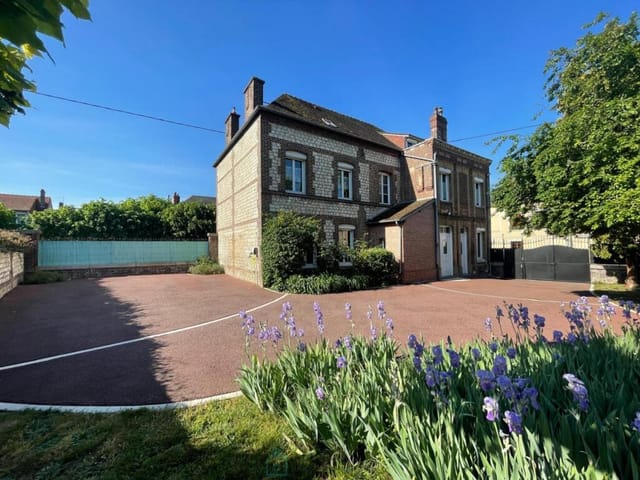
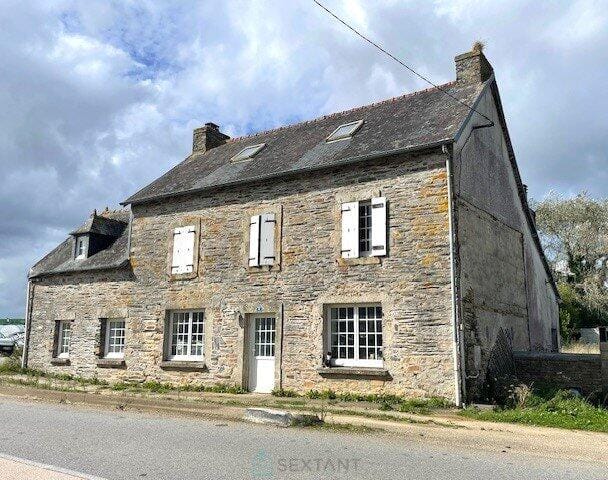
Sunday morning in Saint-Aubin-lès-Elbeuf starts with a smell you can't manufacture: woodsmoke drifting from the fireplace insert downstairs, coffee brewing in the fitted kitchen, and the faint sound of the Seine moving somewhere beyond the garden wall. It's the kind of slow-morning feeling that people spend years chasing and rarely find this close to a motorway junction. This is a five-bedroom Norman manor house in good condition, spread across 235 square metres, sitting in fully enclosed landscaped grounds with a south-facing terrace, a jacuzzi, two garages, an outbuilding, a workshop, and a paved parking area complete with an electric vehicle charging point. On paper, it sounds like a checklist. In person, it reads like a life upgrade. Let's talk about the house itself first. The ground floor opens with a generous entrance hall — proper proportions, not the awkward squeeze you find in newer builds — with a large closet and a separate WC. The kitchen runs to about 25 square metres, fully fitted and equipped, with enough room to cook for a family gathering without anyone getting in anyone else's way. A utility room with a sink connects directly to the garden, which makes returning from a muddy riverbank walk entirely civilised. The living room has a fireplace insert; the adjacent sitting room has its own fireplace. Two rooms with fires. That is not a small thing in a Norman winter. Up on the first floor, three well-sized bedrooms include a master suite with a dressing room and sink — a practical luxury that transforms the morning routine. There's a large bathroom, a laundry room, another dressing room, and a separate WC. The layout gives a family room to spread out without living on top of each other. The second floor ... click here to read more
Picture 1