Houses For Sale In Europe (page 5)

Houses for sale in europe - homestra offers the largest amount of european real estate with over 200,000+ properties, find any type of property within your budget from villas to country homes. buy or rent your perfect home in europe. (page 5)

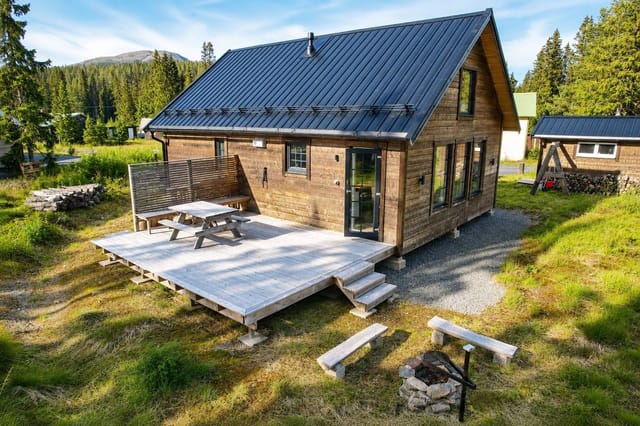
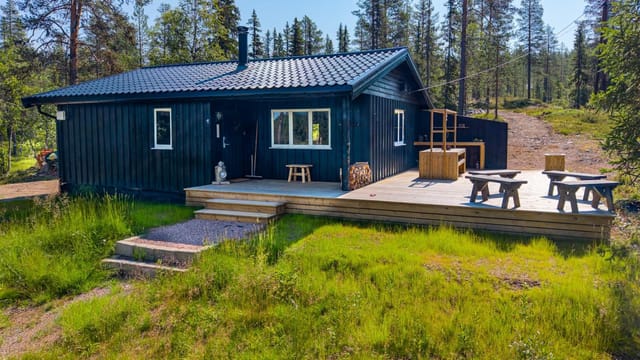
Step off the porch at Nyrudveien 4839 on a July evening and the light simply doesn't leave. The sun skims the pine tops across the river, the air smells of resin and cold water, and the only sounds are the current moving through the Pasvik and a woodpecker working at something deeper in the forest. This is what people mean when they talk about escaping—really escaping—and it's what this Honka log cabin in Pasvikdalen delivers from the moment you arrive. Built in 2014 from solid Nordic logs, the cabin sits on a 1,000 square metre leased plot where the spruce and pine press in close on three sides and the Pasvik River opens up in front. It's 75 square metres of considered space—not cramped, not sprawling, just right for the kind of slow life this valley encourages. You cook in the morning, fish in the afternoon, sit by the fire pit until midnight under a sky that can't quite decide whether to go dark. That rhythm is the whole point. Inside, continuous pine flooring runs wall to wall, the ceiling panels follow the same warm grain, and the whole interior has the kind of amber quality that only real timber gives. The open-plan living room and kitchen work well together—generous enough for a group of friends spread out after a day on the trails, comfortable enough for two people who just want quiet. Large Finnish double-glazed wooden windows pull the river view right into the room. On grey autumn afternoons, the wood-burning stove handles everything else. Light one up, pour something hot, and the outside world genuinely stops mattering. The kitchen has IKEA cabinetry with profiled fronts and a laminated countertop, and it's prepped for a stove and refrigerator—meaning the new owner gets to choose their own setup rather than ... click here to read more

Welcome to Nyrudveien 4839! Photo: EFKT

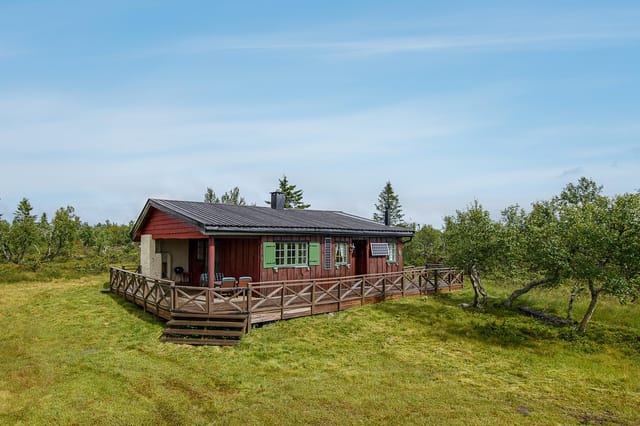
Step outside on a February morning and your ski boots are already clipped in before your coffee gets cold. That's the reality at Fageråsen 497 — a compact, well-kept mountain cabin sitting on one of the most coveted pockets of land in Trysil, with the groomed runs of Trysilfjellet literally at the end of the garden. The slopes are right there. No shuttle, no car park, no fuss. Trysil is Norway's largest ski resort, and Fageråsen is the neighbourhood that regulars fight over. It sits in the upper reaches of the resort area, high enough for reliable snow cover from November through April, close enough to the main lift network that you're riding chairs within minutes of leaving the front door. On clear days — and there are many — the view from the terrace sweeps across a wide arc of forested ridges and open pistes that glow orange in the late afternoon light. It's the kind of view you stop taking for granted only when guests visit and you see their faces. The cabin itself is 39 square metres. That's a deliberate choice, not a compromise. In Norway, cabins under 50 square metres are classified as annex or secondary structures, and that classification carries a significant upside here: the plot — which is privately owned, not a leasehold — measures 792 square metres, and an independent feasibility study by ByggePlan AS has confirmed 128 square metres of buildable area remaining without the need for a special planning dispensation. In plain terms, you can build a full-sized main cabin on the same plot, using the lower access side of the property, while keeping this structure as a guest annex or rental unit. The full study is included in the sales documentation. For buyers thinking even one step ahead, this is a remarkable po ... click here to read more

Picture 1

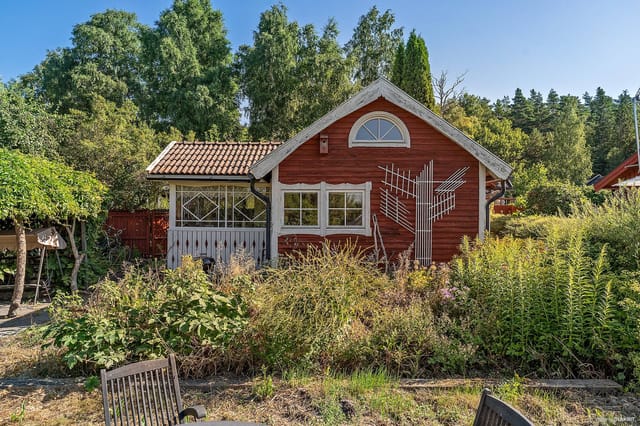
Around seven in the evening in late June, the sun is still well above the treeline to the west. You're sitting on a 25-square-meter veranda at 201 meters above sea level, the smell of pine resin hanging in the warm air, a cup of coffee going cold in your hand because you forgot about it. That's the kind of place this is. Eikebergåsen 20 sits on a generous 1,068-square-meter plot in Båstad, a quiet community in Viken county roughly 80 kilometers south of Oslo. The address puts you deep enough into the forest to feel genuinely away from things, but close enough to the real world that you're never actually stranded. The center of Båstad — a grocery store, a restaurant, a petrol station — is about 3.5 kilometers down the road. You can drive it in five minutes or cycle it through the trees in under twenty. The chalet itself was built in 1964 and covers 58 square meters across a single story. Original cabins of this era have a particular quality: low ceilings, thick walls, small windows in the bedrooms that frame rectangles of green forest like paintings. This one has been freshly updated without losing any of that character. New carpet underfoot, freshly painted panel walls in the living room, a newly fitted kitchen, and a brand-new 30-liter water heater installed in 2026. It's move-in ready in the most straightforward sense — unload the car, light the stove, open a bottle. That wood-burning stove is worth mentioning twice. Norwegian autumn arrives quietly but decisively, and by September the evenings carry a real chill. The stove anchors the living room, casting that particular amber light that makes everyone around it feel like they've earned their weekend. Large windows face the surrounding forest, so you get the full d ... click here to read more

Eikebergåsen 20!

Step outside on a Tuesday morning in late September. The frost hasn't quite arrived yet, but you can feel it coming — the air has that sharp, clean edge that only exists at 300 metres above the Ryfylke valley floor. A trail cuts upward through birch and heather from the edge of your plot. You don't need a map. You know where it goes. That's the kind of relationship you build with a place like Bjørkeligrend. This newly designed two-bedroom cabin sits on plot number 1 within a small, carefully planned development called Bjørkeligrend at Leite fjellgard, just outside the village of Årdal i Ryfylke in southwestern Norway. There are only 17 plots across the entire 100-decare site. That's intentional. The developer hasn't tried to squeeze every last kroner out of the land — each plot runs to roughly 1,000 square metres, meaning you get actual breathing room between you and your neighbours, which in Norwegian mountain cabin culture is not just appreciated, it's expected. The cabin itself covers 55 square metres of well-considered interior space: two proper bedrooms, a bathroom, a combined kitchen and living area, storage and technical room, and a loft that works equally well as a third sleeping area or a reading corner where kids disappear for hours. Large windows pull in serious amounts of natural light and frame long views across the valley and surrounding ridgeline. On a clear winter day, when the snow sits on the high ground and the low sun angles in at two in the afternoon, the light inside turns golden in a way that no interior designer could replicate. Finishes are solid and practical rather than showy. Wooden roof construction, royal-impregnated exterior cladding that handles Norwegian weather without demanding cons ... click here to read more

Picture 1

Step outside on a clear October morning and Snøhetta is right there — all 2,286 metres of it, catching the first pale light while the plateau below stays in shadow. That's not a postcard. That's Tuesday at this log chalet on Hjerkinnhusvegen, sitting at just over 1,000 metres above sea level in one of the most remote and rewarding corners of Norway. Hjerkinn is the kind of place that outdoor Norwegians have quietly known about for generations. It sits at the convergence of Dovrefjell-Sunndalsfjella, Dovre, and Rondane National Parks — three protected wilderness areas meeting at a single point, which means the land surrounding this cabin is essentially untouchable. No new roads cutting through the reindeer corridors. No future development eating into the horizon. What you see today is what you'll see in thirty years. For buyers considering a second home in Norway, that kind of permanence is genuinely rare. The cabin itself was built in 1968 and occupies a freehold plot of 520 square metres. Solid log construction — the kind that handles the Dovre winter without complaint. The structure spans two floors with 185 square metres of indoor space, which sounds modest until you're inside and realise how well the rooms are proportioned. The main floor opens from a slate-floored entrance hall into a proper living room: large windows framing the Snøhetta massif, panelled walls in warm timber, a fireplace insert replaced in 2016 that throws serious heat on evenings when the temperature outside drops to -15°C. You don't just survive Norwegian mountain winters here — you actually want to be in this room. The kitchen sits separate from the living area, which anyone who's cooked for a group in a small open-plan space will appreciate. ... click here to read more

Welcome to Hjerkinnhusvegen! Photo: Skildre.com by Bjørnar Fjeldberg

Step outside on a January morning at Höglekardalen 957 and the silence hits you first. Not the city kind of quiet that just means less noise — the real thing. Crisp air, a sky impossibly blue above the Bydalsfjällen ridgeline, and fresh ski tracks already cutting through the snow toward trails that eventually roll all the way to the Norwegian border. This is the last cabin address before the road ends and the mountain takes over. That detail matters more than it might sound. Built in 2021, this three-bedroom chalet sits on a generous 802-square-meter plot in Höglekardalen, a small, tight-knit community in Åre municipality that the Swedish outdoor crowd has known about for years — and that international buyers are only just starting to discover. At 70 square meters of smartly used interior space, the cabin punches well above its floor plan. The open-plan living and dining area rises all the way to the roof ridge, so even when all three bedrooms are full of guests, nobody feels squeezed. Light pours in through large windows that frame the mountain slopes in a way that changes completely depending on the season — blinding white and dramatic in February, soft green and gold when the birches come out in June. The layout makes sense for the life people actually live here. Three proper bedrooms handle the core sleeping arrangements, and a loft above provides extra space for the kids or the friends who always end up crashing. The kitchen is fitted out and functional — nothing fussy, everything you need. The bathroom is modern and practical, which matters a lot when you're peeling off ski boots and thermals after a long day out. And the snowmobile garage with a built-in ski and snowboard waxing area is the kind of feature that ... click here to read more

Exterior view of the chalet

Picture this: it's six in the morning, the Trondheim Fjord is completely flat, and the only sound coming through the kitchen window is a guillemot calling somewhere out over the water. You're making coffee in a house that's been watching the tides since 1919. That's what Lernesstranda 313 feels like on a Tuesday in July, and honestly, it's hard to go back to city life after that. This three-bedroom Norwegian coastal holiday home sits right at the shoreline in Kyrksæterøra, a small town at the southern tip of Hemnefjorden in the Trøndelag region. At 62 square metres across two floors, it's not trying to be grand. It's trying to be exactly what a sea cabin should be: compact, warm, fully ready to use, and positioned so close to the water that you can smell the salt before you've even opened the front door. The house was built in 1919 and extended in 2002, and you can feel both eras in the layout. The ground floor has a 12-square-metre living room with a fireplace that gets serious use from September through May, when the fjord light turns silver and the evenings come early. Large windows frame the water directly — no road, no neighbour, just the fjord. The 10-square-metre kitchen has enough counter space to actually cook a proper meal, and whoever designed the layout had the good sense to put the dining area where you can eat while watching the boats go by. Three bedrooms sit upstairs — 10, 11, and 12 square metres respectively — quiet, private, and cross-ventilated by the coastal breeze on warmer nights. The bathroom is modest at 3 square metres, with a shower cabin and washing machine, plus a separate toilet room. Electricity is installed, water comes from a private well, and everything is sold fully furnished. You ar ... click here to read more

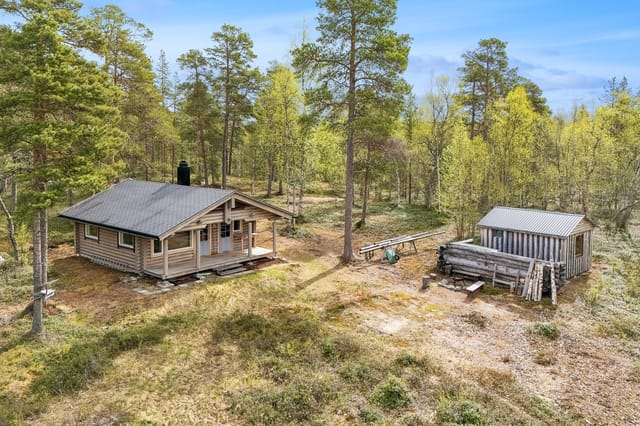
EIE Real Estate presents Lernesstranda 313! Interior photo by Haukdal.

Picture this: it's a Tuesday morning in February, the thermometer reads minus twelve, and you're sitting in your own sauna listening to snow fall. Outside the window, the spruce trunks are white to their cores, and somewhere beyond them the silhouette of Härjedalen's fells cuts a hard line across a pink sky. No neighbours in sight. No road noise. Just the occasional crack of a branch under the weight of fresh snow. That's the everyday reality at Uggen Örnvägen 6 in Hede. The cabin sits at the very end of Örnvägen — a deliberate dead-end, not a compromise. Whoever placed it here knew exactly what they were doing. Privacy isn't a selling point you have to manufacture; it's simply the geography. The plot runs to 2,050 square metres, generous even by Swedish countryside standards, and the surrounding forest of birch and pine keeps the outside world at a polite distance. The structure itself is genuinely unusual. Two separate timber frames have been physically joined to create a single home, giving the interior a character you don't find in catalogue builds. The walls are raw timber throughout, which does something specific to sound — it softens it, absorbs it — so the place always feels quieter than it is. Large windows were clearly a priority for whoever built this, because almost every room catches light from more than one angle. In summer, when the Nordic sun stays up until nearly midnight, those windows become the whole point of being indoors. Practically speaking, the floorplan works well for a second home or a holiday cabin in Sweden. Downstairs you have a proper hallway — not a token entry space — a kitchen, a living room, two bedrooms, a toilet area with a chemical WC (standard practice for many rural Swedish prop ... click here to read more

Exterior view of the timber cabin

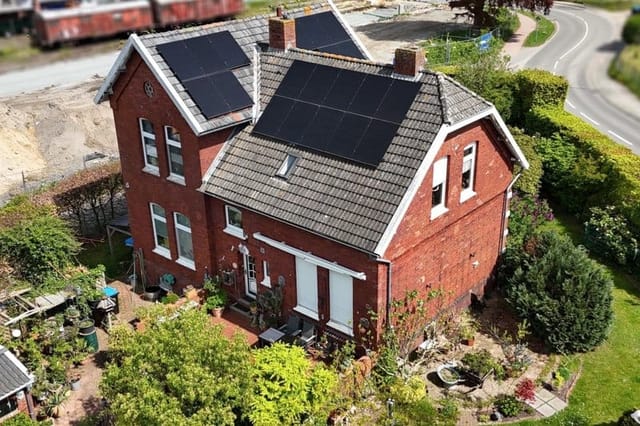
On a quiet Sunday morning at De Hovenstraat 4, the only sounds reaching the kitchen window are birdsong from the treeline and the soft shuffle of hooves from the stable out back. That's not a fantasy — that's what life actually feels like here, on 3,659 square metres of green Flemish countryside in Zutendaal, one of the most quietly sought-after corners of the Belgian province of Limburg. Zutendaal has a nickname locals say with genuine pride: the greenest gem of Flanders. It's not marketing copy. The town sits in the heart of a forested plateau between Genk and Maasmechelen, where cycling paths thread through beech woods and the air carries that particular clean sharpness that only comes from being surrounded by trees. You don't get that in the suburbs. You definitely don't get a sand arena for your horses either. This is a two-bedroom house with two bathrooms, built in 1974 and comprehensively renovated in 2021 — and the renovation was done properly. Nine solar panels with battery storage, a heat pump system, and full underfloor heating throughout. The EPC label is A. Heating bills here are not the monthly anxiety they are in older country properties. That combination of solid mid-century bones with genuinely modern energy infrastructure is rarer than it sounds in rural Belgium, and it matters enormously for a second home that sits unoccupied in winter. Step inside and the first thing that registers is the light. The main living room has exposed wooden beams running across the ceiling — original, kept because they're beautiful — and the kind of generous window openings that flood the room in afternoon gold. Soft green tones on the walls, natural wood accents, a comfortable sitting area that makes you want to drop in ... click here to read more

Front view of De Hovenstraat 4, Zutendaal

The alarm doesn't go off at this cabin. You wake up because a reindeer is grazing thirty meters from the window, and the light coming off the mountain plateau at six in the morning is the kind that makes you reach for your camera before you've even had coffee. This is Berdalsheii, a four-bedroom farmhouse cabin sitting at the heart of one of the most extraordinary private landholdings in Norway — roughly 39,730 acres of high mountain wilderness in Setesdal, Aust-Agder. Let that number settle for a moment. Nearly 40,000 acres. Not a managed forest plot, not a timeshare in a ski resort. Yours. The cabin itself dates to 1900, and it carries that age honestly — thick log walls that hold warmth even when October brings the first frost, small-paned windows that frame the plateau like paintings you never get tired of, and a layout across six rooms that was clearly designed by someone who understood how a hunting party actually lives. Four bedrooms means you can bring the whole family, or fill the place with friends for a week-long elk season that nobody will stop talking about at dinner for the next ten years. An annex expands the options further, and the boathouse down by the water handles the rest — storage for fishing gear, space for the boat, a reason to walk down to the lake every morning just to check the conditions. Setesdals-Austhei is the name of this high mountain territory, and among Norwegian hunters it carries real weight. Wild reindeer hunting here is not a gimmick or a managed cull — it's the genuine article, pursued across open vidda terrain where the animals roam freely and the hunt demands patience, physical fitness, and respect for the land. For many Norwegian sportsmen, taking a wild reindeer on the mount ... click here to read more

Picture 1

Stand in the kitchen on a September morning and count the apples on the Sörmlandsäpple tree through the window. They're nearly ready. The smell of woodsmoke drifts in from the whitewashed fireplace in the next room, and somewhere down the gravel path, Nyckelsjön is perfectly still. This is Tjärtorp — a two-bedroom timber house in the village of Ullevi, just outside Gnesta in Södermanland — and it has the kind of quiet intensity that makes people stop looking at other properties. The house is red-painted timber, classic Falun red, the colour that has marked Swedish rural buildings for centuries. Up close, the facade details reward attention — the kind of craftsmanship that doesn't come from a catalogue. Inside, the ceiling height surprises you. Wide wooden floors carry the patina of generations, the timber walls hold warmth even before the fire is lit, and exposed beams overhead remind you that this building was made to last. The large whitewashed fireplace anchors the main living space. It isn't decorative. On a dark November evening, it is the whole room. The renovation work done here is worth understanding properly, because it separates Tjärtorp from the majority of Swedish country homes on the market. The walls and woodwork are finished in linseed oil paint — breathable, traditional, and far kinder to old timber than modern synthetic alternatives. The wallpapers are from Lim & Handtryck, printed from historical originals dating to the 18th and 19th centuries. These are considered collector's items in some circles, and they're on your walls. At the same time, the house has been fully rewired, replumbed, reinsulated, and connected to fibre internet. A new roof is scheduled for 2025 to 2026. The windows were restored b ... click here to read more

Exterior view of the timber house and garden

Stand at the kitchen window on a Tuesday morning in late August and watch the light roll across the barley fields behind Mellanköpinge. The village is so quiet you can hear the neighbour's tractor a kilometre away. That stillness — that particular southern Swedish stillness — is something people spend years searching for, and it comes built into this address. Mellanköpingevägen 119 sits in a pocket of Skåne that most outsiders drive straight past on the way to the coast, which is exactly why it feels so intact. The farmhouses along this road are old and solid. The gardens are planted for people who actually use them, not for show. This one runs to just under 4,000 square metres — enough for a proper kitchen garden along the southern fence, a fruit tree section that produces more plums and apples in September than any one family could reasonably eat, and still leaves a wide lawn for evenings with a long table pulled outside. The house itself was built in the early twentieth century, which in Skåne means thick walls, low windowsills, and floors that have developed a particular tone over a hundred years of use. Original wide-plank timber floors run through the hallway and the main living room on the ground floor. Somebody at some point installed large windows along the garden-facing wall of the sitting room, and it was one of the better decisions in this house's history — the afternoon sun comes straight in from the southwest and the room holds warmth well into the evening. The layout across 220 square metres and two floors gives you genuine breathing room. Four bedrooms, two bathrooms, a kitchen with exposed ceiling beams and enough counter space to actually cook properly, and a ground-floor room that works equally well ... click here to read more

Front view of the country home

Step outside on a July morning, coffee in hand, and the Baltic is already glittering below you. Seabirds circle above the rocky shoreline. The smell of warm pine from the sauna building still lingers from last night. This is Väbynäsvägen 15 — a two-bedroom summer cottage perched on an elevated lot in Väby, just outside Ronneby in the heart of Blekinge, Sweden's most underrated coastal region. The house itself is compact and honest. Built in 1978 and kept in genuinely good shape, the 43 square metres inside are arranged with the kind of practical intelligence that Scandinavian summer homes have always gotten right. Every room earns its place. The living room faces the sea and its large windows pull the view inside, filling the space with reflected light off the water from mid-morning onward. When the afternoon sun swings around, it catches the surface of the bay and the whole room shifts. You don't stop noticing it. The kitchen works. Nothing fancy, but it handles what a summer household needs — big family breakfasts, late dinners after a day out on the water, quick lunches before heading back down to the jetty. Two bedrooms are quiet and well-proportioned. One bathroom. The layout keeps things simple, which is exactly the point when you're spending most of your time outdoors anyway. And the outdoors here is the real argument for this property. The 1,092-square-metre lot is generous by any standard, terraced into the hillside with several distinct seating areas — one catches the morning sun, another faces west for the long Swedish summer evenings that don't end until past ten. Mature trees give shade without blocking the water view. The garden is tidy, planted with a mix of lawn and flowering shrubs that take care of t ... click here to read more

Front view of the summer cottage

Step outside on a July morning and the Fugløysundet strait is already glittering. A gannet cuts low across the water toward Arnøya. The coffee in your hand is still steaming. This is your view — not from a balcony shared with thirty other apartments, but from your own 15,400 square meters of Norwegian coastline, where the garden runs uninterrupted from the road all the way down to your private boat dock. Vannøya is the kind of place that stops people in their tracks. The island sits in Troms county in northern Norway, tucked between open sea and mountains that hold snow well into spring. Vannavalen — the bay where this property sits — faces south-southwest, which in this latitude matters enormously. You get more direct light than most spots on the island, and on calm evenings in late summer the water turns a shade of copper that photographers drive hours to capture. The address is Nord-Fugløyveien 2229, and locals know this stretch of shoreline well. It's quiet here. Purposefully so. The house itself was originally built in 1948 — you can feel that history in the proportions — but a full renovation in 2024 means the practical concerns are sorted. New finishes, updated systems, water and electricity already connected. The 66 square meters of interior living space across two floors is honest and efficient. Downstairs: a living room with a wood-burning fireplace that becomes the undisputed center of any October evening, an open kitchen with proper dining space, bathroom, hallway, and entry. Upstairs: three bedrooms and a landing. The layout is straightforward, which is exactly what you want when you're arriving off a long drive from Tromsø airport and just need the place to work. That fireplace deserves a second mention. ... click here to read more

The property is idyllically located between sea and ocean, stretching from the road to the sea. Includes house, tool shed, and foundation of a former boathouse.

The first morning you wake up here, the sound you hear isn't traffic or neighbours. It's the knock of a wooden boat hull against the dock, and the low call of a loon somewhere out on Lake Ljugaren. Open the window and you catch pine resin on the breeze. That's the daily opening scene at Born Sjögatan 11 — a two-bedroom holiday house in Born, a hamlet so quiet and so green that it takes roughly a day before your shoulders drop back to where they should be. Born sits about 15 minutes by car from Rättvik in the heart of Dalarna, arguably the most Swedish of all Sweden's provinces. Rättvik is the town on the southern tip of Lake Siljan that hosts Music at Lake Siljan every July — one of Scandinavia's biggest folk and classical music festivals, drawing tens of thousands of visitors to its open-air stages along the water. You're far enough from that summer buzz to sleep through it, and close enough to cycle in for an evening concert and still be back before dark. The house itself was built in 1945 and covers 60 square metres across three rooms and a kitchen. It's in good condition — not a project, not a gut renovation. The layout is tight in the best Nordic sense: nothing wasted, everything considered. Large windows face the garden and draw in long Dalarna light, the kind that in June stays golden until 10 at night and makes you push dinner later and later just to stay in it. The kitchen is practical and honest, ready to handle a midsommar feast or a simple plate of gravlax and crispbread. Below the main floor, there's a basement of around 55 square metres — currently unfinished, which is the interesting part. That space could become a proper guest bedroom and bathroom, a workshop for anyone who does woodworking or boat mai ... click here to read more

Exterior view of the house and garden

Step off the small gravel path and onto the south-facing terrace at Kilane 150, and for a moment you just stop. The air smells of pine resin and lake water. Somewhere behind the treeline, a woodpecker is working through an old birch. This is Ånimskog in Dalsland, and mornings here don't ask anything of you. Sitting roughly 200 to 300 meters from the shores of Lake Ånimmen — part of the celebrated Dalsland Canal system — this 1960-built country house on a 1,790 square meter lot is the kind of Swedish property that doesn't come along often at this price point. Not because it's flashy. It isn't. It's a solid, well-maintained two-bedroom home with honest bones, a guest cottage, a traditional wood-fired sauna, and more natural quiet than most people encounter in an entire year of city living. At 48,100 EUR, it's one of the more accessible entries into genuine Swedish countryside ownership you'll find anywhere in Västra Götaland. The main house runs to 64 square meters — compact but considered. Two bedrooms, a bathroom, and a living room anchored by a wood-burning stove that radiates the kind of warmth no electric heater can replicate. On a November evening when the first snow is settling over the garden, you'll understand exactly why Swedes have kept that fireplace tradition alive. The living room's large windows frame the surrounding greenery like a painting that changes with every season: birch leaves turning gold in September, frost-glazed branches in January, the almost aggressive green of early June. Those dual terraces — one south-facing, one catching the western evening light — are genuinely useful features, not just box-ticking. Breakfast on the south terrace. A glass of something cold on the west terrace as the su ... click here to read more

Front view of the holiday home

The boat engine cuts out. Suddenly there's nothing but the sound of water against the hull, a tern calling somewhere overhead, and the creak of the dock as you step onto Milgrund Island for the first time. That moment — that specific, irreplaceable silence — is what this place is about. Milgrund is a small island sitting just off the coast of Norrsundet in Gävle Municipality, roughly 25 kilometers northeast of the city of Gävle itself. Getting here requires a short boat ride from the mainland, and that short crossing does something to you. The everyday world stays behind. You bring only what fits in the boat. The cabin sits right on the shoreline. Literally on it. The water is close enough that on calm mornings you can hear it even before you open the door — that low, steady breathing of the Gulf of Bothnia. The structure itself is 25 square meters of simple wooden construction, one room, and it's honest about what it is: a starting point. There's no electricity, no running water, no sewage connection. Some people will read that as a list of problems. Others — the ones this property is really meant for — will read it as creative freedom. You're not buying someone else's renovation decisions. You're buying a blank page with a view. The leased plot runs directly to the water's edge, with open sightlines across the sea. Sweden has some extraordinary archipelago coastline, but waterfront plots this direct, this unobstructed, rarely come available at anywhere near this price point. The annual lease fee is 5,830 SEK — just over 500 euros a year — which, for a beachfront position in the Swedish archipelago, is genuinely hard to put into context until you start comparing alternatives. Annual operating costs sit at around 1,55 ... click here to read more

Beachfront cabin exterior

The first thing you notice is the light. Up here on the Helgeland coast, on a clear July morning, the sun barely sets—it just dips toward the horizon, paints the sea copper, and climbs back up again. Standing on the wide terrace at Slåtterøyveien 30, coffee in hand, watching that light move across the water toward the outer islands, you understand immediately why people come to Sleneset and never quite manage to leave. This is a genuine Norwegian coastal chalet. Two bedrooms, 63 square meters of well-kept living space, built in 1996 and still going strong—roof replaced in 2023, pine floors warm underfoot, wooden panels covering every wall and ceiling the way they should in a cabin this close to the sea. It's not a renovated showpiece. It's a proper holiday home that has been lived in and loved, and it shows in the right ways. The living room is anchored by a wood-burning stove, the kind that earns its keep the moment September rolls in and the evenings cool. Large windows frame the coastal landscape outside—rocky shoreline, open water, the scattered silhouettes of nearby islands. The open connection between the kitchen and living area keeps everything from feeling cramped, and the high ceilings add a sense of space that the floor plan number alone doesn't suggest. The kitchen carries Sigdal cabinetry, solid and practical, with a proper extractor fan vented to the outside. There's room to cook a real meal here, not just make sandwiches. Upstairs, a loft hems adds flexible sleeping capacity—ideal when the extended family arrives in August, or when friends come up for a fishing weekend. One of the bedrooms includes a bunk bed, which makes the logistics of fitting more people in considerably easier. There's also a glassed ... click here to read more

Welcome to Slåtterøyveien 30! A spacious holiday property with its own shoreline, boathouse with large quay, and immediate proximity to the sea.

Step outside on a Saturday morning and the first thing you notice is the quiet. Not the performative quiet of a city park, but the real kind — just wind through spruce trees, a woodpecker somewhere off in the treeline, and the faint shimmer of the lake catching early light through the birches. That's the daily opening scene at this compact country home in Järfälla, Borås kommun, sitting on its own modest hill with 632 square metres of land and more than enough breathing room. At 36 square metres, this is not a property you're going to fill with furniture you don't need. It's been built around a different kind of logic — one where the covered outdoor patio does half the living, where the open fireplace earns its keep from October through April, and where a good night's sleep comes without much effort at all. The single bedroom is calm and private, the bathroom simple and functional, and the kitchen sensible enough that cooking a proper Swedish husmanskost dinner — pan-fried perch from the lake, boiled potatoes, dill — feels like the most natural thing in the world. The patio deserves its own mention. Facing out over the garden and the rolling green beyond, it becomes the gravitational centre of the property the moment temperatures climb above ten degrees. Long midsommar evenings here, with the sky refusing to go dark, have a way of stretching dinner into something that lasts until midnight without anyone noticing. Come autumn, the same spot catches the afternoon sun long after the surrounding farmland has gone amber and rust. The plot gives you real options. If you've ever half-seriously talked about growing your own vegetables, this is where that idea stops being theoretical. There's room for raised beds, a small gree ... click here to read more

Exterior view of the holiday home

Step off the veranda at Heimseterhøgda 49 on a January morning and the world goes completely quiet. Just the soft crunch of your boots on fresh snow, the smell of pine resin in the cold air, and a groomed ski trail waiting less than three minutes' walk away. That's the daily reality of owning this traditional Norwegian chalet on a 3,007-square-meter natural plot in the hills above Hønefoss — and it's the kind of quiet that people drive hours to find. This is a proper off-grid cabin. No water mains, no grid electricity, no noise from neighboring streets. What it does have is a solar power system that keeps the lights on, a masonry fireplace with an open hearth that heats the living room through the coldest Norwegian winters, and a paraffin stove as backup for the shoulder months when autumn storms roll in from the west. Built in 1973 and maintained in good condition, the chalet keeps every bit of its original character — vertical wooden cladding on the exterior, wood-paneled walls inside, warm timber floors underfoot in every room. The living space is small but thought through. The main room holds a proper sofa corner around the fireplace and a dining area with enough space for the whole family after a day on the trails. It doesn't try to be anything other than what it is: a place to get warm, eat well, and go to sleep tired in the best possible way. The kitchen runs on a gas cooktop with paneled cabinet fronts and a solid wood countertop — functional, honest, no pretense. Cooking here means opening the window above the sink and listening to the forest while the coffee heats up. Both bedrooms are fitted with built-in bunk beds, a practical arrangement that makes the compact 34-square-meter floor plan work for families ... click here to read more

Welcome to Heimseterhøgda 49! Photo: Morten Normann Foto AS

The first thing you notice isn't the view—it's the silence. Then the water takes over. Standing on the 25-square-metre terrace at Barvikveien 16, you hear the low lap of the Norwegian Sea against the smooth coastal rocks below, and somewhere behind the cabin, the faint rustle of birch trees in the wind coming off the Trondheim Fjord system. This is Barvika, a sheltered inlet on the Fosen peninsula in Trøndelag—raw, unhurried, and achingly real. This two-bedroom coastal chalet sits on a 2,674-square-metre freehold plot with direct access to the shoreline. It's not a polished resort property. It's the kind of place that gets under your skin precisely because it isn't. Built in 2003, the 74-square-metre main cabin is in good condition and ready to use from day one—which is exactly what you'll want to do. Push open the front door and you step into a living space that runs roughly 30 square metres—kitchen, dining area, and sitting room all breathing the same air. High ceilings and large windows pull the coastal light in throughout the day, and it shifts constantly up here: silver-grey in the morning, gold in the long summer evenings when the sun doesn't really set until after 11pm. A wood-burning fireplace sits at the heart of the room. Come September, when the coast turns cool and the light goes amber, you'll understand why Norwegians build their whole emotional calendar around that stove. The kitchen keeps things honest—grey cabinetry, a solid wood countertop worn smooth and warm to the touch. There's decent storage and real counter space, enough to handle a proper fish stew after a morning out on the water. The dining spot sits naturally between kitchen and living room, framing a view of the landscape that no restaurant ... click here to read more

Welcome home to Osen and Barvikveien 16 - a charming leisure property with a peaceful location surrounded by sea and beautiful coastal nature!

Early October, and the birch trees lining Rolandsveien have gone full gold. You step out onto the pine-planked deck with a mug of coffee and there's nothing in front of you but your own 2,566 square metres of Norwegian countryside — no neighbours visible, no road noise, just the faint rustle of leaves and, somewhere down the slope, the call of a bird you still haven't managed to identify after three visits. This is the version of Norway that most tourists never find, tucked into the quiet valley landscape around Bjelland in Agder county, where life moves at a pace that genuinely forces you to exhale. The chalet itself sits on Rolandsveien 187 and dates back to 1950, with all the character that implies. Pine floors, wood-panelled walls and ceilings, solid lacquered doors throughout — it has the kind of interior that took decades to feel this settled and right. A 1995 extension added a woodshed and storage area to the main structure, and a wood-burning stove installed in 2017 means winters here are genuinely warm rather than merely survivable. On a January evening when the temperature outside is well below zero and there's a metre of snow on the natural plot, that stove becomes the social centre of the whole chalet. Everything migrates toward it. Downstairs, the open-plan layout connects the kitchen and living room in a way that makes the 65 square metres feel generous. The built-in dining bench in the living area is one of those features that sounds unremarkable until you're actually there — six people around a table, playing cards after a long day on the trail, and it just works. A lacquered wooden staircase leads to the upper floor, where two sleeping rooms handle overnight guests comfortably. These rooms are suited t ... click here to read more

Welcome to Rolandsveien 187! Photo: Boligfotografer

At five in the morning in late June, the sun has already been up for two hours. You walk barefoot across the dewy meadow, coffee in hand, following a faint path through the grass that ends at the water's edge. The lake is completely still. A heron lifts off from the reeds without a sound. This is what mornings look like at 'Udden' — and once you've had one, it's very hard to go back. The property sits in Håbol, a quiet parish in Dals-Eds kommun in the heart of Dalsland, one of Sweden's least-discovered but most rewarding regions. 'Udden' is the name that's been attached to this plot since military records first documented it in the mid-1600s, when the Swedish allotment system placed soldiers on parcels of land like this across the countryside. The cottage that stands here today carries traces of that era — low doorframes, thick walls, the particular silence of old wood — while a thoughtful renovation in recent years has brought it properly into the present without stripping out any of the character that makes it worth owning in the first place. The total land holding spans 82,100 square meters — just over eight hectares — taking in roughly three hectares of mixed forest, a hectare of arable land, and generous open meadow. And then there's the shoreline. Five hundred meters of private waterfront is not something you come across often at this price point, or at any price point. It runs along the edge of the plot with gentle slopes down to the water, wide enough to pull up a rowing boat, set out a dock, or simply claim your own quiet stretch of Sweden that nobody else can touch. Dalsland doesn't get the tourist traffic of Dalarna or the Bohuslän coast, which is precisely why people who discover it tend to become fiercely ... click here to read more

Exterior view of the historic cottage and surrounding land

Step out the front door on a January morning, clip into your skis, and you're on the slopes before the first chairlift queue forms. That's not a selling point—that's Tuesday. This 47-square-meter holiday apartment at Bjødnabakkgoto 21 in Beitostølen Panorama sits at 977 meters above sea level, and on clear days the view across Lake Øyangen and out toward Slettefjell is the kind that makes you forget you were supposed to be checking emails. Beitostølen isn't the flashiest resort in Norway. It doesn't try to be. What it has instead is something rarer: a genuine mountain village that functions year-round, where the ski area runs right up against the residential streets and the hiking trails in summer are every bit as good as the pistes in winter. The resort sits in Øystre Slidre municipality in Innlandet county, roughly a three-hour drive from Oslo along the E16 and into Valdres—manageable for a long weekend, easy for a full week. The nearest train hub is Fagernes, from where shuttle connections into the mountains are straightforward. Winter here is the main event. The Beitostølen ski area has around 40 alpine runs across several sectors, with lifts ranging from beginner carpets to fast quads serving the upper mountain. Snowboarders have their own terrain parks. The snow record at this altitude is genuinely reliable—this isn't a low-elevation resort that prays for cold weather every December. Prepared cross-country trails start just 450 meters from the apartment, and the Beitostølen area has over 200 kilometers of groomed langrenn tracks threading through forests and across open fells. On a Saturday afternoon you'll see Norwegian families of four gliding out in matching wool layers, thermoses of coffee tucked into backpac ... click here to read more

Welcome to Bjødnabakkgoto 21 - a holiday apartment, elevated and attractively located with beautiful views!

Picture this: it's six in the morning, the mist is still sitting on Lake Vänern, and you're standing on a west-facing terrace with a cup of coffee watching the water turn gold. No traffic noise. Just birdsong, the occasional creak of a wooden dock somewhere below, and the kind of quiet that takes a few days to fully sink into. That's what mornings feel like at Mellåsen 5. This is a proper Swedish countryside retreat — 75 square metres of well-kept living space on an elevated, private plot in Mellåsen, a small community just outside the town of Mariestad on the eastern shore of Lake Vänern. Sweden's largest lake, and Europe's third largest, Vänern isn't just a view — it's the reason people come to this part of Västergötland and keep coming back. The house itself is two bedrooms, one bathroom, and it's been cared for in a way that shows. The current owners have lived in it, not just visited it. The kitchen has a proper setup — stove, dishwasher, fridge-freezer, good storage — and it opens directly into a dining area where the west-facing window gives you an uninterrupted view of the water. On a clear July evening, when the sun doesn't set until nearly eleven, that window is the best seat in the house. The dining area flows out through the conservatory and onto the main terrace, so summer meals have a way of drifting outside without anyone consciously deciding to move. That 23-square-metre glazed conservatory is one of the property's most practical features, and it's genuinely useful beyond the summer months. Infrared heating panels extend comfortable use well into October, maybe November if you're not too precious about a sweater. Fully opening sliding doors mean it can be thrown open entirely in warm weather, and two a ... click here to read more

Exterior view of Mellåsen 5 with lake in the background

Step off the gravel track at Gammelsetra 70 on a late August evening and you'll hear it before you see it — the wind moving through birch trees, a woodpecker working somewhere up the slope, and absolute silence underneath it all. At 740 meters above sea level in the Grødalen valley near Gjøra, this is the kind of quiet that city people spend years chasing. The cabin itself was built in 1968 the way Norwegian mountain cabins were meant to be built — solid log construction, thick walls, the whole structure sitting close to the earth like it grew there. And while the bones are original, 2026 brought a full round of serious upgrades: new roof, new windows throughout, and a freshly built ground-level entrance terrace. This isn't a cosmetic refresh. A new roof and windows change the thermal character of a building, and here they mean you're not patching anything for the foreseeable future. Move in, light the wood stove, and enjoy it. Inside, the open-plan living room and kitchen is the heart of the place. High ceilings keep it from feeling cramped despite the 40-square-meter footprint, and the large windows — the new ones — pull in light even on overcast September mornings when the valley mist sits low. The kitchen has blue-painted cabinetry, which sounds like a small detail but gives the room a personality that plain white units never could. The wood-burning stove anchors the living area. On cold nights, and there will be cold nights up here, it makes the whole cabin feel like the only warm place in the world. Two bedrooms handle sleeping for a group larger than you'd expect. One, reached from the kitchen, has an integrated bunk with two spaces plus a washbasin and hot water tank — a genuine practical touch that makes morn ... click here to read more

Welcome to Gammelsetra 70 – Main cabin and surroundings

Stand in the kitchen on a Saturday morning, coffee in hand, watching light move slowly across a garden that takes a full minute to walk around. That's the pace of life on Graf-Edzard-Straße, and once you've felt it, it's hard to shake. This protected 1905 monument in Weener, Lower Saxony is the kind of property that makes people stop mid-conversation when they hear what's on offer: 175 square meters of thoughtfully renovated living space, a 1,952-square-meter garden designed by someone who clearly loved trees, and a location that puts the Dutch border just minutes away while keeping you firmly rooted in one of Germany's most underrated regions. Ostfriesland doesn't get the tourist headlines that Bavaria or the Rhine Valley do. That's exactly why people who discover it tend to stay. The landscape here is flat, wide, and quietly dramatic — the kind of horizon that makes you feel both small and free at the same time. The Ems River runs nearby, and on calm evenings the light over the water takes on that particular amber quality that photographers drive hours to find. Weener itself is a compact, functional town with everything you'd actually need: supermarkets, a pharmacy, a GP, schools, sports clubs, and enough decent restaurants to cover a weekend without repeating yourself. It's not a tourist town, and that's the point. It's a place where people live well. The house has been lived in, loved, and improved by people who understood what they had. The original 1905 bones are intact — high ceilings, a substantial entrance hallway with a proper staircase, proportions that feel generous without being cavernous. Renovations over the years have been careful rather than aggressive. The hardwood floors laid in 2013 complement the p ... click here to read more

Front view of Graf-Edzard-Straße 2

Picture this: it's seven in the morning, the air outside is minus eight, and you're standing in wool socks in front of a crackling fireplace stove with a mug of coffee, watching snow settle on the pines through the living room window. In two hours, you'll be on the Sjusjøen cross-country trails — some of the best-groomed in all of Norway — and nobody in your family will be fighting over screen time. That's the kind of morning Kuåsen 72 delivers, reliably, winter after winter. This three-bedroom mountain chalet sits along Kuåsen, about 3.5 kilometres from the heart of Sjusjøen — a proper Norwegian fjellbygd with grocery stores, sports shops, and a café culture that takes its after-ski ritual seriously. The cabin dates back to 1962, and while it carries that era's honest, no-frills mountain character, it's structurally sound and genuinely liveable right now. But the real draw here isn't what the cabin currently is — it's what it can become, in a location this good, at a price point this rare. Sjusjøen sits at around 800 metres above sea level on the Hedmarksvidda plateau, roughly an hour's drive from Lillehammer and under two hours from Oslo via the E6. That accessibility matters. This is a place you can reach after work on a Friday and be on skis by Saturday morning — no flights, no airports, no drama. The year-round road access to Kuåsen 72 means you're never locked out by a bad snowfall, which is more than many neighbouring cabins can say. In winter, Sjusjøen is one of Scandinavia's cross-country skiing epicentres. The trail network stretches over 200 kilometres, with perfectly maintained tracks running through open birch forest and across wide highland plateaus. The Birkebeinerrennet — Norway's legendary 54-kilometr ... click here to read more
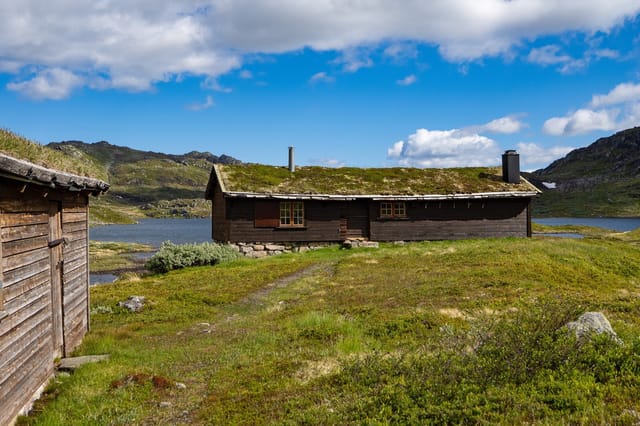
Welcome to Kuåsen 72!

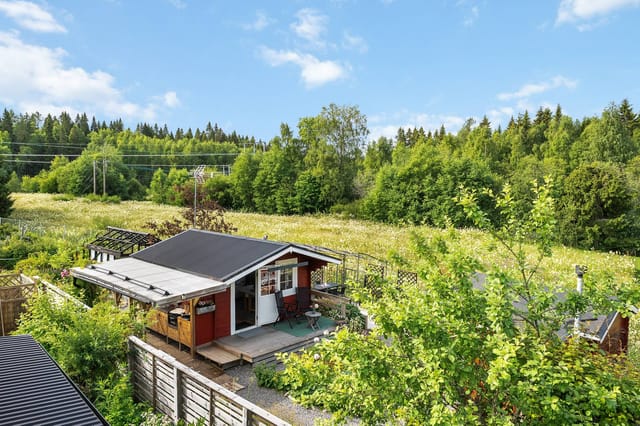
There's a specific kind of quiet you find on a Swedish summer morning in an allotment colony. Not silence exactly — there's the scrape of a trowel nearby, the low murmur of someone's radio two plots over, the smell of fresh coffee drifting from an open window as the midsummer light hits the dew on the grass. That's the kind of morning you get at Ärtvägen 38 in Aspvik kolonistugeområde, and it's the kind of morning people in Stockholm spend years working toward. This is a 30-square-meter cottage on a 300-square-meter plot in Upplands-Bro, about 35 kilometers northwest of Stockholm's city center. Built in 1984, it's compact, honest, and ready for someone with a clear vision and a willingness to roll up their sleeves. It's not a finished product — it's a starting point. And for the right buyer, that's exactly the appeal. The cottage itself is one open room with a sleeping loft tucked above part of the structure. It's the kind of layout that forces you to be creative and intentional — every square meter has to earn its place. Large windows pull in the light and keep you visually connected to the garden, which on a bright June afternoon turns the interior almost golden. The whole thing comes furnished with whatever's left inside at handover, so you're not starting from zero. What you're really buying is the land. Three hundred square meters in an established Swedish allotment colony is serious growing room. Previous owners cultivated flower beds, vegetable patches, and outdoor seating areas here — the bones of a proper kitchen garden are still visible if you know what to look for. Raspberry canes, old rose bushes, a patch that clearly once held tomatoes. The garden has been resting. It needs someone to wake it up again. A ... click here to read more
Exterior view of the cottage and garden

There's a particular kind of quiet you get at Vadforsen on a Tuesday evening in July. The Tavelån river catches the low sun at an angle that turns it copper, the apple trees are heavy with fruit that won't be ready for another six weeks, and the only sounds are bees working the raspberry canes and someone three plots over laughing at something. It's the kind of quiet that city people spend years trying to find and rarely do. Plot 69 in the Vadforsen koloniområde is that place. Tucked at one of the most privately situated positions within this established allotment community in Ersmark, just outside central Umeå, it looks out over open meadows and the Tavelån river — a view that changes every single day depending on the season, the light, and whether the local birds are feeling cooperative. The plot itself runs to approximately 300 square metres, and whoever has been tending it clearly loves what they do. Two separate cottages sit within the garden — the main one at around 25 square metres of combined building area, and a smaller secondary structure — giving you flexibility that a single cabin rarely offers. Have the kids or a couple of friends up from Stockholm for the weekend? There's room. Want a dedicated potting shed or a quiet reading space that isn't the main living area? That's already sorted. Electricity is connected, which matters enormously up here, where the season stretches from early April through to late October if you're willing to wear a jumper in the evenings. The outdoor kitchen deserves specific attention because it's genuinely well thought out — not just a counter bolted to a wall. There's a gas stove with oven, an induction hob, a gas grill, and a microwave, plus the kind of workspace you'd actual ... click here to read more
Exterior view of the main cottage and garden

Step outside on a September morning and the lake is completely still. Eltsjøen holds the treeline like a mirror, and the only sound is the soft knock of a rowboat against the shore — your shore. The coffee's on the stove inside, the terrace planks are still damp from last night's rain, and somewhere up the valley a woodpecker is working through a birch. This is what you bought. Not a property. A rhythm. Kjølsætervegen 35 sits on a generous 4,400-square-meter plot in Jordet, a quiet farming and forest community in Innlandet county that most international visitors never reach. They're all in Trysil town, 25 kilometers south, queuing for the gondola at Trysilfjellet. You'll be there too, some days. But you'll come back to this. The chalet itself is compact and honest — 62 square meters arranged with real thought for how people actually use a cabin. Walk in through the entrance hall and the space opens up into a combined kitchen and living area that's warm without being fussy. The fireplace is the anchor of the room. On a January night when the temperature outside drops past minus fifteen, you'll understand exactly why every decision in the layout seems to orient itself around that single hearth. The kitchen was fully redone in 2024 with new cabinetry and appliances; it's functional and clean, the kind of setup where you can prep a proper meal without feeling like you're working in a corridor. Two bedrooms offer quiet retreats at the end of the day. They're not large, but they don't need to be — the whole philosophy of a place like this is that you sleep well and get up early. The bathroom (upgraded in the same 2024 renovation) is modern and practical. Roof, terrace, structural beams, and drainage have all been replaced o ... click here to read more
Picture 1

Step outside on a Saturday morning and the air already smells like pine resin and cut grass. The Hüthum forest starts where the garden ends. There's no road noise — just wood pigeons, maybe the distant toll of a church bell from across the border, and the particular silence that only comes when you've put real distance between yourself and city life. This is Unter den Eichen 19, and once you've spent a weekend here, ordinary life feels a bit harder to go back to. Built in 2000 using the Hebelhaus aerated concrete method — a construction technique that German builders have trusted for decades for its thermal mass and acoustic performance — the house was put up without shortcuts. The walls are solid. The roof is solid. The whole structure has that quiet heft you only notice when you stop and realize you can't hear your neighbor's television, or the rain on the roof, or the wind that's apparently been gusting all afternoon. Underfloor heating runs throughout the ground floor, which means on a grey November evening the house is warm before you've even thought to turn anything up. That kind of low-effort comfort is hard to put a price on. At 225 square meters of living space, plus 13 square meters of internal storage and another 13 of external, the house simply doesn't run out of room. The living area is the kind of space architects draw and clients rarely get: a fully glazed façade facing the garden, French doors, a sliding panel, and the whole back wall just opens up in summer into the terrace. The light in here on a June afternoon is extraordinary — it moves across the room as the day progresses, the laurel hedges catching it differently at different hours. In winter, the same glass wall frames a garden that turns silver ... click here to read more
Front view of Unter den Eichen 19

Wake up in the sleeping loft on a July morning and the east-facing gable window does the work for you — soft Scandinavian light spilling over wooden floors before the rest of the house stirs. Down in the kitchen, the old double door is already thrown open to the garden, and the smell of apple blossom drifts in from trees that have been growing here longer than most people can remember. This is Komstad, a quiet hamlet in the Österlen countryside of southeast Skåne, and life here moves at a pace that most of Europe has forgotten how to do. The cottage dates to the 1870s and wears its age well. Someone has taken genuine care with it — not the kind of renovation that strips a place of everything interesting, but the kind that keeps the open-beamed ceiling in the living room and the original soul of the layout while quietly upgrading what matters. There's underfloor practicality in the fully tiled bathroom, a shower behind a clean glass wall, and a washing machine tucked in beside it. The kitchen has integrated appliances, a dishwasher, an island that becomes the natural gathering point when friends arrive, and a wood-burning stove that earns its keep from October through to March. The Bang & Olufsen sound system wired into the living room is the one small luxury that doesn't apologize for itself — good music through good speakers, while the fireplace crackles and rain patters against the southwest-facing deck outside. That deck deserves its own mention. Glass doors open directly from the renovated west gable onto a broad wooden terrace that catches the afternoon and evening sun until the last possible moment. A pergola draped in white climbing roses frames the view over open agricultural fields — flat, wide Skåne landscape ... click here to read more
Front view of the Skåne cottage

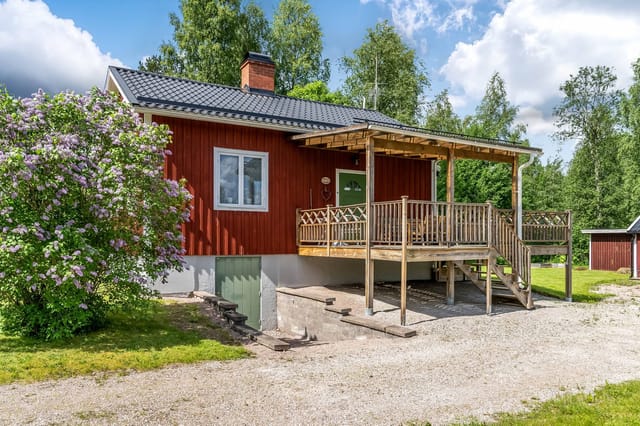
Close your eyes and picture this: it's a July morning in Värmland, the light already sharp and golden by seven, and you're standing barefoot on a timber deck with coffee in hand while the treeline holds its silence. No traffic. No sirens. Just the occasional wood pigeon and the smell of pine resin warming in the sun. That's Norum 417 on an ordinary Tuesday. On a good day, it's even better. This is a proper Swedish countryside home in Molkom, a small community in Karlstads kommun that most international buyers haven't discovered yet—which is exactly why it's worth paying attention to. Set on a 2,529 square meter plot, the 1967-built main house sits at 60 square meters and is joined by a separate guest house and a timber outbuilding, giving the property a genuine sense of purpose and space without tipping into the maintenance burden of something much larger. At €118,000, it's the kind of buy that makes financial sense before you've even started dreaming about the summers. Lake Gapern is walkable. Not "driveable and then a short walk"—actually walkable from the garden gate. In summer, Swedes take their swimming seriously, and Gapern delivers: clear water, pine-fringed shores, and the kind of afternoon light that makes every swim feel unhurried. Come back, rinse off, fire up the grill. That's the rhythm of a Molkom summer, and this property slots into it naturally. Inside, the open-plan kitchen and living room is where the house earns its keep. The kitchen has proper wooden cabinetry—the warm, unpretentious kind—with a window seat overlooking the garden that catches the afternoon light in a way that makes you want to sit there with a book and not move. The living room flows directly from it, large enough for a generous so ... click here to read more
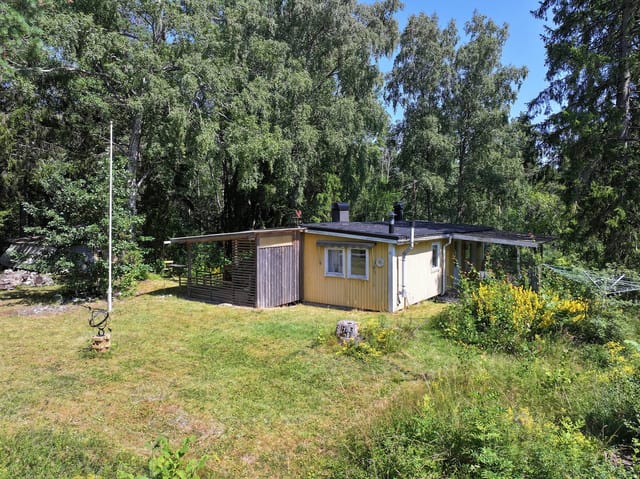
Front view of the country home

On a quiet morning in La Rochette, the kitchen in this old longère fills with the kind of light that makes you forget your coffee is getting cold. The windows frame open countryside. Nothing moves except a few birds over the field. By 9am you could be at the Tuesday market in La Rochefoucauld, picking up a rotisserie chicken and a wedge of Chabichou du Poitou from the farmer who's been there every week for twenty years. That's not a fantasy. That's just Tuesday. This five-bedroom stone farmhouse on Route du Marronnier sits on roughly 18,500 square metres of private Charente land — nearly two hectares of meadow, garden, and possibility. The main house runs to about 405 m² across two floors. There's a gîte with its own entrance on the upper level, a separate 40 m² rental chalet currently generating income, and a cluster of outbuildings that could become almost anything you want them to be. The property has been genuinely well restored — not a cosmetic flip, but a thoughtful renovation with real-world systems: heat pump, solar panels, double glazing, a compliant septic tank, and energy costs running around €40 a month. That last number tends to make people do a double-take. The ground floor of the main house is where daily life spreads out. The country kitchen clocks in at around 40 m² — wide enough to have a proper farmhouse table in the middle and still move freely between the stove and the sink. Off to one side, a 45 m² salon with a wood stove for the cooler months; Charente winters are mild but real, and there's something particularly satisfying about a log fire when the November fog settles low over the fields. A bedroom with a walk-in wardrobe, a bathroom, a shower room, a laundry room, and a 60 m² attached workshop ... click here to read more
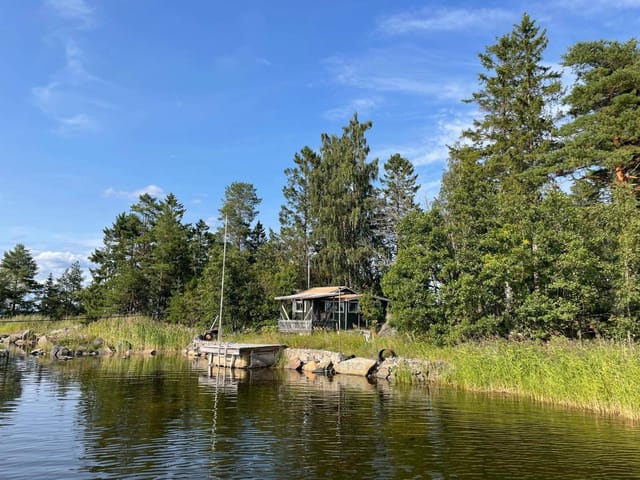
Photo 1 of Route du Marronnier 50

Early on a Saturday morning in Bergsjö, the kitchen fills with pale Nordic light before the rest of the house wakes up. The geothermal heat hums quietly underfoot. Outside, frost still clings to the garden edges, and the spruce trees beyond the fence stand perfectly still. This is what 172 square metres of Swedish countryside living actually feels like — unhurried, real, and quietly extraordinary. Vade 308 is a proper old Swedish villa, built in 1909 and sitting on a plot of 2,469 square metres in Nordanstigs kommun, roughly 260 kilometres north of Stockholm along the High Coast corridor. The price — 60,700 EUR — is almost startlingly low for what you get: a large three-to-four bedroom home in good condition, an A-rated energy label, geothermal heating already installed, and enough land to grow food, host summer gatherings, or simply watch the seasons change from a garden chair. For international buyers looking at second homes in Scandinavia, it's the kind of listing that stops the scroll. The house itself rewards close attention. It's not a renovation project in the exhausting sense — the structure is solid, the heating modern, and the main living area is move-in ready. What's genuinely exciting is the upper floor, where an unfinished section invites you to put your own mark on the space. A guest suite with dormer windows. A reading room lined with bookshelves. A home studio with north-facing light. The bones are there; the story of what it becomes is yours to write. Five rooms spread across the ground and upper floors give the layout real breathing space. Three confirmed bedrooms mean you can sleep a family comfortably and still have a room left over for whoever shows up with a sleeping bag in July. The kitchen sits ... click here to read more
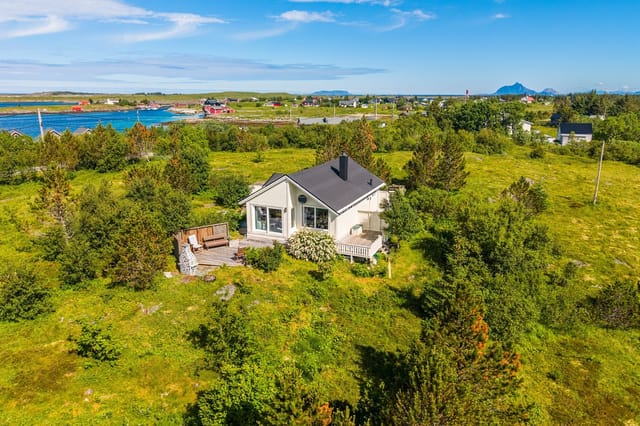
Front view of Vade 308 villa

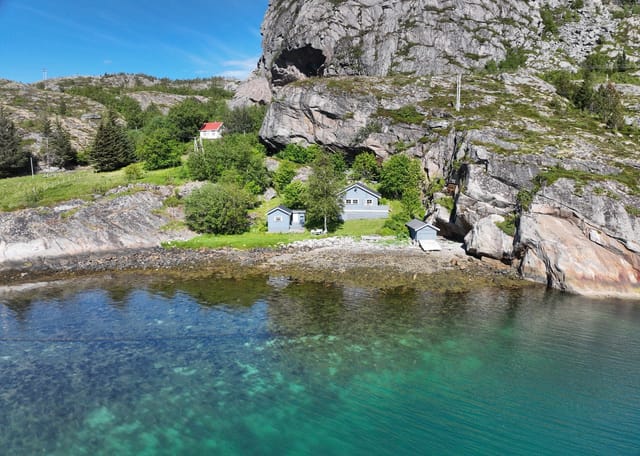
On a calm morning, you step out onto 86 square meters of sun-drenched terrace, coffee in hand, and watch the Hurtigruten coastal express glide silently across the horizon. The fjord reflects whatever the sky is doing—pink at sunrise, steel-grey when a front is rolling in, impossibly blue on those long Norwegian summer afternoons that seem to last forever. This is Steinsdalen on the Trøndelag coast, and this three-bedroom chalet at Hopaveien 625 sits right at the edge of all of it. Norway's coast doesn't ease you in gently. It hits you with the smell of saltwater and pine, the sound of gulls riding thermals above the skerry, the particular silence that settles over a coastal cabin at night when the only thing moving is the tide. This property, set on a freehold plot of 910 square meters, captures all of that without demanding you sacrifice comfort to get it. Built in 1990 and well maintained, the 80-square-meter chalet is compact in the way that works—every square meter earning its keep, nothing wasted. Inside, the living room opens generously toward the sea. The windows aren't just decorative here; they pull the water into the room, changing the mood of the space with every weather shift. When the wind picks up and the swells roll in, you can watch the whole drama from the sofa. The open connection between the living room and kitchen keeps the social energy flowing—this is a place where people naturally end up crowded around the bench, someone chopping, someone telling a story, the smell of freshly caught pollack in the pan. The layout just makes sense. Three bedrooms sleep up to six people comfortably. The main bedroom runs to nine square meters, the other two to 5.5 and 6.5 respectively—honest, functional spaces des ... click here to read more
Welcome to Hopavegen 625, presented by EiendomsMegler 1 v/ Sigve Haugdahl. Photo: ELW media (Espen Wåde)

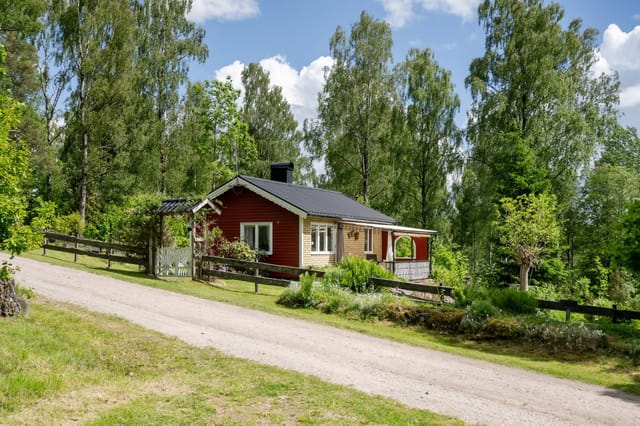
Stand in the kitchen on a Saturday morning and you'll understand immediately why people fall for Emmerich am Rhein. The smell of fresh bread drifts up from the Bäckerei on Reeser Straße, the Nolte kitchen catches the early light through the garden-facing windows, and somewhere a church bell counts out the hour. It's unhurried. Real. This is a town that hasn't tried to reinvent itself for tourists, and that's precisely what makes it so quietly compelling as a base for a second home in Germany's Lower Rhine region. The house on Landdrost-Blaauboer-Straße sits at the end of a calm residential street flanked by mature trees. Built in 2008 and substantially updated through 2024, the property covers 119 square metres across two full living levels, with a 391 square metre plot that gives the garden genuine breathing room. The street itself is the kind of place where neighbours wave from driveways and children cycle unsupervised. If you've been chasing that particular version of European life — the one where daily existence feels both spacious and rooted — this neighbourhood delivers it. The garden is where this property really earns its place as a vacation home or second residence. Fully enclosed, newly landscaped, and designed to be low-maintenance, it wraps around a covered terrace that you'll use in April just as readily as August. A hot tub with glass filter, UV lamp, and its own dedicated canopy sits at the back — on a clear autumn evening with a glass of Rhineland Riesling, it's an entirely different kind of evening than you'd have in a city apartment. Exterior lighting circuits, multiple power points, and a groundwater irrigation pump mean the garden keeps itself looking sharp without demanding weekends of your time. ... click here to read more
Front view of Landdrost-Blaauboer-Straße 21

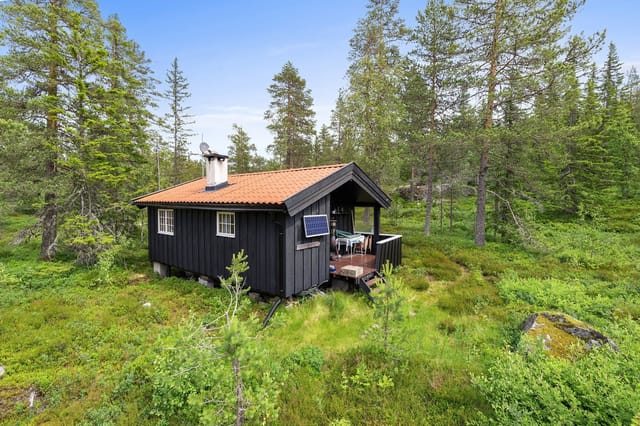
Picture this: it's a Saturday morning in early March, and you step outside the cabin door into a silence so complete you can hear your own breath. The spruce forest is loaded with snow, the Birkebeiner ski trail runs literally past your front yard, and the only decision on the agenda is whether to ski north toward Skramstadsetra first, or south. That's what ownership here actually feels like. Sitting at 600 meters above sea level along Rostadsæterveien, this traditional Norwegian chalet sits on a 1,183-square-meter freehold plot in the Rena highlands, just 11 kilometers west of Rena town and about two hours north of Oslo. It's a proper cabin — unpretentious, functional, genuinely off-grid in all the right ways — and it occupies one of the most coveted positions in Innlandet county for outdoor enthusiasts who know the region. The Birkebeinerrennet, Norway's legendary cross-country ski race that's been run since 1932, follows the trail network directly outside. You don't have to drive to a trailhead. You clip in and go. In summer, that same trail becomes one of the finest mountain bike corridors in eastern Norway, and in autumn it turns into a hiking route through birch and pine that shifts color like something lit from underneath. Inside, 70 square meters of interior space is laid out the way Norwegian cabin culture has always intended: a living room anchored by a wood-burning fireplace that earns its keep from October through April, a kitchenette with a gas cooktop and refrigerator, two bedrooms, an alcove with a washbasin, and a composting toilet room that handles the off-grid practicalities with total dignity. Eight sleeping places across the bedrooms and alcove means this works comfortably for a family or a group o ... click here to read more
Welcome to Vangen

Seven in the morning and the Romsdalsfjord is completely flat. You're sitting on the lower deck of the veranda with a mug of coffee, watching the light do something impossible to the water — turning it from graphite to copper to deep, cold blue within the space of twenty minutes. The only sound is a distant outboard motor and the occasional creak of the old pine boards underfoot. This is what mornings at Lauvskogvegen 5 actually feel like. The chalet sits right at the fjord's edge in the Hallset cabin area outside Gjemnes — a stretch of Møre og Romsdal coastline that most international visitors never find because they're too busy driving the Atlantic Road further south. Their loss. The south-facing orientation here means the sun tracks across the property from early morning until it drops behind Trollheimen's peaks in the evening. No neighbour blocks the view. No building interrupts the sightline to the water. Just 1,900 square metres of lawn, granite outcrops, mature birch trees, and direct access to the rocky shoreline below. The main cabin dates to 1968, extended westward in 1980, and it wears its age honestly rather than apologetically. Step inside and you're met with panelled pine walls, lacquered floors that have taken decades to reach this particular shade of honey, and a wood-burning stove in the living room that becomes the undisputed centre of the universe from October through April. The open-plan kitchen and living area is a smart layout — the kind that emerged from practical Norwegian thinking long before open-plan became an architectural trend. Whoever's cooking doesn't miss the conversation, and whoever's talking doesn't have to shout. Large windows pull the fjord right into the room. Four bedrooms handl ... click here to read more
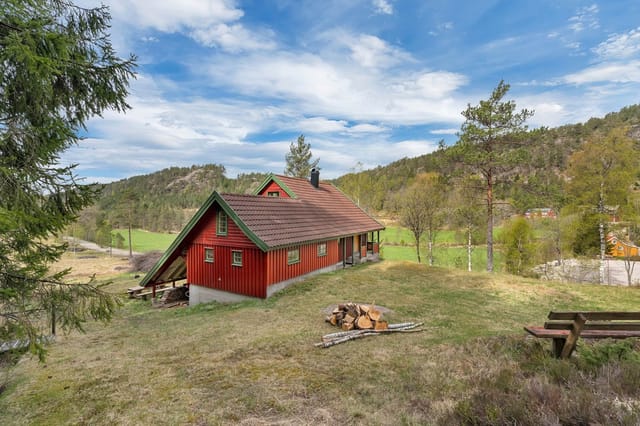
Welcome to Lauvskogvegen 5, presented by Aleksander Fagerlund at EiendomsMegler 1. Photo by Vilde Dahl at EFKT.