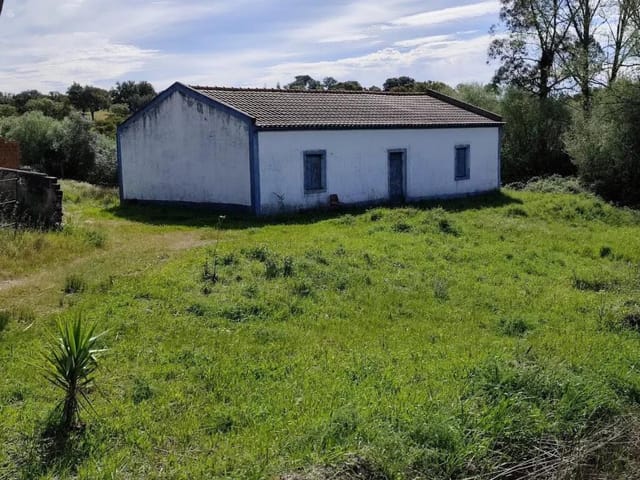
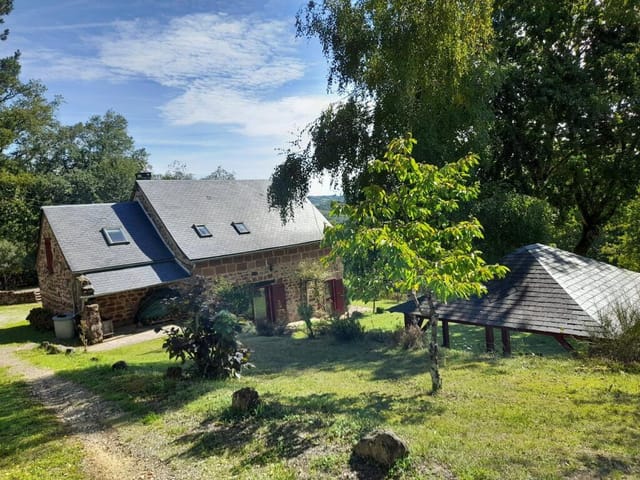
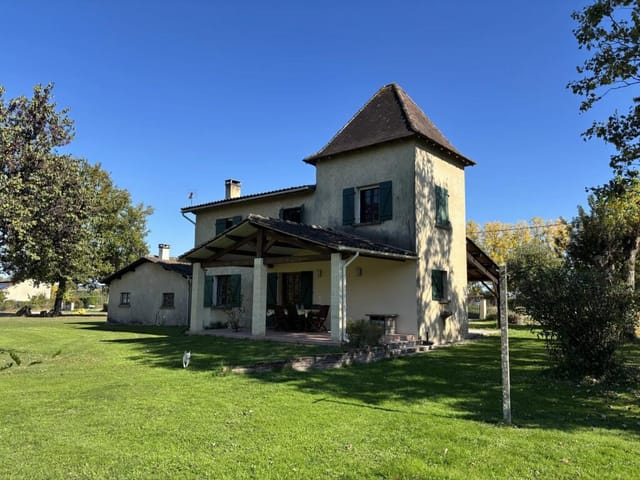
Houses For Sale In Europe (page 3)

Houses for sale in europe - homestra offers the largest amount of european real estate with over 200,000+ properties, find any type of property within your budget from villas to country homes. buy or rent your perfect home in europe. (page 3)

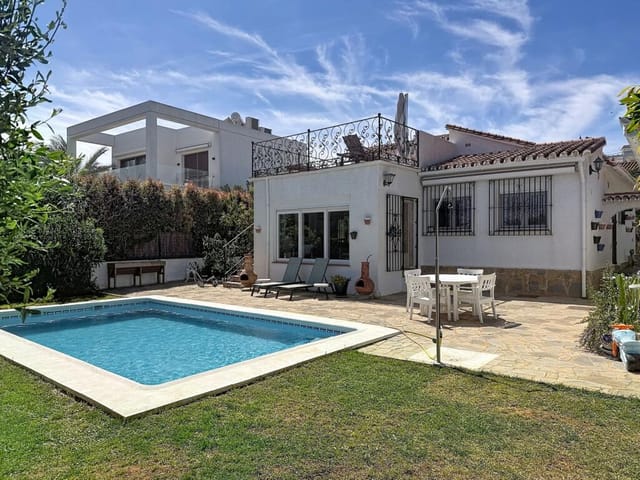
Pour yourself a glass of wine you pressed yourself. That's not a fantasy—it's a Tuesday afternoon at this six-bedroom working farmhouse in Cehegín, a quietly extraordinary corner of Murcia where the Sierra de la Puerta rolls into terraced hillsides still farmed the old way. The 300 grapevines climbing the property's southern slope produce around 500 liters of wine per year. The 130 olive trees—some of them older than anyone can reliably remember—yield roughly 300 liters of oil. This is not a lifestyle prop. It's a functioning agricultural operation wrapped inside a substantial family home, priced at €249,900. Cehegín doesn't get the tourist traffic of Cartagena or Murcia city, and that's precisely the point. The old town, a ten-minute drive away, is packed with Baroque churches and a medieval castle that most of Spain doesn't even know exists. Saturday mornings at the weekly market on Calle Mayor mean conversations with the same vendors who've been selling tomatoes, cheese, and cured meats there for decades. The Fiesta de la Vendimia in autumn—the grape harvest celebration—turns the whole region into something between a folk festival and a communal kitchen. You'll want to be here for it. The farmhouse itself sits on a 10,000-square-meter plot that balances urban and rural land classifications, a practical distinction that opens up possibilities for tourism licensing, agricultural subsidies, or simply keeping your options open. Step through the main entrance and the interior patio immediately signals the building's age and logic: everything organized around a central breathing space, the kind of layout that keeps the interior cool through July and August without air conditioning doing the heavy lifting. The ground floor ... click here to read more

Picture 1

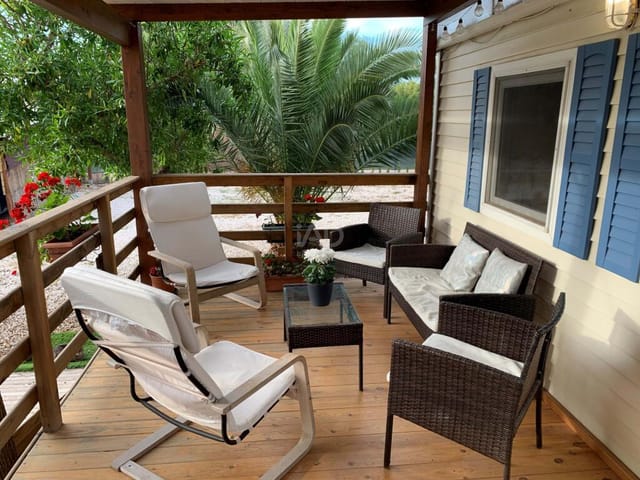
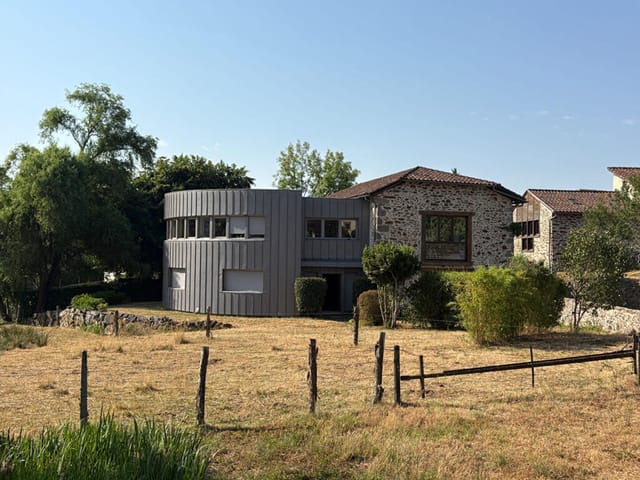
The alarm doesn't wake you here. What does it is the light — that specific, golden Mediterranean morning light that pours through the terrace at an angle you've only ever seen in paintings. You step outside with a coffee, barefoot on warm stone, and the grove of fruit trees is already humming with bees. Somewhere behind the carport, a neighbour's cockerel makes his announcement. This is daily life on a rustic finca just outside Elche, and it is nothing like your daily life back home. At 750 square metres, this plot sits in a peaceful pocket of Valencia's Alicante province — close enough to civilization to be genuinely convenient, far enough from it that the silence is real. Ten minutes by car and you're parking at the beaches of the Costa Blanca. Guardamar del Segura's long sandy stretch, or the buzzing shoreline at Santa Pola — both within easy reach. But you'll find yourself in no rush to leave. That tends to happen here. The finca is centred around a fully equipped mobile home that lives much bigger than you'd expect. Three bedrooms, a bathroom, a proper kitchen — not a camping kitchen, a real one with everything you need to cook a paella from scratch using tomatoes you grew yourself. The living and dining area flows out to a large terrace where the outdoor table hosts long, unhurried meals under a sky that, in summer, stays light until well past nine. Truma heating keeps winters entirely manageable, and the air conditioning handles the peak July heat without complaint. This is a set-up designed for four seasons, not just a fortnight in August. The solar panel installation is one of the property's most compelling features, practically speaking. Off-grid energy capability, irrigation water on site, and a lifestyle t ... click here to read more

Picture 1

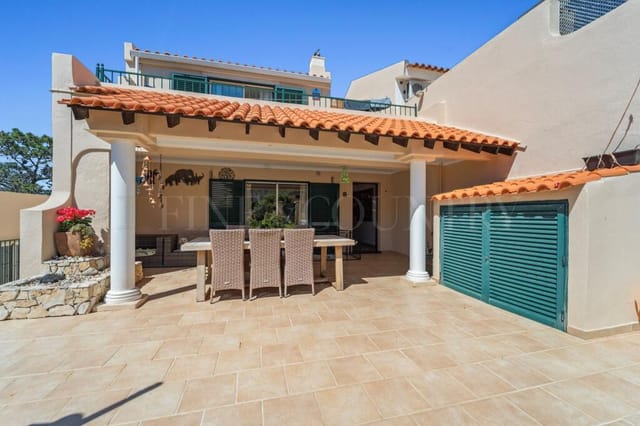
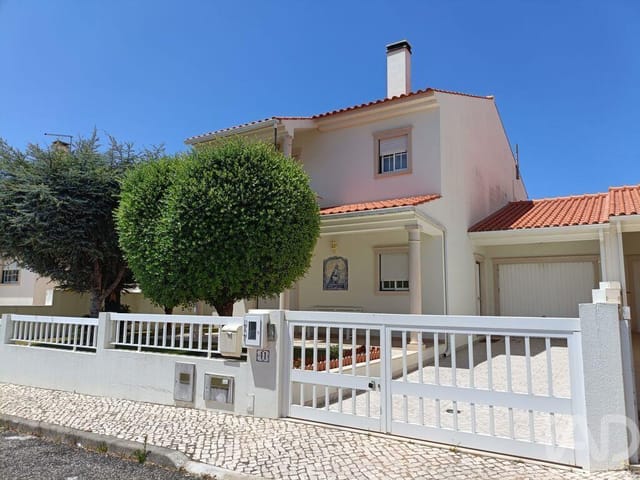
Picture this: it's a Tuesday morning in late October, the summer crowds are gone, and you're standing on your first-floor terrace with a coffee, looking out over the rolling Algarvian countryside while the Atlantic air drifts in off the coast. The beach is a ten-minute walk away. The nearest restaurant does a bacalhau à brás that would ruin you for any other cod dish you've ever tried. This is Sesmarias, Galé — and this three-bedroom villa is the kind of find that doesn't sit on the market for long. Sesmarias sits in a quiet pocket between Galé and Albufeira, close enough to the action but far enough to feel like it belongs to those who actually know the Algarve rather than just visit it. The road the villa sits on is a dead-end cul-de-sac — no through traffic, no noise beyond the occasional birdsong and the distant sound of waves on a still day. Families tend to love it here for exactly that reason. So do buyers who want a proper base on the coast rather than a glorified hotel room. The villa covers 112 square metres across three floors, and the layout is one of its strongest cards. Each level has its own logic. The ground floor, which has a separate entrance directly from the street, functions independently — there's an open-plan living and dining room with a kitchen, a bedroom with built-in wardrobes, a shower room, and a covered outdoor entertainment area at the back where the afternoon sun lands perfectly. You could put guests there without anyone losing privacy. You could rent it out during the summer while occupying the upper floors yourself. Or you could use the whole thing as one cohesive family home. The flexibility is genuine, not cosmetic. Step up to the first floor — the main entrance level — and the tone ... click here to read more

Picture 1

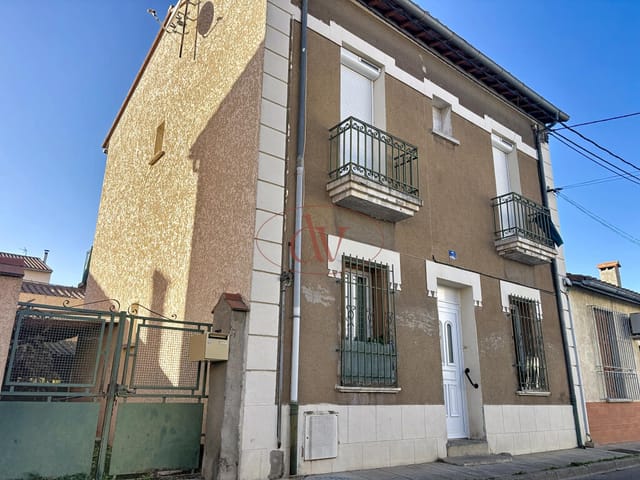
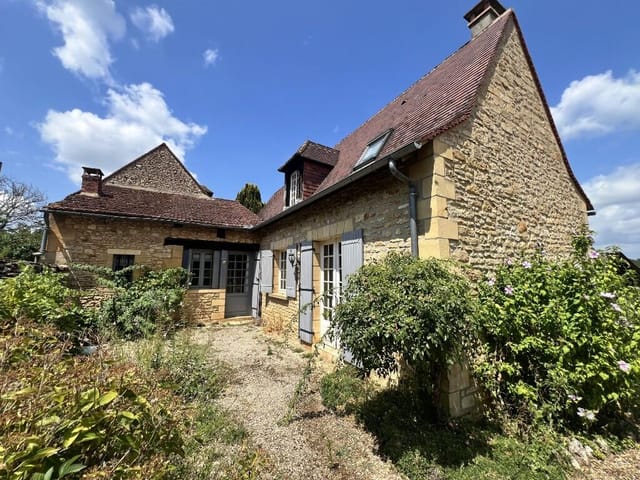
Pull up to the rue on a warm September morning and you'll already understand why people keep coming back to Perpignan. The air carries a mix of grilled sardines from a nearby brasserie, a faint salt edge rolling in from the Mediterranean forty kilometres east, and the dry warmth that the Roussillon plain holds long after the rest of France has surrendered to autumn. This is a city that doesn't perform for tourists — it simply lives, loudly and confidently, and this four-bedroom detached house on a quiet street close to all amenities puts you right inside that daily rhythm. The house sits on three free-standing sides with no overlooking neighbours, which in a Catalan city packed with character and density is genuinely hard to come by. At 110 square metres across two levels, the layout currently runs as two separate dwellings — a feature the original owners used pragmatically, and one that hands the next owner serious options. Keep both units intact and you have a ready-made rental setup in a city with strong year-round occupancy, driven by students at the Université de Perpignan Via Domitia, medical tourism at the Centre Hospitalier, and the steady stream of visitors drawn to the Côte Vermeille from April through October. Knock through and reconfigure, and you get a generous four-bedroom family home with space to breathe in ways that most city-centre properties at this price point simply don't allow. Yes, this is a renovation project. Let's be straight about that. Floors, kitchen, bathrooms, heating, insulation — all of it needs attention. But that's also exactly the reason the price sits at €142,000 for a freestanding house in a southern French city where the food is extraordinary, the sun shows up reliably about 300 d ... click here to read more

Picture 1

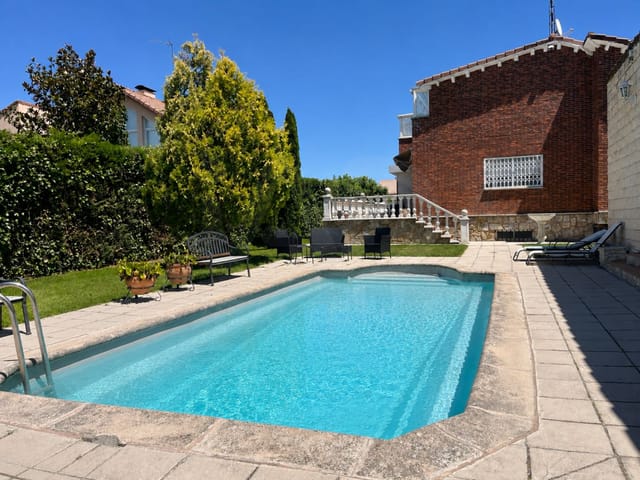
Saturday morning. You're standing at the kitchen window with a coffee, watching the light move across the Castilian meseta. The garden is already warm, the pool still flat and glassy, and the only sound is a distant church bell rolling down from the old quarter of Burgos, thirty minutes up the road. This is a morning that could belong to you, repeated across every season, in a house that actually has room to breathe. This six-bedroom property in Castrillo del Val sits inside the Los Tomillares residential development, positioned toward the quieter rear section of the estate, well away from the main road. The plot runs to around 1,100 square metres, and the house itself covers approximately 440 square metres across the main residence plus a fully independent pavilion — a combination that's genuinely hard to track down in this corner of Burgos province, at any price. The layout has been thought through the way family houses should be. Six bedrooms give you real flexibility: host a full multigenerational gathering, keep two rooms permanently ready for children or regular guests, and still have a dedicated space for working remotely or reading in quiet. Three complete bathrooms mean mornings run smoothly even when the whole house is full. The large main living room opens through to two enclosed gallery spaces — those classic Spanish galerías that trap afternoon light and give you somewhere to sit year-round regardless of the weather. There's also a formal terrace, a dressing room, and a kitchen that genuinely functions as the anchor of the home. It has direct access to the terrace, which flows naturally down into the garden and pool area. When you're cooking in summer, the line between inside and outside more or less disap ... click here to read more

Picture 1

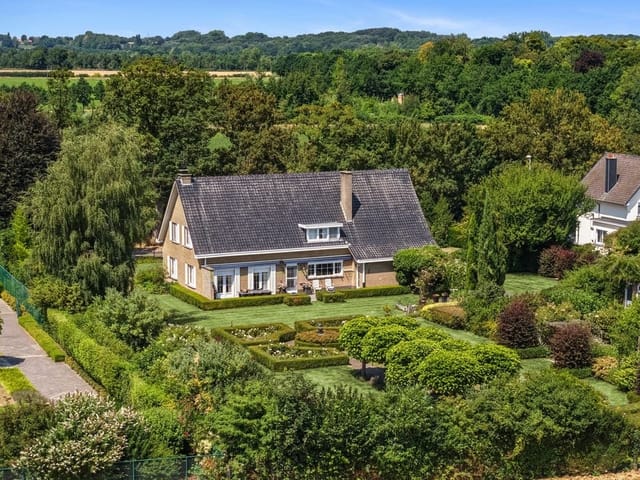
On a still Sunday morning, the only sound you'll hear from the south-facing terrace of Baversstraat 261 is birdsong and the occasional distant church bell drifting in from Tongeren's medieval center, about ten minutes down the road. The garden stretches out ahead of you — nearly 3,700 square meters of it — with no rooftops visible on the horizon, no developer's crane in the distance, just open Flemish countryside rolling away under a wide Belgian sky. That view isn't going anywhere. The land beyond the plot is protected, meaning what you're looking at now is what you'll be looking at twenty years from now. This is a proper detached villa. Not a semi, not a townhouse with a postage-stamp yard, but a 303-square-meter freestanding home on a genuinely large private plot in one of Belgium's most historically compelling corners. Built in 1969 and kept in good condition throughout the decades, the house has the kind of solid bones you don't find in modern builds — wide rooms, real proportions, a layout designed when space wasn't rationed. Walk inside and the living room immediately makes its case. At nearly 49 square meters, it's the sort of room where a large family doesn't feel crowded, where a crowd of weekend guests can spread out naturally. Light floods in through generous windows that face the garden, so even on a grey Limburg afternoon — and yes, Belgium has those — the interior stays bright and connected to the outside. The kitchen, in warm light oak, runs to over 25 square meters. That's a working kitchen, not a display kitchen. You can actually cook a Sunday stoofvlees in there, with room to spare while someone else uncorks the local Haspengouw wine at the island. The adjacent dining room at 23 square meters keeps e ... click here to read more

Front view of Baversstraat 261, 3700 Tongeren

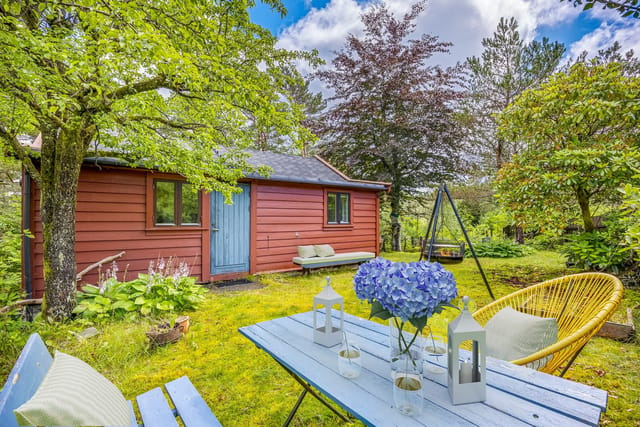
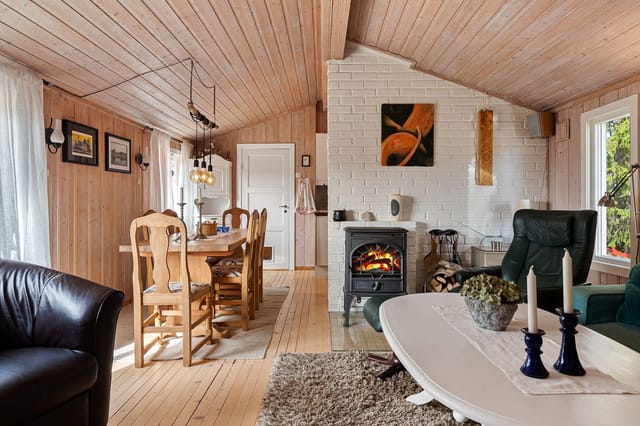
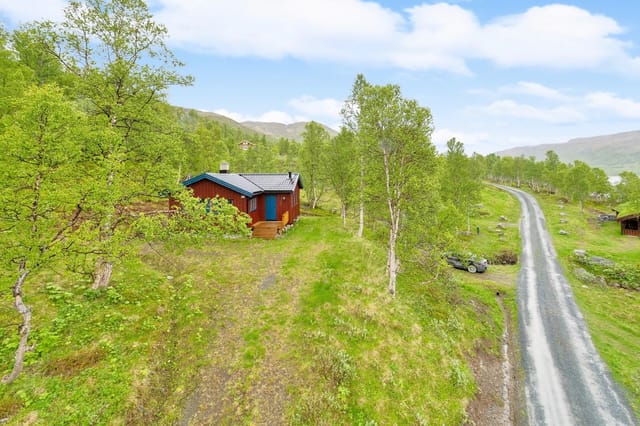
The wood stove is already crackling when you step inside, the smell of pine drifting through an open window, and somewhere through the trees you can just catch the shimmer of the Hanevik shoreline. That's the kind of Saturday morning this cabin at Hanevikvegen 115 was built for. Sitting on a gentle hill above Ask in Askøy municipality — a 30-minute drive west of Bergen across the Askøy Bridge — this 42-square-metre retreat is the kind of place that doesn't announce itself. You park, walk a short path through the forest, and suddenly you're standing on a sun-drenched plot with no neighbors in your sightline and birch canopy overhead. The elevated position is key. The sun tracks across the site from morning through to the long Norwegian summer evenings, and when it finally goes down, the glow over the Hjeltefjord is genuinely something you'll want to sit and watch with a coffee going cold in your hand. The cabin itself is compact but well-considered. Originally constructed in 1946 and laid out as four smaller rooms, the current owner opened things up into a single flowing living space with direct access to the outdoor terrace — the right call. Large windows pull that forest light inside, and the stainless steel kitchen bench catches it in a way that makes the whole interior feel bigger than the footprint suggests. The wood-burning stove anchors the room, not just practically but atmospherically. On a grey October afternoon when the rain is coming in off the Vestland coast, it earns its place. The separate toilet room runs a composting biological system — standard and practical for Norwegian leisure properties of this type — and there's a dedicated storage room for boots, fishing gear, kayak paddles, and whatever else ac ... click here to read more

ASK Eiendomsmegling presents Hanevikvegen 115

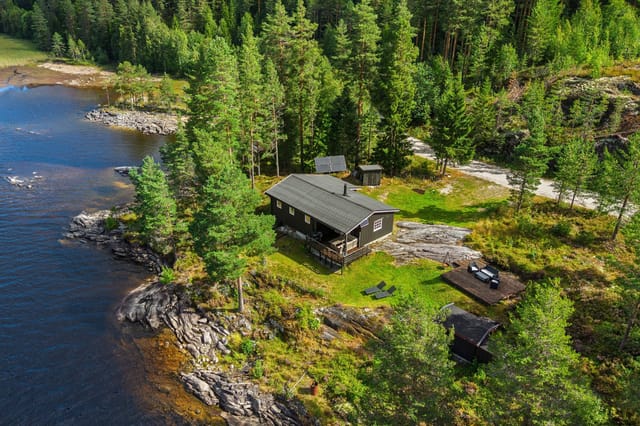
The first thing you notice on a summer morning at Næssvegen 25 is the light. It comes early this far inland in Norway — pale gold sliding across Einafjorden just after four, catching the birch leaves and bouncing off the water in a way that makes you feel like you've stumbled into a painting nobody else knows about. You pour coffee, unlatch the terrace door, and that's it. The day belongs to you. This single-level holiday cabin at Blilisanden in Eina is the kind of place that doesn't announce itself. It sits quietly on its own 1,216-square-meter plot on Næssvegen, surrounded by mature trees, with a well-kept lawn that runs down toward the footpaths connecting to the fjord. No shared walls, no parade of neighbors, no noise except birdsong and the occasional lap of water in the distance. For anyone hunting a genuine Norwegian retreat — a real second home in Europe that trades pretension for peace — this is a rare find priced at €175,000. Built in 1967 and extended since, the cabin has been kept in good condition throughout. It's not a renovation project. It's a place you can arrive at on a Friday evening, drop your bags, and immediately feel at home. The single-level layout — 42 square meters of internal living space — keeps everything within easy reach and makes it genuinely accessible for guests of any age. A welcoming vestibule draws you into a bright living room anchored by a fireplace. On October evenings when the temperature drops and the forest outside turns amber, that fireplace earns its keep. The kitchen was fitted in 2008 with IKEA cabinetry — practical, clean, easy to maintain. There's an integrated dishwasher, cabinet storage that doesn't make you play Tetris with your groceries, and an open connection to t ... click here to read more

Nordvik Eiendomsmegling v/ Vegard Dotseth presents Næssvegen 25. Photo: Torben Olav Wirkestad

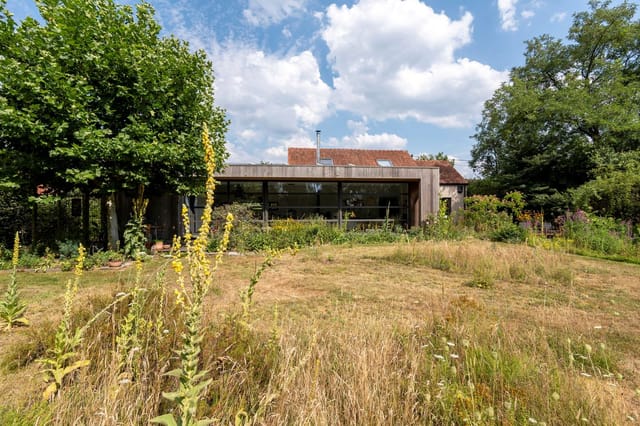
On a still Sunday morning at Weidestraat 11, the loudest thing you'll hear is a blackbird working through the apple tree at the far end of the garden. No traffic, no neighbors encroaching—just 1,730 square meters of deliberately cultivated calm, and the faint hum of solar panels doing their quiet work above your head. This is what drew the current owners to Balen. And it's what will draw you in too. Balen sits in the Kempen region of Antwerp province, a part of Belgium that most international buyers overlook in favor of the coast or the Ardennes. That's their loss. The Kempen is pine forests and heathland and mirror-flat cycling routes. It's local markets selling Mechelse cuckoo chickens and artisan cheeses. It's the Keiheuvel nature reserve—literally a five-minute walk from the front door—where you can disappear into birch-lined trails that feel a world away from Antwerp's ring road, which is only about 55 kilometers south. Brussels Airport is around 70 kilometers, making this entirely viable as a European second home base you can actually reach without a half-day of travel. The house itself was originally built in 1923, but comparing it to a typical Belgian interwar home would be misleading. An architect worked through a renovation that stripped away the dated and kept only what was honest about the original structure—the proportions, the solidity, the way the building sits on its plot. What replaced the rest is quietly contemporary: floor-to-ceiling glazing that runs the entire length of the living area, roof overhangs with a generous horizontal reach that shade the southwest terrace in summer and frame the garden like a living painting all year round, exposed woodwork that doesn't pretend to be anything other than ... click here to read more

Photo 1 of Weidestraat 11

Step outside at seven in the morning and the air already smells of warm pine resin and Atlantic salt. The breeze comes in low and steady off the Strait of Gibraltar—Tarifa's famous levante—rustling through the trees on your 2,200-square-metre plot while the rest of La Zarzuela is still quiet. Four kilometres away, the wide white sand of Zahara de los Atunes is just waking up. You could be there before the first beach bars open their shutters. This is a property that doesn't fit neatly into one category, and that's exactly what makes it interesting. A seven-bedroom, eight-bathroom rural estate on Spain's Costa de la Luz, sitting on a generous private plot between rolling Andalusian countryside and one of the most celebrated stretches of coastline in southern Europe. Whether you use it as a large family base, a high-yield holiday rental operation, or some combination of the two, the infrastructure here is already set up to support all of it—including an active tourist licence that means you can take your first booking the week you complete the purchase. Built in 1980 with the kind of solid construction that was standard in rural Cádiz at the time, the property covers 269 square metres of built space across a main house and two independent apartments. Seven bedrooms, each with fitted wardrobes. Eight full bathrooms. South and east orientations that flood the interiors with light from morning through the early afternoon. The fireplace in the main living area earns its keep on January nights when the levante drops and the temperature dips—because yes, even in Tarifa, winter evenings have a chill that makes a wood fire feel like a very good idea. Outside, the terraces and covered porches are the real social architecture of ... click here to read more

Picture 1

Stand in the 68-square-metre living room on a Saturday morning and the view stops you cold. Down through the old valley, Argenteau Castle sits in the mist like something out of a Romantic painting, and the silence is so complete you can hear the wood stove tick. That's not hyperbole — this is genuinely what mornings feel like at this 1860 mansion on the edge of Domaine de la Julienne, one of the most quietly extraordinary corners of the Belgian province of Liège. The house started life as a girls' boarding school, commissioned by Louise Mercy d'Argenteau, widow of the last Count of the Argenteau line. She was passionate about classical music, and the estate became a gathering place for serious composers. Around 1887, César Cui — one of the Russian Five — wrote his piano piece "À Argenteau" here, at this address. That's the kind of history you can't manufacture. You feel it in the ceiling heights, the vaulted cellars, the marble fireplace surrounds, the way the afternoon light falls across original plank floors that have been walked on for 165 years. Argenteau itself sits within the commune of Visé, right at the point where Belgium, the Netherlands, and Germany draw close. Liège is fifteen minutes by car — close enough for a Wednesday evening at the Opéra Royal de Wallonie, far enough that none of the city noise reaches you up here. Maastricht is the same distance in the opposite direction, and that city punches well above its size: the Vrijthof square on a summer evening, the Boekhandel Selexyz bookshop inside a 13th-century Dominican church, the Saturday market along the Maas with Limburg flan and aged Gouda. You get to choose your day — total forest quiet or European city energy — and neither one requires a motorway ... click here to read more

Photo 1 of Address on request, Wezet

Picture a Saturday morning in late September. You pull open the roller shutters and the light that floods the living room is that particular gold you only get this far south — thick, warm, almost edible. Outside, the vines on the Agly plain are turning amber. There's a market in Rivesaltes, twenty minutes on foot, where someone is grilling merguez next to a stall piled with Muscat grapes and local honey. This is not a fantasy. This is a regular weekend when you own this 233 m² villa on a quiet residential street in one of the most quietly compelling corners of the French Midi. Rivesaltes sits in the Pyrénées-Orientales department, tucked between Perpignan and the coast, flanked by vineyards that have been producing wine since the Romans passed through. The town's name is practically synonymous with the famous Muscat de Rivesaltes and the rich Rivesaltes Ambré, and the Cave de Rivesaltes cooperative — one of the largest in the region — welcomes visitors year-round for tastings that won't cost you a fortune. This is everyday life here, not a tourist attraction you visit once. The villa itself is a proper single-storey family home with a footprint that feels rare at this price point in southern France. At 233 m² of living space spread across one generous floor — plus a 16 m² upstairs office — the layout is genuinely practical rather than just spacious on paper. The main living room stretches to 38 m², and with the open-plan kitchen flowing into it, the whole social heart of the house breathes. Five bedrooms, two full bathrooms plus en-suites, a separate laundry room — this is a home that can absorb a large family or a revolving cast of guests without anyone feeling crowded. The 22 m² garage keeps a car out of the Roussill ... click here to read more

Picture 1

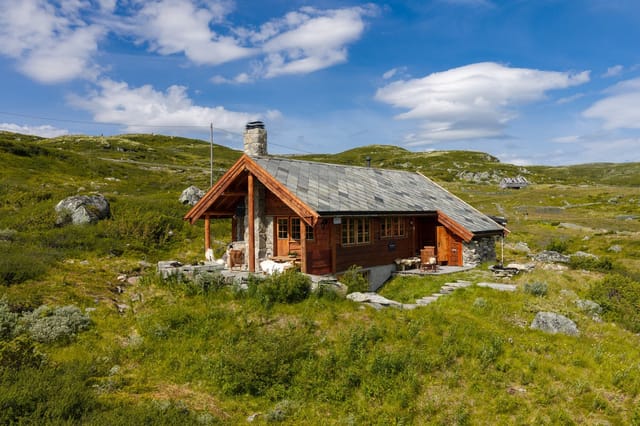
Step outside on a clear June morning at Evjedalen 25 and the air hits you differently — cold salt from the Vestfjorden mixing with pine resin from the hills behind, the kind of air that makes city lungs feel like they've been rinsed clean. Seabirds cut across the sky. The terrace planks are still damp from last night's drizzle. That's the daily reality of owning a home in the Lofoten archipelago's quieter southern pocket, and it's something photographs simply cannot replicate. Built in 1884, this four-bedroom holiday home in Bøstad carries more than a century of Norwegian coastal life in its bones. The wide timber panels, the low-slung exposed roof beams, the lacquered staircase worn smooth at the edges — none of it feels like a renovation project gone retro. It feels earned. A metal roof went on in 2010, the bathroom was rebuilt in the 2000 extension with underfloor heating, and the double garage was added in 2013 with electric doors and a solid concrete floor. So you get genuine historical character without the dread of a crumbling foundation or a winter roofing emergency. The 75-square-metre interior is spread across two floors and organized with the practical logic that Norwegian cabin architecture has always favoured. Downstairs, the living room is the social engine of the house. Wood-paneled walls, a bioethanol fireplace, and windows generous enough to frame the hillside across the valley — on long summer evenings when the sun barely dips below the horizon, this room fills with amber light until nearly midnight. The kitchen next door has enough space beside the window for a proper dinner table, which matters here because meals at Evjedalen 25 tend to stretch long. People don't rush. Upstairs, the loft splits int ... click here to read more

Welcome to Evjedalen 25 - Presented by EiendomsMegler 1: Photo: EFKT

Step onto the south-facing terrace on a clear October morning, coffee in hand, and the Hessdalen valley just opens up in front of you. The mountains go gold at the ridgelines, the air carries that particular cold-clean smell of Norwegian autumn, and the only sound is wind moving through birch trees somewhere below. This is what 318,999 gets you: a real cabin, a real valley, and mornings that genuinely stop you mid-thought. Borrvegen 134 sits in Hessdalen, one of the most quietly compelling pockets of Trøndelag county — a valley famous not just for its raw mountain landscape but for the Hessdalen lights, an unexplained atmospheric phenomenon that has drawn scientists and curious visitors from across the world since the 1980s. On winter nights, standing in the snow outside this cabin, you have a legitimate chance of watching something unexplained move across the sky. That's not a marketing line. It's just what life here occasionally looks like. The chalet itself was built in 2001 and sits in good condition — maintained with obvious care, move-in ready, and practical in the way Norwegian mountain cabins tend to be when they've been loved rather than neglected. The interior runs to 75 square metres of living space, which might sound modest until you're actually inside and realise how well the layout breathes. The main floor has a proper entrance hall — crucial in a Norwegian winter, where you need somewhere to strip off wet layers and snow boots before entering the warmth — leading into a living room anchored by a wood-burning stove. On a February evening, that stove isn't decorative. It's the centre of everything. The open kitchen and dining area connects directly to the 62-square-metre terrace, which faces south and wes ... click here to read more

Welcome to Borrvegen 134 in Hessdalen.

Sunday morning in Burgos: the bells of the Cathedral of Santa María drift through the kitchen window while you're grinding coffee, the smell of woodsmoke still faint from last night's fireplace in the basement. Outside, frost clings to the vegetable patch, but the garden trees are catching the first winter sun. This is the kind of morning that turns a house into something you actually want to come back to. Spread across three floors and 330 square metres, this six-bedroom townhouse sits in Castile and León, one of Spain's most historically rich yet chronically underrated regions. It's a proper family-scale home — not a pied-à-terre, not a weekend bolt-hole, but a place where multiple generations can spread out, breathe, and actually avoid each other when needed. Six bedrooms. Three full bathrooms. A basement that has its own fireplace and a wood-burning oven. A wine cellar. A covered barbecue terrace. A garage. A vegetable garden. For €540,000, you'd be hard-pressed to find this footprint anywhere in western Europe. The main floor centres on a generously proportioned living and dining room that gets real daylight — not that thin, northern light that fades by 3pm, but the long, golden Castilian afternoon sun that slants in well into the evening. The kitchen is independent, which matters more than people admit when you're cooking a proper cocido burgalés and don't want the smell of chickpeas and chorizo competing with your living room. A flexible room off the main hall works as a second sitting room or an extra bedroom — useful if you're hosting, or if you need a home office that actually has a door. The basement is where this house earns its personality. It's not a damp utility corridor — it's a genuine recreational sp ... click here to read more

Picture 1

Stand at the kitchen window on a Saturday morning and the garden just keeps going. Past the veranda, past the old trees, all the way to the stone outbuilding at the far end of the plot — 5,300 square meters of private green space in one of Belgium's most sought-after residential addresses. That's not something you find at this price point in Brasschaat. Not anymore. Max Hermanlei is one of those streets where the houses sit well back from the road, where you can hear birdsong more clearly than traffic, and where the neighbors tend to stay for decades. Number 45 is a detached villa built in 1958 — solid, characterful, with a stately entrance hall and a sweeping staircase that tells you immediately this was a house built with intention. The bones are genuinely good. The proportions are generous in a way that newer builds rarely manage. And with 247 square meters of living space spread across a sensible layout, there's real room to breathe. The ground floor opens into a wide entrance hall with that original staircase as its centerpiece. From there, the living and dining room catches the eye — large windows pulling in light from the garden, the kind of space that works equally well for a quiet evening with a glass of Westmalle on the couch as it does for hosting ten people around a long table. Next to the living area, the kitchen connects directly to a covered veranda. Step outside and you're already in the garden, coffee in hand, listening to absolutely nothing in particular. It's a very specific kind of quiet that comes with a plot this size, and it takes about thirty seconds to understand why people pay a premium for it. One of the more unusual aspects of the ground floor is the large room with its own separate entranc ... click here to read more

Front view of Max Hermanlei 45

Step outside on a Tuesday morning in late September, coffee in hand, and the only sounds are the dry rustle of olive branches in the Tramontane wind and the distant bells of Corneilla-del-Vercol's Romanesque church drifting across the vines. The Mediterranean is twenty minutes away by car. Perpignan's covered market at Les Halles, stacked with Roussillon cheeses, anchovies from Collioure, and fat peaches from the Conflent valley, is closer still. This is not a lifestyle you have to imagine—it is one you can step into. This five-bedroom stone Mas sits on nearly 2.8 hectares of working farmland just outside the village of Corneilla-del-Vercol, a few kilometers south of Perpignan in the Pyrénées-Orientales. It is the kind of property that rarely surfaces: a genuine Catalan farmhouse with serious square footage—214 m² across the main house alone—authentic stone construction, and enough land to feel genuinely rural, yet close enough to a major city that you are never more than five minutes from a motorway, a train station, or an international airport. The olive trees planted across the property are not decorative. They fruit. Come November, that harvest ritual—the nets spread under silver-grey canopy, the mechanical combs, the press at a nearby cooperative—becomes part of the rhythm of owning this place. The Pyrénées-Orientales is France's sunniest department, averaging over 320 days of sunshine a year, and that light sits differently on old stone than it does anywhere else. By midday in July the walls hold warmth; by evening they cool the air inside without effort. The main house is arranged around three generous suites, one of which occupies part of the ground floor for easy, single-level living. The standout suite on th ... click here to read more

Picture 1

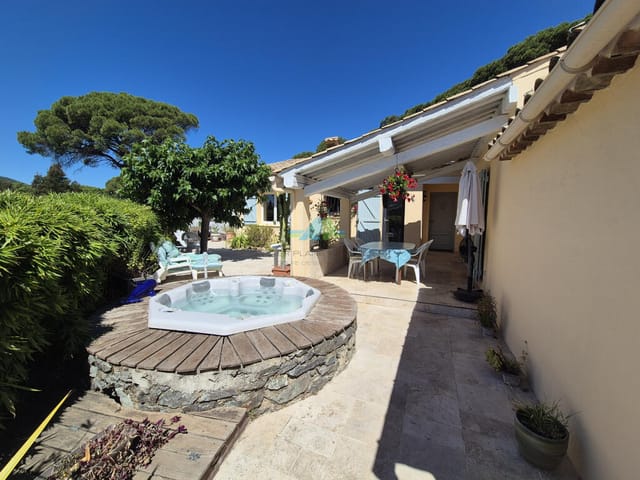
Picture this: it's a Tuesday morning in late September, the summer crowds have thinned, and you're sitting in the garden of your single-storey house in Sainte-Maxime with a café au lait and the scent of sun-warmed Mediterranean pine drifting over the hedge. The town center is fifteen minutes on foot. Saint-Tropez is visible across the bay. You have nowhere urgent to be. That's the quiet reality of owning this 124 m² house on a flat 660 m² plot in one of the Var coast's most consistently sought-after addresses. It sits in a calm residential pocket roughly 1.5 km from the center of Sainte-Maxime — close enough to walk to the market on Rue Fernand Bessy on a Friday morning, far enough that you won't hear a moped after ten at night. Single-storey living means no stairs, no compromise, and total ease for families with young children or guests who just want to arrive and unwind without navigating a complicated floor plan. The house is in genuinely good condition and is move-in ready — not a project in disguise. Three bedrooms give you flexibility: a master for yourselves, a room for the kids, a third that converts naturally into a home office during shoulder-season stays when you can work remotely from the Riviera with full moral justification. One well-appointed bathroom serves the household, and the two garages are a serious practical asset in a town where street parking in July is its own extreme sport. Use one for the car, the other for bicycles, paddleboards, or the kind of gear that accumulates when you live ten minutes from a Mediterranean beach. The workshop space is genuinely useful — a place to tinker, store wine, or set up a proper workbench — and the jacuzzi in the garden turns ordinary evenings into something wo ... click here to read more

Picture 1

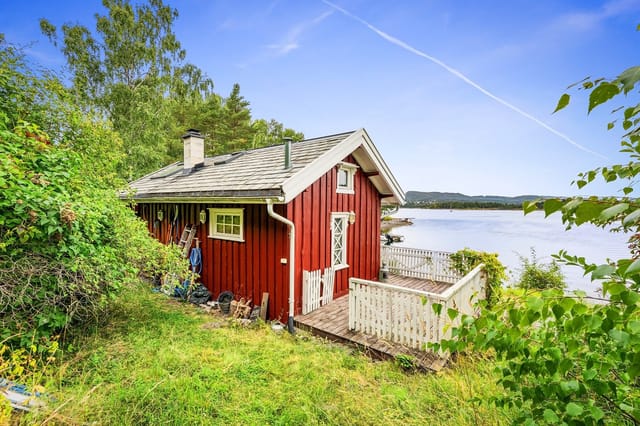
You wake up to the sound of water. Not traffic, not neighbors, not the dull hum of city life — just the faint lap of fjord water against the rocks below, and maybe a gull or two making their case for the morning. This is Ostsundveien 17 on Brønnøya, a historic little cabin known locally as Sjøstua, one of the oldest structures on this car-free island in the Inner Oslofjord. And once you've spent a single summer weekend here, you'll understand why people hold onto places like this for generations. Brønnøya sits in Nesøya municipality, roughly 20 kilometers southwest of Oslo's city center. No cars are permitted on the island. That single fact changes everything about the pace of life here. You arrive by boat from the mainland — a short crossing that somehow functions as a proper mental reset — and from that moment, the only sounds are the ones nature provides. Church bells from the mainland drift across the water on still evenings. Kids play on the rocks. Neighbors arrive by rowing boat with grocery bags and sun-faded lifejackets. It's a world that still moves at human speed. The property itself sits on a plot of 3,239 square meters — a genuinely rare footprint for this part of the Oslofjord, where land is tightly held and rarely changes hands. The sun tracks across the plot almost all day, which matters enormously in Norway, where good light is something people take seriously. A 32-square-meter terrace faces the fjord and catches afternoon sun until late in the evening during the long Scandinavian summer. That terrace becomes the real living room from June through August: coffee in the morning, lunch in the shade of a parasol, dinner well past nine o'clock while the sky stays an unlikely blue. Sjøstua itself is compact ... click here to read more

Presented by Peder Bryhni-Jensen at Nordvik Sandvika – Ostsundveien 17. Photo: Zovenfra AS

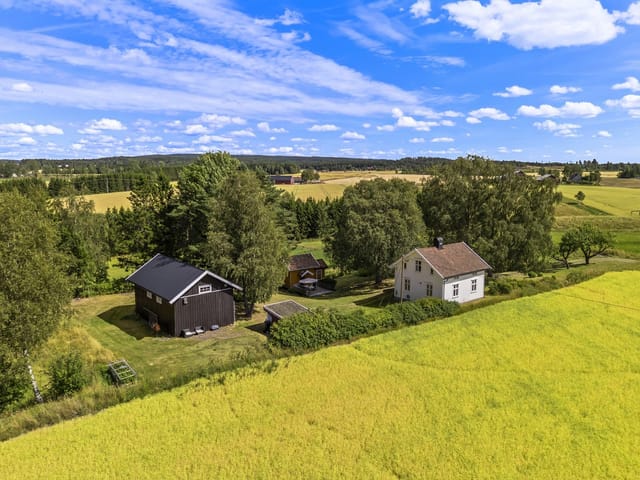
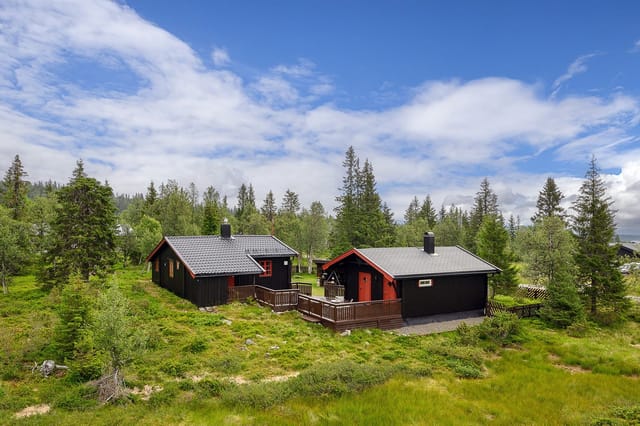
On a still July morning at Veibyveien 186, the only thing that breaks the silence is a wood pigeon calling from somewhere deep in the birch trees behind the barn. You're sitting on the steps of a cabin built in 1900, coffee in hand, looking out over 2,334 square meters of your own Norwegian countryside. Oslo is sixty minutes south. Right now, it feels like another world. This is the kind of property that people talk about finding for years before they actually find it. A genuine smallholding-style leisure property in Båstad, Østfold — with a main cabin, a traditional barn, an annex, and a carport all sitting together on a quietly generous plot surrounded by open farmland. Not a cookie-cutter cabin development. Not a holiday park timeshare. A real place, with real character, that happens to also be deeply practical. The main cabin dates to 1900 and the bones show it — thick walls, a solid staircase, rooms that feel like they were built to last rather than to impress. Renovations over the years have introduced electricity, a wood stove, and a functional kitchen without stripping the building of its original atmosphere. Ground floor runs from an entrance hall through to a proper kitchen, a TV lounge, and a dining room with enough space to seat a family comfortably for a long Friday night meal. Upstairs, the staircase landing opens to two bedrooms and a common room — the kind of space where teenagers read, younger kids play board games, and adults eventually admit they've had a good day. Summer water supply means the property is fully operational through the warmer months, which in this part of Norway means roughly May through October, and often longer. The barn is worth a serious look. Structurally traditional, generousl ... click here to read more

Welcome to idyllic Veibyveien 186!

Stand on the terrace at six in the morning, coffee in hand, and the only sound you'll hear is the water. Dølisjøen sits below you, its surface catching the pale Norwegian light, and the birch forest on the far bank hasn't woken up yet. This is what you bought the chalet for. Not a checklist of features — this specific, unhurried quiet that Slåstad delivers every single time. Nedre Føskerudbråten 4 is a two-bedroom timber chalet set on a freehold 935-square-metre plot in an established cabin community above the eastern shore of Dølisjøen. The elevated position means you look out over the treetops rather than into someone else's garden. There are no immediate neighbours pressing in on either side. The plot slopes gently, wrapped in natural vegetation that keeps it private through summer and eerily beautiful under snow in February. The chalet was built in 1971 and it wears its age honestly — traditional Norwegian tongue-and-groove timber panelling on walls and ceilings, worn in the best possible way, the kind of interior that took decades to develop that particular golden patina that flat-pack furniture never achieves. Everything is on one level: entrance hall, toilet room, kitchen, living room, two bedrooms. Fifty-three square metres of thoughtfully arranged space. Compact, yes, but it has never felt cramped to anyone who's spent a July evening here with the terrace doors thrown open and the fireplace lit against the cooler mountain air drifting in off the lake. That fireplace matters. So does the wood-burning stove installed in 2006. On an October weekend when the maples have gone amber and the lake is glassy and still, you'll feed the stove and read until dark without ever wanting to be anywhere else. Norwegian cabin ... click here to read more

Welcome to Nedre Føskerudbråten 4! Photo: Bjørn Sørheim/EFKT

Step outside on a September morning and you can hear two things at once: the faint slap of water against the rocks at Skarvatnet, and absolutely nothing else. That's the reality of Gamle Skarvegen 307. The lake sits just 70 meters from the front door — close enough that you can be in a canoe before your coffee goes cold. Oppdal is one of central Norway's most capable mountain towns, and this corner of it, up along the old Skarvegen road, sits at an elevation where the air has a bite even in July. The chalet is modest in footprint — 52 square meters — but it punches well above that. Three bedrooms, a wood-burning stove that heats the living room properly, electricity already installed (not a given up here), and a 753-square-meter freehold plot that gives you genuine breathing room outdoors. This is a vacation home in Oppdal that actually delivers on the promise of the Norwegian mountain experience, not a watered-down version of it. Built in 1988 and kept in good condition, the cabin has the bones of a proper Norwegian hytte. Vertical timber cladding on the exterior, pine doors inside, wooden panel walls throughout. The living room — at 21.6 square meters, the largest room in the house — is where everyone ends up after a long day out. The stove is the anchor of the space. You feed it birch logs, you watch the flame catch through the glass door, and the whole room shifts gear. The large windows face toward the mountains and catch the afternoon light; in winter that light turns gold and lasts about an hour before the ridgeline cuts it off. Worth being awake for. The kitchen handles what kitchens need to handle at a mountain cabin: straightforward cabinetry, wall storage, a good sink, enough room to cook for six without bu ... click here to read more

Front view of the property

Early on a Saturday morning in July, the lake is so still you can hear a fish break the surface thirty meters out. You're standing on the south-facing terrace with a mug of coffee, the pine forests across Samsjøen catching the first real light of the day, and the only decision you have to make is whether to take the rowboat out before or after breakfast. That's the kind of morning this chalet on Samsjøveien 764 delivers, again and again, across every season. Hallingby sits in the Ringerike region of eastern Norway, roughly 70 kilometers northwest of Oslo along the E16 — a drive that takes about an hour from the city, less if you leave before the summer Friday rush. It's far enough from the capital to feel genuinely remote, close enough to reach on a whim. This is not a place people stumble upon by accident. Locals have quietly treasured the lakes and forested ridges of this valley for generations, and the tight-knit community of cabin owners along Samsjøen reflects that — people who return season after season because they've found something that's genuinely hard to walk away from. The chalet itself was built in 1963, and it carries that era's honest craftsmanship without any of the mustiness you sometimes find in older Norwegian hytter. At 71 square meters of interior living space, it's compact in the way that focuses life rather than constrains it. Every room earns its footprint. The through-fireplace in the living room is the axis around which winter evenings organize themselves — wood crackling, the windows going black outside while the interior glows amber. In summer, those same large windows frame the water in a way that makes the lake feel like it's part of the room. The open kitchen and dining area flows natura ... click here to read more

Front view of the cabin

Step outside the cabin door on a January morning and the ski trail is literally fifty meters away. No loading the car. No hunting for parking at the trailhead. You clip into your bindings, push off, and within minutes you're gliding through a landscape so white and still it feels like the rest of the world has been put on pause. That's the daily reality at Hovdestølvegen 54 — and it's one of the things that makes this kind of mountain property in Ustaoset so genuinely hard to find. Ustaoset sits at around 1,000 meters above sea level on the Hardangervidda plateau, roughly halfway between Bergen and Oslo on the Bergen Railway line. That railway connection is not a small detail. You can board a train in Oslo, pull up to Ustaoset station in about three hours, and walk to the cabin in three minutes. No rental car. No airport transfer. Just mountains, immediately. For international buyers considering a vacation home in Norway, the accessibility here is extraordinary — particularly for those coming through Oslo Gardermoen, which has direct flights from across Europe. The chalet itself was built in 1998 and sits on a freehold plot of 964 square meters. At 103 square meters of internal space across multiple levels, it's laid out thoughtfully rather than just packed with rooms. The exterior is clad in the kind of rustic wilderness paneling that actually suits this landscape — this isn't a modern glass box trying too hard; it's a proper Norwegian hytte that earns its place in the terrain. Inside, the wood paneling runs throughout in a way that feels warm rather than dark. Real wood floors underfoot on the main living level. Slate with underfloor heating in the hallway, bathroom, and the lower-level spaces — so even when you come ... click here to read more

Welcome to Hovdestølvegen 54 (Photo: Pål Harald Uthus)

Step outside on a February morning and your skis are already on the snow. That's the reality at Aksjøen 77 — a two-bedroom mountain chalet compound sitting at 887 metres above sea level in Sjusjøen, where the groomed cross-country trails of one of Norway's most celebrated high-plateau destinations run practically to your door. No shuttle. No driving in ski boots. Just click in and go. Sjusjøen sits on the Ringsaker mountain plateau in Innlandet county, roughly 20 kilometres north of Lillehammer. If you know Norway's outdoor culture, you know this area. The trail network here connects to over 300 kilometres of groomed løyper in winter — part of the same vast system that feeds into Birkebeinerrennet territory, the legendary long-distance ski race that draws tens of thousands of participants and spectators every March. In summer, those same packed-gravel tracks become cycling and hiking corridors through birch forest and open fjellandscape, linking up with marked routes toward Nevelfjell and the wider Hedmarksvidda nature reserve. The elevation keeps summer temperatures pleasantly crisp and the air genuinely clean — none of the lowland humidity that makes a Norwegian July feel heavier than it should. The compound at Aksjøen 77 is made up of three structures: the original main cabin dating from 1965, a modern annex added in 2017, and a traditional gapahuk — a three-sided timber shelter with built-in benches and a fire pit. All three are arranged around a wide sun-drenched terrace, and because the plot faces well, you get light across the terrace from mid-morning through to late evening in midsummer. That terrace becomes the gravitational centre of the property. Coffee before the morning ski, dinner after a long hike on the ... click here to read more

Welcome to Aksjøen 77! Cabin with annex in well-established and peaceful surroundings.

Sunday morning in Torres Vedras has a particular kind of quiet. The kind where you can hear the breeze moving through your own garden from the kitchen window while coffee brews, and the only decision you face is whether to drive fifteen minutes to Ericeira for a bowl of caldeirada at the harbor, or stay home and do absolutely nothing in three thousand six hundred square meters of your own land. That choice — between action and ease — defines life at this villa, and it's one you'll face every single day. Built in 2012 and spread across three floors with 342 square meters of internal living space and a gross built area of nearly 649 square meters, this is a substantial home. Not a weekend bolt-hole. A proper base for a life lived between Lisbon and the Atlantic coast, with room for extended family, visiting friends, or a future rental setup that could generate serious seasonal income. Six bedrooms, six bathrooms, a garage that fits eight to ten cars, a working well, solar panels, and a heat pump — this property was built for people who don't like compromises. The ground floor does a lot of heavy lifting. Two living rooms give the house real flexibility — one for the adults who want to watch the match, one for the kids who don't. The fully equipped kitchen and adjoining laundry room mean the house functions as a full-time residence without any retrofitting needed. Two ground-floor bedrooms, the master suite, and an office all open directly onto the garden, so the boundary between inside and outside dissolves in the way it only can in the Portuguese climate. The guest bathroom sits conveniently off the entrance hall for anyone coming in sandy or muddy from the garden. Upstairs, the first floor holds a further ensuite bedr ... click here to read more

Picture 1

Picture this: it's a Saturday morning in early October, the air carrying that particular Normandy sharpness that makes coffee taste better, and you're standing inside a gutted stone shell of a house in Grand-Couronne — walls thick enough to muffle the outside world, a cellar beneath your feet, and 110 square metres of pure possibility above you. No compromises inherited from someone else's taste. No awkward wall you wish wasn't there. Just raw space and good bones waiting for your vision. Grand-Couronne sits on the south bank of the Seine, about 10 kilometres from Rouen's city centre. It's not a tourist postcard, and that's precisely the point. This is a working town with a real community — butchers, bakers, a weekly market — where property prices haven't yet caught up with the quality of life on offer. For buyers coming from Paris, London, or Amsterdam, the contrast is striking. You're paying a fraction of what you'd spend in the city, and you're getting a proper stone house with a plot of land, within commuting distance of one of France's most historically significant cities. The house itself has been completely stripped back to its structural core. That sounds daunting on paper, but for anyone who's ever tried to renovate around someone else's plumbing or inherited a floor plan that makes no sense, this is actually the scenario you want. The layout is entirely yours to define. The current configuration of the plot and footprint makes it realistic to create four bedrooms across the two levels — genuinely useful if you're thinking about a family second home or a rental property. The cellar adds practical square footage for storage, a wine room, or a utility area, depending on how you build the project out. The stone ... click here to read more

Picture 1

Picture a Sunday morning in high summer: you open the kitchen door and the smell of warm stone hits you first, then cut grass, then something faintly floral drifting in from the garden. The pool is already glinting in the early light. Nobody else is awake yet. This is what 215 square metres of well-built French country life actually feels like, and it's waiting for you in the Charente. Civray sits in the Vienne department of the Nouvelle-Aquitaine region, a part of rural France that still rewards people who choose to slow down. This isn't the Dordogne with its tourist caravans and inflated prices. Civray is real, working, lived-in France — a market town with a proper Saturday market on the Place du Marché, a Wednesday morning brocante that turns up the occasional serious find, and a Romanesque church facade on the Saint-Nicolas that art historians make detours to see. You walk to the boulangerie before 8am and you're back with a still-warm baguette before the household stirs. That's the rhythm here. The house itself is substantial. At 215 square metres of habitable space, it's built to the kind of standard that was common in this part of France in the late twentieth century — solid concrete and stone construction, thick walls that keep things cool through July and August without air conditioning fighting the heat. The layout is practical rather than fussy. On the ground floor, a 46-square-metre open-plan dining and living room is anchored by a fireplace that earns its keep from November through March. French doors push open onto the terrace and, from there, directly to the pool. The kitchen — 18 square metres, fully equipped — sits adjacent, so meals move naturally from prep to table to outdoors. The ground-floor bedr ... click here to read more

Picture 1

On a Sunday morning in the Périgord Vert, the church bell from Saint-Pierre de Brantôme carries across the valley before the rest of the world has stirred. You're standing at the veranda doors, coffee in hand, watching the light move across the pool. The figs on the old tree in the garden are almost ripe. This is what you bought it for. Just five minutes from the historic heart of Brantôme — the town they call the Venice of Périgord, carved around a loop in the River Dronne — this 120 m² stone house sits on a generous 1,863 m² garden plot and has been well maintained throughout. It's move-in ready, properly liveable from day one, and the kind of property that rewards you the longer you sit with it. The house itself tells you where it comes from. Original exposed stonework lines the living room walls, rough-cut beams cross the ceiling, and a working fireplace anchors the room when the evenings cool in October. That 30 m² living space is genuinely large enough for a family to spread out without getting on each other's nerves after a long drive from Bordeaux-Mérignac. The fitted kitchen runs practically — well-positioned, light, and leading directly into the veranda, which is where you'll end up spending most of your time anyway. The veranda looks out over the 10x4 swimming pool and the wider garden, and once you've had lunch out there under the afternoon sun with a cold glass of Bergerac Sec, going back to a city apartment feels like a genuine hardship. Three bedrooms across the house, one of them conveniently on the ground floor — a real advantage if you're hosting older family members or anyone who'd rather not deal with stairs. Two shower rooms keep the morning routine running smoothly when the house is full. The who ... click here to read more

Picture 1

Stand on the rooftop solarium at dusk, a cold glass of Manzanilla in hand, and watch the sun drop behind Gibraltar while the lights of Morocco flicker awake on the horizon. That's not a postcard. That's a Tuesday evening. This single-storey villa in the hills above Manilva delivers one of those rare combinations—a fully renovated main home, a completely self-contained guest apartment, a private pool, and genuine sea views—all within walking distance of the Mediterranean. The house sits on a 530-square-metre plot in a year-round residential pocket of Casares Costa, the kind of neighbourhood where families actually live rather than just show up in August. Neighbours keep their gardens tidy. The streets are quiet without being remote. And the beach? Reachable on foot in under twenty minutes through a dedicated pedestrian underpass that cuts safely under the AP-7 motorway. Mornings, you'll see walkers and cyclists doing that exact route at sunrise. Inside, the main villa stretches across 109 square metres and was comprehensively renovated in 2018—so the bones are solid and the finishes are current. The layout flows logically: a proper entrance hall that gives the house a sense of arrival, a kitchen with enough room to actually cook in, a separate dining room for longer evenings, and a living room that catches good natural light through most of the day. The master bedroom is genuinely spacious, the bathroom has been done properly, and there's a guest WC so the practicalities of hosting are already sorted. This isn't a holiday flat dressed up as a house. It feels like a home. What makes this property genuinely different is the guest apartment. At 40 square metres with its own private entrance, it functions entirely independ ... click here to read more

Picture 1

On a quiet Sunday morning in Saint-Étienne-de-Maurs, the smell of bread drifting from the boulangerie on Rue du Commerce reaches you before you even open the kitchen window. That's the kind of place this is. A village where people still nod to strangers, where the weekly market on the square sells raw-milk Salers cheese and jarred walnut confiture made two valleys over, and where a 265-square-metre house with an architect-designed extension can still be yours for a price that would barely buy a two-bedroom flat in Lyon. The property itself is a genuinely rare find in the Cantal. The original stone building — solid, unpretentious, the kind that's been weathered into character rather than manufactured with it — has been extended by an architect with a confident eye. The result is a 65-square-metre living area that floods with southern light through oversized glazing, the kind of room where the boundary between inside and the garden terrace quietly dissolves on warm evenings. A suspended mezzanine floats above the dining room below, visible from the kitchen, adding a vertical drama you simply don't expect in a village house at this price point. It's the detail that stops you mid-tour. The layout is thoughtful in ways that matter day-to-day. The fitted kitchen opens directly into the dining room — not through a corridor, not around a corner — so cooking for eight people on a Friday night feels social rather than isolating. The original building retains a master suite with its own shower room and WC on the ground floor, meaning guests or older family members never need to navigate stairs. Three further bedrooms and a well-equipped bathroom with both bathtub and shower occupy the main sleeping wing, while the upper level — c ... click here to read more

Picture 1

Stand at the kitchen window on a July morning and you'll understand immediately why people keep coming back to São Martinho do Porto. The smell of grilling sardines drifts up from the waterfront restaurants before noon. The bay—that famous shell-shaped curve of sheltered water the locals call the Concha Azul, the Blue Shell—catches the Atlantic light in a way that makes the water look almost turquoise, impossibly calm for a coastline this wild. And from a house like this one, you're inside all of it, not just passing through. This is a properly built, three-bedroom detached villa on a 480-square-metre plot in one of São Martinho do Porto's quieter residential streets—the kind of street where neighbours actually say good morning, where kids cycle without helmets, and where the biggest daily drama is deciding whether to walk to the beach before or after the pastelaria opens. At €415,000 for 165 square metres of solid construction in good condition, it's a foothold in one of Portugal's Silver Coast gems before prices close that door permanently. The house runs across two floors with a clear logic to it. Ground level is social: a broad living room anchored by a wood-burning fireplace that earns its keep from November through February, a dining room that fits a proper table for eight, a fully fitted independent kitchen with pantry, and a guest bathroom. What lifts the kitchen above the ordinary is the enclosed sunroom attached to it—glass-wrapped, bright, and opening directly onto the garden. On a winter afternoon when the Atlantic is doing its thing outside, you can sit in there with coffee and a novel and feel smug about every life choice you've made. Upstairs, the private floor holds a master bedroom with its own en-sui ... click here to read more

Picture 1

On a still morning in the Périgord Noir, the only sounds you'll hear from this hamlet courtyard are birdsong, the faint echo of a church bell drifting over from Castels, and the soft splash of water in a 12-by-6-metre saltwater pool that looks straight out over a valley that hasn't changed much in centuries. That's not a selling point — that's Tuesday. This is a rare opportunity to acquire not one but two authentic Dordogne stone houses sitting side by side on roughly 8,000 square metres of grounds in the commune of Castels et Bézenac. A shared cobbled driveway and a gated private courtyard connect them, and together they form a property that functions equally well as a large family holiday compound, a multi-generational retreat, or a live-in renovation project with serious long-term upside. The asking price of €294,000 for the entire ensemble — pool, dovecote, garage, outbuildings, courtyard and all — is the kind of number that makes people do a double-take when they check it against what comparable Dordogne properties have been selling for. The larger of the two houses is the one that stops you at the door. Ground floor: a proper country kitchen with an adjoining shower room and WC, and a living-dining room anchored by a character stone fireplace and a pellet stove — the kind of room you want to be in when November rain is hitting the terrace outside and a cassoulet is on the hob. French doors open both toward the front courtyard and the rear garden, so the space breathes in summer and feels sealed and warm come autumn. Upstairs, two bedrooms and a small bathroom with WC. It's not complicated. It's exactly what a Dordogne farmhouse should be. The second house, slightly more compact, has its own kitchen, a living roo ... click here to read more

Picture 1

Step off the small road from Espinhal and through the iron gate, and the first thing you notice is the silence. Not absence-of-sound silence — the kind filled with birdsong, wind in the fig leaves, and the distant creak of a well pump doing its slow, steady work. This is Rabaçal, a fold in the hills of Beira Litoral where central Portugal keeps some of its quietest, most unhurried countryside. And on 7,416 square metres of gently sloping land, three fully fitted, furnished houses are waiting. This isn't a single home. It's a compound of sorts — three independent cottages, a garden abundant with olive, apple, plum and fig trees, a small swimming pool, a barbecue terrace, and a newly built garage large enough to swallow a motorhome and four cars whole. The word that comes to mind isn't "property." It's possibility. The first house is the one that stops you. Built entirely from stone — the regional kind, irregular and warm-toned — it rises two levels, with the main living area and a fitted kitchen flowing openly into each other on the ground floor. A wood-burning stove anchors the room in winter. The staircase climbs to a mezzanine bedroom that catches morning light through double-glazed windows. There's a fully fitted bathroom on the ground floor, and the whole thing has been put together with care. Not just cleaned and staged — actually thought through. The furniture stays. Everything works. Cross the landscaped garden path between the two front houses and you reach something genuinely unexpected: a second cottage converted from a shipping container. Before that raises eyebrows, know this — it's insulated in the walls and roof, fitted with PVC double-glazed windows and doors, warmed by its own wood-burning stove, and f ... click here to read more

Picture 1

Step out onto the terrace on a October morning and you'll understand exactly why people fall for this part of Portugal. The air smells of woodsmoke and wet earth. Below, an olive grove stretches across the land in near-perfect rows. The hills of Beira Baixa roll away in every direction, unhurried and quiet in a way that's genuinely hard to find anymore. This is Sertã — and this two-bedroom country house, sitting on its own productive land in the parish of Castelo, is the kind of place you don't stumble across every day. The house itself is compact but cleverly used. Seventy-two square metres on the main floor, and the layout makes every one of them count. You come up the exterior staircase from the parking area and step onto a wide terrace — the spot where, very quickly, you'll discover you spend a disproportionate amount of your time. Through the front door, the open living and dining space greets you immediately. A six-seater table to the left, a full kitchen to the right, and at the far end, a wood-burning stove set into a fireplace that does real work come December and January when temperatures in the Beira interior drop and the house needs proper heat rather than the decorative kind. The stove is one of those details that goes from nice-to-have to essential the first cold night you spend here. The ceramic floors throughout are laid in a warm, light wood-effect tile that keeps the rooms bright even in winter months. Double-glazed windows throughout mean that warmth stays put. Moving down the interior corridor, the layout is practical and unpretentious: a double bedroom, a well-proportioned bathroom with shower, washbasin, toilet, and bidet, plus a second room that adapts to whatever you need — a guest room, a home ... click here to read more

Picture 1

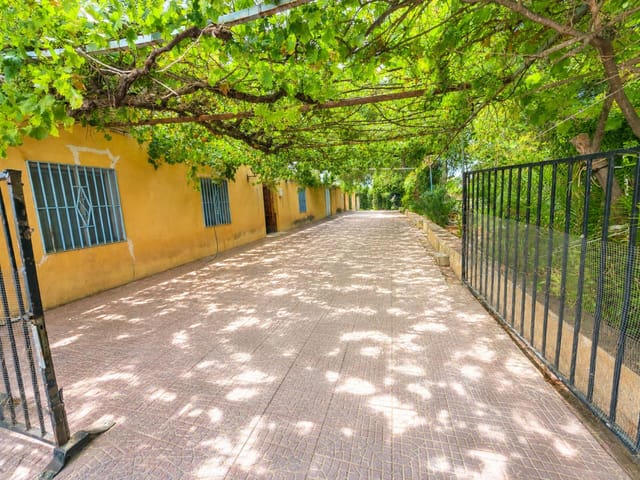
Step outside on a July morning, coffee in hand, and the Périgord countryside rolls away from your terrace in every direction — golden fields, oak woodland, not another rooftop in sight. The heated saltwater pool catches the early light. Somewhere in the studio behind you, the kids are still sleeping. This is what a summer in Brouchaud actually feels like. Brouchaud sits quietly in the northern Dordogne, the kind of village that doesn't show up on tourist maps but sits within easy reach of everything that makes this corner of France worth coming back to year after year. Périgueux, the ancient capital of the Périgord with its Roman amphitheatre ruins and the extraordinary Byzantine domes of the Cathédrale Saint-Front, is about twenty-five minutes by car. Brantôme — nicknamed the Venice of the Périgord for its abbey and riverside setting along the Dronne — is even closer. Markets happen several times a week in towns like Thiviers and Excideuil, and if you arrive early enough on a Saturday morning in Périgueux, you'll find the covered Clautre market overflowing with black truffles in winter, fat strawberries in spring, and Périgord walnuts come October. The rhythm here is slow and deliberate, which is exactly the point. The Dordogne has long attracted buyers from across northern Europe — British, Dutch, Belgian, Scandinavian — drawn by the food, the pace, and frankly the value compared to Provence or the Côte d'Azur. This part of Aquitaine gives you all the pastoral beauty without the summer gridlock. Bergerac Airport, which handles direct flights from London, Birmingham, Bristol, Edinburgh, and several other UK and European cities, is roughly forty minutes south. Bordeaux-Mérignac, with its much wider international connec ... click here to read more

Picture 1

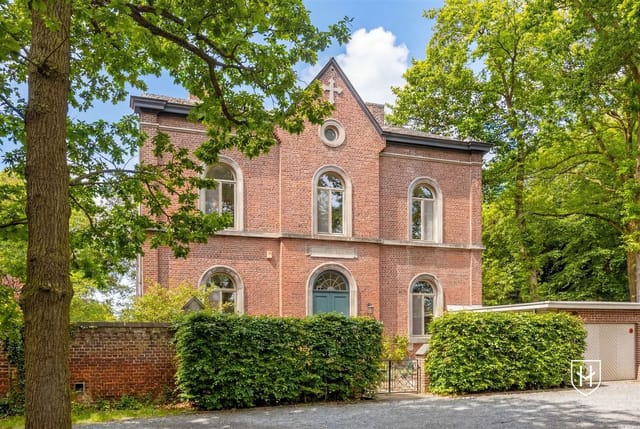
Step off the gravel path on a Tuesday morning in late September, coffee in hand, and the only sound you hear is a woodpigeon somewhere in the oak trees behind the barn. That's what life feels like in this quiet hamlet just outside Chalais, a small market town in the Indre département — deep in the Berry region of central France, where the pace is unhurried and the countryside rolls out in every direction without apology. This is a genuinely move-in ready house. No leaky roof to negotiate, no outdated wiring to rewire before you can sleep comfortably. The current owners have put real thought into making it efficient and livable — reversible air-conditioning keeps things cool through the warm Berry summers and takes the edge off autumn evenings, while a pellet stove in the living area becomes the social heart of the home from October onwards. There's even a fiber-optic internet connection, which matters more than people admit when you're working remotely from a French hamlet or staying for longer stretches. The electric vehicle charging point in the detached garage signals that someone here was thinking ahead. The ground floor opens into a single flowing living space: lounge, dining area, and kitchen in one connected room. Double-glazed windows pull in generous light throughout the day, and patio doors swing open directly onto the rear garden — so on warm evenings, the line between indoors and out disappears entirely. There's a ground-floor bedroom here too, which makes the house genuinely accessible for guests or family members who'd rather avoid the stairs. The shower room beside it is newly fitted: a large walk-in shower, a proper vanity unit, clean and modern without being cold. Upstairs, one generously proportioned ... click here to read more
Picture 1

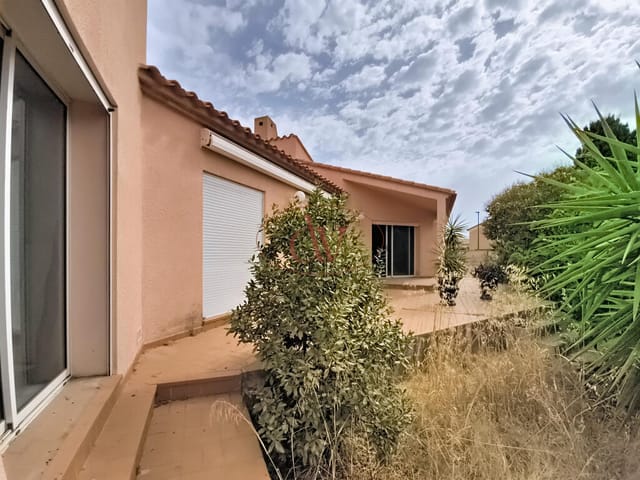
Stand at the edge of the land on a October morning and you'll hear almost nothing. A tractor somewhere far off. A dog. The wind moving through the cork oaks. That's Comenda — a village in Alto Alentejo where the pace of life is something most of Europe has forgotten, and where €62,000 can put a solid 100-square-metre structure and 1,750 square metres of your own Portuguese land in your hands. This is a renovation project, and it makes no sense to pretend otherwise. The building — a warehouse with real bones and a structure that's held its shape — is waiting for someone with a vision. The kind of buyer who walks through a rough space and sees what it could become, not what it currently is. Three rooms inside offer the raw material for whatever configuration suits you: a sleeping wing, a living area, a studio, a workspace. The footprint is generous enough to work with, and 100 square metres in this part of Portugal goes a long way when you're starting from scratch. The land around the building is where things get genuinely interesting. Nearly 1,750 square metres of outdoor space in the Alentejo isn't a garden — it's a territory. You could plant a proper orchard. Olive trees take well to this soil and climate, and the region's olive oil culture runs centuries deep. A vegetable plot, a covered terrace, raised beds, a small vineyard — there's room for all of it and then some. The existing barbecue area already hints at how the previous owners used the land: slowly, seasonally, with meals that stretched into the evening. That culture of outdoor eating and unhurried time is built into the DNA of this part of Portugal. Comenda sits in the municipality of Gavião, in the northern reaches of the Alentejo. The surrounding landsca ... click here to read more
Picture 1

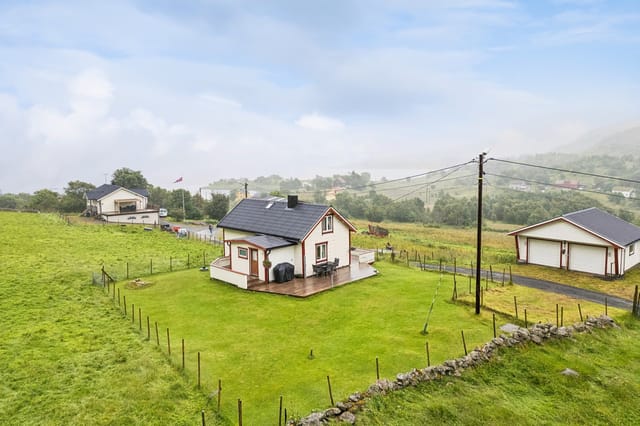
On a Sunday morning in Louignac, the only thing that wakes you is birdsong. Not traffic, not neighbours, not the hum of a city that never quite switches off. Just the breeze moving through the oak trees at the edge of your garden, and the faint smell of damp grass catching the early light. That's what life feels like in this four-bedroom stone house in the Corrèze — and once you've felt it, it's hard to unfeel. This is rural France as it actually exists, not as it's romanticised on a postcard. Louignac sits in the rolling green Limousin countryside, a place where the land hasn't been manicured for tourists. The fields are real working fields. The stone walls lining the roads are a few centuries old. The weekly market at Objat — just twenty minutes away — sells duck confit, walnuts, and cheeses from farms you could cycle to. This is the kind of France that people spend years searching for, and rarely find still available at a price that makes sense. The house itself is solid and full of character. Stone construction throughout, which means thick walls that keep rooms cool in July and hold the warmth of the pellet stove through January without breaking a sweat. The ground floor is anchored by a generous kitchen-dining room — genuinely fitted and equipped, not the vague claim you see on listings where the "equipped kitchen" turns out to be a single plug socket. This room opens directly into the living room, so the whole social heart of the house flows together as one connected space. In winter, the pellet stove becomes the gravitational centre of every evening. In summer, the doors open and the room breathes out into the garden. Behind the kitchen, there's a laundry room that has a second life waiting for it. The proport ... click here to read more
Picture 1

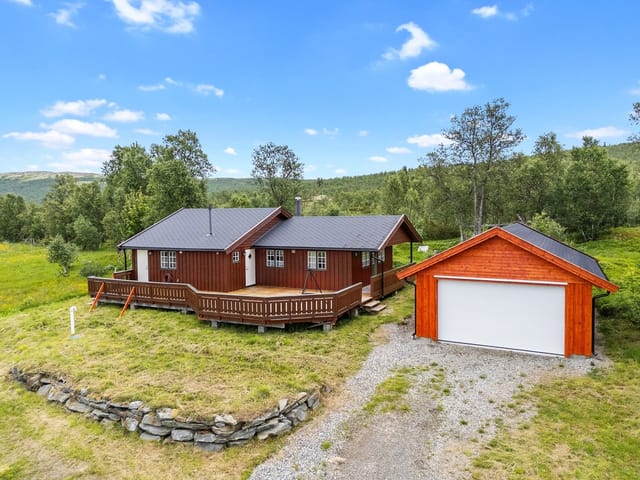
Saturday morning in the Dordogne, and the air through the kitchen window carries woodsmoke and the faint sweetness of walnut orchards baking in September sun. You're putting on coffee, the terracotta tiles cool underfoot, and through the sitting room's old beams you can hear absolutely nothing except birdsong and the occasional tractor two fields over. This is what you came to France for. Set in Parcoul-Chenaud, a quiet commune in the northern Dordogne where the pace of life has been politely ignoring the 21st century for decades, this four-bedroom Périgord-style house sits on roughly 5,000 square metres of garden and land that gives you genuine room to breathe. At 190 square metres of living space spread across two naturally separated levels, it's a house with real character — not the kind manufactured by a renovation company, but the kind accumulated over generations of French rural life. The layout deserves a proper explanation, because it's one of the property's most interesting qualities. The upper entrance level holds a welcoming hall, a dining room, a fully equipped kitchen, two bedrooms and a bathroom. So far, so practical. But descend to the lower level and the house opens up into something altogether more generous: a large sitting room with original terracotta floor tiles and a beamed ceiling, a proper fireplace for January evenings when the Dordogne mist rolls in, and a staircase climbing to two further bedrooms and a second spacious bathroom. The split-level configuration means a family of six or eight could live here without anyone getting in each other's way. Or you could use the lower level as a self-contained space for guests — the bones are clearly there. A study, utility room, cave, and an oversized g ... click here to read more
Picture 1