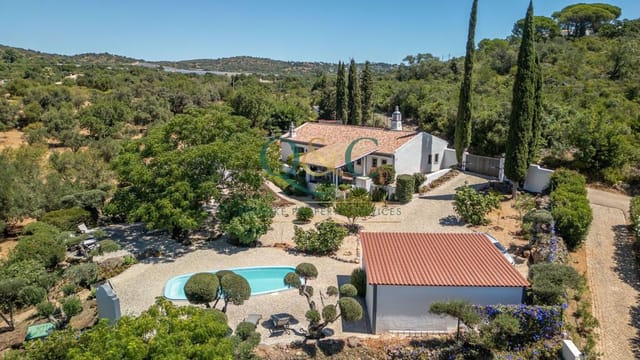
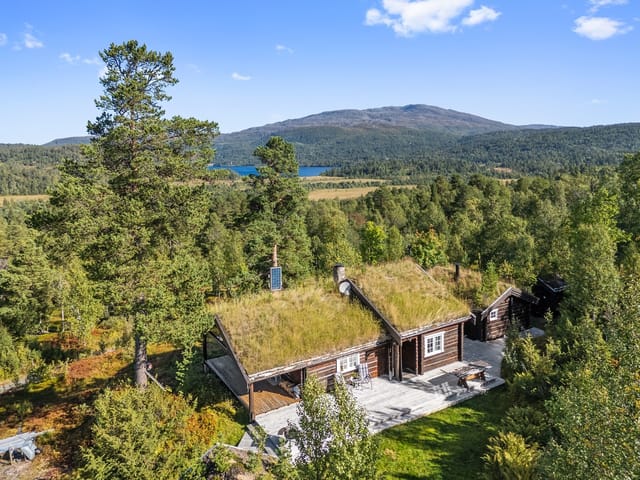
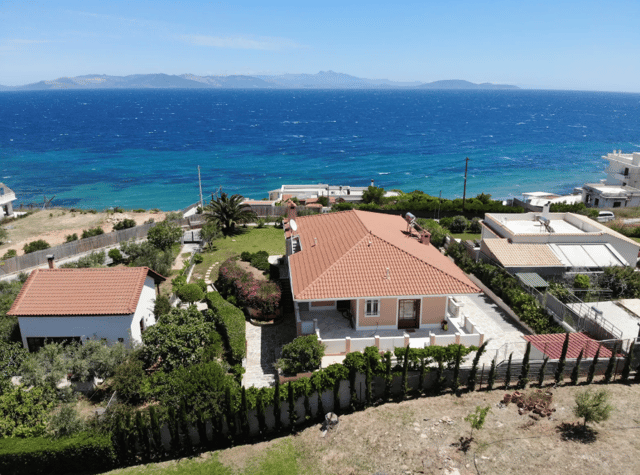
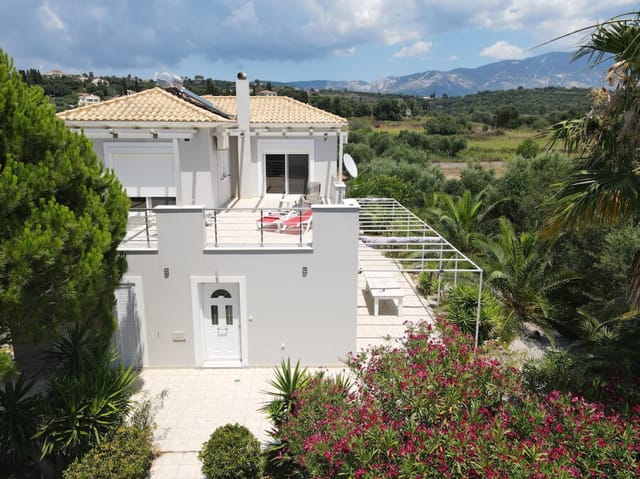
Houses For Sale In Europe (page 2)

Houses for sale in europe - homestra offers the largest amount of european real estate with over 200,000+ properties, find any type of property within your budget from villas to country homes. buy or rent your perfect home in europe. (page 2)

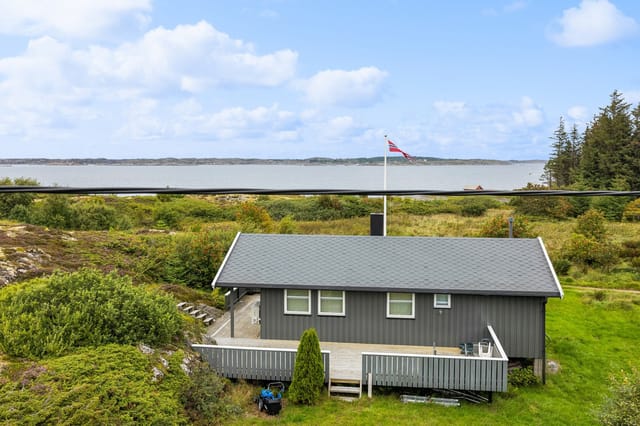
At seven in the morning, when the fjord is still and the light hits the water at that low Nordic angle that turns everything copper and silver, you can stand on the 130-square-metre terrace at Bærøyknausene 19 and feel like the whole of Kragerøskjærgården belongs to you. The town itself sits just across the water, its white wooden houses stacked up the hillside like something from a Knut Hamsun novel. Five minutes by boat. A world away in feeling. This is Bærø island. And if you know the Kragerø archipelago at all, you know that properties like this — south-facing, sun-drenched from first light to last, with their own boat slip and boathouse already in place — almost never come to market. The chalet was built in 2007 and sits on a freehold 677-square-metre plot. Seventeen years in, it's still in genuinely good condition: not the kind of "good condition" that means you're about to spend your first summer replumbing a bathroom, but the kind that means you arrive, unpack your bags, and walk straight down to the water. The previous owners clearly understood that a coastal cabin either earns its keep or becomes a liability, so maintenance has been consistent and the property is move-in ready for the season ahead. Inside, the cabin runs to 96 square metres across a layout that makes smart use of every corner. The combined kitchen and living room is the heart of the place — open plan, flooded with daylight through large windows that frame the sea view and the silhouette of Kragerø beyond. The wood-burning stove against one wall isn't decorative. On September evenings, when the temperature drops and you're not quite ready to close up for winter, it's what keeps you there another three weeks. The kitchen itself is modern and f ... click here to read more

Welcome to Bærøyknausene 19!

On a still July morning, you step out onto the west-facing terrace with a mug of coffee and hear almost nothing. A wood pigeon somewhere in the birches. The faint lap of water from Hällebosjön, ten minutes down the track. That's it. This is what brought you here, and it's exactly what you'll find every single time you return. Hällebo 907 sits in a quietly coveted pocket of Örebro County, outside the village of Pålsboda in Hallsbergs kommun. It's a genuine Swedish countryside retreat — 49 square metres of well-kept living space on a 1,100 square metre plot, updated steadily over recent years without losing any of its honest, unpretentious character. This is not a property tarted up for a quick sale. The roof was replaced in 2020. The facade and windows were repainted in 2024. The bathroom was fully renovated in 2024. The kitchen got quality IKEA fittings in 2022. Whoever owned this looked after it, and it shows. Walk inside and the layout makes immediate sense. The living room anchors itself around an open fireplace — not a decorative one, but the kind that genuinely heats the room on a grey October afternoon when the leaves outside have gone amber and the temperature drops before you expect it. The kitchen has enough workspace to properly cook, not just reheat things, and looks out toward the garden where, come August, the raspberry canes will be heavy enough to slow you down on the way to the woodpile. Two bedrooms handle family visits or a spare room for the one friend who always stays longer than planned. One bedroom was freshly painted in early 2025 and feels clean and light. The bathroom renovation in 2024 is worth mentioning twice. It's properly done — shower cabin, modern composting toilet (a Separett unit, com ... click here to read more

Front view of Hällebo 907 country home

Stand at the kitchen window on an October morning and watch the mist roll off the hills above Finsland. The air outside is sharp and clean in a way that reminds you what air is actually supposed to smell like. The old wood stove in the corner ticks as it warms up, and there's not a single sound beyond birdsong and the occasional creak of the house settling. This is 8.5 acres of southern Norwegian countryside, and it's been quietly waiting for someone with the right kind of ambition. Built in 1890, this classic Norwegian farmhouse at Songdalsvegen 670 carries the bones of something genuinely substantial. Four bedrooms spread across two floors, a total internal area of 179 square meters, two living rooms, two kitchens, and a layout that once served a working rural household through every season. The ground floor alone runs to 167 square meters — two living rooms, two kitchens, a bathroom, a separate WC, a hobby room, storage, a garage, and the kind of entrance hallway that feels like it has stories to tell. Upstairs, two further bedrooms and a hallway occupy a more intimate 12 square meters, with an additional 34 square meters of external second-floor storage that could become something far more interesting in the right hands. The property is classified as a Gårdsbruk/Småbruk — a smallholding — which opens up a different category of ownership and lifestyle entirely. The 34,217 square meter lot is mostly open and south-facing, catching the sun across what is currently a mix of garden, open land, and space that invites whatever you're bold enough to put there. A kitchen garden along the south wall. A small orchard of apple and pear trees. A paddock. The land doesn't push back — it gives you room to think. The house needs ... click here to read more

Front view of the property

On a quiet Tuesday morning at Neerveldstraat 1B, the light does something remarkable. It pours through roughly 150 square metres of rear glass façade and turns the entire living floor into something that feels less like a house and more like a greenhouse for humans — warm, alive, connected to the fig trees and Japanese maple just outside. You make coffee in the industrial kitchen, and through the glass you watch a blackbird pick at the cherry tree. That's the daily reality here. Not a view from a balcony over rooftops. An actual garden, arms-length away, folding into your living room. This is a genuinely rare house. Architect-designed with a structural steel frame that gives the whole place its bones — visible, honest, deliberately industrial — and then softened by the wood terrace off the first-floor living room, the lush enclosed garden, the carefully chosen plantings. The steel sliding front door sets the tone the moment you arrive. It's not trying to look like something it isn't. 339 square metres of living space across three floors, plus a basement and attic adding another 134 square metres. That's a serious amount of room for two people, or a family that keeps growing into its spaces. The ground floor has a 56m² room currently used as a bedroom and studio — with its own direct garden views — plus a full bathroom with double sinks and shower, and a guest WC. The first floor is where the architecture really pays off: the living area opens via a large sliding glass door onto a raised wooden terrace, and the industrial kitchen runs the length of the space with a five-burner gas stove, double fridge-freezer, dishwasher, and extractor. Air conditioning keeps it comfortable through July and August when Limburg summers p ... click here to read more

Front view of Neerveldstraat 1B

Step outside on a Tuesday morning, coffee in hand, and the only sounds reaching you are wood pigeons in the old oaks and the faint rustle of wind crossing open fields toward the Dutch border. That's Schuivenoord 2. It's the kind of quiet that city dwellers spend years chasing, and here it's simply the default setting. Meerle sits in the northern tip of the Belgian province of Antwerp, tucked into the Noorderkempen — a region of heathland, river valleys, and working farms that feels genuinely unhurried. The village itself is small enough to know the baker's name but connected enough to reach Breda's Grote Markt or Antwerp's Meir shopping street in under an hour. For buyers seeking a substantial second home in Belgium that genuinely delivers on both space and serenity, this is about as good as it gets. The villa was built in 1971 but underwent a full renovation in 2016, and it shows. The bones are solid — think generous ceiling heights, exposed timber beams in the main living area, and a floor plan that spreads across 546 square metres without feeling labyrinthine. The renovation brought everything up to contemporary spec: energy label B, central heating with partial underfloor heating, and fittings chosen for longevity rather than trend. Walk through the front gate — electric, with plenty of room for several cars along the private driveway — and the house announces itself through its garden rather than its facade. Five thousand, seven hundred and twenty-five square metres of it. Mature trees frame long views across the lawn, espalier fruit trees line one wall, and multiple terraces give you options depending on where the afternoon sun lands. There's a covered seating area for the kind of Belgian summer evenings that st ... click here to read more

Front view of Schuivenoord 2

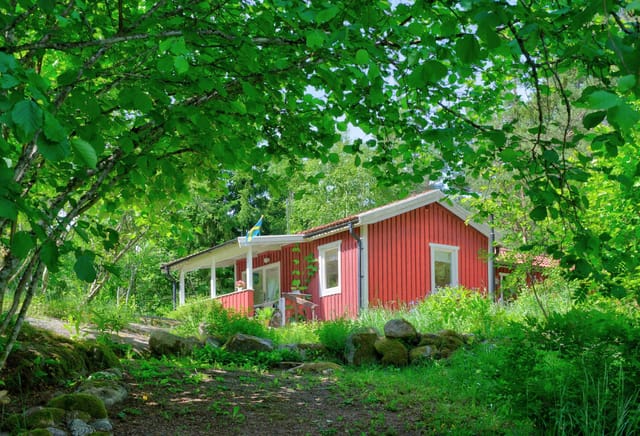
The alarm doesn't go off here. You wake up because the light does — that pale, golden Swedish summer light that slips through the curtains sometime around five in the morning and makes it impossible to stay in bed. So you pull on a sweater, step outside into the dewy garden, and walk the two-minute path down to Lake Toften before anyone else is up. The water is still. The pines are reflected perfectly on the surface. You dive in anyway. That's the daily reality of owning Östra Toften 216, a classic red-painted cottage sitting on a 1,000 square meter leased plot in a close-knit community of about forty similar summer homes just outside Östervåla in Uppsala County. It's compact — 34 square meters of living space — but Swedish summer cottage culture has never been about square footage. It's about being outside. The cottage is where you sleep, eat breakfast, and come in from the rain. The rest of your life here unfolds on the lake, in the forest, and around a fire in the garden. Built in 1968, the cottage has that honest simplicity that makes older Scandinavian summer homes so appealing. The living room is bright, with windows that pull in the tree light and make the small space feel larger than it is. It connects directly to the bedroom — a straightforward layout that works exactly as it should for a one or two-person getaway. The kitchen is practical and compact, built for the kind of cooking that actually happens at a summer cottage: coffee before the swim, pasta after the hike, maybe a proper crayfish spread in August with candles on the garden table. There's a storage shed on the plot for bikes, fishing gear, kayak paddles, and all the other paraphernalia that accumulates when you spend your summers outdoors properly. ... click here to read more

Exterior view of the red summer cottage

You arrive by boat. There's no other way. You cut the engine, drift into the mooring at Osvågen, and for a moment all you hear is water lapping against the hull and a single bird somewhere deep in the spruce trees. Then you shoulder your bag and follow the footpath — about 800 meters of soft forest floor, birch and pine on either side — until the treeline opens and the cabin appears on the rise above you, its balcony framing a wide blue sweep of the fjord. That's the moment you stop thinking about your inbox. This is what genuine off-grid living looks like in Helgeland, one of Norway's most quietly extraordinary coastal regions. The chalet at Hestnesosen sits on a 2,081-square-meter elevated plot above Osvågen, fully detached from the road network and reachable only by water. For buyers who've spent years talking about "disconnecting," this isn't a metaphor. It's the actual situation — and it's exactly what makes this property so rare. At 131 square meters of indoor living space, the three-bedroom cabin is far more generous than the average Norwegian hytte. Two separate living rooms give you real breathing room: one for rainy afternoons with a board game and a wood-burning stove sending heat into the walls, another where guests can settle in without stepping on each other. The retro interior furnishings — included in the sale — give the place a particular character that would take years to curate elsewhere. Nothing feels staged. It feels lived in, in the best possible sense. The kitchen is practical and well-considered. Laminated cabinetry, a tiled splashback, a brand-new refrigerator, and a proper oven. The built-in dining nook beside it — a custom-made sofa bench and chairs around a fixed table — is the kind of arra ... click here to read more

Charming, spacious cabin in Hestnesosen with views over Osvågen.

Step outside on a January morning and the cross-country ski trails are literally less than 100 meters from the front door. No driving, no gear-shuffling through a car park — just click into your bindings, push off, and within minutes you're gliding through silent spruce forest with frost still hanging in the air. That's the daily reality at Jervbekkhåmmåren 80, a solid four-bedroom mountain chalet sitting at 834 meters above sea level in Brekkebygd, one of the quietest and most underrated corners of the Norwegian highlands. Brekkebygd sits just across the Swedish border in the Røros region, and while its neighbor Funäsdalen gets most of the ski resort headlines, this side of the valley is where people who actually know the area choose to plant roots. No through traffic on the private road. No weekend crowds. Just the kind of hush that makes you aware of your own breathing — and the occasional creak of snow settling on the roof. The chalet itself covers 80 square meters of internal living space on a single level, set on a leased 1,000-square-meter plot that gives you genuine breathing room. The layout is practical in the way that good mountain architecture always is: everything has a purpose, nothing is wasted. You come through the entrance hall, drop your ski boots and wet jackets in the hallway, and then the living room opens up ahead of you — wooden floors, heavy ceiling beams, paneled walls that have absorbed years of wood smoke and warmth. The closed fireplace and wood stove sit at the center of this room like the whole cabin was designed around them, which honestly, it probably was. After a day on the trails, you want fire, warmth, and a flat surface for your coffee mug. This room delivers all three. The kitchen ... click here to read more

Welcome to Jervbekkhåmmåren 80 and this beautiful cabin property! Photo: Interior photo by June Haukdal

Early on a Saturday morning in late June, the light here does something unusual. It arrives soft and low through the birch trees, lands on the kitchen table, and just stays there. The canal is maybe six hundred meters down the road. You can hear it if the wind is right — not the sea itself, but the particular quiet that water brings to a place. That's what Måsvägen 16 feels like from the moment you walk onto the plot. Not a resort. Not a staged showroom. Just a genuinely good piece of Swedish archipelago land, with a solid little house on it, waiting for someone to decide what comes next. Strömma sits in the middle of Värmdö municipality, which stretches east from Stockholm into the Baltic archipelago along the E18 corridor. This is one of the most sought-after second-home areas in Sweden for a reason that locals rarely need to explain — you're thirty-odd kilometers from Sergels Torg, yet you're watching ospreys circle above the treeline. That contrast never gets old. The commuter boat from nearby Stavsnäs or the direct bus connections via Gustavsberg mean Stockholm isn't a schlep, it's just a decision. Most weekends, that decision gets delayed until Sunday evening. The property itself sits on 2,611 square meters of mostly natural plot — mature spruce, birch, and low-growing juniper framing a grassy open center that catches afternoon sun until well past eight in summer. The main house, built in 1959 and winterized for year-round use, covers around 50 square meters across four rooms. It's functional and honest. No grand renovation has been forced upon it, which means the bones are intact and the choices about what comes next are entirely yours. The guest house tucked on the plot adds flexibility immediately — use it for ... click here to read more

Front view of the house and garden

Step outside on a Saturday morning in October, the air sharp with the smell of pine resin and leaf smoke drifting from a neighbor's garden two fields over. The Lagan River catches the low autumn light about a ten-minute walk from your front door. You're at the end of a road — there is literally no through traffic — and the only sound is the occasional creak of the old apple trees along the garden edge. This is what 200 square meters of well-kept Swedish countryside living actually feels like at Grönö 3551. Built in the 1930s when Swedish rural construction was about permanence rather than speed, the house has the kind of bones that later decades couldn't replicate — solid framing, generous room proportions, and a relationship with natural light that feels genuinely considered. The large windows don't just let daylight in; they frame views of open countryside that change week by week through the seasons. Snowfall turns the 2,401-square-meter plot into something from a Carl Larsson painting in January. By June it's all long grass, wild strawberries along the fence line, and evenings that don't get properly dark until almost midnight. The owners have made the practical investments that really count. A modern air-to-water heat pump handles the heavy lifting on heating, backed by solar panels with battery storage that meaningfully cut running costs year-round. Two fireplaces — one in the main living area, one elsewhere in the house — mean you're never dependent on a single heat source, and they bring a particular kind of warmth that thermostats simply can't replicate on a February evening when the temperature outside drops to minus ten. The roof is recently replaced, which matters enormously in a Swedish climate where freez ... click here to read more

Exterior view of Grönö 3551

Early on a Saturday morning, the only sound you'll hear from the master suite is water. The Ems moves slowly past the 19th-century lock below, and if the kitchen window is open, the smell of damp grass and lime trees drifts in before you've even put the kettle on. This is Listruper Wehr 5 — a former river shipping house turned private estate, sitting on 15,451 square meters of park-like grounds just a few minutes from the Dutch border. It's the kind of place that takes most people about thirty seconds to fall completely silent in. The property's origins are written into its bones. Built as a working shipping house to serve the lock on the Ems, the villa carries a quiet authority — classic green-and-white shuttered facades, proportions that feel deliberate and unhurried, and a setting that hasn't changed much since the 19th century. The dam immediately downstream still creates that low, constant percussion of moving water. On a still evening, you can hear it from the garden terrace. Some owners find it meditative. Nobody finds it unwelcome. In 2010, a complete interior renovation was carried out under the direction of a noted interior architect, and it shows — but not in a way that shouts. The focus was on proportion, natural light, and materials that earn their place: stone, solid timber, hand-finished surfaces. The bespoke kitchen, made by Landlord-Living, is centered around a Lacanche range — the kind of French stove that professional cooks scheme about owning. There's a walk-in refrigerator, custom cabinetry, and enough counter space to actually cook rather than just perform cooking. The dining area in the heart of the ground floor connects the main lounge and a fireplace sitting room, both of which open directly on ... click here to read more

Front view of Listruper Wehr 5

Step outside on a January morning and the world is completely white and completely silent, except for the low rush of snowmelt somewhere under the ice. The air at 698 meters above sea level has a sharpness to it that wakes you up faster than any coffee. Then you remember: the sauna is already warm, the fireplace is set, and the ski trails are four minutes from the front door. This is Fosslivegen 35. Built in 2004 and sitting on over 1,000 square meters of mountain terrain in Vøringsfoss, Eidfjord municipality, this three-bedroom Norwegian chalet is one of those properties that earns its keep in every season. The turf roof — not decorative, genuinely functional — keeps the interior cool in July and insulated through February. The stained wilderness panel cladding weathers beautifully, and the lacquered wooden front door announces exactly what you're getting before you cross the threshold: a proper Norwegian fjell hytte with real bones to it. Inside, the living room anchors everything. The fireplace here isn't a feature you mention in passing — it's the gravitational centre of the entire cabin. Wide, wood-burning, and radiating the kind of heat that gets into your clothes and stays there, it turns ordinary evenings into the kind of nights people talk about on the drive home. High ceilings push the space upward, and the open plan between the kitchen and living area means whoever is cooking never gets left out of the conversation. The kitchen is fitted with solid wood fronts, tiled splashbacks, and a full set of integrated appliances — oven, cooktop, dishwasher, refrigerator — so you're not roughing it. There's real counter space here for actual meal preparation, which matters when you've got six people in from a day on th ... click here to read more

Welcome to Fosslivegen 35 - Presented by Arild Lothe and Svein Olav Holdhus at Eiendomsmegler Norge.

Picture this: it's February, the thermometer reads minus eight, and the only sound you can hear from the upstairs loft is the occasional creak of snow settling on the roof. You light the fireplace before breakfast. By nine o'clock, the kids have their boots on and they're already arguing about who gets first tracks down Kvitfjell's Olympiabakken run — the same slope that hosted the 1994 Lillehammer Winter Olympics downhill events. That walk to the chairlift? Three hundred meters from your front door. That's the daily reality of owning a vacation home at Myrsetervegen 102 in Fåvang, a four-bedroom mountain chalet sitting at 745 meters above sea level in the Kvitfjell Vest area. Built in 2022, it hasn't had time to accumulate the quirks and hidden costs of older cabins in the region. Everything works, everything is current, and the energy rating reflects it. The numbers matter here, so let's be honest about them. The primary indoor living area (BRA-i) is 149 sqm spread across the main floor, with an additional 72-sqm loft — what Norwegians call a hems — that sits above and changes the feel of the whole place. That loft isn't a cramped crawl space. It's proper usable floor area: tall enough to stand in, wide enough for four kids on sleeping mats or a serious sectional sofa in front of a projector screen. The flexibility it gives you means the cabin can genuinely sleep a multigenerational group without anyone drawing the short straw on the fold-out. Come through the entrance hall — tiled floors, sliding door wardrobe, the whole ski-boot chaos zone you actually need — and the main floor opens up into something that earns the description "spacious" without any exaggeration. The living room runs large windows along the mount ... click here to read more

The cabin was built in 2022 and features consistently high standards and beautiful solutions.

Early July mornings at this place have a particular quality. The mist sits low over Lake Nömmen, the water is glassy and completely still, and the only sound from inside the glazed conservatory is the occasional knock of a woodpecker somewhere deep in the birch trees behind the garden. You pour your coffee. You're not going anywhere in a hurry. That feeling — that specific, unhurried Swedish summer morning feeling — is what this cottage in Kristinelunds stugområde has been quietly delivering to its owners for decades. Sitting on a generous 770-square-meter plot in one of Vetlanda municipality's most established holiday home communities, this 60-square-meter house was built in 1960 and has been kept in genuinely good condition. It's not a project. You won't be calling contractors the week you arrive. Move in, open the windows, and start living the life you bought it for. The lake is 100 meters from the front door. Lake Nömmen is one of Småland's cleaner freshwater lakes — the kind where you can actually see the sandy bottom at the swimming spot, and where perch and pike fishing is taken seriously by the locals who've been doing it for generations. The private boat dock that comes with this property is the detail that changes everything. You don't have to share a communal slip, queue for access, or drag a kayak down a muddy bank. Your boat is there when you want it, full stop. Inside, the layout is honest and practical. The kitchen is well-equipped with real storage — enough bench space to actually cook a proper meal, not just heat something up. It opens into a living room where large windows frame the lake view and drag light deep into the room even on grey autumn afternoons. Two bedrooms handle a small family or a cou ... click here to read more

Exterior view of the holiday home

Step outside on a February morning and the cross-country trail is literally 150 meters from the front door. The snow is freshly groomed, the Nystølfjellet ridge is catching the first light, and the smell of birch smoke from last night's fire still clings to your jacket. That's the daily reality at Kambevollan 65—not a postcard, not a promise, just a Tuesday in Gol. Sitting at 915 meters above sea level on the Golsfjellet plateau, this solid log chalet is one of those properties that earns its reputation through geography alone. The southern-facing orientation means the sun tracks across the terrace from mid-morning until evening, which matters enormously this far north. On clear days in July, you can follow the ridgeline south all the way toward Norefjell and Valdres, a view that genuinely stops conversations mid-sentence. Built in 2011 and maintained with obvious care, the cabin carries all the warmth you'd expect from 122 square meters of handcrafted log construction. The walls are thick. The ceiling in the living room is high and ribbed with exposed beams. The fireplace—slate-clad from floor to ceiling—isn't decorative; it's the gravitational center of the room during ski season, the place where wet gloves dry and the après-ski debate about which trail to take tomorrow actually happens. Four bedrooms spread across two floors make this a proper family chalet, not a squeeze. Two rooms on the ground floor, two more upstairs, plus a loft sitting area that kids will immediately claim as their own. The kitchen is functional in the best sense: profiled cabinetry, solid wood countertop, integrated cooktop, oven, dishwasher, fridge-freezer. No theatre, just everything you need to cook a proper Sunday lamb stew or a big post ... click here to read more

EIE Fjellmegleren is pleased to present Kambevollan 65!

Step outside on a February morning at Torbråtan 22 and the cold hits clean and sharp — the kind that makes your coffee taste better and the snow underfoot sound like crushed glass. The groomed ski trail starts literally 100 meters from the front door. You clip in, push off, and within minutes you're gliding through birch forest with nothing but white hills and pale Nordic sky ahead. This is the rhythm of owning a place in Eggedal's Tempelseter area, and once you've lived it, a regular weekend at home never quite measures up. Built in 2020 to a high modern standard, this five-bedroom chalet sits at 718 meters above sea level on a 1,000-square-meter plot along Torbråtan, one of the better-positioned roads in the Tempelseter development. The sun exposure here is genuinely exceptional — the south-facing terrace catches light from mid-morning well into the evening, even in the depths of January. At 117 square meters of interior space across the main floor and a loft level, the cabin is designed to sleep up to twelve people without anyone feeling cramped, which makes it equally suited to a large family, a group of friends splitting costs, or a combination of both. The living room earns its keep. A floor-to-ceiling stone fireplace anchors the space, and the architectural windows on either side aren't just for show — they frame the ridgeline in a way that changes character by the hour. Morning light comes in low and golden; by afternoon the room is bright enough that you won't touch a light switch. The ceilings are high, the proportions generous, and there's a natural flow from the sofa area to the dining table to the kitchen that makes the whole ground floor feel like one connected, social space rather than a series of rooms. ... click here to read more

Welcome to Torbråtan 22! Photo: Viken Fototjenester Eirik Andersen.

Step outside on a January morning at Tveitavegen 104 and the world is white and silent. The Myrkdalen valley stretches out below you, mountain ridges catching the pale Nordic light, and the only sound is the creak of snow underfoot as you clip into your cross-country skis right at the edge of the plot. By 9am you're gliding through groomed trails. By noon you're back inside, wool socks drying on the rack, the wood-burning stove ticking with heat, and a pot of something warm on the gas burners. This is what you bought a Norwegian mountain chalet for. Myrkdalen sits in the Voss municipality of Vestland county, tucked into a high valley about two hours east of Bergen along the E16. It's not the most famous ski destination in Norway — that's exactly the point. Where Geilo and Hemsedal fill up on peak weekends, Myrkdalen keeps a quieter pace. The Myrkdalen Mountain Village and its alpine ski resort are ten minutes by car from the door here, offering 34 slopes and lifts that run from late November through April. Snow reliability in this valley is genuinely good — the elevation and orientation mean conditions hold when lower resorts are struggling. Skiers and boarders who know Norway's mountains seek this place out specifically. The chalet at Tveitavegen 104 was built in 1965, and the log walls show it — in the best way. There's a solidity to the construction, a warmth that modern timber-frame cabins often can't quite replicate. It's been kept in good condition over the decades, with quality updates throughout, and it sits on a 763-square-metre plot that gives it real breathing room from the neighbouring properties. Privacy up here isn't a marketing word. You genuinely don't feel crowded. Inside, 87 square metres is arranged ... click here to read more

Welcome to Tveitavegen 104 - presented by Karl Filip Falch at DNB Eiendom

Wake up on a Saturday morning in February, pull back the curtain, and there it is — Ljoslandvannet frozen solid below you, the ski slopes at Ljosland already buzzing with the distant hiss of lifts, and a turf roof overhead holding a thick white blanket of snow. The fire crackled through the night. Coffee's on. This is what you came for. This compact two-bedroom mountain cabin at Nye Gruvevegen 8 sits at the upper edge of the Ljosland cabin area in Åseral municipality, one of Southern Norway's most established and accessible ski communities. At just €66,460, it's a rare entry point into a genuine Norwegian fjell lifestyle — not a polished resort product, but the real thing. Simple. Honest. And completely yours. The cabin covers 33 square metres of usable interior space, but the way it's designed, nothing feels tight. Two bedrooms sleep seven in total, which means a family of four has room to spare, or you can host friends for a ski weekend without anyone drawing straws for the sofa. The combined kitchen and living area keeps everyone together — meals, card games, planning the next day's route on a trail map spread across the table. A fireplace anchors the room, and once it's going on a cold evening, the whole space transforms. There's a 16-square-metre veranda out front where you can sit with a mug of something warm and watch the light drain out of the mountains. What makes this place genuinely different is the off-grid setup. No mains electricity, no running water. For some buyers, that's a dealbreaker. For others — the ones who'll actually love it here — it's the whole point. Åseral municipality has confirmed there's no obligation to connect to water or sewage systems, which keeps annual costs remarkably low. The tur ... click here to read more

Picture 1

The first thing you notice on a still morning at Paradistorg 23 is the silence. Not the absence-of-something silence of a city apartment at 3am, but a full, living quiet — birdsong threading through birch trees, the distant creak of a wooden gate, the smell of damp grass after a night of Swedish rain. This is what people mean when they talk about getting away from it all, except here, you actually mean it. Built in 1909 and standing on a generous 4,480 square metres of garden in the small village of Finnerödja, this two-bedroom house has the kind of unhurried solidity that only comes with age. The walls have held warmth through more than a century of Värmland winters. The kitchen's wood-burning stove — still in daily use — has fed generations. You get the sense that the house has already been through everything and come out just fine. Inside, 100 square metres of living space is thoughtfully arranged across four rooms. The bedrooms are proper-sized, not architectural afterthoughts. The recently renovated bathroom brings in clean, modern fittings without erasing the house's original personality. And the living room, anchored by a pellet stove that clicks on with a low hum and fills the room with radiant heat within minutes, is exactly the kind of place where you abandon plans to go out and end up reading until midnight instead. Large windows face the garden on multiple sides, and in the long golden stretch of a Swedish summer evening, the light through those windows does something extraordinary — the whole interior turns amber, and time slows down noticeably. The garden is the real story here. Nearly half a hectare of lawn, mature trees, and open sky. Space enough for a kitchen garden, a fire pit, a trampoline, a green ... click here to read more

Front view of the house and garden

Step outside on a February morning and the groomed cross-country track is literally 50 meters from your front door. No car. No shuttle. Just coffee in hand, skis on feet, and the whole Kvitfjell-Gålå-Skeikampen network opening up ahead of you. That's the daily reality at Jerpehaugen 2 — a four-bedroom mountain chalet sitting at 820 meters above sea level on the World Cup side of one of Norway's most celebrated ski resorts. Built in 2005 and kept in genuinely good condition, this is a cabin that functions as well as it looks. Timber walls, tiled floors, a wood-burning stove crackling against the cold — you feel the warmth before you've even taken your boots off. The waterborne underfloor heating running throughout the main floor is the kind of detail you only fully appreciate at 7am when you pad to the kitchen in socks and the floor meets you like a warm handshake. The living room is big. Properly big. Large enough that you can set up a proper dining table for eight and still have a sofa arrangement that doesn't feel cramped. The windows do most of the work in here — they face out across the alpine resort and the ski slopes, and on clear days the view rolls all the way to the surrounding mountain ridges. In winter, you can watch the World Cup piste from the terrace while the après-ski crowd is still shuffling in from the lifts. In summer, the same terrace gets the afternoon sun until late, and the mountains turn from white to a deep Scandinavian green almost overnight. Speaking of the terrace — it's a serious outdoor room, not an afterthought. There's real space for a table, chairs, a gas grill, and still room to move. On warm July evenings, dinner out here with the valley spread below you is one of those experiences t ... click here to read more

Welcome to Jerpehaugen 2. The plot is beautifully situated in an established cabin area with fantastic views.

Stand on the terrace on a still October morning and you can hear the Glomma moving below — that low, unhurried push of Scandinavia's longest river finding its way south. A pair of elk tracks cut through the frost on the lawn. Smoke curls from the fire pit from the night before. This is Rena, and this is the kind of morning that makes you stop checking your phone. Øgle-Vikenveien 960 sits east of the Glomma, elevated just enough at 247 metres above sea level to give you uninterrupted views across the river and toward the Hovda valley beyond. It's about a ten-minute drive into Rena centre — close enough to grab groceries at Coop or catch a bus at the stop six minutes down the road on foot, but far enough that you genuinely cannot hear a neighbour's television through the wall. The lot runs to 3,001 square metres of garden, grass, and gravel, giving the place a spread that most Norwegians living in town would quietly envy. The house itself has been properly overhauled since 2020 — not cosmetically touched up, but genuinely rebuilt where it counts. The kitchen went in during 2022 and it shows: clean cabinetry, integrated dishwasher, oven, microwave and cooktop, worktop space that actually lets two people cook at the same time. The bathroom was done the same year — fully tiled, underfloor heating throughout, the kind of finish that makes a cold November morning feel less punishing. Both rooms were done to a standard you'd expect from new construction, which means a new owner walks in and starts using the place rather than planning a renovation project. The 85-square-metre main floor layout is straightforward and honest: hallway, kitchen, bathroom, bedroom, dining room, and a living room that opens directly onto the south-f ... click here to read more

Welcome to Øgle-Vikenveien 960! Photo: Bernat Tubau

Wake up on a Saturday morning and the first thing you hear is nothing. Not traffic, not neighbors, not the distant thrum of a city doing its thing. Just wind moving through the birch trees outside the bedroom window, maybe a woodpecker hammering somewhere further up the slope, and the faint creak of the house settling in the cool Oslofjord air. That's the daily reality at Haveråsveien 26 — a two-bedroom chalet on Haveråsen, set at the dead end of a quiet cul-de-sac on a wildly generous 2,760 square-meter plot of forest, rock, and open sky. This is a vacation home in the truest sense. Not a weekend apartment with a view of someone else's balcony, but a proper foothold in the Norwegian countryside, with mature trees for shade, exposed bedrock for the kids to scramble over, and enough space between you and the next house that you can sit on the 35-square-meter terrace with a coffee and genuinely feel like you're somewhere remote — even though Drøbak's harbor is a short 4-kilometer drive away. The chalet itself was originally built in 1972 and expanded in 1984, and it wears that history well. The layout is practical and comfortable rather than fussy. On the main floor you get two bedrooms, a kitchen with plenty of cabinet run and counter space, a bathroom, and a living room that deserves mention on its own terms: large windows pull in the southern light, and a sliding door opens directly onto the terrace, so the boundary between indoors and out basically disappears from June through August. Downstairs, the basement opens into a generous family room that previous owners have used variously as a games room, a cinema nook, and extra sleeping space for visiting friends. It's genuinely flexible — the kind of room that changes i ... click here to read more

DNB Eiendom ved Martin Surén har gleden av å presentere Haveråsveien 26! Ta kontakt med megler for å avtale visning.

Step onto the terrace on a July morning and the Langesund Fjord is right there — not a postcard version of it, not a glimpse between rooftops, but the whole wide sweep of it, glittering from Brevik across to Stathelle, close enough that you can hear the water. This is the view you get from the living room too, through a gable wall of floor-to-ceiling glass. And from the master bedroom. It's not a selling point bolted onto the property — it's the entire point of the property. Built in 2014 in a clean functionalist style, this three-bedroom cabin on the western shore of Bjørkøya is one of the rare homes on the island that sits in the absolute front row. No other building stands between you and the fjord. The architecture earns that position honestly: large sliding doors open the living space directly to the terrace, the interiors are kept deliberately light and neutral so the eye moves straight through to the water, and the layout on both floors is oriented toward the view. It works. You feel it the moment you walk in. Inside, the open-plan kitchen, dining, and living area makes up the social heart of the cabin. The kitchen is compact but smartly fitted — stone countertops, metro tile splashback, sleek cabinetry that doesn't crowd the space. It's designed for actually cooking in, not for photographs. Weekend lunches of fresh-caught mackerel, the occasional dinner party that spills out onto the terrace — the layout handles it all without feeling cramped. The living room has a fireplace for the evenings when September starts to bite, and the glass-railing terrace stretches 67 square meters, big enough for a proper outdoor dining setup, sun loungers, and still room to spare. Upstairs, two guest bedrooms both face the water ... click here to read more

Long lines, calm surfaces, and blunt angles. When nature comes alive, the architecture provides elegant counterpoints.

Step outside on a February morning and the world is completely still. The snow-covered ridge above Svartli catches the first pale light, a small mountain lake below the cabin holds a perfect reflection of the sky, and the groomed ski track two hundred meters down the slope is freshly set. You clip into your skis before breakfast. This is Tuesday. This is just a regular day at Soltoppen 7. Sitting at roughly 825 meters above sea level on the northern flank of Vegglifjell, this four-bedroom log chalet is one of those properties that makes you recalibrate what a mountain holiday actually means. Built in 2010 to a standard you rarely find in the Norwegian cabin market, it was put together with solid log construction, not the prefab shortcuts that date quickly. The walls are thick. The materials are honest. Thirteen-plus years on, it still feels new. From the moment you walk through the slate-tiled entrance hall — underfloor heating warming your feet as you shake off your ski boots — the quality of every decision made here becomes obvious. The main living area opens up generously, anchored by a stone-set fireplace that throws real heat on January evenings when temperatures outside drop hard. High ceilings and large windows mean the space never feels heavy despite the substantial log construction. Natural light pours in from multiple angles, which matters enormously at this latitude when you're chasing the winter sun across the sky. The living room furniture is from Kistefos, a Norwegian brand known for producing pieces built to outlast trends — solid, tactile, made to be used hard by families who actually live in their cabins rather than treat them as showpieces. The kitchen is built around the same philosophy. Dark solid ... click here to read more

Welcome to the beautiful log cabin at Soltoppen 7! Photo: Arild Brun Kjeldaas

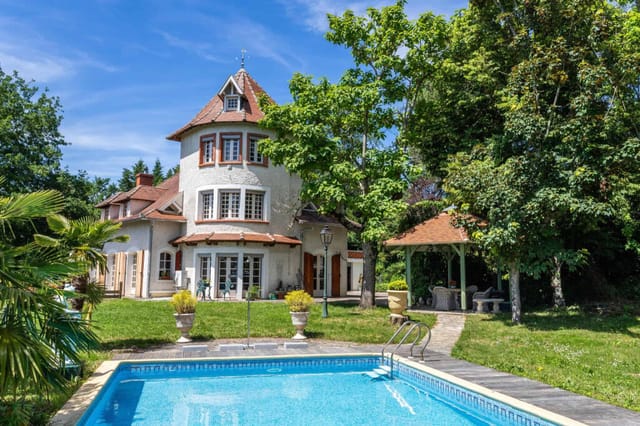
Stand on the east-facing terrace at eight in the morning with a café au lait going cold in your hand, and you'll understand immediately why someone built this house right here. The Pyrenees sit on the horizon like a painted backdrop — sharp and white in February, hazy blue-grey by August — and the fields between you and them roll in long, unhurried waves. No road noise. No neighbors pressing close. Just the occasional clatter of a woodpecker somewhere in the orchard across the lane. This is Sariac-Magnoac, a scatter of farmsteads and country houses in the Hautes-Pyrénées department of southwest France, tucked between Castelnau-Magnoac to the north and Boulogne-sur-Gesse to the south. It's not a postcard village with a café-tabac on the square and tourists photographing the fountain. It's quieter and more genuine than that — the kind of place where the weekly market at Castelnau on a Friday morning still feels like an actual event, where the boulangerie runs out of croissants by nine, and where your neighbours wave from their tractors. The villa itself was built in the spirit of Basque chalet architecture — warm, solid, unapologetically rural. Exposed wooden beams run through nearly every room, visible in the ceilings of the basement workshop, framing the sleeping quarters upstairs, and arching above the 36-square-metre living room on the main floor. The combination of concrete and timber gives the structure a reassuring permanence, and those chunky original window frames with their particular closing mechanisms are the sort of detail you either find endearing immediately or don't — if you've made it this far into the description, you probably do. Spread across three levels, the house totals around 180 square metres of ... click here to read more

Front view of the villa and garden

Picture this: it's a Saturday morning in late June, and the Baltic light is already streaming through the west-facing windows by seven. You pull open the terrace door, coffee in hand, and the smell of pine and cut grass drifts in from a garden that stretches out across 1,462 square meters of your own land. The neighbor's kids are already on their bikes. Somewhere down the road, toward the water, a motorboat engine turns over. This is Enviken life — and once you've tasted it, it's hard to let go. Himlajordsbacken 14 sits on an elevated plot in the Enviken area of Norrtälje municipality, about 550 meters from the shoreline of the Stockholm Archipelago's southern reaches. Norrtälje itself is one of the most sought-after second-home corridors in Sweden — a fact that has kept property values here consistently strong while the area has held onto its genuine, unpolished character. This isn't a resort development. It's a real community with working families, local traditions, and a landscape that changes dramatically with the seasons. The house was built in 1975 and covers 56 square meters of interior space — a compact but intelligently laid out footprint that doesn't waste a centimeter. Living room, open kitchen, two bedrooms, one bathroom. The layout is honest and functional. Large windows pull in light from morning to dusk, and the open connection between the kitchen and living area means the space lives larger than the numbers suggest. The west-facing terrace off the main room is the kind of outdoor space that justifies everything: dinner outside on long summer evenings, a glass of wine as the light softens over the garden, a spot for the kids to leave their boots after a muddy afternoon in the woods. Critically, this is ... click here to read more

Exterior view of the house and garden

Step outside on a Tuesday morning in early October and the only sound you'll hear is wind moving through the birch trees at the edge of the garden. No traffic. No neighbors close enough to matter. Just the soft creak of branches and the particular kind of quiet that Belgium's Kempen region does better than almost anywhere in northwest Europe. That's daily life at this compact, move-in ready bungalow on Verbindingsstraat in Merksplas — a property that punches well above its size through smart design, a genuinely impressive 1,148-square-meter plot, and an energy setup so efficient the running costs will make you rethink what a second home can cost to maintain. Built between 2022 and 2024, the bungalow sits in a recreational wooded zone on the outskirts of Merksplas, a small Flemish municipality about 45 kilometers northeast of Antwerp. The plot wraps around the house on all sides, giving you garden views from every room. Mature trees anchor the perimeter. Multiple seating areas mean you can follow the sun across the day — and the west-facing orientation means long, golden late-afternoon light floods the rear terrace through spring, summer, and well into autumn. Inside, 62 square meters sounds modest until you stand in the main living space and realize how well the layout breathes. The living room and open kitchen run together across roughly 37 square meters — polished concrete floors underfoot, underfloor heating humming quietly beneath, large sliding doors opening directly onto the garden. On cold February weekends, that floor stays warm from the Vaillant heat pump alone. In July, you prop the doors open and the garden effectively becomes an extra room. The kitchen is the kind of setup that makes cooking feel purposef ... click here to read more

Front view of Verbindingsstraat 1

Picture this: a Saturday morning in mid-July, coffee in hand, sitting on a 59-square-meter wrap-around terrace while the Trondheim Fjord glitters just a hundred meters downhill. The air smells of pine and salt. A boat putters somewhere out of sight. That's not a fantasy — that's a typical morning at Brassetveien 94. This two-bedroom chalet sits in Åfjord, a coastal municipality in Trøndelag that most international buyers haven't discovered yet — which is precisely why it's worth paying attention to. Åfjord isn't trying to be a resort town. It's the real Norway: unhurried, deeply connected to the sea and the forest, and refreshingly free of the tourist infrastructure that irons out the rough, interesting edges of a place. The chalet itself was built in 1982 and has been kept in genuinely good condition. At 61 square meters of interior space, it's compact but well thought out. Nothing feels squeezed. The main living area is anchored by a fireplace — the kind you'll be extremely grateful for when October arrives and the birch trees outside start dropping their leaves in the wind. Large windows pull in natural light and frame the surrounding landscape like a painting you never get tired of. There's room for a proper dining table, which matters when you have family visiting and want meals to feel like events rather than afterthoughts. The kitchen is practical and open to the living space, so whoever's cooking doesn't end up exiled from the conversation. Two bedrooms handle family stays or a combination of sleeping quarters and a small home office for those remote-work weeks. The bathroom covers everything you need. Out back, a 10-square-meter storage room takes care of kayak paddles, fishing gear, skis, and all the other e ... click here to read more
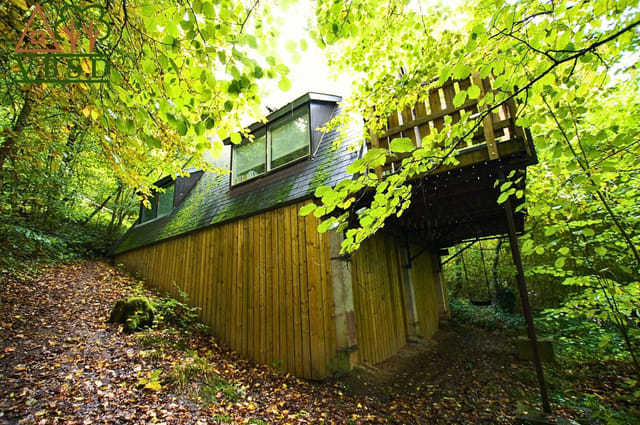
Welcome to Brassetveien 94!

Pull on your ski boots, step outside, and you're already on the trail. That's the daily reality at this four-bedroom mountain chalet on Golsfjellet, where the groomed cross-country tracks of one of Norway's most celebrated highland destinations run directly past the garden fence. No driving to a trailhead. No waiting for a lift. Just cold mountain air, the soft crunch of fresh snow underfoot, and a full day of skiing before you've even had your second cup of coffee. Sitting at around 865 meters above sea level along Valdresvegen in Gol, this well-kept chalet occupies a generous 5,014 square meter plot — roughly the size of a football pitch — with open southern exposure that catches the sun from morning to late afternoon in summer. The panoramic outlook toward Bualie, the local peak that anchors the skyline here, is the kind of view you stop noticing only when it's gone. In winter the hillside turns white and still. In July it's all green slopes, wildflowers, and the distant sound of cowbells drifting up from the valley. The cabin itself is a single-level layout, which sounds modest until you're actually inside. The 2005 extension added two bedrooms and significantly opened up the living room, which now has real breathing space — enough for a full family to spread out after a long day on the trails without anyone feeling crowded. The fireplace anchors one end of the room, and a heat pump installed in 2023 keeps things warm with far less effort on nights when the temperature drops below minus fifteen. Large windows frame the view toward Bualie from the main sitting area, and in the long Nordic winter evenings, the combination of firelight and snow light through the glass is genuinely hard to leave. The kitchen is functi ... click here to read more
Welcome to Valdresvegen 1736 and this charming mountain property!

Picture this: you cut the engine, the boat drifts the last few meters to the jetty, and the only sound left is water slapping softly against the granite. No neighbors. No traffic. Just the smell of sun-warmed pine resin and the faint call of a common tern somewhere out over Skrävlafjärden. The entire island is yours. Every rock, every handful of sand, every inch of shoreline — yours. This is what owning a private island in the Stockholm archipelago actually feels like. Not a fantasy. A real, registered, freehold property sitting on 1,825 square meters of your own land surrounded by the water of Värmdö's inner archipelago, roughly 35 kilometers east of Stockholm's city center. The island itself does a lot of the heavy lifting. Sandy beaches to the north and south — proper sand, not the pebbly disappointment you get elsewhere — give way to wide slabs of smooth granite that hold the afternoon sun long after five o'clock. Swedish summers are short and fiercely lived, and this island is set up for exactly that: the west-facing jetty deck is big enough for a proper outdoor dining table, a couple of sun loungers, and still leaves room to move. Sunsets here hit the water directly. Every evening in June and July, when the sky goes amber and the reflections stretch across the fjord, you'll understand why people pay any price for this view. Getting here is easier than it sounds. Evlinge on the mainland is the departure point — a short, uncomplicated boat trip even if you're new to navigating these waters. Multiple jetties wrap around the island, so docking is never a scramble regardless of wind direction. Day trippers and experienced sailors have both managed it first try. Stockholm's Slussen takes around 40 minutes by car to re ... click here to read more
Main cottage and jetty deck

On a clear morning in September, you slide open the terrace doors and the air hits you — cool from the Pyrenees, carrying the faint resin of pine and something faintly herby from the meadows beyond the hedge. The mountains are right there, enormous and unhurried, framing the garden like they've always been waiting to be noticed. This is Daumazan-sur-Arize, and once you've had a week here, the idea of not owning a piece of it starts to feel genuinely unreasonable. Situated within the well-established Château Cazalères holiday park in the Ariège département of southern France, this three-bedroom villa sits on its own 460 m² plot and offers a genuinely comfortable base for exploring one of the most underrated corners of the French countryside. Not a renovation project. Not a weekend fixer-upper. A fully furnished, move-in ready property at a price — €179,500 — that would barely buy you a studio in Toulouse, just 70 kilometres north up the A66. The villa runs to 100 m² across two floors and has been furnished with the kind of practical thought that actually serves a holiday home well. Ground floor living centres on a bright sitting room with a proper sofa, a pair of armchairs, and large sliding doors that dissolve the boundary between inside and garden. The dining table seats six comfortably — important when the extended family descends in August. The kitchen is fully equipped with a four-burner gas hob, electric oven, dishwasher, and a tall fridge-freezer. No hunting around for a corkscrew on arrival. Everything is here. The master bedroom sits on the ground floor, which matters more than people think — no stairs to navigate after a long day's hiking. Upstairs, two more double bedrooms each have their own storage, and on ... click here to read more
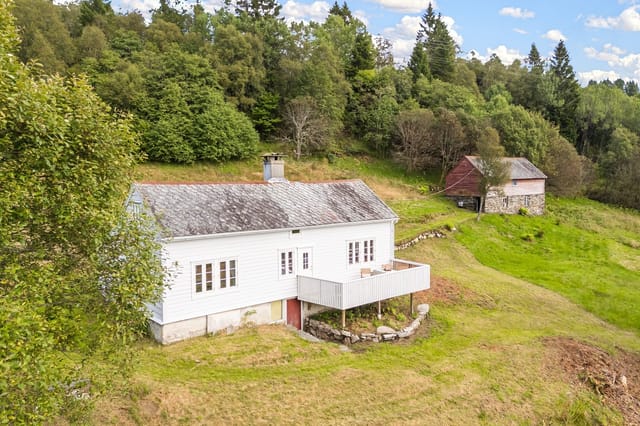
Photo 1 of Residence Chateau Cazaleres 121

On a still July morning at Krambuneset 87, the only sounds are the creak of the wooden pier, the soft lap of the Gandsfjord against the hull of a fishing boat, and coffee percolating in the kitchen while the sun climbs over the treeline and floods the dining room with that particular Nordic gold that doesn't arrive anywhere else quite like this. That's the daily rhythm here. Unhurried, grounded, real. Hommersåk sits on the eastern shore of the Gandsfjord, roughly 15 kilometers southeast of Stavanger, and it carries a kind of quiet confidence that resort towns can't manufacture. This is a working coastal community that also happens to be extraordinarily beautiful — rocky outcroppings, pine-edged inlets, wooden jetties stretching into clear water — and this three-bedroom chalet has a front-row position at Sjølvik, one of the area's most coveted shoreline pockets. The chalet itself was first built in 1943, expanded in 1985, and today sits across 88 square meters of well-organized interior space on a generous 1,753-square-meter freehold plot. The bones are solid. The condition is good, move-in ready, and honest — no developer gloss, just a well-kept Norwegian cabin that's been genuinely lived in and genuinely loved. Pull back the curtains in the living room and you get sea views. Open the kitchen window and you smell pine and salt. Step onto the 91-square-meter tiered terrace — spread across several levels of decking — and you understand immediately why people fight for properties in this specific stretch of the fjord. That terrace deserves particular attention. It was clearly designed by someone who understood how Norwegian light moves throughout the day, because different sections catch the sun at different hours, meani ... click here to read more
Welcome to Krambuneset 87! - Presented by Thomas Walde, Aktiv Sandnes

Step outside on a clear September morning and the light does something you won't see further south. It comes in low and golden across the Bjørnfjell plateau, catches the frost on the heather, and turns the whole valley into something you'd struggle to describe to someone who hasn't seen it. That's the view from the terraces at Søsterbekk 34. Not a postcard version of Norway — the real thing, right outside the door. This two-bedroom holiday chalet sits in one of northern Norway's most accessible yet genuinely wild corners. Bjørnfjell straddles the Norwegian-Swedish border at roughly 500 metres above sea level, and the mountain terrain up here is serious. We're talking the kind of landscape where you can spend a full August day hiking to a ridge above Rombaksfjorden and come back having seen nobody. Or ski out directly from the cabin in January when a metre of powder has settled overnight and Narvik's ski centre — one of the most underrated freeride destinations in all of Scandinavia — is a short drive down the E6. The cabin itself was originally built in 1962, which gives it that particular solidity you get with older Norwegian mountain construction. A full renovation and extension carried out in 2016 brought it firmly into the present: new kitchen fitted that year, updated interiors, and an annex added to give the property real flexibility. Total indoor living space runs to 69 square metres, with an extra 15 square metres of external usable area and a plot of around 1,000 square metres — generous by any mountain standard. The land is leased rather than owned outright, which keeps acquisition costs and annual fees low. Annual ground rent comes in at just 2,035 NOK, and municipal fees are an additional 2,340 NOK per year ... click here to read more
Easter-ready holiday home with beautiful location at Søsterbekk! Great views and sun exposure.

Step out the front door on a January morning and the only sound you'll hear is your own breath in the cold mountain air. The ski tracks at Golsfjellet are 350 meters away — close enough to reach in your boots — and the peaks around Tisleidalen are catching the first pale light of a Norwegian winter sunrise. This is what owning a cabin at roughly 900 meters above sea level actually feels like. Not a weekend fantasy. A real, year-round retreat you can get to, use, and genuinely love. Sitting at the end of a quiet gravel lane off Ellinghaugvegen, the property occupies a fenced 1,312-square-meter plot right on the boundary between Valdres and Hallingdal — two of inland Norway's most celebrated mountain regions. It's a subtle but meaningful position. You get the hiking breadth of Valdresflye to the north and the ski infrastructure of Golsfjellet immediately on your doorstep. The cabin itself was built in 1978 and has been kept in good, honest condition: timber walls darkened by decades of woodsmoke, checkered windows that frame the marshland views, and a traditional sod roof that looks exactly right against the surrounding heathland. Some things you don't update, and the owners here have understood which things those are. Inside, the living room is compact but genuinely comfortable — seating for six or seven, a fireplace with glass doors that throws heat across the space on cold evenings, and a heat pump installed in 2025 that can be adjusted remotely via app before you even leave the city. That's a practical detail worth underscoring: you can have the cabin warm and ready by the time your car reaches Fagernes. The kitchen runs along one wall with proper cabinet storage, room for a full-size refrigerator, and a dining area ... click here to read more
Winter atmosphere from the driveway to the property

Step outside on a February morning in Björnrike and the silence hits you first. Not the absence of sound, but a full, weighted quiet that only comes when a meter of fresh snow has settled overnight over spruce forest and open fell. The ski slopes of Vemdalen are warming up three kilometers away. You can smell the cold. This is what you came for. Sitting on Duvstigen 6, this 112-square-meter country home has been a proper Swedish mountain retreat since it went up in 1977. It's solid, well-kept, and honest about what it is — a place built for people who actually use mountains rather than just look at them. The 2,133-square-meter plot gives you room to breathe in every season, surrounded by birch and pine that turn the light gold in late summer and hold a blue shadow through the short winter afternoons. Come in from a morning on the slopes and the wood-burning stove in the living area will be the first thing on your mind. This house has both — a wood burner and an open fireplace — and if you've ever spent a Swedish January properly, you'll understand why that matters. The open-plan kitchen and living room keep everyone together without crowding anyone, the large windows pulling the mountain view right into the room. Afternoon light in early March, when the sun finally climbs high enough to pour through those windows and hit the timber floors, is something you will not forget quickly. Then there's the sauna. In Sweden this isn't a luxury add-on; it's infrastructure. After a long day on the cross-country trails through Härjedalen's Sonfjället National Park or a full afternoon of downhill at the Vemdalen ski system — which links Björnrike, Klövsjö, and Storhogna into one of the largest ski areas in Sweden — the private saun ... click here to read more
Exterior view of the holiday home

Step out onto the 74-square-metre terrace at seven in the morning, coffee in hand, and watch the Karpelva river catch the Arctic light as it moves through the valley below. The water is clear enough to see the shadows of sea trout holding against the current. This is not a description of a weekend fantasy — this is Tuesday in Jarfjord. Sitting on Jarfjordveien 752, this fully renovated two-bedroom chalet is one of those rare finds that makes you wonder why you waited so long. At 115,000 euros for a move-in-ready holiday property with almost 900 square metres of land, direct river access, and a terrace bigger than most city apartments, the maths are hard to argue with. But the numbers are almost beside the point. What you're really buying here is a front-row seat to one of the quietest, most unspoiled corners of northern Norway — and a base camp for a lifestyle that most people only read about. Jarfjord sits in Sør-Varanger municipality in Finnmark, the northernmost county in Norway and in all of mainland Europe. This is proper far north — the kind of place where the midnight sun runs from late May through late July, flooding every room with golden light well past midnight, and where the northern lights appear overhead from late August onwards with a regularity that still stops you cold every single time. The light here does things to a landscape that lower latitudes simply can't replicate. The chalet itself was built in 1955 but you'd never know it. A complete top-to-bottom renovation has left the interior sharp, functional, and genuinely comfortable. The open-plan living and kitchen area is the social heart of the cabin — generous panoramic windows pull the river and the treeline into the room, making the outside fee ... click here to read more
Advokatfirmaet Herstad AS presents Jarfjordveien 752 - a fully renovated holiday home a stone's throw from Karpelva!

Step outside on a September morning, coffee in hand, and the air carries the faint sweetness of fallen plums from the old orchard. Nothing moves except a pair of cranes crossing low over the meadow. No traffic. No sirens. Just the slow exhale of the Swedish countryside doing its thing. That's what you get at the end of Nordankil Annelund — a gravel track that the rest of the world simply forgot to follow. This three-bedroom house in Möklinta, Sala kommun, sits on a full 5,000 square meters of mixed garden, paddock, and open lawn, with forest pressing quietly at the edges. Built in 1909 and in good condition throughout, it carries that particular solidity you find in old Swedish rural homes — thick walls, purposeful rooms, windows sized to frame the landscape rather than just admit light. At 80 square meters, the interior is compact but not cramped. Everything is where it needs to be. Heating here is a combination that makes sense for this latitude: a modern air-source heat pump takes the heavy lifting, a wood-burning stove in the living room handles the mood-setting, and direct electric heating fills in wherever needed. Sit by that stove on a January evening when the thermometer dips to minus fifteen and the birches outside are glazed with frost, and you'll understand why Swedes have perfected the art of being indoors. The kitchen is functional and generous — proper counter space, room to move — and it faces out toward the garden where those apple and plum trees have been producing for longer than anyone can remember. High-speed fiber internet is already installed, which matters if you plan to work remotely or split your time between here and an urban base. The three bedrooms are quiet in the way that only genuinely r ... click here to read more
Front view of the house and garden

Step outside at dawn and the only sound you'll hear is wind moving through the heather. No traffic, no notifications, no noise — just open Norwegian mountain land stretching out in every direction, and the faint smell of birch smoke still clinging to the air from last night's fire. That's morning at Borsævegen 882, a traditional timber cabin sitting at 713 meters above sea level in the Skafsåheii highlands of Tokke municipality. It's the kind of place that slows your pulse within an hour of arriving. This is a proper Norwegian hytte — built in 1970, honest in its simplicity, and set up precisely the way a mountain cabin should be. Fifty-three square metres of indoor space, three bedrooms, an open living room and kitchen with a wood-burning fireplace, and a covered entrance terrace where you can pull your boots off and watch clouds roll over the valley below. Nothing superfluous. Everything you actually need. The cabin comes fully furnished, so there's no waiting period, no shipping of furniture from a city apartment — you drive up, unlock the door, and the place is already yours in every practical sense. The off-grid setup is one of the most compelling things about this property, and increasingly rare to find done this well. A solar panel system installed in 2023 handles the basics — lighting, a television, mobile charging — without requiring any connection to the national grid. Water comes from a nearby stream. There's a composting toilet and a simple washroom. For buyers who've been thinking seriously about reducing their ecological footprint, or who simply want a retreat that operates on its own terms rather than tied to utility infrastructure, this cabin makes that lifestyle genuinely accessible. It's not roughing ... click here to read more
Welcome to Borsævegen 882! Photo: Boligfotograf1

Step outside on a July morning and the air smells of pine resin warming in the sun. Värmdö's bedrock — smooth, grey, and ancient — catches the light just beyond the kitchen window. The archipelago is literally down the road, 350 metres away across the grass, and Torsbyfjärden glitters through the treeline like something you'd only expect to find in a travel magazine. This is Södernäsvägen 22. And it's as real as it gets. The plot alone stops people in their tracks. Three thousand, one hundred and thirteen square metres of natural Swedish landscape — exposed rock shelves, flat grassy clearings, birch and pine threading the edges. It shares a boundary with a public green area, which means the land to one side can never be built on. Rare. The elevated ground catches sun from morning through late afternoon, and in Swedish summer, that matters enormously — you're talking about evenings that stretch past 10pm with enough warmth to sit outside with a glass of something cold and still feel the day on your skin. The timber house itself was built in 1972 and has been kept in good condition over the decades. There's a warmth to these older Swedish summer houses that newer builds rarely replicate — the wood has settled, the proportions feel human-scale, and the open fireplace in the living room is the kind of feature you don't realise you need until you're sitting in front of it on a grey October weekend with rain tapping on the roof. The living room flows into the kitchen-dining area, practical and unpretentious, and the bedroom is generously sized for a house of 55 square metres. One bathroom. Everything you actually need, nothing you don't. What makes this property genuinely versatile is the outbuilding. Currently split betwee ... click here to read more
Front view of the timber house and natural plot

Early July in Kvarnfors and the sun barely dips below the horizon. By ten in the evening, the light outside is still this warm amber gold, and you're sitting on the grass with a coffee, listening to absolutely nothing except a woodpecker somewhere in the birch trees behind the shed. That's the kind of quiet that takes a few days to get used to — the kind you start craving the moment you leave. Kvarnfors 117 sits along the quiet rural road of Kvarnfors-Gravmark, about 30 kilometres southwest of Umeå in Västerbotten county. The address means very little to most people outside northern Sweden, and honestly, that's part of the appeal. This isn't a property on a tourist circuit. It's a proper Swedish countryside retreat — the kind of place Swedish families have been returning to summer after summer for generations — and it's now available to international buyers looking for something real. The house itself was built in 1975 and covers 59 square metres across a sensible, uncluttered layout: a living room, a functional kitchen, two bedrooms, and a bathroom. Nothing excessive. That's deliberate. Swedish summer houses at this price point aren't about square footage — they're about the 1,996 square metres of land around them, the trees at the border of the plot, the water 550 metres down the track. The house is the base camp. Life happens outside. Inside, large windows pull the greenery in. The living room catches afternoon light well, and in midsummer, the brightness lasts so long you keep forgetting what time it is. The kitchen is practical — set up for real cooking, not just reheating — and after a day picking wild blueberries or paddling on Kvarnforssjön, the ability to cook a proper meal matters. Both bedrooms sleep adults ... click here to read more
Front view of the house and garden