Houses For Sale In Belgium

Houses for sale in belgium - homestra offers the largest amount of european real estate with over 200,000+ properties, find any type of property within your budget from villas to country homes. buy or rent your perfect home in europe.

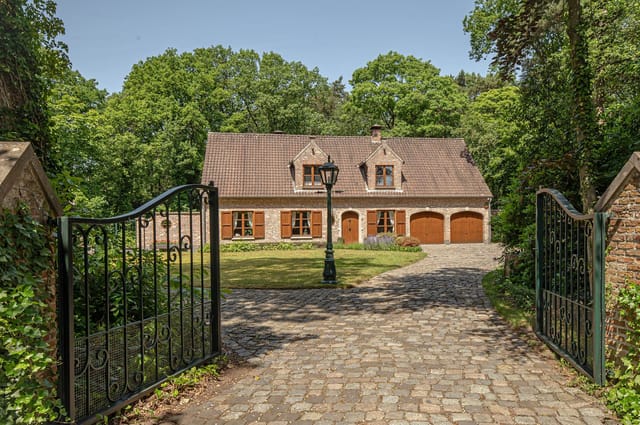
Step outside on a Saturday morning at Linkesstraat 8 and the first thing you notice is the silence. Not the uneasy kind—the rich, layered kind. Wind through the tops of old beeches. A woodpecker somewhere deep in the tree line. The smell of damp grass and pine drifting across a garden so large it takes a moment to find the edges. This is Gewaai, the quietest hamlet in Zutendaal, and this house sits at the very end of it, with forest on one side and open agricultural land rolling out behind. The plot alone is extraordinary. Just over 5,069 square metres, which is not a number that means much until you're standing in it. There's room for a proper kitchen garden, a trampoline, a fire pit, multiple seating areas, and still enough lawn left over that the kids disappear for an hour without anyone worrying. A 35-square-metre garden house handles the overflow of bikes, tools, kayaks, and everything else that accumulates when you actually use the outdoors. The double carport—nearly six metres wide—keeps both cars sheltered year-round. The house itself was completely renovated in 2005 and has been maintained with care since. Ground floor living is anchored by a generous 73-square-metre open-plan space that combines the living room and kitchen under ceilings reaching 2.70 metres. Natural slate floors run throughout this level, warmed from below by underfloor heating that means bare feet in January are entirely reasonable. A cast iron wood stove sits in the living room and, yes, the wood is included—so the first winter evening is sorted before you've even unpacked. Large windows face the garden on multiple sides, which means the light shifts beautifully through the day and every season brings a different view: frost-edged grass in ... click here to read more

Front view of Linkesstraat 8
New

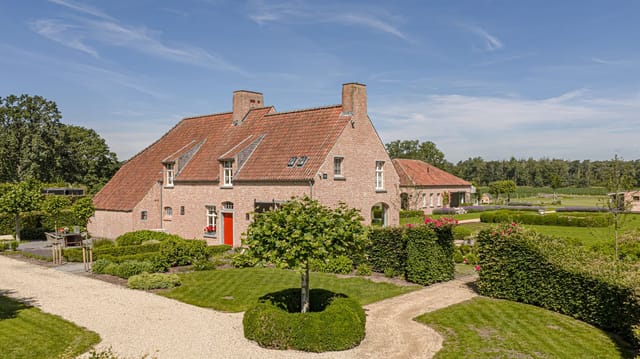
Stand in the back garden on a Saturday morning, coffee in hand, and you can hear the church bells from Sint-Pietersberg drifting across the Jeker valley. Five minutes later, you could be cycling into Maastricht along the river path, arriving at the Markt square in time for the weekend market. That's the daily reality of life at Statiestraat 54 in Kanne — a village so close to the Dutch border that you genuinely straddle two countries, two cultures, and two entirely different rhythms of life, all from one address. Kanne is one of those places that hasn't been discovered by the crowds yet, and locals prefer it that way. The village sits in the Belgian province of Limburg, tucked into the Jeker river valley just below the cliff face where the legendary Château Neercanne rises — the only working terraced wine château in the Benelux region, where you can book a table for Sunday lunch and eat house-smoked salmon with a glass of Moselle white while looking out over the vineyards. That's ten minutes on foot from this front door. The walking and cycling infrastructure here is serious — the Voerendaal to Tongeren cycling route passes right through, and the chalk cave trail beneath Sint-Pietersberg is something that still surprises first-time visitors, an entire underground world of galleries and war history carved into the limestone hill. The house itself was built in 1959 and carries that solidity that post-war Belgian construction is known for — thick walls, generous proportions, a sense that the building was made to last. It has been updated thoughtfully over the decades rather than gutted and neutralised. The bathroom was fully renovated in 2021 with contemporary fixtures and a proper walk-in shower. Fourteen solar panels on ... click here to read more

Front view of Statiestraat 54
New

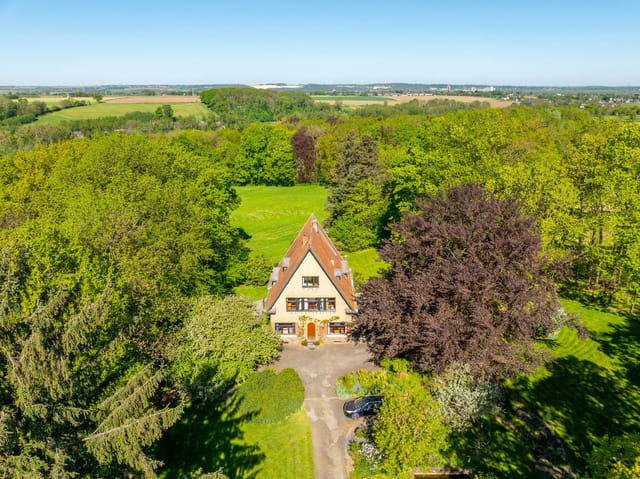
Step outside on a Saturday morning in Hechtel and the air already tells you something is different. It carries pine resin from the Bosland forest, a vast 5,500-hectare wilderness of trails, heathland, and cycling paths that begins practically at the end of the street. This isn't a suburb pretending to be countryside. It's the real thing — and Verloren Eind 25 sits right in the thick of it. The house itself was built in 1992, but don't let that date fool you. A thorough renovation carried out between 2020 and 2021 stripped it back and rebuilt it properly, with materials chosen for longevity rather than appearance. A second bathroom followed in 2026. The result is 243 square metres of genuinely move-in-ready living space on a 961-square-metre plot — the kind of footprint that lets a garden actually breathe. Walk through the front door and the hallway opens wide, light coming in from multiple angles. The ground floor is fully accessible and liveable, which matters more than most buyers initially realise — it means flexibility for a multi-generational family, a guest who needs single-level access, or simply the freedom to age gracefully in a home you love. The open living and dining area is anchored by large windows that frame the garden rather than just overlook it. On a grey February afternoon, that garden still manages to look alive. In July, when Belgian summers surprise everyone with their warmth, the terrace becomes the most-used room in the house. The kitchen is fitted for people who actually cook. Solid appliances, proper storage, counter space that doesn't run out the moment you start prepping a Sunday roast. It connects naturally to the dining area so conversations don't get interrupted by walls. Four bedrooms ... click here to read more

Photo 1 of Verloren Eind 25
New

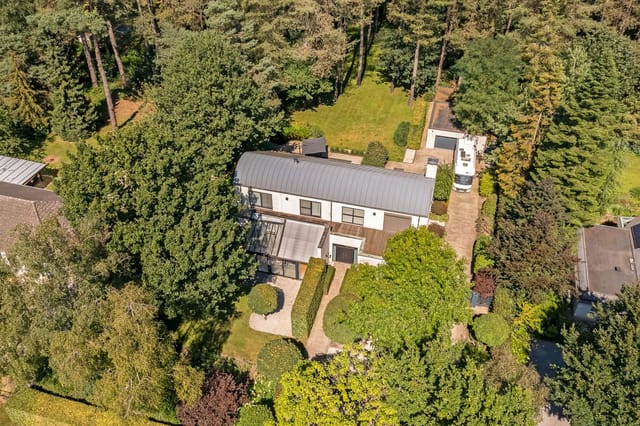
Saturday morning in Eksel starts with the smell of fresh bread drifting from the bakery two doors down on Marktplein. You open the living room's large windows, let the village sounds in — a cyclist ringing a bell, the low hum of conversation at the café terrace — and pour a coffee before anyone else in the house is awake. That quiet, unhurried rhythm is what makes this address so hard to walk away from. Marktplein 17 sits directly on Eksel's central square, which sounds like it should be noisy, but isn't. This is a Flemish village of about 4,000 people in the Limburg province, part of the broader Kempen heathland region — flat, forested, and fiercely underrated as a base for anyone seeking real Belgian countryside life rather than a postcard version of it. The house itself is a solidly built detached property, originally constructed in 1954 and put through a thorough renovation in 2010 that brought everything up to a genuinely modern standard. At 272 square meters of interior space on a 1,033-square-meter plot, it's one of the larger private homes on the square, and it shows. Inside, the scale hits you immediately. The entrance hallway is wide and welcoming — not the narrow corridor you often find in Belgian village homes of this era. It opens into a living room where a built-in gas fireplace anchors the space. On rainy November afternoons, and there will be rainy November afternoons in Limburg, that fireplace earns its place. The room gets light from generous windows that look out toward the square; you catch the weekly market stalls being set up on Friday evenings, the brass band rehearsing in the community hall across the way in spring. There's a particular pleasure in being at the center of a village's small, relia ... click here to read more
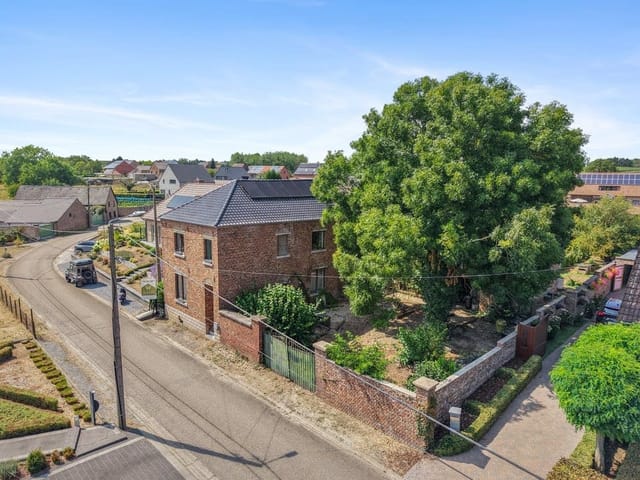
Photo 1 of Marktplein 17
New

Step inside on a quiet Tuesday morning in Vliermaalroot and the first thing you notice is the light. Southwest-facing windows pull the sun deep into the living room from mid-morning until the last gold slips behind the Haspengouw farmland in the evening. Old Beerse brick on the facade, blue stone detailing at the threshold, solid oak underfoot — this is a house built the way Flemish craftsmen used to build them, except the boiler room holds a heat pump and 8 kWp of solar panels are quietly generating more electricity than a family of five will ever use. This is what makes this 310-square-meter pastorijwoning in Kortessem so compelling as a Belgian second home or vacation property: it carries the visual weight and presence of a classic Flemish manor house while running on near-zero energy, with an E-peil score under 20. That kind of combination is genuinely rare in this price bracket. The house sits on Bornstraat 17a in the hamlet of Vliermaalroot, which is technically part of the wider Kortessem municipality — but locals will tell you it feels like a village unto itself. Slow. Green. The kind of place where the school is 500 meters away on foot and the pharmacy is the same distance in the other direction. There are no traffic lights. There is, however, a cycling route that loops out through the fruit orchards of Haspengouw — one of Belgium's most productive agricultural regions, famous for its apple and pear blossoms in April, when the whole landscape turns white and the roadside farm stalls start selling freshly pressed juice. Six bedrooms across three floors gives the property a flexibility that's hard to find in new-build stock. The ground floor sets the tone: a wide entrance hall opens to a versatile room that wor ... click here to read more
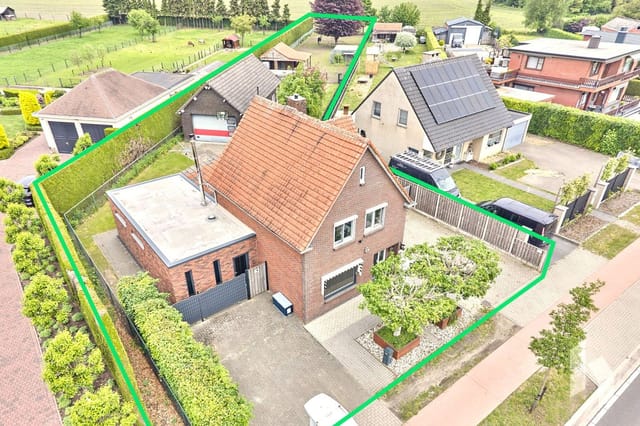
Photo 1 of Bornstraat 17a
New

On a warm June evening in Hamont-Achel, you slide open the doors from the extension into the garden, the pool deck already rolled back, kids splashing in the heated water while the poolhouse gas stove keeps the evening chill at bay. The smell of pine drifts in from the Bosstraat treeline. The solar panels have been quietly charging everything all day — the car, the heat pump, the house — and your energy bill is, for the third month in a row, essentially nothing. This is not a fantasy. This is Tuesday at Bosstraat 62. Belgium's Limburg province doesn't get the international press that the Ardennes or Brussels do, but locals know exactly what they have. Hamont-Achel sits right at the northern tip of Belgian Limburg, pressed against the Dutch border near Valkenswaard and a short drive from Eindhoven. The landscape here is flat, forested heathland — the Kempen region — criss-crossed by hundreds of kilometres of dedicated cycling paths that weave through nature reserves like the Averbode Abbey woods and the Hoge Kempen National Park. On weekends, the Bosstraat neighbourhood is quiet enough to hear woodpeckers. On weekday mornings, you're on the E314 motorway within fifteen minutes, which puts Hasselt in forty and Brussels in ninety. The town itself punches well above its size. The Achel Trappist Brewery, one of the last authentic Trappist producers in the world, is just a few kilometres down the road — you can pick up their distinctive amber ales directly at the source. The Saturday market on the Marktplein fills up with local cheese, fresh-cut flowers, and Limburg vlaai (the regional custard tart that every Belgian will insist is better here than anywhere else). There are solid neighbourhood restaurants doing Belgian class ... click here to read more
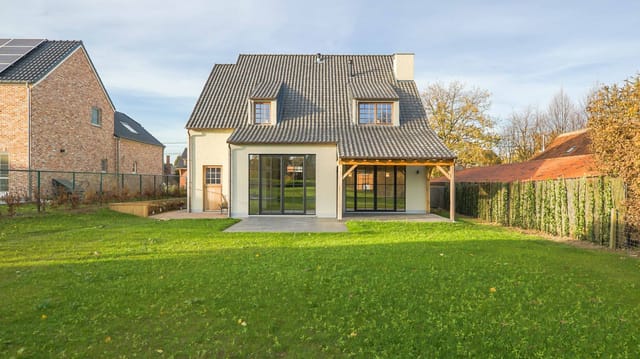
Front view of Bosstraat 62
New

Step outside on a Saturday morning in late September and the air in Oud-Turnhout carries something particular — damp grass, woodsmoke drifting from a neighbor's chimney, and the faint sound of church bells rolling in from across the Kempen flatlands. Standing on the veranda at Steenweg op Ravels 305, coffee in hand, the enclosed garden stretches out ahead of you: the pond catching the early light, the slight rise and fall of the lawn that makes the whole plot feel more generous than its 1,395 square meters already are. It's quiet in the way that only the Belgian countryside gets quiet. That's not nothing. This four-bedroom detached house is the kind of second home that works on every level — spacious enough for a full family, private enough to actually unwind, and set in one of the most underrated corners of Flanders. Oud-Turnhout sits in the Antwerp province, right at the edge of the Turnhoutse Vennen nature reserve, a vast network of heathland, pine forests, and small lakes that stretches across the Belgian-Dutch border. Cyclists and hikers know this area well. The Kempen cycling route passes practically at the doorstep, linking up with hundreds of kilometers of marked trails through landscapes that look lifted from a Bruegel painting — flat horizons, birch trees, the occasional windmill. On a clear winter afternoon, when the heather has gone brown and the light turns that particular amber, it's genuinely hard to look away. The house itself was built in 1956, and it has the bones you'd expect from that era — solid masonry, a traditional gabled tile roof, thick walls that hold warmth. Over the years it's been genuinely well-kept, not just cosmetically refreshed. Double glazing throughout, a gas-fired combination boile ... click here to read more
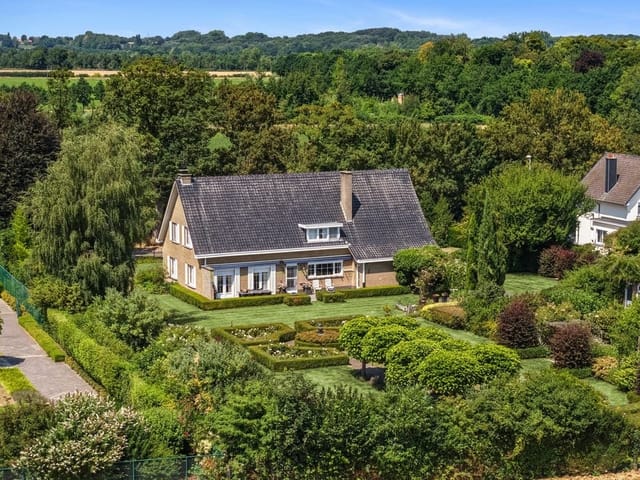
Front view of Steenweg op Ravels 305
New

Saturday morning in Opoeteren has a particular sound. Birdsong from the tree line beyond the back fence. A lawnmower a few houses down. The faint clatter of a coffee cup on the covered terrace, where 28 square metres of sheltered outdoor space face a fully enclosed garden that stretches far enough to make you forget there are neighbours at all. This is the pace of life at Dornernieuwstraat 50 — and once you've spent a weekend here, the city you came from starts to feel a long way away. Set in the Flemish municipality of Maaseik, just a short drive from the Dutch border and the broader Limburg lake district, this 141 m² detached house sits on a generous 2,008 m² plot. Three bedrooms, one well-equipped bathroom, a sprawling basement with a 52 m² garage, and an attic spanning roughly 140 m² that's just waiting for someone with a vision. The house was built in 1974 and is in good condition — solid, practical, and ready to be made your own, whether that means a weekend retreat, a full-time residence, or a longer-term investment in one of Belgium's quietly desirable rural corners. Walk through the front gate and the first thing you notice is space. Real space — the kind that's increasingly hard to find at this price point in the Benelux region. A paved path leads to the entrance, the rear garden is fully fenced with an automatic gate, and the covered terrace runs along the back of the house with open views across the lawn. On a warm July evening, with the doors from the 42 m² L-shaped living room flung open and the terrace laid with a long dinner table, this is the property that earns its keep. That living room is the heart of the house. Large windows pull in natural light from the garden side, and the layout — open, unfuss ... click here to read more
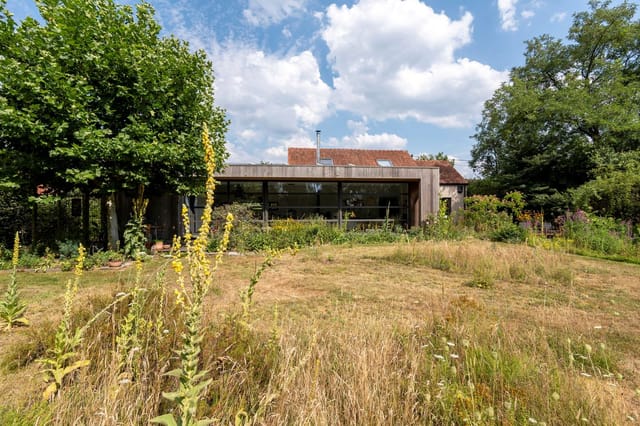
Front view of Dornernieuwstraat 50, Maaseik
New

Step out onto the master bedroom balcony on a Saturday morning in October, coffee in hand, and watch the mist lift slowly off the meadows that run all the way to the treeline. That view — unbroken, unhurried, nothing but green — is the quiet headline of this property. Everything else is detail. Set on Leeuweriklaan in the prestigious villa district of Aarleheide in Poppel, this 300 m² four-bedroom villa sits on a generous 1,800 m² plot in one of Belgian Kempen's most coveted corners. Ravels municipality has long attracted those who want real countryside without sacrificing proximity to cities — Brussels is under two hours, Antwerp just 60 kilometres south, and the Dutch city of Tilburg is a 20-minute drive across the border. For international buyers looking for a second home in Belgium that genuinely delivers on the "escape" promise, this part of north Antwerp province delivers in ways that the more advertised coastal towns simply can't. The neighbourhood itself sets the tone the moment you turn into the street. Wide plots, mature trees, long driveways. No terrace houses, no apartment blocks. An electric entrance gate opens onto a broad driveway flanked by clipped hedging, and the scale of the property becomes clear immediately. A double garage with newly fitted electric doors and a double carport sit to one side, with a detached shed handling overflow storage — bikes, kayaks, garden tools, whatever life accumulates. Inside, the entrance hall is proper rather than perfunctory: a cloakroom, a guest toilet, and an adjacent flexible room that the current owners use as a home office but could just as easily become a playroom, treatment room, or study depending on who moves in next. The villa has that adaptability built in ... click here to read more
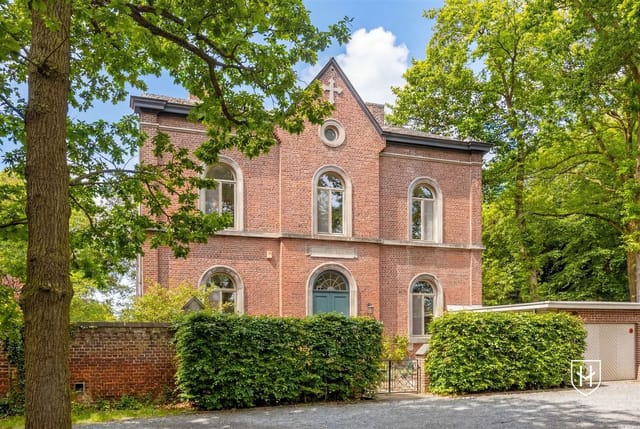
Front view of Leeuweriklaan 10
New

Step outside on a Saturday morning in late September, coffee in hand, and the only sound you'll hear is wind moving through the tall beech hedges that ring the garden. The terraces are still catching dew. Pelt is already awake — cyclists heading toward the Lommelse Sahara, dog walkers cutting through the heathland — but back here on Mereldreef, time moves at your pace. That's the real selling point of this property. Not just the six bedrooms or the 418 square metres of living space, but the particular quality of quiet you find in the Grote Heide villa district, where roads are wide, plots are generous, and neighbours respect the distance between them. The villa itself was built in 1980 using materials that were built to last — and it shows. The bones are solid, the spaces are genuinely large, and everything you'd expect in a well-maintained home of this calibre is present: double-glazed windows, air conditioning, a fireplace in the living room that earns its place from October through March, and an EPC energy rating of B, which matters practically when you're heating 418m² of Belgian villa through a proper winter. The current owners have expanded and renovated carefully over the years, and the result feels coherent rather than patchwork. There are no awkward additions, no compromises that make you scratch your head. It functions. Walk through the entrance hall — properly grand, with the kind of ceiling height that makes you straighten up instinctively — and the ground floor opens up around you. There's a spacious living room, a formal dining area, a kitchen that works for actual cooking rather than just looking good in photographs, a dedicated home office, a utility room, a laundry room, and two separate toilets. That ... click here to read more
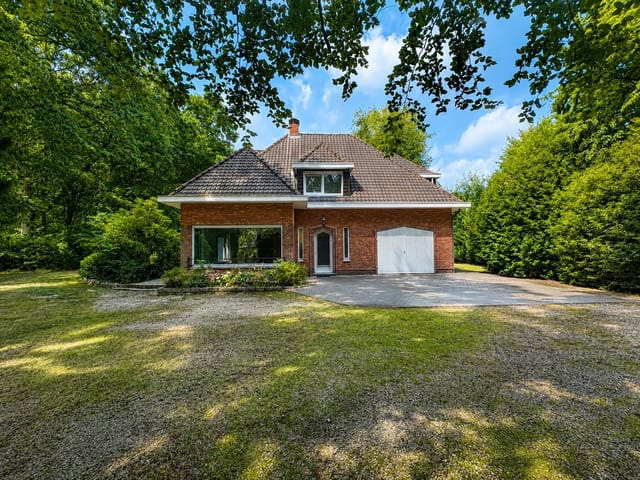
Photo 1 of Mereldreef 10
New

On a Sunday morning in Veldwezelt, the only sound you'll hear from the south-facing garden is birdsong. Maybe the distant chime of the church on Onze Lieve Vrouwestraat. Then you slide open the glass walls of the veranda, step onto 45 square metres of sun-warmed terrace tiles with a coffee in hand, and the whole week behind you simply dissolves. That's the daily reality of this 221 m² detached house — not a fantasy, just an ordinary morning here. Veldwezelt sits in Belgian Limburg, a few kilometres north of the Dutch border, quietly getting on with life while Maastricht hums eight minutes down the road. It's a cul-de-sac village in the best possible sense: no through traffic, no noise except the occasional cycling club passing by on their way to the Maas River path. The street itself, Onze Lieve Vrouwestraat, is lined with mature greenery and the kind of houses that tell you their owners care about where they live. For international buyers exploring a second home in Belgium or a vacation property close to Maastricht, this location is genuinely rare. You get the countryside pace without sacrificing anything practical. The E314 motorway connects you to Hasselt in 25 minutes and to Leuven and Brussels beyond that. Liège is 40 minutes west. Maastricht Airport sits just across the border, with connections to multiple European hubs. If you're flying in from London, Paris, or Zurich for a long weekend, you're in the garden with a glass of local Limburg beer before dinner. Maastricht itself deserves more than a passing mention. This is one of the most liveable cities in the Netherlands — arguably in the Benelux region altogether. The Vrijthof square fills with cafe terraces from April through October, the Christmas market in ... click here to read more
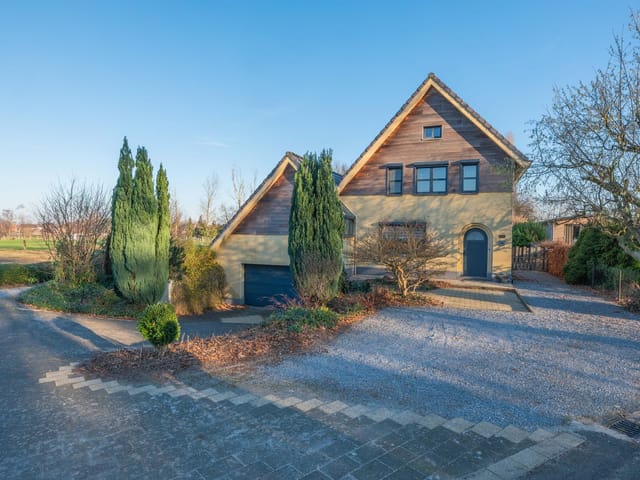
Front view of Onze Lieve Vrouwestraat 15

On a still Sunday morning, the smell of fresh stroopwafels drifts from the bakery two blocks down Lindendreef, and through the double garden doors of this villa's dining room, you can hear the faint chime of the Sint-Katharinakerk bell tower marking the hour. That's the rhythm of life here — unhurried, rooted, and genuinely good. Lindendreef 78 sits on one of Hoogstraten's most coveted residential streets, and it's not hard to see why. The tree-lined avenue has a sense of permanence to it, the kind of address where neighbors wave, kids ride bikes after school, and summer evenings stretch out on stone terraces until the light finally gives up around ten. The property itself was thoroughly renovated in 2021 — not a cosmetic refresh, but a considered, top-to-bottom overhaul with serious attention paid to how a family actually uses a home day to day. Step through the front door and the entrance hall sets the tone immediately: generous proportions, warm oak parquet underfoot, and a staircase that draws your eye upward. The ground floor has been laid out so that everything flows. The TV room at the front gives way to a central sitting room anchored by a gas fireplace — the kind you actually light in November and sit beside with a glass of Belgian abbey ale rather than just a decorative feature. From there, the space opens fully into the dining area and a kitchen that connects through to the orangery. Big windows on the garden side flood the whole rear of the house with afternoon light, and when the weather cooperates — which in the Kempen region it does more than people expect from Belgium — you swing both sets of double garden doors wide and the terrace becomes a seamless extension of the living space. That terrace is some ... click here to read more
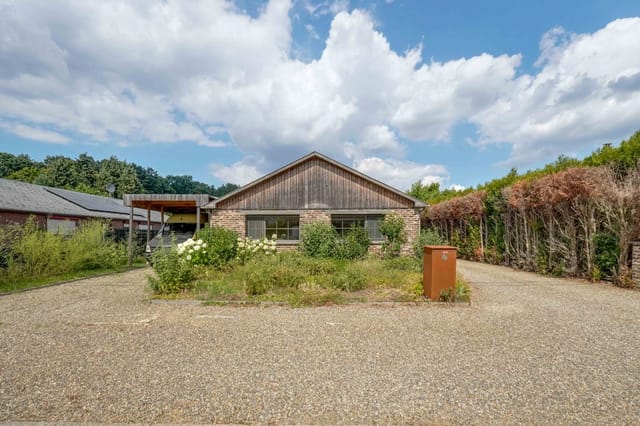
Photo 1 of Lindendreef 78

Stand at the kitchen window on a Saturday morning and you'll hear nothing except the low wind moving through the fields of Meer and, somewhere further off, the bells of Sint-Katharinakerk drifting in from Hoogstraten's market square. That's the soundtrack this house runs on. No traffic, no neighbors on top of you, just 2,562 square meters of fully enclosed garden rolling out behind a broad-fronted farmhouse that's been quietly anchoring this corner of the Kempen countryside for decades. This is a genuine Belgian long-façade farmhouse on Meerleseweg 47 in Meer — a small village that sits almost exactly on the line between Belgium and the Netherlands, five minutes south of the Dutch border crossing at Zundert. It's a location that repeatedly surprises people. You're forty minutes from Antwerp's old port, an hour from Brussels, and barely thirty minutes from Breda in the Dutch province of Noord-Brabant. Yet out here, it genuinely feels like the countryside has kept its deal with you. The house covers 295 square meters and is in good, move-in ready condition. After roughly forty years with the same family, it carries the kind of lived-in solidity that newer builds just don't replicate. The proportions are right. Ceilings feel like ceilings. The 54-square-meter living room — one of the largest on the ground floor of any residential property in this price band in the area — centers on a pellet stove fireplace that turns a rainy October evening into something you'd actually look forward to. The big windows face the garden, and in winter, when the Flemish countryside goes pale and flat, the light that comes through them has a quality painters used to chase. Walk through to the kitchen — a well-configured 17-square-meter corne ... click here to read more
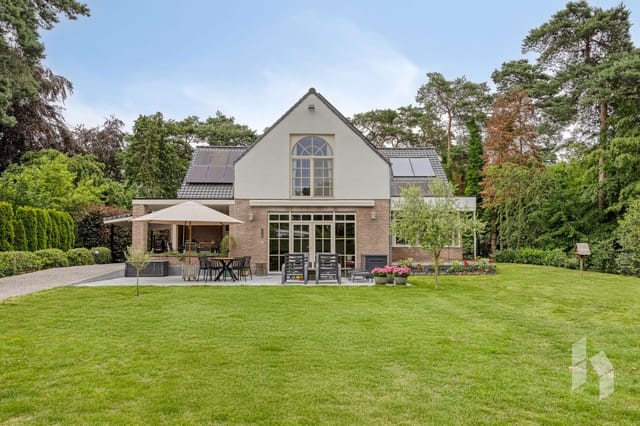
Front view of Meerleseweg 47

Step outside on a Saturday morning at Heesdijk 28 and the only sounds you'll catch are birdsong from the Poppelse bossen and the distant hum of a tractor working the fields beyond the back fence. No traffic. No neighbours pressed up against you. Just 1,306 square metres of private plot, a sky that seems wider out here than anywhere else in Belgium, and a 260-square-metre house that has more room in it than most families know what to do with. Poppel sits right on the Belgian-Dutch border — literally a stone's throw from Noord-Brabant — and that geography is quietly one of its most underrated qualities. You can cycle into the Netherlands without realising you've crossed a country. The Grenspark Kalmthoutse Heide, one of the largest cross-border heathlands in Western Europe, sprawls nearby in shades of purple every August when the heather blooms. In autumn, the forest tracks around Poppel turn amber and rust, and the whole area fills with the particular hush that only comes when deciduous trees are dropping their leaves in bulk. Locals lace up their boots and head out for hours. You can too, straight from your front gate. The house itself was built in 1965 — solid brick, traditional gabled roof with clay tiles, the kind of construction that laughs at Belgian winters. It's in good condition and move-in ready, though it carries a renovation obligation that actually works in a buyer's favour: you get to decide how it evolves. Keep the wood-burning fireplace crackling in the living room as the centerpiece it deserves to be, rip out the kitchen and put in exactly what you want, convert the insulated attic into a guest suite for family coming from abroad. The bones are excellent. The decisions are yours. Ground floor living he ... click here to read more
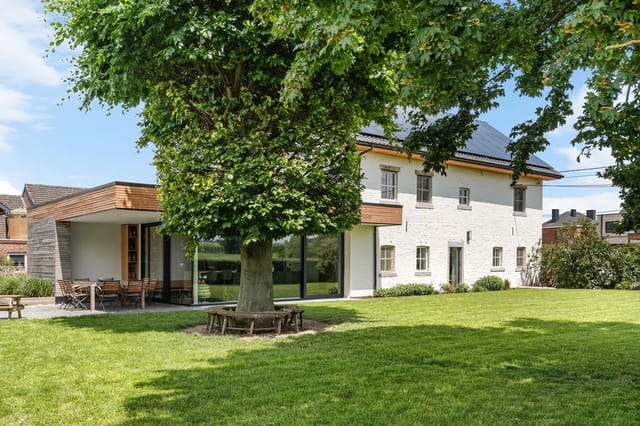
Front view of Heesdijk 28

Saturday morning, and the only sound is birdsong threading through the open bedroom window. No traffic hum, no city noise — just the low rustle of a southwest breeze moving through the garden hedgerow and the distant clang of a church bell from the old Sint-Petrus church in Ravels village. You came here for exactly this. And somehow, it's even quieter than you imagined. De Buskens 13 sits in one of the most sought-after residential pockets of Ravels-Eel, a corner of the Belgian Campine region that manages to feel genuinely off the beaten track while staying remarkably well-connected. The Dutch border is barely five minutes by car. Antwerp is about an hour. Eindhoven — with its international airport — sits comfortably within reach for European weekenders flying in. Yet when you're standing in this garden on a Tuesday afternoon, the rest of the world feels optional. Built in 2010, the villa covers 347 square metres across three well-considered floors, and the thing that strikes you on a first walk-through is how thoughtfully it all flows. Nothing feels squeezed or tacked on. The entrance hall sets a composed, unhurried tone — there's a guest toilet immediately off it, a detail that sounds minor until the tenth dinner party when you're grateful for it. The main living space opens generously off the hall, anchored by a wood-burning fireplace that becomes the undisputed centrepiece from October through March. Pull the chairs close, light it, and the room transforms completely. In summer, the same room breathes outward toward the dining area and into the garden beyond, the southwest orientation meaning light pours through well into the evening. The kitchen is fully fitted with modern built-in appliances and includes a break ... click here to read more
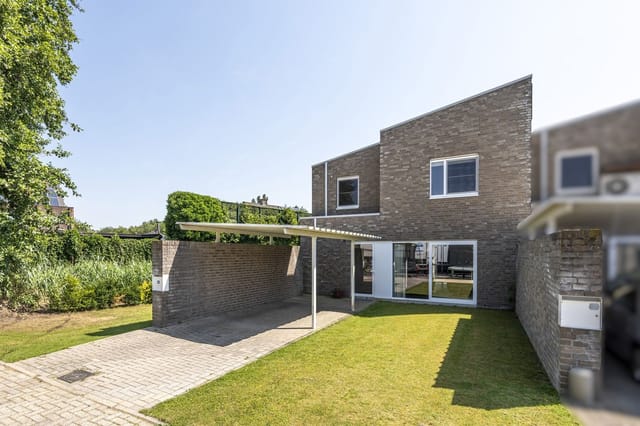
Front view of De Buskens 13

On a Sunday morning in Gemmenich, before the rest of the household stirs, you step out onto the southwest-facing stone terrace with a cup of coffee and watch the light crawl slowly across the rear meadows. No traffic. No neighbors in sight. Just rolling green hills, the distant silhouette of the Ardennes, and 26,776 square meters of land that is entirely yours. This is the everyday reality of life at Rue de Terstraeten 39—a substantial country estate in the Plombières municipality of the Belgian-Dutch-German border triangle, where the pace of life genuinely slows down and a property of this scale still makes financial sense. The estate sits in what locals half-jokingly call the Tuscany of Belgium. It's a fair comparison. The hills around Gemmenich are softer and greener than true Tuscany, but the spirit is similar—unhurried villages, agricultural landscapes, and a genuine sense of being removed from the urban grind without being stranded. Plombières itself is a commune of forested ridges and open valleys, home to some of the most quietly coveted countryside in the country. Properties here rarely come to market at this scale. When they do, they go fast. The main house—currently operating as a vacation rental sleeping up to 14 guests—is 490 square meters of practical, well-finished living space spread across three active floors plus a basement. Walk through the front door and the entrance hall immediately signals the property's character: an authentic original staircase, wide proportions, and a sense of solidity that newer builds simply can't fake. The ground floor revolves around a generous dining room with an open kitchen fitted with stone countertops, a Whirlpool four-burner stove, an induction hob, and a BEKO dishwas ... click here to read more
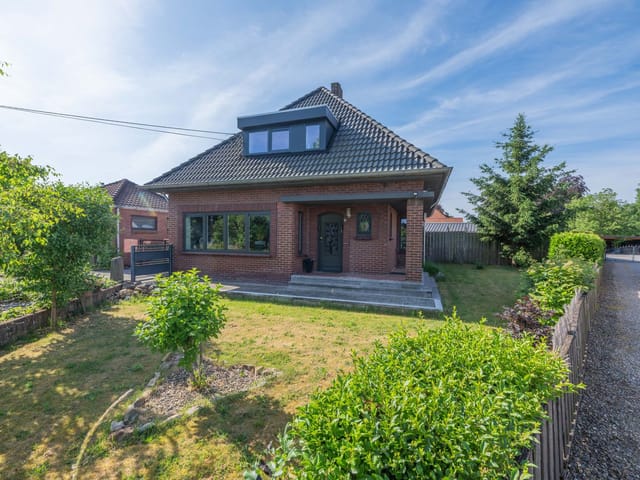
Front view of Rue de Terstraeten 39

On a clear morning in Dalhem, you open the bedroom shutters and the first thing you see is Wodémont Castle sitting on the ridge across the valley, catching the early light. The garden is still dewy, the pool is glinting, and somewhere down the lane a rooster is doing his thing. This is what 225 square metres of well-built Belgian countryside living actually feels like — and it's a long way from anything you'd call ordinary. Fêchereux 17 is a detached four-bedroom house on a south-facing plot of just over 2,100 square metres, constructed in 2000 and sitting in excellent condition today. The bones are solid: double glazing throughout, gas central heating, a tiled gabled roof, and an energy label of B — a genuinely good score for a property of this size and age in the region. You won't be walking into a renovation project. This one is ready. Step through the front door and the entrance hall sets the tone — calm, generous, practical, with a cloakroom and guest WC already sorted before you've even reached the main living space. The living room is the real centrepiece: nearly 53 square metres of bright, open space with countryside views rolling out in every direction and a wood-burning fireplace that earns its keep from October through to March. Belgian winters are mild by Alpine standards but genuinely grey, and there's something deeply satisfying about a real fire when the fog sits low over the Herve plateau. The kitchen comes in at over 21 square metres with a separate dining area and its own exterior entrance — useful when you're carrying groceries or hosting a summer lunch that's moved between indoors and the 67-square-metre south-facing terrace without anyone quite noticing the transition. Upstairs, four proper bedroo ... click here to read more
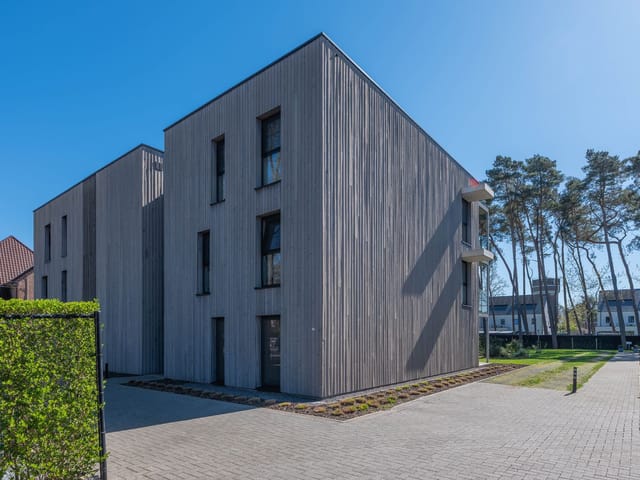
Front view of Fêchereux 17

Stand at the kitchen window on a Saturday morning and watch two herons circle the garden pond while coffee brews on the granite countertop. The automatic gate is closed, the mature trees are doing their job blocking out the world, and the only sound is birdsong filtering through the pines at the back of the plot. This is Essensteenweg 53 — a 360-square-meter villa on 4,255 square meters of land in Brasschaat, one of the most coveted green addresses in the entire Belgian province of Antwerp. Brasschaat sits roughly twelve kilometers north of Antwerp's cathedral spires and diamond quarter, close enough to catch a weeknight concert at the deSingel arts campus or a Sunday morning stroll through the Vrijdagmarkt antique market, yet far enough that the streets here are lined with century-old oaks rather than tram cables. The municipality has a reputation — fiercely protected by the people who live here — for wide forested avenues, exceptional international schools like the Antwerp International School on Dref, and the kind of quiet that money genuinely can't buy in the city itself. Families relocating from London, Amsterdam, or Paris who want a proper garden and room to breathe without sacrificing urban access tend to discover Brasschaat and stay for decades. The villa itself sits behind an automatic gate with a videophone system, and the driveway alone tells you something about the scale of the property — there's room for multiple cars before you even reach the double integrated garage with its separate automatic doors. Inside, the entrance hall opens up generously, with a guest toilet tucked away and the main living space spreading out in front of you across three distinct zones. The formal sitting room has an open firepla ... click here to read more
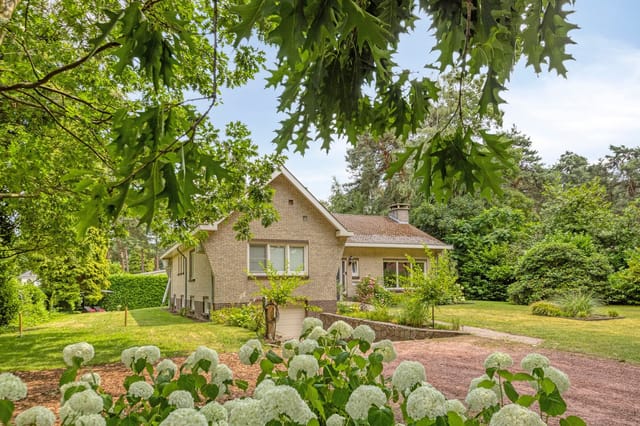
Front view of Essensteenweg 53

Stand at the front windows on a Saturday morning and you'll understand why people move to Borgloon and never leave. The park across Graethempoort is still dewy, a few dog walkers cutting through the chestnut trees, and the tower of the Sint-Odulphuskerk is catching the first real light of the day. The smell of fresh bread drifts up from the bakery two streets over. That's the rhythm here — unhurried, grounded, genuinely Belgian in the way that Liège waffles and abbey beer are genuinely Belgian. Not performed for tourists. Just lived. This 1905 mansion at Graethempoort 16 is one of those buildings that Borgloon has quietly kept for itself. At 381 square metres of living space on a 918 m² plot, it's rare by any measure — the kind of address that almost never surfaces on the market. And when you walk through the front door and hit that entrance hall, with its original wooden staircase rising up through the centre of the house, you get it immediately. The bones here are exceptional. High ceilings throughout the ground floor — we're talking the kind that make rooms feel like they breathe. Decorative plasterwork cornices, original parquet and terrazzo mosaic floors, ornate period doors, an open fireplace. None of it is reproduction. None of it was added later for effect. It's simply what the house was built with in 1905, and it's been looked after. The front living room and the generous dining room both receive strong natural light through large windows, and the proportions are generous enough that a dining table for twelve wouldn't look out of place. The kitchen connects directly to a glass veranda at the rear, and this is where the garden announces itself. Two terraces, a pond, mature planting — the kind of outdoor space ... click here to read more
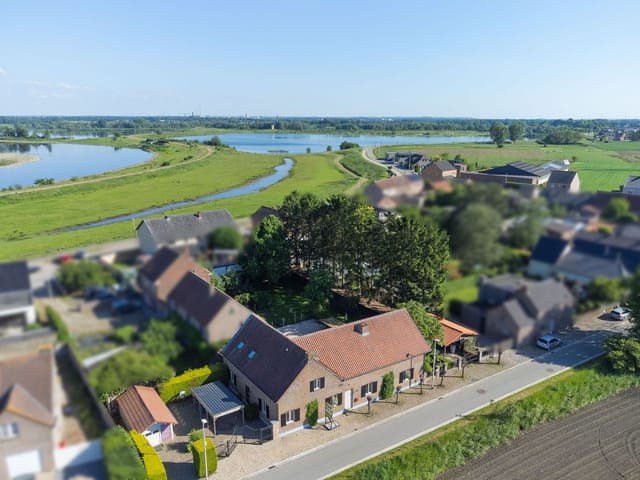
Front view of Graethempoort 16, Borgloon

Step outside on a Saturday morning in Wuustwezel and the air carries something you simply don't find in the city — a mix of damp grass, pine, and absolute quiet. The nearest neighbor is far enough away that you hear birds before traffic. This is what 289 square meters of private villa life on the Belgian-Dutch border actually feels like. Built in 2012 to high specifications, this five-bedroom detached villa on Moleneind sits on a 2,545 m² plot that wraps around the property with a landscaped garden, a serene pond, and open green space being freshly leveled and seeded as part of an ongoing upgrade. The bones of this home are exceptional — an A energy label, full underfloor heating via heat pump, roof-to-floor insulation, and double glazing throughout. Your energy bills will surprise you. In the best way. Walk through the front door and the entrance hall sets the tone immediately. It's generous, with a guest toilet tucked away and a staircase rising to the floors above. Double doors pull open into the main living space — a wide, open-plan area where the dining room flows into the kitchen without any awkward transitions. There's a practical storage room off the kitchen and a separate utility space that handles the behind-the-scenes business of daily life so the main rooms stay uncluttered. Late Sunday afternoons in this kitchen, with the garden visible through the rear windows and something slow-cooking on the hob, genuinely feel like a different pace of life. The first floor is where the master suite earns its name. A proper dressing room connects to a bathroom that comes with a freestanding bathtub, walk-in shower, and double washbasin — not a compromise version, but the real thing. There's also a laundry room on this ... click here to read more
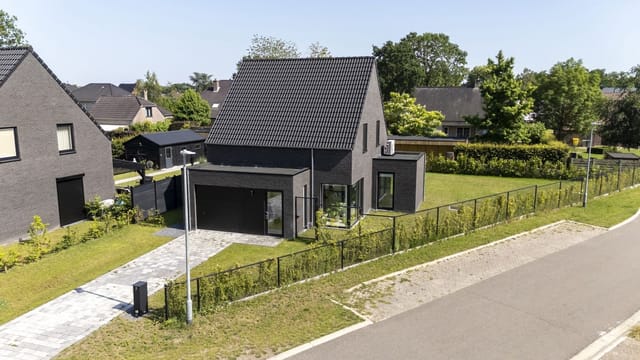
Photo 1 of Moleneind 9

On a still Tuesday morning in Neeroeteren, the only sounds drifting through the kitchen window are the distant low of cattle in the rear meadow and the soft hiss of an espresso machine. That's the pace of life here. No traffic. No noise. Just open Belgian countryside stretching out behind a 450-square-metre house that genuinely has everything — and then some. Drievekkenweg 70 sits on a 1,175-square-metre plot at the edge of Neeroeteren, a village that most people outside Belgian Limburg couldn't point to on a map. That's part of the appeal. This is the region where the Maas river curves lazily through farmland and heath, where cycling routes like the famous Fietsknooppunt network fan out in every direction, and where weekends move at a rhythm that cities have completely forgotten how to do. The house itself was built in 2007, kept in genuinely good condition, and carries a B energy rating — rare for a property with this much indoor volume. Walk through the front door and the entrance hall sets the tone immediately. White-lacquered doors with matte black hardware, stone carpet underfoot — not the scratchy kind, the polished, low-maintenance kind that actually stays looking good five years in. The ground floor opens into a living area that doesn't feel like it was designed to impress visitors for thirty seconds before they start noticing the flaws. This room works. Oversized windows pull in the meadow views. A gas fireplace from Faber anchors the space in winter. The kitchen — fully equipped with Siemens appliances and an Italian granite island — has a breakfast bar on one side and enough counter run to cook a proper Sunday roast without anyone getting in each other's way. Off the kitchen, a utility room handles the lau ... click here to read more
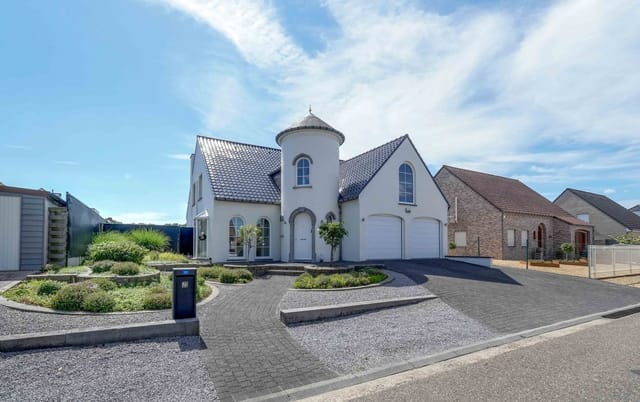
Front view of Drievekkenweg 70

Step outside on a Saturday morning in Meerle and the first thing you notice is the silence—not the heavy, empty kind, but the alive kind. Birds in the tree line behind the garden, a light wind moving through the mature oaks, and nothing else. No traffic noise, no urban hum. Just the particular quiet that only comes when a house sits at the edge of a forest on a generous plot of land, with no immediate neighbors rushing past. This is Lage Rooy, a small residential lane in one of Belgium's most underrated rural corners, and this three-bedroom bungalow has been making that morning possible for its owners for years. The plot alone—roughly 1,054 square metres—sets the tone for everything else. The rear garden is a proper park-like space: a stone terrace that catches afternoon sun, a wide lawn rolling toward mature trees and ornamental borders, a gazebo for evenings when the light goes golden, a pond that draws dragonflies in summer, and a wooden storage shed tucked neatly out of sight. The house wraps around this garden on two sides, so the sense of being inside a green envelope is constant. Multiple sets of doors open directly onto it from the living room, the dining room, and the master bedroom, which means the garden isn't just something you look at—it's somewhere you actually live. Inside, the footprint is 217 square metres across two floors, organized with real intelligence around the ground-floor master suite. That bedroom, roughly 15.5 square metres, opens via French doors onto the rear garden and connects directly to a dedicated walk-in closet of about 7.5 square metres with fitted wardrobes. The en-suite bathroom—around 9 square metres—has a walk-in shower with a glass partition, a full bathtub, a vanity unit, and ... click here to read more
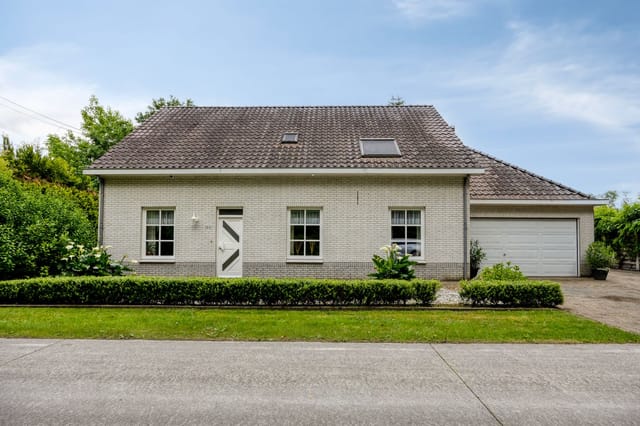
Front view of Lage Rooy 23 E

Stand at the back of the garden on a July evening and you'll understand immediately. The meadow stretches out behind the property with nothing between you and the open sky — no fences, no rooftops, no neighbor's barbecue smoke drifting your way. Just grass, light, and the kind of quiet that people drive hours to find on weekends. At Heerbaan 40 in Maaseik, that quiet is built into the foundations. Maaseik sits at the northeastern edge of Belgium, right where the Maas River forms the natural border with the Netherlands. It's one of those small cities that locals fiercely love but tourists haven't yet overrun — the kind of place where the Tuesday morning market on the Marktplein still draws actual residents rather than souvenir hunters. The twin Gothic towers of the Sint-Catharinakerk dominate the skyline in a way that never quite loses its effect, and the Carolus Borromeus museum houses the oldest surviving book in Belgium, the eighth-century Codex Eyckensis. History isn't something the city performs here. It just is. This four-bedroom semi-detached house is a new-build scheduled for completion in 2026, and at 198 square metres across three floors, it gives you real room to breathe — rare for this price bracket anywhere in Belgian Limburg. The architecture is clean and contemporary: a sleek rendered façade, large format windows that pull in the southern light, and a layout that makes the most of every square metre without feeling squeezed. From the living room and kitchen, the garden and the open meadow beyond frame the view like a painting that changes with every season. Spring here means cycling. The Maasland region has one of the densest networks of signed cycling routes in Europe, and from Heerbaan you can roll str ... click here to read more
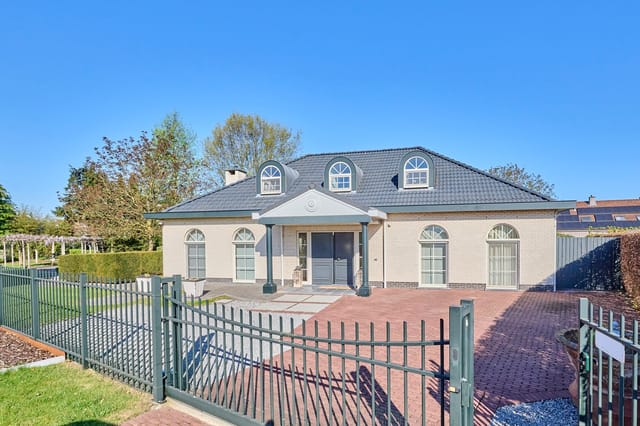
Front view of Heerbaan 40, Maaseik

On a Sunday morning in Rijkevorsel, the light comes in sideways through the kitchen's wide garden-facing windows. Coffee is already brewing — the built-in machine handles that — and outside, dew is still sitting on the grass of the fully fenced rear garden. No neighbors in the sightline. Just open Flemish countryside rolling out behind the terrace. This is the pace this villa runs at, and once you've spent a weekend here, it's hard to argue with it. Sint-Lenaartsesteenweg 80 sits on a 1,389 square meter plot in the heart of the Kempen region, one of Belgium's most underrated pockets of calm. The house itself is 267 square meters — a substantial four-bedroom villa that has been thoroughly renovated without losing the bones that gave it character in the first place. The wrought-iron interior door that separates the entrance hall from the main living area? That stayed. The oak parquet floors throughout the ground floor? Those stayed too. What changed is everything you don't see at first: the insulation, the systems, the kitchen, the bathrooms — all brought squarely into the present. The living room revolves around a gas fireplace that earns its keep from October through March, when the Kempen afternoons turn grey and the garden takes on that particular Belgian stillness. The room is generous enough for a proper sofa arrangement without feeling cavernous, and it flows directly into the kitchen — the real centerpiece of this house. The island is the kind you actually gather around. Appliances include a cooktop with an integrated extractor, a steam oven alongside a conventional oven, a built-in coffee machine, a warming drawer, a vacuum drawer, and a dishwasher. Everything is built in, everything is considered. Whoever desig ... click here to read more
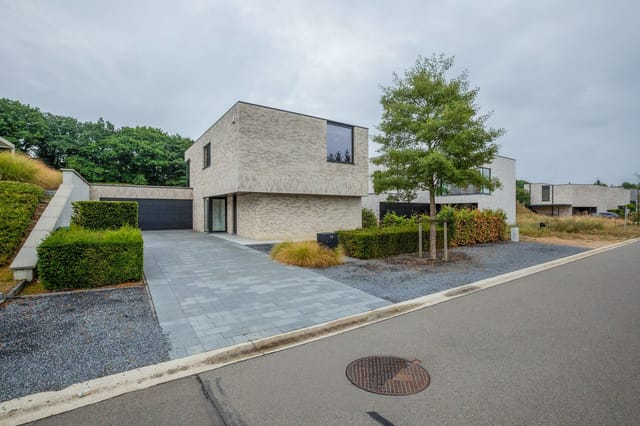
Front view of Sint-Lenaartsesteenweg 80

Step outside the back gate on a Tuesday morning, and you're already in the forest. No traffic, no noise — just the crunch of leaves underfoot and the particular stillness that only old trees can produce. That's the daily reality at Roelerdreef 18, a solid, well-kept detached house on one of Lanaken's most quietly sought-after avenues, just a few kilometers from the Dutch border and the unmistakable energy of Maastricht. Lanaken sits in Belgian Limburg in a way that feels almost accidental — a calm, unhurried municipality that happens to border the Netherlands and find itself within easy striking distance of three countries. The house on Roelerdreef occupies 212 square meters across two floors, sits on an 800-square-meter plot, and backs directly onto woodland. For buyers looking at second homes in Belgium or a European base that doesn't sacrifice nature for convenience, this is a combination that's genuinely hard to find at this price point. The avenue itself sets the tone immediately. Stately trees line both sides of the road, their canopy meeting overhead in summer to form the kind of dappled light you usually only find in countryside much further from a city. Drive along Roelerdreef on a weekend afternoon and you'll understand why locals don't tend to leave. The street is quiet. Not the performed quietness of a gated development — the genuine article, helped along by the fact that a nearby school is being phased out, which will only deepen the sense of calm in the years ahead. Inside, the ground floor spans 123 square meters and opens with a marble-floored entrance hall — a small but considered touch that signals the overall quality of the finishes throughout. The living room is where daily life properly begins: oa ... click here to read more
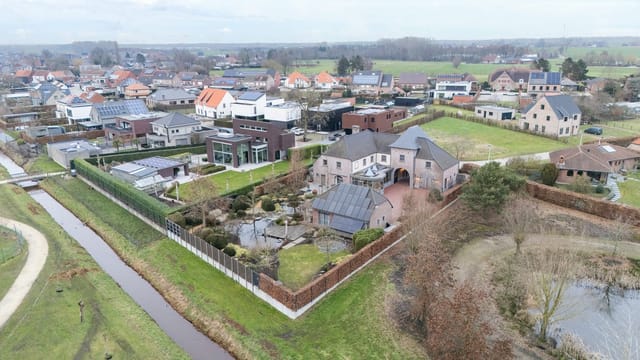
Front view of Roelerdreef 18

Step outside on a Saturday morning and the bakeries on Hamont's Markt are already doing brisk business. The smell of fresh bread carries down Graanstraat before most people have poured their first coffee. That's the rhythm of life here — unhurried, grounded, and genuinely pleasant in a way that a lot of European towns have quietly lost. This detached single-level bungalow at Graanstraat 4 is a new-build in its final construction phase, which puts a buyer in an unusually strong position. The structural shell is complete, utilities are roughed in, and the messy groundwork is done. What remains is the interior — flooring, kitchen fittings, wall finishes — and that's entirely yours to decide. It's not a compromise; it's an invitation to build something exactly right rather than inherit someone else's choices. The footprint is 135 square meters of single-floor living on a 618-square-meter plot. No stairs. No split levels. Everything accessible, everything logical. Two bedrooms sit quietly at the back of the house with garden views. The open-plan living and dining area runs wide and faces outward through oversized windows that track light across the space from mid-morning through the afternoon. The kitchen zone is ready for installation — the space is already planned and proportioned properly, so there's no puzzling out awkward corners or inadequate ventilation. The bathroom is a serious one. Provisions are already in for a walk-in shower, a full bathtub, underfloor heating, and a washbasin. A separate guest WC keeps mornings civilized when the house has visitors. The utility room handles the practicalities, and the fully insulated attached garage does what garages should do — keeps the car dry and gives you genuine storage ... click here to read more
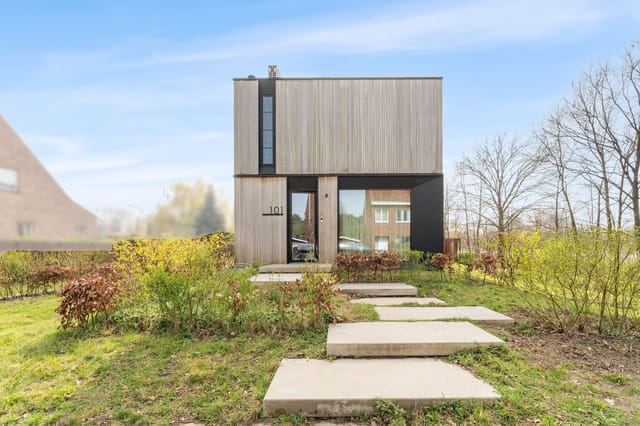
Front view of Graanstraat 4

Saturday morning. The automatic gate swings open, the gravel crunches underfoot, and from somewhere behind the stables you can already hear the low sound of the Maas valley countryside waking up — birds, wind through the pasture, total quiet beyond that. This is Langstraat 86, and it doesn't feel like a second home. It feels like the life you kept pushing off until later. Sitting on a generous 6,760 square metre plot in the village of Elen — part of Dilsen-Stokkem in the Belgian province of Limburg — this detached three-bedroom house with two stables and dual pastures is a rare find on the European second home market. Properties like this, where you get genuine rural scale, equestrian infrastructure, and a house that's already been modernised, simply don't come around often at this price point. At 555,000 euros for 115 square metres of living space plus all the land, it sits in a different category from the holiday villas you'll see advertised for twice as much further south. The house itself was built in 1958 and carries the bones of that era — solid concrete intermediate floors, thick walls, a structure built to last. But between 2005 and 2015, it got a proper overhaul: cavity wall insulation, new PVC double-glazed windows throughout, updated bathrooms, a redesigned kitchen with granite countertops and induction cooking, a new gas central heating boiler, and a freshly painted and coated exterior. The result is a home that holds its character while actually being comfortable to live in. No draughty windows. No outdated plumbing surprises. Step inside through the entrance hall — tiled floors, clean lines — and the living room opens up with light. Large windows face the garden and meadow, and in winter the wood-burning ... click here to read more
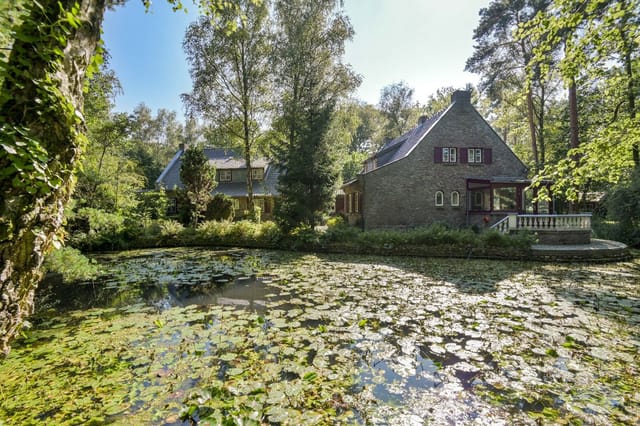
Front view of Langstraat 86, Dilsen-Stokkem

Early on a weekday morning, the only sound you'll catch from the kitchen at Jagersdreef 7 is birdsong. Not the vague, generic kind — woodpeckers working the oaks at the edge of the garden, the occasional rustle of a deer moving through the reserve that begins literally where the grass ends. There are no through roads here, no delivery trucks, no neighbours' engines warming up. Just a 325-square-metre villa sitting on 3,302 square metres of private land in one of Flemish Brabant's most quietly coveted pockets, where the Lichtaart heathlands fade into the residential fringe of Herentals. This is the kind of property that takes a while to fully understand. It doesn't announce itself loudly. Pull up the private driveway — long enough to park several cars well off the road — and what you notice first is the sense of proportion. The gabled roofline, the mature trees framing the facade, the way the building sits back from the lane as if it has nothing to prove. The 2023 renovation was thorough without being aggressive: original exposed beams were kept, the fireplace in the living room still draws the eye when you walk in, but the kitchen is fully modern, the bathroom is genuinely spa-quality with both a bathtub and a walk-in shower, and solar panels on the roof mean running costs stay honest. Inside, the layout flows logically rather than fashionably. The entrance hall has a proper cloakroom — something that disappears in properties with more focus on staging than living — plus a guest toilet before you've even reached the main rooms. The kitchen is set up for people who actually cook: good storage, modern appliances, a layout that keeps the chef in the conversation rather than buried in a corner. It opens onto the living roo ... click here to read more
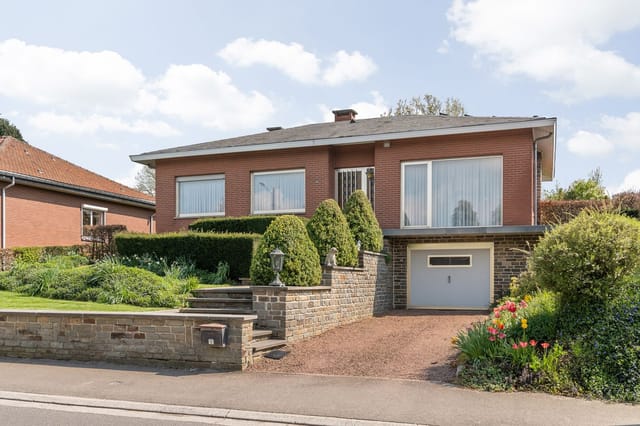
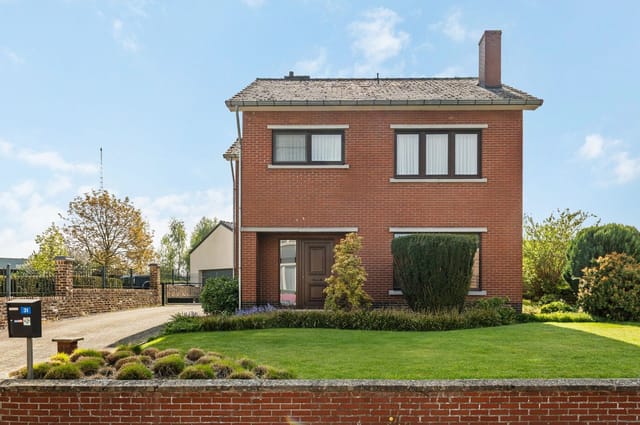
Front view of Jagersdreef 7

On a quiet stretch of Merksplasseweg, the morning light filters through the trees that line the front of the property and lands on oak floorboards that have never once felt cold underfoot — because below them, a full ground-floor heating system hums quietly to life before you've even thought about getting up. That's the kind of detail that makes a house feel like it was thought through, not just built. Ravels sits in the Antwerp province of the Campine region, a part of Belgium that most international buyers overlook entirely. That's a mistake. The area around the Turnhoutse Vennen nature reserve and the Kalmthoutse Heide — one of Western Europe's largest inland heathland landscapes — draws hikers and cyclists from across the Benelux, yet the villages themselves have stayed quiet, unhurried, and genuinely local. The Saturday market in nearby Turnhout, just 10 kilometres away, is where you'll find Campine asparagus in spring, local Trappist cheeses, and the kind of butcher who knows every farmer supplying his counter. Turnhout itself has a striking Beguinage, a castle, and a surprisingly good food scene clustered around the Grote Markt. This isn't rural isolation — it's rural intelligence. The house itself was built in 2000 on a 832-square-metre plot and sits on Merksplasseweg 31 with an unobstructed view over woodland to the front. Four bedrooms, one well-fitted bathroom, 190 square metres of living space, and a freestanding garage that measures 70 square metres on its own. That garage alone makes this property unusual. Fully insulated, fitted with two electric sectional doors and a groundwater pump for garden irrigation, it functions comfortably as workshop, car storage, hobby room, or overflow accommodation for a ren ... click here to read more
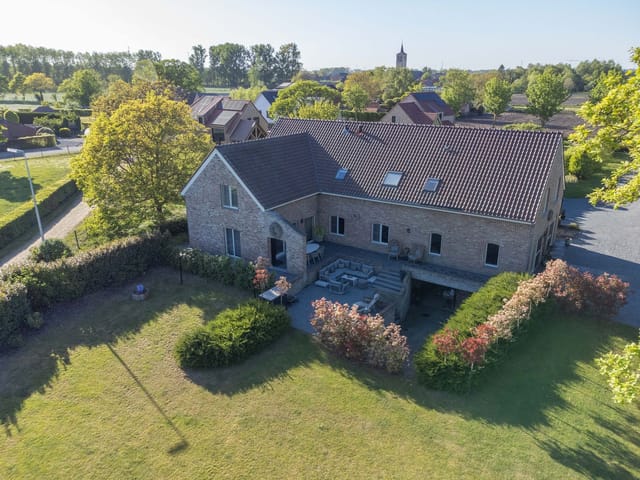
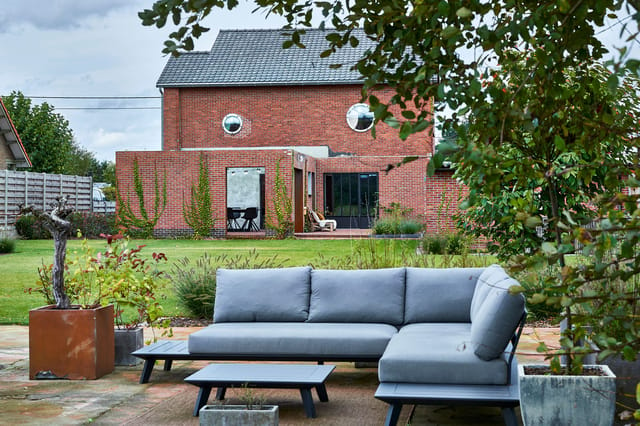
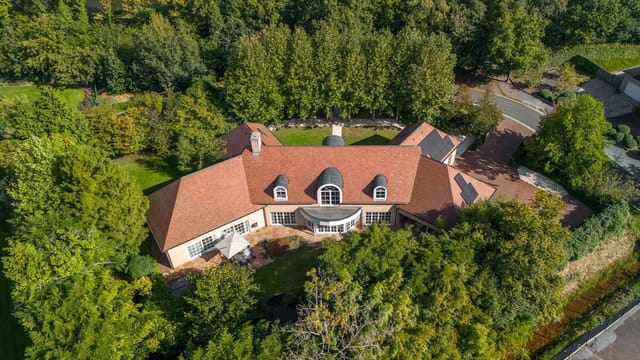
Front view of Merksplasseweg 31

Saturday morning in Grote Heide sounds like this: a wood pigeon calling from somewhere deep in the oak canopy, the faint crackle of a wood-burning fire coming back to life, and absolutely nothing else. No traffic. No sirens. Just the kind of quiet that reminds you why you wanted a second home in the Belgian countryside in the first place. Vinkendreef 4 sits in one of Pelt's most coveted villa districts — a wooded pocket of north-east Belgium where the plots are generous, the neighbours invisible behind mature hedgerows, and the pace of life runs at a completely different frequency from Brussels or Amsterdam or wherever you're escaping from. This is a proper house. 280 square metres of it, on a landscaped plot of 3,551 m² — more than a third of a hectare — with a south-facing garden that gets the sun from breakfast until the last glass of evening wine. Walk through the entrance hall and the first thing you notice is how much light there is. Large windows pull the garden inside, and the living room feels less like a room and more like a viewing platform onto all that green. The wood-burning fireplace anchors the space on cooler evenings — and in the Belgian Kempen, autumn comes early and beautifully, the birch trees outside turning gold while the fire does its work. The kitchen is practical and well-equipped, with direct access to a laundry room and storage area. No awkward layouts, no carrying shopping halfway across the house. It just works. The ground floor gives you two bedrooms — one currently configured as a dressing room, one with an ensuite bathroom that also opens to the hallway — plus a separate office that converts easily to a fifth bedroom if you need it. This kind of flexibility matters. It means multi-gene ... click here to read more

Front view of Vinkendreef 4

On a quiet Sunday morning in Lommel, with the window above the kitchen breakfast nook cracked open, you catch the faint rustle of pine trees from the Sahara nature reserve a short bike ride away. The smell of fresh coffee fills a kitchen big enough to actually cook in. That's the kind of morning this house was built for. Standing on Pieter Paul Rubensdreef — a tree-lined avenue in one of Lommel's most established villa parks — this five-bedroom home sits on a 1,588-square-metre plot and covers 423 square metres of interior space across two floors, plus a full basement and attic. Built in 1977 with an emphasis on durability over trends, it has aged well. The bones are solid, the materials were chosen to last, and the layout still makes sense for how families actually live. Walk through the front door and the entrance hall does something most modern homes forget to do: it makes you pause. The marble floor catches the light in the afternoon. There's a cloakroom to your right, a guest toilet tucked neatly away, and a dedicated home office just off the hall — genuinely separate from the living areas, which matters more than people expect until they're two years into working from home. The living room and dining room flow naturally from here, both laid with warm parquet that's far easier to love on a grey November day than polished concrete. The open fireplace in the lounge isn't decorative — it's the room's centrepiece, the thing that makes the space feel lived-in and real rather than staged. Five bedrooms give a family real breathing room. Each one has parquet flooring, and there's genuine flexibility here: one space could become a sixth bedroom with minimal effort. The two bathrooms are generously fitted — double sinks, ... click here to read more

Front view of Pieter Paul Rubensdreef 2

Step outside on a Saturday morning and within minutes you're on horseback, following a private path that opens straight onto the Turnhout nature reserve — no roads to cross, no trailers to load, just open countryside rolling ahead of you. That's the daily reality this 330 m² farmhouse on more than nine hectares makes possible. It's a rare setup, and in this part of the Belgian Campine, it's the kind of property that doesn't come to market twice in a generation. Built around 1935 and thoroughly overhauled in 2005, the farmhouse has that particular quality old Belgian rural homes develop when someone has genuinely cared for them over decades: solid, warm, full of character without being precious about it. The beamed ceiling in the living room still carries the weight of the original structure, and the open fireplace — used, not decorative — turns January evenings into something you actually look forward to. A ground-floor master bedroom with its own dressing room and en-suite bathroom means guests or elderly family members never have to tackle the stairs, which matters more than you'd think on a working estate. The country kitchen at the back of the house is where this place really shows its hand. Big windows, a central island, direct access to the inner courtyard — it's designed for the kind of cooking that takes all afternoon. Think Belgian stoofvlees slow-simmering while the kids come in muddy from the paddocks, or a long Sunday lunch spilling out into the courtyard when the Campine summer finally arrives in June. Upstairs, two further rooms flex easily between bedrooms, a home office, or hobby space, depending on what phase of life you're in. A second bathroom and generous built-in storage complete the upper floor wi ... click here to read more

Front view of Steenweg op Baarle-Hertog 65

On a quiet Sunday morning in Neerharen, the only sounds coming through the upstairs bedroom window are birdsong and the distant church bells drifting over from Maastricht. The garden below is already dappled with light, and the coffee is on. That's the kind of morning this address delivers — and it does it with almost unfair regularity. Reistraat 74 sits in the Goudkust residential area, one of those neighbourhoods that locals quietly keep to themselves. Tree-lined, unhurried, and genuinely green in a way that most suburban developments promise but rarely deliver. The 708-square-metre plot wraps around the villa with mature lawns, established trees, and a full perimeter fence secured by an electric gate. Children can play outside without supervision anxiety. Adults can eat dinner on the terrace without a neighbour's window staring back at them. Both things matter more than most property descriptions acknowledge. The villa itself is 251 square metres spread over three floors — twelve rooms in total, including three generous bedrooms. A fourth is achievable without significant structural work, which opens up real flexibility for a home office, a guest suite, or a room that changes purpose as the years go by. The renovation that's been carried out here isn't cosmetic. Roof, electrical systems, drainage, windows, doors, both bathrooms, the kitchen, utility room, air conditioning, and central heating have all been replaced or substantially upgraded. The Vaillant eco tec 30kW gas boiler was installed in 2023. Triple glazing and floor-to-ceiling roof insulation give the property an energy label C — solid performance for a home of this scale and era. The building is also certified asbestos-free, which matters to buyers who've ... click here to read more

Front view of Reistraat 74, Lanaken Neerharen

Saturday morning in Meerle moves at its own pace. The bakery on the village square opens early, the smell of fresh bread drifting down Heimeulenstraat before most of the street has stirred. You slide open the large garden doors off the kitchen, coffee in hand, and the lawn is still wet from the night. Six bedrooms. Four bathrooms. A kitchen island big enough for a proper family breakfast. This is the kind of house that earns its keep every single weekend. Meerle sits at the northern tip of the Kempen region in the Belgian province of Antwerp, tucked right against the Dutch border and surrounded by the flat, forested landscape that defines this quiet corner of Flanders. It belongs administratively to Hoogstraten, a market town about ten minutes' drive south where the Gothic Sint-Katharinakerk dominates a square lined with café terraces. The area draws people who want countryside without isolation — Breda is 25 kilometres north, Antwerp under an hour south on the E19. Eindhoven airport and Brussels Airport both sit within comfortable driving range, which matters enormously for international buyers treating this as a second home in Belgium or a base for extended stays. The house itself stands on Heimeulenstraat in a low-traffic residential street. Originally built in 1980, it has been comprehensively renovated — not the kind of cosmetic refresh that hides problems behind fresh paint, but a genuine overhaul that touches the electrical installation, glazing, energy systems, and finishes throughout. The EPC label B rating is the honest proof of that. The heating runs on a gas HR++ system with high-efficiency glazing across the entire house, which keeps running costs sensible even through the grey Belgian winters. Inside, 32 ... click here to read more

Front view of Heimeulenstraat 53

Stand at the kitchen window on a Saturday morning and you can hear the bells from the Sint-Pieterskerk drifting across the rooftops of Oud-Rekem. The village has that rare quality of feeling genuinely unhurried — cobbled squares, centuries-old facades, a handful of locals having coffee outside the same café they've been going to for decades. And this 169 m² detached house on Rekemerstraat puts you right in the middle of it, with a 952 m² plot, a covered terrace, and an unfinished attic that could change everything about how much space you actually end up with. The house is in good condition, so you're not walking into a project that will eat three summers of your life. But there's enough left to shape — the attic, the extension, the garden — that you can genuinely make it yours. That balance is harder to find than people think. On the ground floor, the living room is generous and light, with ceramic tile floors and manual shutters that let you dial the afternoon sun up or down depending on your mood. The kitchen is properly equipped: a Zanussi induction hob, extractor hood, built-in oven, and a connection already plumbed for a dishwasher. Functional without being fussy. Beside it sits a tiled extension — currently open-ended in its purpose — that connects through to the terrace on one side and the driveway on the other. Some buyers will use it as a dining room. Others will knock through and open everything up. The layout invites both. The utility room handles the practical side of life quietly: washing machine and dryer connections, a Vaillant gas wall-mounted boiler that covers both heating and hot water. There's also a ground floor shower room with a walk-in shower, double washbasin, and an illuminated mirror — plus ... click here to read more

Front view of Rekemerstraat 78

Step through the gate on Chaamseweg on a Saturday morning in late spring, and the first thing you notice is the silence. Not the silence of isolation — the silence of land. Twenty thousand square metres of it, rolling out in every direction in shades of green that shift with the light. Somewhere near the animal meadow, a donkey ambles along the fence. The smell of cut grass drifts through the open kitchen window. This is Meerle, and it gets under your skin fast. Set in the Flemish Kempen countryside just a stone's throw from the Dutch border, this four-bedroom detached villa on Chaamseweg 79 is the kind of property that makes you reconsider what a second home can actually be. At 536 square metres of living space — and with a substantial 380m² multifunctional outbuilding that locals know affectionately as 't Schuurke — this isn't a weekend bolt-hole. It's a proper estate, the sort of place you buy and never quite want to leave. The approach alone sets the tone. A long, sweeping driveway frames the house before you even reach the front door, flanked by mature hedgerows that deliver genuine privacy from the road. Inside the main villa, the entrance hall has that grounded, unhurried quality you find in houses built with care: original brick floor tiles underfoot, sleek plastered walls, and a cloakroom niche tucked neatly to one side. It tells you immediately that the people who kept this house took pride in it. The living room — roughly 38 square metres — has a bay window looking out over the rear garden and an open fireplace that makes winter weekends here feel genuinely restorative. This flows naturally into a study with windows on three sides, the kind of room where you could actually get work done or lose an afternoon ... click here to read more

Front view of Chaamseweg 79

Sunday morning in Lanaye sounds like this: a coffee machine hissing to life behind the bar, wooden shutters swinging open over the rear terrace, and the faint chime of bells drifting across from the Dutch side of the Meuse valley. You're standing in your own kitchen — a professional one, twelve gas burners and all — and the border is a ten-minute walk away. This isn't a weekend fantasy. This is Place du Roi Albert 19, and it's one of the most quietly remarkable properties on the Belgian market right now. The building itself goes back to before 1906. That age shows in the best possible ways: thick walls that hold the cool in summer, a gabled tile roof that's seen more than a century of Meuse valley winters, and the kind of proportions you simply don't get in new construction. At 159 square metres spread across three floors, it divides cleanly between a ground-floor café/brasserie of 75 m² and a private residential section of 83 m² above, each with its own entrance. Live upstairs, run a business downstairs, or rethink the whole layout — the building has the bones to handle any of it. The café itself is genuinely equipped. Not "has a coffee machine" equipped — we're talking a 12-burner gas stove, a salamander grill, a griddle, a convection oven, and a bar setup with a four-door cooler, wine on tap, and an ice maker. The front and rear terraces together seat 36 guests, and there's a realistic possibility of expanding the terrace footprint across the quiet street, which would push capacity higher. The rear terrace faces east. Morning light, private, sheltered. Exactly where you want to be with a coffee before service begins. Climb the private staircase to the first floor and the pace shifts entirely. The living room is gen ... click here to read more

Front view of Place du Roi Albert 19

On a quiet Tuesday morning at Neerveldstraat 1B, the light does something remarkable. It pours through roughly 150 square metres of rear glass façade and turns the entire living floor into something that feels less like a house and more like a greenhouse for humans — warm, alive, connected to the fig trees and Japanese maple just outside. You make coffee in the industrial kitchen, and through the glass you watch a blackbird pick at the cherry tree. That's the daily reality here. Not a view from a balcony over rooftops. An actual garden, arms-length away, folding into your living room. This is a genuinely rare house. Architect-designed with a structural steel frame that gives the whole place its bones — visible, honest, deliberately industrial — and then softened by the wood terrace off the first-floor living room, the lush enclosed garden, the carefully chosen plantings. The steel sliding front door sets the tone the moment you arrive. It's not trying to look like something it isn't. 339 square metres of living space across three floors, plus a basement and attic adding another 134 square metres. That's a serious amount of room for two people, or a family that keeps growing into its spaces. The ground floor has a 56m² room currently used as a bedroom and studio — with its own direct garden views — plus a full bathroom with double sinks and shower, and a guest WC. The first floor is where the architecture really pays off: the living area opens via a large sliding glass door onto a raised wooden terrace, and the industrial kitchen runs the length of the space with a five-burner gas stove, double fridge-freezer, dishwasher, and extractor. Air conditioning keeps it comfortable through July and August when Limburg summers p ... click here to read more

Front view of Neerveldstraat 1B

Step outside on a Tuesday morning, coffee in hand, and the only sounds reaching you are wood pigeons in the old oaks and the faint rustle of wind crossing open fields toward the Dutch border. That's Schuivenoord 2. It's the kind of quiet that city dwellers spend years chasing, and here it's simply the default setting. Meerle sits in the northern tip of the Belgian province of Antwerp, tucked into the Noorderkempen — a region of heathland, river valleys, and working farms that feels genuinely unhurried. The village itself is small enough to know the baker's name but connected enough to reach Breda's Grote Markt or Antwerp's Meir shopping street in under an hour. For buyers seeking a substantial second home in Belgium that genuinely delivers on both space and serenity, this is about as good as it gets. The villa was built in 1971 but underwent a full renovation in 2016, and it shows. The bones are solid — think generous ceiling heights, exposed timber beams in the main living area, and a floor plan that spreads across 546 square metres without feeling labyrinthine. The renovation brought everything up to contemporary spec: energy label B, central heating with partial underfloor heating, and fittings chosen for longevity rather than trend. Walk through the front gate — electric, with plenty of room for several cars along the private driveway — and the house announces itself through its garden rather than its facade. Five thousand, seven hundred and twenty-five square metres of it. Mature trees frame long views across the lawn, espalier fruit trees line one wall, and multiple terraces give you options depending on where the afternoon sun lands. There's a covered seating area for the kind of Belgian summer evenings that st ... click here to read more

Front view of Schuivenoord 2

Step outside on a Tuesday morning in early October and the only sound you'll hear is wind moving through the birch trees at the edge of the garden. No traffic. No neighbors close enough to matter. Just the soft creak of branches and the particular kind of quiet that Belgium's Kempen region does better than almost anywhere in northwest Europe. That's daily life at this compact, move-in ready bungalow on Verbindingsstraat in Merksplas — a property that punches well above its size through smart design, a genuinely impressive 1,148-square-meter plot, and an energy setup so efficient the running costs will make you rethink what a second home can cost to maintain. Built between 2022 and 2024, the bungalow sits in a recreational wooded zone on the outskirts of Merksplas, a small Flemish municipality about 45 kilometers northeast of Antwerp. The plot wraps around the house on all sides, giving you garden views from every room. Mature trees anchor the perimeter. Multiple seating areas mean you can follow the sun across the day — and the west-facing orientation means long, golden late-afternoon light floods the rear terrace through spring, summer, and well into autumn. Inside, 62 square meters sounds modest until you stand in the main living space and realize how well the layout breathes. The living room and open kitchen run together across roughly 37 square meters — polished concrete floors underfoot, underfloor heating humming quietly beneath, large sliding doors opening directly onto the garden. On cold February weekends, that floor stays warm from the Vaillant heat pump alone. In July, you prop the doors open and the garden effectively becomes an extra room. The kitchen is the kind of setup that makes cooking feel purposef ... click here to read more

Front view of Verbindingsstraat 1