Houses For Sale In Europe (page 4)

Houses for sale in europe - homestra offers the largest amount of european real estate with over 200,000+ properties, find any type of property within your budget from villas to country homes. buy or rent your perfect home in europe. (page 4)

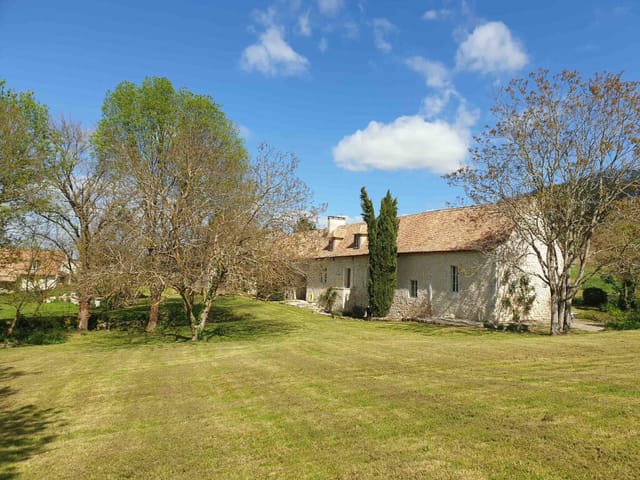
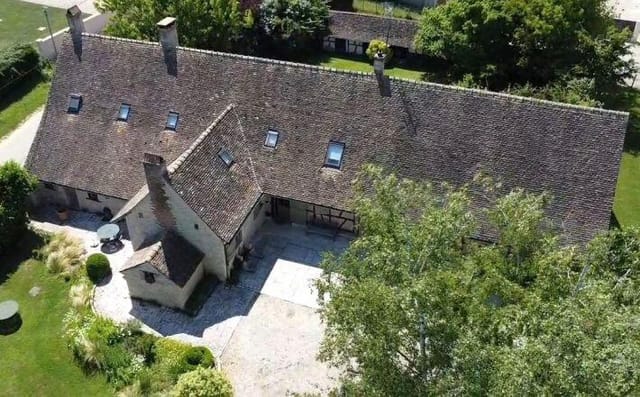
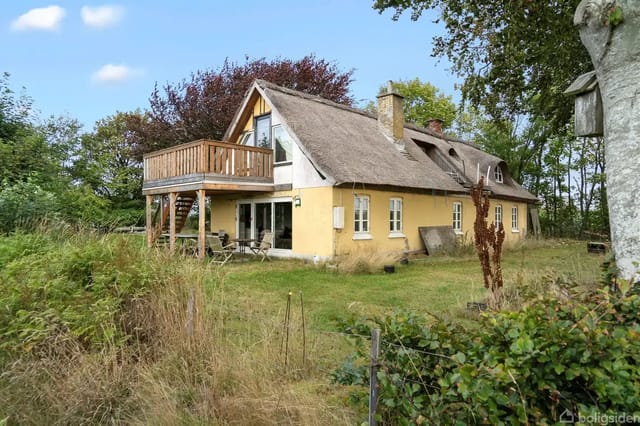
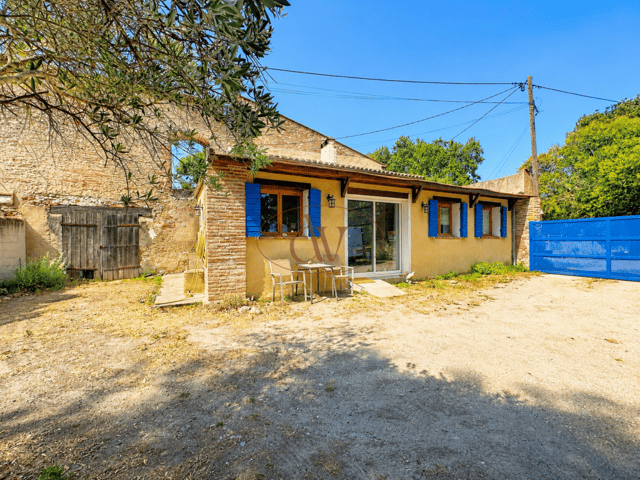
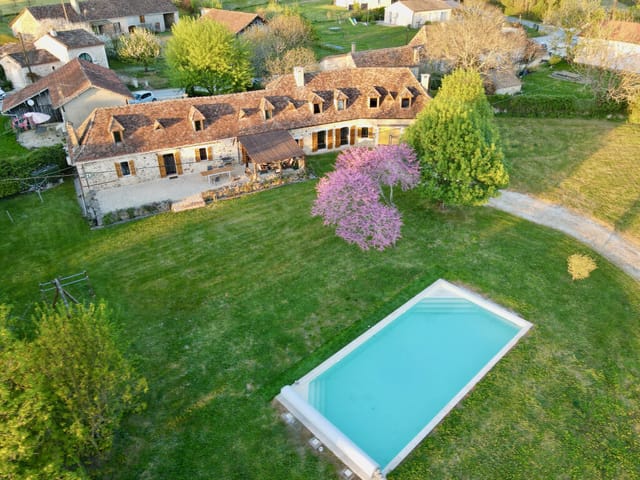
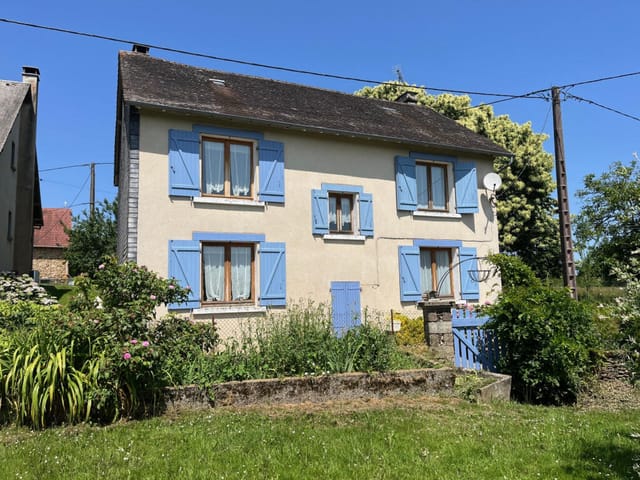
Step outside on a Tuesday morning and the only sounds competing for your attention are the stream at the edge of the hamlet and a woodpecker working its way up an oak somewhere in the tree line beyond the balcony. No traffic. No neighbor's television bleeding through a shared wall. Just the Périgord Limousin Regional Natural Park doing what it does — quietly making the rest of the world feel very far away. Abjat-sur-Bandiat sits in the northern reaches of the Dordogne, right where the department bumps against Haute-Vienne. It's the kind of village that doesn't try to impress you. There's no tourist office handing out maps, no souvenir shop selling fridge magnets. What there is: a genuine rural France that moves at its own pace, stone lanes that wind past ancient farmsteads, and a landscape of rolling woodland and meadow that turns copper and amber every October like someone slowly turning up a dimmer switch. This former barn — fully converted and completed not so long ago — sits at the tail end of a hamlet, with countryside pressing in on three sides. The conversion was done with real care for proportion. Ground floor living spaces feel open without feeling cavernous: a proper entrance hall with enough room to actually use it, a sitting room where exposed timber beams overhead anchor the space without making it heavy, and a kitchen that opens onto a dining area rather than being squeezed into a corner. The underfloor heating throughout the ground floor is the kind of detail you only truly appreciate on a raw February morning when the mist is sitting on the fields and you're padding around in socks on warm stone. The original character of the barn hasn't been scrubbed away. An oeil de boeuf window — that small circula ... click here to read more
Picture 1

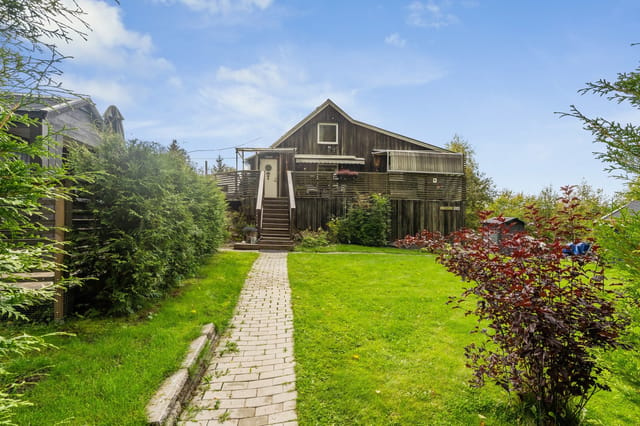
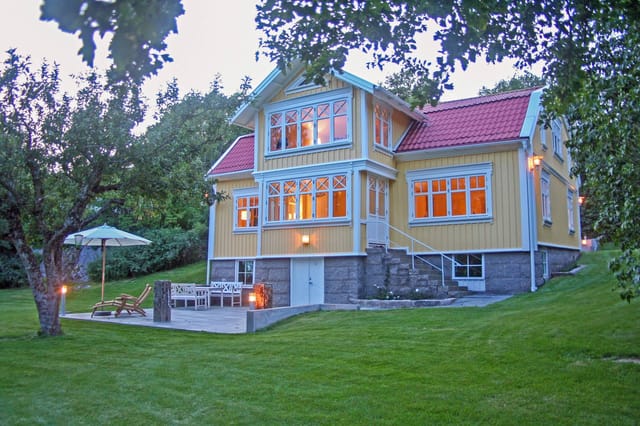
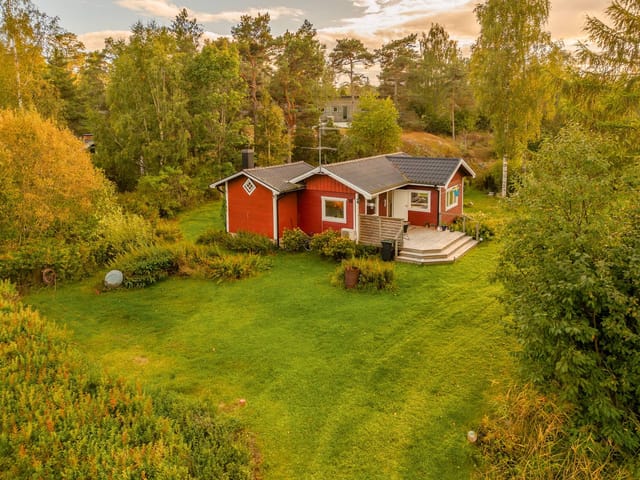
The first thing you notice on a July morning at Odensåker 20 is the light. Swedish summer light, low and golden even at seven a.m., sliding through the birch canopy and landing on the wooden deck where yesterday's coffee cup still sits. Then the smell — warm pine resin, damp moss, water nearby. You don't have to see Lake Glan from here to know it's close. Fifty meters through the trees, its presence is something you feel before you arrive at the shoreline. This is a small property in the best possible sense. Thirty-five square meters of main living space on a generous 1,000 square meter plot in Norrköping Municipality, about an hour and a half south of Stockholm by road. Two separate buildings. One kitchen, one full shower bathroom, one bedroom with built-in storage — and more space to breathe than most city apartments three times this size. For anyone hunting a genuine Swedish countryside retreat, a vacation home in Östergötland, or a low-maintenance second home in Scandinavia, this is the kind of place that ends the search. The main cottage is built for the way Swedes actually spend summer: half inside, half out. The kitchen-dining area is compact but functional, and the living room gets afternoon sun that makes reading there feel like a small ceremony. The enclosed veranda is the real workhorse of this building — a glass-fronted space that stretches the usable season from a cold April into October, long past when the open deck would have you reaching for a fleece. On rainy days it fills with the sound of drops on the roof glass, and on clear evenings it holds warmth well into the night. It's where guests drift after dinner and where you'll find yourself lingering longer than you planned. The second building adds a ... click here to read more
Main cottage and garden view

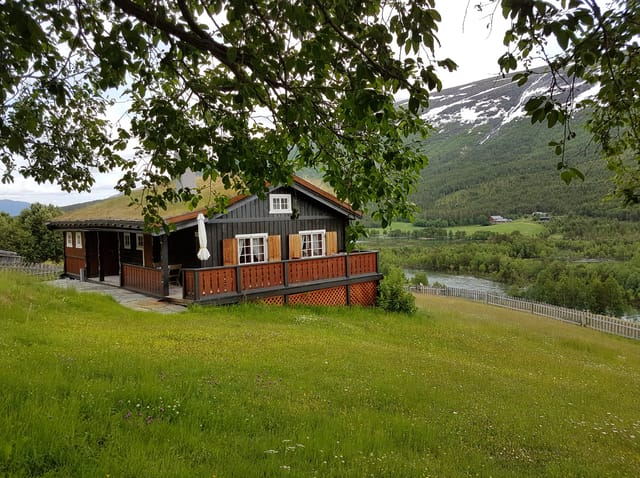
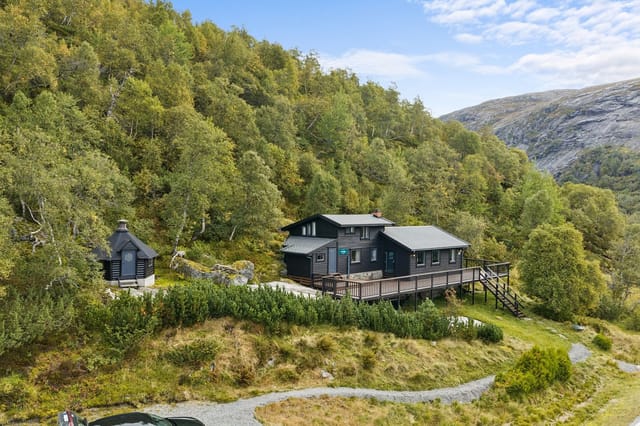
Step off the gravel path, push open the heavy timber door, and you're standing inside a cabin that was built before Norway was even a unified country. The year was 1835. Outside, the sea glitters toward the mountains of Stord and Fitjar — the same view whoever lived here first would have woken up to every morning. That sense of continuity, of being anchored to something genuinely old and real, is rare. And at Flatråkervegen 280 on the island of Tysnes, it costs less than most city parking spaces in Oslo. Tysnes sits in Vestland county, tucked between the Hardangerfjord and the Bjørnafjorden, and locals here will tell you it's one of those places that doesn't need to announce itself. There's no ski resort branding or tourist infrastructure. What there is instead: quiet coves, black trumpet mushrooms pushing up through the forest floor in autumn, golden chanterelles in summer, and a community that shows up for Tysnesfest each year with the kind of energy you can't manufacture. The festival draws thousands to this small island — live music, outdoor stages, a genuine celebration rather than a curated event. Outside of festival season, life here moves at a pace that most people have to travel a long way to find. The cabin itself is compact — 36 square metres of usable space — but it doesn't feel small. Exposed timber walls and visible ceiling beams give it a solidity that modern builds rarely achieve. Natural light comes in through windows that frame the hillside and the water beyond. The living room fits a sofa, a dining table, and still leaves room to breathe. There's a working fireplace, and on a wet October evening with the wind coming off the water, you'll be glad it's there. The kitchen is more functional than it mig ... click here to read more
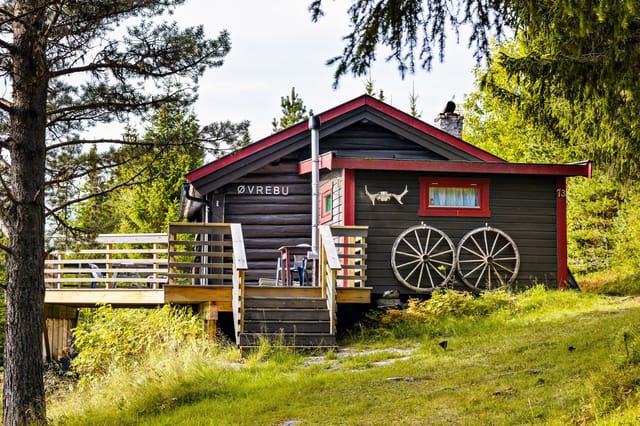
Welcome to Flatråkervegen 280, presented by Elise Linningsvoll at Aktiv Eiendomsmegling. Photo | Inderhaug Boligfoto

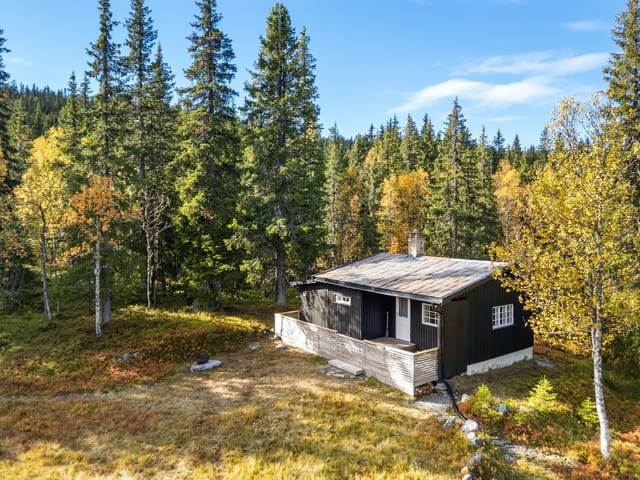
Step outside on a February morning and the only sound is the scrape of your ski boots snapping into bindings. The groomed trail starts practically at the edge of the terrace. The air is sharp, pine-scented, and cold enough to make the first thermos of coffee feel like a small miracle. This is what owning a cabin at Skrim actually feels like—and it's the kind of thing that's very hard to put a price on. Bjørklundveien 83 sits in one of Eastern Norway's most beloved outdoor recreation areas, a place where the word "hytte" carries real cultural weight. Norwegians have been coming to Skrim for generations—not for Instagram moments, but for the genuine reset that only deep forest and open sky can deliver. Buying here puts you inside that tradition. It's a vacation home in Norway that earns its keep in every season. The cabin itself is 71 square meters of considered simplicity. The living room ceiling climbs all the way to the roof ridge, giving the space a surprising airiness for its footprint. Large windows face the tree line, and in the afternoon the light slants in at a low Norwegian angle that turns the pine walls a warm amber. The fireplace is the room's undeniable focal point—once you've lit it after a long ski tour and peeled off your base layers, you'll understand immediately why Norwegians rate "kos" (coziness, roughly translated) as something close to a life philosophy. The open kitchen and dining area keep everything sociable. There's no wall separating whoever's cooking from whoever's losing at cards. The kitchen is functional and honest—no pretension, no complications. You come here to live well in a simple way, and the layout supports exactly that. One bedroom holds a double bed, the other has bunk beds that ... click here to read more
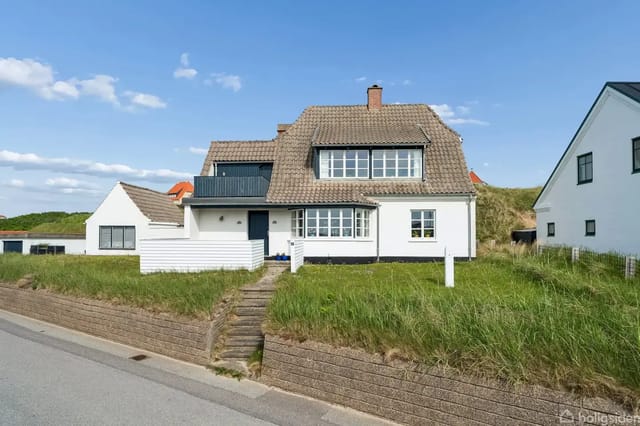
Welcome to Bjørklundveien 83, presented by Kaia Hostvedt Dahle. Photographer: Paul Thürmer.

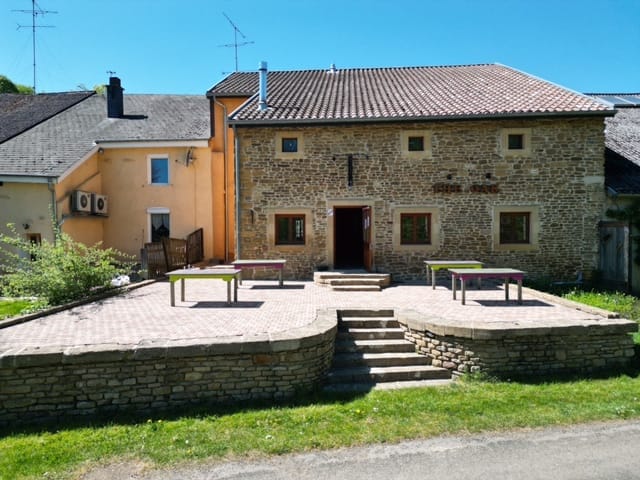
On a clear morning in the Périgord Noir, you open the shutters and the Vézère valley just sits there below you — mist still clinging to the tree line, the stone walls of the house still cool under your fingertips. There's a smell of woodsmoke somewhere down the hillside. This is Le Bugue on a Tuesday in October, and it's enough to make you wonder why you ever left. This five-bedroom stone house sits elevated above the valley floor, its 3,400 square metres of grounds giving it a quiet authority over the surrounding landscape. From the terrace beside the swimming pool, you look out over one of the most quietly celebrated river valleys in France — the Vézère, which threads its way through prehistoric caves, market towns, and walnut orchards before joining the Dordogne near Limeuil, a village so absurdly picturesque it barely seems real. And yet here you are, looking at it. The house itself is solidly Périgordine in character. The exposed stonework isn't decorative — it's structural, original, the same golden limestone that built the churches and manor houses of this region over several centuries. The stone spiral staircase connecting the two floors is the kind of thing you'd find photographed in a heritage architecture journal. The fireplace in the 39-square-metre living room anchors everything: in January, when the Dordogne countryside pulls on a coat of frost, you'll be grateful for it. Electric underfloor heating runs throughout, so comfort is never a negotiation between atmosphere and practicality. The layout works well for a family or a group of friends. Two bedrooms sit on the ground floor — useful for anyone who prefers not to deal with stairs, or for hosting guests who value a little separation. Upstairs, three m ... click here to read more
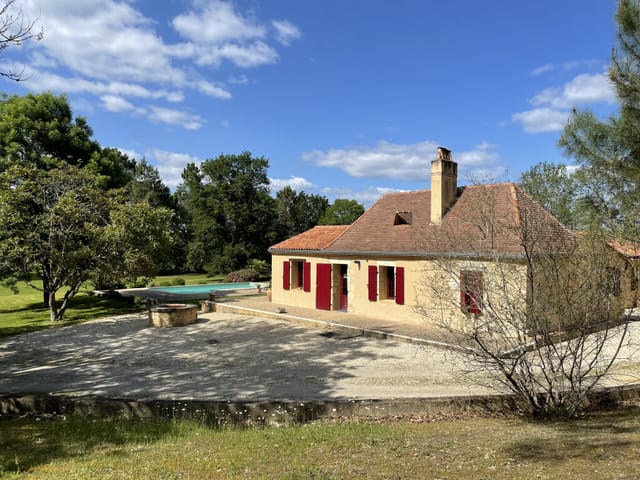
Picture 1

Step outside on a July morning at Såghyttevägen 14 and you'll hear it before you see it — the absolute quiet of Mellantjärnen lake, broken only by the soft lap of water against the shore less than fifty meters from your door. The birch trees are still. The coffee is on. And somehow, even though Falun's city center is just minutes away by car, it feels like the rest of the world has agreed to leave you alone for a while. That's the particular magic of this corner of Dalarna, and this property captures it in a way that's hard to manufacture. Three separate buildings sit on a generous 7,570 square meter lot — a main house, a guest cottage with an open fireplace, and a compact little outbuilding the previous owners called the "dollhouse." It's the kind of setup that rarely comes up for sale, and when it does, it goes quickly. The main house is 36 square meters — honest, compact, and well-considered. A small entrance hall opens into the layout, with a bedroom to one side and a combined kitchen, dining, and living space that makes the most of every centimeter. The wood-burning stove at the center of that room earns its keep on cool Dalarna evenings in September, when the temperatures drop and the maples turn amber outside the large windows. Those windows matter. They frame the lake and the tree line in a way that makes the interior feel much more open than the footprint suggests — you're always aware of the water, always connected to the landscape outside. The kitchen is set up for exactly what this kind of retreat demands: a refrigerator, a hotplate, a sink. Nothing excessive. Enough to put together a proper Swedish fika spread, fry up the perch you caught that morning, or heat soup after a long ski. The guest cottage add ... click here to read more
Main house and lakeside view

Six o'clock on a July morning. The air coming through the bedroom window carries pine resin and cold lake water, and somewhere across the meadow a woodpecker is already at work. You pull on a sweater, step off the patio, and walk barefoot through the grass toward Lake Viken — ninety seconds, maybe less — while the rest of the house sleeps. This is not a scene from a magazine. This is the daily rhythm at Åsen Klippnäset 90, and it's available right now for a fraction of what comparable waterside properties cost anywhere else in Scandinavia. Set in the Halna district of Töreboda municipality in Sweden's Västra Götaland region, this three-bedroom holiday home sits on a 973-square-metre plot at the end of a quiet lane with mature forest on two sides and open water within easy walking distance. It's the kind of place that regulars come back to summer after summer, the kind of place their kids will spend the rest of their lives trying to recreate for their own children. The main house covers 61 square metres and is organised across four rooms, which sounds compact until you actually stand inside it. The layout is tight but logical — nothing is wasted. A kitchen that functions exactly as a summer kitchen should, set up for large batches of crayfish and pots of coffee going simultaneously, with a serving window that opens directly toward the patio so whoever's cooking doesn't have to miss the conversation. The living room anchors everything with a fireplace that gets serious use from April through September, because Swedish summer evenings have a way of turning cool just as the mood turns good. Three bedrooms sleep the full crew comfortably, and when the overflow arrives — cousins, old friends, whoever shows up on Midsommar E ... click here to read more
Front view of the holiday home

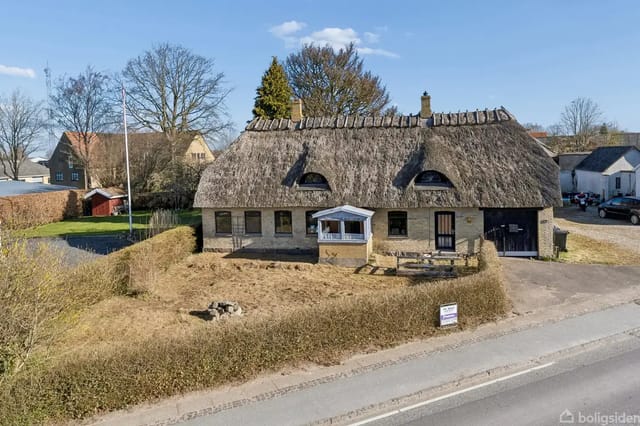
On a clear July morning at Postmyrstien 6, you pour your first coffee and step onto the terrace before anyone else in the house is awake. The Drammensfjord stretches out ahead of you, its surface catching the early light in long silver streaks, and somewhere below on the coastal path a jogger passes without noticing you up here in your elevated perch above the treeline. That quiet. That view. That feeling of having found something most people drive right past. Holmsbu is one of those Norwegian coastal villages that hasn't quite been discovered by the Instagram crowd yet — and the people who own here quietly hope it stays that way. Tucked into the western shore of Hurumlandet peninsula in Viken county, about 70 kilometres southwest of Oslo, it draws a loyal summer crowd who return year after year for the same reasons: the white wooden boathouses lining the harbour, the smell of sunscreen and saltwater, evenings that don't get properly dark until almost midnight. The coastal trail that runs directly below this property connects you to the village centre in 15 to 20 minutes on foot — past wildflowers, rocky outcrops, and occasional glimpses of sailboats tacking across the fjord. This chalet was built in 1958, and it carries that era's particular craftsmanship — solid, unhurried, built to last rather than to impress on paper. Across 87 square metres of interior space, plus a separate annex, the layout is organised around the view and the outdoors, as all good Norwegian cabins should be. The living room faces the fjord directly, its large windows framing the water like a painting that changes with every weather system that rolls through. A wood-burning stove anchors one wall — come September, when the evenings start to bite ... click here to read more
Charming holiday home presented by Meglerhuset & Partners in Holmsbu

Step out onto the rear deck just after seven on a July morning. The meadows stretch out in every direction, still wet with dew, and the only sound is birdsong cutting through air that smells faintly of pine and grass. This is Barkö — a quiet hamlet tucked into the Swedish countryside outside Östhammar, where summer feels unhurried and deliberately slow in the best possible way. Set on a generous 2,411 square metre plot along Barkö 121, this red-and-white Swedish country home from 1975 has spent its entire life in one family's hands. That kind of continuity shows. The garden is mature and deeply considered — not manicured to within an inch of its life, but layered: open lawn rolling into shade from established trees, with space carved out naturally for a kitchen garden if you want one, a greenhouse if you've been meaning to start one, or simply a hammock strung between two birches. The lot is large enough to feel private, small enough to manage on a weekend without it becoming a chore. Inside, 50 square metres is used sensibly. The living room anchors the house around a wood-burning stove that does serious work on cool September evenings when the nights start turning. Large windows pull the outside in — you get a long view over meadows and pastures that changes character entirely depending on the light and the season. The kitchen connects without fuss, practical and well-positioned for someone cooking for a table of six after a day out on the water. Two bedrooms, one bathroom with shower and WC, and a covered entrance veranda where your morning coffee goes cold because you keep stopping to watch whatever is happening in the garden. The sea is 3.2 kilometres away. That's a ten-minute bike ride on flat terrain, the kind ... click here to read more
Front view of the summer cottage

Picture this: it's six in the morning, the Baltic light is already doing something extraordinary over the water, and you're standing on your own private dock with a coffee in hand, watching a seal slip off the rocks fifty meters away. No neighbors. No noise but the gulls and the occasional creak of a rope. This is Kalvholmen — your own island in the Roslagen archipelago, about two and a half hours north of Stockholm, and one of the most genuinely rare pieces of Swedish coastal real estate to come to market in years. The island itself covers just over 8,000 square meters. That's enough space to feel completely alone without being remote to the point of inconvenience. Two private docks and a boathouse sit at the water's edge, so you arrive by boat — from the Östersjö dock parking area on the mainland, it's a short crossing — and the moment you step ashore, the mainland feels a world away. That daily transition, from car to boat to island, is something owners either find completely liberating or not for them at all. If the idea of it makes you lean forward, keep reading. The main villa dates to 1946, which in Swedish island terms means solid timber bones and a connection to the old fishing and sailing culture of the outer archipelago. A thorough renovation in 2008 brought it fully into the modern era: proper insulation for year-round use, a contemporary bathroom with shower, washing machine and tumble dryer, and a kitchen laid out for real cooking rather than holiday approximations. The open-plan living and dining area is generous enough for a long table full of people, and the Roslagen fireplace with its insert is the kind of thing you find yourself planning trips around once you've spent a November evening beside it, th ... click here to read more
Main house and sea view

The first thing you notice on a clear July morning at Lauvåsvågen 113 is the light. It arrives early this far north, slanting gold across the Gandsfjord and bouncing off the water straight through the cabin's front windows before you've even put the kettle on. By the time you carry your coffee out to the front terrace — twenty-one meters from the shoreline, close enough to hear the soft lap of the fjord against the rocks — you start to understand why people who buy cabins in Hommersåk tend to keep them for generations. This is a proper Norwegian fritidsbolig. Built in 1956, the cabin sits on a 781-square-meter plot that feels far larger than its numbers suggest, partly because of the way the land opens toward the water, and partly because of the small wooden bridge over the creek at the entrance — a detail that gives the whole place a storybook quality without trying too hard. The plot is south-facing, sheltered from the coastal winds by mature vegetation, and developers of the surrounding area haven't crept in to crowd it. That's increasingly rare this close to Stavanger. Inside, the 39-square-meter interior is compact but considered. The open-plan kitchen and living room is the social heart of the cabin, and the large windows do the heavy lifting on the design side — when the view outside is the Gandsfjord stretching toward Stavanger, you don't need much else on the walls. A wood-burning stove anchors one corner of the living room, and on the grey autumn weekends that Rogaland is famous for, it earns its place immediately. The kitchen is practical, with a window above the sink that frames the garden and lets in the salt-tinged breeze when you crack it open. A bar-style dining area keeps meals casual and convivial, th ... click here to read more
Welcome to the viewing at Lauvåsvågen 113 – Presented by Joveig Junge Aktiv Eiendom. Photo: Hanne Karlsen

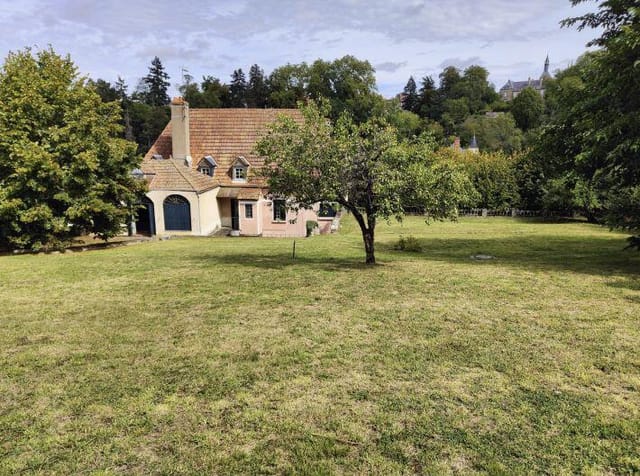
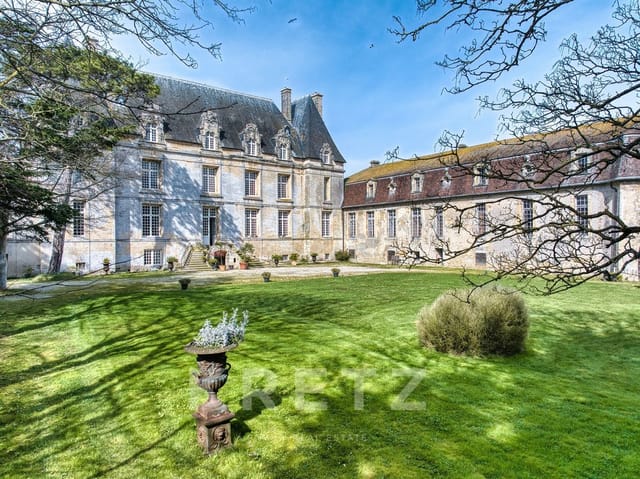
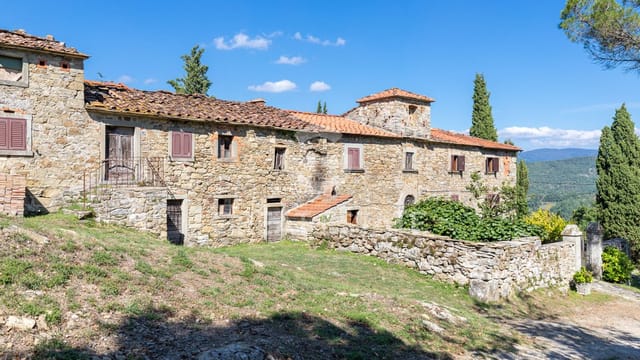
Sunday morning in Chancelade sounds like this: a distant church bell from the 12th-century abbey down the road, the creak of old oak floorboards under your feet, and the smell of coffee drifting through a kitchen that has fed generations of the same family. Step outside and the light hits the raised stone terraces in that particular golden way the Dordogne does so well — not filtered or softened, just honest and warm. This is what you're actually buying. Set just five minutes from the centre of Périgueux on a plot of just under an acre, this six-bedroom stone property represents something increasingly rare in the Dordogne: genuine substance. The main residence runs across three levels and holds onto its original bones with real conviction — wide-plank floors worn smooth over decades, a sequence of open fireplaces, and a covered terrace finished in pizé du Périgord, that traditional rammed-earth technique you almost never see intact anymore. It's a material that ties the house directly to the region's building history in a way no renovation could replicate. The layout divides naturally into two distinct living zones, which opens up serious flexibility for how you use the place. The main house offers four bedrooms spread across its three levels, with the kind of generous room proportions that older French country homes do so well — proper ceiling heights, deep window reveals, spaces that feel considered rather than carved up. Then, separate from the main residence, the guest accommodation provides two en suite double bedrooms with their own living area, all overlooking the grounds. It functions entirely independently, which matters enormously whether you're hosting friends for a fortnight in August or considering the pro ... click here to read more
Picture 1

Stand at the kitchen window on a Saturday morning and the view stops you. Beyond the granite countertop, past the glass, the rear garden opens up into a sweep of green that dissolves into the wooded edge of the Hoge Kempen National Park. No neighbor's rooftop. No road noise. Just fruit trees heavy with plums, magnolias doing their thing in spring, and a silence that feels earned. This is what 3,295 square meters of prime residential land in Maasmechelen actually feels like from the inside. The villa at Geloeslaan 22 sits well back from the street — deliberately so. The landscaped front garden acts as a buffer between you and the world, and the long driveway reads less like a parking solution and more like an arrival ritual. The natural slate roof, rare in Belgian residential builds of this scale, gives the facade a gravitas that's hard to manufacture and impossible to fake. It doesn't shout. It simply stands there, confident. Inside, 391 square meters of living space is organized around a logic that makes sense the moment you walk through the door. The entrance hallway branches naturally: left toward the double garage, right toward the staircase with its open gallery landing, straight ahead into the main living area. A guest WC sits just off the hall, alongside a proper cloakroom — the kind of detail that separates a house designed for real life from one designed for a brochure shoot. The garage itself deserves mention: heated, fitted with two floor drains and a utility sink, it works as hard as the rest of the house. The living room is where the property really shows its scale. Open fireplace on one wall. Large windows wrapping two elevations to pull in both front and rear garden views. On a grey January afternoon, ... click here to read more
Front view of Geloeslaan 22

Stand at the kitchen window on a Tuesday morning and count the herons. That's the kind of quiet this place offers. The water of Fjæreidpollen sits just below, flat and grey-green in the early light, and the old boathouse at the shore's edge looks exactly as it did a hundred years ago. This isn't a sanitized weekend retreat—it's thirty hectares of actual Norway, untouched and unhurried, twenty minutes from Bergen's city center. The house itself dates to 1900. It shows its age in all the right ways: exposed ceiling beams, a wood-burning stove in the living room, original detailing that most modern builds spend a fortune trying to recreate. At 89 square meters of interior living space, it's compact but well-configured across two floors. The ground floor holds an entrance hall, living room, kitchen with a mix of built-in and modular cabinetry, two bedrooms, and a secondary entrance that doubles as a laundry and storage room. Upstairs, a generous loft room—currently used as a third sleeping space—catches southern light through a single window and looks out over the surrounding terrain. It's the kind of room that earns the label "attic bedroom" in the best possible sense. Honest assessment: the house needs work. Real work. Buyers who come here expecting a turnkey weekend cottage will be disappointed. Buyers who come with a renovation mindset, a good contractor, and genuine enthusiasm for bringing a century-old Norwegian farmhouse back to life will find something that can't be replicated at any price in today's market. The bones are solid. The character is irreplaceable. The boathouse—naust, in Norwegian—sits at the edge of the fjord inlet, roughly a five-minute walk from the main house. It measures around 39 square meters a ... click here to read more
Fjæreidevegen 238 presented by Dag Erik Fotland, EiendomsMegler 1.

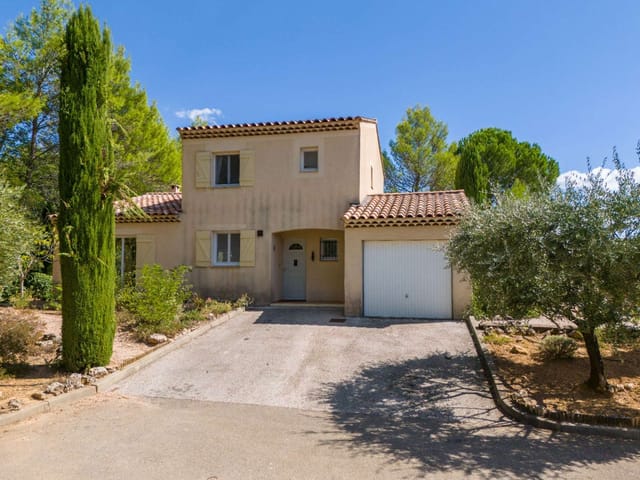
On a quiet Tuesday morning in Lorigné, the only sounds you'll catch from the south-facing terrace are birdsong, the faint clatter of a tractor somewhere beyond the stone walls, and the soft hiss of water in the covered pool below. No traffic. No neighbors peering over the fence. Just 1,377 square meters of enclosed garden, a house that's been here long enough to have earned its thick walls and terracotta floors, and the particular French countryside silence that people drive hundreds of kilometers to find. This four-bedroom stone house sits in a small hamlet between Chef-Boutonne and Sauzé-Vaussais in the Deux-Sèvres département — the quieter, less-hyped cousin of the Charente to the south. It's the kind of place that doesn't show up on the tourist trail, which is precisely why people who've discovered it keep coming back. Roughly 150 square meters of living space spread across two levels, a walled garden that feels genuinely private, a heated 8x4 meter covered pool, and a brand-new air-to-water heat pump installed in 2026. Move-in ready isn't a stretch here — this is a house that's been looked after. Step through the front door and the ground floor sets the tone immediately. The kitchen and dining room spans 37 square meters, with original terracotta tiles underfoot and a pellet stove insert in the fireplace that takes the edge off cool autumn evenings. This is the room where the house lives — where long Sunday lunches with a local Pineau des Charentes stretch into afternoon, where garlic and thyme from the garden end up in whatever's on the stove. The proportions feel right. Not cavernous, not cramped. The living room next door is a different proposition entirely: 45 square meters, its own wood-burning stove in a se ... click here to read more
Picture 1

Wake up on a Saturday morning in October and the valley below Eggedal is filling with low cloud, the kind that sits in the hollows between ridges and turns everything golden at the edges. You pull on a sweater, start the wood stove, and stand at the living room window with your coffee while the mountains do their thing. No traffic. No notifications. Just the occasional thud of snow sliding off a pine branch somewhere up the slope. This is what owning a cabin at Tempelseterveien 211 actually feels like. Perched on the hillside above Eggedal village, this two-bedroom Norwegian mountain chalet sits on a fully owned 570-square-metre plot with views straight across the valley to the ridgelines beyond. Built in 1970 in the sturdy, no-nonsense tradition of classic Norwegian hytter, it has been kept in good condition and carries all the honest character you want from a mountain retreat — wood-panelled walls, a fireplace with an insert, a separate wood-burning stove, and windows sized generously enough to make the landscape feel like part of the room. At 42 square metres total, the footprint is tight but considered. Everything has a purpose. Nothing is wasted. The two bedrooms sleep a family or a group of friends comfortably. The main living area is where you'll spend most of your time regardless — playing cards at the table after a long hike, or simply doing nothing productive in the best possible way. A five-square-metre balcony extends off the main space, south-facing enough to catch afternoon sun in summer, and positioned so you get the full sweep of the valley without anything man-made interrupting the sightline. Electricity runs throughout the cabin, and summer water comes from a shared well just outside — a perfectly pra ... click here to read more
Welcome to Tempelseterveien 211! Photo: EFKT v/Mads Brekke.

Step outside on a February morning and the only sound is the creak of snow-laden pine branches and the distant swish of skis on a groomed trail — 250 meters from your front door. That is the daily reality at Fjellvegen 885, a compact, well-built mountain chalet sitting at 245 meters above sea level in the Beitstad highlands of central Norway. Built in 2016 and kept in genuinely good condition, this is not a dusty inherited cabin with rattling single-pane windows and a temperamental woodstove. Everything here was designed from the start to work. The chalet runs entirely off-grid with a 230-volt system fed by solar panels and a generator, both managed through an inverter that you can switch on remotely from the living room sofa. Pull up on a Friday evening in January, start the system from your phone before you even unlock the door, and walk into a lit, warming space rather than a cold, dark box. It is a small detail that changes everything about how you actually use the place. Inside, the open-plan living and kitchen area clocks in at around 26 square meters — not enormous, but smartly arranged. Large windows along the main wall pull in low Nordic light and frame a direct view over Jenshusvatnet, the lake that defines this stretch of the Nordfjellet plateau. In winter the lake freezes to a glassy white. In late June, with the sun barely setting, it catches orange and pink for hours. The wood-burning stove anchors one corner of the room; the kitchen sits opposite with an integrated gas hob, oven, and a gas refrigerator included in the sale. There is nothing superfluous here. Every fixture earns its place. Two bedrooms — each around 6 square meters — give sleeping space for four comfortably, more if you use the loft reac ... click here to read more

Welcome to Fjellvegen 885, presented by EiendomsMegler1 v/ Magnus Aasland.

Step outside on a July morning and the water of Lomtjønn is so still it mirrors the spruce treeline perfectly. You're standing on the upper terrace with a coffee, the only sounds a woodpecker working somewhere up the hillside and the faint creak of the hot tub cover lifting in the breeze. That's the rhythm this place sets. Not a frantic ski-resort pace, not a tourist-packed coastal summer — something slower, quieter, and frankly harder to find anywhere in Europe at this price point. Svimbilvegen 38 sits in the Heia district of Hovin i Telemark, roughly 10 kilometers from Austbygde and about 20 minutes' drive from the village center of Sandvatn. The address might not mean much if you've never spent time in Telemark, but locals know this corner of Norway as a genuinely uncrowded patch of mountain and lake country. No queues. No overpriced harbor-front restaurants. Just forest trails, cold clear water, and a landscape that stays interesting across all four seasons. The chalet itself — a main cabin plus a separate annex — sits on a 1,128 square meter plot with full sun from sunrise to sunset. That matters more than it sounds. Norwegian summer evenings stretch impossibly long, and having sun on your terraces until 9 or 10pm transforms how you use the outdoor space. There are multiple terrace levels here, adding up to 115 square meters of external deck and balcony combined, so whether you want morning light over breakfast or a shaded corner in the afternoon, you can have both without moving far. Inside the main cabin, the living room has the kind of atmosphere that takes years to develop — stained wooden wall panels, high ceilings that keep the space from feeling boxed in, and a wood-burning stove with a glass door that tur ... click here to read more
EiendomsMegler1 v/Ann Helén Jamtveit presents Svimbilvegen 38! Photo: Inbovi

Six o'clock on a July morning and the only sound is a woodpecker somewhere in the pines behind the garden. You pull open the conservatory door, coffee in hand, and the cool air carries the faint smell of resin and wet grass. This is what Ekedals byväg 66 feels like before the rest of the world wakes up — and honestly, that alone is worth the price of admission. This is a proper Swedish sommarstuga, the kind that gets passed between families who actually use it. Two bedrooms, a renovated kitchen, a conservatory big enough for a long table of eight, and a flat garden that begs for a game of kubb before dinner. Fifty square metres of well-considered space that never feels tight because the ceiling in the main living room shoots all the way up to the ridge, doubling the sense of volume. The generous windows pull the treeline inside, so the forest is always in your peripheral vision whether you're cooking, reading, or just sitting still. The current owners renovated with a clear-eyed focus on practicality — not cosmetic staging. The kitchen is genuinely functional: full-size stove, fridge-freezer, proper worktop space. No fussy finishes that scuff easily, no open shelving that looks great in photos and collects dust in real life. The loft above the living area sleeps two more, which makes spontaneous visits from friends or children's cousins entirely manageable rather than logistically painful. The bathroom has a shower cabin, sink, and a separett composting toilet — a standard and well-proven setup in Swedish leisure properties where conventional sewage connection isn't available. Off the main living room, the conservatory deserves its own paragraph. This is where summer actually happens. Long breakfasts that drift into l ... click here to read more
Exterior view of the summer house

The sun hits the top of the mountain at Sandviken before it touches anywhere else on Blidö. By the time the rest of the island stirs, you're already on the upper terrace with a coffee, watching the light spread across the water below. That's not a small thing. That's the reason this house was built exactly here, on the highest point of the hill at Morkullevägen 12, facing south, catching every hour of daylight Sweden's long summers can offer. The main house went up in 2020, designed by an architect who clearly understood that good design in the archipelago means working with the landscape, not against it. The roofline follows the natural rock, the multi-level terrace of roughly 250 square metres steps down the hillside in stages, each platform carved to make the most of the granite beneath it. When you're barbecuing on the lower deck as the evening light turns the inlet gold, you're not standing on a flat slab bolted to the earth — you're sitting inside the landscape itself. Inside, the first thing you notice is the ceiling. Five metres of open space overhead, with a glulam beam running the length of the room that gives the interior a warmth no painted surface could replicate. The kitchen is genuinely well-equipped — two ovens (one with steam function), a large induction hob, built-in microwave, a dishwasher with extra capacity — the kind of setup that makes cooking for eight people on a Friday evening in July feel like a pleasure rather than a project. Underfloor heating runs through the hallway and bathroom, the air-to-air heat pump handles both warming and cooling depending on the season, and the construction itself is energy-efficient enough that the electric bedroom radiators rarely need switching on. This is a ho ... click here to read more
Main house exterior

The morning quiet up here is something else entirely. No traffic, no notifications — just the low creak of hand-hewn timber warming in the sun and, if you step out onto the terrace before breakfast, the silver surface of Lake Femunden stretching south toward the Swedish border. At 684 meters above sea level, the air has a sharpness to it that wakes you up faster than any coffee. This is Femundgropa 11, a two-bedroom log cabin on the edge of Drevsjø, and it sits at the kind of address that most people only ever see on hiking maps. Built in 2001 using traditional round-timber construction, the cabin is the real thing — not a modern kit house dressed up with rustic touches, but an actual hand-crafted log structure with a sod roof that's been quietly growing into the hillside for over two decades. The walls are thick, the logs are hand-hewn, and the whole place has the satisfying solidity of something built to last generations rather than to photograph well for a brochure. Several of the windows were replaced around 2009, and they frame views in three directions: birch forest, open fell, and on clear days, the long blue line of the lake below. Inside, the living space is compact and honest. A wood-burning stove anchors the main room — and in late September when the birch leaves go gold and the temperature drops overnight, you will be very glad it's there. The kitchen runs off a gas-powered stove, the fridge is included in the sale, and wastewater drains naturally through a terrain ditch. There's no mains connection, which is exactly the point. Power comes from a south-facing 12V solar panel system backed by a 136Ah battery, enough for lighting and the small appliances you actually need. Mornings here run on their own sched ... click here to read more
Welcome to Femundgropa 11! A leisure property with a cozy handcrafted log cabin from 2001 and an annex from 2013.

Step onto the south-facing terrace on a July morning and the first thing you notice is the silence. Not the dead kind — the full kind, broken only by wind moving through the pine tops and the occasional call of something you can't quite name. Grimestadveien 41 sits elevated above the surrounding terrain in Marnardal municipality, and from this perch you genuinely feel like the landscape belongs to you. This three-bedroom chalet on Grimestad has been a quiet secret for long enough. Positioned on a 700 m² freehold plot near the shores of Dørevann, the cabin catches sunlight from first thing in the morning all the way through to the long Nordic evenings — that golden hour stretching past 10pm in midsummer — when the terrace practically begs you to pour something cold and stay put. The wrap-around deck covers 52 square metres across three sides of the building, which sounds like a statistic until you realise it means you can always find sun or shade depending on your mood, and there's room for a full outdoor table without anyone feeling cramped. Built in 1994 and held in good condition throughout, the chalet runs across a single level — a practical choice that works particularly well for families with young children or anyone who doesn't want stairs to be part of the conversation on holiday. Inside, the open-plan kitchen and living room feels genuinely generous for 82 square metres. Large windows push the walls out visually and pull the treeline in. On grey autumn afternoons, the wood-burning stove earns its keep; in the shoulder seasons, the heat pump handles the heavy lifting. Both working in tandem means this isn't purely a summer property — Norwegians use cabins like this year-round, and it's easy to see why. The thre ... click here to read more
Welcome!

Stand on the covered terrace at Lupinvägen 28 on a July morning and you'll hear almost nothing — the faint knock of a wooden boat somewhere out on Mälaren, a woodpecker working at the birch line beyond the garden, maybe the distant cathedral bells rolling down from Strängnäs town. That's the particular quality of quiet you get on a dead-end road where the neighbours are mostly full-time residents who've lived here long enough to wave without looking up. It's not the silence of isolation. It's the silence of a place that knows exactly what it is. This is a proper year-round house — built in 1975, updated thoughtfully, and sitting on 1,833 square metres of flat, manageable land about 400 metres from the shore of Lake Mälaren, one of Sweden's largest and most-sailed inland waterways. At 63 square metres of living space across two bedrooms and a single bathroom, the footprint is honest and well-proportioned. Nothing wasted. Everything you need. Step inside and the living room earns its keep immediately. Large windows pull the garden greenery in visually, and on grey November afternoons the cast-iron fireplace does the kind of work that no underfloor heating system can fully replicate. There's a warmth here that's tactile — the creak of the floor, the smell of woodsmoke, the way the light shifts gold around three in the afternoon in autumn. The kitchen sits in an open, sociable position relative to the dining area, so whoever's making the meatballs or slicing the gravlax isn't exiled from the conversation. Practical, yes. But also genuinely pleasant to spend time in. Both bedrooms are calm and properly sized — not the afterthought rooms you sometimes find in older Swedish summer houses that were retrofitted for year-round ... click here to read more
Exterior view of Lupinvägen 28

Stand in the entrance hall of this 1909 vicarage on a still October morning and you'll hear absolutely nothing except the wind moving through the old oak trees outside and the occasional creak of timber that has settled over more than a century of Scanian winters. That quiet is not emptiness — it's the kind of deep, deliberate stillness that most people drive hours to find and rarely do. This is Grönbyvägen 87-0, set in the medieval village of Grönby in Trelleborg Municipality, southern Sweden. The property served as the official vicar's residence for this parish until 1925, and before that it was the social and spiritual anchor of a community whose church dates to the 12th century. Local historians note that King Charles XII passed through this very village in 1715 on his march through Skåne — a detail that feels less like trivia and more like texture when you're standing in rooms that were already old by then. As a vacation home, second home, or permanent residence in southern Sweden, few properties carry this kind of layered story. The main house was built in 1909 and spans a generous 360 square meters across 10 rooms, six of which function as bedrooms. The architecture is classic late-Swedish rural institutional — broad, confident proportions, high ceilings that make every room feel unhurried, and large windows that pull in the flat, luminous light that Skåne does better than anywhere else in the country. Original woodwork runs throughout: door frames with their painted profiles still intact, decorative moldings that speak to a time when craftsmen took their time, and fireplaces that anchor the main reception rooms with genuine warmth. This isn't a restoration project dressed up as a period home. The bones are real ... click here to read more
Front view of the historic vicarage estate

On a still July morning in Nibbla, the air smells of cut grass and lake water. You step out onto the south-facing deck with your coffee, the sun already warming the wooden planks underfoot, and there's not a sound except birdsong and a distant rowing boat cutting across Lake Mälaren. This is what 450 meters from the water actually feels like — and it's right here on Violvägen 3. Ekerö is one of those places Stockholmers guard like a secret. A string of islands connected by bridge to the Swedish capital, roughly 20 kilometers west of the city center, it sits inside the vast archipelago of Lake Mälaren — Sweden's third largest lake and, by most measures, one of the most quietly beautiful. The landscape here rolls between open fields, birch forest, and water. Red wooden cottages dot the hillsides. In summer, the light lasts until nearly midnight and locals make full use of every hour. This particular cottage, built in 1955 and carefully updated over the past decade, sits on 424 square meters of garden in the Nibbla area — a pocket of Ekerö that still feels genuinely rural while sitting comfortably close to the mainland. The lot is generous for a property of this size, and whoever tended this garden took it seriously. Mature fruit trees shade the eastern end of the plot. Flower beds run along the fence lines. The lawn has multiple south-facing spots that catch sun from mid-morning through to the long Nordic evening. It's the kind of garden you actually use, not just admire. Inside, the 38 square meters are planned tightly and well. Large windows pull light into the open living and dining space, and the views through them — green garden, open sky — make the rooms feel considerably larger than the floor plan suggests. The n ... click here to read more
Exterior view of the cottage and garden

Step outside on a Tuesday morning and the only sound is the cuckoo somewhere deep in the oak woods behind the meadow. No traffic. No neighbours visible. Just the smell of damp grass, a light mist burning off the valley below, and the knowledge that you have six hectares of Périgord countryside entirely to yourself. That is the daily reality of this place — a 318-square-metre stone estate at the end of a quiet cul-de-sac on the edge of a tiny hamlet near Saint-Aubin-de-Lanquais, and it is the kind of property that makes people stop scrolling. The main house is authentically Périgord — golden limestone walls, exposed oak beams on the upper floor, and a sense of solidity that only three centuries of craftsmanship can produce. The ground floor flows generously: a 45-square-metre open living and dining room fills with southern light through most of the day, connecting directly to a 13-square-metre kitchen that opens onto the same space, making it genuinely social. There is also a private ground-floor bedroom with its own dressing room and ensuite shower — ideal for guests who prefer not to climb stairs, or for the owners themselves. A dedicated 30-square-metre office sits apart from the living areas, which matters if you work remotely or plan to manage the gîte business from the property. Upstairs, two further bedrooms — 23 and 15 square metres respectively — have the kind of exposed ceiling beams that interior designers try to recreate and never quite nail. Now, the part that sets this property apart from the typical Dordogne holiday home: it comes with two fully functional gîtes. The smaller one sleeps four across 62 square metres, with its own living room, two bedrooms, and a secluded garden that gives guests genuine pri ... click here to read more
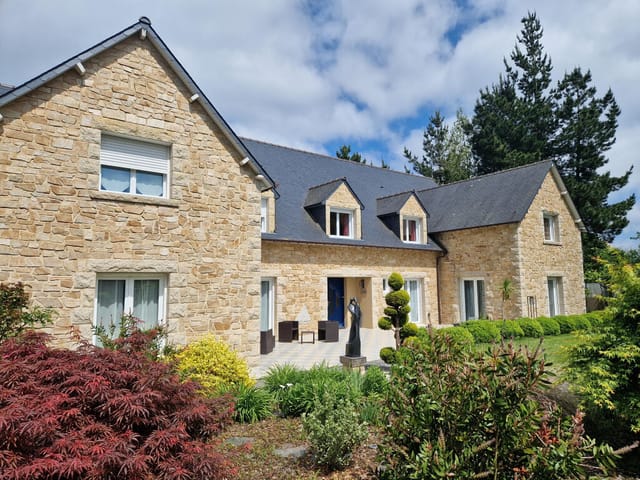
Picture 1
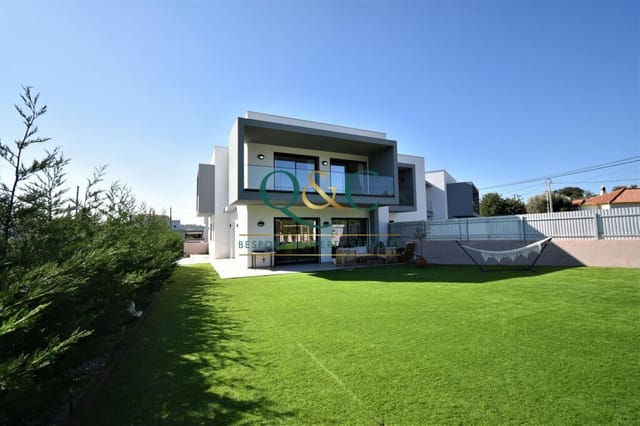
Stand at the living room window on a still September morning and the fjord is right there — flat, silver, absolutely silent except for a single eider duck crossing the water's surface. That's what Røssvikbukta feels like at this hour. The old schoolhouse at Snillfjordsveien 4115 has been watching this bay since 1918, and it still holds its ground on the hillside like it was planted there on purpose. Locally, everyone calls it "Skolestua." The name stuck long after the last lesson was taught, and there's something quietly compelling about that — a building with a century of stories baked into its walls, sitting on a leased lot above the Snillfjord in coastal Trøndelag, waiting for someone with vision and a few weekends to spare. This isn't a turnkey weekend cabin. It's a renovation project in the truest sense, and that is exactly the point. The main building measures 51 square metres, which sounds modest until you step inside the living room. Twenty-nine square metres, ceiling height that opens the space up in a way you don't expect, and windows that frame the sea like paintings on all sides. The proportions work. That generous ceiling height isn't just an architectural quirk either — it creates a genuine opportunity to build a sleeping loft, the kind you see in restored hytte conversions across Møre og Romsdal, where a simple mezzanine platform doubles the utility of a small footprint without touching the exterior envelope. A builder familiar with Norwegian timber structures could make this room extraordinary. Off the living room, the kitchen runs to 7 square metres. Functional for a work weekend, but yes, it needs updating — new units, a proper worktop, potentially a small island if you knock back the partition sligh ... click here to read more
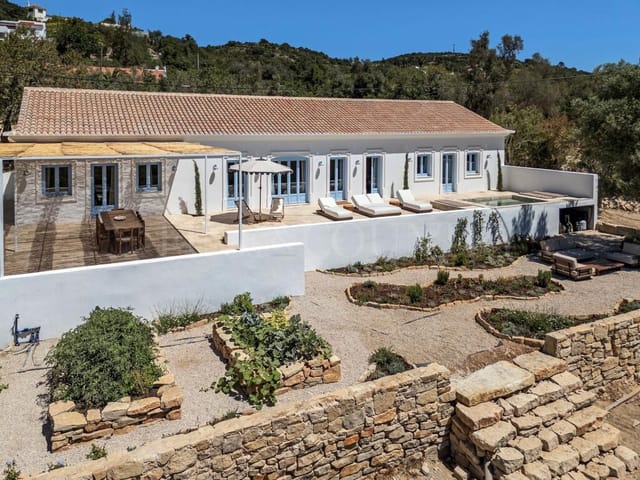
Welcome to Snillfjordsveien 4115! Photo: Husfoto AS (Børge Halseth)

You wake up to the sound of water. Not the distant kind—the close kind, the kind that tells you the lake is right there, just past the pines, eighty meters from your front door. By the time the coffee is ready, someone has already grabbed a towel and headed down to the dock. That's the rhythm Følingen Hyttefelt 15 puts you in. And once you've had it for a weekend, you'll find it very hard to go back. Aremark sits in the far southeast of Norway, tucked into Østfold county right up against the Swedish border—a part of the country that doesn't get the postcard attention of the fjords, but rewards the people who find it with something arguably better: genuine quiet, real forest, and lakes that haven't been overrun. Aremarksjøen is the main body of water here, and it's the kind of lake where you can actually hear the surface when it's calm. Paddleboats, kayaks, small motorboats—all of it works. The fishing is serious too. Perch and pike are common pulls, and on an early July morning with mist still sitting on the water, it's the sort of scene that makes you wonder why you ever needed a flight to get somewhere meaningful. The cabin itself is 67 square metres of solid Norwegian timber construction, and it's in good condition—maintained rather than neglected, which matters more than most buyers initially realize. Walk in and the first thing you notice is the smell of wood, the kind that comes from panelled walls and solid timber flooring that have absorbed years of evening fires. The living room is genuinely liveable, not a tight squeeze: there's room for a proper sofa group and a dining table without anyone bumping elbows, which makes the difference on a rainy August afternoon when five people are inside playing cards. Both ... click here to read more

Welcome to Følingen hyttefelt 15!

On a still Tuesday morning in late August, the light through the west-facing terrace at Vikavägen 6 lands differently than anywhere else. It's that particular Nordic gold—low, long, almost amber—that turns an ordinary cup of coffee into something you want to remember. The lilacs have finished blooming, the garden smells of warm grass, and somewhere about a kilometer down the road, the morning boat to Arholma is leaving Simpnäs harbor with a low churn of engine and the cry of a few opportunistic gulls. This is Björkö. And once you've spent a summer here, it becomes very hard to spend one anywhere else. Vikavägen 6 is a year-round holiday home on the island of Björkö in Norrtälje municipality, sitting in the outer reach of the Stockholm archipelago where the Åland Sea opens up and the islands thin out into something wilder and less visited than the tourist-heavy inner archipelago. The property dates to 1909, and you can feel that history in the weight of the walls and the way the three buildings frame a courtyard garden that has clearly been lived in and loved across many generations. At the same time, this is not a restoration project. The main house is in good condition, with a kitchen renovated in 2019, a modern shower room, and proper water and sewage connections that make year-round use genuinely comfortable rather than just technically possible. The main house is single-story, 84 square meters, and the layout makes intelligent use of every one of them. The kitchen has kept its rustic character after the renovation—there's a wood-burning stove in there that does double duty, heating the space and making the room smell like every Swedish winter weekend you've ever imagined. It opens into a dining room that functions ... click here to read more

Main house and garden

You step off the boat and the engine dies. Suddenly it's just wind through pine needles, the soft lap of water against the dock, and the distant call of a great northern diver somewhere across Lake Toke. That's the moment you understand why people fall hard for Fjordøy and never quite let go. This three-bedroom timber chalet sits on its own 1,233 square metre island plot in the middle of Lake Toke, in Telemark's Drangedal municipality — one of the quieter corners of inland Norway that Norwegians have been quietly hoarding as a summer secret for decades. The cabin was built in 1964, and while it's been well maintained, it hasn't been sanitised into something generic. The low ceilings, the knotted pine walls, the south-facing terrace worn smooth by summers of bare feet — it feels like a place that has actually been lived in and loved. At 42 square metres internally, it's compact but genuinely functional. The living and dining room catches southern light for most of the day, and the direct door onto the covered terrace means meals blur between inside and outside from June right through to early September. The kitchen is simple and honest. Three bedrooms sleep a family or a group of friends without anyone having to argue over sleeping arrangements. A separate utility area of 13 square metres — attached but external — holds a storage room and a toilet, which is the kind of practical Norwegian cabin thinking that makes a property actually usable rather than just photogenic. The private shoreline and wooden boat dock are the heart of the place. Lake Toke is a serious lake — around 15 kilometres long, clear enough to swim in with confidence, deep enough to hold good-sized perch and pike. On a calm morning, you can fish from t ... click here to read more

Welcome to Fjordøy!

Step outside on a February morning and the groomed ski trail is already there, right at the edge of the plot, cutting through the snow-heavy pines of Vikerfjell. You clip into your skis before the coffee has even finished brewing. That's the particular kind of morning this cabin at Skåpmyrveien 8 makes possible — and once you've had it, it's hard to imagine spending winter any other way. Set in the Tosseviksetra area of Vikerfjell, roughly 800 metres above the valley floor and about an hour's drive from Oslo, this three-bedroom chalet with an approved separate annex is the kind of Norwegian mountain property that rarely comes onto the market at this price point. At 221,000 EUR with 86 square metres in the main cabin plus the annex, and with electricity already installed, it sits in a genuinely accessible bracket for international buyers looking for a second home in Scandinavia. The plot is leased rather than freehold, which is completely standard practice in Norwegian recreational property areas and is precisely what keeps the entry price realistic. The cabin itself is in good condition. Walk through the door and you get the open-plan living room and kitchen that Norwegians have been perfecting for generations — practical, warm, nothing wasted. The fireplace sits at the heart of it, and on a cold evening with the snow piling up outside, that cast iron heat source does things no underfloor heating system ever quite replicates. The kitchen is straightforward and honest: a traditional hytte standard that's built for actual cooking after long days outdoors, not for Instagram. Two of the three bedrooms have bunk beds, one has a double, and the whole setup handles up to 13 people across the main cabin and the annex. Big fami ... click here to read more

Front view of the cabin

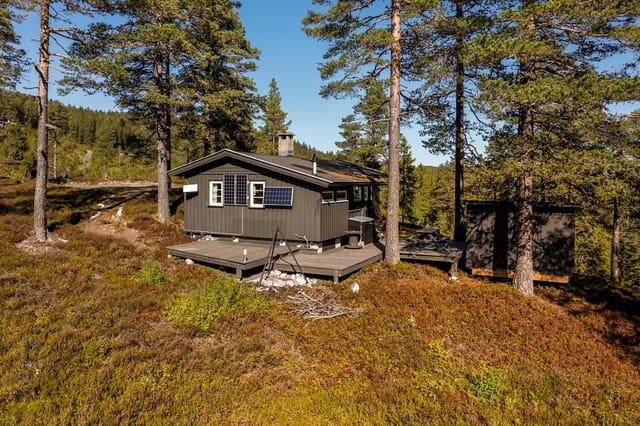
The first thing you notice is the silence. Not the absence of sound — the lake has plenty of that, a rowboat knocking gently against its mooring, wind moving through the birch trees at the edge of the plot — but the absence of everything else. No traffic. No notifications that feel urgent. Just Storblåvatnet laid out below the living room windows like something from a Knut Hamsun novel, and a fireplace that'll be lit before you've even unpacked. This is a two-bedroom chalet vacation home in Namdalseid, Trøndelag, and it is genuinely unlike most cabins you'll find on the Norwegian market right now. The off-grid setup — solar panels on both the main cabin and the separate annex, rainwater collection with filtration, a wood-burning stove doing the heavy lifting on cold autumn nights — makes this less a weekend bolt-hole and more a functioning little world unto itself. Built originally in 1978, the main cabin sits at 46 square metres of interior space, which sounds compact until you're inside and the living room opens up around you. At roughly 25 square metres, it's the kind of room that earns its size: a fireplace at one end, a wood stove at the other, and a bank of large windows framing unobstructed views down across the water toward Øyensskavlen mountain, which tops out at 687 metres and is a proper half-day hike from your front door. On clear July evenings — and there are many of them here, the plot faces south and gets sun from early morning until late — you can sit on the 25-square-metre covered veranda and watch the light change colour on the mountain for an hour without it feeling like a long time. The kitchen is functional rather than elaborate, which fits the cabin's ethos: you're here to spend time outdoors, no ... click here to read more

Welcome to Storblåvatnet 10, presented by EiendomsMegler1 v/ Magnus Aasland.

Saturday morning. You pull open the heavy wooden door of the sauna house, and the birch-scented steam rolls out across the rocky knoll while the Stockholm archipelago sits quiet and silver through the trees. The wood-fired hot tub is still warm from the night before. Nobody else is awake yet. This is Vätö — and once you've had a morning like that, it's almost impossible to go back to ordinary weekends. Krokusstigen 10 sits on the island of Vätö in Norrtälje municipality, about 90 kilometres north of Stockholm, connected to the mainland by a bridge that makes this feel accessible without ever feeling crowded. The property is a classic Swedish sommarstuga in spirit — built in 1956, with all the soul that comes from a house that has absorbed decades of long evenings and midsummer celebrations — but the practical side has been kept firmly in the present. This is not a project. It's move-in ready and waiting. The main house runs to 60 square metres, which sounds compact until you step out onto the large wooden terraces and realise the living space effectively doubles in summer. Swedes know how to design for the outdoors, and this house is proof. The terraces wrap around the property in a way that catches light at different hours of the day — morning coffee on one side, evening wine on the other as the sun drops low over the pines. Inside, the living room is anchored by a masonry open fireplace with a Roslag insert, the kind of cast-iron fitting that's been keeping archipelago families warm for generations. Light a fire in September, crack a window, and listen to the first autumn wind move through the birch trees outside. That fireplace earns its keep from August through to May. The layout is honest and well-proportioned. A ... click here to read more

Front view of the holiday home

The first thing you notice on a still July morning at Straumsvågen 109 is the silence — not the absence of sound, but the specific quality of it. The soft lapping of water maybe forty seconds' walk from the front door. A fishing boat somewhere out on the fjord, engine ticking over. Birdsong you can't quite identify. This is what a proper Norwegian cabin holiday sounds like, and owning this chalet means it's yours to come back to whenever city life stops making sense. Kvisvik sits along the edge of Møre og Romsdal, a county that consistently stops visitors dead in their tracks. This is the same coastline that inspired a thousand painters and drew Norse sailors centuries before anyone thought to put a road through here. Straumsvågen itself is a quiet inlet where the light does extraordinary things in the late evening — in summer it barely gets dark, and the sky turns shades of amber and coral that you genuinely won't find anywhere south of the Arctic Circle. The mountains that frame the view from the chalet's veranda aren't decorative. They're the kind you actually want to climb. The property at Straumsvågen 109 was built in 1986 and sits in genuinely good condition — no renovation project waiting to bite you, just a well-kept cabin ready for use from day one. At 62 square metres of indoor living space, it's compact in the way that Norwegian cabins are supposed to be: efficient, functional, warm. The layout makes sense. The living room sits at the heart of things, with windows sized generously enough to let the landscape in, and on grey October weekends when the rain comes sideways off the fjord, the fireplace turns the whole room into something very close to perfect. Adjoining the living area, the kitchen handles the pr ... click here to read more

Presented by local real estate agent Aleksander Faksvåg Talgø

The first thing you notice on a summer morning at Litsnäset 130 is the sound of the Indalsälven moving past the garden — a low, steady current that replaces whatever city noise you carried here. The boathouse is twenty steps from the kitchen door. The fishing rod is already rigged. Coffee's on. This compact one-bedroom holiday home in Lit, Jämtland sits on a 1,150-square-metre riverside plot in the small community of Litsnäset, roughly ten minutes by car from the town of Lit and about forty minutes from Östersund. At 20 square metres, it's deliberately simple. That's not a limitation — it's the point. This kind of cabin demands very little of you. You spend your time outside. The main house pulls off something that bigger properties often fail at: everything is in its right place. A wood-burning stove anchors the living area, which doubles as a sleeping space with a sofa corner and bunk bed. When you light the fire on an October evening and the river mist rolls across the plot, the whole room feels genuinely warm rather than just heated. The kitchen is compact but practical, with its own separate entrance opening directly onto the garden — meaning you can carry plates straight to the terrace table without threading through the living space. Small detail. Big difference in daily use. The partly covered terrace is where most of the daylight hours happen in summer. It faces the water. The sun in Jämtland in July doesn't set until past ten, and from the terrace you watch the light go gold on the Indalsälven for what feels like hours. The property's own stretch of riverfront is directly accessible — you walk across your garden and you're at the water's edge. Swimming, fishing from the bank, pushing a kayak in. No shared ac ... click here to read more

Exterior view of the holiday home and garden

On a still Tuesday morning in Thénac, the only sounds are birdsong, the occasional bell from the nearby Plum Village monastery drifting across the fields, and the soft creak of walnut branches in the breeze. You're standing on the terrace with a coffee, looking out over an unbroken panorama of Périgord countryside. No cars. No noise. Just space, light, and a 423-square-metre longère that's been quietly absorbing centuries of Dordogne life since the 1600s. This is not a typical French farmhouse renovation story. What you get here is rare: a genuinely large, genuinely versatile property that was substantially refurbished in 2021, sitting on around 5,400 square metres of landscaped grounds with a natural spring-fed pond, mature orchard trees — apple, walnut, cherry, plum, pear — and a private swimming pool tucked behind a thick hedgerow so that no one can see in. The pool terrace feels like your own private world, shielded from everything. Step inside through the main entrance hall, which is wide enough to function as a proper reception room, with doors opening to both the front and rear of the house. It sets the tone immediately. Stone walls. Thick, solid materials. A sense of permanence you don't find in new builds. The kitchen pulls you in further — organic and unhurried in its design, with wooden units, natural stone flooring, and walls that have absorbed three hundred years of cooking smells and family meals. This is the kind of kitchen where you actually want to spend time, not just pass through. The main lounge takes the drama up a level. A cathedral ceiling rising two full storeys gives the room a scale that feels theatrical without being cold, and a mezzanine level above adds an intimate counterpoint to all that ... click here to read more

Picture 1

You wake up, slide open the double doors, and the smell of salt air and sun-warmed timber hits you before you've even had your first coffee. The water out toward Lyngør is completely still. A fishing boat putters past in the distance. This is a Tuesday morning in Gjeving — and it feels like the rest of the world doesn't exist. Bryggeslengen 1 sits at the end of a quiet cul-de-sac on an elevated 456 square metre plot, tucked just far enough from the road that the only thing you hear is wind through the pines and the occasional clunk of a boat hull against a dock. Designed in 1994 by Stokkeboskjær Architects in the classic Southern Norway coastal style — white-painted timber, pitched roof, covered terrace — the chalet has that rare quality of feeling both genuinely Norwegian and completely liveable. At 78 square metres across three bedrooms, it's compact without feeling cramped, and every square metre earns its keep. The heart of the cabin is the open living and kitchen space, where large windows face out over the water. On grey November afternoons, the fireplace does serious work as a room divider and heat source. Come June, those same double doors stay open all day, blurring the line between the covered terrace and the interior so completely that you're not quite sure where you're sitting — inside or outside, it doesn't much matter. The kitchen comes fully equipped, storage is generous, and the countertop space actually accommodates proper cooking rather than just reheating. Move-in ready from day one. Three bedrooms sleep six comfortably. The main room has space for a proper double bed, wardrobe, and nightstands — not a squeeze. The two smaller rooms suit children well, or guests who won't complain about a cosy marit ... click here to read more

Privatmegleren by Maren Goderstad presents Bryggeslengen 1.

The first morning you wake up at Norrberg 18, before you've even put the coffee on, you'll hear it — absolute silence, broken only by the low call of a wood pigeon somewhere in the birch trees out back. No traffic. No sirens. Just Hälsingland doing what it does best. This two-bedroom country home sits on a generous 8,520 square metres of land in the rural reaches of Ljusdals kommun, and it comes with the kind of breathing room that's almost impossible to find anywhere near a city at this price. The plot is big enough to disappear into — part open meadow, part woodland fringe — and the outbuildings alone are worth the trip up here to see in person. Let's talk about the house itself. Around 120 square metres spread across two floors, which gives you more flexibility than you might expect from a two-bedroom layout. Downstairs, a wide entrance hall opens into a kitchen that's actually sized for cooking — the sort of room where you can have four people chopping and nobody's in anyone's way. Off the kitchen, two additional rooms adapt easily: reading room one week, extra guest space the next, home office the week after that. The ground floor bathroom has a shower and toilet, and everything works. Upstairs, a furnished landing functions as a secondary sitting area — the kind of spot that fills up with books and card games by August — and two proper bedrooms look out over the fields and treeline. It's a quiet, uncomplicated layout that actually suits the way people use a summer house. The sale includes all furnishings and loose items currently in the property. You drive up, you put your bags down, you open the windows. That's it. No waiting on furniture deliveries from the mainland. Now, the outbuildings. There's a tradition ... click here to read more

Front view of the house and garden

Step off the gravel track at Lilla Pjäkebo on a September morning and the first thing you notice is the silence. Not the uncomfortable, something-is-wrong kind — the deep, earned quiet of forest edge countryside in Småland, broken only by the knock of a woodpecker somewhere up in the pines. The air smells of damp moss and, faintly, of woodsmoke drifting from a neighbor you can't even see. This is the Sweden that Swedes themselves escape to on weekends, and this 1909 cottage — solid, well-cared-for, sitting on over 5,300 square meters of land — is the real thing. The house is small in the way that forces you to live well. Seventy-eight square meters across three rooms, arranged with the practical logic of old Swedish torp design: nothing wasted, nothing unnecessary. The wooden floors are original, worn to a warm honey color from over a century of use. Large windows pull the meadow and treeline right into the living room, so even on grey November days the space feels connected to something bigger than itself. The kitchen does what a good country kitchen should — gives you room to make proper food, to leave a pot of elk stew on the stove without bumping into anyone, to look out at the garden while you wash up. Both bedrooms are quiet. Genuinely quiet. The kind of quiet where you actually sleep differently. The updated bathroom is modern without being clinical — new fixtures, clean lines, and none of the awkward compromise that often comes when someone tries to modernize an old country house. Then there's the magasin. A classic Swedish barn outbuilding that the current owners have made genuinely useful rather than just atmospheric. The ground floor functions as a guest house — real accommodation for friends or family, not ... click here to read more

Front view of Lilla Pjäkebo cottage

On Sunday mornings, the bells from the village church carry clean and clear through the upstairs windows — and from the second floor of this 215-square-metre manor house, you can actually see the steeple they ring from. That's not a detail you find in every property. It's the kind of thing that makes you stop mid-coffee and remember why you came to Normandy in the first place. Saint-Aubin-lès-Elbeuf sits on the south bank of the Seine, a few kilometres from Elbeuf and just 20 minutes by train from Rouen's cathedral city centre. It's a proper Norman town — bakeries that still close on Mondays, a weekly market where the cheese vendor knows regulars by name, and streets lined with the kind of stone-and-brick architecture that takes a century or two to earn its look. This manor house sits on one of those streets, on a one-way road that keeps through-traffic away, behind a large gate that shuts the outside world out entirely. The plot runs to 1,150 square metres, fully enclosed by walls — not a hedge, not a fence, actual walls — and the south-facing orientation means the terrace catches the sun from mid-morning until the light goes golden in the early evening. There's a carport, two outbuildings (one fitted with a rainwater tank for garden irrigation, which in Normandy is less of a luxury than you'd think), and mature trees that give the garden a settled, unhurried feeling. The terrace already has a sun lounger and outdoor table set up. On a warm July afternoon, with a glass of Calvados or a cold Leffe from the fridge, this corner of the garden could easily become your most-used room in the house. Inside, the ground floor is well-configured for daily life. The fitted kitchen connects to a dining room — a layout that actual ... click here to read more

Picture 1