Houses For Sale In Europe

Houses for sale in europe - homestra offers the largest amount of european real estate with over 200,000+ properties, find any type of property within your budget from villas to country homes. buy or rent your perfect home in europe.

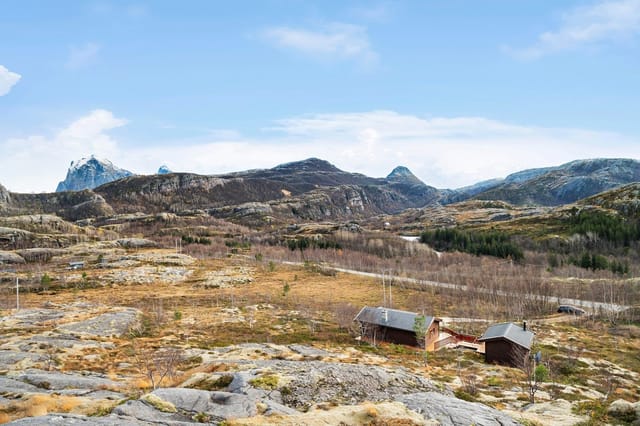
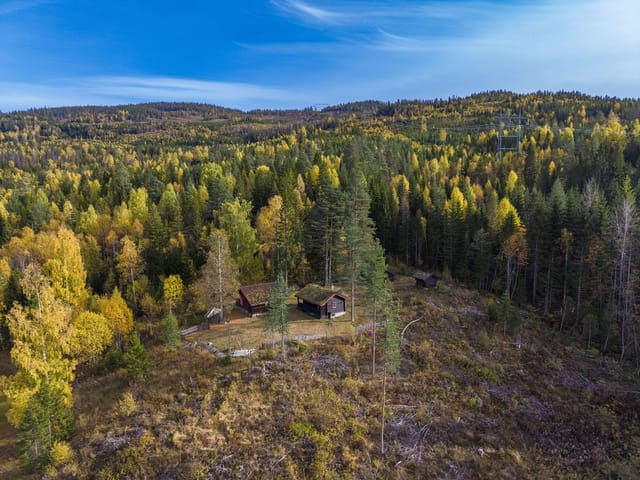
Stand at the kitchen window on a July morning and watch mist lift off the river in slow, unhurried curls. That's the kind of quiet this place offers — not the performed quiet of a spa, but the real, deep stillness of northern Sweden, where the only soundtrack is birdsong, moving water, and the occasional rustle of a reindeer picking through the treeline. This one-bedroom country cottage in Korsträsk, set on a generous 4,037-square-metre plot along the river's edge, is the kind of find that doesn't come along often in Norrbotten County. Korsträsk itself is a small, unhurried village about 20 kilometres from the town of Älvsbyn, sitting in a landscape shaped by glaciers, pine forests, and the kind of light that photographers chase from across Europe. In midsummer, the sun barely sets. By late August, the skies turn theatrical — deep violet streaks giving way to the first hints of aurora. In February, you can cross-country ski straight from the property boundary and follow forest tracks for hours without crossing a road. This is that kind of place. The cottage sits right beside the river, and roughly 350 metres separates you from the shores of Stor-Korsträsket, one of the larger lakes in the municipality. Walk down in the evening with a rod and you're pulling perch and pike from water that feels like it belongs to you alone. In summer, the lake is warm enough to swim — Swedes are not precious about cold water, and after a few days here, neither will you be. Canoe hire is easy to arrange in Älvsbyn, and paddling the connected waterways for an afternoon gives you a view of this landscape that no road can match. The house itself is 75 square metres, solid in structure, and honest about what it is: an older Swedish cottage w ... click here to read more
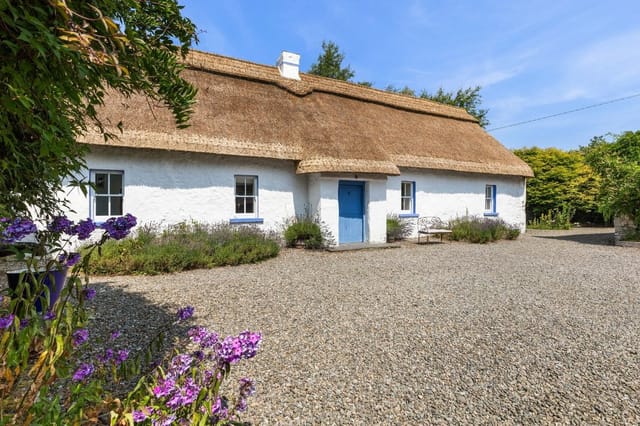
Korsträsk 330 - Exterior view
New

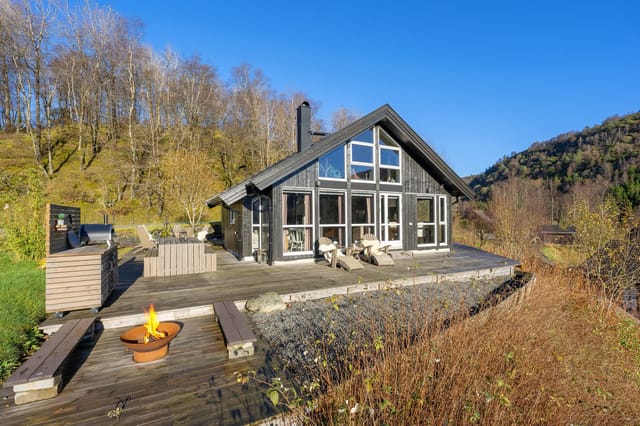
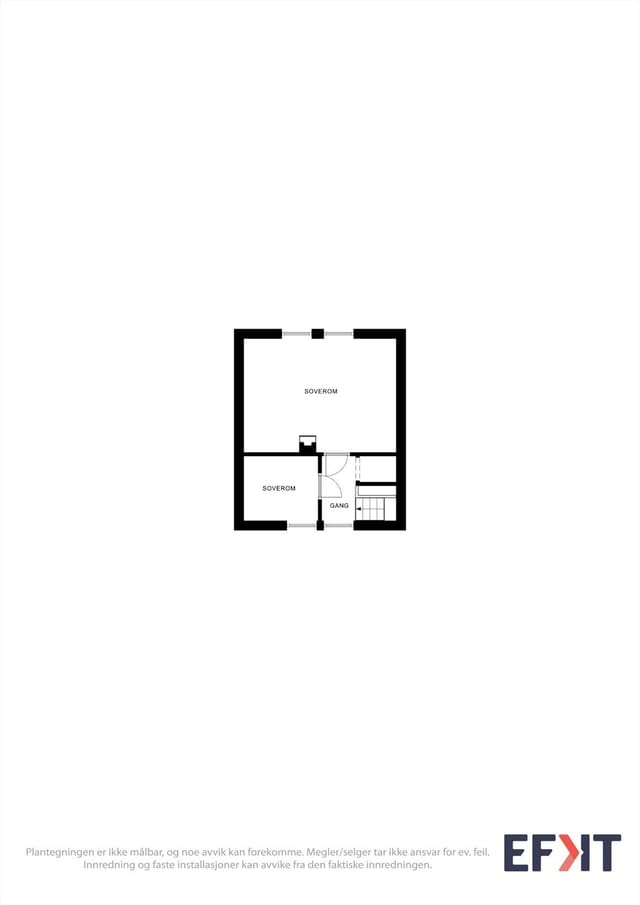
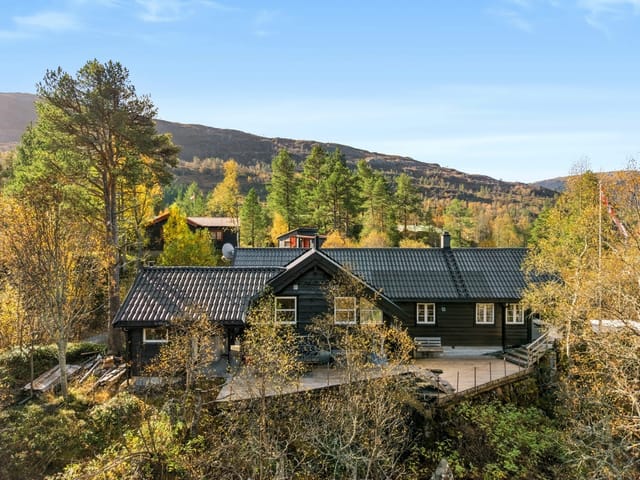
Step outside on a February morning and the world is white and absolutely silent except for the soft creak of snow-laden pine branches. You're standing on the front terrace of your own mountain chalet in Seljestad, Skare, coffee in hand, watching the Folgefonna plateau catch the first pale light of a Norwegian winter day. The cross-country tracks are 1.6 kilometers down the road. Røldal ski center — one of the snowiest alpine resorts in all of Scandinavia — is a ten-minute drive. You don't have to rush. This is your place. Hjallen 22 sits on a generous freehold plot of 1,428 square meters in the Seljestad cabin area of Skare, in the heart of Hardanger, western Norway. The chalet was originally built in 1993 and substantially extended in 2013, bringing the total indoor living area to a very comfortable 128 square meters — all on one level, which makes the layout genuinely practical for families with young children or guests of any age. Parking sits about 40 meters from the front door, accessible even through deep winter snowfall. Walk inside and the entrance hall immediately does its job: boots off, ski gear hung, the outside world stays outside. Then you're into the living room, and you stop. The ceiling height here is generous — properly generous, not just described that way — and the large windows pull in the mountain panorama like a living painting that changes with every season. Come March, the light softens and the snow starts to blue in the late afternoons. Come July, the same view is all deep green hillsides and the distant glint of waterfalls fed by snowmelt from the plateau above. The wood-burning stove against the far wall makes the whole room feel anchored, its warmth radiating through the space on evenings w ... click here to read more
Welcome to Hjallen 22! Photo: EFKT
New

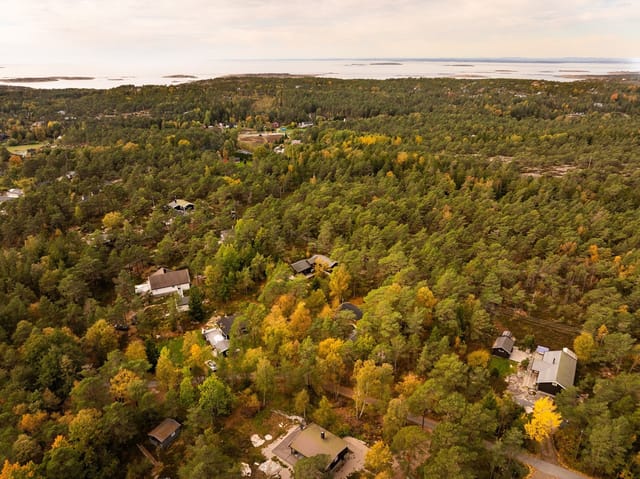
The first thing you notice, standing on the dock at six in the morning, is the silence. Not a dead silence — the kind with texture. A heron lifting off the far bank. The soft knock of the wooden hull against the mooring post. Nævestadfjorden lying completely still, reflecting a pale Nordic sky that can't quite decide between silver and gold. This 1904 chalet on Nævestadveien has been drawing people to that dock for over a century, and it's easy to understand why nobody wanted to leave. Set on a 5,059-square-metre plot along the inner fjord system south of Risør, this is the kind of Norwegian coastal property that rarely comes to the open market. Three bedrooms across the main house and a separate guest annex, 70 metres of private shoreline, a sandy beach you share with nobody, and a private boat dock that puts the entire southern archipelago within reach. At 354,000 EUR, it is exceptional value for a freehold coastal property with direct water access in one of Norway's most sought-after summer regions. The house itself was built in 1900 and still carries that era's craftsmanship in every room. Painted panel walls. Wide plank floors worn smooth by generations of bare summer feet. A kitchen that faces the water, where the smell of coffee mixes with whatever the wind is carrying off the fjord — pine resin in July, salt and autumn leaves in September. The living room has a fireplace, and on cooler evenings you'll understand exactly why: the fjord turns dark and theatrical after dusk, and there's nowhere better to watch it than from a warm room with the stove crackling behind you. Two bedrooms are in the main house; the third is in the standalone annex, which also has its own entrance and storage room — ideal if you're host ... click here to read more
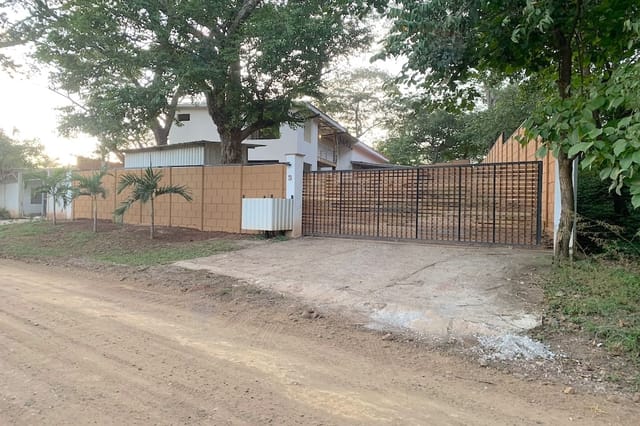
Picture 1
New

You wake up to the sound of birdsong drifting through the window, the smell of pine and lake water on the morning air. Through the kitchen glass, the garden stretches out in a wash of green — old fruit trees, a flat lawn still wet with dew, and somewhere beyond the tree line, Bodatorpsträsket glinting in the early light. This is a Tuesday in July at Bodatorpsvägen 14. And it's yours. This three-bedroom summer house in Djurhamn, on the island of Djurö in Värmdö municipality, sits on a generous 2,793 square metre plot in the Bodatorp area — one of the most sought-after pockets of the Stockholm archipelago for Swedish families and international buyers alike. The property is in good condition, ready to use from day one, and carries that rare quality of feeling genuinely lived-in rather than staged. Every corner has a story: the covered terrace where evenings tend to stretch long, the wood-burning stove that makes October here not just bearable but actually cosy, the great room that somehow fits everyone when the whole family descends in August. The main house is 55 square metres of practical, warm living space — compact enough to run easily, large enough for real comfort. There's a kitchen with a proper dining area where long lunches happen naturally, a bedroom tucked away for quiet, a separate toilet with an incineration toilet, and a shower room with a shower cabin. The wood stove in the great room is not decorative; it's the heart of the space, doing real work on those shoulder-season weekends when midsummer has passed but nobody wants to stop coming up. The covered terrace off the main house is where the day tends to begin and end — coffee in the morning light, wine as the sun drops behind the spruce trees. But the ma ... click here to read more
Main house and garden
New

Early Saturday morning at Mollandskjær, the smell of pine resin warming in the sun hits you before you've even opened the terrace door. Coffee in hand, you step out onto 63 square meters of south-facing deck, the Skagerrak coast stretching wide in front of you, a boat chugging lazily toward Fevik in the distance. No neighbors. No noise except the water and the wind through the trees. This is what you bought the cabin for. Grimstad has been pulling people to its coastline for over a century. Henrik Ibsen lived and worked here as a young man, and there's still something about this stretch of southern Norway — the white-painted wooden houses, the smooth granite rocks sloping into the sea, the unhurried pace — that makes it hard to leave. The cabin at Kjørrvigveien 9 sits on a freehold plot of 2,411 square meters at Mollandskjær, one of the more secluded pockets along this coast, surrounded by native pine forest and exposed bedrock. The nearest bathing spot is a short walk downhill. The dock space in Stølekilen is legally registered to the property — genuinely rare on this stretch of coast, where mooring rights are fiercely held and rarely come with a sale. The chalet itself covers 73 square meters of single-level living, which in practice means everything you need without anything you don't. The layout is logical: a fireplace anchors the living room, and large windows face the terrace so the indoor and outdoor spaces feel continuous rather than separated. On a grey October afternoon, when the sea takes on that particular pewter color the Norwegians paint so well, you light the fire and watch the weather move across the water without going anywhere at all. The dining area is positioned directly by the window — it's the spo ... click here to read more
DNB Eiendom ved Tom Arthur Pedersen har gleden av å presentere Kjørrvigveien 9!
New

On a still February morning at Matsbo 7, the only sounds are the creak of snow settling on the roof and, somewhere below the garden, the Ljusnan river threading quietly through the valley. You pull on your boots, step outside into minus-eight air that bites your cheeks in the best possible way, and you're at the trailhead in four minutes flat. This is Bruksvallarna — and once you've spent a winter here, you'll understand why Swedes return year after year with the kind of quiet loyalty that doesn't need explaining. Matsbo 7 sits on a 2,296 square metre plot on a calm residential street in the centre of the village. It's not a remote cabin requiring a four-wheel drive and three hours of mountain road — it's genuinely walkable to the ICA Stigmyrs grocery store, the village brasserie, a weaving studio, and the local hotel. That proximity matters more than it sounds. On a dark January afternoon when the temperature drops hard, being able to grab provisions on foot rather than scraping ice off a car is its own small luxury. The property is built in two connected sections, each with its own entrance, and this dual layout is the detail that makes it genuinely interesting for buyers. The newer wing, comprehensively updated in 2015, has the kind of open-plan arrangement that works for large family gatherings — a wide living room, a white kitchen with real storage space, a dining area that seats a crowd, and a bathroom with contemporary fittings. Two bunk beds and a double mean six people sleep here comfortably without anyone feeling crammed. The older section is a different mood entirely. Panel-clad walls, a proper open fireplace, and a sitting room that feels like it was built for long evenings with aquavit and card games. One ... click here to read more
Exterior view of Matsbo 7 in Bruksvallarna
New

Saturday morning in Maasmechelen: the market on the square is already humming, coffee smells drift through an open kitchen window, and the back garden is yours alone — quiet, fenced, flooded with light. That's the daily rhythm at Koning Albertlaan 85, a three-bedroom semi-detached corner house that sits right in the pulse of one of Belgian Limburg's most lively towns, yet somehow manages to feel genuinely private. Corner plots are rare here. This one gives the property a wider footprint, more natural light than a typical mid-terrace, and a garden arrangement that works — a low-maintenance front with a proper driveway, and a rear terrace with a green patch that's big enough for a table, chairs, a few potted herbs, and an easy Sunday afternoon. The fully fenced 390 m² plot means kids or dogs can roam freely while you handle the barbecue. Step inside and the ground floor makes immediate sense. The entrance hall splits cleanly: right leads into the living room with its marble-tiled floor that stays cool underfoot in summer and reads genuinely well-kept rather than showy. Left is the kitchen — gas stove, combination oven, and a practical layout that connects through a rear hallway back to the living area, so whoever's cooking doesn't feel cut off from the rest of the house. The bathroom sits just off the kitchen: shower, toilet, washbasin. Functional, logical, clean. Upstairs is where the house breathes. Skylights pull daylight down onto the warm laminate flooring, and two of the three bedrooms are generously sized — the kind of rooms that actually fit a double bed, wardrobe, and a small desk without feeling cramped. The third bedroom is the flexible one: home office right now, guest room next summer, playroom the summer a ... click here to read more
Front view of Koning Albertlaan 85
New

On a still July morning, the smell of salt air drifts through the kitchen window before you've even made coffee. The Swedish west coast does that — pulls you outside before you're ready. From Gustav Bäcks väg, it's a ten-minute walk down to Eriksbergs beach, where the water is clear enough to see your feet and the only sound is the occasional creak of a sailboat. This is what you bought it for. Built in 2023, this compact year-round house in Bokenäs sits on 631 square metres of manageable garden, a short drive from the Bohuslän coastline that artists and writers have been quietly obsessing over for a century. At 45 square metres, it's not trying to be something it isn't — it's a proper escape, designed to be easy. One bedroom, one bathroom, an open-plan living and kitchen area that catches the afternoon light, and a loft upstairs that fits a double bed with room to spare. The layout means two people can genuinely live here without stepping on each other, and a third or fourth can sleep comfortably when you want company. The patio deserves a mention early, because you'll spend a lot of your time there. Long Swedish summer evenings — and they are genuinely long, light until eleven or later — make outdoor dining less of a nice-to-have and more of a daily ritual. The garden itself is low on demands. Mow it, water the odd plant, done. If you've had a holiday home in France or Italy and spent half the visit managing the grounds, you'll appreciate this. Bokenäs is one of those places that regulars are slightly reluctant to talk about too loudly. The peninsula sits between the Gullmarn fjord to the north and the open coastline further south, and the result is a patchwork of inlets, rocky outcrops, sea pines, and small boat ha ... click here to read more
Front view of the house and garden
New

Picture this: it's seven in the morning in late June, and the light in Trøndelag never really went away. You step out onto the timber terrace at Norddalsveien 1991 with a cup of coffee, and the only sounds are birdsong and the faint rustle of birch trees on the hillside. No traffic. No notifications. Just the particular kind of silence that feels earned. That's daily life at this two-bedroom cabin in the Momyr Vestre cabin community in Åfjord municipality — a place where Norwegian friluftsliv isn't a lifestyle trend but simply how things are done. The chalet sits on a 150-square-metre leased plot in one of the area's most established hyttefelt, which means you're buying into a mature community of like-minded cabin owners who've been coming here for decades. There's a social ease to these places that newer developments don't have — neighbours who know the best fishing spots, trails that aren't on any app, a quiet solidarity around the wood stove come October. The cabin itself was built in 1982 and spans 30 square metres of usable indoor space on a single level — compact by design, which is exactly the point. Everything you need is within arm's reach: a living room with a fireplace and big windows that pull in the green of the treeline, a kitchenette open to the main space so whoever's cooking is still part of the conversation, and two proper bedrooms with enough room for beds, storage, and a good night's sleep after a long day outdoors. Above the main living area, a loft — the classic Norwegian hems — adds a third sleeping nook, the kind of spot kids claim immediately and refuse to vacate for the entire holiday. The wood-panelled interior has the warm, unhurried feel of a traditional Norwegian hytte. It's not trying to ... click here to read more
Picture 1
New

Early morning on the Norwegian coast, the water in Sivikkilen sits so flat and still you could read a map in its reflection. You walk down through the grass from the cabin — coffee in hand, barefoot — step onto your own private pier, and there's nothing between you and Nordfjorden but open air and salt. That's the kind of morning this place delivers. Sitting on a 5,085-square-meter plot at Sildnesveien 53 in Søndeled, this architect-designed chalet from 1994 was built to make the most of one of the more quietly spectacular stretches of the Aust-Agder coastline. The plot slopes gradually toward the water's edge, and the entire outdoor landscape — the terraces, the lawns, the sun-warmed rocks near the shore — feels like it grew this way naturally. It didn't happen by accident. The design choices are deliberate throughout. The cabin itself measures 60 square meters of indoor living space, which sounds modest until you're inside and understand how every square meter has been made to count. Large windows pull the fjord view directly into the living area so it becomes part of the room, not just something happening outside. The open-plan layout means the kitchen, dining, and sitting areas flow into each other without walls chopping the space into unnecessary compartments. When the wood stove is going on an October evening and rain taps at the glass, this room becomes the kind of place you don't want to leave. Beyond the main building, there's a 47-square-meter external utility area attached to the cabin, a 30-square-meter outbuilding, and a 4-square-meter storage shed — practical spaces that make extended stays genuinely comfortable, with room for kayaks, wetsuits, fishing gear, and everything else that accumulates around a l ... click here to read more
Picture 1
New

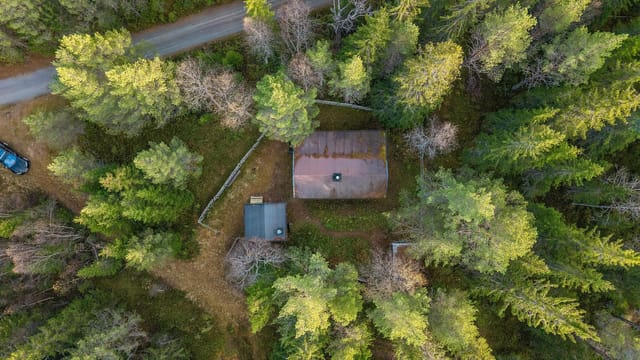
You wake up to the smell of pine resin warming in the morning sun, and the only sound is a woodpecker somewhere deep in the birch forest behind the cottage. No traffic. No sirens. Just the occasional clink of a coffee cup and the creak of an old wooden floor underfoot. This is Gottröra—a pocket of rural Uppland that most people drive straight past on their way to the coast, which is precisely why the people who find it never want to leave. Set along Vängsjöbergsvägen in the quiet community of Gottröra, about 20 kilometers inland from Norrtälje, this 1968-built country home sits high on its own plot—elevated enough to catch the light early, private enough that you'll forget neighbors exist. The 3,026-square-meter grounds unfold around a sheltered courtyard framed by the main house, a guest cottage, a sauna building, and several outbuildings. From above, it looks like a small Swedish farm that got quietly left behind by the twentieth century, and that's exactly the appeal. The main house is 64 square meters of honest, unfussy living space. Two bedrooms, a kitchen with a wood-burning stove big enough to heat the whole room in February, and a sitting room anchored by a proper fireplace. The layout was designed for people who actually use their homes—not for show. On a grey November afternoon, with a pot of elk stew on the stovetop and snow pressing against the single-pane kitchen window, this house delivers exactly what it promises: warmth, quiet, and the particular contentment that comes from being genuinely off the grid from city life. Summers here are something else entirely. Viksjön lake is a 550-meter walk down through the trees—a clean, cold Swedish lake where the swimming is good and the fishing is better. Pike and ... click here to read more
Front view of the country home
New

At six in the morning, the water off Södra Finnö sits completely still. You walk the fifty metres from your front door down to the private jetty, coffee in hand, and the only sound is a common eider calling somewhere out toward Fyrudden. This is what people mean when they talk about the Swedish summer — and this two-bedroom country home in the heart of the Sankt Anna archipelago puts you right inside it. Sankt Anna is one of those places that Swedes have quietly kept to themselves. Spread across more than six thousand islands and skerries east of Söderköping in Östergötland, the archipelago doesn't have the tourist crowds of Stockholm's outer islands or the Bohuslän coast. What it has instead is genuinely wild coastline, sheltered bays where the water warms up fast in July, and that particular quality of light in late afternoon that turns the granite pink. The nearest mainland town, Söderköping, is one of Sweden's most intact medieval towns — Saturday mornings there mean wandering the Storgatan, picking up fresh bread from the bakery, and stopping for a coffee before the short drive back through pine forest to the island. The house itself was built in 1987 and sits on just over 2,000 square metres of land. Sixty-seven square metres inside, which sounds compact until you're actually in it — the open layout connecting the living room, dining area, and kitchen makes the space work hard, and the large windows along the sea-facing side mean the water is always present, even when you're cooking. On autumn evenings, when the temperature drops and the archipelago empties out, the wood-burning fireplace becomes the centre of gravity for the whole house. The geothermal heating system (bergvärme) backs it up, meaning this isn't j ... click here to read more
Exterior view of the main house and garden
New

Step inside on a cool June morning and you'll hear it before you see it: the low creak of hand-hewn timber walls adjusting to the day's warmth, the faint scent of linseed oil paint that has soaked into every surface for over a century. Outside, the birch trees lining Skärklacken's lane are in full leaf, and somewhere down the track, a neighbour's cowbell carries across the meadow. This is not a renovated-to-within-an-inch-of-its-life weekend escape. This is the real thing. Skärklacken has been documented since 1664, when it operated as a traditional Swedish fäbod — a seasonal mountain pasture where farming families would move their livestock each summer. By the early 1900s, 22 farms clustered here and some 250 cows grazed the surrounding meadows. When the railway pushed through the Dalälven valley, the settlement transformed quietly into a small workers' community, complete with its own shop. The timber cottages that housed those railway families are still standing. This is one of them. The building itself is a two-storey log structure, and whoever has cared for it over the decades understood the difference between maintenance and interference. The walls carry their age well. Original doors, frames, and mouldings remain in place — not as a design affectation, but because they were simply never replaced. Ceilings, walls, and woodwork have been treated with traditional linseed oil paint in the old Dalarna manner, which gives the interior that warm, slightly matte glow you see in the open-air museum at Zorngården in nearby Mora. The ground floor living area has been fitted with new Floda pine flooring, and it sits comfortably alongside the older elements without trying to upstage them. Heat comes from two tiled stoves an ... click here to read more
Exterior view of the timbered cottage
New

The alarm doesn't go off here. You wake up because sunlight is coming through the timber walls in long yellow strips, and somewhere outside a woodpecker is hammering away at a birch tree. That's the morning at Vibyhyttevägen 3 — unhurried, cool, and exactly why you bought a Swedish country retreat in the first place. This is a genuine 18th-century log cabin in Vidbyhyttan, a quiet hamlet within Hofors municipality in Gävleborg County, sitting on just over 5,400 square meters of private land. Forty square meters inside, but don't let that fool you — the layout is tight in the best Scandinavian sense of the word. Every corner does something useful. The living room anchors the space with an open fireplace that, come October, becomes the entire reason you're still here past the summer. It radiates more than heat. It radiates that particular Swedish cabin feeling — the one people drive hours from Stockholm to find and rarely do, because most cabins this old and this authentic simply aren't for sale anymore. The galley kitchen is compact and honest. No granite countertop fantasies here — just a well-organized workspace that makes you realize how little you actually need when you're cooking with ingredients you just picked from the garden. And there is a garden worth picking from: apple trees, heavy with fruit by late August, and raspberry bushes that genuinely threaten to take over the lawn if you give them a good summer. The grassy plot stretches out generously around the cabin, backed by mature trees that screen the property on all sides and keep the whole place feeling like your own private clearing in the forest. Sleeping arrangements are cleverly stacked. The main bedroom fits two custom-built beds, and a loft above op ... click here to read more
Exterior view of the log cabin
New

On a still Tuesday morning on Mühlenstrasse, the only sounds are a bicycle ticking past on the cobbles and the faint rustle of wind through the beech trees lining the back garden. That's Bunde. Not silence exactly — more like the particular quiet that people pay good money to find, and rarely do. This detached two-bedroom house at number 47 sits on a plot of 813 square meters in one of the most genuinely liveable corners of northwestern Germany. The town straddles the German-Dutch border so neatly that you can drive to Groningen in under an hour, pop into Winschoten for Saturday market, and still be back in your garden with a cold Pilsner before lunch. For international buyers hunting a second home in Europe with real dual-country access, this is the kind of address that doesn't come up often at €259,000. The house itself was built in 1980 — solid brick construction in the no-nonsense North German tradition — and it reads as a proper family home rather than a weekend bolt-hole. At 176 square meters of living space, there's genuine room to breathe. The ground floor has a generous entrance hall that flows into a bright living room anchored by a wood-burning stove. In December, with the stove going and the roller shutters half-drawn against the early dark, it gets cozy in a very specific, very satisfying way. The sunroom — what locals call a serre — extends the living space toward the garden and works brilliantly in all four seasons: morning coffee in spring, reading out of the summer sun, watching the autumn light drain across the lawn. The kitchen was updated with a fitted installation in a clean, light palette. Practical, not fussy. There's a separate utility room for laundry and all the gear that accumulates in a pro ... click here to read more
Front view of Mühlenstrasse 47
New

Stand on the 38-square-meter terrace at Strandskogen 2 on a July morning and count the boats. There are always boats — sleek sailboats tacking southward, old wooden sloops heading into Drøbak, the steady white shape of the Nesoddtangen ferry cutting its familiar line across the water. The Oslo Fjord doesn't sit still, and from this sun-drenched slope above Road 281 in Storsand, you get a front-row seat to all of it. This is Sætre at its most honest. Not a resort, not a development. A proper Norwegian cabin on 1,585 square meters of natural hillside plot, with real fjord views from the living room sofa and a terrace that holds the afternoon sun longer than anywhere else on the slope. The chalet was built in 1974 and has been kept in genuinely good shape — not over-renovated, not neglected. It feels like a place that's been well-loved by people who actually used it. Most windows were replaced in 2010 and 2011, the sliding door to the terrace went in in 2017, and the kitchen was refreshed around 2008. The fuse box is updated and the electrical installation carries a certified inspection valid to 2026. These aren't cosmetic upgrades — they're the practical kind that matter when you're handing a place down to your kids or renting it out for summer weeks. At 66 square meters of interior living space, the layout is tight in the best Norwegian cabin tradition. Two bedrooms, a full bathroom, a living room with large windows angled directly toward the fjord, and a kitchen fitted with a wooden countertop and freestanding appliances — all included in the sale. The folding door between the living room and the terrace is the real architectural move here: open it on a warm evening and the cabin doubles in size. Suddenly dinner happe ... click here to read more
Charming summer cabin with fantastic views over the Oslo Fjord
New

The first thing you notice on a Friday evening arrival is the silence. Not the uncomfortable kind — the deep, resinous quiet of spruce forest that makes your shoulders drop two inches before you've even unlocked the door. By Saturday morning, with coffee warming your hands and woodsmoke threading up from the stove, the working week feels like a rumor. That's the rhythm of life at Rostillevegen 93, a three-bedroom timber chalet sitting at around 320 meters above sea level in Finnskogen — a vast, unhurried stretch of forest straddling the border between Innlandet and Sweden that Norwegians have quietly kept to themselves for generations. The village of Sørskogbygda is your nearest anchor point, and the wider Våler municipality your frame. It is genuinely off the tourist trail, and that is precisely the point. The chalet was originally raised in 1978, built the way Norwegian leisure cabins were built back then: solid, unpretentious, made to handle long winters without fuss. A thoughtful extension completed in 2007 more than doubled its usefulness, adding a proper kitchen, an extra bedroom, and a bathroom with a real shower. The result is 67 square meters that feel generous rather than tight — because the layout is honest. The living room and dining area open into each other, pine floors running continuously underfoot, tongue-and-groove paneling on the walls giving off a golden warmth that no Scandinavian interior trend has managed to improve upon. The wood-burning stove sits centrally, and on an October night when the temperature outside is nudging zero and the smell of birch smoke drifts through the room, you'll understand why Norwegians still consider a wood stove the non-negotiable heart of any cabin worth having. Lar ... click here to read more
Welcome to Rostillevegen 93 in beautiful Finnskogen! Seller's photo.
New

Step outside on a January morning, and the only sound is your own breath in the cold air and the creak of fresh snow under your boots. The cross-country ski trail starts 200 meters from the front door. By the time you've clipped into your bindings and pushed off into Fersdalen's quiet forest, the rest of the world feels genuinely far away. That's the daily reality at this 1971-built Norwegian mountain chalet at Fersdalsveien 2012 in Meråker—and for anyone hunting for a vacation home in Norway that actually delivers solitude, it's hard to argue with this particular 43 square meters of mountain life. Meråker sits in the Stjørdal municipality of Trøndelag, tucked into a long valley that runs east toward the Swedish border. It's not flashy. There are no après-ski bars or designer boutiques. What it has instead is something increasingly rare: real wilderness within arm's reach of functional infrastructure. The E14 road and the Meråker train line (Meråkerbanen) thread through the valley, meaning you can be at Trondheim Airport Værnes in roughly 45 minutes by car, or reach Trondheim city center by train in just over an hour. For an international buyer looking at second homes in Scandinavia, that kind of access matters. The chalet itself sits in the Vargmyrfeltet cabin area of Fersdalen, set back from Fersdalsveien at a distance that keeps neighboring cabins and passing traffic out of your sightlines entirely. You park at the road—about 30 meters away—and walk in. That short walk is actually part of the appeal. It's a natural decompression zone, a few steps that separate the car and the phone signal and the noise from a place where the fireplace is already waiting. The freehold plot runs to 1,517 square meters, which is genero ... click here to read more
Welcome to Fersdalsveien 2012 - Contact broker for private viewing. Photo: Julian Nonstad
New

Picture this: it's a Tuesday in late June, the kind of Norwegian summer morning where the light hits the water at seven a.m. and the whole archipelago turns silver-gold. You walk out onto the wraparound terrace at Herøya 265 with a cup of coffee, the smell of salt and pine already in the air, and realize the only decision you need to make today is whether to take the boat out first or jump in the pool. That's the rhythm this place sets. Herøya is a small island sitting just off the southern coast outside Kristiansand — close enough to the mainland that a quick boat run gets you to Fidjekilen marina and into town for dinner, far enough that the noise of ordinary life simply doesn't reach you here. The island has a residents' association that keeps the place genuinely well-run: sandy beaches, tennis courts, a sand volleyball court, a football pitch, a frisbee golf course, and safe play areas for kids who will spend entire weeks running between the water and the grass without any prompting from adults. The community has that rare quality of being social without being intrusive. People here know how to let each other be. The chalet itself sits on a freehold plot of 722 square meters, and it's in genuinely good condition — fully furnished and ready to use from the day you arrive. No renovation headaches, no waiting period, no half-finished project to manage from abroad. The main cabin runs to five bedrooms and two shower rooms, and the living room has an open ceiling that gives the interior a scale you don't expect until you're standing inside it. Large windows pull in the southern light for most of the day. A fireplace anchors the room for the shoulder season, when evenings on the west coast of Norway cool fast and you wa ... click here to read more
Welcome to beautiful Herøya 265! The property is situated high in the terrain with stunning views.
New

On a quiet Sunday morning in Neerharen, you open the large sliding doors off the living room and the south-facing garden fills with light. Coffee in hand, you can hear almost nothing except a wood pigeon and the faint hum of the Albertkanaal not far off. This is what 190 square metres of brand-new construction in one of Belgian Limburg's most coveted border villages actually feels like — unhurried, airy, and very much your own. Keelhoffstraat 21 sits in Neerharen, the southern parish of the municipality of Lanaken, in a pocket of East Belgium where the provinces of Liège and Limburg brush up against the Dutch border. It is the kind of address that takes five minutes to explain to people who have never been here, and then they immediately want to come. Maastricht — genuinely one of the most liveable mid-sized cities in Western Europe — is a ten-minute drive. The Hoge Kempen National Park, the only national park in Belgium, is within easy cycling distance. And yet the street itself is calm, green, and feels miles from anywhere. The house is a semi-detached new build delivered in what Belgian contractors call a casco+ state. That phrase does a lot of work. It means the building is fully wind- and watertight. The interior walls and ceilings are finished. Underfloor heating — with a cooling function for summer, which matters more than people expect in a south-facing home — is already installed and connected. A rainwater tank is in the ground. The bones are done, and done properly. What remains is the finishing: floor coverings, kitchen fit-out, bathroom tiling, paint. It is a genuine blank canvas for someone who wants a new home built to current standards but personalised to their own eye rather than a developer's show-home ... click here to read more
Front view of Keelhoffstraat 21
New

Step out onto the south-facing terrace on a July morning, coffee in hand, and the first thing you notice is the light. Norwegian summer light at this latitude has a quality that's hard to explain until you've experienced it—broad, golden, unhurried, pouring across 38 square meters of deck with nowhere to be. The pines hold still. The sea is 100 meters away, and you can just catch the salt in the air if the breeze is coming from the right direction. This is Vestre Myråsen 80, a cabin on the outer edges of Gressvik that's been a proper summer base since 1965, and it still does the job about as well as anything in the Østfold coastal belt. Gressvik sits on the Rolvsøy island in the Fredrikstad municipality, separated from central Fredrikstad by the Glomma river and connected to it by bridge in under ten minutes by car. That geography matters. You get genuine seclusion—the kind of quiet that's genuinely rare this close to a city—while remaining within arm's reach of one of Norway's most historically significant towns. Fredrikstad's Gamlebyen, the old town fortress district, is the best-preserved fortified town in Scandinavia. Its cobblestone lanes, 17th-century barracks converted into galleries and craft shops, and the seasonal market along the moat are the sort of thing you keep rediscovering every summer. The short ferry crossing from Gamlebyen to Isegran island takes about two minutes and runs all day. It never gets old. Back at the cabin, the plot itself is the first thing that strikes you. At 1,848 square meters, it's unusually generous for this stretch of the coastline, and the trees and natural hedging on the perimeter give it the feeling of a private compound rather than a standard holiday parcel. Children have roo ... click here to read more
Welcome to Vestre Myråsen 80!
New

Step out onto the 40-square-metre terrace at Hellgrenda 134 on a clear July morning and you'll understand immediately why people keep coming back to Frosta. The Trondheimsfjord stretches out below, the light is already sharp and warm by eight o'clock, and somewhere down the hillside a tractor is cutting grass on one of the peninsula's old farms. This is not a postcard version of Norway. It's the real thing — quiet, grounded, and genuinely restorative. Frosta is one of those places that locals have kept to themselves for decades. Jutting out into the Trondheimsfjord between Levanger and Stjørdal, the peninsula is one of the warmest and sunniest corners of Trøndelag. The microclimate here is no accident — sheltered from the harshest westerly winds and tilted towards the south, Frosta gets more growing days per year than almost anywhere else at this latitude, which is why the peninsula is famous across Norway for its asparagus, strawberries, and early potatoes. You can buy them from farm stalls along the roadside in June and July, still dirty from the earth. The chalet sits on a private plot of 616 square metres on the elevated slopes of Hellgrenda, a peaceful ribbon of rural road in the southern part of the peninsula. From this position, the cabin catches sun from morning to evening. The terrace faces the fjord and on clear days you can pick out the mountains above Stjørdal on the far shore. Evenings up here in midsummer are something else — the sky barely gets dark, the fjord goes silver, and the only sounds are birds and the occasional distant boat engine. Originally built in 1967, the cabin has been carefully updated without losing the compact, honest character that makes these old Norwegian hytter so appealing. The ... click here to read more
Front view of the property
New

Stand on the covered terrace at Gravbergsvegen 850 on a still September morning and you'll understand immediately why people have been coming to this corner of Innlandet for generations. The birches are turning gold, the surface of Holtsjøen is completely flat, and the only sound is the occasional knock of a woodpecker somewhere back in the forest. It's the kind of quiet that takes a minute to adjust to if you've been living in a city. This is a raw project — let's be straight about that. The cabin sits on its 1,030-square-metre natural plot in genuinely original condition, with no electricity, water, or sewage currently connected. For the right buyer, that's not a deterrent. It's the whole point. What you're acquiring here is a piece of Norwegian forest land with an existing footprint, a solid starting framework, and complete freedom to reimagine the space on your own terms. At 26,500 EUR, it's one of the most accessible entry points into Norwegian cabin ownership you'll find anywhere near a lakeside setting like this. The cabin itself covers 45 square metres and holds a proper layout: entrance hall, utility room, kitchen, living room, and one bedroom. Small, yes. But Norwegian hytte culture has never been about square footage — it's about the relationship between the building and what's outside it. The interior fireplace and traditional wood-burning stove are both functional and give the space something that newer builds spend a lot of money trying to recreate: genuine warmth, the crackle of birch logs, the amber light that only comes from real flame. The bedroom has a built-in bed and overhead storage, the kitchen has open shelving and the wood stove doubles for cooking, and large windows in the living room pull the ... click here to read more
Welcome to Gravbergsvegen 850! Photo: Elisabeth Gjerdingen
New

Stand on the 35-square-meter terrace at Østre Holmefjellet 20 on a clear July morning and you'll understand immediately why people have been coming to this stretch of the Oslofjord coast for generations. Krokstadfjorden spreads out below you, the water shifting between silver and deep blue depending on how the light hits it, and somewhere down the slope your boat is tied up at the private mooring, ready. That's the rhythm of life at this cabin — unhurried, uncomplicated, and deeply Norwegian in the best possible way. The cabin itself was built in 1967 and sits in genuinely good condition, the kind of honest upkeep that comes from a family that actually used the place rather than just owned it. At 49 square metres total, it's not trying to be anything other than what it is: a compact, well-considered retreat for two to four people who'd rather spend their time outside than rattling around inside. The open-plan kitchen and living area is the social engine of the cabin, with large windows that frame Krokstadfjorden like a painting that changes every hour. On overcast evenings, light the wood stove and the whole room shifts into something genuinely cosy — the kind of atmosphere you can't manufacture with interior design, only with a proper fireplace and the sound of wind moving through conifers outside. Both bedrooms are comfortable and practical. They sleep four easily, making this a solid choice for a couple with kids or two friends splitting the cost of a Norwegian summer — which, for what this property offers, represents exceptional value. The bathroom is straightforward and accessible, exactly what you want when you're coming in salt-damp from a morning swim. The plot is where this property really earns its asking pr ... click here to read more
Picture 1
New

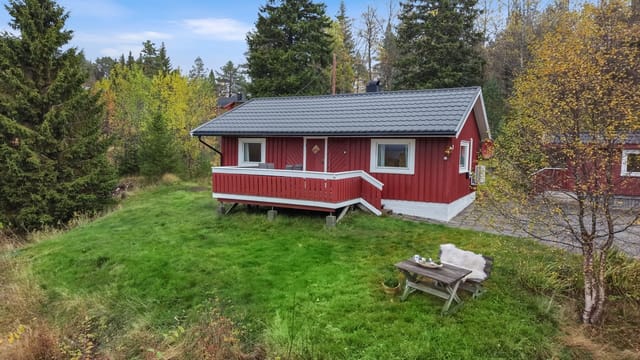
The alarm doesn't go off at Sveltaroa 32. You wake up when you wake up — maybe to the sound of a woodpecker working through a birch somewhere behind the treeline, maybe to the faint slap of water against the dock below. The lake is still in the early morning. Coffee, the veranda, and absolutely nowhere to be. That's the rhythm this cabin sets from the moment you arrive. Sitting on a generous 2,004 square metre freehold plot above Lake Øymarksjøen in Marker municipality, this traditional Norwegian cabin from 1973 is the kind of place you buy with a project in mind and end up loving exactly as it is — at least for the first summer. The main structure covers 51 square metres of usable interior space, with a total built footprint of 68 square metres. Compact, yes. But Norwegian cabin life has never been about square footage. Step through the entrance hall — the classic vindfang that keeps mud boots and wet rain gear firmly outside the living space — and you move into an open plan kitchen and living room that does exactly what it needs to do. There's room for a proper sofa arrangement, a dining table large enough for a family dinner, and a wood-burning stove set into a brick chimney that becomes the heart of the whole place once October arrives. Light the stove on a grey autumn Friday and the cabin goes from cold to alive within the hour. The smell of woodsmoke drifting out through the trees is the unofficial signal that the weekend has started. The kitchen is straightforward and honest — solid wood worktop, profiled cabinet fronts, nothing flashy. It works. Two bedrooms handle sleeping arrangements for a couple or a small family, and the toilet room is fitted with an incineration toilet practical enough for a property in ... click here to read more
Welcome to Sveltaroa 32 - presented by Anita Heer, Aktiv Mysen og Rakkestad AS. Photo: FOTOetcetera AS
New

Step outside on a quiet Tuesday morning, coffee in hand, and there's nothing between you and the treeline. No neighbors visible, no traffic noise, just the soft creak of the forest at the edge of the garden and the occasional woodpecker going about its business somewhere in the canopy. That's what Heirbaan 309 feels like at 8am. It feels like you're already on holiday—except you haven't gone anywhere. Lanaken-Rekem sits in the Belgian province of Limburg, right where the country softens into something greener and quieter than most people expect. The Albert Canal runs nearby, cyclists thread through the Kempen woods on weekends, and the Dutch border is literally a ten-minute drive. Maastricht—one of the most walkable, food-obsessed small cities in the Benelux—is under twenty minutes by car. Hasselt, with its pedestrian shopping district and vibrant café scene, is about thirty. This location sounds rural when you look at a map. In practice, it's one of the most convenient spots in the region. The bungalow itself spans a generous 288 square metres across two fully usable levels, and the word "bungalow" undersells it. The ground floor lives like a spacious family home, and the basement—fully finished with heated rooms, daylight windows, and high ceilings—doubles the living space in a way that most properties in this price bracket simply can't match. The renovation was done properly, in 2018, with the kitchen following a year later. You can tell. The ceramic tiling flows consistently across the entire ground floor, giving the interior a visual coherence that shortcuts the usual interior decorating headache. The kitchen is country-style without being kitsch—granite countertops, Siemens induction hob, two ovens, a proper Ame ... click here to read more
Front view of Heirbaan 309
New

Step onto the terrace at Brattåkervegen 6 on a clear June evening. The fjord catches the last of the western light, the grill house smells of pine smoke and charcoal, and the silence is the kind you can only find in a corner of Norway that most people drive straight past. That's exactly what makes Mosvik worth stopping for. Situated on the inner shores of Trondheimsfjord in the municipality of Inderøy, this two-bedroom chalet sits at the kind of address that rewards the people who find it. The sea is 300 meters away — close enough to hear on a still night, close enough to walk to in bare feet on a warm morning in July. The plot itself is 822 square meters of freehold land, which in coastal Norway is not something to overlook. You own the ground beneath your feet outright. The cabin was built in 1977 and has been updated steadily since. It's not a renovation project. The electrical system has been fully renewed with new circuits and a fuse box. Water comes year-round from a drilled well installed in 2020, fed through an isothermal pipe with a heating cable you can control from inside — meaning February is as viable as August. A heat pump handles the heavy lifting on cold days, backed by a fireplace that makes the 22-square-metre living and dining room feel genuinely warm rather than just heated. Big windows frame the water view from the dining table. On grey November afternoons, that view does a lot of the work. The kitchen is compact — 5.5 square metres — but practically laid out with space for a full-size fridge and stove. Norwegian hytte culture has never been about grand kitchens. It's about the meal after a long hike, cooked quickly, eaten together. This kitchen understands that. From the living room, sliding out ... click here to read more
Welcome to Brattåkervegen 6, presented by EiendomsMegler 1 v/ John Sivert Brandt. Photo: ELW media (Espen Wåde). Summer photo from 2019.
New

The engine cuts out. The boat drifts the last few meters to the berth, and suddenly the only sounds are the cry of a gull overhead and the soft knock of hull against wood. You're fifty meters from the front door of your own house on Edesön, and the whole of Jungfrufjärden is laid out ahead of you in a sweep of silver-blue water. This is how life on this island begins — not with a commute or a queue, but with a ten-minute crossing from the mainland that feels, every single time, like crossing into somewhere else entirely. Edesön sits in the inner Stockholm Archipelago, accessible by boat from the car and boat parking at Skärkarlsedet on the Dalarö peninsula in Haninge municipality. That crossing is part of the property's identity. It's the reason the island feels genuinely private. No drive-by traffic, no strangers wandering past the garden. Just the island's own rhythm, the smell of pine resin warming in the afternoon sun, and the particular quiet that only comes when you're surrounded by water. The house itself — a classic Swedish röd stuga with white corner trim — sits elevated on a natural plot of 1,120 square meters where bedrock, soft grass, and mature Scots pines coexist as they've always done here. The 50-square-meter main house was built with one clear priority: the view. Floor-to-ceiling windows on three sides of the open-plan living and dining area make Jungfrufjärden a constant presence, a living painting that changes with the light, the season, and the weather. On a clear winter morning, with the masonry fireplace crackling behind you and frost glittering on the rocks outside, it's the kind of view that ruins ordinary living rooms forever. That fireplace anchors the entire interior. It's not decorative — i ... click here to read more

Main house and sea view
New

Step outside on a Sunday morning at Jaegerweg 19, coffee in hand, and the meadow at the back of the garden is still catching the last of the mist. A heron drifts low over the fields. No traffic. Just wind, birdsong, and somewhere across the Dutch border, church bells. This is the specific, unhurried pleasure of living on the Lower Rhine — and this two-bedroom detached house, sitting on a 637-square-metre plot at the edge of Emmerich am Rhein, delivers that feeling every single day. Emmerich am Rhein is a town that most people drive past on the A3 without stopping. That's their loss, and frankly your gain. It sits right on the Rhine, about four kilometres from the Netherlands, and it has the easy rhythm of a place that doesn't feel the need to show off. The Saturday market on the Geistmarkt sells local asparagus in spring, hearty Gouda wheels year-round, and fresh stroopwafels because the Dutch influence bleeds happily across the border. Emmerich's Rhine promenade is one of those genuinely underrated walks in western Germany — long, flat, lined with old linden trees, and ending at the Rhine bridge, which is actually the longest suspension bridge in Germany and a piece of proper industrial history. The town's St. Aldegundis church, with its medieval tower, keeps the skyline honest. It's not a resort. It's a real place, and that's exactly what makes it work as a second home or vacation property. The house itself was built in 1981 and sits comfortably in good condition — not a project, not a renovation gamble, but a solid single-level home with honest bones and room to personalise over time. At 116 square metres of living space, the layout is practical and generous for two people, or a couple with children in for the holid ... click here to read more

Photo 1 of Jaegerweg 19
New

Stand in the kitchen on a Saturday morning, coffee in hand, and you'll hear it — the faint bell of the Kanne church drifting over the rooftops while cyclists roll past the gate toward the Albert Canal towpath. The garden is already warm. The terrace catches the sun from early morning, and the deep, enclosed lawn stretches far enough behind you that the kids have disappeared into their own world. This is what daily life feels like at Oudeweg 26, and it takes about ten minutes here to understand why people come to this corner of Belgian Limburg and quietly decide they're not leaving. Kanne sits on the edge of something genuinely rare: a limestone plateau where the Netherlands, Belgium, and a shared sense of slow, outdoor living all converge. The village is small — perhaps 1,500 people — but it punches well above its weight. The Sint-Pietersberg hill rises just minutes to the east, and the Plateau of Caestert, a protected nature reserve laced with trails for hiking and mountain biking, starts practically at the end of the road. On autumn mornings, the mist sits low over the Meuse valley below and the light turns gold over the marlstone cliffs. It's the kind of scene that makes you cancel whatever you had planned. And then there's Maastricht. Barely five kilometres away, one of the Netherlands' most culturally alive cities is reachable by bicycle along the canal — a flat, easy ride that takes about twenty minutes past willows and weekend fishermen. Maastricht is home to the Vrijthof square, where café terraces spill out under the towers of Sint-Servaasbasiliek, and where the TEFAF art fair each spring draws collectors from across the globe. The Wyck neighbourhood has some of the best independent restaurants in the Benelux ... click here to read more

Front view of Oudeweg 26
New

Step outside on a Saturday morning in late May and the garden stretches out in front of you — eighty-three meters of it, dew still clinging to the lawns, the hedgerows full and dark green, a wood pigeon doing its thing somewhere near the back gate. You've got coffee. The conservatory door is open. This is what a slow European morning is supposed to feel like. Gangelt sits quietly in the far southwestern tip of North Rhine-Westphalia, just a few kilometers from the Dutch border, in a part of Germany that most international buyers haven't discovered yet. That's precisely the point. While better-known regions attract crowds and premium price tags, this corner of the Heinsberg district rewards the people who actually bother to look. Rolling countryside, clean air, cycling routes that thread through farmland into the Netherlands, and a pace of life that genuinely slows you down. The A46 and A44 motorways connect you to Düsseldorf in under an hour. Maastricht is thirty-five kilometers away — close enough for a proper Dutch rijsttafel dinner and back home before dark. Eindhoven Airport is roughly forty minutes by car, making this property realistic as a European second home rather than a logistical headache. The house on Luisenring 89 is a generous, solidly built detached home from 1956 that has been updated consistently over the decades — not flipped or cosmetically staged, but genuinely improved by owners who lived here. The 167 square meters of living space spreads across three floors, and the ground floor layout has an easy, unhurried quality to it. The L-shaped living room opens directly into the conservatory, which measures roughly seven by five meters. That room gets the afternoon light. In summer it's warm and golden ... click here to read more

Front view of Luisenring 89
New

Stand on the terrace at nine in the evening in July and the sun still hasn't gone down. The Trondheimsfjord catches the light and throws it back in shades you don't have names for—copper, pale gold, something between silver and white. The boathouse door creaks gently in a soft onshore breeze. That's the sound of this place. That's the rhythm of a summer here. Viggjavegen 261 sits right on the water's edge in Viggja, a quiet community along the inner fjord in Trøndelag, roughly 35 kilometres southwest of Trondheim. The drive in from the city takes just over half an hour on the E39—close enough for a Friday evening escape after work, far enough that the outside world genuinely falls away when you arrive. The cabin was built in 1964 and has been kept in good condition over the decades, a solid and unpretentious structure that does exactly what a Norwegian fritidseiendom should: it puts you outside as much as possible and gives you somewhere warm to come back to. The main cabin runs to 39 square metres of internal living space, with a total usable area of 73 square metres when you include the outbuildings and external structures. Inside, there's a bright living room with large windows that face the fjord—on a clear morning you can watch sea eagles working the shoreline from the sofa—a functional kitchen with decent workspace and storage, and two bedrooms that are compact but genuinely comfortable, with room for beds and enough storage to make a proper stay of it. A wood stove in the living room changes the atmosphere entirely come autumn. Light it after a day out on the water in September and the whole cabin smells of birch and woodsmoke, and you remember why you bought the place. The boathouse is one of the property's mo ... click here to read more

Cabin with 1.5 decares and fantastic location by the sea
New

Step outside on a June morning and the air already smells like wet pine and salt. The fjord is visible through the tree line — a silver strip of it — and the only sound is birdsong and the creak of the old wooden veranda underfoot. This is what you drove past when you told yourself, just once more, that you'd find something like this. Kvalvågdalen 41 sits in the quiet valley of Kvalvågdalen on the island of Frei, just west of Kristiansund on Norway's Atlantic coast. Built in 1931 and kept in good condition through decades of careful ownership, this two-bedroom chalet is the kind of place that earns its reputation through simplicity rather than show. Ninety-three years old and still standing straight, with a wood-burning stove throwing light across the living room walls and a 30-square-metre veranda that catches the afternoon sun like it was designed specifically for that purpose. The plot is the first thing that hits you: roughly 1,924 square metres of lawned and planted land, with mature growth giving the kind of privacy that new-build estates spend fortunes trying to fake. There's a detached storage shed for kayaks, cross-country skis, garden tools, whatever the season demands. Parking is right there on the property — no street hunting, no fuss. Inside, the layout across two floors covers 66 square metres total, with 57 square metres of usable interior space. That might sound compact until you're actually in it. The living room handles a full dining setup and a sofa group without feeling squeezed, largely because someone had the sense to put in large windows that draw the garden in visually. The wood-burning stove anchors one wall; a heat pump handles the shoulder seasons when you want warmth without the ritual of l ... click here to read more

Front view of the cabin at Kvalvågdalen 41
New

On a quiet morning in early June, you step outside your back door at Björnmossevägen 60 with a coffee in hand. The garden stretches out ahead of you — a full 2,560 square meters of it — and somewhere beyond the treeline, maybe 300 meters off, you can hear the faint splash of a swimmer at one of the nearby lakes. The air smells of pine resin and wet grass. Stockholm feels like a world away, even though it's only about 35 kilometers north. That's Brottby. That's what draws people here. Tucked into the Garns-Ekskogen forest landscape within Vallentuna municipality, this two-bedroom house sits on a generous private plot that gives you something increasingly rare around the Swedish capital: genuine space, genuine quiet, and genuine proximity to nature that isn't manicured or managed into blandness. Built in 2018, the house covers 82 square meters with a clean, light-filled interior that needs nothing done to it. Move in, hang your coat, and start living. The layout makes sense for the way people actually use a second home or holiday base. The main living area runs open between the lounge and dining space, with oversized windows pulling in the kind of northern light that makes everything look slightly better than it is. The kitchen is modern and properly equipped — not the hollow showroom kind, but the kind where you can actually cook a Sunday elk stew after a long autumn hike. Two bedrooms give you flexibility: one for sleeping, one for a bunk room for kids, or a proper home office if you're splitting time between Stockholm work and forest-life weekends. The bathroom is contemporary, finished well, and does exactly what it needs to. Outside is where this property earns its price tag. The 2,560-square-meter plot is the rea ... click here to read more

Exterior view of the house and garden
New

Six o'clock on a crisp Flemish morning. You walk out through the back door in your boots, coffee still warm in your hand, and the horses are already moving in the paddocks. The mist sits low over the meadows. This is not a weekend retreat you squeeze into. It's a full life — the kind most equestrian families spend years searching for and rarely find in one address. Diestersteenweg 25 sits on the edge of Maaseik, a town on the Maas river in Belgium's Limburg province that most international buyers haven't discovered yet — which is precisely what makes it interesting. Maaseik is the kind of place where the Friday market on the Markt square still matters, where you can get a proper carbonnade flamande at De Watermolen without a reservation, and where the cycle routes along the river stretch for kilometres without a traffic light in sight. It's quiet in the right way. Not isolated — just unhurried. The villa itself is a solid, detached property of 250 square metres. Four bedrooms, two bathrooms, and a layout that has been thoughtfully updated without losing the grounded, practical character that suits a working equestrian estate. New joinery was fitted in 2020, a condensing boiler installed in 2022, and the insulation throughout meets current standards. The EPC rating reflects that. You won't need to spend the first two years renovating — you can move straight in and focus on what actually matters. Step through the entrance hall and the ground floor opens up generously. The living room runs wide, anchored by a gas fireplace that does real work through Belgian winters — and Limburg winters can be grey and damp from November through February, so you'll want it. Off the living area, there's a separate office that functions e ... click here to read more

Front view of Diestersteenweg 25
New

Stand at the kitchen window of The Camb on a clear October morning and the Culter Fell ridge sits right there, purple-brown and close enough to feel personal. Church bells carry from the town centre. The smell of woodsmoke drifts in from next door's chimney. It's the kind of quiet that city people specifically leave the city to find — and here, it comes standard. This is a mid-1800s B-listed detached house on Coulter Road, one of Biggar's most handsome residential streets, set behind a horseshoe driveway on roughly three-quarters of an acre of mature, terraced garden. Five bedrooms across three floors, three bathrooms, 217 square metres of living space, and a level of period detail that modern builds simply cannot replicate. It's in genuinely good condition — sympathetically updated over the years without erasing what makes it worth owning in the first place. The exterior gives you mullioned windows, wrought iron balustrades, and a Juliet balcony on the upper floor. These aren't decorative afterthoughts; they're structural commitments to a certain way of building that stopped being commercially viable a century ago. Step inside and the entrance hallway is wide and tall, with a sweeping staircase that sets an unhurried tone for the whole house. You're not rushing anywhere the moment you walk through that door. The bay-windowed lounge faces the hills. An Adam-style fireplace anchors the room — lit on winter afternoons, it turns the lounge into the kind of space where conversations last longer than intended. Bookshelves, a decent whisky, the hills going dark outside. The period ironwork and original detailing throughout have been kept rather than replaced, which takes genuine restraint during a renovation and makes a rea ... click here to read more

Front
New

You wake up Saturday morning and the only sound is wind moving through the birch trees outside. No traffic. No notifications. Just the faint creak of timber and the smell of woodsmoke still hanging in the air from the night before. That's what mornings at Åslettlie feel like — and once you've had a few of them, it's very hard to go back to anything else. Sitting at roughly 830 meters above sea level in Etnedal, a quiet valley community in the heart of Valdres, this three-bedroom chalet is the kind of place that resets you. Norway's mountain cabin culture — the concept of friluftsliv, or open-air living — runs deep here, and this property sits right at the center of it. The Valdres region stretches between the Filefjell and Jotunheimen mountain areas, and it's been drawing Norwegians to its rivers, ridgelines, and frozen trails for generations. Owning a foothold here, especially at this price point, is genuinely rare. The chalet covers 53 square meters of primary living space — compact, yes, but Scandinavian cabin design makes every centimeter count. Walk in and the entrance does its job: boots off, layers hung, the outside world already starting to feel far away. The main living area opens up around a wood-burning fireplace that earns its keep from October through April. On a February evening with the snow piling up outside and the fire going, the open-plan layout — kitchen corner, dining area, sitting space — feels not cramped but exactly right. Six people can sleep here comfortably across the three bedrooms, which is the magic number for a family trip or a weekend with friends where no one has to draw straws over a couch. The roof was replaced in 2015, so structural peace of mind is already built in. More interestin ... click here to read more

Picture 1
New

Sunday morning in Achel has a particular rhythm. The bells from the village church carry across the fields just after nine, and by the time the smell of fresh bread drifts over from the bakery on Kluizerdijk's end, you're already planning which corner of the 1,466-square-metre garden to set up breakfast. That's the daily pace this house invites — unhurried, grounded, and genuinely good. Set on a wide, peaceful plot on Kluizerdijk 16 in the Belgian municipality of Hamont-Achel, this four-bedroom detached house is the kind of property that doesn't announce itself loudly. It earns your attention slowly. The plot is broad and sunny, the garden rolls out generously front and back, and the surrounding streets are quiet in the way that only genuinely residential neighbourhoods manage to stay quiet — not staged, just real. Built in the 1970s and kept in consistently good condition, the house spans approximately 177 square metres of living space across two floors. Walk through the front door and the living room opens up wider than you'd expect — a proper sitting area at one end, a dining space at the other, connected by the kind of natural light that only comes from large windows positioned just right. The floor was replaced recently and gives the room a clean, contemporary feel without erasing the home's character. On a winter afternoon, with the 2025-installed gas boiler running quietly in the background, this room is exactly where you want to be. The kitchen is generous by any standard — not a galley you squeeze past, but a proper family kitchen with room for a breakfast table and enough bench space to actually cook. It leads through to a utility and laundry area, and a separate ground-floor toilet, which is one of those pr ... click here to read more

Front view of Kluizerdijk 16
New

Saturday morning in Maaseik has a particular kind of quiet. Not the empty kind — the earned kind. You open the kitchen's wide windows and the garden fills the room: damp grass, the soft sound of water moving through the koi pond, maybe a wood pigeon somewhere in the hawthorn hedge. By the time the coffee's done, you're already outside on the shaded terrace, and the rest of the day feels genuinely open in a way that city life rarely allows. That's the rhythm this house on Meidoornweg 24 makes possible. Built in 1977, it's been thoroughly reworked into something that performs well by every modern measure — energy label B, solar panels, heat pump boiler, gas condensing system, PVC double glazing throughout — while keeping the generous proportions that newer builds tend to sacrifice for efficiency. At 195 square metres of living space on a 1,129-square-metre fully enclosed plot, there's real room here. Room for five bedrooms, two bathrooms, a finished basement with integrated double garage, and a garden designed as seriously as the interiors. About that garden. It's the kind of outdoor space that changes how you use a house. Multiple zones, each with its own logic: a sun terrace for the late afternoons, a gazebo for when the Belgian sky decides it has other plans, a garden room that works year-round, and a koi pond that has a genuinely calming effect you'll stop apologising for finding meditative. The whole thing is enclosed, gated, and private — which matters when you're using this as a vacation home and arriving to find everything exactly as you left it. The ground floor living room catches the southern light through large windows and anchors around an electric fireplace set into a custom TV wall — understated, functio ... click here to read more

Front view of Meidoornweg 24, Maaseik
New

Pull up to Gunnarvattnet 5018 on a Friday evening in February, step out of the car, and the silence hits you first. Not the uncomfortable urban kind—proper, deep Nordic silence, broken only by the creak of snow-weighted pine branches and the distant buzz of a snowmobile fading somewhere toward the Norwegian border. The thermometer reads minus twelve. The cabin's heat pump has been running since you switched it on remotely from the motorway, and when you push open the door, it's warm and smells faintly of pine and the wool blankets folded on the bunk. This is why you bought the place. Valsjöbyn sits in Jämtland's far northwestern corner, in Krokoms kommun, about as far into the Swedish mountain wilderness as you can get while still reaching an ICA store within a reasonable drive. The village is small and unassuming—a cluster of red houses, a few hundred year-round residents, and a collective understanding that the real point of being here is what lies outside the front door. Gunnarvattnet, the lake that gives the address its name, is a short walk from the cabin. It's a proper fishing lake, too. Arctic char, brown trout, whitefish—the kind of stocks that take decades of clear, cold water to build. Come July, you can walk down before breakfast with a rod, and on a good morning you'll be back in time to fry something in the pan by eight. The cabin itself covers 52 square metres, which sounds compact until you're inside. The layout is honest and functional in the way that Swedish mountain cabins have always been: nothing wasted, nothing missing. The kitchen was recently renovated and is genuinely well-equipped—this isn't a weekend getaway where you're hunting for a working tin opener. You can cook a proper meal here. The li ... click here to read more

Exterior view of the holiday home
New