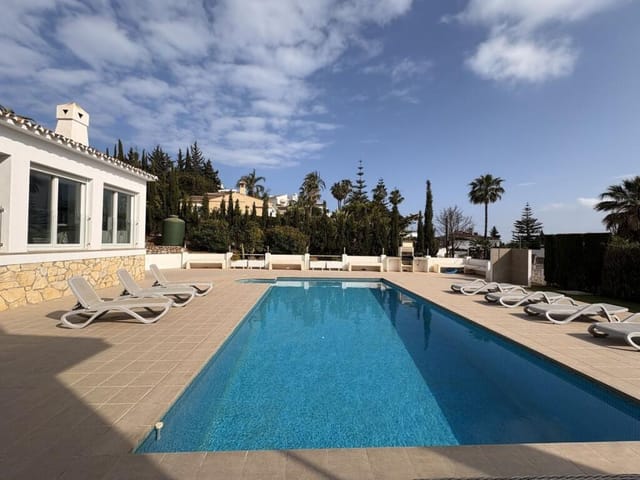
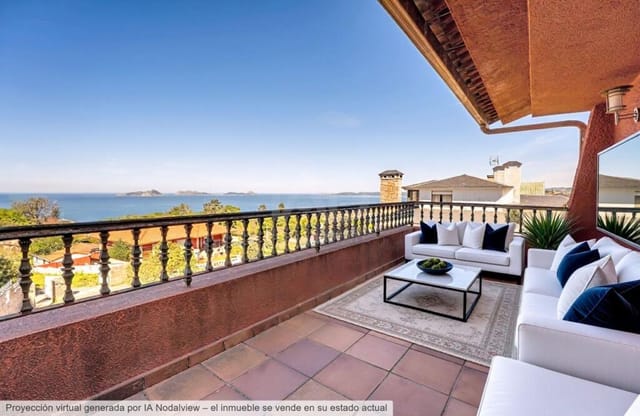
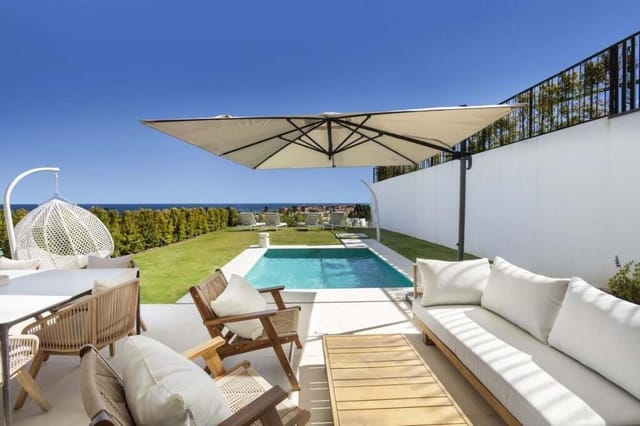
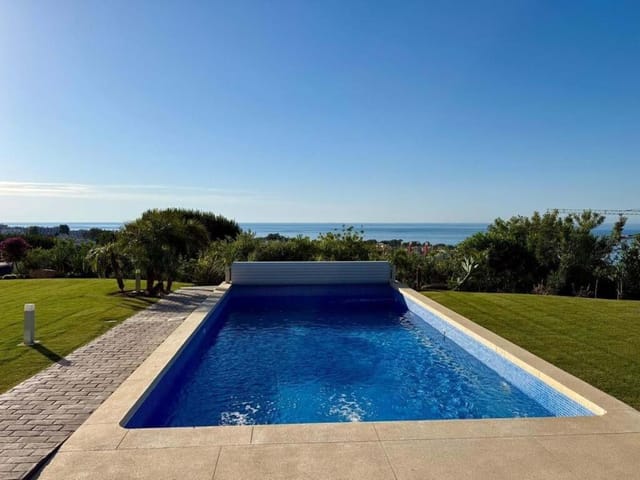
Houses For Sale In Spain

Houses for sale in spain - homestra offers the largest amount of european real estate with over 200,000+ properties, find any type of property within your budget from villas to country homes. buy or rent your perfect home in europe.

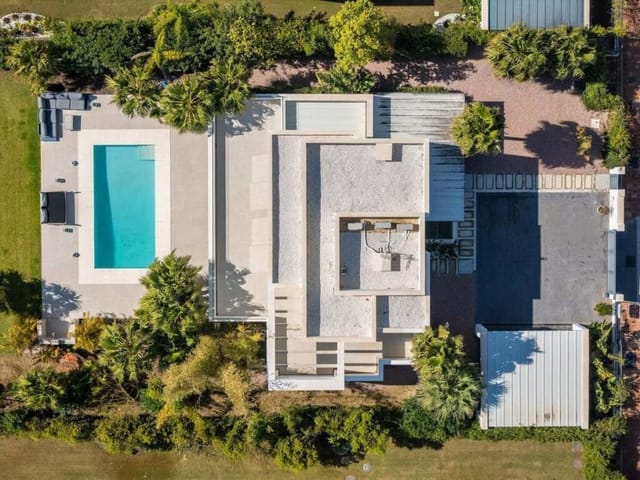
Stand on the upper terrace at dusk and you'll understand immediately why people come to Sotogrande and simply never leave. The light here is different — it turns the Strait of Gibraltar into something close to hammered copper, and on clear evenings you can trace the outline of the Moroccan Rif mountains across the water. That view, framed through floor-to-ceiling glass from Villa Garnacha's main living spaces, is not a backdrop. It becomes part of daily life. La Reserva de Sotogrande sits at the southeastern tip of Andalucía, in the municipality of San Roque in the province of Cádiz — a corner of Spain that has been quietly drawing Europe's most discerning property buyers for decades. Not the loudest destination on the Costa del Sol. Deliberately so. The community has resisted the overdevelopment that swallowed neighboring coastlines, keeping its private roads lined with stone pines and its residents notably private. What you get here is space, silence punctuated only by birdsong and the distant thwack of a golf club, and a quality of architecture that takes itself seriously. Villa Garnacha is in the final phase of construction, and this is where the opportunity becomes genuinely rare. The bones are done — the structure is built using cross-laminated timber, or CLT, which is not a marketing buzzword here but a genuine structural choice that changes how the house feels. CLT buildings breathe differently. They hold warmth in winter without becoming oppressive in July, and the acoustic insulation means the 689-square-metre interior is remarkably quiet even when the terraces outside are full of people. The thermal performance alone will make a measurable difference to running costs year-round. The plot runs to 2,560 squar ... click here to read more

Picture 1

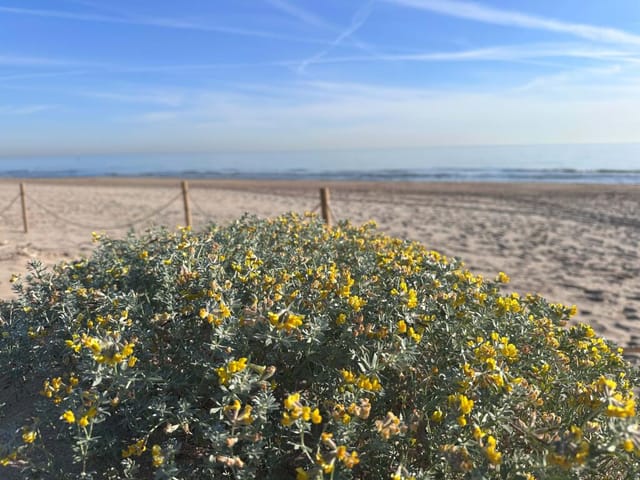
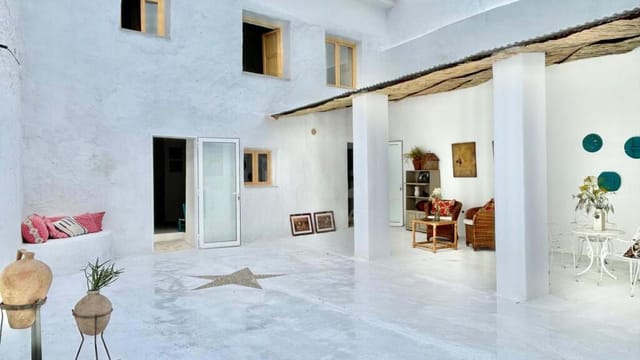
The Atlantic is right there. Two minutes on foot and you're standing on the wide, pale sand of La Antilla beach, watching the surf roll in off the Gulf of Cadiz while most of Europe is still reaching for a second coffee. That's the daily reality of life in this three-storey renovated townhouse — a southwest-facing, light-drenched home that puts one of Huelva's most underrated coastlines practically at your doorstep. La Antilla sits in the far southwest corner of Spain, tucked between the more famous resorts of the Costa de la Luz and the wild, protected marshes of Doñana National Park. It doesn't make the headlines. That's precisely why people who know this stretch of coast guard it so carefully. The beach here — Playa de La Antilla — is long, clean, and rarely overwhelmed, even in August. The Atlantic keeps things honest: the water is cooler than the Mediterranean, the breezes are real, and the light in the late afternoon turns the whole seafront the colour of warm copper. Huelva capital is only about 40 minutes by car, Seville a little over an hour. Portugal's Algarve coast is reachable in under two hours. You are not isolated here; you are just far enough from everything to breathe. The house itself is part of a private gated community — code access at the entrance, alarm system with video surveillance, video intercom — which matters enormously when you're buying a second home you won't always be in. The community pool is shared but well-maintained, and the grounds give the whole development a quietly residential feel rather than a holiday park aesthetic. This is a neighbourhood where Spanish families have been coming for generations, where the bakery on Calle Duque knows its regulars and the chiringuitos along the ... click here to read more

Picture 1

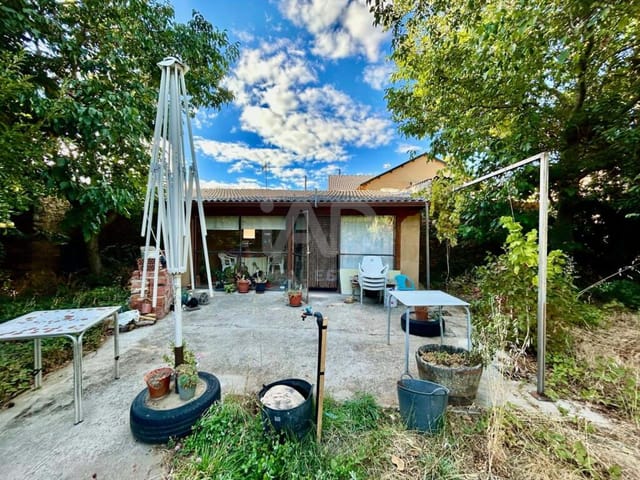
Step out the front door on a Saturday morning and within ten minutes you're walking the Roman walls of a medieval city that most of Europe has somehow never heard of. That's the quiet magic of Ciudad Rodrigo. The cathedral bells carry across the rooftops, the Plaza Mayor fills up with families eating churros, and the Río Águeda catches the early light just two minutes from your door. This is a town that hasn't been polished for tourists — and that's exactly what makes it worth paying attention to. This four-bedroom townhouse sits in that sweet spot between the river and the historic center, close enough to everything but far enough back for the street to stay genuinely quiet. Built in the 1960s and now ready for a full renovation, it's the kind of project that draws buyers who want to put their stamp on something real — not a flipped apartment in a generic coastal resort, but a proper Spanish home in a place with 800 years of story behind it. The numbers are honest. Eighty-eight square meters of usable space across ten rooms. Two living rooms. Four bedrooms. Two bathrooms. Two kitchens — which opens up interesting possibilities for guests, multi-generational use, or eventually rental income. Out back, a 26-square-meter patio catches the afternoon sun and has room for a table, a few chairs, and the kind of slow summer evenings that are genuinely hard to find anywhere in Western Europe anymore. Fiber optic is already connected, the sewage system is in order, and the structure is solid — so the canvas is ready. The renovation itself is part of the appeal. Spain's interior Castile-León region offers skilled local craftsmen at rates that would make a property developer in the Algarve weep with envy. Stone, exposed brick, o ... click here to read more

Picture 1

Stand on the top solarium terrace on a clear October morning and the Rock of Gibraltar fills the horizon, solid and ancient, while the Strait below catches the early light in long silver ribbons. That view—framed by bougainvillea climbing the stone walls and the faint salt breeze coming off the Atlantic—is the first thing you notice. It won't be the last. This is a serious family estate in Getares, one of the quieter residential pockets along the Algeciras coastline, and it works on every level that matters. Five bedrooms. Four bathrooms. A fully independent guest cottage with its own street entrance. A private pool. An outdoor kitchen under a pergola that has hosted more summer dinners than anyone's keeping count of. And 323 square metres of built space sitting on a 974 m² plot that feels, improbably, like it keeps revealing new corners the longer you spend time here. The main house runs across two floors and the architecture does something you don't often see at this price point in Cádiz province—the ceilings are genuinely high, which means natural light pours through rather than skims the surface. Downstairs, the entrance hall opens around a working fireplace, the kind you actually want to light in January when the Costa de la Luz turns quietly cool and the tourists have long gone home. The living and dining room has a second fireplace. The kitchen is built in traditional rustic style with masonry shelving, handmade and solid, with a laundry room tucked alongside it. Two bedrooms and a bathroom complete the ground floor—well-proportioned rooms that work equally well for children or weekend guests. Upstairs is where the property earns its place in a different category entirely. The master suite is double-aspect: sea ... click here to read more

Picture 1

Stand on this 800-square-metre plot on a quiet morning in Urbanización Martín Miguel and you'll hear almost nothing — a distant lawnmower, maybe the soft creak of a gate somewhere down the road, the faint hum of Atlantic air moving through the umbrella pines at the edge of the golf course. This is what people mean when they say they want to build a life somewhere. Not just a house. A life. Sanlúcar de Barrameda sits at the mouth of the Guadalquivir River, where it finally meets the Atlantic after winding through some of the most storied landscapes in Spain. This is a town with genuine character, not a polished resort town engineered for tourists. The streets of the old Barrio Alto are lined with whitewashed walls and bougainvillea that's been growing for decades. The fish market down near the Bajo de Guía quay opens before most people's alarms go off, and the langostinos de Sanlúcar — the famously sweet local prawns — have their own protected designation of origin for good reason. You won't find them tasting quite the same anywhere else in Spain. The combination of Atlantic cold water meeting warm river water creates something extraordinary, and the fishermen here will tell you that themselves, unprompted. The plot itself sits inside Urbanización Martín Miguel, a private gated development with round-the-clock security and a noticeably calm, residential atmosphere. Adjacent to the golf course, the surroundings feel green and unhurried. Six minutes by car puts you at the beach — and not just any stretch of sand, but the long Atlantic coastline that borders the Doñana National Park on the opposite bank, one of Europe's most important wetland reserves. Watching the sun drop behind Doñana from a beach in Sanlúcar at the end ... click here to read more

Picture 1

Picture this: it's ten in the morning, the Cádiz sun is already warm on your face, you've just made coffee in a kitchen that actually has room to cook in, and you're standing at the edge of a 66-square-metre private pool surrounded by mature pines that cut the Levante wind to a whisper. This is not a holiday apartment with a shared courtyard. This is 391 square metres of solidly built, single-storey living on a 3,170-square-metre fully fenced plot in the Pinar de los Franceses neighbourhood of Chiclana de la Frontera — one of the most quietly desirable pockets on the entire Costa de la Luz. Chiclana doesn't get the same international headlines as Marbella or Nerja. That's precisely why people who know this coast well end up buying here. The town has real roots — the carnival in February fills the streets with music that spills past midnight, the Thursday market on Calle Real has been running for generations, and the tapas bars around Plaza Mayor serve papas aliñás and chipirones en su tinta at prices that feel like a small act of generosity. There's a functioning community here, not just a tourist infrastructure. And then there's La Barrosa. Drive five minutes south and you hit one of the finest Atlantic beaches in southern Spain — six kilometres of fine white sand backed by low dunes and pine forest, with chiringuitos serving grilled dorada and cold Cruzcampo from early April well into October. Sancti Petri, a few minutes further along the coast, adds a salt marsh nature reserve, a ruined castle on its own tidal island, and a handful of proper seafood restaurants where the catch arrived that morning from the Atlantic. Kitesurfers work the wind off Playa de los Alemanes while families spread out on the wider stretches ... click here to read more

Picture 1

Sunday morning in Matola. The kitchen smells of café con leche and the garden is already warm by nine. Through the wide terrace doors, you can hear nothing but cicadas and the soft splash of water in the pool. This is not a postcard moment—it's just a regular morning when you own this four-bedroom chalet in one of the most quietly compelling corners of Spain's Alicante province. Elche tends to fly under the radar compared to its louder coastal neighbors, and that's precisely the point. The city holds a UNESCO World Heritage Site—the Palmeral, a palm forest of over 200,000 trees planted during the Moorish period—and yet the streets don't grind to a halt in August the way they do in Benidorm or Torrevieja. Local life here runs on its own rhythm. The Mystery Play of Elche, performed every August inside the Basilica of Santa Maria, has been staged continuously since the Middle Ages; it's the kind of thing you stumble into as a resident, not a tourist. The covered Mercado Municipal on Calle Curtidores fills with fresh figs, local almonds, and the briny smell of bacallà on Friday mornings. You find yourself going back every week. The Matola area sits in the quieter, greener outskirts of the city—wide plots, low-density building, and the kind of space that's become genuinely rare this close to the Costa Blanca. From here, the beaches of Santa Pola are a 15-minute drive. Guardamar del Segura, with its wide sand dunes and calm shallow water, takes 20 minutes. Alicante Airport is roughly half an hour away, which makes this a real-world option for anyone flying in from northern Europe for long weekends or extended summer stays. International buyers from the UK, Germany, the Netherlands, and Scandinavia have been quietly building ... click here to read more

Picture 1

Pour yourself a glass of wine you pressed yourself. That's not a fantasy—it's a Tuesday afternoon at this six-bedroom working farmhouse in Cehegín, a quietly extraordinary corner of Murcia where the Sierra de la Puerta rolls into terraced hillsides still farmed the old way. The 300 grapevines climbing the property's southern slope produce around 500 liters of wine per year. The 130 olive trees—some of them older than anyone can reliably remember—yield roughly 300 liters of oil. This is not a lifestyle prop. It's a functioning agricultural operation wrapped inside a substantial family home, priced at €249,900. Cehegín doesn't get the tourist traffic of Cartagena or Murcia city, and that's precisely the point. The old town, a ten-minute drive away, is packed with Baroque churches and a medieval castle that most of Spain doesn't even know exists. Saturday mornings at the weekly market on Calle Mayor mean conversations with the same vendors who've been selling tomatoes, cheese, and cured meats there for decades. The Fiesta de la Vendimia in autumn—the grape harvest celebration—turns the whole region into something between a folk festival and a communal kitchen. You'll want to be here for it. The farmhouse itself sits on a 10,000-square-meter plot that balances urban and rural land classifications, a practical distinction that opens up possibilities for tourism licensing, agricultural subsidies, or simply keeping your options open. Step through the main entrance and the interior patio immediately signals the building's age and logic: everything organized around a central breathing space, the kind of layout that keeps the interior cool through July and August without air conditioning doing the heavy lifting. The ground floor ... click here to read more

Picture 1

The alarm doesn't wake you here. What does it is the light — that specific, golden Mediterranean morning light that pours through the terrace at an angle you've only ever seen in paintings. You step outside with a coffee, barefoot on warm stone, and the grove of fruit trees is already humming with bees. Somewhere behind the carport, a neighbour's cockerel makes his announcement. This is daily life on a rustic finca just outside Elche, and it is nothing like your daily life back home. At 750 square metres, this plot sits in a peaceful pocket of Valencia's Alicante province — close enough to civilization to be genuinely convenient, far enough from it that the silence is real. Ten minutes by car and you're parking at the beaches of the Costa Blanca. Guardamar del Segura's long sandy stretch, or the buzzing shoreline at Santa Pola — both within easy reach. But you'll find yourself in no rush to leave. That tends to happen here. The finca is centred around a fully equipped mobile home that lives much bigger than you'd expect. Three bedrooms, a bathroom, a proper kitchen — not a camping kitchen, a real one with everything you need to cook a paella from scratch using tomatoes you grew yourself. The living and dining area flows out to a large terrace where the outdoor table hosts long, unhurried meals under a sky that, in summer, stays light until well past nine. Truma heating keeps winters entirely manageable, and the air conditioning handles the peak July heat without complaint. This is a set-up designed for four seasons, not just a fortnight in August. The solar panel installation is one of the property's most compelling features, practically speaking. Off-grid energy capability, irrigation water on site, and a lifestyle t ... click here to read more

Picture 1

Saturday morning. You're standing at the kitchen window with a coffee, watching the light move across the Castilian meseta. The garden is already warm, the pool still flat and glassy, and the only sound is a distant church bell rolling down from the old quarter of Burgos, thirty minutes up the road. This is a morning that could belong to you, repeated across every season, in a house that actually has room to breathe. This six-bedroom property in Castrillo del Val sits inside the Los Tomillares residential development, positioned toward the quieter rear section of the estate, well away from the main road. The plot runs to around 1,100 square metres, and the house itself covers approximately 440 square metres across the main residence plus a fully independent pavilion — a combination that's genuinely hard to track down in this corner of Burgos province, at any price. The layout has been thought through the way family houses should be. Six bedrooms give you real flexibility: host a full multigenerational gathering, keep two rooms permanently ready for children or regular guests, and still have a dedicated space for working remotely or reading in quiet. Three complete bathrooms mean mornings run smoothly even when the whole house is full. The large main living room opens through to two enclosed gallery spaces — those classic Spanish galerías that trap afternoon light and give you somewhere to sit year-round regardless of the weather. There's also a formal terrace, a dressing room, and a kitchen that genuinely functions as the anchor of the home. It has direct access to the terrace, which flows naturally down into the garden and pool area. When you're cooking in summer, the line between inside and outside more or less disap ... click here to read more

Picture 1

Step outside at seven in the morning and the air already smells of warm pine resin and Atlantic salt. The breeze comes in low and steady off the Strait of Gibraltar—Tarifa's famous levante—rustling through the trees on your 2,200-square-metre plot while the rest of La Zarzuela is still quiet. Four kilometres away, the wide white sand of Zahara de los Atunes is just waking up. You could be there before the first beach bars open their shutters. This is a property that doesn't fit neatly into one category, and that's exactly what makes it interesting. A seven-bedroom, eight-bathroom rural estate on Spain's Costa de la Luz, sitting on a generous private plot between rolling Andalusian countryside and one of the most celebrated stretches of coastline in southern Europe. Whether you use it as a large family base, a high-yield holiday rental operation, or some combination of the two, the infrastructure here is already set up to support all of it—including an active tourist licence that means you can take your first booking the week you complete the purchase. Built in 1980 with the kind of solid construction that was standard in rural Cádiz at the time, the property covers 269 square metres of built space across a main house and two independent apartments. Seven bedrooms, each with fitted wardrobes. Eight full bathrooms. South and east orientations that flood the interiors with light from morning through the early afternoon. The fireplace in the main living area earns its keep on January nights when the levante drops and the temperature dips—because yes, even in Tarifa, winter evenings have a chill that makes a wood fire feel like a very good idea. Outside, the terraces and covered porches are the real social architecture of ... click here to read more

Picture 1

Sunday morning in Burgos: the bells of the Cathedral of Santa María drift through the kitchen window while you're grinding coffee, the smell of woodsmoke still faint from last night's fireplace in the basement. Outside, frost clings to the vegetable patch, but the garden trees are catching the first winter sun. This is the kind of morning that turns a house into something you actually want to come back to. Spread across three floors and 330 square metres, this six-bedroom townhouse sits in Castile and León, one of Spain's most historically rich yet chronically underrated regions. It's a proper family-scale home — not a pied-à-terre, not a weekend bolt-hole, but a place where multiple generations can spread out, breathe, and actually avoid each other when needed. Six bedrooms. Three full bathrooms. A basement that has its own fireplace and a wood-burning oven. A wine cellar. A covered barbecue terrace. A garage. A vegetable garden. For €540,000, you'd be hard-pressed to find this footprint anywhere in western Europe. The main floor centres on a generously proportioned living and dining room that gets real daylight — not that thin, northern light that fades by 3pm, but the long, golden Castilian afternoon sun that slants in well into the evening. The kitchen is independent, which matters more than people admit when you're cooking a proper cocido burgalés and don't want the smell of chickpeas and chorizo competing with your living room. A flexible room off the main hall works as a second sitting room or an extra bedroom — useful if you're hosting, or if you need a home office that actually has a door. The basement is where this house earns its personality. It's not a damp utility corridor — it's a genuine recreational sp ... click here to read more

Picture 1

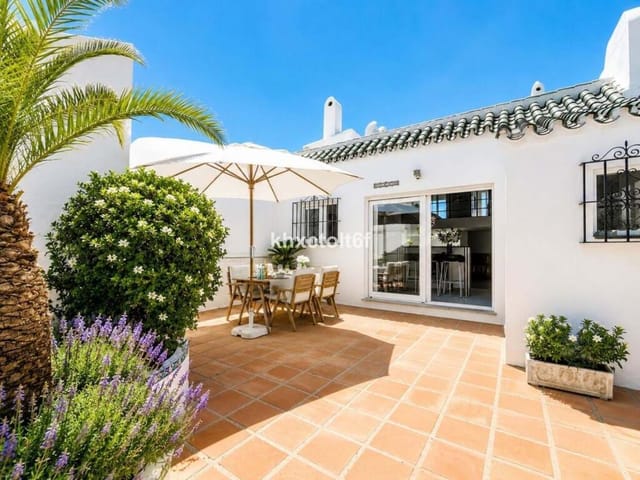
Stand on the rooftop solarium at dusk, a cold glass of Manzanilla in hand, and watch the sun drop behind Gibraltar while the lights of Morocco flicker awake on the horizon. That's not a postcard. That's a Tuesday evening. This single-storey villa in the hills above Manilva delivers one of those rare combinations—a fully renovated main home, a completely self-contained guest apartment, a private pool, and genuine sea views—all within walking distance of the Mediterranean. The house sits on a 530-square-metre plot in a year-round residential pocket of Casares Costa, the kind of neighbourhood where families actually live rather than just show up in August. Neighbours keep their gardens tidy. The streets are quiet without being remote. And the beach? Reachable on foot in under twenty minutes through a dedicated pedestrian underpass that cuts safely under the AP-7 motorway. Mornings, you'll see walkers and cyclists doing that exact route at sunrise. Inside, the main villa stretches across 109 square metres and was comprehensively renovated in 2018—so the bones are solid and the finishes are current. The layout flows logically: a proper entrance hall that gives the house a sense of arrival, a kitchen with enough room to actually cook in, a separate dining room for longer evenings, and a living room that catches good natural light through most of the day. The master bedroom is genuinely spacious, the bathroom has been done properly, and there's a guest WC so the practicalities of hosting are already sorted. This isn't a holiday flat dressed up as a house. It feels like a home. What makes this property genuinely different is the guest apartment. At 40 square metres with its own private entrance, it functions entirely independ ... click here to read more

Picture 1

Stand at the edge of the estate on a late September morning and you'll hear the stream before you see it. It cuts along the boundary of the land with that particular sound — not rushing, not still — just moving steadily through the grass the way it has for well over a century. The 1880 stone house stands at the centre of it all, roofless now, walls thick and solid as the day they were built, holding their ground and waiting. This is Valdoviño, Galicia. And if you know this corner of northwest Spain, you already understand why the right buyer will move fast on this one. The property is a country home renovation project in the truest sense — not a cosmetic refresh, not a lick of paint and a new kitchen. The house, dating from 1880, requires complete rehabilitation from the roof down. But those original stone walls? They're the whole point. Galician granite construction of this age doesn't rot, doesn't buckle, and doesn't bluff. What you're buying is a genuinely historic shell on a vast estate of over 22,000 square metres — roughly 5.5 acres — with a stream running alongside it, several outbuildings scattered across the land, and direct access to one of the most quietly extraordinary coastlines in Europe. The village bar is a five-minute walk away. That detail matters more than it sounds. This is not isolated wilderness. It's a real Galician rural community, the kind where you'll be handed a ceramic cup of Ribeiro wine without being asked, where the pulpeiras at the summer festivals still cook the octopus in copper pots over wood fires, and where locals have been growing their own vegetables on this same soil for generations — soil, incidentally, that has never been treated with chemical fertilisers or pesticides. Ferro ... click here to read more

Picture 1

Saturday morning. You push open the kitchen doors and the scent of jasmine hits you before you've made coffee. The garden is already warm, the pool catching the first real light of the day, and somewhere beyond the palm fronds there's just the low hum of summer. That's what Carrer Vall d'Aosta 14 actually feels like to wake up in. Not a resort. Your place. Set within Parc de Cubelles — a low-density residential enclave east of the town centre where the plots run large and the neighbours aren't on top of you — this six-bedroom villa occupies one of the area's more generous parcels: 2,641 square metres of mature landscaped garden with a private pool, a full-size tennis court, and an outdoor kitchen that was clearly designed for the kind of evenings that start at seven and end well after midnight. The villa itself covers 383 m² in total, with 245 m² of actual living space and an additional 108 m² of multifunctional storage that could easily become a wine cellar, a gym, or a workshop, depending on what you need it to be. The architecture is classic Costa Daurada residential: generous proportions, wide terraces, southeast orientation that keeps the interior bright from mid-morning onwards without baking it through the afternoon. Step inside and the entrance hall is immediately spacious — not the kind of space you apologise for when guests arrive. The main living room flows directly into a conservatory through large sliding doors, and from there straight out to the garden. When the doors are open, and from April to October they mostly are, the boundary between inside and outside quietly dissolves. The conservatory has its own fireplace and looks out over the vineyard-fringed hillside — an unexpected view for a property this ... click here to read more

Main view of Carrer Vall d'Aosta 14

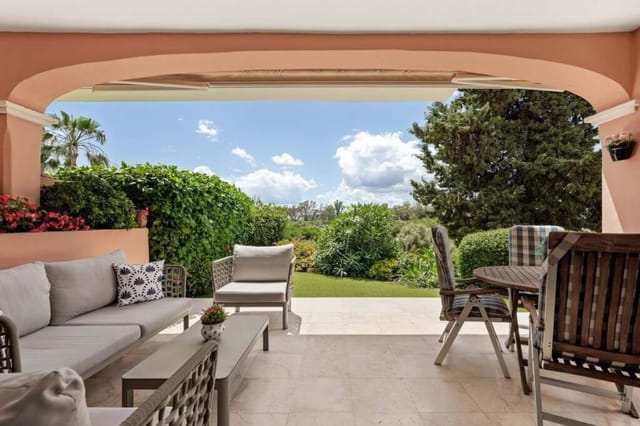
Step outside on a January morning and the air is already warm enough to take your coffee on the terrace without a jacket. The mountains behind Estepona are still catching the low winter light, the sea is a flat silver line on the horizon, and the automatic awnings are rolled back to let every bit of it in. This is what it actually feels like to own a ground-floor corner apartment at Los Flamingos Golf Resort — not a weekend escape, but a second life running in parallel with your real one, ready whenever you are. The apartment sits within the gated Four Seasons community at Los Flamingos, one of the most consistently sought-after addresses on the Costa del Sol. Corner position matters here. It means the private garden wraps around more of the property than a standard unit, the south-facing terrace catches sunlight from mid-morning until sunset, and there are no immediate neighbours crowding in from two sides. The views from that terrace — a layered panorama of the Sierra Bermeja foothills sweeping down toward the Mediterranean — are not the kind that appear in every listing on this stretch of coast. They earned their own paragraph. Inside, 162 square metres have been laid out with a logic that rewards daily living rather than impressing on a show day. The entrance hall is practical without wasting space — fitted wardrobes, a dedicated storage room — before opening into the living and dining area where a fireplace makes the room feel genuinely habitable in winter. Direct terrace access from the living room dissolves the line between inside and out in the warmer months. The kitchen runs along the front of the apartment with its own breakfast corner: not a token stool at an island, but a proper little nook where someone ca ... click here to read more

Picture 1

Saturday morning in Estepona: the air smells of orange blossom and someone nearby is firing up a grill. You pad out to your private 80-square-metre garden in bare feet, coffee in hand, and the only decision you face before noon is whether to walk down to Playa del Cristo or stay put in the chill-out zone where the jasmine is doing something extraordinary right now. This is the kind of morning this apartment was built for. Sitting in a quiet residential community on the Costa del Sol, this two-bedroom apartment has been thoroughly renovated and comes with something genuinely rare at this price point: a private garden that gives you the feel of a townhouse without the upkeep. At 80 square metres of interior space paired with 80 square metres of outdoor terrace and garden, the property lives considerably larger than the numbers suggest. The outdoor area has been properly thought through — a shaded chill-out corner, a barbecue setup, a dining table that seats eight without anyone feeling cramped — and there's actual planning potential to add a private pool if you want to take things further. Inside, hardwood floors run throughout, catching the afternoon light in a way that makes the rooms feel warm rather than clinical. The two bathrooms have both been renovated to a modern standard, and the kitchen is fully equipped and ready to use from day one. A fireplace makes the apartment genuinely comfortable during Estepona's mild winters, when the temperature dips just enough that an open flame stops being a luxury and becomes a small pleasure. Built-in wardrobes throughout keep things tidy, and the apartment is sold partially furnished, so you're not walking into an empty shell. The residential complex itself is well-maintained ... click here to read more

Picture 1

Step out onto the terrace at eight in the morning, coffee in hand, and the Mediterranean is already glittering in front of you. That's not a postcard. That's a Tuesday at this south-facing ground floor apartment in Torrevieja, one of the Costa Blanca's most liveable towns and a place that gets more than 320 days of sunshine a year. At 85 square metres inside, plus a terrace generous enough to fit a proper outdoor dining setup and a full outdoor kitchen with barbecue, this two-bedroom apartment punches well above its footprint. The layout is practical without being cramped—an independent kitchen that actually functions as a kitchen rather than a corridor afterthought, air conditioning throughout, fitted wardrobes in both bedrooms, a storage room, and the whole place handed over furnished and ready to use from day one. You won't spend your first weekend hauling flat-pack furniture from a car park. The communal area here is genuinely one of the best in the area. A large main swimming pool, a separate children's pool, a jacuzzi, manicured gardens, and broad shaded zones for lounging—this is not the tired, cracked-tile common area you find in many resorts. Residents actually use it. On summer evenings, there's usually the quiet murmur of a dozen conversations happening across the water, with the smell of sunscreen still hanging in the warm air. The south orientation means light floods every corner of the apartment from morning until the last of the evening sun. Sea views, open surroundings—no wall of concrete blocking the horizon—and the kind of quiet that only comes from a well-run private residential complex in a residential rather than tourist pocket of the city. Torrevieja itself is worth knowing better than its reput ... click here to read more

Picture 1

Picture this: it's a Tuesday morning in late October, the kind of day that doesn't exist anywhere north of the Pyrenees. You step barefoot from the living room onto your private terrace, coffee in hand, and the air smells faintly of salt and orange blossom. The garden — your garden, all 65 square metres of it — catches the first real warmth of the morning sun. Out past the palm tops, the Mediterranean sits flat and silver on the horizon. This is not a fantasy. This is a standard Tuesday when you own this ground floor apartment near Playa del Sol on the Costa del Sol. At 123 square metres of interior living space, the apartment feels generous without being unwieldy. The southwest orientation is everything here. Natural light builds slowly through the morning, fills the living room by midday, and lingers on the terrace well into the evening. The fireplace in the lounge — an unexpected pleasure in a beachside apartment — means the cooler months from November to February are genuinely cosy rather than something to escape. A fireplace and sea views. That combination doesn't come up often. The kitchen is fully fitted and well thought out. There's real storage here, not the token cupboard space that catches you off guard in smaller Costa apartments. There's also room for a proper breakfast corner, which matters more than people realise when you're spending three weeks in a place rather than three nights. The guest bedroom and its separate bathroom give visitors genuine privacy. The master suite handles the generous wardrobe situation you need for longer stays, with a private en-suite that keeps morning routines civilised when the whole family is under one roof. Then there's the basement storage room. 64 square metres of it. ... click here to read more

Picture 1

Step outside on a Saturday morning in late September, coffee in hand, and the beach is already there — Molinell Beach, just a three-minute walk from your front door, its wide sandy stretch almost entirely yours at that hour. The summer crowds have thinned, the light off the Mediterranean is golden and low, and from your rear terrace you can already smell the salt air mixing with whatever the neighbors are grilling. That's Oliva. Quieter than Dénia, less discovered than Valencia's city coastline, and in the view of anyone who's spent real time along this stretch of the Costa del Azahar, still one of the best-kept secrets on Spain's eastern shore. This three-bedroom chalet sits on a 217 square metre plot in one of Oliva's most coveted pockets — the low-density beach zone between the Molinell River and the Deveses Beach road. The house itself covers 78 square metres of interior space, a layout that's honest and liveable rather than overcrowded with rooms that nobody uses. Three bedrooms, each with fitted wardrobes. One full bathroom. An open-plan kitchen that flows into a living and dining area anchored by a wood-burning fireplace — which matters more than you'd think. Even on the Costa Valenciana, January evenings get genuinely cool, and there's something about eating beside a real fire with the winter quiet outside that makes a holiday home feel like an actual home. The two covered terraces — one at the front of the house, one at the rear — do a lot of the living for you here. The front terrace faces the street and catches the morning light. The back one is where you'll spend most evenings: the barbecue is there, the shade arrives early in the afternoon, and when the jasmine blooms in May and June, the whole corner of t ... click here to read more

Picture 1

Picture this: it's nine in the morning, the kitchen doors are folded back completely, and the scent of orange blossom drifts in from the garden while Málaga's famous light turns the pool to hammered silver. You're in Mijas, one of the most quietly desirable addresses on the Costa del Sol, and your day is completely, gloriously unscheduled. That's the daily reality this place delivers. Sitting in the La Cala Golf area just outside the village of Mijas itself — that whitewashed hilltop town where the donkey taxis still outnumber the Uber pickups — this seven-bedroom villa is one of the more serious private residences you'll encounter in the region. Designed by one of Marbella's most sought-after interior studios, it spans 531 square metres across three distinct levels, each one with its own character and purpose. At €2,900,000, it's sold fully furnished, not with showroom catalogue pieces but with custom-made furniture, bespoke rugs, and hand-curated décor that took a considerable amount of someone's time and taste to assemble. You walk in and you're done. Move-in ready doesn't cover it — this is move-in-tomorrow ready. The ground floor sets the tone immediately. Floor-to-ceiling glass walls retract completely, dissolving the boundary between the open-plan living and dining space and the outdoor terraces beyond. This isn't a design trick that sounds good in a brochure and disappoints in practice — the rooms genuinely breathe, genuinely connect to the outdoors, and on a warm October evening when the Costa del Sol does that thing where it refuses to cool down even after sunset, you'll understand exactly why this matters. The bespoke kitchen sits at the heart of the entertaining flow, equipped with Bosch appliances and posi ... click here to read more

Picture 1

Step outside on a Tuesday morning in late October, coffee in hand, and the rooftop terrace already has the sun hitting it at that low golden angle that Mijas Costa does better than almost anywhere else on the Mediterranean. Below you, the 70-square-metre heated pool shimmers. The Alboran Sea sits on the horizon like a flat blue line. The garden is quiet — just the soft tick of the automatic irrigation system waking up the bougainvillea. This is what 1,495,000 euros buys you on one of the Costa del Sol's most consistently desirable stretches of coastline, and the property is already move-in ready. No renovation timeline. No builder delays. You arrive, you unpack, you open the shutters. Mijas Costa sits in a sweet spot that not every corner of the Spanish coast has managed to hold onto. It hasn't swapped its soul for a strip of neon beach bars, yet it's not remotely remote. The A-7 coastal road puts you at Málaga-Costa del Sol Airport in around 35 minutes — a practical reality that matters enormously if you're flying in from London, Amsterdam, Stockholm, or Dublin for a long weekend. Fuengirola, four kilometres east, has a proper Friday market along the Paseo Marítimo where locals shop for olives and dried peppers alongside tourists. La Cala de Mijas, minutes to the west, has the kind of beachfront restaurants — Casa Marbella, El Oceano — where you can eat grilled dorada and drink Manzanilla until the sun drops behind the Sierra de Mijas. The mountain village of Mijas Pueblo itself sits 430 metres above sea level, a 15-minute drive up winding roads through pine and eucalyptus. On Sunday mornings the Plaza de la Libertad fills with locals eating churros con chocolate outside Bar La Esquina, and the views from the clifftop ... click here to read more

Picture 1

Stand on the main terrace on a clear October morning and the Cíes Islands sit right there in front of you — sharp, green, almost close enough to touch across the glittering estuary. The Atlantic light does something unusual here on the Galician coast. It shifts. Silver at dawn, gold by noon, deep amber when the fishing boats head back into Baiona harbor at dusk. This is the view you wake up to in this five-bedroom villa in Nigrán, and after a few days, you start to understand why people who find this corner of northwest Spain rarely want to leave. Nigrán sits on the southern edge of the Rías Baixas, tucked between Vigo and the Portuguese border on a coastline that consistently ranks among Spain's finest yet somehow stays under the radar for international buyers who fixate on Andalucía or the Balearics. Their loss. The beaches here — Praia de Patos, Praia de Madorra, Praia de Area Fofa — are long, clean, and backed by pine forest rather than concrete. In July and August they fill up with Spanish holiday makers, but step onto any of them on a September morning and you might have a kilometer of white sand entirely to yourself. The villa itself was built in 1991 and covers 636 square meters across three floors on a 1,256-square-meter plot. It's in good condition — solid bones, well maintained — but with enough room for a new owner to put their own stamp on finishes and materials over time. The layout is generous in a way that modern builds rarely manage. Rooms breathe. Corridors have width. The main living and dining room opens through glass onto a terrace that frames the Cíes Islands like a painting that changes every hour of the day, and the fireplace on the far wall means this is a room you actually want to be in when N ... click here to read more

Picture 1

Step out onto your south-west terrace at seven in the evening and watch the sun dissolve into the Strait of Gibraltar, the silhouette of the African coastline holding its shape in the amber haze long after the light has gone. That view — Morocco on a clear day, the Rock of Gibraltar to the east, and a wide arc of Mediterranean blue in between — is not a marketing line. It is what you actually see from the living room, the terrace, and the main bedroom of this four-bedroom corner townhouse in Estepona. Estepona has been quietly outpacing its flashier neighbours for years. While Marbella crowds every August and Puerto Banús hums with high-season noise, Estepona keeps a different pace. The old town, a short cycle along the promenade from here, still has its flower-filled alleyways, its weekly Saturday market on Avenida de España, and restaurants like La Escollera where the grilled fish comes off the boat that morning. The town puts on a proper feria in early July — brass bands, flamenco, the full thing — and then settles back into its rhythm. That rhythm is what people come back for. This particular corner unit sits within a compact community of just 84 residences, only seven of which are townhouses. The position matters enormously here. Corner plots in gated communities of this type are rare because they offer two open sides — more light, larger garden, no shared walls on the flanking elevation — and this one faces south-west, meaning natural light from mid-morning straight through to the last moment of dusk. The private garden wraps around two sides of the ground floor. The pool terrace beyond it gives you proper outdoor space without the fishbowl feeling that plagues so many Costa del Sol developments where neighbours ... click here to read more

Picture 1

Wake up to the Mediterranean spread out in front of you like something you'd see on a postcard — except it's your bedroom window, and it looks like this every single morning. From the master suite on the upper floor of this contemporary villa in Bahía de las Rocas, the sea sits at the edge of your line of sight regardless of whether you're still half-asleep or already halfway through a coffee. That view doesn't cost you effort. It just exists, waiting, every time you open your eyes. Built in 2018 and kept in genuinely excellent condition, this four-bedroom villa occupies the largest corner plot in the development — a distinction that matters more than it might sound. More garden. More breathing room between you and your neighbors. A heated private pool positioned to catch the water views rather than the garden fence. The extra space means the outdoor areas feel like an extension of the house rather than an afterthought, and on warm Andalusian evenings — which run from April well into November here — that difference is felt constantly. Sotogrande is one of those places that people outside of Spain sometimes overlook in favor of Marbella or Mijas, and that's precisely what keeps it so appealing to those who do discover it. There's no strip of souvenir shops here. No paella restaurants with laminated menus and a man at the door. Sotogrande is polo fields on summer Saturdays, the smell of salt and pine on the road down to the marina, Michelin-recognized dining at La Cabaña just up from the port, and the kind of unhurried marina life where the boats are real and the bars close when the last person feels like leaving. Real Club de Golf Sotogrande — one of Ballesteros country's most respected courses — is a few minutes away b ... click here to read more

Picture 1

Seven in the morning, and the Mediterranean is already turning that particular shade of cobalt you only ever see from high ground. You're standing on the main terrace with a coffee, barefoot on warm stone, watching a fishing boat cut across the horizon below Quint Mar. The salt air is just sharp enough to wake you up properly. This is not a holiday brochure fantasy — this is Tuesday. Sitges has a way of doing that to people. It pulls you in with its carnival energy and white-washed old town, then keeps you with mornings exactly like this one. The town sits 35 kilometres southwest of Barcelona along the C-32, close enough to pop into the city for a concert at Palau de la Música or dinner along Passeig de Gràcia, far enough that you genuinely forget the pace of everywhere else. The airport is 25 minutes by car. For European buyers looking at a second home in Spain, the logistics here are as good as it gets. This four-bedroom, three-bathroom house in Quint Mar is one of those properties where the architecture actually earns its price. At 393 square metres spread across four floors — connected by a private lift, which matters more than you might think when you're carrying groceries or coming home late from the Corpus Christi flower festival in June — the space has been designed with genuine intention. The glass-walled living room with its fireplace doesn't just capture light; it holds the view like a frame. In winter, when Sitges empties of day-trippers and the light turns amber and sideways, that fireplace and that window become the whole evening. The kitchen has a central island and fully integrated appliances — proper cooking space, not a showroom prop. And then there's the wine cellar, which is carved directly into th ... click here to read more

Picture 1

Sunday morning at this house in La Palma de Cervelló starts with coffee on a south-facing porch, the Llobregat valley stretched out below you in pale gold light, and the kind of quiet that's genuinely hard to find this close to a major European capital. Barcelona is 15 minutes away — the Diagonal entrance, specifically, not some optimistic motorway estimate. You drive down, spend the afternoon in the Eixample or grab lunch at the Mercat de l'Abaceria in Gràcia, and you're back in time to fire up the barbecue before sunset. That rhythm — city energy, then immediate escape — is what makes this property genuinely rare. The house sits across three floors and covers 382 square metres, with a layout that has been thought through for real life rather than a show home. The two main floors hold the heart of the home: a large kitchen, a generous living-dining room that opens properly to the outside, four bedrooms, three bathrooms, a garage for three cars, and a dedicated laundry room. These are not afterthoughts squeezed into corners. The spaces flow with the kind of proportion that only becomes obvious when you actually move through a building — high ceilings, modern finishes that haven't dated, and a design logic that keeps the family areas distinct from the quieter sleeping quarters. Then there's the third floor. This is where the property becomes something more interesting than a well-built family house. The top level has been converted into a fully independent apartment: its own kitchen and living-dining area, a double bedroom with views over the valley, an en-suite bathroom, a wine cellar, and a utility room. It has separate access. That detail matters enormously, whether you're hosting friends and family who want their ow ... click here to read more

Picture 1

Stand on the top-floor master terrace on any given morning and the Mediterranean simply fills your entire field of vision. No rooftops in the way, no cranes, no clutter—just that deep Andalusian blue stretching south toward Africa, the kind of view that makes you forget you had emails to answer. This is El Paraiso, one of the most quietly self-assured addresses on the Costa del Sol, and this five-bedroom, 390-square-metre villa earns every inch of that postcode. El Paraiso sits in a gentle fold of hills between Estepona and Marbella, elevated just enough above the N-340 coastal road to catch sea breezes but close enough that the beach at El Paraiso Alto is a five-minute drive. The neighbourhood itself has the feel of somewhere that figured out a long time ago what it wanted to be: wide, tree-lined residential streets, mature gardens spilling bougainvillea over stone walls, the occasional clatter of golf clubs being loaded into a buggy. It's not a party town—Estepona's old quarter with its flower-pot-lined Calle Terraza and its Friday evening tapas crawl is fifteen minutes by car when you want it—but El Paraiso itself runs on a slower, more deliberate rhythm. That rhythm suits this villa perfectly. From the moment you walk through the front gate, the property announces itself through scale rather than ostentation. The driveway alone is wide enough to park several cars under cover, which matters more than you'd think when you're hosting the kind of summer gathering this garden was built for. The previous owners hosted a wedding here for 150 guests, and standing in the landscaped grounds, that doesn't seem remotely surprising. A central fountain anchors the garden layout, surrounded by mature trees that provide genuine sh ... click here to read more

Picture 1

Stand at the edge of your olive grove just after dawn, when the light hits the Segura river basin at that low, honeyed angle and the air still carries the cool of the night. Somewhere behind you, across 254 hectares of your own land, a barn owl is finishing its shift. This is Moratalla — one of the least-discovered corners of inland Murcia — and this estate is the kind of property that makes serious buyers stop scrolling and book a flight. Let's be honest about what this is. At just under €4 per square meter for over 254 hectares of working Murcian countryside, you are not buying a weekend cottage. You are buying a territory. The estate sits in the municipality of Moratalla, minutes from Calasparra — the town famous across Spain for its Denominación de Origen rice, the only rice in the country to carry that protected designation. The paddies here aren't decorative. The 2.57 hectares of rice fields included in the sale are part of a genuine agricultural tradition that stretches back centuries along the Río Segura and Río Mundo valleys. The land itself is a working patchwork of productive use. Roughly 25.69 acres carry mature olive groves — the kind that take decades to establish and even longer to replace. Another 10.57 acres are planted with almond trees, which bloom in late January and early February in a display that draws photographers from across the region to the Ricote Valley. The bulk of the estate — nearly 216 acres — is open pastureland, the sort of rolling terrain that supports cattle, sheep, or goats with minimal intervention, and which also happens to be outstanding habitat for red-legged partridge, wild boar, and deer. Hunting estates of this scale and quality in the Sierra del Segura foothills are genuine ... click here to read more

Picture 1

Sunday morning in Morla de la Valdería moves slowly. The smell of wood smoke drifts down the lane, a neighbour's dog trots past the gate, and from the rear garden you can hear nothing — genuinely nothing — except the wind threading through the oak and chestnut hills of the Eria river valley. That specific kind of quiet is increasingly rare in Europe, and this 180-square-metre village house sits right at the heart of it. Morla de la Valdería is a hamlet tucked within the municipality of Castrocontrigo, a small but proud corner of the León province in Castile and León. This is old Spain — not the curated, tourist-facing version, but the real thing. Dry-stone walls, vegetable plots behind every house, the annual Fiesta de San Roque in August when the whole village eats, drinks, and dances in the street until well past midnight. The landscape itself carries weight: the Teleno mountain rises to 2,188 metres on the horizon, the Eria river cuts through valleys thick with pine and birch, and the Lago de Truchas — a reservoir popular with local trout fishermen — sits less than 20 minutes by car. The house itself is a single-storey structure, which matters more than people initially realise. No stairs means every room is accessible from the moment you walk through the front door, and the north-south orientation means the light shifts around the interior throughout the day in a way that feels almost intentional. Morning sun floods the kitchen. By afternoon it has moved around to warm the rear garden. The 281-square-metre plot gives the property a generous footprint for a village home at this price point — €80,000 for 180 square metres in good, renovated condition is the kind of number that makes buyers do a double-take. The reno ... click here to read more

Picture 1

You wake up to the sound of nothing. Not silence exactly—there's a faint rustle of pine trees on the hillside, maybe a distant clink of golf clubs from the fairway below—but none of the noise that follows most people through their daily lives. The morning light comes in at an angle through floor-to-ceiling glass, painting long rectangles across the polished concrete floors. Coffee in hand, you slide open the terrace doors and the air smells of dry grass and rosemary. This is La Cala Golf Resort, and this 538-square-metre villa is already showing you what it means to own a home on the Costa del Sol rather than just visit one. La Cala sits in that rare pocket of the Málaga coast that hasn't been entirely swallowed by tourist infrastructure. The golf resort itself—three championship courses designed by Cabell Robinson, with the clubhouse spa doing some of the finest thalassotherapy on the southern coast—provides a self-contained world of sorts. But drive ten minutes down the MA-4100 toward the coast and you land in La Cala de Mijas: a fishing village that didn't quite forget what it was. The Thursday street market along Avenida del Mediterráneo is worth the trip alone. Local vendors sell Málaga raisins, jars of honey from the Serranía, fresh-caught espetones that you'll later replicate on your own outdoor terrace with a bottle of something cold from Bodega Quitapenas. This villa was designed with that indoor-outdoor rhythm in mind. The open-plan ground floor—living area, dining space, and a contemporary kitchen fitted with high-spec appliances—reads like one continuous room until you realise the glass doors have disappeared entirely into the walls and the terrace has become part of your dining room. The landscaped garden ... click here to read more

Picture 1

Step outside on a Tuesday morning and the only sounds are a distant cockerel, the scrape of a neighbour's chair on cobblestones, and the faint bell of the village church marking eight o'clock. That's Serrato. A white village of maybe three hundred souls tucked into the folds of the Serranía de Ronda, where the mountains ripple southward toward Málaga and the air carries wild thyme from the hillsides above. This four-bedroom, three-bathroom townhouse sits right in the fabric of that village — and once you see the private courtyard with the swimming pool catching the afternoon sun, you'll understand why properties like this rarely come to market. The house has been recently renovated, thoughtfully so. Not the kind of renovation that strips a place of its personality, but one that keeps the thick stone walls, the high ceilings, and the original tiled floors while quietly adding the things that make a second home actually comfortable: updated bathrooms, a proper kitchen, reliable plumbing. Spread across two generous floors and covering 180 square metres, there's room here for extended family, a group of friends, or simply the kind of slow, spacious living that most people only get on holiday. On the ground floor, the entrance hall opens into a sitting room that invites you to do nothing for a while. A separate dining room means meals feel like events, not afterthoughts. The bedroom on this level has its own en-suite bathroom — good for guests who value independence, or for elderly parents who'd rather not climb stairs. The kitchen deserves its own paragraph. Large, light-filled, with a breakfast area and a wood-burning fireplace that makes January mornings genuinely cosy, it opens directly onto the outdoor patio. That tran ... click here to read more

Picture 1

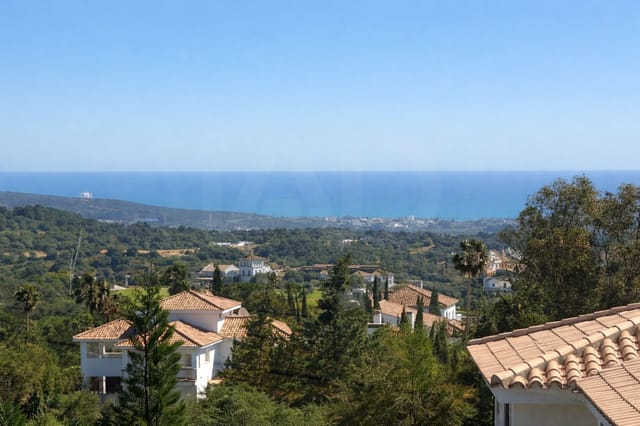
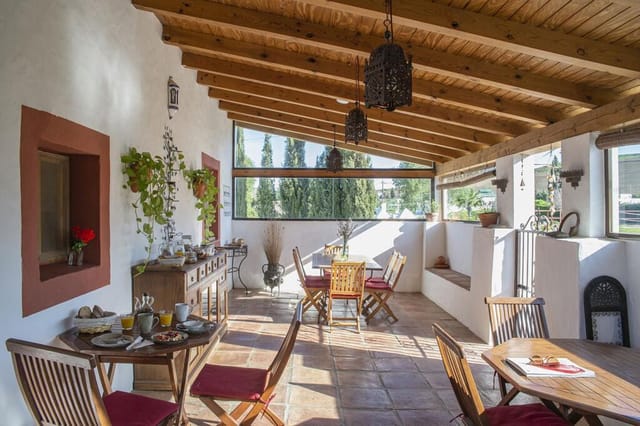
Step out onto the south-facing terrace on a Tuesday morning in October, coffee in hand, and the Mediterranean is right there — a silver-blue ribbon stretching to the horizon beyond the fairways of Aloha Golf. The air smells of jasmine and cut grass. Church bells drift up from the valley. This is not a weekend fantasy. This is what Tuesday looks like when you own in La Colina. La Colina is one of those addresses in Nueva Andalucía that gets quietly passed between people who actually know Marbella. Not the loudest corner of the Golden Mile, not the marina circus — this is the calmer, greener, more residential side of things, tucked between two of the Costa del Sol's most storied golf courses: Aloha Golf and Las Brisas Golf, both reachable on foot in minutes. The community sits within the so-called Golf Valley, a stretch of lush landscaped terrain that somehow manages to feel rural while being eight minutes by car from Puerto Banús and fifteen from central Marbella. The townhouse itself is spread across split levels, and that layout is one of its best features — it gives the place a sense of movement, of discovery, that flat-plan properties simply can't replicate. You enter through a traditional Andalusian courtyard. There's something almost theatrical about it: terracotta underfoot, climbing plants catching the afternoon light, the sound of the fountain if there's one running nearby. It sets the tone immediately. Through the courtyard and into the hallway, the kitchen comes first — a fully fitted Danish Invita kitchen, which is a genuinely premium spec. This isn't a builder's afterthought. The cabinetry is precise, the appliances are high-end, and the layout is efficient without feeling clinical. It's the kind of kitche ... click here to read more
Picture 1

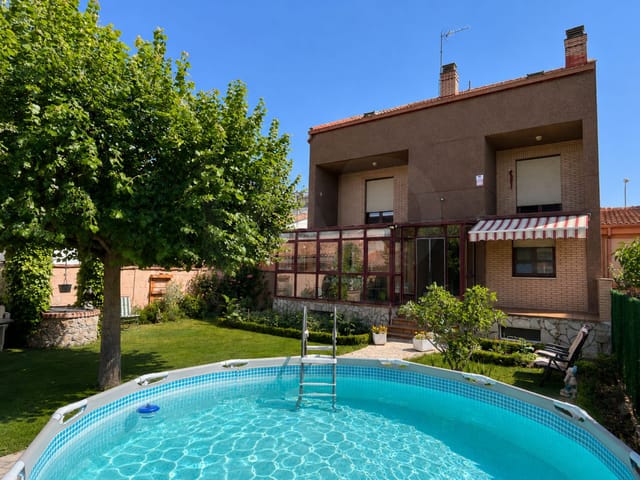
Step off the communal terrace, cross a single quiet street, and you're on the sand. That's not a figure of speech — the Pino Alto urbanization in Mont-roig del Camp puts the Mediterranean literally 100 meters from your front door, and on a calm July morning, with the sea breeze carrying the faint scent of salt and wild rosemary off the hills behind, that distance feels like none at all. This is a rare find on Catalonia's Costa Daurada: a fully licensed, income-producing residential building constructed in 2022, sitting on a 1,135 m² plot with 667 m² of interior living space, comprising five semi-detached houses that each hold four double bedrooms, two full bathrooms, an open living and dining area, and a separate kitchen. Every single unit holds an active tourist license. That detail matters more than almost anything else for investors eyeing the Spanish rental market right now, because new tourist licenses in coastal Catalonia have become extraordinarily difficult to obtain. These don't come up often. The numbers are straightforward. At the asking price, the complex generates a yield approaching 10% annually — a figure that has become genuinely hard to find in western European coastal real estate. The building is modern, low-maintenance, and already operational, so there's no waiting period, no renovation budget to calculate, no gap between purchase and first income. For an international buyer looking to establish a second home in Spain that also works as an asset, this is the kind of opportunity that rarely survives long on the market. Pino Alto itself is a well-established residential and tourist zone within Mont-roig del Camp, a municipality that most visitors outside Catalonia haven't yet discovered — which is pr ... click here to read more
Picture 1

Step out onto the top-floor balcony on a Wednesday morning, coffee in hand, and you'll understand immediately why people buy property in this corner of Andalusia and never look back. The Mediterranean stretches out in front of you, flat and silver in the early light, with the coastline curving south toward Torre del Mar and the whitewashed silhouette of Benajarafe just visible below. Church bells roll up from the pueblo. The smell of orange blossom drifts in from the hillside. It's 9am, and the day hasn't even started yet. This three-storey townhouse in Chilches Pueblo sits on a quiet street in one of those genuinely unspoiled Andalusian villages that most tourists speed past on the A-7 without stopping. Their loss, your gain. Fully renovated across 80 square metres of usable space — spread intelligently over three floors — it's the kind of property that actually lives better than it looks on paper. The layout means you naturally move upward through the day, from the ground-floor garage and patio in the morning, through the bright living spaces in the afternoon, to that balcony for the evening sunset. Southwest orientation keeps natural light flooding through the house for the better part of the day. The kitchen on the first floor is properly equipped and genuinely independent — not an open-plan afterthought, but a real cooking space with access to a terrace that opens up over the rooftops toward the sea. That terrace changes everything. Breakfast there in October, when the air still carries summer warmth but the crowds have thinned right out, is the kind of simple thing that becomes the whole reason you bought the place. The first-floor also holds a large bedroom with wardrobe and a full bathroom with bathtub, giving ... click here to read more
Picture 1

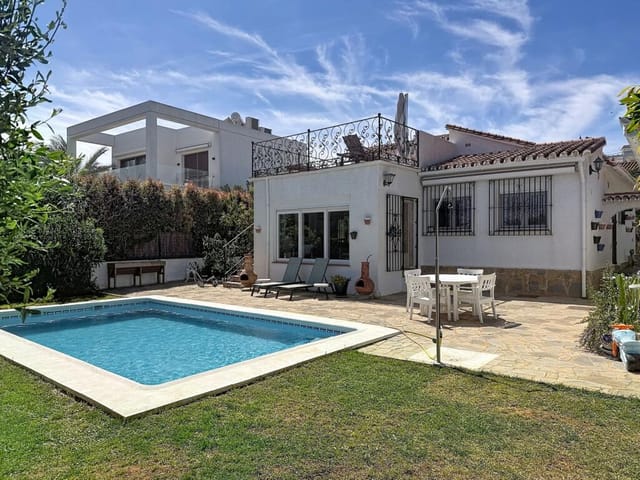
By ten in the morning, the sun has already cleared the roofline and the pool is catching it fully. You're up on the solarium with a coffee, looking out over the terracotta rooftops of Villamartin toward the fairways of the golf course, and it occurs to you—not for the first time—that life from up here looks considerably better than it does from most places. That's the daily reality this villa delivers, and it doesn't take long to understand why properties on Pinada Golf 2 move quickly. Set on a plot of over 400 square metres in one of the most established residential communities on the Costa Blanca South, this detached south-facing villa in Orihuela has been developed to give its owners serious flexibility. Two bedrooms and two bathrooms on the main level. A fully converted underbuild with its own separate entrance, two additional double bedrooms, a kitchen, bathroom, and living space. A rooftop solarium. A private pool. An outdoor bar. A gated driveway with garage. At 109 square metres of main living space—plus the underbuild—this is not a property that runs out of room. Walk through the front gate and the pool is right there, framed by a generous terrace that gets the sun from mid-morning through the late afternoon. The outdoor bar area makes it easy to understand why Spanish evenings stretch so long. There's a logic to life in this part of Alicante that becomes obvious fast: eat late, stay outside, let the day unwind at its own pace. The covered dining terrace keeps lunch comfortable even in July, when the thermometer in Villamartin routinely hits the mid-30s. From October through to April, though, the Costa Blanca earns its reputation—clear skies, temperatures in the high teens and low 20s, and the kind of winter l ... click here to read more
Picture 1

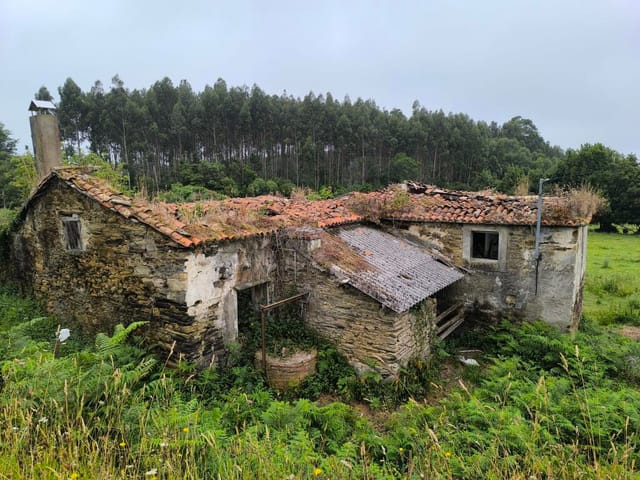
Sunday morning in León, and the bells of the Catedral de Santa María are rolling across the rooftops just as the light starts hitting the terrace. You're standing with a coffee, watching the Bernesga river catch the early sun below, and the only thing on your agenda is deciding whether to walk the old city walls before or after breakfast. This fifth-floor apartment on Roa de la Vega — one of León's most coveted addresses — is the kind of place that makes that kind of morning a regular thing. León doesn't get the international attention that Seville or Barcelona do, and honestly, that's a big part of its appeal. This is a city that Spaniards themselves choose. The old quarter, declared a UNESCO World Heritage site alongside the Camino de Santiago route that passes right through it, is genuinely lived-in — tapas bars packed with locals on a Tuesday evening, the Mercado del Conde Luna buzzing with produce sellers on weekend mornings, the Parador de San Marcos reflecting centuries of history in its Renaissance facade just a fifteen-minute walk away. You get all of that without the tourist fatigue of the more obvious Spanish cities. The apartment sits on the fifth floor of a solid, well-established building on Roa de la Vega, the wide boulevard that forms the spine of León's newer residential core. Being entirely exterior means every room gets real light — not the borrowed, courtyard-filtered kind that plagues so many city-centre apartments, but direct, generous, south-facing sunlight that moves through the rooms across the day. The living and dining area is genuinely large, the sort of space where you can seat eight comfortably and still have room to breathe, with direct access onto an open terrace where, on clear evenings ... click here to read more
Picture 1

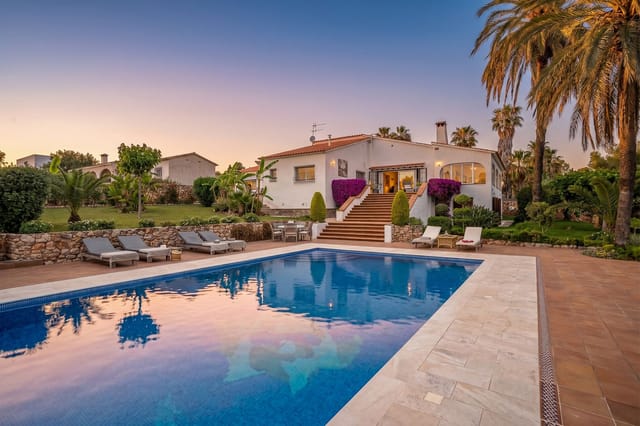
Stand on this land on a clear morning in late spring and you can see the Ebro Delta shimmering in the distance, a silver-blue haze against the Ports de Beseit mountain range. The air smells of wild rosemary and warm earth. There are no neighbors in earshot. Just 14,380 square meters of your own Catalonian countryside, completely flat, already served by a private well, and accessible directly off a paved road. Not every parcel of rural land in Tarragona ticks all these boxes. This one does. Roquetes sits in the comarca of Baix Ebre, a genuinely under-the-radar corner of southern Catalonia that most international buyers haven't discovered yet — which is precisely why prices here still make sense. The town itself is small and unassuming, but it punches above its weight. It's home to the Observatori de l'Ebre, one of Europe's oldest geophysical research institutes, and it sits along the Ebro River just six kilometers from Tortosa, a city whose medieval old quarter, cathedral and Arab-era castle walls reward an afternoon of unhurried wandering. The weekly market in Tortosa on Saturdays draws locals from across the region for fresh produce, cured meats, and the kind of aged olive oils you won't find in a supermarket. The land itself deserves attention. Completely flat terrain is not something you take for granted in this part of Spain, where the landscape tends toward dramatic slopes and terraced hillsides. Here, the ground is level and workable from edge to edge. That makes it unusually versatile. A private well with an abundant water supply is already in place — a critical asset in a Mediterranean climate where water access can determine what a rural project is even viable. The possibility of connecting to a septic tank, c ... click here to read more
Picture 1

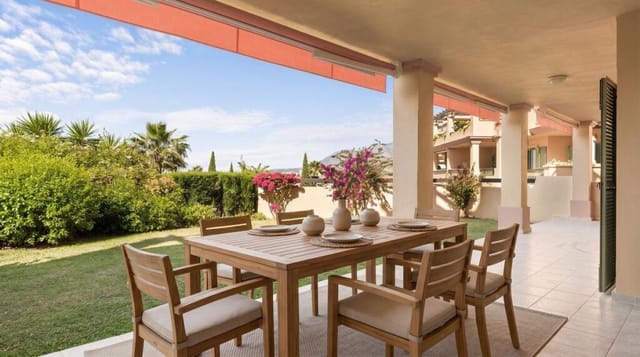
Picture this: it's nine in the morning, the sun is already warming the terrace tiles, your coffee is hot, and the only sound you can hear is the occasional birdsong drifting across the hills above San Miguel de Salinas. No traffic. No crowds. Just open sky, a shimmer of blue in your private pool, and the kind of quiet that takes a few days to fully absorb. That's what mornings look like from this three-bedroom villa at Bellavista Villas — and once you've had a few of them, going back feels genuinely difficult. San Miguel de Salinas sits on a ridge in the southern reaches of the Costa Blanca, and the elevation does something interesting: it gives the whole place a different rhythm from the beach towns below. The air is drier, the views stretch further, and the pace is slower without feeling remote. You're seven kilometers from the sandy shores of Orihuela Costa — La Zenia, Cabo Roig, Playa Flamenca — close enough to spend an afternoon on the water but far enough that the tourist churn stays somewhere else. The villa itself covers 157 square meters across a thoughtfully designed layout with three bedrooms and three bathrooms. It's in good condition and genuinely move-in ready, so you won't spend your first Spanish summer buried in renovation decisions. The architecture follows the clean Mediterranean lines that work so well in this climate — white render, generous glazing, outdoor spaces that feel like natural extensions of the interior rather than afterthoughts. The private swimming pool is the gravitational center of the property in the warmer months, and between April and October, that's most of the time. Orihuela Costa delivers around 320 days of sunshine per year. That's not marketing language — it's the meteorolog ... click here to read more
Picture 1

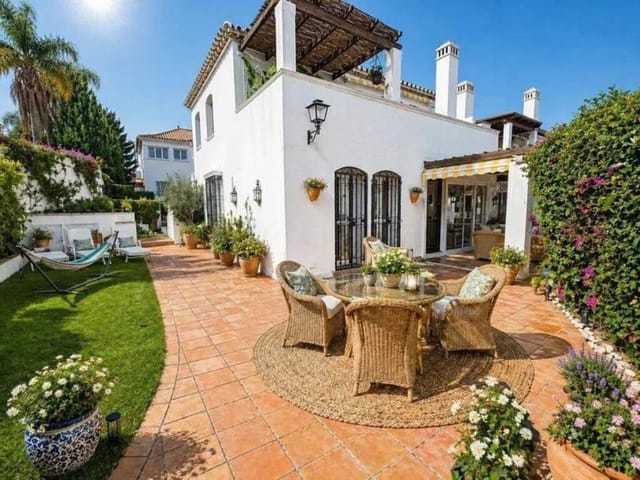
You wake up to the kind of light that only exists in southern Andalusia. It comes in low and golden through the terrace doors, catching the water in the pool before the rest of the house is even awake. By the time the coffee is on, you're already outside — the air is warm, faintly floral, carrying something that might be jasmine or the eucalyptus from the hills behind La Cala. This is a Tuesday in October, and it feels like August anywhere else. This four-bedroom villa in Mijas Costa is the kind of property that earns its price through daily quality of life rather than flashy finishes. Sitting on a private 533m² plot with a south-east orientation, the house catches the morning sun from first light and holds it across the terraces well into the afternoon. From the elevated position, you can see the Mediterranean stretching out toward the horizon, with the greens of the surrounding countryside rolling away on either side. It's a view you genuinely don't tire of. At 267 square metres of built space, the layout is generous without feeling cavernous. The living and dining area has real breathing room — space for a family to spread out, or for a dinner party that spills naturally onto the terrace as the evening cools. The fully fitted kitchen handles everything from quick breakfasts before a beach morning to proper Andalusian meals: a slow pot of rabo de toro, fresh pescaíto from the market at Fuengirola, whatever the day calls for. A separate utility room means the kitchen itself stays uncluttered, which any frequent host will appreciate. The villa comes fully furnished throughout, so arriving feels like arriving somewhere that already knows you. Four well-proportioned bedrooms serve everything from a family base to a prop ... click here to read more
Picture 1