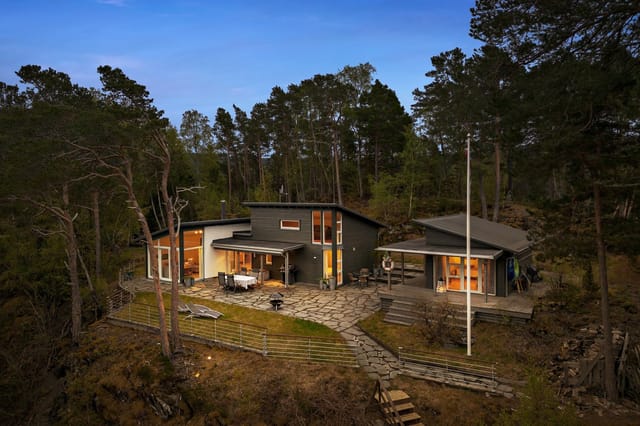
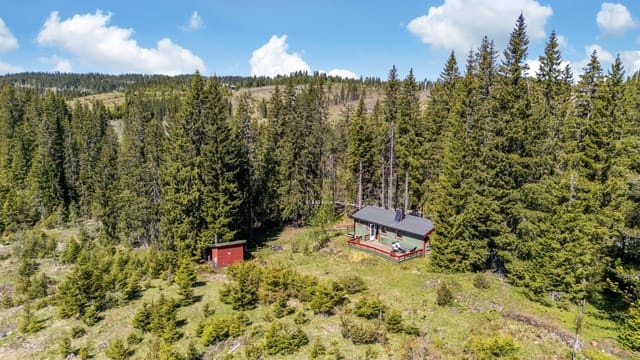
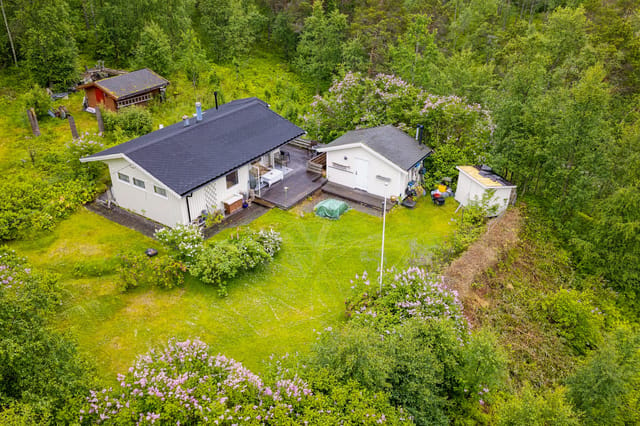
Houses For Sale In Europe With A Garden (page 11)

Houses for sale in europe - homestra offers the largest amount of european real estate with over 200,000+ properties, find any type of property within your budget from villas to country homes. buy or rent your perfect home in europe. (page 11)

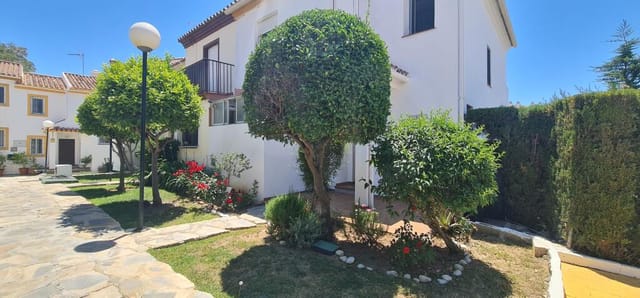
Sunday morning in Estepona moves at its own pace. The fish market on Calle Ramos wraps up early, the smell of fresh-caught dorada still hanging in the air as locals carry their paper-wrapped parcels home through whitewashed alleyways lined with terracotta pots and bougainvillea so red it almost looks painted. Picture walking back from that market to your own front door — four bedrooms, a private garden, a terrace built for the kind of long lunches that stretch into the evening. That's the life this townhouse on the Costa del Sol actually offers. Estepona gets overlooked. Marbella takes the headlines, Puerto Banús gets the glamour pieces, but longtime Spain watchers know that Estepona has quietly become one of the most liveable towns on the entire southern coast. The old quarter is genuinely old — narrow streets, flower-filled balconies, a 15th-century castle ruin at the edge of the Plaza de las Flores. The beach promenade, Paseo Marítimo, stretches for kilometres without ever feeling like a tourist trap. You get the Mediterranean at your feet and a real Andalusian town at your back. This four-bedroom townhouse sits in that sweet spot. At 150 square metres of living space across a well-considered layout, it's big enough for a family, flexible enough to suit a couple who want guest rooms or a home office, and positioned well for both the beach and the town centre. The property is in good condition and ready to move into, though it also holds real scope for a personal renovation — the kind that lets you choose your own tiles, open up a wall, refit the kitchen to how you actually cook rather than inheriting someone else's choices. That potential is part of the appeal, not a caveat. The living and dining room is the heart ... click here to read more

Picture 1

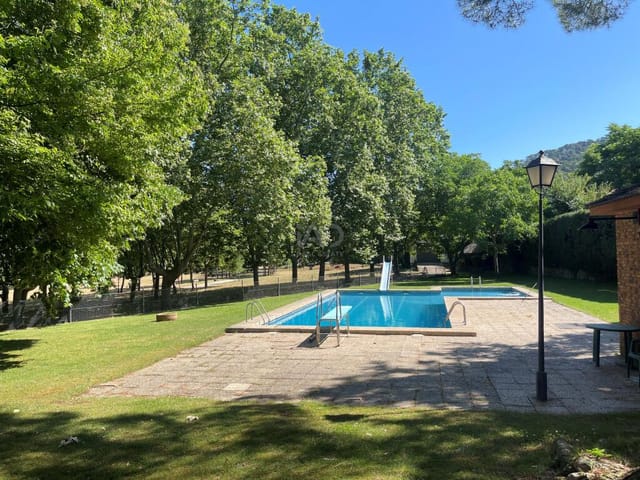
Sunday morning in Robledo de Chavela sounds like this: the faint clang of the church bell on Plaza de la Constitución drifting up through the pines, the smell of woodsmoke still clinging to the living room from last night's fire, and nothing — absolutely nothing — on the agenda except deciding whether to have breakfast on the terrace first or jump straight into the pool. That is the rhythm this house runs on. Set on a flat, fully fenced plot of over 6,000 square metres right in the heart of the village, this six-bedroom chalet is the kind of property that doesn't come along often in the Sierra Oeste de Madrid. Nearly 300 square metres of built space, a 93-square-metre swimming pool, a tennis court in excellent playing condition, established trees casting real shade in August, and a mountain backdrop that turns burnt orange in October. The whole package, sitting at around €750,000, works out to a remarkably rare price per square metre for what you're getting — both in terms of land and quality of life. Walk through the front gate and the sheer scale of the garden hits you first. The lawn stretches generously around the pool, and there's enough flat open ground that children can run without running into anything. The pool itself is large enough to actually swim laps, not just wade around — 93 square metres is serious. Changing rooms are right there beside it, which matters more than you'd think when you're hosting a full house in July and everyone wants to jump in at once. The main floor of the house is organised around a living room that's been divided into three distinct zones — a sitting area anchored by a serious fireplace, a reading or games corner, and a dining space that opens directly onto the terrace through wi ... click here to read more

Picture 1

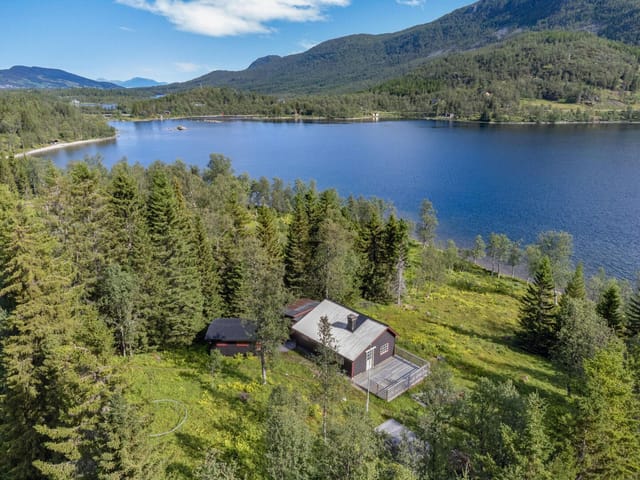
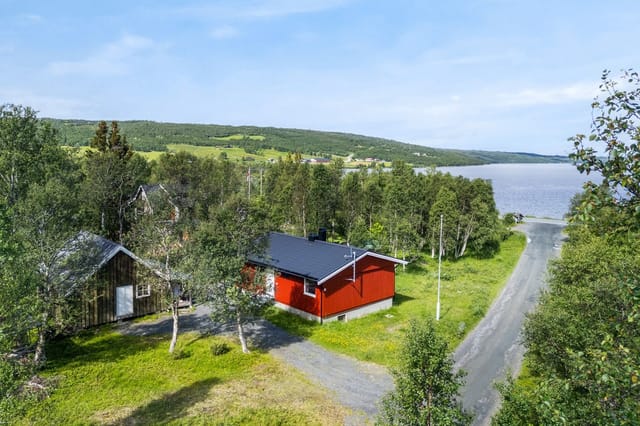
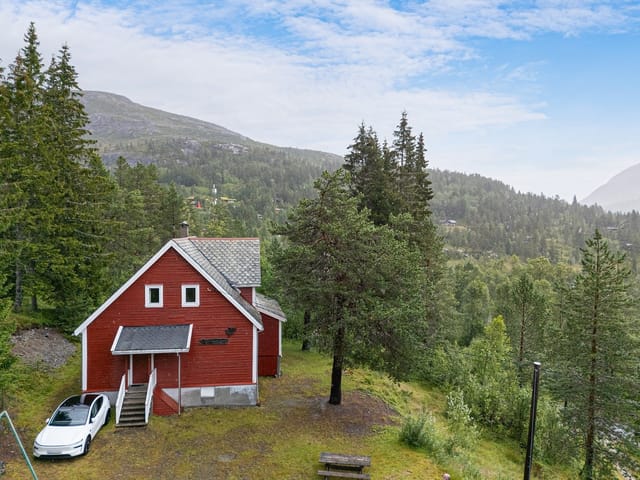
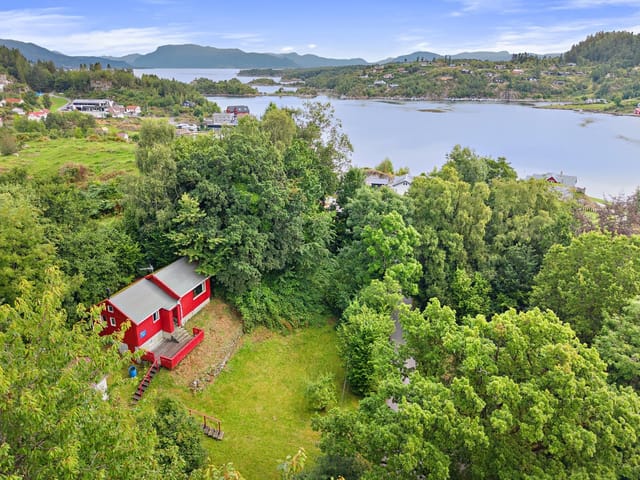
Step outside on a February morning and the whole world is white and silent — just the creak of snow-laden pine branches and the glassy surface of Storvannet catching the first pale light of the Arctic day. That's the view from the living room of this 1935 cabin on Tømmeråsveien 88. Not a simulation of it. The actual thing, every single morning you wake up here. Harstad doesn't get the tourist crowds that Tromsø pulls. That's precisely the point. This is a town of about 25,000 people on the island of Hinnøya, connected to the mainland by bridge, where the locals still fish for cod in the fjord and the Saturday market at Torget sells reindeer skins alongside jars of cloudberry jam. It's real northern Norway — not a packaged version of it. And this property sits right at the edge of where the town gives way to forest and water. The cabin itself was built in 1935 and it carries that era with quiet confidence. The bones are solid. The current condition is good throughout, and a 2024 electrical upgrade — full rewiring with a new fuse box — means the infrastructure matches the ambition of the bones. The 57 square metres of interior are small by conventional standards and absolutely right by cabin standards. Every square metre works. The open-plan kitchen and living area keeps things social; you can be making reindeer stew on the wooden-countertop kitchen while everyone else is playing cards at the table two metres away. The profiled, painted cabinet fronts have a handmade quality that feels appropriate here, not rustic-for-show but genuinely considered. The wood-burning stove in the living room is the axis around which winter life at this cabin rotates. Get it going late afternoon and by the time the sun drops — around 1pm i ... click here to read more

Picture 1

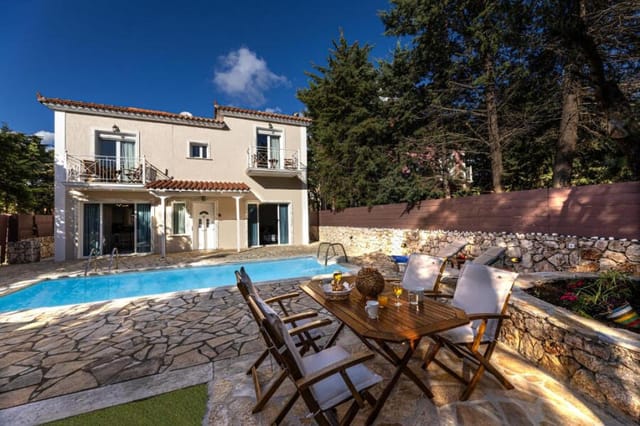
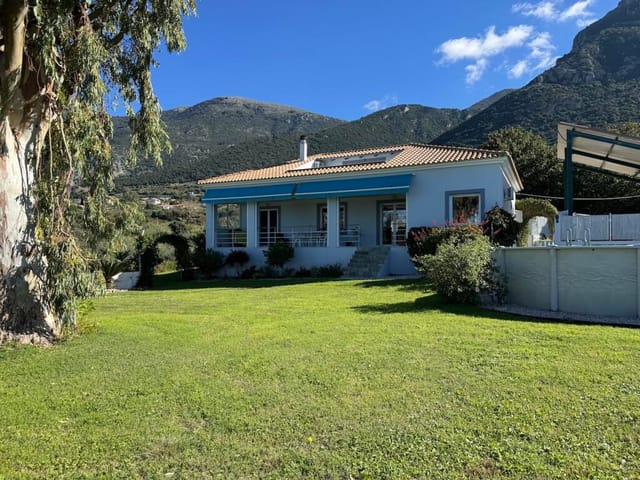
Picture this: you wake up on the first floor of your own white-walled villa, push open the balcony door, and the Ionian Sea fills the entire horizon. Not a sliver of it. The whole thing. The salt air drifts in before you've even made coffee, and somewhere below, the pool catches the morning light in that particular way it only does in the Greek islands — sharp and gold and impossibly blue. This is what mornings look like at this two-bedroom villa in Svoronata, a quiet residential pocket on the southwest coast of Cephalonia, just seven kilometres from the island's capital, Argostoli. The villa itself was built in 2004 and has been kept in genuinely good condition — no renovation projects, no compromises. At 102 square metres across two floors, it's compact enough to feel like a proper escape, but spacious enough to host family or friends without anyone feeling crowded. The ground floor opens into a living room anchored by a real fireplace — relevant more than you'd think, since Cephalonia's winters are mild but not tropical, and there's something deeply satisfying about a fire going in November when everywhere else in Europe is grey. The kitchen is fully equipped, connects to the dining area, and flows naturally toward the garden through the back. That garden is the real conversation. The 560-square-metre plot is fully enclosed and paved, with mature landscaping that gives it privacy without feeling boxed in. The pool sits at the centre of it all, surrounded by a dedicated BBQ area and outdoor lounge — the kind of setup that means long Sunday lunches stretch into evening swims without anyone having to go anywhere. In July and August, when Cephalonia is hot and bright from 7am to 9pm, this outdoor space becomes the actu ... click here to read more

Picture 1

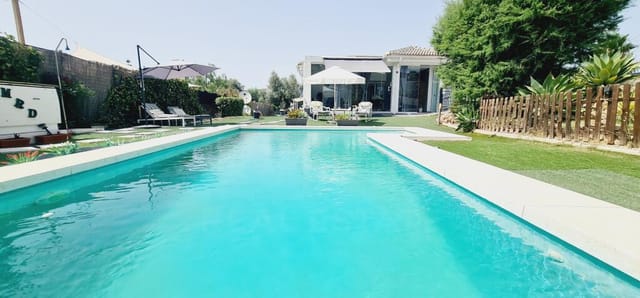
Picture this: it's a Tuesday morning in November, and you're eating an orange you picked twenty minutes ago from a tree in your own garden. The sun is already warm enough to sit outside. Málaga is thirty minutes away, the airport a little less. Back home, it's grey and cold. Here, the pool catches the light and the lemons on the tree are so heavy the branches dip toward the lawn. This is what owning a vacation home in Alhaurín de la Torre actually looks like — not a postcard, just a Tuesday. Set in the residential quarter of Pinos de Alhaurín, this four-bedroom detached house sits on a generous 1,186-square-metre plot in the lower, flat section of the urbanisation — the part locals quietly prefer, because the streets are walkable, the gradient is forgiving, and the supermarket, pharmacy and school are all within a ten-minute stroll. The house was built roughly a decade ago with solid construction standards and has been consistently and carefully maintained. It shows. Nothing here needs emergency attention; this is a home you can walk into, switch on the air conditioning, and immediately start living. The main floor runs across approximately 119 square metres and is laid out with real logic: a wide living and dining room, a separate kitchen that doesn't feel like an afterthought, two bedrooms, and two full bathrooms. There's a glazed porch off the back — the kind of space that becomes your favourite room by February, when the weather oscillates between warm sun and the occasional Atlantic shower — plus a front terrace for morning coffee and a rear terrace for evening meals. South-facing orientation means light floods in for most of the day, and the orientation also means the pool area catches afternoon sun well into aut ... click here to read more

Picture 1

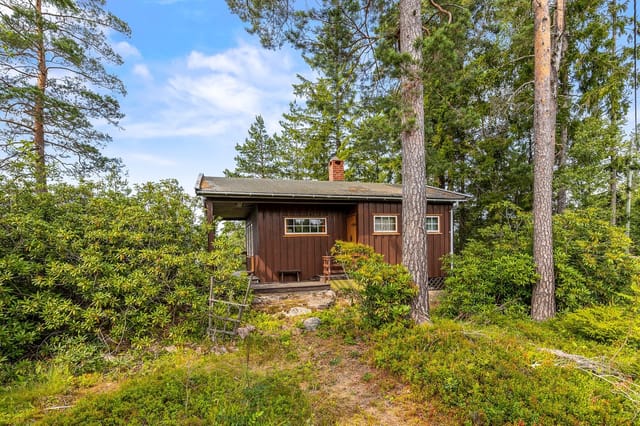
Picture this: it's six in the morning, the lake below is perfectly still, and the only sound is wind moving through the pines just beyond the deck railing. You pull on a sweater, carry your coffee out to the lower terrace, and watch mist lift off Eikeren in slow, curling columns. This is the kind of morning that makes you wonder why you waited so long to buy a place like this. Eikernveien 881 sits high on a natural hillside above the lake, on a 1,054-square-meter plot that's all rock, root, and tall Scots pine. It hasn't been manicured into submission. The slope drops away in front of you and the trees close in behind, giving the whole property that rare feeling of being tucked properly into the Norwegian landscape rather than simply placed on top of it. At 56 square meters, this two-bedroom chalet is compact but thought through — every space does real work. Step inside and the open ceiling in the main living room immediately changes your sense of scale. It feels bigger than the numbers suggest, partly because of the ceiling height and partly because the large windows pull the lake and forest inside the room visually. On a grey afternoon in October when rain taps against the glass, the wood-burning stove against the slate-clad chimney becomes the gravitational centre of the entire cabin. That stove isn't decorative. It heats the room properly, it creates the glow that cabin life in Norway is actually built around, and it means you can use this place well into autumn when most of the summer crowd has packed up and gone home. The kitchen is open to the living and dining area, finished with smooth-fronted cabinetry, a gas stove, and a laminate worktop with an integrated steel sink. It's practical — ready for a long weeke ... click here to read more

Welcome to Eikernveien 881. Photo: Digit Media Norge AS.

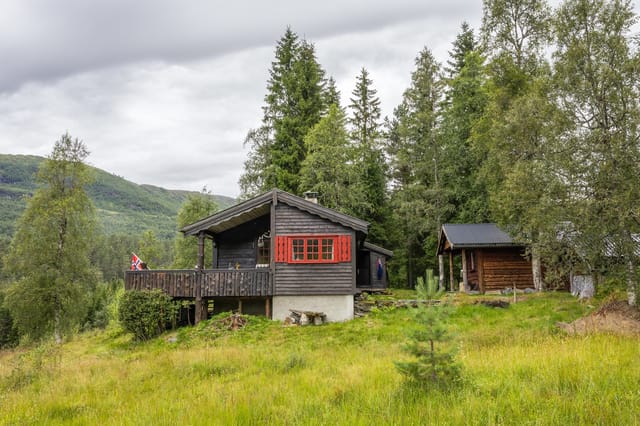
Picture this: it's a Friday evening in January, and you've just pulled up to the end of a quiet road in Torpeåsen. The headlights catch a metre of fresh snow on the outbuilding roof. You unlock the door, the wood-burning stove gets going within minutes, and by the time your boots are off and the kettle's on, the whole valley below has gone quiet in that particular way only mountain Norway can manage. That stillness — the kind that feels earned — is what Vestre Knotten 36 gives you every single time you arrive. This is a proper Norwegian fritidshytte. Not a glossy renovation project with underfloor heating and Instagram-ready interiors, but a well-kept, fully furnished 90-square-metre cabin that has been genuinely loved and practically maintained since it was built in 2003. Three bedrooms. One bathroom with a bathtub. An outhouse in the adjacent storage building. A wraparound terrace you won't believe until you stand on it. The asking price of €128,000 for a freehold plot of 1,533 square metres at 820 metres above sea level in Innlandet county is the kind of figure that makes experienced Norwegian property buyers do a double take. The terrace alone is worth talking about at length. Sixty-four square metres, wrapping around two sides of the cabin, facing the kind of open mountain landscape that you see on Norwegian tourism posters and assume is exaggerated. It isn't. On clear summer mornings — and there are many — you can sit out here with a coffee before 7am while the Valdres hills catch the first light and the birch trees below the property are still in shade. In July, those same trees are dense and green and full of the particular rustling sound that becomes the background track to your entire summer. In October, they ... click here to read more

Welcome to Vestre Knotten 36!

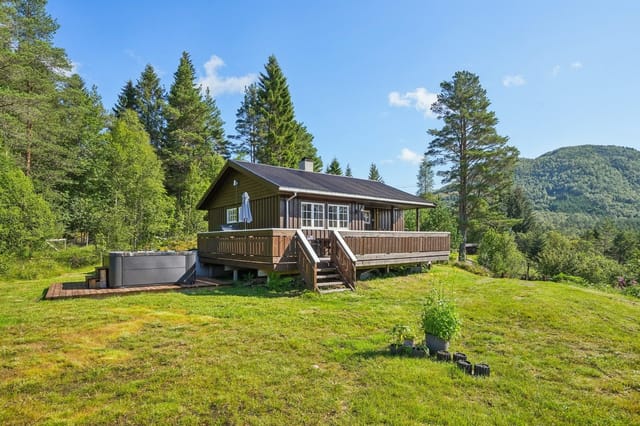
Step out onto a 53-square-meter terrace on a Saturday morning in late June, coffee in hand, and the whole of Western Norway seems to open up in front of you. The Sørfjorden glitters 280 meters below. Bruviknipa rises behind you. The only sounds are wind through the birch trees and, if you time it right, the faint creak of the wood-fired hot tub warming up for the evening ahead. This is Geitåna 12 — a two-bedroom chalet on the Vassdal hillside above Bruvik, priced to move and ready to use from day one. Norway doesn't ease you into it. The landscape here on Osterøy is immediate and uncompromising — raw granite ridgelines, fjord light that shifts every twenty minutes, winters that make the fireplace feel like the most important piece of furniture in the house. That fireplace, set in the living room with its painted wooden floors and panel-clad walls and ceiling, earns its keep. On cold April weekends — and there are many — you'll light it before breakfast and let it run all day, the smell of woodsmoke drifting out across the terrace while the kids claim the trampoline and the adults finally sit down. The chalet covers 49 square metres of internal living space, with a total usable area of 66 square metres. Compact, yes — but designed with real intention. The kitchen, fitted with profiled cabinet fronts and a solid wood countertop, sits directly open to the living and dining area so that whoever is cooking stays part of the conversation. The two bedrooms handle sleeping arrangements efficiently: the first has a bunk bed built in with storage underneath, good for children or sharing with friends; the second does double duty as a TV room and guest space, a sofa bed folding out when needed. There's also a third room — technica ... click here to read more

Welcome to Geitåna 12

Step out onto the west-facing deck at Vikanetoppen 18 on a July evening. The pine trees are still warm from the afternoon sun, the air smells faintly of resin and salt, and somewhere below the ridge, through gaps in the forest, you can just catch the glint of the Oslofjord. That's the moment you'll stop looking at other properties. Gressvik sits on the eastern shore of the fjord in Østfold, a stretch of coastline that Norwegians have quietly kept to themselves for decades. It's not the kind of place that turns up in travel magazines, and that's exactly the point. The community of Vikane, perched above Gressvik on smooth granite outcrops and wrapped in Scots pine, has been a cherished escape for Norwegian families for generations. Properties here — particularly ones with a freehold plot of over 2,300 square meters — almost never reach the open market. The chalet itself is 65 square meters across the main cabin and the detached annex combined, and the layout has clearly been shaped by people who actually use it. The living room runs wide and open, with enough floor space for a proper sofa group and a dining table that fits eight when the occasion calls for it. A fireplace anchors one wall. On cold October weekends, when the birch trees outside are shedding the last of their gold, that fireplace makes everything else irrelevant. Come summer, it's the 31-square-meter west-facing terrace that takes over — partially covered, built from stained hardwood decking, and positioned so the sun lingers there well into the evening hours. Al fresco dinners that start at six and somehow end at eleven. That kind of terrace. The kitchen is compact but genuinely functional, fitted with a stove, cooktop, and full refrigerator-freezer, wit ... click here to read more

Welcome to Vikanetoppen 18

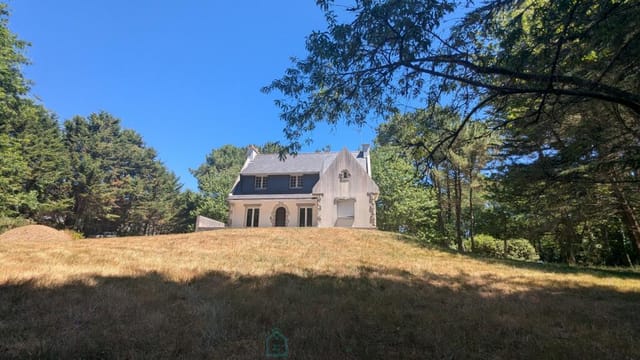
Step out onto the terrace on a Saturday morning in Riantec and you'll hear it before you see it — the low hum of fishing boats heading out across the Rade de Lorient, the calls of gulls cutting through salt-sharp air, and somewhere down the street, the mechanical clatter of a boulangerie shutter rolling up. This is not a postcard version of Brittany. It's the real thing. A working coastal town where the rhythm of the tides still shapes daily life, and where a five-bedroom house with this much space and this much potential doesn't stay on the market long. Built in the 1970s in a style typical of solid Breton residential construction, this 147-square-metre house sits in Riantec with a full basement, an attached garage, a proper garden, and a terrace that asks you to sit down and stay a while. The bones are good. The layout is generous. And the renovation opportunity here is exactly what buyers who know this part of Morbihan have been waiting for. The garden level does something rare — it allows genuinely comfortable single-floor living if you want it. An entrance hall opens into a bright living and dining room, there's a functional kitchen, two bedrooms, a family bathroom, and a separate WC. Come summer, with the terrace doors thrown open and the garden spilling light through the windows, this floor alone becomes a complete holiday retreat. Upstairs, a landing leads to three more bedrooms, two of which come with dressing areas — a detail that matters enormously when you're hosting family for an extended August stay. The second bathroom has both a bath and a separate shower, which anyone who's coordinated a full house of guests will appreciate immediately. The full basement is the kind of space that gets people thinking. ... click here to read more

Picture 1

Step out onto the veranda on a July morning and the air hits you first — clean, pine-laced, with a faint edge of damp earth from last night's rain. The Sunnmøre hills roll out in front of you, unhurried and vast, and the only sound is birdsong and the occasional rustle of wind through the birch trees flanking the plot. This is Engsetdalsvegen 546 in Skodje, and mornings like that one are what people come here for — and then refuse to leave. Sitting on a private plot of roughly 2,405 square metres in Møre og Romsdal, this two-bedroom Norwegian chalet is the kind of second home that earns its keep across all four seasons. It's not trying to be a hotel room. It's a proper cabin in the Norwegian tradition — wood-clad walls, a wood-burning stove with actual heat in it, a vaulted ceiling that makes the living room feel twice its size — but with the kind of updated practicality that means you're not roughing it. Not even close. The kitchen was overhauled in 2021 and it shows. IKEA cabinetry done right, integrated appliances including a cooktop, oven, and dishwasher, and enough counter space that two people can actually cook together without elbowing each other into the wall. The open plan between kitchen and living room works here because the layout is generous — a full sofa group, a proper dining setup, and the stove anchoring the far end. Come February, when the cross-country ski tracks that lace through the hills just behind the property are freshly groomed, you'll understand exactly why that stove matters. You kick off your boots, drape your base layers over the rack, and let the fire do its job while dinner heats up. Two bedrooms handle families or couples travelling with friends. Each has space for a double bed or bunk ... click here to read more

Welcome to Engsetdalsvegen 546!

Step outside on a September morning and the air hits differently up here. Sharp, clean, carrying a faint trace of pine resin and lake water from Stuggusjøen, which is literally ninety meters from your front door. The water is mirror-flat at that hour. You can hear the occasional duck landing somewhere out of sight. That's the daily reality of owning this three-bedroom chalet at Stillhåtjønnvegen 9 in Stugudal—one of the Trøndelag region's most quietly coveted mountain escapes. Tydal sits in the Selbu municipality, tucked into a broad mountain valley that most international travelers never find, which is precisely the point. The village of Stugudal, where this property sits, has exactly the kind of low-key Nordic character that feels increasingly rare: no overdevelopment, no crowds in August, just a tight-knit community of people who chose the hills over the city and never looked back. Your nearest neighbors are Norwegians who know these trails by heart and will happily point you toward the best fishing spots on Stuggusjøen without wanting anything in return. The chalet itself spans 126 square meters across the main building, plus a separate annex of 10 square meters and an outbuilding—uthus, in Norwegian—adding another 51 square meters of storage. That storage matters more than you'd think. Skis, poles, snowmobile gear, fishing rods, kayaks, hiking boots in every size: the mountain life accumulates equipment fast, and having a proper outbuilding means your living space stays a living space. The main building was originally constructed as a detached year-round residence and is now registered as a holiday home, which gives you flexible use without locking you into seasonal limitations. On the ground floor, the entrance ... click here to read more

Aktiv Eiendomsmegling v/Håvard Geving presents Stillhåtjønnvegen 9

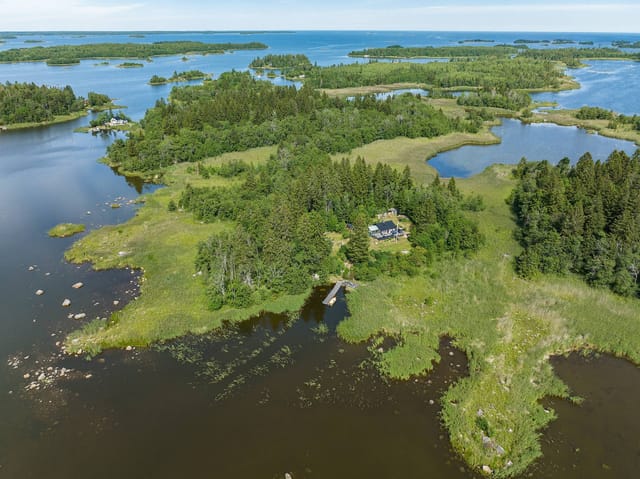
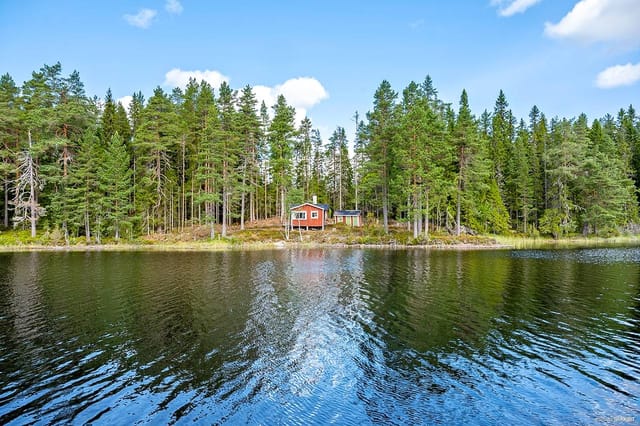
The ten-minute boat ride from Snatra jetty is the first hint that your life is about to slow down considerably. You cut through the glassy water of Lövstabukten Bay, the smell of salt and pine hitting you before the island does, and then there it is — Slanten, sitting on its plot of open lawn with that big wooden deck catching the morning light. You tie up at the jetty, step onto the dock, and the mainland starts to feel very far away. That's the point. Skärplinge sits on the Uppland coast in Tierps kommun, roughly 40 kilometers north of Uppsala and about 90 minutes from Stockholm's Arlanda Airport. But Oxholmen itself — the small island where this property sits — operates on a different clock entirely. No through traffic, no neighbors cutting grass at seven in the morning, no delivery vans. What you get instead is the sound of water moving against the hull of your moored boat and, on still evenings, the occasional cry of a common tern wheeling overhead. The cottage itself covers 46 square meters, which sounds compact until you realize how smartly it's laid out. The kitchen is built for long meals rather than quick ones — there's a proper dining area where you can seat a crowd and still have room to move around. A wood-burning stove in the adjoining living room means that overcast September days, when the archipelago turns steely and atmospheric, are genuinely comfortable rather than something to endure. The bedroom is quiet in the way that only island bedrooms are quiet. No street noise, no sirens, just whatever the wind is doing. The glazed veranda is where you'll spend most of your waking hours. It faces the water, it catches the light from mid-morning onwards, and because it's enclosed, it extends the useful seaso ... click here to read more

Exterior view of the summer house and garden

The first thing you notice is the silence. Not the uncomfortable kind — the deep, full kind, broken only by the lap of water against the shore and the occasional knock of a woodpecker somewhere back in the pines. You step out of the car, the smell of spruce and lake water hits you all at once, and within about thirty seconds, your shoulders drop two inches. That's what this place does to you. This 33-square-meter lakeside cottage in the Simrishamn area of Sweden is about as honest a property as you'll find on the market right now. No electricity. No running water. No sewage system. And for the right buyer — someone who actually wants to unplug rather than just talk about it — those aren't drawbacks. They're the entire point. Inside, the cottage is built the way Swedish summer houses have been built for generations: wood-paneled walls and ceilings that glow amber in the afternoon light, large windows that put the lake and forest directly in your sightline whether you're eating breakfast or just sitting still. The kitchen is stripped back to what you actually need — gas stove, wood-burning stove, work surfaces, storage. Meals here tend to be simple: perch caught that morning, potatoes from a local farm, coffee brewed slowly while the morning mist burns off the water. The living room doubles as a social space and an extra sleeping area, with a built-in open fireplace that makes the cooler evenings in September feel genuinely cozy rather than something to endure. A separate room holds a bunk bed — practical for kids, or guests who've earned their keep by helping split firewood. The outbuilding, around 9 square meters, keeps the practical stuff organized: a season's worth of firewood, fishing rods, hiking boots, the kayak ... click here to read more

Exterior view of the cottage by the lake

Step outside on a Tuesday morning in late July and the only sound is the fjord. Not traffic, not neighbors, not anything manufactured by human hands — just water moving against rock somewhere below the treeline and, if the wind is right, the faint call of a white-tailed eagle working the thermals above Tjongsfjorden. That's the daily reality at Vågaveien 23. It's the kind of quiet that takes a day or two to stop feeling strange. This is a two-bedroom timber chalet in Rødøy municipality, Nordland — deep in Northern Norway, well above the Arctic Circle — set on a plot so large (roughly 120,224 square meters, or about 30 acres) that you could walk your own land for an hour and not retrace a single step. The cabin itself is compact and honest: 59 square meters of interior built in 1992, nothing pretentious, with a layout that makes sense for how people actually use a place like this. The big living room and open kitchen face outward through wide windows, flooding the space with the particular silver-grey light that Nordland does better than anywhere else in Europe. High ceilings stop the room from ever feeling cramped, and when you light the wood stove on a September evening while rain moves across the fjord, the whole interior takes on a warmth that no amount of underfloor heating can replicate. The kitchen is straightforward — upper and lower cabinets, room for what you need, open to the living area so nobody gets exiled to a galley while everyone else is talking. Both bedrooms are proper sleeping rooms, not cupboards with beds. And the loft above adds a third sleeping zone, useful if you bring teenagers or friends who don't mind the slight theatrical quality of climbing up to bed. The bathroom is functional; there's als ... click here to read more

Welcome to this beautiful leisure property at Vågaveien 23!

Step outside on a July evening and the sun is still high at 10 PM, throwing gold across the Oppheimsdalen valley below. You're on the southwest terrace with a cup of coffee and nowhere to be. Wild blueberry bushes push right up to the cabin's foundation. A pair of ravens cross the ridgeline. This is what the place feels like—not a description of it, but the actual experience of standing there. Raunelivegen 11 sits on an elevated, south-facing plot above Vossestrand, a small community tucked into the inner reaches of Hardangerfjord country in western Norway. Bergen is roughly 90 minutes by car via the E16—close enough for a long weekend dash from the city, far enough that you genuinely feel you've left it behind. The plot covers 1,390 square meters of leased land, and the cabin itself is 66 square meters of thoughtfully used interior space, original to 1977 and expanded in 1991 into its current efficient layout. The living room is the heart of the cabin, and it earns that role. An open fireplace at one end, a closed wood-burning stove at the other—in November, when the valley fills with low cloud and the temperature drops sharply, you'll understand why both exist. Large windows run along the valley-facing wall, framing the kind of view that landscape painters spend careers chasing. The terrace wraps around the southwest corner, roughly 20 square meters total, partially covered so you're not driven inside by every passing shower. At midsummer, you can sit out there until the light finally fades around 10 or 11 PM, which it does slowly and warmly, like the end of a good meal. The kitchen sits in a semi-open arrangement off the living room—IKEA fittings, gas hob, hotplate, basic oven. Honest and functional. The refrigerat ... click here to read more

Privatmegleren v/ Synnøve Karlsbakk presents Raunelivegen 11.

Step outside on a September morning and the air hits you—cold, clean, carrying the faint smell of birch smoke from somewhere down the valley. The Lyngen Alps are right there, filling the entire southern horizon, those jagged glacier-capped ridges catching the first orange light of day. This is Svensby. And this is the kind of place people spend years searching for before they finally find it. Lattervikveien 856 is a traditional Norwegian cabin built around 1970, sitting on its own private plot of just under 2,000 square meters on the western shore of Lyngenfjord. Three bedrooms, one bathroom, 68 square meters of honest timber-and-wood-panel interior. It needs work—the current owners are upfront about that, and so are we. But what it has right now, no amount of renovation budget can manufacture: that view, that plot, that postcode in the Norwegian Arctic. The cabin's heart is its living room, where a wood-burning stove sits against a stone wall and does exactly what you'd want it to do on a dark November evening. The open layout between kitchen and living area means that whoever's cooking is never out of the conversation, and with the windows framing the Alps like a painting that changes every hour, nobody really wants to face the other direction anyway. A covered balcony of around 9 square meters opens off the living room—small enough to feel intimate, big enough for a camp chair, a coffee, and an hour of doing absolutely nothing. The kitchen runs along an open galley arrangement with smooth-fronted cabinets and laminate worktops. Functional, practical, and honest about what it is. The three bedrooms each have a different feel. One has a bunk setup, which works brilliantly if you're bringing kids or friends who don't ... click here to read more
Welcome to Lattervikveien 856! Photo: EFKT

The blueberries are ripe by late July. You'll know because you can smell them before you see them — that faint wild sweetness drifting through the pine trees as you step onto the wooden terrace with your morning coffee. Below, through the gaps in the forest canopy, the Oslofjord catches the early light. The water is steel-blue at this hour. By afternoon it'll be navy. You're not going anywhere today. That's the whole point. Kølåsen 14 sits on a private 936-square-meter forest plot above Holmsbu, one of those small coastal villages on the western shore of the Oslofjord that Norwegians quietly keep to themselves. The chalet is compact — 39 square meters of honest, warm living space — built in 1967 when Norwegian cabin architecture meant thick wooden paneling, lacquered floors, and a wood-burning stove that could heat the whole place in twenty minutes flat. It still can. Inside, the living room and kitchen share an open layout that's genuinely sociable. There's room for a proper sofa arrangement and a dining table, which matters when you're feeding a group after a long afternoon on the water. The fireplace anchors one wall. The stove sits opposite. On a September evening when the temperature drops sharply and the forest goes quiet, you'll understand exactly why the original builder positioned them that way. Double terrace doors open directly onto a 23-square-meter wooden deck — partially covered, so rain doesn't end the evening prematurely. It's large enough for a full outdoor dining setup, and the elevated position means you're looking out over treetops rather than at a neighbor's fence. The bedroom sleeps four — the main room is arranged efficiently, and a converted storage space provides additional sleeping capacity ( ... click here to read more
Welcome to Kølåsen 14, presented by Maria Nordgård at Eiendomsmegler 1! Photo: Trond Reder

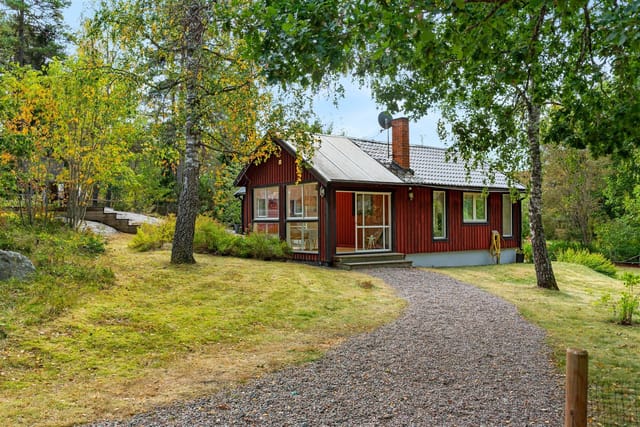
Picture this: it's a Tuesday evening in late July, the kind where the sky over Norrtälje doesn't fully darken until well past ten. You've spent the afternoon swimming at Vattudalens beach, ten minutes on foot through the birch trees. Now you're sitting on the rocky outcrop at the back of the garden, a glass of something cold in hand, listening to absolutely nothing except wind through pine branches and the occasional splash from next door's dock. This is what Lännavägen 332 actually feels like to own. The house itself was built in 1966 and sits on a generous plot of 2,862 square meters — an uncommon amount of breathing room for this part of Norrtälje municipality. At 65 square meters of living space, the main house is compact but genuinely functional. Two bedrooms, a living room, a kitchen, and one bathroom. Nothing oversized, nothing wasted. The kind of layout that Swedes have been getting right for decades: enough room for family life, small enough that someone who uses the place seasonally isn't drowning in upkeep. What sets this property apart isn't the square footage — it's the compound feel. A separate guest house sits on the plot, entirely independent from the main building. That means you can have your parents or a couple of friends staying without anyone compromising anyone else's routine. The guest house doubles well as a home office, a painting studio, or a teenage bolthole, depending on what phase of life you're in when you buy it. Then there's the sauna. Wood-fired, with a shower, and positioned far enough from the main house to feel like its own ritual. In Sweden, the sauna isn't an amenity — it's a social institution. You fire it up before dinner, not after. Guests arrive, everyone takes turns, conversa ... click here to read more
Main house and garden

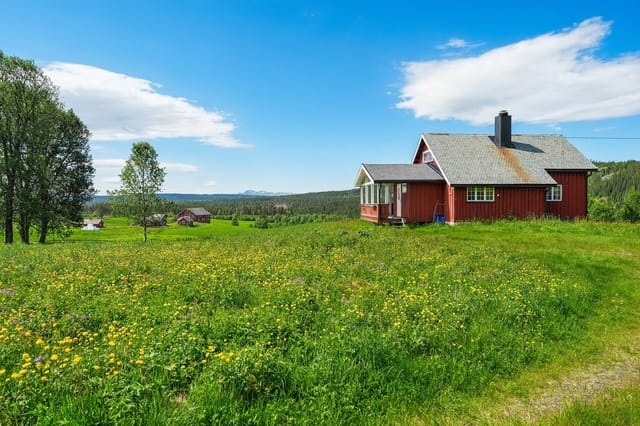
Some mornings you wake up at Merkjisvegen 88 and the valley below is still wrapped in low mist, the farmsteads just visible through the kitchen window as you put the kettle on. The hills are quiet. There's a woodpecker somewhere in the birches. You've got nowhere to be. That's not nothing — that's the whole point. Tisleidalen is one of those Norwegian valleys that hasn't been over-promoted or over-developed. Locals know it. Repeat visitors guard it. The cabin at Rundehaugen sits above Bjørkestølen in a position that gives you a sweeping look across rolling agricultural land and scattered timber settlements, with the gentle ridge lines of the Valdres hills closing in on either side. The plot runs to nearly 3,000 square metres, which means real breathing room — space for kids to roam without a fence line cutting every ten metres, and enough garden to grow something if you feel like it. The cabin itself is 75 square metres of honest Norwegian timber construction. Solid wood floors underfoot, wood-panelled walls, a painted ceiling that keeps the interior bright even on grey October afternoons. A traditional fireplace insert anchors the living room and does exactly what you'd want on a cold Friday evening after you've been out on the trails since noon. The multi-paned windows are generous and positioned well — you're not staring at a wall or a car park, you're looking at the kind of landscape that people fly to Scandinavia specifically to see. The kitchen is functional and unpretentious — freestanding stove, extractor fan, fridge, dishwasher, solid wood cabinetry with profiled fronts that speak to the original 1990s build. A table by the window gets the morning light and doubles as the spot for planning the day's route ove ... click here to read more
Welcome to Merkjisvegen 88! (Photo: EFKT by Tor Solberg)

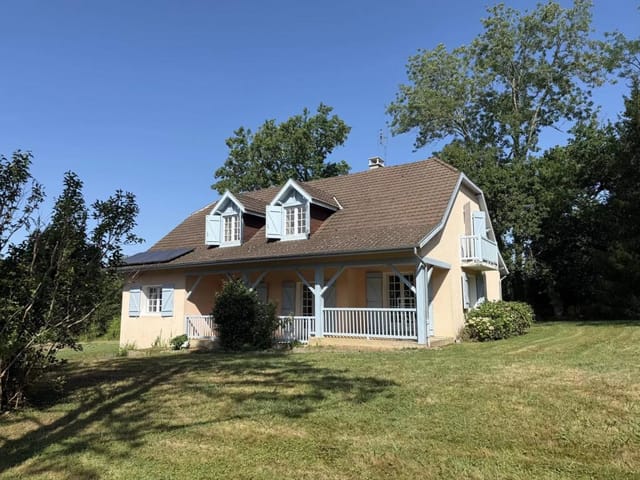
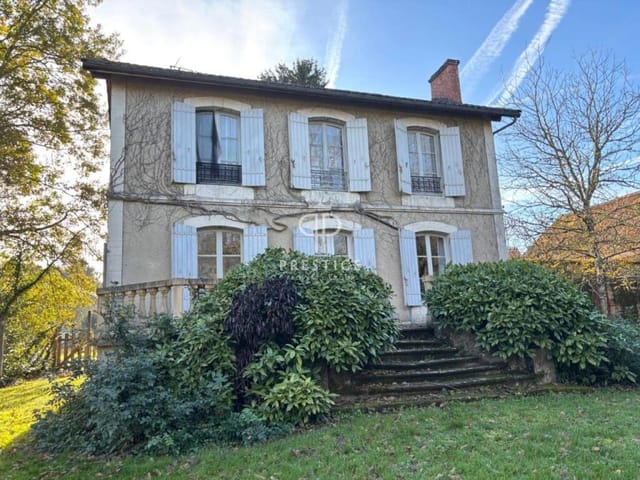
On a still weekday morning in Salies-de-Béarn, the smell of fresh bread drifts up from the boulangerie on Rue des Frères Labourdette before most people have even opened their shutters. That's the kind of town this is. Quiet, unhurried, genuinely French — not a postcard version of it. And sitting just five minutes from that town centre, on a generous 4,000 square metres of private land, this five-bedroom villa is the sort of property that makes you stop mid-visit and start quietly rearranging your life. At 185 square metres of interior living space, the house is substantial without being excessive. The 28-square-metre living room anchors the ground floor, and the wood-burning stove at its heart isn't decorative — on a January evening when the Pyrenean wind picks up, you'll understand exactly why the previous owners installed it. Large windows pull in the southern light throughout the day, and by late afternoon the living areas glow in a way that feels almost theatrical. The separate 17-square-metre dining room is properly sized for a family gathering or a long dinner with friends — no squeezing around a table designed for four. The kitchen runs to 16 square metres and opens naturally into the flow of the ground floor, practical and warm rather than show-home sterile. Upstairs, five bedrooms spread across a variety of sizes — 15, 15, 14, 13, and 12 square metres — giving every family member or guest their own proper retreat rather than a cupboard with a window. Two shower or bathroom spaces serve the upper level, and the 18-square-metre landing is wide enough to feel like a room in itself rather than a corridor. A laundry room, a ground-floor lavatory, and a 34-square-metre garage round out a floor plan that actually wor ... click here to read more
Picture 1

Step outside on a September morning and the air smells of sun-warmed oregano and the faint salt of the Corinthian Gulf rolling in off the water. The olive trees — forty of them, spread across 4,400 square metres of your own land — are heavy with fruit. The pool is still. The mountains behind Kyparissia glow amber in the early light. This is the kind of morning that makes you wonder why you ever went back. This five-bedroom property in Stassio, sitting on the western Peloponnese coast just 4.5 kilometres from Kyparissia, is not one building but two — a 118 sqm main villa and a separate 75 sqm guesthouse, both fully furnished and ready to use from day one. That distinction matters more than it might first seem. It's the difference between a holiday home and a working asset. Between a retreat and a revenue stream. The main villa runs across two floors and sleeps the family comfortably: three bedrooms, two bathrooms, generous living areas. In winter, the wood burner takes the edge off the cool evenings and the radiator system means you can be genuinely comfortable here in January, not just July. Three air-conditioning units handle the summer heat. Double-glazed windows with fly screens and shutters throughout keep the bugs out and the cool air in. Solar panels supply the hot water, and a 5kW photovoltaic system connected to the grid quietly generates a supplementary income year-round, even when no one is staying. Practical, low-effort, and increasingly valuable as Greek energy costs fluctuate. The oval 10 x 5 metre swimming pool sits at the heart of the outdoor space, flanked by a three-person hot tub. The guesthouse — two bedrooms, one bathroom, its own wood burner and two air-conditioning units — has a separate 5-metre ... click here to read more
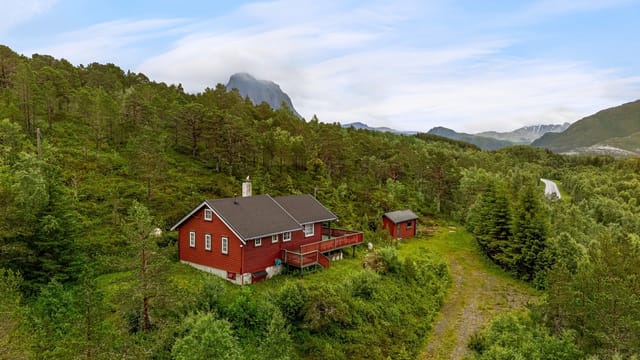
Image 1

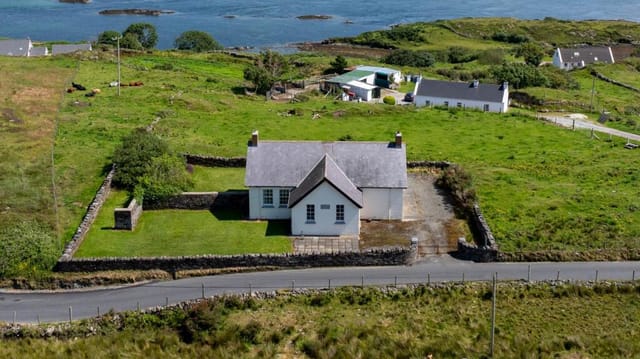
Stand in the living room on a clear October morning and the light does something extraordinary. It comes in low off Mulroy Bay, catches the original timber windows, and throws long gold rectangles across the carpet while the open fireplace crackles with the last of the night's turf. That's the thing about a building that has stood since 1923—it knows how to hold a moment. Meevagh Schoolhouse in Raplagh, on the Rosguill Peninsula of northwest Donegal, is one of those rare Irish properties that stops people mid-sentence when they first see it. Three bedrooms, 110 square metres of genuine character, granite steps worn smooth by a century of feet, and views that keep pulling your eye back toward the water. At €369,000, it's an honest price for something that simply cannot be replicated. The building was constructed as the local national school, and it shows—in the best possible way. Ceilings that feel almost cathedral-high by the standards of typical Irish residential architecture. Double-aspect rooms that catch light from two directions simultaneously. The kind of thick stone walls that keep rooms cool in July and hold heat in December. Somewhere along the way the schoolhouse was converted into a family home, and while it would benefit from a round of thoughtful modernisation—a new kitchen, updated bathroom fittings, fresh flooring in places—the bones are exceptional. The granite surround on the living room fireplace is original. The tongue-and-groove panelling on the ceilings has that particular warmth you simply cannot fake with modern materials. Bedroom 1 has ceilings so high that a seven-foot Christmas tree would barely graze them. Bedroom 3, up the carpeted staircase on the first floor, has triangular feature windows— ... click here to read more
Picture 1

Step off the train at Mjølfjell Station on a Friday afternoon in January — skis over your shoulder, the smell of pine resin sharp in the cold air — and walk three minutes to your own front door. That's not a fantasy. That's a Tuesday for the lucky owner of this 297-square-meter mountain chalet on Raundalsvegen, one of the most quietly coveted stretches of high-country property in the Voss region of western Norway. Built in 1922 and kept in good condition through decades of careful stewardship, this is the kind of place that rewards you differently depending on the season. In February, the woodstove in the main living room pulls you in from the cold and holds you there for hours. In July, the flat 8,850-square-meter plot — bordered by forest and threaded through by an actual brook — becomes an open-air playground where kids disappear for entire afternoons and adults lose track of time entirely. The chalet is genuinely big. At 297 square meters across the main house and annex, it's not pretending to be more than it is — it simply has room for everyone. Three separate living areas mean a family of eight doesn't have to negotiate over the television. The dining room is sized for long Norwegian meals that stretch into the evening. The farmhouse kitchen, with its traditional layout and wood-burning stove nearby, does exactly what a mountain kitchen should: it makes cooking feel social rather than like a chore. On the second floor, five bedrooms give sleeping arrangements enough flexibility that you can host two families simultaneously without anyone feeling like they drew the short straw. All beds are included in the sale, so the first weekend here doesn't involve a single trip to a furniture warehouse. The basement deserve ... click here to read more
Spacious holiday home with annex beautifully located near Mjølfjell station. Water and electricity installed.

Imagine waking up on a Saturday morning to the faint creak of a wooden dock somewhere down the hill, the smell of salt air drifting through a cracked bedroom window, and nothing on your agenda except deciding whether to swim at Fjærholmen beach before or after breakfast. That's the everyday reality at Fjærholmveien 111 in Husøysund — a two-bedroom chalet on the island of Føynland that has been quietly perfected over decades by people who clearly understood how to enjoy the Norwegian coast properly. This is not a grand statement property. It's something better: a 81-square-meter cabin that gets every practical detail right, set on a freehold plot of nearly 1,000 square meters with mature trees, genuine privacy, and a sun-drenched terrace that you'll find it very hard to leave once summer arrives. The chalet dates to 1957, but significant work done in 2003 and again in 2020 means it wears its age well. Walk in and the first thing you notice is light — large windows pull it in from all sides, and the garden framing those windows changes character with every season. In August, it's all green canopy and long golden evenings. Come October, the leaves turn and the wood-burning stove in the living room shifts from decorative to essential. That stove is genuinely the heart of the place on cooler days: the kind that makes a rainy Saturday feel like something worth looking forward to rather than apologizing for. The kitchen was modernized in 2012 and is functional in the way that vacation kitchens need to be — enough counter space to actually cook, decent storage, and room for a dining table where people linger after meals. You're not far from Tønsberg's harbour restaurants on Nedre Langgate if you want someone else to do the co ... click here to read more
Front view of the cabin presented by Tonny Nielsen, EIE Tønsberg

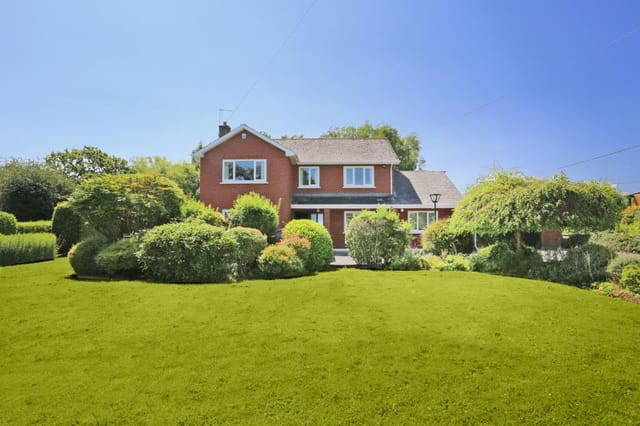
Picture a Sunday morning in late September. The kitchen window is open, and the smell of damp grass and woodsmoke drifts in from the garden. The trees at the back boundary — beech, oak, whatever the previous owners planted decades ago — have gone full amber. The kettle is on. Nobody on the road outside. This is what Cloncarhee feels like on an ordinary weekend, and it's far from ordinary. Set on a genuinely private half-acre site in Clonlara, a quiet village in east County Clare, this five-bedroom detached red brick house sits at that rare intersection of total calm and genuine convenience. You're less than ten minutes from Corbally and the northern edge of Limerick City, yet standing in the back garden with the patio doors wide open, you wouldn't believe it. The mature planting — built up over years of careful gardening — wraps the property in a kind of natural insulation from the outside world. Hedgerows, shrubs, flowering trees. The kind of garden that took time to grow and would cost a fortune to recreate from scratch. At 193 square metres across two floors, the house has the proportions of a proper family home — one that actually works for how people live now. The entrance hallway makes a solid first impression, with solid wood parquet underfoot that sets the tone before you've even looked left or right. The living room, to the left, is anchored by an open fireplace with a marble surround. On a January evening when the rain is hammering the windows, this is where everyone ends up. The dual-aspect windows pull in light from two directions, and French doors through to the dining room mean the ground floor has a flow to it that feels considered rather than accidental. The kitchen and dining area runs the full width ... click here to read more
Picture No. 03

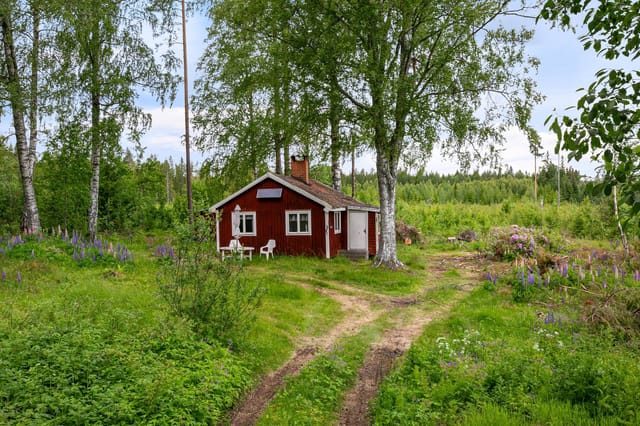
Wake up on a Saturday morning in July to the sound of absolute nothing — no traffic, no notifications, no neighbors above you. Just the faint lap of Hedsjön's water through the pines, and the smell of woodsmoke still lingering from last night's fire. That's the opening scene of owning this compact, fully furnished country cottage at Hedsjöns fäbodar 308, tucked into the forests of Lingbo in Ockelbo municipality, central Sweden. Thirty square meters sounds small until you're actually here. Then it just feels right — a single bedroom, a main room anchored by a proper fireplace, and a front porch where a morning coffee becomes a half-hour ritual. Everything unnecessary has already been stripped away by decades of seasonal use, leaving only what actually matters: warmth, stillness, and a lake a few hundred meters down the track. Hedsjön itself is the kind of lake that doesn't show up in tourist brochures. It belongs to the people who live near it. In summer, the water temperature climbs high enough for long afternoon swims, and the lake is shallow enough near the banks that kids can wade out without worry. Bring a rod — pike and perch are common catches, and there's something genuinely satisfying about cooking what you caught on a wood stove. A rowboat on a quiet weekday morning, mist still sitting on the surface, is one of those experiences that's hard to explain to people who haven't tried it. The forest around the cottage is old-growth mixed woodland — spruce, birch, and pine — and it's working forest in the best sense. Come late August, the ground shifts to a carpet of chanterelles. Lingonberries arrive in September, cloudberries if you know where to look. This is the kind of foraging that Swedes take quietly seriousl ... click here to read more
Exterior view of the holiday home

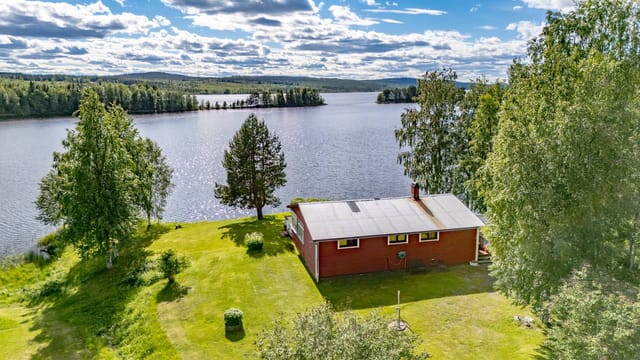
Step out onto the veranda at six in the morning, coffee in hand, and watch the mist peel back from the lake's surface like a slow exhale. The water is still. A pair of loons cut across the far shore. This is what you came north for. Pauträsk 308 sits right at the water's edge in Storuman municipality, Västerbotten — one of the least-visited and most rewarding corners of Swedish Lapland. The house faces south, which up here at 65 degrees north is no small thing. You get sun from the moment it clears the treeline until it drops behind the ridge well after nine in summer. The light lands on the lake and stays there, shifting from white to amber to something almost copper. You won't run out of things to look at. The house itself is 80 square meters — honest, well-kept, and without pretension. Two bedrooms, one bathroom, a kitchen and living room that open into each other the way a practical Swedish interior should. A wood-burning stove anchors the living space; light it on an October evening when the birch trees have gone gold and the temperature drops fast, and the room feels genuinely warm in a way that no radiator replicates. Large windows pull the lake inside — on grey days the water turns graphite and choppy, on clear days it goes deep blue. Either way, you're watching it. The glazed veranda is arguably where you'll spend most of your time from May through September. It pushes the outdoor season out by several weeks in both directions, letting you eat breakfast outside in April when there's still frost on the grass, or linger over dinner in late September without reaching for a jacket. It's not a feature you appreciate in the abstract — it's one you notice every single day. The plot runs to 1,946 square meters, with ... click here to read more
Lakefront view of the house

Stand on the plot at Ringnesveien 706 on a January morning and you'll understand immediately why people have been coming to Noresund for generations. The air has that particular sharpness it only gets this far into the Numedal valley corridor — cold, clean, carrying the faint resin of spruce. Krøderfjorden sits just beyond the treeline, its surface steely and still, and somewhere behind you, the ridgeline of Norefjell is dusted white. This is what a Norwegian winter weekend is supposed to feel like. The cabin itself is compact — 32 square metres of indoor space on a privately owned 1,067 square metre plot — and yes, it needs work. Real work. Anyone telling you otherwise would be doing you a disservice. But that's exactly the point. Properties like this, sitting on generous freehold land this close to both a lake and a ski mountain, rarely surface at this price point. The Norwegian cabin market around Norefjell has been tightening steadily, and entry-level plots with this kind of recreational access are genuinely hard to find. What you're buying here isn't a finished product. It's a foothold. The existing structure gives you a starting canvas: an entrance hall, living room, dining area, and a former kitchen space, plus 11 square metres of external storage and a small balcony. No designated bedrooms in the current layout, which sounds like a limitation until you realise it's actually an invitation. The floor plan is open enough that a competent Norwegian contractor — and there are good ones working the Krødsherad area — can reconfigure the interior to suit how you actually want to use the place. A sleeping loft above the living space. A proper kitchen nook. Two snug bunks for the kids. Norwegian cabins have been reimagin ... click here to read more
Leisure property with idyllic location by Krøderfjorden

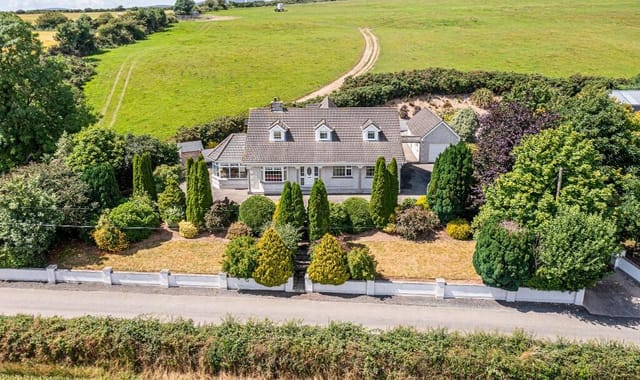
Stand at the kitchen window on a Tuesday morning and count the shades of green rolling across the Wexford hills. You'll lose count somewhere around twelve. That's life at Shroughmore, Ballindaggin — a 243-square-metre detached house with five bedrooms, three bathrooms, and the kind of quietude that reminds you what silence actually feels like. This is County Wexford's interior at its most unhurried. The townland of Shroughmore sits within easy reach of both Bunclody and Enniscorthy — each just 10 kilometres away — yet the surrounding landscape gives no hint of that proximity. In every direction, uninterrupted countryside stretches out. No rooftops crowding the horizon. No traffic noise bleeding through at dawn. Just fields, birdsong, and the slow rhythm of rural Ireland doing what it's always done. The house itself is substantial. Five bedrooms spread across two floors, with a layout flexible enough to suit a family of seven or a couple who simply want room to breathe. The ground floor opens with a wide entrance hall finished in solid timber, and that same warm flooring carries through the main living spaces — a detail that sounds minor until you feel the difference underfoot on a cold February morning. The living room anchors the front of the house with a limestone fireplace and built-in shelving, and a set of patio doors pulls you through into the sun lounge: a vaulted-ceiling room with tiled floors where afternoon light gathers and stays long after it's left the rest of the house. It's the kind of room that earns its name. To the rear, the kitchen, dining room, and sitting room form an open-plan spine that hums with activity when the house is full. The kitchen is fitted with solid maple cabinetry and a central isla ... click here to read more
Picture 1

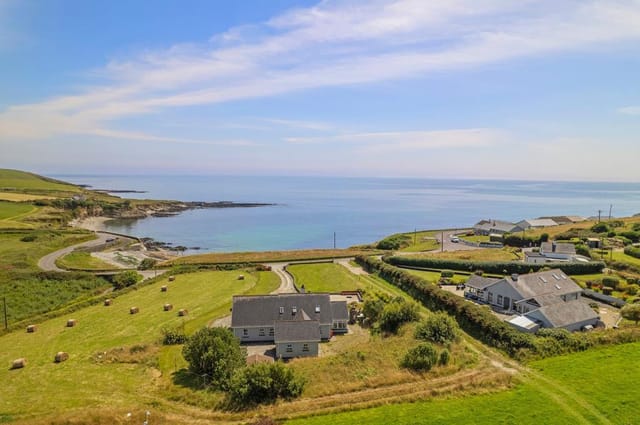
Stand in the sunroom on a clear morning and the whole of Clonakilty Bay opens up in front of you—light skipping off the water, the green headlands rolling away to the west, and not a sound except the occasional cry of a gannet passing low over the inlet. That view doesn't get old. It shifts with every tide, every season, every hour of the day. And it's what greets you every single morning you wake up in this five-bedroom home above Ballinglanna Beach. Built in 2007 and sitting on just under a third of a hectare of elevated ground, this is a substantial property—191 square metres of well-proportioned rooms, big windows, and the kind of sensible layout that actually works for how people live. It's not a fixer-upper and it's not a weekend project. The condition is good throughout, the BER rating is a solid B, which means it qualifies for green mortgage products, and it's ready to walk into. For buyers coming from overseas, that matters enormously. The house faces south toward the sea. In summer, the front patio catches the sun from mid-morning well into the evening—long enough to justify the pizza oven that's already installed out there. Clonakilty is serious about food, and West Cork in general has developed a food culture that punches well above its weight for a rural coastal area. The Saturday market in Clonakilty's town square draws producers from across the region: Ardsallagh goat's cheese, Gubbeen salumi, Clonakilty black pudding (the real thing, not the supermarket version), smoked mackerel from the bay you can see from your own window. It becomes a weekly ritual rather than a chore. The layout inside is genuinely versatile. The ground floor runs from a welcoming entrance hall—feature staircase, good proportions—t ... click here to read more
Picture No. 01

On a still Tuesday morning in Issac, the only sounds you'll hear are wood pigeons calling from the old stone pigeonnier and the faint creak of the bread oven door as it cools from last night's pizza. The meadow is already gold in the early light, and the pond catches a slice of sky between the fruit trees. This is not a fantasy — it's an ordinary morning at this centuries-old farmhouse in the Dordogne, and it could be yours. Set on nearly seven acres of southwest French countryside, this is a compound more than a single property: two substantial stone houses, a massive two-level barn, a pigeonnier, a functioning bread and pizza oven, a walled courtyard, a pond, an orchard, and a pool area enclosed behind stone walls. Parts of the main structure date to the sixteenth century, and the history shows in every beam — not as a burden, but as texture. The kind of texture that takes three hundred years to make and cannot be bought new. The main house sits on a single level, which makes it genuinely liveable for all ages and every season. Walk into the dining room and the scale of it stops you: an enormous original fireplace dominates one end, the kind you could stand inside, with stone flooring underfoot that's been worn smooth by generations. The original beams overhead are dark with age and solid as the day they were cut. Two double bedrooms anchor the ground floor, and up above, an attic with proper head height waits — the bones are already there for additional accommodation, subject to the usual permissions, should you want to grow into the space over time. The second house is a different personality entirely. Where the main house is anchored and weighty, the second is open and airy — three separate entries lead out to th ... click here to read more
Picture 1

The ferry from Stavanger takes just over an hour, and by the time it pulls into Sjernarøy, you've already started to decompress. The smell hits you first — salt air, pine resin, and something faintly sweet from the wildflowers growing along the dock road. That's the moment most visitors understand why people who buy cabins out here rarely sell them. Norheimsbergvegen 60 sits on the island of Kyrkjøy, the largest of the Sjernarøyane islands, connected to its neighbors by a series of low bridges that make the whole archipelago feel like one continuous place to wander. The cabin itself is a 1970s Norwegian fritidshus — compact at 49 square meters, honest in its construction, and surrounded by roughly 2,444 square meters of private freehold land that slopes gently down toward the water. Mature deciduous trees give the plot real structure, filtering afternoon light into shifting patterns across the grass. Open your kitchen window on a July morning and you'll hear nothing but birdsong and, if the wind is right, the faint creak of a neighbor's boat. The property is in good condition, but it carries the character of a classic Norwegian holiday cabin that hasn't been modernized into anonymity. Traditional wooden paneling lines the walls and ceiling throughout, and the exposed timber adds warmth that no renovation trend has managed to improve upon. The living room is bright — genuinely bright, thanks to large windows that frame views of the surrounding forest — and it opens directly onto a terrace where you'll spend most of your waking hours between May and September. Two proper bedrooms handle the core sleeping arrangements, and a third room currently serves as additional sleeping space, giving you flexibility for guests withou ... click here to read more
Presented by EiendomsMegler 1 v/ Kjetil Helland, Norheimsbergvegen 60. Photo: Svein Ove Andersen

Stand at the kitchen window on a Tuesday morning in late June, coffee in hand, and watch the light hit the water somewhere between Svanesund and the open Skagerrak. It doesn't get old. That particular shade of silver-blue the Swedish west coast does in the early hours — before the motorboats start crossing, before anyone's really awake — it's the kind of thing people drive four hours from Gothenburg or Stockholm to see, and here it's just the view from your kitchen. Kastet 711 sits on Stillingsön, a small island on Orust's northern edge connected by bridge to the mainland. Orust itself is Sweden's third-largest island, and the stretch of coast up here around Svanesund has stayed quieter than the more tourist-saturated southern parts. No souvenir shops. No queues for ice cream. Just saltwater, granite, and the particular rhythm of Swedish archipelago life — which, once you've experienced it, is genuinely hard to give up. The house is compact and honest. Built in 1957, it sits high on its plot with that unobstructed sea view as the architectural centrepiece. The single-level living space — 58 square metres — runs kitchen into dining into living room in a layout that always keeps you oriented toward the water. Big windows. Light in summer that goes on until 10 or 11 at night. The bedroom is quietly tucked away from the social end of the house, which matters more than people realise when you're hosting. One bathroom. Everything you need, nothing unnecessary. The basement level adds serious practical value: proper storage for kayaks, wetsuits, crab pots, bicycles, all the gear that accumulates when you actually use a place rather than just admire it. Some owners use it as a workshop. Others have set it up as a basic hobby r ... click here to read more
Front view of Kastet 711 with sea in the background

Stand on the terrace at Fjellstien 6 on a clear July morning and the Oslofjord spreads out in front of you — a wide, glittering sheet of silver-blue that stretches south toward the horizon. The smell of salt air and pine carries up from the hillside. Somewhere below, a boat engine putters out of the marina. This is Åros, one of the Oslofjord's quieter coastal villages, and this cabin sits on the ridge above it all, on a natural plot of over 2,000 square meters, with front-row views that most Oslo families spend years trying to get their hands on. At €348,000 — or around 3.9 million Norwegian Krone — this is not a finished showpiece. That's actually the point. What's here is a solid 1963-built cabin with a traditional Norwegian layout, three bedrooms, good bones, and a 90-square-meter wraparound terrace that frames those fjord views like a painting. It needs work. The kitchen is original, the bathroom layout has been informally modified, and the terrace was built without municipal approval. Buyers who want a ready-to-move-in holiday property should look elsewhere. But for someone who wants to claim a rare patch of Oslofjord hillside and put their own mark on it — the upside here is real. Let's talk about the location first, because it's doing a lot of the heavy lifting. Åros sits on the western shore of the Oslofjord in Asker municipality, roughly 35 kilometers southwest of Oslo. The village has none of the tourist buzz of Drøbak or the café crowds of Holmestrand — it's residential, quiet, and fiercely popular with Norwegian families who've been coming here for generations precisely because of that. The Tivoliåsen ridge where the cabin sits offers views that open up dramatically; on clear days you can see across to the ... click here to read more
Welcome to Fjellstien 6, presented by Håkon Espeseth at Nordvik Asker. Photo: Eiendomsfoto.

Step outside on a January morning and the cross-country ski trail is literally thirty meters from your front door. No boots in the car. No driving to a trailhead. Just cold clean air, pine trees dusted overnight, and a track that winds all the way through to Østby and beyond. That's the daily reality at Bjønnbekkmora Hytteområde 145 — a brand-new four-bedroom chalet completed in 2026 and sitting on a generous 1,818 square meter freehold plot in the Trysil-Sälen corridor, one of Scandinavia's most sought-after mountain belts. This isn't a renovation project or a compromise. The chalet is move-in ready, built to TEK 17 Norwegian building standards, and finished with the kind of materials that actually hold up to mountain winters — Kronotex Mammut Oak Beige laminate, pine panel walls, double-glazed energy-efficient windows, and a Aduro 9 wood-burning stove that throws out serious heat when temperatures drop well below zero. Light the stove, pour something warm, and watch the pine forest darken as the sun falls behind the Sälen ridgeline. It's a specific kind of quiet you don't find many places. The layout across 97 square meters of usable floor space is genuinely well-thought-out for a family or group. Ground floor has the social core of the place: an open-plan living room and kitchen anchored by a kitchen island, with large windows that pull in views toward Støten and the Swedish mountains across the border. Integrated appliances throughout — induction hob, pyrolysis oven, combined fridge-freezer, dishwasher — so there's no list of things to buy before you can cook a proper dinner. Two bedrooms sit off the main floor, and the bathroom comes with underfloor heating and quality fixtures. There's also a guest WC, which anyo ... click here to read more
Welcome to Bjønnbekkmora Hytteområde 145

Step outside on a February morning and the first thing you notice is silence. Not the muffled quiet of a city at night—real silence, the kind that only exists at 822 meters above sea level when fresh snow has settled overnight across the Bittermarka plateau. Then, faintly, the sound of skis on a groomed trail, maybe 200 meters down the slope. Coffee is already brewing on the stove inside. This is what owning a cabin in Gnolla actually feels like. Set in one of Trysil's most established and sought-after mountain cabin areas, this three-bedroom chalet at Gnolla 275 is the kind of Norwegian leisure property that rarely makes it onto the open market. Fully furnished, move-in ready, and sitting on a 1,435-square-meter freehold plot, it has the bones of something that becomes a family institution—the place everyone wants to come back to, year after year. The property works because of its layout. Most cabins this size compromise somewhere: cramped bedrooms, a kitchen that can barely handle four people, or a living area that's fine for a couple but awkward for a multigenerational gathering. This one doesn't. The main cabin holds two living rooms, both generous, both with exposed ceiling beams and ceiling heights that make the spaces feel open rather than alpine-tight. Each room has its own fireplace and wood-burning stove, plus a heat pump for when you want warmth without the ritual of building a fire. On quieter evenings, one room becomes the grown-ups' space; the other fills with board games and kids spread across the floor. Both open directly onto a large south-facing terrace where, on clear summer evenings, the light stays long past nine o'clock. The kitchen is functional and genuinely workable for a group—not a galley sq ... click here to read more
Picture 1

Stand on the 158-square-meter Oppdal slate terrace at Sandvikvegen 376 on a July evening, and the fjord stretches out in every direction. The light doesn't so much fade as it slowly deepens — this far north in Trøndelag, midsummer sunsets bleed into sunrises without ever truly going dark. The smell of pine resin drifts from the trees behind the cabin. Somewhere down the staircase, a wooden dock knocks gently against its moorings. This is a proper Norwegian fritidsbolig — a leisure property in the truest sense — sitting almost at the very tip of the Skarpøya peninsula where Åsenfjord opens up and the sky goes wide. It's the kind of spot that takes about thirty seconds to understand. You arrive, you look out, and you get it immediately. Built in 2005, the main cabin reads modern and considered rather than generic. The architecture leans into clean lines and large-format windows — not as a design statement, but because the view demands it. From the moment you step through the tiled entrance hall (underfloor heating underfoot, a sliding wardrobe system immediately earning its keep), the interior feels organized rather than cramped. The hallway fans out to the living room, kitchen, three bedrooms, bathroom, and a loft hems — that classic Scandinavian sleeping loft — making the 106 square meters feel genuinely generous. The living and kitchen space runs to 35 square meters and does something clever: the kitchen island and dining table naturally divide the room without chopping it up. High ceilings keep things airy, and those big windows pull the fjord scenery inside all day long. A large sliding door opens directly onto the terrace, which is where you'll spend most of your time between May and September. The electrically op ... click here to read more
Welcome to Sandvikvegen 376 – a rare gem of a leisure property. See video and 360 tour.

The wood stove crackles to life around seven in the morning, and by the time the kettle's on, frost is still sitting on the south-facing terrace outside. That's the kind of morning Sveavegen 182 was made for. Perched at roughly 480 meters above sea level in the quiet forest community of Grua, this compact Norwegian cabin strips things back to what matters — fire, forest, fresh air, and the particular silence you only get when the nearest main road is several kilometers away. Grua sits in Lunner municipality, about an hour north of Oslo by train or car via the E16. It's close enough to the capital that weekend escapes are genuinely effortless, yet far enough removed that you'll rarely hear anything louder than woodpeckers and the occasional snowplow on a January evening. The cabin stands on Sveavegen, a quiet track that threads through the forested hillside. At 49 square meters, it doesn't pretend to be anything it isn't — this is a traditional Norwegian fritidsbolig, a leisure property in the truest sense, built for seasons outdoors rather than evenings scrolling inside. Step out from the south-facing terrace on a clear morning in March, and the light is extraordinary up here. The elevation does something to the quality of winter sun that you don't get in the valley. The terrace itself runs to about 29 square meters — enough room for a proper outdoor table, a couple of loungers, and whatever firewood you've stacked against the wall. There's a smaller west-facing porch too, about 5 square meters, which catches the late afternoon light beautifully. Inside, the layout is open and honest. The living room and kitchen share one space, which means five people cooking, eating, and talking at the same table — nobody's exiled t ... click here to read more
Welcome to Sveavegen 20!

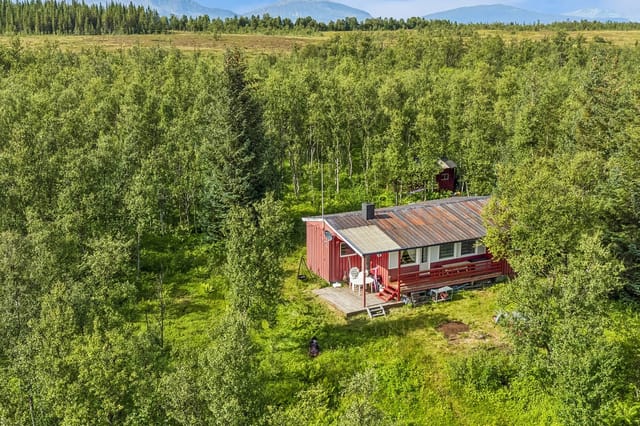
Picture this: it's midsummer in Skjomen, the fjord is a mirror of pale Arctic sky, and the water temperature has crept up just enough. You pull on your shoes, walk 200 meters down a gravel path flanked by wild birch, and you're standing at the shoreline before your coffee has gone cold. That's the daily reality at this three-bedroom chalet on Virak E6-177 — a property that packs an extraordinary amount of possibility into a quiet corner of northern Norway. Skjomen sits at the end of its own fjord arm, tucked south of Narvik and hemmed in by mountains that hold their snow well into May. It is not a resort town. There are no gift shops, no tourist queues, no parking chaos in August. What you get instead is the real Norwegian cabin experience — the one Norwegians themselves have been quietly protecting for generations. Properties here trade privately, between people who know, and rarely make it onto international platforms. This one has. The chalet itself was built in 1980 and sits in good condition on a flat 722-square-meter plot, fully fenced, with the kind of sun exposure that surprises first-time visitors to this latitude. In summer, the midnight sun means the terrace catches light at 11pm. The garden — mostly lawn, dotted with ornamental shrubs — is kept trim by a robotic mower, which means your weekends here are genuinely free. Two parking spaces sit at the entry. A bus stop is literally a one-minute walk away, which matters more than it sounds when you're coordinating a family trip from abroad. Inside the main cabin, the layout is compact and logical: entrance hall, bathroom, kitchen, living room, two bedrooms sleeping five in total. The living room anchors everything — a wood stove sits at its centre, and on the ... click here to read more
Picture 1