Houses For Sale In Europe (page 17)

Houses for sale in europe - homestra offers the largest amount of european real estate with over 200,000+ properties, find any type of property within your budget from villas to country homes. buy or rent your perfect home in europe. (page 17)

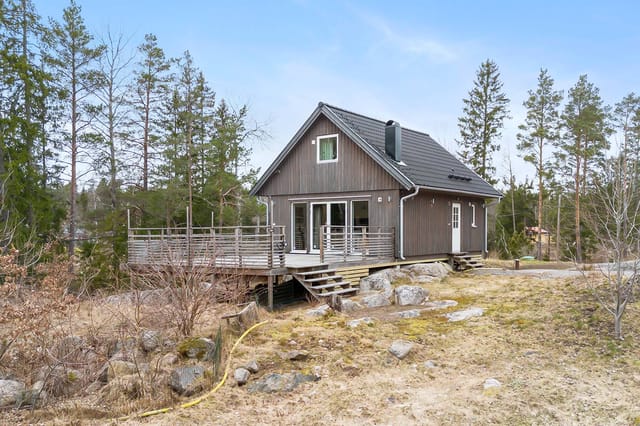
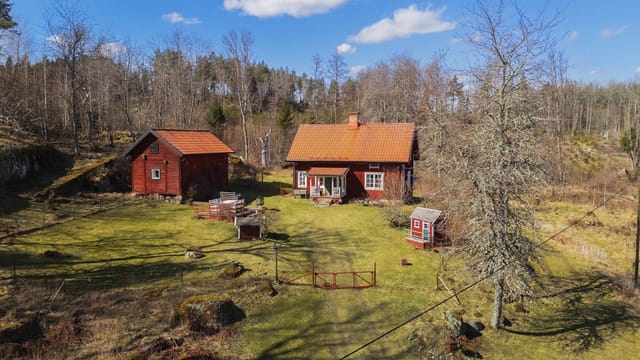
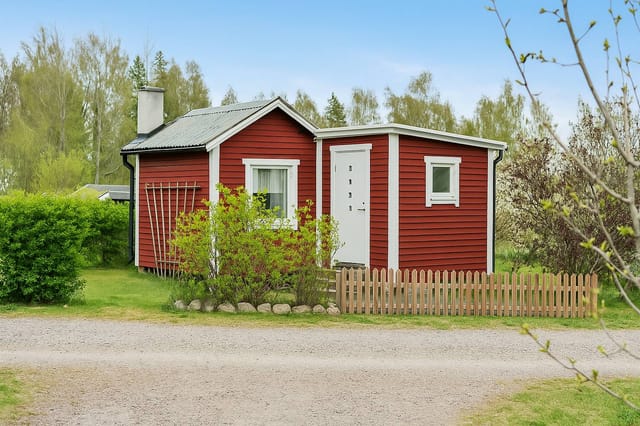
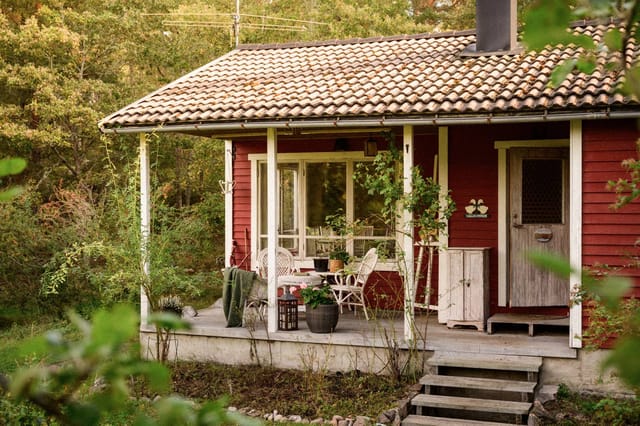
Step off the gravel track at Lilla Pjäkebo on a September morning and the first thing you notice is the silence. Not the uncomfortable, something-is-wrong kind — the deep, earned quiet of forest edge countryside in Småland, broken only by the knock of a woodpecker somewhere up in the pines. The air smells of damp moss and, faintly, of woodsmoke drifting from a neighbor you can't even see. This is the Sweden that Swedes themselves escape to on weekends, and this 1909 cottage — solid, well-cared-for, sitting on over 5,300 square meters of land — is the real thing. The house is small in the way that forces you to live well. Seventy-eight square meters across three rooms, arranged with the practical logic of old Swedish torp design: nothing wasted, nothing unnecessary. The wooden floors are original, worn to a warm honey color from over a century of use. Large windows pull the meadow and treeline right into the living room, so even on grey November days the space feels connected to something bigger than itself. The kitchen does what a good country kitchen should — gives you room to make proper food, to leave a pot of elk stew on the stove without bumping into anyone, to look out at the garden while you wash up. Both bedrooms are quiet. Genuinely quiet. The kind of quiet where you actually sleep differently. The updated bathroom is modern without being clinical — new fixtures, clean lines, and none of the awkward compromise that often comes when someone tries to modernize an old country house. Then there's the magasin. A classic Swedish barn outbuilding that the current owners have made genuinely useful rather than just atmospheric. The ground floor functions as a guest house — real accommodation for friends or family, not ... click here to read more

Front view of Lilla Pjäkebo cottage

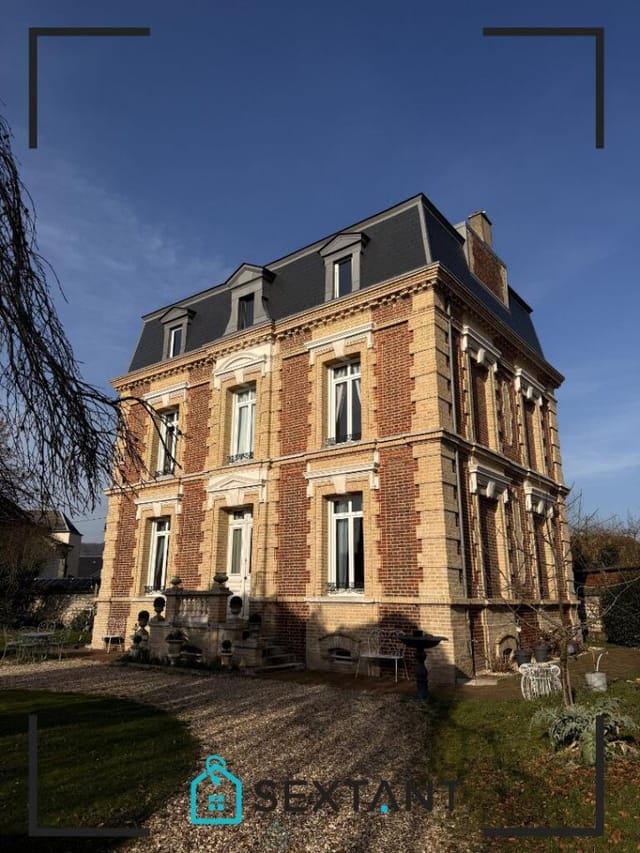
On Sunday mornings, the bells from the village church carry clean and clear through the upstairs windows — and from the second floor of this 215-square-metre manor house, you can actually see the steeple they ring from. That's not a detail you find in every property. It's the kind of thing that makes you stop mid-coffee and remember why you came to Normandy in the first place. Saint-Aubin-lès-Elbeuf sits on the south bank of the Seine, a few kilometres from Elbeuf and just 20 minutes by train from Rouen's cathedral city centre. It's a proper Norman town — bakeries that still close on Mondays, a weekly market where the cheese vendor knows regulars by name, and streets lined with the kind of stone-and-brick architecture that takes a century or two to earn its look. This manor house sits on one of those streets, on a one-way road that keeps through-traffic away, behind a large gate that shuts the outside world out entirely. The plot runs to 1,150 square metres, fully enclosed by walls — not a hedge, not a fence, actual walls — and the south-facing orientation means the terrace catches the sun from mid-morning until the light goes golden in the early evening. There's a carport, two outbuildings (one fitted with a rainwater tank for garden irrigation, which in Normandy is less of a luxury than you'd think), and mature trees that give the garden a settled, unhurried feeling. The terrace already has a sun lounger and outdoor table set up. On a warm July afternoon, with a glass of Calvados or a cold Leffe from the fridge, this corner of the garden could easily become your most-used room in the house. Inside, the ground floor is well-configured for daily life. The fitted kitchen connects to a dining room — a layout that actual ... click here to read more

Picture 1

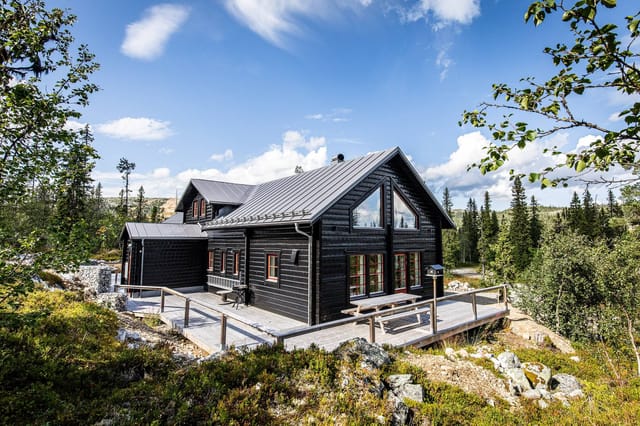
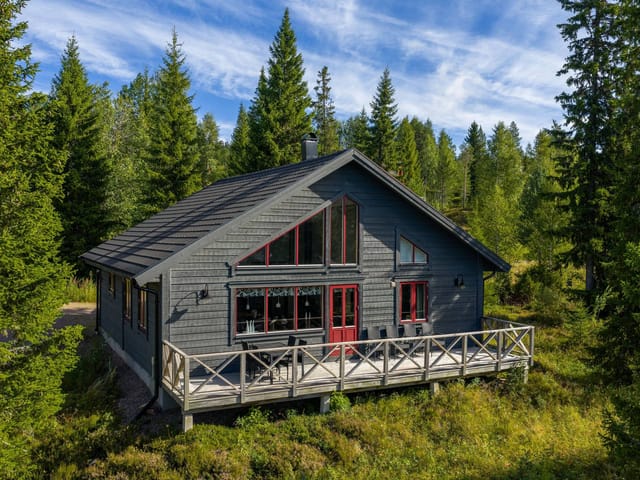
Step outside on a January morning and the world is completely white and completely silent, except for the creak of fresh snow underfoot and the distant hum of the first chairlift starting up at Vemdalsskalet. The air bites at your cheeks. Inside, the fireplace is still throwing heat from last night, and the smell of coffee fills the open kitchen. This is what owning a vacation home in the Swedish mountains actually feels like — and Järvslingan 22 puts you right in the middle of it. Built in 2020, this substantial semi-detached house sits on Järvslingan in the Vemdalsskalet area of Vemdalen, Härjedalens kommun, one of the most consistently popular ski and outdoor destinations in Sweden. The property spans 192 square meters of indoor living space across two full apartments — each with four bedrooms — on a generous 1,192-square-meter lot. It's a rare find: large enough for extended families or investment purposes, modern enough to require almost no work, and positioned well enough that you're never far from anything that makes this corner of Jämtland and Härjedalen so compelling. The two apartments share the building but function entirely independently. Each has its own open-plan kitchen, dining, and living area anchored by a fireplace, plus four bedrooms and its own outdoor access. Large windows face the mountain birch landscape, and when the snow is heavy on the branches in February, the view is the kind you don't stop noticing. The terraces — generous, south-leaning — are where you'll sit in March when the sun finally starts to win the argument with the cold, a cold beer in hand while your skis dry against the railing. The cross-country trail network and snowmobile routes are accessible directly from the property, mea ... click here to read more

Exterior view of the house with mountain backdrop

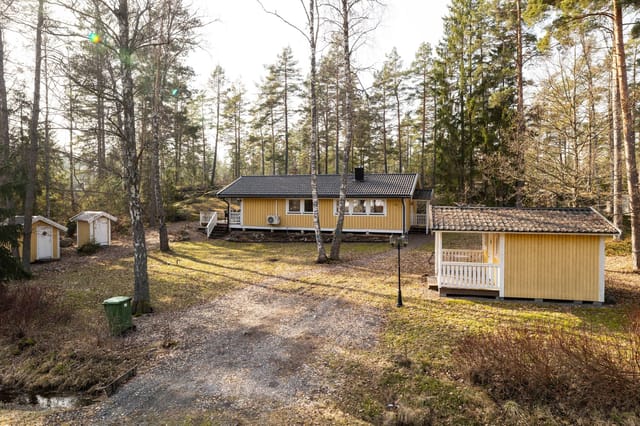
The coffee is already brewing when you step out onto the covered terrace at Hjortronvägen 26. It's half past seven on a Tuesday in July, the birch trees are dead still, and somewhere behind the treeline you can hear the Baltic. That particular hush — the one you only get in the Swedish archipelago fringe on a windless summer morning — settles over the yellow clapboard walls of this cottage like it was built just for this moment. It kind of was. This sun-yellow summer house in Kaggebo has been doing its job since 1976, and it does it well. Three bedrooms, 61 square metres of thoughtfully used interior space, a separate guest cottage, and a plot that stretches to 2,002 square metres of lawn and native woodland. At 149,500 SEK, it sits comfortably within reach for international buyers looking for a genuine Swedish holiday home without the price tag that comes with the more famous archipelago addresses further north. Step inside and the open-plan living room and kitchen greet you with soft Scandinavian tones and freshly laid pine flooring that still carries that faint warm resin smell on sunny afternoons. Large windows pull the garden light into every corner. The layout is honest — no wasted corridors, no awkward half-rooms — just a bright, functional space designed around the rhythm of summer living: come in from the water, dry off, cook something simple, eat outside. One of the three bedrooms comfortably fits a double bed, the other two work well for children or guests, and the whole thing flows with an ease that properties twice the size often fail to achieve. The covered terrace off the living area is where you'll spend most of your time. Sheltered, private, and positioned to catch the evening light, it handles everyt ... click here to read more

Front view of the summer cottage

Picture this: a quiet Tuesday morning in July, the sun already climbing over the treeline east of Bergbyslingan, hitting your south-facing terrace at an angle that makes the coffee steam glow gold. The lake glints through the open kitchen window. Somewhere down the path, a kayak scrapes against a dock. This is not a weekend fantasy — this is just the ordinary Tuesday you get when you own a place like this. The cottage sits in Bergby, a small community about ten minutes by car from central Hallstavik and roughly an hour north of Stockholm along the E18. It's the kind of area that regulars have kept quiet about for years — Lake Mälaren-adjacent archipelago country, where the forests run thick with birch and pine and the light in late June barely dims before midnight. Norrtälje municipality, which governs this stretch of Uppland coast, has long attracted Stockholmers looking for a foothold outside the city without the traffic chaos of the west coast. Word is getting out. The cottage itself is compact and deliberate — 43 square meters on a private plot of roughly 295 square meters, sold as a cooperative unit (bostadsrätt). That ownership structure is worth understanding upfront. For international buyers, bostadsrätt means you own shares in the housing association that gives you full, exclusive right to the property, including the terrace and the plot. It's a standard and well-regulated form of ownership in Sweden, and it typically means the association handles exterior maintenance, insurance on the building shell, and communal grounds — six thousand square meters of jointly managed green space surrounding the cluster of properties here. Practically speaking, it reduces the burden of ownership significantly, especially if y ... click here to read more

Exterior view of the cottage and terrace

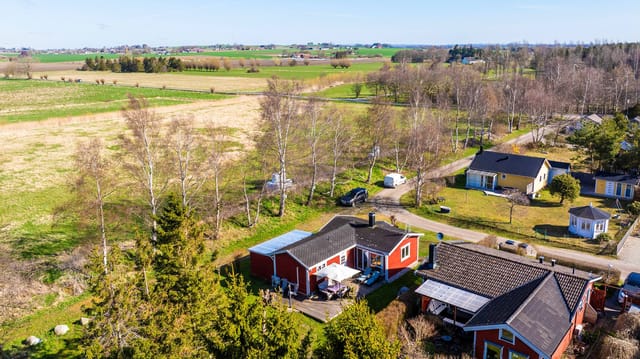
Step off the gravel path on a July morning and the first thing you notice is silence — not the absence of sound, but the right kind of quiet. Birdsong from the treeline. The distant slap of water from the lake just down the road. A neighbor's dog, briefly. That's Edsbro. And once you've spent a single summer here, you understand why Stockholm families have been coming back to this pocket of Norrtälje municipality for generations. Stockkärrsvägen 108 sits on a flat, sun-drenched plot of 1,764 square meters in a relaxed residential lane where most homes are owned by people who don't want to be anywhere else in July. The main house — 71 square meters built in 1978, well maintained and move-in ready — punches above its floor plan thanks to a vaulted ceiling in the living room that makes the space feel open and unenclosed. Large windows face the rear garden, so even from the sofa you're watching light move through the trees outside. There's a fireplace insert for the cooler shoulder months, and a covered outdoor patio off the living room where you'll end up eating most of your meals from Midsommar through late August. Four bedrooms. One bathroom with shower, toilet, and a genuine Finnish-style sauna built into the house. That sauna is not a luxury add-on — in this part of Sweden it's how you finish a day. You swim in the lake, you walk back through the forest, you sit in the sauna, you eat dinner late on the patio. That's the rhythm of a summer here, and this house is built around it. The kitchen and dining area open into the living room, which keeps the social current flowing when you have people over. Cooking doesn't separate you from the conversation. The layout is practical in the way that Scandinavian design tends to ... click here to read more

Front view of the holiday home

Step outside on a late June evening at Bybakken 41, and the Oslofjord is doing that thing it does in summer — turning copper and pink at the edges while the water goes almost flat calm. The heated jacuzzi on the sun terrace is already running. Somewhere down the hill, a neighbor is grilling. That's the moment you'll think: yes, this is why we bought it. Sponvika sits at the southern tip of Østfold county, tucked along the western shore of the Iddefjord where Norway and Sweden share a border you can almost wade across. It's not a place that appears in glossy travel magazines. Locals from Halden — a proper Norwegian town of 30,000 people, just 8 kilometers up the road — have been keeping it quietly to themselves for decades. The village has the kind of unhurried pace that's increasingly rare this close to a major transport corridor: the E6 motorway puts you in Oslo in under two hours, and the train station at Halden runs direct services to the capital in roughly 90 minutes. For a second home that doubles as a weekend escape from city life, the geography is almost unreasonably convenient. The house itself sits on a freehold plot of 1,051 square meters on Bybakken — the name translates loosely as "the town's hill" — and the elevation is exactly what earns the sea views. From the open-plan living room on the first floor, the large windows frame the fjord like a painting that changes hourly. Morning light comes in silver and quiet. By afternoon in August it's all glare and sparkle. Even on grey November days there's a drama to it, low cloud sitting on the Swedish hills across the water. Inside, 211 square meters are spread across three levels. The heart of the home is that first-floor living space: an open kitchen fitted wi ... click here to read more

Welcome to Bybakken 41! Photo: FOTOetcetera AS

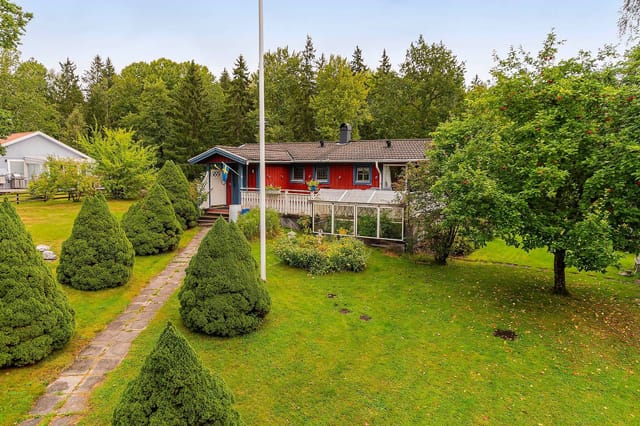
Stand on the wooden deck at dusk and watch the last light drain out of the sky behind Omberg's ridge. The ridge goes dark slowly, in stages, and below it the fields settle into a deep green quiet. That's the view from this 1909 cottage at Skedagatan 215 — not a painted backdrop, but a living landscape that changes with every season, every hour, every weather system rolling in off Lake Vättern. It's the kind of place that becomes genuinely hard to leave. Borghamn sits on the eastern shore of Lake Vättern in Östergötland, tucked between the ancient Alvastra plateau and Sweden's second-largest lake. This isn't a tourist-polished village. It's a real rural community with a grocery store, a well-regarded waterfront restaurant, and a harbor where locals actually keep their boats. The pace here is deliberate and unhurried in a way that feels intentional rather than left behind. The cottage itself was built in 1909 and sits on a fenced, generously planted plot that includes established fruit trees — apple and plum, heavy with fruit by late August — along with perennial borders that someone clearly spent years coaxing into maturity. The robotic lawnmower handles the grass without any involvement from you, which matters more than it sounds when you're here for a long weekend and don't want to spend it behind a push mower. Inside, the 68 square metres are arranged with the kind of logic that older Swedish homes often get right instinctively. The living room anchors the interior: a classic kakelugn tiled stove in the corner, an air-to-air heat pump for the seasons when the tiled stove feels like overkill, and enough natural light through the original-proportion windows to keep it from ever feeling tight. The dining area flows dir ... click here to read more

Front view of the house and garden

The first thing you notice is the silence. Not the absence of sound, but a different kind entirely — the soft lap of the North Sea against your private shoreline, the creak of the boathouse door in a salt-tinged breeze, a single gull calling somewhere over the water. You're standing on the terrace of a century-old house on Gjøssøya, and the thought arrives unbidden: I could stay here forever. That feeling is exactly what Gjøssøya 55 has been giving one family for the past 50 years. Now, for the first time in half a century, this remarkable waterfront holding on the outer coast of Trøndelag is available to someone new. It won't be available for long. The property sits on 8,374 square meters of sun-exposed, sheltered land — a genuinely rare footprint in a region where the coastline has been divided and parceled for generations. The plot runs all the way to the water's edge, and that shoreline belongs to you. Not shared. Not leased. Yours. That means you can swim off your own rocks on a July morning when the sea reaches a balmy 18°C, pull mackerel from the water twenty meters from your kitchen, or simply sit at the end of the private pier watching the light go orange over the islands to the west. The main house dates to 1910, 172 square meters of practical Norwegian coastal architecture spread across two floors. The ground floor has the kind of logic that old houses sometimes get right: you come in through the entrance hall, peel off your waterproofs, and immediately you're in a generous kitchen with room for a long table — the sort of table where six people linger over coffee long after the plates are cleared. Two living rooms open off the central spaces, one catching the morning light from the east, the other the long ... click here to read more

DNB Eiendom presents Gjøssøya 55, a rare opportunity in the market.

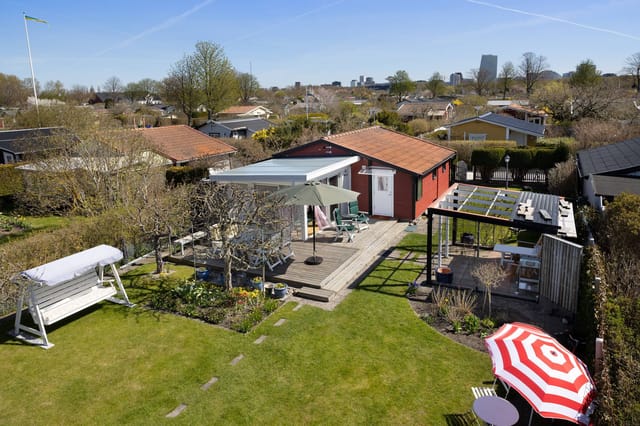
Saturday morning on Linneuspromenaden and the neighborhood is just waking up. Someone's brewing coffee two gardens over, you can smell it. The fruit trees in your 410-square-meter plot are doing their thing—dappled light on the wooden deck, a blackbird working through the lawn—and you've got nowhere to be. That's the particular pleasure of owning a place like this in Elinelund, a quietly residential pocket of Malmö that most visitors never find but locals never leave. The house itself is compact and honest. Forty square meters of main living space, built in 1960 and kept in genuinely good condition over the decades—not frozen in amber, but updated where it matters. Large windows in the living room pull the garden right into the interior, so even on grey Swedish autumn days the space doesn't feel closed in. The kitchen is functional and properly equipped, the kind where you can actually cook rather than just heat things up. Two bedrooms handle a couple or a small family without drama. One bathroom. Everything you need, nothing you don't. What lifts this property well above comparable holiday homes at this price point is the guest house completed in 2021. Fifteen square meters, finished to a high standard, giving visiting friends or family genuine privacy rather than an air mattress in the living room. It works as a creative studio, a work-from-anywhere office during shoulder season, or simply overflow space when the cousins arrive in July. Having a self-contained outbuilding on a plot this size in Malmö is not something you find every day. The conservatory earns its keep across every season. In June it's where you eat breakfast before the day heats up. In October it's where you watch the garden turn colour with a glass ... click here to read more

Exterior view of the house and garden

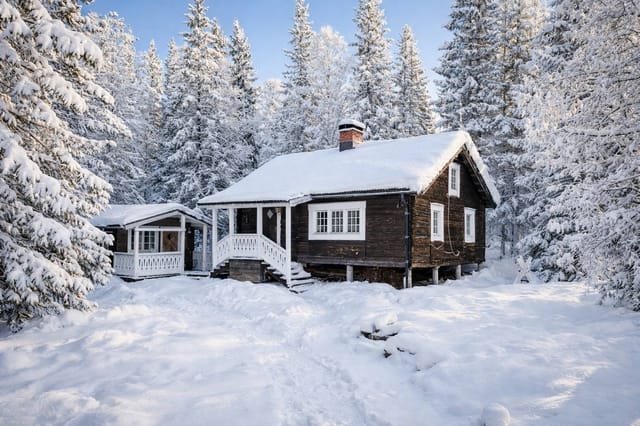
Step outside on a January morning and the silence hits you first. Not the silence of an empty room — the deep, pressurized quiet of a landscape buried in snow, with Borgahällan mountain rising sharp and white against a sky that hasn't decided yet between pink and blue. The wood stove in the kitchen is already ticking with warmth. The coffee is on. This is the daily reality of owning a cabin on Näslunds väg. Borgafjäll sits in the southern reaches of Swedish Lapland, in Dorotea municipality, and it's the kind of place that takes a deliberate effort to find. That's the point. There's no motorway exit sign, no chain hotels, no tour groups spilling off coaches. What there is: a compact, genuine mountain community that has somehow stayed exactly as it should be — a ski center with slopes for everyone from cautious seven-year-olds to serious off-piste skiers, a hotel with a proper spa, a local grocery, and a pub where people actually know each other's names. The après-ski here isn't performative. It's just locals and guests sharing a table after a hard day on the mountain. This particular cabin has a story that most properties can't claim. It was originally constructed at Borgahällan — a site known locally as Luspen — and later carefully dismantled, transported, and rebuilt on its current plot. The traditional log construction survived that journey intact. Built in 1968, the bones of this house carry the weight of a specific era of Swedish mountain building: practical, solid, unpretentious. Over the decades it's been maintained with real care, which you can see in the way the wood has aged rather than deteriorated. At 40 square meters, the interior is compact by design, and every part of it earns its space. The kitchen and ... click here to read more

Exterior view of the mountain cabin

Picture this: it's a Tuesday morning in February, the thermometer reads minus eight, and through the frost-edged window above the kitchen sink you can see fresh snow sitting heavy on the pine branches. The wood-burning stove has already been going for an hour, the sauna is warming up, and the ski runs at Tandådalen are a short drive away. This is what five weeks a year at Salbäcksvägen 16 actually feels like. The property sits in Salbäcksheden, a quiet residential pocket of the greater Sälen area in Dalarna, Sweden's most serious mountain destination. Sälen isn't some weekend novelty — it's home to Scandinavia's largest ski resort system, the interconnected SkiStar network that links Tandådalen, Hundfjället, Lindvallen, and Högfjället across dozens of pistes and hundreds of kilometers of groomed cross-country trails. The nearest resort entrances are just minutes from the front door. Built in 2004 and kept in genuinely good shape, this 120-square-meter house is sold as Share C in a ten-owner co-ownership structure. Each owner gets five weeks of guaranteed annual use, decided at a meeting every September. For 2026, the allocated weeks are 5, 8, 25, 26, and 42 — that's two prime winter weeks in the heart of ski season, a summer slot when the valley is green and warm, an early autumn week when the birch trees turn copper, and a late winter booking that often catches the tail of good snow conditions. The annual running cost sits at around 13,000 SEK, which keeps the whole arrangement genuinely affordable compared to outright ownership of a comparable property in the region. Step inside through the hallway and the layout immediately makes sense for a mountain house. The open living space puts the wood stove at the center of ... click here to read more

Exterior view of the vacation home

Picture this: it's a Saturday morning in late July, and you're standing at the kitchen window of a Finnish timber house in rural Skåne, watching mist lift slowly off the surface of Svenstorpssjön about 300 metres away. The smell of pine is everywhere — in the walls, in the air outside, in the sauna you fired up last night. Coffee's on. There's nowhere you have to be. That's what Klangens väg 3 actually feels like. And it's not a fantasy you have to work hard to justify — at this price point, it's one of the most accessible genuine escapes you'll find in southern Sweden. The house itself is a Honka, which matters. Honka is a Finnish manufacturer with a serious reputation for precision-cut log construction — the kind where the timber does the structural and thermal work simultaneously, meaning the walls breathe, the temperature stays remarkably even year-round, and the whole thing just gets better looking as it ages. This one was built in 1995 and has been kept in good condition. Walk inside and the first thing you notice is how warm it feels — not just physically, but in tone. Raw wood on every surface, a Finnish soapstone fireplace anchoring the main room, and a layout that's open but not cavernous. The kitchen and living area share the ground floor in a way that makes the 50 square metres feel much more generous than it sounds on paper. The soapstone fireplace is genuinely worth dwelling on. Soapstone holds heat for hours after the fire dies down — it's not decorative, it's functional in a deeply satisfying way. Light it on a crisp October evening and the stone radiates warmth well past midnight. That's the kind of detail that separates a proper Scandinavian timber house from an imitation. Upstairs, an open loft run ... click here to read more

Front view of the timber house

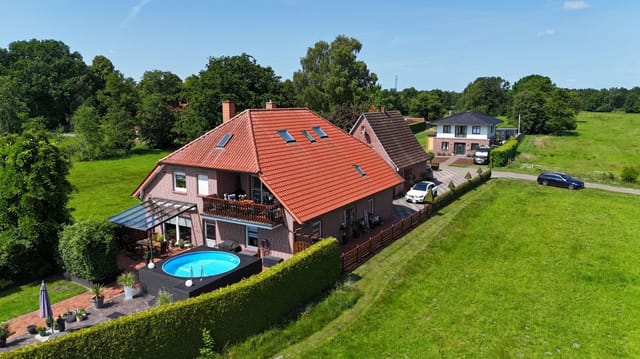
Step out of the rear house on a July morning and the first thing you notice is the silence. Not the silence of isolation — the silence of a garden that has been properly tended, where bees are working the flower beds and the pool water catches the early light. Papenburg's city center is a ten-minute bike ride away, but right here on Heideweg, you could easily convince yourself you're somewhere far more remote. This is a genuinely rare setup: two fully detached houses sharing one expansive plot of 3,186 square meters in northern Germany's canal city, Papenburg. You don't see this very often. Two separate rooflines, two separate front doors, one shared garden with a private swimming pool, a wooden garden house, and a party room with its own bar. The possibilities are wide open — multi-generational family base, a main residence plus a fully independent guest or rental unit, a work-from-home compound with real separation between living and office life. People spend years looking for something like this. The front house dates to 1966 and runs about 121 square meters across two floors. It's been updated thoughtfully over the years — the bathroom was redone in 2003, wall insulation added in 2009, living room windows replaced in 2011. Downstairs, you'll find a living room with a fireplace, two additional reception and dining spaces, two bathrooms, and a storage room. That fireplace matters during a Lower Saxony winter, when January temperatures hover around two degrees and the light turns a particular flat grey that photographers love. The upper floor holds three bedrooms, and there's a partial basement for the practical overflow that any real household accumulates. The rear house, built in 1997, is where the personality of t ... click here to read more

Front view of Heideweg 6

Picture this: it's a Tuesday morning in late June, the kind that only happens in southern Norway. The sun has already been up for hours by the time you step onto the 25-square-metre terrace with your coffee, and the Skagerrak is doing that thing where it looks almost silver before it turns blue. A wooden sailing boat putters past the pier — your pier, technically, with your five-metre berth waiting — and somewhere across the water someone is lighting a barbecue. This is Torsøya 42. And mornings like this are the whole point. Torsøya sits in the Randesund archipelago on the southern edge of Kristiansand, the sun-soaked coastal city that locals half-jokingly call the Norwegian Riviera. That nickname isn't just marketing. Kristiansand consistently records more annual sunshine hours than anywhere else in Norway, and the islands and inlets around Randesund are where the city's residents have been escaping to all summer long for generations. Torsøya itself is one of the larger islands in the area — large enough to have proper hiking trails winding through pine forest and along rocky shoreline, but small enough that you genuinely feel removed from the mainland hum. The house itself was built in 1902, and you can feel that age in a good way. The proportions are generous, the walls are solid, and there's a particular kind of calm that older Scandinavian timber houses hold. Spread across two floors with 127 square metres of interior living space on an 820-square-metre freehold plot, it's a proper island house — not a cramped cabin, but not so large it loses its cosiness either. The ground floor holds an entrance hall, a kitchen, bathroom, three versatile living spaces, and a bedroom. Many owners use the ground floor layout as on ... click here to read more

Welcome to Torsøya 42 - Presented by agent/partner Terje Kvelland Skaara at Exbo Eiendomsmegling!

Early June morning in Tived: the forest is completely silent except for a woodpecker somewhere back in the pines, and the air carries that particular smell — cold water, moss, and something faintly resinous — that you only get this deep into Swedish wilderness. You step outside with your coffee, barefoot on the grass, and realize you're about three minutes from one of the most raw and untouched stretches of nature in Scandinavia. That's the daily reality at Göte Hellmans väg 5. This compact one-bedroom house sits in the quiet cottage community of Tived, in Laxå municipality — a part of Sweden that most international visitors never find, which is precisely what makes it so good. The property spans 44 square meters of interior space on a generous 963-square-meter plot, giving you far more garden than house, in the best possible way. Built in 1966 and currently in good condition, it's a classic Swedish holiday cottage with honest bones and serious potential. Let's talk about what surrounds it first, because the location is genuinely the headline here. A short walk takes you down to Sannerud and the shores of Lake Unden, one of Värmland's larger lakes, where the water runs clear and cold and the small marina sees more rowboats than speedboats. There's a local beach for swimming through July and August, a boat ramp along the tourist road for a small fee if you want to launch your own vessel, and fishing that draws regulars back season after season — pike and perch mostly, if you ask around. The pace is unhurried. Nobody is in a rush. That's the point. Tiveden National Park is roughly 10 kilometers away. If you haven't been, it's worth knowing that Tiveden is unlike the manicured Scandinavian nature reserves you might expec ... click here to read more

Exterior view of the house and garden

On a still morning in early October, you walk out of the kitchen door onto the south-facing terrace with a bowl of coffee, and you realize you can hear absolutely nothing. No traffic. No sirens. Just the faint rustle of chestnut trees down the slope and, somewhere far off, a woodpigeon. Below you, the grounds roll away toward a private forest where cepes and chanterelles push through the leaf litter after autumn rain. The fruit trees — hazelnut, plum, cherry, pear, apple, grape, even an olive — are heavy at this time of year. This is what €259,950 looks like in the Haute-Vienne. This three-hundred-year-old stone cottage and its attached barn in Domps have been painstakingly transformed over two decades into a warm, practical, deeply liveable home. It's 176 square metres of honest rural architecture — exposed stone walls, original timber beams, thick window reveals — brought properly up to date. New roof. Re-done plumbing and electrics to current French norms. Double glazing throughout. Fibre internet. The bones are ancient; everything that matters is sound. Step inside and the kitchen sets the tone immediately. At 41 square metres, it's a serious room — big enough for a long farmhouse table and still have space to breathe. The centrepiece is an original fireplace now housing a pellet burner that quietly heats the majority of the house. This is the room where the house lives. Coffee in the morning light. Wine before dinner. Guests drifting in from the terrace. Adjoining it, a generous living room with a separate dining area pushes another 41 square metres and opens via French doors onto the front of the property. Its Godin wood-burning stove runs almost for free, given what's standing in your forest. A separate office o ... click here to read more

Picture 1

Picture this: a slow Sunday morning, coffee in hand, south-facing deck soaking up the kind of Scandinavian summer light that seems to last forever. The fields behind the garden are dead quiet except for a distant tractor and the occasional gust off the Öresund. That's the rhythm of life at Ängagårdsvägen 33 in Beddingestrand — unhurried, grounded, and exactly what a second home in southern Sweden should feel like. Built in 1945 and thoughtfully extended over the decades, this 62-square-metre cottage carries the kind of character that only comes with time. It's not overworked or over-renovated. The bones are solid, the layout is smart, and the result is a home that feels genuinely lived-in — in the best possible sense. Two bedrooms, one bathroom, a kitchen with a proper dining nook, and a living room with large windows that pull in the surrounding greenery like a living painting. For a coastal holiday home in Skåne, this is a sweet spot: compact enough to lock up and leave without stress, spacious enough to host a small group of friends or spend a full summer season with family. The deck is where this property really delivers. South and west-facing, it stretches wide enough for a proper outdoor table, a few loungers, and the kind of lazy afternoon that stretches past dinner. In late June and July, the sun doesn't quit until well after 9pm here, and you'll feel every minute of it out on that wooden platform. The garden itself — 400 square metres — borders open farmland on one side and a small woodland grove on the other. Maintenance is genuinely low. No elaborate landscaping to manage from afar, just grass, air, and a natural screen that keeps things private. Beddingestrand sits along the southwestern tip of Skåne, the ... click here to read more

Front view of the summer cottage

There's a specific kind of quiet that settles over Eklundsfältet on a Tuesday morning in July. No traffic. Just birdsong, the distant lapping of Lake Måsnaren, and the smell of sun-warmed wood drifting through an open window. You put the coffee on, step onto the patio in your slippers, and the day belongs entirely to you. That's the reality of life at Gurkstigen 37 — a compact, well-kept summer cottage sitting in one of Södertälje's most sought-after allotment communities, just 50 metres from the water's edge. Eklundsfältet is the kind of place that takes ten minutes to fall in love with. It's a proper Swedish allotment area — organised, leafy, with neighbours who actually know each other's names. The association house, Aklejan, sits just a short walk from the cottage and gives you access to shared showers and laundry facilities, which means longer stays are genuinely comfortable rather than a compromise. There's a real community spirit here. Midsommar gets celebrated properly. People share seeds, tools, gardening tips, and occasionally a cold beer over the fence on hot afternoons. The cottage itself covers 30 square metres — and yes, that sounds modest, but the layout makes every centimetre work. Large windows pull in the daylight and give the interior a sense of airiness that belies the footprint. The living space is warm and considered, with nothing wasted. What sets this cottage apart from many others in the area is the indoor toilet — genuinely rarer than you'd expect at this price point and in this type of property — and a wood-burning stove in the kitchen that doubles as both cooking surface and the fastest way to take the edge off a cool May evening. Light it up, pour a glass of something, and the whole space ... click here to read more

Exterior view of the cottage and garden

Step off the porch on a September morning and the air smells of pine resin and wet moss. A pair of cranes are calling somewhere over Lake Nedingen—just 200 meters down the track. The coffee is on, the wood stove is ticking quietly in the corner, and the conservatory glass is steaming up at the edges. This is what a Tuesday feels like at Kantarellvägen 57. Not a weekend. A Tuesday. That's the thing about this property in Fornbo, a small lakeside community tucked inside Flens municipality about 120 kilometers southwest of Stockholm. It was built to be lived in across all four seasons, and it genuinely delivers on that promise. The 1990 house sits on a 1,890 square meter plot with mature birch and rowan trees framing a series of open lawns—the kind of garden that gives you options. Hammock between trees in July. Firewood stacked along the southern shed wall come October. Snowdrops pushing through frozen soil in late March, right when you start craving proof that winter actually ends. The 80 square meters inside are laid out with more intelligence than you'd expect from the footprint. The living room anchors everything, centered around a wood-burning stove that throws real heat—not the decorative kind. On evenings in November, when the lake freezes at the edges and the light drops at three in the afternoon, that stove earns its place. The dining area seats six comfortably, which matters when you're hosting the extended family for a Swedish midsommar dinner that spills from afternoon into midnight. The kitchen is practical and well-equipped, with enough counter space to actually cook rather than just reheat. The glazed conservatory—what Swedes call an uterum—might be the room that sells this house. It runs along the garden ... click here to read more

Front view of the house and garden

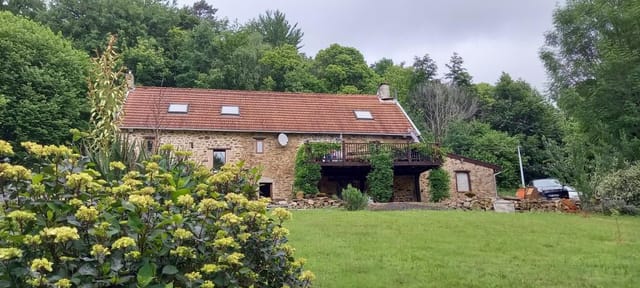
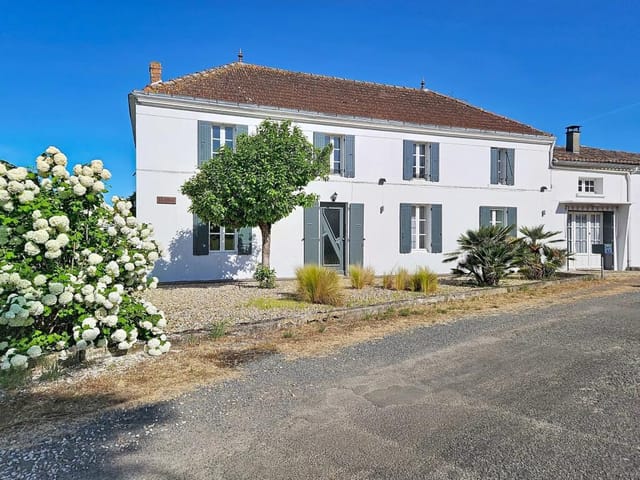
On a still Sunday morning in Saint-Grégoire-d'Ardennes, the only sound you'll hear is birdsong cutting through the cool air and the faint creak of a shutter as light rolls across the garden. That's not poetry — that's what the mornings actually feel like here, in this former farmhouse on the edge of the Haute-Saintonge, where the rhythm of life runs about three speeds slower than anywhere you've lived before. This is a 230 m² stone house with five bedrooms, sitting on more than 4,700 m² of fenced, wooded grounds between the market towns of Pons and Jonzac. It's priced at €422,000. And while those numbers are useful, they don't begin to explain what makes this place worth serious attention. Step inside and the floor plan immediately makes sense. The ground floor is laid out for living — not for showing off. A wide living room flows into a dining room with a working fireplace, the kind that you'll actually use from October through to March when Charente evenings cool fast and the region's oak forests start smelling like autumn in a way no candle has ever managed to replicate. The kitchen has its own dining area, so morning coffee happens here, not in some separate formal room nobody uses. A utility room keeps the practical mess out of sight, and also on the ground floor: a bedroom, a shower room, and a full bathroom — meaning this house works completely on a single level if that's ever needed. Upstairs, three more bedrooms with original hardwood floors that have the satisfying solidity only old timber gets with age. A quiet study that faces the garden. Two large attic spaces that are currently unconverted — and this is where the real opportunity sits for international buyers. The bones are already there to add guest roo ... click here to read more

Picture 1

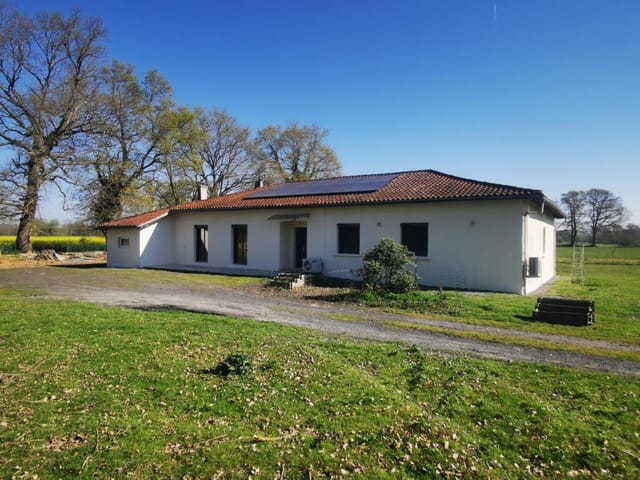
Step outside on a crisp October morning, coffee in hand, and the only sound you hear is birdsong. No traffic. No neighbors peering over a fence. Just open agricultural land stretching toward the foothills of the Pyrenees, the kind of quiet that feels almost physically restorative after months of city noise. This is what 17,796 square meters of Gascon countryside does to you—and it happens every single day you're here. This four-bedroom single-storey house in the Gers department of southwest France sits back roughly 30 meters from the D14, which connects Maubourguet to Plaisance-du-Gers. That distance, combined with exceptionally solid insulation added just six years ago, means road noise is essentially a non-issue. The house is rated A on both energy consumption and greenhouse gas emissions—a January 2026 EPC confirmed it. For a rural property of 164 square meters, that's genuinely rare, and it translates directly into heating bills that won't ruin your winter. The layout is all on one floor, which matters more than people realize until they've lived in it. No stairs to negotiate with luggage, no carrying firewood up from a lower level, no thinking twice about ageing parents or young children running between rooms. Everything flows—living room to kitchen to terrace, bedrooms down the hall, garage off the side. Daily life here has a natural, unhurried rhythm built right into the architecture. The living room runs to 32 square meters and centers on a fireplace fitted with an insert, which throws serious heat on January evenings when the temperature in the Gers drops below zero. The separate kitchen—also 32 square meters, notably generous—opens directly onto the rear terrace, making the transition between cooking and eat ... click here to read more

Picture 1

You wake up to the sound of birdsong drifting through the window, the smell of pine and lake water on the morning air. Through the kitchen glass, the garden stretches out in a wash of green — old fruit trees, a flat lawn still wet with dew, and somewhere beyond the tree line, Bodatorpsträsket glinting in the early light. This is a Tuesday in July at Bodatorpsvägen 14. And it's yours. This three-bedroom summer house in Djurhamn, on the island of Djurö in Värmdö municipality, sits on a generous 2,793 square metre plot in the Bodatorp area — one of the most sought-after pockets of the Stockholm archipelago for Swedish families and international buyers alike. The property is in good condition, ready to use from day one, and carries that rare quality of feeling genuinely lived-in rather than staged. Every corner has a story: the covered terrace where evenings tend to stretch long, the wood-burning stove that makes October here not just bearable but actually cosy, the great room that somehow fits everyone when the whole family descends in August. The main house is 55 square metres of practical, warm living space — compact enough to run easily, large enough for real comfort. There's a kitchen with a proper dining area where long lunches happen naturally, a bedroom tucked away for quiet, a separate toilet with an incineration toilet, and a shower room with a shower cabin. The wood stove in the great room is not decorative; it's the heart of the space, doing real work on those shoulder-season weekends when midsummer has passed but nobody wants to stop coming up. The covered terrace off the main house is where the day tends to begin and end — coffee in the morning light, wine as the sun drops behind the spruce trees. But the ma ... click here to read more

Main house and garden

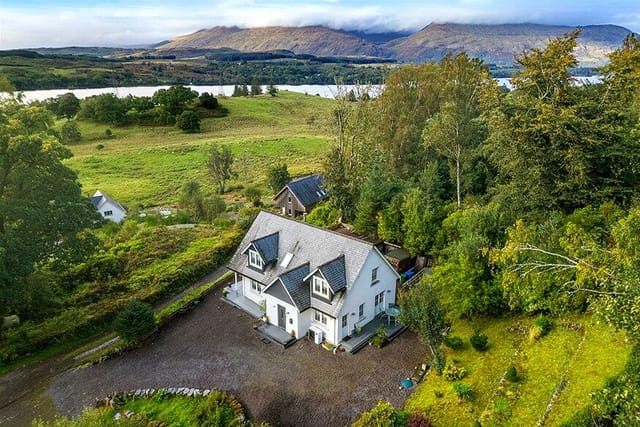
Step outside on a Tuesday morning, coffee in hand, and the only sounds you'll hear are the burn trickling through the garden and a heron landing somewhere on the loch. No traffic. No neighbours you can see. Just Loch Goil stretching out in front of you, framed by the jagged ridgeline of Beinn Donich and The Brack catching the early light. That's a normal morning at Whisperwood. This six-bedroom detached house in Lochgoilhead isn't some quaint cottage you'd outgrow by Sunday. It's a proper, substantial property — 180 square metres across two floors, seven bathrooms, gardens with an actual stream running through them, detached garages, and views that make you forget what you were about to say. Currently operating as a successful holiday let on the Carrick Castle Estate, it's priced at £520,650 and represents the kind of opportunity that doesn't surface often in this corner of Argyll and Bute. The entrance hallway opens into a home that feels calm rather than clinical. Neutral throughout, but not in that forgettable show-home way — more like a property where someone made considered decisions about light and space. The main lounge runs wide across the front of the house, and those windows do serious work. On grey days, the loch takes on a pewter sheen. On clear evenings in June, the whole ridge turns amber for about twenty minutes. Either way, you're watching it from a sofa, and that feels like the right arrangement. The kitchen is open-plan and connects through to a full conservatory that essentially functions as a second living room. This is the space that earns its keep year-round — a place for long lunches when the West Highland weather decides it doesn't feel like cooperating, or for watching the stars over the glen ... click here to read more

Front view of Whisperwood with loch and mountain backdrop

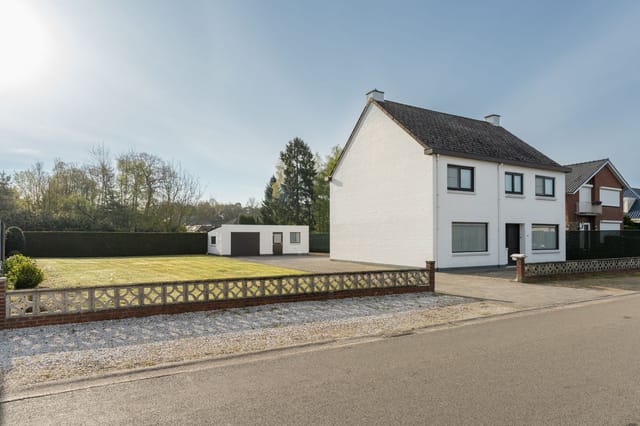
Saturday morning in Maasmechelen: the market on the square is already humming, coffee smells drift through an open kitchen window, and the back garden is yours alone — quiet, fenced, flooded with light. That's the daily rhythm at Koning Albertlaan 85, a three-bedroom semi-detached corner house that sits right in the pulse of one of Belgian Limburg's most lively towns, yet somehow manages to feel genuinely private. Corner plots are rare here. This one gives the property a wider footprint, more natural light than a typical mid-terrace, and a garden arrangement that works — a low-maintenance front with a proper driveway, and a rear terrace with a green patch that's big enough for a table, chairs, a few potted herbs, and an easy Sunday afternoon. The fully fenced 390 m² plot means kids or dogs can roam freely while you handle the barbecue. Step inside and the ground floor makes immediate sense. The entrance hall splits cleanly: right leads into the living room with its marble-tiled floor that stays cool underfoot in summer and reads genuinely well-kept rather than showy. Left is the kitchen — gas stove, combination oven, and a practical layout that connects through a rear hallway back to the living area, so whoever's cooking doesn't feel cut off from the rest of the house. The bathroom sits just off the kitchen: shower, toilet, washbasin. Functional, logical, clean. Upstairs is where the house breathes. Skylights pull daylight down onto the warm laminate flooring, and two of the three bedrooms are generously sized — the kind of rooms that actually fit a double bed, wardrobe, and a small desk without feeling cramped. The third bedroom is the flexible one: home office right now, guest room next summer, playroom the summer a ... click here to read more

Front view of Koning Albertlaan 85

On a still July morning, the smell of salt air drifts through the kitchen window before you've even made coffee. The Swedish west coast does that — pulls you outside before you're ready. From Gustav Bäcks väg, it's a ten-minute walk down to Eriksbergs beach, where the water is clear enough to see your feet and the only sound is the occasional creak of a sailboat. This is what you bought it for. Built in 2023, this compact year-round house in Bokenäs sits on 631 square metres of manageable garden, a short drive from the Bohuslän coastline that artists and writers have been quietly obsessing over for a century. At 45 square metres, it's not trying to be something it isn't — it's a proper escape, designed to be easy. One bedroom, one bathroom, an open-plan living and kitchen area that catches the afternoon light, and a loft upstairs that fits a double bed with room to spare. The layout means two people can genuinely live here without stepping on each other, and a third or fourth can sleep comfortably when you want company. The patio deserves a mention early, because you'll spend a lot of your time there. Long Swedish summer evenings — and they are genuinely long, light until eleven or later — make outdoor dining less of a nice-to-have and more of a daily ritual. The garden itself is low on demands. Mow it, water the odd plant, done. If you've had a holiday home in France or Italy and spent half the visit managing the grounds, you'll appreciate this. Bokenäs is one of those places that regulars are slightly reluctant to talk about too loudly. The peninsula sits between the Gullmarn fjord to the north and the open coastline further south, and the result is a patchwork of inlets, rocky outcrops, sea pines, and small boat ha ... click here to read more
Front view of the house and garden

Stand in the first-floor landing on a clear October morning and the view stops you cold. Loch Etive stretches west toward the Atlantic, the hills of Benderloch catching the low autumn light, and the only sound through the open window is the distant rush of water tumbling through the Falls of Lora at the narrows. That's Almar on a Tuesday. On a Saturday it's marginally better, because the Oban farmers' market is on and the smell of fresh langoustines grilling at the harbourfront drifts all the way up the coast road. This is a six-bedroom, five-bathroom detached house sitting on Old Shore Road in Connel, a small village on the southern shore of Loch Etive just four miles from the centre of Oban. At 180 square metres arranged over two storeys, it's a proper family-sized home — not a weekend bothy — and it carries itself with the kind of quiet confidence that comes from being well built and thoughtfully updated. EPC rating C, solar panels, an air source heat pump: someone here was thinking about running costs before running costs became a talking point. The ground floor is anchored by a kitchen that actually earns that description. A large central island, substantial wall and base units, integrated appliances, and a dining area generous enough for eight people around a table without anyone playing elbow Tetris. It flows into a utility room and a ground-floor shower room — both practical, both often the features that clinch a purchase when you're imagining walking in off a muddy hillside after an afternoon on the Cruachan ridge. A double bedroom with its own ensuite sits at ground level too, which matters enormously if you have elderly relatives visiting or guests who can't do stairs. There's also a study off the hall, hand ... click here to read more
Front view of Almar, Connel

On a still Tuesday morning on Mühlenstrasse, the only sounds are a bicycle ticking past on the cobbles and the faint rustle of wind through the beech trees lining the back garden. That's Bunde. Not silence exactly — more like the particular quiet that people pay good money to find, and rarely do. This detached two-bedroom house at number 47 sits on a plot of 813 square meters in one of the most genuinely liveable corners of northwestern Germany. The town straddles the German-Dutch border so neatly that you can drive to Groningen in under an hour, pop into Winschoten for Saturday market, and still be back in your garden with a cold Pilsner before lunch. For international buyers hunting a second home in Europe with real dual-country access, this is the kind of address that doesn't come up often at €259,000. The house itself was built in 1980 — solid brick construction in the no-nonsense North German tradition — and it reads as a proper family home rather than a weekend bolt-hole. At 176 square meters of living space, there's genuine room to breathe. The ground floor has a generous entrance hall that flows into a bright living room anchored by a wood-burning stove. In December, with the stove going and the roller shutters half-drawn against the early dark, it gets cozy in a very specific, very satisfying way. The sunroom — what locals call a serre — extends the living space toward the garden and works brilliantly in all four seasons: morning coffee in spring, reading out of the summer sun, watching the autumn light drain across the lawn. The kitchen was updated with a fitted installation in a clean, light palette. Practical, not fussy. There's a separate utility room for laundry and all the gear that accumulates in a pro ... click here to read more
Front view of Mühlenstrasse 47

On a quiet Sunday morning in Neerharen, you open the large sliding doors off the living room and the south-facing garden fills with light. Coffee in hand, you can hear almost nothing except a wood pigeon and the faint hum of the Albertkanaal not far off. This is what 190 square metres of brand-new construction in one of Belgian Limburg's most coveted border villages actually feels like — unhurried, airy, and very much your own. Keelhoffstraat 21 sits in Neerharen, the southern parish of the municipality of Lanaken, in a pocket of East Belgium where the provinces of Liège and Limburg brush up against the Dutch border. It is the kind of address that takes five minutes to explain to people who have never been here, and then they immediately want to come. Maastricht — genuinely one of the most liveable mid-sized cities in Western Europe — is a ten-minute drive. The Hoge Kempen National Park, the only national park in Belgium, is within easy cycling distance. And yet the street itself is calm, green, and feels miles from anywhere. The house is a semi-detached new build delivered in what Belgian contractors call a casco+ state. That phrase does a lot of work. It means the building is fully wind- and watertight. The interior walls and ceilings are finished. Underfloor heating — with a cooling function for summer, which matters more than people expect in a south-facing home — is already installed and connected. A rainwater tank is in the ground. The bones are done, and done properly. What remains is the finishing: floor coverings, kitchen fit-out, bathroom tiling, paint. It is a genuine blank canvas for someone who wants a new home built to current standards but personalised to their own eye rather than a developer's show-home ... click here to read more
Front view of Keelhoffstraat 21

Stand on the 35-square-meter terrace at Østre Holmefjellet 20 on a clear July morning and you'll understand immediately why people have been coming to this stretch of the Oslofjord coast for generations. Krokstadfjorden spreads out below you, the water shifting between silver and deep blue depending on how the light hits it, and somewhere down the slope your boat is tied up at the private mooring, ready. That's the rhythm of life at this cabin — unhurried, uncomplicated, and deeply Norwegian in the best possible way. The cabin itself was built in 1967 and sits in genuinely good condition, the kind of honest upkeep that comes from a family that actually used the place rather than just owned it. At 49 square metres total, it's not trying to be anything other than what it is: a compact, well-considered retreat for two to four people who'd rather spend their time outside than rattling around inside. The open-plan kitchen and living area is the social engine of the cabin, with large windows that frame Krokstadfjorden like a painting that changes every hour. On overcast evenings, light the wood stove and the whole room shifts into something genuinely cosy — the kind of atmosphere you can't manufacture with interior design, only with a proper fireplace and the sound of wind moving through conifers outside. Both bedrooms are comfortable and practical. They sleep four easily, making this a solid choice for a couple with kids or two friends splitting the cost of a Norwegian summer — which, for what this property offers, represents exceptional value. The bathroom is straightforward and accessible, exactly what you want when you're coming in salt-damp from a morning swim. The plot is where this property really earns its asking pr ... click here to read more
Picture 1

The engine cuts out. The boat drifts the last few meters to the berth, and suddenly the only sounds are the cry of a gull overhead and the soft knock of hull against wood. You're fifty meters from the front door of your own house on Edesön, and the whole of Jungfrufjärden is laid out ahead of you in a sweep of silver-blue water. This is how life on this island begins — not with a commute or a queue, but with a ten-minute crossing from the mainland that feels, every single time, like crossing into somewhere else entirely. Edesön sits in the inner Stockholm Archipelago, accessible by boat from the car and boat parking at Skärkarlsedet on the Dalarö peninsula in Haninge municipality. That crossing is part of the property's identity. It's the reason the island feels genuinely private. No drive-by traffic, no strangers wandering past the garden. Just the island's own rhythm, the smell of pine resin warming in the afternoon sun, and the particular quiet that only comes when you're surrounded by water. The house itself — a classic Swedish röd stuga with white corner trim — sits elevated on a natural plot of 1,120 square meters where bedrock, soft grass, and mature Scots pines coexist as they've always done here. The 50-square-meter main house was built with one clear priority: the view. Floor-to-ceiling windows on three sides of the open-plan living and dining area make Jungfrufjärden a constant presence, a living painting that changes with the light, the season, and the weather. On a clear winter morning, with the masonry fireplace crackling behind you and frost glittering on the rocks outside, it's the kind of view that ruins ordinary living rooms forever. That fireplace anchors the entire interior. It's not decorative — i ... click here to read more
Main house and sea view

Step outside on a Sunday morning at Jaegerweg 19, coffee in hand, and the meadow at the back of the garden is still catching the last of the mist. A heron drifts low over the fields. No traffic. Just wind, birdsong, and somewhere across the Dutch border, church bells. This is the specific, unhurried pleasure of living on the Lower Rhine — and this two-bedroom detached house, sitting on a 637-square-metre plot at the edge of Emmerich am Rhein, delivers that feeling every single day. Emmerich am Rhein is a town that most people drive past on the A3 without stopping. That's their loss, and frankly your gain. It sits right on the Rhine, about four kilometres from the Netherlands, and it has the easy rhythm of a place that doesn't feel the need to show off. The Saturday market on the Geistmarkt sells local asparagus in spring, hearty Gouda wheels year-round, and fresh stroopwafels because the Dutch influence bleeds happily across the border. Emmerich's Rhine promenade is one of those genuinely underrated walks in western Germany — long, flat, lined with old linden trees, and ending at the Rhine bridge, which is actually the longest suspension bridge in Germany and a piece of proper industrial history. The town's St. Aldegundis church, with its medieval tower, keeps the skyline honest. It's not a resort. It's a real place, and that's exactly what makes it work as a second home or vacation property. The house itself was built in 1981 and sits comfortably in good condition — not a project, not a renovation gamble, but a solid single-level home with honest bones and room to personalise over time. At 116 square metres of living space, the layout is practical and generous for two people, or a couple with children in for the holid ... click here to read more
Photo 1 of Jaegerweg 19

Stand in the kitchen on a Saturday morning, coffee in hand, and you'll hear it — the faint bell of the Kanne church drifting over the rooftops while cyclists roll past the gate toward the Albert Canal towpath. The garden is already warm. The terrace catches the sun from early morning, and the deep, enclosed lawn stretches far enough behind you that the kids have disappeared into their own world. This is what daily life feels like at Oudeweg 26, and it takes about ten minutes here to understand why people come to this corner of Belgian Limburg and quietly decide they're not leaving. Kanne sits on the edge of something genuinely rare: a limestone plateau where the Netherlands, Belgium, and a shared sense of slow, outdoor living all converge. The village is small — perhaps 1,500 people — but it punches well above its weight. The Sint-Pietersberg hill rises just minutes to the east, and the Plateau of Caestert, a protected nature reserve laced with trails for hiking and mountain biking, starts practically at the end of the road. On autumn mornings, the mist sits low over the Meuse valley below and the light turns gold over the marlstone cliffs. It's the kind of scene that makes you cancel whatever you had planned. And then there's Maastricht. Barely five kilometres away, one of the Netherlands' most culturally alive cities is reachable by bicycle along the canal — a flat, easy ride that takes about twenty minutes past willows and weekend fishermen. Maastricht is home to the Vrijthof square, where café terraces spill out under the towers of Sint-Servaasbasiliek, and where the TEFAF art fair each spring draws collectors from across the globe. The Wyck neighbourhood has some of the best independent restaurants in the Benelux ... click here to read more
Front view of Oudeweg 26

Step outside on a Saturday morning in late May and the garden stretches out in front of you — eighty-three meters of it, dew still clinging to the lawns, the hedgerows full and dark green, a wood pigeon doing its thing somewhere near the back gate. You've got coffee. The conservatory door is open. This is what a slow European morning is supposed to feel like. Gangelt sits quietly in the far southwestern tip of North Rhine-Westphalia, just a few kilometers from the Dutch border, in a part of Germany that most international buyers haven't discovered yet. That's precisely the point. While better-known regions attract crowds and premium price tags, this corner of the Heinsberg district rewards the people who actually bother to look. Rolling countryside, clean air, cycling routes that thread through farmland into the Netherlands, and a pace of life that genuinely slows you down. The A46 and A44 motorways connect you to Düsseldorf in under an hour. Maastricht is thirty-five kilometers away — close enough for a proper Dutch rijsttafel dinner and back home before dark. Eindhoven Airport is roughly forty minutes by car, making this property realistic as a European second home rather than a logistical headache. The house on Luisenring 89 is a generous, solidly built detached home from 1956 that has been updated consistently over the decades — not flipped or cosmetically staged, but genuinely improved by owners who lived here. The 167 square meters of living space spreads across three floors, and the ground floor layout has an easy, unhurried quality to it. The L-shaped living room opens directly into the conservatory, which measures roughly seven by five meters. That room gets the afternoon light. In summer it's warm and golden ... click here to read more
Front view of Luisenring 89

On a quiet morning in early June, you step outside your back door at Björnmossevägen 60 with a coffee in hand. The garden stretches out ahead of you — a full 2,560 square meters of it — and somewhere beyond the treeline, maybe 300 meters off, you can hear the faint splash of a swimmer at one of the nearby lakes. The air smells of pine resin and wet grass. Stockholm feels like a world away, even though it's only about 35 kilometers north. That's Brottby. That's what draws people here. Tucked into the Garns-Ekskogen forest landscape within Vallentuna municipality, this two-bedroom house sits on a generous private plot that gives you something increasingly rare around the Swedish capital: genuine space, genuine quiet, and genuine proximity to nature that isn't manicured or managed into blandness. Built in 2018, the house covers 82 square meters with a clean, light-filled interior that needs nothing done to it. Move in, hang your coat, and start living. The layout makes sense for the way people actually use a second home or holiday base. The main living area runs open between the lounge and dining space, with oversized windows pulling in the kind of northern light that makes everything look slightly better than it is. The kitchen is modern and properly equipped — not the hollow showroom kind, but the kind where you can actually cook a Sunday elk stew after a long autumn hike. Two bedrooms give you flexibility: one for sleeping, one for a bunk room for kids, or a proper home office if you're splitting time between Stockholm work and forest-life weekends. The bathroom is contemporary, finished well, and does exactly what it needs to. Outside is where this property earns its price tag. The 2,560-square-meter plot is the rea ... click here to read more
Exterior view of the house and garden

Stand at the kitchen window of The Camb on a clear October morning and the Culter Fell ridge sits right there, purple-brown and close enough to feel personal. Church bells carry from the town centre. The smell of woodsmoke drifts in from next door's chimney. It's the kind of quiet that city people specifically leave the city to find — and here, it comes standard. This is a mid-1800s B-listed detached house on Coulter Road, one of Biggar's most handsome residential streets, set behind a horseshoe driveway on roughly three-quarters of an acre of mature, terraced garden. Five bedrooms across three floors, three bathrooms, 217 square metres of living space, and a level of period detail that modern builds simply cannot replicate. It's in genuinely good condition — sympathetically updated over the years without erasing what makes it worth owning in the first place. The exterior gives you mullioned windows, wrought iron balustrades, and a Juliet balcony on the upper floor. These aren't decorative afterthoughts; they're structural commitments to a certain way of building that stopped being commercially viable a century ago. Step inside and the entrance hallway is wide and tall, with a sweeping staircase that sets an unhurried tone for the whole house. You're not rushing anywhere the moment you walk through that door. The bay-windowed lounge faces the hills. An Adam-style fireplace anchors the room — lit on winter afternoons, it turns the lounge into the kind of space where conversations last longer than intended. Bookshelves, a decent whisky, the hills going dark outside. The period ironwork and original detailing throughout have been kept rather than replaced, which takes genuine restraint during a renovation and makes a rea ... click here to read more
Front

Sunday morning in Achel has a particular rhythm. The bells from the village church carry across the fields just after nine, and by the time the smell of fresh bread drifts over from the bakery on Kluizerdijk's end, you're already planning which corner of the 1,466-square-metre garden to set up breakfast. That's the daily pace this house invites — unhurried, grounded, and genuinely good. Set on a wide, peaceful plot on Kluizerdijk 16 in the Belgian municipality of Hamont-Achel, this four-bedroom detached house is the kind of property that doesn't announce itself loudly. It earns your attention slowly. The plot is broad and sunny, the garden rolls out generously front and back, and the surrounding streets are quiet in the way that only genuinely residential neighbourhoods manage to stay quiet — not staged, just real. Built in the 1970s and kept in consistently good condition, the house spans approximately 177 square metres of living space across two floors. Walk through the front door and the living room opens up wider than you'd expect — a proper sitting area at one end, a dining space at the other, connected by the kind of natural light that only comes from large windows positioned just right. The floor was replaced recently and gives the room a clean, contemporary feel without erasing the home's character. On a winter afternoon, with the 2025-installed gas boiler running quietly in the background, this room is exactly where you want to be. The kitchen is generous by any standard — not a galley you squeeze past, but a proper family kitchen with room for a breakfast table and enough bench space to actually cook. It leads through to a utility and laundry area, and a separate ground-floor toilet, which is one of those pr ... click here to read more
Front view of Kluizerdijk 16

Saturday morning in Maaseik has a particular kind of quiet. Not the empty kind — the earned kind. You open the kitchen's wide windows and the garden fills the room: damp grass, the soft sound of water moving through the koi pond, maybe a wood pigeon somewhere in the hawthorn hedge. By the time the coffee's done, you're already outside on the shaded terrace, and the rest of the day feels genuinely open in a way that city life rarely allows. That's the rhythm this house on Meidoornweg 24 makes possible. Built in 1977, it's been thoroughly reworked into something that performs well by every modern measure — energy label B, solar panels, heat pump boiler, gas condensing system, PVC double glazing throughout — while keeping the generous proportions that newer builds tend to sacrifice for efficiency. At 195 square metres of living space on a 1,129-square-metre fully enclosed plot, there's real room here. Room for five bedrooms, two bathrooms, a finished basement with integrated double garage, and a garden designed as seriously as the interiors. About that garden. It's the kind of outdoor space that changes how you use a house. Multiple zones, each with its own logic: a sun terrace for the late afternoons, a gazebo for when the Belgian sky decides it has other plans, a garden room that works year-round, and a koi pond that has a genuinely calming effect you'll stop apologising for finding meditative. The whole thing is enclosed, gated, and private — which matters when you're using this as a vacation home and arriving to find everything exactly as you left it. The ground floor living room catches the southern light through large windows and anchors around an electric fireplace set into a custom TV wall — understated, functio ... click here to read more
Front view of Meidoornweg 24, Maaseik

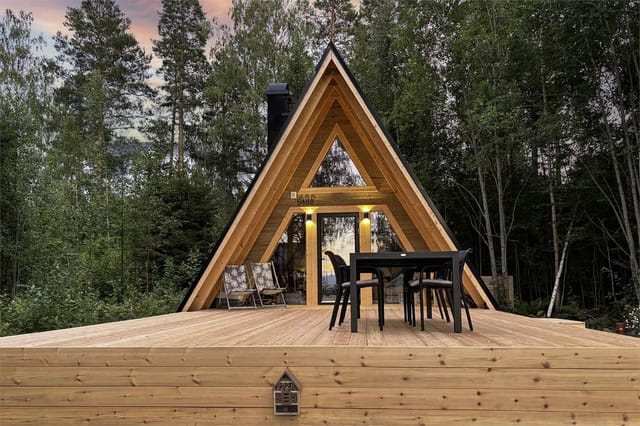
The smell hits you first. Pine resin warming in the morning sun, damp earth from the night's dew, and somewhere just beyond the treeline, the faint mineral coolness of the lake. You haven't even stepped off the veranda yet, and already the week ahead feels completely different from the one you just left behind. This is Vallsänge 6468 — a freshly built A-frame tucked into a 1,532-square-metre woodland plot in Kilafors, a quiet corner of Gävleborg County in central Sweden. The house went up in 2024. Everything inside is untouched, unscuffed, built for a first owner who wants to walk in and simply live, not renovate. Bergviken lake is a hundred metres away. That's not marketing shorthand for a distant glimmer on the horizon — it's genuinely a two-minute walk through the pines. On summer mornings you can be in the water before your coffee has cooled. The lake is calm and clean, the kind that turns gold-pink around nine in the evening when the Swedish summer light does that thing it does, low and endless, making everything look slightly unreal. The A-frame form isn't just a style choice. The steep-pitched roof handles heavy snow loads without a second thought, and the tall triangular windows that define the front facade pull light deep into the living space throughout the year — not just in July, when Sweden barely gets dark, but also in February, when every photon counts. The open-plan kitchen and living area feel larger than 40 square metres should allow. Good spatial planning does that. There's an additional 7 square metres of secondary space — useful for gear, a sleeping nook, or the kind of overflow storage that a holiday home always eventually needs. Outside, the stone fireplace is the centrepiece of the plot's soci ... click here to read more
Exterior view of the A-frame house

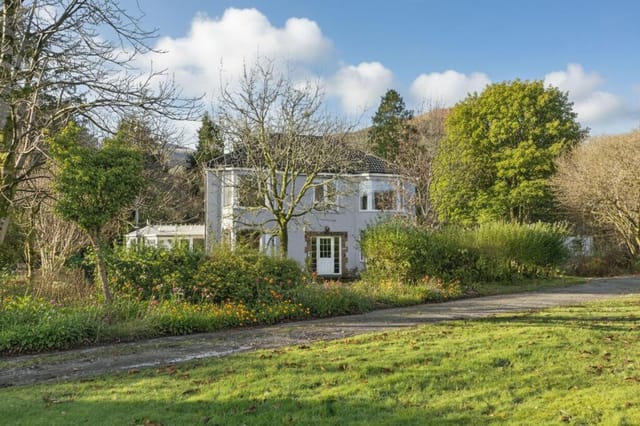
Wake up to the reflection of Ben Cruachan sitting dead still on the surface of Loch Awe. That's the view from the kitchen at Taigh Geal on a clear October morning — the kind of view that makes you put the coffee down and just stand there for a minute. This is Ardbrecknish, a small, quietly confident hamlet on the southern shore of one of Scotland's longest freshwater lochs, and this house was built to make the most of every bit of it. Taigh Geal — Gaelic for "white house" — was designed and constructed by Fjordhus, the Scottish-Scandinavian timber-frame company whose builds have earned a reputation for doing something genuinely rare: marrying Nordic precision engineering with Highland living. The result is a 150-square-metre home that feels considered in every corner. Triple glazing keeps the Atlantic draughts firmly outside. An air source heat pump and high-spec insulation mean the energy bills are a fraction of what you'd expect from a house this size in this climate. Underfloor heating runs through the entire ground floor — so your feet are warm the moment you pad out of the master bedroom in the morning, even in January. The layout is clever. You come in through a generous boot room that actually handles the chaos of Highland outdoor life: muddy walking boots, waders, waterproof layers, fishing rods. Scotland doesn't apologise for its weather, and neither does this house. Beyond the boot room, the double-height entrance hallway opens up and the sense of scale hits you properly. This isn't a cottage. It's a full family home with architectural ambition. The ground floor opens into a kitchen, dining, and living space that spans the width of the building. The windows here aren't decorative — they're structural to the ... click here to read more
Front view of Taigh Geal with loch and mountain backdrop