Villas For Sale In Europe

Villas for sale in europe - homestra offers the largest amount of european real estate with over 200,000+ properties, find any type of property within your budget from villas to country homes. buy or rent your perfect home in europe.

Saturday morning in Loenhout moves at its own pace. The bakery on the village square opens early, and by nine o'clock the smell of fresh bread drifts down Sint Annastraat. You walk back through the gate of number 52 with a paper bag still warm in your hands, into a southwest-facing garden already catching the first strong light of the day. The pond catches it too. This is what life feels like here — unhurried, grounded, genuinely good. Built in 2007 on a plot of nearly 2,000 square meters, this four-bedroom villa in the heart of Loenhout is one of those rare properties where scale and soul arrive together. At 562 square meters of interior space, it has room for a large family, long-staying guests, a home office, a wine cellar, a cinema room — and still doesn't feel like it's showing off. The architecture is confident without being cold. Stone staircases, high-quality finishes throughout, and a layout that flows from room to room with the kind of logic that only becomes obvious after you've lived somewhere for a while. Step through the entrance hall and the proportions immediately do their work. The living area is generous and genuinely light-filled — the adjoining veranda runs along the garden-facing side of the house, its oversized windows pulling in afternoon sun from the southwest all year round. In summer, the doors open wide and the boundary between inside and garden dissolves completely. In winter, you're watching frost on the pond from a warm room with underfloor heating underfoot. Both versions are equally good. The kitchen is built around a Boretti gas stove, and if you know, you know. These Italian-made ranges are the kind of thing serious home cooks seek out specifically. The kitchen functions as a proper g ... click here to read more
Front view of Sint Annastraat 52

On a quiet Sunday morning in Rekem, you open the veranda doors and the garden comes alive — the shimmer of your private pond through the trees, the faint splash of the heated pool, a wood pigeon calling from somewhere in the old-growth hedge line. This is 6,802 square metres of Belgian countryside doing exactly what it's supposed to do: nothing hurried, nothing crowded, just space and light and the particular kind of quiet that money genuinely can buy. Vijversdreef 3 sits in Rekem, a protected village that Belgium's heritage authorities have actually recognised as one of the country's most architecturally intact historic settlements. The cobbled heart of the village is ten minutes on foot. The Dutch city of Maastricht — with its Vrijthof square, its Burgundian food culture, and its weekend markets spilling out along the Maas — is a fifteen-minute drive across the border. And the Hoge Kempen National Park, Belgium's only national park, starts almost at the garden's edge, with its heathland trails, cycling routes, and pine forests stretching out toward the German border. The villa itself is a 623 m² traditional build, solid and well-proportioned, with a character that holds up across seasons. Come January, when frost settles on the tennis court and the pond catches the low winter light, the house earns its keep differently than it does in July — and it earns it in July too, when the covered, heated pool means guests are in the water regardless of what the Belgian sky decides to do. The interiors reward attention. The entrance hall sets a confident tone immediately; the living spaces are generously scaled without tipping into cavernous, and the country-style kitchen — induction cooktop, steam oven, oven, microwave, dishwa ... click here to read more
Front view of Vijversdreef 3, Lanaken

Saturday morning, 8am. The automatic gate swings open, gravel crunches underfoot, and the smell of damp grass drifts in from six thousand square metres of park garden still catching the early light. Inside, the pellet stove is ticking down from the night before, the kitchen island is set for breakfast, and somewhere upstairs a guest is running a bath in the Chanel suite. This is the daily reality of Hubesheide 1 — a 412 m² villa in Opitter, just outside Bree in Belgian Limburg, that operates as a fully functioning Bed & Breakfast and could just as easily become the most extraordinary private residence you've ever called your own. Built in 2005 and thoroughly renovated in 2024, the property is in genuinely excellent condition — not "estate agent good" where you mentally deduct 30% for what you'll actually find on viewing. The bones are solid, the finishes are current, and the energy performance label sits at B (EPC: 157 kWh/m²), which in Belgium's increasingly regulated property market is a meaningful advantage, not a footnote. Five bedrooms. Five bathrooms. Two indoor garages. Four outdoor parking spaces. An illuminated driveway with an automated entrance gate that gives arrivals — whether yours or your guests' — a genuine sense of occasion. The numbers are compelling, but the experience is what stays with you. The ground floor tells you immediately that someone thought carefully about how people actually move through a space. The entrance hall leads to a kitchen that takes its job seriously: island unit, induction hob, combi oven, ample cabinetry, the kind of setup where you can cook a proper Sunday lunch without the kitchen fighting back. The dining and lounge area opens off it with that pellet-and-wood stove anchor ... click here to read more
Front view of Hubesheide 1, Bree

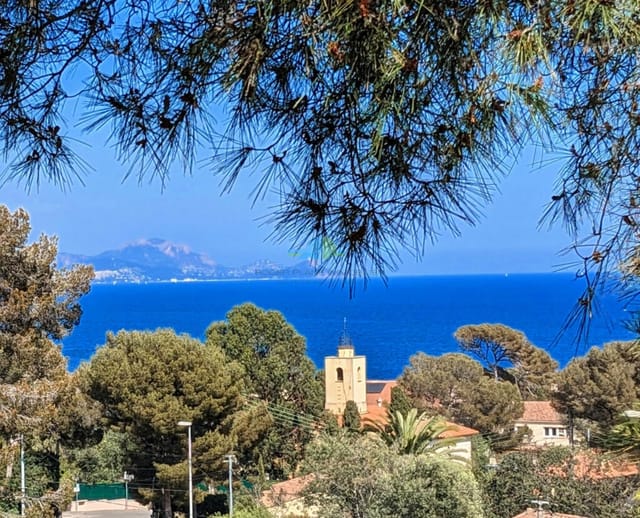
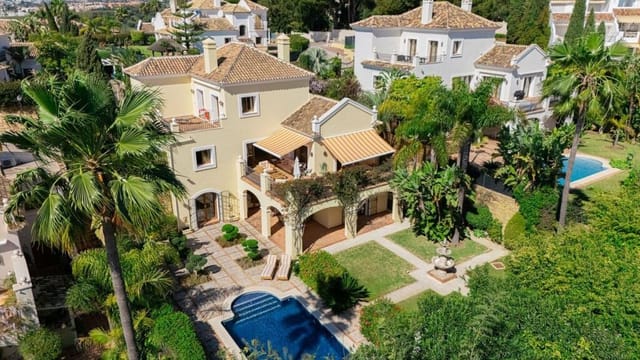
Stand on the roof terrace of this Quillan villa on a clear October morning and the Pyrenean ridgeline fills the horizon — the kind of view that stops you mid-coffee. Below, the garden is still dewy, the pool catching the first light off the mountains, and somewhere down in the valley the old town is already stirring. This is the rhythm that waits for you here, and it's the kind of thing that makes people stop looking the moment they see it. Quillan sits in the Aude valley at the point where the Languedoc plains start crumpling into serious mountain country. It's not a tourist trap. The Saturday market on the Place de la République is genuinely local — farmers selling their own cheese, wild mushrooms in autumn, cherries in June. The boulangerie on Rue du Barry gets their sourdough out around seven, and the Café du Commerce across from the church has been pulling the same espresso for longer than anyone can remember. This is a town that just gets on with things, which makes it an unexpectedly grounded place to own a holiday home in southern France. The villa itself spans 227 square metres across twelve rooms, built in the solid, sensible style that this part of Aude has always favoured — thick walls that keep things cool when July temperatures climb toward the mid-thirties, double-glazed windows that seal out both the wind and the world when you want quiet. That thermal insulation isn't a minor detail. In a house you'll use across seasons — ski weekends in January, long lunches in August — it matters more than almost anything else. The living room fireplace handles the other end of that equation beautifully: light it on a November evening and the room changes entirely, becomes the kind of space where people stay talking ... click here to read more
Picture 1

Stand on the upstairs balcony in the early morning and you'll see it: Óbidos Castle rising above the treeline to the east, its white-washed ramparts catching the first light while the lagoon shimmers silver in the distance to the west. This is the view that stops people mid-coffee and makes them reach for their phone to call their partner. It's also the view you'd wake up to every single day owning this four-bedroom Portuguese villa in the village of Sobral da Lagoa. The house sits in a quiet residential pocket just minutes from the medieval walled town of Óbidos, fully furnished and move-in ready — no renovation project, no waiting around. At 132 square metres spread across two floors, it has real, usable space. Not the kind of square footage that sounds impressive on paper but leaves you tripping over furniture. Rooms breathe here. Come through the front door into a proper entrance hall — none of that walking straight into a living room business — and you immediately get a sense of the layout. The main living room is generous, arranged for both dining and unwinding, with an open fireplace that earns its keep from November through February when the Atlantic air turns sharp. Two sets of French doors push open onto the front porch, and on still evenings you can hear the church bells from the old town drifting across the valley. That sound, more than anything, is what makes this part of Portugal feel genuinely different from the Algarve's beach-resort hum. The kitchen is fitted and functional, with a covered rear terrace attached — a brick-built table, bench seating, and the kind of morning light that makes even instant coffee taste better. Step out from the kitchen and you're a few seconds from the pool. Heated, large ... click here to read more
Picture 1

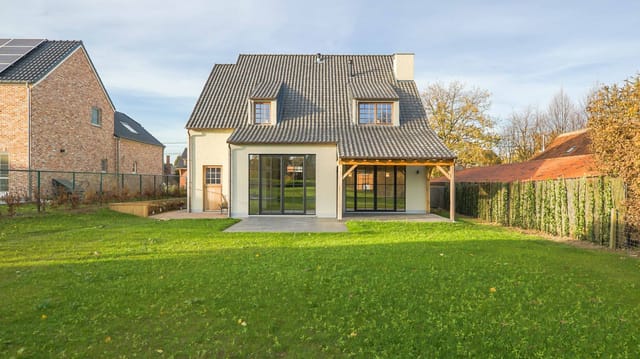
Saturday morning. You wake up to the sound of absolute nothing — no traffic, no sirens, just birdsong drifting in through bedroom windows that face a south-oriented garden still glistening from overnight dew. By the time you've made coffee in the Miele-fitted kitchen, sunlight is already cutting across the parquet floors, freshly sanded and refinished in 2023, and the heated indoor pool is sitting at exactly the temperature you set it to last night from your phone. That's not a fantasy. That's just a regular morning at Jachtlaan 23. Balen doesn't get the press that Brussels or Bruges attract, and honestly, that's a feature rather than a flaw. This is the Kempen region — a quietly confident corner of northern Belgium where pine forests stretch for kilometres, the Beverlo Canal cuts a calm silver line through the landscape, and the De Most nature reserve sits close enough to reach on foot or bike before lunch. Locals cycle the Kempense Meren route, a 50-kilometre trail threading past heathland, sand dunes, and the glittering Mol lakes, and they do it on a Tuesday afternoon without elbowing through crowds. Life here moves at a pace that feels almost conspicuously sane. The villa itself sits on 2,536 square metres of fully landscaped grounds on Jachtlaan, one of Balen's most composed residential streets — wide, tree-lined, unhurried. Step through the front door and the entrance hall immediately communicates something: this is not a house that tries too hard. The proportions are generous without being theatrical. Natural light floods in through oversized windows that frame the garden like living paintings, and the Crestron home automation system hums quietly in the background, waiting for input via iPad or built-in screen. ... click here to read more
Photo 1 of Jachtlaan 23

Picture this: it's six in the morning, the Baltic light is already doing something extraordinary over the water, and you're standing on your own private dock with a coffee in hand, watching a seal slip off the rocks fifty meters away. No neighbors. No noise but the gulls and the occasional creak of a rope. This is Kalvholmen — your own island in the Roslagen archipelago, about two and a half hours north of Stockholm, and one of the most genuinely rare pieces of Swedish coastal real estate to come to market in years. The island itself covers just over 8,000 square meters. That's enough space to feel completely alone without being remote to the point of inconvenience. Two private docks and a boathouse sit at the water's edge, so you arrive by boat — from the Östersjö dock parking area on the mainland, it's a short crossing — and the moment you step ashore, the mainland feels a world away. That daily transition, from car to boat to island, is something owners either find completely liberating or not for them at all. If the idea of it makes you lean forward, keep reading. The main villa dates to 1946, which in Swedish island terms means solid timber bones and a connection to the old fishing and sailing culture of the outer archipelago. A thorough renovation in 2008 brought it fully into the modern era: proper insulation for year-round use, a contemporary bathroom with shower, washing machine and tumble dryer, and a kitchen laid out for real cooking rather than holiday approximations. The open-plan living and dining area is generous enough for a long table full of people, and the Roslagen fireplace with its insert is the kind of thing you find yourself planning trips around once you've spent a November evening beside it, th ... click here to read more
Main house and sea view

Stand at the kitchen window on a Saturday morning and the view stops you. Beyond the granite countertop, past the glass, the rear garden opens up into a sweep of green that dissolves into the wooded edge of the Hoge Kempen National Park. No neighbor's rooftop. No road noise. Just fruit trees heavy with plums, magnolias doing their thing in spring, and a silence that feels earned. This is what 3,295 square meters of prime residential land in Maasmechelen actually feels like from the inside. The villa at Geloeslaan 22 sits well back from the street — deliberately so. The landscaped front garden acts as a buffer between you and the world, and the long driveway reads less like a parking solution and more like an arrival ritual. The natural slate roof, rare in Belgian residential builds of this scale, gives the facade a gravitas that's hard to manufacture and impossible to fake. It doesn't shout. It simply stands there, confident. Inside, 391 square meters of living space is organized around a logic that makes sense the moment you walk through the door. The entrance hallway branches naturally: left toward the double garage, right toward the staircase with its open gallery landing, straight ahead into the main living area. A guest WC sits just off the hall, alongside a proper cloakroom — the kind of detail that separates a house designed for real life from one designed for a brochure shoot. The garage itself deserves mention: heated, fitted with two floor drains and a utility sink, it works as hard as the rest of the house. The living room is where the property really shows its scale. Open fireplace on one wall. Large windows wrapping two elevations to pull in both front and rear garden views. On a grey January afternoon, ... click here to read more
Front view of Geloeslaan 22

On a clear morning in Bad Bentheim, the mist sits low over the Münsterland plain while you stand on the upper terrace of Am Berghang 70 with a coffee in hand. The view stretches for miles — church steeples, farmland, forest — and not a single rooftop breaks the horizon below you. This is what you bought the hillside for. Built in 2009 on a generous 1,055 m² plot along the slopes of the Bentheimer Berge, this four-bedroom Bauhaus-inspired villa is one of those rare properties that makes you understand why architects fell in love with glass and steel and honest materials. The ebony timber framing against floor-to-ceiling glazing isn't a design flourish — it's the whole philosophy. Light comes in from every angle. The Münsterland countryside becomes part of the interior. In late afternoon, when the sun drops behind the Bentheimer Wald and throws long amber light across the oak floors, the living room feels almost cinematic. At 224 m² across three levels, the house is large without feeling excessive. The ground floor revolves around an open-plan living space anchored by a fireplace and a soaring gallery that connects visually to the floor above. Two terraces push the living space outward — one for morning coffee in the east-facing sun, one for long summer evenings facing west. A concealed pantry keeps the kitchen uncluttered. A ground-floor office with its own natural light makes remote working genuinely possible, not just technically feasible. The guest toilet is tucked discreetly away. Everything has been thought through. The staircase — solid wood with a frameless glass balustrade — is the kind of thing you notice every single day. It leads to a first floor where the gallery is bathed in shifting light throughout the s ... click here to read more
Photo 1 of Am Berghang 70

Step outside on a Saturday morning in Poppel and the world slows right down. The garden is still dewy, a pair of herons are working the edges of your pond, and somewhere behind the treeline the village church bell marks the hour. This is what 370 square metres of architect-designed villa on Beekseweg 23 actually feels like to live in — not a postcard, just a quietly exceptional ordinary day. Poppel sits right on the Belgian-Dutch border, tucked between Turnhout to the south and Tilburg just across the frontier. It's the kind of village that locals fiercely protect from overexposure. The surrounding landscape — heathlands, pine forests, and river valleys — falls within the Gorp en Roovert and Rovertse Ley nature reserves, two of Brabant's most rewarding spots for long cycling routes and trail walks that most tourists never find. In autumn the heather turns the heathland purple-pink for a few brief weeks, and the village cycling paths that fan out in every direction become genuinely addictive. Come winter, the lanes empty out entirely, and the whole area takes on a quiet drama that suits a wood fire and a glass of Trappist ale from the nearby Westmalle route perfectly. The villa itself was conceived by an architect who clearly understood that a house and its garden should read as one continuous space. From the kitchen — properly equipped, not a showroom — large glass doors fold back onto the main terrace so that summer dinners simply migrate outdoors without ceremony. The pond sits just beyond, catching the late afternoon light. It's the kind of view that stops conversations mid-sentence. A second terrace wraps around another corner of the garden, framed by fruit trees that produce enough in a good year to make jams and ... click here to read more
Front view of Beekseweg 23

On a quiet Sunday morning, you crack the kitchen window above the breakfast nook and the smell of cut grass drifts in from the garden. The pond catches the early light. Beyond the fence line, the tree canopy of the adjacent forest is doing that slow, golden thing it does in late September. The coffee is on. The kids are still upstairs. This — right here — is what 297 square metres of well-built Belgian villa feels like from the inside. Hogeschootlaan 5 sits in one of Kapellen's most sought-after villa streets, a leafy residential lane where houses are set well back from the road and plots are generous enough that you actually feel the space between you and your neighbours. The address sits in the southwest corner of Kapellen's outer ring, meaning you get the quiet without the isolation. The Kapellen Markt — with its Friday market stalls selling Flemish strawberries and artisan bread — is a short cycle away. The N11 toward Antwerp is less than five minutes by car, and from there the E19 north puts you at the Dutch border in under half an hour. The villa itself follows the Long Island architectural tradition: wide, low-slung proportions, generous overhangs, and a visual language that leans into horizontal lines and natural materials. It reads quietly confident from the street. The gated driveway opens onto a broad forecourt with parking for several cars — practical when the family descends or when you're hosting neighbours for a summer terrace dinner. The integrated double garage, with its automatic door, handles the everyday. Inside, the entrance hall sets the tone immediately. High ceilings. A lot of light. The kind of proportions that make people stop and say something before they've even looked around properly. To t ... click here to read more
Front view of Hogeschootlaan 5

Step outside on a Saturday morning in early October and you'll hear it before you see it — the soft rustle of beech and pine that lines Woudweg, a few leaves already turning amber, the air carrying that particular freshness you only get in the Kempen countryside. Pelt sits at the edge of the Grote Heide, one of the largest heathland nature reserves in Belgium, and from this property's southwest-facing terrace you feel that proximity in a very immediate way. Not through a distant view, but through birdsong, through the texture of light through a tree line, through the simple fact that the nearest neighbor is far enough away that you can eat breakfast outside in actual quiet. Built to completion in 2025 and finished to a standard that very few new-builds in this part of Limburg can match, this single-storey villa on Woudweg 11-A spans 387 square meters across a generous 1,917-square-meter plot. Single-storey living tends to get undersold. No stairs. Every room on one level. For families with young children, for aging parents visiting for the summer, for anyone who's ever carried a sleeping child up three flights — it's a genuinely different way of living, and this house is designed around it. Walk through the front door and you enter a wide central hallway that sets the tone immediately. Pale, clean lines. Nothing cluttered. The kind of entrance hall that makes you exhale. From here, the floor-to-ceiling windows of the open living space draw the eye straight through to the garden, and on a clear day the light floods the entire ground floor in a way that makes the space feel considerably larger than even the generous square footage suggests. The kitchen is the kind that gets used. Miele throughout — two combination ovens ... click here to read more
Front view of Woudweg 11 - A

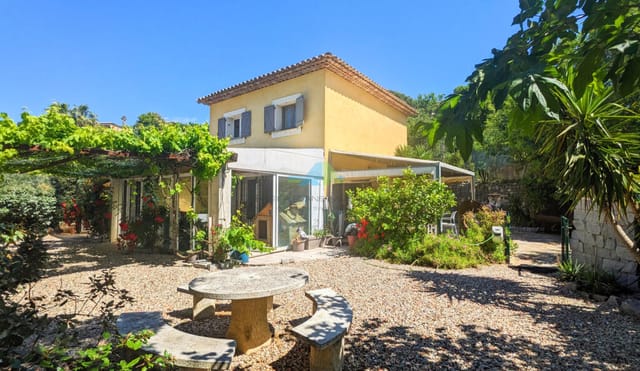
On a quiet morning in Chamberet, the smell of bread from the boulangerie on the main square drifts up through an open window before you've even thought about getting dressed. That's the kind of life this stone house makes possible. It sits close enough to the village centre that you walk everywhere — the weekly market, the café terrasse where the locals nurse their café allongé for an hour — yet the rear garden is private enough that you'd never know a soul was nearby. Built across three levels, the house is solidly constructed in the local stone that defines the Corrèze vernacular: thick walls that stay cool in July and hold the warmth from the marble fireplace through October and November. That fireplace, set in the open-plan kitchen and dining room on the ground floor, is the social heart of the place. The solid oak kitchen units run along one wall, fully equipped with a gas hob, oven, integrated dishwasher and fridge-freezer, and a breakfast bar where a pot of coffee and the morning papers make a perfectly reasonable excuse to sit for an hour. Garden views from the living area mean you're watching the seasons turn without having to step outside — though the wooden deck, right off the basement level and accessible straight from the garden, makes it very hard to stay in. Upstairs, the three bedrooms each carry an original fireplace — non-working now, but the kind of architectural detail that gives a room its personality. These aren't decorative afterthoughts; they're the reason the first floor feels like a proper French country house rather than a renovation project with aspirations. A shower room serves the upper floor, and two dressing rooms along the landing offer the kind of storage that older French houses rarel ... click here to read more
Picture 1

Six o'clock on a crisp Flemish morning. You walk out through the back door in your boots, coffee still warm in your hand, and the horses are already moving in the paddocks. The mist sits low over the meadows. This is not a weekend retreat you squeeze into. It's a full life — the kind most equestrian families spend years searching for and rarely find in one address. Diestersteenweg 25 sits on the edge of Maaseik, a town on the Maas river in Belgium's Limburg province that most international buyers haven't discovered yet — which is precisely what makes it interesting. Maaseik is the kind of place where the Friday market on the Markt square still matters, where you can get a proper carbonnade flamande at De Watermolen without a reservation, and where the cycle routes along the river stretch for kilometres without a traffic light in sight. It's quiet in the right way. Not isolated — just unhurried. The villa itself is a solid, detached property of 250 square metres. Four bedrooms, two bathrooms, and a layout that has been thoughtfully updated without losing the grounded, practical character that suits a working equestrian estate. New joinery was fitted in 2020, a condensing boiler installed in 2022, and the insulation throughout meets current standards. The EPC rating reflects that. You won't need to spend the first two years renovating — you can move straight in and focus on what actually matters. Step through the entrance hall and the ground floor opens up generously. The living room runs wide, anchored by a gas fireplace that does real work through Belgian winters — and Limburg winters can be grey and damp from November through February, so you'll want it. Off the living area, there's a separate office that functions e ... click here to read more
Front view of Diestersteenweg 25

Step out of the double garage doors on a Saturday morning in June and the garden is already warm. The pool is catching light from the south-west, the automated sprinklers have just finished their cycle on the lawn, and from the open kitchen window drifts the smell of coffee brewing on the Miele. This is Elzendreef 36 — a thatched villa of nearly 500 square metres on a 2,643 m² plot in Essen-Heikant, the quiet green flank of a Belgian border town that most international buyers haven't discovered yet. At €1,400,000, it won't stay undiscovered for long. Essen itself sits right at the Dutch-Belgian border in the Antwerp province, a position that gives it an oddly privileged geography. You're 45 minutes from Antwerp's city centre by car, roughly an hour from Brussels, and crossing into the Netherlands at Roosendaal takes about fifteen minutes. For a buyer who wants a serious second home with genuine countryside around it — but doesn't want to be stranded — this location is close to ideal. Rotterdam's airport is under an hour away; Antwerp Airport even less. The A1 motorway corridor keeps everything connected without the traffic chaos of living closer to either city. The village itself is genuinely pleasant without being precious about it. There's a local bakery on Stationsstraat that sells Vlaamse boterkoeken on weekend mornings, a handful of brown-café bars where locals drink Duvel on tap, and a weekly market that stocks regional cheeses and seasonal produce from the Kempen interior. Children will find riding schools and cycling paths before they find any reason to complain. The broader Kempen region — flat, forested, crossed by slow cycling routes and bordered by heathland nature reserves — is one of the most underrated l ... click here to read more
Front view of Elzendreef 36

Stand at the kitchen window on a September morning, steam rising from your coffee cup, and watch the mist lift slowly off the Värmland fields. Fifty meters away, through a line of birch trees, is Mårbacka — the estate where Selma Lagerlöf wrote the stories that earned her the Nobel Prize in 1909. That's not a marketing line. That's just Tuesday here. Mårbacka 34, known locally as Mårbacka Där Ner, sits on roughly 18,000 square meters of Värmland countryside just outside Sunne in west-central Sweden. The main house dates in spirit to the 18th century — its proportions, its symmetry, the way the windows frame the meadows beyond — but it was fully rebuilt in 1998 after a fire, using materials and methods that honored the original architecture rather than replacing it. The result is a house that feels genuinely old without demanding constant maintenance. Solid wood floors, about four centimeters thick and running the full length of each room, have the kind of depth and warmth you simply don't find in new construction. Every room has its own fireplace or stove — some are classic Swedish kakelugnar (tiled stoves), some are open hearths, others are vedspis wood-burning stoves — and every single one has its own individual flue in the chimney. That detail alone tells you something about how this house was rebuilt: with patience, with intention, without shortcuts. The ground floor sets a particular mood. The kitchen is genuinely the center of gravity — a large cooking island, a wood stove, an induction hob, an electric AGA cooker, multiple ovens, and a wine climate cabinet. This is a kitchen designed for people who actually cook, not for photographs. After a day out on Lake Fryken — the long, narrow lake that stretches through t ... click here to read more
Front view of Mårbacka 34

Step outside on a Saturday morning in late September. The garden faces south, so even as the season turns, the light falls long and warm across the terrace. The jacuzzi under the gazebo is already warm. Somewhere beyond the treeline, the Hoge Kempen National Park is waking up — Belgium's largest national park, just minutes down the road — and you've got nowhere to be but here. That's the daily reality of owning this detached villa on Dopheidestraat in Dilsen-Stokkem, a three-bedroom property sitting on 722 square metres in one of the most quietly compelling corners of the Belgian-Dutch borderlands. Dilsen-Stokkem doesn't make noise about itself. That's half the appeal. Tucked into the northeastern tip of Belgium's Limburg province, right where the Maas river curves toward the Netherlands, it's the kind of town that rewards people who actually look. The Thursday market in Stokkem brings local farmers selling Limburg asparagus in spring and sweet Elstar apples come October. The Kempisch Restaurant on the edge of town does a slow-cooked paling in 't groen — eel simmered in a sharp green herb sauce — that has nothing to do with the tourist circuit and everything to do with how people actually eat here. Cycling trails from the Fietsroute Kempen & Maasland pass practically at your doorstep, with routes that wind past mining heritage sites, open heathland, and the glittering surface of the Maasplassen lakes just to the northeast. Those lakes are worth knowing about. The Maasplassen — a chain of former gravel extraction pits turned recreation waters — stretch between Dilsen-Stokkem and the Dutch border. In summer, they fill with swimmers, windsurfers, and families with paddleboards. In winter, when the crowds are gone, they t ... click here to read more
Front view of Dopheidestraat 8, Dilsen-Stokkem

On a quiet Saturday morning in Locmalo, the smell of butter and buckwheat drifts up from the crêperie two streets over, and church bells ring out across the slate rooftops of Guémené-sur-Scorff. You've just had coffee in your small stone courtyard, the kind of private little outdoor space that Breton houses guard jealously, and the only decision facing you is whether to walk the 400 meters into the historic town center now or after a second cup. This is what owning a holiday home in Morbihan actually feels like. The house itself is old in the best possible way. The stone walls are thick and cool in summer, and when November rolls in off the Atlantic and the fireplace in the lounge starts earning its keep, the whole ground floor turns into exactly the kind of refuge you'd imagine when you first started dreaming about a second home in France. The open-plan kitchen, dining area, and sitting room share roughly 30 square meters of ground floor space — tight by some standards, but deeply livable, especially when you consider how much Breton life happens outdoors and in the streets rather than indoors. The spiral stone staircase is a detail you won't find in a modern apartment build; it winds upward with genuine architectural character, connecting the rooms in a way that feels genuinely old-world rather than staged. That courtyard deserves its own moment. About 30 square meters, private, enclosed, catching afternoon sun. At 70 square meters total, space inside is modest, so this little outdoor pocket becomes a genuine extension of the living area through spring, summer, and the long mild Breton autumn. A small table, two chairs, a carafe of Muscadet — that's the entire setup you need. Simple, but that's the point. Up the sta ... click here to read more
Picture 1

Stand at the upper floor windows of Aidengrove House on a clear morning and you can watch container ships ghost silently across the Firth of Clyde while the hills of Argyll turn gold in the early light. It's the kind of view that makes you put your coffee down just to stare. This is Kilcreggan — a quietly extraordinary village clinging to the tip of the Rosneath Peninsula — and this five-bedroom stone villa on Argyll Road is one of its most compelling addresses. The house itself is a proper Scottish stone villa, the kind built to last centuries and increasingly rare to find in genuine good condition. At 209 square metres across two floors, it has the bones of a grand Victorian family home and the practical upgrades of a property that has been genuinely cared for. The south-west facing orientation means the principal rooms drink in afternoon and evening light, with the gardens and the water beyond framed like a painting that changes every hour. Pull up the driveway — there's ample off-street parking, a small but meaningful luxury for any property in this part of the peninsula — and you're greeted by mature landscaping that took decades to establish. Beech hedges, established shrubs, and a mix of young and old planting give the enclosed front and rear gardens a sense of depth and seclusion that a new-build could never replicate. In late spring, the front lawn catches the last of the day's sun until almost nine in the evening. There are few better places to end a long summer day. Inside, the reception hall sets the tone immediately: high ceilings, original stonework detailing, and a flow between rooms that feels generous rather than formal. The principal lounge connects through to a sitting room, and the arrangement work ... click here to read more
Front view of Aidengrove House

Picture this: a Saturday morning in late June, the air already warm by nine o'clock, the Pyrenees doing that thing they do where the peaks turn pink before the valley below even wakes up. You're sitting on your own terrace with a coffee, somewhere between Toulouse and the mountains, and you genuinely don't have a plan for the day. That's Daumazan-sur-Arize. That's Villa 133. This fully renovated, detached three-bedroom villa sits inside the established Château Cazalères holiday park on the edge of this quietly compelling village in the Ariège — a département that most of France still hasn't fully discovered, which is precisely the point. At 100 square metres on a 400 m² private plot, the property was stripped back and rebuilt to a high spec, and it shows. This isn't a cosmetic refresh. The bathrooms have underfloor heating and walk-in showers, the kitchen is fitted with modern appliances and enough workspace that someone who actually cooks will be happy, and the whole downstairs flows out to the garden through wide glass doors. Two additional separate WCs mean six guests can share the space without the morning shuffle. The living room catches the southern light from mid-morning onwards. In winter — and the Ariège gets real winters, which is part of its character — that warmth through the glass is something you'll appreciate. In summer, the garden terrace takes over. It's south-facing, properly private, and sized for a long lunch that drifts into aperitifs. There's a dedicated barbecue space, and the surrounding park greenery keeps it sheltered without hemming it in. Château Cazalères has been running long enough to have ironed out the things that matter. The pool complex is large — multiple pools, including a dedicate ... click here to read more
Front view of Villa 133 at Chateau Cazalères

Step outside the kitchen door on a September morning and the view hits you before the coffee does. Rolling causse plateau, oak woodland dissolving into mist, and not a single rooftop visible in any direction. This is Sénaillac-Lauzès — a quiet corner of the Lot department that most people drive through on the way somewhere else, which is precisely why it's worth stopping. The villa at 630 Route de la Tuilerie sits on 10 full hectares of mixed land — meadow, mature woodland, and manicured garden — at the end of a private lane about 35 kilometres north of Cahors. Four bedrooms, two bathrooms, a separate furnished guest house, a 10 x 5.5 metre pool, a barn, outbuildings, and panoramic views that on a clear day seem to reach the next département. At €379,500, it's the kind of property that makes buyers from Paris, London, or Amsterdam do a double take and then immediately book a viewing. The main house runs to 210 square metres across two floors. Ground level is where daily life happens. The living room has underfloor heating fed by a heat pump installed in 2023 and a wood-burning stove added the same year — so the room is genuinely warm, not just theoretically warm. There's a real difference between a house with a stove for atmosphere and a house with a stove that actually works. This is the latter. The kitchen clocks in at 30 square metres, which means two people can cook at the same time without negotiating territory. It's fully fitted: five-burner gas hob, oven, microwave, dishwasher, built-in fridge, water softener, and air conditioning for the height of summer. The terrace opens directly off the kitchen — eat outside from April through October without a second thought. Three bedrooms sit on the ground floor, measuri ... click here to read more
Front view of the house and grounds

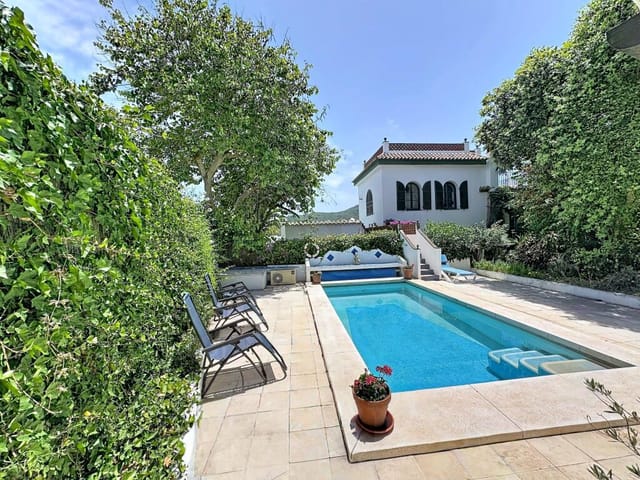
On a clear morning in Laurens, you open the bedroom shutters—electric, silent—and the air that comes in smells like sun-warmed garrigue and something faintly floral from the vines on the hillside. The village below is just waking up. A motorbike passes the café. That's about as busy as it gets. This is life in the Hérault heartland, and if you've been looking for a second home that delivers genuine southern French countryside without the tourist-trap prices of Provence, this four-bedroom villa might be the answer you didn't know you were this close to finding. Built in 2010 on the edge of Laurens—a compact stone village in the Faugères wine appellation—the property sits on a generous plot with uninterrupted views across the vines and rolling hills that define this stretch of Languedoc-Roussillon. It's not ancient, and that matters. The bones are solid, the design is contemporary bastide: clean lines, generous proportions, Mediterranean palette, none of the maintenance headaches that come with centuries-old stone. In good condition throughout, it's the kind of place you can unlock on a Friday evening in July and be swimming before dark. Inside, the ground floor is organized around a large lounge and dining room with an open fireplace—the kind you'll actually use from October through April, when the Hérault evenings cool fast and the smell of woodsmoke drifts through the valley. The fitted kitchen comes equipped with the full complement: oven, induction hob, extractor, integrated dishwasher, even a built-in fryer for when you've come back from the Béziers market with a bag of local potatoes and some merguez. French doors open directly onto a wide terrace. Marble and travertine finishes throughout give the interiors a pol ... click here to read more
Photo 1

On a warm June evening in Hamont-Achel, you slide open the doors from the extension into the garden, the pool deck already rolled back, kids splashing in the heated water while the poolhouse gas stove keeps the evening chill at bay. The smell of pine drifts in from the Bosstraat treeline. The solar panels have been quietly charging everything all day — the car, the heat pump, the house — and your energy bill is, for the third month in a row, essentially nothing. This is not a fantasy. This is Tuesday at Bosstraat 62. Belgium's Limburg province doesn't get the international press that the Ardennes or Brussels do, but locals know exactly what they have. Hamont-Achel sits right at the northern tip of Belgian Limburg, pressed against the Dutch border near Valkenswaard and a short drive from Eindhoven. The landscape here is flat, forested heathland — the Kempen region — criss-crossed by hundreds of kilometres of dedicated cycling paths that weave through nature reserves like the Averbode Abbey woods and the Hoge Kempen National Park. On weekends, the Bosstraat neighbourhood is quiet enough to hear woodpeckers. On weekday mornings, you're on the E314 motorway within fifteen minutes, which puts Hasselt in forty and Brussels in ninety. The town itself punches well above its size. The Achel Trappist Brewery, one of the last authentic Trappist producers in the world, is just a few kilometres down the road — you can pick up their distinctive amber ales directly at the source. The Saturday market on the Marktplein fills up with local cheese, fresh-cut flowers, and Limburg vlaai (the regional custard tart that every Belgian will insist is better here than anywhere else). There are solid neighbourhood restaurants doing Belgian class ... click here to read more
Front view of Bosstraat 62

Step out onto the master bedroom balcony on a Saturday morning in October, coffee in hand, and watch the mist lift slowly off the meadows that run all the way to the treeline. That view — unbroken, unhurried, nothing but green — is the quiet headline of this property. Everything else is detail. Set on Leeuweriklaan in the prestigious villa district of Aarleheide in Poppel, this 300 m² four-bedroom villa sits on a generous 1,800 m² plot in one of Belgian Kempen's most coveted corners. Ravels municipality has long attracted those who want real countryside without sacrificing proximity to cities — Brussels is under two hours, Antwerp just 60 kilometres south, and the Dutch city of Tilburg is a 20-minute drive across the border. For international buyers looking for a second home in Belgium that genuinely delivers on the "escape" promise, this part of north Antwerp province delivers in ways that the more advertised coastal towns simply can't. The neighbourhood itself sets the tone the moment you turn into the street. Wide plots, mature trees, long driveways. No terrace houses, no apartment blocks. An electric entrance gate opens onto a broad driveway flanked by clipped hedging, and the scale of the property becomes clear immediately. A double garage with newly fitted electric doors and a double carport sit to one side, with a detached shed handling overflow storage — bikes, kayaks, garden tools, whatever life accumulates. Inside, the entrance hall is proper rather than perfunctory: a cloakroom, a guest toilet, and an adjacent flexible room that the current owners use as a home office but could just as easily become a playroom, treatment room, or study depending on who moves in next. The villa has that adaptability built in ... click here to read more
Front view of Leeuweriklaan 10

Step outside on a Saturday morning in late September, coffee in hand, and the only sound you'll hear is wind moving through the tall beech hedges that ring the garden. The terraces are still catching dew. Pelt is already awake — cyclists heading toward the Lommelse Sahara, dog walkers cutting through the heathland — but back here on Mereldreef, time moves at your pace. That's the real selling point of this property. Not just the six bedrooms or the 418 square metres of living space, but the particular quality of quiet you find in the Grote Heide villa district, where roads are wide, plots are generous, and neighbours respect the distance between them. The villa itself was built in 1980 using materials that were built to last — and it shows. The bones are solid, the spaces are genuinely large, and everything you'd expect in a well-maintained home of this calibre is present: double-glazed windows, air conditioning, a fireplace in the living room that earns its place from October through March, and an EPC energy rating of B, which matters practically when you're heating 418m² of Belgian villa through a proper winter. The current owners have expanded and renovated carefully over the years, and the result feels coherent rather than patchwork. There are no awkward additions, no compromises that make you scratch your head. It functions. Walk through the entrance hall — properly grand, with the kind of ceiling height that makes you straighten up instinctively — and the ground floor opens up around you. There's a spacious living room, a formal dining area, a kitchen that works for actual cooking rather than just looking good in photographs, a dedicated home office, a utility room, a laundry room, and two separate toilets. That ... click here to read more
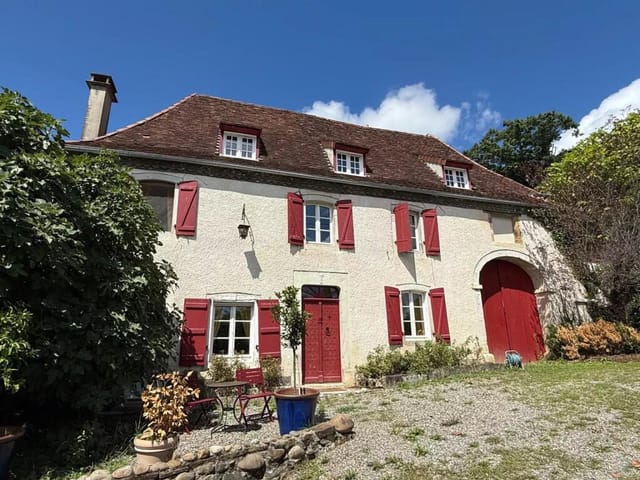
Photo 1 of Mereldreef 10

On a still Sunday morning, the smell of fresh stroopwafels drifts from the bakery two blocks down Lindendreef, and through the double garden doors of this villa's dining room, you can hear the faint chime of the Sint-Katharinakerk bell tower marking the hour. That's the rhythm of life here — unhurried, rooted, and genuinely good. Lindendreef 78 sits on one of Hoogstraten's most coveted residential streets, and it's not hard to see why. The tree-lined avenue has a sense of permanence to it, the kind of address where neighbors wave, kids ride bikes after school, and summer evenings stretch out on stone terraces until the light finally gives up around ten. The property itself was thoroughly renovated in 2021 — not a cosmetic refresh, but a considered, top-to-bottom overhaul with serious attention paid to how a family actually uses a home day to day. Step through the front door and the entrance hall sets the tone immediately: generous proportions, warm oak parquet underfoot, and a staircase that draws your eye upward. The ground floor has been laid out so that everything flows. The TV room at the front gives way to a central sitting room anchored by a gas fireplace — the kind you actually light in November and sit beside with a glass of Belgian abbey ale rather than just a decorative feature. From there, the space opens fully into the dining area and a kitchen that connects through to the orangery. Big windows on the garden side flood the whole rear of the house with afternoon light, and when the weather cooperates — which in the Kempen region it does more than people expect from Belgium — you swing both sets of double garden doors wide and the terrace becomes a seamless extension of the living space. That terrace is some ... click here to read more
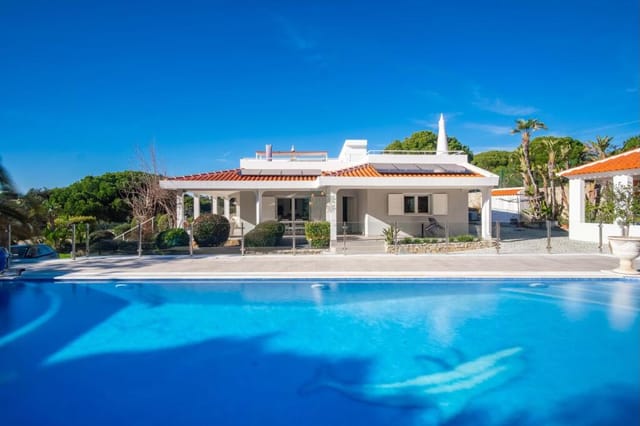
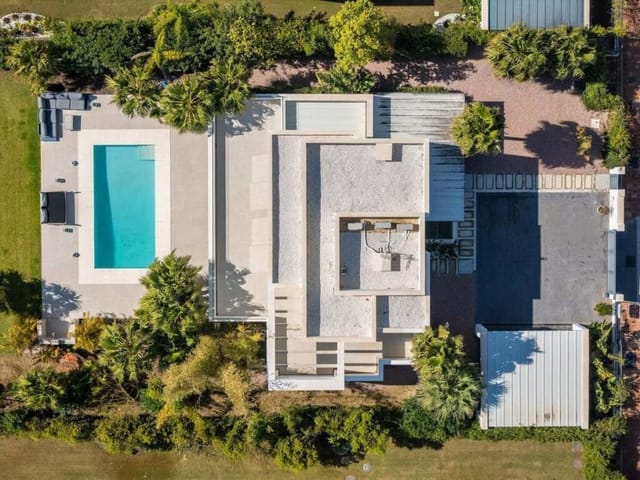
Photo 1 of Lindendreef 78

Stand on the west-facing terrace at dusk and watch the Lot River catch the last light of a summer evening. The water goes gold, then copper. Swallows cut low over the surface. Somewhere across the valley, a church bell counts out eight o'clock from a village you can't quite see. This is Anglars-Juillac, a quiet corner of the Lot department that most visitors to France never find — which is precisely why those who do find it tend to stay. Set along Chemin du Saulou, this four-bedroom villa sits on roughly 7,000 square metres of grounds that run directly down to the riverbank. That's not marketing language for a strip of grass near water — the property genuinely touches the Lot, giving you private access for morning swims, a canoe launch, or simply sitting on the bank with a glass of Cahors Malbec as the light fades. The saltwater pool, measuring around 12 by 4 metres and fitted with night lighting, makes that choice a genuine dilemma on warm evenings. The garden itself deserves its own mention. Walnut trees, cherry, plum, apple, pear — it's the kind of productive, shaded landscape that takes decades to establish and can't be replicated by any developer. A large pond sits within the grounds, drawing herons and kingfishers with reliable regularity. The mature canopy keeps the terraces cool through July and August when the temperatures in the Lot Valley push reliably into the high twenties and low thirties. The villa spans approximately 200 square metres across three levels, built in the pre-1906 era of solid stone and thick walls that keep interiors naturally cool in summer and hold warmth in winter. The ground floor opens into a flexible space that currently works as a studio or office — big, light-filled, and independe ... click here to read more

Front view of the villa and garden

Saturday morning, and the only sound is birdsong threading through the open bedroom window. No traffic hum, no city noise — just the low rustle of a southwest breeze moving through the garden hedgerow and the distant clang of a church bell from the old Sint-Petrus church in Ravels village. You came here for exactly this. And somehow, it's even quieter than you imagined. De Buskens 13 sits in one of the most sought-after residential pockets of Ravels-Eel, a corner of the Belgian Campine region that manages to feel genuinely off the beaten track while staying remarkably well-connected. The Dutch border is barely five minutes by car. Antwerp is about an hour. Eindhoven — with its international airport — sits comfortably within reach for European weekenders flying in. Yet when you're standing in this garden on a Tuesday afternoon, the rest of the world feels optional. Built in 2010, the villa covers 347 square metres across three well-considered floors, and the thing that strikes you on a first walk-through is how thoughtfully it all flows. Nothing feels squeezed or tacked on. The entrance hall sets a composed, unhurried tone — there's a guest toilet immediately off it, a detail that sounds minor until the tenth dinner party when you're grateful for it. The main living space opens generously off the hall, anchored by a wood-burning fireplace that becomes the undisputed centrepiece from October through March. Pull the chairs close, light it, and the room transforms completely. In summer, the same room breathes outward toward the dining area and into the garden beyond, the southwest orientation meaning light pours through well into the evening. The kitchen is fully fitted with modern built-in appliances and includes a break ... click here to read more

Front view of De Buskens 13

Stand on the south-facing terrace on a clear winter morning and you can pick out the switchbacks of the Coll de Rates snaking up into the mountain behind a patchwork of orange groves and old almond terraces. The air has that particular inland Costa Blanca quality — dry, warm even in January, carrying the faint sweetness of citrus blossom. This is not the Spain of beach bars and high-rises. This is the Jalon Valley, and once you've spent a week here, the coast starts to feel like a commute rather than a destination. The villa at Calle Benarrosa 1 sits on a generous corner plot of roughly 976 square metres on the edge of Alcalalí village. Corner plots in this valley are genuinely hard to come by — the extra breathing room means you get open sightlines in two directions and the light that comes with it. The total built area runs to around 227 square metres across two fully independent levels, which is what makes this property so versatile compared to a typical single-dwelling purchase. The upper level is the main residence. The L-shaped living room is large enough that the sitting area and the dining table don't compete for space — something you appreciate the moment you're hosting eight people for Sunday lunch and nobody feels squeezed. The kitchen has a utility room off it, useful for the kind of practical storage that always gets overlooked in holiday property searches. A covered terrace runs along the south face of this floor, catching the afternoon sun deep into October, sheltered enough to eat outside in a light jacket well past the point when the coast has gone grey. Below, the guest apartment is fully self-contained. Its own entrance, its own living room with kitchen, two bedrooms, a bathroom, and a private terra ... click here to read more

Main exterior view of Calle Benarrosa 1

Stand at the kitchen window on a Saturday morning and watch two herons circle the garden pond while coffee brews on the granite countertop. The automatic gate is closed, the mature trees are doing their job blocking out the world, and the only sound is birdsong filtering through the pines at the back of the plot. This is Essensteenweg 53 — a 360-square-meter villa on 4,255 square meters of land in Brasschaat, one of the most coveted green addresses in the entire Belgian province of Antwerp. Brasschaat sits roughly twelve kilometers north of Antwerp's cathedral spires and diamond quarter, close enough to catch a weeknight concert at the deSingel arts campus or a Sunday morning stroll through the Vrijdagmarkt antique market, yet far enough that the streets here are lined with century-old oaks rather than tram cables. The municipality has a reputation — fiercely protected by the people who live here — for wide forested avenues, exceptional international schools like the Antwerp International School on Dref, and the kind of quiet that money genuinely can't buy in the city itself. Families relocating from London, Amsterdam, or Paris who want a proper garden and room to breathe without sacrificing urban access tend to discover Brasschaat and stay for decades. The villa itself sits behind an automatic gate with a videophone system, and the driveway alone tells you something about the scale of the property — there's room for multiple cars before you even reach the double integrated garage with its separate automatic doors. Inside, the entrance hall opens up generously, with a guest toilet tucked away and the main living space spreading out in front of you across three distinct zones. The formal sitting room has an open firepla ... click here to read more

Front view of Essensteenweg 53

Step outside on a Saturday morning in Wuustwezel and the air carries something you simply don't find in the city — a mix of damp grass, pine, and absolute quiet. The nearest neighbor is far enough away that you hear birds before traffic. This is what 289 square meters of private villa life on the Belgian-Dutch border actually feels like. Built in 2012 to high specifications, this five-bedroom detached villa on Moleneind sits on a 2,545 m² plot that wraps around the property with a landscaped garden, a serene pond, and open green space being freshly leveled and seeded as part of an ongoing upgrade. The bones of this home are exceptional — an A energy label, full underfloor heating via heat pump, roof-to-floor insulation, and double glazing throughout. Your energy bills will surprise you. In the best way. Walk through the front door and the entrance hall sets the tone immediately. It's generous, with a guest toilet tucked away and a staircase rising to the floors above. Double doors pull open into the main living space — a wide, open-plan area where the dining room flows into the kitchen without any awkward transitions. There's a practical storage room off the kitchen and a separate utility space that handles the behind-the-scenes business of daily life so the main rooms stay uncluttered. Late Sunday afternoons in this kitchen, with the garden visible through the rear windows and something slow-cooking on the hob, genuinely feel like a different pace of life. The first floor is where the master suite earns its name. A proper dressing room connects to a bathroom that comes with a freestanding bathtub, walk-in shower, and double washbasin — not a compromise version, but the real thing. There's also a laundry room on this ... click here to read more

Photo 1 of Moleneind 9

Stand in the courtyard at seven in the morning, coffee in hand, and listen. A wood pigeon calls from the old walnut tree. Water trickles from the decorative pond. Somewhere beyond the stone walls, the Loire Valley is waking up. This is the kind of quiet that city people spend years chasing — and here, it's yours before breakfast. At 1585 Route de Pierrefitte, this former abbey farm sits on a fully fenced 5,435 m² plot in Vézelin-sur-Loire, a small commune perched in the rolling hills above Saint-Étienne, roughly equidistant between Lyon and the volcanic highlands of Auvergne. The estate has spent the last twenty-five years operating as a sabbatical and retreat center — a place where executives, academics, and creatives came to think clearly and leave restored. That history has shaped every room. The proportions are generous, the finishes are honest, and the whole place carries the unhurried confidence of a building that has seen several lifetimes and survived them all. The main building runs to approximately 450 m² across two floors. Ground level holds a sitting room anchored by a working insert fireplace — the kind you actually use in October, not just admire — plus a formal dining room with an original alcove that seats a long table comfortably. There's a separate office or secondary lounge, a ground-floor bedroom with its own en-suite bathroom, and a professional restaurant kitchen fitted with commercial-grade equipment. Spend a Sunday afternoon in that kitchen producing a pot-au-feu with vegetables from Roanne market and you'll understand exactly why the retreat guests never wanted to leave. Upstairs, approximately ten guest rooms spread across the floor alongside a shared lounge that has doubled as a conference ro ... click here to read more

Front view of the estate

Early morning, the bay of Jávea looks like hammered silver from the top terrace. The sun hasn't cleared the Montgó massif yet, coffee cup warm in both hands, and you can already trace the full arc of coastline from the old port all the way out to the limestone headland of Cap de Sant Antoni. Nobody else is awake. This is yours. That particular moment — quiet, private, genuinely extraordinary — is what sets this five-bedroom villa on Carrer del Roget apart from anything else at this price point on the Costa Blanca. It isn't just that the views are good. It's that almost every room in the house catches them, and the architecture keeps getting out of the way to let them in. The villa reads Ibiza — whitewashed render, clean geometric lines, deep-set terraces that create shade without blocking sightlines — but it sits on an elevated 1,090 square metre plot in Jávea's hillside residential belt, which means what you actually get is the quieter, more rooted version of that aesthetic. No seasonal circus. No party boats audible from the garden. Just the cicadas and the occasional church bell drifting up from town. Spread across three floors and roughly 250 square metres of interior space, the layout has been thought through for how people actually use a property like this — not for a brochure floor plan. The uppermost level is almost entirely given over to the master suite, which has its own private terrace cantilevered toward the sea view. Sleep with the doors open and you'll hear nothing but wind through the rosemary hedges on the slope below. Come down to the middle floor and the house opens up: a living room anchored by a wood-burning fireplace (more useful than you'd think — Jávea winters are mild but real), an open kitche ... click here to read more

Main view of the villa with sea panorama

On a Sunday morning in Rijkevorsel, the light comes in sideways through the kitchen's wide garden-facing windows. Coffee is already brewing — the built-in machine handles that — and outside, dew is still sitting on the grass of the fully fenced rear garden. No neighbors in the sightline. Just open Flemish countryside rolling out behind the terrace. This is the pace this villa runs at, and once you've spent a weekend here, it's hard to argue with it. Sint-Lenaartsesteenweg 80 sits on a 1,389 square meter plot in the heart of the Kempen region, one of Belgium's most underrated pockets of calm. The house itself is 267 square meters — a substantial four-bedroom villa that has been thoroughly renovated without losing the bones that gave it character in the first place. The wrought-iron interior door that separates the entrance hall from the main living area? That stayed. The oak parquet floors throughout the ground floor? Those stayed too. What changed is everything you don't see at first: the insulation, the systems, the kitchen, the bathrooms — all brought squarely into the present. The living room revolves around a gas fireplace that earns its keep from October through March, when the Kempen afternoons turn grey and the garden takes on that particular Belgian stillness. The room is generous enough for a proper sofa arrangement without feeling cavernous, and it flows directly into the kitchen — the real centerpiece of this house. The island is the kind you actually gather around. Appliances include a cooktop with an integrated extractor, a steam oven alongside a conventional oven, a built-in coffee machine, a warming drawer, a vacuum drawer, and a dishwasher. Everything is built in, everything is considered. Whoever desig ... click here to read more

Front view of Sint-Lenaartsesteenweg 80

Early on a weekday morning, the only sound you'll catch from the kitchen at Jagersdreef 7 is birdsong. Not the vague, generic kind — woodpeckers working the oaks at the edge of the garden, the occasional rustle of a deer moving through the reserve that begins literally where the grass ends. There are no through roads here, no delivery trucks, no neighbours' engines warming up. Just a 325-square-metre villa sitting on 3,302 square metres of private land in one of Flemish Brabant's most quietly coveted pockets, where the Lichtaart heathlands fade into the residential fringe of Herentals. This is the kind of property that takes a while to fully understand. It doesn't announce itself loudly. Pull up the private driveway — long enough to park several cars well off the road — and what you notice first is the sense of proportion. The gabled roofline, the mature trees framing the facade, the way the building sits back from the lane as if it has nothing to prove. The 2023 renovation was thorough without being aggressive: original exposed beams were kept, the fireplace in the living room still draws the eye when you walk in, but the kitchen is fully modern, the bathroom is genuinely spa-quality with both a bathtub and a walk-in shower, and solar panels on the roof mean running costs stay honest. Inside, the layout flows logically rather than fashionably. The entrance hall has a proper cloakroom — something that disappears in properties with more focus on staging than living — plus a guest toilet before you've even reached the main rooms. The kitchen is set up for people who actually cook: good storage, modern appliances, a layout that keeps the chef in the conversation rather than buried in a corner. It opens onto the living roo ... click here to read more

Front view of Jagersdreef 7

Saturday morning in Grote Heide sounds like this: a wood pigeon calling from somewhere deep in the oak canopy, the faint crackle of a wood-burning fire coming back to life, and absolutely nothing else. No traffic. No sirens. Just the kind of quiet that reminds you why you wanted a second home in the Belgian countryside in the first place. Vinkendreef 4 sits in one of Pelt's most coveted villa districts — a wooded pocket of north-east Belgium where the plots are generous, the neighbours invisible behind mature hedgerows, and the pace of life runs at a completely different frequency from Brussels or Amsterdam or wherever you're escaping from. This is a proper house. 280 square metres of it, on a landscaped plot of 3,551 m² — more than a third of a hectare — with a south-facing garden that gets the sun from breakfast until the last glass of evening wine. Walk through the entrance hall and the first thing you notice is how much light there is. Large windows pull the garden inside, and the living room feels less like a room and more like a viewing platform onto all that green. The wood-burning fireplace anchors the space on cooler evenings — and in the Belgian Kempen, autumn comes early and beautifully, the birch trees outside turning gold while the fire does its work. The kitchen is practical and well-equipped, with direct access to a laundry room and storage area. No awkward layouts, no carrying shopping halfway across the house. It just works. The ground floor gives you two bedrooms — one currently configured as a dressing room, one with an ensuite bathroom that also opens to the hallway — plus a separate office that converts easily to a fifth bedroom if you need it. This kind of flexibility matters. It means multi-gene ... click here to read more

Front view of Vinkendreef 4

On a quiet Sunday morning in Lommel, with the window above the kitchen breakfast nook cracked open, you catch the faint rustle of pine trees from the Sahara nature reserve a short bike ride away. The smell of fresh coffee fills a kitchen big enough to actually cook in. That's the kind of morning this house was built for. Standing on Pieter Paul Rubensdreef — a tree-lined avenue in one of Lommel's most established villa parks — this five-bedroom home sits on a 1,588-square-metre plot and covers 423 square metres of interior space across two floors, plus a full basement and attic. Built in 1977 with an emphasis on durability over trends, it has aged well. The bones are solid, the materials were chosen to last, and the layout still makes sense for how families actually live. Walk through the front door and the entrance hall does something most modern homes forget to do: it makes you pause. The marble floor catches the light in the afternoon. There's a cloakroom to your right, a guest toilet tucked neatly away, and a dedicated home office just off the hall — genuinely separate from the living areas, which matters more than people expect until they're two years into working from home. The living room and dining room flow naturally from here, both laid with warm parquet that's far easier to love on a grey November day than polished concrete. The open fireplace in the lounge isn't decorative — it's the room's centrepiece, the thing that makes the space feel lived-in and real rather than staged. Five bedrooms give a family real breathing room. Each one has parquet flooring, and there's genuine flexibility here: one space could become a sixth bedroom with minimal effort. The two bathrooms are generously fitted — double sinks, ... click here to read more

Front view of Pieter Paul Rubensdreef 2

The bay goes completely still around six in the morning. Standing at the kitchen window of Söderbacken, coffee in hand, you watch a pair of swans cut across the glassy surface of Björköfjärden while the light shifts from grey to pale gold. That silence isn't emptiness — it's the specific, earned quiet of a southwest-facing shoreline on Björkö where the water is fifty metres from your door and nobody is building anything nearby anytime soon. This is a property with a past that you can feel underfoot. The main house was built in 1909 and has been held by the same family across generations — that kind of continuity leaves something behind in the walls, in the old woodwork, in the way the floorplan seems to have grown organically from the land rather than been imposed on it. Recent modernisation has brought the 120-square-metre interior fully into the present: a kitchen with quality appliances, updated bathrooms, insulation and heating systems serious enough for Swedish winters, and large windows in the main living room that pull the treeline and the water directly into your field of vision. Original wooden floors have been kept. There's a fireplace. In January, when the archipelago is quiet and the snow sits on the birch branches, that fireplace is worth more than almost any other feature on the spec sheet. The property is considerably more than a house. Two separate guest houses sit on the grounds — self-contained, private, genuinely useful. They handle visiting family without the compression of a full house; they work as studios, home offices, or places for older children who want their own door. A large barn with an attached garage stores kayaks, a boat, bikes, and all the physical equipment that Swedish outdoor life a ... click here to read more

Main house and shoreline

On a quiet Sunday morning in Neerharen, the only sounds coming through the upstairs bedroom window are birdsong and the distant church bells drifting over from Maastricht. The garden below is already dappled with light, and the coffee is on. That's the kind of morning this address delivers — and it does it with almost unfair regularity. Reistraat 74 sits in the Goudkust residential area, one of those neighbourhoods that locals quietly keep to themselves. Tree-lined, unhurried, and genuinely green in a way that most suburban developments promise but rarely deliver. The 708-square-metre plot wraps around the villa with mature lawns, established trees, and a full perimeter fence secured by an electric gate. Children can play outside without supervision anxiety. Adults can eat dinner on the terrace without a neighbour's window staring back at them. Both things matter more than most property descriptions acknowledge. The villa itself is 251 square metres spread over three floors — twelve rooms in total, including three generous bedrooms. A fourth is achievable without significant structural work, which opens up real flexibility for a home office, a guest suite, or a room that changes purpose as the years go by. The renovation that's been carried out here isn't cosmetic. Roof, electrical systems, drainage, windows, doors, both bathrooms, the kitchen, utility room, air conditioning, and central heating have all been replaced or substantially upgraded. The Vaillant eco tec 30kW gas boiler was installed in 2023. Triple glazing and floor-to-ceiling roof insulation give the property an energy label C — solid performance for a home of this scale and era. The building is also certified asbestos-free, which matters to buyers who've ... click here to read more

Front view of Reistraat 74, Lanaken Neerharen

The first thing you notice on a summer morning here is the silence — or rather, the particular quality of it. Not the absence of sound, but the specific Algarvian soundtrack: cicadas in the carob trees, the distant bark of a neighbor's dog somewhere over the next hill, and the soft hiss of the irrigation system moving through the orange grove before the heat of the day settles in. Stand at the edge of the infinity pool with a coffee at seven in the morning, looking out over the rolling hills toward Silves, and you'll understand immediately what makes this property different from the resort hotels and whitewashed condos crowding the coast. This is 21,100 square meters of private land in the Sito do Figueiral, a quiet rural pocket just four minutes by car from one of the most historically rich towns in the entire Algarve. The 210-square-meter villa sits on the elevated part of the plot, giving the pool terrace and south-facing terrace those unobstructed views over the Arade valley countryside that no building regulation will ever take away from you. It's a four-bedroom, four-bathroom home with enough room for two families to coexist comfortably without ever getting in each other's way — the kind of space that turns holiday homes into genuine gathering places for extended families and close friends year after year. The villa itself dates to 1951, but what you're buying today is the result of a thorough renovation that has dragged the bones of that original structure firmly into contemporary living. Every room has air conditioning. The bathrooms — four of them — are finished with proper care: two full bathtubs for the long evenings when you don't want to rush, three showers, and vanity units that don't feel like afterthoug ... click here to read more

Main view of Sito do Figueiral villa