Houses For Sale In Europe (page 20)

Houses for sale in europe - homestra offers the largest amount of european real estate with over 200,000+ properties, find any type of property within your budget from villas to country homes. buy or rent your perfect home in europe. (page 20)

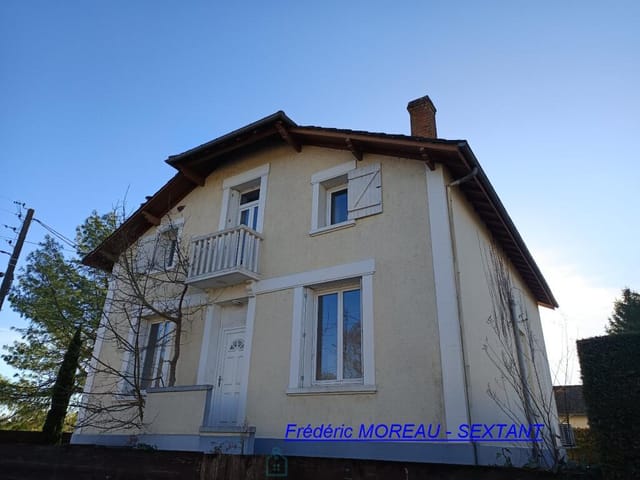
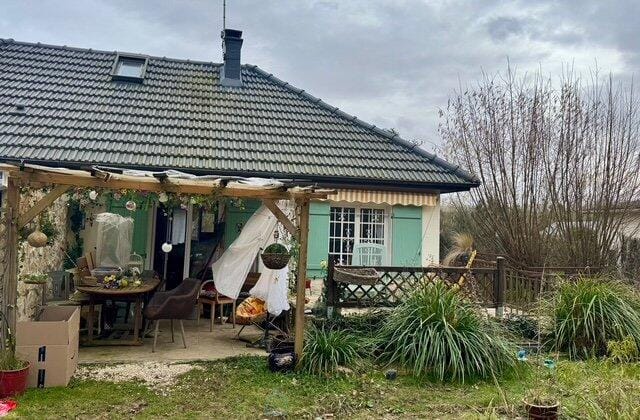
Sunday morning in Bergerac starts with the smell of fresh bread drifting up from the boulangerie two blocks away. You open the kitchen door onto the 17-square-metre terrace, coffee in hand, and catch the faint sound of the market vendors setting up along the Place de la Madeleine. That's the rhythm of life this house puts you inside — not on the edge of it, not behind glass. Right in it. This solid 1930s house sits a short walk from the old town centre of Bergerac, one of the most quietly rewarding towns in the entire Dordogne valley. The architecture still carries the bones of the interwar period — the proportions feel generous, the walls thick enough to keep rooms cool well into July — and recent upgrades have brought the practicalities firmly into the present. A newly installed heat pump, air conditioning, full double glazing, and a fitted kitchen mean you arrive and you live, rather than renovate and wait. The ground floor layout is genuinely sociable. The living room flows naturally toward the open-plan kitchen and dining area, which spills directly out onto the terrace. Summer evenings here have a particular quality: the Dordogne region holds its warmth well into September, and al fresco dinners under the fading light are less a special occasion than a Tuesday habit. The ground floor also holds a bedroom and shower room — useful for guests who'd rather skip the stairs, or for turning the upper floor into a private retreat when the house is full. Upstairs, two spacious double bedrooms and a dressing room give the house a flexibility that shorter-term rentals rarely achieve. There's room for couples, families, or the kind of extended-family gathering that the French countryside seems specifically designed to encou ... click here to read more

Picture 1

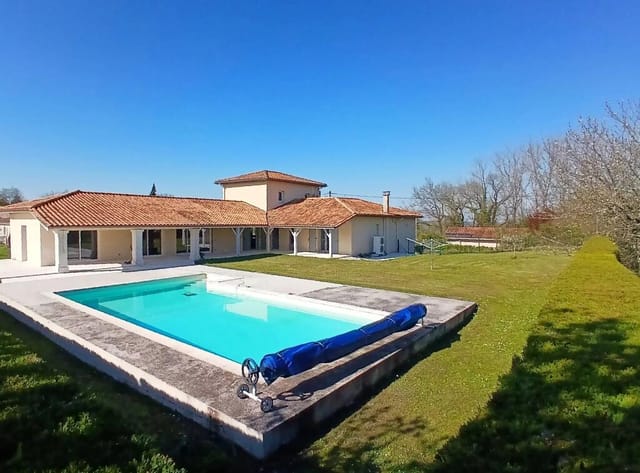
Sunday morning in Saint-Romain starts with birdsong and the faint smell of bread drifting over from Aubeterre-sur-Dronne, just a few minutes down the road. You slide open the glass doors onto the veranda, coffee in hand, and the pool catches the early light. The kids are still asleep. This is yours. That's the kind of morning this property delivers — not just once, but every time you pull up the drive. Tucked into a small hamlet in the Charente department of southwest France, this modern five-bedroom villa sits in one of the country's most quietly rewarding corners. Aubeterre-sur-Dronne is one of Les Plus Beaux Villages de France — that official designation handed to fewer than 160 communes in the entire country — and it earns it. The medieval church of Saint-Jean, carved directly into a cliff face, is the sort of thing that stops first-time visitors in their tracks. The weekly Saturday market along the main square fills with local cheeses, walnuts, honey from Périgord, and wine from the surrounding Charente vineyards. It's a ten-minute drive, and after a few visits you'll know half the stall holders by name. The house itself spans 234 square metres across three levels, and the layout is genuinely clever. The heart of the ground floor is a 57-square-metre open-plan living and dining area — properly open, the kind where a group of eight around the table doesn't feel cramped — with a sleek fitted kitchen that runs along one wall. No fussy cabinetry or dated tile splashbacks here. Clean lines, good light, and a design that invites cooking rather than just tolerating it. From this space, wide glazed sliding doors open onto a covered veranda that rivals the living room for sheer size, and from there the eye travels straigh ... click here to read more

Picture 1

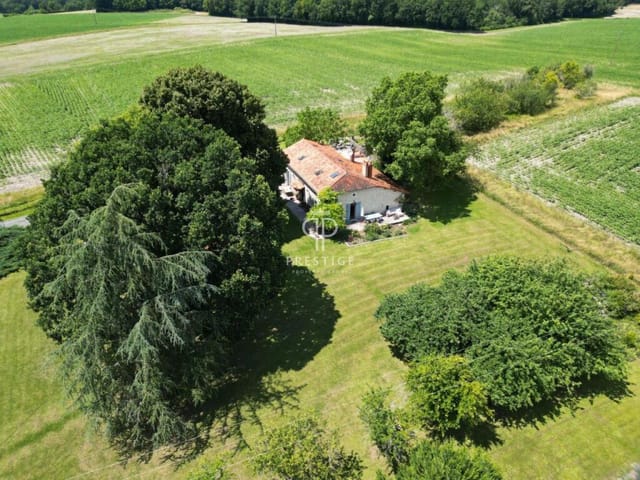
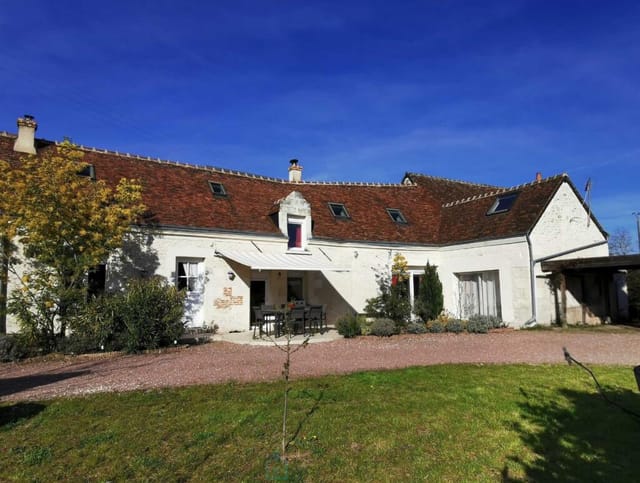
Sunday morning in Saint-Romain and the only sound is the wind moving through a field of sunflowers. Not a neighbour in sight. Just the soft creak of the farmhouse shutters and, from the kitchen, the smell of coffee brewing in a room that somehow manages to feel both brand new and a hundred years old at the same time. This is the kind of quiet that city people spend years chasing. This four-bedroom, three-bathroom detached farmhouse sits on a full acre of private grounds along a no-through lane in Charente, one of those quietly beautiful corners of southwest France that hasn't yet been discovered by the Instagram crowds. Recently refurbished to a genuinely high standard, it hits a rare balance — the bones of a proper French country house, the comfort of a home that's been thoughtfully brought into the 21st century. You're not buying a renovation project. You're buying the result of one. Step inside and the entrance hall is wide and airy, the kind of space that sets the tone for everything that follows. The sitting room keeps its period features — there's real character here, the sort that can't be installed, only preserved. The kitchen and breakfast room is newly fitted with high-end appliances and opens naturally toward the gardens, so summer mornings flow from coffee to croissants to a chair outside without any real effort at all. A ground-floor bedroom, shower room, and utility room with the central heating boiler round out the practical side of things, meaning guests or family can stay downstairs entirely if needed. Upstairs, three double bedrooms share the first floor. The master has a dedicated dressing area and an en-suite in its final stages of completion — arriving essentially finished. A family bathroom serve ... click here to read more

Picture 1

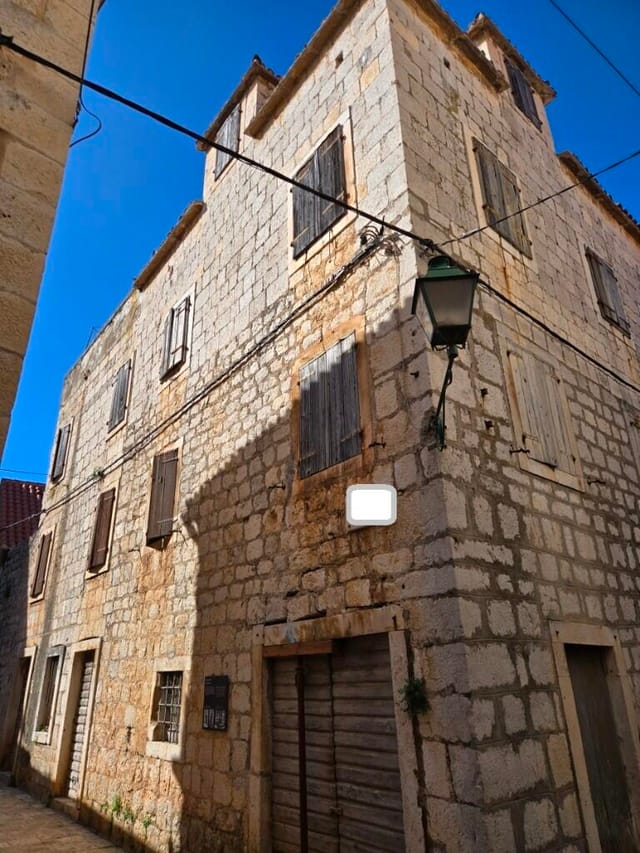
Stand on the attic terrace on a warm June evening and the view hits you all at once — terracotta rooftops tumbling toward the sea, the bell tower of the Dominican monastery catching the last of the light, swallows cutting arcs through air that smells faintly of rosemary and brine. This is Stari Grad, on the island of Hvar, and it has been looking more or less like this for over 2,400 years. That's not a marketing line. It's a geographic fact. Founded by ancient Greeks in 384 BC, Stari Grad is one of the oldest continuously inhabited towns in all of Europe, and this four-bedroom stone house sits right inside its historic core. The house itself spreads across four levels — ground floor, two upper floors, and an attic — covering 180 square metres in total. The bones are there: thick stone walls that keep rooms cool even in August when the mercury climbs past 35 degrees, original architectural proportions that no modern build can replicate, and that rooftop terrace with a view you'd pay good money just to look at for an hour. The property is being sold ready for full renovation, which means the next owner gets to make every decision — the kitchen layout, the bathroom finishes, the way the attic opens up to the sky. It's a blank stone canvas in a UNESCO World Heritage protected zone. Stari Grad sits on the north side of Hvar island, sheltered by a long bay that curves like a half-moon. It's quieter than Hvar Town — deliberately, stubbornly quieter. The people who end up here tend to prefer it that way. There are no nightclubs on the waterfront. What there is: a harbour lined with wooden fishing boats, a morning market where local women sell lavender bundles and homemade sheep's cheese, and a main square that fills up after ... click here to read more

Picture 1

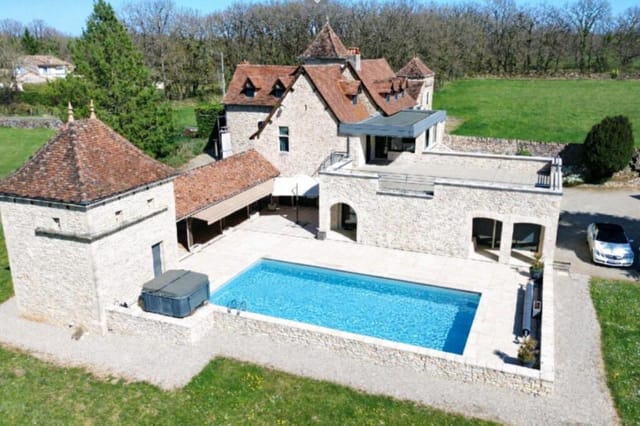
On a still morning in Aveyron, you step out onto the upper terrace and the land just rolls away from you — four hectares of meadow catching the early light, no road noise, no neighbor's roof in sight, just the faint ring of cowbells somewhere in the valley below and the smell of cut grass warming up. That's the daily reality of this property outside Villeneuve, and it hits differently than any brochure photo can prepare you for. This is a genuine Quercy farmhouse that's been taken apart and put back together with real conviction. The bones are original — thick limestone walls quarried locally, timber beams that have been in place for well over a century — but the living spaces read as thoroughly modern. Not in a cold, minimalist way. In the way that good renovation always works: high ceilings kept tall, stone floors kept bare, and new elements like aluminum double-glazed frames and remote-controlled electric curtains added without apology. The old and the new don't fight each other here. They just coexist. The 250 square metres of living space is spread across three levels and ten rooms, which gives the house a generosity you feel immediately. The original billiard room, now used as the main dining room, has a ceiling high enough to fit a mezzanine above it — a genuinely rare feature that changes the atmosphere of an evening meal in a way that's hard to explain until you've sat under it with a bottle of Marcillac wine and candles going. The study overlooks the full extent of the property and opens directly onto the large terrace-roof above the ground-floor extension; on a clear day you can see the limestone causse in the middle distance and the wooded ridgelines beyond. It's the kind of room that makes you want to actu ... click here to read more

Picture 1

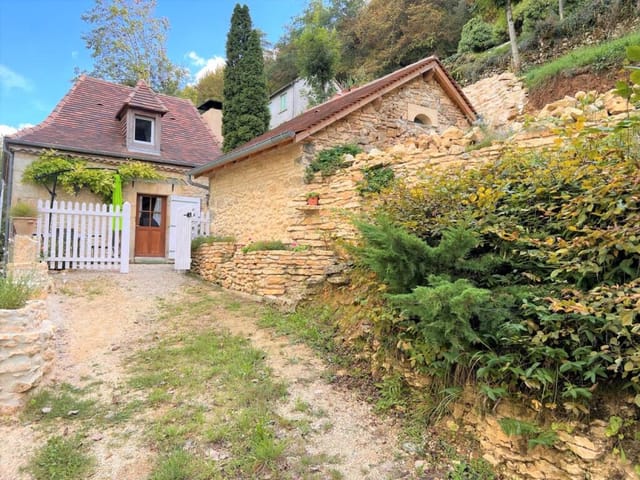
Step out onto the front terrace on a July morning and you'll hear it before you see it — the faint toll of the village bell drifting up the hillside, a pair of swallows cutting arcs above the limestone cliffs, and nothing else. That's the particular silence of Les Eyzies-de-Tayac-Sireuil. Not emptiness — richness. The kind that costs nothing and stays with you long after you've gone home. This compact stone cottage sits elevated against the hillside, looking out over a deeply green valley that hasn't changed much since the Cro-Magnon people found shelter in these same cliffs 15,000 years ago. It's been recently renovated — properly done, not cosmetically patched — and the result is a property that works hard despite its modest 41 square metres. Two levels. An open-plan kitchen and living room on the ground floor where the original stone walls keep things cool without air conditioning even in August heat. A shower room tucked neatly beside it. Climb the stairs and you arrive at a single bedroom that catches the morning light and looks out over the terraced hillside below. Three terraces. That detail matters more than it sounds. The front terrace is where you'll drink your coffee. The side terrace catches the afternoon shade and is where you'll eat dinner — confit de canard from the butcher on the main road through the village, a glass of Bergerac rouge, the kind of meal that takes two hours because that's the pace here. The raised terrace at the upper side has a different quality altogether — quieter, more private, the kind of spot where you bring a book and lose an afternoon. Add a renovated outbuilding that can serve as a studio, office, or extra storage, a stone cellar for keeping wine at the right temperature year-r ... click here to read more

0001

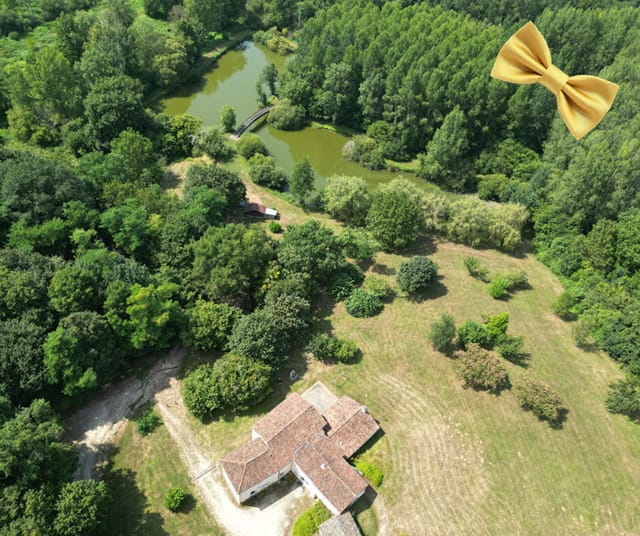
On a slow Sunday morning in Ceaux-en-Couhé, the bread oven in the stone shed still holds yesterday's warmth. Eight bedrooms, a pond catching the light through the oaks, and 4.8 hectares of parkland stretching out beyond the kitchen window — this is what a second home in rural Poitou actually feels like. Not a curated Instagram fantasy, but something real and rooted. This is a rare find in the Vienne department: a fully renovated maison de maître that has been operating as a group gîte, sleeping up to 24 guests across its eight bedrooms, all equipped with private shower rooms and WCs. It's move-in ready — or more accurately, move-in and open-for-business ready. The bones are solid, the renovation is done, and the layout is already designed for the kind of communal living that makes group holidays worth taking. Whether you're imagining family reunions across generations, a yoga and wellness retreat in the French countryside, or a creative residency program, the infrastructure is already in place. Step inside and the ground floor sets the tone immediately. There's a generous entrance hall that opens into a laundry room, a dedicated office, a proper kitchen, a dining room, and a sitting room — the kind of layout where a group of twelve can occupy the same house without tripping over each other. Three ground-floor bedrooms, each with their own shower room and WC, sit along a hallway with fitted storage. Upstairs, five more bedrooms follow the same logic: private bathrooms, cupboard space, and enough separation that guests actually sleep well. The boiler room sits in a separate annex, keeping mechanical noise well away from the living spaces. And then there's the bread oven shed — a detail that sounds minor until you've pull ... click here to read more

Picture 1

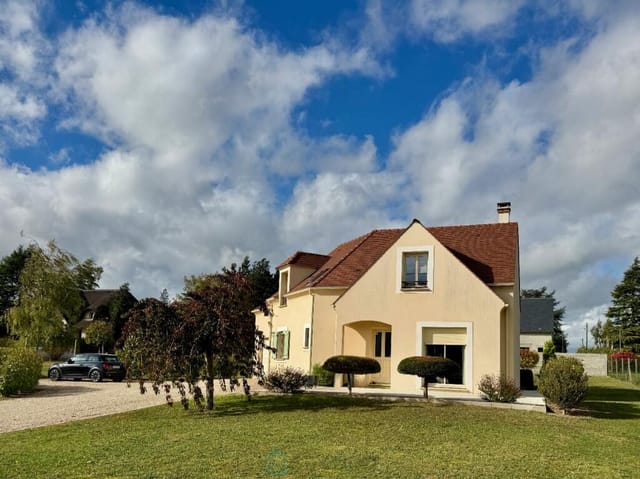
Sunday morning. You pull open the kitchen window and the smell of the Seine drifts in — that particular mix of cool river air and freshly cut grass from the garden — while your coffee brews. The kids are still asleep upstairs. The village isn't awake yet either. This is exactly what you came for. Set in Mousseaux-sur-Seine, a quiet hamlet tucked inside one of the Seine's great looping bends, this four-bedroom family home sits on a generous 1,500 square metre plot within the Vexin Regional Natural Park. Built in 2007 and maintained with obvious care, the house is move-in ready — no renovation headaches, no compromise on comfort. It's the kind of property where you arrive on a Friday evening, open the windows, and the weekend just starts. The ground floor is laid out for real life. A proper entrance hall — not a cramped corridor — opens into a double living room that handles both a formal dining arrangement and a comfortable lounge without feeling squeezed. The open-plan kitchen connects naturally to this space, so whoever's cooking doesn't get exiled from the conversation. There's a master bedroom with its own shower room on this level too, which works brilliantly whether you have elderly parents visiting or simply want the option of single-storey living as the years go on. A laundry room and integrated garage complete the ground floor — practical details that matter enormously when this is your secondary residence and you arrive with bikes, muddy boots, and river gear. Head upstairs and the partially converted attic space is one of the home's real surprises. Three proper bedrooms sit alongside a bathroom and a dressing room, but the standout is the large open-plan room at the heart of the floor — currently used as a T ... click here to read more

Picture 1

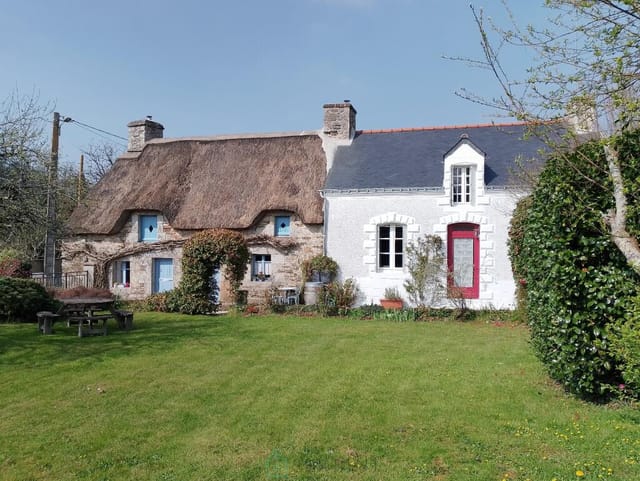
Stand at the front garden gate on a Tuesday morning and you'll hear the Blavet river before you see it. That low, constant murmur threading through the valley — that's the soundtrack to life in Saint-Nicolas-des-Eaux, one of the most quietly extraordinary villages in inland Brittany. The church bell chimes at eight. Someone at the bar-tabac two minutes' walk away is already pulling espresso. And your kitchen window in a house that has stood for over five centuries frames all of it. This is not a renovation fantasy or a project dressed up in estate-agent optimism. The property is in good condition — two stone houses, sold together, on a plot of around 1,093 square metres with gardens front and back and a workshop of 26 square metres. Move in, light the wood-burning stove, and work out what to do with the rest later. That's genuinely an option here. The older of the two houses is the one that stops people in their tracks. Thatched roof, stone walls thick enough to keep August heat out and January damp firmly in its place, a kitchen-dining-living room arranged around a fireplace that clearly earns its keep every winter. Upstairs, a mezzanine level — currently used as a bedroom — gives the space a kind of loft-like openness, and a large double bedroom sits alongside it. The bathroom with WC is on the ground floor, practical and sorted. The second house connects directly through a door, which makes the whole arrangement work brilliantly for families or visiting friends: two distinct spaces, one shared garden life. The ground-floor of the second house has a living room, bedroom, kitchen, bathroom with WC, and a useful storage room. Its first floor adds another mezzanine bedroom, a washbasin, and a further bedroom. Three bedr ... click here to read more

Picture 1

Sunday morning in Fourges starts quietly. A wood stove ticks as it warms up, the smell of coffee mixing with something faintly earthy drifting in from the garden — damp grass, river water, the particular cool greenness that only the Epte valley seems to produce. From the kitchen window, you can see the old mill wheel at the edge of the village, still and mossy in the early light. This is the pace of life that the Norman countryside does better than almost anywhere else in France, and this two-bedroom house on a thousand square metres of land puts you right at the centre of it. Fourges sits in the heart of the Vexin Normand, a natural regional park that most Parisians have never discovered — which is precisely the point. The village itself is famous locally for its 12th-century watermill on the Epte, a river that famously marked the medieval boundary between Normandy and the Île-de-France. Monet painted these fields. The light here has a quality that artists have been chasing for centuries, soft and diffuse in summer, dramatic and low in autumn, and frankly extraordinary on winter afternoons when the frost sits on the meadows and the river runs dark green. You will notice it every single day. The house is single-storey, a practical layout that makes it genuinely easy to manage as a second home or holiday property in France. The entrance opens into a living space anchored by a wood-burning stove — the real thing, not decorative — which handles the bulk of heating through the colder months without fuss. The kitchen is fitted and equipped, ready to use from day one, which matters when you're arriving on a Friday evening and want to eat well without a supermarket run. One generous bedroom and a bathroom complete the main fl ... click here to read more

Picture 1

Sunday morning in the Loire Valley sounds like this: a wood-burning stove crackling under cathedral ceilings, the faint ring of church bells drifting across the fields from Amboise, and the smell of butter and stone that only old French farmhouses seem to hold. This is the kind of place you stop looking once you've found it. Built in the 19th century and sitting on an enclosed 398 square metre plot near the village of La Croix en Touraine, this authentic Touraine farmhouse carries the bones of its era without the headaches. The stone walls are still there. The exposed beams are still there. But so is a heat pump, a fitted kitchen, a 2022-built workshop, and south-facing terrace access from virtually every ground-floor room. It's been lived in properly, looked after, and it shows. Step inside and the ground floor sets the tone immediately. The kitchen opens directly onto the sunny terrace — the kind of layout that turns a Tuesday lunch into something you actually look forward to. The living and dining room runs to roughly 40 square metres under a genuine cathedral ceiling, with parquet underfoot and that wood-burning stove as the clear centerpiece. On cold January evenings when frost sits on the vines outside, this room earns its keep. A bedroom with French doors, a home office, a full bathroom with both bathtub and walk-in shower, and a utility room round out the ground floor — more practical square footage than you'd expect at this price point. Upstairs, two more bedrooms and a second WC occupy the attic floor. Above the living room, a mezzanine adds around 20 square metres of bonus space — a reading loft, a kids' sleeping area, a home studio. The property's 149 square metres in total include that vaulted cellar tuck ... click here to read more

Picture 1

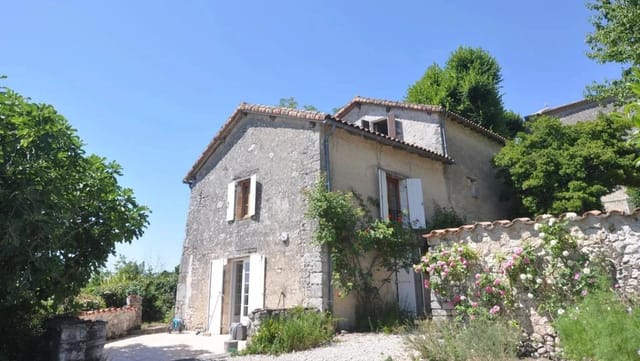
Sunday morning in Marsac moves slowly. The kind of slowly you forget is possible until you're standing on a stone terrace with a coffee, watching mist lift off the Charente countryside while rosebushes climb the garden wall and a blackbird argues with itself somewhere in the orchard. This is the pace this house was built for. Set in a small town a short drive from Montmoreau-Saint-Cybard, this three-bedroom house has been carefully restored to keep what mattered — the thick stone walls, the original proportions, the sense that a building this solid has earned its place in the landscape. It sits on terraced grounds that step naturally down the hillside, and that slope is one of the property's quiet masterstrokes. Because of it, every level of the house has a relationship with the garden. Every room has air around it. The espaliered grounds are something you don't often see outside of a curé's garden — the kind of formal, patient planting that takes decades to establish. Rosebushes trained flat against stone, neat and fragrant in June, turning the whole space into something that feels more like a private botanical corner than a typical back garden. It's the sort of detail that stops people mid-sentence when they first walk through the gate. On the garden level, the living space is open and practical. The kitchen flows into a generous living area — no awkward walls dividing the two, just light moving through and the kind of layout that actually works when you have a houseful of people at the table. There's a pantry off the kitchen, which any serious cook will immediately appreciate. A shower room and a cellar round out this floor, the latter offering the kind of storage that makes a second home genuinely livable rather t ... click here to read more

Picture 1

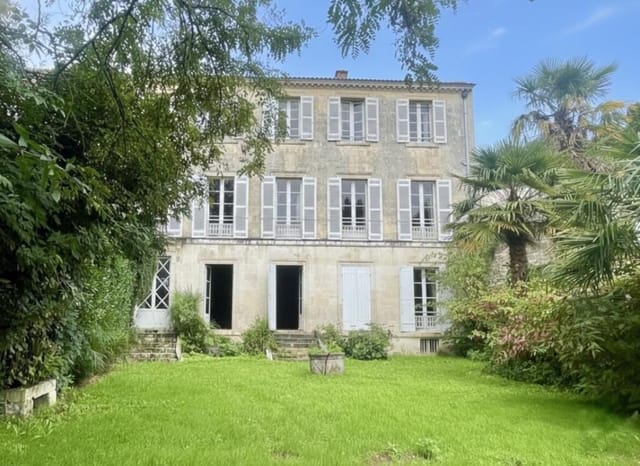
Stand at the tall windows of the first-floor salon on a Tuesday morning and you'll understand immediately why people have been coveting this address for centuries. The Charente River slides past below, catching the light in that particular way it does in late spring—silver and slow—while the bell tower of the Abbaye aux Dames marks the half-hour with a sound that drifts through the open glass and settles into the room like it belongs there. This is the Saint-Pierre quarter of Saintes, one of the most quietly distinguished addresses in southwest France, and this five-bedroom Hôtel Particulier has occupied its corner of it with serious, unhurried confidence for generations. The property spans 471 square metres across a generous footprint that reveals itself gradually—you push through the courtyard gate, cross the stone-flagged entrance, and only then begin to understand the scale of what you're dealing with. Rooms that are genuinely large, not estate-agent large. Ceiling heights that make you stand up straighter. The kind of proportions that were built when space wasn't a luxury but an expectation. The original features are extraordinary in their survival. Wood panelling—the real thing, full height, painted in the muted tones of old French interiors—lines the principal reception rooms. Ceiling roses of elaborate plasterwork crown each main space. The spiral staircase at the heart of the house is the sort of architectural gesture that stops people mid-sentence when they first see it; tight, precise, built from stone that has worn smooth in exactly the right places. Herringbone parquet runs through the upper floors; period encaustic tiles handle the ground level. None of this is reproduction. None of it has been ripped out ... click here to read more

Picture 1

Step out onto the front balcony on a clear October morning and the whole of the Charente-Maritime countryside unrolls in front of you — pale gold fields, distant church spires, the kind of quiet that city people spend years trying to find. That's Fontaine-Chalendray. A small village in the Poitou-Charentes region that most tourists drive straight past on their way to the Atlantic coast, which is precisely what makes it so good. This three-bedroom house sits on a fully enclosed plot and has been kept in genuinely good condition — not "good condition" as a euphemism for "needs imagination," but actually solid, move-in ready, and full of thoughtful details that someone clearly cared about. The 142m² of living space works hard, and a 150m² barn plus three separate garages mean you have more flexibility here than you'd typically find at this price point in France. Inside, the lounge anchors the ground floor with a Dutch wood-burning stove — a proper, cast-iron thing that radiates heat differently from a standard fireplace, warming the room evenly rather than scorching whoever's sitting nearest. On a January evening with the fire going, this room has real pull. Double doors at the rear open directly onto a glassed veranda, which then connects to a covered terrace outside. That sequence — lounge, veranda, terrace — creates a natural flow for entertaining across three seasons without anyone getting rained on. The kitchen and dining room is where this house gets interesting. Bamboo countertops that develop a warm honey tone over time, a breakfast bar for morning coffee and the newspaper, and a professional Italian range cooker with five gas burners plus an electric and solid-fuel oven combination. This isn't a show kitchen ins ... click here to read more

Picture 1

Early morning in Grovstanäs, and the light does something extraordinary. It comes off the water — just 150 meters down the path — and hits the upper floor of the house at an angle that fills the L-shaped living room with the kind of gold you can't manufacture with interior design. By the time the coffee is ready, you're sitting in a bay window with a view of the garden, listening to nothing in particular. That's the rhythm this place sets from day one. Edsviksvägen 32 sits quietly at the end of a cul-de-sac on the Grovstanäs peninsula, one of the lesser-known gems tucked into the Stockholm archipelago north of the city. It's not a secret exactly — locals know it well — but it hasn't been overrun the way some coastal spots closer to Stockholm have. The community here has its own boat harbors, a boules court, a football field, and walking trails that cut through the pine and birch toward the rocky shoreline. It has the feel of a place people have protected on purpose. The main house covers 88 square meters across the entrance level, with an additional 45 square meters of finished basement below — 133 square meters total. The upper floor layout is open and well-proportioned: that generous living room, a proper kitchen with enough counter space to actually cook in, a dining area in the bay window that catches afternoon sun, a large bedroom, and a shower room. It's a floor plan that works for two people or easily absorbs a family for a summer. Nothing about it feels cramped or compromised. Downstairs, the basement opens up the possibilities considerably. There's a large family room down here that, with a partition, becomes two additional sleeping areas — useful if you're hosting more guests than the guest house can handle. ... click here to read more

Front view of the house and garden

On a quiet Sunday morning in Gildehaus, the church bells from the old Sankt-Nikolai carry across the rooftops just far enough to drift through an open window. The underfloor heating has already taken the edge off the morning chill. The coffee is brewing. Outside, the garden is doing what German gardens do in late spring — going slightly wild in the best possible way, tulips competing with whatever the previous owner planted years ago along the stone shed wall. This is the pace of life at Pieper-Werning-Straße 9, and it is genuinely hard to leave. Bad Bentheim sits right at the Dutch-German border in Lower Saxony, and that cross-cultural identity shapes everything here — the architecture, the food, the weekend rhythms of the people who live in this corner of the Euregio. Gildehaus is technically a district of Bad Bentheim, but it has its own village character: wide residential streets lined with mature trees, neighbors who wave from across the road, and a total absence of the noise that most people spend years trying to escape. The property at number 9 on Pieper-Werning-Straße sits in this neighborhood with exactly the kind of quiet confidence that well-built houses tend to have. Built in 2004 and kept in genuinely good condition, this is a 287-square-meter detached home on a 877-square-meter plot. Four bedrooms. Three full bathrooms. A basement that actually functions as living space rather than a dumping ground. The layout is generous in a way that isn't immediately obvious from the street — you step through a solid timber front door into a hallway with ceilings high enough to stop you mid-step, and the whole house opens up from there. The ground floor centers on a kitchen-living space that German buyers sometimes ca ... click here to read more

Front view of Pieper-Werning-Straße 9

Stand at the back of the garden on a July evening and you'll understand immediately. The meadow stretches out behind the property with nothing between you and the open sky — no fences, no rooftops, no neighbor's barbecue smoke drifting your way. Just grass, light, and the kind of quiet that people drive hours to find on weekends. At Heerbaan 40 in Maaseik, that quiet is built into the foundations. Maaseik sits at the northeastern edge of Belgium, right where the Maas River forms the natural border with the Netherlands. It's one of those small cities that locals fiercely love but tourists haven't yet overrun — the kind of place where the Tuesday morning market on the Marktplein still draws actual residents rather than souvenir hunters. The twin Gothic towers of the Sint-Catharinakerk dominate the skyline in a way that never quite loses its effect, and the Carolus Borromeus museum houses the oldest surviving book in Belgium, the eighth-century Codex Eyckensis. History isn't something the city performs here. It just is. This four-bedroom semi-detached house is a new-build scheduled for completion in 2026, and at 198 square metres across three floors, it gives you real room to breathe — rare for this price bracket anywhere in Belgian Limburg. The architecture is clean and contemporary: a sleek rendered façade, large format windows that pull in the southern light, and a layout that makes the most of every square metre without feeling squeezed. From the living room and kitchen, the garden and the open meadow beyond frame the view like a painting that changes with every season. Spring here means cycling. The Maasland region has one of the densest networks of signed cycling routes in Europe, and from Heerbaan you can roll str ... click here to read more

Front view of Heerbaan 40, Maaseik

Early on a July morning, before the rest of Sjömansvägen stirs, you can walk the hundred meters to Lake Jämten in bare feet on warm tarmac, towel over your shoulder, and have the water entirely to yourself. That's the kind of morning this place is built for. No queues, no noise, just pines and still water and the occasional heron lifting off the far bank. Sjömansvägen 5 sits in the Loviselund fritidsområde — a well-established recreational community tucked into Södermanland's lake district, about 120 kilometers southwest of Stockholm and a comfortable six kilometers from the market town of Flen. The plot is big. Really big. At 2,595 square meters, it feels more like a small estate than a holiday lot, with mature forest pressing right up to the boundary on one side and a gentle sense of openness on the other. In a region where well-placed leisure properties are quietly becoming harder to find, that kind of land footprint matters. The main house was built in 1984 and spreads across 65 square meters on a single level. Single-storey living here isn't a compromise — it's a genuine quality-of-life feature. No stairs to navigate when you're carrying groceries from Flen's ICA Supermarket, no awkward levels when grandparents visit, no hunting for light switches in the dark after a late evening on the west terrace. The layout is direct: hallway with a generous walk-in closet that doubles as a sleeping alcove for a third guest, a proper bedroom, a light-filled living room, and a functional kitchen with the essentials already in place — fridge-freezer, stove, cooktop, water heater. The living room opens directly onto a covered terrace facing east, and there's something quietly addictive about drinking your first coffee out there ... click here to read more

Front view of the house and garden

Step outside the back gate on a Tuesday morning, and you're already in the forest. No traffic, no noise — just the crunch of leaves underfoot and the particular stillness that only old trees can produce. That's the daily reality at Roelerdreef 18, a solid, well-kept detached house on one of Lanaken's most quietly sought-after avenues, just a few kilometers from the Dutch border and the unmistakable energy of Maastricht. Lanaken sits in Belgian Limburg in a way that feels almost accidental — a calm, unhurried municipality that happens to border the Netherlands and find itself within easy striking distance of three countries. The house on Roelerdreef occupies 212 square meters across two floors, sits on an 800-square-meter plot, and backs directly onto woodland. For buyers looking at second homes in Belgium or a European base that doesn't sacrifice nature for convenience, this is a combination that's genuinely hard to find at this price point. The avenue itself sets the tone immediately. Stately trees line both sides of the road, their canopy meeting overhead in summer to form the kind of dappled light you usually only find in countryside much further from a city. Drive along Roelerdreef on a weekend afternoon and you'll understand why locals don't tend to leave. The street is quiet. Not the performed quietness of a gated development — the genuine article, helped along by the fact that a nearby school is being phased out, which will only deepen the sense of calm in the years ahead. Inside, the ground floor spans 123 square meters and opens with a marble-floored entrance hall — a small but considered touch that signals the overall quality of the finishes throughout. The living room is where daily life properly begins: oa ... click here to read more

Front view of Roelerdreef 18

Saturday morning. The automatic gate swings open, the gravel crunches underfoot, and from somewhere behind the stables you can already hear the low sound of the Maas valley countryside waking up — birds, wind through the pasture, total quiet beyond that. This is Langstraat 86, and it doesn't feel like a second home. It feels like the life you kept pushing off until later. Sitting on a generous 6,760 square metre plot in the village of Elen — part of Dilsen-Stokkem in the Belgian province of Limburg — this detached three-bedroom house with two stables and dual pastures is a rare find on the European second home market. Properties like this, where you get genuine rural scale, equestrian infrastructure, and a house that's already been modernised, simply don't come around often at this price point. At 555,000 euros for 115 square metres of living space plus all the land, it sits in a different category from the holiday villas you'll see advertised for twice as much further south. The house itself was built in 1958 and carries the bones of that era — solid concrete intermediate floors, thick walls, a structure built to last. But between 2005 and 2015, it got a proper overhaul: cavity wall insulation, new PVC double-glazed windows throughout, updated bathrooms, a redesigned kitchen with granite countertops and induction cooking, a new gas central heating boiler, and a freshly painted and coated exterior. The result is a home that holds its character while actually being comfortable to live in. No draughty windows. No outdated plumbing surprises. Step inside through the entrance hall — tiled floors, clean lines — and the living room opens up with light. Large windows face the garden and meadow, and in winter the wood-burning ... click here to read more

Front view of Langstraat 86, Dilsen-Stokkem

Step out the front door at seven in the morning and the only sound is birdsong. The dew is still sitting on the grass, the lake is just visible through the pines, and the coffee you left on the kitchen counter is already pulling you back inside. That's the rhythm of life at Dalvägen 8, and once you've felt it, a weekend trip to Sala will never feel like enough. This is a one-bedroom house on a 2,738-square-metre plot in the Ljömsebo area, roughly 15 kilometres outside Sala in central Sweden. It's priced at 104,500 EUR — the kind of number that makes people do a double-take, and rightly so. Properties like this, with a separate guest cottage, multiple outbuildings, and direct proximity to a lake with a proper swimming dock, don't surface often. The area has quietly shifted from a purely seasonal destination to a place where people actually live year-round, and that transition has made the local community feel grounded and real rather than the ghost-town-in-November type. The main house was built in 1974 and carries that particular solidity you find in Swedish timber construction from that era — a wooden facade, metal roof, walls that have been professionally re-insulated as recently as 2023 and 2024. Inside, the layout is compact but thought through: two rooms plus a kitchen, one bedroom, and a living area that opens directly onto a southwest-facing terrace. Southwest matters here. Swedish summers are long on light but short on calendar, so catching the afternoon and evening sun from late April through September is not a small thing. The terrace faces the right way to make that happen every single day. Heating is handled three ways: an air heat pump as the workhorse, electric radiators as backup, and a fireplace for th ... click here to read more

Front view of the house and garden

Stand on the terrace at Hällebäck 642 on a clear September evening and you'll understand immediately why people fall so hard for this particular corner of the Swedish west coast. The Gullmarn fjord catches the last of the light below you, the Stångenäset peninsula stretches out in the middle distance, and the birch forest on the hillside has just started turning gold. It's quiet up here — genuinely quiet — apart from the occasional sound of water and wind moving through the trees. This is a 108-square-metre house on the elevated terrain of Bokenäs, a peninsula jutting out between the fjord and the sea north of Uddevalla. Built in 1953 and carefully updated since, it sits on a 1,382-square-metre plot at a height that gives it uninterrupted westward views — the kind you normally only find on properties that cost three times as much. What makes this particular spot work so well is the way the hill opens up exactly where the house sits. Forest on three sides, open sky to the west. You get privacy and panorama at the same time, which in this part of Bohuslän is genuinely hard to find. The interior has been laid out with real intelligence. The kitchen and living room share an open-plan space at the heart of the house, with large windows pulling that fjord view straight into your daily life. Morning coffee here is accompanied by whatever the water is doing that day — glassy and pale in early spring, dark and restless in November, blindingly bright on a July afternoon. The terrace comes off this main living space and feels, from certain angles, like it's floating above the canopy. Evenings out there with a bottle of something cold and the sun going down over the fjord are the kind of thing you'll describe to friends back home ... click here to read more

Exterior view of Hällebäck 642

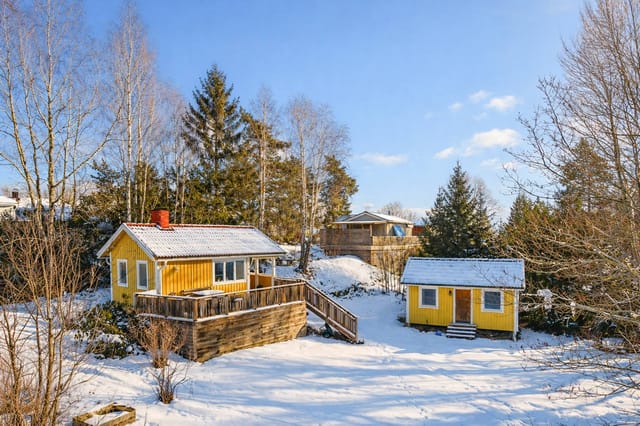
Step out onto the back deck on a Saturday morning in July and you'll understand immediately. The smell of pine warming in the sun, the faint splash of someone diving off the rocks at Säbyviken a few minutes' walk down the trail, and nothing — genuinely nothing — competing for your attention. Platåslingan 25 on Ingarö sits at that rare intersection of true Swedish archipelago wilderness and real, year-round livability. It's not a summer cottage you winterize and abandon in October. People actually live here, all year, and you can feel it. The house itself was built in 1972, and it has that honest, no-fuss Scandinavian practicality that holds up remarkably well. At 47 square meters, it doesn't try to be more than it is — compact, well-planned, and genuinely comfortable. The open fireplace in the living room is the anchor of the whole place. Come February, when frost edges the birch trees outside and the archipelago goes quiet and still, that fireplace stops being a feature and starts being the point. You light it after a ski track session out on the frozen inlets, pour something warm, and the room closes around you in the best possible way. Large windows pull in more light than you'd expect for a structure this size. The kitchen sits open to the living area — practical for actual cooking, not just aesthetic — and the two bedrooms are calm, private, and sensibly proportioned. One bathroom with shower. Everything where it should be, nothing extraneous. What makes this property genuinely unusual for its price point is the land and the secondary structure. The plot runs to 2,914 square meters, much of it characterful bedrock and mature Swedish forest — the kind of granite-and-pine combination that defines the Värmdö coastli ... click here to read more

Front view of the house and woodland plot

On a quiet stretch of Merksplasseweg, the morning light filters through the trees that line the front of the property and lands on oak floorboards that have never once felt cold underfoot — because below them, a full ground-floor heating system hums quietly to life before you've even thought about getting up. That's the kind of detail that makes a house feel like it was thought through, not just built. Ravels sits in the Antwerp province of the Campine region, a part of Belgium that most international buyers overlook entirely. That's a mistake. The area around the Turnhoutse Vennen nature reserve and the Kalmthoutse Heide — one of Western Europe's largest inland heathland landscapes — draws hikers and cyclists from across the Benelux, yet the villages themselves have stayed quiet, unhurried, and genuinely local. The Saturday market in nearby Turnhout, just 10 kilometres away, is where you'll find Campine asparagus in spring, local Trappist cheeses, and the kind of butcher who knows every farmer supplying his counter. Turnhout itself has a striking Beguinage, a castle, and a surprisingly good food scene clustered around the Grote Markt. This isn't rural isolation — it's rural intelligence. The house itself was built in 2000 on a 832-square-metre plot and sits on Merksplasseweg 31 with an unobstructed view over woodland to the front. Four bedrooms, one well-fitted bathroom, 190 square metres of living space, and a freestanding garage that measures 70 square metres on its own. That garage alone makes this property unusual. Fully insulated, fitted with two electric sectional doors and a groundwater pump for garden irrigation, it functions comfortably as workshop, car storage, hobby room, or overflow accommodation for a ren ... click here to read more

Front view of Merksplasseweg 31

Step outside on a Saturday morning and the only sounds are birdsong, a distant tractor working the fields, and the faint chime of a church bell drifting over from Wielen's old village center. The air smells like cut grass and woodsmoke. The terrace catches the early sun and the coffee is already on. This is what you drove two hours from Amsterdam for. This is what you crossed the border for. Kreisstraße 12 sits in the rural fringes of Wielen, a quiet village in Germany's Grafschaft Bentheim district, right on the German-Dutch border. It's the kind of spot that people from Utrecht or Groningen or Düsseldorf spend years searching for — enough distance from the city to genuinely exhale, but close enough that you don't feel marooned. The Dutch border town of Hardenberg is about 15 minutes by car. Nordhorn, the regional hub, is under 20. Schiphol Airport is roughly two and a half hours; Eindhoven is closer to two. The geography here is almost uniquely positioned for international buyers looking for a second home in northwest Europe that actually makes logistical sense. The property itself is a detached house built in 1987, sitting on roughly 4,000 square metres of land, with 245 square metres of living space in the main house — and that figure doesn't even include the outbuilding, which adds around another 147 square metres of usable space. Five bedrooms. Two bathrooms. A garage, double carport, multiple sheds, and a large multifunctional barn that comes equipped with a bar and its own party room. Yes, really. That barn deserves its own paragraph. Built in 1998, it's the kind of structure that most buyers would spend years planning and never quite get around to building. The party room has a proper bar setup and a separate ... click here to read more

Front view of Kreisstraße 12

Step outside on a July morning and the plum tree by the terrace is already warm from the sun. The apples are weeks away from being ready. Somewhere across the green, a couple of kids are kicking a ball around the football pitch that borders the property. You've got coffee brewing inside. This is Fållökna — and it feels a long way from any city, even though Stockholm is under two hours away. This single-storey holiday home on Uvbergsvägen sits on a plot just over 2,000 square metres on the northern shore of Lake Nedingen, right in the geographical centre of Sörmland. That combination — water close by, forests behind, a working community around you — is exactly why Swedish families have been buying second homes in this part of Flens kommun for generations. Supply here is genuinely limited. Properties on the Nedingen shore don't come up often. The house itself covers 55 square metres sensibly. Two bedrooms with wooden floors, a living room anchored by an open fireplace with an insert, and a kitchen with a ceramic cooktop and combined fridge-freezer. Nothing flashy, nothing broken. The bathroom has wall cladding, a shower, and connects to the municipal water and sewage system — no well to maintain, no septic surprises. Fibre internet is already installed, which matters more than people expect when they're working remotely for a week or letting the kids stream something on a rainy afternoon. The living room earns its keep. Large windows pull in the garden light, and when you light the fire on a cool September evening after a day walking the Lagnö nature reserve trails, the wooden floor glows and the room genuinely earns the word cosy without needing any help from interior design. The west-facing covered terrace off the mai ... click here to read more

Front view of the house and garden

Stand at the kitchen window on a crisp October morning, coffee in hand, and watch the Reichswald turn gold. The forest starts almost where the garden ends, and the silence out here — broken only by woodpeckers and the occasional horse on the bridle path — is the kind you have to earn by driving forty minutes east of Nijmegen. That's the daily reality of Kuhstraße 102 in Kranenburg-Schottheide, and it never gets old. Built in 1991 and maintained with genuine care, this four-bedroom detached house sits on a 1,387-square-metre plot in one of the Lower Rhine's most quietly coveted rural pockets. The panoramic views over the Reichswald — one of Germany's largest lowland forests and the backdrop to the Battle of the Hürtgen Forest — are unobstructed from almost every room. No rooftops crowding the sightline. No road noise. Just open countryside rolling into a wall of beech and oak. At 185 square metres of living space, the house has room to breathe. The ground floor flows from a practical entrance hall — with a guest toilet and utility room tucked to one side — into a generously proportioned L-shaped living room. The large windows aren't just decorative: they work as a kind of living painting, framing whatever season the Reichswald is currently performing. In January, frost-whitened branches. In May, that particular lime-green of new beech leaves. The wood-burning stove anchors the room in winter, filling the space with warmth long after the sun drops behind the treeline. The open-plan kitchen is set up for real cooking — built-in appliances, solid workspace, enough storage that a full weekend shop doesn't create chaos. Upstairs, four bedrooms sit off a central landing. One is currently used as a walk-in wardrobe, which spe ... click here to read more

Front view of Kuhstraße 102

Stand in the south-facing garden on a Saturday morning and you'll hear it — the faint lap of water against the bank, a heron lifting off the communal pond, maybe a bicycle bell from the Rheinpromenade a few minutes away. Emmerich am Rhein is one of those German Rhine towns that quietly gets on with being a very good place to live, without making a fuss about it. And this three-bedroom semi-bungalow on Adolf Tibus Strasse sits right at the calm heart of it. Built in 2004 and kept in genuinely good condition, the house covers 123 square metres of living space on a 429-square-metre plot. That plot matters. The south-facing rear garden — nine metres deep, sixteen metres wide — gets sun from midmorning until the light drops behind the rooftops in the evening. Large sliding doors from the 33-square-metre living room fold the inside and outside together, so in summer the boundary between the two pretty much disappears. Pull out the garden chairs, switch on the electric sunshade, and the terrace becomes the real living room from May through September. The ground floor is laid out intelligently for single-level living. Two bedrooms — 16 and 13 square metres respectively — sit alongside the main bathroom, which has a walk-in shower, double washbasin, designer radiator, and a second toilet. The whole ground floor runs on underfloor heating, which is the kind of thing you only notice when you're visiting a house that doesn't have it. In winter, when the Rhine mist rolls through the Lower Rhine plain and the temperatures drop into single digits, that warmth underfoot makes the house feel genuinely cosy rather than just adequately heated. The kitchen is semi-open, around 13 square metres, with a granite countertop, quality built-in ... click here to read more

Photo 1 of Adolf Tibus Strasse 8

Saturday morning in Meerle moves at its own pace. The bakery on the village square opens early, the smell of fresh bread drifting down Heimeulenstraat before most of the street has stirred. You slide open the large garden doors off the kitchen, coffee in hand, and the lawn is still wet from the night. Six bedrooms. Four bathrooms. A kitchen island big enough for a proper family breakfast. This is the kind of house that earns its keep every single weekend. Meerle sits at the northern tip of the Kempen region in the Belgian province of Antwerp, tucked right against the Dutch border and surrounded by the flat, forested landscape that defines this quiet corner of Flanders. It belongs administratively to Hoogstraten, a market town about ten minutes' drive south where the Gothic Sint-Katharinakerk dominates a square lined with café terraces. The area draws people who want countryside without isolation — Breda is 25 kilometres north, Antwerp under an hour south on the E19. Eindhoven airport and Brussels Airport both sit within comfortable driving range, which matters enormously for international buyers treating this as a second home in Belgium or a base for extended stays. The house itself stands on Heimeulenstraat in a low-traffic residential street. Originally built in 1980, it has been comprehensively renovated — not the kind of cosmetic refresh that hides problems behind fresh paint, but a genuine overhaul that touches the electrical installation, glazing, energy systems, and finishes throughout. The EPC label B rating is the honest proof of that. The heating runs on a gas HR++ system with high-efficiency glazing across the entire house, which keeps running costs sensible even through the grey Belgian winters. Inside, 32 ... click here to read more

Front view of Heimeulenstraat 53

The first thing you notice on a July morning at Havsörnsstigen 28 is the light. It comes in low and golden through the trees on the east side of the plot before eight o'clock, falls across the wooden decking, and turns the whole garden into something worth waking up early for. You pour coffee. The sea is a three-minute walk down the lane. You can smell it before you see it. This is Södra Rörvik — a quiet residential pocket on the island of Väddö, tucked into the Roslagen archipelago about 100 kilometres north of Stockholm. People who know this stretch of the Swedish coast tend to keep it to themselves. The tourist crowds that flood Norrtälje town in summer somehow never quite reach here with the same intensity. The roads stay calm. The swimming cove stays clean. The neighbours wave but don't intrude. It has the particular Swedish quality of feeling genuinely unhurried in a way that coastal spots twice the price rarely manage. The house itself was built in 1964 — a classic Swedish sommarstuga in character, but extended and maintained into something that functions comfortably as a year-round home. At 69 square metres across four rooms, it's compact without feeling cramped. The living room carries the space confidently, with large windows that frame the garden rather than just letting light in — there's a difference, and here it matters. A wood-burning stove sits in the corner, and by late September when the evenings sharpen and the birch leaves go gold, it earns its place. The kitchen connects directly to the living space in a way that makes cooking feel social rather than isolated. Nothing fancy, but everything you actually need when you're spending summers here with people you like. Three bedrooms sleep the family com ... click here to read more

Front view of the holiday home

Step out of the upstairs bedroom onto the rooftop terrace at seven in the morning, coffee in hand, and the Vechte River is right there — glinting through the willows, a heron standing perfectly still on the opposite bank. That's not a weekend escape. That's Tuesday. Built in 2009 and sitting directly on the water's edge at Moltkestrasse 44, this four-bedroom detached house in Nordhorn gives you something genuinely rare in northwestern Germany: a modern, well-built home with a private riverside plot, just a five-minute bike ride from the town center. No renovation surprises. No compromises on space. Just 172 square meters of thoughtfully designed living, on 712 square meters of enclosed garden, with the Vechte flowing quietly past the back fence. Nordhorn doesn't get the international attention of Hamburg or Cologne, and that's partly why it works so well as a second home base. The town of around 55,000 sits right at the Dutch border — Enschede is about 30 kilometers west, and the crossing into the Netherlands takes under 20 minutes by car. Münster is an hour south. Amsterdam is reachable in under two hours on a good run. For buyers who want a proper European base without the inflated prices of major cities, this corner of Lower Saxony quietly delivers. The house itself has been kept in genuinely good condition by its current owners — this isn't a "good condition" disclaimer hiding a list of deferred maintenance. The architecture is clean and contemporary, with floor-to-ceiling windows on the ground floor that drag the garden and river view straight into the open-plan living and dining area. High-quality floor tiles, a built-in kitchen with modern appliances, and a utility room with central heating and laundry setup ro ... click here to read more

Front view of Moltkestrasse 44

Early morning in Tived, the mist sits low over the pines and the only sound is birdsong and the faint lap of water from Lake Unden, just a four-minute walk down the road. You pull on a jacket, step off the wooden porch, and that's your commute. That's the life this place offers. Kungsbacken 4 is a 1965 Swedish fritidshus — a proper country cottage — set on a generous 1,831-square-metre plot in one of central Sweden's most quietly compelling corners. Two bedrooms, one bathroom, 51 square metres of warm, practical living space, and enough garden to lose yourself in for a whole afternoon. The price is 99,500 EUR. For what you get — a turn-key holiday home on the edge of a national park, fully furnished, beside a lake — that's a serious value proposition. The house itself is in good condition, well-maintained by the current owners and honest about what it is: a proper Swedish country retreat, not a showroom. The interior is bright, with windows that pull the treeline right into the living room. Large mature trees ring the garden, giving the kind of natural privacy that newer developments spend years trying to fake with fences and hedges. The kitchen is functional and ready to use from day one, and because the sale includes all furniture, there's no logistics headache — you arrive, you unpack a bag, you start living. Lake Unden is 450 metres from the front door. One of the cleanest lakes in Västra Götaland, Unden is fed by cold, clear springs and surrounded almost entirely by forest. In summer, the swimming is exceptional — families from the nearest towns drive an hour to reach what you'll have on your doorstep. Pike and perch fishing are taken seriously here; the local tradition is to head out just after sunrise, before t ... click here to read more

Front view of the cottage and garden

Saturday morning. You swing open the kitchen window and the smell of fresh bread drifts in — the Bäckerei on Hauptstraße starts early, and you've figured out that if you're on your bike by eight, you get the last of the warm Brötchen before the church crowd arrives. That's the kind of small, repeatable pleasure that makes a place feel like yours. Sudende 35 delivers that feeling from day one. Set on a generous 930-square-metre plot along a quiet residential street in Rhede, a compact border village in the Emsland district of Lower Saxony, this six-bedroom detached house is the kind of property that doesn't come up often at this price point. At 181 square metres of living space across two full floors plus a partial basement, it has real scale — the kind that means two families can share it without bumping into each other, or one family can spread out properly for the first time in years. The ground floor sets the tone. A wide entrance hallway — genuinely wide, not the narrow kind that makes you turn sideways with luggage — opens into a living and dining room lit by large windows on two sides. Light moves across the room differently in the morning than in the evening, and there's enough floor space to have a proper dining table without sacrificing the sitting area. When the temperature drops in November, the wood-burning stove in the corner earns its keep. Cast iron, proper radiant heat, the crackle of birch logs — it turns an otherwise ordinary evening into something worth remembering. The closed kitchen runs off the back, fitted with built-in cabinetry and a direct connection to a utility room that handles the overflow of boots, bags, and wet-weather gear that accumulates when you actually use a house. Also on the gro ... click here to read more

Front view of Sudende 35

Early morning in Getelo, the air carries the smell of pine and damp grass from the woods that edge Am Hundebrook. You open the kitchen window and there's nothing out there but birdsong, a narrow lane, and fields rolling quietly toward the Dutch border — barely a kilometre away. That's the texture of daily life here. Unhurried, green, genuinely quiet in a way that most of Europe has largely forgotten. This is a proper five-bedroom detached house on a 956 m² plot in the village of Getelo, in the Grafschaft Bentheim district of Lower Saxony. It sits on the edge of one of Germany's most underrated cross-border regions, where German and Dutch rural life blur together in an easy, practical way. At 195 m² of living space, it's a substantial home — generous by any measure — and it's in good condition, move-in ready without a renovation project looming over your first weeks of ownership. The ground floor makes a strong case for itself from the moment you walk through the door. A bright living room flows naturally into the dining area, and from there the garden draws your eye through the glass. One bedroom and a full bathroom sit on this level too, which gives the house a flexibility that most properties its size simply don't have. Single-floor living is entirely possible here — useful for older family members visiting for extended stays, or for owners who want the option as life changes. Upstairs, four more bedrooms spread out across the upper floor, each one well-proportioned and lit generously by natural light. These aren't the token box rooms you find in houses where the floor plan was clearly an afterthought. They feel like actual rooms — suitable for a rotating cast of guests, a home office that stays a home office, a spa ... click here to read more

Front view of Am Hundebrook 2

Stand at the kitchen window on a Saturday morning and you can hear the bells from the Sint-Pieterskerk drifting across the rooftops of Oud-Rekem. The village has that rare quality of feeling genuinely unhurried — cobbled squares, centuries-old facades, a handful of locals having coffee outside the same café they've been going to for decades. And this 169 m² detached house on Rekemerstraat puts you right in the middle of it, with a 952 m² plot, a covered terrace, and an unfinished attic that could change everything about how much space you actually end up with. The house is in good condition, so you're not walking into a project that will eat three summers of your life. But there's enough left to shape — the attic, the extension, the garden — that you can genuinely make it yours. That balance is harder to find than people think. On the ground floor, the living room is generous and light, with ceramic tile floors and manual shutters that let you dial the afternoon sun up or down depending on your mood. The kitchen is properly equipped: a Zanussi induction hob, extractor hood, built-in oven, and a connection already plumbed for a dishwasher. Functional without being fussy. Beside it sits a tiled extension — currently open-ended in its purpose — that connects through to the terrace on one side and the driveway on the other. Some buyers will use it as a dining room. Others will knock through and open everything up. The layout invites both. The utility room handles the practical side of life quietly: washing machine and dryer connections, a Vaillant gas wall-mounted boiler that covers both heating and hot water. There's also a ground floor shower room with a walk-in shower, double washbasin, and an illuminated mirror — plus ... click here to read more

Front view of Rekemerstraat 78

Stand in the conservatory on a Tuesday morning in October, coffee in hand, and watch the low North Sea light roll across the dike. The sheep are already out. A cyclist passes on the path below. It's quiet in that particular way that feels earned — the kind of quiet that reminds you why you left the city in the first place. This is Ditzumerverlaat, and this is exactly what 225 square metres of well-considered living space in one of Lower Saxony's most coveted coastal corners actually feels like. Set on a fully fenced 861m² plot along Achter't Verlaat, this three-bedroom, two-bathroom detached house occupies a genuinely rare position: directly adjacent to the Lower Saxony Wadden Sea National Park and the Dollard estuary, yet just over ten minutes from Bunde's supermarkets and eleven minutes from the motorway. It's the kind of location that sounds too convenient to be real, but the map doesn't lie. The Dutch border is a five-minute drive. The fishing village of Ditzum — where trawlers still come in with the tide and the locals eat Fischbrötchen by the harbour — is seven minutes away. The house itself was built between 2001 and 2010, and it shows the confident proportions of that era without any of the dated finishes. A wide central hallway anchors the ground floor, pulling natural light from multiple directions and giving the whole plan a sense of ease you don't often find in properties this size. The living room runs generous and bright, vinyl flooring underfoot that's practical without looking it, and the flow straight through to the conservatory is the detail that will make you linger. Triple-glazed, underfloor-heated, fitted with pleated sun blinds — this is not a lean-to glass box you use for three weeks a year. Loca ... click here to read more

Front view of Achter't Verlaat 23

Stand on the upper terrace on a July morning, coffee in hand, and watch the Oslofjord catch the early light. The water below shifts from steel grey to something almost gold, and the only sounds are birdsong, wind through the pines, and the faint knock of a boat hull somewhere far off. That's what it feels like to own this 1966 cabin at the top of Torødveien 82 in Torød — a pocket of southern Nøtterøy where the sea is always visible and the pace of life adjusts itself accordingly. Nøtterøy is the kind of place Norwegians don't talk about too loudly. It sits just south of Tønsberg — one of the oldest towns in Scandinavia — connected to the mainland by bridge, yet separated from it in every way that matters. The island's southern reaches, where Torød sits, are all granite outcrops, juniper-scented paths, and small wooden cabins tucked into the hillsides. Locals come here to swim at Østre Bolærne, kayak the skerries around Nøtterøy's ragged coastline, and eat shrimp straight off the boat at Brygga in Tønsberg harbour. Summer here has a particular intensity — long evenings that never quite go dark, the smell of sunscreen and grilled mackerel, children running barefoot across warm rock. This cabin sits at the end of its lane, which matters more than it sounds. There's no through traffic, no noise from the road. A short walk from the shared parking on Torødveien leads you up through the hillside, past neighbouring cabins, until the path opens onto the property's 1,615 square metres of natural terrain — rock formations, open patches of grass, clusters of mature trees. The plot feels genuinely untamed. Nothing has been over-manicured or forced. The landscape simply is what it is, and the cabin works with it rather than against ... click here to read more
Welcome to this charming cabin on idyllic Nøtterøy!

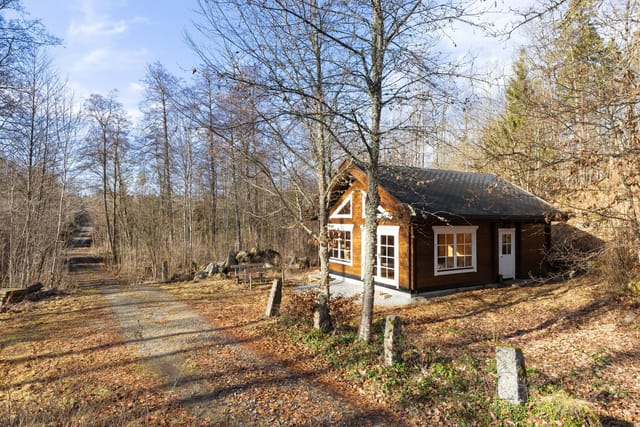
Early on a July morning, the forest around Ljungsjömålavägen is so quiet you can hear a pike break the surface of Lake Mien a kilometre down the road. The coffee's on, the kitchen window is cracked open, and the air coming through smells of pine resin and cool water. That's the kind of morning this place was built for. Completed in 2023, this three-bedroom holiday house sits on a 1,175 square metre plot in Bökemåla, a small community north of Karlshamn in Blekinge — Sweden's southernmost mainland county and one of the country's most underrated corners for a second home. The house is genuinely new, so you're not walking into someone else's renovation backlog. The bones are solid, the materials are fresh, and the energy performance reflects modern Swedish building standards. For an international buyer looking for a move-in-ready Swedish vacation home without the project headaches, that matters. The ground floor opens into a kitchen and living room that share the same open space. Large windows pull light in from the garden side, and the room has the kind of easy proportions that make it work both as a family gathering point and a quiet reading spot when everyone else is out by the lake. The kitchen itself is functional without being fussy — proper counter space, good storage, a layout that doesn't make cooking for six people feel like a military exercise. Two bedrooms sit off the entrance floor, both looking out onto the surrounding green. Upstairs, the attic level holds a third bedroom: a bit more private, a little more tucked away, good for teenagers or guests who appreciate their own corner of the house. A dedicated room on the main floor is pipe-ready for a future bathroom — the groundwork is done, the connections ar ... click here to read more
Exterior view of the holiday home

On a still Saturday morning at Sågbacken 20, you pour coffee in a compact kitchen, crack open the terrace door, and the air that comes in smells like pine resin and lake water. That's the whole point of this place. No traffic noise, no neighbour's TV through the wall — just the occasional woodpecker working away somewhere in the trees behind the garden. It's forty square metres of main house, a separate guest cottage, and 749 square metres of land sitting roughly 300 metres from the edge of Lake Mälaren. Simple on paper. Quietly extraordinary in practice. Bro is one of those Swedish addresses that locals tend to keep to themselves. Sitting in Upplands-Bro municipality, about 40 kilometres northwest of Stockholm, the area hugs the northeastern shore of Lake Mälaren — Sweden's third-largest lake and arguably its most atmospheric, edged with medieval church ruins, small islands, and sailing routes that unfurl for hundreds of kilometres. The E18 motorway puts you at Kungsängen station in under ten minutes, and from there the commuter train runs directly into Stockholm's central station in roughly 35 minutes. You can be eating lunch at Östermalm's food hall and back on the terrace in time for sunset. The house itself was built in 1971 and sits in solid, well-maintained condition. At 40 square metres, the layout is efficient without feeling tight — something Swedish summer house design tends to get right. The bedroom is fitted with built-in wardrobes, keeping clutter off the floor. The living room doubles as a flexible second sleeping space if you need it, with room for a daybed alongside a proper dining setup, and a certified open fireplace anchors the room. On the first cool September evening of the year, when the nights s ... click here to read more
Front view of the holiday home and terrace

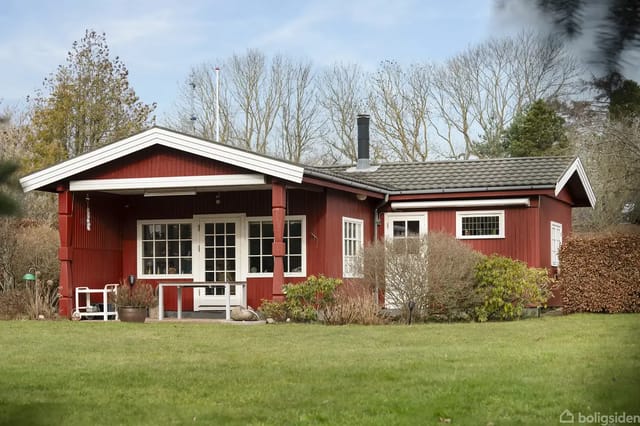
Early on a Saturday morning in Dronningmølle, the sound that wakes you isn't an alarm — it's wind moving through the birch trees at the edge of the garden. You pull on a sweater, slide open the door to the wooden terrace, and stand there with coffee in hand while the garden does its thing. Dew on the grass. A woodpecker somewhere in the treeline. The North Zealand coast is less than two kilometres away, and you can smell it. This is what owning a holiday home on Ny-Ager actually feels like. The house itself dates to 1985, a solid classic of the Danish sommerhus tradition — compact, honest, and built for people who understand that 52 square metres is plenty when the garden runs to over 1,200 square metres and the outdoors becomes your living room for six months of the year. The plot is generously screened by mature trees and established shrubs, so even on the busiest midsummer weekends, it feels private. Ny-Ager is a closed road, which means no through traffic, no noise, just the crunch of your own tyres on gravel when you arrive. Inside, the open-plan living and dining area works harder than its footprint suggests. Large windows pull in the garden light from the south, and the wood-burning stove anchors the room in a way that makes the space feel genuinely warm — not just in temperature, but in character. There's a rustic wooden table surrounded by striped chairs and cushioned benches where meals stretch on longer than intended, the way they do at a good holiday table. The kitchen is straightforward and well-equipped: refrigerator, wooden cabinets, everything you need and nothing you don't. Danish holiday cooking tends toward simplicity anyway — smørrebrød in the afternoon, grilled fish in the evening, a cold Carlsber ... click here to read more
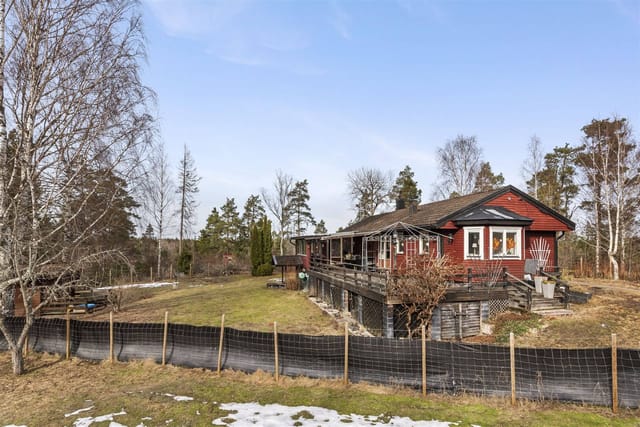
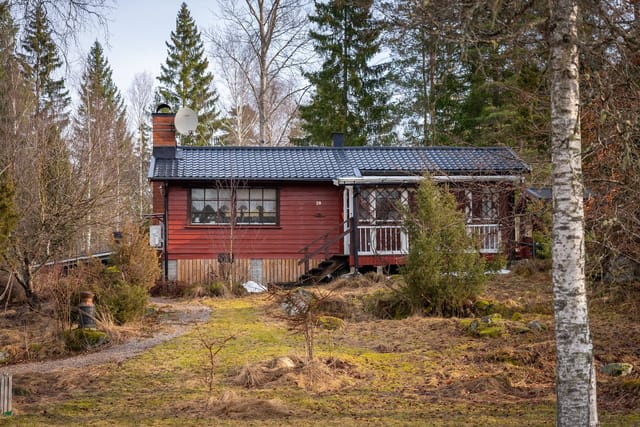
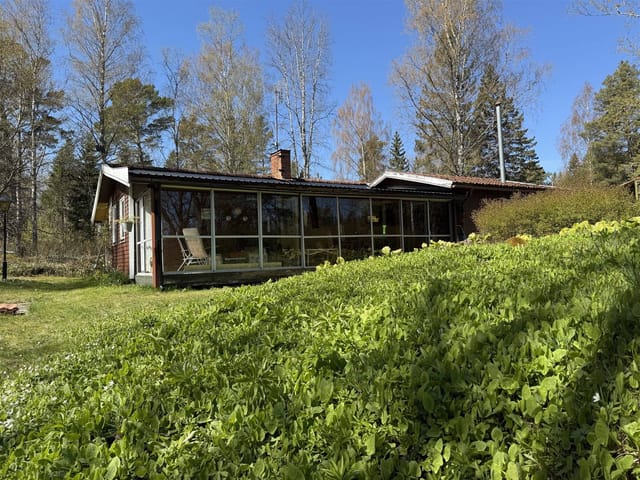
Red wooden house with terrace in a garden surrounded by bushes and trees. Chimney pipe on the roof. Lawn in front of the house.