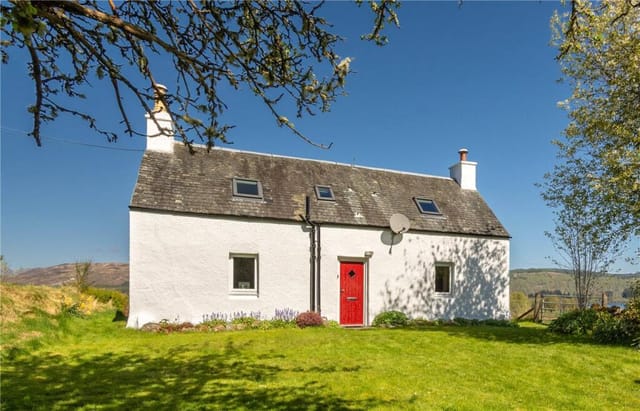
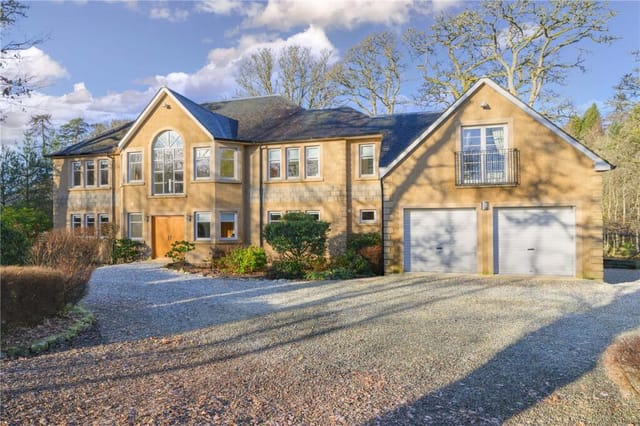
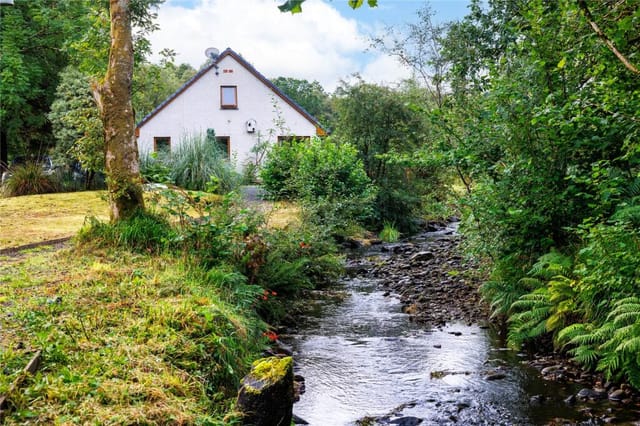
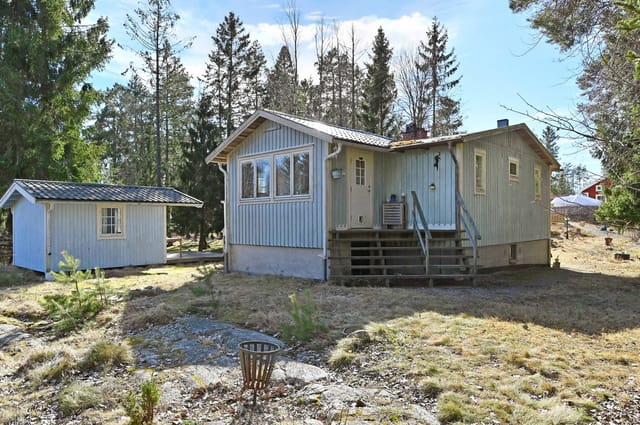
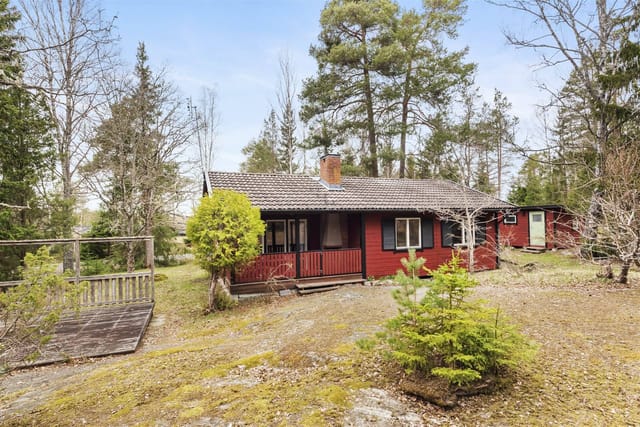
Houses For Sale In Europe (page 15)

Houses for sale in europe - homestra offers the largest amount of european real estate with over 200,000+ properties, find any type of property within your budget from villas to country homes. buy or rent your perfect home in europe. (page 15)

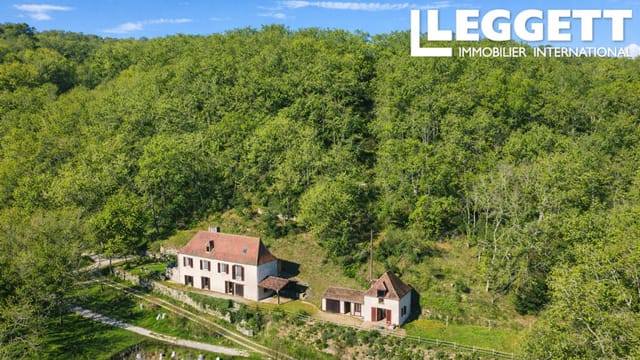
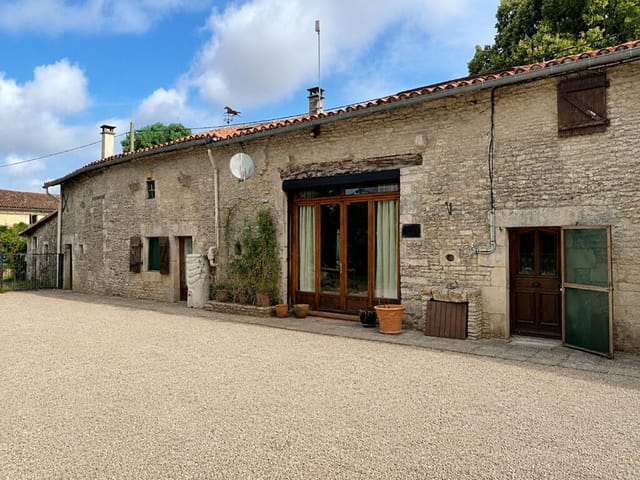
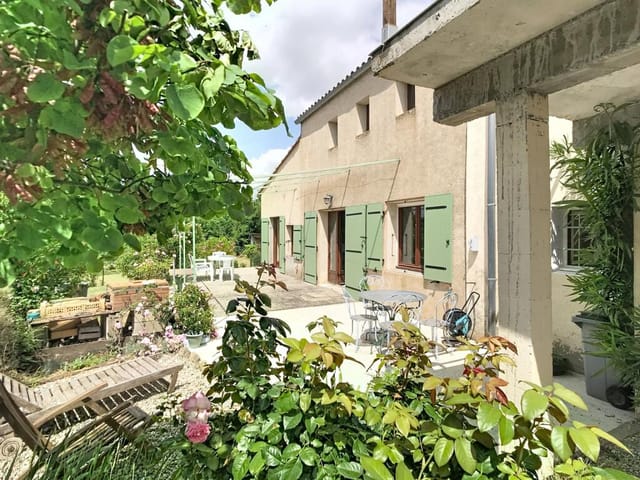
Sunday morning in Verteillac starts slowly. The boulangerie on the main square opens early, the smell of baking bread drifting down the stone street before most shutters have rolled up. From the back garden of this four-bedroom village house, you can hear the church bell count out the hour while a wood pigeon settles somewhere in the old walnut tree next door. That's not a postcard image — that's Tuesday, that's October, that's what this kind of life actually feels like. Verteillac sits in the northern Dordogne, tucked between Périgueux and Angoulême in a stretch of Aquitaine that most visitors never find. That's precisely the point. This is deep rural France — sunflower fields in July, truffle markets in winter, walnut orchards turning gold in October. The Dronne Valley is a short drive east. The medieval bastide town of Brantôme, sometimes called the Venice of the Périgord for its abbey and canals, is around 30 minutes away, and on a warm evening its riverside restaurants fill with locals eating duck confit and magret de canard at unhurried pace. Bergerac Airport is roughly an hour south, with Limoges another option to the northeast. Bordeaux, with all its TGV connections and international flights, sits about 90 minutes away by car. The house itself sits right in the village, with stone walls, a traditional roofline, and the kind of layout that's been thoughtfully adapted for modern living without losing its character. The ground floor flows between an open-plan kitchen and dining room — fitted with a wood-burning stove that earns its keep from November through March — into a generous sitting room, which also has a stove and opens directly onto the private walled garden. On a cool spring afternoon, you leave the door ... click here to read more

Picture 1

Some mornings in the Périgord Noir you wake up to nothing. No traffic, no alarms — just wood pigeons calling from the oak canopy and the faint smell of damp stone warming in early sun. That's the rhythm of life at this five-bedroom stone property in Cénac-et-Saint-Julien, a village that sits quietly above the Dordogne River, close enough to Sarlat-la-Canéda that you can be browsing the Saturday market stalls within fifteen minutes, far enough away that you'd never know it. Set on 2.7 hectares — a mix of open lawn, mature woodland, and garden — the house has the solidity of a building that has outlasted several generations and been thoughtfully brought forward rather than stripped of character. The stone walls are original. The renovation, however, is recent and thorough: new electrical panel, updated plumbing, two hot water tanks, and a kitchen installed from scratch that opens directly into a 39-square-metre living and dining area flooded with afternoon light. It's the kind of space where a summer lunch stretches comfortably into the early evening without anyone thinking to move. The main house holds four bedrooms — two of them full suites with private shower rooms — and those room sizes (22, 23, 15 and 12 square metres) are generous by French rural standards. The primary suite is on the ground floor, which matters more than people expect: after a long day walking the Beynac cliffs or cycling the Vézère valley trail, the last thing you want is stairs. The layout is practical in all the ways that count for a family who actually intends to use a second home, not just own one. What makes this property genuinely unusual is the second, fully independent building. It has its own living room, kitchen, and shower room, with ... click here to read more

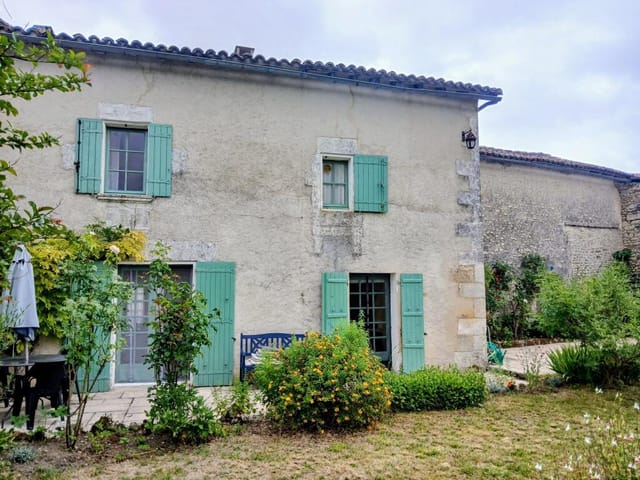
Picture 1

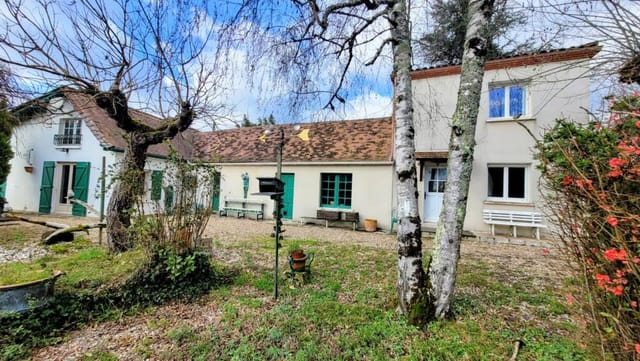
Sunday morning in La Force sounds like this: a distant church bell from the village, the soft creak of wooden shutters catching the Périgord breeze, and the faint smell of coffee drifting through an open kitchen window while the garden sits gold and quiet in the early light. This is not a fantasy. This is what ownership here actually feels like. Sitting on a generous 1,500 square metre plot in the heart of the Dordogne, this three-bedroom property is one of the more genuinely versatile finds to come onto the market in this part of Aquitaine in some time. At €189,000, it's not just a second home in France — it's a property complex that gives you options most buyers only wish for. The setup is clever. Two separate residential units share the land, each with its own character and function. The first is compact, polished, and ready to use from day one — two levels with a ground-floor living room and kitchenette, and a proper bedroom with an en-suite shower room upstairs. You could step off a flight from London or Amsterdam, drive the hour south from Bordeaux-Mérignac airport, arrive at dusk, and be entirely comfortable by nightfall. No renovation stress, no waiting. This unit works immediately. The second unit is where the real potential lives. A single-storey home with a warm living room, a large separate kitchen, and two spacious bedrooms. The bones are good — solid, honest construction typical of the Dordogne countryside — and the spaces are generous enough to personalise without feeling like you're fighting the layout. Think of it as a canvas that already has the right proportions. Knock through to expand a room, update the kitchen with the local stone you'll find at every Bergerac brico, repaint in something that ref ... click here to read more

Picture 1

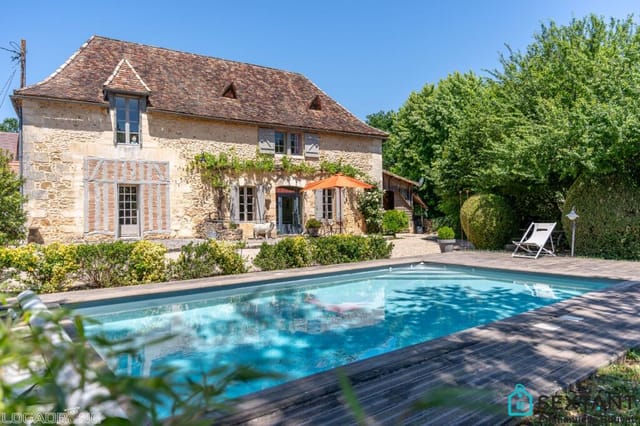
Sunday morning in Queyssac. The kitchen window is open, and somewhere down the lane a church bell marks the hour. The smell of coffee drifts through the room while morning light moves slowly across the old stone walls. This is what you came for. Not a hotel lobby, not a resort pool — this. A house that has been standing for generations, renovated with real care, sitting quietly in one of the most quietly spectacular corners of southwest France. Queyssac is a small village in the Dordogne, tucked between Bergerac and the Périgord Pourpre wine country. It isn't on every tourist map, which is precisely the point. The locals shop Saturday mornings at the Bergerac market on Place de la République, eat confit de canard and walnut tart from the producers who've been showing up there for decades, and drive back through sunflower fields in time for lunch. Bergerac itself is just ten minutes away — close enough to grab a bottle of Monbazillac from a cave coopérative on a Tuesday afternoon, far enough that the hamlet stays genuinely quiet. This stone house sits in a hamlet setting with complete privacy. A dry stone wall wraps part of the garden, and a landscaped swimming pool sits outside with a terrace in front of the house that catches afternoon sun until well into the evening. There's also a covered courtyard — exactly the kind of shaded outdoor space you spend a lot of time in during July and August, when Dordogne summers run warm and long. A dovecote on the property adds to that particular sense of permanence you find in old Périgord houses, the feeling that the place has its own quiet history before you arrived. Inside, 160 square metres have been renovated to a genuinely liveable standard. The ground floor opens into a ge ... click here to read more

Picture 1

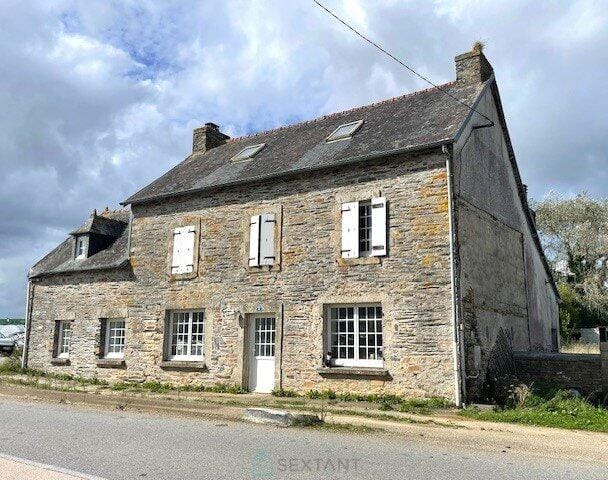
On a quiet Sunday morning in Saint-Thois, the only thing you hear is the wind moving through the oak trees at the edge of the garden and the occasional crow somewhere over the fields. The kitchen smells of coffee and yesterday's crêpes. Through the window, nearly 4,800 square metres of land stretch out in front of you — yours, all of it — and the sky above Finistère is doing that particular grey-blue thing it does when the Atlantic is close enough to feel. This is inland Brittany at its most honest. Saint-Thois sits in the Arrée hills, one of the most quietly compelling parts of France that most people fly over on their way to somewhere louder. That's precisely the point. The Monts d'Arrée, Brittany's ancient low mountain range, rise just to the north. The Parc Naturel Régional d'Armorique — over 172,000 hectares of moorland, forest, and river valley — is essentially your backyard. You don't have to drive far to find the Yeun Elez boglands or the rocky summit of Roc'h Ruz, where on a clear afternoon you can see clear to the coast. The house itself is a genuinely interesting mix: old Breton stone walls on the ground floor married to more contemporary construction above, giving the interior a warmth and texture that new builds simply can't replicate. Step inside and the entrance opens naturally into a generous living space where a fitted kitchen runs alongside a sitting room centred on a wood insert fireplace. On grey November evenings — and there will be grey November evenings, this is Brittany — that fireplace earns its place completely. There's also a large room on the ground floor currently used as a games room, which could just as easily become a studio, a home office, a proper dining room, or a ground-floor bedroom ... click here to read more

Picture 1

Sunday morning in the Dordogne has a particular quality to it. The air smells of cut grass and something faintly herbal — wild thyme, maybe, drifting up from the countryside that rolls away beyond your pool terrace. You open the patio doors from the kitchen and the sound follows: a distant church bell from the village, the soft knock of a shutter, absolute quiet between each ring. This is what you actually bought. This three-bedroom, single-level home sits just outside Issigeac — one of the most genuinely pretty bastide villages in the Périgord Pourpre — and it does something rare for a property at this price point: it's ready. No projects. No compromise on the important things. You walk in, unpack, and start living. The open-plan living, dining, and kitchen space is the kind of room that earns that overused word "heart of the home" — except here it's actually true. Large double-glazed windows pull the garden into the room visually, and two sets of patio doors open fully onto a covered terrace so that indoor and outdoor living collapse into one uninterrupted space across the warmer months. A wood-burning stove anchors the room for the other side of the year, when Dordogne evenings turn cool and there's nowhere you'd rather be than here with a glass of Bergerac rouge and something slow-cooking on the stove. The kitchen and dining area share the same easy flow, so cooking doesn't isolate whoever's at the hob from the rest of the table — a detail that matters enormously when you're hosting friends for ten days in August. The sleeping wing sits at the opposite end of the house, a sensible arrangement that gives kids or guests real separation from the living spaces. Three proper bedrooms, a shower room, and a separate WC. ... click here to read more

Picture 1

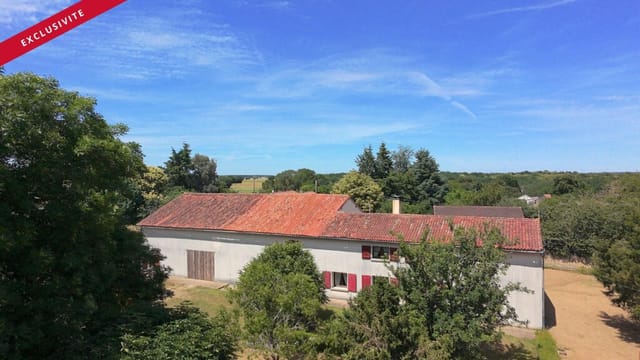
Sunday morning in the Vienne countryside has a specific quality to it. The air smells of cut grass and woodsmoke, the church bell in the village of Blanzay carries clear across the fields, and your kitchen — with its log burner crackling and coffee on the stove — is warm in a way that proper stone walls make it. That's what owning this barn conversion actually feels like. Not a brochure fantasy. The real thing. This is a proper barn conversion sitting in a quiet hamlet just outside Blanzay, a five-minute drive from the market town of Civray and its Friday morning market stalls selling Charentais melons, local goat's cheese, and honey from the Vienne valley. The building has been thoughtfully transformed from agricultural outbuilding into a genuinely liveable home — 130 square metres of interior space spread across a layout that manages to feel both open and intimate at once. Walk into the kitchen-dining room first, because that's where the life of this house happens. There's a log burner, solid fitted units, and enough room that eight people can eat together without anyone feeling squeezed. Behind it, a dedicated utility room houses the central heating boiler and the solar hot water system — practical infrastructure that keeps running costs down and, for a second home in rural France, matters more than most buyers initially realise. A pantry and a separate WC complete the ground floor's working zone. Then comes the double-height living room, and this is the room that stops people mid-stride. The ceiling goes straight up, exposing the original barn volume, with a mezzanine gallery spanning part of it. A chimney anchors one wall. Light from high windows falls at angles that shift through the day. Next to this space sits ... click here to read more

Picture 1

On a still morning in Lizant, the only sounds are wood pigeons in the oak trees and the distant rumble of a tractor working the next field over. The kitchen window faces south, and by nine o'clock the sunlight has already moved across the stone floor and landed on the table where coffee goes cold because you keep getting up to look outside. That's the pace of life this former farmhouse sets — and once you've felt it, it's hard to go back. Lizant sits in the Vienne department of Poitou-Charentes, a part of rural France that doesn't chase attention. It earns it quietly. The village is tucked into a gentle landscape of sunflower fields, walnut orchards, and hedgerow-lined lanes that were made for cycling and slow afternoon drives. The nearest market town is Civray, roughly 10 kilometres east, where the Saturday morning market on the Place du Marché fills up with local producers selling Chabichou du Poitou cheese, fresh walnuts, and smoked duck from the Charente valley. You'll recognise the same faces every week. That's the kind of place this is. The farmhouse itself covers 270 square metres across two floors and has been well maintained — this is not a project requiring months of work before you can sleep in it. You can arrive on a Friday, unload the car, open the shutters, and be entirely comfortable by Friday night. The fitted kitchen flows into a utility room that handles the practical side of country living without cluttering up the main spaces. The living room is large and genuinely bright, thanks to the south-facing aspect that pulls light deep into the interior through most of the day. A fireplace with an insert sits at the heart of the room — in November, when the Vienne countryside goes amber and the mornings tur ... click here to read more

Picture 1

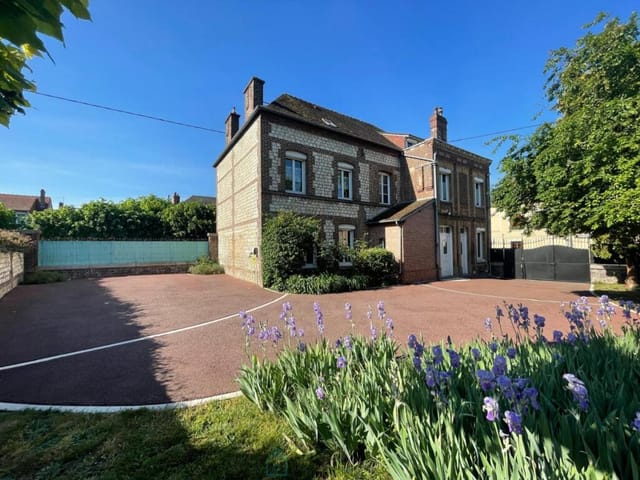
Sunday morning in Saint-Aubin-lès-Elbeuf starts with a smell you can't manufacture: woodsmoke drifting from the fireplace insert downstairs, coffee brewing in the fitted kitchen, and the faint sound of the Seine moving somewhere beyond the garden wall. It's the kind of slow-morning feeling that people spend years chasing and rarely find this close to a motorway junction. This is a five-bedroom Norman manor house in good condition, spread across 235 square metres, sitting in fully enclosed landscaped grounds with a south-facing terrace, a jacuzzi, two garages, an outbuilding, a workshop, and a paved parking area complete with an electric vehicle charging point. On paper, it sounds like a checklist. In person, it reads like a life upgrade. Let's talk about the house itself first. The ground floor opens with a generous entrance hall — proper proportions, not the awkward squeeze you find in newer builds — with a large closet and a separate WC. The kitchen runs to about 25 square metres, fully fitted and equipped, with enough room to cook for a family gathering without anyone getting in anyone else's way. A utility room with a sink connects directly to the garden, which makes returning from a muddy riverbank walk entirely civilised. The living room has a fireplace insert; the adjacent sitting room has its own fireplace. Two rooms with fires. That is not a small thing in a Norman winter. Up on the first floor, three well-sized bedrooms include a master suite with a dressing room and sink — a practical luxury that transforms the morning routine. There's a large bathroom, a laundry room, another dressing room, and a separate WC. The layout gives a family room to spread out without living on top of each other. The second floor ... click here to read more

Picture 1

On a quiet morning in Montmoreau, you open the kitchen window and catch the smell of bread baking from the boulangerie two streets over. The old lime tree in the garden is already throwing long shadows across the grass. Church bells tick off the hour somewhere behind the rooftops. This is what a second home in the Charente actually feels like — not a postcard, but a life you can walk right into. This four-bedroom house sits on a 2,500 m² fenced plot just a few minutes' walk from the center of Montmoreau, a genuine working village where the shops are open, the school is busy, and the weekly market still matters. At €191,500, it's one of those rare finds in southwest France where the price doesn't force you into a compromise. The house is in good condition, connected to the public sewage system, and ready to move into or rent out from day one — no major works, no guesswork. Inside, the layout is generous without feeling excessive. Three bedrooms serve the everyday sleeping arrangement, but the fourth room — a spacious music room running along one side of the ground floor — is the kind of flexible space that a vacation home really benefits from. Use it as a fourth bedroom when the family multiplies for August. Set it up as a proper studio. Keep it as a reading room with nothing but books and afternoon light. It's large enough to be genuinely useful rather than decoratively mentioned in the listing. Two bathrooms handle the practicalities well. The house has a garage and a separate workshop — the workshop alone will matter enormously to anyone who wants a serious hobby space or needs somewhere dry to store garden gear, bikes, and the kayaks that will inevitably accumulate once you discover the Dronne river valley. Parking ... click here to read more

Picture 1

On a clear morning in Peyrefitte-sur-l'Hers, you wake up to absolute quiet — just birdsong and the faint rustle of wind moving through the orchard below the terrace. The kitchen smells of coffee, the door swings open, and the whole Lauragais countryside rolls out in front of you without a single rooftop to interrupt it. That's the daily reality this house delivers. Not a promise — just Tuesday. Peyrefitte-sur-l'Hers sits in the Aude department of southern France, tucked into the low hills of the Lauragais plain, that wide open corridor of wheat fields and sunflowers that connects Toulouse to the Mediterranean. It's not a place you stumble through — you come here on purpose, because someone told you about it. The village is genuinely small, genuinely quiet, and genuinely French in the way that increasingly rare spots still manage to be. Yet Castelnaudary, famous across France for its cassoulet and the Grand Bassin of the Canal du Midi, is barely fifteen minutes away. Carcassonne — the medieval walled city that still makes first-time visitors stop mid-sentence — is about thirty-five minutes east on the A61. Toulouse-Blagnac Airport is under an hour's drive, which matters enormously for international owners who want a second home in France without making the journey feel like an expedition. The house itself covers around 162 square metres, and its layout makes a strong case for flexibility. Four bedrooms, two bathrooms, a living room and a kitchen that opens directly onto a raised terrace — that terrace is where the uninterrupted countryside view lives, and it's genuinely the heart of the property during the warmer months. Think long lunches in September when the vines on the nearby Corbières slopes are turning amber, or ... click here to read more

Picture 1

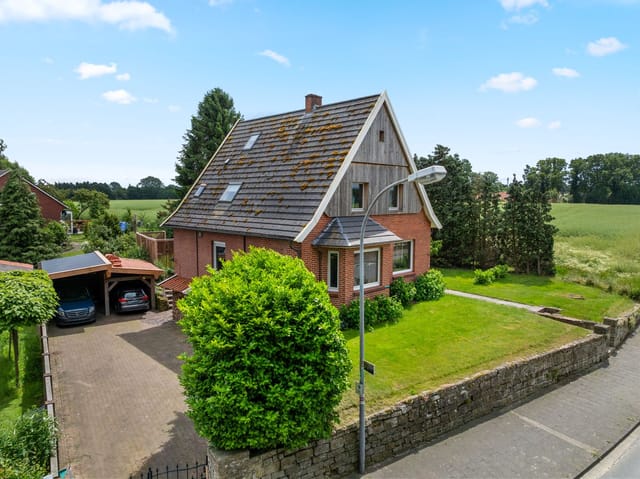
On a quiet morning at Waldseiter Straße 60, you pour coffee in the open kitchen and hear nothing but the wind moving through the Bentheimer Wald just beyond the garden fence. No traffic rumble, no city noise—just the soft creak of a well-built house settling into its day. That's the rhythm life takes on here, in one of Germany's most underrated corners, where the hilly landscape of Lower Saxony rolls gently toward the Dutch border and history sits in plain sight on the sandstone ridge above town. Bad Bentheim doesn't announce itself loudly. It doesn't need to. The medieval castle that crowns the Bentheimer Berg has stood since the eleventh century, visible from half the town, and the thermal baths at the Bade- und Kurzentrum have drawn visitors from across the region for decades. The old town center around Schlossstraße has the kind of unhurried atmosphere that feels increasingly rare—butchers that still know your name, a Saturday market where the strawberries actually smell like strawberries. Life here has texture. This four-bedroom house, built in 1956 and kept in genuinely good condition, spreads across three floors and 155 square meters of living space. Seven rooms in total, which means there's a proper guest room and still space for a home office—or two, if you both work remotely. The layout is practical without being rigid. The open-plan kitchen connects directly into the living room, so cooking dinner doesn't mean being exiled from conversation. Built-in appliances, clean lines, and a flow that just makes sense. What sets this property apart from the typical German family home of this era is what's not there: gas. No gas connection, no gas bill, no exposure to the energy price swings that have rattled household ... click here to read more

Photo 1 of Waldseiter Straße 60

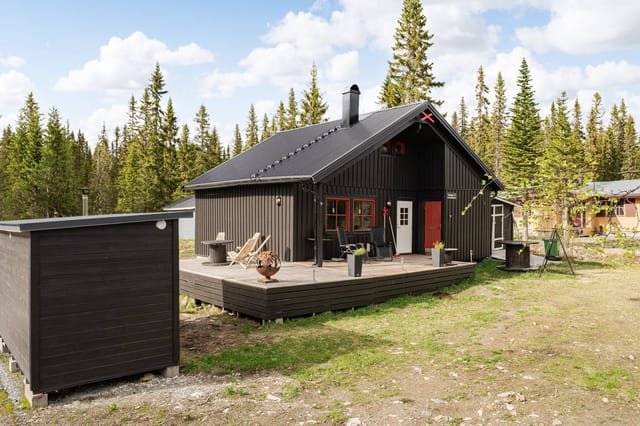
The wood-burning stove is already crackling when you pull off your boots. Outside, the spruce trees are loaded with fresh snow, the thermometer reads minus twelve, and you genuinely don't care—because the sauna is heating up, there's elk stew on the 2020-renovated kitchen stove, and the snowmobile trails start practically at the garden gate. This is what owning a cabin in Fjällbyn actually feels like. Sitting at Fjällbyn 147 in Föllinge, deep in Jämtland's Krokom municipality, this two-bedroom cabin with a loft and a separate sauna building is one of those properties that works hard in every season. Sixty square metres of living space sounds compact until you step inside and realise how the open-plan layout, generous ceiling height, and connecting loft make the place feel considerably larger. The large windows pull the surrounding forest right into the room, so the view changes daily—bare birch branches in October, a solid white blanket by December, and by late June, a rolling green that goes on forever. Seven hundred metres separates the front door from Åkersjön lake. Walk it in under ten minutes on a summer morning and you're at the water's edge before the mist has fully lifted. Åkersjön is one of those Jämtland lakes that feels genuinely wild—good Arctic char fishing, calm paddling water, and a shoreline where you can swim without another person in sight. Locals drive up from Östersund specifically for the pike fishing in early autumn. In winter, the lake freezes hard and becomes part of the snowmobile network that links Fjällbyn to the broader Jämtland trail system, hundreds of kilometres of marked routes that connect to Strömsund, Åre, and beyond. Speaking of Åre—Sweden's most celebrated mountain resort sits with ... click here to read more
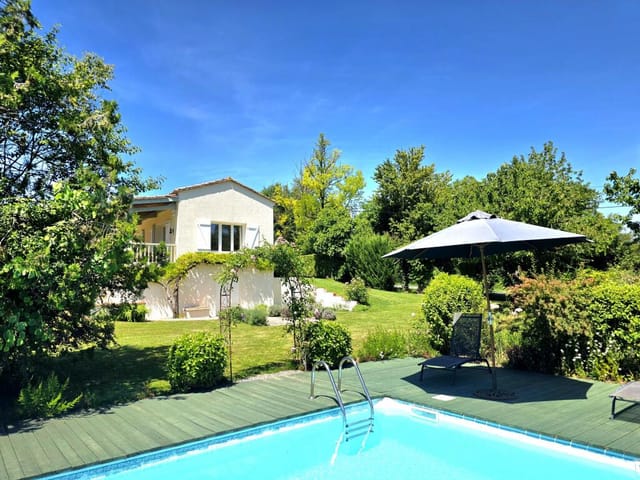
Exterior view of Fjällbyn 147

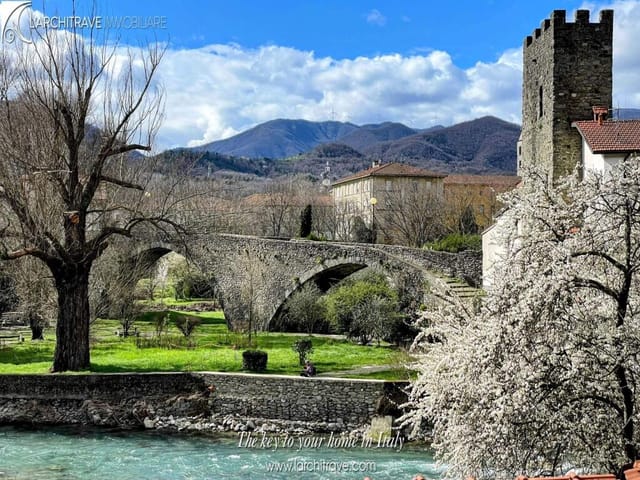
On a Wednesday morning in Pontremoli, the street market spills across the cobblestones below your dining room windows. The smell of fresh focaccia and roasted chestnuts drifts up through the shutters. You pour a coffee at your kitchen counter and watch the vendors arrange their stalls along the riverbank, unhurried, the way life moves in this corner of Lunigiana. This is the daily rhythm of owning a 220sqm second-floor apartment in a genuine 18th-century Palazzo, right in the historic heart of one of northern Tuscany's most quietly compelling towns. Pontremoli sits at the meeting point of the Magra and Verde rivers, built outward from its medieval castle in a way that feels almost deliberate in its beauty. The twin Roman arched bridges frame either end of the town like natural gateways. Walk through them and you're moving through cobbled lanes where stone archways link house to house, where elegant Palazzi with internal courtyards face the water, where the castello up on the hill keeps watch over everything below. It's a town that doesn't need to try very hard to impress you. It just does. The apartment itself occupies the entire second floor of a well-maintained Palazzo on a quiet street, seconds from the Piazza della Repubblica. You enter from the cobblestones into a grand hall with columns opening onto an internal courtyard — the kind of entrance that makes guests stop and take a breath. A broad stone staircase, worn smooth over centuries, sweeps you upward into 220 square metres of bright, high-ceilinged living space. The vaulted living room anchors the apartment with a handsome Capodimonte wood-burning stove that becomes the social centre of the space from October onward, when the Apennine air sharpens and the hil ... click here to read more

Picture 1

On a clear morning, you can stand on the terrace with a coffee and watch the light shift across the Gulf of La Spezia—the water catching silver between the headlands, Portovenere in the far distance, the hills dropping in ridges toward the coast. Church bells from the village below drift up before nine. The wood-fired pizza oven in the kitchen is still warm from the night before. This is the kind of Tuesday you've been daydreaming about for years. Calice al Cornoviglio sits in the Ligurian hills at the precise point where the region folds into Tuscany, and that borderland quality defines everything about it. The air smells of pine resin and wild rosemary. The village itself is unhurried—there's a bar where the same men have been drinking espresso at the same hour for decades, a small shop that stocks far more than you'd expect, and a public pool with a view that would cost a fortune at any resort. A restaurant one kilometer down the lane does a ribollita that makes you reconsider every bowl of soup you've ever eaten. The community is tight-knit in the way that only small hilltop villages manage to be, and newcomers who put in the effort are genuinely welcomed. The house itself is spread across three floors of beautifully renovated stone, 174 square meters in total, and it carries the weight of its past lightly. Ground floor: a vaulted cantina—the real thing, not decorative—plus a storeroom, bathroom, and an open-plan kitchen and dining space anchored by exposed stonework walls and a wood-fired pizza oven built into the stone. It's the kind of kitchen that makes cooking feel like an event. Up to the first floor and the split-level living room opens outward—fireplace on one side, terrace on the other, panoramic views in ... click here to read more

Picture 1

Sunday morning in Lunigiana sounds different from everywhere else in Tuscany. Church bells carry from the valley below, the air smells of woodsmoke and wild herbs, and from the upper terrace of this stone house you can watch the green hills roll southward without a single rooftop to interrupt the view. It's the kind of quiet that city people forget exists — and then spend years trying to find again. This three-bedroom house sits on the edge of a small hamlet about six kilometres from Fivizzano, the medieval walled town that locals half-jokingly call the Florence of Lunigiana. The nickname isn't vanity. Fivizzano's cobbled central piazza, ringed by Renaissance palazzos and caffè terraces, has a genuine civic dignity — and on summer evenings, when the town hosts open-air concerts and torchlit medieval parades, you understand why people who arrive for a week end up buying property here. The house itself is a proper working structure, not a decorator's project. The original stone building was rebuilt at the turn of this century, and about a decade ago a neighbouring barn was converted into a light-drenched annexe that now functions as a semi-independent guest suite. Together they cover 88 square metres of interior space — compact, considered, and genuinely comfortable year-round thanks to central heating, reliable Wi-Fi, and solid 4G coverage, which matters more than most property descriptions admit. Walk through the main door and you're in an open-plan kitchen and living room where a traditional enclosed fireplace anchors one wall. Come October, when the olive harvest starts and evenings cool quickly, that fire earns its place. A stone staircase rises to two bedrooms and a family bathroom; one of the bedrooms opens direc ... click here to read more

Picture 1

Early October in Vogognano. The fog sits low over the Arno Valley, and from the upper floor of the main house you can just make out the ridgeline of the Alpe di Catenaia catching the first light. Somewhere below, a tractor starts up. The olive harvest is three weeks away, and the hundred-plus trees on this estate will need every pair of hands they can get. That is the rhythm of life here — earthy, unhurried, and very, very real. This three-bedroom stone estate in Subbiano, roughly 20 minutes southeast of Arezzo in the upper reaches of the Casentino valley, is not a cosmetic renovation project dressed up with a fresh coat of paint. It is a genuine opportunity: a main farmhouse plus two ancient stone barns sitting on just over six hectares of land, currently in good structural condition and waiting for a buyer with vision. The bones are honest. The location is quietly exceptional. The property sits on an elevated position above the village of Vogognano, part of the Subbiano municipality. That elevation matters. You get unobstructed views across the valley toward the forested flanks of the Casentino National Park — one of Italy's least-trampled protected areas, covering more than 36,000 hectares of beech, silver fir, and chestnut forest that have been growing undisturbed since the Benedictine monks of Camaldoli first set them aside in the eleventh century. On clear days after rainfall, the air smells of pine resin and damp earth in a way that genuinely stops you mid-thought. The complex spreads across two levels. The main house anchors the estate, with the two former barns — sturdy, thick-walled structures that kept grain dry through centuries of Tuscan winters — sitting close by. Together they total 495 square meters of ... click here to read more

Picture 1

Picture this: it's a Sunday morning in July, and you're standing on the balcony of Casa Erica with a coffee, watching the Tuscan hills roll away in every direction like a green and gold sea. Church bells carry up from the piazza below. The scent of woodsmoke drifts from somewhere nearby. You didn't fly into some tourist trap — you're in Chianni, a proper working Tuscan village where the locals actually live, and somehow you own a piece of it. This is a three-bedroom semi-detached house in the kind of condition that tells you someone cared for it — services connected and working, solid bones throughout — but with enough room to put your own stamp on things. At 160 square metres, spread across three levels, it has real substance. Not a squeezed holiday flat, not an overwrought renovation project. A house. The layout rewards exploration. You arrive via an external staircase onto a balcony that already sets the tone, then step into a kitchen anchored by an open fireplace — the kind of feature that makes February in Tuscany feel romantic rather than cold. The living room sits alongside it, and there's a proper bathroom with shower, a useful under-stairs store room, and a ground-floor room that works equally well as a single bedroom or a quiet study for anyone who still answers emails on holiday. Upstairs, two more bedrooms sit connected by a door, and there's planning scope to carve out a second bathroom up here — potentially a full master suite if you want to take the property somewhere more ambitious. A small attic already handles the overflow storage question before you've even asked it. But the real talking points are below. In the courtyard — which doubles as private parking — a few stone steps climb to a private gard ... click here to read more

Picture 1

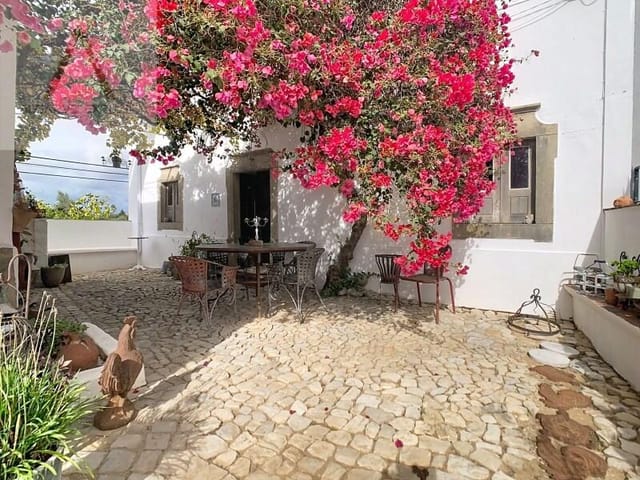
Picture a Saturday morning in late October. The air coming through the kitchen window smells of wood smoke and damp cork oak, and somewhere down the cobbled lane a rooster is making his opinions known. You've got a coffee on, the fireplace from 1888 is doing exactly what fireplaces from 1888 are supposed to do, and the hills of Santa Bárbara de Nexe roll out beyond the terrace like something a painter would invent. This is not a weekend fantasy. This is what owning this house actually feels like. Santa Bárbara de Nexe sits on a ridge in the inland Algarve, just 15 minutes north of Faro and about 10 minutes from Loulé — close enough to everything, far enough from the coastal circus of July and August. The village is the kind of place where the café owner knows your order by your second visit and the weekly market in Loulé (every Saturday, go early for the honey and smoked sausages) becomes a genuine ritual rather than a tourist activity. You're inland enough to feel authentic Portugal, but a 30-minute drive puts you on the sands of Meia Praia, Quarteira, or the wilder dunes at Cacela Velha near the Spanish border. The house itself dates from 1888, and unlike a lot of historic Algarvian properties that have been sanded and plastered into blandness, this one kept its soul. Original stone walls, a proper living room fireplace with a wood burner sitting inside it, the kind of thick-walled construction that stays cool in August without much help and holds heat through December evenings when the rest of the coast is surprised by the cold. The ground floor flows from the entrance into the living room, then through to a dining room and a fully equipped kitchen. Step out from the kitchen and you're in a courtyard where a bougain ... click here to read more

Picture 1

Stand in the courtyard on a September morning and you'll understand immediately why people never quite recover from their first visit to Lunigiana. The bread oven is cold now, but you can smell the ghost of woodsmoke in the stone. Swallows cut arcs above the vine pergola. Down the slope, your vineyard — yes, yours — catches the early light, and somewhere in the olive grove behind the meadow a woodpigeon is making its case for the day. This is what €160,000 buys you in one of Tuscany's last genuinely undiscovered corners. The farmhouse itself is honest old stone, two storeys, the kind of construction that's been shrugging off Apennine winters for a couple of centuries without complaint. On the ground floor you have a kitchen and dining room with enough space to cook seriously, a living room, and a store room that opens toward the courtyard. Three bedrooms and a bathroom sit upstairs. The whole thing runs to 200 square metres of internal space, plus an adjoining barn on two levels that connects — or could connect, once you've had your way with it — to the main house. Below everything, carved into the hillside as nature intended, are the cantina: vaulted stone rooms that have been making wine cold for generations, exactly the right place to rack the bottles from your own vines. The property needs modernization. That's not a caveat buried in the small print — it's actually the point. Someone who wants a turn-key renovation project with a concrete budget and a clear vision will find that this house gives them something increasingly rare: genuine scope to create a home on their own terms, in a place where the bones are already exceptional and the land does much of the talking. The spring water supply is abundant and the prop ... click here to read more

Picture 1

On a Sunday morning in Comano, you wake to the sound of church bells drifting up from the piazza 150 metres away. The air through the bedroom window carries woodsmoke and cut grass, and somewhere below, the family-run bar is already grinding its first espresso. This is not a fantasy. This is an ordinary morning at this restored hillside house in the Taverone valley — a corner of Lunigiana, Tuscany, that most tourists haven't found yet and locals are quietly glad about. The house sits on the edge of a small, tight-knit village community, the kind where people actually know each other, where the restaurant at the heart of the village has been run by the same family for decades, and where showing up as a forestiero doesn't mean you stay one for long. At 80 square metres across two floors, the layout is practical and well thought out. You enter through a hallway that opens into a kitchen and a light-filled living room on the ground floor, alongside a full bathroom. Head upstairs and two attic double bedrooms share a second bathroom — a setup that works equally well for a couple wanting a proper bolthole or a small family with kids who'll spend most of their time outside anyway. The outdoor space is where this property earns its keep. A courtyard with a barbecue setup becomes the natural centre of evening life in summer. Beyond it, roughly 1,000 square metres of land — about a quarter of an acre — includes a chestnut wood that comes into its own in October, when the nuts drop and the forests around the Taverone valley take on that particular amber glow that photographers come from across Europe to chase. Views from the land stretch across the valley toward the Apennines, the kind of views that make you stand still for a mom ... click here to read more

Picture 1

Stand on the upper terrace just after sunrise and watch the mist lift off the Serra de Monchique, the valley below turning from grey-green to gold as the light catches the olive groves. Church bells drift up from the town square five minutes down the cobbled hill. The smell of medronho — the local arbutus berry spirit that Monchique has been distilling for centuries — still hangs faintly in the cool morning air from last night's bar. This is your Saturday morning. And it's not a fantasy. This fully renovated two-bedroom house sits on a 1,080 square metre terraced plot right at the edge of Monchique's historic centre, delivering unobstructed valley panoramas that most people only see on postcards. At 599,000 euros, it's a rare intersection of contemporary architecture, serious eco credentials, and a location that places you equally between mountain wilderness and some of the Algarve's most celebrated coastline. The main residence was designed around one core idea: let the landscape in. The living room ceiling climbs to six metres, and large glass walls mean the valley view is essentially a living painting that changes by the hour. On grey winter afternoons, clouds roll through the valley below you — you're actually above them. By midsummer, the light turns amber by seven in the evening and the temperature on the covered terrace is exactly where you want it. The kitchen doesn't make you choose between beauty and function: custom American walnut cabinetry, full Bosch appliances, and enough counter space to actually cook — which matters here, because Monchique's market produces the kind of medronho-cured sausages, Serra cheese, and wild mushrooms that make cooking feel worth the effort. Large sliding doors open from the l ... click here to read more

Picture 1

You wake up to silence. Real silence — no traffic, no neighbours too close, just the dry warmth of an Algarve morning pushing through the shutters and the faint smell of wild rosemary rising off the hillside below. This is what São Brás de Alportel feels like before the rest of the world gets going, and from this four-bedroom country house on its outskirts, you get that feeling every single day. São Brás de Alportel sits in the Barrocal, the limestone inland strip between the Algarve coast and the Serra do Caldeirão mountains — and it's one of the least discovered corners of southern Portugal. That's not a flaw. It's the whole point. The town itself is compact and deeply local: a main square where old men argue over espressos at Café Garrett in the morning, a weekly market on Saturdays where you'll find the season's best blood oranges and medronho brandy from the hills, and the Museu do Traje — a folk costume museum tucked into a former cork baron's mansion — that quietly explains how this region made its money for two centuries. The streets smell like charcoal smoke in winter and jasmine in summer, and almost nobody speaks at you in English unless you start it. The house sits roughly ten minutes outside town on a generous 1,016 square metre plot, with unobstructed views across the rooftops of São Brás and out to the layered ridges of the Caldeirão range beyond. On clear days — and there are a lot of those, given the Algarve logs around 300 days of sunshine annually — the view runs so far east it almost reaches Spain. The plot itself gives you room: space for a swimming pool at the back, a proper kitchen garden if you want one, and a garage that could double as a workshop or storage for bikes and gear. At 140 square m ... click here to read more

Picture 1

The smell hits you first — salt air and pine, drifting through an open window on a July morning while the harbor down the hill is already busy with fishing boats heading out toward the Kosterfjord. That's what mornings look like from Hovslagargatan 3. Coffee on the terrace, the conservatory catching the early light, and absolutely nothing demanding your attention until you're ready. Grebbestad sits on Sweden's Bohuslän coast, a stretch of coastline that West Coast Swedes guard like a family secret. The town has a real working harbor — lobster and oysters pulled straight from those cold, clean waters — and yet it never turns into the kind of place that forgets itself for the sake of summer crowds. The main street runs to the water's edge. There are maybe four or five restaurants worth returning to, a bakery that opens early enough to catch the sunrise crowd, and kayak rentals at the dock if you feel like paddling out to the skerries before lunch. In late August, the Smögen and Grebbestad area fills with Swedish families doing what Swedes do best: slow evenings, open boats, crayfish parties on granite rocks by the sea. November brings a different kind of quiet. Fog and moody skies. The kind of weather that makes you glad you've got a hot tub. This property at Hovslagargatan 3 sits at the end of a residential street — far enough from the summer foot traffic to feel private, close enough to the harbor that you're never hunting for parking. It's a substantial house. 115 square metres of main living space, good condition throughout, and a basement apartment that effectively gives you a second home within the property. That last part matters more than people initially expect. The main floor opens wide. Living room and kitche ... click here to read more

Exterior view of the house and garden

Saturday morning, and the cherry tree outside is dropping its last white blossoms onto the patio table. You've got coffee on, the kitchen window is cracked open, and the only thing on the agenda is deciding whether to cycle down toward the Öresund coast or spend the afternoon in the hammock. This is Björkgången 22 — a compact, well-kept cottage in Kölnans Fritidsby, one of Malmö's most quietly coveted leisure village districts, and a property that earns its price tag through sheer livability rather than size. Forty square meters sounds modest until you're inside. The main room is flooded with light from several windows, and a door opens straight onto the garden so that the line between inside and outside essentially disappears on warm days. Summers in southern Sweden last longer than most visitors expect — July evenings here don't go dark until past ten, and that extra space between the living room and the patio effectively doubles what you're working with. The kitchen sits just off the main room, a garden-framed window turning even mundane meal prep into something more pleasant. A washing machine is tucked in discreetly, which matters more than it sounds when you're planning weeks here rather than weekends. The bedroom is at the quieter end of the cottage. No street noise, no early traffic — just birds in the morning and the occasional rustling from the mature trees that ring the back of the 375-square-meter lot. That lot is the real story here. A pear tree, an apple tree, a cherry tree, and a magnolia that puts on an extraordinary show every April. The rear of the garden is genuinely secluded: dense summer growth means you could host a lunch back there and your neighbors wouldn't know. A hammock is already strung bet ... click here to read more

Front view of the cottage and garden

Step out onto the back terrace on a Friday evening in July. The light on Värmdö doesn't fade so much as it lingers — that long, amber Scandinavian glow that makes everything feel unhurried. You can hear the water. The sea is 350 meters away, close enough that a morning swim before coffee is a completely reasonable life choice. That's not a weekend treat here. That's Tuesday. Evlinge is one of those corners of Värmdö that locals tend to keep quiet about. The island sits just east of Stockholm, connected by road through the leafy arc of the archipelago — about 35 to 40 minutes from the capital, depending on where you're headed. It doesn't have the same postcard fame as Sandhamn or Vaxholm, and that's precisely why it works. No tour buses on Betesvägen. Just a quiet residential street, generous plots, and the kind of birch-and-pine silence that Stockholm residents pay considerable sums to access on weekends. This house, built in 1970 and kept in good condition over the decades, sits on a 2,596 square meter plot. That number deserves a moment. Nearly 2,600 square meters means actual land — room for a kitchen garden, a hammock between the trees, a snowman in February that the kids can build without running out of space. The footprint of the house itself is 70 square meters of living area spread across two floors, which keeps maintenance manageable without feeling cramped. Two wood-burning stoves. That detail matters more than any spec sheet can convey. On a November afternoon when the temperature drops and the first snow settles on the garden, both stoves earn their place — one on each floor, each one pulling the room inward and making it feel smaller in the best possible way. The upper-floor stove sits in the main living ... click here to read more

Exterior view of the house and garden

Six o'clock on a July morning and the light here is already gold. You push open the kitchen window and catch the faint salt-and-pine smell drifting up from the water at Räfsnäs, just five minutes down the track on foot. The coffee is on. Somewhere across the garden, a wood pigeon is doing what wood pigeons do. This is Bokenäs — and if you've never spent a summer on this stretch of the Bohuslän coast, you're in for a genuine revelation. Hjalmars väg 5 sits on a southwest-facing plot in the Eriksberg neighborhood, a quietly sought-after pocket of Uddevalla municipality where most houses go dark from September to May and come magnificently alive in June. The property dates from the 1930s and carries that era's unhurried sensibility: proper rooms with real proportions, large windows that pull the garden indoors, and the kind of robust timber construction that has laughed off nine decades of Swedish winters without drama. Three bedrooms, two living rooms, one bathroom — 76 square meters of main house that feels bigger than the number suggests, partly because of those windows and partly because the layout was designed for actual living, not a floor-plan brochure. The garden is the heart of everything. Southwest aspect means sun from late morning until the evenings go rose-pink around ten o'clock in high summer. There's room for a long table under the trees, a hammock, a patch for growing tomatoes that never quite ripen but you keep trying anyway, and enough grass for children to run themselves properly tired. The guest cottage — a simple, functional annex on the same plot — handles the overflow when friends arrive, which they will, repeatedly, once word gets out you have this place. The share in the local community associat ... click here to read more

Front view of the house and garden

Step outside on a still October morning and the surface of Loch Rannoch is flat as glass, reflecting the Munros on the far shore in colours that shift from bruised purple to gold as the sun clears the ridge. The only sounds are the creak of Scots pines behind the house and the soft knock of your boat against the slipway thirty-five metres away. That slipway is yours. So is the beach, the loch frontage, the stone bothy, the motor cruiser, and 1.37 acres of some of the most quietly extraordinary land in Scotland. Blackwood Lodge sits on the south shore of Loch Rannoch, tucked between the ancient Black Wood of Rannoch — one of the last large remnants of the original Caledonian pine forest that once covered the Highlands — and the loch itself. The house was built in 1974 as the residence for the Blackwood forester, which tells you something about how it sits in the landscape: practically, purposefully, with the kind of relationship to the land that most weekend retreats can only gesture at. It has been thoughtfully updated since, but the original intent — a proper country house that serves people who actually use the outdoors — is still written into every corner of the place. Single-storey living makes this a property that works for everyone, from young families to older buyers who want easy access without compromise. The open-plan living and dining area runs across the front of the house behind full-height glazing, and the view from that glass is the first thing every visitor stops to stare at: uninterrupted loch and hill, the water changing colour with the weather, red squirrels occasionally crossing the garden. The wood-burning stove anchors the living room. Come back from a November walk up Schiehallion — a satisfying ... click here to read more

Blackwood Lodge

Stand on the wooden deck at six in the morning, coffee in hand, and watch a sea eagle glide low over the water while the inlet below your plot sits completely still. No traffic noise. No neighbours in your sightline. Just the occasional creak of a boat at the shared dock and the smell of Swedish summer — sun-warmed pine, salt air, wild strawberries growing somewhere in the grass behind you. This is Vaden 125, sitting at the very tip of Söderön island in Östhammar Municipality, and mornings here genuinely feel like the world kept a secret just for you. The house was built in 1992 and has been in the same family's hands ever since — the kind of place that accumulates decades of careful attention rather than neglect. You can feel it in the condition of the property: maintained properly, updated where it mattered, left alone where it didn't need changing. The main house runs to 135 square metres of living space across nine rooms, seven of which are bedrooms. Five of those bedrooms face the water. Waking up to an ever-shifting view of the Swedish archipelago isn't something you get used to quickly, which is rather the point. The open-plan kitchen and living room is the gravitational centre of the house. Large windows run the length of the water-facing wall, and the light that comes through them changes completely with the seasons — the pale gold of late-summer evenings, the hard winter brightness bouncing off snow-covered rocks, the flat grey of an October storm that somehow makes the inside feel even warmer. The wraparound timber deck connects to this space directly, and in July it becomes an outdoor dining room, a sunbathing terrace, a stage for long evenings that drift past midnight. The guesthouse — the original buildi ... click here to read more

Main house with sea view

The first thing you notice on a summer morning here is the silence — then, slowly, the birdsong fills it. Standing on the front deck of this 89-square-metre house in Norra Rörvik, coffee in hand, the only interruption is the occasional creak of a boat rope from the jetty at the bottom of the path. That jetty is a two-minute walk away. This is the kind of detail that changes how you spend your summers. Set on an elevated 2,010-square-metre plot at the end of a quiet cul-de-sac on Höjdviksvägen, the house sits above its neighbours just enough to offer a sweep of the surrounding landscape without sacrificing the sense of being tucked into the trees. The elevated position isn't just about views — it means genuine privacy, the sort that's hard to find anywhere near the Stockholm archipelago without spending twice as much. The interior is honest and well thought out. The open-plan living room and kitchen work together naturally — large windows pull the outside in, and on a clear day the light bounces around the room from mid-morning well into the evening. It's a space that works for a rainy October evening with board games and candles just as well as it does for a noisy midsummer dinner. The kitchen is properly equipped, not a weekend afterthought, and the dining area has room to seat a full table of guests without anyone bumping elbows. Three bedrooms cover the practical range: one genuine double room, and two smaller rooms that flex depending on who's visiting — kids, grandparents, a friend who always stays "just one night" and ends up staying three. One bathroom with a shower and a separett eco-toilet keeps things functional and low-maintenance, which matters when you're not living here full-time. And then there's the sa ... click here to read more

Exterior view of the house and garden

On a still Tuesday morning in Balen, the only sounds drifting through the kitchen window are birdsong and the faint ripple of water from the Vaart canal just beyond the garden fence. No traffic. No crowds. Just the kind of quiet that most people have to travel far to find — and here, it's simply the Tuesday morning. Driehuizen 101 sits on a wide, sun-filled plot of 1,093 square metres at the end of a dead-end street in one of Balen's most sought-after residential pockets. Built in 2022, this is not a renovation project or a "full of potential" euphemism. It's genuinely move-in ready, finished to a high standard, with an A+ energy label and 24 rooftop solar panels feeding into a home battery system that keeps the electricity bills remarkably close to zero. In an era when energy costs dominate every property conversation across Europe, that's not a footnote — it's a headline. Step inside and the ground floor opens into a living and dining area that faces the garden. Large windows pull the green of the plot right into the room; late afternoon light comes in low and golden in the summer months and on winter weekends the place still feels alive with natural brightness. The kitchen runs along one wall with quality appliances and storage that's been thought through properly — deep drawers, a full-size oven, the kind of setup where you can actually cook rather than just heat things up. Two terraces extend from the ground floor, one catching the morning sun, the other shaded by early evening. Pick your mood. Upstairs, the three bedrooms all overlook the surrounding greenery. None of them feels like a compromise. The main bathroom has a double washbasin, a walk-in shower, and finishes that lean toward considered rather than sho ... click here to read more

Front view of Driehuizen 101

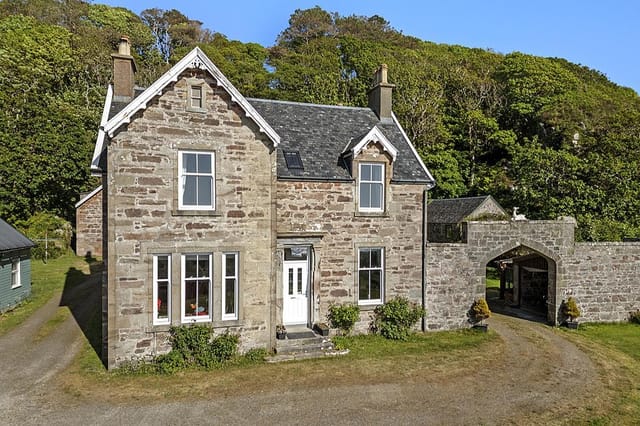
Stand at the upstairs window on a clear evening and the Atlantic stretches out ahead of you, Gigha sitting low on the horizon, the dark shapes of Islay and Jura beyond it, and the sky doing something extraordinary in shades of amber and deep violet that no filter could replicate. This is what westward-facing Scotland does at dusk. And it does it every single night from Crubasdale Lodge. Crubasdale Lodge is a substantial Georgian-Victorian stone house at the northern edge of Muasdale, a quiet village on the A83 that most people drive through on their way somewhere else. That's their loss. The Kintyre Peninsula is one of those places that rewards the people who actually stop—properly stop, unpack, breathe the salt air, and stay a while. Eight bedrooms, four bathrooms, over 4.5 acres of mature grounds, a detached three-bedroom annexe, a timber cabin, a Victorian walled garden, stone outbuildings, and a private sandy beach that comes with the title deeds all the way to the high water mark. Properties like this don't appear on the market often. When they do, they tend to go quietly and quickly to people who recognize what they're looking at. The house itself was originally built as a hunting lodge, and that heritage shows in the bones of the place. Stone walls under a slate roof. An impressive staircase rising through the central hall. A marble fireplace in the drawing room beside a wood-burning stove that, on a January evening when the rain is coming in off the Atlantic and the wind is up, becomes the single most important thing in the building. The proportions are generous throughout—rooms with height and light, windows positioned to catch the views. Someone designed this with intention, and that original thinking still h ... click here to read more
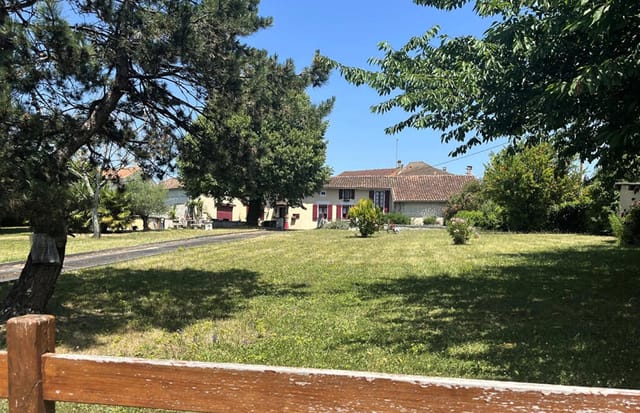
Front view of Crubasdale Lodge

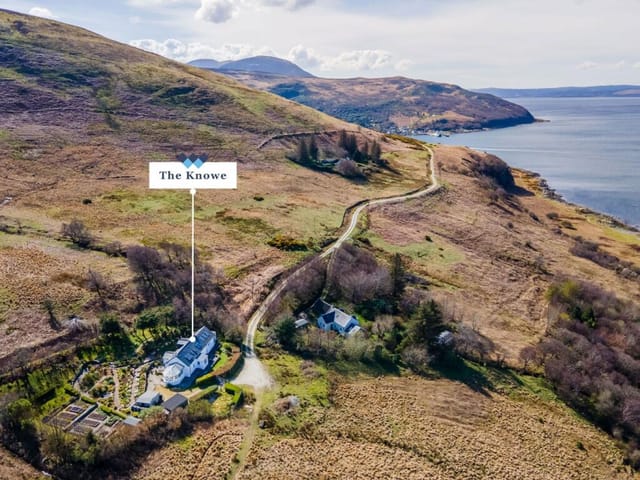
Stand in the dining kitchen on a clear October morning and you can watch the light change over the Kilbrannan Sound in real time — the water shifting from steel grey to deep cobalt as the clouds roll off the Kintyre hills. The skylights above you let in a shaft of pale Scottish sun. The log burner is going. There's coffee on. This is not a fantasy version of island life. This is just a Tuesday at The Knowe. Set at the northernmost tip of the Isle of Arran, on a narrow track shared with only a handful of neighbours, this three-quarters-of-an-acre property was once a working croft. It's been transformed over time into something genuinely rare: a three-bedroom home that delivers serious architectural quality without losing the soul of its rural setting. The conversion has been done with care — double-height ceilings in the kitchen, handsome wood-fronted cabinetry with granite work surfaces, hardwood flooring in the sitting room, and not a single gesture that feels out of place against the backdrop of open hillside and churning sea. The views deserve their own paragraph. From the sitting room, the conservatory, the garden room at the gable end, and both upstairs bedrooms, you're looking out across the Kilbrannan Sound toward Loch Fyne and the upper Firth of Clyde. The principal bedroom has a Juliet balcony, and on still evenings in late spring you'll hear seals calling from the rocks below. Golden eagles are a regular sight on the hill behind. This is not the kind of wildlife encounter you plan — it just happens, because you live here. Inside, the layout has been thought through for people who actually use a house rather than just look at it. The boot room at the entrance is exactly right for a property like this — somewh ... click here to read more
Front view of The Knowe

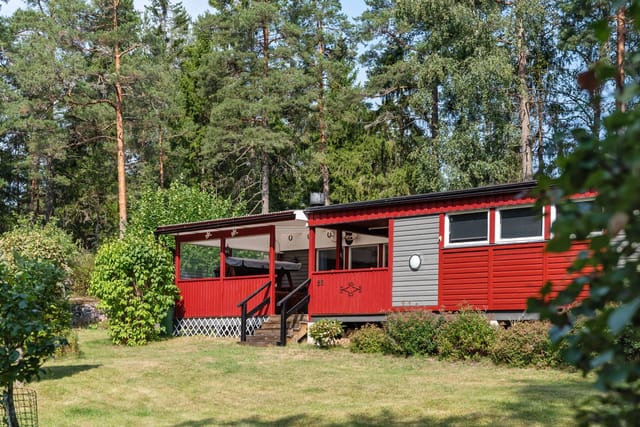
You wake up on a Saturday morning in July, coffee in hand, and step out onto the covered veranda. The air smells of cut grass and pine. Somewhere down the lane, a neighbour is dragging a kayak toward the water. The sea is 850 metres away. You could be there in ten minutes — or you could sit right here, do absolutely nothing, and count that as a perfect morning too. That's the particular pleasure of this two-bedroom holiday home at Björnösund södra 2G in Norrtälje. It's not trying to impress you. It just quietly delivers everything that makes a Swedish summer house worth having. The property sits on a generous 2,032-square-metre plot that feels like it belongs to another era — mature fruit trees, thick hedging that keeps the outside world outside, wide lawns that are made for barefoot afternoons and long Midsummer evenings. The main house comes in at 77 square metres, which sounds modest until you're actually in it and realise the open-plan kitchen and living room have been arranged in a way that makes the space work harder than its footprint suggests. There's a dining area, a proper sofa corner, and a fireplace that becomes the gravitational centre of the room the moment October rolls in and the archipelago wind picks up. A set of doors leads straight off the living room onto the veranda — covered, so you can eat outside even when the weather is being difficult, which in this part of Sweden it occasionally is. Two bedrooms in the main house, a full bathroom with shower, and then the real surprise: a large family room that can be split into one or two additional sleeping spaces depending on how many people you've invited for the weekend. And you will invite people. That's the thing about a place like this — the layout ... click here to read more
Exterior view of the house and garden

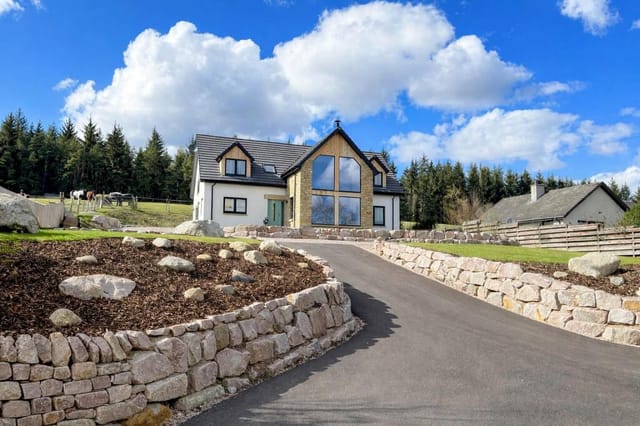
Step outside on a frost-edged October morning, coffee in hand, and there they are—the Cromdale Hills stretching wide across the horizon, catching the first pale light of a Highland dawn. This is what greets you from the south-facing terrace at Cath Ann, a newly completed architect-designed house on Skye of Curr Road in Dulnain Bridge, just minutes from Grantown-on-Spey. Built in 2025 and finished to a standard that genuinely impresses rather than merely ticks boxes, this is not a holiday property cobbled together for the rental market. It was built to live in—properly. The house sits within roughly 0.3 acres of thoughtfully landscaped grounds, framed by pink granite retaining walls cut from the nearby Alvie quarry. That detail matters. The stone doesn't feel imported or decorative—it belongs here, rooted in the same geology that defines the whole upper Spey valley. The sweeping tarmac driveway opens to a generous gravelled turning area, and the elevated plot means that even from the car, you get that first hit of open sky and rolling moorland that makes the Cairngorms feel different from anywhere else in Britain. Inside, the 182 square metres are organised around a dramatic double-height sitting room—the kind of space that makes you pause the first time you walk in. A HWAM Danish wood-burning stove anchors the room, and floor-to-ceiling glazing pulls the landscape indoors so convincingly that on grey November afternoons, when the hills disappear into low cloud, the room still feels alive. Kahrs premium oak flooring runs underfoot, and the glazed balustrade of the first-floor landing hovers above, catching light from the Velux windows that punctuate the upper level. It's an architectural move that gives the whole interi ... click here to read more
Cathann Skye Of Curr

Stand at the garden room window on a still October morning and the whole of Loch Rannoch stretches out before you — pewter-grey water, ancient Scots pines crowding the far shore, a pair of red squirrels working the apple tree twenty feet away. No road noise. No neighbours in sight. Just the kind of silence that takes a few days to truly settle into, the kind most people only read about. East Camghouran is a two-bedroom stone cottage perched on the elevated southern shore of Loch Rannoch in Highland Perthshire, and it has been quietly earning its keep as a much-loved family escape and proven holiday let for nearly three decades. The whitewashed walls and slate roof are the kind of honest Scottish vernacular that looks like it grew out of the hillside, because in a sense it did — this was once a working shepherd's cottage, and the bones of the place carry that history without making a fuss about it. Step inside and the character hits you immediately. Wooden latch doors. Original period fireplaces. The sitting room opens to an adjoining garden room with floor-to-ceiling glazing that frames the loch and the hills beyond like a painting that changes every hour. On winter evenings the dining room Charnwood dual-fuel stove throws enough heat to warm the whole ground floor, and the light from the flames bouncing off whitewashed walls is something that photographs simply cannot capture properly. The modern fitted kitchen and utility room with direct garden access are practical without being characterless — someone has thought carefully about how this cottage actually gets used, not just how it looks in listing photos. Upstairs, two well-proportioned double bedrooms share a family bathroom with both a bath and a shower. The gro ... click here to read more
Front view of East Camghouran

Step outside on a September morning and the River Tay is right there — maybe 75 meters from the front door — running fast and silver after overnight rain, with a heron standing absolutely still in the shallows. That's the kind of thing you wake up to at Riverbank House. Not occasionally. Every day. Built in 2009 and sitting on 1.4 acres in the Highland Perthshire village of Grandtully, this five-bedroom, four-bathroom detached home spans 385 square metres of thoughtfully designed space. It's in genuinely good condition — not the kind of "good condition" that means you'll be living around builders for six months. Move-in ready, with underfloor heating on the ground floor, oil-fired central heating throughout, and interiors that have been maintained with real care. The architecture makes a statement without shouting. Timber front doors lead into a double-height entrance hall where a split staircase rises on both sides to a galleried landing, and a large arched window throws light across the whole space on even the greyest Perthshire afternoon. Which, honestly, there will be some of. That's part of it. The drama of the light changing over the Tay — from pearl-white midwinter mornings to those long amber summer evenings when it barely gets dark until 10pm — is something that gets under your skin. The drawing room is where people tend to stop and just stand for a moment. An open fireplace on one wall, and on the other, a run of windows culminating in a semi-circular bay that frames the river and the garden like a painting you've chosen to live inside. Sliding internal doors connect it to the dining room, making the whole ground floor expandable for a big family Christmas or contractable for a quiet Tuesday evening. The kit ... click here to read more
Front

Stand in the kitchen at Bluebell Cottage on a Saturday morning and you'll hear it before you see it — the faint murmur of a stream running along the rear boundary, the occasional call of a curlew over the fields, and nothing else. No traffic. No neighbours. Just the particular quiet that only Scotland's west coast can produce. It's the kind of silence that you actively seek out on a Tuesday afternoon in a city office and can't quite believe exists in real life. Here, it's just the default setting. Bluebell Cottage sits in Whitehouse, a small settlement on the west side of the Kintyre Peninsula, tucked just south of Tarbert on the A83. Six bedrooms. Six en suite shower rooms. Two floors of well-organised, practical living space spread across 256 square metres. That combination alone is rare enough on this stretch of coastline — but pair it with a stream-bordered garden, outbuildings, mature planting for privacy, and a price that makes comparable properties in the Scottish Highlands look expensive, and you start to understand why this kind of opportunity doesn't sit on the market long. The house itself is harled in the traditional Scottish style, with a dark grey tiled roof and double glazing throughout. Inside, the layout rewards the whole idea of gathering people together — which is, really, what a six-bedroom holiday home or second home on the west coast of Scotland is for. The ground floor carries three bedrooms, each with fitted double wardrobes and a private en suite, which means three separate guest parties can be entirely self-contained without overlapping. The formal sitting room has an electric fire for those September evenings when the temperature drops faster than you expect. The dining room opens directly to ... click here to read more
Picture No. 24

Early July, seven in the morning. You slide open the door to the south-facing terrace with a mug of coffee, and the only sound is wind moving through mature birch trees at the edge of your 844-square-meter garden. In ten minutes, you can be standing barefoot on the sandy beach at Årsta Havsbad's bathing area, watching kayakers cut across the water toward the outer archipelago. This is not a fantasy—it's a Tuesday. Sitting on Arkitektvägen in Haninge municipality, about 30 kilometers south of Stockholm's center, this 1952-built single-storey house with basement is exactly the kind of find that locals talk about quietly among themselves. Small, honest, and genuinely good—43 square meters of considered living space that makes you rethink how much room you actually need when the outdoors is this close. The layout keeps things simple, which is part of the appeal. An open-plan kitchen and living area forms the core of the home, anchored by a fireplace that earns its keep from September through April, when the Swedish coast takes on a different, sharper beauty. On October evenings, with the fire going and rain tapping the large windows, this room feels properly sheltered and warm—the kind of atmosphere you can't manufacture in a new-build. The two bedrooms are well-proportioned and quiet. The tiled bathroom is clean and functional, with a shower. Below the main floor, a basement handles laundry and storage, freeing up the living areas to feel uncluttered. Then there's the separate guest cottage—a friggebod of around 15 square meters sitting beside the main house. Guests get their own space. Or you reclaim it as a writing room, a studio, somewhere to work remotely during those long Swedish summer days when the light refuses t ... click here to read more
Exterior view of the house and garden

Picture this: it's six in the morning in early July, the Swedish sun is already up and flooding the birch trees outside your kitchen window with that particular pale gold light you only get this far north. You pull on a sweater, step out through the covered terrace, and walk 300 meters down to the stone beach at Edsviken for a swim before anyone else in the neighborhood has stirred. That's not a fantasy — that's Tuesday in Grovstanäs. This two-bedroom year-round house at Edsviksvägen 35 sits on a genuinely generous 2,004 square meters of Swedish bedrock and forest. The plot feels less like a garden and more like a piece of the archipelago landscape that happened to come with a house on it. Exposed granite outcrops push through the ground, tall pines creak when the wind picks up off the water, and a stretch of well-tended lawn closer to the house gives children room to run and adults somewhere to set up the grill on a long summer evening. The storage shed handles the practical overflow — kayak paddles, snow boots, fishing rods — so the house itself can stay uncluttered. Inside, the 67 square meters are arranged sensibly and without wasted space. The kitchen, dining area, and living room flow into each other in a single open space, which means that whoever's cooking isn't excluded from the conversation happening three meters away. The large windows in the living room do real work here: they pull in light from the surrounding trees and, depending on the season, frame snow-covered spruce or the vivid green of new birch leaves. The covered terrace off the living room extends that indoor-outdoor feeling and means you're not chased inside the moment a cloud passes over — in the Swedish archipelago, that resilience matters. Th ... click here to read more
Exterior view of the house and garden