Houses For Sale In Europe With 2+ Bedrooms (page 4)

Houses for sale in europe - homestra offers the largest amount of european real estate with over 200,000+ properties, find any type of property within your budget from villas to country homes. buy or rent your perfect home in europe. (page 4)

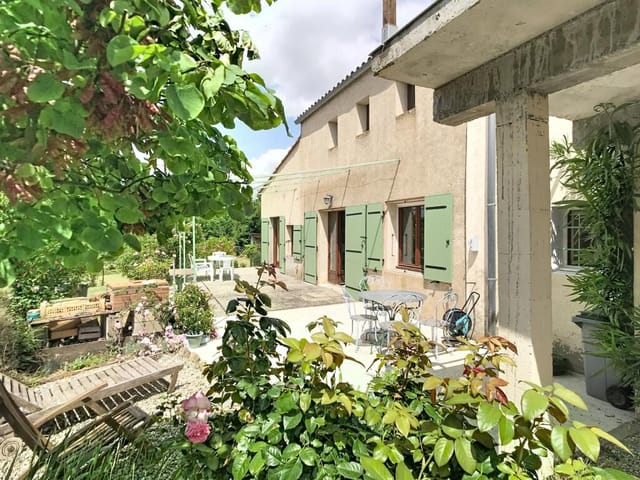
On a clear morning in Peyrefitte-sur-l'Hers, you wake up to absolute quiet — just birdsong and the faint rustle of wind moving through the orchard below the terrace. The kitchen smells of coffee, the door swings open, and the whole Lauragais countryside rolls out in front of you without a single rooftop to interrupt it. That's the daily reality this house delivers. Not a promise — just Tuesday. Peyrefitte-sur-l'Hers sits in the Aude department of southern France, tucked into the low hills of the Lauragais plain, that wide open corridor of wheat fields and sunflowers that connects Toulouse to the Mediterranean. It's not a place you stumble through — you come here on purpose, because someone told you about it. The village is genuinely small, genuinely quiet, and genuinely French in the way that increasingly rare spots still manage to be. Yet Castelnaudary, famous across France for its cassoulet and the Grand Bassin of the Canal du Midi, is barely fifteen minutes away. Carcassonne — the medieval walled city that still makes first-time visitors stop mid-sentence — is about thirty-five minutes east on the A61. Toulouse-Blagnac Airport is under an hour's drive, which matters enormously for international owners who want a second home in France without making the journey feel like an expedition. The house itself covers around 162 square metres, and its layout makes a strong case for flexibility. Four bedrooms, two bathrooms, a living room and a kitchen that opens directly onto a raised terrace — that terrace is where the uninterrupted countryside view lives, and it's genuinely the heart of the property during the warmer months. Think long lunches in September when the vines on the nearby Corbières slopes are turning amber, or ... click here to read more

Picture 1

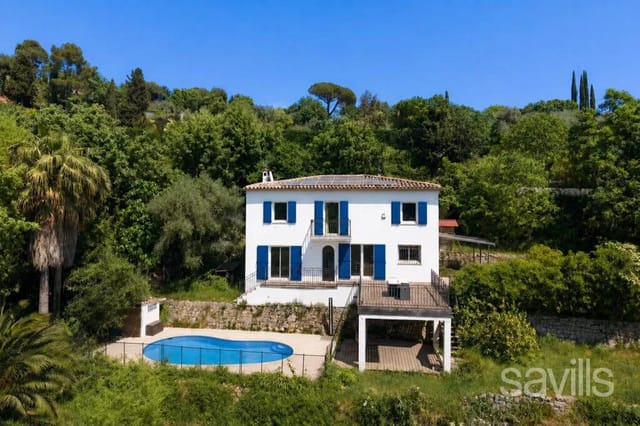
Stand on the upper terrace on a clear morning in late September, coffee in hand, and you can see all the way to the Mediterranean. Not a sliver of blue between buildings—the actual sea, wide and glittering, with the terracotta rooftops of the old village stacked in the foreground like a painting someone forgot to finish. That view alone will stop you mid-sentence the first time you see it. But this villa in Châteauneuf-de-Grasse delivers considerably more than a view. Châteauneuf sits on a limestone ridge in the Alpes-Maritimes, about 12 kilometres inland from Cannes and just a few minutes' drive from the outskirts of Grasse—the world capital of perfume, where Fragonard and Molinard have been distilling lavender, jasmine, and May rose for centuries. You can smell the fields on the right kind of morning in May, when the windows are open and the wind comes from the north. It's the kind of sensory detail that reminds you you're somewhere genuinely specific, not just another postcard version of the south of France. The villa itself sits within one of the village's most established residential pockets, on a carefully landscaped plot that gets sun from east to west throughout the day. At 131 square metres across two floors, the layout is well-proportioned rather than cavernous—the kind of space that actually gets lived in, not just shown off. Ground floor opens into a generous reception room with an integrated open kitchen, and the whole thing spills directly onto the terraces through wide glazed doors. The flow between inside and outside is natural, not forced. When friends come for dinner in July, the table moves outside without anyone having to think about it. The swimming pool sits harmoniously within the terrace arrang ... click here to read more

Picture 1

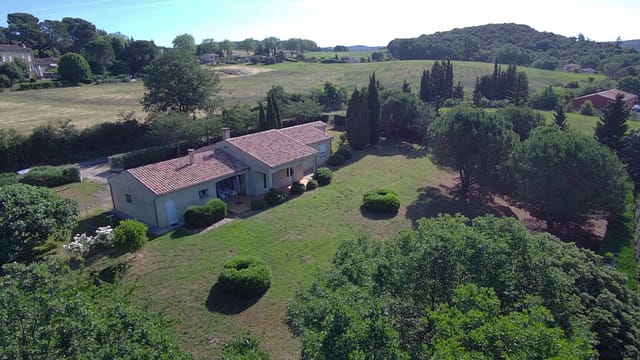
Stand on the south-facing terrace at eight in the morning, coffee in hand, and the Pyrenees are right there — a pale blue wall of peaks stretching across the horizon while the rest of the Malepère valley hums quietly below. No traffic, no neighbors pressing in. Just the sound of cicadas warming up for the day and the faint smell of sun hitting dry stone. This is what you came to France for. Set in the village of Cailhau in the Aude département of Languedoc-Roussillon, this four-bedroom single-storey villa sits on over 3,500 square meters of private land with that uninterrupted panoramic view of the Pyrenees as its constant backdrop. At 124 square meters of living space across one level, the layout works effortlessly — no stairs, no awkward split levels, just an honest, well-organized home that's genuinely move-in ready. The heart of the house is a 50-square-meter south-facing living area that pulls together a lounge, dining room, and fully fitted open-plan kitchen. In a region where the sun shows up reliably from April through October, orientation like this matters. Natural light tracks across the room through the day, and with the solar-powered electric roller shutters programmed to close automatically as temperatures climb, the interior stays cool even during August when the thermometer pushes past 35°C. The reversible air conditioning handles the remaining edge cases. This is a house that has been thought through by someone who actually lives in Languedoc summers, not just designed for a sales brochure. Three of the four bedrooms sit comfortably in the 12–14 square meter range, each fitted with built-in wardrobes. The fourth is a solid ten square meters — smaller, but still useful as a home office, children's room, ... click here to read more

Picture 1

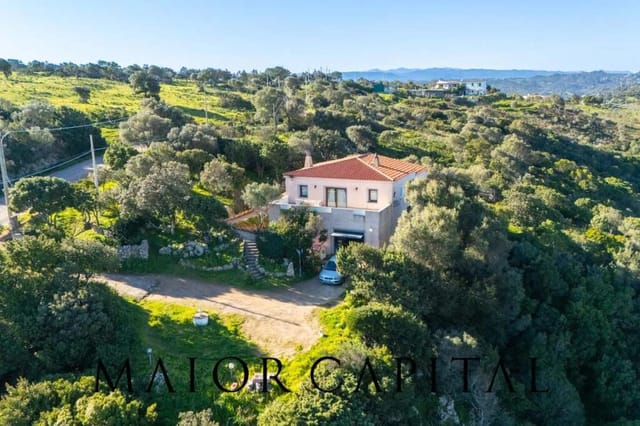
The first thing you notice on a summer morning at this Putzolu villa is the silence. Not the eerie, empty kind — the kind that costs something. Cicadas in the macchia, a faint breeze moving through the cork oaks, and the distant shimmer of the Gallura hills sitting still against a cloudless sky. Then you remember: you're five minutes from Olbia's city center and 20 minutes from some of the most coveted coastline in the Mediterranean. That combination is genuinely rare. Sardinia gets written about a lot, but usually through the lens of the Costa Smeralda's superyacht scene — Porto Cervo, the Billionaire Club, the July crowds. What doesn't get written about enough is the real Olbia. The Tuesday morning market on Via Nanni where locals argue over which vendor has the better seadas, the fried pastry pockets of ricotta and honey that are basically a religious experience. The evening passeggiata along Corso Umberto that starts slow and somehow ends at midnight over a bottle of Vermentino di Gallura at a terrace bar. This villa puts you inside that rhythm, not observing it from a resort. The property sits on approximately 1.5 hectares of private land in the Putzolu area, one of those semi-rural pockets just outside Olbia that manages to feel a world away from the city while actually being about a five-minute drive from it. A flat garden of roughly 3,000 square meters wraps immediately around the house — and this isn't the kind of garden you maintain out of obligation. It's the kind you actually use. Space for a proper dining terrace, a future pool if you want one, a bocce court, a vegetable patch. The surrounding land buffers you from neighbors in every direction. The villa itself spans 214 square meters across two levels. T ... click here to read more

Picture 1

Picture this: it's a Sunday morning in late October, and the smell of woodsmoke is already drifting up from the valley below. You're sitting on the terrace outside the kitchen, coffee in hand, watching the first light catch the silver undersides of your olive leaves. The hills roll away in every direction — golden, green, impossibly quiet. This is not a postcard. This is your garden. This 200-square-metre country villa outside Chianni sits on roughly five acres (20,000 sqm) of mixed land — working olive groves, open meadows, patches of woodland — and it's the kind of property that becomes a reference point for the rest of your life. Not because of grand architectural gestures, but because of what it actually feels like to be there. The house arrives in good, liveable condition, which matters more than people give it credit for. You won't be gutting a ruin or project-managing a rebuild from another country. You can arrive, unlock the door, and start living — then improve things at your own pace. The pellet boiler provides central heating and hot water throughout, and all windows are double-glazed, which means the place stays genuinely warm through the Tuscan winter, not just decoratively Tuscan. What makes the layout especially interesting is that the accommodation currently runs as two independent units. The main section is entered via an external staircase that leads up to a first-floor terrace — a landing wide enough to actually eat at, which becomes your default dinner table from April through October. Inside, a generous open-plan kitchen with pantry flows into a sitting room anchored by a freestanding fireplace positioned in the centre of the room. It draws the eye immediately. Two bedrooms occupy this level, one ... click here to read more

Picture 1

On a Wednesday morning in Pontremoli, the street market spills across the cobblestones below your dining room windows. The smell of fresh focaccia and roasted chestnuts drifts up through the shutters. You pour a coffee at your kitchen counter and watch the vendors arrange their stalls along the riverbank, unhurried, the way life moves in this corner of Lunigiana. This is the daily rhythm of owning a 220sqm second-floor apartment in a genuine 18th-century Palazzo, right in the historic heart of one of northern Tuscany's most quietly compelling towns. Pontremoli sits at the meeting point of the Magra and Verde rivers, built outward from its medieval castle in a way that feels almost deliberate in its beauty. The twin Roman arched bridges frame either end of the town like natural gateways. Walk through them and you're moving through cobbled lanes where stone archways link house to house, where elegant Palazzi with internal courtyards face the water, where the castello up on the hill keeps watch over everything below. It's a town that doesn't need to try very hard to impress you. It just does. The apartment itself occupies the entire second floor of a well-maintained Palazzo on a quiet street, seconds from the Piazza della Repubblica. You enter from the cobblestones into a grand hall with columns opening onto an internal courtyard — the kind of entrance that makes guests stop and take a breath. A broad stone staircase, worn smooth over centuries, sweeps you upward into 220 square metres of bright, high-ceilinged living space. The vaulted living room anchors the apartment with a handsome Capodimonte wood-burning stove that becomes the social centre of the space from October onward, when the Apennine air sharpens and the hil ... click here to read more

Picture 1

On a clear morning, you can stand on the terrace with a coffee and watch the light shift across the Gulf of La Spezia—the water catching silver between the headlands, Portovenere in the far distance, the hills dropping in ridges toward the coast. Church bells from the village below drift up before nine. The wood-fired pizza oven in the kitchen is still warm from the night before. This is the kind of Tuesday you've been daydreaming about for years. Calice al Cornoviglio sits in the Ligurian hills at the precise point where the region folds into Tuscany, and that borderland quality defines everything about it. The air smells of pine resin and wild rosemary. The village itself is unhurried—there's a bar where the same men have been drinking espresso at the same hour for decades, a small shop that stocks far more than you'd expect, and a public pool with a view that would cost a fortune at any resort. A restaurant one kilometer down the lane does a ribollita that makes you reconsider every bowl of soup you've ever eaten. The community is tight-knit in the way that only small hilltop villages manage to be, and newcomers who put in the effort are genuinely welcomed. The house itself is spread across three floors of beautifully renovated stone, 174 square meters in total, and it carries the weight of its past lightly. Ground floor: a vaulted cantina—the real thing, not decorative—plus a storeroom, bathroom, and an open-plan kitchen and dining space anchored by exposed stonework walls and a wood-fired pizza oven built into the stone. It's the kind of kitchen that makes cooking feel like an event. Up to the first floor and the split-level living room opens outward—fireplace on one side, terrace on the other, panoramic views in ... click here to read more

Picture 1

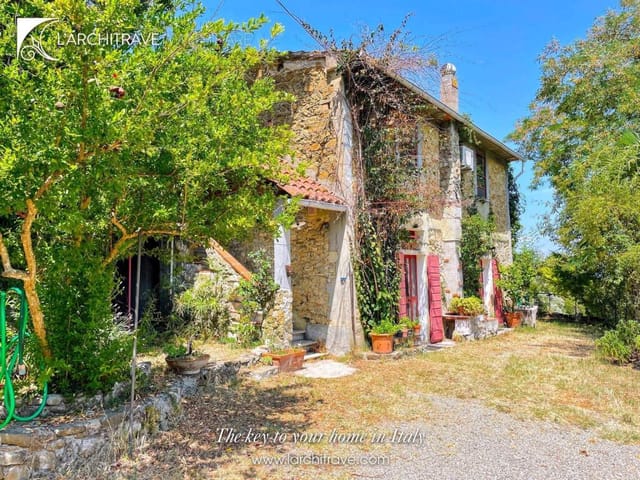
On a Wednesday morning in Pontremoli, the market on the cobbled piazza starts filling up around eight. Vendors lay out local testaroli pasta, sharp Pecorino from the hills, and bottles of Colli di Luni wine while church bells from the Cathedral drift over the rooftops. From this stone farmhouse less than a kilometre away, you can walk there in ten minutes through olive groves that have been producing fruit for generations. That kind of proximity to a living, breathing medieval town is rare. Most rural Tuscan properties demand a twenty-minute drive just to buy bread. Here, Pontremoli is practically in your front garden, yet the moment you step back through the iron gate into the flagstone courtyard, the town's activity fades entirely. What you hear instead is wind moving through the chestnut trees, and on still evenings, the faint sound of the Magra river somewhere below the ridge. The property itself is a compound in the truest sense — not a single building but an entire small hamlet that's been thoughtfully restored without stripping away what made it worth saving. Four independent apartments sit within the main farmhouse, each with two bedrooms, a kitchen, a bathroom, and a reception room. Stone vaulted ceilings dominate the ground floor common areas, the kind of architecture that took centuries to achieve and cannot be replicated at any price. Marble bathrooms and modern fitted kitchens bring the day-to-day comfort up to contemporary standards while the bones of the place remain emphatically sixteenth-century. The old chestnut drying room — with its original stone floor and heavy wood beams still intact — is the kind of detail that stops visitors mid-sentence. There is also a large stone barn across two levels and ... click here to read more

Picture 1

Sunday morning in Lunigiana sounds different from everywhere else in Tuscany. Church bells carry from the valley below, the air smells of woodsmoke and wild herbs, and from the upper terrace of this stone house you can watch the green hills roll southward without a single rooftop to interrupt the view. It's the kind of quiet that city people forget exists — and then spend years trying to find again. This three-bedroom house sits on the edge of a small hamlet about six kilometres from Fivizzano, the medieval walled town that locals half-jokingly call the Florence of Lunigiana. The nickname isn't vanity. Fivizzano's cobbled central piazza, ringed by Renaissance palazzos and caffè terraces, has a genuine civic dignity — and on summer evenings, when the town hosts open-air concerts and torchlit medieval parades, you understand why people who arrive for a week end up buying property here. The house itself is a proper working structure, not a decorator's project. The original stone building was rebuilt at the turn of this century, and about a decade ago a neighbouring barn was converted into a light-drenched annexe that now functions as a semi-independent guest suite. Together they cover 88 square metres of interior space — compact, considered, and genuinely comfortable year-round thanks to central heating, reliable Wi-Fi, and solid 4G coverage, which matters more than most property descriptions admit. Walk through the main door and you're in an open-plan kitchen and living room where a traditional enclosed fireplace anchors one wall. Come October, when the olive harvest starts and evenings cool quickly, that fire earns its place. A stone staircase rises to two bedrooms and a family bathroom; one of the bedrooms opens direc ... click here to read more

Picture 1

Early October in Vogognano. The fog sits low over the Arno Valley, and from the upper floor of the main house you can just make out the ridgeline of the Alpe di Catenaia catching the first light. Somewhere below, a tractor starts up. The olive harvest is three weeks away, and the hundred-plus trees on this estate will need every pair of hands they can get. That is the rhythm of life here — earthy, unhurried, and very, very real. This three-bedroom stone estate in Subbiano, roughly 20 minutes southeast of Arezzo in the upper reaches of the Casentino valley, is not a cosmetic renovation project dressed up with a fresh coat of paint. It is a genuine opportunity: a main farmhouse plus two ancient stone barns sitting on just over six hectares of land, currently in good structural condition and waiting for a buyer with vision. The bones are honest. The location is quietly exceptional. The property sits on an elevated position above the village of Vogognano, part of the Subbiano municipality. That elevation matters. You get unobstructed views across the valley toward the forested flanks of the Casentino National Park — one of Italy's least-trampled protected areas, covering more than 36,000 hectares of beech, silver fir, and chestnut forest that have been growing undisturbed since the Benedictine monks of Camaldoli first set them aside in the eleventh century. On clear days after rainfall, the air smells of pine resin and damp earth in a way that genuinely stops you mid-thought. The complex spreads across two levels. The main house anchors the estate, with the two former barns — sturdy, thick-walled structures that kept grain dry through centuries of Tuscan winters — sitting close by. Together they total 495 square meters of ... click here to read more

Picture 1

Step outside on a October morning and the only sound is pine needles shifting in the wind. Below the terrace, a thin mist sits over the Colfiorito plateau — the same wetland that earned its place on the international Ramsar Convention list back in 1976, one of central Italy's most ecologically significant protected landscapes. This is not a sanitized agriturismo experience. This is the real Umbria: quiet, unhurried, and genuinely rare at this price point. The property itself is a three-storey detached villa of 215 square metres, built in 1970 and maintained in good condition throughout. What sets it apart immediately — apart from the private pine forest of roughly two hectares surrounding it — is the structural independence between its living spaces. Two entirely separate entrances mean the house works equally well as a generous single-family retreat and as a property with a self-contained guest annexe. Families who want their own floors, friends travelling together who value privacy, or owners considering short-term rental income: the layout serves all of these scenarios without requiring a single wall moved. Three fireplaces — one on each floor — tell you everything you need to know about how this house was built to be lived in year-round. Light the one in the ground-floor kitchen on a January evening, pull red potatoes from Colfiorito's own farms from the market at Foligno, and roast them in the wood-burning oven that sits in the same open-plan space. The first floor carries the main living configuration: a large sitting room with its own fireplace, a separate kitchen, three bedrooms, a bathroom, and a private external entrance onto a terrace that faces the mountains. On clear days that view stretches deep into the ... click here to read more

Picture 1

On a still Tuesday morning in Casciago, the only sound you hear from the upstairs bedroom window is birdsong cutting through the cool Lombardy air and, somewhere below, the faint rustle of chestnut trees at the edge of the park. No traffic. No noise. Just 3,000 square metres of private greenery and a century-old villa that has quietly watched the world go by since the Liberty movement was still in full swing. This is the kind of property that doesn't come around often. An authentic early 1900s Art Nouveau villa on Via Giuseppe Pozzi, set in one of Casciago's most sought-after residential pockets — a hillside comune in the province of Varese where the neighbours are elegant period villas and the pace of life genuinely slows down the moment you arrive. At 500 square metres across three floors, plus a full basement level, there's room here to do something extraordinary. The architecture alone tells a story. The Liberty style — Italy's answer to Art Nouveau — left its fingerprints all over Lombardy's villas in the early twentieth century, and this one carries those original period details with quiet confidence: decorative facades, the proportions of a formal entrance hall, the kind of thick plaster walls that keep rooms cool through July and August without you lifting a finger. Yes, it invites a thoughtful restoration — and that's precisely the opportunity. Buyers who understand historic Italian property know that bringing a 1900s villa back to its full potential is not a compromise, it's the whole point. The bones are exceptional. What you add to them is yours. Inside, the ground floor opens through a generous entrance hall into a living room, kitchen, and three double bedrooms — more than enough for a large family or a ... click here to read more

Picture 1

July in Lajatico. The sun drops behind the cypress-lined ridge, the air cools just enough to make sitting outside feel like a reward, and somewhere across the valley you can hear the distant swell of an orchestra drifting up from the Teatro del Silenzio. You're on your own terrace, a glass of Vernaccia di San Gimignano in hand, watching the last gold light drag itself across a landscape that hasn't fundamentally changed since the Etruscans farmed these same hills. That's not a fantasy — that's Tuesday evening when you own this three-bedroom stone villa outside Lajatico. Set on one of the finest elevated positions in the Valdera, the property commands an unobstructed 360-degree panorama of rolling Tuscan farmland. No neighbor blocking your east-facing view. No road noise creeping up from below. Just that particular silence — birdsong, wind through the olive trees, the creak of the wooden shutters in the afternoon breeze — that people drive hundreds of kilometers and pay serious money to find for a single weekend. The house itself has been built in the tradition of a Tuscan cascina, which means it doesn't try to look rustic. It actually is. Stone walls cut from the local hillside, handmade terracotta cotto tiles underfoot, thick wooden ceiling beams left exposed the way they've always been in farmhouses across this province. The difference here is that behind the traditional skin sits genuinely contemporary infrastructure. Underfloor heating runs throughout, powered partly by solar panels. Air conditioning handles both heating and cooling for the shoulder seasons. Double-glazed wooden windows keep the interior thermally efficient without sacrificing the old-world look. The insulation meets Italy's current Class A energy ... click here to read more

Picture 1

Picture a Saturday morning in late October. The air coming through the kitchen window smells of wood smoke and damp cork oak, and somewhere down the cobbled lane a rooster is making his opinions known. You've got a coffee on, the fireplace from 1888 is doing exactly what fireplaces from 1888 are supposed to do, and the hills of Santa Bárbara de Nexe roll out beyond the terrace like something a painter would invent. This is not a weekend fantasy. This is what owning this house actually feels like. Santa Bárbara de Nexe sits on a ridge in the inland Algarve, just 15 minutes north of Faro and about 10 minutes from Loulé — close enough to everything, far enough from the coastal circus of July and August. The village is the kind of place where the café owner knows your order by your second visit and the weekly market in Loulé (every Saturday, go early for the honey and smoked sausages) becomes a genuine ritual rather than a tourist activity. You're inland enough to feel authentic Portugal, but a 30-minute drive puts you on the sands of Meia Praia, Quarteira, or the wilder dunes at Cacela Velha near the Spanish border. The house itself dates from 1888, and unlike a lot of historic Algarvian properties that have been sanded and plastered into blandness, this one kept its soul. Original stone walls, a proper living room fireplace with a wood burner sitting inside it, the kind of thick-walled construction that stays cool in August without much help and holds heat through December evenings when the rest of the coast is surprised by the cold. The ground floor flows from the entrance into the living room, then through to a dining room and a fully equipped kitchen. Step out from the kitchen and you're in a courtyard where a bougain ... click here to read more

Picture 1

Picture this: it's a Tuesday morning in late September, the kind of morning that makes you want to cancel everything. You're standing on your upstairs terrace with a coffee, watching the mist slowly pull back from the Apennine ridgeline, and the only sound is a woodpecker somewhere in the fig tree below. That's the daily reality of owning this three-bedroom villa in the Lunigiana hills of northern Tuscany — a place most Italians know about and most foreigners haven't found yet. That's not an accident. Lunigiana sits in the crease between Tuscany, Liguria, and Emilia-Romagna, technically within Tuscany's administrative borders but with a character entirely its own. Fewer tour buses. More castles per square kilometre than almost anywhere in Italy. Hiking trails that cut through chestnut forests older than the republic. And properties like this one — solid, well-maintained villas on quiet lanes with proper gardens and proper views — that would cost twice as much if they sat twenty kilometres further south in the Chianti. The villa itself is 208 square metres across three levels, and it's been kept in genuinely good condition. This isn't a project. The finish is high-end throughout: marble bathrooms, solid wood and marble kitchen, beamed ceilings in the main living room. The first floor is where daily life happens — a wide entrance hall opens into a living room with a fireplace that earns its keep in November, french doors spilling out onto a covered patio where you can eat dinner outside well into October without needing a jumper. The kitchen is fully fitted and connects to the same covered patio, so cooking and outdoor living flow into each other the way they should in a Tuscan country house. Two bedrooms on this level ... click here to read more

Picture 1

On a Sunday morning in Comano, you wake to the sound of church bells drifting up from the piazza 150 metres away. The air through the bedroom window carries woodsmoke and cut grass, and somewhere below, the family-run bar is already grinding its first espresso. This is not a fantasy. This is an ordinary morning at this restored hillside house in the Taverone valley — a corner of Lunigiana, Tuscany, that most tourists haven't found yet and locals are quietly glad about. The house sits on the edge of a small, tight-knit village community, the kind where people actually know each other, where the restaurant at the heart of the village has been run by the same family for decades, and where showing up as a forestiero doesn't mean you stay one for long. At 80 square metres across two floors, the layout is practical and well thought out. You enter through a hallway that opens into a kitchen and a light-filled living room on the ground floor, alongside a full bathroom. Head upstairs and two attic double bedrooms share a second bathroom — a setup that works equally well for a couple wanting a proper bolthole or a small family with kids who'll spend most of their time outside anyway. The outdoor space is where this property earns its keep. A courtyard with a barbecue setup becomes the natural centre of evening life in summer. Beyond it, roughly 1,000 square metres of land — about a quarter of an acre — includes a chestnut wood that comes into its own in October, when the nuts drop and the forests around the Taverone valley take on that particular amber glow that photographers come from across Europe to chase. Views from the land stretch across the valley toward the Apennines, the kind of views that make you stand still for a mom ... click here to read more

Picture 1

On a clear morning, you push open the shutters of the upstairs bedroom and the Apuan Alps are just there — close enough that you can trace the ridgelines with your finger, white-tipped in winter, darkly forested through July and August. The smell drifting up from the kitchen is coffee, and somewhere below the terrace an olive grove is already warm in the early sun. This is your Tuesday. Imagine your Saturday. Sitting at the end of a quiet lane outside Aulla in the Lunigiana corner of Tuscany, this two-bedroom, four-bathroom stone villa sits on four hectares of land — olives, fruit trees, vines — and feels genuinely removed from the world while remaining surprisingly easy to reach. It's the kind of property that gets into your head the first time you visit and doesn't leave. The house itself has the bones that matter. Thick stone walls keep rooms cool well into the afternoon heat of August. A wisteria-covered portico frames the entrance, and inside, the living room pivots around an impressive stone fireplace that earns its keep from November through March. The kitchen-dining room has marble surfaces and a marble sink — not an affectation, just the way kitchens were built here, and still the best material for rolling pasta dough. There's a utility space tucked out of sight with a washing machine, a ground-floor WC, and a separate ground-floor room — flooded with light on three sides — that opens directly onto the garden and has its own ensuite shower. Upstairs, two double bedrooms each have their own ensuite facilities: one with a bath, one with a shower, both with air conditioning for the peak summer weeks. The first bedroom steps out onto a large terrace where those mountain views hit you full in the face. Every room i ... click here to read more

Picture 1

Stand on the upper terrace just after sunrise and watch the mist lift off the Serra de Monchique, the valley below turning from grey-green to gold as the light catches the olive groves. Church bells drift up from the town square five minutes down the cobbled hill. The smell of medronho — the local arbutus berry spirit that Monchique has been distilling for centuries — still hangs faintly in the cool morning air from last night's bar. This is your Saturday morning. And it's not a fantasy. This fully renovated two-bedroom house sits on a 1,080 square metre terraced plot right at the edge of Monchique's historic centre, delivering unobstructed valley panoramas that most people only see on postcards. At 599,000 euros, it's a rare intersection of contemporary architecture, serious eco credentials, and a location that places you equally between mountain wilderness and some of the Algarve's most celebrated coastline. The main residence was designed around one core idea: let the landscape in. The living room ceiling climbs to six metres, and large glass walls mean the valley view is essentially a living painting that changes by the hour. On grey winter afternoons, clouds roll through the valley below you — you're actually above them. By midsummer, the light turns amber by seven in the evening and the temperature on the covered terrace is exactly where you want it. The kitchen doesn't make you choose between beauty and function: custom American walnut cabinetry, full Bosch appliances, and enough counter space to actually cook — which matters here, because Monchique's market produces the kind of medronho-cured sausages, Serra cheese, and wild mushrooms that make cooking feel worth the effort. Large sliding doors open from the l ... click here to read more

Picture 1

Stand at the top floor of this three-storey farmhouse on a clear October morning and you'll see why people have been building on these hills since the Etruscans figured out the view was worth it. The Valdera valley rolls out below in every direction — vineyards going amber, cypress rows casting long shadows, and the faint outline of Volterra's medieval towers on the western ridge. This is what 360-degree actually means, not the estate-agent shorthand version. The farmhouse sits about 5 kilometres from Casciana Terme Lari, a small spa town that most Tuscany visitors drive straight past on the way to Pisa or Florence, which is precisely what keeps it real. The weekly Thursday market on the central piazza draws local farmers selling pecorino, dried porcini, and Valdera olive oil pressed from trees that have been on the same hillsides for centuries. The Bar Centrale opens early. The locals are not performing for tourists. That's the thing about this corner of central Tuscany — it hasn't been discovered yet, not in the way that San Gimignano or Montepulciano have, and the property prices reflect exactly that. At 450 square metres across three floors, with roughly a hectare of land wrapping around it, this is a serious restoration project. No connected services, no EPC required — it comes to you as a shell with good bones, waiting for someone with a vision and a decent architect. The structure is solid stone, the kind that was built to outlast everyone involved in building it. What you're buying here is a blank canvas on some of the most quietly coveted land in Pisa province, at a price that reflects the work ahead rather than the finished article. For buyers who've watched completed Tuscan farmhouses sell at twice this figu ... click here to read more

Picture 1

The alarm doesn't go off here. You wake up because the light does — that particular low-angle Algarve gold that slips through the shutters around seven and lands on the whitewashed wall opposite your bed. By the time you've padded downstairs and figured out the espresso machine, the day has already decided it's going to be good. This 208-square-metre detached villa in Fuzeta sits in a quiet residential pocket of Moncarapacho, one of the eastern Algarve's genuinely under-the-radar corners. Priced at €599,000 and in good condition throughout, it's ready to walk into — no gut renovation, no months of waiting, no project headaches. Three bedrooms, two bathrooms, a proper office that could become a fourth sleeping space, and a private pool out back. That's the skeleton. The story is what surrounds it. Fuzeta itself is the kind of place that long-time Portugal hands mention in hushed, slightly possessive tones. It's a working fishing village — actual fishing boats still motor out at dawn, and the Wednesday market on the waterfront sells cured fish and hand-thrown ceramics alongside the usual produce. The town sits right on the edge of Ria Formosa Natural Park, a 60-kilometre lagoon system of tidal channels, barrier islands, and flamingo-dotted mudflats that's genuinely one of the most biodiverse coastal environments in southern Europe. From Fuzeta's little ferry dock, a ten-minute flat-bottomed boat ride drops you on Ilha de Fuzeta, a long Atlantic beach with no roads, no hotels, and about nine months of swimmable water. You bring your own lunch. The villa's outdoor setup was clearly designed by someone who understood this climate. Portugal's eastern Algarve logs around 3,100 hours of sunshine per year — more than the centr ... click here to read more

Picture 1

Stand on the sun terrace on a clear January morning and you can see all the way to the Atlantic. Not a glimpse—a full blue stripe of sea sitting low on the horizon, framed by rolling hills stitched with carob and olive trees. This is São Brás de Alportel, the Algarve's quiet, unhurried interior, and from this elevated plot four kilometres south of the town centre, that view is yours every single day. The villa sits on 1,401 square metres of gently sloping land, far enough from the coast road to feel genuinely private but close enough to the beach that you won't need to plan around it. Twenty minutes to Meia Praia or Garrão. Fifteen to the Thursday market in Loulé where farmers sell figs still warm from the tree. Five minutes to the padaria on Rua Dr. João Dias where they pull trays of fresh broa from the oven before 8am. This is not a holiday-brochure version of the Algarve. It's the real one. At 252 square metres across two floors, the house is generously sized—a fact that becomes obvious the moment you step into the ground-floor living and dining room. It's big enough to host a long family lunch without anyone feeling crowded, anchored by a wood burner that earns its keep on crisp February evenings when the serra cools sharply and the valley below fills with a thin morning mist. The kitchen runs off to one side, fully equipped with a pantry that solves the eternal problem of too many tins of Portuguese tinned fish and not enough cupboard space. A third bedroom on this floor does current service as a home office—practical if you plan to split time between here and elsewhere, or ideal as a guest suite for the friends who will, inevitably, want to visit once word gets out. The patio doors off the living area are the ce ... click here to read more

Picture 1

You wake up to silence. Real silence — no traffic, no neighbours too close, just the dry warmth of an Algarve morning pushing through the shutters and the faint smell of wild rosemary rising off the hillside below. This is what São Brás de Alportel feels like before the rest of the world gets going, and from this four-bedroom country house on its outskirts, you get that feeling every single day. São Brás de Alportel sits in the Barrocal, the limestone inland strip between the Algarve coast and the Serra do Caldeirão mountains — and it's one of the least discovered corners of southern Portugal. That's not a flaw. It's the whole point. The town itself is compact and deeply local: a main square where old men argue over espressos at Café Garrett in the morning, a weekly market on Saturdays where you'll find the season's best blood oranges and medronho brandy from the hills, and the Museu do Traje — a folk costume museum tucked into a former cork baron's mansion — that quietly explains how this region made its money for two centuries. The streets smell like charcoal smoke in winter and jasmine in summer, and almost nobody speaks at you in English unless you start it. The house sits roughly ten minutes outside town on a generous 1,016 square metre plot, with unobstructed views across the rooftops of São Brás and out to the layered ridges of the Caldeirão range beyond. On clear days — and there are a lot of those, given the Algarve logs around 300 days of sunshine annually — the view runs so far east it almost reaches Spain. The plot itself gives you room: space for a swimming pool at the back, a proper kitchen garden if you want one, and a garage that could double as a workshop or storage for bikes and gear. At 140 square m ... click here to read more

Picture 1

The smell hits you first — salt air and pine, drifting through an open window on a July morning while the harbor down the hill is already busy with fishing boats heading out toward the Kosterfjord. That's what mornings look like from Hovslagargatan 3. Coffee on the terrace, the conservatory catching the early light, and absolutely nothing demanding your attention until you're ready. Grebbestad sits on Sweden's Bohuslän coast, a stretch of coastline that West Coast Swedes guard like a family secret. The town has a real working harbor — lobster and oysters pulled straight from those cold, clean waters — and yet it never turns into the kind of place that forgets itself for the sake of summer crowds. The main street runs to the water's edge. There are maybe four or five restaurants worth returning to, a bakery that opens early enough to catch the sunrise crowd, and kayak rentals at the dock if you feel like paddling out to the skerries before lunch. In late August, the Smögen and Grebbestad area fills with Swedish families doing what Swedes do best: slow evenings, open boats, crayfish parties on granite rocks by the sea. November brings a different kind of quiet. Fog and moody skies. The kind of weather that makes you glad you've got a hot tub. This property at Hovslagargatan 3 sits at the end of a residential street — far enough from the summer foot traffic to feel private, close enough to the harbor that you're never hunting for parking. It's a substantial house. 115 square metres of main living space, good condition throughout, and a basement apartment that effectively gives you a second home within the property. That last part matters more than people initially expect. The main floor opens wide. Living room and kitche ... click here to read more

Exterior view of the house and garden

Saturday morning in Loenhout moves at its own pace. The bakery on the village square opens early, and by nine o'clock the smell of fresh bread drifts down Sint Annastraat. You walk back through the gate of number 52 with a paper bag still warm in your hands, into a southwest-facing garden already catching the first strong light of the day. The pond catches it too. This is what life feels like here — unhurried, grounded, genuinely good. Built in 2007 on a plot of nearly 2,000 square meters, this four-bedroom villa in the heart of Loenhout is one of those rare properties where scale and soul arrive together. At 562 square meters of interior space, it has room for a large family, long-staying guests, a home office, a wine cellar, a cinema room — and still doesn't feel like it's showing off. The architecture is confident without being cold. Stone staircases, high-quality finishes throughout, and a layout that flows from room to room with the kind of logic that only becomes obvious after you've lived somewhere for a while. Step through the entrance hall and the proportions immediately do their work. The living area is generous and genuinely light-filled — the adjoining veranda runs along the garden-facing side of the house, its oversized windows pulling in afternoon sun from the southwest all year round. In summer, the doors open wide and the boundary between inside and garden dissolves completely. In winter, you're watching frost on the pond from a warm room with underfloor heating underfoot. Both versions are equally good. The kitchen is built around a Boretti gas stove, and if you know, you know. These Italian-made ranges are the kind of thing serious home cooks seek out specifically. The kitchen functions as a proper g ... click here to read more

Front view of Sint Annastraat 52

The first thing you notice on a July morning here is the light. Not the pale, apologetic kind—the full, wide-open West Coast Swedish kind that bounces off the water somewhere beyond the treeline and fills every room before you've made your coffee. By eight o'clock, the kayakers are already out on the inlet below Hamnebuktsvägen. By nine, you can smell someone grilling on the rocks down near the water. This is life on Hamburgö, and this 162-square-meter country home at the end of a quiet lane puts you right at the center of it. Built in 2006 on a 3,689-square-meter plot, this is a house that was designed with intention. The classic Scandinavian exterior—clean lines, quality cladding, pitched roofline—doesn't feel dated because it was never chasing a trend. Inside, the open-plan kitchen and living area runs across the main floor with the easy confidence of a well-thought-out space. Large windows frame the garden and the sky beyond. Sunlight moves through the rooms differently at each hour of the day, and you start noticing that within the first week. The kitchen is proper. Generous worktops, modern appliances, the kind of layout where two people can actually cook together without negotiating territory. A sunny terrace steps off the living area—wide enough for a proper outdoor table, a gas grill, and still room to stretch out in a chair after dinner while the midsummer sky refuses to go dark until nearly midnight. Three bedrooms in the main house handle the family comfortably. Two bathrooms mean no queues before a day at the beach. But the real conversation-starter is the guest house. Separate, self-contained, with its own bathroom and kitchen, it changes the whole dynamic of having visitors. Friends stay for a week and ... click here to read more

Front view of the house and garden

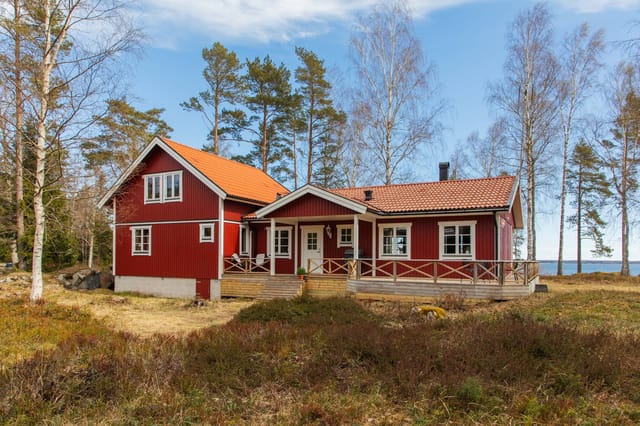
Stand on the wooden deck at six in the morning, coffee in hand, and watch a sea eagle glide low over the water while the inlet below your plot sits completely still. No traffic noise. No neighbours in your sightline. Just the occasional creak of a boat at the shared dock and the smell of Swedish summer — sun-warmed pine, salt air, wild strawberries growing somewhere in the grass behind you. This is Vaden 125, sitting at the very tip of Söderön island in Östhammar Municipality, and mornings here genuinely feel like the world kept a secret just for you. The house was built in 1992 and has been in the same family's hands ever since — the kind of place that accumulates decades of careful attention rather than neglect. You can feel it in the condition of the property: maintained properly, updated where it mattered, left alone where it didn't need changing. The main house runs to 135 square metres of living space across nine rooms, seven of which are bedrooms. Five of those bedrooms face the water. Waking up to an ever-shifting view of the Swedish archipelago isn't something you get used to quickly, which is rather the point. The open-plan kitchen and living room is the gravitational centre of the house. Large windows run the length of the water-facing wall, and the light that comes through them changes completely with the seasons — the pale gold of late-summer evenings, the hard winter brightness bouncing off snow-covered rocks, the flat grey of an October storm that somehow makes the inside feel even warmer. The wraparound timber deck connects to this space directly, and in July it becomes an outdoor dining room, a sunbathing terrace, a stage for long evenings that drift past midnight. The guesthouse — the original buildi ... click here to read more

Main house with sea view

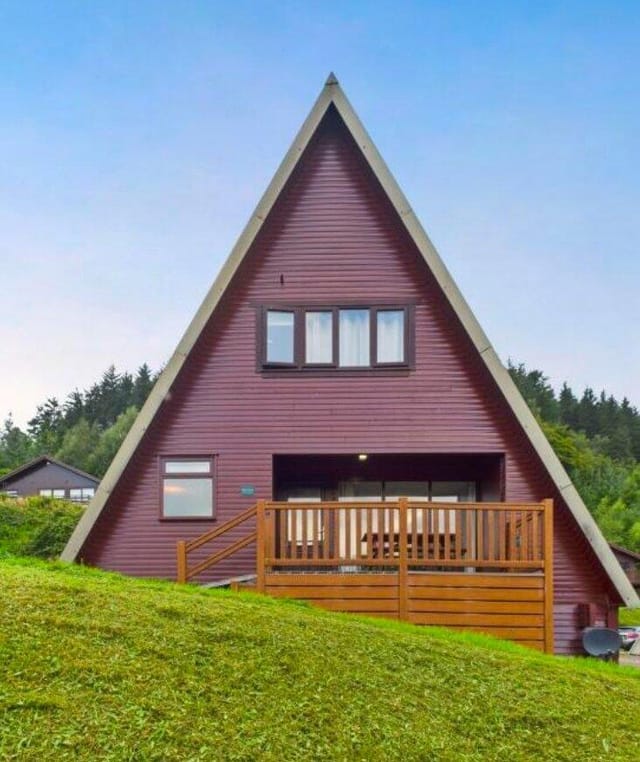
Step out onto the balcony at seven in the morning, mug of tea in hand, and the loch is completely still. The hills above Lochgoilhead are half-hidden in low cloud, the air smells of pine and rain-soaked earth, and the only sound is a heron lifting off from the water below. That's the daily reality of owning this 1987-built A-frame chalet at Drimsynie Holiday Park — and it never gets old. The architecture alone turns heads. A-frame lodges were built across Scandinavian and Scottish holiday parks in the seventies and eighties, but very few survive in this condition. The steeply pitched roofline, the floor-to-ceiling glazing at the gable ends, the way the structure draws your eye upward — it's a genuinely distinctive building in a sea of more conventional park homes. At 58 square metres across two floors, it's compact but cleverly arranged, and the double-height windows in the main living space mean natural light pours through from morning until the hills cut off the evening sun. The open-plan ground floor is where you'll actually live. The lounge, dining area and kitchen flow together without partition, which works well for a property of this size — it feels generous rather than cramped. The kitchen is well-equipped for proper cooking, not just holiday basics, and the sofa configuration includes a sofa bed for the occasional extra guest. Upstairs, both bedrooms are quiet and well-proportioned. The main bedroom has its own en-suite, which matters more than people expect in a holiday property shared between two couples or a family with teenagers. A separate shower room serves the second bedroom and anyone using the living area. The balcony off the upper level is the undisputed highlight. It faces out toward the loch and t ... click here to read more

Front (Exterior)

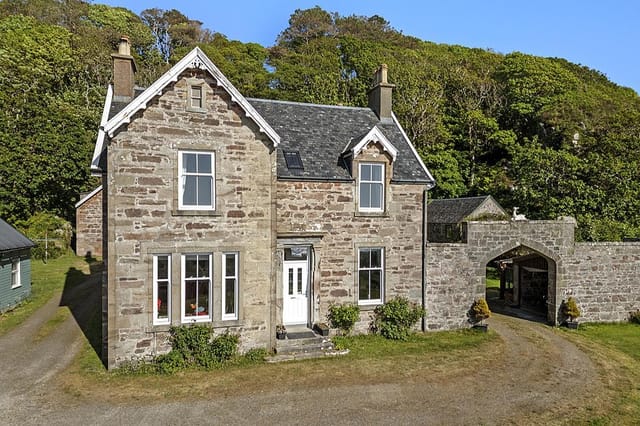
Stand at the upstairs window on a clear evening and the Atlantic stretches out ahead of you, Gigha sitting low on the horizon, the dark shapes of Islay and Jura beyond it, and the sky doing something extraordinary in shades of amber and deep violet that no filter could replicate. This is what westward-facing Scotland does at dusk. And it does it every single night from Crubasdale Lodge. Crubasdale Lodge is a substantial Georgian-Victorian stone house at the northern edge of Muasdale, a quiet village on the A83 that most people drive through on their way somewhere else. That's their loss. The Kintyre Peninsula is one of those places that rewards the people who actually stop—properly stop, unpack, breathe the salt air, and stay a while. Eight bedrooms, four bathrooms, over 4.5 acres of mature grounds, a detached three-bedroom annexe, a timber cabin, a Victorian walled garden, stone outbuildings, and a private sandy beach that comes with the title deeds all the way to the high water mark. Properties like this don't appear on the market often. When they do, they tend to go quietly and quickly to people who recognize what they're looking at. The house itself was originally built as a hunting lodge, and that heritage shows in the bones of the place. Stone walls under a slate roof. An impressive staircase rising through the central hall. A marble fireplace in the drawing room beside a wood-burning stove that, on a January evening when the rain is coming in off the Atlantic and the wind is up, becomes the single most important thing in the building. The proportions are generous throughout—rooms with height and light, windows positioned to catch the views. Someone designed this with intention, and that original thinking still h ... click here to read more

Front view of Crubasdale Lodge

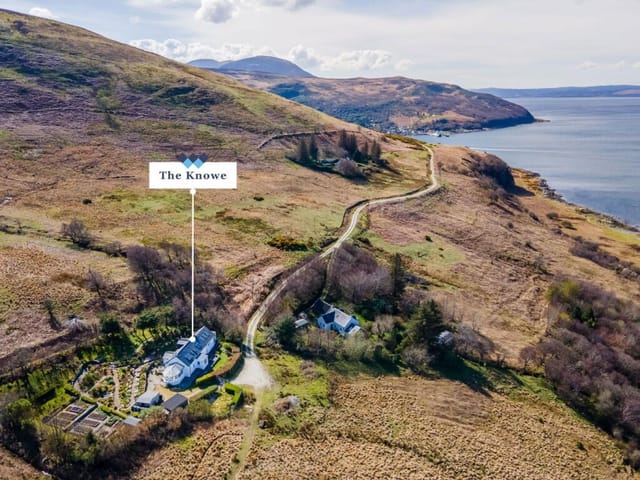
Stand in the dining kitchen on a clear October morning and you can watch the light change over the Kilbrannan Sound in real time — the water shifting from steel grey to deep cobalt as the clouds roll off the Kintyre hills. The skylights above you let in a shaft of pale Scottish sun. The log burner is going. There's coffee on. This is not a fantasy version of island life. This is just a Tuesday at The Knowe. Set at the northernmost tip of the Isle of Arran, on a narrow track shared with only a handful of neighbours, this three-quarters-of-an-acre property was once a working croft. It's been transformed over time into something genuinely rare: a three-bedroom home that delivers serious architectural quality without losing the soul of its rural setting. The conversion has been done with care — double-height ceilings in the kitchen, handsome wood-fronted cabinetry with granite work surfaces, hardwood flooring in the sitting room, and not a single gesture that feels out of place against the backdrop of open hillside and churning sea. The views deserve their own paragraph. From the sitting room, the conservatory, the garden room at the gable end, and both upstairs bedrooms, you're looking out across the Kilbrannan Sound toward Loch Fyne and the upper Firth of Clyde. The principal bedroom has a Juliet balcony, and on still evenings in late spring you'll hear seals calling from the rocks below. Golden eagles are a regular sight on the hill behind. This is not the kind of wildlife encounter you plan — it just happens, because you live here. Inside, the layout has been thought through for people who actually use a house rather than just look at it. The boot room at the entrance is exactly right for a property like this — somewh ... click here to read more

Front view of The Knowe

Step outside on a October morning at Arrlochaira and you'll hear the River Garry rushing through the gorge below before you even open the front door. The light at this hour — filtered through ancient birch and oak — turns the garden silver. It's the kind of quiet that people from Edinburgh and London spend years searching for, and here it's simply Tuesday. Killiecrankie sits in one of the most dramatic river valleys in highland Perthshire, sandwiched between steep wooded crags that the National Trust for Scotland has protected for decades. Pitlochry, just a few minutes' drive south along the B8019, has a proper railway station on the Highland Main Line — direct trains to Edinburgh in under two hours, Glasgow in roughly the same. That combination of genuine wilderness and actual connectivity is rarer than you'd think in Scotland, and it's a big part of why this corner of Perthshire has quietly become one of the most sought-after second home markets north of the border. Arrlochaira itself is a four-bedroom detached villa with three bathrooms, set in private garden grounds that roll out to a backdrop of mature trees. The architecture does something that a lot of modern Scottish houses don't bother attempting: it goes vertical. Vaulted ceilings in the main living areas create an almost Scandinavian sense of volume, and the floor-to-ceiling windows pull the outside in regardless of the season. On a grey February afternoon, when the hills are dusted white and the birch branches are bare, those windows frame something that honestly looks like a painting. In summer, the French doors off the living room open onto the lawn and you barely notice where the house ends and the garden begins. The living room anchors the ground floor ... click here to read more

Front view of the villa

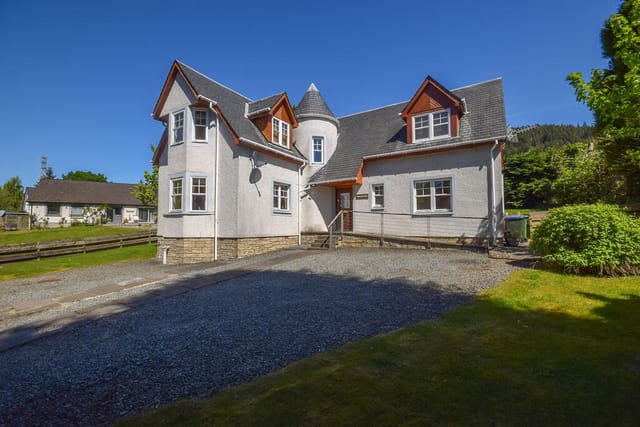
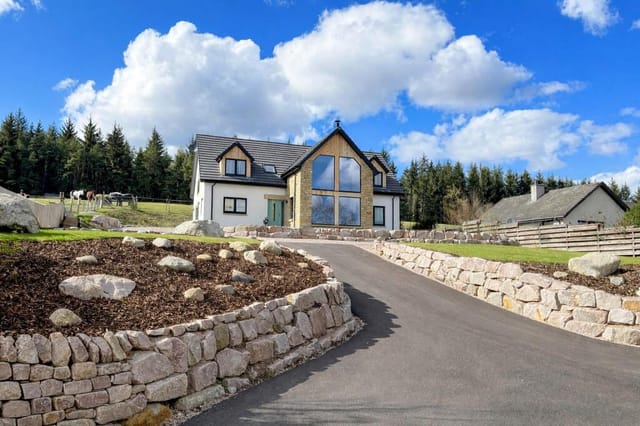
Step outside on a frost-edged October morning, coffee in hand, and there they are—the Cromdale Hills stretching wide across the horizon, catching the first pale light of a Highland dawn. This is what greets you from the south-facing terrace at Cath Ann, a newly completed architect-designed house on Skye of Curr Road in Dulnain Bridge, just minutes from Grantown-on-Spey. Built in 2025 and finished to a standard that genuinely impresses rather than merely ticks boxes, this is not a holiday property cobbled together for the rental market. It was built to live in—properly. The house sits within roughly 0.3 acres of thoughtfully landscaped grounds, framed by pink granite retaining walls cut from the nearby Alvie quarry. That detail matters. The stone doesn't feel imported or decorative—it belongs here, rooted in the same geology that defines the whole upper Spey valley. The sweeping tarmac driveway opens to a generous gravelled turning area, and the elevated plot means that even from the car, you get that first hit of open sky and rolling moorland that makes the Cairngorms feel different from anywhere else in Britain. Inside, the 182 square metres are organised around a dramatic double-height sitting room—the kind of space that makes you pause the first time you walk in. A HWAM Danish wood-burning stove anchors the room, and floor-to-ceiling glazing pulls the landscape indoors so convincingly that on grey November afternoons, when the hills disappear into low cloud, the room still feels alive. Kahrs premium oak flooring runs underfoot, and the glazed balustrade of the first-floor landing hovers above, catching light from the Velux windows that punctuate the upper level. It's an architectural move that gives the whole interi ... click here to read more

Cathann Skye Of Curr

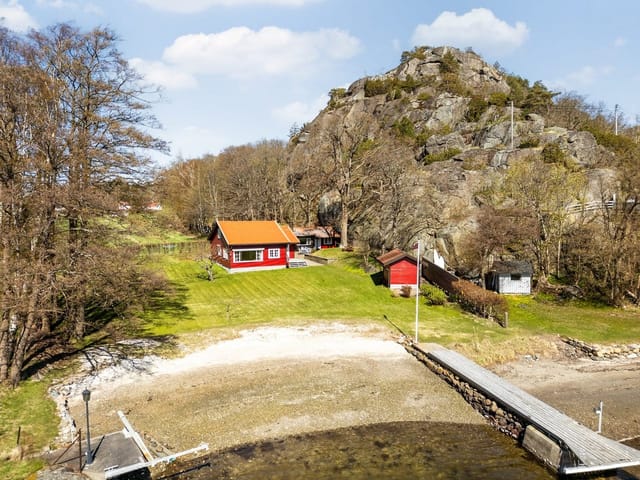
Step out of the boathouse on a July morning, coffee in hand, and the Mefjorden is already glittering. Two piers jut into calm water, a small wooden rowboat knocking gently against the dock. The sandflies haven't woken up yet. This is what you came for. Øyaveien 30 sits at the quiet end of a lane on Østerøya, one of Sandefjord's most established coastal retreats, and it delivers something increasingly rare along the Norwegian Vestfold coast: a full estate — main cabin, annex, boathouse — on a flat 2,009-square-meter plot that runs all the way down to its own sandy beach. South-facing, sun-drenched from mid-morning until the sky turns pink, the property looks out over a scattered panorama of islets and skerries that changes mood with every weather system rolling in from the fjord. The main cabin has the bones of a place that's been genuinely loved. Pine floors, painted wooden doors, traditional wooden interiors — nothing here is trying to be a Scandinavian showroom. The living room is divided into natural zones: a long dining table on one side, a deep sofa arrangement around a fireplace insert on the other. On a cool September evening with the fire lit and the windows fogged from dinner, it feels exactly right. The kitchen is properly functional — solid wood countertops, serious storage, freshly painted walls and ceiling in 2022 that give the space a lighter, more current feel without erasing its character. Access to a crawl-space hatch in the floor adds practical storage for the kind of gear that accumulates when you live a life on the water. Four bedrooms across the main cabin and annex handle a full family or a rotating cast of guests without anyone feeling squeezed. A ground-floor bedroom in the main cabin sits next ... click here to read more

Welcome to Øyaveien 30! Photo: Mille Gran

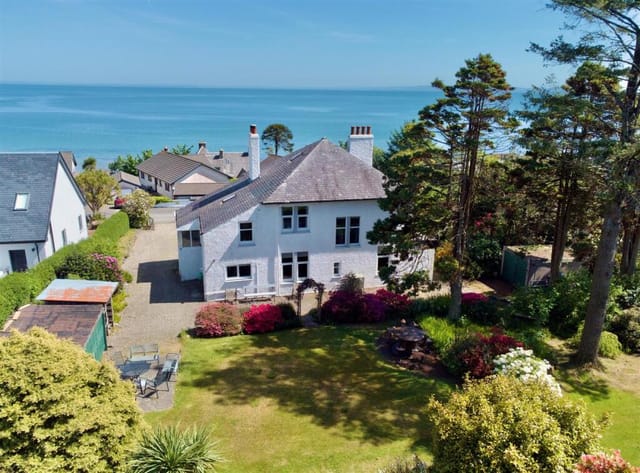
Stand at the corner window of the master bedroom on a clear October morning and you can see all the way across the Firth of Clyde to the Ayrshire coast, the water shifting between slate and silver depending on where the clouds break. That view doesn't get old. Not after a week, not after a decade. It's the kind of thing that makes you set down your coffee and just stand there for a moment longer than you planned. Helenslea is a substantial six-bedroom detached villa in Whiting Bay, built around 1926 and sitting in approximately half an acre of mature, mostly level garden on the Isle of Arran. It has the bones of a genuinely grand island house — original timber staircase, an open brick fireplace in the entrance hall, period features throughout — combined with the kind of practical updates that make it liveable year-round rather than just a summer indulgence. Three bathrooms, a second staircase serving bedrooms five and six, and a layout that can flex into a self-contained wing if you want it to. This is not a fixer-upper. The property is in good condition and, with some furnishings available by separate negotiation, could be up and running as a vacation home or holiday let almost immediately. The ground floor sets the tone. You come in through the entrance porch — red quarry tiled floor, plenty of hooks and storage for waterproofs and walking boots, which you will absolutely need — and into a wide hallway anchored by that open fireplace. To the front, the main lounge stretches across the width of the house, windows facing the gardens and the sea beyond. On grey afternoons you light the open fire and the room becomes exactly what a Scottish island living room should be. The dining room sits off the hallway, overlooking t ... click here to read more

Aerial location

Step outside on a September morning and the River Tay is right there — maybe 75 meters from the front door — running fast and silver after overnight rain, with a heron standing absolutely still in the shallows. That's the kind of thing you wake up to at Riverbank House. Not occasionally. Every day. Built in 2009 and sitting on 1.4 acres in the Highland Perthshire village of Grandtully, this five-bedroom, four-bathroom detached home spans 385 square metres of thoughtfully designed space. It's in genuinely good condition — not the kind of "good condition" that means you'll be living around builders for six months. Move-in ready, with underfloor heating on the ground floor, oil-fired central heating throughout, and interiors that have been maintained with real care. The architecture makes a statement without shouting. Timber front doors lead into a double-height entrance hall where a split staircase rises on both sides to a galleried landing, and a large arched window throws light across the whole space on even the greyest Perthshire afternoon. Which, honestly, there will be some of. That's part of it. The drama of the light changing over the Tay — from pearl-white midwinter mornings to those long amber summer evenings when it barely gets dark until 10pm — is something that gets under your skin. The drawing room is where people tend to stop and just stand for a moment. An open fireplace on one wall, and on the other, a run of windows culminating in a semi-circular bay that frames the river and the garden like a painting you've chosen to live inside. Sliding internal doors connect it to the dining room, making the whole ground floor expandable for a big family Christmas or contractable for a quiet Tuesday evening. The kit ... click here to read more

Front

On a quiet Sunday morning in Rekem, you open the veranda doors and the garden comes alive — the shimmer of your private pond through the trees, the faint splash of the heated pool, a wood pigeon calling from somewhere in the old-growth hedge line. This is 6,802 square metres of Belgian countryside doing exactly what it's supposed to do: nothing hurried, nothing crowded, just space and light and the particular kind of quiet that money genuinely can buy. Vijversdreef 3 sits in Rekem, a protected village that Belgium's heritage authorities have actually recognised as one of the country's most architecturally intact historic settlements. The cobbled heart of the village is ten minutes on foot. The Dutch city of Maastricht — with its Vrijthof square, its Burgundian food culture, and its weekend markets spilling out along the Maas — is a fifteen-minute drive across the border. And the Hoge Kempen National Park, Belgium's only national park, starts almost at the garden's edge, with its heathland trails, cycling routes, and pine forests stretching out toward the German border. The villa itself is a 623 m² traditional build, solid and well-proportioned, with a character that holds up across seasons. Come January, when frost settles on the tennis court and the pond catches the low winter light, the house earns its keep differently than it does in July — and it earns it in July too, when the covered, heated pool means guests are in the water regardless of what the Belgian sky decides to do. The interiors reward attention. The entrance hall sets a confident tone immediately; the living spaces are generously scaled without tipping into cavernous, and the country-style kitchen — induction cooktop, steam oven, oven, microwave, dishwa ... click here to read more

Front view of Vijversdreef 3, Lanaken

Stand in the kitchen at Bluebell Cottage on a Saturday morning and you'll hear it before you see it — the faint murmur of a stream running along the rear boundary, the occasional call of a curlew over the fields, and nothing else. No traffic. No neighbours. Just the particular quiet that only Scotland's west coast can produce. It's the kind of silence that you actively seek out on a Tuesday afternoon in a city office and can't quite believe exists in real life. Here, it's just the default setting. Bluebell Cottage sits in Whitehouse, a small settlement on the west side of the Kintyre Peninsula, tucked just south of Tarbert on the A83. Six bedrooms. Six en suite shower rooms. Two floors of well-organised, practical living space spread across 256 square metres. That combination alone is rare enough on this stretch of coastline — but pair it with a stream-bordered garden, outbuildings, mature planting for privacy, and a price that makes comparable properties in the Scottish Highlands look expensive, and you start to understand why this kind of opportunity doesn't sit on the market long. The house itself is harled in the traditional Scottish style, with a dark grey tiled roof and double glazing throughout. Inside, the layout rewards the whole idea of gathering people together — which is, really, what a six-bedroom holiday home or second home on the west coast of Scotland is for. The ground floor carries three bedrooms, each with fitted double wardrobes and a private en suite, which means three separate guest parties can be entirely self-contained without overlapping. The formal sitting room has an electric fire for those September evenings when the temperature drops faster than you expect. The dining room opens directly to ... click here to read more

Picture No. 24

Stand at the upstairs sunroom window on a clear October morning and you'll see why people who find Kilmuir rarely leave. The Moray Firth stretches out in front of you — wide, silver, alive — and if you're lucky, which you often are here, a bottlenose dolphin rolls through the surface maybe 200 metres offshore. This isn't a wildlife excursion. This is Tuesday breakfast. Roseburn is a well-built detached house sitting on a generous corner plot in the small coastal hamlet of Kilmuir, North Kessock, roughly five miles north of Inverness city centre across the Kessock Bridge. At 148 square metres across two floors, it's a proper house — not a conversion, not a flat with views — with three double bedrooms, three bathrooms, a conservatory, a sunroom, a separate dining room, and a sizeable summer house in the garden. For international buyers looking at a vacation home in the Scottish Highlands, or a second home base for regular UK visits, properties at this address on this stretch of the Firth come up very rarely. When they do, they go. The ground floor is laid out in a way that makes sense for how people actually live. The lounge faces the water, so the first thing you see when you come downstairs in the morning is the Firth — the light on it changes completely depending on weather and season, which means it never gets boring. A conservatory opens off the back of the main living space onto the garden, fitted with air source heating so it's genuinely usable year-round, not just a glass box that freezes in November. The kitchen and dining room between them give you flexible space for cooking properly and sitting down to eat without everyone crowding the same table. Two shower rooms on the ground floor are a quiet detail that ma ... click here to read more
Aerial view of the property and Moray Firth

On a quiet Sunday morning in Newtonmore, the only sounds are the River Spey running somewhere behind the treeline and the distant call of a red kite circling above Creag Dubh. You're standing at the kitchen sink of Station House, a mug of tea warming your hands, watching frost melt off the lawn while the Rayburn Royal ticks quietly behind you. This is what £357,850 buys you in the Scottish Highlands — not just a property, but a complete change of pace. Station House sits on Station Road, one of Newtonmore's most established residential streets, in a village that sits squarely inside the Cairngorms National Park — the largest national park in the British Isles by some distance. The house itself is a proper detached Victorian-era family home, 133 square metres of solid stone bones and high-ceilinged rooms, with gardens that wrap around the building on multiple sides and a detached timber garage at the front. It's in good condition throughout, move-in ready, and carries the kind of architectural confidence you rarely find at this price point in the central Highlands. Walk through the entrance vestibule and the central hallway opens things up immediately. There's a generosity to the proportions here that you notice straight away — the ceiling height, the width of the rooms, the way natural light travels through from front to back. The sitting room has an original decorative fireplace with ornate surround, ceiling coving, and a large double window framing a view of the garden. It's the kind of room that earns its keep in all four seasons: open-windowed and sunny in July, fire-lit and amber in November. The dining room sits adjacent, equally bright, with direct access through to the conservatory — arguably the home's most q ... click here to read more
Front Main

Stand in the kitchen on a November morning and watch a red squirrel work its way along the drystone wall while the kettle comes to the boil. The Everhot range cooker has been on since six, the skylight above is streaked with the kind of pale Highland light that photographers chase for hours, and through the back door you can hear the faint run of the burn that traces the far edge of your three acres. This is Balquhidder — a place where mornings feel like they were made specifically for you, and where the word "retreat" actually means something. Set on the southern edge of Loch Lomond and The Trossachs National Park, this three-bedroom stone-built cottage on the Balquhidder road near Lochearnhead is one of those rare Scottish properties that manages to be genuinely off the beaten track without asking you to sacrifice anything meaningful. Good broadband. Solar panels with roughly a decade left on the Feed-in Tariff. A fully operational holiday-let bothy in the grounds already generating income. The bones are solid, the upgrades are smart, and the surrounding landscape is the kind that makes people move countries. The main house stretches across 122 square metres — just over 1,300 square feet — and the space is used well. Walk in through the front door and the lounge draws you immediately: a woodburning stove sits at the far end, the sort you light at dusk on an October Friday and don't let go out until Sunday afternoon. The windows face the garden and beyond it the open ground rises toward the hills. In summer, the light hangs in those windows until almost ten o'clock. In winter, the stove does the work and it does it properly. The kitchen-diner is the room people come back to. The Belfast sink, the Everhot, the skyligh ... click here to read more
Front view of the stone-built cottage and gardens

Wake up to the sound of nothing. Not silence exactly — there's the soft lap of water against the shore fifty metres away, a woodpecker somewhere in the birches, and if it's early enough on a summer morning, the mist still sitting low over Mungasjön. That's the first thing you notice at this 1800s log cabin in Munga, a small community just outside Västerås where people still leave their doors unlocked and wave at strangers on the gravel road. This is a genuine country home vacation property in Sweden, not a weekend renovation project or a lifestyle concept. The main cabin, roughly 75 square metres, started life in Dalarna — the heartland of Swedish rural architecture — and was relocated to this woodland plot in 1965. The logs have had sixty years to settle into the land. They look like they grew here. Step inside and the floors are solid pine, wide-planked and warm underfoot even in autumn. The ceiling beams are exposed and chunky. The open fireplace isn't decorative; it's where everyone ends up after a long day of swimming or foraging in the forest behind the property. The kitchen has its own wood-burning stove, which means two independent heat sources before you've even thought about the covered terrace — which has its own fireplace too, facing the lake. Three fires for a 75-square-metre house. That tells you something about the priorities of whoever built this place. The modernisation has been done without apology or excess. Fibre-optic internet was installed because working remotely from a lakeside cabin in Sweden is, frankly, a legitimate life choice. The bathroom and shower were renovated tastefully, the laundry room updated between 2018 and 2019. These aren't things you'll need to budget for. The house is move-i ... click here to read more
Main house and garden view