Houses For Sale In Europe With 2+ Bedrooms

Houses for sale in europe - homestra offers the largest amount of european real estate with over 200,000+ properties, find any type of property within your budget from villas to country homes. buy or rent your perfect home in europe.

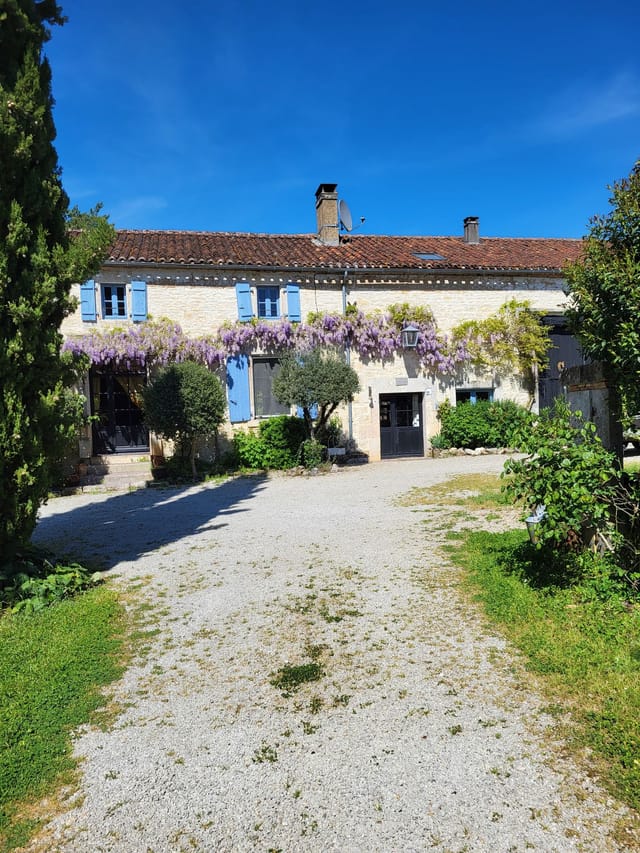
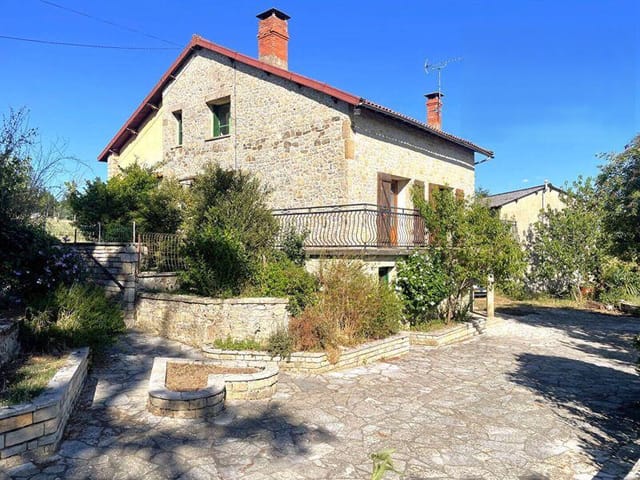
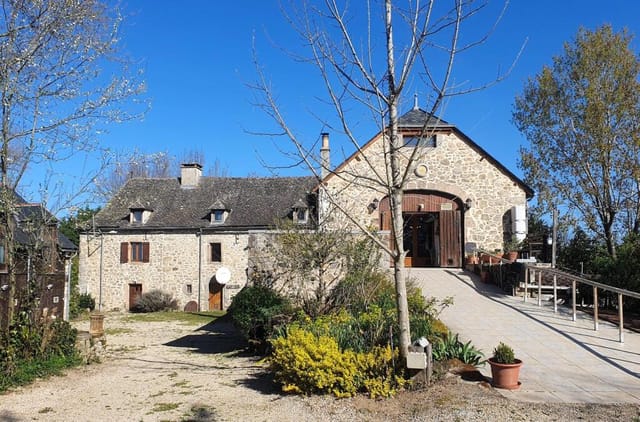
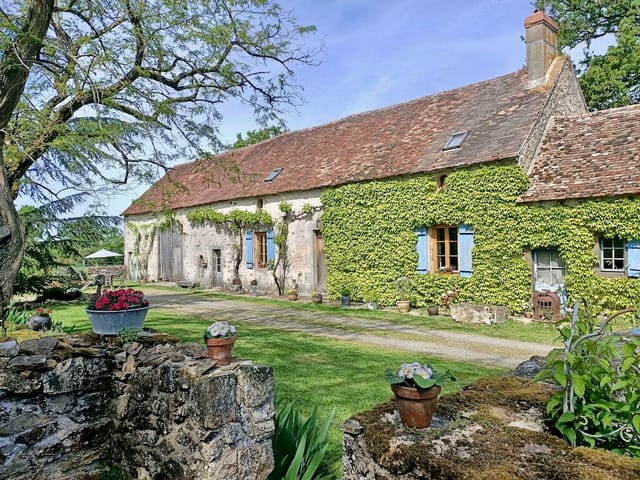
Sunday morning in Salles-Lavalette and the smell of fresh bread from the boulangerie two streets over drifts through the tall kitchen windows before you've even put the coffee on. That's not a fantasy — the bakery is genuinely that close, and yes, it's the kind of village where the baker knows your order by your second visit. This is Charente at its most unhurried, and this six-bedroom stone house sits right at the heart of it. At 293 square metres across a thoughtfully restored, characterful layout, the property is substantial without feeling cavernous. Step through the entrance hall and you're immediately in the 44-square-metre grand salon — a proper room with genuine presence, the sort of space where long dinners stretch past midnight without anyone feeling crowded. Original timber-framed doors and windows have been kept throughout, which matters enormously in a house like this. The bones are old and honest; the comfort is modern and discreet. That balance is hard to find and harder to get right, but whoever restored this property understood it. The ground floor also holds a rustic kitchen with real personality — this isn't a showroom kitchen, it's one you actually want to cook in — plus a second petit salon that flexes easily into a library or home office depending on your needs. A cloakroom completes the ground level. Upstairs, the six bedrooms and three bathrooms are arranged across a layout that makes genuine sense for families or groups, not just on paper but in daily use. Adjoining rooms on both the ground and first floors carry real development potential, subject to the usual permissions, which opens up everything from a self-contained annexe to an expanded B&B operation. Speaking of which — this house is ge ... click here to read more
Picture 1

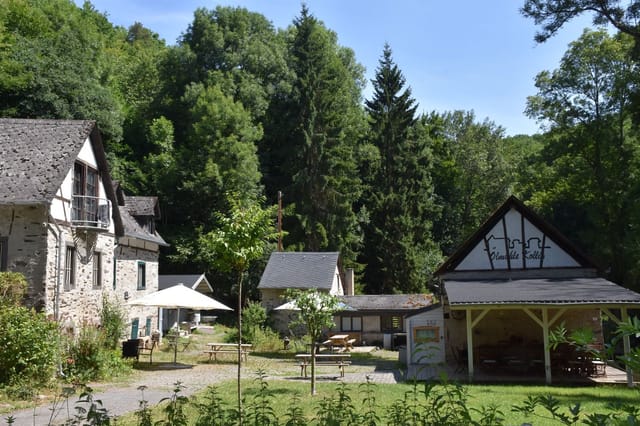
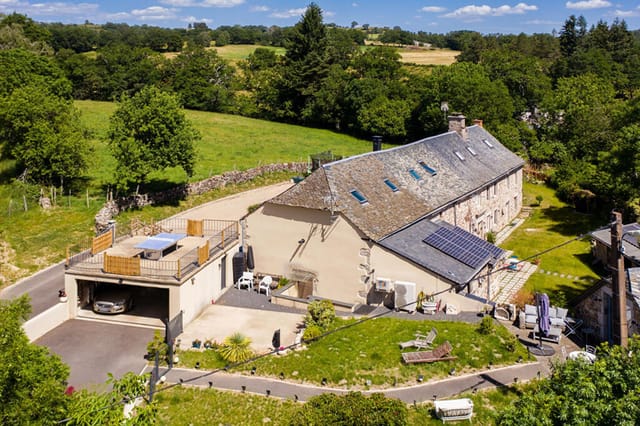
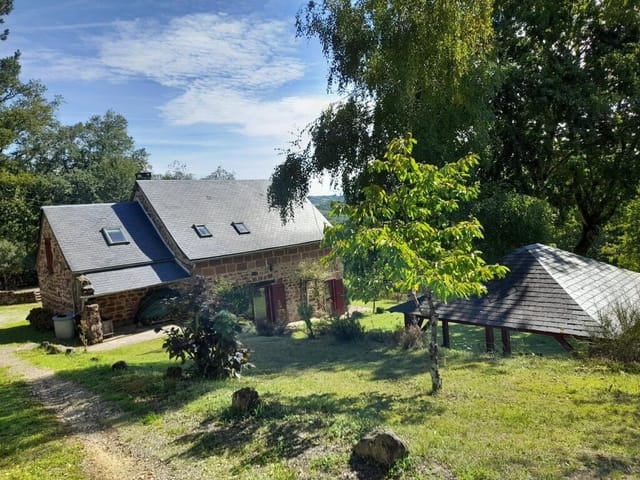
Step onto the south-facing terrace on a clear October morning and there it is—Najac Castle, perched on its narrow rocky spur, the Gorges de l'Aveyron rolling away beneath it in every direction. The mist hasn't fully lifted yet. The wood-burning stove inside is still warm from last night. This is the kind of morning people drive across France to find, and here it comes with your breakfast. Najac sits on the edge of the Aveyron valley like something a medieval cartographer drew on a good day. Frequently counted among the most striking villages in the whole of southern France—it made the official "Plus Beaux Villages de France" list and earns that distinction honestly—it draws visitors from across Europe every summer, yet somehow manages to stay genuinely local. The weekly market runs on Sundays along the main strip, where farmers from the surrounding causse sell raw-milk tomme, walnut oil pressed just up the road, and slabs of aligot mix you'll argue about all the way home. There's a butcher who still knows the name of every farm his beef comes from. That's Najac. This house sits on five hectares of land on the edge of that village, close enough to walk to the boulangerie for a croissant, far enough that you won't hear your neighbours through the wall. You don't have any immediate neighbours. The land wraps around you—nearly four hectares of it contiguous—and the countryside absorbs whatever noise the world is making. In July the evenings smell of dry grass and lavender drifting up from the lower meadows. In November it's woodsmoke and wet earth. Both are worth coming for. The house itself was rebuilt stone by stone from the original structure. That matters here. The builders didn't pretend to add old-world character wi ... click here to read more
Picture 1

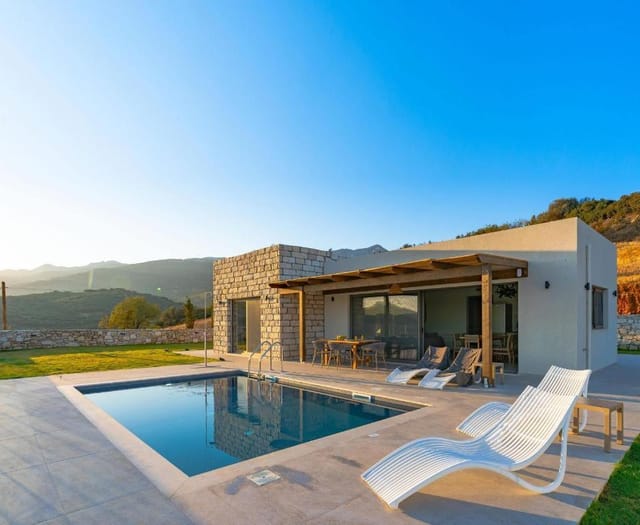
Sunday morning in Saint-Romain starts with birdsong and the faint smell of bread drifting over from Aubeterre-sur-Dronne, just a few minutes down the road. You slide open the glass doors onto the veranda, coffee in hand, and the pool catches the early light. The kids are still asleep. This is yours. That's the kind of morning this property delivers — not just once, but every time you pull up the drive. Tucked into a small hamlet in the Charente department of southwest France, this modern five-bedroom villa sits in one of the country's most quietly rewarding corners. Aubeterre-sur-Dronne is one of Les Plus Beaux Villages de France — that official designation handed to fewer than 160 communes in the entire country — and it earns it. The medieval church of Saint-Jean, carved directly into a cliff face, is the sort of thing that stops first-time visitors in their tracks. The weekly Saturday market along the main square fills with local cheeses, walnuts, honey from Périgord, and wine from the surrounding Charente vineyards. It's a ten-minute drive, and after a few visits you'll know half the stall holders by name. The house itself spans 234 square metres across three levels, and the layout is genuinely clever. The heart of the ground floor is a 57-square-metre open-plan living and dining area — properly open, the kind where a group of eight around the table doesn't feel cramped — with a sleek fitted kitchen that runs along one wall. No fussy cabinetry or dated tile splashbacks here. Clean lines, good light, and a design that invites cooking rather than just tolerating it. From this space, wide glazed sliding doors open onto a covered veranda that rivals the living room for sheer size, and from there the eye travels straigh ... click here to read more
Picture 1

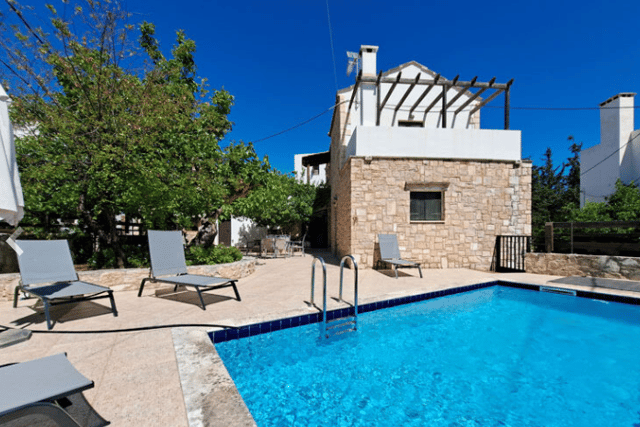
Sunday morning in Saint-Romain and the only sound is the wind moving through a field of sunflowers. Not a neighbour in sight. Just the soft creak of the farmhouse shutters and, from the kitchen, the smell of coffee brewing in a room that somehow manages to feel both brand new and a hundred years old at the same time. This is the kind of quiet that city people spend years chasing. This four-bedroom, three-bathroom detached farmhouse sits on a full acre of private grounds along a no-through lane in Charente, one of those quietly beautiful corners of southwest France that hasn't yet been discovered by the Instagram crowds. Recently refurbished to a genuinely high standard, it hits a rare balance — the bones of a proper French country house, the comfort of a home that's been thoughtfully brought into the 21st century. You're not buying a renovation project. You're buying the result of one. Step inside and the entrance hall is wide and airy, the kind of space that sets the tone for everything that follows. The sitting room keeps its period features — there's real character here, the sort that can't be installed, only preserved. The kitchen and breakfast room is newly fitted with high-end appliances and opens naturally toward the gardens, so summer mornings flow from coffee to croissants to a chair outside without any real effort at all. A ground-floor bedroom, shower room, and utility room with the central heating boiler round out the practical side of things, meaning guests or family can stay downstairs entirely if needed. Upstairs, three double bedrooms share the first floor. The master has a dedicated dressing area and an en-suite in its final stages of completion — arriving essentially finished. A family bathroom serve ... click here to read more
Picture 1

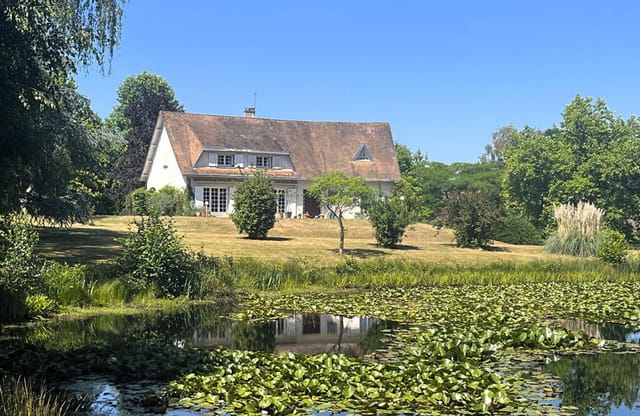
On a slow Sunday morning in Ceaux-en-Couhé, the bread oven in the stone shed still holds yesterday's warmth. Eight bedrooms, a pond catching the light through the oaks, and 4.8 hectares of parkland stretching out beyond the kitchen window — this is what a second home in rural Poitou actually feels like. Not a curated Instagram fantasy, but something real and rooted. This is a rare find in the Vienne department: a fully renovated maison de maître that has been operating as a group gîte, sleeping up to 24 guests across its eight bedrooms, all equipped with private shower rooms and WCs. It's move-in ready — or more accurately, move-in and open-for-business ready. The bones are solid, the renovation is done, and the layout is already designed for the kind of communal living that makes group holidays worth taking. Whether you're imagining family reunions across generations, a yoga and wellness retreat in the French countryside, or a creative residency program, the infrastructure is already in place. Step inside and the ground floor sets the tone immediately. There's a generous entrance hall that opens into a laundry room, a dedicated office, a proper kitchen, a dining room, and a sitting room — the kind of layout where a group of twelve can occupy the same house without tripping over each other. Three ground-floor bedrooms, each with their own shower room and WC, sit along a hallway with fitted storage. Upstairs, five more bedrooms follow the same logic: private bathrooms, cupboard space, and enough separation that guests actually sleep well. The boiler room sits in a separate annex, keeping mechanical noise well away from the living spaces. And then there's the bread oven shed — a detail that sounds minor until you've pull ... click here to read more
Picture 1

Sunday morning. You pull open the kitchen window and the smell of the Seine drifts in — that particular mix of cool river air and freshly cut grass from the garden — while your coffee brews. The kids are still asleep upstairs. The village isn't awake yet either. This is exactly what you came for. Set in Mousseaux-sur-Seine, a quiet hamlet tucked inside one of the Seine's great looping bends, this four-bedroom family home sits on a generous 1,500 square metre plot within the Vexin Regional Natural Park. Built in 2007 and maintained with obvious care, the house is move-in ready — no renovation headaches, no compromise on comfort. It's the kind of property where you arrive on a Friday evening, open the windows, and the weekend just starts. The ground floor is laid out for real life. A proper entrance hall — not a cramped corridor — opens into a double living room that handles both a formal dining arrangement and a comfortable lounge without feeling squeezed. The open-plan kitchen connects naturally to this space, so whoever's cooking doesn't get exiled from the conversation. There's a master bedroom with its own shower room on this level too, which works brilliantly whether you have elderly parents visiting or simply want the option of single-storey living as the years go on. A laundry room and integrated garage complete the ground floor — practical details that matter enormously when this is your secondary residence and you arrive with bikes, muddy boots, and river gear. Head upstairs and the partially converted attic space is one of the home's real surprises. Three proper bedrooms sit alongside a bathroom and a dressing room, but the standout is the large open-plan room at the heart of the floor — currently used as a T ... click here to read more
Picture 1

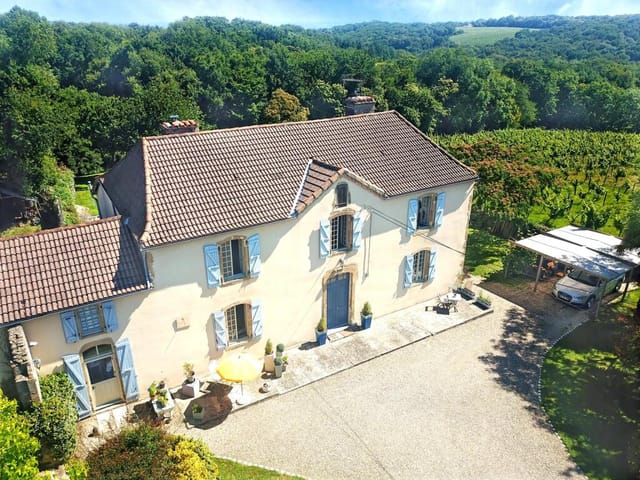
Stand at the end of the poplar-lined driveway on a still September morning and the wrought-iron gate ahead of you feels like a portal to a different century. The stone pillars are warm from the early sun. Somewhere behind the walled park, a woodpigeon calls from the cedar. This is Saint-Romain, tucked into the rolling green corridor between the Charente and Dordogne rivers, and this 1747 residence has been quietly holding its ground here for nearly three hundred years. Aubeterre-sur-Dronne is just minutes away — one of the most visited villages in France and for good reason. It clings to a white chalk cliff above the Dronne river, and on market days the square fills with the smell of rotisserie chicken, ripe melons from Périgord, and the sharp tang of local goat's cheese. The monolithic church of Saint-Jean, carved entirely from rock in the 12th century, draws visitors from across Europe, yet the village never loses its human scale. You can still buy a coffee for less than two euros and know your neighbor's name by your second visit. Back at the property itself, you're looking at 460 square metres of living space in the main house alone. Built in 1747, it reads like a history lesson told in stone and oak. The entrance hall opens into a large dining room flanked by a kitchen on one side and a study on the other. Beyond that, two reception rooms — a sitting room and a billiard room — each anchored by a fireplace that, come November, will make the whole ground floor feel like the warmest place on earth. There's a wine cellar that could, with the right permissions, become an additional bathroom. Up the staircase, a wide landing serves seven bedrooms. Above them, a vast attic with original beams sits waiting — 250 square me ... click here to read more
Picture 1

Sunday morning in Marsac moves slowly. The kind of slowly you forget is possible until you're standing on a stone terrace with a coffee, watching mist lift off the Charente countryside while rosebushes climb the garden wall and a blackbird argues with itself somewhere in the orchard. This is the pace this house was built for. Set in a small town a short drive from Montmoreau-Saint-Cybard, this three-bedroom house has been carefully restored to keep what mattered — the thick stone walls, the original proportions, the sense that a building this solid has earned its place in the landscape. It sits on terraced grounds that step naturally down the hillside, and that slope is one of the property's quiet masterstrokes. Because of it, every level of the house has a relationship with the garden. Every room has air around it. The espaliered grounds are something you don't often see outside of a curé's garden — the kind of formal, patient planting that takes decades to establish. Rosebushes trained flat against stone, neat and fragrant in June, turning the whole space into something that feels more like a private botanical corner than a typical back garden. It's the sort of detail that stops people mid-sentence when they first walk through the gate. On the garden level, the living space is open and practical. The kitchen flows into a generous living area — no awkward walls dividing the two, just light moving through and the kind of layout that actually works when you have a houseful of people at the table. There's a pantry off the kitchen, which any serious cook will immediately appreciate. A shower room and a cellar round out this floor, the latter offering the kind of storage that makes a second home genuinely livable rather t ... click here to read more
Picture 1

Stand at the tall windows of the first-floor salon on a Tuesday morning and you'll understand immediately why people have been coveting this address for centuries. The Charente River slides past below, catching the light in that particular way it does in late spring—silver and slow—while the bell tower of the Abbaye aux Dames marks the half-hour with a sound that drifts through the open glass and settles into the room like it belongs there. This is the Saint-Pierre quarter of Saintes, one of the most quietly distinguished addresses in southwest France, and this five-bedroom Hôtel Particulier has occupied its corner of it with serious, unhurried confidence for generations. The property spans 471 square metres across a generous footprint that reveals itself gradually—you push through the courtyard gate, cross the stone-flagged entrance, and only then begin to understand the scale of what you're dealing with. Rooms that are genuinely large, not estate-agent large. Ceiling heights that make you stand up straighter. The kind of proportions that were built when space wasn't a luxury but an expectation. The original features are extraordinary in their survival. Wood panelling—the real thing, full height, painted in the muted tones of old French interiors—lines the principal reception rooms. Ceiling roses of elaborate plasterwork crown each main space. The spiral staircase at the heart of the house is the sort of architectural gesture that stops people mid-sentence when they first see it; tight, precise, built from stone that has worn smooth in exactly the right places. Herringbone parquet runs through the upper floors; period encaustic tiles handle the ground level. None of this is reproduction. None of it has been ripped out ... click here to read more
Picture 1

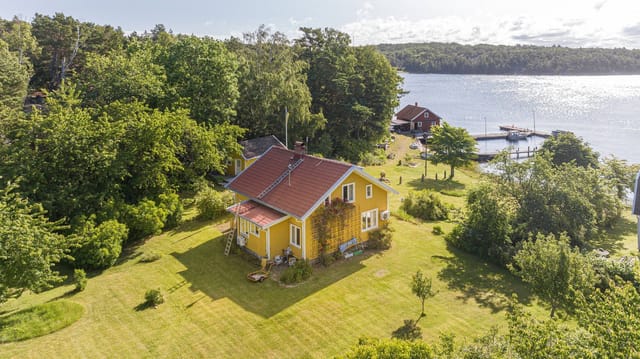
Early morning in Grovstanäs, and the light does something extraordinary. It comes off the water — just 150 meters down the path — and hits the upper floor of the house at an angle that fills the L-shaped living room with the kind of gold you can't manufacture with interior design. By the time the coffee is ready, you're sitting in a bay window with a view of the garden, listening to nothing in particular. That's the rhythm this place sets from day one. Edsviksvägen 32 sits quietly at the end of a cul-de-sac on the Grovstanäs peninsula, one of the lesser-known gems tucked into the Stockholm archipelago north of the city. It's not a secret exactly — locals know it well — but it hasn't been overrun the way some coastal spots closer to Stockholm have. The community here has its own boat harbors, a boules court, a football field, and walking trails that cut through the pine and birch toward the rocky shoreline. It has the feel of a place people have protected on purpose. The main house covers 88 square meters across the entrance level, with an additional 45 square meters of finished basement below — 133 square meters total. The upper floor layout is open and well-proportioned: that generous living room, a proper kitchen with enough counter space to actually cook in, a dining area in the bay window that catches afternoon sun, a large bedroom, and a shower room. It's a floor plan that works for two people or easily absorbs a family for a summer. Nothing about it feels cramped or compromised. Downstairs, the basement opens up the possibilities considerably. There's a large family room down here that, with a partition, becomes two additional sleeping areas — useful if you're hosting more guests than the guest house can handle. ... click here to read more
Front view of the house and garden

Picture this: it's a Tuesday morning in late June, and you're standing barefoot on the stone terrace of your French country estate, coffee in hand, watching the mist lift off the Périgord hills while four safari tent guests from Amsterdam cycle out toward the Abbaye de Cadouin, half a kilometer up the road. The gîte is booked solid through August. The pool glitters. The bread from the Tuesday market in Le Buisson is still warm on the kitchen counter. This is not a fantasy — it's a fairly typical morning at this 1.6-hectare property outside one of the Dordogne's most genuinely liveable villages. Le Buisson-de-Cadouin sits in the Périgord Noir, tucked between the Dordogne and Vézère rivers, and it's the kind of place where locals actually stay rather than move away. A proper train station connects it to Périgueux in under an hour and to Bordeaux in two. There's a pharmacy, a supermarket, butchers, a weekly market, and a handful of restaurants where the duck confit is made from birds raised within ten kilometers. The UNESCO-listed Abbaye de Cadouin — its cloister one of the most haunting examples of Romanesque and Flamboyant Gothic architecture in southwest France — is practically on the doorstep. Sarlat-la-Canéda, the showpiece medieval town of the region, is about 30 minutes east. The Lascaux cave replica at Montignac is 45 minutes north. You're not buying into a remote fantasy here; you're buying into a working corner of France that has excellent bones. The estate itself covers roughly 1.6 hectares, fully fenced and gated with an electric entrance, and the layout is intelligent in a way that matters for both private enjoyment and running any kind of hospitality operation. The main house — approximately 235 square meter ... click here to read more
Main house and grounds

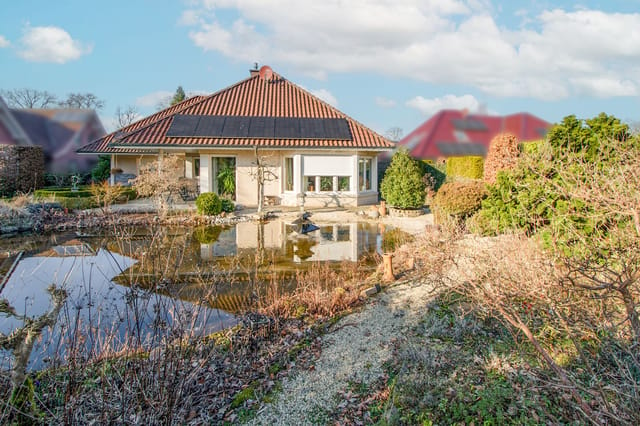
On a quiet Sunday morning in Gildehaus, the church bells from the old Sankt-Nikolai carry across the rooftops just far enough to drift through an open window. The underfloor heating has already taken the edge off the morning chill. The coffee is brewing. Outside, the garden is doing what German gardens do in late spring — going slightly wild in the best possible way, tulips competing with whatever the previous owner planted years ago along the stone shed wall. This is the pace of life at Pieper-Werning-Straße 9, and it is genuinely hard to leave. Bad Bentheim sits right at the Dutch-German border in Lower Saxony, and that cross-cultural identity shapes everything here — the architecture, the food, the weekend rhythms of the people who live in this corner of the Euregio. Gildehaus is technically a district of Bad Bentheim, but it has its own village character: wide residential streets lined with mature trees, neighbors who wave from across the road, and a total absence of the noise that most people spend years trying to escape. The property at number 9 on Pieper-Werning-Straße sits in this neighborhood with exactly the kind of quiet confidence that well-built houses tend to have. Built in 2004 and kept in genuinely good condition, this is a 287-square-meter detached home on a 877-square-meter plot. Four bedrooms. Three full bathrooms. A basement that actually functions as living space rather than a dumping ground. The layout is generous in a way that isn't immediately obvious from the street — you step through a solid timber front door into a hallway with ceilings high enough to stop you mid-step, and the whole house opens up from there. The ground floor centers on a kitchen-living space that German buyers sometimes ca ... click here to read more
Front view of Pieper-Werning-Straße 9

Early morning, the bay of Jávea looks like hammered silver from the top terrace. The sun hasn't cleared the Montgó massif yet, coffee cup warm in both hands, and you can already trace the full arc of coastline from the old port all the way out to the limestone headland of Cap de Sant Antoni. Nobody else is awake. This is yours. That particular moment — quiet, private, genuinely extraordinary — is what sets this five-bedroom villa on Carrer del Roget apart from anything else at this price point on the Costa Blanca. It isn't just that the views are good. It's that almost every room in the house catches them, and the architecture keeps getting out of the way to let them in. The villa reads Ibiza — whitewashed render, clean geometric lines, deep-set terraces that create shade without blocking sightlines — but it sits on an elevated 1,090 square metre plot in Jávea's hillside residential belt, which means what you actually get is the quieter, more rooted version of that aesthetic. No seasonal circus. No party boats audible from the garden. Just the cicadas and the occasional church bell drifting up from town. Spread across three floors and roughly 250 square metres of interior space, the layout has been thought through for how people actually use a property like this — not for a brochure floor plan. The uppermost level is almost entirely given over to the master suite, which has its own private terrace cantilevered toward the sea view. Sleep with the doors open and you'll hear nothing but wind through the rosemary hedges on the slope below. Come down to the middle floor and the house opens up: a living room anchored by a wood-burning fireplace (more useful than you'd think — Jávea winters are mild but real), an open kitche ... click here to read more
Main view of the villa with sea panorama

On a Sunday morning in Rijkevorsel, the light comes in sideways through the kitchen's wide garden-facing windows. Coffee is already brewing — the built-in machine handles that — and outside, dew is still sitting on the grass of the fully fenced rear garden. No neighbors in the sightline. Just open Flemish countryside rolling out behind the terrace. This is the pace this villa runs at, and once you've spent a weekend here, it's hard to argue with it. Sint-Lenaartsesteenweg 80 sits on a 1,389 square meter plot in the heart of the Kempen region, one of Belgium's most underrated pockets of calm. The house itself is 267 square meters — a substantial four-bedroom villa that has been thoroughly renovated without losing the bones that gave it character in the first place. The wrought-iron interior door that separates the entrance hall from the main living area? That stayed. The oak parquet floors throughout the ground floor? Those stayed too. What changed is everything you don't see at first: the insulation, the systems, the kitchen, the bathrooms — all brought squarely into the present. The living room revolves around a gas fireplace that earns its keep from October through March, when the Kempen afternoons turn grey and the garden takes on that particular Belgian stillness. The room is generous enough for a proper sofa arrangement without feeling cavernous, and it flows directly into the kitchen — the real centerpiece of this house. The island is the kind you actually gather around. Appliances include a cooktop with an integrated extractor, a steam oven alongside a conventional oven, a built-in coffee machine, a warming drawer, a vacuum drawer, and a dishwasher. Everything is built in, everything is considered. Whoever desig ... click here to read more
Front view of Sint-Lenaartsesteenweg 80

Saturday morning. The automatic gate swings open, the gravel crunches underfoot, and from somewhere behind the stables you can already hear the low sound of the Maas valley countryside waking up — birds, wind through the pasture, total quiet beyond that. This is Langstraat 86, and it doesn't feel like a second home. It feels like the life you kept pushing off until later. Sitting on a generous 6,760 square metre plot in the village of Elen — part of Dilsen-Stokkem in the Belgian province of Limburg — this detached three-bedroom house with two stables and dual pastures is a rare find on the European second home market. Properties like this, where you get genuine rural scale, equestrian infrastructure, and a house that's already been modernised, simply don't come around often at this price point. At 555,000 euros for 115 square metres of living space plus all the land, it sits in a different category from the holiday villas you'll see advertised for twice as much further south. The house itself was built in 1958 and carries the bones of that era — solid concrete intermediate floors, thick walls, a structure built to last. But between 2005 and 2015, it got a proper overhaul: cavity wall insulation, new PVC double-glazed windows throughout, updated bathrooms, a redesigned kitchen with granite countertops and induction cooking, a new gas central heating boiler, and a freshly painted and coated exterior. The result is a home that holds its character while actually being comfortable to live in. No draughty windows. No outdated plumbing surprises. Step inside through the entrance hall — tiled floors, clean lines — and the living room opens up with light. Large windows face the garden and meadow, and in winter the wood-burning ... click here to read more
Front view of Langstraat 86, Dilsen-Stokkem

Step outside on a February morning at Silkedalsporten 52 and the air hits you before anything else — sharp, clean, at 1,014 meters above sea level it has a particular bite that wakes you up faster than any coffee. The Silkedalsløypa trail is less than 100 meters from your front door. Within minutes you're moving through a landscape of birch and snow-laden spruce, tracks stretching out ahead for 150 groomed kilometers, the kind of stillness that feels earned. This is Rauland. Not a purpose-built ski resort, not a sanitized alpine village — a genuine Norwegian mountain community in the heart of Telemark, where the culture runs as deep as the snow. The cabin at Silkedalsporten 52 sits right inside it. Built from massive Norwegian timber and hand-carved with artistic motifs by local artist Ellen Øygarden, the cabin is immediately unlike anything you'll find in a modern development. The log construction isn't decorative — it's structural, authentic, the kind of craftsmanship that was already disappearing in Norway when this place was built. Øygarden's carved details run through doorframes, beams, and interior panels with a quiet confidence, never shouting for attention. You notice them differently every time you walk through a room. That's how good craft works. The layout across three floors gives you 178 square meters of interior living space, and the flow makes sense for a mountain property. The main floor is anchored by a living room that's built around a proper fireplace — not an insert, not a wood-burning stove shoehorned into a corner, but a central fireplace that radiates heat you can feel from across the room. Above it, an internal balcony from the loft level looks down into the space, a detail the current owners h ... click here to read more
Welcome to Silkedalsporten 52, a very beautiful and unique log cabin over three floors with 11 beds in 2 bedrooms, 2 loft rooms, and annex.

Wake up to the sound of water lapping against the pier, coffee in hand, watching the early mist lift off Åbyfjorden. That's what mornings look like at Vinjestranda 119 — a four-bedroom chalet on the Norwegian coast that sits close enough to the sea that you can hear it change mood with the weather. Stathelle sits in the heart of Bamble municipality, a stretch of coastline in Telemark county that Norwegians have quietly treasured for generations. The Bamble archipelago is right on your doorstep — a jagged scatter of skerries, inlets, and sheltered bays that rewards anyone willing to get out on the water or pull on a pair of boots. The kyststien, Norway's beloved coastal trail, runs directly through this area. On a clear July morning, that path takes you past blueberry thickets and smooth pink granite slabs that drop straight into the sea. In October, those same rocks glow copper and rust as the birches turn. This is a vacation home that earns its mooring. Literally — a 3-meter boat berth is included in the sale, giving you direct access to some of the best recreational waters on the Telemark coast. You can cast a line for mackerel before breakfast, explore hidden coves by kayak in the afternoon, and be back on the 75-square-meter terrace with a cold Aass Fatøl before the sun dips. The outdoor furniture stays too, so you're not arriving to an empty deck. The chalet itself was built in 2009 and covers 83 square meters spread across two floors. It's in good condition — maintained properly, not in need of renovation work, which matters when you're buying from abroad and can't be on-site every week. The ground floor has a practical layout: an entrance hall, four bedrooms, a full bathroom with laundry plumbing (washing machi ... click here to read more
From the terrace you have a wonderful view towards Åbyfjorden, with the Bamble archipelago as a good neighbor.

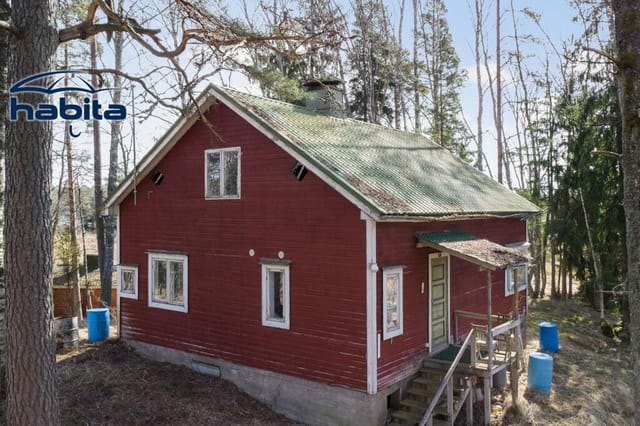
Step outside on a September morning and the air carries the smell of damp grass and pine from the two-hectare forest at the edge of your land. The fields ahead roll out in every direction, still and quiet except for the chickens moving around their coop and the distant call of cranes heading south. This is Inålsvägen 60—a proper Swedish country property, built in 2016 to high modern standards, sitting on 7.29 hectares of contiguous agricultural land just outside Norrtälje in Stockholm County. The house itself is a barn-style build finished in classic faluröd, that deep Swedish red that looks like it belongs in a painting when dusted with snow in January or lit by the low June sun at ten in the evening. Inside, the proportions surprise you. The kitchen ceiling climbs to 5.5 meters, the living room to 5.9—these aren't just numbers on a spec sheet, they change how the space feels entirely. You cook at the central island, power outlets and USB sockets built right into it, while conversation flows easily across the open room. A wood-burning stove anchors one end of the kitchen. A few steps down, the living area opens up further, with a custom fireplace insert that throws real warmth on cold Stockholm County evenings. Large glass doors push open onto a southwest-facing L-shaped terrace that gets sun from mid-morning until the last of the evening light. The layout makes sense for a vacation home or second residence that gets used hard. Three bedrooms, two full bathrooms both fitted with waterborne underfloor heating, a proper laundry room, and a large pantry. The main bedroom has a walk-in closet and direct terrace access—meaning summer mornings start with coffee outside before the rest of the household is awake. That's a sma ... click here to read more

Front view of the country home and grounds

Step outside on a Saturday morning and the only sounds are birdsong, a distant tractor working the fields, and the faint chime of a church bell drifting over from Wielen's old village center. The air smells like cut grass and woodsmoke. The terrace catches the early sun and the coffee is already on. This is what you drove two hours from Amsterdam for. This is what you crossed the border for. Kreisstraße 12 sits in the rural fringes of Wielen, a quiet village in Germany's Grafschaft Bentheim district, right on the German-Dutch border. It's the kind of spot that people from Utrecht or Groningen or Düsseldorf spend years searching for — enough distance from the city to genuinely exhale, but close enough that you don't feel marooned. The Dutch border town of Hardenberg is about 15 minutes by car. Nordhorn, the regional hub, is under 20. Schiphol Airport is roughly two and a half hours; Eindhoven is closer to two. The geography here is almost uniquely positioned for international buyers looking for a second home in northwest Europe that actually makes logistical sense. The property itself is a detached house built in 1987, sitting on roughly 4,000 square metres of land, with 245 square metres of living space in the main house — and that figure doesn't even include the outbuilding, which adds around another 147 square metres of usable space. Five bedrooms. Two bathrooms. A garage, double carport, multiple sheds, and a large multifunctional barn that comes equipped with a bar and its own party room. Yes, really. That barn deserves its own paragraph. Built in 1998, it's the kind of structure that most buyers would spend years planning and never quite get around to building. The party room has a proper bar setup and a separate ... click here to read more

Front view of Kreisstraße 12

Step outside on a January morning and the first thing you notice is the silence — not the absence of sound, but the particular hush of fresh snow settling over the Setesdal mountains. The sledding hill starts literally at the edge of the terrace. The kids are already pulling on boots before breakfast is ready. This is daily life at Nordlivegen 31. Perched on a natural knoll in the Nordli area of Bykle, this four-bedroom mountain chalet sits at 776 meters above sea level with a southwest-facing outlook that pulls in sunlight from morning through late afternoon. The views across the ridgeline are the kind that don't get old — not after a weekend, not after a decade. And at 49 square meters, the timber terrace isn't a small afterthought you squeeze a table onto. It's a proper outdoor room where July dinners stretch well past nine o'clock. The chalet itself was originally built in 2009, then comprehensively renovated in 2025. That combination matters. The bones are solid mountain-build. The interiors now reflect current standards — clean finishes, quality materials, underfloor heating in both bathrooms, modern kitchen fittings, and a layout that actually works for groups rather than just looking good in photographs. On the ground floor, the living room anchors the space. Large windows frame the mountains and bring the light inside, while a fireplace handles the atmospheric heavy lifting on cold evenings. You can smell the woodsmoke before you're through the door after a long day on the trails. The dining area flows naturally from the kitchen — spacious enough for eight, comfortable for four. One bedroom sits on this floor, useful for guests who'd rather not manage stairs after a day of skiing. Both bathrooms are split acr ... click here to read more

Private terrace at the front of the cabin

Saturday morning in Grote Heide sounds like this: a wood pigeon calling from somewhere deep in the oak canopy, the faint crackle of a wood-burning fire coming back to life, and absolutely nothing else. No traffic. No sirens. Just the kind of quiet that reminds you why you wanted a second home in the Belgian countryside in the first place. Vinkendreef 4 sits in one of Pelt's most coveted villa districts — a wooded pocket of north-east Belgium where the plots are generous, the neighbours invisible behind mature hedgerows, and the pace of life runs at a completely different frequency from Brussels or Amsterdam or wherever you're escaping from. This is a proper house. 280 square metres of it, on a landscaped plot of 3,551 m² — more than a third of a hectare — with a south-facing garden that gets the sun from breakfast until the last glass of evening wine. Walk through the entrance hall and the first thing you notice is how much light there is. Large windows pull the garden inside, and the living room feels less like a room and more like a viewing platform onto all that green. The wood-burning fireplace anchors the space on cooler evenings — and in the Belgian Kempen, autumn comes early and beautifully, the birch trees outside turning gold while the fire does its work. The kitchen is practical and well-equipped, with direct access to a laundry room and storage area. No awkward layouts, no carrying shopping halfway across the house. It just works. The ground floor gives you two bedrooms — one currently configured as a dressing room, one with an ensuite bathroom that also opens to the hallway — plus a separate office that converts easily to a fifth bedroom if you need it. This kind of flexibility matters. It means multi-gene ... click here to read more

Front view of Vinkendreef 4

On a quiet Sunday morning in Lommel, with the window above the kitchen breakfast nook cracked open, you catch the faint rustle of pine trees from the Sahara nature reserve a short bike ride away. The smell of fresh coffee fills a kitchen big enough to actually cook in. That's the kind of morning this house was built for. Standing on Pieter Paul Rubensdreef — a tree-lined avenue in one of Lommel's most established villa parks — this five-bedroom home sits on a 1,588-square-metre plot and covers 423 square metres of interior space across two floors, plus a full basement and attic. Built in 1977 with an emphasis on durability over trends, it has aged well. The bones are solid, the materials were chosen to last, and the layout still makes sense for how families actually live. Walk through the front door and the entrance hall does something most modern homes forget to do: it makes you pause. The marble floor catches the light in the afternoon. There's a cloakroom to your right, a guest toilet tucked neatly away, and a dedicated home office just off the hall — genuinely separate from the living areas, which matters more than people expect until they're two years into working from home. The living room and dining room flow naturally from here, both laid with warm parquet that's far easier to love on a grey November day than polished concrete. The open fireplace in the lounge isn't decorative — it's the room's centrepiece, the thing that makes the space feel lived-in and real rather than staged. Five bedrooms give a family real breathing room. Each one has parquet flooring, and there's genuine flexibility here: one space could become a sixth bedroom with minimal effort. The two bathrooms are generously fitted — double sinks, ... click here to read more

Front view of Pieter Paul Rubensdreef 2

Stand in the south-facing garden on a Saturday morning and you'll hear it — the faint lap of water against the bank, a heron lifting off the communal pond, maybe a bicycle bell from the Rheinpromenade a few minutes away. Emmerich am Rhein is one of those German Rhine towns that quietly gets on with being a very good place to live, without making a fuss about it. And this three-bedroom semi-bungalow on Adolf Tibus Strasse sits right at the calm heart of it. Built in 2004 and kept in genuinely good condition, the house covers 123 square metres of living space on a 429-square-metre plot. That plot matters. The south-facing rear garden — nine metres deep, sixteen metres wide — gets sun from midmorning until the light drops behind the rooftops in the evening. Large sliding doors from the 33-square-metre living room fold the inside and outside together, so in summer the boundary between the two pretty much disappears. Pull out the garden chairs, switch on the electric sunshade, and the terrace becomes the real living room from May through September. The ground floor is laid out intelligently for single-level living. Two bedrooms — 16 and 13 square metres respectively — sit alongside the main bathroom, which has a walk-in shower, double washbasin, designer radiator, and a second toilet. The whole ground floor runs on underfloor heating, which is the kind of thing you only notice when you're visiting a house that doesn't have it. In winter, when the Rhine mist rolls through the Lower Rhine plain and the temperatures drop into single digits, that warmth underfoot makes the house feel genuinely cosy rather than just adequately heated. The kitchen is semi-open, around 13 square metres, with a granite countertop, quality built-in ... click here to read more

Photo 1 of Adolf Tibus Strasse 8

Step outside on a Saturday morning and within minutes you're on horseback, following a private path that opens straight onto the Turnhout nature reserve — no roads to cross, no trailers to load, just open countryside rolling ahead of you. That's the daily reality this 330 m² farmhouse on more than nine hectares makes possible. It's a rare setup, and in this part of the Belgian Campine, it's the kind of property that doesn't come to market twice in a generation. Built around 1935 and thoroughly overhauled in 2005, the farmhouse has that particular quality old Belgian rural homes develop when someone has genuinely cared for them over decades: solid, warm, full of character without being precious about it. The beamed ceiling in the living room still carries the weight of the original structure, and the open fireplace — used, not decorative — turns January evenings into something you actually look forward to. A ground-floor master bedroom with its own dressing room and en-suite bathroom means guests or elderly family members never have to tackle the stairs, which matters more than you'd think on a working estate. The country kitchen at the back of the house is where this place really shows its hand. Big windows, a central island, direct access to the inner courtyard — it's designed for the kind of cooking that takes all afternoon. Think Belgian stoofvlees slow-simmering while the kids come in muddy from the paddocks, or a long Sunday lunch spilling out into the courtyard when the Campine summer finally arrives in June. Upstairs, two further rooms flex easily between bedrooms, a home office, or hobby space, depending on what phase of life you're in. A second bathroom and generous built-in storage complete the upper floor wi ... click here to read more

Front view of Steenweg op Baarle-Hertog 65

On a quiet Sunday morning in Neerharen, the only sounds coming through the upstairs bedroom window are birdsong and the distant church bells drifting over from Maastricht. The garden below is already dappled with light, and the coffee is on. That's the kind of morning this address delivers — and it does it with almost unfair regularity. Reistraat 74 sits in the Goudkust residential area, one of those neighbourhoods that locals quietly keep to themselves. Tree-lined, unhurried, and genuinely green in a way that most suburban developments promise but rarely deliver. The 708-square-metre plot wraps around the villa with mature lawns, established trees, and a full perimeter fence secured by an electric gate. Children can play outside without supervision anxiety. Adults can eat dinner on the terrace without a neighbour's window staring back at them. Both things matter more than most property descriptions acknowledge. The villa itself is 251 square metres spread over three floors — twelve rooms in total, including three generous bedrooms. A fourth is achievable without significant structural work, which opens up real flexibility for a home office, a guest suite, or a room that changes purpose as the years go by. The renovation that's been carried out here isn't cosmetic. Roof, electrical systems, drainage, windows, doors, both bathrooms, the kitchen, utility room, air conditioning, and central heating have all been replaced or substantially upgraded. The Vaillant eco tec 30kW gas boiler was installed in 2023. Triple glazing and floor-to-ceiling roof insulation give the property an energy label C — solid performance for a home of this scale and era. The building is also certified asbestos-free, which matters to buyers who've ... click here to read more

Front view of Reistraat 74, Lanaken Neerharen

Saturday morning in Meerle moves at its own pace. The bakery on the village square opens early, the smell of fresh bread drifting down Heimeulenstraat before most of the street has stirred. You slide open the large garden doors off the kitchen, coffee in hand, and the lawn is still wet from the night. Six bedrooms. Four bathrooms. A kitchen island big enough for a proper family breakfast. This is the kind of house that earns its keep every single weekend. Meerle sits at the northern tip of the Kempen region in the Belgian province of Antwerp, tucked right against the Dutch border and surrounded by the flat, forested landscape that defines this quiet corner of Flanders. It belongs administratively to Hoogstraten, a market town about ten minutes' drive south where the Gothic Sint-Katharinakerk dominates a square lined with café terraces. The area draws people who want countryside without isolation — Breda is 25 kilometres north, Antwerp under an hour south on the E19. Eindhoven airport and Brussels Airport both sit within comfortable driving range, which matters enormously for international buyers treating this as a second home in Belgium or a base for extended stays. The house itself stands on Heimeulenstraat in a low-traffic residential street. Originally built in 1980, it has been comprehensively renovated — not the kind of cosmetic refresh that hides problems behind fresh paint, but a genuine overhaul that touches the electrical installation, glazing, energy systems, and finishes throughout. The EPC label B rating is the honest proof of that. The heating runs on a gas HR++ system with high-efficiency glazing across the entire house, which keeps running costs sensible even through the grey Belgian winters. Inside, 32 ... click here to read more

Front view of Heimeulenstraat 53

Saturday morning. You swing open the kitchen window and the smell of fresh bread drifts in — the Bäckerei on Hauptstraße starts early, and you've figured out that if you're on your bike by eight, you get the last of the warm Brötchen before the church crowd arrives. That's the kind of small, repeatable pleasure that makes a place feel like yours. Sudende 35 delivers that feeling from day one. Set on a generous 930-square-metre plot along a quiet residential street in Rhede, a compact border village in the Emsland district of Lower Saxony, this six-bedroom detached house is the kind of property that doesn't come up often at this price point. At 181 square metres of living space across two full floors plus a partial basement, it has real scale — the kind that means two families can share it without bumping into each other, or one family can spread out properly for the first time in years. The ground floor sets the tone. A wide entrance hallway — genuinely wide, not the narrow kind that makes you turn sideways with luggage — opens into a living and dining room lit by large windows on two sides. Light moves across the room differently in the morning than in the evening, and there's enough floor space to have a proper dining table without sacrificing the sitting area. When the temperature drops in November, the wood-burning stove in the corner earns its keep. Cast iron, proper radiant heat, the crackle of birch logs — it turns an otherwise ordinary evening into something worth remembering. The closed kitchen runs off the back, fitted with built-in cabinetry and a direct connection to a utility room that handles the overflow of boots, bags, and wet-weather gear that accumulates when you actually use a house. Also on the gro ... click here to read more

Front view of Sudende 35

Early morning in Getelo, the air carries the smell of pine and damp grass from the woods that edge Am Hundebrook. You open the kitchen window and there's nothing out there but birdsong, a narrow lane, and fields rolling quietly toward the Dutch border — barely a kilometre away. That's the texture of daily life here. Unhurried, green, genuinely quiet in a way that most of Europe has largely forgotten. This is a proper five-bedroom detached house on a 956 m² plot in the village of Getelo, in the Grafschaft Bentheim district of Lower Saxony. It sits on the edge of one of Germany's most underrated cross-border regions, where German and Dutch rural life blur together in an easy, practical way. At 195 m² of living space, it's a substantial home — generous by any measure — and it's in good condition, move-in ready without a renovation project looming over your first weeks of ownership. The ground floor makes a strong case for itself from the moment you walk through the door. A bright living room flows naturally into the dining area, and from there the garden draws your eye through the glass. One bedroom and a full bathroom sit on this level too, which gives the house a flexibility that most properties its size simply don't have. Single-floor living is entirely possible here — useful for older family members visiting for extended stays, or for owners who want the option as life changes. Upstairs, four more bedrooms spread out across the upper floor, each one well-proportioned and lit generously by natural light. These aren't the token box rooms you find in houses where the floor plan was clearly an afterthought. They feel like actual rooms — suitable for a rotating cast of guests, a home office that stays a home office, a spa ... click here to read more

Front view of Am Hundebrook 2

The first thing you notice on a summer morning here is the silence — or rather, the particular quality of it. Not the absence of sound, but the specific Algarvian soundtrack: cicadas in the carob trees, the distant bark of a neighbor's dog somewhere over the next hill, and the soft hiss of the irrigation system moving through the orange grove before the heat of the day settles in. Stand at the edge of the infinity pool with a coffee at seven in the morning, looking out over the rolling hills toward Silves, and you'll understand immediately what makes this property different from the resort hotels and whitewashed condos crowding the coast. This is 21,100 square meters of private land in the Sito do Figueiral, a quiet rural pocket just four minutes by car from one of the most historically rich towns in the entire Algarve. The 210-square-meter villa sits on the elevated part of the plot, giving the pool terrace and south-facing terrace those unobstructed views over the Arade valley countryside that no building regulation will ever take away from you. It's a four-bedroom, four-bathroom home with enough room for two families to coexist comfortably without ever getting in each other's way — the kind of space that turns holiday homes into genuine gathering places for extended families and close friends year after year. The villa itself dates to 1951, but what you're buying today is the result of a thorough renovation that has dragged the bones of that original structure firmly into contemporary living. Every room has air conditioning. The bathrooms — four of them — are finished with proper care: two full bathtubs for the long evenings when you don't want to rush, three showers, and vanity units that don't feel like afterthoug ... click here to read more

Main view of Sito do Figueiral villa

Stand in the conservatory on a Tuesday morning in October, coffee in hand, and watch the low North Sea light roll across the dike. The sheep are already out. A cyclist passes on the path below. It's quiet in that particular way that feels earned — the kind of quiet that reminds you why you left the city in the first place. This is Ditzumerverlaat, and this is exactly what 225 square metres of well-considered living space in one of Lower Saxony's most coveted coastal corners actually feels like. Set on a fully fenced 861m² plot along Achter't Verlaat, this three-bedroom, two-bathroom detached house occupies a genuinely rare position: directly adjacent to the Lower Saxony Wadden Sea National Park and the Dollard estuary, yet just over ten minutes from Bunde's supermarkets and eleven minutes from the motorway. It's the kind of location that sounds too convenient to be real, but the map doesn't lie. The Dutch border is a five-minute drive. The fishing village of Ditzum — where trawlers still come in with the tide and the locals eat Fischbrötchen by the harbour — is seven minutes away. The house itself was built between 2001 and 2010, and it shows the confident proportions of that era without any of the dated finishes. A wide central hallway anchors the ground floor, pulling natural light from multiple directions and giving the whole plan a sense of ease you don't often find in properties this size. The living room runs generous and bright, vinyl flooring underfoot that's practical without looking it, and the flow straight through to the conservatory is the detail that will make you linger. Triple-glazed, underfloor-heated, fitted with pleated sun blinds — this is not a lean-to glass box you use for three weeks a year. Loca ... click here to read more

Front view of Achter't Verlaat 23

Step outside on a September morning and the whole valley is yours. Cloudberries glowing orange in the low sun, the outline of Gaustatoppen sharp against a pale sky, the smell of birch and cold air coming off the plateau. That's the daily reality at this timber chalet on Kultanvegen, sitting at 681 meters above sea level in Tuddal — one of Telemark's most quietly rewarding mountain communities, and still a genuine secret compared to the more trafficked Norwegian ski resorts further north. Built in 2009 by Norsk Fjellhus, a builder with a long reputation for getting the Norwegian mountain cabin right, this 98-square-meter property wears its credentials lightly. Turf roof. Solid timber walls that take on a deeper warmth as the years go by. The kind of construction that isn't trying to look like a traditional Norwegian hytte — it simply is one, without the affectation. Pull open the front door and the main living space opens up immediately. The kitchen and living area share one connected room, framed by exposed ceiling beams and warmed by a two-way fireplace you can watch from the sofa or the dining table. After the kitchen was extended in 2021, there's now real counter space — induction cooktop, oven, dishwasher, fridge-freezer all integrated — without the cramped, make-do feel of so many mountain kitchens. The large windows above the dining area frame Gaustatoppen, Gaustaknea, and Bonsnos like a painting that changes with every season. In January, those peaks are white and severe. In July, they turn green-grey under long evening light that barely fades. Everything in the chalet sits on a single level, which makes it genuinely practical for families. No stairs to navigate after a 20-kilometer ski loop or a long day picki ... click here to read more

EiendomsMegler1 v/Halvor Østerli presents Kultanvegen 286

Stand at the kitchen window on a Tuesday morning and you can count the fields all the way to Randers Fjord. No rooftops blocking the line. No traffic noise. Just the low whistle of a North Jutland wind moving through the old trees at the edge of the plot, and the particular stillness that only comes from 4,403 square metres of your own land. Trehøje 14 sits on a gentle ridge just outside Øster Tørslev, a small community roughly 15 kilometres from the market town of Mariager and about 30 from Randers. The address puts you deep inside a part of Denmark that most visitors never reach — not because there's nothing here, but because what's here doesn't advertise itself. Rolling farmland, stone churches, cycle routes that cut through beech forests to the fjord's edge. The locals know. You'll figure it out fast. The house itself has a history that shows in the bones. Originally raised in 1880, it was rebuilt substantially in 1980, leaving it with the solidity of old construction and the practical layout of a home designed to actually be lived in. At 172 square metres across two floors, nothing feels cramped and nothing feels wasteful. The first floor holds a central living room — the kind of room where a wood fire makes the whole space feel smaller in the best possible way on a February evening. Downstairs, the kitchen-diner and a separate dining room both open directly to the terrace and garden. That matters more than it sounds. In summer, dinner migrates outside without ceremony; in autumn, you leave the terrace door cracked while you cook and the smell of wet grass drifts in. Five bedrooms give this property a flexibility that smaller Danish country homes simply can't match. A couple with children has obvious options: thr ... click here to read more

Front view of Trehøje 14

Early morning in Santa Bárbara de Nexe, the light does something particular. It comes in slow and golden over the hills east of Faro, catching the white walls of the house at Caminho do Telheiro before the rest of the village is even stirring. You pour a coffee, step onto the wraparound terrace, and the entire Algarve countryside lays itself out in front of you — no neighbors in the sightline, no road noise, just the faint sound of birds in the old carob trees and the smell of warm stone baking in the morning sun. That is the daily reality of living in this three-bedroom villa, and it's the kind of thing that's genuinely difficult to leave behind. Santa Bárbara de Nexe sits on a ridge in the hills above Faro, roughly ten minutes inland from the coast. It's not a tourist village — it's a working Portuguese community with a proper café on the square, a small church whose bells you can hear from the garden on Sunday mornings, and a weekly market where the same families have been selling their almonds and citrus for generations. The contrast with the packed beaches of Vilamoura or Albufeira, just 25–30 minutes west on the A22, is striking. Up here, you get the real Algarve — the one that exists when the package holidaymakers have gone home. The property itself sits on 4,890 square metres of land. That's the first thing that registers when you arrive: the sheer scale of the plot relative to the house. The villa's living area runs to 110 square metres across a single level — three bedrooms, two bathrooms, an open kitchen and living space — but the total built footprint, including the garage beneath the pool, reaches 200 square metres. The garden wraps around all sides, dense with possibility. Old fig trees, a stretch of scru ... click here to read more

Main view of Caminho do Telheiro, 3

Step out onto the terrace at Holmavegen 30 on a clear July morning. The fjord is flat and silver, the archipelago spreads out in front of you like a handful of green islands dropped into the water, and the only sound is the rope on the dock tapping against the boathouse wall. Coffee in hand, you realize the boat is right there, ten steps down the rock, and Bergen is forty minutes away by car. This is what Norwegian coastal life actually feels like. Hauglandshella sits on Askøy island, connected to Bergen by the Askøy Bridge — one of the longest suspension bridges in Norway — which makes the commute into the city effortless while the setting feels completely remote. This stretch of the island's eastern shoreline is quiet, unpretentious, and genuinely beautiful in a way that photographs never quite capture. The light in late spring, when the sun barely sets and the rocks stay warm until midnight, is something else entirely. The chalet itself was built in 1981 and sits on a generous 4,792 square meter plot that rolls down to its own private shoreline. Ninety square meters of interior living space sounds modest until you're standing under the 3.5-meter ceiling in the living room, looking through the large windows at an unobstructed stretch of open water. That ceiling height changes everything. The stone fireplace anchors the room — and come October, when the Norwegian autumn arrives in earnest, you'll be glad it's there. The open kitchen sits alongside the dining and living areas, and whoever's cooking has a direct sightline to the sea. That's a design decision you only appreciate once you've done the dishes while watching a boat drift past in the dusk. Two bedrooms on the main floor handle the basics comfortably, each wi ... click here to read more

Welcome to Holmavegen 30 - a rare leisure property with its own shoreline and boathouse.

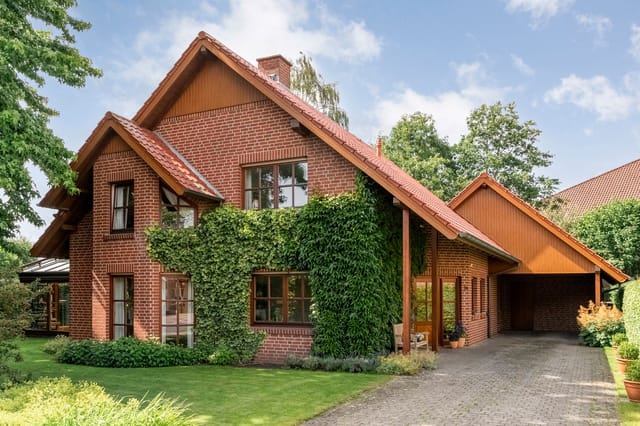
Step outside on a Tuesday morning in late September and the air smells like pine resin and cold lake water. The trees along Skovvænget are already turning — amber and rust bleeding through the canopy overhead — and the only sound is a woodpecker working somewhere deep in the forest behind the garden. This is Ry. And if you've never considered Denmark's Lake District as a place to plant roots, you're about to change your mind. Skovvænget 18 sits on a 1,275 square meter plot in one of Ry's most sought-after residential pockets — a low-traffic street with a genuine woodland character that isn't just a marketing description. The name literally translates to "Forest Lane," and the street earns it. Mature trees frame the property on all sides, and the garden has been cultivated over decades into something genuinely private: dense perimeter plantings, a broad lawn with room to breathe, and a south-facing terrace where afternoon sun lingers well into the evening. In summer, the garden becomes the entire living room. The villa itself was built in 1997 — classic Danish parcelhus construction, red brick, black-tiled roof — and at 196 square meters of interior living space, it's a properly sized home, not a weekend squeeze. Four bedrooms, two bathrooms, six rooms in total spread across a single well-organised floor. The layout is generous without being wasteful. Large windows pull the garden into the main living area visually, so even on rainy November days when you're indoors watching the birches drip, the connection to the outside world never really goes away. The kitchen is fully equipped, practical, well-maintained. Both bathrooms are contemporary and in good order. A utility room handles the practicalities. An entrance hall t ... click here to read more

The house with red bricks and black tiled roof surrounded by a lush garden with green lawn and dense planting. Sunlight shines through the treetops onto the terrace.

Stand on the terrace at eight in the morning, coffee in hand, and watch the mist lift off the Sierra de Grazalema. The fairways below are already catching the first proper light of the day, that sharp Andalusian gold that makes everything look slightly unreal. Behind you, the kitchen hums quietly — the Siematic cabinetry, the marble floors still cool underfoot, the smell of yesterday's olive wood still faintly in the air from the fireplace. This is what a morning looks like on Calle Olivo 10, inside a five-bedroom villa at Arcos Gardens Golf Club, and it's the kind of morning that makes you cancel the flight home. Arcos de la Frontera sits about five kilometres up the road, perched on a dramatic limestone ridge above the Guadalete River. It's one of the true pueblos blancos — the white villages of Cadiz province — and unlike some of the more tourist-worn towns in the region, Arcos still belongs to the people who live there. On Sunday mornings, the Plaza del Cabildo fills with locals drinking manzanilla and arguing about football. During Semana Santa, the brotherhoods carry their floats through streets barely wide enough to pass, incense drifting over the crowd. The September feria fills the lower town with flamenco, horses, and the particular chaos of a party that has been happening in the same way for centuries. This is the cultural heartbeat just down the road from your front gate. The villa itself was built in 2008 and sits on a 2,360 square metre plot that gives it a sense of breathing room rare in gated communities. Four hundred square metres of living space across two floors, designed with a clarity of purpose that holds up fifteen years on. The layout is generous without being wasteful — the open-plan kitchen an ... click here to read more

Main view of Calle Olivo 10 villa

The church bell in Puyjourdes rings at eight on Sunday mornings, and if you're standing in the kitchen of this old stone house with the wood-burning stove crackling and a bowl of café au lait warming your hands, it hits differently than anything you've experienced in the city. That sound—unhurried, ancient, completely indifferent to your schedule—is the whole point of owning a place like this. This four-bedroom property in the Lot department of Midi-Pyrénées sits right on one of the recognised variants of the Chemin de Saint-Jacques, the medieval pilgrimage route that draws tens of thousands of walkers, cyclists and seekers every single year. That's not a footnote. It's a defining feature of daily life here, and—as we'll get to—a serious practical asset for anyone thinking about rental income. The main house has been looked after. Ground floor gives you a kitchen and dining room anchored by a wood-burning stove, a sitting area, a bathroom and a master bedroom with a sliding door that opens onto the garden in the warmer months. Move through to the second living room, which is heated by a mass stove—the kind of dense, slow-release heat source that keeps the room comfortable from a single evening fire well into the following afternoon. A pull-down staircase leads up to the mezzanine bedroom tucked above it, which has the kind of intimate, tucked-away quality that guests tend to request repeatedly. Above that living room on the first floor, a large loft sits waiting. It could become a third bedroom suite, a studio, a reading room with valley views—the permissions process in this corner of Lot is navigable, and local artisans who know the building codes are not in short supply. The two-storey stone barn is its own separate ... click here to read more

Picture 1

Stand on the wooden deck beside the pool at seven in the morning, coffee in hand, and the Pyrenees are right there — close enough that you can pick out the ridgeline detail, far enough away to feel like a painting. The air smells of pine resin and warm stone. No road noise. No neighbors. Just swallows cutting arcs above the meadow and the low hum of your own private world. That is the daily reality at La Forge del Mitg, a six-bedroom country estate spread across nearly 10 hectares of Catalan foothills just outside Saint-Laurent-de-Cerdans, a small working village in the Pyrénées-Orientales department — the very southern tip of France, where the culture tips Spanish and the light tips golden almost year-round. This is not a property that requires imagination to inhabit. Renovated progressively through to 2020, with four distinct buildings on site and a swimming pool that faces south toward the mountains, it is ready to be lived in from the moment you arrive. The main house runs to roughly 112 square metres across two floors. Downstairs, an open-plan kitchen and dining area opens into a living room with cathedral ceilings and a working fireplace insert — the kind of space where a wet November afternoon actually feels like an occasion rather than something to endure. A French balcony bedroom, bathroom, and laundry room round out the ground floor. Upstairs, two more bedrooms and a generous master with a built-in wardrobe. The proportions are honest and liveable, not inflated for a brochure. Attached to the main building is a 48-square-metre ground-floor apartment with its own entrance. Three rooms, open kitchen, two bedrooms, a walk-in Italian shower that is also wheelchair accessible. This space functions brilliantly for ... click here to read more

Main view of La Forge del Mitg 66260

Picture a Saturday morning in early June. You open the kitchen window and the air carries salt from the Øresund, maybe a trace of coffee from the bakery two streets over on Gl. Strandvej. It's quiet enough to hear a bicycle tick past on Ejlersvej. This is what daily life feels like in Humlebæk — unhurried, sharp with coastal air, and just forty minutes from Copenhagen by train. Built in 2018, this three-bedroom brick villa at Ejlersvej 8 is the kind of property that does its job so well you stop noticing the design and just start living in it. That's actually a compliment. The floor plan moves with you rather than against you — open living and dining areas that shift naturally into the garden, bedrooms with generous windows that pull in the northern light, a kitchen arranged around a central island so a Sunday morgen brød session doesn't feel cramped. The black steep-pitch roof against pale exterior brick gives the house a clean, grounded silhouette that reads unmistakably Danish without feeling like a showroom. The kitchen deserves its own moment. Light wood cabinetry, a tiled backsplash, a large window angled toward the garden — it's set up for actual cooking, not just photography. The island has a sink, which matters more than people realize until they're prepping a pile of fresh langoustines from the Helsingør fish stalls and need a second water source. Modern appliances throughout, nothing gimmicky, everything functional. Both bathrooms are finished with contemporary fixtures, walk-in showers, and quality tiling. Two separate toilets mean weekend guests and school-morning chaos don't collide. The master bedroom opens directly onto the garden — on warm evenings, that sliding connection between inside and outside i ... click here to read more

A brick villa with a black roof stands in a garden with a lawn and bushes. A fence surrounds the property, and some potted plants are on the terrace.