Villas For Sale In Europe (page 3)

Villas for sale in europe - homestra offers the largest amount of european real estate with over 200,000+ properties, find any type of property within your budget from villas to country homes. buy or rent your perfect home in europe. (page 3)

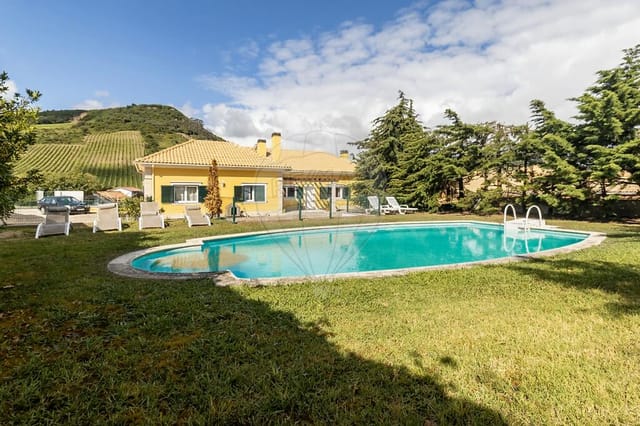
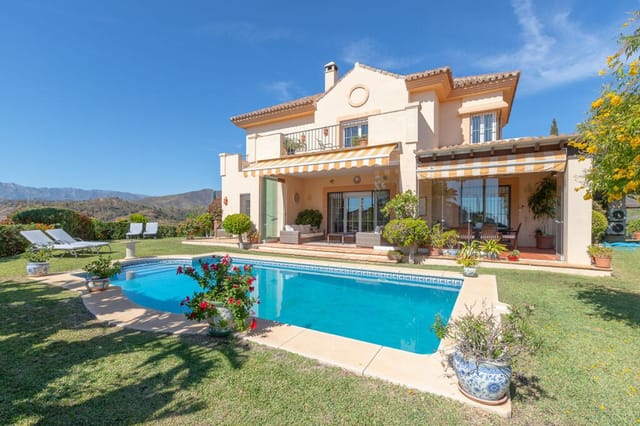
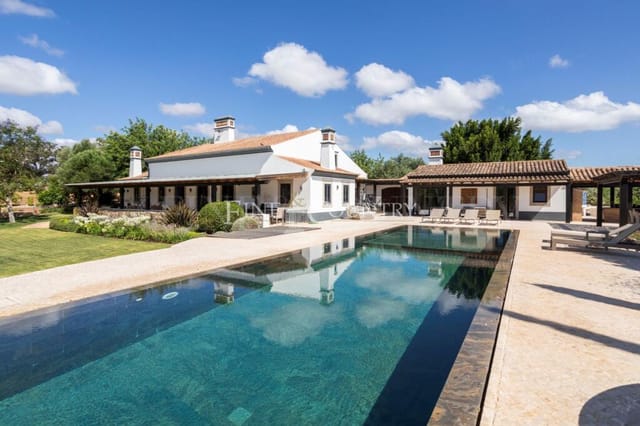
Sunday morning in Casal de Boiças: the kitchen smells of fresh bread and coffee, a light breeze carries in the faint scent of ripening grapes from the vineyard just beyond the garden wall, and through the living room's wide windows the green hills of the Estremadura region roll out like a painting nobody paid to hang there. This is what 443 square metres of well-built, three-storey villa life actually feels like — not a hotel, not a resort, but a proper home with roots. Set in Santo Quintino, a quiet parish in the municipality of Sobral de Monte Agraço roughly 40 kilometres north of central Lisbon, this three-bedroom, four-bathroom villa sits in a rural pocket of Portugal that most international buyers haven't yet discovered — which is precisely why it's worth paying attention to now. The ground floor is where daily life anchors itself. The main living room stretches to just under 52 square metres, anchored by a natural Travertino stone fireplace that earns its keep from October through March. The beech strip-wood floor adds warmth without trying too hard. Natural light pours in from multiple aspects; this is not a room that ever feels dim. The kitchen has been laid out with real cooking in mind — a central island, gas hob, built-in oven, extractor hoods, an American-style fridge-freezer, and a dedicated pantry that means grocery runs can happen once a week rather than daily. Two bedrooms sit on this level, along with a suite featuring an en-suite bathroom with a hydromassage bath, and a family bathroom with twin washbasins, a shower cubicle, and heated towel rails. Practical, well-specified, and finished with consistency throughout. The attic level surprises people. Lit by tilt-and-turn windows that frame sky and tre ... click here to read more

Picture 1

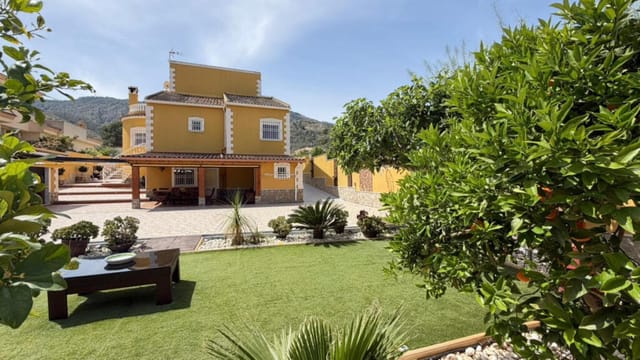
There's a particular kind of morning that only happens on the Costa Blanca. You open the bedroom shutters and the Sierra de Orihuela fills the entire frame — sun already warming the stone peaks, the air carrying a faint trace of rosemary from the hillside scrub below. Downstairs, the kitchen faces the rear garden, and you're making coffee while the birds are still figuring out the day. This is the rhythm Montepinar offers, and this five-bedroom villa delivers it in full. Sitting on a 900 m² south-facing plot, the property is spread across three distinct levels — each one serving a different mood, a different moment. The main floor is where the household gathers. A generous living room with a fireplace anchors the space, the kind of fireplace that earns its keep in January when the Costa Blanca gets those crisp, clear evenings that nobody talks about in the brochures. The independent kitchen opens directly to the rear garden, which means summer dinners essentially live outside. A wide terrace wraps around the front, commanding views across the valley toward the sierra — the sort of view that makes you forget you were supposed to be checking your phone. Two large double bedrooms and a full bathroom sit on this level, so the main living floor genuinely functions as a self-contained residence. Above it, the attic level is the property's wild card. Right now it's a quiet, bright room that some owners have used as a home gym, others as a teenager's den, others simply as a place to lie on a yoga mat and stare at the ceiling. Step out from here onto the private terrace and the Sierra de Orihuela panorama opens wider still — at sunset, the light goes amber across those peaks and it's genuinely hard to go back inside. The lower ... click here to read more

Picture 1

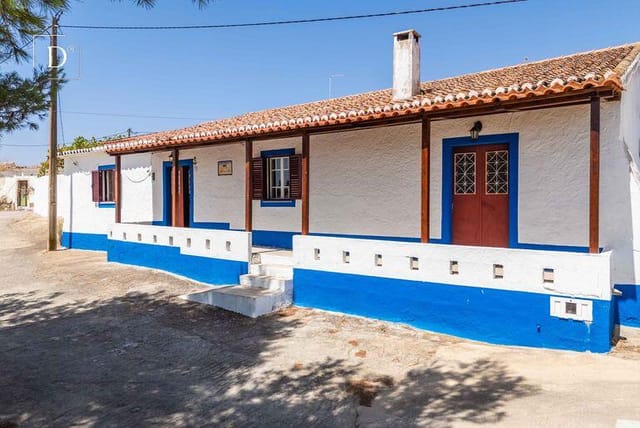
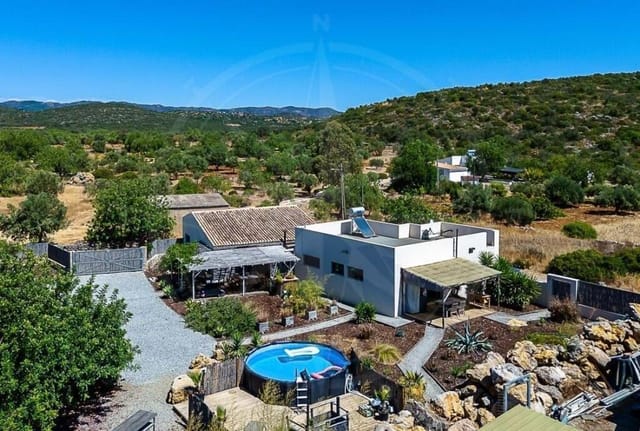
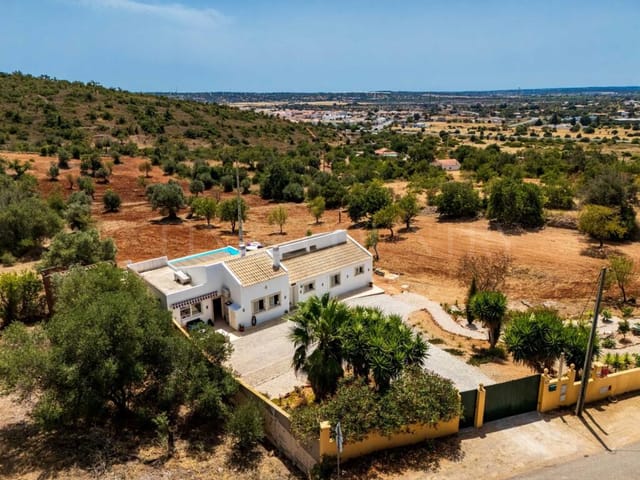
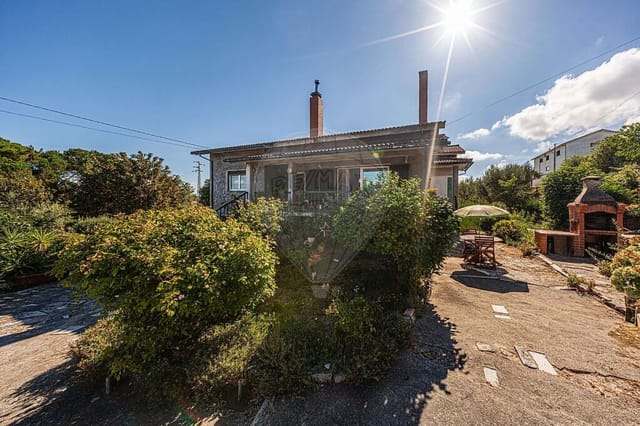
The cork oaks go completely still in the midday heat. That's when you really hear it — nothing. Not the curated silence of a spa, but the deep, ancient quiet of the Baixo Alentejo, where the land has been rolling the same way since the Moors built their castle above the Guadiana River eight centuries ago. This four-bedroom country villa in São Sebastião dos Carros sits in that silence, twenty minutes from Mértola on roads that cut through golden wheat fields and wild lavender scrub. It's a place that asks something of you — a vision, a little patience — and gives back far more than you put in. The main house is 190 square metres of genuinely solid Portuguese rural architecture. High ceilings, thick whitewashed walls that keep the interior cool without air conditioning even in July's 38-degree heat, and a traditional fireplace that transforms the living room into something close to a refuge when the Alentejo winter turns cold and damp in January. This isn't a staged show home. It's a property in good condition, lived in, honest about what it is — and that's exactly what makes it interesting. Four bedrooms give you room for a family, for friends who fly in from London or Amsterdam, for a dedicated workspace where the only interruption is a dog barking somewhere down the village lane. Step outside and the property opens up considerably. A private patio wraps around to a separate outdoor kitchen — practical in every season, but genuinely transformative in the long, warm evenings from April through October when you'd rather cook outside under a pergola than anywhere else. The garden is fully fenced, which matters if you're thinking about a dog, small children, or simply the peace of knowing your boundaries are defined. Tuck ... click here to read more

Picture 1

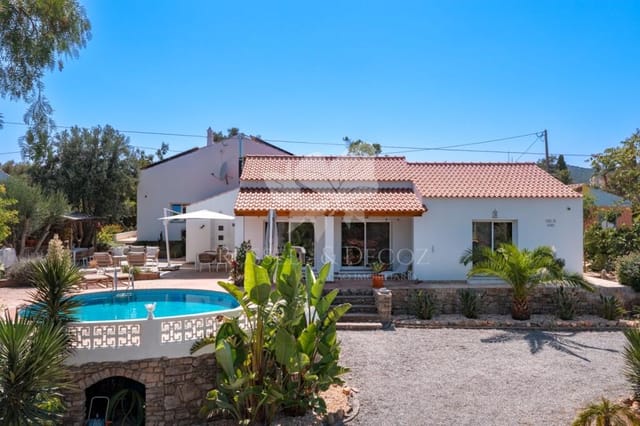
Early on a Tuesday morning in Moncarapacho, the air smells of orange blossom and warm earth. You slide open the bedroom door, step onto the sun terrace in bare feet, and the only sound is birdsong and the distant clang of a church bell drifting over the rooftops from the village square. That's it. That's the whole agenda. This is what owning a vacation home in the Eastern Algarve actually feels like — not the polished brochure version, but the real, unhurried, slightly addictive version that brings people back year after year. This fully renovated three-bedroom villa sits on a quietly elevated plot just outside Moncarapacho, one of those authentically Portuguese inland villages that hasn't been sanded smooth by mass tourism. The weekly market on Rua da República draws locals picking through figs, smoked chouriço and hand-thrown ceramic bowls. The café by the church serves the kind of thick bica that ruins you for anything else. You can be there on foot in minutes. Then back in your private pool by ten. The property itself spans 175 square metres of single-storey living across a 3,200 square metre plot — so there's space to actually breathe. The 2024 renovation was thorough: new roof, new floors, new plumbing, new electrical systems, new windows. Nothing cosmetic about it. Over 33 photovoltaic panels feed a solar system that covers the household's energy demands and pushes surplus electricity back to the grid, which in Portugal means quarterly energy credits rather than bills. Underfloor heating and cooling runs through the entire house via a heat pump, backed up by Daikin air conditioning units in every room. In January, when the almonds are flowering across the Algarve and the nights drop to single digits, the villa s ... click here to read more

Picture 1

Step outside on a Tuesday morning, coffee in hand, and the only sounds reaching you are birdsong and the faint rustle of avocado leaves across your land. No neighbours visible in any direction. Just 65,390 square metres of golden Algarve countryside, all yours, with the Atlantic coast a fifteen-minute drive away. This is what owning a vacation home in Estômbar actually feels like — and it's a long way from the packed promenades of Albufeira or the tourist bustle along the EN125. This fully renovated single-storey quinta sits in the Lagoa municipality, one of the Algarve's most quietly sought-after inland pockets. Lagoa is the kind of place that locals brag about to each other and rarely mention to outsiders: close enough to Carvoeiro's sea caves and Ferragudo's fishing harbour to make a spontaneous beach afternoon easy, yet far enough inland to feel genuinely removed from the summer circus. The property carries an Energy Rating of A — rare for a rural quinta of this scale — which tells you something about how seriously this renovation was approached. Inside, the 241 square metres of living space have been rethought with a clear philosophy: keep what was worth keeping, lose what wasn't. The original character of the building — solid walls, generous room proportions, that particular quality of quiet that thick Portuguese masonry provides — survives intact. The intervention is in the details. Double-glazed windows fitted with mosquito nets run throughout, and full air conditioning means the house is as comfortable in August's 36-degree heat as it is during January's mild, sunny afternoons. Solar panels handle hot water. A private borehole supplies the property, though a mains connection is available if preferred. The mas ... click here to read more

Picture 1

Picture this: it's nine in the morning, the sun has already climbed above the Sierra de Escalona, and you're sitting on your southwest-facing rooftop solarium with a coffee, watching the light shift across the valley below. No noise, no neighbours pressed against your windows, just open sky and the faint hum of a lawnmower somewhere down the street. This is the daily reality of owning a home in El Galan, one of those quietly residential pockets between Villamartin and San Miguel de Salinas that locals know and international buyers are only just starting to figure out. Set on a 400 m² private plot, this three-bedroom detached villa covers 154 m² of well-organised living space across two floors. It's move-in ready — not in the estate-agent sense of "needs cosmetic work", but genuinely so. Solar panels handle both electricity generation and hot water. Air conditioning runs throughout the house. LED lighting, a log burner for January evenings when the temperature dips into single digits, and a private swimming pool with direct access from the master bedroom. The previous owners have done the work, which matters when you're buying from abroad. The main floor opens into a bright, open-plan living and dining area that doesn't feel like it's trying too hard. The kitchen is modern and practical — proper worktop space, clean lines — and there's a guest WC tucked conveniently near the entrance. Head downstairs and the tone shifts slightly: cooler, calmer. The master bedroom has en-suite facilities and those patio doors that open straight out to the pool. Two additional double bedrooms share a family bathroom; one has been used as a home office, which tells you something about how versatile the layout is for people who work remote ... click here to read more

Picture 1

Stand on the roof terrace at dusk, a glass of local Alentejo red in hand, and watch the Atlantic catch fire somewhere beyond Faro. The air smells of wild lavender from the hillside scrub below, and from the village behind you drifts the faint sound of church bells marking the hour. This is what evenings look like from this three-bedroom villa in Santa Bárbara de Nexe — a place that most tourists never find because they stay down on the coast, sunburned and sandalled, never venturing into the quiet hills of the central Algarve where the real life happens. Santa Bárbara de Nexe sits roughly ten minutes inland from Faro and about fifteen from the beaches at Quinta do Lago and Vale do Lobo. That distance is precisely what makes it desirable. The village has a butcher who actually knows where the meat comes from, a café where the morning pastéis de nata arrive warm enough to burn your fingers, and a relaxed pace that the coastal resorts lost sometime in the 1990s. On Saturday mornings, locals gather at the small market near the church, and on feast days in August the streets close for the Festa de Santa Bárbara — firecrackers, grilled sardines, folk music until midnight. You're inside the Algarve's real rhythm here, not watching it from behind a resort wall. The villa itself was designed with one clear intention: let the light in and keep everything calm. Double-height ceilings in the main living area create a sense of volume that photographs struggle to capture — you feel it when you walk through the door. Large windows frame the garden and pool like living artwork, and in the morning the south-facing glass fills the room with the kind of soft, diffused light that makes even a Tuesday feel unhurried. The white palette thro ... click here to read more

Picture 1

You wake up to the sound of nothing in particular — maybe a bird, maybe the faint rustle of the oleanders just outside the bedroom window — and that silence alone is worth the price of admission. Up on the master suite's private roof terrace, coffee in hand, the Algarve countryside rolls out in every direction: low hills dotted with carob and fig trees, terracotta rooftops catching the first of the morning sun, and somewhere beyond the tree line, the glittering edge of the Ria Formosa. This is what mornings look like when you own this three-bedroom country villa just outside Olhão. Olhão itself is one of the Eastern Algarve's best-kept practical secrets. It's not a resort town. There are no fake pirate ships, no neon cocktail bars. What you get instead is a working fishing port with a genuinely North African-influenced old quarter — the whitewashed cubic architecture here is unlike anything else in Portugal — and two of the country's finest covered markets sitting side by side on the waterfront. On Saturday mornings, the market explodes with local farmers selling blood oranges, fresh goat's cheese, smoked sausage, and mountains of clams still dripping with salt water. The fish market on Friday is a ritual for the whole town. Locals argue loudly about which trawler brought in the best dourada of the week. Buy one, take it home, grill it over charcoal with olive oil and coarse salt. That's dinner sorted. The villa sits about one kilometre outside a small village, in a neighbourhood of mixed Portuguese and international families — the kind of community where people wave from their driveways. It's genuinely quiet without feeling remote. Faro Airport is ten minutes away by car, which changes everything for international own ... click here to read more

Picture 1

Sunday morning at this Quinta starts before the world catches up. The kitchen smells of fresh coffee and lemon from the tree just outside the back door. A pair of hoopoes argue in the olive grove. Somewhere beyond the cypress hedge, nothing is happening — and that is entirely the point. This is a three-bedroom Portuguese Quinta set on nearly 4,800 square metres of established grounds in the hills of Central Algarve, outside Loulé. The house spans 335 square metres of thoughtfully restored living space, and while numbers matter, they don't tell you nearly as much as the feeling you get when you walk through the gate for the first time: that whoever lived here knew exactly what they were doing. The whitewashed façade, the broad cypress sentinels, the gravel paths winding between ancient olive trees — none of this was manufactured. It has simply been preserved with care, and the occasional intervention made only when it added genuine value. The owners who undertook the renovation came with a clear brief: make this house work beautifully in every month of the year, not just the golden summer weeks. They succeeded. Extensive roof insulation, Daikin climate control, Mestre Raposa PVC windows with argon-filled aluminium security glazing, and a 12kW enclosed fireplace mean January evenings are just as appealing as August afternoons. Solar hot water runs in tandem with a gas boiler, so there are no cold showers and no fuel anxiety. EV charging pre-installation is already in place. These aren't selling points bolted on for a brochure — they're decisions made by someone who actually planned to live here. The kitchen is the kind of room people end up spending most of their time in. Ceramic work surfaces, AEG ovens, Bosch refrige ... click here to read more

Picture 1

Stand on the terrace some evening in late June, glass of chilled rosé in hand, and watch the light turn the Gulf of Saint-Tropez into hammered copper. The water sits maybe three kilometers away as the crow flies, close enough that you can hear the faintest hum of boats in summer, far enough that Les Issambres stays wonderfully quiet after the day-trippers head back along the D559. This is that property — the one you stop scrolling for. Set on landscaped grounds planted with umbrella pines, old olive trees, and lavender that buzzes with bees from May through September, this six-bedroom Provençal villa sits on a southwest-facing plot that catches afternoon sun across every terrace. The orientation isn't an accident. Whoever built this house understood that in Var, the direction your windows face determines your entire quality of life from October through April, and they got it right. Even in mid-February, you can eat lunch outside in a fleece and feel genuinely warm. The villa runs to 124 square metres of internal living space, which sounds modest until you understand that this household was designed around outdoor living. There are multiple terraces and covered loggias at different elevations — one off the main living area, others accessible from the upper bedrooms — and each gives you a slightly different angle on the gulf. The main swimming pool measures 9 by 4 metres, surrounded by wide stone decking that dries fast in the Mistral wind. Six bedrooms across the house means this works equally well as a large family retreat or as a property with serious short-term rental potential, especially given that Les Issambres and nearby Sainte-Maxime draw visitors from June through September with almost no vacancy in peak weeks. ... click here to read more

Picture 1

Sunday morning in Tunes sounds like this: a distant church bell somewhere toward Silves, the faint rustle of citrus leaves in the breeze, and absolute nothing else. You're standing on the covered terrace with a coffee, watching the light shift gold across the pool as the countryside opens up beyond the garden wall. This is a different Algarve from the one most visitors ever find. Tunes sits in the quiet interior of the Algarve, about midway between Silves and Albufeira, and it has the kind of unhurried pace that the coastal towns traded away years ago. The village itself is small and unpretentious — a train station, a café, a weekly market where people actually know each other — and yet you're no more than 20 minutes from some of the best beaches in southern Portugal. Praia de Galé, Praia da Falesia, the long sands at Armação de Pêra. You get the quiet and the coast, which is not an easy combination to find at this price point anywhere in the Algarve. This is a traditional single-storey quinta, the kind of rural estate that defined life in this region long before golf resorts arrived. Set on 8,440 square metres of land, the property carries real weight — fruit trees, open sky, and that particular sense of scale you simply cannot manufacture. The 120-square-metre living area is arranged across one level, which makes it genuinely easy to use. No stairs. No awkward split-level compromises. Everything flows naturally from one space to the next. Walk through the electric gates — which open onto generous private parking for multiple vehicles — and the house greets you through a proper entrance hall. Three bedrooms share a well-appointed family bathroom, and the principal bedroom has its own en-suite. It's not overdesigned, ... click here to read more

Picture 1

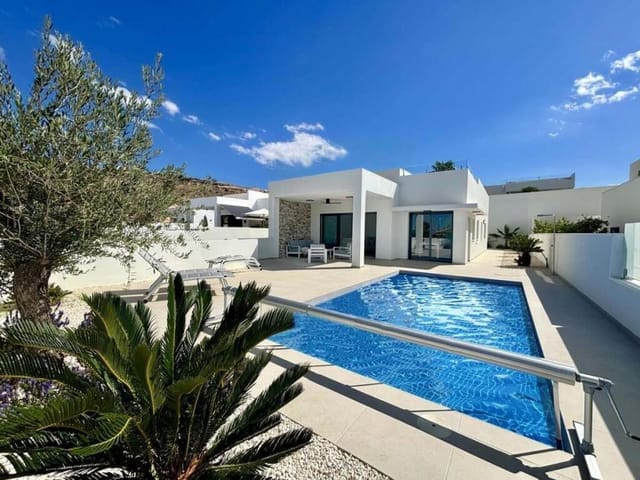
Step out of the kitchen door at eight in the morning, coffee in hand, and the Segura river valley is right there in front of you — a wide open sweep of orange groves, distant ridgelines, and the kind of stillness that makes you forget your phone exists. That's the daily reality of this single-storey villa in Ciudad Quesada, and it never quite gets old. Built in 2020 on a 500-square-metre plot just outside Rojales, this is a genuinely move-in ready vacation home in the southern stretch of the Costa Blanca — no renovation projects, no compromises, no mystery leaks behind bathroom tiles. It was designed from the ground up around light and outdoor living, and that intention shows in every room. The layout puts the open-plan living and dining area right at the centre of everything. The kitchen connects directly to a covered terrace through wide sliding doors, so the boundary between inside and out dissolves on warm evenings — which, on the Costa Blanca South, means roughly nine months of the year. The terrace has a glass windbreak that extends the season further still; you can sit outside in January with a blanket and a glass of Fondillón, Alicante's ancient sweet wine, and it's genuinely pleasant. The private pool sits beyond, catching the afternoon sun without obstruction, flanked by generous tiled terracing that handles a sun lounger or six without feeling crowded. Three bedrooms are spread across the single floor — the main with an en-suite bathroom, the other two served by a second full bathroom. The single-level design is something that sounds unremarkable until you actually live it: no stairs, no noise from the floor above, just an easy, unhurried flow from room to room. Underfloor heating runs through the kitchen, ... click here to read more

Picture 1

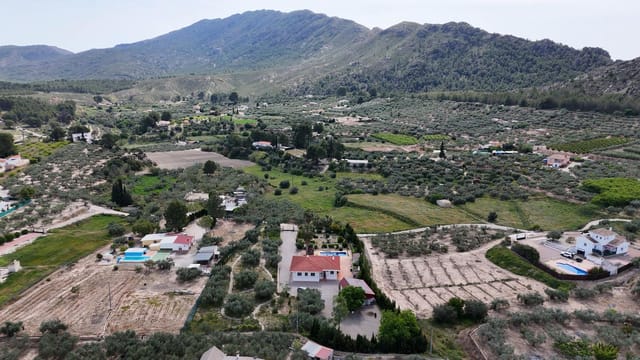
Step outside on a Tuesday morning in late October and pick a ripe mandarin straight off the tree. The juice runs down your wrist before you've even made coffee. That's what mornings feel like at this three-bedroom villa in El Chorreador, a quiet pocket of Calasparra where the hills roll into each other and the only sounds are birdsong, the distant trickle of the Segura river basin, and occasionally your neighbor — probably French or English, as a few expat families have quietly put down roots along this dead-end road over the years. Calasparra sits in the northwest corner of Murcia, far enough inland to feel genuinely rural, close enough to everything that you never feel stranded. It's not a resort town. There are no souvenir shops selling ceramic bulls. What it has instead is a weekly market on Thursdays where you can buy Calasparra rice — the only rice in Spain with two Denominación de Origen certifications — directly from local growers, and a food culture built around slow-cooked arroces, roasted lamb, and wine from the neighboring Bullas DO region. The Restaurante El Parque on Avenida del Rey Juan Carlos does a rice dish that locals argue about for days afterward. The property itself sits on a 5,060 m² plot — nearly two-thirds of which is productive garden — with a fully renovated 133 m² single-level house at its center. The renovation ran from late 2022 through spring 2024, which means everything from the roof to the plumbing to the window frames is essentially new. Not patched. Not cosmetically refreshed. Actually replaced and modernized. This matters for international buyers, because the last thing you want when you fly in for August is a failing pump or a leaky roof that nobody noticed for six months. The main ... click here to read more

Front view of the villa and garden

On a quiet morning in Alcafache, the air smells like eucalyptus and mineral-rich water. The thermal springs that made this Beira Alta village famous for centuries are a five-minute walk from the front door, and the Mondego River valley stretches out below in long, unhurried folds of green. This is the kind of place you don't stumble on — you have to know about it. This 318-square-metre villa in Mangualde municipality offers three bedrooms and three bathrooms across a solid, well-maintained structure that's ready to inhabit from day one. No gut renovation, no guesswork. At €345,000, it represents serious value for this corner of central Portugal, where the property market has been quietly gaining attention from French, German, and British buyers who've grown tired of the Algarve's summer crowds and inflated prices. The layout is generous by any standard. Three proper double bedrooms — not the miniaturized versions you find in converted farmhouses — mean guests have real privacy. Three bathrooms means no one's waiting in line on a slow Sunday morning. The living spaces breathe; 318 square metres gives you room to gather a family, host friends for a long weekend, or simply spread out and feel at home rather than like you're camping. Step outside and the Serra da Estrela mountains frame the northern horizon. Portugal's only mainland mountain range caps out at Torre, just over an hour's drive, where you'll find skiing in winter — actual skiing, which surprises most people who associate Portugal purely with beaches. From November through March, the drive up to Penhas da Saúde for a morning on the snow, followed by an afternoon back in the valley eating roasted chestnuts at a roadside stall, becomes a ritual you'll return to ... click here to read more

Picture 1

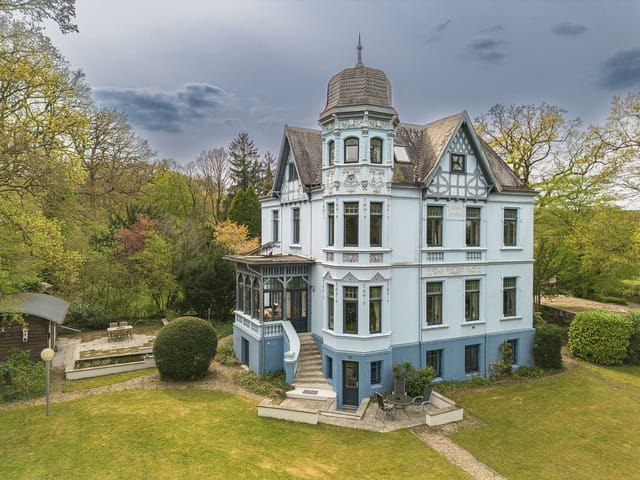
Early morning in Schüttorf, and the light comes through the conservatory glass in long, slow diagonals — the kind of light that makes you stand still with your coffee and just look. Outside, dew sits on the old trees. Nothing moves. This is what daily life feels like at De Blauwe Villa, a monumental early-20th-century Jugendstil property on Lehmkuhle 2 that carries more personality per square metre than most buildings carry in their entire existence. Let's be honest about what this place is. It's 384 square metres of crafted, layered architecture spread across four levels including a full basement, containing 11 bedrooms, 5 bathrooms, and rooms so distinct in character they almost seem to belong to different eras. The famous hunting room alone — panelled walls, carved oak, built-in cabinetry with details that take time to notice — could anchor any conversation about what German craftsmanship once looked like at its most self-assured. You don't see rooms like this in new builds. You barely see them anywhere anymore. The Jugendstil movement, Germany's answer to Art Nouveau, valued organic forms, decorative integrity, and the idea that a building should feel alive. De Blauwe Villa — The Blue Villa, as it has long been known locally — carries all of that forward without apology. High ceilings pull your eyes upward. Large windows frame the park-like garden like paintings that change with the season. The ground-floor salons connect and flow into one another in a way that makes entertaining feel effortless and private retreat feel equally natural. The conservatory is the heart of everyday life here. Glass on multiple sides, direct access to the terrace and garden, daylight that shifts from pale gold in the morning to deep am ... click here to read more

Front view of Lehmkuhle 2

The church clock in Várzea de Tavares strikes eight, and the smell of wood smoke and fresh bread drifts through the valley before the rest of the world has even switched on a screen. This is the kind of morning that makes you understand why people cash in their urban life for a house in the Portuguese interior—and at €45,000 for a solid three-bedroom villa in the heart of Beira Alta, it's not a fantasy. It's a very real decision you can make right now. Mangualde sits in the Dão wine country of central Portugal, roughly halfway between Viseu and Guarda, tucked into a landscape of granite villages, pine forests, and vineyards that produce some of the country's most underrated red wines. The town itself is compact and entirely functional—a proper Portuguese municipality with a weekly market on Thursdays where farmers from the surrounding parishes sell chouriço, sheep's cheese, smoked presunto, and vegetables still carrying soil from this morning. Nobody performs authenticity here. It just is. The villa in Várzea de Tavares—a quiet parish a few minutes outside Mangualde's centre—sits within a community that still operates on the rhythms of the agricultural calendar. In spring, the almond trees lining the back roads bloom white before the vines even wake up. Summer afternoons are warm and dry, rarely oppressive, with evenings cool enough to eat outside without a fan. Autumn is arguably the best season: the vineyards turn amber and rust, the Dão harvest brings activity to every quinta in the region, and the markets overflow with pumpkins, chestnuts, and wild mushrooms. Winter is quiet and cold, with occasional frost and the odd dusting of snow on the Serra da Estrela visible from higher ground—Portugal's only ski resort, jus ... click here to read more

Picture 1

Picture this: you crack open the shutters on a Saturday morning and the Atlantic breeze rolls straight in off the coast, carrying a faint salt tang and the distant sound of Cascais market traders setting up on Rua Frederico Arouca. By 9am you're sipping a bica at a café table in the old town, watching fishing boats bob in the marina. This is the pace of life that a five-bedroom villa in Alcabideche puts within your reach every single day. Alcabideche sits on that sweet spot between the glamour of Cascais and the quieter, greener inland hills of Sintra-Cascais Natural Park — close enough to both that you get the best of each without the noise of either. It's a residential enclave that long-term expats and savvy Lisbon professionals quietly chose years ago, precisely because it offers genuine village character without sacrificing modern convenience. The EN247 puts you in Cascais town in under ten minutes; the A5 motorway slides you into central Lisbon in roughly half an hour on a clear run. Lisbon Airport is 40 minutes door-to-door. That last point matters enormously for second-home owners flying in from London, Paris, or Amsterdam: you land, clear baggage, and you're home before the stress of travel has had a chance to settle in your shoulders. The villa itself spans 172 square metres across a well-maintained layout that delivers genuine space across five bedrooms and three bathrooms. The footprint is generous by Portuguese standards at this address, with rooms sized for actual family living rather than the kind of holiday-apartment squeeze that loses its appeal after the first long weekend. The condition is good throughout — this is not a project requiring months of renovation budgeting, but a property you can furnish, ... click here to read more

Picture 1

On a clear morning in Cascais, you can open the shutters and hear the Atlantic before you see it — that low, rhythmic exhale of waves that sets the pace for the whole day. This is the kind of place where the morning walk to Pastelaria Garrett for a galão and a pastel de nata feels like a ritual worth protecting, and where the light off the water at golden hour genuinely stops you mid-conversation. At 761 square metres across six bedrooms and eight bathrooms, this villa isn't just spacious — it's built for a life that runs at a different speed than the city. Cascais sits at the mouth of the Tagus estuary where it opens into the Atlantic, about 30 kilometres west of Lisbon along the most scenic coastal road in Portugal. The drive alone — hugging the cliffs past Estoril's casino, past the fishing boats at the marina, past weekend cyclists and surfers loading boards onto car roofs — tells you everything about why people have been coming here since Portuguese royalty made it their summer retreat in the 1870s. That history isn't abstract. You feel it in the 19th-century palace facades on Rua Frederico Arouca, in the Museu dos Condes de Castro Guimarães tucked behind a moat just ten minutes on foot from the old town, in the way the whole place slows down in August without ever feeling chaotic. The villa itself sits in good condition throughout — solid, well-maintained, and ready for you to move in or begin personalising to your own taste without the headache of renovation. Six bedrooms means flexibility that most holiday properties can't offer: room for three families, or a couple who wants dedicated guest suites and a home office that doesn't double as something else. Eight bathrooms eliminate every morning queue, every nego ... click here to read more

Picture 1

Step outside at seven in the morning and the air already carries something — woodsmoke from a neighbor's chimney, the faint sweetness of orange blossom, the sound of absolutely nothing else. That's Estoi. A hilltop village in the Algarve interior that most visitors drive straight past on their way to the coast, and which rewards anyone who stops with something rare: actual quiet, actual countryside, and a pace of life that the beach towns lost sometime in the nineties. This is a proper quinta. Not a villa that someone's decided to call a quinta for marketing purposes — a real, working estate that has been welcoming guests for more than 25 years. The whitewashed walls, the terracotta rooftiles, the cobbled paths winding between fruit trees and bougainvillea: none of it was installed to look authentic. It just is. Seven bedrooms are spread across four distinct structures. The main house has two bedrooms, a full bathroom, a generous living and dining room, a fitted kitchen, and a covered terrace where a barbecue sits ready beneath a vine-draped pergola. You eat outside here for about nine months of the year without thinking twice about it. Then there are three independent guest cottages: The Quinta, with two bedrooms, its own kitchen, living and dining rooms, and a rooftop terrace that catches partial sea views out toward the coast; Casa Avós, which has a mezzanine en-suite bedroom, a kitchen-diner, a sitting room, and a private patio screened by mature planting; and The Granja, an intimate studio-style space with its own kitchen and dining area. Each one is genuinely self-contained. Guests — or family members, depending on how you're using the place — have real privacy. The saltwater pool sits at 5 by 10 metres, which i ... click here to read more

Picture 1

You wake up and the first thing you notice is the light. Not the flat, grey light of a northern European morning, but something warm and insistent, already pushing through the shutters at seven, throwing golden bars across terracotta floor tiles. By the time coffee is made, you've opened the doors onto the terrace and you're halfway through planning the day — beach before lunch, the market on the way back, maybe a long dinner somewhere up the old town. That's life in Portimão, and this three-bedroom, three-bathroom villa on the Algarve coast is your way into it. The villa covers 157 square metres and sits in one of southern Portugal's most sought-after towns, a place that manages the rare trick of being genuinely useful and genuinely beautiful at the same time. It's in good condition — move-in ready without the months of renovation headaches that older Algarvian properties sometimes bring. Priced at €595,000, it represents real value in a coastal market where demand from Northern European and North American buyers has been consistent and, in recent years, increasingly competitive. Portimão sits at the mouth of the Rio Arade, roughly in the middle of the Algarve's 150-kilometre coastline. The town itself is lively in the best sense — not overrun, not sleepy, but properly functioning. The riverside fish restaurants on Rua Direita serve cataplana de marisco, the shellfish stew that locals eat with bread and white wine at lunchtimes that stretch well past three. Sardines on the grill, smoke drifting across the waterfront, is essentially the smell of a Portimão summer evening. The Friday market at Praça Manuel Teixeira Gomes fills early and sells out fast — local honey, smoked sausage, hand-thrown ceramics, enormous bags of ... click here to read more
Picture 1

Sunday morning in Lorigné moves slowly. The kind of slowly you forget exists until you're standing barefoot on warm stone tiles, coffee in hand, watching mist lift off the fields while the pool thermometer already reads 28°C. By nine o'clock, the gîte guests are starting to drift toward the communal terrace, kids are splashing, and the scent of someone's croissants browning in an oven cuts clean through the morning air. This is the rhythm this property runs on — unhurried, productive in its own way, and deeply, genuinely French. Set in the commune of Alloinay in Deux-Sèvres, this 460-square-metre estate sits in the green heart of Poitou-Charentes, a region that doesn't shout. It earns attention quietly — through its cognac-country cousins to the southwest, the Marais Poitevin wetlands just forty minutes east (nicknamed the Green Venice of France for good reason), and a pace of rural life that has attracted a steady stream of northern European second-home buyers for the better part of three decades. The property itself is a compound in the truest sense: a fully renovated main residence with its own private heated pool, and a separate five-gîte complex operating as a going concern, sleeping up to 27 guests at peak capacity. Walk into the main house and the renovation speaks for itself without needing to brag. The ground floor opens into a wide kitchen and living space that handles a crowd comfortably — the kind of room where a dinner party for twelve doesn't feel squeezed. A separate lounge gives you somewhere to escape when you want it quieter. Underfloor heating runs throughout the ground floor, backed up by two log burners that turn January evenings into something you actually look forward to, and an air-source heat p ... click here to read more
Picture 1

On a quiet Saturday morning in July, you pull back the curtains in the upstairs bedroom and the garden is already catching the sun. The pool is still. The neighborhood is unhurried. You take your coffee downstairs, slide open the door to the terrace, and decide that today, there is nowhere else you need to be. That is the rhythm Seggenstraße 21 sets from the moment you arrive. This 2015-built detached villa sits on the western edge of Meppen, a compact and genuinely livable Lower Saxony town straddling the Ems River in the northwest of Germany. It is not a place that gets written up in travel magazines, and that is part of the appeal. No tourist coaches on the streets, no inflated restaurant prices, no performance. What you get instead is a working, breathing German town with serious infrastructure, friendly locals who actually stop and talk, and a landscape of heathland, river meadows, and cycling paths that most of Europe would envy. The villa itself sits on a plot of 1,065 square metres, with 209 square metres of living space across three levels. Four bedrooms, two full bathrooms plus a ground-floor guest toilet, and a floor plan that genuinely earns the word flexible — not as a euphemism for awkward, but because it has been designed with real optionality in mind. One first-floor room comes fitted with a second kitchen and built-in appliances, making it a self-contained suite. Run it as a B&B room, house extended family in proper comfort, or use it as a long-term rental unit while you occupy the rest. The layout makes all of this straightforward. The swimming pool is the showpiece, and rightfully so. Private pools are uncommon in residential Meppen, which means this one carries genuine rarity value. Set in the lan ... click here to read more
Front view of Seggenstraße 21

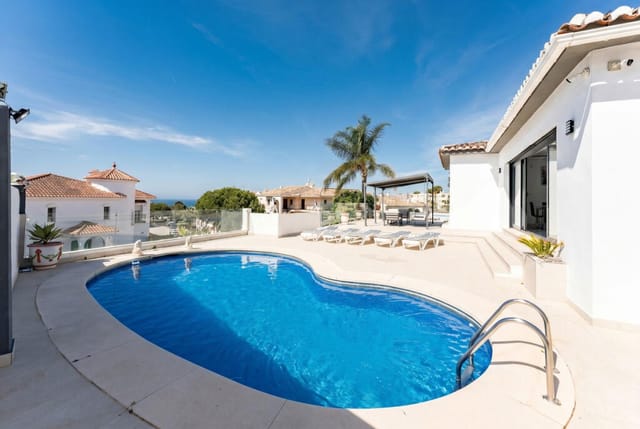
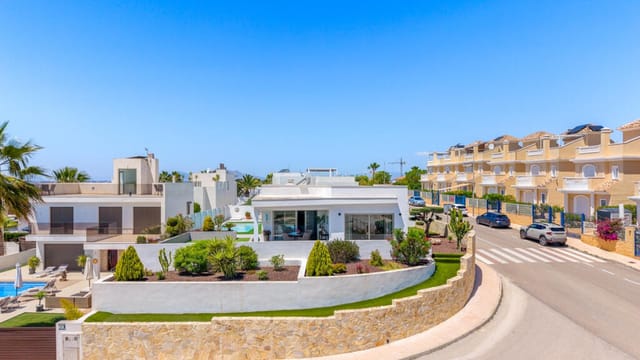
Picture this: you wake up on a Tuesday morning, slide open the terrace door, and the smell of salt air hits you before you've even had your coffee. The Mediterranean is right there — not a postcard version of it, but the real thing, close enough that you can hear faint waves if the night is quiet enough. This is everyday life in Calahonda, one of the most genuinely liveable pockets of Mijas Costa, and this three-bedroom villa with its own pool and an active tourist licence is your entry point into it. Calahonda doesn't get the same breathless press as Marbella or Puerto Banús, and that's honestly part of its appeal. It has the infrastructure without the circus. The Cala beach is a short walk from the front door — not a vague "short walk" either, but the kind where you're there in five minutes with a beach bag over your shoulder. Along the way you pass proper neighbourhood spots: El Oceano and a handful of smaller family-run chiringuitos where grilled dorada and cold Alhambra beer are still the main event, not an afterthought on a menu full of truffle fries. The villa itself sits in a quiet residential zone that benefits from 24-hour private security — something that matters quite a lot when you're planning to spend portions of the year back home in London, Stockholm, or Amsterdam. You're not buying into a fortress, just a calm street where people actually live. The garage is private, the pool is private, and the rooftop solarium is yours alone. That rooftop is worth pausing on. On clear days — and there are over 300 of them annually on the Costa del Sol — you get partial sea views from up there that shift in colour from pale morning silver to that deep Andalusian gold you see in the late afternoon. It's where you'll en ... click here to read more
Picture 1

The first thing you notice on a summer morning here is the silence. Not the dead kind — the alive kind. Swallows cutting arcs above the terrace, a faint breeze moving through the cork oaks, the pool's surface catching early light and throwing it back in slow gold ribbons. This is Santo Estêvão, a world away from the crowded beach resorts most people think of when they hear "Algarve," and this five-bedroom estate sitting on over 37,000 square metres of private countryside is exactly the kind of property that makes people rethink everything they thought they knew about where to put down roots in southern Portugal. Tavira is twelve minutes by car. That matters more than it might sound. Tavira regularly tops lists of Portugal's most liveable small cities, and unlike the resort towns further west along the EN125, it keeps its own pace. The Tuesday market on the riverbank spills into the surrounding streets — vendors selling blood oranges, smoked sausages from Alentejo, dried figs still on the branch. The Roman bridge over the Rio Gilão connects the old Moorish quarter to the newer town, and on weekend evenings, locals and expats alike fill the outdoor tables at Quatro Águas, eating whole grilled sea bream so fresh it still tastes of the Atlantic. Living near Tavira means being close to real Portuguese life, not a simulation of it. The estate itself sits behind full perimeter fencing on a plot large enough to feel genuinely rural — distant vineyard rows visible from the upper terrace, the scent of wild rosemary and cistus drifting in from the scrubland edges in late spring. Three sets of French doors open the main living space entirely to the outside, so that on the nine months of the year when the Eastern Algarve enjoys rel ... click here to read more
Picture 1

Stand on the upper terrace at dusk and you'll understand immediately why people come to Tavira and never quite manage to leave. The Atlantic sits on the horizon, shifting from silver to deep copper as the sun drops behind the town's rooftops. Below, the white bell towers of a handful of Tavira's famous 37 churches catch the last light. The air carries something faintly saline, faintly floral. That view is yours every single evening from this four-bedroom villa in Quinta do Perogil, one of the most coveted residential pockets in the eastern Algarve. Quinta do Perogil sits above the town on a quiet, tree-lined road where the neighbors tend their gardens and mornings are genuinely silent apart from birdsong. The address puts you roughly ten minutes on foot from the cobblestoned Praça da República and the riverfront Mercado da Ribeira, where local fishermen sell their catch before most people have finished their first coffee. That balance — a perch above the town's commotion with everything within easy reach — is exactly what makes properties here so hard to come by. The villa itself sits on a 929 m² landscaped plot, and the outdoor space is where you'll spend most of your time from April through October. The heated swimming pool is generous, wrapped on three sides by a wide sun terrace in pale stone that stays warm underfoot well into the evening. There's a dedicated entertaining terrace for al fresco dinners — the kind where guests linger long past midnight because nobody wants to go inside. A private garage and additional on-plot parking mean arriving with a full carload of family or friends is never a logistics puzzle. Inside, the villa runs to 246 m² of living space across the main floors, finished to a high standard ... click here to read more
Picture 1

By ten in the morning, the sun is already warm on the terrace tiles and the pool is throwing little ribbons of light across the garden wall. You're sitting with a coffee, listening to absolutely nothing except a distant lawnmower and the occasional clatter from a neighbor's kitchen. This is a Tuesday. This is just a regular Tuesday at this three-bedroom villa on Orihuela Costa, and it already feels like a weekend somewhere else would feel after three days of trying. The villa sits on a 350-square-meter plot in one of the Costa Blanca's most consistently popular stretches of coastline, where the Alicante province tapers south toward Murcia and the climate gets genuinely ridiculous — over 320 days of sunshine annually, winters so mild that January lunches on the terrace are not a novelty but a habit. The property itself covers 120 square meters of interior space across a thoughtful, livable layout: three bedrooms, two full bathrooms with walk-in showers, a generously proportioned living room that fills with afternoon light, and an open-plan kitchen that actually functions as the social center of the home rather than an afterthought tucked behind a wall. Out front, the private pool is the centerpiece — not a decorative gesture, but a proper swimming pool surrounded by a shaded terrace where you can eat, argue about whose turn it is to cook, and eventually fall asleep in a chair. There's real space here for outdoor dining furniture, sun loungers, a barbecue setup. The kind of space where a family of five or a group of friends can spread out without constantly bumping into each other. Orihuela Costa itself is a place that rewards the people who take the time to understand it. The Playa de La Zenia beach is roughly ten minu ... click here to read more
Picture 1

Stand on the roof terrace on a clear October morning and you can see all the way to the Atlantic. That's not a figure of speech. The 180-degree arc sweeps from the hills of the interior right out to the coast, and with the air this clean and the light this particular shade of gold, it stops you mid-coffee. This is Alfeição — a quiet village just two kilometers outside Loulé — and this is the kind of view people build entire holiday itineraries around, except here it's yours every morning from your own home. The villa sits on a generous 6,720 square meter plot and spreads across 246 square meters of living space, a scale that immediately rewards the eye. The gardens have been cultivated over years, not months — mature fruit trees, clipped hedges, and a pool area that gets afternoon sun without feeling exposed. Privacy is real here, not the kind artificially created by high walls and dense planting in some soulless resort enclave. The elevated position does the work naturally, and the surrounding land gives you a buffer that feels genuinely rural while still being minutes from one of the Algarve's most animated market towns. Loulé itself deserves more than a passing mention. On Saturday mornings the covered market on Rua 25 de Abril fills with vendors selling smoked sausages, wheels of sheep's cheese, fresh herbs, and hand-embroidered linen. You can eat a pastel de bacalhau standing at a counter for a euro fifty, then spend an hour looking at tiles in a shop that's been there for forty years. In February, the town runs the Carnaval de Loulé — one of the oldest and most genuinely exuberant carnival celebrations in the country — with floats, costumes, and a street energy that feels nothing like the manufactured tourist ver ... click here to read more
Picture 1

The smell hits you first — jasmine and warm stone, carried on a breeze that drifts in from the Guardamar coast just twelve kilometres away. You push open the terrace doors after breakfast, coffee in hand, and the morning sun is already doing its work on the tiles. This is a Tuesday in October. Somehow it feels like a Saturday in July. That's the thing about Ciudad Quesada that doesn't fully translate until you're standing inside it. This three-bedroom, two-bathroom detached villa in one of southern Costa Blanca's most established residential areas sits on a plot that gives you genuine outdoor living — not a token patch of gravel, but a private garden with room to breathe, a sun terrace built for long afternoons, and a covered area where the BBQ earns its keep all through the cooler months. The pool glitters. The neighbours are friendly but not intrusive. And the whole thing sits quietly away from road noise, the way a home in this part of Alicante should. Inside, the layout is sensible in the best possible way. Three bedrooms with fitted wardrobes, the principal with its own en-suite, and a main bathroom that serves guests without anyone queuing in the corridor. The living and dining area opens directly to the garden through wide glass doors, so the boundary between inside and outside practically dissolves when the weather is good — which, in Rojales, is most of the year. Around 320 days of sunshine annually. This is not marketing copy. It's meteorology. The kitchen is fully fitted and practical: proper workspace, ample storage, nothing that needs replacing before you start using it. Large windows keep natural light moving through the house across the day, and the orientation — south or south-west facing options — mea ... click here to read more
Picture 1

Picture a Tuesday morning in late October when the rest of Europe has already packed away its summer. You carry your coffee through the French doors onto the covered terrace, the bougainvillea still blazing pink above your head, and the only sound is a lawnmower two gardens over and the distant hum of the A-7 coastal road. The Costa del Sol does autumn quietly and without apology. That's exactly what draws people back year after year — and why owning a villa on one of Calahonda's most established residential streets is a completely different proposition to renting an apartment for a fortnight. This is a proper house. Five bedrooms across three floors, four bathrooms plus a guest WC, a games room with a built-in bar, a private garage, and 396 square metres of interior space wrapped in mature landscaped gardens with a private pool at the centre of it all. It sits on a quiet, tree-lined street that Calahonda regulars know well — the kind of address where neighbours actually nod to each other and the same families have been spending summers for twenty years. The ground floor is set up for easy living. A fully fitted kitchen connects to a separate utility room, which is the kind of practical detail that gets overlooked in listings but matters enormously when you're hosting eight people for two weeks. The main lounge and dining area opens directly onto the large covered terrace — genuinely large, the sort where you can run a long dinner table down the middle and still have room for sun loungers at the far end. Two double bedrooms and a family bathroom sit on this level too, making the ground floor perfectly self-contained for guests or extended family who prefer not to manage stairs. Upstairs, the master suite earns its nam ... click here to read more
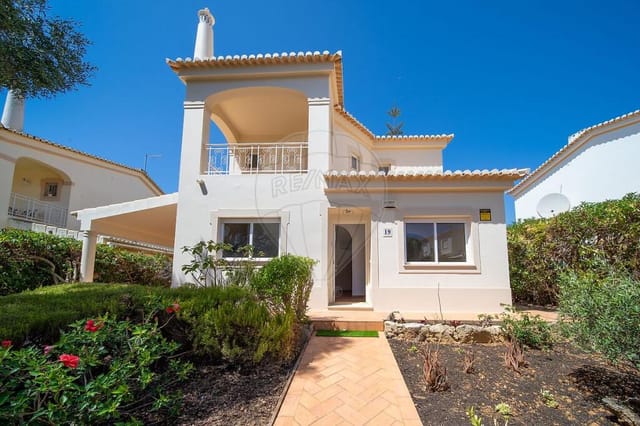
Picture 1

Picture this: Sunday morning, the kitchen window is open, the smell of coffee drifting through the room, and beyond the wooden pergola, the pool catches the early Algarve light. That's not a holiday fantasy — that's just a regular weekend when you own this three-bedroom villa in São Brás de Alportel, one of the most quietly compelling towns in the whole of southern Portugal. São Brás sits inland, away from the coastal circus, tucked at the edge of the Serra do Caldeirão hills. The town is refreshingly flat — genuinely flat, which is rare in the Algarve — which means locals actually walk everywhere. To the padaria for a pastel de nata in the morning, to the Municipal Market on a busy Tuesday, to the esplanada for a late lunch of cataplana or grilled sea bream. Life moves at a pace that feels earned rather than forced. The villa itself sits on a quiet cul-de-sac. When you pull up, you immediately notice how the walled stone grounds create a sense of arrival — this is a private compound, not just a house with a fence. The electric gate opens onto the garage, which doubles as a proper laundry room and storage space for bikes, beach gear, and the general accumulation of an active life in the south. A couple of cars fit easily outside on the cobbled drive, traditional Portuguese cobblestone that wraps all the way around the building. Step inside and the architectural choices become immediately apparent. Solid white wood ceilings — not painted MDF, actual solid wood — run overhead. Terracotta red ceramic floors anchor the rooms in warmth. The walls in several spaces are lined with brick, giving texture and personality that you simply don't find in modern builds. Stone bathrooms complete the picture. This is a house built wit ... click here to read more
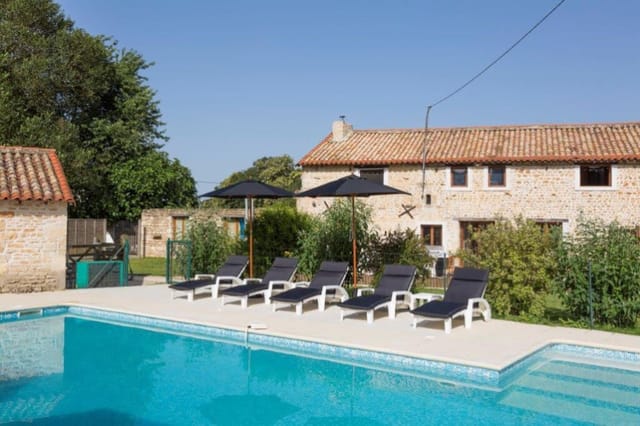
Picture 1

Step out onto the terrace at eight in the morning and you'll hear it before you see it — the low hum of the Mediterranean, half a kilometre through the pines, carried on a breeze that smells of resin and salt. The sea glitters in the gap between tree tops. A coffee in hand, the only decision pressing enough to make is whether today is a beach day or a pool day. This is the rhythm of daily life at this four-bedroom villa on the edge of Marbella, and once you've felt it, going back to anything else is genuinely difficult. The villa sits on a generous private plot surrounded by mature Aleppo pines — the kind of trees that take decades to grow tall enough to actually give you shade — and the effect is something you can't manufacture with landscaping. It's cool here in July when the rest of the Costa del Sol is baking. The garden feels like a room of its own, one with a ceiling open to the sky and floor tiles of terracotta that warm slowly through the afternoon hours. Inside, a recent renovation has been handled with real care. Four bedrooms, three bathrooms, 295 square metres of living space, all brought up to a high contemporary standard without scrubbing out the warmth that a villa like this should have. The living area anchors the ground floor — a fireplace at one end, wide glass doors at the other, and the pine forest framed like a painting beyond the terrace. In January, when Marbella gets a rare cold evening and the Costa del Sol quiets down to its local self, that fireplace earns its keep. This isn't just a summer house; it works across all twelve months. The kitchen is practical and well-finished, the kind of space where you can actually cook a proper meal rather than just reheat things. Which matters, because the ... click here to read more
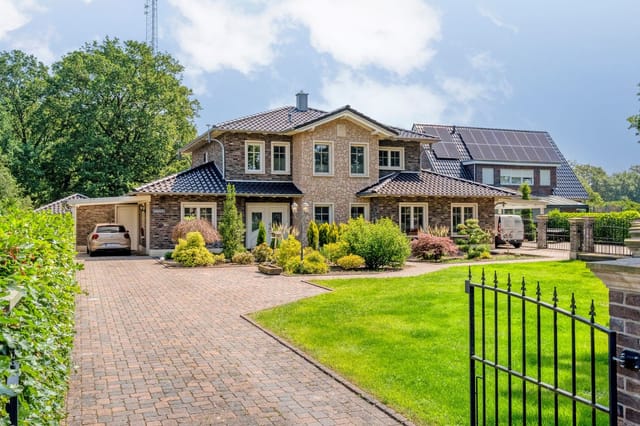
Picture 1

Step out onto the mezzanine terrace at dusk and watch the light go amber over the protected scrubland of Costa Vicentina Natural Park — no rooftops, no roads, just the low hum of cicadas and the faint salt edge carried up from the Atlantic. That's the daily reality of this four-bedroom, three-bathroom villa inside AlmaVerde, one of the Algarve's most thoughtfully designed eco-resorts, sitting on a 1,300m2 landscaped plot in the far southwestern reaches of Portugal. AlmaVerde isn't a typical resort. Spread across 58 hectares on the edge of the Natural Park just outside Vila do Bispo, it was built with ecological restraint as a guiding principle, not a marketing afterthought. The architecture here doesn't shout — it breathes. This particular villa sits in a front-line position within the resort, meaning the views from the terraces spill directly over protected land that, by law, will never be developed. What you see now is what you'll always see. Walk in through the entrance and the first thing that strikes you is the central courtyard — a private, open-air atrium at the heart of the floorplan that pulls daylight deep into the house. On a January morning when the rest of northern Europe is grey and locked-in, that courtyard is already catching sun by nine. The kitchen sits right beside it, fully fitted, with a breakfast bar and French doors that fold back so the interior and the patio become one continuous space. It's the kind of layout that makes weekend breakfast feel like a small occasion. The living and dining area flows from the kitchen naturally, and then opens again through to a generous terrace, where a 10x5 metre heated pool reflects the sky and an electric awning gives you shade control without sacrificing the ... click here to read more
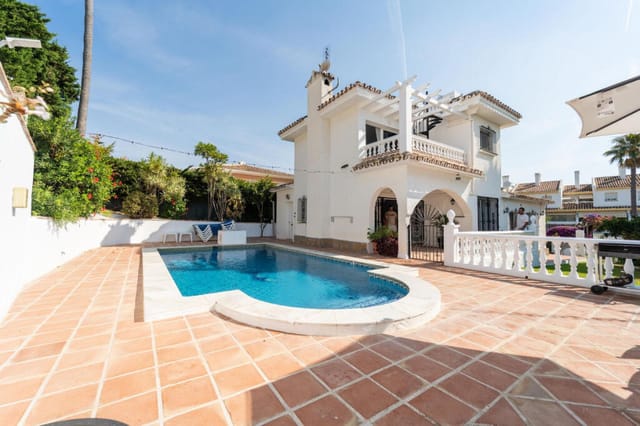
Picture 1

Stand on the covered terrace on a clear October morning and you can see two countries at once. To the south, the Pyrenees roll toward Spain. To the northwest, the snow-dusted summit of Pic du Canigou catches the first light. Down in the alley below, someone is already pulling open the shutters at the boulangerie, and the smell of bread drifting up through the stone lanes is enough to make you forget you were ever anywhere else. This is Laroque-des-Albères — small, real, and just far enough from the tourist trail to still feel like it belongs to the people who actually live here. This four-bedroom village villa sits at the heart of that village, spread across three levels and open on three sides, which means light moves through it all day. Built in 1960 with a south-facing orientation, the house has the kind of bone structure that doesn't go out of style — thick walls, generous room volumes, high ceilings that keep things cool through the long Roussillon summers without the need to reach for the air conditioning remote. The double glazing throughout helps lock in warmth when the tramontane wind picks up in winter, which it will, and which is actually one of the reasons the air up here stays so remarkably clean. The ground floor sets the tone. A large living room opens onto an equipped kitchen, and from there you step out onto a generous covered terrace fitted with a barbecue — the kind of space that becomes the gravitational center of every weekend here. Long lunches happen here. Evening apéros stretch past dark. The terrace connects to a continuous balcony that runs the length of the house and frames that Canigou view in a way that genuinely stops people mid-sentence the first time they see it. Head upstairs and you f ... click here to read more
Picture 1

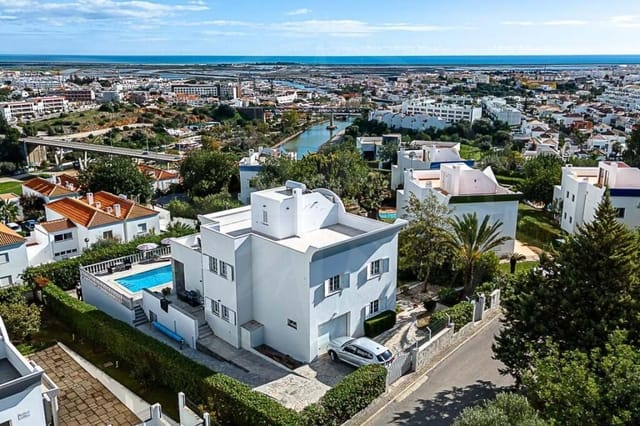
Picture this: it's a Tuesday morning in October. You open the heavy wooden shutters of your bedroom, and the smell that comes in isn't sea salt or pine — it's something warmer, drier, more ancient. Fig trees. Sun-baked limestone. A faint thread of woodsmoke from a neighbour's chimney somewhere beyond the fenced boundary of your five-thousand-square-metre plot. That's the Eastern Algarve countryside, and once it gets under your skin, nowhere else quite measures up. This three-bedroom quinta sits in the soft hills between Moncarapacho and Santa Catarina da Fonte do Bispo, in a part of Portugal that moves at its own pace. Not the frantic beach-town rhythm of Albufeira or Vilamoura — something calmer, more grounded. The Barrocal landscape rolls out around you: almond trees in February bloom, pomegranate trees turning scarlet in autumn, and fig trees that drop their fruit by the kilo in August. You'll have more than you could ever eat. Your neighbours will take the rest. The house itself was completely overhauled in 2023, and whoever did the renovation had the good sense not to strip it of its character. The original exposed beam ceilings survived — thick, darkened timber that gives every room a weight and honesty that no interior designer could manufacture. Paired with modern bathrooms, underfloor heating powered by a heat pump, and split-system air conditioning throughout, it hits that rare balance of genuinely comfortable without feeling like a hotel. Solar panels cover hot water. A pellet burner takes the edge off the cooler months — and yes, Eastern Algarve winters do have edge, which is precisely what makes the place feel like somewhere real rather than a seasonal backdrop. The layout is one of the cleverest features ... click here to read more
Picture 1

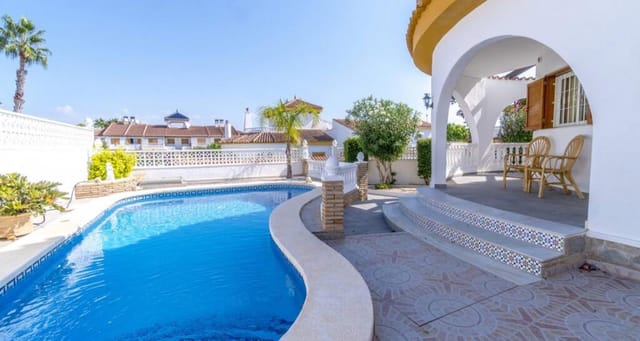
Step outside on a Tuesday morning and the only decision you face is whether to walk down to the Calle Mayor for a café con leche and tostada con tomate, or take a slow lap around the pool before the sun climbs high enough to make you think twice. That is the rhythm of life in Ciudad Quesada — unhurried, sociable, and soaked in about 320 days of sunshine a year. This three-bedroom single-storey villa, priced at €476,000, drops you right into the middle of that rhythm without any of the renovation headaches that older Costa Blanca properties so often bring. Ciudad Quesada sits in the Vega Baja region of Alicante province, draped across a gentle hillside above the Segura river plain. It is not a purpose-built ghost town that empties in October. Far from it. The community here — heavily international, with a strong British, Dutch, and Belgian presence alongside Spanish families — keeps local bars, restaurants, and shops trading all year. The Friday street market on the edge of town draws people from Torrevieja to Bigastro. The La Marquesa Golf Course, one of the most played on the southern Costa Blanca, sits about five minutes away by car and hosts competitions every weekend from September through to May when the fairways are at their greenest. The Guardamar del Segura beaches are less than ten kilometres south, a straight run down the CV-905. Guardamar is not the brash, high-rise coast that parts of this region became in the seventies. The town is backed by a protected pine forest — the Dunas de Guardamar natural park — and the beach itself stretches for kilometres with fine golden sand and a promenade lined with chiringuitos serving cold Estrella Damm and fried red mullet straight from the Segura estuary. In summer the w ... click here to read more
Picture 1

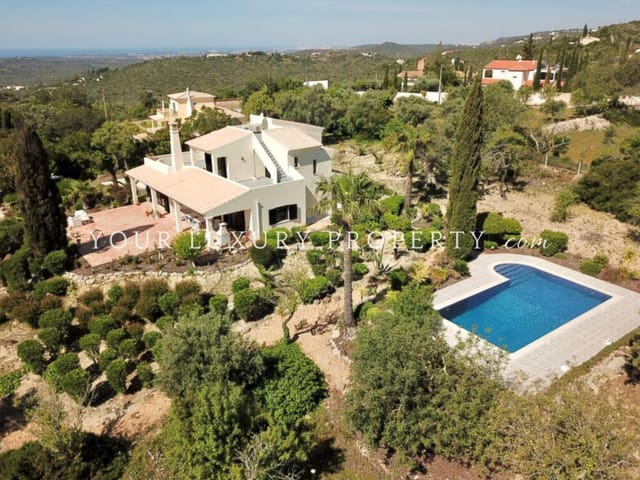
By nine in the morning, the Andalusian sun has already warmed the terracotta tiles around the pool. You're on the terrace with a coffee, the Riviera hills rolling behind you, the faint shimmer of the Mediterranean visible through the pines just a few kilometers south. The only sound is birdsong and, occasionally, the distant church bells drifting from the white hilltop village of Mijas Pueblo. This is not a resort. This is your home. This four-bedroom, four-bathroom villa sits in the Riviera district of Mijas-Costa, one of the most sought-after addresses on the Costa del Sol — and for good reason. At 249 square meters, the property was fully renovated in 2024 and the quality shows in every detail: the clean lines of the interior joinery, the seamless flow between indoor and outdoor living spaces, and the private swimming pool that anchors the garden like it was always meant to be there. It's ready to move into, or rent out, the moment you sign. Step inside and the light hits you first. Southwest-facing, the villa catches the afternoon sun in a way that fills the main living room with the kind of warm, honeyed glow you only really get this far south. The layout is genuinely sociable — a main lounge, a fully equipped separate kitchen, and a secondary living-dining area that naturally becomes the hub of family evenings or long lunches with friends who've traveled down from Seville or Málaga for the weekend. Built-in wardrobes throughout mean storage is never an afterthought, and the hot-cold air conditioning system keeps things comfortable whether you're there in August heat or a cool February weekend. The master suite has its own en-suite bathroom with a walk-in shower — a proper one, not a converted alcove. The three a ... click here to read more
Picture 1

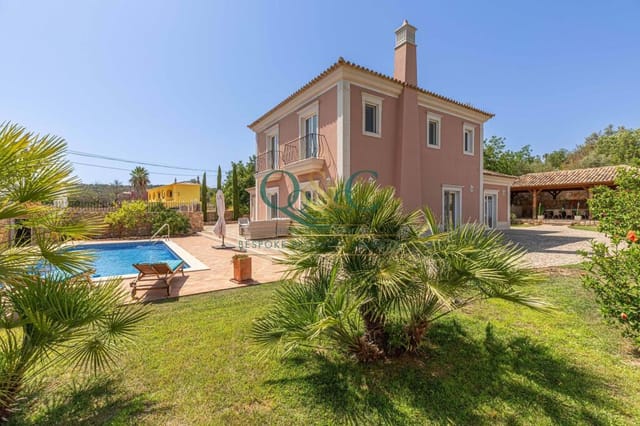
The first thing you notice, stepping onto the terrace at dusk, is how the Mediterranean catches the last hour of sun. The water turns copper, then deep orange, and the mountains behind Marbella go dark blue at their edges. You're standing at one of only seven villas in this private enclave in Elviria, and the silence is the kind you don't find easily anymore — no through traffic, no neighbors pressed against your fence, just the rustle of mature pines and the occasional call of a hoopoe somewhere in the garden. This is Elviria, one of Marbella East's most quietly sought-after residential pockets, and it doesn't announce itself the way the Golden Mile does. No billboards, no celebrity hotels. Just wide residential lanes, cork oak trees older than the properties themselves, and a community that comes back year after year because they figured out something the flashier parts of the coast haven't quite managed: space, privacy, and a genuinely unhurried pace of life. The villa itself sits on a generous plot with a south-west orientation — a detail that matters more than most buyers initially realize. South-west means you're catching afternoon and evening sun on the terraces rather than baking at noon with nowhere to escape. It means the covered terrace where you'll eat most of your meals from May through October is warm without being punishing. The private swimming pool, surrounded by landscaped gardens that someone clearly cared about over the years, holds heat into early evening. Dinner outside at 9pm in September? Absolutely routine here. Across 298 square metres of interior space arranged over three levels, the layout is more intelligently thought out than most villas in this price range. The ground floor centres on a ... click here to read more
Picture 1

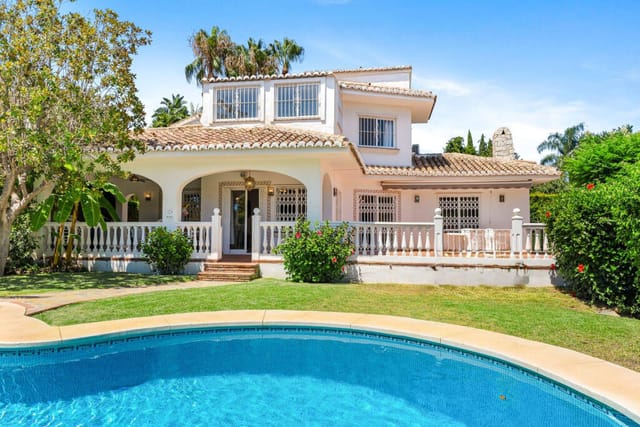
Step out onto the terrace at eight in the morning and you're looking at three countries at once. Istán Lake catches the light below, the Mediterranean stretches flat and silver to the horizon, and on a clear day — which, on the Costa del Sol, is most days — you can make out the outline of Morocco across the Strait of Gibraltar. This is the view you wake up to in this four-bedroom villa inside Sierra Blanca Country Club, a gated enclave above Marbella that most visitors to the coast don't even know exists. Sierra Blanca Country Club sits in the foothills above Istán, tucked into a stretch of the Sierra de las Nieves that feels a world away from the Golden Mile promenade below, yet Puerto Banús is barely fifteen minutes down the AP-7. That contrast — total quiet up here, total access to everything down there — is exactly what makes this kind of address so rare on the Costa del Sol. The community runs 24-hour manned security and maintains its roads and communal gardens fastidiously, so the grounds always look like someone cares deeply about them. Which they do. The villa itself covers 240 square metres across two levels, and the layout is genuinely intelligent rather than just generously proportioned. On the main floor, the entrance hall opens into a living room with windows sized to work as picture frames for those panoramic views. The terrace comes off this room directly, so when you have people over for dinner you're not shuttling back and forth between inside and out — the two spaces flow into each other in the way that only works when a house has been thought through from the beginning. The master suite sits on this level too, with its own en-suite, which keeps it properly separate from the activity happening elsewhe ... click here to read more
Picture 1

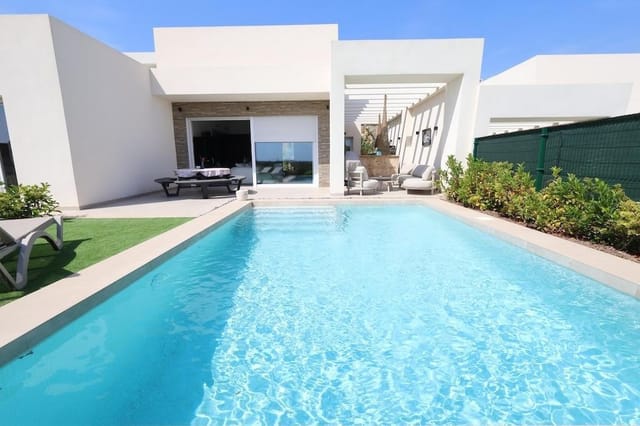
Picture this: it's nine in the morning, the air already warm but not yet fierce, and you're having coffee on the terrace with a view across the shimmering lake and the low hills beyond Rojales. No traffic noise. Just birdsong, the faint splash from your own pool, and the knowledge that the beach at Guardamar del Segura is twenty minutes down the road. That's not a fantasy — that's an ordinary Tuesday when you own this four-bedroom, four-bathroom villa in Ciudad Quesada. The location matters more than people realise when they first start looking on the Costa Blanca. Quesada sits on a ridge above the Vega Baja plain, catching the breeze even in July when the coast can feel airless. The urbanisation itself is genuinely liveable — proper pavements, a golf course (the La Marquesa course is less than ten minutes on foot), supermarkets, pharmacies, good tapas bars on Avenida de las Naciones. You won't feel marooned here between visits the way you sometimes do in more remote developments. And because it draws a mix of Spanish and northern European residents, there's real year-round life, not the shuttered-up ghost-town feel of some purely seasonal spots. This villa sits at the end of a quiet cul-de-sac — one of those small details that only becomes obvious once you're here, when you notice there's zero through traffic and the kids can actually kick a ball in the street. The plot is generous for the area, with a properly maintained garden that wraps around the pool and gives you multiple spots depending on where the sun is and how sociable you're feeling. The barbecue terrace at the back catches the afternoon shade; the front terrace gets the morning light and the lake views. Inside, the 160 square metres of living space is ha ... click here to read more
Picture 1

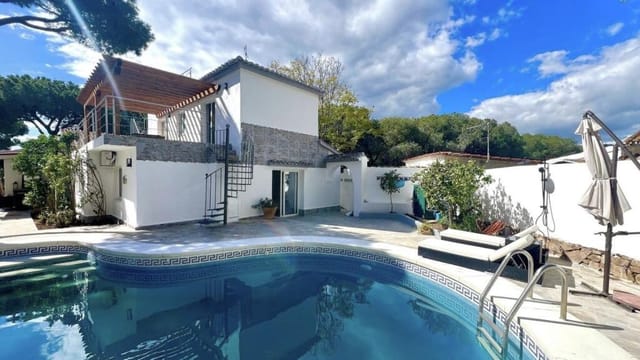
Some mornings you wake up in Lo Pepín and the first thing you hear is nothing. Not silence exactly—more like the kind of deep quiet that only exists when a place has been built for living rather than passing through. The pool catches the early light at an angle that turns the water a pale copper. By eight o'clock you've made coffee on the glazed terrace, and you're already wondering why you don't live here full time. This is a 4-bedroom detached villa in Ciudad Quesada's Lo Pepín residential area, set on a 500 m² plot with a fully independent guest house, a 10 x 5 metre private swimming pool, and views that stretch across the famous Torrevieja salt lakes toward the Mediterranean. At €470,000, fully furnished and move-in ready, it's the kind of property that doesn't stay on the market long—and for good reason. Let's talk about the layout, because the way this estate is arranged changes everything. The main villa holds two generous bedrooms and two bathrooms, with an open-plan living area that flows naturally into a contemporary kitchen. The glazed terrace off the main living space is the real daily anchor—it's where breakfast happens, where cards get played after dinner, where you sit with a glass of local Vinalopó wine and watch the sky go from orange to ink. That terrace essentially adds a full season of usable living space to the home. Spanish winters in this part of the Costa Blanca are mild enough that you're outside in a light jacket come January—average winter temperatures in Rojales hover around 17°C during the day, and the region logs over 300 days of sunshine per year. The guest house is where this property separates itself from the standard villa. Completely self-contained with two bedrooms, a private bathro ... click here to read more
Picture 1