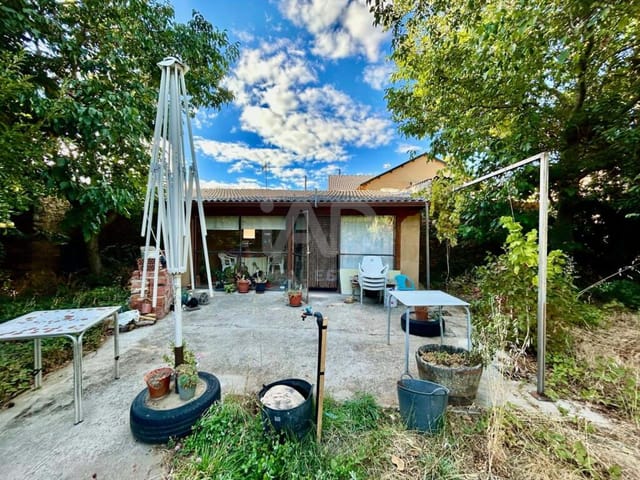
Sunday morning in Morla de la Valdería moves slowly. The smell of wood smoke drifts down the lane, a neighbour's dog trots past the gate, and from the rear garden you can hear nothing — genuinely nothing — except the wind threading through the oak and chestnut hills of the Eria river valley. That specific kind of quiet is increasingly rare in Europe, and this 180-square-metre village house sits right at the heart of it.
Morla de la Valdería is a hamlet tucked within the municipality of Castrocontrigo, a small but proud corner of the León province in Castile and León. This is old Spain — not the curated, tourist-facing version, but the real thing. Dry-stone walls, vegetable plots behind every house, the annual Fiesta de San Roque in August when the whole village eats, drinks, and dances in the street until well past midnight. The landscape itself carries weight: the Teleno mountain rises to 2,188 metres on the horizon, the Eria river cuts through valleys thick with pine and birch, and the Lago de Truchas — a reservoir popular with local trout fishermen — sits less than 20 minutes by car.
The house itself is a single-storey structure, which matters more than people initially realise. No stairs means every room is accessible from the moment you walk through the front door, and the north-south orientation means the light shifts around the interior throughout the day in a way that feels almost intentional. Morning sun floods the kitchen. By afternoon it has moved around to warm the rear garden. The 281-square-metre plot gives the property a generous footprint for a village home at this price point — €80,000 for 180 square metres in good, renovated condition is the kind of number that makes buyers do a double-take.
The reno ... click here to read more